

- Industry Size (2026)
- USD 1243.0 Mn
- Forecast (2036)
- USD 1915.5 Mn
- CAGR (2026 to 2036)
- 4.4%
Demand for Soy Beverage in Japan 2026 to 2036
Demand for soy beverage in Japan is valued at USD 1,243.0 million in 2026 and is expected to reach USD 1,915.5 million by 2036, reflecting a CAGR of 4.4%. Demand remains supported by long-standing dietary integration of soy-based products, high consumer familiarity, and continued preference for plant-derived nutrition. Health considerations related to protein intake, cholesterol management, and lactose intolerance sustain stable consumption across age groups.
Soy milk leads product-type usage because it aligns with traditional consumption habits and offers functional versatility across beverages, cooking, and foodservice applications. Manufacturers focus on taste refinement, texture consistency, and nutritional fortification to meet evolving consumer expectations. Shelf-stable and chilled formats support wide availability across retail and institutional channels.
Kyushu & Okinawa, Kanto, Kansai, Chubu, and Tohoku represent key growth regions driven by population density, retail penetration, and established soy processing infrastructure. Kikkoman Corporation, Marusan Co., Ltd., Snow Brand Milk Products, Megmilk Snow Brand, and Toyota Tsusho Food Corporation anchor competitive activity through brand trust, domestic sourcing, and product portfolios aligned with Japanese quality standards and dietary preferences.
Quick Stats for Demand for Soy Beverage in Japan
- Japan Soy Beverage Sales Value (2026): USD 1,243.0 million
- Japan Soy Beverage Forecast Value (2036): USD 1,915.5 million
- Japan Soy Beverage Forecast CAGR (2026 to 2036): 4.4%
- Leading Product Type in Japan: Soy Milk
- Key Growth Regions in Japan: Kyushu & Okinawa, Kanto, Kansai, Chubu, Tohoku
- Top Players in Japan: Kikkoman Corporation, Marusan Co., Ltd., Snow Brand Milk Products, Megmilk Snow Brand, Toyota Tsusho Food Corporation
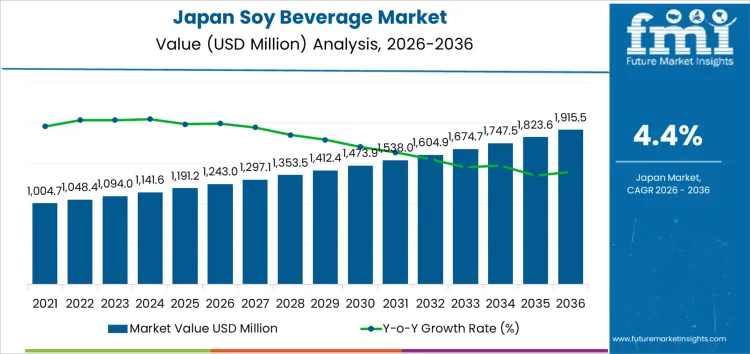
Japan Soy Beverage Key Takeaways
| Metric | Value |
|---|---|
| Japan Soy Beverage Sales Value (2026) | USD 1,243.0 million |
| Japan Soy Beverage Forecast Value (2036) | USD 1,915.5 million |
| Japan Soy Beverage Forecast CAGR (2026 to 2036) | 4.4% |
Why is the Demand for Soy Beverage in Japan Growing?
Demand for soy beverage in Japan grows due to long standing dietary integration of soy based products and evolving consumption patterns linked to health management. Soy beverages align with traditional food culture while fitting modern preferences for convenient nutrition. Aging population segments increase intake of products associated with protein adequacy, bone health, and cardiovascular support. Lactose intolerance prevalence supports substitution of dairy with plant based beverages in daily diets. Retail expansion of ready to drink formats strengthens accessibility across urban and regional areas. Foodservice operators incorporate soy beverages into breakfast menus, cafés, and institutional meal programs.
Nutrition awareness related to cholesterol intake and balanced protein sources influences household purchasing decisions. Product innovation focuses on flavor refinement, texture improvement, and fortified variants that meet micronutrient requirements. School meal programs and healthcare facilities adopt soy beverages to accommodate dietary restrictions and allergy considerations. Domestic producers leverage established soybean supply chains to maintain quality consistency. Convenience store penetration supports impulse and routine consumption through single serve packaging. Stable pricing relative to imported dairy alternatives reinforces sustained demand across income groups.
How Are the Segments Classified in the Demand for Soy Beverages in Japan?
Demand for soy beverages in Japan is shaped by long-standing soy consumption habits, dietary protein requirements, and preference for plant-based nutrition. Buyers evaluate taste balance, nutritional consistency, digestibility, and suitability for daily consumption occasions. Adoption patterns reflect integration of soy beverages into household diets, convenience retail, and functional nutrition routines, supported by cultural familiarity with soy-based foods and beverages.
By Product Type, Does Soy Milk Account for the Largest Share of Demand in Japan?
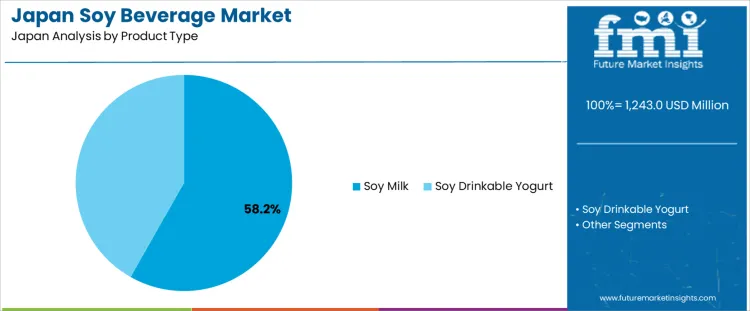
Soy milk holds 58.2%, making it the leading product-type segment in Japan. Soy milk is consumed as a standalone beverage and used with cereals, coffee, and cooking applications. Familiar taste profile, protein content, and versatility support consistent daily intake across age groups. Soy drinkable yogurt holds 41.8%, offering fermented texture and functional positioning associated with digestive health. Product-type distribution reflects stronger reliance on soy milk due to habitual consumption patterns and broad compatibility with traditional and modern dietary use in Japan.
Key Points:
- Soy milk dominates due to cultural familiarity and versatility.
- Protein content supports routine dietary intake.
- Drinkable yogurt serves fermentation-focused preferences.
By Flavor, Do Flavored Variants Represent the Largest Share of Demand in Japan?
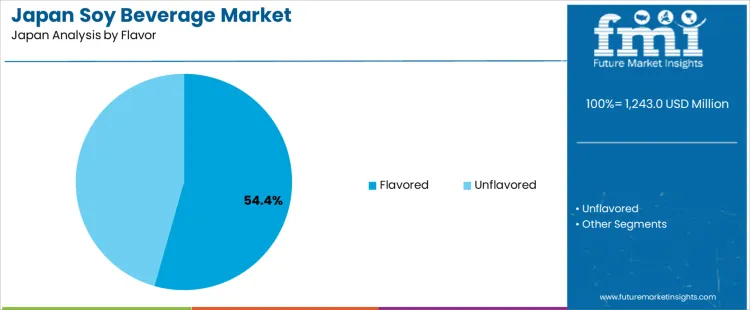
Flavored soy beverages hold 54.4%, making them the leading flavor segment in Japan. Flavoring improves palatability and moderates’ inherent soy notes, supporting acceptance among younger consumers and convenience-focused buyers. These variants are commonly positioned for on-the-go consumption and chilled retail formats. Unflavored soy beverages hold 45.6%, preferred for cooking, traditional uses, and pairing with meals. Flavor-segment distribution reflects balance between taste-enhanced products and functional, culinary-focused consumption within Japanese households.
Key Points:
- Flavored variants lead due to improved taste acceptance.
- Convenience positioning supports chilled retail consumption.
- Unflavored products align with traditional culinary usage.
What are the Key Dynamics in the Soy Beverage Industry in Japan?
Demand remains well established as soy beverage forms part of long-standing dietary habits in Japan. Consumption aligns with cultural acceptance of soy-based foods, lactose avoidance, and aging population nutrition needs. Usage spans retail, foodservice, and institutional channels. Domestic soy processing capability, product innovation, and health-oriented consumption patterns support stable demand across urban and regional prefectures.
How do traditional dietary habits and health-focused consumption drive demand in Japan?
Soy beverage benefits from deep cultural familiarity linked to soy milk, tofu, and fermented soy products in Japanese diets. Middle-aged and elderly consumers adopt soy beverage for protein intake, bone health, and cholesterol management. Convenience stores and supermarkets offer a wide range of plain, flavored, and fortified variants suited to daily consumption. School meal programs and healthcare facilities use soy beverage to address lactose intolerance and balanced nutrition needs. Foodservice operators incorporate soy beverage into coffee, desserts, and prepared foods. Domestic brands focus on mild taste profiles and functional claims aligned with digestive and metabolic health, sustaining steady consumption.
How do demographic shifts, product saturation, and competition influence demand stability?
Japan’s mature beverage sector limits high-volume growth potential for soy beverage. Younger consumers increasingly explore alternative plant-based drinks such as almond and oat beverages, creating competitive pressure. Declining population trends affect long-term volume expansion. Price sensitivity influences household purchasing frequency amid broader food inflation. Labeling standards and allergen disclosure require compliance oversight for manufacturers. Innovation cycles focus on functional fortification and taste refinement rather than category expansion. Demand remains stable due to cultural acceptance and health positioning, while future growth depends on product differentiation, convenience formats, and alignment with evolving consumer preferences within Japan.
How Is Demand for Soy Beverage in Japan Evolving by Region?
Demand for soy beverages in Japan is expanding due to dietary preferences rooted in soy consumption, aging population nutrition needs, and diversification of non-dairy beverages. Kyushu and Okinawa lead with a 5.4% CAGR, supported by food processing activity and retail penetration. Kanto follows at 5.0%, driven by urban consumption, product innovation, and foodservice adoption. Kansai records a 4.4% CAGR, shaped by traditional consumption patterns and packaged beverage demand. Chubu posts 3.9%, reflecting household consumption and private-label growth. Tohoku shows 3.4%, supported by regional retail distribution. Rest of Japan records 3.2%, reflecting stable replacement-driven demand. Regional variation reflects consumption habits, retail structure, and product positioning across Japan.
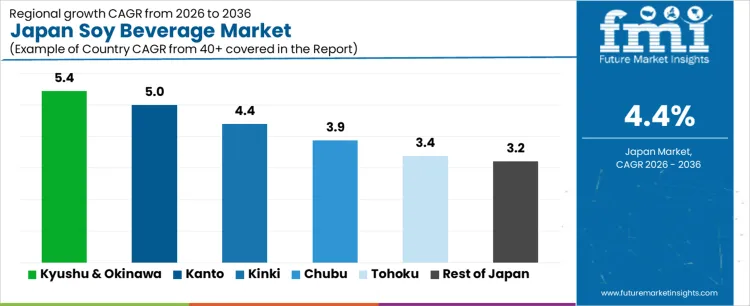
| Region | CAGR (2026 to 2036) |
|---|---|
| Kyushu & Okinawa | 5.4% |
| Kanto | 5.0% |
| Kansai | 4.4% |
| Chubu | 3.9% |
| Tohoku | 3.4% |
| Rest of Japan | 3.2% |
How is Kyushu and Okinawa driving demand for Soy Beverages in Japan?
Kyushu and Okinawa drive demand through strong food processing presence, retail accessibility, and integration of soy beverages into daily diets. Region’s CAGR of 5.4% reflects widespread consumption of soy beverages as breakfast drinks, cooking ingredients, and nutritional supplements. Manufacturers supply both chilled and shelf-stable formats to meet diverse storage needs. Warmer climate conditions support higher consumption of ready-to-drink soy beverages throughout the year. Retail chains emphasize locally branded and value-focused offerings. Demand favors consistent taste, protein content, and compatibility with traditional Japanese cuisine. Growth remains consumption-led, supported by stable household demand and retail availability.
- High household integration of soy beverages
- Chilled and shelf-stable format demand
- Strong retail and local brand presence
- Year-round consumption patterns
How is Kanto driving demand for Soy Beverages in Japan?
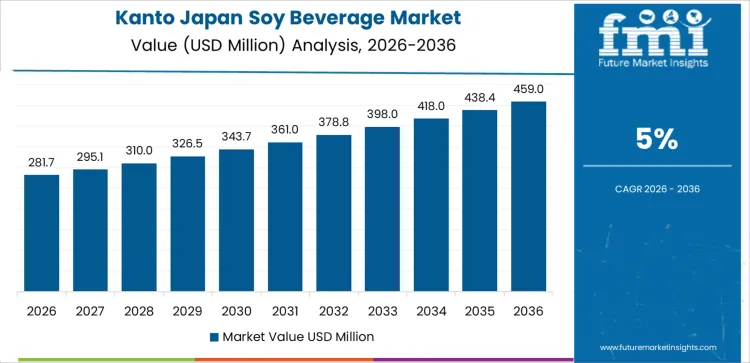
Kanto demand is shaped by dense urban populations, diversified retail formats, and product innovation. Region’s CAGR of 5.0% reflects strong uptake of soy beverages among working professionals, elderly consumers, and health-focused households. Convenience stores, supermarkets, and foodservice outlets support high-frequency consumption. Manufacturers introduce fortified and flavored soy beverages targeting nutrition-conscious consumers. Demand emphasizes portion-controlled packaging and on-the-go formats. Growth aligns with lifestyle-driven consumption and continuous product refresh cycles rather than expansion of traditional use.
- Urban and convenience-driven consumption
- Fortified and flavored product uptake
- Strong convenience store distribution
- Demand for on-the-go packaging
How is Kansai driving demand for Soy Beverages in Japan?
Kansai demand reflects balanced consumption across traditional households and modern retail channels. Region’s CAGR of 4.4% is supported by use of soy beverages in home cooking, prepared foods, and daily nutrition routines. Consumers value familiarity, mild flavor profiles, and consistent quality. Retailers prioritize established brands and competitively priced offerings. Foodservice outlets incorporate soy beverages into desserts, drinks, and meal accompaniments. Demand growth remains steady, aligned with routine consumption and stable purchasing behavior.
- Household and foodservice usage
- Preference for familiar flavor profiles
- Established brand dominance
- Stable and routine consumption patterns
How is Chubu driving demand for Soy Beverages in Japan?
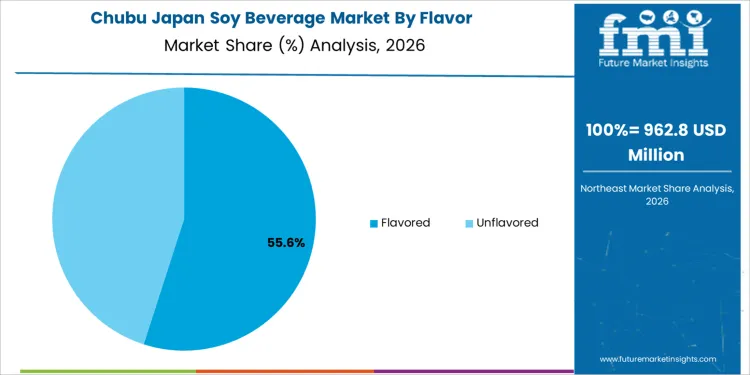
Chubu demand is anchored in household consumption and regional retail distribution. Region’s CAGR of 3.9% reflects use of soy beverages as daily nutritional drinks and cooking ingredients. Consumers prioritize affordability, nutritional value, and supply consistency. Private-label products gain traction through supermarkets and regional chains. Demand remains linked to family consumption patterns rather than lifestyle experimentation. Growth stays moderate, supported by predictable purchasing cycles and stable population dynamics.
- Household-focused consumption
- Growth of private-label offerings
- Emphasis on affordability and nutrition
- Predictable purchasing behavior
How is Tohoku driving demand for Soy Beverages in Japan?
Tohoku demand is influenced by regional dietary habits, aging demographics, and retail accessibility. Region’s CAGR of 3.4% reflects steady consumption of soy beverages for nutrition support and traditional meal preparation. Shelf-stable products dominate due to distribution considerations and storage convenience. Consumers value product reliability and familiar brands. Demand growth remains cautious and necessity-driven, aligned with regional consumption stability rather than innovation-led adoption.
- Aging population nutrition demand
- Shelf-stable product preference
- Familiar brand reliance
- Necessity-driven consumption
How is Rest of Japan driving demand for Soy Beverages in Japan?
Rest of Japan shows stable demand driven by routine household use and replacement purchasing. Region’s CAGR of 3.2% reflects consumption of soy beverages as staple dietary components. Buyers prioritize cost efficiency, availability, and product consistency. Demand remains maintenance-oriented with limited exposure to new product formats. Growth aligns with continuation of established consumption habits rather than market expansion.
- Staple household consumption
- Cost-sensitive purchasing behavior
- Replacement-driven demand
- Stable consumption without innovation focus
What is the competitive landscape of demand for soy beverage in Japan?
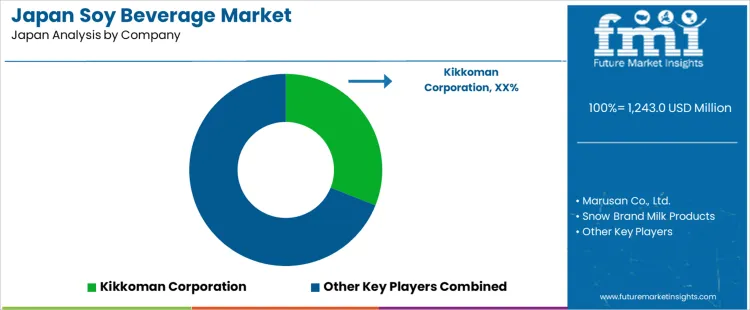
Demand for soy beverage in Japan is supported by longstanding cultural consumption patterns, dairy alternative preferences, and interest in plant-based nutrition. Usage spans chilled and shelf-stable formats consumed as beverages, incorporated into coffee and tea, and used in culinary applications. Buyers evaluate flavor balance, protein content, sweetness level, and compatibility with local taste profiles. Procurement teams prioritize suppliers with domestic production, food safety compliance under Japan’s Food Sanitation Act, and distribution networks reaching supermarkets, convenience stores, and foodservice channels. Trend in the Japan market reflects sustained demand among health-conscious consumers, integration into breakfast and beverage routines, and innovation in flavored and fortified variants.
Kikkoman Corporation maintains a strong presence through its widely distributed soy beverage products tailored to Japanese taste profiles and local nutritional expectations. Marusan Aia America, operating in Japan under Marusan Co., Ltd., participates with chilled and shelf-stable soy drinks offered across retail formats. Snow Brand Milk Products supplies soy-based beverages and mixes that cater to broader consumer preferences and regional distribution. Megmilk Snow Brand supports demand with plant-based beverage options positioned alongside dairy portfolios. Toyota Tsusho Food Corporation contributes through distribution and marketing of imported and domestically produced soy beverage brands. Competitive positioning in Japan reflects flavor formulation tuned to local preferences, compliance with food safety standards, production scale, and distribution penetration across urban and regional retail networks.
Key Players in Japan Soy Beverage Demand
- Kikkoman Corporation
- Marusan Co., Ltd.
- Snow Brand Milk Products
- Megmilk Snow Brand
- Toyota Tsusho Food Corporation
Scope of the Report
| Items | Values |
|---|---|
| Quantitative Units | USD million |
| Product Type | Soy Milk; Soy Drinkable Yogurt |
| Flavor | Flavored; Unflavored |
| Regions Covered | Kyushu & Okinawa; Kanto; Kansai; Chubu; Tohoku; Rest of Japan |
| Key Companies Profiled | Kikkoman Corporation; Marusan Co., Ltd.; Snow Brand Milk Products; Megmilk Snow Brand; Toyota Tsusho Food Corporation |
| Additional Attributes | Dollar sales by product type and flavor; regional CAGR variations reflecting plant-based consumption patterns; higher adoption in Kanto and Kansai; demand supported by lactose intolerance awareness; product innovation in fortified and low-sugar variants; retail and foodservice penetration influencing volume growth across regions. |
Japan Soy Beverage Demand by Segments
By Product Type:
- Soy Milk
- Soy Drinkable Yogurt
By Flavor:
- Flavored
- Unflavored
By Region:
- Kyushu & Okinawa
- Kanto
- Kansai
- Chubu
- Tohoku
- Rest of Japan
Frequently Asked Questions
How big is the demand for soy beverage in Japan in 2026?
The demand for soy beverage in Japan is estimated to be valued at USD 1,243.0 million in 2026.
What will be the size of soy beverage in Japan in 2036?
The market size for the soy beverage in Japan is projected to reach USD 1,915.5 million by 2036.
How much will be the demand for soy beverage in Japan growth between 2026 and 2036?
The demand for soy beverage in Japan is expected to grow at a 4.4% CAGR between 2026 and 2036.
What are the key product types in the soy beverage in Japan?
The key product types in soy beverage in Japan are soy milk and soy drinkable yogurt.
Which flavor segment is expected to contribute significant share in the soy beverage in Japan in 2026?
In terms of flavor, flavored segment is expected to command 54.4% share in the soy beverage in Japan in 2026.
Preview the report firsthand - request a free sample
Get SampleGet the brochure for pricing and purchase details.
Get PDFTable of Content
- Executive Summary
- Japan Market Outlook
- Demand-side Trends
- Supply-side Trends
- Technology Roadmap Analysis
- Analysis and Recommendations
- Market Overview
- Market Coverage / Taxonomy
- Market Definition / Scope / Limitations
- Market Background
- Market Dynamics
- Drivers
- Restraints
- Opportunity
- Trends
- Scenario Forecast
- Demand in Optimistic Scenario
- Demand in Likely Scenario
- Demand in Conservative Scenario
- Opportunity Map Analysis
- Product Life Cycle Analysis
- Supply Chain Analysis
- Investment Feasibility Matrix
- Value Chain Analysis
- PESTLE and Porter’s Analysis
- Regulatory Landscape
- Regional Parent Market Outlook
- Production and Consumption Statistics
- Import and Export Statistics
- Market Dynamics
- Japan Market Analysis 2021 to 2025 and Forecast, 2026 to 2036
- Historical Market Size Value (USD Million) Analysis, 2021 to 2025
- Current and Future Market Size Value (USD Million) Projections, 2026 to 2036
- Y-o-Y Growth Trend Analysis
- Absolute $ Opportunity Analysis
- Japan Market Pricing Analysis 2021 to 2025 and Forecast 2026 to 2036
- Japan Market Analysis 2021 to 2025 and Forecast 2026 to 2036, By Product Type
- Introduction / Key Findings
- Historical Market Size Value (USD Million) Analysis By Product Type , 2021 to 2025
- Current and Future Market Size Value (USD Million) Analysis and Forecast By Product Type , 2026 to 2036
- Soy Milk
- Soy Drinkable Yogurt
- Soy Milk
- Y-o-Y Growth Trend Analysis By Product Type , 2021 to 2025
- Absolute $ Opportunity Analysis By Product Type , 2026 to 2036
- Japan Market Analysis 2021 to 2025 and Forecast 2026 to 2036, By Flavor
- Introduction / Key Findings
- Historical Market Size Value (USD Million) Analysis By Flavor, 2021 to 2025
- Current and Future Market Size Value (USD Million) Analysis and Forecast By Flavor, 2026 to 2036
- Flavored
- Unflavored
- Flavored
- Y-o-Y Growth Trend Analysis By Flavor, 2021 to 2025
- Absolute $ Opportunity Analysis By Flavor, 2026 to 2036
- Market Structure Analysis
- Competition Dashboard
- Competition Benchmarking
- Market Share Analysis of Top Players
- By Regional
- By Product Type
- By Flavor
- Competition Analysis
- Competition Deep Dive
- Kikkoman Corporation
- Overview
- Product Portfolio
- Profitability by Market Segments (Product/Age /Sales Channel/Region)
- Sales Footprint
- Strategy Overview
- Marketing Strategy
- Product Strategy
- Channel Strategy
- Marusan Co., Ltd.
- Snow Brand Milk Products
- Megmilk Snow Brand
- Toyota Tsusho Food Corporation
- Kikkoman Corporation
- Competition Deep Dive
- Assumptions & Acronyms Used
- Research Methodology


