

- Industry Size (2026)
- USD 92.6 Mn
- Forecast (2036)
- USD 153.5 Mn
- CAGR (2026 to 2036)
- 4.7%
Demand for Dishwashing Additives in Japan Forecast and Outlook 2026 to 2036
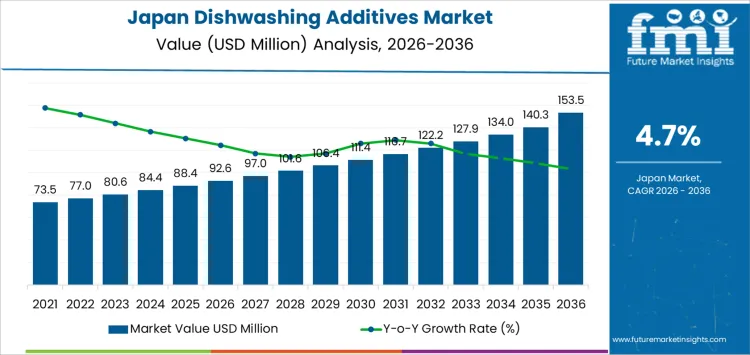
Demand for dishwashing additives in Japan is expected to grow steadily from USD 92.6 million in 2026 to USD 153.5 million by 2036, with a forecasted CAGR of 4.7%. Industry is primarily driven by the increasing preference for convenience, efficiency, and eco-conscious cleaning products. Branded dishwashing additives dominate the industry, accounting for 65% of demand, driven by consumer trust, quality, and performance. The commercial sector leads the demand with 55%, supported by Japan's vibrant foodservice industry, which requires efficient, high-performance cleaning solutions for large-scale operations. Residential applications, while contributing to the remainder, also show steady growth due to rising demand for automatic dishwashers.
Quick Stats of the Demand for Dishwashing Additives in Japan
- Demand for Dishwashing Additives in Japan Value (2026): USD 92.6 million
- Demand for Dishwashing Additives in Japan Forecast Value (2036): USD 153.5 million
- Demand for Dishwashing Additives in Japan Forecast CAGR (2026 to 2036): 4.7%
- Demand for Dishwashing Additives in Japan Leading Product Type: Branded
- Demand for Dishwashing Additives in Japan Key Growth Regions: Kyushu & Okinawa, Kanto, Kansai, Chubu, Tohoku, Rest of Japan
- Demand for Dishwashing Additives in Japan Top Players: Unilever N.V., Blueland, Bombril, Reckitt Benckiser Group plc, Church & Dwight Co. Inc.
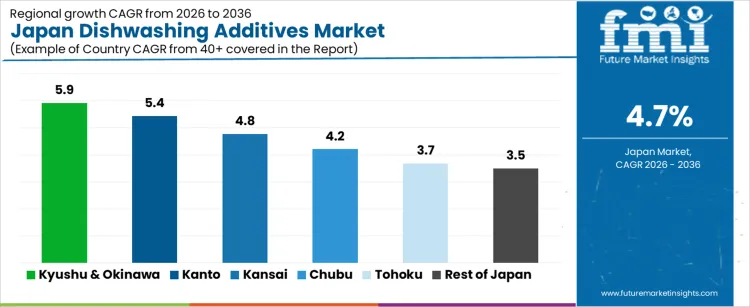
Kyushu & Okinawa leads with a 5.9% CAGR, fueled by its strong food culture and focus on durability. Kanto follows with a 5.4% CAGR, benefiting from its large urban population and advanced infrastructure. Kansai shows a 4.8% CAGR, driven by growing eco-consciousness in the region, while Chubu experiences a 4.2% CAGR, supported by rising demand for convenience products. Tohoku and the rest of Japan see more moderate growth at 3.7% and 3.5% CAGR, respectively. As consumer preferences shift towards eco-friendly and efficient products, these trends reflect the increasing demand for both branded and eco-friendly dishwashing additives in Japan.
Demand for Dishwashing Additives in Japan Key Takeaways
| Metric | Value |
|---|---|
| Demand for Dishwashing Additives in Japan Value (2026) | USD 92.6 million |
| Demand for Dishwashing Additives in Japan Forecast Value (2036) | USD 153.5 million |
| Demand for Dishwashing Additives in Japan Forecast CAGR (2026 to 2036) | 4.7% |
Why is the Demand for Dishwashing Additives in Japan Growing?
Demand for dishwashing additives in Japan is growing due to the increasing focus on convenience, efficiency, and environmental concerns in household cleaning products. Dishwashing additives, such as rinse aids, detergents, and water softeners, help improve dishwashing performance, ensuring better cleaning, faster drying, and preventing water spots and residue. As consumers demand higher performance from dishwashing products, particularly in an aging population where ease of use is a key consideration, the adoption of dishwashing additives is on the rise. Innovations in environmentally friendly and eco-conscious formulations are driving demand for dishwashing additives that are effective yet gentle on the environment.
Key drivers for this growth include the rising popularity of automatic dishwashers, as more households invest in dishwashing machines for convenience and efficiency. This trend is further supported by Japan's focus on cleanliness and hygiene, as well as increasing urbanization, where people look for ways to reduce the time and effort spent on household chores. The growing demand for products that provide not only cleanliness but also enhanced shine and performance, as well as those that are free of harsh chemicals, is further driving the adoption of dishwashing additives.
The increasing awareness of eco-friendly living and the preference for biodegradable and non-toxic additives are contributing to the growth of eco-friendly dishwashing products. Despite challenges such as competition from traditional dishwashing methods and price sensitivity, the continued demand for efficient, high-performing, and environmentally friendly dishwashing solutions is expected to drive steady growth in the demand for dishwashing additives in Japan through 2036.
What is the Segment-Wise Analysis of Demand for Dishwashing Additives in Japan?
Demand for dishwashing additives in Japan is segmented by product type, application, and region. By product type, branded dishwashing additives lead with 65% of the demand, followed by private label products. In terms of application, the commercial sector accounts for 55% of the demand, with residential applications contributing to the remainder. Regionally, demand is distributed across Kyushu & Okinawa, Kanto, Kansai, Chubu, Tohoku, and the rest of Japan.
Why Do Branded Dishwashing Additives Lead the Demand in Japan?
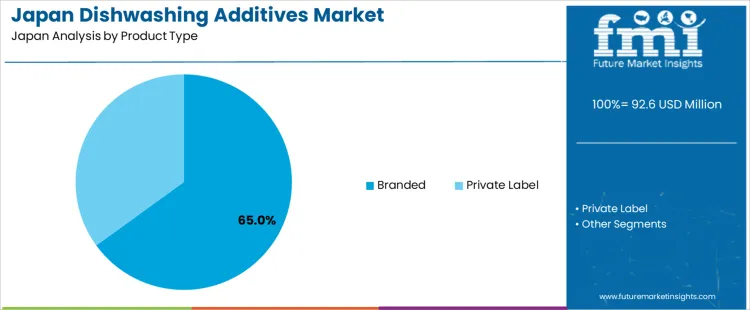
Branded dishwashing additives account for 65% of the demand in Japan, driven by consumer trust, consistent performance, and strong brand recognition. Well-known brands are preferred because they offer reliability and a proven track record in delivering effective cleaning solutions. Both commercial and residential consumers prioritize high quality, and branded products are perceived to perform better, particularly in high-demand environments like restaurants and hotels. The widespread preference for branded additives is also supported by marketing, product availability, and customer loyalty. As consumers associate these brands with superior results, they continue to dominate the industry, especially when compared to private label alternatives. This preference for trusted brands helps maintain their strong position in the industry, making branded dishwashing additives the dominant choice.
How Does the Commercial Sector Drive the Demand for Dishwashing Additives in Japan?
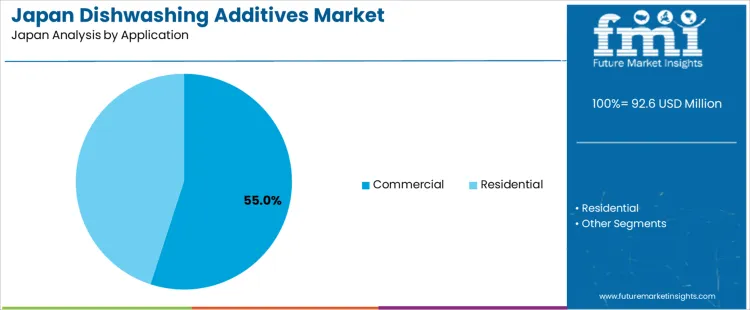
The commercial sector accounts for 55% of the demand for dishwashing additives in Japan, driven by the need for efficient and high-performance cleaning solutions in foodservice environments such as restaurants, hotels, and catering services. These establishments require dishwashing additives to handle large volumes of dishwashing while maintaining hygiene standards and ensuring the quality of services. The additives help improve cleaning efficiency, reduce water consumption, and extend the lifespan of dishwashing equipment. As the foodservice industry continues to expand, especially in urban areas, the demand for reliable and cost-effective dishwashing additives remains strong. The continued growth in the foodservice sector, combined with increasing focus on durability and efficiency, further reinforces the commercial sector's role as the primary driver of demand for dishwashing additives in Japan.
What are the Key Trends, Drivers and Restraints in Demand for Dishwashing Additives in Japan?
Demand for dishwashing additives in Japan is growing alongside the broader household cleaning products industry, driven by increasing hygiene awareness and the demand for more efficient cleaning solutions. Additives like rinse aids, degreasers, and anti‑spotting agents improve cleaning performance, reduce water spots, and speed up drying. The rising adoption of automatic dishwashers in urban homes supports the demand for additives.
Why is Demand for Dishwashing Additives Growing in Japan?
Demand for dishwashing additives in Japan is growing as consumers and foodservice operators seek superior cleaning results and convenience. The increasing prevalence of automatic dishwashers in homes and restaurants, along with a focus on performance, drives demand for specialized additives such as liquid boosters and rinse aids. Dual‑income households, time pressures, and a growing focus on hygiene encourage the use of high‑quality additives. The industry benefits from repeat purchases driven by quality‑conscious buyers looking for reliable, efficient cleaning solutions that offer consistent results, particularly in the context of busy urban lifestyles.
How are Technological and Industry Innovations Driving Dishwashing Additive Demand in Japan?
Technological and formulation innovations are boosting demand for dishwashing additives in Japan. Modern additives now combine multiple functions like grease cutting, rinsing, and anti‑spotting into a single product, offering superior results. With rising demand for eco‑friendly products, manufacturers are innovating to create biodegradable and eco-friendly formulations. The integration of IoT-connected dishwashers enables smarter dosing and optimized performance with additives, ensuring better cleaning efficiency. Packaging innovations, such as concentrated liquids and single‑dose formats, add to convenience and encourage product adoption, aligning with consumer expectations for efficiency and durability.
What is the Regional Demand Outlook for Dishwashing Additives in Japan?
| Region | CAGR (%) |
|---|---|
| Kyushu & Okinawa | 5.9% |
| Kanto | 5.4% |
| Kansai | 4.8% |
| Chubu | 4.2% |
| Tohoku | 3.7% |
| Rest of Japan | 3.5% |
Demand for dishwashing additives in Japan is growing steadily, with Kyushu & Okinawa leading at a 5.9% CAGR, driven by the region's strong food culture and focus on eco-friendly solutions. Kanto follows with a 5.4% CAGR, supported by its large urban population and demand for efficient cleaning products. Kansai shows a 4.8% CAGR, fueled by its food culture and growing interest in durability. Chubu experiences a 4.2% CAGR, with steady growth driven by the region’s focus on convenience and eco-conscious products. Tohoku and the rest of Japan see moderate growth at 3.7% and 3.5% CAGR, respectively.
How is Demand for Dishwashing Additives Growing in Kyushu & Okinawa?
Kyushu & Okinawa leads the demand for dishwashing additives in Japan, growing at a 5.9% CAGR. The region's focus on improving home cleanliness and hygiene is driving this growth, especially as households increasingly adopt convenient and efficient cleaning solutions. Kyushu, known for its large population and vibrant food culture, has seen rising demand for dishwashing additives in both residential and commercial kitchens. Okinawa, with its unique dietary habits, also contributes to the demand for additives used in washing dishes, especially those involved in local culinary traditions. Region’s focus on durability and eco-friendly products is pushing the adoption of more natural and environmentally-friendly dishwashing additives. As consumer awareness about health and hygiene continues to rise, the demand for dishwashing additives in Kyushu & Okinawa will continue to expand, especially with the introduction of innovative, efficient, and safe cleaning solutions.
Why is Demand for Dishwashing Additives Rising in Kanto?
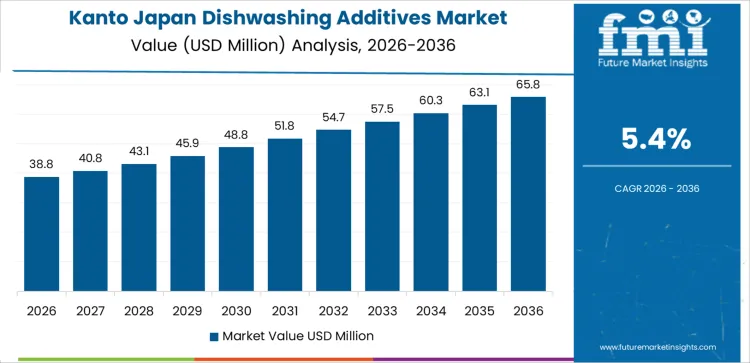
Kanto is experiencing steady demand for dishwashing additives, with a 5.4% CAGR. The region's large urban population, particularly in Tokyo, is driving the growth in dishwashing additive consumption due to increased awareness of hygiene and the demand for convenient cleaning solutions in busy households. The region’s modern lifestyle, where people often prefer efficient, quick cleaning products, is fueling the demand for high-performance dishwashing additives. As more consumers shift toward using specialized detergents for better cleaning efficiency, the adoption of dishwashing additives is increasing in both residential and commercial sectors. Growing focus on durability, Kanto residents are opting for eco-friendly additives that reduce environmental impact while ensuring effective cleaning. As the region continues to embrace innovation in home cleaning solutions, demand for dishwashing additives will continue to rise steadily.
How is Demand for Dishwashing Additives Expanding in Kansai?
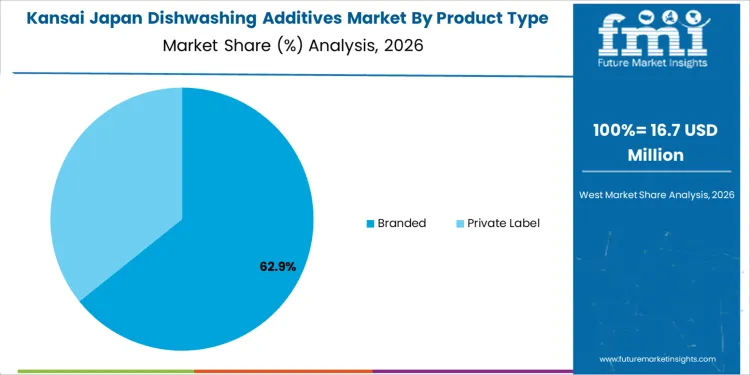
Kansai is seeing moderate demand for dishwashing additives, growing at a 4.8% CAGR. The region, home to cities like Osaka and Kyoto, has a well-established food culture, which contributes to the need for efficient dishwashing solutions in both households and foodservice businesses. As Kansai’s population increasingly adopts modern cleaning habits and seeks products that offer both efficiency and safety, dishwashing additives are becoming more popular. The region's growing focus on environmental durability is also pushing the demand for eco-friendly, biodegradable dishwashing solutions. Kansai’s emphasis on improving consumer convenience in daily household chores is another factor driving the industry for dishwashing additives. As consumer preferences shift towards more natural and environmentally responsible products, the demand for dishwashing additives in Kansai will continue to rise steadily.
How is Demand for Dishwashing Additives Growing in Chubu?
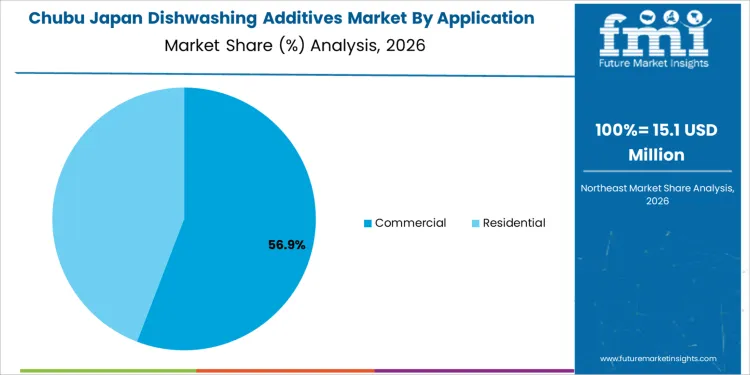
Chubu is experiencing moderate demand for dishwashing additives, with a 4.2% CAGR. The region’s strong manufacturing base and growing residential sectors are contributing to the rise in dishwashing additive consumption. Chubu, home to industrial cities like Nagoya, has a large working population that increasingly seeks convenient cleaning products for home use. The growing trend of durability and eco-conscious consumer behavior in Chubu is driving the demand for greener and more efficient dishwashing additives. As the region continues to prioritize both convenience and environmental responsibility, the adoption of dishwashing additives that provide better cleaning while being safe for the environment will continue to rise. As Chubu’s foodservice and retail industries grow, dishwashing additives will see increased usage in both residential and commercial sectors.
How is Demand for Dishwashing Additives Growing in Tohoku?
Tohoku is seeing moderate demand for dishwashing additives, growing at a 3.7% CAGR. The region’s focus on improving household hygiene, combined with a rising awareness of cleaning product efficiency, is driving demand for dishwashing additives. Although not as concentrated as in major metropolitan regions, Tohoku’s increasing emphasis on durability and convenience is pushing consumers to adopt better cleaning solutions. As the region’s population becomes more health-conscious and eco-aware, the use of specialized dishwashing additives, including those that are environmentally friendly, is gaining traction. The growth in Tohoku’s foodservice and retail sectors is contributing to the rising demand for dishwashing additives in both commercial and residential settings. As consumer habits continue to evolve, demand for dishwashing additives will continue to grow, especially as eco-friendly and efficient options become more available.
How is Demand for Dishwashing Additives Growing in Rest of Japan?
The rest of Japan is experiencing moderate demand for dishwashing additives, growing at a 3.5% CAGR. While demand is less concentrated than in major urban regions, there is a steady increase in the adoption of dishwashing additives across smaller cities and rural areas. As consumer awareness of hygiene and cleanliness rises, the use of additives that improve dishwashing efficiency is becoming more common in homes and businesses. The demand for eco-friendly and natural products is also growing in these areas, driving the adoption of environmentally responsible dishwashing additives. As the rest of Japan continues to focus on health, hygiene, and eco-friendly living, the industry for dishwashing additives will expand, with consumers seeking convenient, effective, and eco-conscious cleaning solutions.
What is the Competitive Landscape of Dishwashing Additives Demand in Japan?
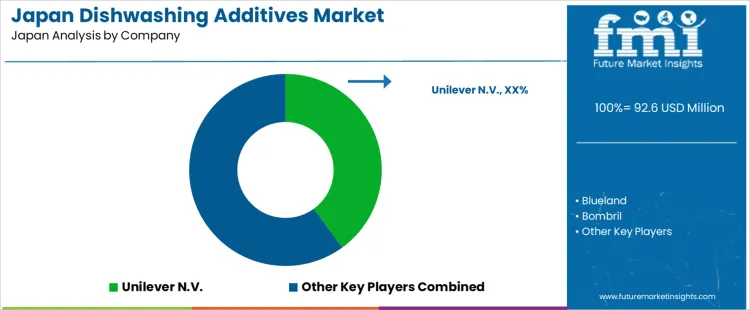
Demand for dishwashing additives in Japan is increasing as consumers and businesses seek more effective, eco-friendly solutions to enhance the performance of dishwashing detergents. These additives, which include agents for grease removal, water softening, and odor control, are essential in improving cleaning efficiency and maintaining the longevity of dishware. As Japan continues to focus on durability, there is also a growing demand for eco-conscious and biodegradable dishwashing additives that align with consumer preferences for green products.
Unilever N.V. is a leading player in the dishwashing additives industry, offering a wide range of products that improve cleaning efficiency and ease of use. The company's strategy focuses on delivering high-performance additives with a strong emphasis on durability. Unilever's commitment to reducing its environmental impact through innovative, eco-friendly formulations positions it as a dominant player in Japan's competitive industry.
Other major competitors, including Blueland, Bombril, Reckitt Benckiser Group plc, and Church & Dwight Co. Inc., also contribute to the growing demand. Blueland stands out with its environmentally conscious approach, offering eco-friendly, refillable products that cater to eco-aware consumers. Bombril provides affordable and effective dishwashing solutions in the Japanese industry, while Reckitt Benckiser Group and Church & Dwight Co. focus on offering high-quality additives under well-known brands, improving the effectiveness of dishwashing detergents. These companies continue to innovate, developing eco-friendlier and efficient products to meet the evolving needs of consumers in Japan.
Key Players in Japan Dishwashing Additives Demand
- Unilever N.V.
- Blueland
- Bombril
- Reckitt Benckiser Group plc
- Church & Dwight Co. Inc.
Scope of Report
| Items | Values |
|---|---|
| Quantitative Units (2026) | USD million |
| Key Segments | Branded, Private Label |
| Application | Commercial, Residential |
| Form Type | Liquid, Powder, Others |
| Sales Channel | Hypermarket/Supermarket, Independent Grocery Stores, Specialty Stores, Wholesalers/Distributors, Online Retailers |
| Key Country | Japan |
| Region | Kyushu & Okinawa, Kanto, Kansai, Chubu, Tohoku, Rest of Japan |
| Key Players Profiled | Unilever N.V., Blueland, Bombril, Reckitt Benckiser Group plc, Church & Dwight Co. Inc. |
| Additional Attributes | Dollar sales by product type, application, form type, and sales channel; regional CAGR and growth trends in dishwashing additives demand in Japan |
Japan Dishwashing Additives Demand by Key Segments
By Product Type:
- Branded
- Private Label
By Application:
- Commercial
- Residential
By Form Type:
- Liquid
- Powder
- Others
By Sales Channel:
- Hypermarket/ Supermarket
- Independent Grocery Stores
- Specialty Stores
- Wholesalers/Distributors
- Online Retailers
By Region:
- Kyushu & Okinawa
- Kanto
- Kansai
- Chubu
- Tohoku
- Rest of Japan
Frequently Asked Questions
How big is the demand for dishwashing additives in Japan in 2026?
The demand for dishwashing additives in Japan is estimated to be valued at USD 92.6 million in 2026.
What will be the size of dishwashing additives in Japan in 2036?
The market size for the dishwashing additives in Japan is projected to reach USD 153.5 million by 2036.
How much will be the demand for dishwashing additives in Japan growth between 2026 and 2036?
The demand for dishwashing additives in Japan is expected to grow at a 4.7% CAGR between 2026 and 2036.
What are the key product types in the dishwashing additives in Japan?
The key product types in dishwashing additives in Japan are branded and private label.
Which application segment is expected to contribute significant share in the dishwashing additives in Japan in 2026?
In terms of application, commercial segment is expected to command 55.0% share in the dishwashing additives in Japan in 2026.
Preview the report firsthand - request a free sample
Get SampleGet the brochure for pricing and purchase details.
Get PDFTable of Content
- Executive Summary
- Japan Market Outlook
- Demand-side Trends
- Supply-side Trends
- Technology Roadmap Analysis
- Analysis and Recommendations
- Market Overview
- Market Coverage / Taxonomy
- Market Definition / Scope / Limitations
- Market Background
- Market Dynamics
- Drivers
- Restraints
- Opportunity
- Trends
- Scenario Forecast
- Demand in Optimistic Scenario
- Demand in Likely Scenario
- Demand in Conservative Scenario
- Opportunity Map Analysis
- Product Life Cycle Analysis
- Supply Chain Analysis
- Investment Feasibility Matrix
- Value Chain Analysis
- PESTLE and Porter’s Analysis
- Regulatory Landscape
- Regional Parent Market Outlook
- Production and Consumption Statistics
- Import and Export Statistics
- Market Dynamics
- Japan Market Analysis 2021 to 2025 and Forecast, 2026 to 2026
- Historical Market Size Value (USD Million) Analysis, 2021 to 2025
- Current and Future Market Size Value (USD Million) Projections, 2026 to 2026
- Y-o-Y Growth Trend Analysis
- Absolute $ Opportunity Analysis
- Japan Market Pricing Analysis 2021 to 2025 and Forecast 2026 to 2026
- Japan Market Analysis 2021 to 2025 and Forecast 2026 to 2026, By Product Type
- Introduction / Key Findings
- Historical Market Size Value (USD Million) Analysis By Product Type , 2021 to 2025
- Current and Future Market Size Value (USD Million) Analysis and Forecast By Product Type , 2026 to 2026
- Branded
- Private Label
- Y-o-Y Growth Trend Analysis By Product Type , 2021 to 2025
- Absolute $ Opportunity Analysis By Product Type , 2026 to 2026
- Japan Market Analysis 2021 to 2025 and Forecast 2026 to 2026, By Application
- Introduction / Key Findings
- Historical Market Size Value (USD Million) Analysis By Application, 2021 to 2025
- Current and Future Market Size Value (USD Million) Analysis and Forecast By Application, 2026 to 2026
- Commercial
- Residential
- Y-o-Y Growth Trend Analysis By Application, 2021 to 2025
- Absolute $ Opportunity Analysis By Application, 2026 to 2026
- Japan Market Analysis 2021 to 2025 and Forecast 2026 to 2026, By Form Type
- Introduction / Key Findings
- Historical Market Size Value (USD Million) Analysis By Form Type, 2021 to 2025
- Current and Future Market Size Value (USD Million) Analysis and Forecast By Form Type, 2026 to 2026
- Liquid
- Powder
- Others
- Y-o-Y Growth Trend Analysis By Form Type, 2021 to 2025
- Absolute $ Opportunity Analysis By Form Type, 2026 to 2026
- Japan Market Analysis 2021 to 2025 and Forecast 2026 to 2026, By Sales Channel
- Introduction / Key Findings
- Historical Market Size Value (USD Million) Analysis By Sales Channel, 2021 to 2025
- Current and Future Market Size Value (USD Million) Analysis and Forecast By Sales Channel, 2026 to 2026
- Hypermarkets/ Supermarkets
- Independent Grocery Stores
- Specialty Stores
- Wholesalers/Distributors
- Online Retailers
- Y-o-Y Growth Trend Analysis By Sales Channel, 2021 to 2025
- Absolute $ Opportunity Analysis By Sales Channel, 2026 to 2026
- Market Structure Analysis
- Competition Dashboard
- Competition Benchmarking
- Market Share Analysis of Top Players
- By Regional
- By Product Type
- By Application
- By Form Type
- By Sales Channel
- Competition Analysis
- Competition Deep Dive
- Unilever N.V.
- Overview
- Product Portfolio
- Profitability by Market Segments (Product/Age /Sales Channel/Region)
- Sales Footprint
- Strategy Overview
- Marketing Strategy
- Product Strategy
- Channel Strategy
- Blueland
- Bombril
- Reckitt Benckiser Group plc
- Church & Dwight Co. Inc.
- Unilever N.V.
- Competition Deep Dive
- Assumptions & Acronyms Used
- Research Methodology


