

- Industry Size (2026)
- USD 136.6 Mn
- Forecast (2036)
- USD 275.9 Mn
- CAGR (2026 to 2036)
- 6.6%
Demand for Dried Eggs in Japan Forecast and Outlook 2026 to 2036
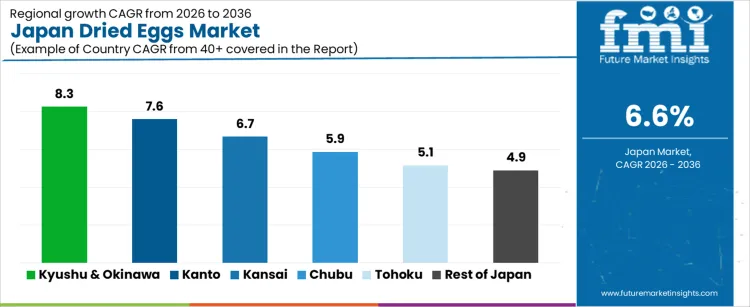
Demand for dried eggs in Japan is forecasted to grow from USD 136.6 million in 2026 to USD 275.9 million by 2036, with a CAGR of 6.6%. Whole eggs account for 45% of demand, driven by their versatility across applications such as food processing, sauces, soups, and ready-to-eat meals. The food processing industry is the largest end-user, contributing 50% of the industry, followed by the bakery & confectionery and retail/household sectors. As demand for convenience foods continues to rise, whole dried eggs remain a key ingredient for their long shelf life and ease of use. Regions such as Kyushu & Okinawa lead the demand with an 8.3% CAGR, driven by a strong agricultural base and food processing industry. Kanto follows at 7.6% CAGR, benefiting from its urban population and growing demand for ready-to-eat meals.
Quick Stats of the Demand for Dried Eggs in Japan
- Demand for Dried Eggs in Japan Value (2026): USD 136.6 million
- Demand for Dried Eggs in Japan Forecast Value (2036): USD 275.9 million
- Demand for Dried Eggs in Japan Forecast CAGR (2026 to 2036): 6.6%
- Demand for Dried Eggs in Japan Leading Product Type: Whole Eggs
- Demand for Dried Eggs in Japan Key Growth Regions: Kyushu & Okinawa, Kanto, Kansai, Chubu, Tohoku, Rest of Japan
- Demand for Dried Eggs in Japan Top Players: Rose Acre Farms, Rembrandt Enterprises, Michael Foods, Inc., Pulviver S.A., Ovostar Union
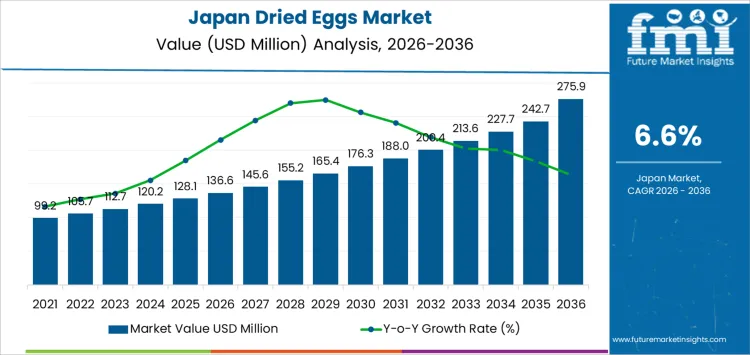
Rose Acre Farms, Rembrandt Enterprises, Michael Foods, and Ovostar Union are well-positioned to meet the increasing demand for dried eggs in Japan. Kyushu & Okinawa’s growing food processing sector and Kanto’s urban-centric demand continue to drive growth. Kansai’s strong food manufacturing base and Chubu’s agricultural sector contribute to moderate growth in these regions. As food manufacturers prioritize convenience, sustainability, and shelf-stable ingredients, the adoption of dried eggs is expected to continue increasing, with technological advancements in drying methods further enhancing their quality and applications across the food industry.
Demand for Dried Eggs in Japan Key Takeaways
| Metric | Value |
|---|---|
| Demand for Dried Eggs in Japan Value (2026) | USD 136.6 million |
| Demand for Dried Eggs in Japan Forecast Value (2036) | USD 275.9 million |
| Demand for Dried Eggs in Japan Forecast CAGR (2026 to 2036) | 6.6% |
Why is the Demand for Dried Eggs in Japan Growing?
Demand for dried eggs in Japan is growing due to the increasing need for convenient, long shelf-life, and easy-to-store ingredients in food manufacturing, particularly in the processed food, baking, and foodservice industries. Dried eggs offer a cost-effective, shelf-stable alternative to fresh eggs, making them ideal for use in products like baked goods, instant noodles, sauces, and ready-to-eat meals. As Japan continues to focus on convenience and efficiency in food production, the use of dried eggs has become more widespread, especially in applications where eggs need to be mixed or incorporated into dry ingredients.
Key drivers for this growth include the rise in demand for ready-to-eat meals and processed foods, which often require dried eggs as an ingredient to enhance texture, flavor, and nutritional value. The increasing popularity of convenience foods and snacks, along with the demand for high-quality, long-lasting ingredients in food production, is fueling the adoption of dried eggs. Dried eggs are being used in the growing sector of food exports, where their extended shelf life and compact packaging make them ideal for international trade. Technological advancements in drying methods, such as spray-drying and freeze-drying, are improving the quality of dried eggs, making them more versatile and suitable for a broader range of applications.
What is the Segment-Wise Analysis of Demand for Dried Eggs in Japan?
Demand for dried eggs in Japan is segmented by product type, end-use application, and region. By product type, whole eggs lead with 45% of the demand, followed by egg whites and egg yolk. In terms of end-use application, the food processing industry accounts for 50% of the demand, with bakery & confectionery and retail/households contributing to the remainder. Regionally, demand is distributed across Kyushu & Okinawa, Kanto, Kansai, Chubu, Tohoku, and the rest of Japan.
Why Do Whole Eggs Lead the Demand for Dried Eggs in Japan?
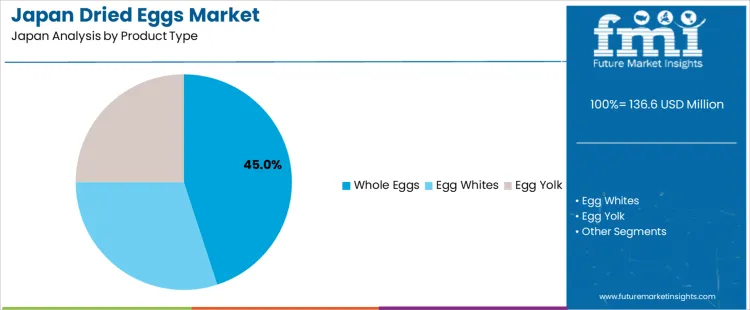
Whole eggs account for 45% of the demand for dried eggs in Japan due to their versatility and wide range of applications in food processing. Whole dried eggs are commonly used in the production of prepared foods, sauces, soups, and beverages, providing a convenient and cost-effective alternative to fresh eggs. They are valued for their balanced nutrient profile, which includes both egg whites and yolks, making them suitable for a variety of applications. The growing demand for processed and convenience foods, along with the increasing use of dried eggs in the food industry, contributes to their industry dominance. As the demand for long shelf-life, easy-to-store ingredients continues to rise, whole dried eggs remain a primary choice for manufacturers, cementing their role in the food production process.
How Does the Food Processing Industry Drive the Demand for Dried Eggs in Japan?
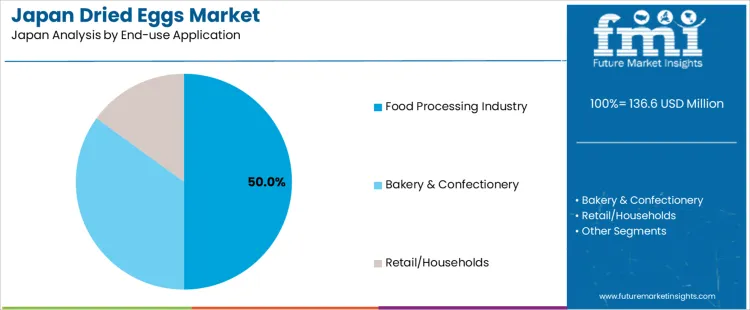
The food processing industry accounts for 50% of the demand for dried eggs in Japan, driven by their crucial role in the production of a wide variety of processed foods. Dried eggs offer significant advantages in food processing, including longer shelf life, ease of storage, and reduced waste compared to fresh eggs. They are commonly used in processed food products such as sauces, snacks, instant meals, and beverages. The growing demand for convenience foods, along with the need for stable and cost-effective ingredients, ensures that the food processing industry remains the leading end-user for dried eggs. As consumer preferences for ready-to-eat and easy-to-prepare meals increase, the demand for dried eggs in food processing is expected to continue to grow, reinforcing its essential role in the industry.
What are the Key Trends, Drivers and Restraints in Demand for Dried Eggs in Japan?
Demand for dried eggs in Japan is rising as food manufacturers and foodservice operators seek convenient, long‑shelf‑life alternatives to fresh eggs. Dried eggs are used in bakery, confectionery, ready meals and industrial food production because they reduce spoilage, simplify handling, and support consistent quality. Trends include growth in processed foods, convenience meals, and emergency food supplies. Drivers include supply stability during price fluctuations of fresh eggs and demand for efficient storage.
Why is Demand for Dried Eggs Growing in Japan?
Demand for dried eggs in Japan is growing due to practical benefits for food producers and manufacturers. Dried eggs help reduce logistics and cold‑chain dependency, which is important in a country with many small food processors and space‑limited kitchens. The bakery and snack sectors increasingly use dried eggs to ensure consistent mixing performance and extended storage. Foodservice outlets and institutional kitchens benefit from rapid reconstitution and portion control. Occasional fluctuations in fresh egg supply due to avian influenza outbreaks make dried eggs an attractive alternative. Steady interest in convenience foods and industrial baking further supports demand.
How are Technological and Industry Innovations Driving Dried Egg Demand in Japan?
Technological improvements are boosting demand for dried eggs in Japan by enhancing product quality, functionality and safety. Advances in drying methods such as spray and vacuum drying preserve protein functionality, color and flavor more effectively than older processes. Improved packaging technologies extend shelf life and protect against humidity, which is important in Japan’s varied climate. Industry innovations include tailored dried egg blends for specific applications like whipping or baking, reducing formulation challenges. Automation in reconstitution and dosing systems in food factories also streamlines use. These innovations make dried eggs more dependable and versatile for diverse processing needs.
What is the Regional Demand Outlook for Dried Eggs in Japan?
| Region | CAGR (%) |
|---|---|
| Kyushu & Okinawa | 8.3% |
| Kanto | 7.6% |
| Kansai | 6.7% |
| Chubu | 5.9% |
| Tohoku | 5.1% |
| Rest of Japan | 4.9% |
Demand for dried eggs in Japan is growing steadily, with Kyushu & Okinawa leading at an 8.3% CAGR, driven by its strong agricultural base and food processing sector. Kanto follows with a 7.6% CAGR, supported by its large urban population and demand for convenience foods. Kansai shows a 6.7% CAGR, fueled by its well-established food manufacturing industry and innovation in processed foods. Chubu experiences a 5.9% CAGR, with steady growth driven by its agricultural sector and growing food manufacturing capabilities. Tohoku and the rest of Japan see moderate growth at 5.1% and 4.9% CAGR, respectively, as food manufacturers in these regions increasingly adopt dried eggs in food production.
How is Demand for Dried Eggs Growing in Kyushu & Okinawa?
Kyushu & Okinawa leads the demand for dried eggs in Japan, growing at an 8.3% CAGR. The region’s agricultural strength, particularly in egg production, is driving the use of dried eggs in food processing. Kyushu’s food manufacturing sector is growing, especially in baked goods, noodles, and sauces, where dried eggs are valued for their shelf life and ease of storage. Okinawa also contributes, with an increasing interest in food preservation techniques to address local consumption needs. As more consumers and food manufacturers in Kyushu & Okinawa adopt dried eggs for their nutritional value and convenience, the industry is set for continued expansion. The focus on sustainable food production and reducing food waste is further boosting demand, as dried eggs offer a reliable, cost-effective solution for food production and preservation.
Why is Demand for Dried Eggs Rising in Kanto?
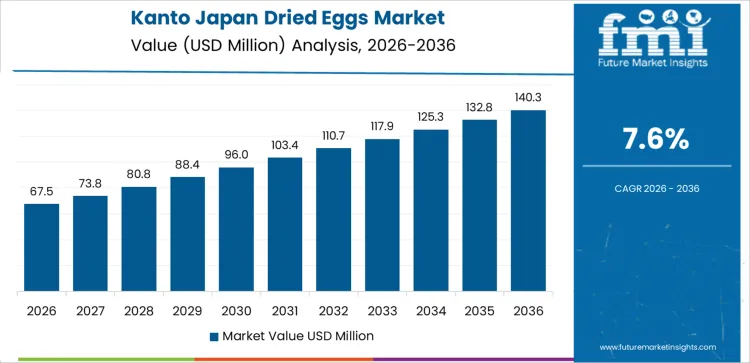
Kanto is experiencing steady demand for dried eggs, growing at a 7.6% CAGR. The region's large urban population, particularly in Tokyo, is driving demand for convenient, shelf-stable food products. Dried eggs are commonly used in the production of ready-to-eat meals, processed snacks, and baked goods, where consistency and longevity are essential. The growing focus on convenience foods and busy lifestyles has further accelerated the need for such ingredients. As more food manufacturers in Kanto incorporate dried eggs in their formulations to meet consumer demand for convenient, high-quality foods, this trend is expected to continue. The region's emphasis on food innovation and sustainability is pushing the adoption of dried eggs, which are seen as an efficient and eco-friendly solution in food production.
How is Demand for Dried Eggs Expanding in Kansai?
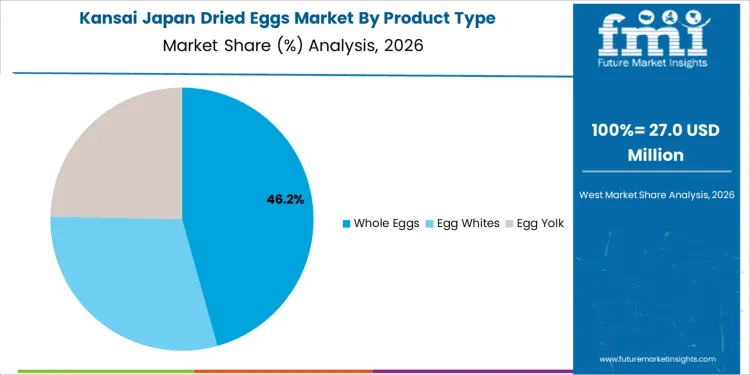
Kansai is seeing steady demand for dried eggs, growing at a 6.7% CAGR. The region’s strong food manufacturing sector, especially in Osaka and Kyoto, is a major driver of this demand. Dried eggs are commonly used in processed foods such as soups, sauces, and ready-to-eat meals due to their extended shelf life and cost-effectiveness. Kansai’s food industry continues to innovate, and the increasing demand for convenient and nutritionally balanced foods is boosting the use of dried eggs. As consumer preferences shift towards healthier options and food manufacturers seek ingredients that meet both quality and sustainability goals, dried eggs are becoming a popular choice in Kansai’s growing food processing industry. This demand is also fueled by regional food companies’ focus on efficiency and meeting global standards for food safety and production.
How is Demand for Dried Eggs Growing in Chubu?
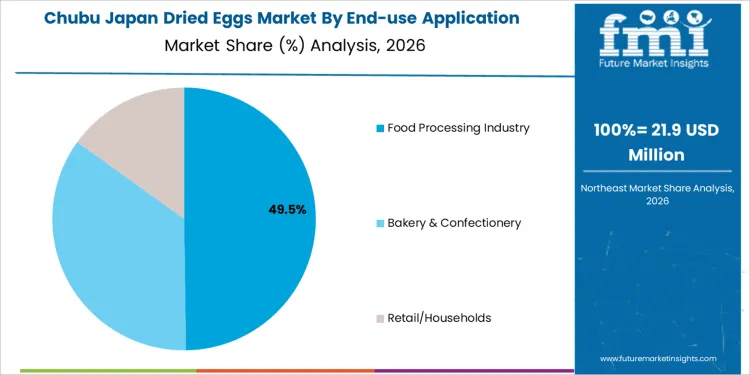
Chubu is experiencing moderate demand for dried eggs, growing at a 5.9% CAGR. The region, with major cities like Nagoya, is seeing steady growth in its food manufacturing sector. Dried eggs are increasingly used in the production of baked goods, noodles, and convenience foods due to their shelf stability and versatility. Chubu's agricultural sector, which is expanding its focus on food processing and innovation, is also contributing to this growth. As the region shifts toward more sustainable food production methods, dried eggs are becoming an attractive option for food manufacturers looking to reduce waste and increase efficiency. Chubu’s focus on the production of functional foods, health-conscious ingredients, and long shelf-life products is supporting the rising demand for dried eggs in various food applications, ensuring continued growth in the region.
How is Demand for Dried Eggs Growing in Tohoku?
Tohoku is seeing moderate demand for dried eggs, with a 5.1% CAGR. While not as concentrated in food manufacturing as other regions, Tohoku’s strong agricultural base is contributing to the rise in dried egg adoption. The region’s focus on food innovation and sustainability is driving the use of dried eggs in local food processing, especially in sectors such as bakery and snacks. With a growing interest in food preservation and increasing demand for shelf-stable products, dried eggs are seen as an efficient solution for food manufacturers. Tohoku’s agricultural emphasis on organic and locally produced ingredients further supports the adoption of dried eggs, as they are often used in formulations aimed at maintaining high-quality, healthy food products. As food manufacturers in Tohoku continue to innovate and expand their production capacities, the demand for dried eggs will continue to grow at a moderate pace.
How is Demand for Dried Eggs Growing in Rest of Japan?
The rest of Japan is experiencing moderate demand for dried eggs, growing at a 4.9% CAGR. Although not as concentrated in major food production centers, the rest of Japan is steadily increasing its adoption of dried eggs, particularly in regions focused on sustainable food production and preservation. Dried eggs are becoming more popular in smaller food manufacturers’ operations, where cost-efficiency and long shelf life are key considerations. As regional food producers innovate and develop new food offerings such as snacks, ready meals, and bakery goods, the demand for dried eggs continues to rise. The aging population in these areas is also increasing demand for convenient and easy-to-prepare food products, driving the use of dried eggs in the food processing industry. As food manufacturing continues to expand across these regions, the demand for dried eggs will remain steady and moderate.
What is the Competitive Landscape of Dried Eggs Demand in Japan?
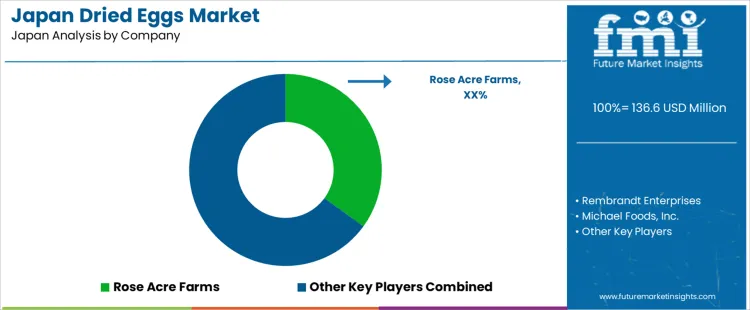
Demand for dried eggs in Japan is growing, driven by the country's focus on convenience, longer shelf life, and the increasing popularity of processed food products. Dried eggs, which are used in a variety of industries, including food production, baking, and catering, offer an efficient, stable alternative to fresh eggs. As the demand for ready-to-eat and packaged food continues to rise, the need for dried eggs is expected to expand, especially in sectors where long shelf life and ease of transport are critical.
Rose Acre Farms is a key player in the dried eggs industry, offering high-quality dried egg products that cater to the food service, retail, and industrial sectors. The company’s strategy focuses on delivering reliable, cost-effective egg solutions that maintain the integrity of flavor and nutrition, meeting the demands of a diverse customer base. Rose Acre’s reputation for quality and consistency ensures its strong presence in Japan's competitive industry.
Other notable competitors include Rembrandt Enterprises, Michael Foods, Inc., Pulviver S.A., and Ovostar Union. Rembrandt Enterprises is known for its innovative dried egg products that cater to both food and ingredient industries. Michael Foods specializes in egg-based ingredients and solutions, offering versatile options for food processing. Pulviver S.A. and Ovostar Union focus on providing dried egg products with an emphasis on sustainable practices and quality control. As demand for dried eggs increases in Japan, these companies continue to expand their product offerings to meet the evolving needs of food manufacturers and consumers.
Key Players in Japan Dried Eggs Demand
- Rose Acre Farms
- Rembrandt Enterprises
- Michael Foods, Inc.
- Pulviver S.A.
- Ovostar Union
Scope of Report
| Items | Values |
|---|---|
| Quantitative Units (2026) | USD million |
| Key Segments | Whole Eggs, Egg Whites, Egg Yolk |
| End-use Application | Food Processing Industry, Bakery & Confectionery, Retail/Households |
| Key Country | Japan |
| Region | Kyushu & Okinawa, Kanto, Kansai, Chubu, Tohoku, Rest of Japan |
| Key Players Profiled | Rose Acre Farms, Rembrandt Enterprises, Michael Foods, Inc., Pulviver S.A., Ovostar Union |
| Additional Attributes | Dollar sales by product type and end-use application; regional CAGR and growth trends in dried eggs demand in Japan |
Japan Dried Eggs Demand by Key Segments
By Product Type:
- Whole Eggs
- Egg Whites
- Egg Yolk
By End-use Application:
- Food Processing Industry
- Bakery & Confectionery
- Retail/Households
By Region:
- Kyushu & Okinawa
- Kanto
- Kansai
- Chubu
- Tohoku
- Rest of Japan
Frequently Asked Questions
How big is the demand for dried eggs in Japan in 2026?
The demand for dried eggs in Japan is estimated to be valued at USD 136.6 million in 2026.
What will be the size of dried eggs in Japan in 2036?
The market size for the dried eggs in Japan is projected to reach USD 275.9 million by 2036.
How much will be the demand for dried eggs in Japan growth between 2026 and 2036?
The demand for dried eggs in Japan is expected to grow at a 6.6% CAGR between 2026 and 2036.
What are the key product types in the dried eggs in Japan?
The key product types in dried eggs in Japan are whole eggs, egg whites and egg yolk.
Which end-use application segment is expected to contribute significant share in the dried eggs in Japan in 2026?
In terms of end-use application, food processing industry segment is expected to command 50.0% share in the dried eggs in Japan in 2026.
Preview the report firsthand - request a free sample
Get SampleGet the brochure for pricing and purchase details.
Get PDFTable of Content
- Executive Summary
- Japan Market Outlook
- Demand-side Trends
- Supply-side Trends
- Technology Roadmap Analysis
- Analysis and Recommendations
- Market Overview
- Market Coverage / Taxonomy
- Market Definition / Scope / Limitations
- Market Background
- Market Dynamics
- Drivers
- Restraints
- Opportunity
- Trends
- Scenario Forecast
- Demand in Optimistic Scenario
- Demand in Likely Scenario
- Demand in Conservative Scenario
- Opportunity Map Analysis
- Product Life Cycle Analysis
- Supply Chain Analysis
- Investment Feasibility Matrix
- Value Chain Analysis
- PESTLE and Porter’s Analysis
- Regulatory Landscape
- Regional Parent Market Outlook
- Production and Consumption Statistics
- Import and Export Statistics
- Market Dynamics
- Japan Market Analysis 2021 to 2025 and Forecast, 2026 to 2036
- Historical Market Size Value (USD Million) Analysis, 2021 to 2025
- Current and Future Market Size Value (USD Million) Projections, 2026 to 2036
- Y-o-Y Growth Trend Analysis
- Absolute $ Opportunity Analysis
- Japan Market Pricing Analysis 2021 to 2025 and Forecast 2026 to 2036
- Japan Market Analysis 2021 to 2025 and Forecast 2026 to 2036, By Product Type
- Introduction / Key Findings
- Historical Market Size Value (USD Million) Analysis By Product Type, 2021 to 2025
- Current and Future Market Size Value (USD Million) Analysis and Forecast By Product Type, 2026 to 2036
- Whole Eggs
- Egg Whites
- Egg Yolk
- Y-o-Y Growth Trend Analysis By Product Type, 2021 to 2025
- Absolute $ Opportunity Analysis By Product Type, 2026 to 2036
- Japan Market Analysis 2021 to 2025 and Forecast 2026 to 2036, By End-use Application
- Introduction / Key Findings
- Historical Market Size Value (USD Million) Analysis By End-use Application, 2021 to 2025
- Current and Future Market Size Value (USD Million) Analysis and Forecast By End-use Application, 2026 to 2036
- Food Processing Industry
- Bakery & Confectionery
- Retail/Households
- Y-o-Y Growth Trend Analysis By End-use Application, 2021 to 2025
- Absolute $ Opportunity Analysis By End-use Application, 2026 to 2036
- Market Structure Analysis
- Competition Dashboard
- Competition Benchmarking
- Market Share Analysis of Top Players
- By Regional
- By Product Type
- By End-use Application
- Competition Analysis
- Competition Deep Dive
- Rose Acre Farms
- Overview
- Product Portfolio
- Profitability by Market Segments (Product/Age /Sales Channel/Region)
- Sales Footprint
- Strategy Overview
- Marketing Strategy
- Product Strategy
- Channel Strategy
- Rembrandt Enterprises
- Michael Foods, Inc.
- Pulviver S.A.
- Ovostar Union
- Rose Acre Farms
- Competition Deep Dive
- Assumptions & Acronyms Used
- Research Methodology


