

- Industry Size (2025)
- USD 6.3 Mn
- Forecast (2035)
- USD 12.1 Mn
- CAGR (2025 to 2035)
- 6.7%
Demand for Micro CHP in Japan Forecast and Outlook 2025 to 2035
The demand for micro combined heat and power (CHP) systems in Japan is growing, with the industry projected to expand from USD 6.3 million in 2025 to USD 12.1 million by 2035, at a CAGR of 6.7%. The demand is segmented by prime mover, end use, capacity, and region. Stirling engines, which lead the prime mover segment with 45% of the demand, are favored for their high efficiency, low emissions, and versatility in fuel use, making them ideal for both residential and commercial applications.
The residential sector dominates the end-use segment, accounting for 60% of the demand, as micro CHP systems provide homeowners with energy-efficient heating and electricity solutions that reduce reliance on the grid. The 5 kW capacity, the most common in residential applications, is popular due to its ideal size for small homes and apartments.
Quick Stats of the Demand for Micro CHP in Japan
- Demand for Micro CHP in Japan Value (2025): USD 6.3 million
- Demand for Micro CHP in Japan Forecast Value (2035): USD 12.1 million
- Demand for Micro CHP in Japan Forecast CAGR (2025-2035): 6.7%
- Demand for Micro CHP in Japan Leading Capacity: 5-10 kW
- Demand for Micro CHP in Japan Key Growth Regions: Kyushu & Okinawa, Kanto, Kansai, Chubu, Tohoku, Rest of Japan
- Demand for Micro CHP in Japan Top Players: ABB Ltd., Capstone Turbine Corporation, Caterpillar Inc, Siemens AG, General Electric Company
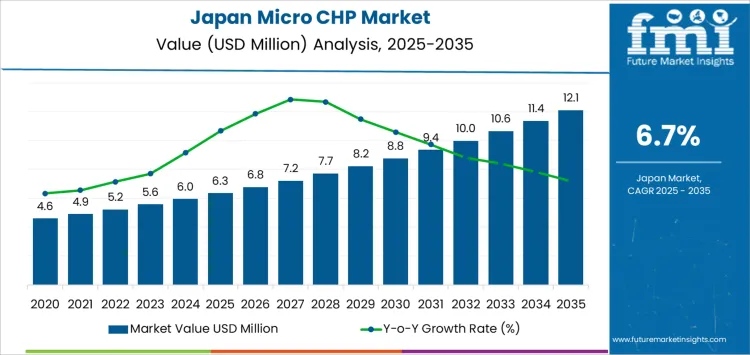
The demand is also driven by the increasing interest in energy efficiency and renewable energy solutions, particularly in urban regions like Kanto and Kansai, which see significant adoption of these systems. Kanto leads the demand with a 7.7% CAGR, supported by its large population and focus on sustainable energy solutions. Kansai and Kyushu & Okinawa follow with 6.7% and 8.3% CAGRs, respectively, driven by regional energy policies and growing awareness of environmental sustainability.
In terms of distribution, micro CHP systems are primarily distributed through B2B channels, catering to businesses and residential consumers seeking efficient and clean energy solutions. The increasing demand for these systems is expected to continue, particularly with Japan’s push for energy resilience and decarbonization through distributed energy sources.
Demand for Micro CHP in Japan Key Takeaways
| Metric | Value |
|---|---|
| Demand for Micro CHP in Japan Value (2025) | USD 6.3 million |
| Demand for Micro CHP in Japan Forecast Value (2035) | USD 12.1 million |
| Demand for Micro CHP in Japan Forecast CAGR (2025-2035) | 6.7% |
Why is the Demand for Micro CHP in Japan Growing?
The demand for micro combined heat and power (CHP) systems in Japan is increasing as the country seeks more efficient and sustainable energy solutions for residential and small-scale commercial applications. Micro CHP systems generate both electricity and heat from a single energy source, typically natural gas or biomass, offering a highly efficient solution for homeowners and businesses. With Japan’s growing focus on energy efficiency, reducing carbon emissions, and enhancing energy security, micro CHP systems are gaining popularity as they allow users to generate their own power while reducing reliance on the grid.
The rise in demand is also driven by Japan’s commitment to renewable energy and its ongoing efforts to improve energy resilience after the 2011 Fukushima disaster. Micro CHP systems align well with the country’s goals of promoting distributed energy solutions and increasing the share of renewable energy in the national energy mix. Micro CHP systems provide users with the ability to manage their energy consumption more effectively, leading to cost savings over time and greater energy independence.
Technological advancements are further contributing to the growth of micro CHP systems. New innovations in system efficiency, affordability, and ease of installation are making these systems more accessible to a broader range of consumers. Japan’s supportive policies, such as subsidies and incentives for energy-efficient technologies, have helped to increase the adoption of micro CHP solutions. As energy demands rise and sustainability remains a key priority, the demand for micro CHP in Japan is expected to continue growing steadily through 2035.
What is the Segment-Wise Analysis of Demand for Micro CHP in Japan?
Demand for micro CHP (Combined Heat and Power) in Japan is segmented by prime mover, end use, capacity, and region. By prime mover, stirling engines lead at 45%, followed by internal combustion engines and fuel cells. In terms of end use, residential applications dominate with 60%, while commercial use also contributes to the demand. The most common capacity ranges are 5 kW, 5-10 kW, and 10-50 kW, catering to different energy needs. Regionally, demand spans across Kyushu & Okinawa, Kanto, Kansai, Chubu, Tohoku, and the rest of Japan, with varying adoption rates based on local infrastructure and energy requirements.
How Do Stirling Engines Lead the Demand for Micro CHP in Japan?
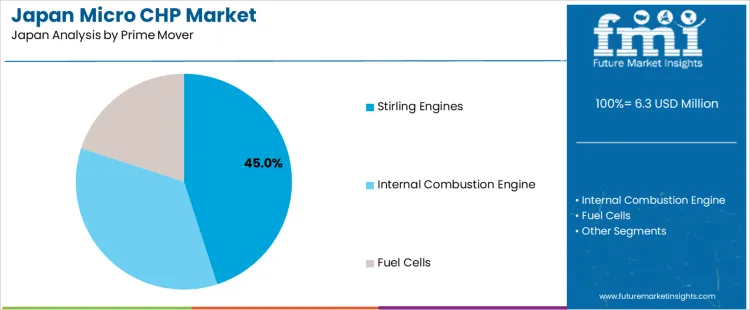
Stirling engines account for 45% of the demand for micro CHP in Japan, driven by their efficiency and versatility in fuel use. These engines are highly valued for their reliability, low emissions, and quiet operation, making them suitable for both residential and commercial applications. Stirling engines can generate both heat and electricity, making them ideal for energy-efficient systems. This dual functionality is particularly appealing in the residential sector, where homeowners seek solutions that can reduce energy costs.
Compared to internal combustion engines, stirling engines offer higher energy efficiency and produce fewer pollutants, aligning with Japan’s goals for energy sustainability and carbon emission reduction. With the growing demand for clean, renewable energy solutions, stirling engines are gaining popularity in regions like Kanto and Kansai, where environmental concerns and energy efficiency are prioritized. The combination of operational efficiency, lower environmental impact, and the ability to utilize various fuel sources ensures stirling engines remain the dominant prime mover for micro CHP in Japan.
Why Does Residential End Use Lead the Demand for Micro CHP in Japan?
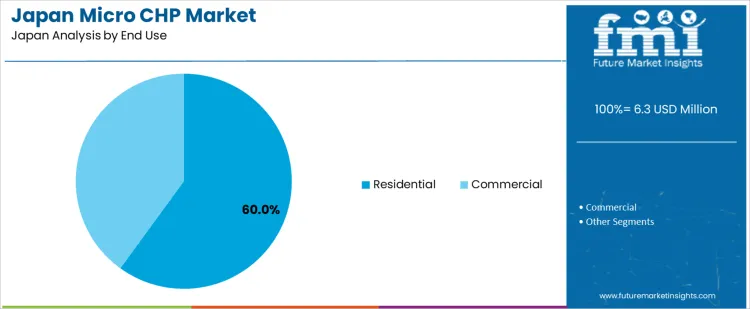
Residential end use accounts for 60% of the demand for micro CHP in Japan, reflecting the increasing need for energy-efficient solutions in homes. Micro CHP systems provide both heat and electricity, making them ideal for residential applications where energy savings are a priority. As electricity and gas prices rise, consumers are seeking ways to reduce their utility bills, which drives the adoption of micro CHP technology.
These systems allow homeowners to generate their own power and reduce reliance on the grid, which is particularly attractive in regions like Kanto and Kansai, where demand for energy-efficient solutions is growing. Furthermore, micro CHP systems contribute to energy independence and reduce environmental impact by providing a cleaner alternative to traditional energy sources. With Japan’s focus on energy efficiency and sustainability, micro CHP technology is becoming an essential part of residential energy solutions, ensuring it continues to lead the demand for micro CHP in the country.
What are the Key Trends, Drivers, and Restraints in Demand for Micro CHP in Japan?
Demand for micro CHP in Japan is rising due to the need for more efficient energy solutions and decentralised power generation. Micro CHP systems offer the advantage of simultaneously producing heat and electricity, which increases energy efficiency and reduces waste compared to conventional separate systems. This dual benefit appeals to households, small businesses, and commercial properties looking to reduce energy costs and environmental impact.
However, challenges remain, such as the high initial installation cost and the relatively complex setup and maintenance requirements. Micro CHP faces competition from other energy solutions, like solar power with storage batteries, which may offer more simplicity and lower upfront costs, potentially limiting its wider adoption.
Why is Demand for Micro CHP Growing in Japan?
The growing demand for micro CHP in Japan is driven by rising energy costs and the increasing need for energy efficiency. Micro CHP offers a reliable, local source of both heat and electricity, making it an attractive solution for households and businesses seeking to lower their utility bills. Furthermore, Japan’s push for decarbonization, energy security, and resilience has spurred interest in self-sufficient and distributed energy systems. Following past power supply disruptions, micro CHP is seen as a viable option for ensuring stable energy access. The government’s support for energy-efficient technologies also plays a role in the growing adoption of micro CHP, particularly as consumers seek to reduce their carbon footprint while improving energy independence.
How are Technological & Industry Innovations Driving Micro CHP Demand in Japan?
Technological advancements are making micro CHP systems more efficient and appealing in Japan. Innovations, particularly in fuel-cell-based micro CHP, have improved energy conversion efficiency and reduced emissions. Modern systems are increasingly compact, and fuel cells offer cleaner energy with better integration into smart home and energy management systems. These technological improvements make micro CHP more suitable for residential and small commercial use, where space and energy efficiency are critical. In addition, hybrid systems that combine renewable energy sources with micro CHP systems are gaining traction, allowing consumers to maximize their energy efficiency and sustainability. These innovations make micro CHP systems more practical, cost-effective, and environmentally friendly, driving demand.
What are the Key Challenges and Risks That Could Limit Micro CHP Demand in Japan?
Despite its potential, micro CHP adoption in Japan faces significant barriers. One key challenge is the high upfront cost of installation, which can be a deterrent for residential and small-scale users, especially compared to conventional energy sources. The complexity of installation and ongoing maintenance, along with the need for specific fuel supplies (such as natural gas or LPG), further limits widespread adoption. Regulatory issues related to grid integration or surplus electricity feed-in can complicate implementation. Competition from other energy-efficient solutions, like solar panels and heat pumps, may also hinder micro CHP adoption if these alternatives become more affordable or easier to install. These factors slow the growth of the micro CHP industry in Japan.
What is the Regional Demand Outlook for Micro CHP in Japan?
Demand for micro CHP (Combined Heat and Power) in Japan is growing steadily across all regions, with Kyushu & Okinawa leading at an 8.3% CAGR, driven by the region’s focus on energy efficiency and renewable energy solutions. Kanto follows with a 7.7% CAGR, supported by its large urban population and growing interest in sustainable energy alternatives. Kansai shows a 6.7% CAGR, fueled by the region’s industrial base and increasing awareness of energy-efficient technologies. Chubu experiences a 5.9% CAGR, driven by the demand for micro CHP systems in both residential and industrial sectors. Tohoku and the Rest of Japan see more moderate growth at 5.2% and 4.9%, respectively, as smaller regions gradually adopt micro CHP solutions.
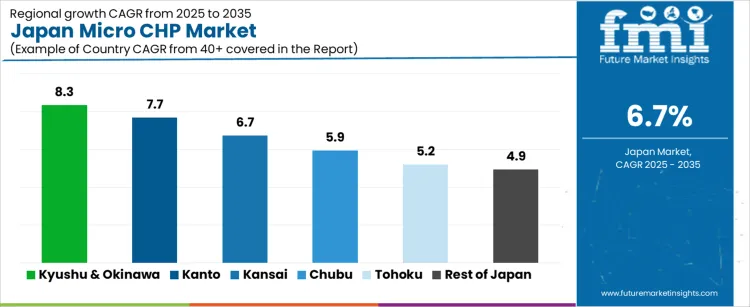
| Region | CAGR (%) |
|---|---|
| Kyushu & Okinawa | 8.3% |
| Kanto | 7.7% |
| Kansai | 6.7% |
| Chubu | 5.9% |
| Tohoku | 5.2% |
| Rest of Japan | 4.9% |
How is Demand for Micro CHP Growing in Kyushu & Okinawa?
Kyushu & Okinawa leads the demand for micro CHP, growing at an 8.3% CAGR. The region’s growing focus on energy efficiency and sustainability has led to an increased interest in micro CHP systems, which provide both electricity and heat in a compact, efficient unit. Okinawa, with its warm climate, benefits from the ability to use micro CHP systems for both residential and commercial energy needs, as these systems help reduce energy consumption while providing reliable power.
The region’s energy policies, which encourage the use of renewable energy and sustainable solutions, are also driving the adoption of micro CHP systems. As local businesses and households seek to reduce energy costs and environmental impact, micro CHP systems offer a promising solution. As Kyushu & Okinawa continue to focus on energy independence and sustainable growth, demand for micro CHP systems is expected to remain strong.
Why is Demand for Micro CHP Rising in Kanto?
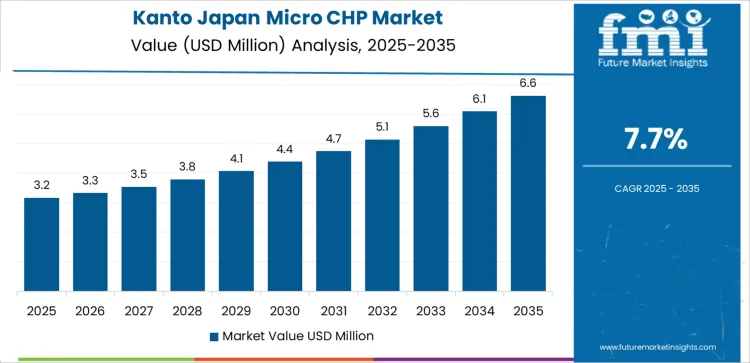
In Kanto, demand for micro CHP is rising at a 7.7% CAGR. Kanto, particularly Tokyo, has a high population density, which drives the demand for energy-efficient solutions. As energy costs rise and environmental concerns grow, consumers and businesses in the region are increasingly turning to micro CHP systems for their ability to generate electricity while utilizing waste heat. The region’s focus on reducing carbon footprints and transitioning to renewable energy sources has led to a greater emphasis on energy-efficient technologies like micro CHP.
Kanto’s industrial base and commercial sector are adopting these systems as part of their sustainability strategies. As Japan’s capital region continues to embrace advanced energy solutions and sustainable living, the demand for micro CHP systems will continue to grow, driven by the need for efficient, eco-friendly energy generation in both residential and commercial applications.
How is Demand for Micro CHP Expanding in Kansai?
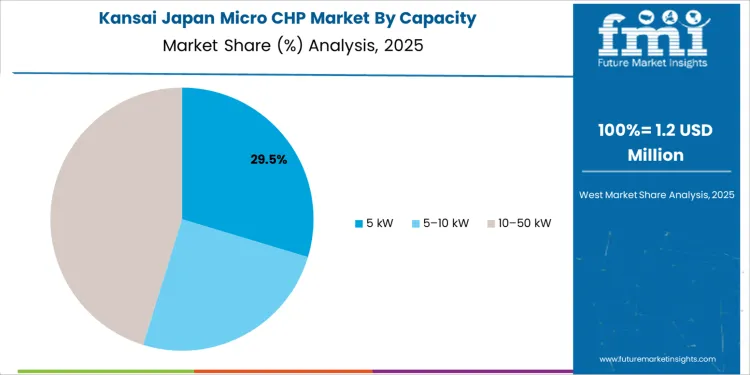
Kansai shows steady demand for micro CHP, growing at a 6.7% CAGR. The region’s industrial base, including key manufacturing sectors in Osaka and Kyoto, has driven the need for more energy-efficient solutions. Micro CHP systems are increasingly being adopted by businesses looking to reduce energy costs and improve energy efficiency, as these systems provide both electricity and heat, maximizing energy utilization.
As Kansai’s foodservice and residential sectors seek more sustainable energy alternatives, micro CHP systems are gaining traction as a viable option for meeting energy demands. The region’s increasing awareness of environmental sustainability and energy independence further supports this trend, as consumers and businesses alike seek to reduce their carbon footprints. As energy efficiency continues to be a priority for Kansai’s residents and industries, micro CHP systems are expected to play a significant role in the region’s energy future.
Why is Demand for Micro CHP Growing in Chubu?
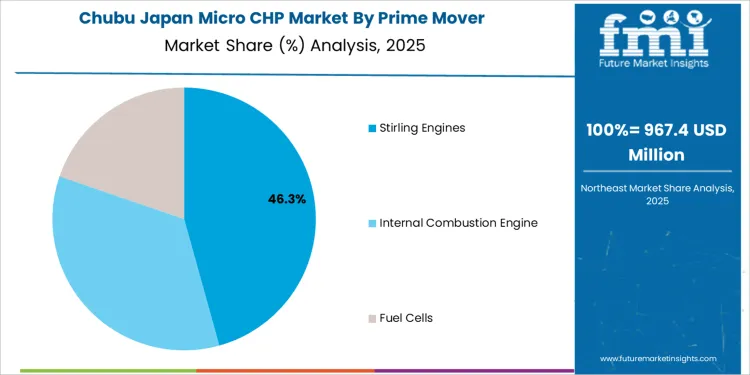
Chubu is experiencing steady demand for micro CHP, growing at a 5.9% CAGR. The region’s growing emphasis on energy-efficient technologies and sustainability has led to an increase in the adoption of micro CHP systems in both residential and commercial sectors. Chubu’s industrial base, particularly in Nagoya, is a key driver of this demand, as businesses look for ways to reduce energy costs while maintaining reliable power generation. Micro CHP systems are well-suited to Chubu’s energy needs, providing both electricity and heat for industrial and residential applications.
With a focus on reducing energy consumption and carbon emissions, the demand for clean, efficient energy solutions like micro CHP is expected to rise. As the region continues to modernize its energy infrastructure and embrace sustainable technologies, micro CHP systems will play an important role in meeting Chubu’s growing energy demands, contributing to continued growth in the sector.
How is Demand for Micro CHP Expanding in Tohoku?
Tohoku is seeing moderate growth in micro CHP demand, with a 5.2% CAGR. The region’s energy needs are increasingly being met with sustainable solutions, and micro CHP systems are becoming a key part of this transition. As Tohoku’s foodservice and residential sectors embrace energy-efficient solutions, the adoption of micro CHP systems is steadily growing. The region’s growing interest in reducing energy consumption, along with government incentives for clean energy technologies, supports the adoption of micro CHP.
Tohoku’s colder climate benefits from the ability of micro CHP systems to provide heat in addition to electricity, making them ideal for residential and commercial use. As the region continues to prioritize sustainability and energy efficiency, micro CHP systems are expected to become a more common choice for households and businesses, contributing to the steady growth of the sector in Tohoku.
Why is Demand for Micro CHP Steady in the Rest of Japan?
The Rest of Japan is experiencing steady demand for micro CHP, with a 4.9% CAGR. While the adoption rate is slower compared to major urban areas, smaller cities and rural regions are gradually embracing these energy-efficient solutions. Micro CHP systems, which provide both electricity and heat, are becoming more popular as consumers and businesses look for ways to reduce energy consumption and lower costs.
With increasing government support for clean energy solutions and a growing focus on sustainability, the demand for micro CHP is expected to rise in these regions over time. As awareness of energy-efficient technologies spreads, more consumers in rural areas are opting for micro CHP systems in their homes and businesses. While growth in the Rest of Japan is more gradual, the increasing interest in sustainability and energy independence ensures that the demand for micro CHP will continue to grow steadily in these areas.
What is Driving the Demand for Micro CHP in Japan and Who Are the Key Providers?
The demand for micro combined heat and power (micro CHP) systems in Japan is increasing due to the growing need for energy efficiency and sustainable solutions. Micro CHP systems generate both electricity and useful heat from a single fuel source, offering high overall energy efficiency compared to separate heat and power production. With energy prices rising and a national focus on reducing carbon emissions, these systems are becoming increasingly attractive to both residential and commercial sectors. They not only help businesses and homeowners lower their energy bills but also reduce reliance on the grid, offering greater energy independence and resilience.
Key providers of micro CHP systems in Japan include ABB Ltd., Capstone Turbine Corporation, Caterpillar Inc., Siemens AG, and General Electric Company. ABB Ltd. leads the sector with a significant share of 40%, supplying micro CHP solutions that integrate advanced technology for greater energy output and efficiency. These companies offer a range of systems, including fuel cell-based and engine-based units, catering to different energy needs across various applications. The technology used in these systems has advanced significantly, with improvements in fuel cells and engines that offer more reliable performance and lower operational costs.
The growing adoption of micro CHP in Japan is supported by government incentives and regulatory frameworks that promote energy efficiency and emissions reduction. Micro CHP systems contribute to decarbonization efforts by enabling cleaner, more efficient energy generation at the point of use, reducing transmission losses. With Japan's emphasis on smart grid technologies and the integration of renewable energy sources, micro CHP systems are playing an important role in creating a decentralized and sustainable energy infrastructure. As energy demands continue to rise, the adoption of micro CHP is expected to grow, providing significant environmental and economic benefits.
Key Players in Japan Micro CHP Demand
- ABB Ltd.
- Capstone Turbine Corporation
- Caterpillar Inc
- Siemens AG
- General Electric Company
Scope of Report
| Items | Values |
|---|---|
| Quantitative Units (2025) | USD million |
| Capacity | 5 kW, 5-10 kW, 10-50 kW |
| Prime Mover | Stirling Engines, Internal Combustion Engine, Fuel Cells |
| End Use | Residential, Commercial |
| Region | Kyushu & Okinawa, Kanto, Kansai, Chubu, Tohoku, Rest of Japan |
| Countries Covered | Japan |
| Key Companies Profiled | ABB Ltd., Capstone Turbine Corporation, Caterpillar Inc, Siemens AG, General Electric Company |
| Additional Attributes | Dollar sales by capacity and prime mover; regional CAGR and growth trends; adoption of micro CHP in residential vs commercial applications; technological advancements in fuel cells and internal combustion engines |
Japan Micro CHP Demand by Key Segments
Capacity
- 5 kW
- 5-10 kW
- 10-50 kW
Prime Mover
- Stirling Engines
- Internal Combustion Engine
- Fuel Cells
End Use
- Residential
- Commercial
Region
- Kyushu & Okinawa
- Kanto
- Kansai
- Chubu
- Tohoku
- Rest of Japan
Frequently Asked Questions
How big is the demand for micro CHP in Japan in 2025?
The demand for micro CHP in Japan is estimated to be valued at USD 6.3 million in 2025.
What will be the size of micro CHP in Japan in 2035?
The market size for the micro CHP in Japan is projected to reach USD 12.1 million by 2035.
How much will be the demand for micro CHP in Japan growth between 2025 and 2035?
The demand for micro CHP in Japan is expected to grow at a 6.7% CAGR between 2025 and 2035.
What are the key product types in the micro CHP in Japan?
The key product types in micro CHP in Japan are 5 kw, 5–10 kw and 10–50 kw.
Which prime mover segment is expected to contribute significant share in the micro CHP in Japan in 2025?
In terms of prime mover, stirling engines segment is expected to command 45.0% share in the micro CHP in Japan in 2025.
Preview the report firsthand - request a free sample
Get SampleGet the brochure for pricing and purchase details.
Get PDFTable of Content
- Executive Summary
- Japan Market Outlook
- Demand-side Trends
- Supply-side Trends
- Technology Roadmap Analysis
- Analysis and Recommendations
- Market Overview
- Market Coverage / Taxonomy
- Market Definition / Scope / Limitations
- Market Background
- Market Dynamics
- Drivers
- Restraints
- Opportunity
- Trends
- Scenario Forecast
- Demand in Optimistic Scenario
- Demand in Likely Scenario
- Demand in Conservative Scenario
- Opportunity Map Analysis
- Product Life Cycle Analysis
- Supply Chain Analysis
- Investment Feasibility Matrix
- Value Chain Analysis
- PESTLE and Porter’s Analysis
- Regulatory Landscape
- Regional Parent Market Outlook
- Production and Consumption Statistics
- Import and Export Statistics
- Market Dynamics
- Japan Market Analysis 2020 to 2024 and Forecast, 2025 to 2035
- Historical Market Size Value (USD Million) Analysis, 2020 to 2024
- Current and Future Market Size Value (USD Million) Projections, 2025 to 2035
- Y-o-Y Growth Trend Analysis
- Absolute $ Opportunity Analysis
- Japan Market Pricing Analysis 2020 to 2024 and Forecast 2025 to 2035
- Japan Market Analysis 2020 to 2024 and Forecast 2025 to 2035, By Capacity
- Introduction / Key Findings
- Historical Market Size Value (USD Million) Analysis By Capacity , 2020 to 2024
- Current and Future Market Size Value (USD Million) Analysis and Forecast By Capacity , 2025 to 2035
- 5 kW
- 5-10 kW
- 10-50 kW
- Y-o-Y Growth Trend Analysis By Capacity , 2020 to 2024
- Absolute $ Opportunity Analysis By Capacity , 2025 to 2035
- Japan Market Analysis 2020 to 2024 and Forecast 2025 to 2035, By Prime Mover
- Introduction / Key Findings
- Historical Market Size Value (USD Million) Analysis By Prime Mover, 2020 to 2024
- Current and Future Market Size Value (USD Million) Analysis and Forecast By Prime Mover, 2025 to 2035
- Stirling Engines
- Internal Combustion Engine
- Fuel Cells
- Y-o-Y Growth Trend Analysis By Prime Mover, 2020 to 2024
- Absolute $ Opportunity Analysis By Prime Mover, 2025 to 2035
- Japan Market Analysis 2020 to 2024 and Forecast 2025 to 2035, By End Use
- Introduction / Key Findings
- Historical Market Size Value (USD Million) Analysis By End Use, 2020 to 2024
- Current and Future Market Size Value (USD Million) Analysis and Forecast By End Use, 2025 to 2035
- Residential
- Commercial
- Y-o-Y Growth Trend Analysis By End Use, 2020 to 2024
- Absolute $ Opportunity Analysis By End Use, 2025 to 2035
- Market Structure Analysis
- Competition Dashboard
- Competition Benchmarking
- Market Share Analysis of Top Players
- By Regional
- By Capacity
- By Prime Mover
- By End Use
- Competition Analysis
- Competition Deep Dive
- ABB Ltd.
- Overview
- Product Portfolio
- Profitability by Market Segments (Product/Age /Sales Channel/Region)
- Sales Footprint
- Strategy Overview
- Marketing Strategy
- Product Strategy
- Channel Strategy
- Capstone Turbine Corporation
- Caterpillar Inc
- Siemens AG
- General Electric Company
- ABB Ltd.
- Competition Deep Dive
- Assumptions & Acronyms Used
- Research Methodology


