

- Industry Size (2025)
- USD 39.7 Mn
- Forecast (2035)
- USD 89.4 Mn
- CAGR (2025 to 2035)
- 8.5%
Demand for Micro CHP in USA Forecast and Outlook 2025 to 2035
The demand for micro combined heat and power (Micro CHP) systems in the USA is expected to grow from USD 39.7 million in 2025 to USD 89.4 million by 2035, reflecting a compound annual growth rate (CAGR) of 8.5%. This growth is driven by the increasing need for energy-efficient solutions that provide both electricity and heat from a single source, supporting sustainability efforts in residential, commercial, and industrial sectors. Micro CHP systems offer significant advantages in terms of energy efficiency, reducing utility bills and contributing to lower carbon emissions, which aligns with the growing focus on clean energy solutions.
The market is further supported by the rise in demand for energy independence and the ongoing trend of decentralizing energy production. As consumers and businesses seek more reliable, cost-effective, and sustainable energy sources, micro CHP systems are becoming an attractive option. Additionally, government incentives and regulations aimed at promoting energy efficiency and reducing carbon footprints are expected to boost the adoption of micro CHP systems, supporting long-term market growth.
Quick Stats of the Demand for Micro CHP in USA
- Demand for Micro CHP in USA Value (2025): USD 39.7 million
- Demand for Micro CHP in USA Forecast Value (2035): USD 89.4 million
- Demand for Micro CHP in USA Forecast CAGR (2025-2035): 8.5%
- Demand for Micro CHP in USA Leading Capacity: 10–50 kW (45%)
- Demand for Micro CHP in USA Key Growth Regions: West USA, South USA, Northeast USA, Midwest USA
- Demand for Micro CHP in USA Key Players: ABB Ltd., Capstone Turbine Corporation, Caterpillar Inc, Siemens AG, General Electric Company
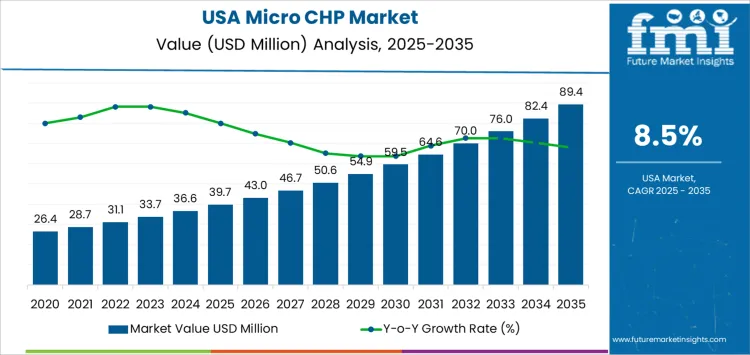
What is the Growth Forecast for the Micro CHP Market through 2035?
The year-on-year (YoY) growth analysis of the Micro CHP market in the USA shows consistent increases in demand throughout the forecast period. Starting at USD 39.7 million in 2025, the market grows to USD 43.0 million in 2026, reflecting a moderate increase in adoption as awareness of the benefits of micro CHP systems grows. This early period of growth is driven by increasing interest in energy-efficient technologies and the expanding availability of micro CHP solutions across various sectors.
The YoY growth remains steady, with the market reaching USD 46.7 million in 2027, USD 50.6 million in 2028, and USD 54.9 million in 2029. This steady increase reflects the growing recognition of micro CHP as a viable energy solution, driven by cost savings, energy independence, and environmental benefits. From 2029 to 2035, the market continues to expand, reaching USD 59.5 million in 2030, USD 64.6 million in 2031, and USD 70.0 million in 2032. By 2035, the market is projected to reach USD 89.4 million, with the annual growth rate increasing slightly due to the expanded adoption of micro CHP systems and ongoing technological advancements. The YoY analysis highlights steady, predictable growth, underpinned by the demand for energy-efficient, sustainable energy solutions.
USA Micro CHP Industry Key Takeaways
| Metric | Value |
|---|---|
| Industry Sales Value (2025) | USD 39.7 million |
| Industry Forecast Value (2035) | USD 89.4 million |
| Industry Forecast CAGR (2025-2035) | 8.5% |
Why is the Demand for Micro CHP Growing in the USA?
Demand for micro CHP (micro combined heat and power) units in the USA is rising because building owners and homeowners are increasingly seeking energy efficiency, lower utility bills, and energy security. Micro CHP systems generate both electricity and usable heat in one integrated process, which improves overall energy efficiency compared with separate generation of power and heating. For residences and small commercial buildings, this means reliable heating plus on site electricity generation, reducing dependence on the grid and cutting energy costs and energy losses from large scale generation and transmission.
At the same time, growing concern about carbon emissions, rising energy prices, and stronger regulatory push for cleaner and more sustainable energy solutions contribute to greater adoption. As fuel cell, microturbine, and Stirling engine technologies mature, micro CHP systems become more efficient, compact, and cost effective, making them viable for individual homes, small apartment buildings, and small businesses. The combination of rising energy costs, interest in distributed energy solutions, and the drive toward decarbonization and energy independence makes micro CHP a more attractive option for USA consumers and commercial users.
What is the Summary of Demand for Micro CHP in USA?
Demand for micro combined heat and power (CHP) systems in the USA is growing as consumers and businesses look for more efficient and sustainable ways to generate power. Micro CHP systems, which simultaneously produce electricity and useful heat, are becoming more popular for residential and small commercial applications due to their ability to reduce energy costs and reliance on the grid. As interest in energy independence, energy efficiency, and renewable energy solutions rises, micro CHP technology is gaining traction, especially in areas with high energy costs. The USA market for micro CHP is expected to expand as technologies improve and government incentives for renewable energy systems increase.
What are the Drivers of Demand for Micro CHP in USA?
Several factors are driving the demand for micro CHP systems in the USA. First, rising energy prices and the need for energy efficiency make micro CHP systems an attractive option for reducing utility bills. These systems allow users to generate their own electricity while also providing heat, which can lower overall energy consumption. Second, government incentives and rebates for renewable energy technologies are encouraging adoption of micro CHP systems. Third, the growing interest in energy independence and reducing carbon footprints is motivating both residential and commercial customers to invest in sustainable energy solutions like micro CHP. Finally, technological advancements, such as improved fuel cells and micro turbines, are enhancing the performance, reliability, and cost-effectiveness of micro CHP systems.
What are the Restraints on Demand for Micro CHP in USA?
Despite growing demand, several factors may limit the adoption of micro CHP systems in the USA. One major restraint is the high initial installation cost, which can be a barrier for residential and small commercial customers, especially when compared to traditional heating and power systems. Additionally, the technology is still evolving, and some systems may not be as efficient or reliable as other renewable energy solutions, such as solar or wind. Limited awareness of micro CHP and a lack of education about its benefits may also hinder broader adoption. Finally, the complexity of installation and integration with existing infrastructure can deter some potential users, especially in older buildings or those without easy access to natural gas supplies.
What are the Key Trends Influencing Demand for Micro CHP in USA?
Several key trends are influencing the demand for micro CHP systems in the USA. A major trend is the growing focus on sustainability and renewable energy, as consumers and businesses seek to reduce their environmental impact and lower energy costs. Additionally, advancements in micro CHP technology, such as improved fuel cell designs and higher efficiency systems, are making the technology more attractive and viable for a wider range of users. Another trend is the increasing interest in smart homes and buildings, where micro CHP systems can be integrated with home automation and energy management systems for enhanced efficiency. As energy storage technology improves, micro CHP systems are also expected to become more efficient, offering greater potential for off-grid and backup power applications. Finally, continued government incentives and regulatory support for renewable energy solutions are expected to drive further growth in the adoption of micro CHP systems in the USA.
What Are the Key Segments in Micro CHP Market in the USA?
Overview The micro combined heat and power (CHP) market in the USA is segmented by capacity and prime mover. The 10–50 kW capacity range leads the market, holding 45% of the share. In terms of prime movers, Stirling engines are the dominant technology, accounting for 45% of the market. The demand for micro CHP systems is driven by the need for efficient energy solutions that provide both electricity and heating for residential and small commercial applications.
Which Capacity Drives Micro CHP Demand in the USA?
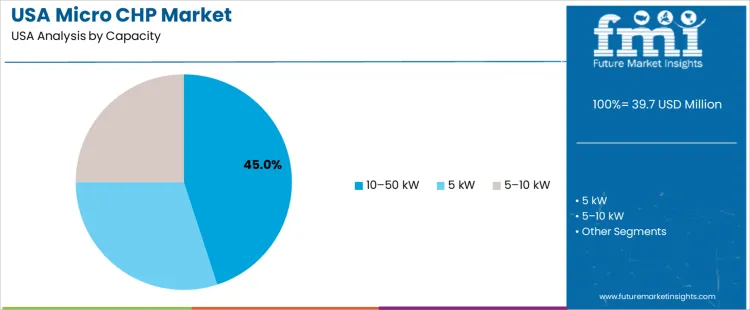
The 10-50 kW capacity range dominates the micro CHP market in the USA, holding 45% of the market share. This capacity is ideal for residential buildings and small commercial applications, where there is a consistent need for both electricity and heating. Micro CHP systems in this range are particularly appealing for energy-conscious consumers and businesses seeking reliable and efficient energy solutions that can reduce utility costs and carbon footprints. As energy efficiency continues to be a top priority, the demand for micro CHP systems in the 10–50 kW range is expected to grow, driven by the increasing adoption of distributed energy generation technologies.
Which Prime Mover Drives Micro CHP Demand in the USA?
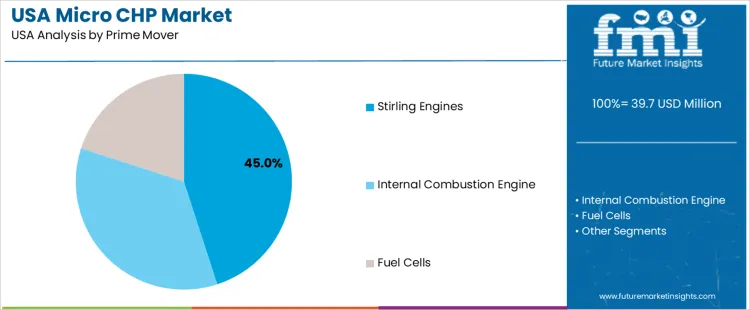
Stirling engines are the leading prime mover in the USA’s micro CHP market, representing 45% of the market share. This is due to their reliability, quiet operation, and ability to efficiently convert thermal energy into electricity and heat. Stirling engines are particularly well-suited for micro CHP applications due to their suitability for small-scale, residential, and commercial installations. While other prime movers such as internal combustion engines and fuel cells are also used in micro CHP systems, Stirling engines remain the preferred option in the market due to their high efficiency and low environmental impact. The growing demand for energy-efficient, environmentally friendly technologies continues to drive the popularity of Stirling engines in micro CHP applications.
What is the Regional Demand Outlook for the Micro CHP Market in the USA?
The Micro CHP (Combined Heat and Power) market in the USA is experiencing steady growth, with the West USA leading the way at a projected CAGR of 9.7%. South USA follows with a growth rate of 8.7%, while the Northeast USA is expected to grow at 7.8%. The Midwest USA shows more moderate growth with a CAGR of 6.8%. Micro CHP systems, which generate both heat and electricity from a single energy source, are gaining traction due to increasing energy efficiency concerns, environmental awareness, and the push for sustainable energy solutions. As energy costs rise and more consumers seek energy-efficient technologies, the Micro CHP market is poised for continued expansion across the United States.
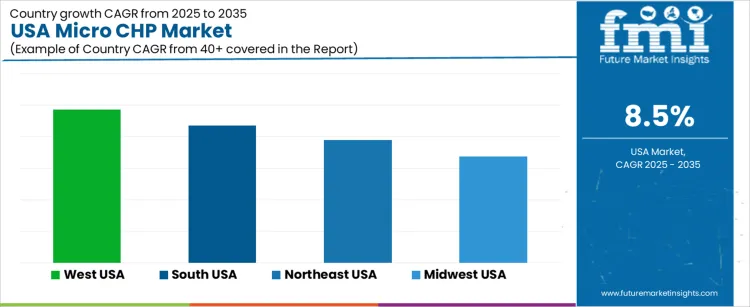
| Region | CAGR (2025-2035) |
|---|---|
| West USA | 9.7% |
| South USA | 8.7% |
| Northeast USA | 7.8% |
| Midwest USA | 6.8% |
What is Driving the Growth of Micro CHP in the West USA?
The West USA is projected to experience the highest growth in the Micro CHP market, with a CAGR of 9.7%. The region’s strong focus on sustainability, energy efficiency, and renewable energy sources is driving demand for Micro CHP systems. States like California, Oregon, and Washington have been leaders in adopting green technologies, and Micro CHP systems are increasingly seen as an effective solution to reduce energy consumption and carbon footprints. The West’s progressive policies on clean energy and incentives for energy-efficient technologies further support the adoption of Micro CHP systems. Additionally, the high cost of traditional energy in the region makes Micro CHP systems an attractive option for both residential and commercial users seeking to reduce energy bills while also contributing to environmental sustainability.
Why is the Micro CHP Market Expanding in South USA?
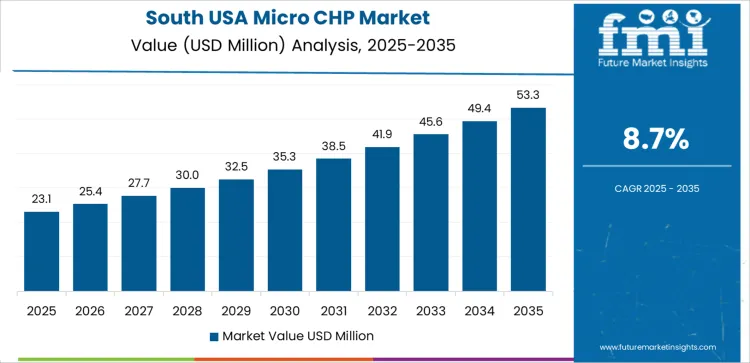
In South USA, the Micro CHP market is projected to grow at a CAGR of 8.7%. The region’s demand for energy-efficient solutions is increasing due to rising energy costs and the growing need for sustainable energy systems. States like Texas and Florida, with their large residential and commercial sectors, are showing strong interest in Micro CHP systems as a means to enhance energy efficiency and reduce dependence on traditional power grids. The South USA’s hot climate also makes Micro CHP systems particularly attractive for providing both heating and cooling solutions. As consumers in the region become more aware of the long-term cost savings and environmental benefits of Micro CHP systems, their adoption is expected to rise. Furthermore, state-level incentives for renewable energy adoption further support market growth in the South USA.
How is the Micro CHP Market Growing in Northeast USA?
In Northeast USA, the Micro CHP market is projected to grow at a CAGR of 7.8%. The Northeast, with its densely populated cities and a growing emphasis on energy efficiency, is seeing an increasing demand for Micro CHP systems. This region is particularly focused on reducing energy consumption and lowering carbon emissions, which makes Micro CHP an appealing option for both residential and commercial buildings. Additionally, the region’s cold winters create a need for reliable and efficient heating systems, which Micro CHP can provide. As energy costs continue to rise, more consumers in the Northeast are turning to Micro CHP systems to reduce heating and electricity bills while also contributing to sustainability goals. The region’s commitment to clean energy and carbon reduction initiatives further supports the adoption of Micro CHP technology.
What is Contributing to the Growth of Micro CHP in Midwest USA?
In Midwest USA, the Micro CHP market is expected to grow at a more moderate rate of 6.8%. While the region is traditionally known for its reliance on conventional energy sources, there is a growing shift toward adopting energy-efficient technologies in both residential and commercial sectors. The Midwest’s need for reliable energy systems, particularly during harsh winters, makes Micro CHP systems an attractive solution. The rising awareness of environmental issues and the economic benefits of energy savings are driving the demand for Micro CHP in the region. Additionally, state and federal incentives for energy-efficient technologies and renewable energy sources are contributing to the increasing adoption of Micro CHP systems in the Midwest. As the region seeks to modernize its energy infrastructure, Micro CHP systems are becoming an increasingly viable option.
What is the Competitive Landscape for Demand for Micro CHP in the USA?
Demand for micro combined heat and power (micro CHP) systems in the USA is growing as building owners and facility managers seek more energy efficient, cost effective, and carbon saving solutions. Micro CHP generates both electricity and usable heat from a single fuel source, improving overall energy efficiency compared with separate systems for power and heating. Rising energy costs, increasing focus on reducing greenhouse gas emissions, and growing awareness of the benefits of decentralized energy systems are driving this demand. Many residential and commercial properties see value in micro CHP for its potential to lower utility bills, reduce reliance on external power supply, and improve energy resilience-especially in regions with high energy prices or unstable grid supply.
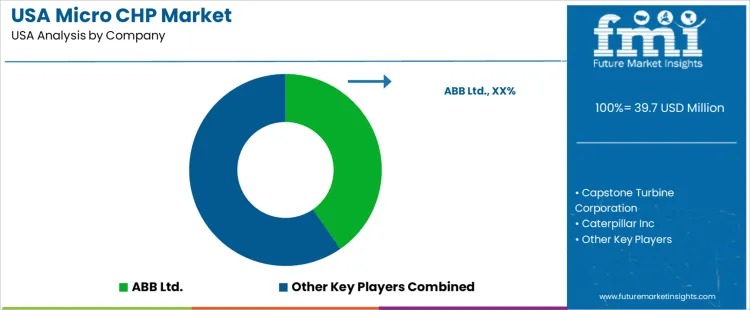
A handful of large global industrial and energy equipment firms dominate the supply side of the USA micro CHP market. According to your list, ABB Ltd. holds a major position with around 40.4 % share. Other key competitors include Capstone Turbine Corporation, Caterpillar Inc., Siemens AG, and General Electric Company. These companies supply systems that vary in capacity, fuel type (natural gas, biogas, etc.), and end use (residential, commercial, small industrial). Competition among suppliers centers on system efficiency (how effectively electricity and heat are produced and captured), reliability, installation and maintenance cost, compliance with environmental and regulatory standards, fuel flexibility, and after sales support. Firms that offer high efficiency units, proven reliability, and strong service networks are best positioned to capture growth as the USA market transitions toward decentralized, energy efficient heating and power solutions.
Key Players of the Micro CHP Industry in USA
- ABB Ltd.
- Capstone Turbine Corporation
- Caterpillar Inc
- Siemens AG
- General Electric Company
Scope of the Report
| Items | Details |
|---|---|
| Quantitative Units | USD Million |
| Regions Covered | USA |
| Capacity | 5 kW, 5–10 kW, 10–50 kW |
| Prime Mover (Technology) | Stirling Engines, Internal Combustion Engine, Fuel Cells |
| End Use | Residential, Commercial |
| Key Companies Profiled | ABB Ltd., Capstone Turbine Corporation, Caterpillar Inc., Siemens AG, General Electric Company |
| Additional Attributes | Dollar sales by capacity and prime mover show increasing demand for 5–10 kW and 10–50 kW units, mainly in residential and small commercial applications. Internal combustion and fuel cell systems lead due to reliability and efficiency. Growth is driven by rising energy costs, need for greater on site efficiency, carbon reduction goals, and interest in decentralized power + heat solutions. |
Key Segments in the Demand for Micro CHP in USA
Capacity
- 5 kW
- 5–10 kW
- 10–50 kW
Prime Mover
- Stirling Engines
- Internal Combustion Engine
- Fuel Cells
End Use
- Residential
- Commercial
Region
- Northeast USA
- West USA
- Midwest USA
- South USA
Frequently Asked Questions
How big is the demand for micro CHP in USA in 2025?
The demand for micro CHP in USA is estimated to be valued at USD 39.7 million in 2025.
What will be the size of micro CHP in USA in 2035?
The market size for the micro CHP in USA is projected to reach USD 89.4 million by 2035.
How much will be the demand for micro CHP in USA growth between 2025 and 2035?
The demand for micro CHP in USA is expected to grow at a 8.5% CAGR between 2025 and 2035.
What are the key product types in the micro CHP in USA?
The key product types in micro CHP in USA are 10–50 kw, 5 kw and 5–10 kw.
Which prime mover segment is expected to contribute significant share in the micro CHP in USA in 2025?
In terms of prime mover, stirling engines segment is expected to command 45.0% share in the micro CHP in USA in 2025.
Preview the report firsthand - request a free sample
Get SampleGet the brochure for pricing and purchase details.
Get PDFTable of Content
- Executive Summary
- USA Market Outlook
- Demand-side Trends
- Supply-side Trends
- Technology Roadmap Analysis
- Analysis and Recommendations
- Market Overview
- Market Coverage / Taxonomy
- Market Definition / Scope / Limitations
- Market Background
- Market Dynamics
- Drivers
- Restraints
- Opportunity
- Trends
- Scenario Forecast
- Demand in Optimistic Scenario
- Demand in Likely Scenario
- Demand in Conservative Scenario
- Opportunity Map Analysis
- Product Life Cycle Analysis
- Supply Chain Analysis
- Investment Feasibility Matrix
- Value Chain Analysis
- PESTLE and Porter’s Analysis
- Regulatory Landscape
- Regional Parent Market Outlook
- Production and Consumption Statistics
- Import and Export Statistics
- Market Dynamics
- USA Market Analysis 2020 to 2024 and Forecast, 2025 to 2035
- Historical Market Size Value (USD Million) Analysis, 2020 to 2024
- Current and Future Market Size Value (USD Million) Projections, 2025 to 2035
- Y-o-Y Growth Trend Analysis
- Absolute $ Opportunity Analysis
- USA Market Pricing Analysis 2020 to 2024 and Forecast 2025 to 2035
- USA Market Analysis 2020 to 2024 and Forecast 2025 to 2035, By Capacity
- Introduction / Key Findings
- Historical Market Size Value (USD Million) Analysis By Capacity , 2020 to 2024
- Current and Future Market Size Value (USD Million) Analysis and Forecast By Capacity , 2025 to 2035
- 10–50 kW
- 5 kW
- 5–10 kW
- Y-o-Y Growth Trend Analysis By Capacity , 2020 to 2024
- Absolute $ Opportunity Analysis By Capacity , 2025 to 2035
- USA Market Analysis 2020 to 2024 and Forecast 2025 to 2035, By Prime Mover
- Introduction / Key Findings
- Historical Market Size Value (USD Million) Analysis By Prime Mover, 2020 to 2024
- Current and Future Market Size Value (USD Million) Analysis and Forecast By Prime Mover, 2025 to 2035
- Stirling Engines
- Internal Combustion Engine
- Fuel Cells
- Y-o-Y Growth Trend Analysis By Prime Mover, 2020 to 2024
- Absolute $ Opportunity Analysis By Prime Mover, 2025 to 2035
- USA Market Analysis 2020 to 2024 and Forecast 2025 to 2035, By End Use
- Introduction / Key Findings
- Historical Market Size Value (USD Million) Analysis By End Use, 2020 to 2024
- Current and Future Market Size Value (USD Million) Analysis and Forecast By End Use, 2025 to 2035
- Residential
- Commercial
- Y-o-Y Growth Trend Analysis By End Use, 2020 to 2024
- Absolute $ Opportunity Analysis By End Use, 2025 to 2035
- Market Structure Analysis
- Competition Dashboard
- Competition Benchmarking
- Market Share Analysis of Top Players
- By Regional
- By Capacity
- By Prime Mover
- By End Use
- Competition Analysis
- Competition Deep Dive
- ABB Ltd.
- Overview
- Product Portfolio
- Profitability by Market Segments (Product/Age /Sales Channel/Region)
- Sales Footprint
- Strategy Overview
- Marketing Strategy
- Product Strategy
- Channel Strategy
- Capstone Turbine Corporation
- Caterpillar Inc
- Siemens AG
- General Electric Company
- ABB Ltd.
- Competition Deep Dive
- Assumptions & Acronyms Used
- Research Methodology


