

- Industry Size (2025)
- USD 1.2 Bn
- Forecast (2035)
- USD 1.7 Bn
- CAGR (2025 to 2035)
- 4.1%
Demand for Out-of-home Coffee in Japan Forecast and Outlook 2025 to 2035
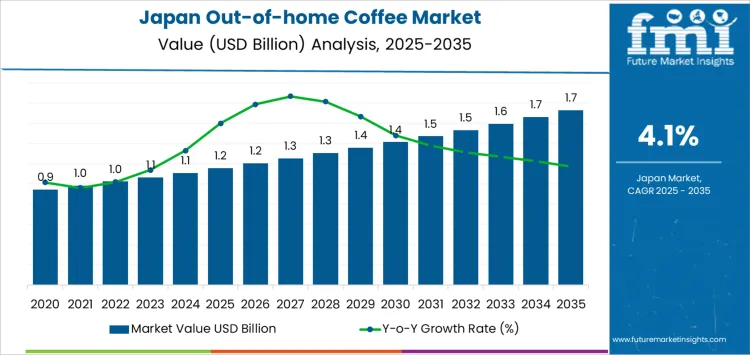
The demand for out-of-home coffee in Japan is set to grow steadily, with the industry valued at USD 1.2 billion in 2025 and forecasted to reach USD 1.7 billion by 2035, reflecting a CAGR of 4.1%. By product type, instant coffee leads the industry, accounting for 35% of the demand. This is driven by its convenience, affordability, and widespread use in workplaces and convenience stores. Ready-to-drink coffee is also gaining popularity, reflecting the rising demand for on-the-go beverages, while coffee beans, ground coffee, and coffee pods serve niche segments.
In terms of distribution channels, indirect channels, including vending machines, retail outlets, and convenience stores, account for 37% of the demand, due to their accessibility and ability to provide quick coffee options to busy consumers. Food service outlets and specialty coffee shops follow, contributing to the growing café culture and premium coffee experiences.
Quick Stats of the Demand for Out-of-home Coffee in Japan
- Demand for Out-of-home Coffee in Japan Value (2025): USD 1.2 billion
- Demand for Out-of-home Coffee in Japan Forecast Value (2035): USD 1.7 billion
- Demand for Out-of-home Coffee in Japan Forecast CAGR (2025-2035): 4.1%
- Demand for Out-of-home Coffee in Japan Leading Product Type: Instant Coffee
- Demand for Out-of-home Coffee in Japan Leading Distribution Channel: Food Service Outlets
- Demand for Out-of-home Coffee in Japan Key Growth Regions: Kyushu & Okinawa, Kanto, Kansai, Chubu, Tohoku, Rest of Japan
- Demand for Out-of-home Coffee in Japan Top Players: Mondelez International, Tchibo, Blue Bottle Coffee, Illy, Lavazza
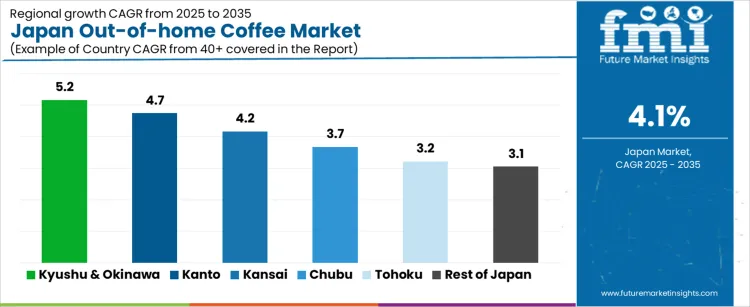
Kyushu & Okinawa leads the growth with a 5.2% CAGR, driven by the region's rising tourism sector and expanding café culture, particularly in Okinawa. Kanto follows closely with a 4.7% CAGR, supported by the large urban population and high demand from busy professionals. Kansai also sees strong demand, with a 4.2% CAGR, due to its vibrant food and beverage culture. Chubu experiences steady growth at a 3.7% CAGR, fueled by its urban areas like Nagoya and the increasing adoption of specialty coffee. Tohoku and the Rest of Japan see moderate growth at 3.2% and 3.1%, respectively, as coffee consumption rises in both rural and urban areas.
Demand for Out-of-home Coffee in Japan Key Takeaways
| Metric | Value |
|---|---|
| Demand for Out-of-home Coffee in Japan Value (2025) | USD 1.2 billion |
| Demand for Out-of-home Coffee in Japan Forecast Value (2035) | USD 1.7 billion |
| Demand for Out-of-home Coffee in Japan Forecast CAGR (2025-2035) | 4.1% |
Why is the Demand for Out-of-home Coffee in Japan Growing?
The demand for out-of-home coffee in Japan is growing as consumer lifestyles become busier and the coffee culture continues to evolve. Out-of-home coffee, which includes coffee purchased from cafes, vending machines, and convenience stores, has become a staple for many Japanese consumers seeking a quick and convenient caffeine fix. As the demand for high-quality, on-the-go beverages rises, coffee chains and convenience stores are expanding their offerings, contributing to the growing popularity of out-of-home coffee in the country.
A major driver behind this growth is the increasing popularity of coffee consumption as part of daily routines. As Japanese consumers embrace a more diverse coffee culture, including specialty coffee and premium blends, the demand for high-quality, ready-to-drink coffee options has surged. Busy urbanites, particularly in cities like Tokyo, are increasingly relying on cafes and vending machines for their coffee fix due to the convenience of quick service and consistent quality.
The expansion of coffee shop chains and the continuous introduction of new coffee-based drinks and innovations are fueling the sector’s growth. As the coffee experience becomes more integrated into Japanese social and professional settings, out-of-home coffee is becoming more than just a beverage it's also part of the social fabric, particularly in places like cafes where people gather to relax or work. As this trend continues, the demand for out-of-home coffee in Japan is expected to rise steadily through 2035.
What is the Segment-Wise Analysis of Demand for Out-of-home Coffee in Japan?
Demand for out-of-home coffee in Japan is segmented by product type, distribution channel, and region. By product type, demand is divided into instant coffee, coffee beans, ground coffee, ready-to-drink coffee, and coffee pods, with instant coffee leading at 35%. The demand is also segmented by distribution channel, including indirect channels, supermarkets, convenience stores, food service outlets, and specialty coffee shops, with indirect channels accounting for 37%. Regionally, demand spans across Kyushu & Okinawa, Kanto, Kansai, Chubu, Tohoku, and the rest of Japan.
How Does Instant Coffee Lead the Demand for Out-of-home Coffee in Japan?
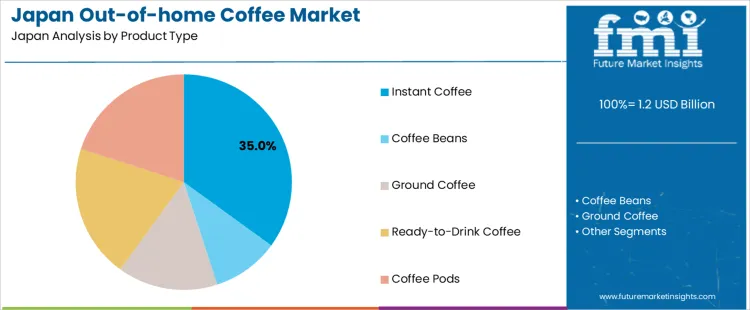
Instant coffee accounts for 35% of the demand for out-of-home coffee in Japan, driven by its convenience, affordability, and popularity. Instant coffee is quick and easy to prepare, offering a no-fuss solution for busy consumers, especially those seeking a fast caffeine fix during their day. It is widely consumed in workplaces and convenience stores, where it provides a convenient option for individuals looking for simplicity over brewing coffee from beans.
Instant coffee's versatility in both home and office settings further drives its dominance in the market. The rising popularity of specialty instant coffee options and premium offerings has expanded the industry, appealing to consumers seeking higher-quality alternatives. As the demand for convenience and speed continues to rise, instant coffee remains the leading product in Japan’s out-of-home coffee sector, catering to the modern, fast-paced lifestyle of Japanese consumers.
Why Do Indirect Channels Lead the Demand for Out-of-home Coffee in Japan?
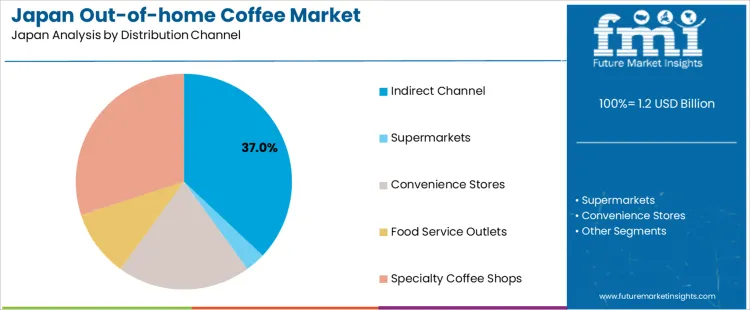
Indirect channels account for 37% of the demand for out-of-home coffee in Japan, largely due to their widespread reach and accessibility. These channels include vending machines, third-party distributors, and retail outlets, which allow consumers to purchase coffee outside traditional coffee shops. Vending machines play a major role, offering quick and convenient access to coffee options in various locations, such as offices, public transportation stations, and shopping centers.
The ease of accessing coffee on the go, without needing to enter a café or wait in line, makes these channels extremely popular in Japan. As the demand for fast, convenient, and quality coffee continues to grow, indirect channels are expected to remain dominant. The combination of high visibility, accessibility, and a wide range of product offerings ensures that vending machines and other indirect distribution methods will continue to lead in the out-of-home coffee industry in Japan.
What are the Key Trends, Drivers, and Restraints in Out-of-Home Coffee Demand in Japan?
Out-of-home coffee consumption in Japan is growing as more people turn to cafés, coffee shops, convenience stores, and on-the-go outlets for their coffee needs. This trend is fueled by a shift in consumer preferences towards convenience, socializing, and café culture. The demand for ready-to-drink (RTD) coffee, specialty drinks, and café-style options continues to rise, reflecting a growing appreciation for high-quality coffee outside the home. However, challenges remain, including intense competition between numerous outlets and the potential for modest profit margins. Health-conscious consumers and shifting price sensitivities also pose a challenge, as some may opt for lower-cost alternatives or reduce their consumption of higher-calorie, sugary coffee drinks.
Why is Demand for Out-of-Home Coffee Growing in Japan?
Demand for out-of-home coffee in Japan is increasing due to urban lifestyles, busy work schedules, and changing social habits. For many consumers, grabbing a coffee outside - whether from a café, convenience store, or vending machine is a quick and convenient option that fits into their fast-paced daily routines. The growing café culture in Japan also plays a significant role, as more consumer’s view coffee not just as a beverage but as an experience to be shared socially or enjoyed alone.
The rise of specialty coffee shops, diverse coffee styles such as espresso and iced coffee, and the availability of ready-to-drink coffee options at convenience stores have all contributed to this demand. The ongoing urbanization and increasing mobility of the population also lead to higher demand for on-the-go coffee, which further fuels the growth of this sector in Japan’s coffee culture.
How are Technological & Industry Innovations Driving Out-of-Home Coffee Demand in Japan?
Technological advancements and industry innovations are contributing significantly to the growing demand for out-of-home coffee in Japan. The development of new product formats, such as ready-to-drink (RTD) coffee, cold brew, and specialty espresso drinks, has made coffee more accessible and appealing to a broader range of consumers. The expansion of vending machines and convenience store distribution has also helped increase coffee’s availability in urban areas, allowing consumers to easily grab a coffee while on the go. The rise of specialty cafés and third-wave coffee culture in Japan has raised consumer expectations regarding coffee quality, taste, and experience. Innovations in packaging, such as improved sealing for freshness and single-serve formats, have also contributed to convenience and better taste preservation.
What are the Key Challenges and Risks That Could Limit Out-of-Home Coffee Demand in Japan?
One key challenge is the growing health awareness among consumers, which may lead to reduced consumption of high-caffeine, sugary, or calorie-laden coffee drinks. As consumers seek healthier alternatives, this could shift demand away from traditional coffee offerings toward lower-calorie or alternative beverages. Price sensitivity remains a concern for some consumers, particularly during economic downturns, as the cost of premium coffee can deter frequent purchases.
Competition from home brewing solutions, such as capsule machines and instant coffee, also presents a challenge, as many consumers continue to prefer the convenience and lower cost of preparing coffee at home. With so many coffee outlets in the industry, businesses may struggle to differentiate themselves and maintain profitability, especially in densely populated urban areas where competition is fierce.
What is the Regional Demand Outlook for Pea Grits in Japan?
| Region | CAGR (%) |
|---|---|
| Kyushu & Okinawa | 5.2% |
| Kanto | 4.7% |
| Kansai | 4.2% |
| Chubu | 3.7% |
| Tohoku | 3.2% |
| Rest of Japan | 3.1% |
Demand for out-of-home coffee in Japan is growing across all regions, with Kyushu & Okinawa leading at a 5.2% CAGR, driven by the growing café culture and tourism sector. Kanto follows with a 4.7% CAGR, supported by the region’s large urban population and high demand for coffee on-the-go from busy professionals. Kansai shows a 4.2% CAGR, fueled by the region’s vibrant food and beverage culture, with more consumers opting for convenient coffee options. Chubu experiences a 3.7% CAGR, as coffee consumption continues to rise in urban areas like Nagoya. Tohoku and the Rest of Japan see moderate growth at 3.2% and 3.1%, respectively.
How is Demand for Out-of-Home Coffee Growing in Kyushu & Okinawa?
Kyushu & Okinawa leads the demand for out-of-home coffee, growing at a 5.2% CAGR. The region’s tourism sector, especially in Okinawa, significantly boosts coffee consumption as both locals and tourists embrace the convenience of coffee on the go. As café culture becomes more widespread, consumers are increasingly opting for ready-to-drink coffee or quick café visits. In Okinawa, tourism-driven demand is especially evident, with visitors seeking premium coffee options at local cafés and convenience stores.
Kyushu’s growing urban population and its expanding middle class have led to more people adopting on-the-go lifestyles, which further supports the demand for convenient coffee solutions. With the popularity of specialty drinks, cold brews, and seasonal offerings, Kyushu & Okinawa is expected to continue seeing steady growth in out-of-home coffee consumption as both tourism and local demand continue to rise.
Why is Demand for Out-of-Home Coffee Rising in Kanto?
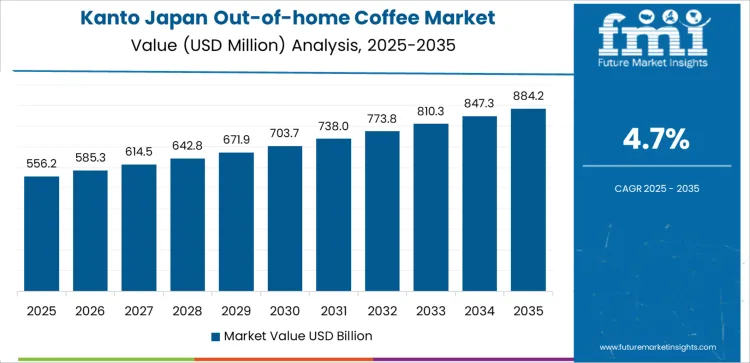
In Kanto, demand for out-of-home coffee is rising at a 4.7% CAGR. The region’s large urban population, particularly in Tokyo, drives strong demand for coffee consumed outside the home, with busy professionals, students, and commuters seeking convenient, high-quality coffee options. Coffee consumption in Kanto is driven by the increasing availability of ready-to-drink coffee from convenience stores and vending machines, as well as frequent café visits.
The region’s young and dynamic population also favors premium coffee experiences, such as cold brews, nitro coffee, and seasonal drinks, which further fuel demand. With the rise of specialty coffee shops and the widespread culture of "coffee breaks" during work hours, Kanto remains one of the largest industrys for out-of-home coffee in Japan. As urbanization and busy work-life continue, coffee consumption outside the home in Kanto is expected to maintain steady growth.
How is Demand for Out-of-Home Coffee Expanding in Kansai?
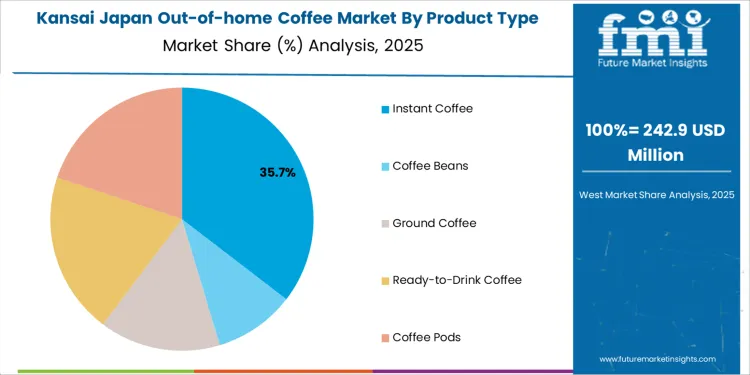
Kansai shows steady demand for out-of-home coffee, with a 4.2% CAGR. The region’s café culture, especially in cities like Osaka and Kyoto, continues to grow, with more consumers turning to coffee shops for quick and enjoyable coffee experiences. The trend toward coffee on-the-go has been accelerated by the rise of convenience stores, vending machines, and specialty coffee chains offering accessible, high-quality coffee.
As Kansai’s urban population grows and lifestyles become faster-paced, more people are choosing ready-to-drink coffee or stopping by local cafés during commutes or shopping trips. The region’s rich culinary culture supports the growth of premium coffee offerings, such as cold brew and seasonal beverages. The preference for both convenience and quality is driving steady growth in the out-of-home coffee industry in Kansai, with demand expected to rise steadily in line with evolving consumer habits and café trends.
Why is Demand for Out-of-Home Coffee Growing in Chubu?
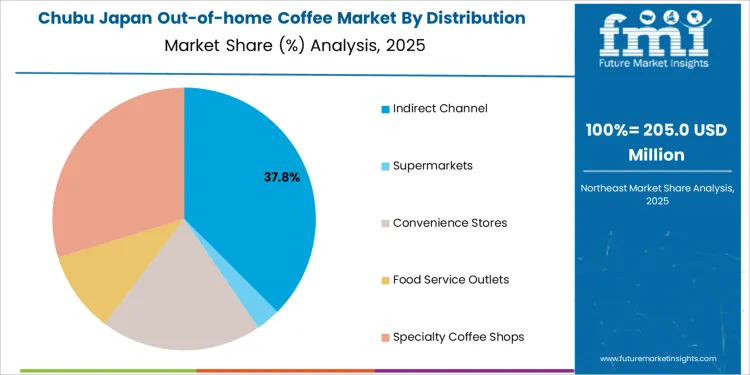
Chubu is witnessing steady demand for out-of-home coffee, growing at a 3.7% CAGR. The region’s urbanization, especially in Nagoya, is contributing to the rise in coffee consumption as more people seek convenience in their busy daily routines. With a growing number of convenience stores, coffee chains, and vending machines offering ready-to-drink coffee, accessibility to coffee has increased significantly.
Chubu’s expanding middle class is embracing premium coffee options, and younger consumers, in particular, are showing interest in specialty drinks such as cold brews and iced coffees. The trend toward coffee on-the-go, driven by both working professionals and students, further supports demand. As Chubu’s infrastructure and coffee culture continue to evolve, the need for accessible, high-quality coffee is expected to grow steadily, making out-of-home coffee an integral part of daily life in the region.
How is Demand for Out-of-Home Coffee Expanding in Tohoku?
Tohoku is seeing moderate growth in out-of-home coffee demand, with a 3.2% CAGR. While the region’s consumption is smaller compared to urban centers like Tokyo and Osaka, there is a steady rise in coffee consumption on the go, particularly through convenience stores and vending machines. As the younger generation in Tohoku adopts more urban-style lifestyles, the demand for coffee from local cafés and ready-to-drink formats continues to grow.
Vending machines offering convenient access to coffee are helping increase consumption in rural areas, where cafés are less prevalent. The popularity of specialty coffee drinks is spreading, slowly gaining traction in the region as younger consumers seek premium coffee experiences. As accessibility improves and consumer habits shift, the demand for out-of-home coffee in Tohoku is expected to rise, albeit at a moderate pace compared to larger urban centers.
Why is Demand for Out-of-Home Coffee Steady in the Rest of Japan?
The Rest of Japan is experiencing steady demand for out-of-home coffee, with a 3.1% CAGR. Although adoption is slower compared to urban regions, coffee consumption outside the home is steadily increasing as consumer habits evolve. Ready-to-drink coffee and vending machine offerings are becoming more accessible, making it easier for consumers in smaller cities and rural areas to enjoy coffee on the go.
As younger generations embrace modern coffee culture and seek more convenience, the demand for out-of-home coffee is rising slowly but steadily. The Rest of Japan is also seeing a shift towards premium coffee offerings, as consumers become more aware of quality and variety. While growth may be slower in rural areas compared to major metropolitan regions, the steady increase in access to coffee and the growing preference for convenience ensure continued growth in this segment.
What is Driving the Demand for Out-of-home Coffee in Japan and Who Are the Key Players Shaping the Industry?
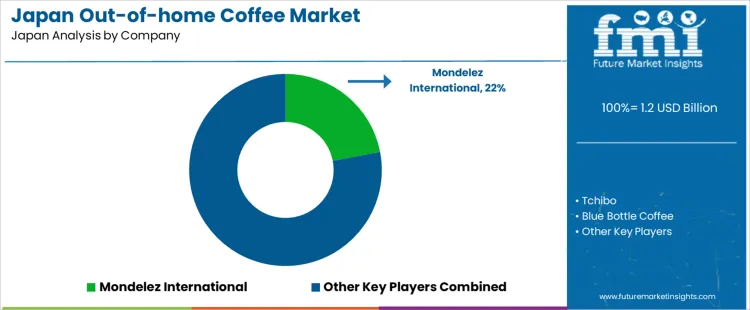
The demand for out-of-home coffee in Japan is increasing as consumers embrace the growing café culture and the need for convenient, high-quality coffee on the go. With busy lifestyles and an increasing preference for premium coffee experiences, Japanese consumers are turning to coffee shops, vending machines, and other out-of-home options for their daily caffeine fix. The rise of specialty coffee, fueled by a focus on high-quality beans, brewing methods, and unique flavor profiles, is also driving demand. Furthermore, the growing popularity of international coffee chains, local artisanal cafés, and the convenience of ready-to-drink coffee products further contribute to the rise in out-of-home coffee consumption.
Key players shaping the out-of-home coffee industry in Japan include Mondelez International, Tchibo, Blue Bottle Coffee, Illy, and Lavazza. Mondelez International leads the industry with a significant share of 22.0%, providing a range of coffee products through various platforms, including coffee shops, vending machines, and retail offerings. These companies are capitalizing on the increasing demand for high-quality, convenient coffee by offering a wide variety of beverages, from traditional coffee to more innovative options such as iced coffee, cold brews, and plant-based alternatives. Their presence in both local and global coffee chains ensures their industry dominance in Japan’s expanding coffee culture.
The growth of the out-of-home coffee industry in Japan is further supported by the increasing trend toward premium coffee experiences, especially among younger generations seeking to explore unique flavors and brewing techniques. As more consumers prioritize convenience, quality, and variety in their coffee options, the demand for out-of-home coffee is expected to continue growing, making it a key sector in Japan’s dynamic food and beverage industry. With ongoing innovations in product offerings and expansion of coffee experiences, the industry for out-of-home coffee is poised for continued growth in Japan.
Key Players in Japan Out-of-home Coffee Demand
- Mondelez International
- Tchibo
- Blue Bottle Coffee
- Illy
- Lavazza
Scope of Report
| Items | Values |
|---|---|
| Quantitative Units (2025) | USD billion |
| Product Type | Instant Coffee, Coffee Beans, Ground Coffee, Ready-to-Drink Coffee, Coffee Pods |
| Distribution Channel | Indirect Channel, Supermarkets, Convenience Stores, Food Service Outlets, Specialty Coffee Shops |
| Region | Kyushu & Okinawa, Kanto, Kansai, Chubu, Tohoku, Rest of Japan |
| Countries Covered | Japan |
| Key Companies Profiled | Mondelez International, Tchibo, Blue Bottle Coffee, Illy, Lavazza |
| Additional Attributes | Dollar sales by product type and distribution channel; regional CAGR and growth outlook; increasing demand for ready-to-drink coffee and convenience in packaging; the rise of specialty coffee shops and premium offerings; growing preference for sustainable and eco-friendly coffee options; expansion of coffee chains and online platforms; consumer shift towards coffee pods for convenience and variety. |
Japan Out-of-home Coffee Demand by Key Segments
Product Type
- Instant Coffee
- Coffee Beans
- Ground Coffee
- Ready-to-Drink Coffee
- Coffee Pods
Distribution Channel
- Indirect Channel
- Supermarkets
- Convenience Stores
- Food Service Outlets
- Specialty Coffee Shops
Region
- Kyushu & Okinawa
- Kanto
- Kansai
- Chubu
- Tohoku
- Rest of Japan
Frequently Asked Questions
How big is the demand for out-of-home coffee in Japan in 2025?
The demand for out-of-home coffee in Japan is estimated to be valued at USD 1.2 billion in 2025.
What will be the size of out-of-home coffee in Japan in 2035?
The market size for the out-of-home coffee in Japan is projected to reach USD 1.7 billion by 2035.
How much will be the demand for out-of-home coffee in Japan growth between 2025 and 2035?
The demand for out-of-home coffee in Japan is expected to grow at a 4.1% CAGR between 2025 and 2035.
What are the key product types in the out-of-home coffee in Japan?
The key product types in out-of-home coffee in Japan are instant coffee, coffee beans, ground coffee, ready-to-drink coffee and coffee pods.
Which distribution channel segment is expected to contribute significant share in the out-of-home coffee in Japan in 2025?
In terms of distribution channel, indirect channel segment is expected to command 37.0% share in the out-of-home coffee in Japan in 2025.
Preview the report firsthand - request a free sample
Get SampleGet the brochure for pricing and purchase details.
Get PDFTable of Content
- Executive Summary
- Japan Market Outlook
- Demand-side Trends
- Supply-side Trends
- Technology Roadmap Analysis
- Analysis and Recommendations
- Market Overview
- Market Coverage / Taxonomy
- Market Definition / Scope / Limitations
- Market Background
- Market Dynamics
- Drivers
- Restraints
- Opportunity
- Trends
- Scenario Forecast
- Demand in Optimistic Scenario
- Demand in Likely Scenario
- Demand in Conservative Scenario
- Opportunity Map Analysis
- Product Life Cycle Analysis
- Supply Chain Analysis
- Investment Feasibility Matrix
- Value Chain Analysis
- PESTLE and Porter’s Analysis
- Regulatory Landscape
- Regional Parent Market Outlook
- Production and Consumption Statistics
- Import and Export Statistics
- Market Dynamics
- Japan Market Analysis 2020 to 2024 and Forecast, 2025 to 2035
- Historical Market Size Value (USD Million) Analysis, 2020 to 2024
- Current and Future Market Size Value (USD Million) Projections, 2025 to 2035
- Y-o-Y Growth Trend Analysis
- Absolute $ Opportunity Analysis
- Japan Market Pricing Analysis 2020 to 2024 and Forecast 2025 to 2035
- Japan Market Analysis 2020 to 2024 and Forecast 2025 to 2035, By Product Type
- Introduction / Key Findings
- Historical Market Size Value (USD Million) Analysis By Product Type , 2020 to 2024
- Current and Future Market Size Value (USD Million) Analysis and Forecast By Product Type , 2025 to 2035
- Instant Coffee
- Coffee Beans
- Ground Coffee
- Ready-to-Drink Coffee
- Coffee Pods
- Y-o-Y Growth Trend Analysis By Product Type , 2020 to 2024
- Absolute $ Opportunity Analysis By Product Type , 2025 to 2035
- Japan Market Analysis 2020 to 2024 and Forecast 2025 to 2035, By Distribution Channel
- Introduction / Key Findings
- Historical Market Size Value (USD Million) Analysis By Distribution Channel, 2020 to 2024
- Current and Future Market Size Value (USD Million) Analysis and Forecast By Distribution Channel, 2025 to 2035
- Indirect Channel
- Supermarkets
- Convenience Stores
- Food Service Outlets
- Specialty Coffee Shops
- Y-o-Y Growth Trend Analysis By Distribution Channel, 2020 to 2024
- Absolute $ Opportunity Analysis By Distribution Channel, 2025 to 2035
- Market Structure Analysis
- Competition Dashboard
- Competition Benchmarking
- Market Share Analysis of Top Players
- By Regional
- By Product Type
- By Distribution Channel
- Competition Analysis
- Competition Deep Dive
- Mondelez International
- Overview
- Product Portfolio
- Profitability by Market Segments (Product/Age /Sales Channel/Region)
- Sales Footprint
- Strategy Overview
- Marketing Strategy
- Product Strategy
- Channel Strategy
- Tchibo
- Blue Bottle Coffee
- Illy
- Lavazza
- Mondelez International
- Competition Deep Dive
- Assumptions & Acronyms Used
- Research Methodology


