


Lab Automation Market
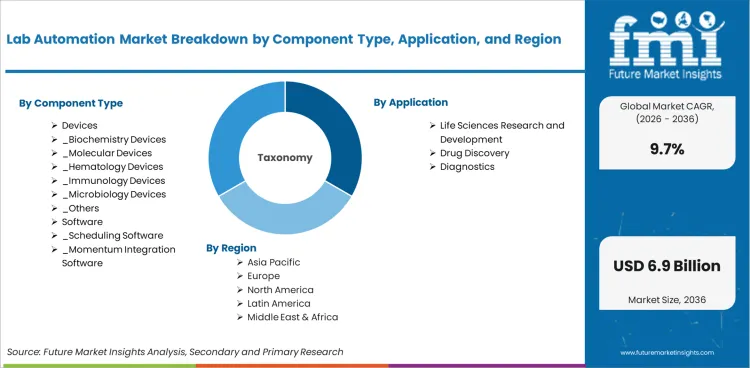
Lab Automation Market is segmented by Component Type (Devices, Software), Application (Life Sciences Research and Development, Drug Discovery, Diagnostics), End User (Pharmaceutical Companies, Hospitals and Diagnostic Centers, Educational Institutions, Contract Research Organizations, Research Institutes), and Region. Forecast for 2026 to 2036.
Lab Automation Market Size, Market Forecast and Outlook By FMI
The lab automation market is expected to expand from USD 2.7 billion in 2026 to USD 6.9 billion by 2036. The market is anticipated to register a 9.7% CAGR during the forecast period. Biochemistry devices and molecular devices are likely to lead device demand, while life sciences research and drug discovery are projected to remain core application areas in 2026.
Summary of the Lab Automation Market
- Demand and Growth Drivers
- High-throughput testing needs are likely to support wider use of automated lab systems.
- Personalized medicine growth is set to increase demand for faster biomarker analysis.
- Clinical labs are anticipated to use automation to reduce errors and turnaround time.
- Product and Segment View
- Biochemistry devices are likely to gain demand through automated sample and reagent handling.
- Molecular devices are expected to support growth in genomics and precision diagnostics.
- Software tools are anticipated to improve scheduling and workflow control across automated labs.
- Geography and Competitive Outlook
- North America is likely to retain strong demand through pharma R&D and clinical diagnostics.
- Europe is expected to show steady growth through compliance-focused lab modernization.
- Asia Pacific is anticipated to expand faster as biopharma and CRO activity rises.
- Analyst Opinion
- Sabyasachi Ghosh, Associate Vice President for Healthcare at FMI, suggests, “The lab automation market is moving toward connected, high-throughput laboratory environments that improve accuracy and research speed. Companies with reliable robotics, AI-based analytics, and flexible workflow software are likely to gain advantage as labs modernize research and diagnostics operations.”
- Lab Automation Market Value Analysis
- The lab automation market is moving from manual workflows into automated research environments.
- Demand is likely to strengthen as laboratories seek faster and more reproducible testing.
- Platform value is expected to improve through robotic handling and AI-based data interpretation.
- Investment is anticipated to rise around molecular automation and cloud-connected lab management systems.
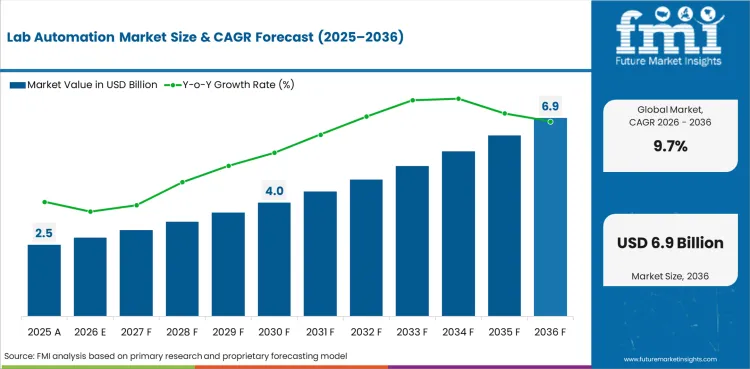
Lab Automation Market Definition
The Lab Automation Market includes automated instruments, devices, software, and integrated systems used in pharmaceutical, clinical, and research laboratories for sample management, liquid handling, detection, analysis, and data management. Products range from standalone automated instruments to fully integrated laboratory workflow platforms.
Lab Automation Market Inclusions
Market scope covers all commercially traded lab automation products classified by component type (devices, software), application (life sciences research and development, drug discovery, diagnostics), end user (pharmaceutical companies, hospitals and diagnostic centers, educational institutions, contract research organizations, research institutes), and workflow type (sample management and preparation, liquid handling and dispensing, detection and analysis, data management LIMS). Revenue coverage spans 2026 to 2036.
Lab Automation Market Exclusions
The scope does not include general laboratory furniture and fixtures, manual laboratory instruments without automation features, or building management systems for laboratory facilities.
Lab Automation Market Research Methodology
- Primary Research: FMI analysts conducted interviews with industry participants, technology providers, procurement specialists, and end users across key markets.
- Desk Research: Combined data from industry associations, regulatory filings, manufacturer disclosures, and published technical standards.
- Market Sizing and Forecasting: Bottom up aggregation across segments and regions with top down validation against industry benchmarks.
- Data Validation: Cross checked quarterly against industry production data, procurement records, and manufacturer financial disclosures.
Why is the Lab Automation Market Growing?
- High throughput screening demand in pharmaceutical R and D is sustaining investment in automated liquid handling and detection platforms that support large compound library processing and lead optimization workflows.
- Clinical laboratory consolidation and testing volume growth are driving procurement of automated sample preparation and analysis systems that improve throughput while reducing labor dependency and error rates.
Demand for lab automation reflects the increasing complexity and volume of analytical work across pharmaceutical, clinical, and research settings. Drug discovery programs require screening of compound libraries that exceed manual processing capacity, while clinical laboratories face growing testing volumes driven by expanded diagnostic criteria, population health screening programs, and personalized medicine adoption. Automation addresses these pressures by increasing throughput, reducing variability, and enabling continuous operation of sample processing and analysis workflows.
The integration of laboratory information management systems with physical automation platforms is transforming procurement decisions. Buyers are increasingly evaluating automation solutions on the basis of software connectivity, data management capability, and compatibility with existing informatics infrastructure rather than instrument specifications alone. This shift favors vendors that offer complete workflow platforms with embedded data capture, audit trail functionality, and integration with enterprise laboratory systems.
Miniaturization trends in assay development are creating demand for automated platforms that can handle reduced sample and reagent volumes with high precision. Microplate based assays using 384 and 1536 well formats require liquid handling systems with nanoliter dispensing accuracy, acoustic dispensing capability, and integrated plate management. These requirements are expanding the addressable market for specialized automation instruments that support miniaturized high throughput workflows.
Market Segmentation Analysis
- Devices account for 65.0% of the component type segment, reflecting the capital intensive nature of laboratory automation procurement where physical instruments represent the primary investment category.
- Life Sciences Research and Development holds 38.0% of the application segment, supported by pharmaceutical pipeline expansion and growing investment in automated drug discovery platforms.
The Lab Automation Market is segmented by component type, application, end user, and workflow type. Devices dominate component demand, reflecting the capital equipment nature of laboratory automation. Life Sciences Research and Development leads the application segment as pharmaceutical and biotech companies invest in automated discovery and screening platforms.
Insights into the Devices Component Segment
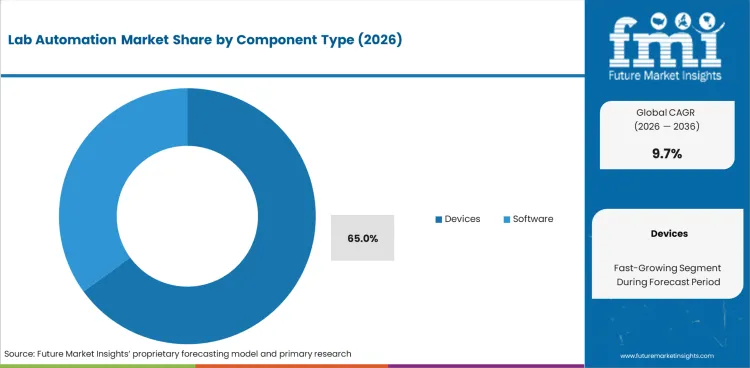
In 2026, Devices is expected to represent 65.0% of the component type segment. This category includes liquid handling robots, microplate readers, automated sample preparation instruments, and integrated workstations. Procurement is concentrated in pharmaceutical companies, large clinical laboratories, and contract research organizations that require high throughput processing capability.
The shift toward modular and scalable device architectures is influencing procurement patterns, as laboratories seek automation platforms that can be configured for current workflows and expanded as testing requirements grow.
Insights into the Life Sciences Research and Development Application Segment
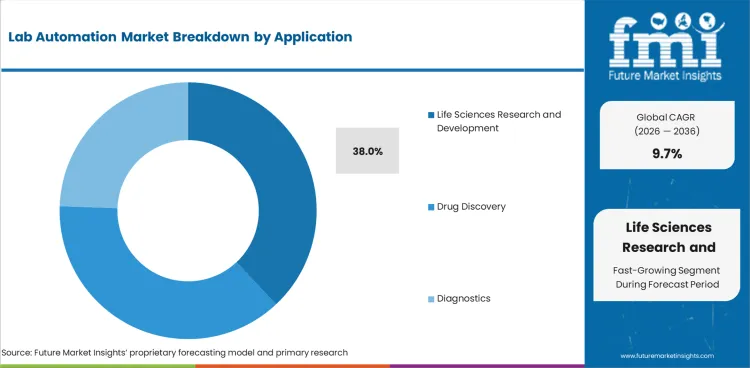
Life Sciences Research and Development accounts for 38.0% of the application segment in 2026. This category covers automation used in drug discovery, compound screening, assay development, and preclinical research workflows. Pharmaceutical and biotech companies are the primary buyers.
Growth in this segment reflects the expansion of pharmaceutical R and D pipelines, particularly in biologics and cell therapy development where automated cell culture, assay execution, and analytical characterization platforms are becoming standard laboratory infrastructure.
Lab Automation Market Drivers, Restraints, and Opportunities
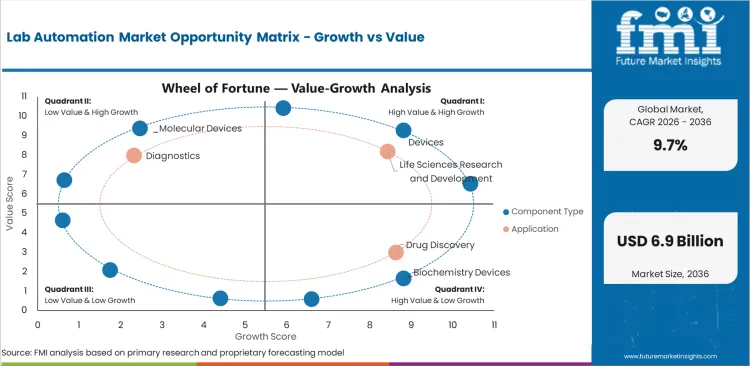
- Pharmaceutical R and D investment and diagnostic testing volume growth are sustaining demand for automated laboratory platforms across discovery, development, and clinical applications.
- High instrument costs and integration complexity limit adoption among smaller laboratories and academic institutions with constrained capital budgets.
- AI integration with laboratory automation is creating new service categories including automated experiment design, predictive maintenance, and intelligent result interpretation.
The Lab Automation Market is shaped by pharmaceutical R and D investment, diagnostic testing volume growth, and technology integration trends. Growth is supported by throughput requirements and regulatory compliance mandates, while adoption barriers include high capital costs and system integration complexity.
Pharmaceutical R and D Pipeline Expansion
Demand is shaped by growing pharmaceutical R and D investment, particularly in biologics, cell therapy, and gene therapy programs that require automated cell culture, assay execution, and analytical characterization. The increasing size and complexity of compound libraries is sustaining procurement of high throughput screening platforms.
Capital Cost and Integration Barriers
Adoption is constrained by the high upfront cost of automated laboratory systems and the complexity of integrating new instruments with existing laboratory informatics infrastructure. Smaller laboratories and academic institutions face particular challenges in justifying automation investment against limited and competitive budget allocations.
AI Powered Laboratory Intelligence
Growth reflects the integration of artificial intelligence with physical automation platforms, enabling capabilities including automated experiment design, predictive maintenance scheduling, and intelligent result interpretation. These AI enabled features are becoming procurement criteria for advanced laboratory environments.
Analysis of Lab Automation Market By Key Countries
.webp "Top Country Growth Comparison Lab Automation Market Cagr (2026 2036)")
| Country | CAGR |
|---|---|
| USA | 10.3% |
| European Union | 9.8% |
| South Korea | 9.7% |
| Japan | 9.6% |
| UK | 9.4% |
Source: FMI analysis based on primary research and proprietary forecasting model
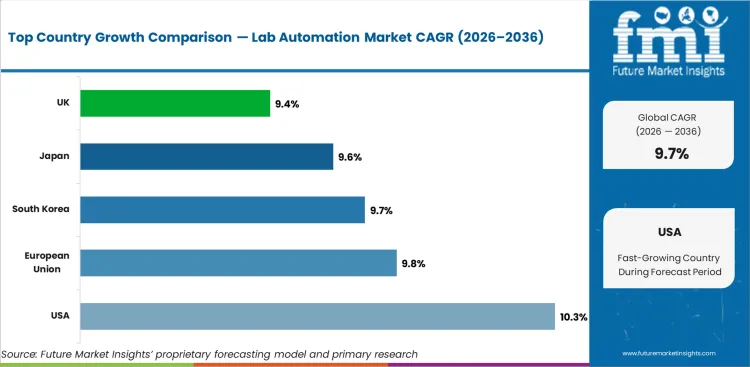
- The USA leads with a 10.3% CAGR through 2036, driven by pharmaceutical R and D investment, clinical laboratory expansion, and early adoption of AI integrated automation platforms.
- The European Union at 9.8% reflects demand from centralized laboratory networks, pharmaceutical manufacturing automation, and government funded research infrastructure programs.
- South Korea (9.7%) and Japan (9.6%) are expanding on account of biotechnology industry growth, clinical laboratory modernization, and increasing investment in automated diagnostic platforms.
The global Lab Automation Market is projected to grow at a CAGR of 9.7% from 2026 to 2036. The analysis covers more than 30 countries, with the primary markets listed below.
Demand Outlook for Lab Automation Market in the United States
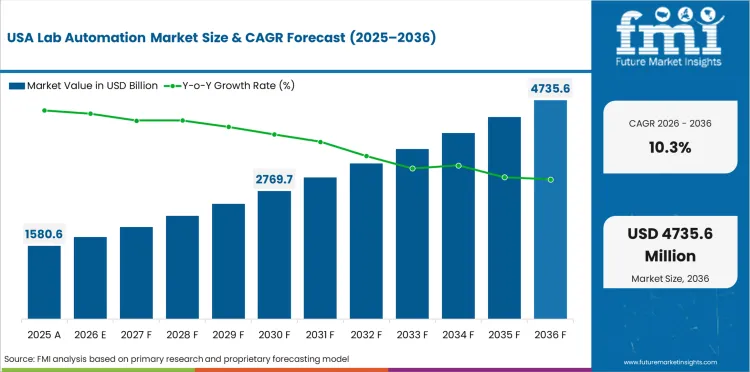
The USA is expected to grow at 10.3% through 2036. Growth is anchored in pharmaceutical R and D spending, clinical laboratory consolidation, and adoption of AI integrated automation platforms for drug discovery and diagnostic testing.
- Pharmaceutical pipeline expansion is sustaining investment in automated high throughput screening and compound management systems.
- Clinical laboratory consolidation is driving procurement of automated sample preparation and analysis platforms.
- AI integration with laboratory instruments is creating demand for intelligent automation solutions with predictive capabilities.
Future Outlook for Lab Automation Market in the European Union
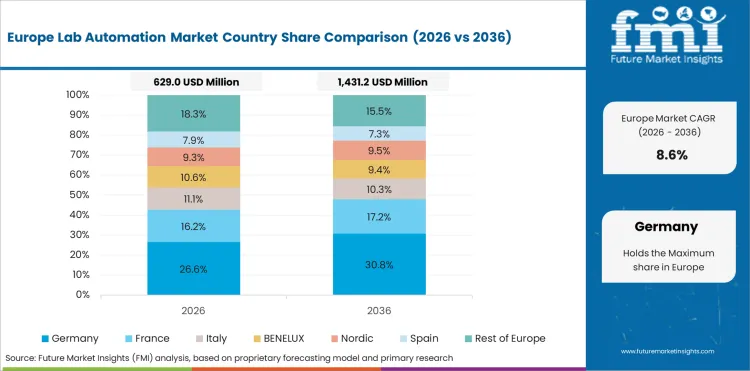
The European Union is expected to grow at 9.8% through 2036. Demand is shaped by centralized laboratory network development, pharmaceutical manufacturing automation requirements, and government funded research infrastructure investment.
- Centralized diagnostic laboratory networks are driving procurement of high throughput automated testing platforms.
- Pharmaceutical manufacturing quality requirements are sustaining investment in automated in process testing and release testing systems.
- Government funded research programs are supporting automation adoption in academic and public research laboratories.
Opportunity Analysis of Lab Automation Market in South Korea
South Korea is expected to grow at 9.7% through 2036. Growth reflects biotechnology industry expansion, government investment in laboratory infrastructure, and increasing adoption of automated diagnostic platforms in clinical settings.
- Biotechnology sector growth is creating demand for automated cell culture and bioassay platforms.
- Government laboratory modernization programs are accelerating procurement of integrated automation systems.
- Clinical diagnostic volume growth is driving investment in automated sample processing and analysis equipment.
In-depth Analysis of Lab Automation Market in Japan
Japan is expected to grow at 9.6% through 2036. Demand reflects pharmaceutical industry investment in automated drug discovery platforms, clinical laboratory workforce constraints, and government support for life sciences research infrastructure.
- Pharmaceutical R and D investment is sustaining procurement of automated screening and analytical characterization systems.
- Laboratory workforce shortages are driving adoption of automated sample handling and processing solutions.
- Government life sciences research funding is supporting automation deployment in academic and institutional laboratories.
Sales Analysis of Lab Automation Market in the United Kingdom
The UK is expected to grow at 9.4% through 2036. Growth is supported by NHS laboratory consolidation, pharmaceutical industry investment, and university research infrastructure modernization programs.
- NHS laboratory network consolidation is driving procurement of standardized automated testing platforms.
- Pharmaceutical industry investment in biologics and cell therapy is creating demand for specialized automation solutions.
- University research infrastructure funding is supporting automation adoption across academic laboratory settings.
Competitive Landscape and Strategic Positioning
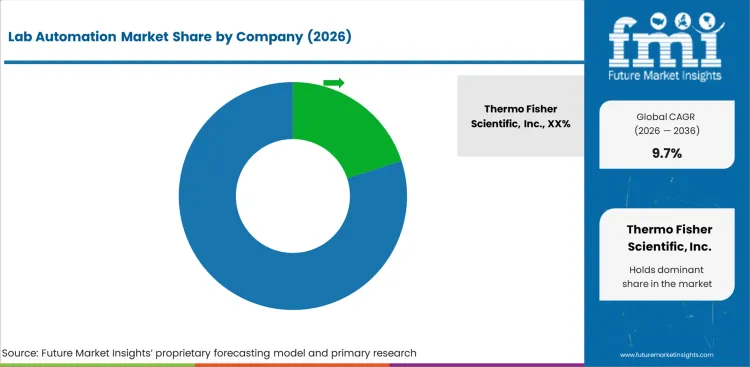
- Thermo Fisher Scientific leads through a comprehensive instrument portfolio spanning liquid handling, detection, and sample preparation with established pharmaceutical and clinical laboratory distribution networks.
- Beckman Coulter (Danaher), Siemens Healthineers, and Agilent Technologies maintain strong positions through specialized automation platforms and integrated workflow solutions for clinical and research applications.
- Emerging players are targeting niche segments including cloud connected laboratory automation, modular microfluidic platforms, and AI powered experiment management systems.
Thermo Fisher Scientific maintains a leading position through its broad laboratory automation portfolio covering liquid handling robots, microplate readers, automated sample preparation systems, and integrated laboratory workflow platforms. Beckman Coulter (Danaher) provides specialized clinical and research automation solutions.
Siemens Healthineers delivers diagnostic laboratory automation including pre analytical, analytical, and post analytical systems. PerkinElmer provides detection and imaging automation for life sciences research applications.
Agilent Technologies offers chromatography and spectroscopy automation solutions. Tecan Group and Hamilton Company specialize in liquid handling and laboratory robotics platforms serving pharmaceutical, clinical, and research customers.
Barriers to entry include the capital intensive nature of instrument development, established distribution relationships, regulatory approval requirements for clinical laboratory instruments, and the need for comprehensive service and support infrastructure. Strategic priorities include expanding AI and analytics integration, developing modular and scalable platform architectures, and building software connectivity capabilities.
Key Companies in the Lab Automation Market
Key global companies leading the lab automation market include:
- Thermo Fisher Scientific, Inc. (USA), Beckman Coulter (Danaher Corporation) (USA), Siemens Healthineers AG (Germany), PerkinElmer, Inc. (USA) maintain leadership positions through established market presence, broad product portfolios, and global service and distribution networks.
- Agilent Technologies, Inc. (USA), Tecan Group Ltd. (Switzerland), Hamilton Company (USA) have established regional strength through specialized capabilities and focused customer relationships.
- Labcyte Inc., Luminex Corporation, BioTek Instruments, Transcriptic (Strateos) are among the startups and emerging players gaining traction through specialized technology, niche applications, and focused innovation strategies.
Competitive Benchmarking: Lab Automation Market
| Company | Instrument Portfolio Breadth | Software Integration | Pharma Customer Access | Geographic Coverage |
|---|---|---|---|---|
| Thermo Fisher Scientific | High | High | Strong | Global |
| Beckman Coulter (Danaher) | High | High | Strong | Global |
| Siemens Healthineers AG | High | High | Strong | Global |
| PerkinElmer, Inc. | Medium | High | Strong | Global |
| Agilent Technologies | High | High | Strong | Global |
| Tecan Group Ltd. | Medium | High | Moderate | Global |
| Hamilton Company | Medium | High | Moderate | Global |
| Labcyte Inc. | Low | Medium | Moderate | North America |
| BioTek Instruments | Medium | Medium | Moderate | Global |
| Opentrons | Low | Medium | Low | North America |
Source: Future Market Insights competitive analysis, 2026.
Key Players in the Lab Automation Market
Major Global Players
- Thermo Fisher Scientific, Inc.
- Beckman Coulter (Danaher Corporation)
- Siemens Healthineers AG
- PerkinElmer, Inc.
- Agilent Technologies, Inc.
- Tecan Group Ltd.
- Hamilton Company
Emerging Players/Startups
- Labcyte Inc.
- Luminex Corporation
- BioTek Instruments
- Transcriptic (Strateos)
- Opentrons
Report Scope and Coverage
| Metric | Value |
|---|---|
| Quantitative Units | USD 2.74 billion to USD 6.92 billion, at a CAGR of 9.7% |
| Market Definition | The Lab Automation Market includes automated instruments, devices, software, and integrated systems used in pharmaceutical, clinical, and research laboratories. |
| Regions Covered | North America, Latin America, Europe, East Asia, South Asia and Pacific, Middle East and Africa |
| Countries Covered | USA, UK, France, Germany, Italy, South Korea, Japan, China, India, 30 plus countries |
| Key Companies Profiled | Thermo Fisher Scientific, Inc., Beckman Coulter (Danaher Corporation), Siemens Healthineers AG, PerkinElmer, Inc., Agilent Technologies, Inc., Tecan Group Ltd., Hamilton Company, Labcyte Inc., BioTek Instruments, Opentrons |
| Forecast Period | 2026 to 2036 |
| Approach | Hybrid bottom up and top down methodology starting with verified transaction data, projecting adoption velocity across segments and regions. |
Segmentation
Lab Automation Market Segmented by Component Type:
- Devices
- Biochemistry Devices
- Molecular Devices
- Hematology Devices
- Immunology Devices
- Microbiology Devices
- Others
- Software
- Scheduling Software
- Momentum Integration Software
Lab Automation Market Segmented by Application:
- Life Sciences Research and Development
- Drug Discovery
- Diagnostics
Lab Automation Market Segmented by End User:
- Pharmaceutical Companies
- Hospitals and Diagnostic Centers
- Educational Institutions
- Contract Research Organizations
- Research Institutes
Lab Automation Market Segmented by Workflow Type:
- Sample Management & Preparation
- Liquid Handling & Dispensing
- Detection & Analysis
- Data Management - LIMS
- Other
Lab Automation Market by Region:
- North America
- USA
- Canada
- Mexico
- Latin America
- Brazil
- Chile
- Rest of Latin America
- Western Europe
- Germany
- UK
- Italy
- Spain
- France
- Nordic
- BENELUX
- Rest of Western Europe
- Eastern Europe
- Russia
- Poland
- Hungary
- Balkan & Baltic
- Rest of Eastern Europe
- East Asia
- China
- Japan
- South Korea
- South Asia and Pacific
- India
- ASEAN
- Australia & New Zealand
- Rest of South Asia and Pacific
- Middle East & Africa
- Kingdom of Saudi Arabia
- Other GCC Countries
- Turkiye
- South Africa
- Other African Union
- Rest of Middle East & Africa
Research Sources and Bibliography
- 1. USA Food and Drug Administration. (2025). FDA Laboratory Quality Standards and Automation Guidance. FDA.
- 2. European Medicines Agency. (2024). EMA Good Manufacturing Practice Guidelines for Laboratory Operations. EMA.
- 3. International Society for Pharmaceutical Engineering. (2025). ISPE Baseline Guide: Laboratory Automation Systems. ISPE.
- 4. World Health Organization. (2025). WHO Laboratory Quality Management System Handbook. WHO.
- 5. National Institutes of Health. (2025). NIH Research Infrastructure Investment Report. NIH.
This bibliography is provided for reader reference. The full Future Market Insights report contains the complete reference list with publication dates, URLs, and supporting data for all cited works.
This Report Answers
- Estimating the market size and revenue projections from 2026 to 2036.
- Segmentation by component type, application, end user, and workflow type.
- Regional insights covering more than 30 markets.
- Analysis of automation technology platforms including devices and software.
- Competitive landscape assessment including instrument portfolio benchmarking.
- Identification of growth opportunities in AI integration, clinical automation, and modular platform development.
- Supply chain and instrument distribution evaluation.
- Data delivery in PDF and Excel formats.
Frequently Asked Questions
What is the global market demand for Lab Automation in 2026?
In 2026, the global Lab Automation Market is expected to be worth USD 2.74 billion.
How big will the Lab Automation Market be in 2036?
By 2036, the Lab Automation Market is expected to be worth USD 6.92 billion.
How much is demand for Lab Automation expected to grow between 2026 and 2036?
Between 2026 and 2036, demand for Lab Automation is expected to grow at a CAGR of 9.7%.
Which component type segment is expected to lead in 2026?
Devices is expected to account for 65.0% of the component type segment in 2026, reflecting the capital intensive nature of laboratory automation where physical instruments represent the primary investment category.
What is driving demand in the USA?
The USA is expected to grow at 10.3% through 2036, supported by pharmaceutical R and D investment, clinical laboratory consolidation, and adoption of AI integrated automation platforms.
What is driving demand in the European Union?
The European Union is expected to grow at 9.8% through 2036, shaped by centralized laboratory network development, pharmaceutical manufacturing automation, and government funded research infrastructure investment.
What does this report mean by Lab Automation Market definition?
The Lab Automation Market includes automated instruments, devices, software, and integrated systems used in pharmaceutical, clinical, and research laboratories for sample management, liquid handling, detection, analysis, and data management.
How does FMI make the Lab Automation forecast and validate it?
Forecasting models use a hybrid bottom up and top down approach, starting with verified instrument procurement data and validating against global laboratory equipment spending statistics and manufacturer disclosures.
Table of Content
- Executive Summary
- Global Market Outlook
- Demand to side Trends
- Supply to side Trends
- Technology Roadmap Analysis
- Analysis and Recommendations
- Market Overview
- Market Coverage / Taxonomy
- Market Definition / Scope / Limitations
- Research Methodology
- Chapter Orientation
- Analytical Lens and Working Hypotheses
- Market Structure, Signals, and Trend Drivers
- Benchmarking and Cross-market Comparability
- Market Sizing, Forecasting, and Opportunity Mapping
- Research Design and Evidence Framework
- Desk Research Programme (Secondary Evidence)
- Company Annual and Sustainability Reports
- Peer-reviewed Journals and Academic Literature
- Corporate Websites, Product Literature, and Technical Notes
- Earnings Decks and Investor Briefings
- Statutory Filings and Regulatory Disclosures
- Technical White Papers and Standards Notes
- Trade Journals, Industry Magazines, and Analyst Briefs
- Conference Proceedings, Webinars, and Seminar Materials
- Government Statistics Portals and Public Data Releases
- Press Releases and Reputable Media Coverage
- Specialist Newsletters and Curated Briefings
- Sector Databases and Reference Repositories
- FMI Internal Proprietary Databases and Historical Market Datasets
- Subscription Datasets and Paid Sources
- Social Channels, Communities, and Digital Listening Inputs
- Additional Desk Sources
- Expert Input and Fieldwork (Primary Evidence)
- Primary Modes
- Qualitative Interviews and Expert Elicitation
- Quantitative Surveys and Structured Data Capture
- Blended Approach
- Why Primary Evidence is Used
- Field Techniques
- Interviews
- Surveys
- Focus Groups
- Observational and In-context Research
- Social and Community Interactions
- Stakeholder Universe Engaged
- C-suite Leaders
- Board Members
- Presidents and Vice Presidents
- R&D and Innovation Heads
- Technical Specialists
- Domain Subject-matter Experts
- Scientists
- Physicians and Other Healthcare Professionals
- Governance, Ethics, and Data Stewardship
- Research Ethics
- Data Integrity and Handling
- Primary Modes
- Tooling, Models, and Reference Databases
- Desk Research Programme (Secondary Evidence)
- Data Engineering and Model Build
- Data Acquisition and Ingestion
- Cleaning, Normalisation, and Verification
- Synthesis, Triangulation, and Analysis
- Quality Assurance and Audit Trail
- Market Background
- Market Dynamics
- Drivers
- Restraints
- Opportunity
- Trends
- Scenario Forecast
- Demand in Optimistic Scenario
- Demand in Likely Scenario
- Demand in Conservative Scenario
- Opportunity Map Analysis
- Product Life Cycle Analysis
- Supply Chain Analysis
- Investment Feasibility Matrix
- Value Chain Analysis
- PESTLE and Porter’s Analysis
- Regulatory Landscape
- Regional Parent Market Outlook
- Production and Consumption Statistics
- Import and Export Statistics
- Market Dynamics
- Global Market Analysis 2021 to 2025 and Forecast, 2026 to 2036
- Historical Market Size Value (USD Million) Analysis, 2021 to 2025
- Current and Future Market Size Value (USD Million) Projections, 2026 to 2036
- Y to o to Y Growth Trend Analysis
- Absolute $ Opportunity Analysis
- Global Market Pricing Analysis 2021 to 2025 and Forecast 2026 to 2036
- Global Market Analysis 2021 to 2025 and Forecast 2026 to 2036, By Component Type
- Introduction / Key Findings
- Historical Market Size Value (USD Million) Analysis By Component Type, 2021 to 2025
- Current and Future Market Size Value (USD Million) Analysis and Forecast By Component Type, 2026 to 2036
- Devices
- Biochemistry Devices
- Molecular Devices
- Hematology Devices
- Immunology Devices
- Microbiology Devices
- Others
- Software
- Scheduling Software
- Momentum Integration Software
- Devices
- Y to o to Y Growth Trend Analysis By Component Type, 2021 to 2025
- Absolute $ Opportunity Analysis By Component Type, 2026 to 2036
- Global Market Analysis 2021 to 2025 and Forecast 2026 to 2036, By Application
- Introduction / Key Findings
- Historical Market Size Value (USD Million) Analysis By Application, 2021 to 2025
- Current and Future Market Size Value (USD Million) Analysis and Forecast By Application, 2026 to 2036
- Life Sciences Research and Development
- Drug Discovery
- Diagnostics
- Life Sciences Research and Development
- Y to o to Y Growth Trend Analysis By Application, 2021 to 2025
- Absolute $ Opportunity Analysis By Application, 2026 to 2036
- Global Market Analysis 2021 to 2025 and Forecast 2026 to 2036, By End User
- Introduction / Key Findings
- Historical Market Size Value (USD Million) Analysis By End User, 2021 to 2025
- Current and Future Market Size Value (USD Million) Analysis and Forecast By End User, 2026 to 2036
- Pharmaceutical Companies
- Hospitals and Diagnostic Centers
- Educational Institutions
- Contract Research Organizations
- Research Institutes
- Pharmaceutical Companies
- Y to o to Y Growth Trend Analysis By End User, 2021 to 2025
- Absolute $ Opportunity Analysis By End User, 2026 to 2036
- Global Market Analysis 2021 to 2025 and Forecast 2026 to 2036, By Workflow Type
- Introduction / Key Findings
- Historical Market Size Value (USD Million) Analysis By Workflow Type, 2021 to 2025
- Current and Future Market Size Value (USD Million) Analysis and Forecast By Workflow Type, 2026 to 2036
- Sample Management & Preparation
- Liquid Handling & Dispensing
- Detection & Analysis
- Data Management - LIMS
- Other
- Sample Management & Preparation
- Y to o to Y Growth Trend Analysis By Workflow Type, 2021 to 2025
- Absolute $ Opportunity Analysis By Workflow Type, 2026 to 2036
- Global Market Analysis 2021 to 2025 and Forecast 2026 to 2036, By Region
- Introduction
- Historical Market Size Value (USD Million) Analysis By Region, 2021 to 2025
- Current Market Size Value (USD Million) Analysis and Forecast By Region, 2026 to 2036
- North America
- Latin America
- Western Europe
- Eastern Europe
- East Asia
- South Asia and Pacific
- Middle East & Africa
- Market Attractiveness Analysis By Region
- North America Market Analysis 2021 to 2025 and Forecast 2026 to 2036, By Country
- Historical Market Size Value (USD Million) Trend Analysis By Market Taxonomy, 2021 to 2025
- Market Size Value (USD Million) Forecast By Market Taxonomy, 2026 to 2036
- By Country
- USA
- Canada
- Mexico
- By Component Type
- By Application
- By End User
- By Workflow Type
- By Country
- Market Attractiveness Analysis
- By Country
- By Component Type
- By Application
- By End User
- By Workflow Type
- Key Takeaways
- Latin America Market Analysis 2021 to 2025 and Forecast 2026 to 2036, By Country
- Historical Market Size Value (USD Million) Trend Analysis By Market Taxonomy, 2021 to 2025
- Market Size Value (USD Million) Forecast By Market Taxonomy, 2026 to 2036
- By Country
- Brazil
- Chile
- Rest of Latin America
- By Component Type
- By Application
- By End User
- By Workflow Type
- By Country
- Market Attractiveness Analysis
- By Country
- By Component Type
- By Application
- By End User
- By Workflow Type
- Key Takeaways
- Western Europe Market Analysis 2021 to 2025 and Forecast 2026 to 2036, By Country
- Historical Market Size Value (USD Million) Trend Analysis By Market Taxonomy, 2021 to 2025
- Market Size Value (USD Million) Forecast By Market Taxonomy, 2026 to 2036
- By Country
- Germany
- UK
- Italy
- Spain
- France
- Nordic
- BENELUX
- Rest of Western Europe
- By Component Type
- By Application
- By End User
- By Workflow Type
- By Country
- Market Attractiveness Analysis
- By Country
- By Component Type
- By Application
- By End User
- By Workflow Type
- Key Takeaways
- Eastern Europe Market Analysis 2021 to 2025 and Forecast 2026 to 2036, By Country
- Historical Market Size Value (USD Million) Trend Analysis By Market Taxonomy, 2021 to 2025
- Market Size Value (USD Million) Forecast By Market Taxonomy, 2026 to 2036
- By Country
- Russia
- Poland
- Hungary
- Balkan & Baltic
- Rest of Eastern Europe
- By Component Type
- By Application
- By End User
- By Workflow Type
- By Country
- Market Attractiveness Analysis
- By Country
- By Component Type
- By Application
- By End User
- By Workflow Type
- Key Takeaways
- East Asia Market Analysis 2021 to 2025 and Forecast 2026 to 2036, By Country
- Historical Market Size Value (USD Million) Trend Analysis By Market Taxonomy, 2021 to 2025
- Market Size Value (USD Million) Forecast By Market Taxonomy, 2026 to 2036
- By Country
- China
- Japan
- South Korea
- By Component Type
- By Application
- By End User
- By Workflow Type
- By Country
- Market Attractiveness Analysis
- By Country
- By Component Type
- By Application
- By End User
- By Workflow Type
- Key Takeaways
- South Asia and Pacific Market Analysis 2021 to 2025 and Forecast 2026 to 2036, By Country
- Historical Market Size Value (USD Million) Trend Analysis By Market Taxonomy, 2021 to 2025
- Market Size Value (USD Million) Forecast By Market Taxonomy, 2026 to 2036
- By Country
- India
- ASEAN
- Australia & New Zealand
- Rest of South Asia and Pacific
- By Component Type
- By Application
- By End User
- By Workflow Type
- By Country
- Market Attractiveness Analysis
- By Country
- By Component Type
- By Application
- By End User
- By Workflow Type
- Key Takeaways
- Middle East & Africa Market Analysis 2021 to 2025 and Forecast 2026 to 2036, By Country
- Historical Market Size Value (USD Million) Trend Analysis By Market Taxonomy, 2021 to 2025
- Market Size Value (USD Million) Forecast By Market Taxonomy, 2026 to 2036
- By Country
- Kingdom of Saudi Arabia
- Other GCC Countries
- Turkiye
- South Africa
- Other African Union
- Rest of Middle East & Africa
- By Component Type
- By Application
- By End User
- By Workflow Type
- By Country
- Market Attractiveness Analysis
- By Country
- By Component Type
- By Application
- By End User
- By Workflow Type
- Key Takeaways
- Key Countries Market Analysis
- USA
- Pricing Analysis
- Market Share Analysis, 2025
- By Component Type
- By Application
- By End User
- By Workflow Type
- Canada
- Pricing Analysis
- Market Share Analysis, 2025
- By Component Type
- By Application
- By End User
- By Workflow Type
- Mexico
- Pricing Analysis
- Market Share Analysis, 2025
- By Component Type
- By Application
- By End User
- By Workflow Type
- Brazil
- Pricing Analysis
- Market Share Analysis, 2025
- By Component Type
- By Application
- By End User
- By Workflow Type
- Chile
- Pricing Analysis
- Market Share Analysis, 2025
- By Component Type
- By Application
- By End User
- By Workflow Type
- Germany
- Pricing Analysis
- Market Share Analysis, 2025
- By Component Type
- By Application
- By End User
- By Workflow Type
- UK
- Pricing Analysis
- Market Share Analysis, 2025
- By Component Type
- By Application
- By End User
- By Workflow Type
- Italy
- Pricing Analysis
- Market Share Analysis, 2025
- By Component Type
- By Application
- By End User
- By Workflow Type
- Spain
- Pricing Analysis
- Market Share Analysis, 2025
- By Component Type
- By Application
- By End User
- By Workflow Type
- France
- Pricing Analysis
- Market Share Analysis, 2025
- By Component Type
- By Application
- By End User
- By Workflow Type
- India
- Pricing Analysis
- Market Share Analysis, 2025
- By Component Type
- By Application
- By End User
- By Workflow Type
- ASEAN
- Pricing Analysis
- Market Share Analysis, 2025
- By Component Type
- By Application
- By End User
- By Workflow Type
- Australia & New Zealand
- Pricing Analysis
- Market Share Analysis, 2025
- By Component Type
- By Application
- By End User
- By Workflow Type
- China
- Pricing Analysis
- Market Share Analysis, 2025
- By Component Type
- By Application
- By End User
- By Workflow Type
- Japan
- Pricing Analysis
- Market Share Analysis, 2025
- By Component Type
- By Application
- By End User
- By Workflow Type
- South Korea
- Pricing Analysis
- Market Share Analysis, 2025
- By Component Type
- By Application
- By End User
- By Workflow Type
- Russia
- Pricing Analysis
- Market Share Analysis, 2025
- By Component Type
- By Application
- By End User
- By Workflow Type
- Poland
- Pricing Analysis
- Market Share Analysis, 2025
- By Component Type
- By Application
- By End User
- By Workflow Type
- Hungary
- Pricing Analysis
- Market Share Analysis, 2025
- By Component Type
- By Application
- By End User
- By Workflow Type
- Kingdom of Saudi Arabia
- Pricing Analysis
- Market Share Analysis, 2025
- By Component Type
- By Application
- By End User
- By Workflow Type
- Turkiye
- Pricing Analysis
- Market Share Analysis, 2025
- By Component Type
- By Application
- By End User
- By Workflow Type
- South Africa
- Pricing Analysis
- Market Share Analysis, 2025
- By Component Type
- By Application
- By End User
- By Workflow Type
- USA
- Market Structure Analysis
- Competition Dashboard
- Competition Benchmarking
- Market Share Analysis of Top Players
- By Regional
- By Component Type
- By Application
- By End User
- By Workflow Type
- Competition Analysis
- Competition Deep Dive
- Thermo Fisher Scientific, Inc.
- Overview
- Product Portfolio
- Profitability by Market Segments (Product/Age /Sales Channel/Region)
- Sales Footprint
- Strategy Overview
- Marketing Strategy
- Product Strategy
- Channel Strategy
- Beckman Coulter (Danaher Corporation)
- Siemens Healthineers AG
- PerkinElmer, Inc.
- Agilent Technologies, Inc.
- Thermo Fisher Scientific, Inc.
- Competition Deep Dive
- Assumptions & Acronyms Used
List of Tables
- Table 1: Global Market Value (USD Million) Forecast by Region, 2021 to 2036
- Table 2: Global Market Value (USD Million) Forecast by Component Type, 2021 to 2036
- Table 3: Global Market Value (USD Million) Forecast by Application, 2021 to 2036
- Table 4: Global Market Value (USD Million) Forecast by End User, 2021 to 2036
- Table 5: Global Market Value (USD Million) Forecast by Workflow Type, 2021 to 2036
- Table 6: North America Market Value (USD Million) Forecast by Country, 2021 to 2036
- Table 7: North America Market Value (USD Million) Forecast by Component Type, 2021 to 2036
- Table 8: North America Market Value (USD Million) Forecast by Application, 2021 to 2036
- Table 9: North America Market Value (USD Million) Forecast by End User, 2021 to 2036
- Table 10: North America Market Value (USD Million) Forecast by Workflow Type, 2021 to 2036
- Table 11: Latin America Market Value (USD Million) Forecast by Country, 2021 to 2036
- Table 12: Latin America Market Value (USD Million) Forecast by Component Type, 2021 to 2036
- Table 13: Latin America Market Value (USD Million) Forecast by Application, 2021 to 2036
- Table 14: Latin America Market Value (USD Million) Forecast by End User, 2021 to 2036
- Table 15: Latin America Market Value (USD Million) Forecast by Workflow Type, 2021 to 2036
- Table 16: Western Europe Market Value (USD Million) Forecast by Country, 2021 to 2036
- Table 17: Western Europe Market Value (USD Million) Forecast by Component Type, 2021 to 2036
- Table 18: Western Europe Market Value (USD Million) Forecast by Application, 2021 to 2036
- Table 19: Western Europe Market Value (USD Million) Forecast by End User, 2021 to 2036
- Table 20: Western Europe Market Value (USD Million) Forecast by Workflow Type, 2021 to 2036
- Table 21: Eastern Europe Market Value (USD Million) Forecast by Country, 2021 to 2036
- Table 22: Eastern Europe Market Value (USD Million) Forecast by Component Type, 2021 to 2036
- Table 23: Eastern Europe Market Value (USD Million) Forecast by Application, 2021 to 2036
- Table 24: Eastern Europe Market Value (USD Million) Forecast by End User, 2021 to 2036
- Table 25: Eastern Europe Market Value (USD Million) Forecast by Workflow Type, 2021 to 2036
- Table 26: East Asia Market Value (USD Million) Forecast by Country, 2021 to 2036
- Table 27: East Asia Market Value (USD Million) Forecast by Component Type, 2021 to 2036
- Table 28: East Asia Market Value (USD Million) Forecast by Application, 2021 to 2036
- Table 29: East Asia Market Value (USD Million) Forecast by End User, 2021 to 2036
- Table 30: East Asia Market Value (USD Million) Forecast by Workflow Type, 2021 to 2036
- Table 31: South Asia and Pacific Market Value (USD Million) Forecast by Country, 2021 to 2036
- Table 32: South Asia and Pacific Market Value (USD Million) Forecast by Component Type, 2021 to 2036
- Table 33: South Asia and Pacific Market Value (USD Million) Forecast by Application, 2021 to 2036
- Table 34: South Asia and Pacific Market Value (USD Million) Forecast by End User, 2021 to 2036
- Table 35: South Asia and Pacific Market Value (USD Million) Forecast by Workflow Type, 2021 to 2036
- Table 36: Middle East & Africa Market Value (USD Million) Forecast by Country, 2021 to 2036
- Table 37: Middle East & Africa Market Value (USD Million) Forecast by Component Type, 2021 to 2036
- Table 38: Middle East & Africa Market Value (USD Million) Forecast by Application, 2021 to 2036
- Table 39: Middle East & Africa Market Value (USD Million) Forecast by End User, 2021 to 2036
- Table 40: Middle East & Africa Market Value (USD Million) Forecast by Workflow Type, 2021 to 2036
List of Figures
- Figure 1: Global Market Pricing Analysis
- Figure 2: Global Market Value (USD Million) Forecast 2021-2036
- Figure 3: Global Market Value Share and BPS Analysis by Component Type, 2026 and 2036
- Figure 4: Global Market Y-o-Y Growth Comparison by Component Type, 2026-2036
- Figure 5: Global Market Attractiveness Analysis by Component Type
- Figure 6: Global Market Value Share and BPS Analysis by Application, 2026 and 2036
- Figure 7: Global Market Y-o-Y Growth Comparison by Application, 2026-2036
- Figure 8: Global Market Attractiveness Analysis by Application
- Figure 9: Global Market Value Share and BPS Analysis by End User, 2026 and 2036
- Figure 10: Global Market Y-o-Y Growth Comparison by End User, 2026-2036
- Figure 11: Global Market Attractiveness Analysis by End User
- Figure 12: Global Market Value Share and BPS Analysis by Workflow Type, 2026 and 2036
- Figure 13: Global Market Y-o-Y Growth Comparison by Workflow Type, 2026-2036
- Figure 14: Global Market Attractiveness Analysis by Workflow Type
- Figure 15: Global Market Value (USD Million) Share and BPS Analysis by Region, 2026 and 2036
- Figure 16: Global Market Y-o-Y Growth Comparison by Region, 2026-2036
- Figure 17: Global Market Attractiveness Analysis by Region
- Figure 18: North America Market Incremental Dollar Opportunity, 2026-2036
- Figure 19: Latin America Market Incremental Dollar Opportunity, 2026-2036
- Figure 20: Western Europe Market Incremental Dollar Opportunity, 2026-2036
- Figure 21: Eastern Europe Market Incremental Dollar Opportunity, 2026-2036
- Figure 22: East Asia Market Incremental Dollar Opportunity, 2026-2036
- Figure 23: South Asia and Pacific Market Incremental Dollar Opportunity, 2026-2036
- Figure 24: Middle East & Africa Market Incremental Dollar Opportunity, 2026-2036
- Figure 25: North America Market Value Share and BPS Analysis by Country, 2026 and 2036
- Figure 26: North America Market Value Share and BPS Analysis by Component Type, 2026 and 2036
- Figure 27: North America Market Y-o-Y Growth Comparison by Component Type, 2026-2036
- Figure 28: North America Market Attractiveness Analysis by Component Type
- Figure 29: North America Market Value Share and BPS Analysis by Application, 2026 and 2036
- Figure 30: North America Market Y-o-Y Growth Comparison by Application, 2026-2036
- Figure 31: North America Market Attractiveness Analysis by Application
- Figure 32: North America Market Value Share and BPS Analysis by End User, 2026 and 2036
- Figure 33: North America Market Y-o-Y Growth Comparison by End User, 2026-2036
- Figure 34: North America Market Attractiveness Analysis by End User
- Figure 35: North America Market Value Share and BPS Analysis by Workflow Type, 2026 and 2036
- Figure 36: North America Market Y-o-Y Growth Comparison by Workflow Type, 2026-2036
- Figure 37: North America Market Attractiveness Analysis by Workflow Type
- Figure 38: Latin America Market Value Share and BPS Analysis by Country, 2026 and 2036
- Figure 39: Latin America Market Value Share and BPS Analysis by Component Type, 2026 and 2036
- Figure 40: Latin America Market Y-o-Y Growth Comparison by Component Type, 2026-2036
- Figure 41: Latin America Market Attractiveness Analysis by Component Type
- Figure 42: Latin America Market Value Share and BPS Analysis by Application, 2026 and 2036
- Figure 43: Latin America Market Y-o-Y Growth Comparison by Application, 2026-2036
- Figure 44: Latin America Market Attractiveness Analysis by Application
- Figure 45: Latin America Market Value Share and BPS Analysis by End User, 2026 and 2036
- Figure 46: Latin America Market Y-o-Y Growth Comparison by End User, 2026-2036
- Figure 47: Latin America Market Attractiveness Analysis by End User
- Figure 48: Latin America Market Value Share and BPS Analysis by Workflow Type, 2026 and 2036
- Figure 49: Latin America Market Y-o-Y Growth Comparison by Workflow Type, 2026-2036
- Figure 50: Latin America Market Attractiveness Analysis by Workflow Type
- Figure 51: Western Europe Market Value Share and BPS Analysis by Country, 2026 and 2036
- Figure 52: Western Europe Market Value Share and BPS Analysis by Component Type, 2026 and 2036
- Figure 53: Western Europe Market Y-o-Y Growth Comparison by Component Type, 2026-2036
- Figure 54: Western Europe Market Attractiveness Analysis by Component Type
- Figure 55: Western Europe Market Value Share and BPS Analysis by Application, 2026 and 2036
- Figure 56: Western Europe Market Y-o-Y Growth Comparison by Application, 2026-2036
- Figure 57: Western Europe Market Attractiveness Analysis by Application
- Figure 58: Western Europe Market Value Share and BPS Analysis by End User, 2026 and 2036
- Figure 59: Western Europe Market Y-o-Y Growth Comparison by End User, 2026-2036
- Figure 60: Western Europe Market Attractiveness Analysis by End User
- Figure 61: Western Europe Market Value Share and BPS Analysis by Workflow Type, 2026 and 2036
- Figure 62: Western Europe Market Y-o-Y Growth Comparison by Workflow Type, 2026-2036
- Figure 63: Western Europe Market Attractiveness Analysis by Workflow Type
- Figure 64: Eastern Europe Market Value Share and BPS Analysis by Country, 2026 and 2036
- Figure 65: Eastern Europe Market Value Share and BPS Analysis by Component Type, 2026 and 2036
- Figure 66: Eastern Europe Market Y-o-Y Growth Comparison by Component Type, 2026-2036
- Figure 67: Eastern Europe Market Attractiveness Analysis by Component Type
- Figure 68: Eastern Europe Market Value Share and BPS Analysis by Application, 2026 and 2036
- Figure 69: Eastern Europe Market Y-o-Y Growth Comparison by Application, 2026-2036
- Figure 70: Eastern Europe Market Attractiveness Analysis by Application
- Figure 71: Eastern Europe Market Value Share and BPS Analysis by End User, 2026 and 2036
- Figure 72: Eastern Europe Market Y-o-Y Growth Comparison by End User, 2026-2036
- Figure 73: Eastern Europe Market Attractiveness Analysis by End User
- Figure 74: Eastern Europe Market Value Share and BPS Analysis by Workflow Type, 2026 and 2036
- Figure 75: Eastern Europe Market Y-o-Y Growth Comparison by Workflow Type, 2026-2036
- Figure 76: Eastern Europe Market Attractiveness Analysis by Workflow Type
- Figure 77: East Asia Market Value Share and BPS Analysis by Country, 2026 and 2036
- Figure 78: East Asia Market Value Share and BPS Analysis by Component Type, 2026 and 2036
- Figure 79: East Asia Market Y-o-Y Growth Comparison by Component Type, 2026-2036
- Figure 80: East Asia Market Attractiveness Analysis by Component Type
- Figure 81: East Asia Market Value Share and BPS Analysis by Application, 2026 and 2036
- Figure 82: East Asia Market Y-o-Y Growth Comparison by Application, 2026-2036
- Figure 83: East Asia Market Attractiveness Analysis by Application
- Figure 84: East Asia Market Value Share and BPS Analysis by End User, 2026 and 2036
- Figure 85: East Asia Market Y-o-Y Growth Comparison by End User, 2026-2036
- Figure 86: East Asia Market Attractiveness Analysis by End User
- Figure 87: East Asia Market Value Share and BPS Analysis by Workflow Type, 2026 and 2036
- Figure 88: East Asia Market Y-o-Y Growth Comparison by Workflow Type, 2026-2036
- Figure 89: East Asia Market Attractiveness Analysis by Workflow Type
- Figure 90: South Asia and Pacific Market Value Share and BPS Analysis by Country, 2026 and 2036
- Figure 91: South Asia and Pacific Market Value Share and BPS Analysis by Component Type, 2026 and 2036
- Figure 92: South Asia and Pacific Market Y-o-Y Growth Comparison by Component Type, 2026-2036
- Figure 93: South Asia and Pacific Market Attractiveness Analysis by Component Type
- Figure 94: South Asia and Pacific Market Value Share and BPS Analysis by Application, 2026 and 2036
- Figure 95: South Asia and Pacific Market Y-o-Y Growth Comparison by Application, 2026-2036
- Figure 96: South Asia and Pacific Market Attractiveness Analysis by Application
- Figure 97: South Asia and Pacific Market Value Share and BPS Analysis by End User, 2026 and 2036
- Figure 98: South Asia and Pacific Market Y-o-Y Growth Comparison by End User, 2026-2036
- Figure 99: South Asia and Pacific Market Attractiveness Analysis by End User
- Figure 100: South Asia and Pacific Market Value Share and BPS Analysis by Workflow Type, 2026 and 2036
- Figure 101: South Asia and Pacific Market Y-o-Y Growth Comparison by Workflow Type, 2026-2036
- Figure 102: South Asia and Pacific Market Attractiveness Analysis by Workflow Type
- Figure 103: Middle East & Africa Market Value Share and BPS Analysis by Country, 2026 and 2036
- Figure 104: Middle East & Africa Market Value Share and BPS Analysis by Component Type, 2026 and 2036
- Figure 105: Middle East & Africa Market Y-o-Y Growth Comparison by Component Type, 2026-2036
- Figure 106: Middle East & Africa Market Attractiveness Analysis by Component Type
- Figure 107: Middle East & Africa Market Value Share and BPS Analysis by Application, 2026 and 2036
- Figure 108: Middle East & Africa Market Y-o-Y Growth Comparison by Application, 2026-2036
- Figure 109: Middle East & Africa Market Attractiveness Analysis by Application
- Figure 110: Middle East & Africa Market Value Share and BPS Analysis by End User, 2026 and 2036
- Figure 111: Middle East & Africa Market Y-o-Y Growth Comparison by End User, 2026-2036
- Figure 112: Middle East & Africa Market Attractiveness Analysis by End User
- Figure 113: Middle East & Africa Market Value Share and BPS Analysis by Workflow Type, 2026 and 2036
- Figure 114: Middle East & Africa Market Y-o-Y Growth Comparison by Workflow Type, 2026-2036
- Figure 115: Middle East & Africa Market Attractiveness Analysis by Workflow Type
- Figure 116: Global Market - Tier Structure Analysis
- Figure 117: Global Market - Company Share Analysis
Full Research Suite comprises of:

Market outlook & trends analysis
Interviews & case studies
Strategic recommendations
Vendor profiles & capabilities analysis
5-year forecasts
8 regions and 60+ country-level data splits
Market segment data splits
12 months of continuous data updates
DELIVERED AS:
PDF EXCEL ONLINE


