

- Industry Size (2026)
- USD 680 Mn
- Forecast (2036)
- USD 2328.8 Mn
- CAGR (2026 to 2036)
- 13.10%
Lane-Specific Dynamic Pricing Engines for Freight Contracts Market Forecast and Outlook 2026 to 2036
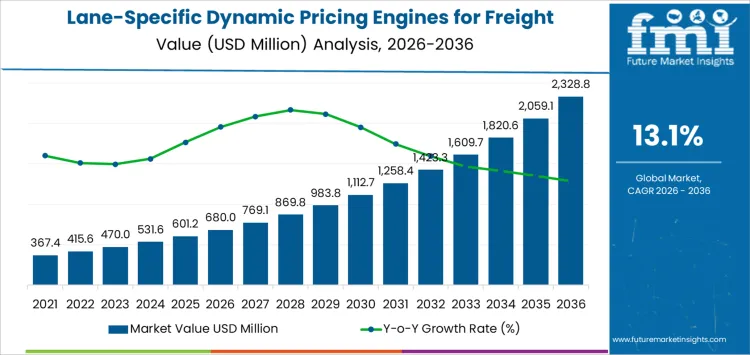
The lane-specific dynamic pricing engines for freight contracts market is expected to grow from USD 680 million in 2026 to USD 2,328.8 million by 2036, reflecting a compound annual growth rate (CAGR) of 13.1%. These pricing engines leverage real-time data and advanced algorithms to determine optimal pricing based on specific freight lanes, enabling businesses to respond more dynamically to changes in demand, capacity, and market conditions. The growth of this market is driven by the increasing complexity of global supply chains, the need for more efficient and flexible freight pricing models, and the growing adoption of digital tools in the logistics and transportation sectors.
Lane-specific dynamic pricing engines allow freight providers and shippers to better manage contract terms, improve profitability, and enhance competitiveness. As demand for transportation services fluctuates and supply chain dynamics change, these platforms offer a solution that helps businesses adjust prices more accurately and efficiently. The rising focus on data-driven decision-making and the need to optimize freight operations further support the demand for these systems, positioning them as essential tools in modern logistics and transportation management.
Quick Stats for Lane-Specific Dynamic Pricing Engines for Freight Contracts Market
- Lane-Specific Dynamic Pricing Engines for Freight Contracts Market Value (2026): USD 680 million
- Lane-Specific Dynamic Pricing Engines for Freight Contracts Market Forecast Value (2036): USD 2,328.8 million
- Lane-Specific Dynamic Pricing Engines for Freight Contracts Market Global Forecast CAGR (2026-2036): 13.10%
- Top Application by Share in Lane-Specific Dynamic Pricing Engines for Freight Contracts Market: Third-Party Logistics (3PL) (44%)
- Key Growth Regions in Lane-Specific Dynamic Pricing Engines for Freight Contracts Market: India, China, USA, Brazil, Germany
- Top Players in Lane-Specific Dynamic Pricing Engines for Freight Contracts Market: Blue Yonder, Manhattan Associates, Oracle, SAP, project44
What is the Growth Forecast for the Lane-Specific Dynamic Pricing Engines for Freight Contracts Market through 2036?
The early vs late growth curve comparison for the lane-specific dynamic pricing engines for freight contracts market reveals steady initial growth, followed by a more pronounced acceleration as the market matures. Starting at USD 680 million in 2026, the market grows to USD 769.31 million in 2027 and USD 870.19 million in 2028. These early years represent gradual adoption as companies begin to recognize the benefits of dynamic pricing in optimizing freight costs and improving contract management.
From 2028 to 2030, the market sees a moderate acceleration, reaching USD 984.56 million in 2029 and USD 1,113.44 million in 2030. During this phase, businesses become more confident in adopting lane-specific dynamic pricing engines as they experience the efficiencies and cost savings that come with real-time pricing optimization. From 2030 to 2035, the market undergoes a more significant acceleration, with values reaching USD 1,258.12 million in 2031, USD 1,420.00 million in 2032, and USD 1,600.78 million in 2033.
By 2035, the market is projected to reach USD 1,802.38 million, with the final market value of USD 2,328.8 million expected in 2036. The comparison highlights a noticeable shift in growth momentum as the market matures. The early phase shows moderate, gradual increases, while the late-phase growth curve indicates a more significant acceleration, driven by widespread adoption of dynamic pricing tools across the logistics industry. As these technologies become more integral to freight contract management, the pace of expansion will continue to rise, indicating a stronger reliance on digital pricing solutions in transportation management.
PFAS-Free Powder Coatings Market Key Takeaways
| Metric | Value |
|---|---|
| Industry Sales Value (2026) | USD 680 million |
| Industry Forecast Value (2036) | USD 2,328.8 million |
| Industry Forecast CAGR (2026-2036) | 13.1% |
What Is Driving the Demand for Lane Specific Dynamic Pricing Engines for Freight Contracts Globally?
The global demand for lane specific dynamic pricing engines for freight contracts is driven by volatility in freight rates, uneven capacity utilisation, and a need for more responsive pricing mechanisms in logistics markets. Traditional static freight contracts often fail to reflect real time variations in demand, fuel costs, capacity availability, and transit conditions, leading to overspending or missed opportunities for both shippers and carriers. Dynamic pricing engines use real time data and algorithmic models to adjust contract rates for specific corridors or “lanes” based on supply demand imbalances, historical trends, and external factors such as port congestion or weather disruptions. This enables stakeholders to negotiate and execute freight contracts that better align with prevailing market conditions. Carriers benefit from pricing that reflects current capacity value, while shippers gain greater pricing transparency and can avoid being locked into outdated rate structures. Growth in e commerce, cross border trade, and intermodal freight movements has increased demand for tools that can dynamically price lanes, making freight markets more efficient and reducing reliance on manual rate negotiations.
Future demand for lane specific dynamic pricing engines for freight contracts is expected to grow as digitalisation and real time data integration advance across logistics networks. As supply chains become more complex and sensitive to shocks, stakeholders will rely on dynamic pricing to manage cost exposure and improve contract agility. Integration with transportation management systems, predictive analytics, and market intelligence platforms will enhance pricing accuracy and responsiveness. The rise of digital freight marketplaces and AI enabled optimisation tools will further support adoption, enabling automated pricing updates and contract adjustments. Shippers and carriers focused on resilience and cost control will increasingly prefer dynamic pricing models over traditional static rates, particularly in high volume or volatile lanes. Continued investment in data visibility, predictive demand modelling, and digital collaboration frameworks will sustain growth of dynamic pricing engines as freight markets evolve toward more real time, flexible contracting practices.
What Are the Key Segments in Lane-Specific Dynamic Pricing Engines for Freight Contracts Market?
The lane-specific dynamic pricing engines for freight contracts market is segmented by service type and application. Dynamic lane pricing engines lead the service type segment with 42% of the market share, providing flexible and responsive pricing based on real-time market conditions. Third-party logistics (3PL) dominate the application segment with 44%, driven by the need for optimized, cost-effective freight management solutions. The market is growing as companies increasingly seek to improve pricing flexibility, optimize freight costs, and enhance supply chain efficiency.
Which Service Type Drives Lane-Specific Dynamic Pricing Engines for Freight Contracts Market Demand Globally?

Dynamic lane pricing engines account for 42% of the market share. These engines offer freight pricing tailored to specific lanes, adjusting dynamically based on factors such as demand, capacity, and market conditions. By using real-time data, dynamic lane pricing engines enable businesses to better manage freight costs, optimize routes, and improve contract negotiations with carriers. This service is especially valuable in the freight industry, where fluctuating fuel prices, seasonality, and capacity constraints can make traditional pricing models inefficient. Dynamic pricing engines provide shippers with the ability to respond to market changes quickly, ensuring that freight contracts remain competitive and cost-effective. As supply chain complexity grows, and demand for real-time pricing adjustments increases, the adoption of dynamic lane pricing engines is expected to continue growing, particularly among logistics providers and large shippers looking to optimize their freight operations.
Which Application Drives Lane-Specific Dynamic Pricing Engines for Freight Contracts Market Demand Globally?
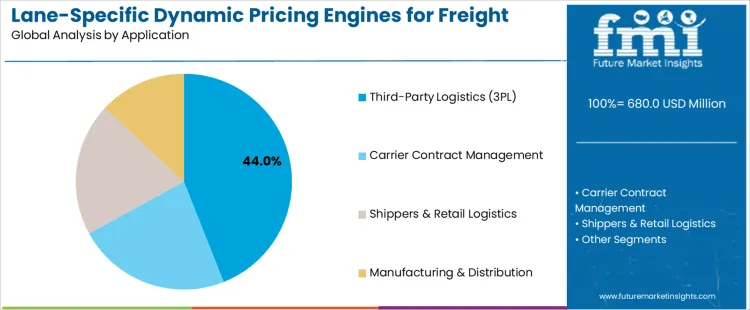
Third-party logistics (3PL) lead the application segment with 44% of the market share. 3PL providers play a central role in managing the transportation needs of various businesses, offering freight solutions that optimize costs and delivery times. By adopting dynamic lane pricing engines, 3PLs can offer their clients more flexible, competitive pricing and improve freight contract management. These engines allow 3PL providers to optimize their pricing strategies by analyzing real-time data, improving operational efficiency, and helping clients reduce shipping costs. The ability to quickly adjust pricing based on lane-specific demand and capacity ensures that 3PL providers can offer better solutions for their clients in an increasingly dynamic logistics environment. While shippers & retail logistics, carrier contract management, and manufacturing & distribution also contribute to the market, 3PL providers remain the dominant segment due to their pivotal role in optimizing freight contracts and providing cost-efficient solutions across various industries.
What are the Key Dynamics of the Global Lane Specific Dynamic Pricing Engines for Freight Contracts Market?
The global lane specific dynamic pricing engines for freight contracts market is expanding as freight carriers, shippers and logistics providers adopt pricing systems that adjust contract rates based on real time demand, capacity and network conditions. These engines help align pricing with lane level supply and demand imbalance, improving rate transparency and contract competitiveness. Growth is supported by rising e commerce, fluctuating freight cycles, and need for agile pricing strategies that reflect regional and lane variation. Adoption of digital pricing platforms reflects broader logistics transformation toward data driven decision support across contract negotiation and execution.
What are the Key Drivers for the Global Lane Specific Dynamic Pricing Engines for Freight Contracts Market?
One driver is the need for more accurate pricing that reflects lane level performance indicators such as transit times, carrier availability and cost variation. Shippers and carriers seek pricing engines that support flexible contract terms, improve margin management and reduce disputes. Rising freight volume variability, including peak season demand and capacity shortfalls, motivates use of dynamic pricing to balance utilisation and optimise revenue. Technology advances in predictive analytics and machine learning enable systems to process historic and real time data for rate recommendations. Increasing digitalisation of freight procurement and contract workflows encourages adoption of automated pricing support tools.
What are the Restraints for the Global Lane Specific Dynamic Pricing Engines for Freight Contracts Market?
One restraint is the complexity of integrating dynamic pricing engines with existing transportation management systems and legacy freight procurement platforms. Organisations may face challenges aligning contract data, rate tables and execution systems with new pricing logic, requiring significant implementation effort. Variation in data quality and completeness across partners can reduce confidence in automated recommendations. Some carriers and shippers may resist algorithm based pricing due to concerns about transparency or perceived loss of negotiation control. Smaller logistics providers may lack resources to invest in sophisticated pricing systems, limiting adoption in certain market segments.
What is the Key Trends in the Global Lane Specific Dynamic Pricing Engines for Freight Contracts Market?
A key trend is integration of predictive and prescriptive analytics that support forward looking rate guidance based on network forecasts, seasonal patterns and external cost indicators. Pricing engines increasingly use artificial intelligence to refine rate models, identify pricing anomalies and recommend contract terms tailored to specific lanes. Platforms that support collaborative pricing workflows between shippers and carriers are gaining interest, enabling shared visibility and faster negotiations. Use of cloud native architectures enhances scalability and remote access. Providers are incorporating benchmarking and market intelligence features that help users gauge competitive rates across lanes, supporting more informed freight contracting decisions.
What is the Country-Wise Outlook for Lane-Specific Dynamic Pricing Engines for Freight Contracts?
The Lane-Specific Dynamic Pricing Engines for Freight Contracts market is experiencing significant growth, driven by the increasing complexity of global supply chains and the growing demand for efficient, cost-effective logistics solutions. These engines use real-time data to optimize pricing based on specific characteristics of individual transportation lanes, allowing freight providers to adjust their rates dynamically, based on factors such as demand, distance, fuel prices, and even delivery deadlines. This ensures that businesses can achieve more accurate and efficient pricing strategies, improving profitability while offering competitive rates. Countries such as India, China, and the USA are at the forefront of this market expansion, driven by the rapid growth of e-commerce, shifting consumer expectations for faster deliveries, and the need for more sophisticated and digitalized supply chain solutions. As logistics operations become increasingly integrated with data analytics, the demand for lane-specific dynamic pricing engines is expected to rise significantly across these regions, as businesses look for ways to stay competitive while maximizing operational efficiency and cost-effectiveness.
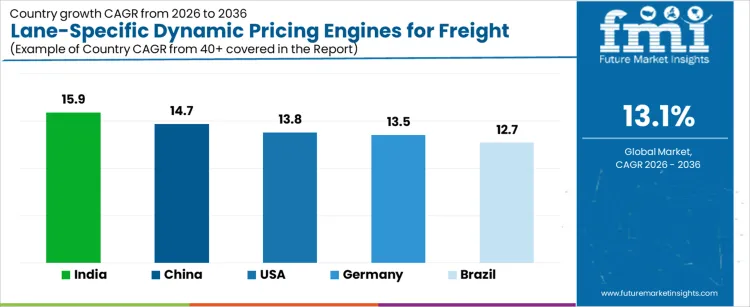
| Country | CAGR (2026-2036) |
|---|---|
| India | 15.9% |
| China | 14.7% |
| USA | 13.8% |
| Brazil | 12.7% |
| Germany | 13.5% |
What is Driving the Growth of Lane-Specific Dynamic Pricing Engines for Freight Contracts in India?
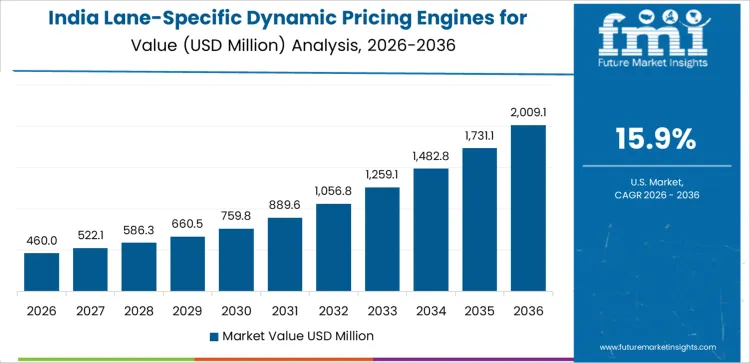
India’s Lane-Specific Dynamic Pricing Engines for Freight Contracts market is projected to grow at a CAGR of 15.9%. This rapid growth is largely driven by the country’s thriving logistics and e-commerce sectors, which have seen significant expansion in recent years. As consumer demand for faster and more efficient deliveries continues to rise, businesses operating in India are under increasing pressure to optimize their supply chains and reduce transportation costs. The rise of digital technologies in logistics and the growing need for cost-effective solutions are pushing companies to adopt dynamic pricing models. Lane-specific dynamic pricing engines offer a solution by enabling businesses to optimize their pricing based on real-time data, allowing them to dynamically adjust rates and routes for the most efficient delivery. India’s government focus on improving logistics infrastructure, as well as increasing investments in digital technologies and data analytics, further contributes to the growth of the market. As more logistics providers look to improve their competitive edge and meet rising consumer expectations, the demand for dynamic pricing engines tailored to specific lanes is expected to increase substantially in the coming years.
What is Contributing to the Growth of Lane-Specific Dynamic Pricing Engines for Freight Contracts in China?
China’s Lane-Specific Dynamic Pricing Engines for Freight Contracts market is expected to grow at a CAGR of 14.7%. As the world’s largest e-commerce market, China has a well-established logistics network that is increasingly becoming more sophisticated and integrated with digital tools. The adoption of lane-specific dynamic pricing engines is being driven by the need to better manage the flow of goods across the country’s vast transportation network. With China’s rising e-commerce sales and the demand for faster deliveries, businesses are looking for ways to optimize routes, reduce costs, and streamline operations. Lane-specific dynamic pricing engines are key to achieving these goals, as they allow logistics companies to adjust rates based on real-time factors such as demand, fuel costs, and delivery timelines. Furthermore, the Chinese government’s investment in smart logistics infrastructure and the push towards more sustainable transportation solutions are accelerating the adoption of these advanced pricing solutions. As businesses continue to prioritize efficiency and cost reduction in their supply chains, the demand for dynamic pricing engines will continue to grow, further driving the market’s expansion in China.
What is Driving the Lane-Specific Dynamic Pricing Engines for Freight Contracts Market Growth in the USA?
The USA’s Lane-Specific Dynamic Pricing Engines for Freight Contracts market is projected to grow at a CAGR of 13.8%. As the logistics sector in the USA becomes more digitalized and interconnected, companies are increasingly adopting technologies that provide greater flexibility, cost optimization, and improved decision-making capabilities. The rise of e-commerce, combined with growing consumer demands for faster deliveries and the need for more efficient supply chains, is driving the adoption of lane-specific dynamic pricing engines. These engines allow companies to adjust their pricing in real-time based on factors such as traffic conditions, delivery windows, and route efficiency. As transportation costs rise and fuel prices fluctuate, businesses are turning to these advanced pricing engines to remain competitive and improve profitability. The USA’s logistics sector is under increasing pressure to embrace digital transformation, streamline operations, and meet customer expectations for quick, cost-effective deliveries. The ongoing integration of data analytics, machine learning, and AI into logistics operations is expected to accelerate the growth of this market, as businesses seek to optimize their transportation strategies and reduce operational costs.
What is Influencing the Growth of Lane-Specific Dynamic Pricing Engines for Freight Contracts in Brazil?
Brazil’s Lane-Specific Dynamic Pricing Engines for Freight Contracts market is projected to grow at a CAGR of 12.7%. The demand for efficient and flexible transportation solutions in Brazil is rising, driven by the growth of e-commerce, particularly in urban centers. As businesses seek to optimize their supply chains and reduce logistics costs, the adoption of lane-specific dynamic pricing engines is becoming increasingly important. These engines allow freight companies to offer real-time pricing adjustments based on factors such as demand fluctuations, delivery schedules, and available capacity, resulting in more efficient use of transportation resources. Brazil’s logistics infrastructure is expanding and modernizing, making it increasingly feasible to implement digital solutions like dynamic pricing engines. The Brazilian government’s focus on improving the country’s logistics and transportation networks, as well as encouraging investments in technology and sustainability, is further fueling the market’s growth. As Brazil continues to invest in logistics efficiency and digitalization, the demand for advanced pricing solutions to manage the complexity of freight contracts will continue to grow.
What is Contributing to the Growth of Lane-Specific Dynamic Pricing Engines for Freight Contracts in Germany?
Germany’s Lane-Specific Dynamic Pricing Engines for Freight Contracts market is expected to grow at a CAGR of 13.5%. Germany’s strong logistics infrastructure, combined with its position as a leading logistics hub in Europe, is driving the adoption of more advanced and flexible logistics solutions. The growth of e-commerce in Germany and the increasing demand for faster, more reliable deliveries are pushing businesses to optimize their transportation networks. Lane-specific dynamic pricing engines help businesses adjust pricing based on real-time data and factors such as route conditions, fuel prices, and demand. These solutions are essential for maintaining cost-effectiveness while meeting consumer expectations for quick deliveries. Germany’s commitment to sustainability and its push toward greener logistics practices are also contributing to the demand for dynamic pricing solutions that optimize fuel use and reduce emissions. As the country continues to modernize its logistics systems and integrate more digital technologies, the market for lane-specific dynamic pricing engines is expected to grow steadily.
What is the Competitive Landscape for the Lane Specific Dynamic Pricing Engines for Freight Contracts Market?
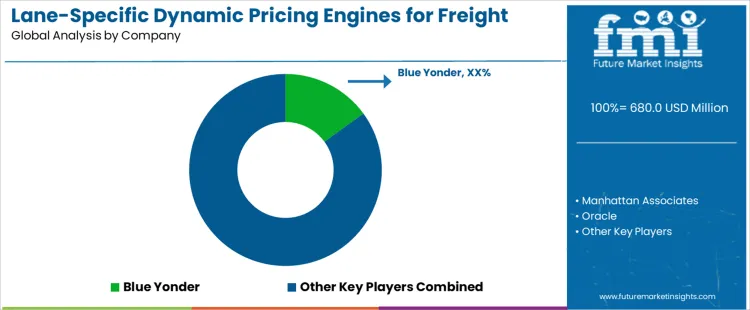
Global demand for lane specific dynamic pricing engines for freight contracts is rising as shippers, carriers and logistics providers seek smarter pricing models that reflect real time market conditions. Traditional static pricing often fails to capture fluctuations in demand, capacity and fuel costs, leading to inefficiencies, higher costs and strained carrier relationships. Dynamic pricing engines use data analytics, machine learning and real time freight market signals to tailor contract pricing for specific lanes, shipment types and service levels. This capability helps shippers secure competitive rates while ensuring carriers receive equitable compensation. Growth in e commerce volumes, seasonal demand peaks and tightening capacity across major trade lanes reinforces the need for pricing systems that adapt quickly and transparently. Regional and global supply chains in North America, Europe and Asia Pacific increasingly rely on dynamic pricing to improve cost predictability, resource utilisation and negotiation outcomes.
Several enterprise software and logistics technology firms compete to provide lane specific dynamic pricing engines as part of broader transport and supply chain management suites. Blue Yonder is recognised as a leading player with advanced optimisation and pricing tools that integrate real time data and predictive analytics. Other key competitors include Manhattan Associates, Oracle, SAP and project44, each offering capabilities that support dynamic rate setting, contract management and analytics for freight stakeholders. Competition among these suppliers centres on the sophistication and accuracy of pricing algorithms, ability to integrate external market data, ease of integration with existing transportation management and procurement systems, and scalability across regions and freight modes. Providers that combine strong analytics, flexible configuration, real time data integration and robust customer support are best positioned to capture growth as demand for adaptive, lane specific freight pricing continues to expand across global logistics networks.
Key Players of the Lane-Specific Dynamic Pricing Engines for Freight Contracts Market
- Blue Yonder
- Manhattan Associates
- Oracle
- SAP
- project44
Scope of the Report
| Items | Values |
|---|---|
| Quantitative Units (2026) | USD Million |
| Service Type | Dynamic Lane Pricing Engines, Contract Rate Optimization Tools, Real-Time Demand & Capacity Analytics, Pricing Simulation & What-If Analysis |
| Application | Third-Party Logistics (3PL), Carrier Contract Management, Shippers & Retail Logistics, Manufacturing & Distribution |
| Companies | Blue Yonder, Manhattan Associates, Oracle, SAP, project44 |
| Regions Covered | North America, Latin America, Western Europe, Eastern Europe, South Asia and Pacific, East Asia, Middle East & Africa |
| Countries Covered | United States, Canada, Mexico, Brazil, Argentina, Germany, France, United Kingdom, Italy, Spain, Netherlands, China, India, Japan, South Korea, ANZ, GCC Countries, South Africa |
| Additional Attributes | Dollar by sales by service type, application, and region. Includes market trends in lane-specific dynamic pricing engines, performance in freight contract management for 3PL, carrier management, and logistics, demand for real-time demand and capacity analytics, cost-effectiveness, sustainability practices, regulatory compliance, market share and competitive positioning of key companies, and the role of dynamic pricing and optimization in improving freight cost efficiency, enhancing contract management, and supporting more agile logistics decision-making across industries. |
Key Segments in the Lane-Specific Dynamic Pricing Engines for Freight Contracts Market
Service Type
- Dynamic Lane Pricing Engines
- Contract Rate Optimization Tools
- Real Time Demand & Capacity Analytics
- Pricing Simulation & What If Analysis
Application
- Third Party Logistics (3PL)
- Carrier Contract Management
- Shippers & Retail Logistics
- Manufacturing & Distribution
Region
- Asia Pacific
- China
- India
- Japan
- South Korea
- ASEAN
- Rest of Asia Pacific
- Europe
- Germany
- United Kingdom
- France
- Italy
- Spain
- Nordic
- BENELUX
- Rest of Europe
- North America
- United States
- Canada
- Mexico
- Latin America
- Brazil
- Chile
- Rest of Latin America
- Middle East & Africa
- Kingdom of Saudi Arabia
- Other GCC Countries
- Turkey
- South Africa
- Other African Union
- Rest of Middle East & Africa
Frequently Asked Questions
How big is the lane-specific dynamic pricing engines for freight contracts market in 2026?
The global lane-specific dynamic pricing engines for freight contracts market is estimated to be valued at USD 680.0 million in 2026.
What will be the size of lane-specific dynamic pricing engines for freight contracts market in 2036?
The market size for the lane-specific dynamic pricing engines for freight contracts market is projected to reach USD 2,328.8 million by 2036.
How much will be the lane-specific dynamic pricing engines for freight contracts market growth between 2026 and 2036?
The lane-specific dynamic pricing engines for freight contracts market is expected to grow at a 13.1% CAGR between 2026 and 2036.
What are the key product types in the lane-specific dynamic pricing engines for freight contracts market?
The key product types in lane-specific dynamic pricing engines for freight contracts market are dynamic lane pricing engines, contract rate optimization tools, real‑time demand & capacity analytics and pricing simulation & what‑if analysis.
Which application segment to contribute significant share in the lane-specific dynamic pricing engines for freight contracts market in 2026?
In terms of application, third‑party logistics (3pl) segment to command 44.0% share in the lane-specific dynamic pricing engines for freight contracts market in 2026.
Preview the report firsthand - request a free sample
Get SampleGet the brochure for pricing and purchase details.
Get PDFTable of Content
- Executive Summary
- Global Market Outlook
- Demand-side Trends
- Supply-side Trends
- Technology Roadmap Analysis
- Analysis and Recommendations
- Market Overview
- Market Coverage / Taxonomy
- Market Definition / Scope / Limitations
- Market Background
- Market Dynamics
- Drivers
- Restraints
- Opportunity
- Trends
- Scenario Forecast
- Demand in Optimistic Scenario
- Demand in Likely Scenario
- Demand in Conservative Scenario
- Opportunity Map Analysis
- Product Life Cycle Analysis
- Supply Chain Analysis
- Investment Feasibility Matrix
- Value Chain Analysis
- PESTLE and Porter’s Analysis
- Regulatory Landscape
- Regional Parent Market Outlook
- Production and Consumption Statistics
- Import and Export Statistics
- Market Dynamics
- Global Market Analysis 2021 to 2025 and Forecast, 2026 to 2036
- Historical Market Size Value (USD Million) Analysis, 2021 to 2025
- Current and Future Market Size Value (USD Million) Projections, 2026 to 2036
- Y-o-Y Growth Trend Analysis
- Absolute $ Opportunity Analysis
- Global Market Pricing Analysis 2021 to 2025 and Forecast 2026 to 2036
- Global Market Analysis 2021 to 2025 and Forecast 2026 to 2036, By Service Type
- Introduction / Key Findings
- Historical Market Size Value (USD Million) Analysis By Service Type , 2021 to 2025
- Current and Future Market Size Value (USD Million) Analysis and Forecast By Service Type , 2026 to 2036
- Dynamic Lane Pricing Engines
- Contract Rate Optimization Tools
- Real‑Time Demand & Capacity Analytics
- Pricing Simulation & What‑If Analysis
- Y-o-Y Growth Trend Analysis By Service Type , 2021 to 2025
- Absolute $ Opportunity Analysis By Service Type , 2026 to 2036
- Global Market Analysis 2021 to 2025 and Forecast 2026 to 2036, By Application
- Introduction / Key Findings
- Historical Market Size Value (USD Million) Analysis By Application, 2021 to 2025
- Current and Future Market Size Value (USD Million) Analysis and Forecast By Application, 2026 to 2036
- Third‑Party Logistics (3PL)
- Carrier Contract Management
- Shippers & Retail Logistics
- Manufacturing & Distribution
- Y-o-Y Growth Trend Analysis By Application, 2021 to 2025
- Absolute $ Opportunity Analysis By Application, 2026 to 2036
- Global Market Analysis 2021 to 2025 and Forecast 2026 to 2036, By Region
- Introduction
- Historical Market Size Value (USD Million) Analysis By Region, 2021 to 2025
- Current Market Size Value (USD Million) Analysis and Forecast By Region, 2026 to 2036
- North America
- Latin America
- Western Europe
- Eastern Europe
- East Asia
- South Asia and Pacific
- Middle East & Africa
- Market Attractiveness Analysis By Region
- North America Market Analysis 2021 to 2025 and Forecast 2026 to 2036, By Country
- Historical Market Size Value (USD Million) Trend Analysis By Market Taxonomy, 2021 to 2025
- Market Size Value (USD Million) Forecast By Market Taxonomy, 2026 to 2036
- By Country
- USA
- Canada
- Mexico
- By Service Type
- By Application
- By Country
- Market Attractiveness Analysis
- By Country
- By Service Type
- By Application
- Key Takeaways
- Latin America Market Analysis 2021 to 2025 and Forecast 2026 to 2036, By Country
- Historical Market Size Value (USD Million) Trend Analysis By Market Taxonomy, 2021 to 2025
- Market Size Value (USD Million) Forecast By Market Taxonomy, 2026 to 2036
- By Country
- Brazil
- Chile
- Rest of Latin America
- By Service Type
- By Application
- By Country
- Market Attractiveness Analysis
- By Country
- By Service Type
- By Application
- Key Takeaways
- Western Europe Market Analysis 2021 to 2025 and Forecast 2026 to 2036, By Country
- Historical Market Size Value (USD Million) Trend Analysis By Market Taxonomy, 2021 to 2025
- Market Size Value (USD Million) Forecast By Market Taxonomy, 2026 to 2036
- By Country
- Germany
- UK
- Italy
- Spain
- France
- Nordic
- BENELUX
- Rest of Western Europe
- By Service Type
- By Application
- By Country
- Market Attractiveness Analysis
- By Country
- By Service Type
- By Application
- Key Takeaways
- Eastern Europe Market Analysis 2021 to 2025 and Forecast 2026 to 2036, By Country
- Historical Market Size Value (USD Million) Trend Analysis By Market Taxonomy, 2021 to 2025
- Market Size Value (USD Million) Forecast By Market Taxonomy, 2026 to 2036
- By Country
- Russia
- Poland
- Hungary
- Balkan & Baltic
- Rest of Eastern Europe
- By Service Type
- By Application
- By Country
- Market Attractiveness Analysis
- By Country
- By Service Type
- By Application
- Key Takeaways
- East Asia Market Analysis 2021 to 2025 and Forecast 2026 to 2036, By Country
- Historical Market Size Value (USD Million) Trend Analysis By Market Taxonomy, 2021 to 2025
- Market Size Value (USD Million) Forecast By Market Taxonomy, 2026 to 2036
- By Country
- China
- Japan
- South Korea
- By Service Type
- By Application
- By Country
- Market Attractiveness Analysis
- By Country
- By Service Type
- By Application
- Key Takeaways
- South Asia and Pacific Market Analysis 2021 to 2025 and Forecast 2026 to 2036, By Country
- Historical Market Size Value (USD Million) Trend Analysis By Market Taxonomy, 2021 to 2025
- Market Size Value (USD Million) Forecast By Market Taxonomy, 2026 to 2036
- By Country
- India
- ASEAN
- Australia & New Zealand
- Rest of South Asia and Pacific
- By Service Type
- By Application
- By Country
- Market Attractiveness Analysis
- By Country
- By Service Type
- By Application
- Key Takeaways
- Middle East & Africa Market Analysis 2021 to 2025 and Forecast 2026 to 2036, By Country
- Historical Market Size Value (USD Million) Trend Analysis By Market Taxonomy, 2021 to 2025
- Market Size Value (USD Million) Forecast By Market Taxonomy, 2026 to 2036
- By Country
- Kingdom of Saudi Arabia
- Other GCC Countries
- Turkiye
- South Africa
- Other African Union
- Rest of Middle East & Africa
- By Service Type
- By Application
- By Country
- Market Attractiveness Analysis
- By Country
- By Service Type
- By Application
- Key Takeaways
- Key Countries Market Analysis
- USA
- Pricing Analysis
- Market Share Analysis, 2025
- By Service Type
- By Application
- Canada
- Pricing Analysis
- Market Share Analysis, 2025
- By Service Type
- By Application
- Mexico
- Pricing Analysis
- Market Share Analysis, 2025
- By Service Type
- By Application
- Brazil
- Pricing Analysis
- Market Share Analysis, 2025
- By Service Type
- By Application
- Chile
- Pricing Analysis
- Market Share Analysis, 2025
- By Service Type
- By Application
- Germany
- Pricing Analysis
- Market Share Analysis, 2025
- By Service Type
- By Application
- UK
- Pricing Analysis
- Market Share Analysis, 2025
- By Service Type
- By Application
- Italy
- Pricing Analysis
- Market Share Analysis, 2025
- By Service Type
- By Application
- Spain
- Pricing Analysis
- Market Share Analysis, 2025
- By Service Type
- By Application
- France
- Pricing Analysis
- Market Share Analysis, 2025
- By Service Type
- By Application
- India
- Pricing Analysis
- Market Share Analysis, 2025
- By Service Type
- By Application
- ASEAN
- Pricing Analysis
- Market Share Analysis, 2025
- By Service Type
- By Application
- Australia & New Zealand
- Pricing Analysis
- Market Share Analysis, 2025
- By Service Type
- By Application
- China
- Pricing Analysis
- Market Share Analysis, 2025
- By Service Type
- By Application
- Japan
- Pricing Analysis
- Market Share Analysis, 2025
- By Service Type
- By Application
- South Korea
- Pricing Analysis
- Market Share Analysis, 2025
- By Service Type
- By Application
- Russia
- Pricing Analysis
- Market Share Analysis, 2025
- By Service Type
- By Application
- Poland
- Pricing Analysis
- Market Share Analysis, 2025
- By Service Type
- By Application
- Hungary
- Pricing Analysis
- Market Share Analysis, 2025
- By Service Type
- By Application
- Kingdom of Saudi Arabia
- Pricing Analysis
- Market Share Analysis, 2025
- By Service Type
- By Application
- Turkiye
- Pricing Analysis
- Market Share Analysis, 2025
- By Service Type
- By Application
- South Africa
- Pricing Analysis
- Market Share Analysis, 2025
- By Service Type
- By Application
- USA
- Market Structure Analysis
- Competition Dashboard
- Competition Benchmarking
- Market Share Analysis of Top Players
- By Regional
- By Service Type
- By Application
- Competition Analysis
- Competition Deep Dive
- Blue Yonder
- Overview
- Product Portfolio
- Profitability by Market Segments (Product/Age /Sales Channel/Region)
- Sales Footprint
- Strategy Overview
- Marketing Strategy
- Product Strategy
- Channel Strategy
- Manhattan Associates
- Oracle
- SAP
- project44
- Blue Yonder
- Competition Deep Dive
- Assumptions & Acronyms Used
- Research Methodology


