

- Industry Size (2026)
- USD 3.7 Bn
- Forecast (2036)
- USD 12.4 Bn
- CAGR (2026 to 2036)
- 12.9%
Marine Bunker Ultra-Low Carbon Methanol Market Forecast and Outlook 2026 to 2036
The marine bunker ultra-low carbon methanol market is projected to reach USD 12.4 billion by 2036, growing at a CAGR of 12.9% from its 2026 value of USD 3.7 billion. Regulatory oversight will be a primary driver of market dynamics, with stringent emissions regulations pushing ship owners and operators to adopt alternative fuels. Compliance costs are expected to rise as companies incur expenses related to certification, monitoring, and emissions reporting. The complexity of certification processes will affect how quickly new vendors can penetrate the market, with established players often holding an advantage due to their existing relationships with regulatory bodies. These barriers will influence the pace of adoption, as smaller companies may struggle to meet the requirements without significant investment. Over time, regulatory frameworks may drive consolidation, with larger firms more capable of absorbing the costs of compliance and positioning themselves as leaders in a more regulated market landscape.
Quick Stats for the Marine Bunker Ultra-Low Carbon Methanol Market:
- Marine Bunker Ultra-Low Carbon Methanol Market Value (2026): USD 3.7 billion
- Marine Bunker Ultra-Low Carbon Methanol Market Forecast Value (2036): USD 12.4 billion
- Marine Bunker Ultra-Low Carbon Methanol Market Global Forecast CAGR 2026 to 2036: 12.9%
- Marine Bunker Ultra-Low Carbon Methanol Market Leading Segment: Deep-Sea Shipping (55%)
- Key Growth Regions in Marine Bunker Ultra-Low Carbon Methanol Market: China
- Top Players in Marine Bunker Ultra-Low Carbon Methanol Market: Methanex Corporation, Proman AG, OCI N.V., EnerMech Methanol Partners, Haldor Topsoe A/S (E-Methanol Tech)
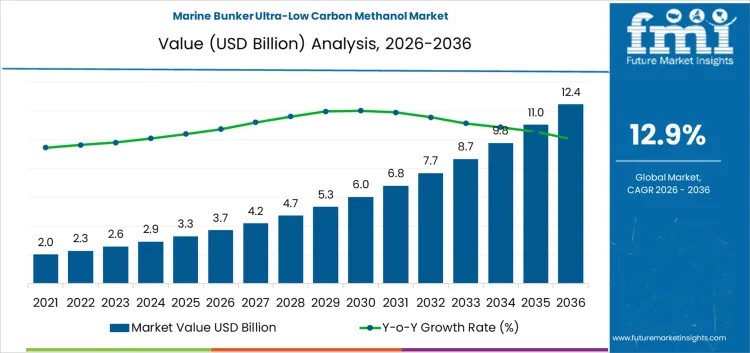
What is the Growth Forecast for the Marine Bunker Ultra-Low Carbon Methanol Market through 2036?
The marine bunker ultra-low carbon methanol market is expected to follow an acceleration and deceleration pattern throughout the forecast period. In the initial phase, the market will experience steady acceleration, with values increasing from USD 3.7 billion in 2026 to USD 4.7 billion in 2028, followed by USD 5.9 billion in 2030. As the adoption of ultra-low carbon methanol grows, the market will continue to rise steadily through the next few years, with USD 6.6 billion projected in 2031 and USD 7.4 billion in 2032.
However, as the market matures and more players adopt the fuel, the rate of acceleration is expected to decelerate slightly, but the market value will continue to grow. By 2035, the market is expected to reach USD 10.6 billion, and by 2036, it will reach USD 12.4 billion. This deceleration phase reflects the stabilization of demand as ultra-low carbon methanol becomes more widely accepted in the marine industry, marking a shift from rapid growth to a more steady, sustained expansion. The market’s trajectory is shaped by regulatory pressure and technological innovations in fuel production, making it a vital part of the maritime sector's shift toward decarbonization.
Marine Bunker Ultra-Low Carbon Methanol Market Key Takeaways
| Metric | Value |
|---|---|
| Industry Sales Value (2026) | USD 3.7 billion |
| Industry Forecast Value (2036) | USD 12.4 billion |
| Industry Forecast CAGR 2026 to 2036 | 12.9% |
What Is Driving the Marine Bunker Ultra-Low Carbon Methanol Market?
Historically, the marine bunker ultra-low carbon methanol market developed from efforts to reduce the environmental footprint of the global shipping industry, which has relied heavily on heavy fuel oil and marine diesel derived from crude oil for propulsion. Conventional marine fuels dominated due to established supply chains, high energy density, and compatibility with existing engines and bunkering infrastructure. Initial interest in methanol as an alternative bunker fuel emerged from its cleaner combustion profile, which produces significantly lower sulfur oxides (SOx) and nitrogen oxides (NOx) compared to traditional bunker fuels, and compatibility with existing liquid fuel handling systems. Dual-fuel engines that can burn both conventional fuel and methanol were introduced, enabling early uptake without requiring an immediate overhaul of fleet capabilities. Early adopters in liner and feeder trade began ordering methanol-capable ships, supported by interim guidelines from the International Maritime Organization that codified safety and use provisions for methanol fuel, which helped build confidence among operators and classification societies.
Future demand for ultra-low carbon methanol as a marine bunker fuel is expected to be propelled by tightening emissions regulations, decarbonization commitments by major shipping companies, and expansion of production from renewable and low-carbon pathways. Regulatory frameworks aimed at reducing greenhouse gas emissions in maritime transport are increasingly favoring low-carbon fuels, prompting shipowners to invest in methanol-capable vessels and secure cleaner fuel supplies. Projects are underway to scale green and e-methanol production-using renewable energy and captured carbon-which offer significantly lower lifecycle emissions than conventional methanol, aligning with net-zero targets. Expansion of bunkering infrastructure at key ports and continued growth in orders for methanol-ready vessels will support broader market uptake as shipping decarbonization targets approach. Barriers to growth include current higher costs of low-carbon methanol compared with conventional fuels, limited scale of renewable methanol supply, and the need for coordinated global regulation to stimulate investment in production and bunkering infrastructure. Long-term market expansion will depend on demonstrable emissions benefits, regulatory mandates that internalize carbon costs, and scaling of low-carbon methanol production to meet future bunker demand.
What are the Key Segments in the Marine Bunker Ultra-Low Carbon Methanol Market?
The Marine Bunker Ultra-Low Carbon Methanol market is segmented into applications and fuel types. The application segments include deep-sea shipping, coastal & short sea shipping, offshore support vessels, and harbor & tug services, with deep-sea shipping taking the largest share at 55%. On the fuel type side, bio-methanol leads the market, accounting for 41% of the share. Other fuel types include e-methanol (green powered) and blue methanol (with CCUS). The market is driven by the maritime industry's push towards decarbonization, with methanol offering a viable low-carbon alternative to traditional marine fuels. Strict environmental regulations, such as the IMO 2030 targets, are accelerating the adoption of ultra-low carbon fuels. Key regions include North America, Europe, and Asia Pacific, where shipping activities are expanding and stricter emission regulations are being enforced.
What is Driving Growth in the Deep-Sea Shipping Segment?
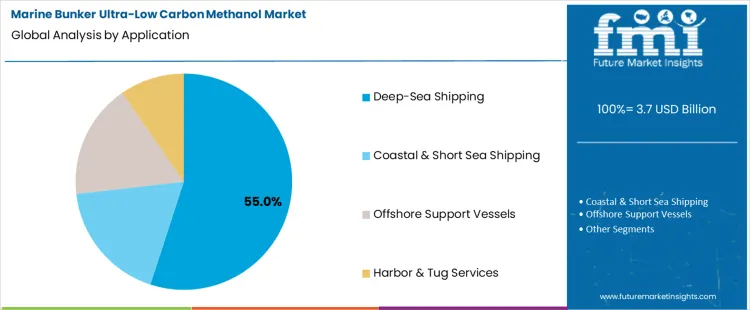
Deep-sea shipping holds the largest share of the application segment in the Marine Bunker Ultra-Low Carbon Methanol market, with 55% of the total market. The segment is experiencing significant growth as the shipping industry increasingly seeks sustainable fuel options to meet international emissions standards set by the International Maritime Organization (IMO). Deep-sea vessels, which account for a substantial portion of global shipping emissions, are under mounting pressure to reduce their carbon footprint. Ultra-low carbon methanol, particularly bio-methanol and e-methanol, is seen as an effective alternative to traditional marine fuels due to its cleaner combustion and lower CO2 emissions. The transition to methanol in deep-sea shipping is driven by the need to comply with IMO regulations, including the 2030 target to reduce greenhouse gas emissions from shipping by at least 40%. Additionally, the availability of methanol fuel infrastructure and the long operational range of deep-sea vessels make this segment an ideal candidate for the adoption of ultra-low carbon fuels. With investments in green fuel technologies growing, deep-sea shipping is expected to remain the largest and fastest-growing segment in the market as the maritime industry accelerates its decarbonization efforts.
What is Driving the Demand for Bio-Methanol in the Marine Bunker Ultra-Low Carbon Methanol Market?
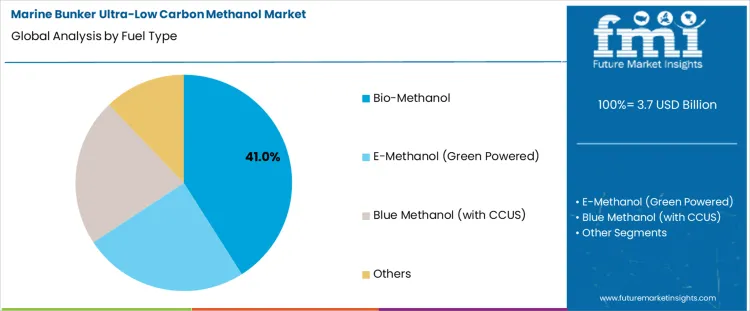
Bio-methanol is the leading fuel type in the Marine Bunker Ultra-Low Carbon Methanol market, representing 41% of the market share. Its growth is driven by the increasing demand for renewable and sustainable alternatives to fossil fuels in the shipping industry. Bio-methanol is produced from renewable biomass sources, such as agricultural waste and forestry residues, making it a carbon-neutral fuel option that aligns with the global push towards decarbonization. This fuel is particularly attractive to shipping companies that aim to reduce their environmental impact while maintaining operational efficiency. The demand for bio-methanol is rising in deep-sea shipping, where long-haul vessels are increasingly transitioning to cleaner fuels. Bio-methanol's compatibility with existing infrastructure, such as methanol-powered engines, makes it a practical solution for the maritime industry. Additionally, the growing number of regulations focused on reducing emissions from maritime transport, including the IMO's commitment to achieving net-zero emissions by 2050, is driving the adoption of bio-methanol as a key alternative fuel. As governments and industry stakeholders increase their investments in bio-methanol production and distribution infrastructure, its use in the marine bunker market is expected to expand, supporting the transition to sustainable shipping practices.
What are the Key Dynamics in the Marine Bunker Ultra-Low Carbon Methanol Market?
The marine bunker ultra-low carbon methanol market is witnessing growth as the maritime industry seeks alternatives to traditional bunker fuels in response to stringent environmental regulations and global sustainability goals. Methanol, a cleaner-burning fuel, offers a low-carbon option for marine vessels, contributing to reduced greenhouse gas emissions and helping the industry meet International Maritime Organization (IMO) emissions standards. Ultra-low carbon methanol, produced from renewable sources such as biomass, wind, or captured carbon, further enhances the environmental benefits. The adoption of this fuel is being driven by the push for decarbonization in the shipping industry, fuelled by regulatory pressures, technological advancements in engine compatibility, and increasing awareness of the environmental impact of marine fuels.
What are the Key Drivers of Growth in the Marine Bunker Ultra-Low Carbon Methanol Market?
The primary drivers of growth in the marine bunker ultra-low carbon methanol market include rising regulatory pressure and the need for the shipping industry to comply with IMO’s emissions reduction targets. IMO regulations are becoming stricter, with the goal of reducing sulfur and carbon emissions from ships, driving the search for alternative fuels like ultra-low carbon methanol. Another key factor is the growing interest in renewable energy sources, including bio-methanol and synthetic methanol, which offer significantly lower carbon footprints than conventional fossil-based marine fuels. Advances in engine technology, which allow vessels to operate efficiently on methanol, are also driving market growth. The increasing commitment by shipping companies and operators to meet sustainability goals and reduce their environmental impact is further accelerating the adoption of ultra-low carbon methanol as a marine fuel alternative.
What are the Key Restraints in the Marine Bunker Ultra-Low Carbon Methanol Market?
Despite its environmental advantages, the marine bunker ultra-low carbon methanol market faces several challenges. One of the key restraints is the cost of producing ultra-low carbon methanol, especially when derived from renewable sources. While the price of methanol itself is competitive, the production process, particularly for bio-methanol or synthetic methanol, can be more expensive than conventional marine fuels. The limited availability of infrastructure for methanol bunkering and distribution also presents a challenge, as ports and fueling stations may not be equipped to handle methanol on a large scale. Additionally, the relatively low energy density of methanol compared to traditional marine fuels may limit its adoption in certain vessel types and applications, requiring further innovation in engine design and fuel storage solutions.
What are the Key Trends in the Marine Bunker Ultra-Low Carbon Methanol Market?
Several trends are shaping the marine bunker ultra-low carbon methanol market. A significant trend is the increasing collaboration between shipping companies, fuel suppliers, and regulatory bodies to develop and implement infrastructure for methanol bunkering at major ports around the world. There is also growing investment in research and development to improve the efficiency of methanol-powered engines and increase the energy density of methanol to enhance its viability as a marine fuel. Additionally, the rise of alternative fuels in the maritime industry, including ammonia and LNG, is contributing to a broader shift toward decarbonization in the sector, with methanol being seen as a key player in this transition. The trend toward sustainable shipping practices and the growing demand for low-carbon solutions in global supply chains will continue to fuel interest in ultra-low carbon methanol as a sustainable marine bunker fuel option.
What is the Country-Wise Analysis of the Marine Bunker Ultra-Low Carbon Methanol Market?
The marine bunker ultra-low carbon methanol market is experiencing significant growth globally, driven by the need to reduce emissions in the shipping industry. As shipping is a major contributor to global greenhouse gas emissions, there is increasing pressure from both governments and environmental groups to adopt more sustainable fuel solutions. Ultra-low carbon methanol, known for its cleaner burning properties and lower environmental impact, is becoming a preferred fuel choice for the maritime industry. Key markets such as the USA, China, Germany, Japan, and India are leading the way in adopting this alternative fuel, each influenced by local regulatory frameworks, environmental goals, and shipping industry dynamics.
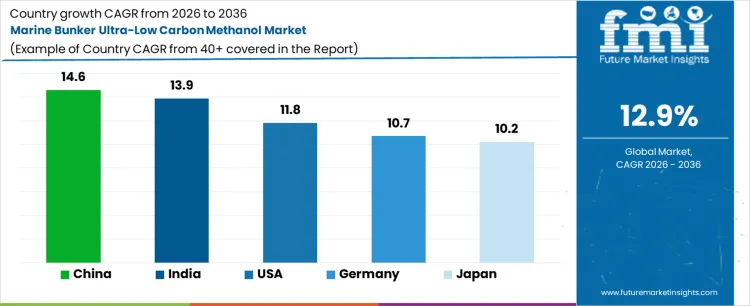
| Country | CAGR 2026 to 2036 |
|---|---|
| USA | 11.8% |
| China | 14.6% |
| Germany | 10.7% |
| Japan | 10.2% |
| India | 13.9% |
What is Driving the Growth of the Marine Bunker Ultra-Low Carbon Methanol Market in the USA?
The marine bunker ultra-low carbon methanol market in the USA is growing at a CAGR of 11.8%. This growth is primarily driven by increasing environmental regulations and the need to reduce the carbon footprint of the shipping industry. The USA is actively pursuing decarbonization goals as part of its broader commitment to combat climate change. The introduction of stricter emissions standards for the shipping industry is pushing companies to look for sustainable alternatives to traditional bunker fuels. Ultra-low carbon methanol is seen as a cleaner and more efficient option, offering significant reductions in CO2 and sulfur emissions. As the shipping industry in the USA embraces these changes, the demand for ultra-low carbon methanol is expected to rise, supported by regulatory policies and the increasing availability of green methanol production.
How is the Marine Bunker Ultra-Low Carbon Methanol Market Performing in China?
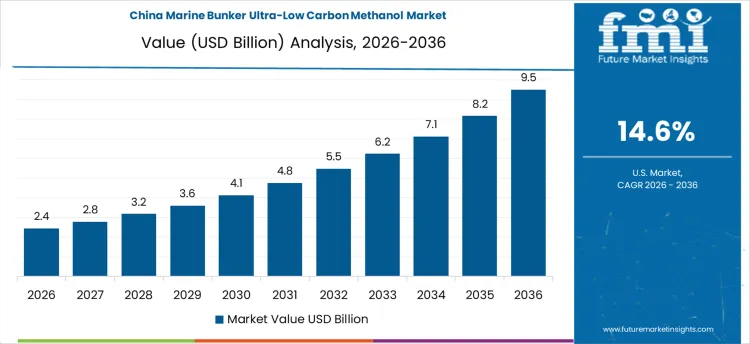
China’s marine bunker ultra-low carbon methanol market is growing at a CAGR of 14.6%. As one of the world’s largest producers and consumers of shipping fuel, China is a key player in the transition to more sustainable marine fuels. The country has committed to reducing its carbon emissions as part of its national climate goals, and the shipping industry is a focal point for these efforts. The Chinese government has introduced various initiatives to promote alternative fuels, including ultra-low carbon methanol, which is seen as a viable solution for reducing emissions in the maritime sector. With significant investments in green fuel technology and a growing number of vessels adopting methanol-based fuels, China is expected to continue driving the global demand for ultra-low carbon methanol in marine bunkering.
What Factors are Shaping the Marine Bunker Ultra-Low Carbon Methanol Market in Germany?
Germany’s marine bunker ultra-low carbon methanol market is growing at a CAGR of 10.7%. Germany is one of the leaders in Europe in terms of adopting sustainable energy solutions, and the maritime sector is no exception. The country has been proactive in setting ambitious emissions reduction targets and is encouraging the shipping industry to transition to cleaner fuels. Ultra-low carbon methanol is seen as an ideal solution for meeting these goals, as it reduces carbon and sulfur emissions compared to traditional marine fuels. Germany’s commitment to green shipping practices, supported by favorable government policies and incentives for alternative fuel adoption, is expected to drive growth in the market for ultra-low carbon methanol in the marine bunkering sector.
How is the Marine Bunker Ultra-Low Carbon Methanol Market Evolving in Japan?
Japan’s marine bunker ultra-low carbon methanol market is growing at a steady pace, with a CAGR of 10.2%. As one of the largest maritime nations in the world, Japan has recognized the need to reduce its shipping industry’s carbon emissions in line with international environmental agreements. Ultra-low carbon methanol is increasingly being considered as a viable alternative fuel to reduce the carbon intensity of marine bunkers. Japan’s shipping companies are increasingly adopting methanol-powered vessels, encouraged by government initiatives and the potential to meet future emissions regulations. The market is expected to grow as Japan continues to invest in sustainable maritime fuel solutions, driving demand for ultra-low carbon methanol in the coming years.
What is Contributing to the Growth of the Marine Bunker Ultra-Low Carbon Methanol Market in India?
India’s marine bunker ultra-low carbon methanol market is growing at a CAGR of 13.9%. As a key player in the global shipping industry, India is committed to reducing the environmental impact of its maritime sector. With stringent emissions regulations on the horizon, the country is focusing on adopting alternative fuels like ultra-low carbon methanol to meet international standards. India’s shipping industry, particularly in coastal and international trade, is increasingly investing in methanol-powered vessels to reduce greenhouse gas emissions. The government’s support for green fuel initiatives, combined with growing awareness of the environmental benefits of ultra-low carbon methanol, is expected to accelerate market growth in India as it transitions to more sustainable marine fuel solutions.
What is the Competitive Landscape for the Marine Bunker Ultra-Low Carbon Methanol Market?
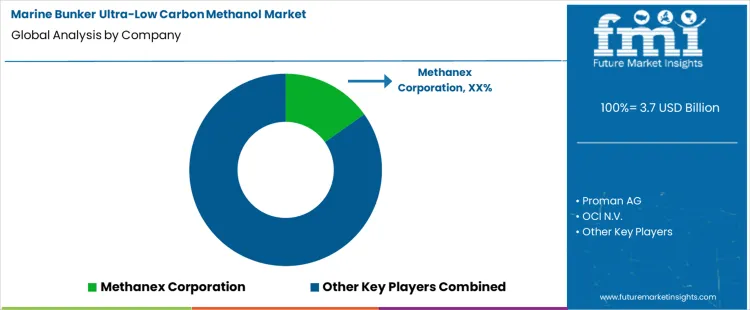
The marine bunker ultra-low carbon methanol market is seeing increasing competition as key players focus on offering sustainable solutions for the shipping industry. Methanex Corporation, a leader in the methanol production sector, is at the forefront of this market, leveraging its extensive experience and large-scale operations to provide ultra-low carbon methanol. The company's innovations in clean fuel technologies support the growing demand for environmentally responsible marine fuels. Proman AG, a significant player in the methanol market, is focused on expanding its sustainable methanol offerings, positioning itself as a strong competitor by advancing its clean energy initiatives. OCI N.V. is also actively contributing to the market by producing low-carbon methanol and exploring its use in marine applications, helping to address the need for cleaner marine fuel alternatives. EnerMech Methanol Partners and Haldor Topsoe A/S, through their respective technologies and partnerships, are making significant strides in producing ultra-low carbon methanol for the marine sector, with Haldor Topsoe focusing on E-Methanol technology to reduce emissions further.
To maintain a competitive edge, companies in the marine bunker ultra-low carbon methanol market are focusing on strategic partnerships, product innovation, and sustainability. Methanex Corporation continues to invest in expanding its production capabilities, ensuring a reliable supply of low-carbon methanol to the marine industry. Proman AG and OCI N.V. are concentrating on scaling their operations while maintaining the environmental integrity of their products. EnerMech Methanol Partners works closely with shipping companies to develop customized solutions for low-carbon fuel adoption in marine fleets. Haldor Topsoe A/S focuses on advancing its E-Methanol technology, aiming to improve the efficiency and sustainability of methanol production. These companies are also addressing the regulatory pressures pushing the maritime sector toward decarbonization, with a growing emphasis on green fuels to meet stricter emission standards. As the demand for low-carbon marine fuels continues to rise, these players are well-positioned to lead the market and shape the future of sustainable maritime transportation.
Key Players of the Marine Bunker Ultra-Low Carbon Methanol Market
- Methanex Corporation
- Proman AG
- OCI N.V.
- EnerMech Methanol Partners
- Haldor Topsoe A/S (E-Methanol Tech)
- Others
Scope of the Report
| Items | Values |
|---|---|
| Quantitative Units (2026) | USD Billion |
| Fuel Type | Bio-Methanol, E-Methanol (Green Powered), Blue Methanol (with CCUS), Others |
| Vessel Type | Container Ships, Tankers, Bulk Carriers, Passenger & Ro-Ro Vessels, Others |
| Application | Deep-Sea Shipping, Coastal & Short Sea Shipping, Offshore Support Vessels, Harbor & Tug Services |
| Companies | Methanex Corporation, Proman AG, OCI N.V., EnerMech Methanol Partners, Haldor Topsoe A/S (E-Methanol Tech), Others |
| Regions Covered | North America, Latin America, Western Europe, Eastern Europe, South Asia and Pacific, East Asia, Middle East & Africa |
| Countries Covered | United States, Canada, Mexico, Brazil, Argentina, Germany, France, United Kingdom, Italy, Spain, Netherlands, China, India, Japan, South Korea, ANZ, GCC Countries, South Africa |
| Additional Attributes | Dollar by sales by fuel type, vessel type, application, and region. Includes market trends towards ultra-low carbon fuels, regulatory compliance, technological advancements in methanol production, cost-effectiveness, and the role of methanol in reducing the carbon footprint of marine transport. |
Marine Bunker Ultra-Low Carbon Methanol Market Segmentation
Fuel Type
- Bio-Methanol
- E-Methanol (Green Powered)
- Blue Methanol (with CCUS)
- Others
Vessel Type
- Container Ships
- Tankers
- Bulk Carriers
- Passenger & Ro-Ro Vessels
- Others
Application
- Deep-Sea Shipping
- Coastal & Short Sea Shipping
- Offshore Support Vessels
- Harbor & Tug Services
- Others
Region
- Asia Pacific
- China
- Japan
- India
- Australia & New Zealand
- ASEAN
- Rest of Asia Pacific
- Europe
- Germany
- United Kingdom
- France
- Italy
- Spain
- Nordic
- BENELUX
- Rest of Europe
- North America
- United States
- Canada
- Mexico
- Latin America
- Brazil
- Argentina
- Rest of Latin America
- Middle East & Africa
- Kingdom of Saudi Arabia
- Other GCC Countries
- South Africa
- Rest of Middle East & Africa
Bibliography
International Maritime Organization. (2023, July 7). 2023 IMO Strategy on Reduction of GHG Emissions from Ships (Resolution MEPC.377(80)). IMO.
Methanol Institute. (2023, May). Marine Methanol: Future-Proof Shipping Fuel. Methanol Institute.
DNV. (2023, September 25). Energy Transition Outlook 2023: Maritime Forecast to 2050. DNV.
Ship & Bunker. (2023, October 16). INSIGHT: Methanol as a marine fuel – VPS experience to date. Ship & Bunker.
World Shipping Council. (2024, February 15). Introducing the Green Balance Mechanism. World Shipping Council.
BloombergNEF. (2024, June 18). Scaling Up Hydrogen: The Case for Low-Carbon Methanol (white paper). BloombergNEF.
A.P. Moller – Maersk. (2023, June 26). Maersk orders six methanol powered vessels (press release). A.P. Moller – Maersk.
Frequently Asked Questions
How big is the marine bunker ultra-low carbon methanol market in 2026?
The global marine bunker ultra-low carbon methanol market is estimated to be valued at USD 3.7 billion in 2026.
What will be the size of marine bunker ultra-low carbon methanol market in 2036?
The market size for the marine bunker ultra-low carbon methanol market is projected to reach USD 12.4 billion by 2036.
How much will be the marine bunker ultra-low carbon methanol market growth between 2026 and 2036?
The marine bunker ultra-low carbon methanol market is expected to grow at a 12.9% CAGR between 2026 and 2036.
What are the key product types in the marine bunker ultra-low carbon methanol market?
The key product types in marine bunker ultra-low carbon methanol market are bio-methanol, e-methanol (green powered), blue methanol (with ccus) and others.
Which vessel type segment to contribute significant share in the marine bunker ultra-low carbon methanol market in 2026?
In terms of vessel type, container ships segment to command 29.0% share in the marine bunker ultra-low carbon methanol market in 2026.
Preview the report firsthand - request a free sample
Get SampleGet the brochure for pricing and purchase details.
Get PDFTable of Content
- Executive Summary
- Global Market Outlook
- Demand-side Trends
- Supply-side Trends
- Technology Roadmap Analysis
- Analysis and Recommendations
- Market Overview
- Market Coverage / Taxonomy
- Market Definition / Scope / Limitations
- Market Background
- Market Dynamics
- Drivers
- Restraints
- Opportunity
- Trends
- Scenario Forecast
- Demand in Optimistic Scenario
- Demand in Likely Scenario
- Demand in Conservative Scenario
- Opportunity Map Analysis
- Product Life Cycle Analysis
- Supply Chain Analysis
- Investment Feasibility Matrix
- Value Chain Analysis
- PESTLE and Porter’s Analysis
- Regulatory Landscape
- Regional Parent Market Outlook
- Production and Consumption Statistics
- Import and Export Statistics
- Market Dynamics
- Global Market Analysis 2021 to 2025 and Forecast, 2026 to 2036
- Historical Market Size Value (USD Million) Analysis, 2021 to 2025
- Current and Future Market Size Value (USD Million) Projections, 2026 to 2036
- Y-o-Y Growth Trend Analysis
- Absolute $ Opportunity Analysis
- Global Market Pricing Analysis 2021 to 2025 and Forecast 2026 to 2036
- Global Market Analysis 2021 to 2025 and Forecast 2026 to 2036, By Fuel Type
- Introduction / Key Findings
- Historical Market Size Value (USD Million) Analysis By Fuel Type , 2021 to 2025
- Current and Future Market Size Value (USD Million) Analysis and Forecast By Fuel Type , 2026 to 2036
- Bio-Methanol
- E-Methanol (Green Powered)
- Blue Methanol (with CCUS)
- Others
- Bio-Methanol
- Y-o-Y Growth Trend Analysis By Fuel Type , 2021 to 2025
- Absolute $ Opportunity Analysis By Fuel Type , 2026 to 2036
- Global Market Analysis 2021 to 2025 and Forecast 2026 to 2036, By Vessel Type
- Introduction / Key Findings
- Historical Market Size Value (USD Million) Analysis By Vessel Type, 2021 to 2025
- Current and Future Market Size Value (USD Million) Analysis and Forecast By Vessel Type, 2026 to 2036
- Container Ships
- Tankers
- Bulk Carriers
- Passenger & Ro-Ro Vessels
- Others
- Container Ships
- Y-o-Y Growth Trend Analysis By Vessel Type, 2021 to 2025
- Absolute $ Opportunity Analysis By Vessel Type, 2026 to 2036
- Global Market Analysis 2021 to 2025 and Forecast 2026 to 2036, By Application
- Introduction / Key Findings
- Historical Market Size Value (USD Million) Analysis By Application, 2021 to 2025
- Current and Future Market Size Value (USD Million) Analysis and Forecast By Application, 2026 to 2036
- Deep-Sea Shipping
- Coastal & Short Sea Shipping
- Offshore Support Vessels
- Harbor & Tug Services
- Deep-Sea Shipping
- Y-o-Y Growth Trend Analysis By Application, 2021 to 2025
- Absolute $ Opportunity Analysis By Application, 2026 to 2036
- Global Market Analysis 2021 to 2025 and Forecast 2026 to 2036, By Region
- Introduction
- Historical Market Size Value (USD Million) Analysis By Region, 2021 to 2025
- Current Market Size Value (USD Million) Analysis and Forecast By Region, 2026 to 2036
- North America
- Latin America
- Western Europe
- Eastern Europe
- East Asia
- South Asia and Pacific
- Middle East & Africa
- Market Attractiveness Analysis By Region
- North America Market Analysis 2021 to 2025 and Forecast 2026 to 2036, By Country
- Historical Market Size Value (USD Million) Trend Analysis By Market Taxonomy, 2021 to 2025
- Market Size Value (USD Million) Forecast By Market Taxonomy, 2026 to 2036
- By Country
- USA
- Canada
- Mexico
- By Fuel Type
- By Vessel Type
- By Application
- By Country
- Market Attractiveness Analysis
- By Country
- By Fuel Type
- By Vessel Type
- By Application
- Key Takeaways
- Latin America Market Analysis 2021 to 2025 and Forecast 2026 to 2036, By Country
- Historical Market Size Value (USD Million) Trend Analysis By Market Taxonomy, 2021 to 2025
- Market Size Value (USD Million) Forecast By Market Taxonomy, 2026 to 2036
- By Country
- Brazil
- Chile
- Rest of Latin America
- By Fuel Type
- By Vessel Type
- By Application
- By Country
- Market Attractiveness Analysis
- By Country
- By Fuel Type
- By Vessel Type
- By Application
- Key Takeaways
- Western Europe Market Analysis 2021 to 2025 and Forecast 2026 to 2036, By Country
- Historical Market Size Value (USD Million) Trend Analysis By Market Taxonomy, 2021 to 2025
- Market Size Value (USD Million) Forecast By Market Taxonomy, 2026 to 2036
- By Country
- Germany
- UK
- Italy
- Spain
- France
- Nordic
- BENELUX
- Rest of Western Europe
- By Fuel Type
- By Vessel Type
- By Application
- By Country
- Market Attractiveness Analysis
- By Country
- By Fuel Type
- By Vessel Type
- By Application
- Key Takeaways
- Eastern Europe Market Analysis 2021 to 2025 and Forecast 2026 to 2036, By Country
- Historical Market Size Value (USD Million) Trend Analysis By Market Taxonomy, 2021 to 2025
- Market Size Value (USD Million) Forecast By Market Taxonomy, 2026 to 2036
- By Country
- Russia
- Poland
- Hungary
- Balkan & Baltic
- Rest of Eastern Europe
- By Fuel Type
- By Vessel Type
- By Application
- By Country
- Market Attractiveness Analysis
- By Country
- By Fuel Type
- By Vessel Type
- By Application
- Key Takeaways
- East Asia Market Analysis 2021 to 2025 and Forecast 2026 to 2036, By Country
- Historical Market Size Value (USD Million) Trend Analysis By Market Taxonomy, 2021 to 2025
- Market Size Value (USD Million) Forecast By Market Taxonomy, 2026 to 2036
- By Country
- China
- Japan
- South Korea
- By Fuel Type
- By Vessel Type
- By Application
- By Country
- Market Attractiveness Analysis
- By Country
- By Fuel Type
- By Vessel Type
- By Application
- Key Takeaways
- South Asia and Pacific Market Analysis 2021 to 2025 and Forecast 2026 to 2036, By Country
- Historical Market Size Value (USD Million) Trend Analysis By Market Taxonomy, 2021 to 2025
- Market Size Value (USD Million) Forecast By Market Taxonomy, 2026 to 2036
- By Country
- India
- ASEAN
- Australia & New Zealand
- Rest of South Asia and Pacific
- By Fuel Type
- By Vessel Type
- By Application
- By Country
- Market Attractiveness Analysis
- By Country
- By Fuel Type
- By Vessel Type
- By Application
- Key Takeaways
- Middle East & Africa Market Analysis 2021 to 2025 and Forecast 2026 to 2036, By Country
- Historical Market Size Value (USD Million) Trend Analysis By Market Taxonomy, 2021 to 2025
- Market Size Value (USD Million) Forecast By Market Taxonomy, 2026 to 2036
- By Country
- Kingdom of Saudi Arabia
- Other GCC Countries
- Turkiye
- South Africa
- Other African Union
- Rest of Middle East & Africa
- By Fuel Type
- By Vessel Type
- By Application
- By Country
- Market Attractiveness Analysis
- By Country
- By Fuel Type
- By Vessel Type
- By Application
- Key Takeaways
- Key Countries Market Analysis
- USA
- Pricing Analysis
- Market Share Analysis, 2025
- By Fuel Type
- By Vessel Type
- By Application
- Canada
- Pricing Analysis
- Market Share Analysis, 2025
- By Fuel Type
- By Vessel Type
- By Application
- Mexico
- Pricing Analysis
- Market Share Analysis, 2025
- By Fuel Type
- By Vessel Type
- By Application
- Brazil
- Pricing Analysis
- Market Share Analysis, 2025
- By Fuel Type
- By Vessel Type
- By Application
- Chile
- Pricing Analysis
- Market Share Analysis, 2025
- By Fuel Type
- By Vessel Type
- By Application
- Germany
- Pricing Analysis
- Market Share Analysis, 2025
- By Fuel Type
- By Vessel Type
- By Application
- UK
- Pricing Analysis
- Market Share Analysis, 2025
- By Fuel Type
- By Vessel Type
- By Application
- Italy
- Pricing Analysis
- Market Share Analysis, 2025
- By Fuel Type
- By Vessel Type
- By Application
- Spain
- Pricing Analysis
- Market Share Analysis, 2025
- By Fuel Type
- By Vessel Type
- By Application
- France
- Pricing Analysis
- Market Share Analysis, 2025
- By Fuel Type
- By Vessel Type
- By Application
- India
- Pricing Analysis
- Market Share Analysis, 2025
- By Fuel Type
- By Vessel Type
- By Application
- ASEAN
- Pricing Analysis
- Market Share Analysis, 2025
- By Fuel Type
- By Vessel Type
- By Application
- Australia & New Zealand
- Pricing Analysis
- Market Share Analysis, 2025
- By Fuel Type
- By Vessel Type
- By Application
- China
- Pricing Analysis
- Market Share Analysis, 2025
- By Fuel Type
- By Vessel Type
- By Application
- Japan
- Pricing Analysis
- Market Share Analysis, 2025
- By Fuel Type
- By Vessel Type
- By Application
- South Korea
- Pricing Analysis
- Market Share Analysis, 2025
- By Fuel Type
- By Vessel Type
- By Application
- Russia
- Pricing Analysis
- Market Share Analysis, 2025
- By Fuel Type
- By Vessel Type
- By Application
- Poland
- Pricing Analysis
- Market Share Analysis, 2025
- By Fuel Type
- By Vessel Type
- By Application
- Hungary
- Pricing Analysis
- Market Share Analysis, 2025
- By Fuel Type
- By Vessel Type
- By Application
- Kingdom of Saudi Arabia
- Pricing Analysis
- Market Share Analysis, 2025
- By Fuel Type
- By Vessel Type
- By Application
- Turkiye
- Pricing Analysis
- Market Share Analysis, 2025
- By Fuel Type
- By Vessel Type
- By Application
- South Africa
- Pricing Analysis
- Market Share Analysis, 2025
- By Fuel Type
- By Vessel Type
- By Application
- USA
- Market Structure Analysis
- Competition Dashboard
- Competition Benchmarking
- Market Share Analysis of Top Players
- By Regional
- By Fuel Type
- By Vessel Type
- By Application
- Competition Analysis
- Competition Deep Dive
- Methanex Corporation
- Overview
- Product Portfolio
- Profitability by Market Segments (Product/Age /Sales Channel/Region)
- Sales Footprint
- Strategy Overview
- Marketing Strategy
- Product Strategy
- Channel Strategy
- Proman AG
- OCI N.V.
- EnerMech Methanol Partners
- Haldor Topsoe A/S (E-Methanol Tech)
- Others
- Methanex Corporation
- Competition Deep Dive
- Assumptions & Acronyms Used
- Research Methodology


