

- Market Size (2026)
- USD 1.3 Bn
- Forecast (2036)
- USD 3.1 Bn
- CAGR (2026 to 2036)
- 9.1%
Carbon-Neutral Fiber Yarns with Verified LCA Market Size, Forecast, and Outlook By FMI
Summary of the Carbon-Neutral Fiber Yarns with Verified LCA Market
- Demand and Growth Drivers
- Brand claim review is directing yarn selection toward verified LCA records as apparel firms prepare auditable product files.
- Recycled polyester yarn use is expanding as recycled polyester apparel fiber platforms offer mill familiarity and larger production scale.
- Environmental claim regulation is increasing demand for yarns with product-level carbon records and third-party review files.
- Product and Segment View
- Brand direct is likely to account for 57.0% share in 2026 as large apparel brands keep tighter control over approved yarn lists.
- Consumer-facing carbon claims place apparel at an expected 52.0% share of application demand in 2026.
- Recycled polyester retains high-value fiber type use as mills can run verified yarn programs on established polyester fiber capacity.
- Geography and Competitive Outlook
- India is forecast to record a CAGR of 10.2% through 2036, as export mills seek verified yarn data for brand programs.
- China is forecast to expand at 9.6% CAGR through 2036, as large fiber output gives producers scale for LCA-backed yarns.
- Companies combining verified fiber inputs with batch-level data systems are improving brand approval access during the forecast period.
- Analyst Opinion
- Nikhil Kaitwade, Principal Consultant for Chemicals and Materials domain at FMI says, “Verified LCA yarns now support apparel claim control through fiber origin records and carbon impact files. Third-party review depth with stable yarn quality can shorten mill approval while offset-only claim exposure and recycled feedstock pricing shape long-term supply-agreement planning.”
- Carbon-Neutral Fiber Yarns with Verified LCA Market Value Analysis
- The carbon-neutral fiber yarns with verified LCA market is shifting from claim-based sourcing into structured material evidence programs.
- Adoption is supported by environmental claim checks across apparel labels and brand material approval systems.
- The market benefits from wider use of dope-dyed recycled polyester across color-stable yarn programs.
- Verified carbon records strengthen demand by meeting audit and brand review needs. Verified files help mills control yarn approval timing and reduce claim review risk.
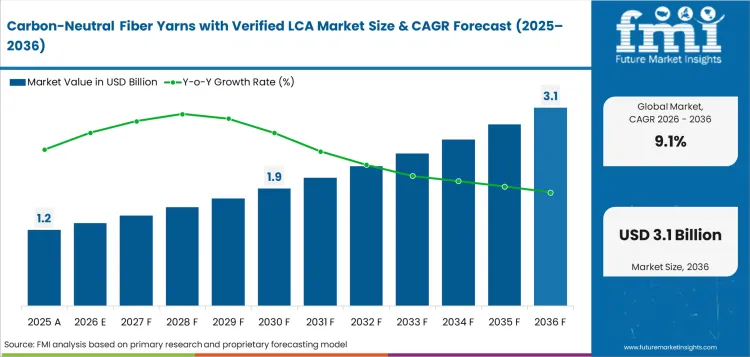
Key Takeaways, Market Size, and Forecast
- The carbon-neutral fiber yarns with verified LCA market was valued at USD 1.2 billion in 2025.
- By 2036, the carbon-neutral fiber yarns with verified LCA market is expected to be worth USD 3.1 billion.
- From 2026 to 2036, the market is forecast to expand at a CAGR of 9.1%.
- The market is likely to create an incremental opportunity of USD 1.8 billion between 2026 and 2036.
- In 2026, brand direct is forecast to account for 57.0% share by sales channel segment.
- India at 10.2% and China at 9.6% are two of the faster-expanding country markets.
Carbon-neutral yarn claims now face a proof problem because brands need evidence that goes beyond marketing language. Directive (EU) 2024/825 increases pressure on environmental claims and sustainability labels, which turns verified data into a buying condition for yarn inputs. Lenzing’s 2024 report shows how suppliers are responding with LCA-backed fibers, including TENCEL™ Lyocell and Modal with at least 50% lower carbon emissions and water use than generic alternatives.
Stretch yarn is also changing because Hyosung’s regen Bio-Based spandex offers 70% and 98% renewable-resource options and a 20% lower carbon footprint per kg. Technical yarns add another route through Indorama’s ISCC+ certified sites and about 55% lower polymer-level emissions for mass-balanced PA materials. Suppliers with verifiable LCA data are better placed in brand programs.
Carbon-Neutral Fiber Yarns with Verified LCA Market Definition
The carbon-neutral fiber yarns with verified LCA market includes yarns sold with third-party life cycle assessment records and carbon impact documentation. These yarns serve apparel, home textiles, technical textiles, footwear, and workwear programs. Scope includes recycled polyester yarns, regenerated cellulose yarns, organic cotton yarns, and bio-based nylon yarns. Finished garments and unverified offset-only fiber claims are outside the scope.
Carbon-Neutral Fiber Yarns with Verified LCA Market Inclusions
Market scope covers all commercially traded carbon-neutral fiber yarns with verified LCA categorized by fiber type, including recycled polyester and regenerated cellulose yarns; verification type, including ISO LCA and EPD verified formats; yarn form, including filament yarn and staple yarn; applications, including apparel and home textiles; and sales channels, including brand direct and mill direct supply. Revenue scope covers 2026 to 2036. Participants include fiber producers, yarn manufacturers, apparel brands, textile mills, certification bodies, LCA consultants, recycled feedstock suppliers, converters, distributors, retailers, and regulatory bodies.
Carbon-Neutral Fiber Yarns with Verified LCA Market Exclusions
Scope does not include finished apparel, raw polymer resin, uncertified recycled fiber, generic yarn without LCA proof, or carbon offset labels without product-level verification.
Carbon-Neutral Fiber Yarns with Verified LCA Market Research Methodology
- Primary Research: FMI analysts interviewed apparel brands, yarn mills, fiber producers, and certification specialists active in verified textile programs.
- Desk Research: Desk review combined data from LCA standards, regulatory guidance, company product portfolios, and textile fiber production references.
- Market sizing and forecasting: FMI added verified yarn demand across fiber types and application groups from the bottom up.
- Data validation: FMI cross-checked every three months against fiber output, certified material availability, brand sourcing rules, and company product coverage.
Why is the Carbon-Neutral Fiber Yarns with Verified LCA Market Growing?
- Apparel brands are using verified yarn records earlier to reduce claim review risk before product launch planning begins.
- Yarn mills are upgrading data files as brand material teams ask for fiber origin and LCA proof.
- Fiber producers are expanding verified recycled and cellulosic portfolios to serve brand-approved yarn programs.
Global fiber output reached about 132 million tonnes in 2024, and polyester made up 59% of total fiber output. Recycled polyester production increased to about 9.3 million tonnes in 2024, creating a sizable base for verified yarn programs. Fiber production scale is important for carbon-neutral yarns as brands cannot shift large apparel lines without available fiber volume. Verified yarn producers benefit from combining output scale with auditable impact records.
Environmental claim rules are giving verified yarn files a direct role in brand approval. Directive (EU) 2024/825 was published in February 2024 and covers misleading climate-related claims. The rule makes product-level proof more important for carbon-neutral yarn labels sold into consumer products. Mills with verified LCA files can reduce claim review delays for apparel brands.
Market Segmentation Analysis
- Recycled polyester is estimated to account for 38.0% of the fiber type mix in 2026 as apparel mills already run scaled synthetic yarn programs.
- ISO LCA is forecast to hold 46.0% of verification use in 2026 since brand teams understand its audit language.
- Sportswear and outerwear applications place filament yarn at a projected 41.0% share of yarn form activity in 2026.
- Apparel is projected to capture 52.0% of application share in 2026 as consumer-facing labels face closer carbon claim review.
- Brand direct is projected to represent 57.0% of sales channel share in 2026 through direct material approval and verified file control.
The market for carbon-neutral fiber yarns with verified LCA is divided into five primary segment groups based on fiber type, verification type, yarn form, application, and sales channel. Fiber type includes recycled polyester, regenerated cellulose, organic cotton, bio-based nylon, and wool blends. Verification type includes ISO LCA, PEF-based, EPD-verified, CarbonNeutral Certified, and product passport. Yarn form includes filament yarn, staple yarn, core spun, textured yarn, and blended yarn. Application includes apparel, home textiles, technical textiles, footwear, and workwear. Sales channel includes brand direct, mill direct, converter sales, distributor sales, and digital tenders.
Insights into Carbon-Neutral Fiber Yarns with Verified LCA Market by Fiber Type
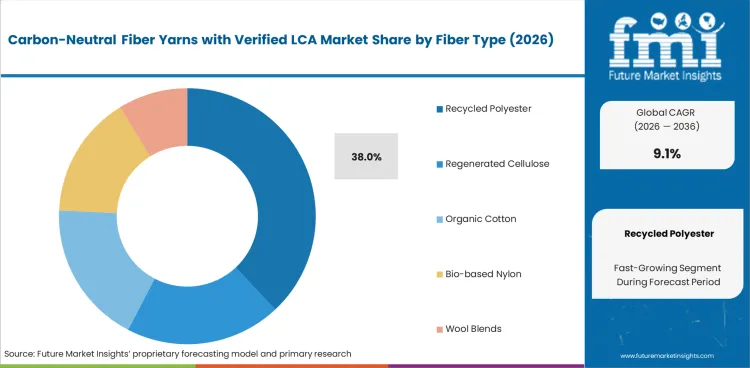
- Recycled polyester is forecast to make up 38.0% of the fiber type segment in 2026. Established spinning lines and familiar performance behavior make it easier for mills to use verified feedstock.
- Regenerated cellulose and organic cotton address selected brand programs with stronger natural fiber positioning. Use improves in apparel ranges needing softer hand feel and clearer fiber-origin records.
Insights into Carbon-Neutral Fiber Yarns with Verified LCA Market by Verification Type
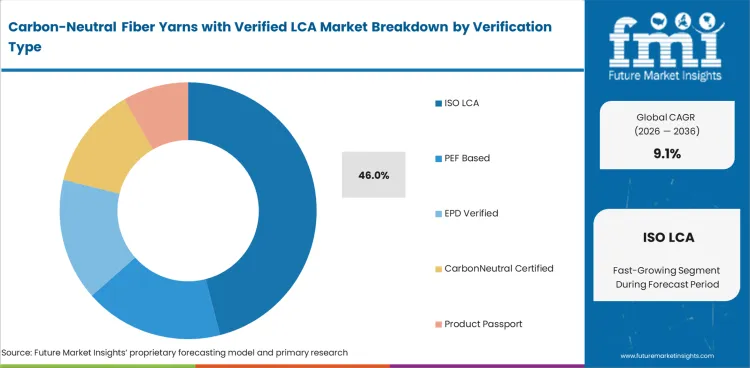
- ISO LCA is expected to hold 46.0% of the verification type segment in 2026. Brand material teams prefer this format as it uses accepted review language across sourcing files.
- EPD-verified and product passport formats serve programs needing deeper product disclosure. Their value improves in Europe-facing supply chains with stricter claim review needs.
Insights into Carbon-Neutral Fiber Yarns with Verified LCA Market by Yarn Form
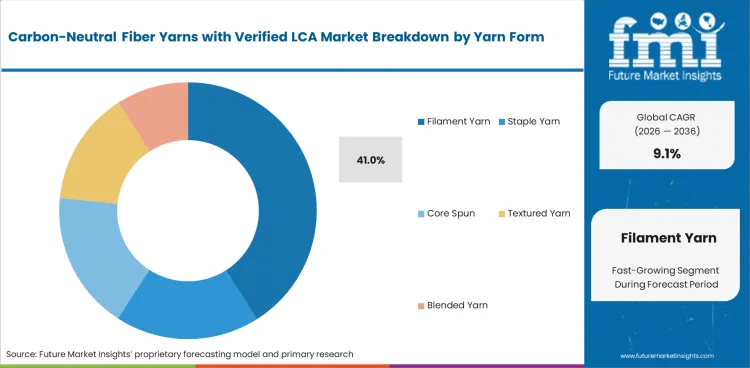
- Filament yarn is expected to hold 41.0% of the yarn form segment in 2026. Sportswear and outerwear programs use it for strength control and repeatable fabric behavior.
- Staple yarn and blended yarn formats serve softer apparel applications. Their use improves in programs requiring natural hand feel and mixed fiber performance.
Insights into Carbon-Neutral Fiber Yarns with Verified LCA Market by Application
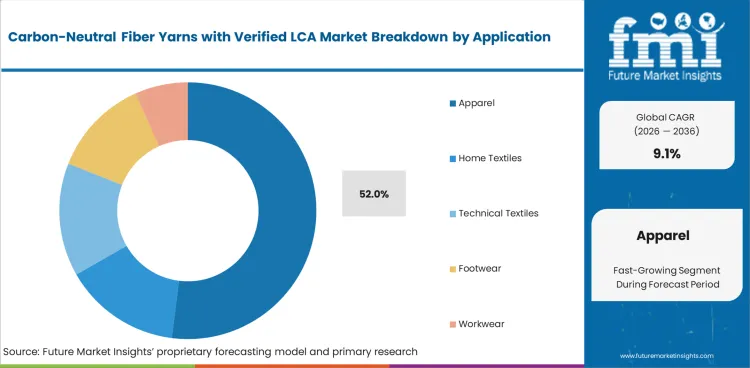
- Apparel is forecast to account for 52.0% of the application segment in 2026. Consumer-facing product claims make verified yarn records important for brand approval work.
- Home textiles and technical textiles address selected programs with longer qualification cycles. Their value improves in projects needing durability proof and documented material impact.
Insights into Carbon-Neutral Fiber Yarns with Verified LCA Market by Sales Channel
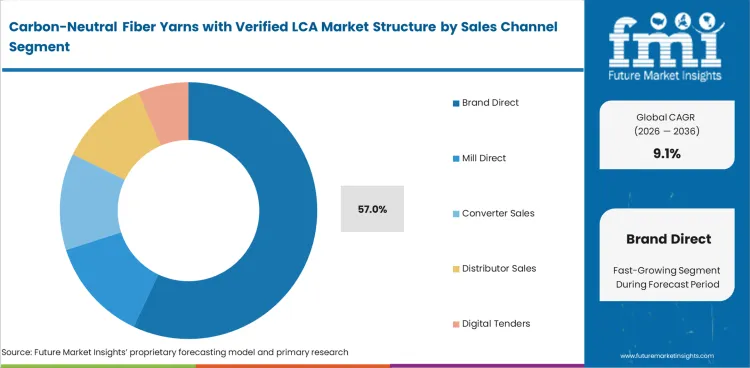
- Brand direct is forecast to account for 57.0% of the sales channel segment in 2026. Large apparel brands prefer direct sourcing control for approved yarn lists and carbon files.
- Mill direct and distributor sales serve smaller orders with faster local access. Fabric converters use these channels for trial lots and short-cycle sampling programs.
Carbon-Neutral Fiber Yarns with Verified LCA Market Drivers, Restraints, and Opportunities
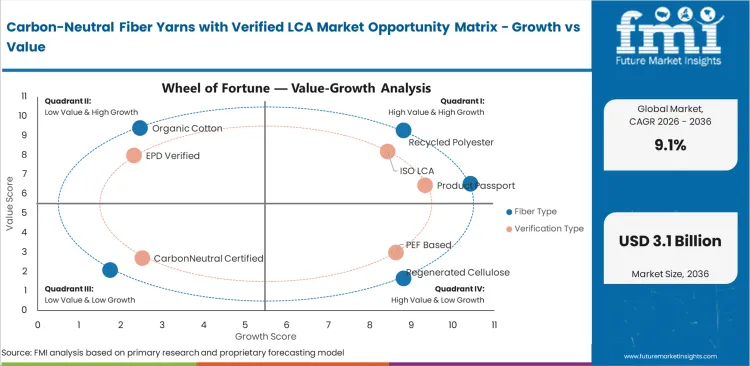
- Claim verification pressure is creating structured demand for yarn-level LCA evidence across apparel programs.
- Limited recycled feedstock availability increases pricing pressure for smaller mills serving verified synthetic yarn contracts.
- Digital product records enhance service opportunity through batch-level traceability and verified fiber documentation needs.
Carbon-neutral fiber yarns with verified LCA are used more often as apparel brands need auditable fiber records and lower claim risk. Feedstock price pressure and certification costs can slow faster adoption across smaller yarn mills and converters. Volume is likely to expand through recycled polyester programs and brand direct material approval systems across apparel supply chains.
Cotton Input Repricing Is Lifting Verified Yarn Offers
Cotton-based carbon-neutral yarns with verified LCA are facing firmer price floors because raw cotton is no longer behaving like a soft input. As reported by USDA in May 2026, seven-market spot cotton quotations averaged 79.04 cents per pound for the week ending May 7, 2026, up from 75.29 cents the prior week and 64.83 cents a year earlier. Spot transactions rose to 18,774 bales, compared with 12,050 bales the previous week. For verified LCA yarn suppliers this strengthens cost pass-through arguments because certified cotton procurement and carbon accounting are added on top of a rising fiber base. Buyers should expect tighter discounting on low-carbon cotton yarn contracts.
Energy Cost Relief Is Repricing Conversion Margins
Energy cost movement is becoming a negotiation point for verified LCA yarn contracts because spinning, texturizing, dyeing, and finishing require measurable electricity inputs. In February 2025, the International Energy Agency reported that wholesale electricity prices in the European Union, India, the United Kingdom, and the United States were around 20% lower on average in 2024 compared with the previous year. Most stayed above pre-Covid levels. For carbon-neutral fiber yarns, lower electricity prices create selective margin relief for mills using renewable power procurement or credible emissions accounting. Buyers may push for lower conversion premiums. Suppliers still face cost pressures across yarn sourcing decisions. Suppliers can defend verified LCA pricing because audit costs and traceability systems are included in yarn offers.
Analysis of Carbon-Neutral Fiber Yarns with Verified LCA Market By Key Countries
.webp "Top Country Growth Comparison Carbon Neutral Fiber Yarns With Verified Lca Market Cagr (2026 2036)")
| Country | CAGR |
|---|---|
| India | 10.2% |
| China | 9.6% |
| USA | 8.1% |
| Germany | 7.4% |
| UK | 6.8% |
Source: Future Market Insights, 2026.
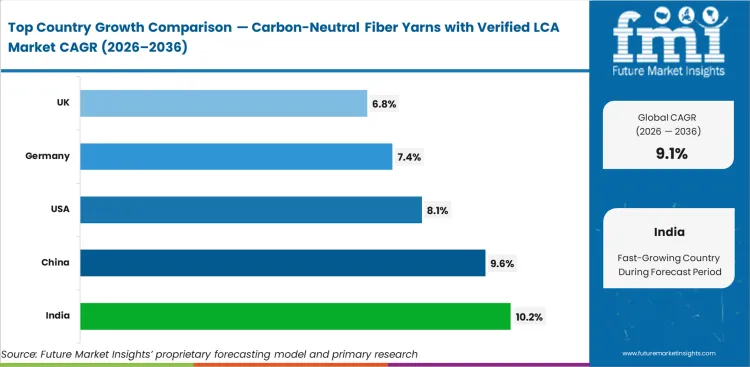
Carbon-Neutral Fiber Yarns with Verified LCA Market CAGR Analysis By Country
- India is forecast to record a 10.2% CAGR through 2036, with export-oriented mills building verified yarn files for brand approval programs.
- China is forecast to expand at 9.6% CAGR, backed by large fiber output and deeper LCA documentation needs across textile supply.
- Brand headquarters influence and import review requirements place the USA at 8.1% CAGR over the forecast period.
- Germany is forecast at 7.4% CAGR as claim scrutiny and technical textile demand strengthen the need for verified material evidence.
- The UK is projected to post 6.8% CAGR, due to importer review needs and policy focus on product data quality.
Demand for carbon-neutral fiber yarns with verified LCA is forecast to rise at 9.1% CAGR from 2026 to 2036. Country-level analysis covers the major markets contributing to this forecast, with the markets listed below.
Demand Outlook for Carbon-Neutral Fiber Yarns with Verified LCA Market in India
India’s carbon-neutral fiber yarns with verified LCA industry is projected to record a CAGR of 10.2% through 2036. India’s textiles and apparel exports, including handicrafts, reached USD 37.75 billion in 2024/25, according to a December 2025 PIB release. This export base favors demand for India carbon-neutral fiber yarns with verified LCA as mills serve claim-sensitive apparel programs. Local yarn producers can gain from buyers needing credible carbon files before fabric approval.
- Export-oriented mills need verified yarn records for apparel programs sold into claim-sensitive markets.
- Recycled polyester capacity gives Indian producers a practical base for verified recycled polyester programs.
- Domestic manufacturers need certification partners able to reduce rework across yarn approval files.
Sales Analysis of Carbon-Neutral Fiber Yarns with Verified LCA Market in China
The carbon-neutral fiber yarns with verified LCA sector in China is expected to expand at a CAGR of 9.6% during the assessment period. USDA FAS reported that China’s cumulative textile and apparel exports were USD 174.3 billion during the first seven months of MY 2024/25. China’s export scale creates direct demand for China carbon-neutral fiber yarns with verified LCA. Fiber producers benefit from global brands seeking verified records for domestic and export use.
- Large chemical fiber output helps Chinese mills scale verified synthetic yarns across apparel programs.
- Export brand audits raise demand for ISO LCA and product passport-ready yarn files.
- Polyester filament depth strengthens China’s role in carbon-neutral yarn supply for sportswear.
Demand Outlook for Carbon-Neutral Fiber Yarns with Verified LCA Market in the United States
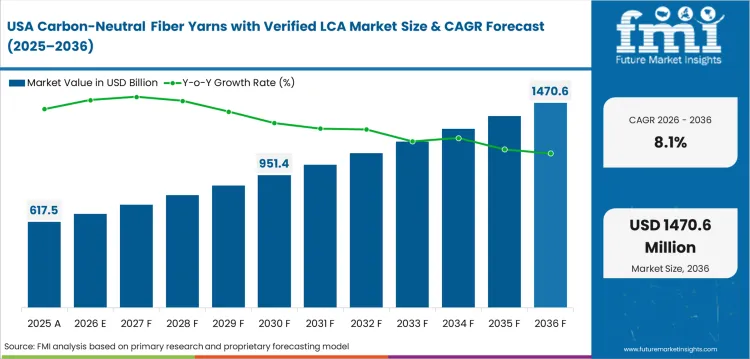
The USA is forecast to grow at a CAGR of 8.1% by 2036. OTEXA reported textiles and apparel imports of 49,455.6 MSME for year-to-date June 2025. Import scale keeps verified yarn evidence important for brand sourcing and material compliance teams. USA buyers value suppliers with traceable yarn files and reliable LCA documentation.
- Brand headquarters influence raises early demand for verified carbon records in approved material lists.
- Apparel import scale increases review pressure across yarns used in consumer-facing product claims.
- Demand for high-tenacity cellulosic staple fiber supports verified fiber use across performance applications.
Opportunity Analysis of Carbon-Neutral Fiber Yarns with Verified LCA Market in Germany
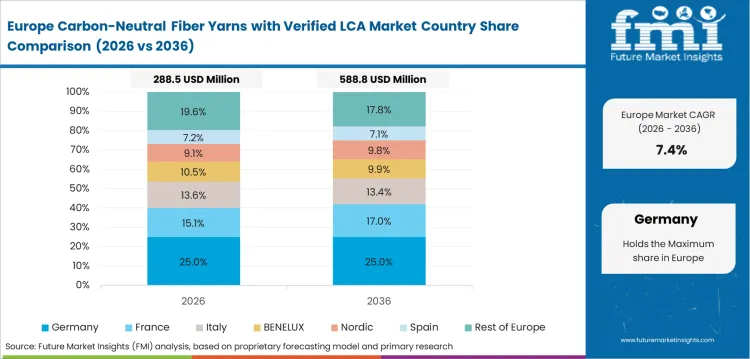
The carbon-neutral fiber yarns with verified LCA industry in Germany is forecast to advance at 7.4% CAGR through 2036. Destatis lists textile and apparel industry datasets covering employment and turnover for manufacturing activities. This industrial base supports demand for Germany carbon-neutral fiber yarns with verified LCA across apparel and technical textile programs. Testing depth and documentation discipline make German buyers selective toward verified yarn suppliers.
- German textile firms value product evidence across fiber inputs and process documentation.
- Technical textile producers need yarns with performance records and verified carbon files.
- Environmental claim scrutiny favors suppliers with third-party LCA documentation and repeatable batch data.
Future Outlook for Carbon-Neutral Fiber Yarns with Verified LCA Market in the United Kingdom
The UK carbon-neutral fiber yarns with verified LCA industry is expected to post 6.8% CAGR through 2036. ONS reported UK goods imports increased by GBP 2.7 billion in July 2025, with both EU and non-EU imports rising. UK import base favors UK carbon-neutral fiber yarns with verified LCA as brands review textile sourcing claims. Service partners with fast document checks can help smaller brands reduce approval delays.
- Importer-led apparel programs need verified yarn records before consumer claim approval.
- UK brand teams use LCA files to manage claim risk across apparel and home textile ranges.
- Product data requirements encourage closer review of polyester microfiber fabric inputs in textile supply.
Competitive Landscape and Strategic Positioning
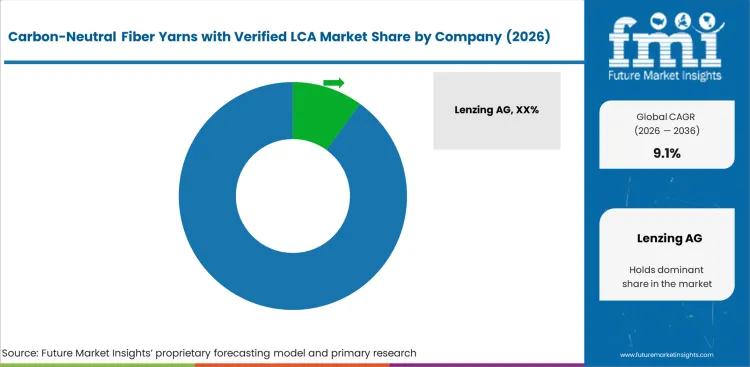
- Large fiber producers emphasize certified input control and brand-ready document systems across apparel sourcing programs.
- Lenzing AG leads through verified cellulosic fiber data and documentation systems built for brand material review.
- Indorama Ventures and UNIFI use recycled polyester scale and established access to approved yarn programs.
- Specialist providers focus on regenerated nylon and certified cellulosic inputs through material-specific carbon claim files.
Competition in the carbon-neutral fiber yarns with verified LCA market is driven by verified fiber evidence and repeatable yarn quality. Companies such as Lenzing AG holds a strong position through low-impact cellulosic fibers used across apparel yarn programs. Indorama Ventures brings polyester scale and chemical recycling participation across global fiber systems. UNIFI and Aquafil provide recycled yarn inputs supported by third-party review records. Eastman adds Naia Renew cellulosic fiber credentials for brands needing chain-of-custody documentation.
Feedstock quality limits and third-party LCA review costs create entry barriers across verified yarn programs. Batch-level data and faster document delivery have become priorities across brand material approval cycles. Apparel brands favor yarn producers combining carbon evidence with stable quality records. Producers with broader verified fiber menus are better placed to reduce coordination work for manufacturers.
Key Companies in the Carbon-Neutral Fiber Yarns with Verified LCA Market
Key global companies leading the carbon-neutral fiber yarns with verified LCA market include:
- Lenzing AG, Indorama Ventures, and UNIFI Inc. have verified fiber infrastructure for LCA-backed yarn programs.
- Aquafil S.p.A., Eastman Chemical Company, and Hyosung TNC serve manufacturers through recycled and bio-based yarn inputs.
- Teijin Frontier holds a specialist position across verified synthetic and regenerated fiber programs.
Competitive Benchmarking: Carbon-Neutral Fiber Yarns with Verified LCA Market
| Company | LCA File Depth | Verified Feedstock Control | Brand Program Access | Geographic Footprint |
|---|---|---|---|---|
| Lenzing AG | High | High | Strong | Austria-led global cellulose fiber footprint with production and sales presence across Europe, Asia, and the Americas |
| Indorama Ventures | High | High | Strong | Global fiber and recycling footprint across APAC, EMEA, and the Americas |
| UNIFI Inc. | High | High | Strong | Direct manufacturing in the United States, Colombia, El Salvador, and Brazil, with global sales offices |
| Aquafil S.p.A. | High | High | Moderate | Italy-led regenerated nylon footprint with operations across Europe, the United States, China, and Japan |
| Eastman Chemical Company | High | Medium | Strong | USA-based global specialty materials footprint with offices, plants, and Naia yarn activity across Asia and Europe |
| Hyosung TNC | Medium | Medium | Strong | South Korea-based textile footprint with global offices and manufacturing presence across Asia |
| Teijin Frontier | Medium | Medium | Moderate | Japan-led textile network with operations across Asia, North America, and Europe |
Source: Future Market Insights, 2026.
Key Developments in Carbon-Neutral Fiber Yarns with Verified LCA Market
- In January 2024, Lenzing stated, TENCEL Lyocell and Modal fibers are made with at least 50% lower carbon emissions and water use compared with generic versions. The results were calculated under ISO 14040 and ISO 14044 LCA standards.
- In February 2024, Eastman announced, Naia Renew cellulosic fiber received GRS certification and prepared its first GRS-certified yarn production. Eastman’s certification strengthened chain-of-custody proof for verified yarn programs.
- In August 2024, Indorama Ventures joined the T-REX Project as a spinning partner for chemically recycled polyester yarns and fibers. Indorama Ventures’ participation strengthened textile-to-textile recycling links for verified polyester programs.
- In February 2025, UNIFI reported two third-party reviewed LCAs for REPREVE Takeback staple fiber and ThermaLoop products. UNIFI’s LCA files improved carbon evidence for recycled polyester yarn buyers.
Key Players in the Carbon-Neutral Fiber Yarns with Verified LCA Market
Major Global Players:
- Lenzing AG
- Indorama Ventures
- UNIFI Inc.
- Aquafil S.p.A.
- Eastman Chemical Company
Specialist Players:
- Hyosung TNC
- Teijin Frontier
Report Scope and Coverage
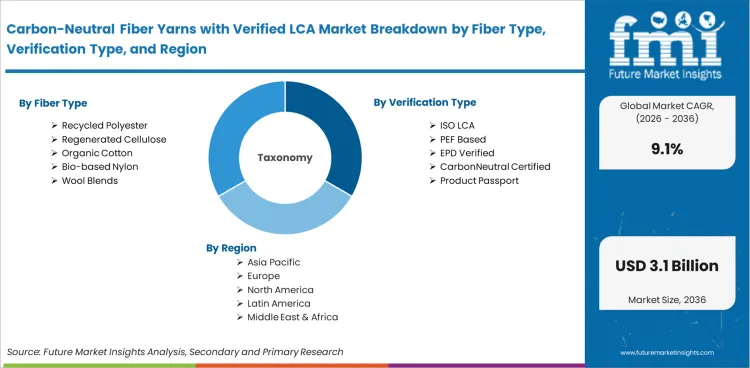
Carbon-Neutral Fiber Yarns with Verified LCA Market Breakdown By Fiber Type, Verification Type, And Region
| Parameter | Details |
|---|---|
| Quantitative Units | USD 1.3 billion to USD 3.1 billion, at a CAGR of 9.1% |
| Market Definition | The carbon-neutral fiber yarns with verified LCA market covers yarns carrying product-level carbon evidence and third-party life cycle assessment records. |
| Regions Covered | North America, Latin America, Europe, East Asia, South Asia and Pacific, Middle East and Africa |
| Countries Covered | USA, UK, Germany, China, India, Japan, South Korea, and 30 plus countries |
| Key Companies Profiled | Lenzing AG, Indorama Ventures, UNIFI Inc., Aquafil S.p.A., Eastman Chemical Company, Hyosung TNC, Teijin Frontier |
| Forecast Period | 2026 to 2036 |
| Approach | Hybrid bottom-up and top-down methodology starting with verified yarn demand and documented fiber use patterns. |
Source: Future Market Insights, 2026.
Carbon-Neutral Fiber Yarns with Verified LCA Market by Segments
Carbon-Neutral Fiber Yarns with Verified LCA Market by Fiber Type:
- Recycled Polyester
- Regenerated Cellulose
- Organic Cotton
- Bio-based Nylon
- Wool Blends
Carbon-Neutral Fiber Yarns with Verified LCA Market by Verification Type:
- ISO LCA
- PEF Based
- EPD Verified
- CarbonNeutral Certified
- Product Passport
Carbon-Neutral Fiber Yarns with Verified LCA Market by Yarn Form:
- Filament Yarn
- Staple Yarn
- Core Spun
- Textured Yarn
- Blended Yarn
Carbon-Neutral Fiber Yarns with Verified LCA Market by Application:
- Apparel
- Home Textiles
- Technical Textiles
- Footwear
- Workwear
Carbon-Neutral Fiber Yarns with Verified LCA Market by Sales Channel:
- Brand Direct
- Mill Direct
- Converter Sales
- Distributor Sales
- Digital Tenders
Carbon-Neutral Fiber Yarns with Verified LCA Market by Region:
- North America
- USA
- Canada
- Mexico
- Latin America
- Brazil
- Chile
- Rest of Latin America
- Europe
- Germany
- UK
- Italy
- Spain
- France
- Rest of Europe
- East Asia
- China
- Japan
- South Korea
- South Asia and Pacific
- India
- ASEAN
- Australia & New Zealand
- Rest of South Asia and Pacific
- Middle East and Africa
- Saudi Arabia
- Other GCC Countries
- South Africa
- Rest of Middle East and Africa
Research Sources and Bibliography
- USA Department of Agriculture, Agricultural Marketing Service. (2026, May 8). Weekly Cotton Market Review (Vol. 107, No. 40).
- International Energy Agency. (2025, February 14). Electricity 2025.
- Textile Exchange. (2025, September). Materials Market Report 2025. Textile Exchange.
- European Union. (2024, February). Directive (EU) 2024/825 of the European Parliament and of the Council. EUR-Lex.
- European Parliament. (2024, June). Digital product passport for the textile sector. European Parliamentary Research Service.
- Press Information Bureau. (2025, December). Performance of textile sector. Government of India.
- USA Department of Agriculture Foreign Agricultural Service. (2025, April 23). Cotton and products annual: China. USDA FAS.
- Office of Textiles and Apparel. (2025, August). June 2025 trade data release. USA Department of Commerce.
- Federal Statistical Office. (2026, May). Industry, manufacturing: Textile and apparel industry. Destatis.
- Office for National Statistics. (2025, September). UK trade: July 2025. ONS.
- Lenzing AG. (2024, January). Lenzing unveils the new potential of TENCEL Lyocell fibers as alternative material for stretch fabrics. Lenzing.
- Eastman Chemical Company. (2024, February). Naia prepares first production of GRS-certified yarn. Eastman.
- Indorama Ventures. (2024, August). Indorama Ventures joins the T-REX Project to revolutionize textile recycling. Indorama Ventures.
- UNIFI Inc. (2025, February 25). UNIFI®, makers of REPREVE®, reinforces environmental commitments in 2024.
This Report Answers
- What is the current and future size of the carbon-neutral fiber yarns with verified LCA market?
- How fast is the carbon-neutral fiber yarns with verified LCA market expected to expand between 2026 and 2036?
- Which fiber type is forecast to lead the market by 2026?
- Which application segment is expected to account for the most demand by 2026?
- What factors are driving demand for carbon-neutral fiber yarns with verified LCA globally?
- How are environmental claim rules influencing adoption of verified LCA yarns?
- Why are apparel brands the main demand base for verified yarn documentation?
- How are recycled fiber limits creating pricing pressure for verified yarn programs?
- Which countries are projected to record faster expansion through 2036?
- What is driving market expansion in India and China?
- Who are the companies active in the carbon-neutral fiber yarns with verified LCA market?
- How does FMI estimate and validate the market forecast?
Frequently Asked Questions
What is the global market demand for Carbon-Neutral Fiber Yarns with Verified LCA in 2026?
In 2026, the global market for carbon-neutral fiber yarns with verified LCA is expected to be worth USD 1.3 billion.
How big will the market for Carbon-Neutral Fiber Yarns with Verified LCA be in 2036?
By 2036, the market for carbon-neutral fiber yarns with verified LCA is expected to be worth USD 3.1 billion.
How much is demand for Carbon-Neutral Fiber Yarns with Verified LCA expected to expand between 2026 and 2036?
Between 2026 and 2036, demand for carbon-neutral fiber yarns with verified LCA is expected to expand at a CAGR of 9.1%.
Which fiber type segment is likely to be the leading seller globally by 2026?
Recycled polyester will make up 38.0% of the fiber type segment in 2026.
What is causing demand to rise in India?
The India carbon-neutral fiber yarns with verified LCA market is projected to record 10.2% CAGR through 2036, driven by export mills and verified yarn documentation needs.
What is causing demand to rise in China?
The China carbon-neutral fiber yarns with verified LCA market is projected to expand at 9.6% CAGR through 2036, driven by large fiber output and export documentation needs.
What does this report mean by Carbon-Neutral Fiber Yarns with Verified LCA Market definition?
The carbon-neutral fiber yarns with verified LCA market includes yarns carrying third-party life cycle assessment records and product-level carbon evidence.
How does FMI make the Carbon-Neutral Fiber Yarns with Verified LCA forecast and check it?
Forecasting models use a hybrid bottom-up and top-down approach, starting with verified yarn demand and checking it against fiber use patterns.
Preview the report firsthand - request a free sample
Get SampleGet the brochure for pricing and purchase details.
Get PDFTable of Content
- Key Takeaways
- Market Size and CAGR
- Top Growth Driver
- Fastest Growing Segment
- Leading Region
- Key Companies
- Emerging Opportunities
- Executive Summary
- Global Market Outlook
- Demand-side Trends
- Supply-side Trends
- Technology Roadmap Analysis
- Analysis and Recommendations
- Analyst Perspective (What is happening? Why now? What should investors know?)
- Key Questions Answered
- How large is the market?
- What is the CAGR?
- What are key trends?
- Which region dominates?
- Who are the leaders?
- Market Overview
- Market Coverage / Taxonomy
- Market Definition / Scope / Limitations
- Research Methodology
- Chapter Orientation
- Analytical Lens and Working Hypotheses
- Market Structure, Signals, and Trend Drivers
- Benchmarking and Cross-market Comparability
- Market Sizing, Forecasting, and Opportunity Mapping
- Research Design and Evidence Framework
- Desk Research Programme (Secondary Evidence)
- Expert Input and Fieldwork (Primary Evidence)
- Tooling, Models, and Reference Databases
- Data Engineering and Model Build
- Quality Assurance and Audit Trail
- Market Background
- Market Dynamics (Drivers, Restraints, Opportunity, Trends)
- Scenario Forecast (Optimistic, Likely, Conservative)
- Impact Analysis
- AI Impact
- Sustainability Impact
- Regulatory Impact
- Technology Impact
- Consumer / Buyer Analysis
- Purchase Drivers
- Adoption Barriers
- Buyer Journey
- Opportunity Map Analysis
- Product Life Cycle Analysis
- Supply Chain Analysis
- Investment Feasibility Matrix
- Value Chain Analysis
- PESTLE and Porter's Analysis
- Regulatory Landscape
- Regional Parent Market Outlook
- Production and Consumption Statistics
- Import and Export Statistics
- Global Market Analysis and Forecast, 2021 to 2036
- Historical Market Size Value (USD Billion) & Volume (Unit) Analysis, 2021 to 2025
- Current and Future Market Size Value (USD Billion) & Volume (Unit) Projections, 2026 to 2036
- Y-o-Y Growth Trend Analysis
- Absolute $ Opportunity Analysis
- Global Market Pricing Analysis, 2021 to 2036
- Global Market Analysis and Forecast, By Fiber Type, 2021 to 2036
- Introduction / Key Findings
- Historical Market Size Value (USD Billion) & Volume (Unit) Analysis By Fiber Type, 2021 to 2025
- Current and Future Market Size Value (USD Billion) & Volume (Unit) Analysis and Forecast By Fiber Type, 2026 to 2036
- Recycled Polyester
- Regenerated Cellulose
- Organic Cotton
- Bio-based Nylon
- Wool Blends
- Recycled Polyester
- Y-o-Y Growth Trend Analysis By Fiber Type, 2021 to 2025
- Absolute $ Opportunity Analysis By Fiber Type, 2026 to 2036
- Global Market Analysis and Forecast, By Verification Type, 2021 to 2036
- Introduction / Key Findings
- Historical Market Size Value (USD Billion) & Volume (Unit) Analysis By Verification Type, 2021 to 2025
- Current and Future Market Size Value (USD Billion) & Volume (Unit) Analysis and Forecast By Verification Type, 2026 to 2036
- ISO LCA
- PEF Based
- EPD Verified
- CarbonNeutral Certified
- Product Passport
- ISO LCA
- Y-o-Y Growth Trend Analysis By Verification Type, 2021 to 2025
- Absolute $ Opportunity Analysis By Verification Type, 2026 to 2036
- Global Market Analysis and Forecast, By Yarn Form, 2021 to 2036
- Introduction / Key Findings
- Historical Market Size Value (USD Billion) & Volume (Unit) Analysis By Yarn Form, 2021 to 2025
- Current and Future Market Size Value (USD Billion) & Volume (Unit) Analysis and Forecast By Yarn Form, 2026 to 2036
- Filament Yarn
- Staple Yarn
- Core Spun
- Textured Yarn
- Blended Yarn
- Filament Yarn
- Y-o-Y Growth Trend Analysis By Yarn Form, 2021 to 2025
- Absolute $ Opportunity Analysis By Yarn Form, 2026 to 2036
- Global Market Analysis and Forecast, By Application, 2021 to 2036
- Introduction / Key Findings
- Historical Market Size Value (USD Billion) & Volume (Unit) Analysis By Application, 2021 to 2025
- Current and Future Market Size Value (USD Billion) & Volume (Unit) Analysis and Forecast By Application, 2026 to 2036
- Apparel
- Home Textiles
- Technical Textiles
- Footwear
- Workwear
- Apparel
- Y-o-Y Growth Trend Analysis By Application, 2021 to 2025
- Absolute $ Opportunity Analysis By Application, 2026 to 2036
- Global Market Analysis and Forecast, By Sales Channel, 2021 to 2036
- Introduction / Key Findings
- Historical Market Size Value (USD Billion) & Volume (Unit) Analysis By Sales Channel, 2021 to 2025
- Current and Future Market Size Value (USD Billion) & Volume (Unit) Analysis and Forecast By Sales Channel, 2026 to 2036
- Brand Direct
- Mill Direct
- Converter Sales
- Distributor Sales
- Digital Tenders
- Brand Direct
- Y-o-Y Growth Trend Analysis By Sales Channel, 2021 to 2025
- Absolute $ Opportunity Analysis By Sales Channel, 2026 to 2036
- Global Market Analysis and Forecast, By Region, 2021 to 2036
- Introduction
- Historical Market Size Value (USD Billion) & Volume (Unit) Analysis By Region, 2021 to 2025
- Current Market Size Value (USD Billion) & Volume (Unit) Analysis and Forecast By Region, 2026 to 2036
- North America
- Latin America
- Western Europe
- Eastern Europe
- East Asia
- South Asia and Pacific
- Middle East & Africa
- Market Attractiveness Analysis By Region
- North America Market Analysis and Forecast, By Country, 2021 to 2036
- Historical Market Size Value (USD Billion) & Volume (Unit) Trend Analysis By Market Taxonomy, 2021 to 2025
- Market Size Value (USD Billion) & Volume (Unit) Forecast By Market Taxonomy, 2026 to 2036
- By Country
- USA
- Canada
- Mexico
- By Fiber Type
- By Verification Type
- By Yarn Form
- By Application
- By Sales Channel
- By Country
- Market Attractiveness Analysis
- By Country
- By Fiber Type
- By Verification Type
- By Yarn Form
- By Application
- By Sales Channel
- Key Takeaways
- Latin America Market Analysis and Forecast, By Country
- Historical Market Size Value (USD Billion) & Volume (Unit) Trend Analysis By Market Taxonomy, 2021 to 2025
- Market Size Value (USD Billion) & Volume (Unit) Forecast By Market Taxonomy, 2026 to 2036
- By Country
- Brazil
- Chile
- Rest of Latin America
- By Fiber Type
- By Verification Type
- By Yarn Form
- By Application
- By Sales Channel
- By Country
- Market Attractiveness Analysis
- By Country
- By Fiber Type
- By Verification Type
- By Yarn Form
- By Application
- By Sales Channel
- Key Takeaways
- Western Europe Market Analysis and Forecast, By Country
- Historical Market Size Value (USD Billion) & Volume (Unit) Trend Analysis By Market Taxonomy, 2021 to 2025
- Market Size Value (USD Billion) & Volume (Unit) Forecast By Market Taxonomy, 2026 to 2036
- By Country
- Germany
- UK
- Italy
- Spain
- France
- Nordic
- BENELUX
- Rest of Western Europe
- By Fiber Type
- By Verification Type
- By Yarn Form
- By Application
- By Sales Channel
- By Country
- Market Attractiveness Analysis
- By Country
- By Fiber Type
- By Verification Type
- By Yarn Form
- By Application
- By Sales Channel
- Key Takeaways
- Eastern Europe Market Analysis and Forecast, By Country
- Historical Market Size Value (USD Billion) & Volume (Unit) Trend Analysis By Market Taxonomy, 2021 to 2025
- Market Size Value (USD Billion) & Volume (Unit) Forecast By Market Taxonomy, 2026 to 2036
- By Country
- Russia
- Poland
- Hungary
- Balkan & Baltic
- Rest of Eastern Europe
- By Fiber Type
- By Verification Type
- By Yarn Form
- By Application
- By Sales Channel
- By Country
- Market Attractiveness Analysis
- By Country
- By Fiber Type
- By Verification Type
- By Yarn Form
- By Application
- By Sales Channel
- Key Takeaways
- East Asia Market Analysis and Forecast, By Country
- Historical Market Size Value (USD Billion) & Volume (Unit) Trend Analysis By Market Taxonomy, 2021 to 2025
- Market Size Value (USD Billion) & Volume (Unit) Forecast By Market Taxonomy, 2026 to 2036
- By Country
- China
- Japan
- South Korea
- By Fiber Type
- By Verification Type
- By Yarn Form
- By Application
- By Sales Channel
- By Country
- Market Attractiveness Analysis
- By Country
- By Fiber Type
- By Verification Type
- By Yarn Form
- By Application
- By Sales Channel
- Key Takeaways
- South Asia and Pacific Market Analysis and Forecast, By Country
- Historical Market Size Value (USD Billion) & Volume (Unit) Trend Analysis By Market Taxonomy, 2021 to 2025
- Market Size Value (USD Billion) & Volume (Unit) Forecast By Market Taxonomy, 2026 to 2036
- By Country
- India
- ASEAN
- Australia & New Zealand
- Rest of South Asia and Pacific
- By Fiber Type
- By Verification Type
- By Yarn Form
- By Application
- By Sales Channel
- By Country
- Market Attractiveness Analysis
- By Country
- By Fiber Type
- By Verification Type
- By Yarn Form
- By Application
- By Sales Channel
- Key Takeaways
- Middle East & Africa Market Analysis and Forecast, By Country
- Historical Market Size Value (USD Billion) & Volume (Unit) Trend Analysis By Market Taxonomy, 2021 to 2025
- Market Size Value (USD Billion) & Volume (Unit) Forecast By Market Taxonomy, 2026 to 2036
- By Country
- Kingdom of Saudi Arabia
- Other GCC Countries
- Türkiye
- South Africa
- Other African Union
- Rest of Middle East & Africa
- By Fiber Type
- By Verification Type
- By Yarn Form
- By Application
- By Sales Channel
- By Country
- Market Attractiveness Analysis
- By Country
- By Fiber Type
- By Verification Type
- By Yarn Form
- By Application
- By Sales Channel
- Key Takeaways
- Key Countries Market Analysis
- USA
- Pricing Analysis
- Market Share Analysis, 2025
- By Fiber Type
- By Verification Type
- By Yarn Form
- By Application
- By Sales Channel
- Canada
- Pricing Analysis
- Market Share Analysis, 2025
- By Fiber Type
- By Verification Type
- By Yarn Form
- By Application
- By Sales Channel
- Mexico
- Pricing Analysis
- Market Share Analysis, 2025
- By Fiber Type
- By Verification Type
- By Yarn Form
- By Application
- By Sales Channel
- Brazil
- Pricing Analysis
- Market Share Analysis, 2025
- By Fiber Type
- By Verification Type
- By Yarn Form
- By Application
- By Sales Channel
- Chile
- Pricing Analysis
- Market Share Analysis, 2025
- By Fiber Type
- By Verification Type
- By Yarn Form
- By Application
- By Sales Channel
- Germany
- Pricing Analysis
- Market Share Analysis, 2025
- By Fiber Type
- By Verification Type
- By Yarn Form
- By Application
- By Sales Channel
- UK
- Pricing Analysis
- Market Share Analysis, 2025
- By Fiber Type
- By Verification Type
- By Yarn Form
- By Application
- By Sales Channel
- Italy
- Pricing Analysis
- Market Share Analysis, 2025
- By Fiber Type
- By Verification Type
- By Yarn Form
- By Application
- By Sales Channel
- Spain
- Pricing Analysis
- Market Share Analysis, 2025
- By Fiber Type
- By Verification Type
- By Yarn Form
- By Application
- By Sales Channel
- France
- Pricing Analysis
- Market Share Analysis, 2025
- By Fiber Type
- By Verification Type
- By Yarn Form
- By Application
- By Sales Channel
- India
- Pricing Analysis
- Market Share Analysis, 2025
- By Fiber Type
- By Verification Type
- By Yarn Form
- By Application
- By Sales Channel
- ASEAN
- Pricing Analysis
- Market Share Analysis, 2025
- By Fiber Type
- By Verification Type
- By Yarn Form
- By Application
- By Sales Channel
- Australia & New Zealand
- Pricing Analysis
- Market Share Analysis, 2025
- By Fiber Type
- By Verification Type
- By Yarn Form
- By Application
- By Sales Channel
- China
- Pricing Analysis
- Market Share Analysis, 2025
- By Fiber Type
- By Verification Type
- By Yarn Form
- By Application
- By Sales Channel
- Japan
- Pricing Analysis
- Market Share Analysis, 2025
- By Fiber Type
- By Verification Type
- By Yarn Form
- By Application
- By Sales Channel
- South Korea
- Pricing Analysis
- Market Share Analysis, 2025
- By Fiber Type
- By Verification Type
- By Yarn Form
- By Application
- By Sales Channel
- Russia
- Pricing Analysis
- Market Share Analysis, 2025
- By Fiber Type
- By Verification Type
- By Yarn Form
- By Application
- By Sales Channel
- Poland
- Pricing Analysis
- Market Share Analysis, 2025
- By Fiber Type
- By Verification Type
- By Yarn Form
- By Application
- By Sales Channel
- Hungary
- Pricing Analysis
- Market Share Analysis, 2025
- By Fiber Type
- By Verification Type
- By Yarn Form
- By Application
- By Sales Channel
- Kingdom of Saudi Arabia
- Pricing Analysis
- Market Share Analysis, 2025
- By Fiber Type
- By Verification Type
- By Yarn Form
- By Application
- By Sales Channel
- Türkiye
- Pricing Analysis
- Market Share Analysis, 2025
- By Fiber Type
- By Verification Type
- By Yarn Form
- By Application
- By Sales Channel
- South Africa
- Pricing Analysis
- Market Share Analysis, 2025
- By Fiber Type
- By Verification Type
- By Yarn Form
- By Application
- By Sales Channel
- USA
- Market Structure Analysis
- Competition Dashboard
- Competition Benchmarking
- Market Share Analysis of Top Players
- By Regional
- By Fiber Type
- By Verification Type
- By Yarn Form
- By Application
- By Sales Channel
- Emerging Startups
- Innovation Benchmarking
- Competition Analysis
- Competition Deep Dive
- Lenzing AG
- Overview
- Product Portfolio
- Profitability by Market Segments (Product/Region/Sales Channel)
- Sales Footprint
- Strategy Overview
- Marketing Strategy
- Product Strategy
- Channel Strategy
- Indorama Ventures
- UNIFI Inc.
- Aquafil S.p.A.
- Eastman Chemical Company
- Hyosung TNC
- Teijin Frontier
- Lenzing AG
- Case Studies
- Success Stories
- Recent Developments
- Competition Deep Dive
- Assumptions & Acronyms Used


