

- Industry Size (2026)
- USD 5.6 Bn
- Forecast (2036)
- USD 11.5 Bn
- CAGR (2026 to 2036)
- 7.5%
Recycled Polyester Apparel Fiber Market Forecast and Outlook 2026 to 2036
The recycled polyester apparel fiber market is set to reach USD 5.6 billion in 2026; and is forecasted to reach USD 11.5 billion by 2036 at a 7.5% CAGR. Demand is driven by sourcing policies that require verified recycled content, stable yarn quality, and consistent appearance across large apparel programs. Brand organizations define acceptable feedstock classes, performance ranges, and traceability scope during fabric platform planning. Once a collection structure is approved, later fiber changes require renewed claim substantiation and visual validation. Volume growth follows expansion of core apparel lines that commit to recycled content across multi-season assortments and geographically distributed sourcing networks.
Access to the recycled polyester apparel fiber market is controlled through approved material libraries, audit schemes, and disclosure frameworks maintained by brand and retail groups. Entry depends on documented chain of custody, consistency of properties across production sites, and compliance with labeling rules. Product families remain in use across extended cycles because public claims and compliance files reference specific material sets. Supplier changes occur during range architecture updates rather than routine sourcing. Revenue development reflects the number of apparel programs converted to recycled content baselines. Competitive position depends on early involvement in fabric development, reliability of documentation support, and continued acceptance within controlled sourcing systems.
Quick Stats for Recycled Polyester Apparel Fiber Market
- Recycled Polyester Apparel Fiber Market Value (2026): USD 5.6 billion
- Recycled Polyester Apparel Fiber Market Forecast Value (2036): USD 11.5 billion
- Recycled Polyester Apparel Fiber Market Forecast CAGR 2026 to 2036: 7.5%
- Leading Feedstock Source by Demand Share: Post-Consumer Bottles (rPET)
- Fastest-Growing Countries: China, Brazil, USA, Germany, South Korea
- Key Industry Participants: Indorama Ventures, Reliance Industries, Far Eastern New Century, Toray Industries, Teijin
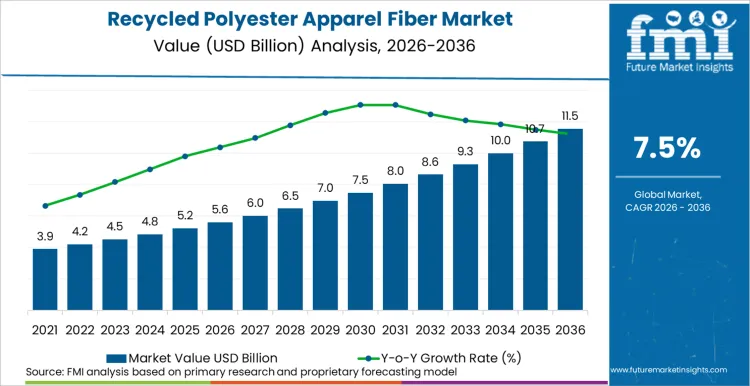
Recycled Polyester Apparel Fiber Market Key Takeaways
| Metric | Value |
|---|---|
| Market Value (2026) | USD 5.6 billion |
| Market Forecast Value (2036) | USD 11.5 billion |
| Forecast CAGR 2026 to 2036 | 7.5% |
Source: Future Market Insights’ proprietary forecasting model and primary research
Why is the Demand for Recycled Polyester Apparel Fiber Growing?
Demand for recycled polyester apparel fiber has strengthened as fashion brands and textile manufacturers respond to growing pressure to reduce environmental impact from virgin polyester production. Polyester made from post-consumer PET bottles and industrial waste is increasingly used in knitwear, outerwear, and performance apparel where tensile strength, moisture management, and abrasion resistance are important. Activewear and athleisure categories drive substantial uptake because recycled polyester fibers deliver familiar stretch and recovery while lowering carbon footprint metrics that brands report to stakeholders and regulators. Fabric mills adjust spinning and bonding processes to accommodate recycled feedstock, ensuring uniform denier and dye affinity comparable to conventional fibers. Retailers promoting sustainable product lines emphasize recycled content percentages on labels, influencing consumer purchase decisions and reinforcing the role of recycled fibers in mainstream apparel assortments.
Procurement of recycled polyester apparel fiber is also shaped by industry initiatives targeting circularity and textile waste diversion. Many suppliers establish closed-loop programs that collect post-consumer garments and convert them into new polyester staple fibers suitable for blending with technical filaments or natural fibers. Material scientists optimize polymer recycling and purification to sustain mechanical properties through multiple use cycles, supporting consistent quality in large production runs. Textile certification frameworks that verify recycled content and lifecycle benefits further encourage sourcing of recycled polyester. Growth in online and direct-to-consumer channels accelerates adoption as brands highlight sustainability attributes, reinforcing demand across diverse demographic segments.
How Is the Recycled Polyester Apparel Fiber Market Structured by Feedstock Source, Product Form, and Apparel Segment?
Recycled polyester apparel fibers are positioned at the intersection of sustainability compliance, cost optimization, and brand-level decarbonization strategies. Market structure reflects how raw material sourcing, fiber engineering choices, and apparel positioning influence adoption across fashion value chains.
Which Feedstock Sources Are Most Widely Used in Recycled Polyester Apparel Fibers?
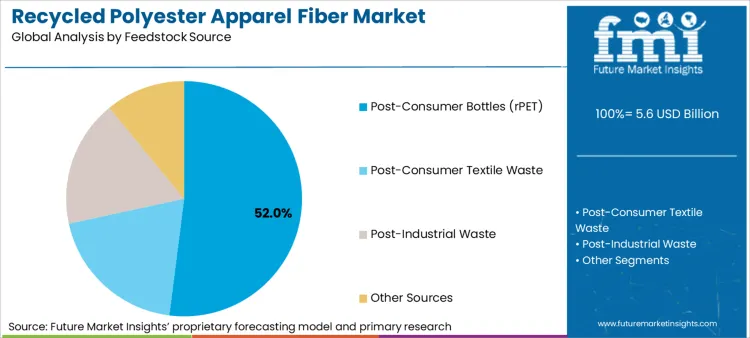
Post-consumer bottles (rPET) account for 52.0%, reflecting their consistent supply, established collection infrastructure, and regulatory acceptance across global apparel brands. This feedstock benefits from traceability and food-grade recycling pathways adapted for textiles. Post-consumer textile waste is gaining relevance as brands pursue circularity targets, although variability in fiber blends and contamination remains a constraint. Post-industrial waste includes production scrap and offcuts, valued for cleaner input streams and predictable quality. Other sources cover mixed plastic streams and experimental chemical recycling outputs still in early-scale deployment.
Key Points
- rPET bottles remain dominant due to supply reliability and certification readiness.
- Textile-to-textile recycling supports long-term circular apparel strategies.
- Post-industrial waste offers quality consistency for controlled applications.
How Does Product Form Influence Adoption in Apparel Manufacturing?
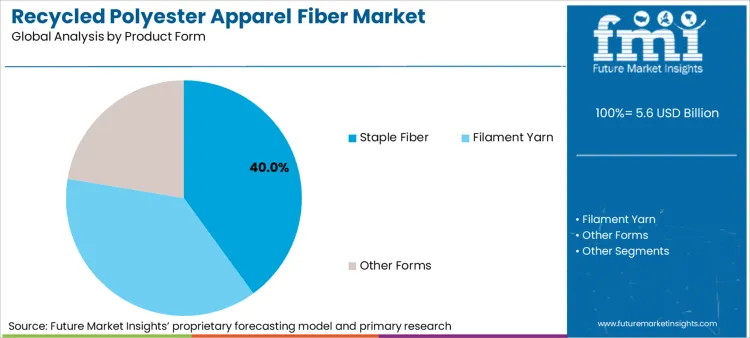
Staple fiber represents 40.0%, driven by its compatibility with cotton blending, yarn spinning flexibility, and use in mass-market apparel. It is widely adopted in woven and knitted fabrics where hand feel and cost control are priorities. Filament yarn is preferred in performance-driven apparel segments, offering higher strength, uniformity, and durability. Other forms include specialty yarns and engineered fibers developed for specific aesthetic, stretch, or moisture-management requirements.
Key Points
- Staple fiber supports blending and large-volume apparel programs.
- Filament yarns address performance, durability, and premium fabric needs.
- Specialty forms enable differentiation in fabric engineering.
Which Apparel Segments Drive Demand for Recycled Polyester Fibers?
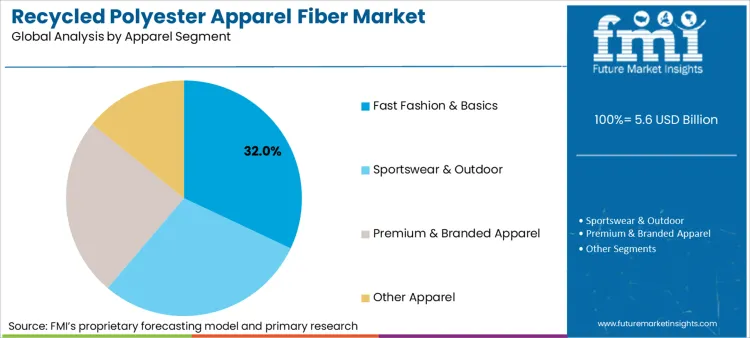
Fast fashion and basics account for 32.0%, supported by scale-driven sustainability commitments and cost-sensitive sourcing models. Sportswear and outdoor apparel increasingly specify recycled polyester for performance fabrics combined with environmental branding. Premium and branded apparel segments focus on certified recycled content, traceability, and fabric aesthetics to support value positioning. Other apparel includes uniforms, workwear, and niche fashion categories adopting recycled fibers for compliance or brand differentiation.
Key Points
- Fast fashion leads volume adoption through scale and sourcing mandates.
- Sportswear leverages recycled polyester for performance-sustainability alignment.
- Premium brands emphasize traceability and material storytelling.
What are the Key Dynamics in the Recycled Polyester Apparel Fiber Market?
Global demand for recycled polyester apparel fiber is driven by apparel brands and textile manufacturers seeking to reduce reliance on virgin petroleum based polymers while meeting sustainability commitments and consumer expectations for environmentally conscious products. Growth is concentrated in activewear, outerwear, woven and knit casual garments where performance, durability and moisture management are essential. Value in the market depends on consistent fiber quality, colour uniformity, and mechanical attributes that align with traditional polyester performance without compromising fabric handle or garment life. Procurement decisions increasingly reflect brand disclosure expectations tied to recycled content and lifecycle impact.
How do sustainability commitments and brand positioning drive adoption?
Apparel companies worldwide adopt recycled polyester apparel fibers to demonstrate measurable reductions in carbon emissions and waste. Recycled polyester, often derived from post consumer PET bottles or textile waste, supports claims of lower energy and resource use relative to virgin polyester production. Performance apparel and sportswear segments prioritise recycled polyester that maintains tensile strength, abrasion resistance, and dye uptake comparable to virgin counterparts, ensuring that technical garments retain functional expectations through repeated wear and laundering. Fashion brands communicate recycled content percentages on labels and through sustainability reporting to engage environmentally conscious consumers, reinforcing purchase decisions among segments that prioritise eco credentials. Collaboration with yarn spinners and fabric mills helps embed recycled fibers into broader collections, supporting scale and consistency across seasonal lines.
How do feedstock quality, processing behaviour and cost dynamics influence market scaling?
Market scaling for recycled polyester apparel fiber is influenced by the availability and quality of feedstocks, as well as processing considerations and cost competitiveness. Recycled feedstock quality, including contaminant levels and polymer degradation, affects downstream spinning and fabric performance; advanced sorting and decontamination steps improve outcomes but increase production complexity. Manufacturers work to match melt flow, tenacity and elongation properties of recycled fibers with established specifications to ensure consistent knit and weave behaviour in diverse garment constructions. Cost dynamics play a role as recycled polyester often carries a premium relative to commodity virgin polyester, particularly in supply chains with fluctuating PET bottle collection rates and recycling infrastructure maturity. Price sensitivity in value oriented apparel segments can limit adoption unless brands can communicate performance parity and sustainability value to justify cost differences. Evolving chemical and mechanical recycling technologies, along with expanded producer recycling partnerships, influence both the scale and reliability of recycled polyester supply for apparel fiber markets.
How Is Demand for the Recycled Polyester Apparel Fiber Market Evolving Globally?
Global demand for recycled polyester apparel fibers is rising as the fashion industry shifts towards sustainable materials in response to both consumer preferences and regulatory pressures. Growth reflects increasing adoption of recycled polyester fibers in apparel manufacturing, driven by environmental concerns and the need to reduce textile waste. These fibers are commonly sourced from post-consumer plastic bottles and other recycled polyester products, offering a sustainable alternative to virgin polyester. China records 8.7% CAGR, Brazil records 8.3% CAGR, USA records 7.2% CAGR, Germany records 7.1% CAGR, and South Korea records 6.7% CAGR. Adoption is primarily driven by eco-conscious fashion trends, regulatory mandates, and the growing demand for sustainable production processes.
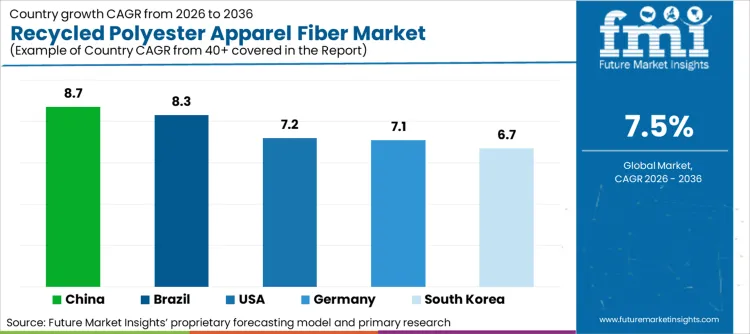
| Country | CAGR (%) |
|---|---|
| China | 8.7% |
| Brazil | 8.3% |
| USA | 7.2% |
| Germany | 7.1% |
| South Korea | 6.7% |
What is driving growth of recycled polyester apparel fiber demand in China?
Demand for recycled polyester apparel fibers in China is expanding as the country embraces sustainable practices within its massive textile industry. Growth at 8.7% CAGR reflects the increasing use of recycled polyester in both domestic fashion lines and export-oriented apparel manufacturing. China’s government has implemented policies promoting recycling and reducing plastic waste, which are encouraging the use of recycled fibers. The demand for eco-friendly clothing is also rising among consumers, further boosting the adoption of recycled polyester. Manufacturers are investing in technology to improve fiber quality and consistency while addressing the challenges associated with recycled material supply chains.
- Government policies promoting recycling and waste reduction
- Rising consumer demand for eco-friendly apparel
- Shift towards sustainable textile production
- Investment in technology to enhance fiber quality
Why is Brazil seeing expansion in recycled polyester apparel fiber adoption?
Recycled polyester apparel fiber demand in Brazil is increasing as the country’s fashion industry moves towards more sustainable production methods. Growth at 8.3% CAGR reflects growing adoption of recycled fibers in the production of fashion, sportswear, and casual apparel. Brazil’s commitment to reducing plastic waste and improving recycling systems has contributed to the rise in demand for recycled polyester fibers. Additionally, Brazilian consumers are becoming more conscious of the environmental impact of fast fashion, which is fueling the demand for sustainable and recycled clothing options. Manufacturers are also working on improving the quality and availability of recycled fibers to meet the growing market needs.
- Commitment to reducing plastic waste and improving recycling
- Growing consumer demand for sustainable fashion
- Rising adoption of recycled fibers in fashion and sportswear
- Development of recycled fiber quality improvement technologies
What factors are shaping recycled polyester apparel fiber sales in the USA?
Sales of recycled polyester apparel fibers in the USA are rising as fashion brands prioritize sustainability and respond to consumer demand for eco-friendly products. Growth at 7.2% CAGR reflects increased adoption of recycled fibers across various clothing categories, particularly in activewear, casual wear, and outerwear. The USA’s regulatory environment, which encourages recycled material usage, is also driving the shift towards sustainable textile production. Retailers and brands are increasingly incorporating sustainability into their product offerings to align with both regulatory requirements and the preferences of eco-conscious consumers. Additionally, the development of more efficient recycling technologies is making recycled polyester more accessible to manufacturers.
- Rising consumer demand for eco-conscious fashion
- Regulatory push for increased recycled content in textiles
- Adoption of recycled fibers across apparel categories
- Advancements in recycling technologies for improved fiber quality
How is Germany supporting growth of recycled polyester apparel fiber demand?
Recycled polyester apparel fiber demand in Germany is advancing as the country strengthens its circular economy and sustainability regulations. Growth at 7.1% CAGR reflects the increasing use of recycled fibers in the production of garments, with particular emphasis on high-end fashion, sportswear, and sustainable apparel brands. Germany’s commitment to reducing plastic waste and its leadership in the European Union’s recycling initiatives are driving the demand for recycled polyester. German textile manufacturers are focusing on innovations to improve the quality of recycled polyester fibers and meet the high standards required by both domestic and international markets.
- Strong circular economy and sustainability regulations
- Growing demand for eco-friendly fashion in high-end and sportswear segments
- Focus on reducing plastic waste and increasing recycling rates
- Innovation in improving recycled polyester fiber quality
What is driving expansion of recycled polyester apparel fiber demand in South Korea?
Demand for recycled polyester apparel fibers in South Korea is rising as the fashion and textile industries focus on sustainability and eco-conscious production. Growth at 6.7% CAGR reflects the adoption of recycled fibers in apparel, particularly in activewear, everyday clothing, and outerwear, where performance and eco-friendliness are key. South Korea’s strong commitment to environmental sustainability, combined with a growing demand for environmentally conscious consumer products, has spurred increased interest in recycled polyester fibers. Additionally, South Korean textile manufacturers are increasingly adopting circular economy principles to meet global sustainability standards and address the growing demand for recycled content in clothing.
- Strong commitment to environmental sustainability
- Increasing demand for sustainable and eco-friendly clothing
- Adoption of circular economy principles in textile production
- Focus on improving fiber quality and sustainability in manufacturing
What Defines the Competitive Landscape for the Recycled Polyester Apparel Fiber Market Globally?
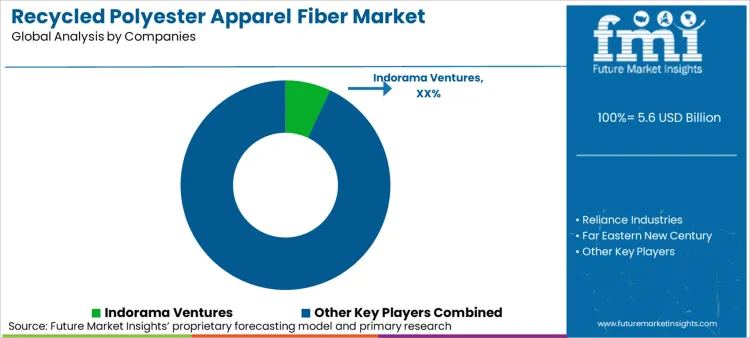
The global demand for recycled polyester apparel fiber is growing as sustainability in fashion and textiles becomes increasingly important, driven by consumer preferences, regulatory pressure, and the circular economy. Buyers evaluate fiber performance based on durability, color consistency, texture, and ability to maintain high quality after repeated washing and wear. The increasing push for eco-friendly solutions has led to greater adoption of post-consumer recycled (PCR) polyester, with buyers also prioritizing certifications like Global Recycled Standard (GRS) and OEKO-TEX. Procurement behavior favors suppliers who offer high-quality, scalable, and cost-effective recycled fiber solutions, with the ability to meet the increasing demand for eco-friendly apparel. The market trend reflects a steady shift from virgin polyester toward recycled alternatives in the fashion industry, with a focus on both environmental impact and product performance.
Indorama Ventures holds a strong global position through its substantial recycling capacity and leadership in the production of recycled polyester fibers, particularly in the apparel sector. Reliance Industries competes with its vertically integrated operations, providing high-quality recycled polyester solutions to major apparel manufacturers globally. Far Eastern New Century has built a strong presence with sustainable fiber production and its eco-friendly initiatives, making significant strides in the recycled polyester market. Toray Industries and Teijin provide high-performance recycled polyester fibers, emphasizing innovation in their recycling technologies and their ability to meet the demands of both high-end and mass-market apparel brands.
Unifi and Sanfangxiang are key players, offering a wide range of recycled polyester fibers for use in various apparel applications, focusing on both sustainability and cost efficiency. Alpek Polyester and Hyosung participate by providing versatile and high-performance recycled polyester fibers, catering to the needs of the apparel and textile industries. Mitsubishi Chemical Group competes with its focus on high-quality recycled fibers and its ability to support large-scale demand. Competitive differentiation centers on production capacity, fiber quality, technological advancements in recycling processes, and alignment with industry sustainability initiatives.
Key Players in the Recycled Polyester Apparel Fiber Market
- Indorama Ventures
- Reliance Industries
- Far Eastern New Century
- Toray Industries
- Teijin
- Unifi
- Sanfangxiang
- Alpek Polyester
- Hyosung
- Mitsubishi Chemical Group
Scope of the Report
| Items | Values |
|---|---|
| Quantitative Units | USD billion |
| Feedstock Source | Post-Consumer Bottles (rPET); Post-Consumer Textile Waste; Post-Industrial Waste; Other Sources |
| Product Form | Staple Fiber; Filament Yarn; Other Forms |
| Apparel Segment | Fast Fashion & Basics; Sportswear & Outdoor; Premium & Branded Apparel; Other Apparel |
| Regions Covered | Asia Pacific, Europe, North America, Latin America, Middle East & Africa |
| Countries Covered | China, Brazil, USA, Germany, South Korea, and 40+ countries |
| Key Companies Profiled | Indorama Ventures; Reliance Industries; Far Eastern New Century; Toray Industries; Teijin; Unifi; Sanfangxiang; Alpek Polyester; Hyosung; Mitsubishi Chemical Group |
| Additional Attributes | Dollar sales by feedstock source, product form, and apparel segment; growing trend for sustainability in fast fashion and outdoor sportswear; focus on circular economy for recycled fibers; advancements in rPET production technology; procurement trends toward cost-effective, high-quality recycled fibers in textile manufacturing. |
Recycled Polyester Apparel Fiber Market by Segment
Feedstock Source:
- Post-Consumer Bottles (rPET)
- Post-Consumer Textile Waste
- Post-Industrial Waste
- Other Sources
Product Form:
- Staple Fiber
- Filament Yarn
- Other Forms
Apparel Segment:
- Fast Fashion & Basics
- Sportswear & Outdoor
- Premium & Branded Apparel
- Other Apparel
Region:
- Asia Pacific
- China
- Japan
- South Korea
- India
- Australia & New Zealand
- ASEAN
- Rest of Asia Pacific
- Europe
- Germany
- United Kingdom
- France
- Italy
- Spain
- Nordic
- BENELUX
- Rest of Europe
- North America
- United States
- Canada
- Mexico
- Latin America
- Brazil
- Chile
- Rest of Latin America
- Middle East & Africa
- Kingdom of Saudi Arabia
- Other GCC Countries
- Turkey
- South Africa
- Other African Union
- Rest of Middle East & Africa
Bibliography
- Textile Exchange. (2023). Preferred fiber & materials market report 2023: Recycled polyester and apparel fiber adoption trends. Textile Exchange.
- International Organization for Standardization. (2023). ISO 14067:2023: Greenhouse gases-Carbon footprint of products-Requirements and guidelines for quantification. ISO.
Frequently Asked Questions
How big is the recycled polyester apparel fiber market in 2026?
The global recycled polyester apparel fiber market is estimated to be valued at USD 5.6 billion in 2026.
What will be the size of recycled polyester apparel fiber market in 2036?
The market size for the recycled polyester apparel fiber market is projected to reach USD 11.5 billion by 2036.
How much will be the recycled polyester apparel fiber market growth between 2026 and 2036?
The recycled polyester apparel fiber market is expected to grow at a 7.5% CAGR between 2026 and 2036.
What are the key product types in the recycled polyester apparel fiber market?
The key product types in recycled polyester apparel fiber market are post-consumer bottles (rpet), post-consumer textile waste, post-industrial waste and other sources.
Which product form segment to contribute significant share in the recycled polyester apparel fiber market in 2026?
In terms of product form, staple fiber segment to command 40.0% share in the recycled polyester apparel fiber market in 2026.
Preview the report firsthand - request a free sample
Get SampleGet the brochure for pricing and purchase details.
Get PDFTable of Content
- Executive Summary
- Global Market Outlook
- Demand-side Trends
- Supply-side Trends
- Technology Roadmap Analysis
- Analysis and Recommendations
- Market Overview
- Market Coverage / Taxonomy
- Market Definition / Scope / Limitations
- Market Background
- Market Dynamics
- Drivers
- Restraints
- Opportunity
- Trends
- Scenario Forecast
- Demand in Optimistic Scenario
- Demand in Likely Scenario
- Demand in Conservative Scenario
- Opportunity Map Analysis
- Product Life Cycle Analysis
- Supply Chain Analysis
- Investment Feasibility Matrix
- Value Chain Analysis
- PESTLE and Porter’s Analysis
- Regulatory Landscape
- Regional Parent Market Outlook
- Production and Consumption Statistics
- Import and Export Statistics
- Market Dynamics
- Global Market Analysis 2021 to 2025 and Forecast, 2026 to 2036
- Historical Market Size Value (USD Million) Analysis, 2021 to 2025
- Current and Future Market Size Value (USD Million) Projections, 2026 to 2036
- Y-o-Y Growth Trend Analysis
- Absolute $ Opportunity Analysis
- Global Market Pricing Analysis 2021 to 2025 and Forecast 2026 to 2036
- Global Market Analysis 2021 to 2025 and Forecast 2026 to 2036, By Feedstock Source
- Introduction / Key Findings
- Historical Market Size Value (USD Million) Analysis By Feedstock Source , 2021 to 2025
- Current and Future Market Size Value (USD Million) Analysis and Forecast By Feedstock Source , 2026 to 2036
- Post-Consumer Bottles (rPET)
- Post-Consumer Textile Waste
- Post-Industrial Waste
- Other Sources
- Post-Consumer Bottles (rPET)
- Y-o-Y Growth Trend Analysis By Feedstock Source , 2021 to 2025
- Absolute $ Opportunity Analysis By Feedstock Source , 2026 to 2036
- Global Market Analysis 2021 to 2025 and Forecast 2026 to 2036, By Product Form
- Introduction / Key Findings
- Historical Market Size Value (USD Million) Analysis By Product Form, 2021 to 2025
- Current and Future Market Size Value (USD Million) Analysis and Forecast By Product Form, 2026 to 2036
- Staple Fiber
- Filament Yarn
- Other Forms
- Staple Fiber
- Y-o-Y Growth Trend Analysis By Product Form, 2021 to 2025
- Absolute $ Opportunity Analysis By Product Form, 2026 to 2036
- Global Market Analysis 2021 to 2025 and Forecast 2026 to 2036, By Apparel Segment
- Introduction / Key Findings
- Historical Market Size Value (USD Million) Analysis By Apparel Segment, 2021 to 2025
- Current and Future Market Size Value (USD Million) Analysis and Forecast By Apparel Segment, 2026 to 2036
- Fast Fashion & Basics
- Sportswear & Outdoor
- Premium & Branded Apparel
- Other Apparel
- Fast Fashion & Basics
- Y-o-Y Growth Trend Analysis By Apparel Segment, 2021 to 2025
- Absolute $ Opportunity Analysis By Apparel Segment, 2026 to 2036
- Global Market Analysis 2021 to 2025 and Forecast 2026 to 2036, By Region
- Introduction
- Historical Market Size Value (USD Million) Analysis By Region, 2021 to 2025
- Current Market Size Value (USD Million) Analysis and Forecast By Region, 2026 to 2036
- North America
- Latin America
- Western Europe
- Eastern Europe
- East Asia
- South Asia and Pacific
- Middle East & Africa
- Market Attractiveness Analysis By Region
- North America Market Analysis 2021 to 2025 and Forecast 2026 to 2036, By Country
- Historical Market Size Value (USD Million) Trend Analysis By Market Taxonomy, 2021 to 2025
- Market Size Value (USD Million) Forecast By Market Taxonomy, 2026 to 2036
- By Country
- USA
- Canada
- Mexico
- By Feedstock Source
- By Product Form
- By Apparel Segment
- By Country
- Market Attractiveness Analysis
- By Country
- By Feedstock Source
- By Product Form
- By Apparel Segment
- Key Takeaways
- Latin America Market Analysis 2021 to 2025 and Forecast 2026 to 2036, By Country
- Historical Market Size Value (USD Million) Trend Analysis By Market Taxonomy, 2021 to 2025
- Market Size Value (USD Million) Forecast By Market Taxonomy, 2026 to 2036
- By Country
- Brazil
- Chile
- Rest of Latin America
- By Feedstock Source
- By Product Form
- By Apparel Segment
- By Country
- Market Attractiveness Analysis
- By Country
- By Feedstock Source
- By Product Form
- By Apparel Segment
- Key Takeaways
- Western Europe Market Analysis 2021 to 2025 and Forecast 2026 to 2036, By Country
- Historical Market Size Value (USD Million) Trend Analysis By Market Taxonomy, 2021 to 2025
- Market Size Value (USD Million) Forecast By Market Taxonomy, 2026 to 2036
- By Country
- Germany
- UK
- Italy
- Spain
- France
- Nordic
- BENELUX
- Rest of Western Europe
- By Feedstock Source
- By Product Form
- By Apparel Segment
- By Country
- Market Attractiveness Analysis
- By Country
- By Feedstock Source
- By Product Form
- By Apparel Segment
- Key Takeaways
- Eastern Europe Market Analysis 2021 to 2025 and Forecast 2026 to 2036, By Country
- Historical Market Size Value (USD Million) Trend Analysis By Market Taxonomy, 2021 to 2025
- Market Size Value (USD Million) Forecast By Market Taxonomy, 2026 to 2036
- By Country
- Russia
- Poland
- Hungary
- Balkan & Baltic
- Rest of Eastern Europe
- By Feedstock Source
- By Product Form
- By Apparel Segment
- By Country
- Market Attractiveness Analysis
- By Country
- By Feedstock Source
- By Product Form
- By Apparel Segment
- Key Takeaways
- East Asia Market Analysis 2021 to 2025 and Forecast 2026 to 2036, By Country
- Historical Market Size Value (USD Million) Trend Analysis By Market Taxonomy, 2021 to 2025
- Market Size Value (USD Million) Forecast By Market Taxonomy, 2026 to 2036
- By Country
- China
- Japan
- South Korea
- By Feedstock Source
- By Product Form
- By Apparel Segment
- By Country
- Market Attractiveness Analysis
- By Country
- By Feedstock Source
- By Product Form
- By Apparel Segment
- Key Takeaways
- South Asia and Pacific Market Analysis 2021 to 2025 and Forecast 2026 to 2036, By Country
- Historical Market Size Value (USD Million) Trend Analysis By Market Taxonomy, 2021 to 2025
- Market Size Value (USD Million) Forecast By Market Taxonomy, 2026 to 2036
- By Country
- India
- ASEAN
- Australia & New Zealand
- Rest of South Asia and Pacific
- By Feedstock Source
- By Product Form
- By Apparel Segment
- By Country
- Market Attractiveness Analysis
- By Country
- By Feedstock Source
- By Product Form
- By Apparel Segment
- Key Takeaways
- Middle East & Africa Market Analysis 2021 to 2025 and Forecast 2026 to 2036, By Country
- Historical Market Size Value (USD Million) Trend Analysis By Market Taxonomy, 2021 to 2025
- Market Size Value (USD Million) Forecast By Market Taxonomy, 2026 to 2036
- By Country
- Kingdom of Saudi Arabia
- Other GCC Countries
- Turkiye
- South Africa
- Other African Union
- Rest of Middle East & Africa
- By Feedstock Source
- By Product Form
- By Apparel Segment
- By Country
- Market Attractiveness Analysis
- By Country
- By Feedstock Source
- By Product Form
- By Apparel Segment
- Key Takeaways
- Key Countries Market Analysis
- USA
- Pricing Analysis
- Market Share Analysis, 2025
- By Feedstock Source
- By Product Form
- By Apparel Segment
- Canada
- Pricing Analysis
- Market Share Analysis, 2025
- By Feedstock Source
- By Product Form
- By Apparel Segment
- Mexico
- Pricing Analysis
- Market Share Analysis, 2025
- By Feedstock Source
- By Product Form
- By Apparel Segment
- Brazil
- Pricing Analysis
- Market Share Analysis, 2025
- By Feedstock Source
- By Product Form
- By Apparel Segment
- Chile
- Pricing Analysis
- Market Share Analysis, 2025
- By Feedstock Source
- By Product Form
- By Apparel Segment
- Germany
- Pricing Analysis
- Market Share Analysis, 2025
- By Feedstock Source
- By Product Form
- By Apparel Segment
- UK
- Pricing Analysis
- Market Share Analysis, 2025
- By Feedstock Source
- By Product Form
- By Apparel Segment
- Italy
- Pricing Analysis
- Market Share Analysis, 2025
- By Feedstock Source
- By Product Form
- By Apparel Segment
- Spain
- Pricing Analysis
- Market Share Analysis, 2025
- By Feedstock Source
- By Product Form
- By Apparel Segment
- France
- Pricing Analysis
- Market Share Analysis, 2025
- By Feedstock Source
- By Product Form
- By Apparel Segment
- India
- Pricing Analysis
- Market Share Analysis, 2025
- By Feedstock Source
- By Product Form
- By Apparel Segment
- ASEAN
- Pricing Analysis
- Market Share Analysis, 2025
- By Feedstock Source
- By Product Form
- By Apparel Segment
- Australia & New Zealand
- Pricing Analysis
- Market Share Analysis, 2025
- By Feedstock Source
- By Product Form
- By Apparel Segment
- China
- Pricing Analysis
- Market Share Analysis, 2025
- By Feedstock Source
- By Product Form
- By Apparel Segment
- Japan
- Pricing Analysis
- Market Share Analysis, 2025
- By Feedstock Source
- By Product Form
- By Apparel Segment
- South Korea
- Pricing Analysis
- Market Share Analysis, 2025
- By Feedstock Source
- By Product Form
- By Apparel Segment
- Russia
- Pricing Analysis
- Market Share Analysis, 2025
- By Feedstock Source
- By Product Form
- By Apparel Segment
- Poland
- Pricing Analysis
- Market Share Analysis, 2025
- By Feedstock Source
- By Product Form
- By Apparel Segment
- Hungary
- Pricing Analysis
- Market Share Analysis, 2025
- By Feedstock Source
- By Product Form
- By Apparel Segment
- Kingdom of Saudi Arabia
- Pricing Analysis
- Market Share Analysis, 2025
- By Feedstock Source
- By Product Form
- By Apparel Segment
- Turkiye
- Pricing Analysis
- Market Share Analysis, 2025
- By Feedstock Source
- By Product Form
- By Apparel Segment
- South Africa
- Pricing Analysis
- Market Share Analysis, 2025
- By Feedstock Source
- By Product Form
- By Apparel Segment
- USA
- Market Structure Analysis
- Competition Dashboard
- Competition Benchmarking
- Market Share Analysis of Top Players
- By Regional
- By Feedstock Source
- By Product Form
- By Apparel Segment
- Competition Analysis
- Competition Deep Dive
- Indorama Ventures
- Overview
- Product Portfolio
- Profitability by Market Segments (Product/Age /Sales Channel/Region)
- Sales Footprint
- Strategy Overview
- Marketing Strategy
- Product Strategy
- Channel Strategy
- Reliance Industries
- Far Eastern New Century
- Toray Industries
- Teijin
- Unifi
- Sanfangxiang
- Alpek Polyester
- Hyosung
- Mitsubishi Chemical Group
- Indorama Ventures
- Competition Deep Dive
- Assumptions & Acronyms Used
- Research Methodology


