

- Industry Size (2026)
- USD 3.2 Bn
- Forecast (2036)
- USD 8.9 Bn
- CAGR (2026 to 2036)
- 10.80%
Polymer Solutions for High‑Voltage Battery Separator Chemistries Market Forecast and Outlook 2026 to 2036
The global polymer solutions for high-voltage battery separator chemistries market is valued at USD 3.2 billion in 2026 and is projected to reach USD 8.9 billion by 2036, growing at a CAGR of 10.80%. The growth in this market is closely tied to the need for high-performance materials in lithium-ion batteries, which are crucial for applications in electric vehicles (EVs), energy storage systems, and consumer electronics. As the demand for high-capacity, fast-charging batteries increases, the role of advanced polymer solutions in ensuring battery safety and efficiency becomes critical.
Quick Stats for Polymer Solutions for High-Voltage Battery Separator Chemistries Market
- Polymer Solutions for High-Voltage Battery Separator Chemistries Market Value (2026): USD 3.2 Billion
- Polymer Solutions for High-Voltage Battery Separator Chemistries Market Forecast Value (2036): USD 8.9 Billion
- Polymer Solutions for High-Voltage Battery Separator Chemistries Market Forecast CAGR (2026 to 2036): 10.80%
- Leading Polymer Type in Separator Solutions Market: PVDF (Polyvinylidene Fluoride)
- Leading Application in Polymer Solutions Market: Electric Vehicle (EV) Batteries
- Key Growth Regions in Polymer Solutions Market: China, USA, South Korea
- Top Key Players in Polymer Solutions Market: Asahi Kasei Corporation, Toray Industries, Inc., SK Innovation Co., Ltd., Sumitomo Chemical Co., Ltd., ENTEK International LLC
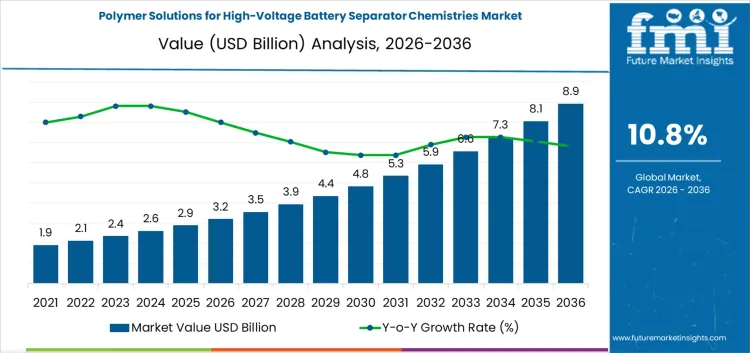
Production concentration and regional manufacturing control are significant factors influencing market performance. Key players in Asia Pacific, particularly in China, South Korea, and Japan, control a substantial portion of the manufacturing capabilities for high-voltage separator materials, which affects global supply chain dynamics. Dependencies on raw materials, particularly for polymers like PVDF and PEEK, can cause supply reliability concerns, leading to price volatility and potential production delays. Furthermore, stringent regional regulations around safety standards and material certifications can slow down the qualification process, creating barriers for rapid adoption of new technologies.
Polymer Solutions for High-Voltage Battery Separator Chemistries Market Key Takeaways
| Metric | Value |
|---|---|
| Industry Value (2026) | USD 3.2 Billion |
| Forecast Value (2036) | USD 8.9 Billion |
| Forecast CAGR (2026 to 2036) | 10.80% |
How is the Global Polymer Solutions for High-Voltage Battery Separator Chemistries Market Advancing?
The global polymer solutions for high-voltage battery separator chemistries market is experiencing strong growth, driven by the increasing demand for high-performance, long-lasting batteries in electric vehicles (EVs), renewable energy storage systems, and consumer electronics. High-voltage lithium-ion batteries, which are critical for EVs and large-scale energy storage, require advanced separators to ensure efficient ion transfer and enhance safety. Polymer solutions for battery separator chemistries play a crucial role in improving the thermal stability, mechanical strength, and electrolyte compatibility of separators, thus enabling the safe operation of high-voltage batteries.
The market is fueled by the global shift towards electric mobility and the growing need for reliable, high-capacity energy storage systems. As EV manufacturers push for higher energy densities and faster charging times, the performance of battery separators becomes a critical factor in achieving these goals. Polymer-based separator solutions are increasingly used to optimize battery performance and safety, with innovations in polymer chemistry making it possible to produce separators that withstand higher voltages and temperatures.
Advancements in polymer solutions, such as the development of new materials with enhanced conductivity, stability, and environmental resistance, are expected to further drive market growth. As the demand for electric vehicles and renewable energy storage solutions continues to rise, the polymer solutions for high-voltage battery separator chemistries market is set to grow significantly over the next decade.
What is the Segment-Wise Analysis for the Polymer Solutions for High-Voltage Battery Separator Chemistries Market?
The polymer solutions for high-voltage battery separator chemistries market is segmented by polymer type and application. PVDF (Polyvinylidene Fluoride) leads the market with a 30% share, followed by PEEK (Polyether Ether Ketone), polyimides, and others (such as PE, PP blends). These polymers are essential for manufacturing high-performance separators in batteries. In terms of application, electric vehicle (EV) batteries dominate with a 59% share, followed by applications in energy storage systems (ESS), consumer electronics batteries, and aerospace & defense batteries.
Why Does PVDF (Polyvinylidene Fluoride) Lead the Market?
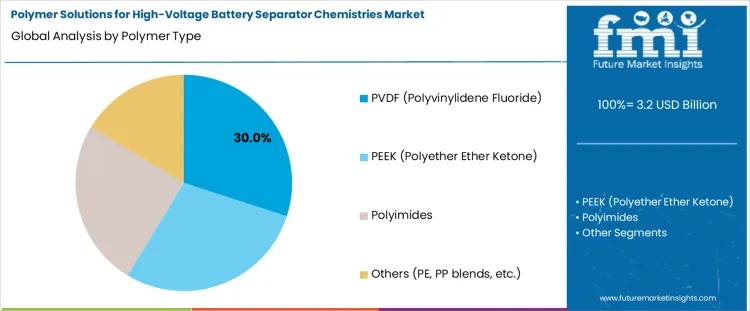
PVDF (Polyvinylidene Fluoride) accounts for 30% of the polymer solutions market share for high-voltage battery separator chemistries due to its superior properties in high-performance battery applications. PVDF offers excellent thermal stability, high chemical resistance, and mechanical strength, making it ideal for use in separators that are essential for high-voltage applications like electric vehicle (EV) batteries and energy storage systems (ESS). Its ability to maintain structural integrity at elevated temperatures and under high voltage conditions ensures safer, more reliable battery performance. As demand for high-energy-density and high-performance batteries continues to rise, PVDF remains the polymer of choice, driving its leadership in the market.
How Does the Electric Vehicle (EV) Battery Sector Contribute to the Polymer Solutions Market?
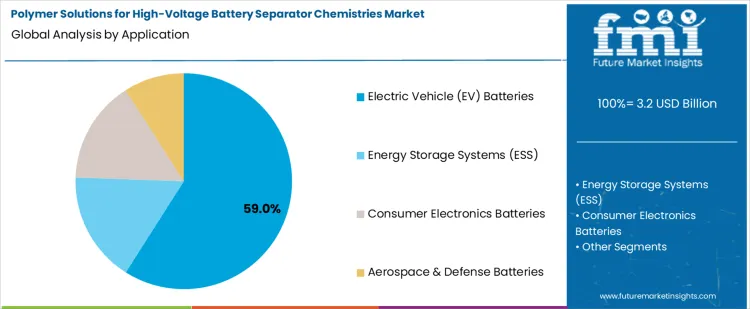
The electric vehicle (EV) batteries sector represents 59% of the application segment in the polymer solutions for high-voltage battery separator chemistries market. As the EV market continues to grow, the demand for high-performance batteries with improved energy density, safety, and fast charging capabilities increases. High-voltage battery separators made from polymers like PVDF and PEEK are crucial in ensuring that EV batteries can safely operate at high temperatures and voltages. These polymers help maintain the structural integrity of the separator, prevent short circuits, and improve battery life. The increasing adoption of EVs is a key driver for the growth of polymer solutions in the battery separator market.
What Are the Key Dynamics for the Polymer Solutions for High‑Voltage Battery Separator Chemistries Market?
High‑voltage cells operate at elevated potentials, increasing stress on separator materials and requiring advanced polymer solutions that offer excellent ionic conductivity, thermal stability, and mechanical strength. Separator polymers influence safety, charge/discharge efficiency, and cycle life. As manufacturers push for higher energy density and faster charging with reduced weight and volume, demand rises for tailored polymer chemistries that maintain performance under harsher electrochemical conditions while enabling reliable separator function in next‑generation battery systems.
How Are the Key Drivers Shaping the Polymer Solutions for High‑Voltage Battery Separator Chemistries Market?
Growth in the polymer solutions for high‑voltage battery separator chemistries market is driven by the shift toward high‑voltage battery systems that deliver greater energy output, longer range, and improved performance in EVs and portable electronics. Demand for extended cycle life and safety in high‑voltage cells pushes battery developers to adopt advanced polymer separator chemistries that provide enhanced thermal resistance and chemical stability. Innovations in polymer design such as cross‑linked polymers, block copolymers, and functional additives improve electrolyte interaction and dimensional stability under high electric fields. Strategic partnerships between battery manufacturers and polymer developers accelerate material optimization for specific applications and performance targets.
Why Are There Restraints Impacting the Polymer Solutions for High‑Voltage Battery Separator Chemistries Market?
Polymer solutions for high‑voltage battery separator chemistries market faces several restraints. High research, development, and production costs for advanced polymer formulations increase overall battery cell expense, which can be a barrier for cost‑sensitive markets or emerging manufacturers. Complex processing requirements and quality controls needed to ensure uniform separator coatings and polymer performance raise manufacturing challenges and capital investment needs. Supply chain volatility for specialty monomers and engineered polymers may cause material shortages or price instability. Evolving and regionally distinct safety and performance standards can delay qualification cycles for new separator chemistries, complicating global commercialization efforts.
What is the Growth Outlook for the Polymer Solutions for High-Voltage Battery Separator Chemistries Market by Country?
| Country | CAGR (%) |
|---|---|
| China | 12.5% |
| USA | 12.4% |
| South Korea | 11.3% |
| Japan | 10.9% |
| Germany | 10.5% |
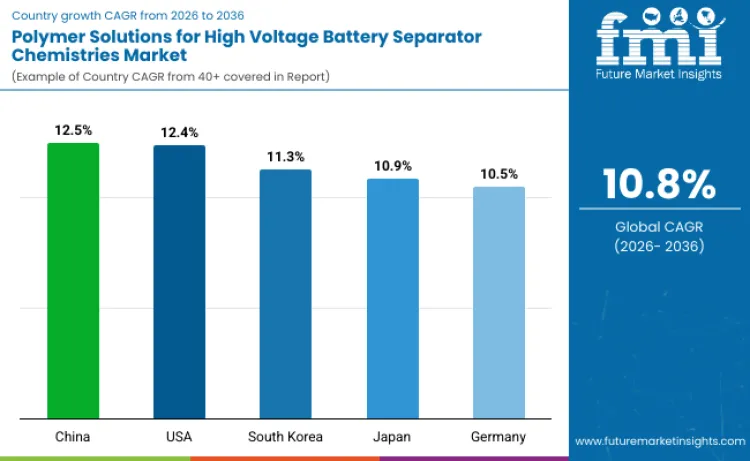
The polymer solutions for high-voltage battery separator chemistries market is experiencing strong growth across key regions, with China leading at 12.5%, driven by its dominant role in electric vehicle (EV) production and battery manufacturing. The USA follows at 12.4%, supported by advancements in clean energy solutions, EV infrastructure, and increased adoption of fast-charging technologies. South Korea grows at 11.3%, fueled by technological advancements in battery separators and the country’s strong position in EV and energy storage systems. Japan’s market grows at 10.9%, driven by the country’s focus on innovation in battery technologies, especially in EVs. Germany grows at 10.5%, with increased demand for high-performance batteries and EV adoption.
What is Driving the Growth of the Polymer Solutions for High-Voltage Battery Separator Chemistries Market in China?
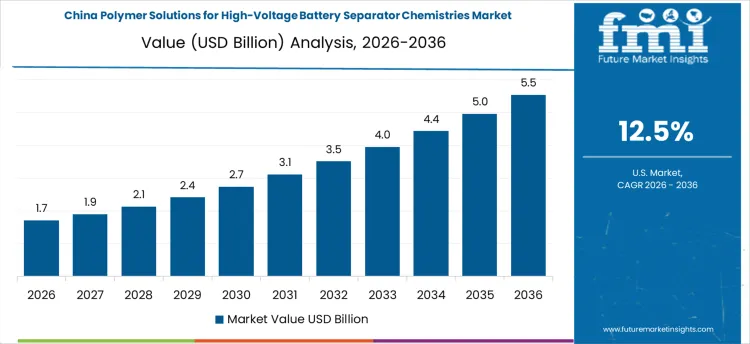
China’s polymer solutions for high-voltage battery separator chemistries market is growing at 12.5%, driven by the country’s leadership in electric vehicle (EV) production, energy storage solutions, and its focus on technological advancements in battery manufacturing. As China continues to increase its investments in electric mobility and renewable energy storage, the demand for high-performance battery separators is rising. Polymer solutions are crucial for ensuring battery safety, stability, and fast charging capabilities, which are critical for EVs and other high-demand applications. The government’s initiatives to reduce carbon emissions and support clean energy further promote the use of advanced battery technologies. With China’s robust manufacturing base and strong demand for EVs, along with the growing emphasis on high-energy-density and fast-charging batteries, the polymer solutions market for high-voltage battery separator chemistries is expected to continue growing rapidly.
What is Contributing to the Growth of the Polymer Solutions for High-Voltage Battery Separator Chemistries Market in the USA?
The polymer solutions for high-voltage battery separator chemistries market in the USA is growing at 12.4%, supported by the increasing adoption of electric vehicles (EVs), energy storage systems, and renewable energy solutions. As the demand for long-range, fast-charging EVs rises, the need for high-performance battery separators made with advanced polymer solutions is growing. The USA’s emphasis on clean energy and sustainability, coupled with government incentives for EV adoption, is driving investments in high-voltage battery technologies. As the USA continues to lead in battery research and development, there is a growing demand for innovative separator materials that improve energy efficiency, safety, and battery performance. With advancements in polymer solutions and the increasing importance of electric mobility, the USA’s market for polymer solutions for high-voltage battery separator chemistries is set to expand further.
How is the Polymer Solutions for High-Voltage Battery Separator Chemistries Market Expanding in South Korea?
South Korea’s polymer solutions for high-voltage battery separator chemistries market is growing at 11.3%, driven by the country’s focus on electric vehicle (EV) production and energy storage systems. As one of the world’s leading producers of lithium-ion batteries, South Korea plays a pivotal role in the development of high-performance battery technologies, including high-voltage separators that use polymer solutions. The demand for these separators is increasing due to the rise of fast-charging, high-density batteries required in EVs and renewable energy storage. South Korea’s automotive industry, particularly its commitment to electric vehicles, is a key driver of market growth. South Korea’s strong investment in battery innovation, including solid-state batteries and next-generation separator materials, further boosts the demand for polymer solutions. With continued growth in the EV sector and energy storage applications, South Korea’s polymer solutions market is set to expand.
What is Driving the Growth of the Polymer Solutions for High-Voltage Battery Separator Chemistries Market in Japan?
Japan’s polymer solutions for high-voltage battery separator chemistries market is growing at 10.9%, supported by the country’s leadership in the development of battery technologies for electric vehicles (EVs) and energy storage applications. As Japan accelerates its adoption of electric mobility and renewable energy, the need for advanced battery separators with high thermal stability and safety is increasing. Polymer-based separators play a key role in improving battery performance, energy density, and charging speed, making them essential for next-generation EVs. Japan’s strong industrial base and commitment to clean energy technologies further drive demand for high-quality separators. The country’s continued focus on research and development in battery materials and manufacturing also contributes to market expansion. As Japan leads the way in adopting sustainable energy solutions, the polymer solutions market for high-voltage battery separator chemistries is expected to continue to grow steadily.
What is Contributing to the Growth of the Polymer Solutions for High-Voltage Battery Separator Chemistries Market in Germany?
Germany’s polymer solutions for high-voltage battery separator chemistries market is growing at 10.5%, driven by the country’s strong focus on sustainability, green energy, and electric vehicle (EV) adoption. Germany’s automotive industry, particularly in the electric vehicle sector, is a key contributor to the demand for high-voltage battery separators made with advanced polymer solutions. As Germany transitions to renewable energy sources and electric mobility, there is a rising need for high-performance batteries, especially those with improved energy efficiency and safety features. Polymer-based separators play a crucial role in enhancing the stability and performance of these batteries, which are vital for fast-charging and long-range EVs. Germany’s emphasis on sustainability and its strong research and development in battery technology are further supporting the market for polymer solutions. With continued growth in electric mobility and energy storage, Germany’s market for polymer solutions for battery separators is expected to expand.
What Are the Competitive Strategies in the Polymer Solutions for High-Voltage Battery Separator Chemistries Market?
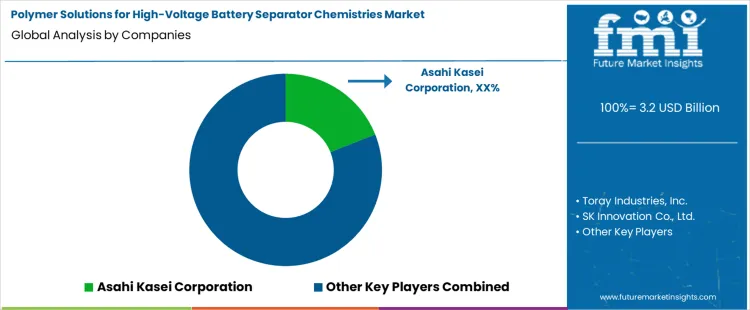
Competition in the polymer solutions for high-voltage battery separator chemistries market is driven by thermal stability, high dielectric strength, ion transport efficiency, mechanical robustness, and manufacturability. Asahi Kasei Corporation positions itself with advanced polymer separators engineered for excellent heat resistance and dimensional stability, and its product materials highlight uniform pore structures and high ionic conductivity that support high-voltage cathode chemistries in electric vehicle (EV) and energy storage applications. Toray Industries, Inc. competes by offering reinforced, high-performance polymer membranes that combine high tensile strength with stable electrochemical performance, with collateral underscoring reliability under extended cycling and high-voltage stress.
SK Innovation Co., Ltd. distinguishes itself with innovative polymer blends and coating technologies tailored for next-generation cells, with documentation emphasizing low shrinkage and enhanced safety margins under high voltage conditions. Sumitomo Chemical Co., Ltd. competes through customizable separator solutions designed to balance mechanical durability and electrolyte interaction, supported by materials that stress compatible integration into existing production lines.
ENTEK International LLC and Celgard LLC offer specialized separator films and coating options that deliver consistent ion flow and structural integrity, often marketed for industrial scale-up and long cycle life performance. W-Scope Corporation adds value with precision-engineered polymer systems that enhance electrochemical stability and abuse tolerance, with product brochures focusing on coating uniformity and superior mechanical properties. Across all players, product materials emphasize high-voltage performance, safety characteristics, and seamless adoption into evolving lithium-ion cell architectures as key differentiators for battery manufacturers.
Key Players in Polymer Solutions for High‑Voltage Battery Separator Chemistries Market
- Asahi Kasei Corporation
- Toray Industries, Inc.
- SK Innovation Co., Ltd.
- Sumitomo Chemical Co., Ltd.
- ENTEK International LLC
- Celgard LLC
- W‑Scope Corporation
Scope of Report
| Items | Values |
|---|---|
| Quantitative Unit (2026) | USD billion |
| Polymer Type | PVDF (Polyvinylidene Fluoride), PEEK (Polyether Ether Ketone), Polyimides, Others (PE, PP blends, etc.) |
| Application | Electric Vehicle (EV) Batteries, Energy Storage Systems (ESS), Consumer Electronics Batteries, Aerospace & Defense Batteries |
| Regions Covered | Asia Pacific, Europe, North America, Latin America, Middle East & Africa |
| Countries Covered | USA, China, Japan, South Korea, India, Australia & New Zealand, ASEAN, Germany, UK, France, Italy, Spain, Nordic, BENELUX, Brazil, Chile, Mexico, Saudi Arabia, Other GCC Countries, Turkey, South Africa, Other African Union |
| Key Companies Profiled | Asahi Kasei Corporation, Toray Industries, Inc., SK Innovation Co., Ltd., Sumitomo Chemical Co., Ltd., ENTEK International LLC, Celgard LLC, W-Scope Corporation |
| Additional Attributes | Dollar sales segmented by polymer type, application, and region. Regional CAGR and growth outlook for each segment and region are also provided with market trends and forecasts. |
Polymer Solutions for High‑Voltage Battery Separator Chemistries Market by Key Segments
By Polymer Type:
- PVDF (Polyvinylidene Fluoride)
- PEEK (Polyether Ether Ketone)
- Polyimides
- Others (PE, PP blends, etc.)
By Application:
- Electric Vehicle (EV) Batteries
- Energy Storage Systems (ESS)
- Consumer Electronics Batteries
- Aerospace & Defense Batteries
By Region:
- Asia Pacific
- China
- Japan
- South Korea
- India
- Australia & New Zealand
- ASEAN
- Rest of Asia Pacific
- Europe
- Germany
- United Kingdom
- France
- Italy
- Spain
- Nordic
- BENELUX
- Rest of Europe
- North America
- United States
- Canada
- Mexico
- Latin America
- Brazil
- Chile
- Rest of Latin America
- Middle East & Africa
- Kingdom of Saudi Arabia
- Other GCC Countries
- Turkey
- South Africa
- Other African Union
- Rest of Middle East & Africa
Frequently Asked Questions
How big is the polymer solutions for high‑voltage battery separator chemistries market in 2026?
The global polymer solutions for high‑voltage battery separator chemistries market is estimated to be valued at USD 3.2 billion in 2026.
What will be the size of polymer solutions for high‑voltage battery separator chemistries market in 2036?
The market size for the polymer solutions for high‑voltage battery separator chemistries market is projected to reach USD 8.9 billion by 2036.
How much will be the polymer solutions for high‑voltage battery separator chemistries market growth between 2026 and 2036?
The polymer solutions for high‑voltage battery separator chemistries market is expected to grow at a 10.8% CAGR between 2026 and 2036.
What are the key polymer types in the polymer solutions for high‑voltage battery separator chemistries market?
The key polymer types in polymer solutions for high‑voltage battery separator chemistries market are PVDF (polyvinylidene fluoride), PEEK (polyether ether ketone), polyimides and others (PE, PP blends, etc.).
Which application segment to contribute significant share in the polymer solutions for high‑voltage battery separator chemistries market in 2026?
In terms of application, electric vehicle (EV) batteries segment to command 59.0% share in the polymer solutions for high‑voltage battery separator chemistries market in 2026.
Preview the report firsthand - request a free sample
Get SampleGet the brochure for pricing and purchase details.
Get PDFTable of Content
- Executive Summary
- Global Market Outlook
- Demand-side Trends
- Supply-side Trends
- Technology Roadmap Analysis
- Analysis and Recommendations
- Market Overview
- Market Coverage / Taxonomy
- Market Definition / Scope / Limitations
- Market Background
- Market Dynamics
- Drivers
- Restraints
- Opportunity
- Trends
- Scenario Forecast
- Demand in Optimistic Scenario
- Demand in Likely Scenario
- Demand in Conservative Scenario
- Opportunity Map Analysis
- Product Life Cycle Analysis
- Supply Chain Analysis
- Investment Feasibility Matrix
- Value Chain Analysis
- PESTLE and Porter’s Analysis
- Regulatory Landscape
- Regional Parent Market Outlook
- Production and Consumption Statistics
- Import and Export Statistics
- Market Dynamics
- Global Market Analysis 2021 to 2025 and Forecast, 2026 to 2036
- Historical Market Size Value (USD Million) Analysis, 2021 to 2025
- Current and Future Market Size Value (USD Million) Projections, 2026 to 2036
- Y-o-Y Growth Trend Analysis
- Absolute $ Opportunity Analysis
- Global Market Pricing Analysis 2021 to 2025 and Forecast 2026 to 2036
- Global Market Analysis 2021 to 2025 and Forecast 2026 to 2036, By Polymer Type
- Introduction / Key Findings
- Historical Market Size Value (USD Million) Analysis By Polymer Type , 2021 to 2025
- Current and Future Market Size Value (USD Million) Analysis and Forecast By Polymer Type , 2026 to 2036
- PVDF (Polyvinylidene Fluoride)
- PEEK (Polyether Ether Ketone)
- Polyimides
- Others (PE, PP blends, etc.)
- PVDF (Polyvinylidene Fluoride)
- Y-o-Y Growth Trend Analysis By Polymer Type , 2021 to 2025
- Absolute $ Opportunity Analysis By Polymer Type , 2026 to 2036
- Global Market Analysis 2021 to 2025 and Forecast 2026 to 2036, By Application
- Introduction / Key Findings
- Historical Market Size Value (USD Million) Analysis By Application, 2021 to 2025
- Current and Future Market Size Value (USD Million) Analysis and Forecast By Application, 2026 to 2036
- Electric Vehicle (EV) Batteries
- Energy Storage Systems (ESS)
- Consumer Electronics Batteries
- Aerospace & Defense Batteries
- Electric Vehicle (EV) Batteries
- Y-o-Y Growth Trend Analysis By Application, 2021 to 2025
- Absolute $ Opportunity Analysis By Application, 2026 to 2036
- Global Market Analysis 2021 to 2025 and Forecast 2026 to 2036, By Region
- Introduction
- Historical Market Size Value (USD Million) Analysis By Region, 2021 to 2025
- Current Market Size Value (USD Million) Analysis and Forecast By Region, 2026 to 2036
- North America
- Latin America
- Western Europe
- Eastern Europe
- East Asia
- South Asia and Pacific
- Middle East & Africa
- Market Attractiveness Analysis By Region
- North America Market Analysis 2021 to 2025 and Forecast 2026 to 2036, By Country
- Historical Market Size Value (USD Million) Trend Analysis By Market Taxonomy, 2021 to 2025
- Market Size Value (USD Million) Forecast By Market Taxonomy, 2026 to 2036
- By Country
- USA
- Canada
- Mexico
- By Polymer Type
- By Application
- By Country
- Market Attractiveness Analysis
- By Country
- By Polymer Type
- By Application
- Key Takeaways
- Latin America Market Analysis 2021 to 2025 and Forecast 2026 to 2036, By Country
- Historical Market Size Value (USD Million) Trend Analysis By Market Taxonomy, 2021 to 2025
- Market Size Value (USD Million) Forecast By Market Taxonomy, 2026 to 2036
- By Country
- Brazil
- Chile
- Rest of Latin America
- By Polymer Type
- By Application
- By Country
- Market Attractiveness Analysis
- By Country
- By Polymer Type
- By Application
- Key Takeaways
- Western Europe Market Analysis 2021 to 2025 and Forecast 2026 to 2036, By Country
- Historical Market Size Value (USD Million) Trend Analysis By Market Taxonomy, 2021 to 2025
- Market Size Value (USD Million) Forecast By Market Taxonomy, 2026 to 2036
- By Country
- Germany
- UK
- Italy
- Spain
- France
- Nordic
- BENELUX
- Rest of Western Europe
- By Polymer Type
- By Application
- By Country
- Market Attractiveness Analysis
- By Country
- By Polymer Type
- By Application
- Key Takeaways
- Eastern Europe Market Analysis 2021 to 2025 and Forecast 2026 to 2036, By Country
- Historical Market Size Value (USD Million) Trend Analysis By Market Taxonomy, 2021 to 2025
- Market Size Value (USD Million) Forecast By Market Taxonomy, 2026 to 2036
- By Country
- Russia
- Poland
- Hungary
- Balkan & Baltic
- Rest of Eastern Europe
- By Polymer Type
- By Application
- By Country
- Market Attractiveness Analysis
- By Country
- By Polymer Type
- By Application
- Key Takeaways
- East Asia Market Analysis 2021 to 2025 and Forecast 2026 to 2036, By Country
- Historical Market Size Value (USD Million) Trend Analysis By Market Taxonomy, 2021 to 2025
- Market Size Value (USD Million) Forecast By Market Taxonomy, 2026 to 2036
- By Country
- China
- Japan
- South Korea
- By Polymer Type
- By Application
- By Country
- Market Attractiveness Analysis
- By Country
- By Polymer Type
- By Application
- Key Takeaways
- South Asia and Pacific Market Analysis 2021 to 2025 and Forecast 2026 to 2036, By Country
- Historical Market Size Value (USD Million) Trend Analysis By Market Taxonomy, 2021 to 2025
- Market Size Value (USD Million) Forecast By Market Taxonomy, 2026 to 2036
- By Country
- India
- ASEAN
- Australia & New Zealand
- Rest of South Asia and Pacific
- By Polymer Type
- By Application
- By Country
- Market Attractiveness Analysis
- By Country
- By Polymer Type
- By Application
- Key Takeaways
- Middle East & Africa Market Analysis 2021 to 2025 and Forecast 2026 to 2036, By Country
- Historical Market Size Value (USD Million) Trend Analysis By Market Taxonomy, 2021 to 2025
- Market Size Value (USD Million) Forecast By Market Taxonomy, 2026 to 2036
- By Country
- Kingdom of Saudi Arabia
- Other GCC Countries
- Turkiye
- South Africa
- Other African Union
- Rest of Middle East & Africa
- By Polymer Type
- By Application
- By Country
- Market Attractiveness Analysis
- By Country
- By Polymer Type
- By Application
- Key Takeaways
- Key Countries Market Analysis
- USA
- Pricing Analysis
- Market Share Analysis, 2025
- By Polymer Type
- By Application
- Canada
- Pricing Analysis
- Market Share Analysis, 2025
- By Polymer Type
- By Application
- Mexico
- Pricing Analysis
- Market Share Analysis, 2025
- By Polymer Type
- By Application
- Brazil
- Pricing Analysis
- Market Share Analysis, 2025
- By Polymer Type
- By Application
- Chile
- Pricing Analysis
- Market Share Analysis, 2025
- By Polymer Type
- By Application
- Germany
- Pricing Analysis
- Market Share Analysis, 2025
- By Polymer Type
- By Application
- UK
- Pricing Analysis
- Market Share Analysis, 2025
- By Polymer Type
- By Application
- Italy
- Pricing Analysis
- Market Share Analysis, 2025
- By Polymer Type
- By Application
- Spain
- Pricing Analysis
- Market Share Analysis, 2025
- By Polymer Type
- By Application
- France
- Pricing Analysis
- Market Share Analysis, 2025
- By Polymer Type
- By Application
- India
- Pricing Analysis
- Market Share Analysis, 2025
- By Polymer Type
- By Application
- ASEAN
- Pricing Analysis
- Market Share Analysis, 2025
- By Polymer Type
- By Application
- Australia & New Zealand
- Pricing Analysis
- Market Share Analysis, 2025
- By Polymer Type
- By Application
- China
- Pricing Analysis
- Market Share Analysis, 2025
- By Polymer Type
- By Application
- Japan
- Pricing Analysis
- Market Share Analysis, 2025
- By Polymer Type
- By Application
- South Korea
- Pricing Analysis
- Market Share Analysis, 2025
- By Polymer Type
- By Application
- Russia
- Pricing Analysis
- Market Share Analysis, 2025
- By Polymer Type
- By Application
- Poland
- Pricing Analysis
- Market Share Analysis, 2025
- By Polymer Type
- By Application
- Hungary
- Pricing Analysis
- Market Share Analysis, 2025
- By Polymer Type
- By Application
- Kingdom of Saudi Arabia
- Pricing Analysis
- Market Share Analysis, 2025
- By Polymer Type
- By Application
- Turkiye
- Pricing Analysis
- Market Share Analysis, 2025
- By Polymer Type
- By Application
- South Africa
- Pricing Analysis
- Market Share Analysis, 2025
- By Polymer Type
- By Application
- USA
- Market Structure Analysis
- Competition Dashboard
- Competition Benchmarking
- Market Share Analysis of Top Players
- By Regional
- By Polymer Type
- By Application
- Competition Analysis
- Competition Deep Dive
- Asahi Kasei Corporation
- Overview
- Product Portfolio
- Profitability by Market Segments (Product/Age /Sales Channel/Region)
- Sales Footprint
- Strategy Overview
- Marketing Strategy
- Product Strategy
- Channel Strategy
- Toray Industries, Inc.
- SK Innovation Co., Ltd.
- Sumitomo Chemical Co., Ltd.
- ENTEK International LLC
- Celgard LLC
- W‑Scope Corporation
- Asahi Kasei Corporation
- Competition Deep Dive
- Assumptions & Acronyms Used
- Research Methodology


