

- Industry Size (2026)
- USD 123.72 Mn
- Forecast (2036)
- USD 167.89 Mn
- CAGR (2026 to 2036)
- 3.1%
High Voltage Porcelain Bushing Market Size, Market Forecast and Outlook By FMI
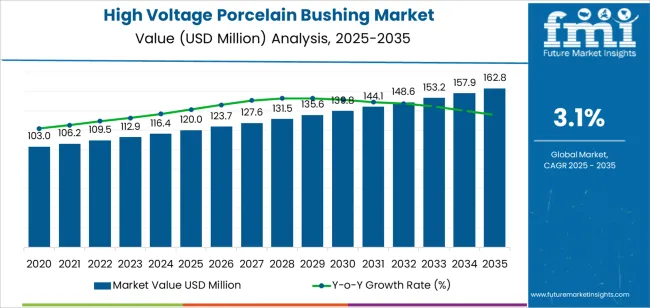
The high voltage porcelain bushing market was valued at USD 120.00 million in 2025, projected to reach USD 123.72 million in 2026, and is forecast to expand to USD 167.89 million by 2036 at a 3.1% CAGR. As per FMI, the high voltage porcelain bushing category is transitioning from a supply-constrained commodity cycle into a specification-driven procurement environment where end-use qualification standards define purchasing decisions. Tightening quality benchmarks across downstream manufacturing segments are accelerating the shift toward certified high-purity grades, compressing the viable supplier base and reshaping contract structures across major consuming regions.
Summary of High Voltage Porcelain Bushing Market
- Market Snapshot
- The high voltage porcelain bushing market is valued at USD 120.00 million in 2025 and is projected to reach USD 167.89 million by 2036.
- The industry is expected to grow at a 3.1% CAGR from 2026 to 2036, creating an incremental opportunity of USD 44.17 million.
- The market is a specification-driven industrial category where purity certification, supply chain traceability, and regulatory compliance define competitive positioning.
- Demand and Growth Drivers
- Demand is rising as downstream manufacturers impose stricter purity specifications and incoming quality requirements across production processes.
- Regulatory tightening and standardization mandates are compelling buyers to source exclusively from certified and auditable suppliers.
- Supply chain localization strategies in Asia Pacific and Europe are accelerating regional capacity investments and reshaping trade flows.
- Among key countries, China at 4.2%, India at 3.9%, Germany at 3.6%, Brazil at 3.3%, USA at 2.9%, UK at 2.6%, Japan at 2.3%.
- Product and Segment View
- Capacitive Type leads the Type segment with 45.0% share in 2026, reflecting established adoption patterns and process integration advantages.
- Power Plants commands the Application segment with 30.0% share in 2026, driven by high-volume consumption across core end-use categories.
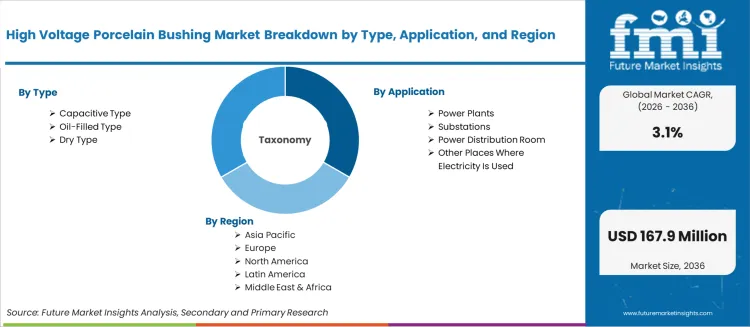
- Market scope includes Capacitive Type, Oil-Filled Type, Dry Type; Power Plants, Substations, Power Distribution Room, Other Places Where Electricity Is Used across all major global regions.
- The scope excludes unrelated adjacent product categories and non-specification-grade materials that fall outside the defined market taxonomy.
- Geography and Competitive Outlook
- China and India are the fastest-growing markets due to industrial expansion and policy-driven procurement mandates, while USA and UK remain mature, high-value demand bases.
- Competition is shaped by purity certification capability, supply reliability, and integration with downstream qualification processes, with key players including Nanjing Electric, Nanjing Rainbow Electric, Röchling (HPC Ceramics), Hitachi Energy, Trench Group, GE, NGK.
- FMI is of the opinion that the competitive landscape is consolidating as smaller producers face escalating compliance costs and qualification barriers.
- Analyst Opinion at FMI
- Nikhil Kaitwade, Principal Consultant at Future Market Insights, opines: 'In my analysis, I have observed that the primary constraint in this market is not volume availability but specification compliance. Buyers operating in quality-sensitive manufacturing environments face narrowing supplier options as purity certification thresholds rise. Procurement teams that delay qualification of alternative supply sources risk operational bottlenecks as incumbent suppliers prioritize long-term contract holders over spot buyers. Organizations accelerating supplier diversification programs will capture cost stability advantages that competitors relying on single-source arrangements cannot replicate.'
- Strategic Implications / Executive Takeaways
- Procurement directors should initiate multi-source qualification programs to reduce dependency on single suppliers and secure supply continuity through the forecast period.
- Product development teams must align material specifications with evolving regulatory standards to maintain market access in specification-sensitive end-use categories.
- Capital allocation decisions should prioritize capacity investments in regions offering both raw material proximity and regulatory alignment with target export markets.
FMI analysts observe that demand patterns are being reshaped by concurrent shifts in regulatory compliance requirements, manufacturing process intensification, and supply chain localization strategies. Procurement cycles are lengthening as buyers impose stricter incoming inspection protocols and require full traceability documentation from origin to point of use. Price formation is moving away from spot-indexed benchmarks toward formula-based contracts tied to input costs, energy indices, and purity certification premiums. Capacity additions by established producers are calibrated to qualification lead times rather than volume targets, limiting the rate at which new supply can be absorbed into specification-sensitive applications.
All major consuming regions reflect differentiated adoption trajectories shaped by local industrial policy and end-use demand composition. China sets the pace with a 4.2% CAGR, driven by aggressive industrial capacity expansion and state-backed procurement mandates. India follows at 3.9%, supported by manufacturing base diversification and growing domestic consumption requirements. Germany registers a 3.6% growth rate anchored by precision manufacturing standards and energy transition investments. Brazil tracks at 3.3%, reflecting expanding industrial processing capacity and import substitution programs. USA advances at 2.9%, underpinned by established industrial infrastructure and replacement demand cycles. UK maintains a 2.6% trajectory supported by specialized manufacturing clusters. Japan expands at 2.3%, shaped by mature industrial ecosystems and incremental capacity upgrades.
High Voltage Porcelain Bushing Market Key Takeaways
| Metric | Details |
|---|---|
| Industry Size (2026) | USD 123.72 million |
| Industry Value (2036) | USD 167.89 million |
| CAGR (2026-2036) | 3.1% |
Source: Future Market Insights, 2026
High Voltage Porcelain Bushing Market Definition
High Voltage Porcelain Bushing refers to the category of capacitive type, oil-filled type, dry type and associated technologies designed to meet exacting purity and performance requirements across industrial and commercial applications. The market encompasses products classified by type, application, serving buyers who require certified material grades for process-critical operations. Purchasing decisions in this category are governed by compliance with applicable industry standards, supplier qualification status, and documented traceability from production to point of use.
High Voltage Porcelain Bushing Market Inclusions
Market scope includes all commercial grades of high voltage porcelain bushing products sold through direct and distribution channels for industrial and commercial end use. Coverage extends to global and regional market sizes, the 2026 to 2036 forecast period, segment breakdowns by type and application, and regional analysis across seven major territories.
High Voltage Porcelain Bushing Market Exclusions
The scope excludes non-specification-grade materials, products intended for research-only laboratory use without commercial distribution, and adjacent product categories that fall outside the defined taxonomy. Downstream finished goods incorporating high voltage porcelain bushing as a minor input component are not separately valued within this analysis.
High Voltage Porcelain Bushing Market Research Methodology
- Primary Research: FMI analysts engaged with procurement managers, technical specification leads, and supply chain directors across major consuming industries to map decision gates and qualification requirements.
- Desk Research: Data collection aggregated regulatory filings, industry standards publications, trade body statistical releases, and publicly disclosed corporate capacity and investment announcements.
- Market-Sizing and Forecasting: Baseline values derive from a bottom-up aggregation of production volumes, trade flows, and end-use consumption, applying region-specific demand curves to project adoption velocity through 2036.
- Data Validation and Update Cycle: Projections are cross-validated against publicly reported financial data from leading producers and verified through iterative primary research feedback loops.
What is driving the growth of the high voltage porcelain bushing market?
The high voltage porcelain bushing market is driven by the growing demand for reliable and durable insulation solutions in high-voltage electrical equipment, particularly in power plants, substations, and power distribution networks. These bushings are essential components that ensure safe and efficient energy transmission by providing electrical insulation and facilitating the passage of electrical conductors through grounded walls. As global power generation and transmission infrastructure expands, especially in emerging markets like China and India, the need for robust insulation systems increases. Moreover, the ongoing focus on upgrading and modernizing aging electrical infrastructure in developed countries, such as Germany, the USA, and Japan, further fuels the demand for high voltage porcelain bushings. Additionally, advancements in bushing technologies, such as capacitive type bushings, are contributing to the market’s growth, as these solutions offer improved efficiency, reliability, and performance in high-voltage environments. As industries continue to focus on sustainability and energy efficiency, demand for long-lasting, high-performance insulation solutions is expected to rise, ensuring the growth of the high voltage porcelain bushing market in the forecast period.
What are the key segments of the high voltage porcelain bushing market?
The high voltage porcelain bushing market is primarily split into type and application segments, reflecting both the technological diversity and the varied usage across regions. By type, the market includes capacitive type, oil filled type, and dry type, with the capacitive type leading with about 45% share. By application, the market focuses on power plants, substations, power distribution rooms, and other electrical usages, with power plants holding approximately 30% share. Growth is strongest in Asia Pacific (notably China and India) due to large infrastructure rollout, while Europe and North America advance through modernization of aging power grids.
Why is the capacitive type segment leading the market?
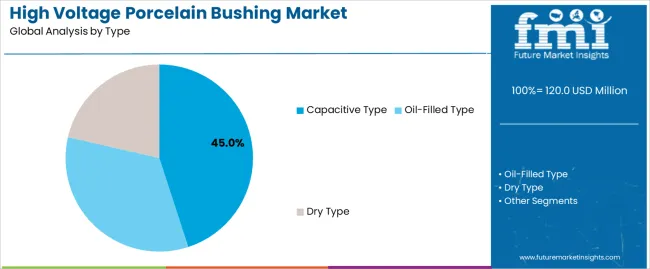
The capacitive type segment dominates with roughly 45% of the high voltage porcelain bushing market, thanks to its superior functionality and monitoring capabilities. Capacitive bushings incorporate internal capacitance grading layers that allow for better control of electric field distribution, resulting in enhanced reliability in high-voltage equipment. This technology is especially critical in power plants and large substations where failure of insulation can lead to costly outages or equipment damage. In emerging regions like China and India, where new power generation capacity is being added aggressively, the demand for capacitive bushings is high because these facilities seek robust components with longer life and lower maintenance.
Furthermore, grid modernization programs in mature markets such as Germany and the USA are also driving replacement of older oil filled or conventional bushings with capacitive types for improved diagnostic capability and lifecycle performance. The equipment trend toward digital monitoring and condition based maintenance further accentuates the preference for capacitive bushings, which integrate better with monitoring systems and enhance asset management. As utilities globally seek to improve grid reliability, optimize maintenance budgets, and transition to smarter infrastructure, the capacitive type segment is expected to maintain its leadership in this market.
Why is the power plant segment leading the application market?
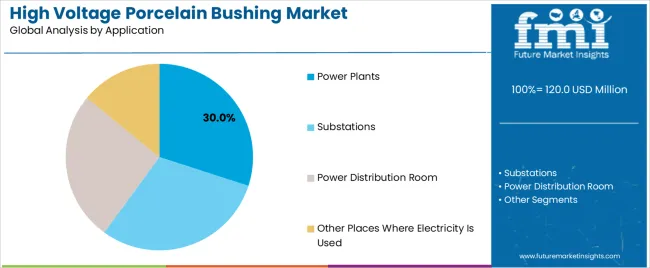
The power plant application segment accounts for about 30% of the high voltage porcelain bushing market, making it the largest user category. In power plants, especially those using large transformers, generators, or switchgear, bushings serve the critical role of enabling high voltage conductors to pass through grounded walls or enclosure walls safely while providing insulation and mechanical support. As utilities expand generation capacity and retrofit existing plants with renewable energy integration or grid upgrade projects, demand for bushings in these key infrastructure elements rises.
This is particularly evident in Asia Pacific, where countries like China and India are building new power plants at scale to meet growing electricity demand. Moreover, aging plants in developed regions like Europe and North America are being upgraded or replaced, leading to increased bushing demand in that segment. In power plants, factors such as high operating voltage, demanding mechanical stresses, and stringent reliability requirements drive preference for high quality porcelain bushings - particularly those of the capacitive type - which can offer longer service life and lower failure risk. This combination of strong infrastructure demand and critical performance requirements ensures the power plant application segment retains its dominant position in the high voltage porcelain bushing market.
What are the drivers, restraints, and key trends of the high voltage porcelain bushing market?
The high voltage porcelain bushing market is driven by the increasing demand for reliable electrical insulation solutions in power plants, substations, and power distribution networks. The growing focus on renewable energy, industrialization in emerging economies, and upgrades to aging infrastructure in developed regions are fueling market growth. The adoption of advanced bushing technologies such as capacitive type bushings, which offer improved monitoring and efficiency, is also driving market expansion. Furthermore, the energy efficiency trends are contributing to the demand for long-lasting, high-performance porcelain bushings in various high-voltage applications.
What are the key drivers of the high voltage porcelain bushing market?
Key drivers of the high voltage porcelain bushing market include the increasing demand for high-efficiency electrical systems and the growth of renewable energy projects. The expansion of power grids and upgrades to power plants worldwide are driving the need for advanced electrical insulation solutions, especially in high-voltage applications. Moreover, the growing trend of industrial automation and the digitalization of power systems are increasing the need for smart bushing technologies that provide real-time monitoring and enhanced reliability in power transmission. The capacity for capacitive bushings to accurately measure voltage levels and provide crucial performance feedback is further driving their adoption, particularly in power plants and substations.
What are the key restraints in the high voltage porcelain bushing market?
Despite the market's growth, the high voltage porcelain bushing market faces some restraints, including the high initial cost of advanced bushing systems, which may deter small-scale manufacturers and utilities from upgrading their infrastructure. Additionally, the complexity of installation and maintenance requirements for high-performance bushings can be a challenge, particularly in regions with less developed industrial infrastructure. Furthermore, the competition from alternative insulation technologies, such as dry-type bushings and oil-filled bushings, may limit the market’s growth, especially as industries seek more cost-effective solutions.
What are the key trends in the high voltage porcelain bushing market?
Key trends in the high voltage porcelain bushing market include the increasing adoption of smart bushing technologies that integrate with IoT and automation systems to provide real-time monitoring and performance optimization. There is also a growing focus on sustainability and eco-friendly materials in bushing production, as industries and governments push for more environmentally responsible solutions. Additionally, renewable energy projects, particularly in solar and wind power generation, are driving the demand for high-voltage insulation systems that can handle the specific requirements of renewable energy infrastructure, further propelling market growth.
What Are the Growth Trends in the High Voltage Porcelain Bushing Market Across Different Countries?
The high voltage porcelain bushing market is experiencing steady growth in various countries, with each nation demonstrating distinct growth rates based on factors such as industrialization, infrastructure development, and demand for energy solutions. The compound annual growth rates (CAGR) for the market vary across regions, with emerging economies like China and India seeing faster growth compared to more mature markets such as the USA and Japan. As countries continue to develop their energy infrastructure, the demand for high voltage porcelain bushings, used in electrical substations and power transmission systems, is expected to grow. This analysis provides a deeper look at how different countries are contributing to the overall market growth, highlighting both emerging opportunities and challenges in each region.
.webp "Top Country Growth Comparison High Voltage Porcelain Bushing Market Cagr (2026 2036)")
| Country | CAGR (%) |
|---|---|
| China | 4.2% |
| India | 3.9% |
| Germany | 3.6% |
| Brazil | 3.3% |
| USA | 2.9% |
| United Kingdom | 2.6% |
| Japan | 2.3% |
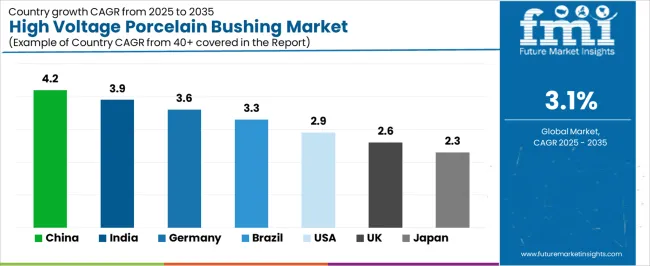
What Is Driving the Growth of the High Voltage Porcelain Bushing Market in China?
China is leading the high voltage porcelain bushing market with a CAGR of 4.2%. The rapid industrialization and modernization of the country’s energy infrastructure are key factors fueling this growth. As China continues to expand its power generation and transmission capabilities, the demand for high voltage porcelain bushings, which are essential components in electrical substations and power plants, is on the rise. Additionally, the government’s ongoing investments in energy infrastructure, including renewable energy projects, further drive the demand for high voltage electrical components.
China’s strong manufacturing base and focus on sustainable development are also contributing to the growth of the porcelain bushing market. The country’s increasing need for reliable and high-performance electrical transmission systems, coupled with the shift towards clean energy sources, ensures a continued upward trajectory for the market. With China’s expanding energy demands and infrastructure developments, the high voltage porcelain bushing market is expected to maintain strong growth rates.
How Is India's High Voltage Porcelain Bushing Market Performing?
India is experiencing steady growth in the high voltage porcelain bushing market, with a CAGR of 3.9%. As the country continues to urbanize and expand its industrial base, the demand for efficient and reliable energy transmission systems is increasing. The high voltage porcelain bushings play a crucial role in ensuring the safe and effective operation of electrical substations and transmission lines, which are essential as India modernizes its power grid.
Government initiatives to boost electricity access and improve the energy infrastructure are contributing to the growth of the market. Additionally, India’s focus on renewable energy, including solar and wind power, has created additional demand for high voltage components like porcelain bushings. As the country continues to invest in modernizing its power grid and expanding its renewable energy capacity, the demand for high voltage porcelain bushings is expected to grow steadily.
What Is the Growth Outlook for High Voltage Porcelain Bushings in Germany?
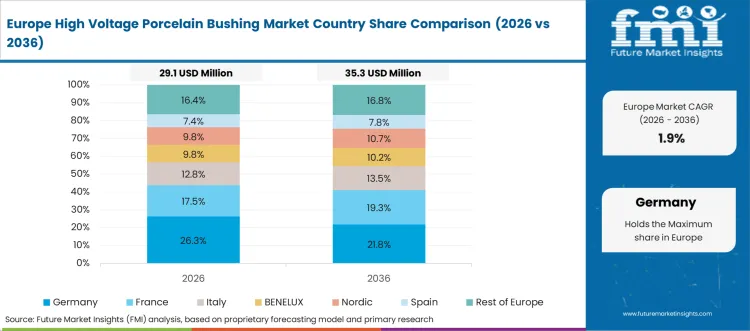
Germany's high voltage porcelain bushing market is growing at a CAGR of 3.6%. The country’s advanced industrial and manufacturing sectors, along with its strong commitment to renewable energy and energy efficiency, are contributing to the increasing demand for high voltage porcelain bushings. As Germany transitions to more sustainable energy sources, the need for high-quality electrical components to support power transmission systems remains strong.
Germany's focus on Industry 4.0 and smart grid technologies is also driving the adoption of advanced electrical components. The country’s aging power grid infrastructure is being upgraded with new and more efficient equipment, including porcelain bushings. As Germany continues to innovate in the energy sector and prioritize sustainability, the demand for high voltage porcelain bushings will continue to rise, supporting steady market growth in the coming years.
What Are the Key Drivers for Brazil's High Voltage Porcelain Bushing Market?
Brazil’s high voltage porcelain bushing market is expected to grow at a CAGR of 3.3%. The demand for porcelain bushings is closely tied to Brazil's efforts to modernize its power transmission and distribution infrastructure. As Brazil’s industrial base continues to expand, reliable energy transmission becomes more critical, driving the demand for high-quality electrical components like porcelain bushings.
In addition to industrial growth, Brazil’s increasing focus on renewable energy projects, such as wind and solar power, is influencing the demand for high voltage components. The government’s ongoing investments in power grid modernization are expected to continue driving growth in the high voltage porcelain bushing market. Despite facing challenges such as economic fluctuations and political instability, Brazil’s growing energy infrastructure needs provide a solid foundation for continued demand in this market.
What Is the Market Outlook for High Voltage Porcelain Bushings in the USA?
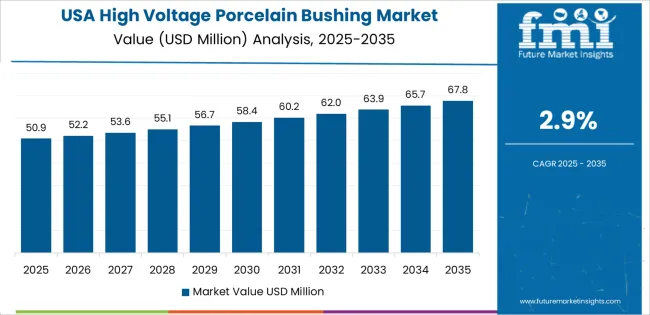
The United States has a projected CAGR of 2.9% for the high voltage porcelain bushing market. The country’s mature and extensive energy infrastructure remains a key driver of demand for porcelain bushings, which are essential for the operation of electrical substations and power lines. While the market growth rate is slower compared to emerging economies, the need for infrastructure upgrades, particularly in older power grids, ensures a steady demand for these components.
Additionally, the push for cleaner energy sources, such as renewable energy and nuclear power, is driving the need for modern energy transmission systems. As the USA transitions to a more sustainable energy mix, the demand for reliable components like high voltage porcelain bushings is expected to remain steady. The market will continue to grow as the country invests in infrastructure maintenance and renewable energy integration.
What Are the Growth Prospects for the High Voltage Porcelain Bushing Market in the UK?
In the United Kingdom, the high voltage porcelain bushing market is projected to grow at a CAGR of 2.6%. The demand for porcelain bushings in the UK is driven by the country’s ongoing investments in power grid modernization and its focus on renewable energy integration. The UK is making significant efforts to upgrade its aging electrical infrastructure to accommodate new energy sources, such as offshore wind and solar power, which in turn boosts the need for reliable and high-performance electrical components.
The UK’s commitment to reducing carbon emissions and transitioning to a green energy economy supports the continued demand for advanced electrical transmission systems, including porcelain bushings. While the market growth is moderate compared to some other regions, the ongoing infrastructure upgrades and sustainability goals will ensure a steady market for high voltage porcelain bushings in the future.
How Is Japan's High Voltage Porcelain Bushing Market Evolving?
Japan’s high voltage porcelain bushing market is expected to grow at a CAGR of 2.3%. Despite being a technologically advanced country with a well-established energy infrastructure, Japan’s aging power grid and the increasing need for reliability and sustainability in energy transmission are driving demand for high voltage porcelain bushings. Japan’s focus on disaster-resilient infrastructure and renewable energy integration is further supporting this demand.
The market growth in Japan is also being influenced by the government’s investments in energy grid modernization and the shift toward more sustainable energy sources. While Japan faces slower growth compared to emerging economies, the demand for high-quality electrical components like porcelain bushings remains strong, especially as the country continues to enhance its energy security and transition to greener energy solutions.
What is the competitive landscape of the high voltage porcelain bushing market?
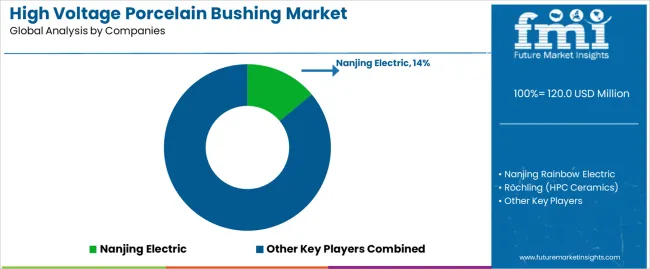
The high voltage porcelain bushing market is competitive, with several key players leading the industry. Nanjing Electric, which holds around 14% of the market share, is a prominent player, offering a range of high-quality bushings used in power plants, substations, and other industrial applications. Other significant players, such as Hitachi Energy, GE, and NGK, also play a major role by offering reliable and durable products designed to meet the demanding needs of high-voltage systems. These companies focus on continuous innovation, quality, and sustainability, ensuring their products meet the growing demand for reliable insulation and electrical safety in power transmission and distribution systems. With their strong R&D capabilities and global presence, these leaders are well-positioned to maintain dominance in both developed and emerging markets.
Smaller companies, such as Röchling (HPC Ceramics) and SEDIVER, also compete by targeting niche markets and offering specialized products, such as high-performance bushings for specific applications. They often focus on cost-effectiveness, regional distribution, and providing customized solutions. While the market is dominated by a few large players, regional manufacturers are making significant strides by offering high-quality alternatives at competitive prices. As the market continues to grow due to increased demand for energy-efficient solutions and grid modernization, both large and small players will continue to innovate and expand their product portfolios to meet the evolving needs of the market.
Key Players of the High Voltage Porcelain Bushing Market
- Nanjing Electric
- Nanjing Rainbow Electric
- Röchling (HPC Ceramics)
- Hitachi Energy
- Trench Group
- GE
- NGK
- HSP Hochspannungsgeräte
- SEDIVER
- Gipro
- Pfisterer
Scope of the Report
| Metric | Value |
|---|---|
| Quantitative Units | USD 123.72 million to USD 167.89 million, at a CAGR of 3.1% |
| Market Definition | High Voltage Porcelain Bushing encompasses capacitive type, oil-filled type, dry type and associated technologies serving specification-sensitive industrial applications requiring certified purity and performance grades. |
| Type Segmentation | Capacitive Type, Oil-Filled Type, Dry Type |
| Application Segmentation | Power Plants, Substations, Power Distribution Room, Other Places Where Electricity Is Used |
| Regions Covered | North America, Latin America, Europe, East Asia, South Asia, Oceania, Middle East & Africa |
| Countries Covered | China, India, Germany, Brazil, USA, UK, Japan, and 40 plus countries |
| Key Companies Profiled | Nanjing Electric, Nanjing Rainbow Electric, Röchling (HPC Ceramics), Hitachi Energy, Trench Group, GE, NGK, HSP Hochspannungsgeräte, SEDIVER, Gipro |
| Forecast Period | 2026 to 2036 |
| Approach | Forecasting models apply a bottom-up methodology starting with global production and consumption metrics, cross-validated against trade data and primary research inputs. |
Key Segments of the High Voltage Porcelain Bushing Market
Type:
- Capacitive Type
- Oil-Filled Type
- Dry Type
Application:
- Power Plants
- Substations
- Power Distribution Room
- Other Places Where Electricity Is Used
Region:
- Asia Pacific
- China
- Japan
- South Korea
- India
- Australia & New Zealand
- ASEAN
- Rest of Asia Pacific
- Europe
- Germany
- United Kingdom
- France
- Italy
- Spain
- Nordic
- BENELUX
- Rest of Europe
- North America
- United States
- Canada
- Mexico
- Latin America
- Brazil
- Chile
- Rest of Latin America
- Middle East & Africa
- Kingdom of Saudi Arabia
- Other GCC Countries
- Turkey
- South Africa
- Other African Union
- Rest of Middle East & Africa
Bibliography
- 1. Organisation for Economic Co-operation and Development. (2024). Global Industrial Policy Monitor. OECD.
- 2. World Bank Group. (2024). World Development Indicators: Manufacturing Value Added. World Bank.
- 3. International Organization for Standardization. (2024). ISO Standards Catalogue: Quality Management and Assurance. ISO.
- 4. United Nations Industrial Development Organization. (2024). Industrial Development Report: Manufacturing in a Digital Age. UNIDO.
- 5. European Commission, Directorate-General for Internal Market. (2024). Single Market for Industrial Products: Regulatory Framework Update. European Commission.
- 6. United States International Trade Commission. (2024). Industry and Trade Summary: Specialty Chemicals and Industrial Materials. USITC.
This bibliography is provided for reader reference. The full Future Market Insights report contains the complete reference list with primary research documentation.
Frequently Asked Questions
How large is the demand for High Voltage Porcelain Bushing in the global market in 2026?
Demand for High Voltage Porcelain Bushing in the global market is estimated to be valued at USD 123.72 million in 2026.
What will be the market size of High Voltage Porcelain Bushing in the global market by 2036?
Market size for High Voltage Porcelain Bushing is projected to reach USD 167.89 million by 2036.
What is the expected demand growth for High Voltage Porcelain Bushing in the global market between 2026 and 2036?
Demand for High Voltage Porcelain Bushing is expected to grow at a CAGR of 3.1% between 2026 and 2036.
Which Type is poised to lead global sales by 2026?
Capacitive Type accounts for 45.0% in 2026, reflecting established process integration and qualification advantages in core end-use applications.
How significant is the role of Power Plants in driving High Voltage Porcelain Bushing adoption in 2026?
Power Plants represents 30.0% of segment share in 2026, driven by high-volume consumption in specification-sensitive manufacturing processes.
What is the China growth outlook in this report?
China is projected to grow at a CAGR of 4.2% during 2026 to 2036.
What is High Voltage Porcelain Bushing and what is it mainly used for?
High Voltage Porcelain Bushing encompasses specialized products designed to meet exacting purity and performance requirements. Industrial buyers primarily use these products in process-critical applications where material specification compliance is mandatory.
How does FMI build and validate the High Voltage Porcelain Bushing forecast?
Forecasting models apply a bottom-up methodology starting with global production and consumption metrics and cross-validate projections against primary research inputs and publicly reported financial data.
Preview the report firsthand - request a free sample
Get SampleGet the brochure for pricing and purchase details.
Get PDFTable of Content
- Executive Summary
- Global Market Outlook
- Demand-side Trends
- Supply-side Trends
- Technology Roadmap Analysis
- Analysis and Recommendations
- Market Overview
- Market Coverage / Taxonomy
- Market Definition / Scope / Limitations
- Research Methodology
- Chapter Orientation
- Analytical Lens and Working Hypotheses
- Market Structure, Signals, and Trend Drivers
- Benchmarking and Cross-market Comparability
- Market Sizing, Forecasting, and Opportunity Mapping
- Research Design and Evidence Framework
- Desk Research Programme (Secondary Evidence)
- Company Annual and Sustainability Reports
- Peer-reviewed Journals and Academic Literature
- Corporate Websites, Product Literature, and Technical Notes
- Earnings Decks and Investor Briefings
- Statutory Filings and Regulatory Disclosures
- Technical White Papers and Standards Notes
- Trade Journals, Industry Magazines, and Analyst Briefs
- Conference Proceedings, Webinars, and Seminar Materials
- Government Statistics Portals and Public Data Releases
- Press Releases and Reputable Media Coverage
- Specialist Newsletters and Curated Briefings
- Sector Databases and Reference Repositories
- FMI Internal Proprietary Databases and Historical Market Datasets
- Subscription Datasets and Paid Sources
- Social Channels, Communities, and Digital Listening Inputs
- Additional Desk Sources
- Expert Input and Fieldwork (Primary Evidence)
- Primary Modes
- Qualitative Interviews and Expert Elicitation
- Quantitative Surveys and Structured Data Capture
- Blended Approach
- Why Primary Evidence is Used
- Field Techniques
- Interviews
- Surveys
- Focus Groups
- Observational and In-context Research
- Social and Community Interactions
- Stakeholder Universe Engaged
- C-suite Leaders
- Board Members
- Presidents and Vice Presidents
- R&D and Innovation Heads
- Technical Specialists
- Domain Subject-matter Experts
- Scientists
- Physicians and Other Healthcare Professionals
- Governance, Ethics, and Data Stewardship
- Research Ethics
- Data Integrity and Handling
- Primary Modes
- Tooling, Models, and Reference Databases
- Desk Research Programme (Secondary Evidence)
- Data Engineering and Model Build
- Data Acquisition and Ingestion
- Cleaning, Normalisation, and Verification
- Synthesis, Triangulation, and Analysis
- Quality Assurance and Audit Trail
- Market Background
- Market Dynamics
- Drivers
- Restraints
- Opportunity
- Trends
- Scenario Forecast
- Demand in Optimistic Scenario
- Demand in Likely Scenario
- Demand in Conservative Scenario
- Opportunity Map Analysis
- Product Life Cycle Analysis
- Supply Chain Analysis
- Investment Feasibility Matrix
- Value Chain Analysis
- PESTLE and Porter’s Analysis
- Regulatory Landscape
- Regional Parent Market Outlook
- Production and Consumption Statistics
- Import and Export Statistics
- Market Dynamics
- Global Market Analysis 2021 to 2025 and Forecast, 2026 to 2036
- Historical Market Size Value (USD Million) Analysis, 2021 to 2025
- Current and Future Market Size Value (USD Million) Projections, 2026 to 2036
- Y-o-Y Growth Trend Analysis
- Absolute $ Opportunity Analysis
- Global Market Pricing Analysis 2021 to 2025 and Forecast 2026 to 2036
- Global Market Analysis 2021 to 2025 and Forecast 2026 to 2036, By Type
- Introduction / Key Findings
- Historical Market Size Value (USD Million) Analysis By Type , 2021 to 2025
- Current and Future Market Size Value (USD Million) Analysis and Forecast By Type , 2026 to 2036
- Capacitive Type
- Oil-Filled Type
- Dry Type
- Capacitive Type
- Y-o-Y Growth Trend Analysis By Type , 2021 to 2025
- Absolute $ Opportunity Analysis By Type , 2026 to 2036
- Global Market Analysis 2021 to 2025 and Forecast 2026 to 2036, By Application
- Introduction / Key Findings
- Historical Market Size Value (USD Million) Analysis By Application, 2021 to 2025
- Current and Future Market Size Value (USD Million) Analysis and Forecast By Application, 2026 to 2036
- Power Plants
- Substations
- Power Distribution Room
- Other Places Where Electricity Is Used
- Power Plants
- Y-o-Y Growth Trend Analysis By Application, 2021 to 2025
- Absolute $ Opportunity Analysis By Application, 2026 to 2036
- Global Market Analysis 2021 to 2025 and Forecast 2026 to 2036, By Region
- Introduction
- Historical Market Size Value (USD Million) Analysis By Region, 2021 to 2025
- Current Market Size Value (USD Million) Analysis and Forecast By Region, 2026 to 2036
- North America
- Latin America
- Western Europe
- Eastern Europe
- East Asia
- South Asia and Pacific
- Middle East & Africa
- Market Attractiveness Analysis By Region
- North America Market Analysis 2021 to 2025 and Forecast 2026 to 2036, By Country
- Historical Market Size Value (USD Million) Trend Analysis By Market Taxonomy, 2021 to 2025
- Market Size Value (USD Million) Forecast By Market Taxonomy, 2026 to 2036
- By Country
- USA
- Canada
- Mexico
- By Type
- By Application
- By Country
- Market Attractiveness Analysis
- By Country
- By Type
- By Application
- Key Takeaways
- Latin America Market Analysis 2021 to 2025 and Forecast 2026 to 2036, By Country
- Historical Market Size Value (USD Million) Trend Analysis By Market Taxonomy, 2021 to 2025
- Market Size Value (USD Million) Forecast By Market Taxonomy, 2026 to 2036
- By Country
- Brazil
- Chile
- Rest of Latin America
- By Type
- By Application
- By Country
- Market Attractiveness Analysis
- By Country
- By Type
- By Application
- Key Takeaways
- Western Europe Market Analysis 2021 to 2025 and Forecast 2026 to 2036, By Country
- Historical Market Size Value (USD Million) Trend Analysis By Market Taxonomy, 2021 to 2025
- Market Size Value (USD Million) Forecast By Market Taxonomy, 2026 to 2036
- By Country
- Germany
- UK
- Italy
- Spain
- France
- Nordic
- BENELUX
- Rest of Western Europe
- By Type
- By Application
- By Country
- Market Attractiveness Analysis
- By Country
- By Type
- By Application
- Key Takeaways
- Eastern Europe Market Analysis 2021 to 2025 and Forecast 2026 to 2036, By Country
- Historical Market Size Value (USD Million) Trend Analysis By Market Taxonomy, 2021 to 2025
- Market Size Value (USD Million) Forecast By Market Taxonomy, 2026 to 2036
- By Country
- Russia
- Poland
- Hungary
- Balkan & Baltic
- Rest of Eastern Europe
- By Type
- By Application
- By Country
- Market Attractiveness Analysis
- By Country
- By Type
- By Application
- Key Takeaways
- East Asia Market Analysis 2021 to 2025 and Forecast 2026 to 2036, By Country
- Historical Market Size Value (USD Million) Trend Analysis By Market Taxonomy, 2021 to 2025
- Market Size Value (USD Million) Forecast By Market Taxonomy, 2026 to 2036
- By Country
- China
- Japan
- South Korea
- By Type
- By Application
- By Country
- Market Attractiveness Analysis
- By Country
- By Type
- By Application
- Key Takeaways
- South Asia and Pacific Market Analysis 2021 to 2025 and Forecast 2026 to 2036, By Country
- Historical Market Size Value (USD Million) Trend Analysis By Market Taxonomy, 2021 to 2025
- Market Size Value (USD Million) Forecast By Market Taxonomy, 2026 to 2036
- By Country
- India
- ASEAN
- Australia & New Zealand
- Rest of South Asia and Pacific
- By Type
- By Application
- By Country
- Market Attractiveness Analysis
- By Country
- By Type
- By Application
- Key Takeaways
- Middle East & Africa Market Analysis 2021 to 2025 and Forecast 2026 to 2036, By Country
- Historical Market Size Value (USD Million) Trend Analysis By Market Taxonomy, 2021 to 2025
- Market Size Value (USD Million) Forecast By Market Taxonomy, 2026 to 2036
- By Country
- Kingdom of Saudi Arabia
- Other GCC Countries
- Turkiye
- South Africa
- Other African Union
- Rest of Middle East & Africa
- By Type
- By Application
- By Country
- Market Attractiveness Analysis
- By Country
- By Type
- By Application
- Key Takeaways
- Key Countries Market Analysis
- USA
- Pricing Analysis
- Market Share Analysis, 2025
- By Type
- By Application
- Canada
- Pricing Analysis
- Market Share Analysis, 2025
- By Type
- By Application
- Mexico
- Pricing Analysis
- Market Share Analysis, 2025
- By Type
- By Application
- Brazil
- Pricing Analysis
- Market Share Analysis, 2025
- By Type
- By Application
- Chile
- Pricing Analysis
- Market Share Analysis, 2025
- By Type
- By Application
- Germany
- Pricing Analysis
- Market Share Analysis, 2025
- By Type
- By Application
- UK
- Pricing Analysis
- Market Share Analysis, 2025
- By Type
- By Application
- Italy
- Pricing Analysis
- Market Share Analysis, 2025
- By Type
- By Application
- Spain
- Pricing Analysis
- Market Share Analysis, 2025
- By Type
- By Application
- France
- Pricing Analysis
- Market Share Analysis, 2025
- By Type
- By Application
- India
- Pricing Analysis
- Market Share Analysis, 2025
- By Type
- By Application
- ASEAN
- Pricing Analysis
- Market Share Analysis, 2025
- By Type
- By Application
- Australia & New Zealand
- Pricing Analysis
- Market Share Analysis, 2025
- By Type
- By Application
- China
- Pricing Analysis
- Market Share Analysis, 2025
- By Type
- By Application
- Japan
- Pricing Analysis
- Market Share Analysis, 2025
- By Type
- By Application
- South Korea
- Pricing Analysis
- Market Share Analysis, 2025
- By Type
- By Application
- Russia
- Pricing Analysis
- Market Share Analysis, 2025
- By Type
- By Application
- Poland
- Pricing Analysis
- Market Share Analysis, 2025
- By Type
- By Application
- Hungary
- Pricing Analysis
- Market Share Analysis, 2025
- By Type
- By Application
- Kingdom of Saudi Arabia
- Pricing Analysis
- Market Share Analysis, 2025
- By Type
- By Application
- Turkiye
- Pricing Analysis
- Market Share Analysis, 2025
- By Type
- By Application
- South Africa
- Pricing Analysis
- Market Share Analysis, 2025
- By Type
- By Application
- USA
- Market Structure Analysis
- Competition Dashboard
- Competition Benchmarking
- Market Share Analysis of Top Players
- By Regional
- By Type
- By Application
- Competition Analysis
- Competition Deep Dive
- Nanjing Electric
- Overview
- Product Portfolio
- Profitability by Market Segments (Product/Age /Sales Channel/Region)
- Sales Footprint
- Strategy Overview
- Marketing Strategy
- Product Strategy
- Channel Strategy
- Nanjing Rainbow Electric
- Röchling (HPC Ceramics)
- Hitachi Energy
- Trench Group
- GE
- NGK
- HSP Hochspannungsgeräte
- SEDIVER
- Gipro
- Pfisterer
- Nanjing Electric
- Competition Deep Dive
- Assumptions & Acronyms Used


