

- Industry Size (2026)
- USD 3120.0 Mn
- Forecast (2036)
- USD 6137.5 Mn
- CAGR (2026 to 2036)
- 7.0%
Resistant Starch and Slowly Digestible Carbohydrates Market Forecast and Outlook 2026 to 2036
The resistant starch and slowly digestible carbohydrates market is projected to be valued at USD 3,120.0 million in 2026 and reach USD 6,137.5 million by 2036 at a CAGR of 7.0%. Value expansion reflects increasing use of carbohydrate systems that moderate glucose release while preserving bulk and texture in staple food formulations. Conventional rapidly digestible starches constrain formulation options for products positioned around metabolic balance. Resistant and slowly digestible variants allow manufacturers to reformulate bakery, cereal, and nutrition products without disrupting processing performance or sensory acceptance. Processing stability under extrusion and baking supports integration into high-volume production environments where ingredient substitution risk remains tightly managed.
Developers incorporate these carbohydrates where sustained energy delivery and moderated postprandial response support product positioning in functional snacks, medical nutrition, and fortified staples. Ingredient selection reflects tolerance to heat and shear alongside predictable digestibility profiles that remain consistent across batches. Regulatory interpretation of fiber and carbohydrate classification influences labeling strategy and claim eligibility, shaping regional deployment patterns. Cost structures favor solutions that deliver metabolic benefits without requiring extensive compensatory systems for texture or mouthfeel. Adoption persists where processing reliability, labeling clarity, and clinical alignment converge, rather than through broad replacement of conventional starch across all carbohydrate applications.
Quick Stats for Resistant Starch and Slowly Digestible Carbohydrates Market
- Resistant Starch and Slowly Digestible Carbohydrates Market Value (2026): USD 3,120.0 million
- Resistant Starch and Slowly Digestible Carbohydrates Market Forecast Value (2036): USD 6,137.5 million
- Resistant Starch and Slowly Digestible Carbohydrates Market Forecast CAGR 2026 to 2036: 7.0%
- Leading Carbohydrate Type by Demand Share: Resistant Starch Type II and III
- Fastest-Growing Countries: India, China, Brazil, USA, UK
- Top Players in Global Demand: Ingredion, Tate & Lyle, Cargill, ADM, Roquette
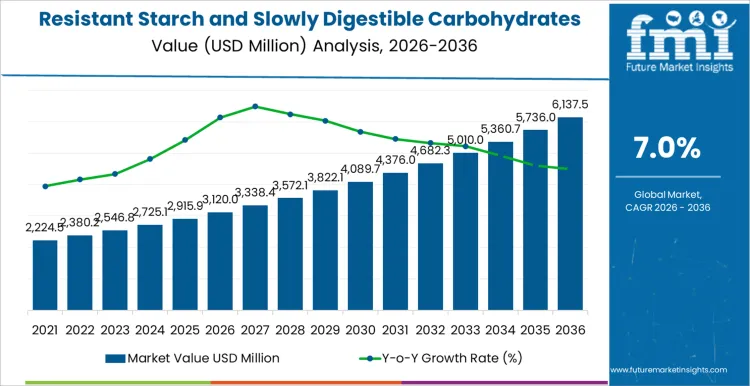
Resistant Starch and Slowly Digestible Carbohydrates Market Key Takeaways
| Metric | Value |
|---|---|
| Market Value (2026) | USD 3,120.0 million |
| Market Forecast Value (2036) | USD 6,137.5 million |
| Forecast CAGR 2026 to 2036 | 7.0% |
Why is the Demand for Resistant Starch and Slowly Digestible Carbohydrates Market Growing?
Manufacturers in the food and beverage industry are integrating resistant starch and slowly digestible carbohydrates to address consumer demand for metabolic health benefits without sacrificing product quality. These functional carbohydrates deliver a lower glycemic impact by slowing glucose release into the bloodstream, which supports formulations targeting blood sugar management and sustained energy. Snack and bakery producers reformulate products that leverage resistant starch to maintain texture while reducing rapidly digestible carbohydrate content. Cereal and granola bar developers use slowly digestible carbohydrates to balance product sweetness and mouthfeel while aligning with preferences for steady energy release across consumption occasions. Dairy alternative and beverage lines incorporate these carbohydrates to manage viscosity and improve digestive comfort relative to conventional sugar laden formulations.
Dietary supplements and clinical nutrition segments expand usage as research links resistant starch to positive effects on gut microbiota and bowel regularity, creating opportunities in prebiotic enriched products. Nutraceutical companies design blends that combine these carbohydrates with probiotics to support digestive health positioning. Ingredient technologists refine production processes to enhance purity, granule integrity, and functional consistency under heat and shear encountered during extrusion and baking. Regulatory attention on labeling functional carbohydrate content and allowable claims encourages broader adoption across mainstream and specialized nutrition portfolios.
How Is the Resistant Starch and Slowly Digestible Carbohydrates Industry Structured Across Carbohydrate Type, Form, and Application?
Resistant starches and slowly digestible carbohydrates are increasingly used to manage glycemic response, improve metabolic health, and enhance fiber content without compromising sensory quality. These ingredients are selected based on digestibility profile, processing stability, and compatibility with mainstream food formulations. Segmentation by carbohydrate type, physical form, and end-use application explains how suppliers and food manufacturers align nutritional claims with manufacturing constraints.
Which Carbohydrate Type Holds the Largest Share in Resistant Starch and Slowly Digestible Carbohydrates?
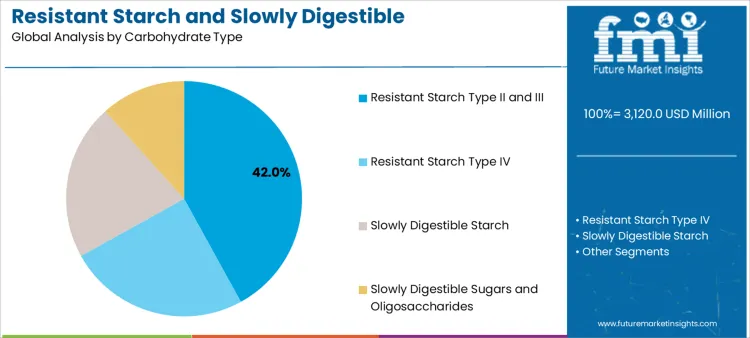
Resistant starch Type II and III account for 42.0%, supported by strong clinical evidence related to gut health and postprandial glucose moderation. Resistant starch Type IV represents 18.0%, driven by its chemically modified structure and functional versatility in processed foods. Slowly digestible starch holds 24.0%, reflecting demand for sustained energy release in everyday diets. Slowly digestible sugars and oligosaccharides contribute 16.0%, mainly used where sweetness and controlled digestion are required. Carbohydrate type segmentation indicates preference for naturally derived, label-friendly starch systems with proven physiological benefits.
Key Points:
- Type II and III resistant starches dominate due to metabolic benefits.
- Slowly digestible starch supports energy-release positioning.
- Modified starches serve specialized processing needs.
How Does Physical Form Influence Adoption of These Carbohydrates?
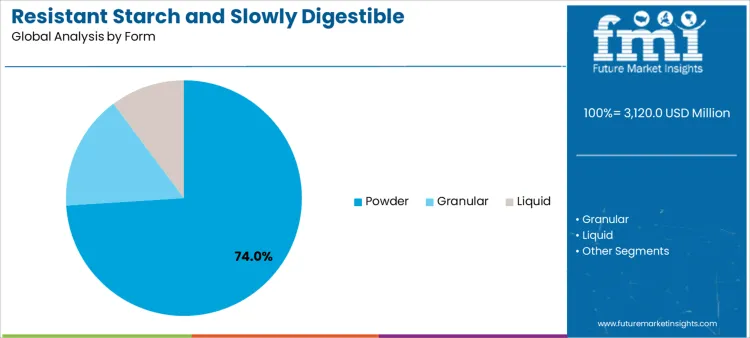
Powdered formats represent 74.0%, reflecting ease of handling, dosing accuracy, and compatibility with dry blending processes. Granular forms account for 16.0%, typically selected for specific texture or inclusion requirements in cereals and bakery products. Liquid formats hold 10.0%, used mainly in beverage systems and medical nutrition where rapid dispersion is required. Form-based segmentation highlights strong alignment with large-scale food manufacturing workflows.
Key Points:
- Powder form dominates industrial food processing.
- Granular formats support structure-focused applications.
- Liquid forms address niche beverage and clinical uses.
Which Applications Drive Demand for Resistant and Slowly Digestible Carbohydrates?
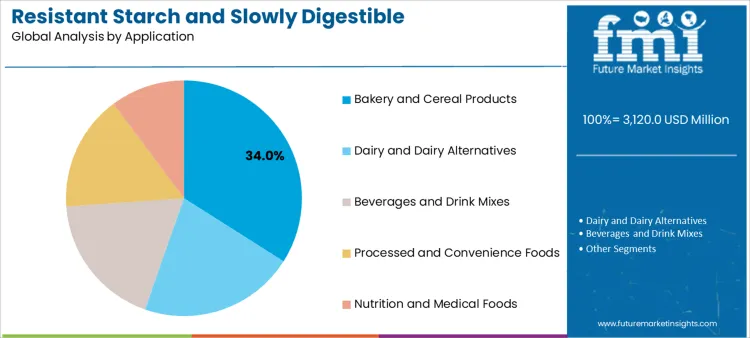
Bakery and cereal products lead with 34.0%, reflecting ongoing reformulation to improve fiber content and glycemic profile. Dairy and dairy alternatives represent 21.0%, using these carbohydrates for texture, stability, and nutritional positioning. Beverages and drink mixes account for 17.0%, where solubility and controlled digestion are critical. Processed and convenience foods hold 16.0%, driven by clean-label carbohydrate replacement strategies. Nutrition and medical foods represent 12.0%, focused on sustained energy and metabolic control. Application segmentation shows strongest uptake in high-volume staple categories.
Key Points:
- Bakery applications remain the largest demand center.
- Dairy systems balance nutrition with mouthfeel.
- Medical nutrition prioritizes controlled carbohydrate release.
What are the Key Dynamics in the resistant starch and slowly digestible carbohydrates market?
Demand in the resistant starch and slowly digestible carbohydrates market is driven by product differentiation in digestive health, glycemic response management, and metabolic wellbeing claims within food and beverage portfolios. Uptake is concentrated in categories such as nutrition bars, bakery blends, breakfast cereals, and diabetic-focused nutrition where slower glucose release contributes to targeted positioning. Ingredient selection reflects functionality in specific processing conditions and consumer preference for physiological benefits without marked changes to taste and texture.
How do glycemic response management need in specific food categories influence adoption?
Product developers adopting resistant starch and slowly digestible carbohydrates focus on the need to moderate post-prandial glucose levels in finished products. In breakfast cereals and snack bars marketed to health-oriented consumers, these carbohydrates support lower glycemic profiles compared with rapidly available starches, meeting nutritional targets that align with blood sugar control claims. Sports and active lifestyle formulations use slowly digestible carbohydrates to deliver sustained energy release across activity periods. Bakery applications that incorporate resistant starches aim to preserve crumb structure while improving dietary fiber content without sharp increases in available carbohydrate, supporting both sensory quality and metabolic messaging. Baby nutrition and clinical nutrition products integrate slowly digestible carbohydrates to address tolerance and steady nutritional delivery, linking ingredient choice with specific physiological outcomes valued by consumers.
How do functional performance boundaries and regulatory interpretations influence market scalability?
Market scalability is constrained by performance behavior of specific resistant starch types under varied processing regimes and by differing regulatory interpretations of carbohydrate classifications. Certain resistant starch variants lose structural integrity during high heat or shear, reducing their ability to deliver intended digestion kinetics in baked or extruded products, requiring careful selection and formulation design. Regional differences in how carbohydrate fractions count toward dietary fiber or energy values affect claim strategy and product labeling across markets, shaping where and how manufacturers deploy these ingredients. Cost implications arise from sourcing specialty resistant starches with reliable digestion profiles, and multi-ingredient systems needed to balance texture, moisture, and metabolic function raise formulation complexity. Research and validation to substantiate metabolic benefit claims extend product development cycles, influencing speed to market in competitive categories where scientific evidence is paramount.
How Is Demand for the Resistant Starch and Slowly Digestible Carbohydrates Market Evolving Globally?
Global demand for resistant starch and slowly digestible carbohydrates is increasing as food and nutrition producers focus on glycemic control, satiety, and metabolic health positioning. Growth reflects rising formulation activity across functional foods, medical nutrition, and better-for-you packaged products. Ingredient selection emphasizes sustained energy release and moderated glucose response without compromising sensory performance. Demand expansion remains tied to diabetes management trends, regulatory nutrition guidance, and clean label formulation strategies. India records 8.3% CAGR, China records 8.0% CAGR, Brazil records 7.6% CAGR, USA records 6.4% CAGR, and UK records 6.2% CAGR. Adoption intensity is driven by reformulation complexity rather than growth in carbohydrate consumption.
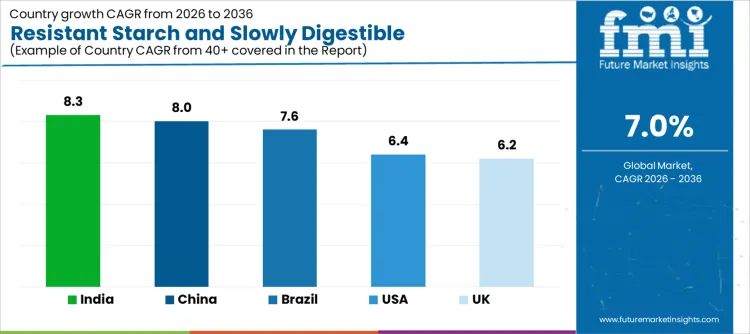
| Country | CAGR (%) |
|---|---|
| India | 8.3% |
| China | 8.0% |
| Brazil | 7.6% |
| USA | 6.4% |
| UK | 6.2% |
What is driving growth of resistant starch and slowly digestible carbohydrates demand in India?
Demand for resistant starch and slowly digestible carbohydrates in India is expanding as food and nutrition manufacturers target glycemic control and metabolic health positioning. Growth at 8.3% CAGR reflects rising use across diabetes nutrition, fortified staples, bakery, and beverage powders. Ingredient selection focuses on carbohydrates delivering sustained energy release and reduced postprandial glucose response. Government backed nutrition programs and medical nutrition channels influence formulation priorities. Processing stability under extrusion and thermal treatment remains critical for mass production. Urban consumer demand for satiety and weight management products supports adoption. Usage concentrates within clinical nutrition, functional snacks, and packaged foods positioned around balanced carbohydrate metabolism.
- Expansion of diabetes nutrition products
- Growth of fortified staple foods
- Demand for glycemic response control
- Focus on thermal processing stability
Why is China seeing expansion in resistant starch and slowly digestible carbohydrates adoption?
Resistant starch and slowly digestible carbohydrates demand in China is rising as functional food producers align products with blood sugar management objectives. Growth at 8.0% CAGR reflects strong uptake in nutritional beverages, meal replacements, and dairy alternatives. Large scale processors value ingredients supporting controlled glucose release without compromising texture. Aging population trends increase relevance of low glycemic carbohydrate systems. Regulatory guidance on chronic disease prevention influences formulation strategies. Domestic suppliers expand capacity for modified starches and specialty carbohydrates. Demand remains concentrated in functional nutrition, elderly foods, and beverages marketed around sustained energy delivery. Foodservice reformulation activity remains limited compared with retail packaged nutrition applications.
- Expansion of elderly nutrition products
- Growth of meal replacement categories
- Emphasis on controlled glucose release
- Industrial scale functional food processing
What factors are shaping resistant starch and slowly digestible carbohydrates sales in Brazil?
Sales of resistant starch and slowly digestible carbohydrates in Brazil are increasing as manufacturers respond to metabolic health awareness and nutrition labeling expectations. Growth at 7.6% CAGR reflects application across bakery, dairy beverages, and powdered nutrition products. Ingredient systems emphasize glycemic moderation while preserving sensory acceptance in sweet profiles. Tropical diets with high refined carbohydrate intake heighten interest in slower digesting alternatives. Industrial processors prioritize cost efficient solutions compatible with ambient storage conditions. Demand concentrates within mass market functional foods, nutrition drinks, and fortified staples positioned around sustained energy and fullness. Usage remains strongest among beverage brands reformulating sugar reduced portfolios.
- Nutrition labeling driven reformulation
- High reliance on beverage applications
- Demand for slower digesting carbohydrates
- Focus on mass market cost efficiency
How is the USA supporting growth of resistant starch and slowly digestible carbohydrates demand?
Resistant starch and slowly digestible carbohydrates demand in the USA is advancing as nutrition brands target glycemic response control and satiety benefits. Growth at 6.4% CAGR reflects adoption within sports nutrition, medical nutrition, and better for you packaged foods. Low glycemic positioning supports inclusion across bars, shakes, and ready meals. Clinical research backing digestive tolerance and glucose modulation influences ingredient selection. Manufacturers emphasize clean label compatibility and formulation flexibility. Demand is driven by portfolio reformulation and low glycemic diet adherence rather than expansion of carbohydrate consumption. Adoption concentrates within premium brands managing blood sugar related health claims and nutrition positioning.
- Growth of low glycemic product portfolios
- Expansion of sports and medical nutrition
- Emphasis on clean label compatibility
- Focus on satiety driven formulations
What is driving expansion of resistant starch and slowly digestible carbohydrates demand in the UK?
Demand for resistant starch and slowly digestible carbohydrates in the UK is rising as dietary guidance emphasizes blood glucose management and sustained energy intake. Growth at 6.2% CAGR reflects reformulation across bakery, cereals, dairy alternatives, and nutritional beverages. Sugar reduction strategies increase reliance on carbohydrates delivering moderated digestion rates. Retail acceptance standards influence ingredient transparency and labeling compliance. Manufacturers prioritize fibers and starches supporting texture and taste neutrality. Demand remains linked to health focused reformulation cycles rather than increases in overall carbohydrate consumption volumes. Usage concentrates within products positioned for metabolic wellness and controlled energy release across retail categories nationwide.
- Dietary guidance focused on glycemic control
- Reformulation of bakery and cereal products
- Retail driven labeling compliance needs
- Growth of metabolic wellness positioning
What is the competitive landscape of demand for the resistant starch and slowly digestible carbohydrates market globally?
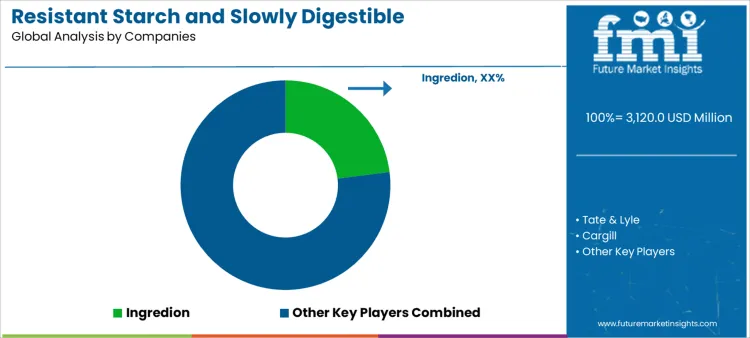
Blood glucose management and metabolic health positioning are driving demand for resistant starch and slowly digestible carbohydrates in packaged foods and nutrition products. Formulators assess glycemic response modulation, digestion rate control, texture contribution, and stability during extrusion, baking, and thermal processing. Buyer assessment includes labeling eligibility, fiber claims, sensory neutrality, and compatibility with proteins, sweeteners, and fats. Procurement behavior reflects extended reformulation timelines, need for clinical substantiation, and preference for suppliers offering application trials and regulatory guidance. Trend in the resistant starch and slowly digestible carbohydrates market reflects growth in diabetes-friendly, weight management, and sustained energy product positioning.
Ingredion holds leading positioning through a broad portfolio of resistant starches engineered for glycemic control and formulation flexibility. Tate and Lyle competes by supplying slowly digestible carbohydrates aligned with sugar reduction and fiber enrichment strategies. Cargill supports demand through starch-based systems integrated with texturizers to preserve structure and mouthfeel. ADM maintains relevance via scalable carbohydrate ingredients supported by formulation expertise across global food manufacturers. Roquette participates with plant-based resistant starch solutions emphasizing digestive performance and process stability. Competitive differentiation centers on glycemic response validation, processing tolerance, labeling acceptance, and depth of technical collaboration.
Key Players in the Resistant Starch and Slowly Digestible Carbohydrates Market
- Ingredion
- Tate & Lyle
- Cargill
- ADM
- Roquette
- Others
Scope of the Report
| Items | Values |
|---|---|
| Quantitative Units | USD million |
| Carbohydrate Type | Resistant Starch Type II and III; Resistant Starch Type IV; Slowly Digestible Starch; Slowly Digestible Sugars and Oligosaccharides |
| Form | Powder; Granular; Liquid |
| Application | Bakery and Cereal Products; Dairy and Dairy Alternatives; Beverages and Drink Mixes; Processed and Convenience Foods; Nutrition and Medical Foods |
| Regions Covered | Asia Pacific, Europe, North America, Latin America, Middle East & Africa |
| Countries Covered | India, China, Brazil, USA, UK, and 40+ countries |
| Key Companies Profiled | Ingredion; Tate & Lyle; Cargill; ADM; Roquette; Others |
| Additional Attributes | Dollar sales by carbohydrate type, form, and application; digestion kinetics and glycemic response performance across resistant and slowly digestible fractions; contribution to fiber enrichment, calorie reduction, and sustained energy release; functional behavior in baking, dairy, beverage, and medical nutrition matrices; processing stability under heat, shear, and pH variation; procurement dynamics influenced by reformulation programs and long-term ingredient partnerships. |
Resistant Starch and Slowly Digestible Carbohydrates Market by Segment
Carbohydrate Type:
- Resistant Starch Type II and III
- Resistant Starch Type IV
- Slowly Digestible Starch
- Slowly Digestible Sugars and Oligosaccharides
Form:
- Powder
- Granular
- Liquid
Application:
- Bakery and Cereal Products
- Dairy and Dairy Alternatives
- Beverages and Drink Mixes
- Processed and Convenience Foods
- Nutrition and Medical Foods
Region:
- Asia Pacific
- China
- Japan
- South Korea
- India
- Australia & New Zealand
- ASEAN
- Rest of Asia Pacific
- Europe
- Germany
- United Kingdom
- France
- Italy
- Spain
- Nordic
- BENELUX
- Rest of Europe
- North America
- United States
- Canada
- Mexico
- Latin America
- Brazil
- Chile
- Rest of Latin America
- Middle East & Africa
- Kingdom of Saudi Arabia
- Other GCC Countries
- Turkey
- South Africa
- Other African Union
- Rest of Middle East & Africa
Bibliography
- Food and Agriculture Organization of the United Nations. (2023). Carbohydrates in human nutrition: Resistant starch, digestibility, and metabolic implications. FAO.
- International Organization for Standardization. (2023). ISO 26642: Food products - Determination of glycaemic response and carbohydrate digestibility characteristics. ISO.
- World Health Organization. (2023). Guideline on carbohydrate intake, glycaemic response, and prevention of diet-related noncommunicable diseases. World Health Organization.
- USA Food and Drug Administration. (2024). Guidance for industry: Dietary fiber, resistant starch, and slowly digestible carbohydrates - Labeling and physiological benefit considerations. USA Department of Health and Human Services.
- European Commission. (2024). Interpretative guidance on carbohydrate classification, dietary fibre recognition, and glycaemic response claims under EU food law. European Union.
Frequently Asked Questions
How big is the resistant starch and slowly digestible carbohydrates market in 2026?
The global resistant starch and slowly digestible carbohydrates market is estimated to be valued at USD 3,120.0 million in 2026.
What will be the size of resistant starch and slowly digestible carbohydrates market in 2036?
The market size for the resistant starch and slowly digestible carbohydrates market is projected to reach USD 6,137.5 million by 2036.
How much will be the resistant starch and slowly digestible carbohydrates market growth between 2026 and 2036?
The resistant starch and slowly digestible carbohydrates market is expected to grow at a 7.0% CAGR between 2026 and 2036.
What are the key product types in the resistant starch and slowly digestible carbohydrates market?
The key product types in resistant starch and slowly digestible carbohydrates market are resistant starch type ii and iii, resistant starch type iv, slowly digestible starch and slowly digestible sugars and oligosaccharides.
Which form segment to contribute significant share in the resistant starch and slowly digestible carbohydrates market in 2026?
In terms of form, powder segment to command 74.0% share in the resistant starch and slowly digestible carbohydrates market in 2026.
Preview the report firsthand - request a free sample
Get SampleGet the brochure for pricing and purchase details.
Get PDFTable of Content
- Executive Summary
- Global Market Outlook
- Demand-side Trends
- Supply-side Trends
- Technology Roadmap Analysis
- Analysis and Recommendations
- Market Overview
- Market Coverage / Taxonomy
- Market Definition / Scope / Limitations
- Market Background
- Market Dynamics
- Drivers
- Restraints
- Opportunity
- Trends
- Scenario Forecast
- Demand in Optimistic Scenario
- Demand in Likely Scenario
- Demand in Conservative Scenario
- Opportunity Map Analysis
- Product Life Cycle Analysis
- Supply Chain Analysis
- Investment Feasibility Matrix
- Value Chain Analysis
- PESTLE and Porter’s Analysis
- Regulatory Landscape
- Regional Parent Market Outlook
- Production and Consumption Statistics
- Import and Export Statistics
- Market Dynamics
- Global Market Analysis 2021 to 2025 and Forecast, 2026 to 2036
- Historical Market Size Value (USD Million) Analysis, 2021 to 2025
- Current and Future Market Size Value (USD Million) Projections, 2026 to 2036
- Y-o-Y Growth Trend Analysis
- Absolute $ Opportunity Analysis
- Global Market Pricing Analysis 2021 to 2025 and Forecast 2026 to 2036
- Global Market Analysis 2021 to 2025 and Forecast 2026 to 2036, By Carbohydrate Type
- Introduction / Key Findings
- Historical Market Size Value (USD Million) Analysis By Carbohydrate Type , 2021 to 2025
- Current and Future Market Size Value (USD Million) Analysis and Forecast By Carbohydrate Type , 2026 to 2036
- Resistant Starch Type II and III
- Resistant Starch Type IV
- Slowly Digestible Starch
- Slowly Digestible Sugars and Oligosaccharides
- Resistant Starch Type II and III
- Y-o-Y Growth Trend Analysis By Carbohydrate Type , 2021 to 2025
- Absolute $ Opportunity Analysis By Carbohydrate Type , 2026 to 2036
- Global Market Analysis 2021 to 2025 and Forecast 2026 to 2036, By Form
- Introduction / Key Findings
- Historical Market Size Value (USD Million) Analysis By Form, 2021 to 2025
- Current and Future Market Size Value (USD Million) Analysis and Forecast By Form, 2026 to 2036
- Powder
- Granular
- Liquid
- Powder
- Y-o-Y Growth Trend Analysis By Form, 2021 to 2025
- Absolute $ Opportunity Analysis By Form, 2026 to 2036
- Global Market Analysis 2021 to 2025 and Forecast 2026 to 2036, By Application
- Introduction / Key Findings
- Historical Market Size Value (USD Million) Analysis By Application, 2021 to 2025
- Current and Future Market Size Value (USD Million) Analysis and Forecast By Application, 2026 to 2036
- Bakery and Cereal Products
- Dairy and Dairy Alternatives
- Beverages and Drink Mixes
- Processed and Convenience Foods
- Nutrition and Medical Foods
- Bakery and Cereal Products
- Y-o-Y Growth Trend Analysis By Application, 2021 to 2025
- Absolute $ Opportunity Analysis By Application, 2026 to 2036
- Global Market Analysis 2021 to 2025 and Forecast 2026 to 2036, By Region
- Introduction
- Historical Market Size Value (USD Million) Analysis By Region, 2021 to 2025
- Current Market Size Value (USD Million) Analysis and Forecast By Region, 2026 to 2036
- North America
- Latin America
- Western Europe
- Eastern Europe
- East Asia
- South Asia and Pacific
- Middle East & Africa
- Market Attractiveness Analysis By Region
- North America Market Analysis 2021 to 2025 and Forecast 2026 to 2036, By Country
- Historical Market Size Value (USD Million) Trend Analysis By Market Taxonomy, 2021 to 2025
- Market Size Value (USD Million) Forecast By Market Taxonomy, 2026 to 2036
- By Country
- USA
- Canada
- Mexico
- By Carbohydrate Type
- By Form
- By Application
- By Country
- Market Attractiveness Analysis
- By Country
- By Carbohydrate Type
- By Form
- By Application
- Key Takeaways
- Latin America Market Analysis 2021 to 2025 and Forecast 2026 to 2036, By Country
- Historical Market Size Value (USD Million) Trend Analysis By Market Taxonomy, 2021 to 2025
- Market Size Value (USD Million) Forecast By Market Taxonomy, 2026 to 2036
- By Country
- Brazil
- Chile
- Rest of Latin America
- By Carbohydrate Type
- By Form
- By Application
- By Country
- Market Attractiveness Analysis
- By Country
- By Carbohydrate Type
- By Form
- By Application
- Key Takeaways
- Western Europe Market Analysis 2021 to 2025 and Forecast 2026 to 2036, By Country
- Historical Market Size Value (USD Million) Trend Analysis By Market Taxonomy, 2021 to 2025
- Market Size Value (USD Million) Forecast By Market Taxonomy, 2026 to 2036
- By Country
- Germany
- UK
- Italy
- Spain
- France
- Nordic
- BENELUX
- Rest of Western Europe
- By Carbohydrate Type
- By Form
- By Application
- By Country
- Market Attractiveness Analysis
- By Country
- By Carbohydrate Type
- By Form
- By Application
- Key Takeaways
- Eastern Europe Market Analysis 2021 to 2025 and Forecast 2026 to 2036, By Country
- Historical Market Size Value (USD Million) Trend Analysis By Market Taxonomy, 2021 to 2025
- Market Size Value (USD Million) Forecast By Market Taxonomy, 2026 to 2036
- By Country
- Russia
- Poland
- Hungary
- Balkan & Baltic
- Rest of Eastern Europe
- By Carbohydrate Type
- By Form
- By Application
- By Country
- Market Attractiveness Analysis
- By Country
- By Carbohydrate Type
- By Form
- By Application
- Key Takeaways
- East Asia Market Analysis 2021 to 2025 and Forecast 2026 to 2036, By Country
- Historical Market Size Value (USD Million) Trend Analysis By Market Taxonomy, 2021 to 2025
- Market Size Value (USD Million) Forecast By Market Taxonomy, 2026 to 2036
- By Country
- China
- Japan
- South Korea
- By Carbohydrate Type
- By Form
- By Application
- By Country
- Market Attractiveness Analysis
- By Country
- By Carbohydrate Type
- By Form
- By Application
- Key Takeaways
- South Asia and Pacific Market Analysis 2021 to 2025 and Forecast 2026 to 2036, By Country
- Historical Market Size Value (USD Million) Trend Analysis By Market Taxonomy, 2021 to 2025
- Market Size Value (USD Million) Forecast By Market Taxonomy, 2026 to 2036
- By Country
- India
- ASEAN
- Australia & New Zealand
- Rest of South Asia and Pacific
- By Carbohydrate Type
- By Form
- By Application
- By Country
- Market Attractiveness Analysis
- By Country
- By Carbohydrate Type
- By Form
- By Application
- Key Takeaways
- Middle East & Africa Market Analysis 2021 to 2025 and Forecast 2026 to 2036, By Country
- Historical Market Size Value (USD Million) Trend Analysis By Market Taxonomy, 2021 to 2025
- Market Size Value (USD Million) Forecast By Market Taxonomy, 2026 to 2036
- By Country
- Kingdom of Saudi Arabia
- Other GCC Countries
- Turkiye
- South Africa
- Other African Union
- Rest of Middle East & Africa
- By Carbohydrate Type
- By Form
- By Application
- By Country
- Market Attractiveness Analysis
- By Country
- By Carbohydrate Type
- By Form
- By Application
- Key Takeaways
- Key Countries Market Analysis
- USA
- Pricing Analysis
- Market Share Analysis, 2025
- By Carbohydrate Type
- By Form
- By Application
- Canada
- Pricing Analysis
- Market Share Analysis, 2025
- By Carbohydrate Type
- By Form
- By Application
- Mexico
- Pricing Analysis
- Market Share Analysis, 2025
- By Carbohydrate Type
- By Form
- By Application
- Brazil
- Pricing Analysis
- Market Share Analysis, 2025
- By Carbohydrate Type
- By Form
- By Application
- Chile
- Pricing Analysis
- Market Share Analysis, 2025
- By Carbohydrate Type
- By Form
- By Application
- Germany
- Pricing Analysis
- Market Share Analysis, 2025
- By Carbohydrate Type
- By Form
- By Application
- UK
- Pricing Analysis
- Market Share Analysis, 2025
- By Carbohydrate Type
- By Form
- By Application
- Italy
- Pricing Analysis
- Market Share Analysis, 2025
- By Carbohydrate Type
- By Form
- By Application
- Spain
- Pricing Analysis
- Market Share Analysis, 2025
- By Carbohydrate Type
- By Form
- By Application
- France
- Pricing Analysis
- Market Share Analysis, 2025
- By Carbohydrate Type
- By Form
- By Application
- India
- Pricing Analysis
- Market Share Analysis, 2025
- By Carbohydrate Type
- By Form
- By Application
- ASEAN
- Pricing Analysis
- Market Share Analysis, 2025
- By Carbohydrate Type
- By Form
- By Application
- Australia & New Zealand
- Pricing Analysis
- Market Share Analysis, 2025
- By Carbohydrate Type
- By Form
- By Application
- China
- Pricing Analysis
- Market Share Analysis, 2025
- By Carbohydrate Type
- By Form
- By Application
- Japan
- Pricing Analysis
- Market Share Analysis, 2025
- By Carbohydrate Type
- By Form
- By Application
- South Korea
- Pricing Analysis
- Market Share Analysis, 2025
- By Carbohydrate Type
- By Form
- By Application
- Russia
- Pricing Analysis
- Market Share Analysis, 2025
- By Carbohydrate Type
- By Form
- By Application
- Poland
- Pricing Analysis
- Market Share Analysis, 2025
- By Carbohydrate Type
- By Form
- By Application
- Hungary
- Pricing Analysis
- Market Share Analysis, 2025
- By Carbohydrate Type
- By Form
- By Application
- Kingdom of Saudi Arabia
- Pricing Analysis
- Market Share Analysis, 2025
- By Carbohydrate Type
- By Form
- By Application
- Turkiye
- Pricing Analysis
- Market Share Analysis, 2025
- By Carbohydrate Type
- By Form
- By Application
- South Africa
- Pricing Analysis
- Market Share Analysis, 2025
- By Carbohydrate Type
- By Form
- By Application
- USA
- Market Structure Analysis
- Competition Dashboard
- Competition Benchmarking
- Market Share Analysis of Top Players
- By Regional
- By Carbohydrate Type
- By Form
- By Application
- Competition Analysis
- Competition Deep Dive
- Ingredion
- Overview
- Product Portfolio
- Profitability by Market Segments (Product/Age /Sales Channel/Region)
- Sales Footprint
- Strategy Overview
- Marketing Strategy
- Product Strategy
- Channel Strategy
- Tate & Lyle
- Cargill
- ADM
- Roquette
- Others
- Ingredion
- Competition Deep Dive
- Assumptions & Acronyms Used
- Research Methodology


