

- Market Size (2026)
- USD 40.3 Mn
- Forecast (2036)
- USD 62.6 Mn
- CAGR (2026 to 2036)
- 4.5%
Small Breed Dog Food Market Size, Market Forecast and Outlook By FMI
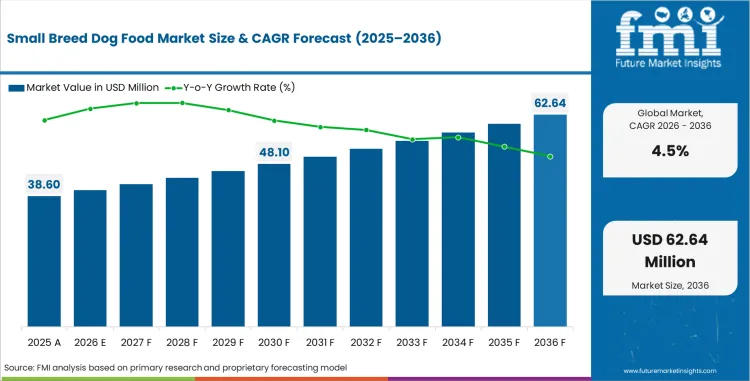
The small breed dog food market was valued at USD 38.6 million in 2025. The market is set to reach USD 40.3 million by 2026-end and grow at a CAGR of 4.5% between 2026-2036 to reach USD 62.6 million by 2036. Dry Food will dominate with a 43.0% share, while Chicken will lead with a 29.0% share.
Key Takeaways, Market Size, and Forecast
- The Small Breed Dog Food market was valued at USD 38.60 million in 2025.
- By 2036, the Small Breed Dog Food Market is expected to be worth USD 62.64 million.
- From 2026 to 2036, the market is projected to expand at a CAGR of 4.5%.
- The market is projected to create an incremental opportunity of USD 22.31 million between 2026 and 2036.
- In 2026, Dry Food is expected to account for 43.0% of the Product, driven by the dominance of dry kibble formats in daily small breed feeding routines due to convenience, shelf stability, dental health benefits, and cost-per-serving affordability.
- South Korea (4.6%) and Japan (4.4%) are two of the fastest growing markets in the world.
Summary of the Small Breed Dog Food Market
- Demand and Growth Drivers
- Rising small breed dog ownership in urban apartments, where Chihuahuas, Pomeranians, Yorkshire Terriers, and similar breeds are preferred for space and lifestyle compatibility, is sustaining demand for breed-size-specific nutrition.
- Growing pet owner awareness that small breed dogs have distinct nutritional requirements including higher caloric density, smaller kibble size, and specific protein-to-fat ratios is shifting purchasing from general to specialized formulations.
- Premiumization of pet nutrition through grain-free, high-protein, and breed-specific formulations is driving value growth that exceeds volume increases in the small breed dog food category.
- Product and Segment View
- Dry food accounts for 43.0% of the product segment, including kibble and dehydrated formats that offer convenience, dental health benefits, and cost-per-serving affordability for daily small breed feeding routines.
- By flavor, chicken holds 29.0% share, reflecting its position as the most commonly available and palatable protein source across mass and premium small breed dog food formulations globally.
- Mass-priced products account for 58.0% of the price tier segment, confirming that affordable daily nutrition remains the primary procurement driver despite growth in premium and grain-free specialty ranges.
- Geography and Competitive Outlook
- South Korea is projected to grow at 4.6% through 2036, supported by high small breed dog ownership concentration, premium pet nutrition culture, and established pet specialty retail distribution.
- Japan follows at 4.4%, reflecting growing small breed dog preference in urban households and the strength of pet nutrition brand loyalty among dedicated pet owners.
- Companies that combine brand trust in pet nutrition, formulation expertise for breed-specific requirements, and distribution reach across pet specialty, online, and general retail channels are positioned to gain traction during the forecast period.
- Analyst Opinion
- The small breed dog food market is entering a premiumization phase where pet owners are willing to invest in breed-specific nutrition that addresses the distinct metabolic, dental, and portion requirements of small dogs. Veterinary influence on feeding recommendations is creating demand for formulations with documented health benefits rather than marketing claims alone. Companies that can deliver clinically validated nutrition for small breed health concerns including dental disease, obesity, and joint health are capturing premium pricing. The competitive landscape favors established pet food companies with R&D capabilities and veterinary endorsement.
- The Small Breed Dog Food Market is moving from a supply driven model toward a demand responsive structure where end user requirements shape product development.
- Adoption is increasing due to evolving consumer expectations and expanding distribution channel accessibility across online and retail formats.
- Growth reflects the structural shift toward higher specification products and more informed purchasing behavior driven by online research and reviews.
- Demand is further supported by changing lifestyle preferences and growing awareness of product quality and performance differences across brands.
Small Breed Dog Food Market Definition
The small breed dog food market covers nutrition products formulated specifically for dogs weighing under 10 kilograms including dry kibble, wet food, treats, and frozen formulations. Products are available in chicken, beef, fish, lamb, turkey, and specialty flavors across mass and premium price tiers.
Small Breed Dog Food Market Inclusions
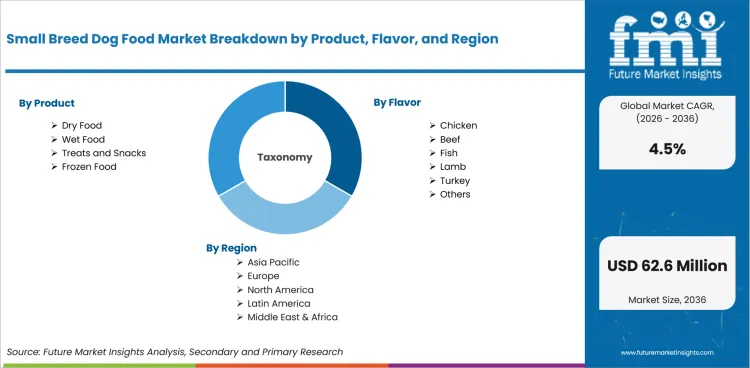
Market scope encompasses all commercially traded products categorized by Product (Dry Food, Wet Food, Treats and Snacks, Frozen Food); Flavor (Chicken, Beef, Fish, Lamb, Turkey, Others); Price Tier (Mass, Premium); Sales Channel (Online Retailers, Modern Trade, Pet Specialty Stores, Wholesalers and Distributors, Pharmacy and Drug Stores, Convenience Stores); End User (Residential, Commercial, Veterinary Clinics). Revenue estimates cover the forecast period from 2026 to 2036.
Small Breed Dog Food Market Exclusions
The scope does not include dog food formulated for medium and large breed dogs, general all-breed dog food without small breed specific formulation, dog supplements and vitamins sold separately, or raw feeding ingredients sold in unprocessed form.
Small Breed Dog Food Market Research Methodology
- Primary Research: FMI analysts conducted interviews with pet food brand nutritionists, veterinary nutrition advisors, pet specialty retail buyers, and animal protein ingredient suppliers across key markets to validate demand patterns, pricing structures, and procurement dynamics.
- Desk Research: Research combined data from pet food industry production statistics, veterinary nutrition research publications, and pet retail sales tracking data, with cross referencing against publicly available industry databases and regulatory filings.
- Market Sizing and Forecasting: Market sizing uses a hybrid bottom up and top down approach, aggregating demand across product, flavor, price tier, sales channel, end user with regional adoption curves.
- Data Validation: Data was validated quarterly against production statistics, trade data, and manufacturer disclosures to maintain forecast accuracy.
Why is the Small Breed Dog Food Market Growing?
- Rising small breed dog ownership in urban apartments globally is creating sustained demand for nutrition products formulated for the specific metabolic, dental, and portion requirements of dogs weighing under 10 kilograms.
- Veterinary influence on pet nutrition purchasing is driving demand for breed-size-specific formulations with documented health benefits beyond general marketing claims.
- South Korea leads growth at 4.6%, supported by high small breed dog ownership concentration, premium pet nutrition culture, and established pet specialty retail distribution.
The small breed dog food market is expanding as urbanization drives preference for smaller dog breeds that are compatible with apartment living and urban lifestyles. Small breed dogs have distinct nutritional requirements including higher caloric density per gram, smaller kibble size for jaw compatibility, and specific protein-to-fat ratios that support higher metabolic rates. These requirements create a differentiated product category that commands premium pricing over general all-breed formulations.
Dry food accounts for 43.0% of product demand, with kibble and dehydrated formats offering convenience and dental health benefits through mechanical cleaning action during chewing. Chicken leads flavor preference at 29.0%, followed by beef, fish, and lamb protein sources. Mass-priced products hold 58.0% of price tier share, confirming that affordable daily nutrition remains the procurement base despite premium segment growth.
Nestle Purina Petcare holds an estimated 33.0% market share through brands including Pro Plan Small Breed and ONE SmartBlend. Mars, Inc., Hill's Pet Nutrition, and Blue Buffalo compete across veterinary-recommended, premium, and natural positioning segments. The competitive landscape strongly favors established pet food companies with the R&D investment, veterinary endorsement networks, and retail distribution to sustain brand leadership.
Market Segmentation Analysis
- Dry Food accounts for 43.0% of the Product segment, supported by established procurement patterns and application requirements.
- Chicken holds 29.0% of the Flavor segment, reflecting concentrated demand in core use cases.
The Small Breed Dog Food market is segmented by product, flavor, price tier, sales channel, end user. Demand patterns reflect the concentration of procurement in established application areas and the growing diversification of end use requirements.
Insights into the Product Segment
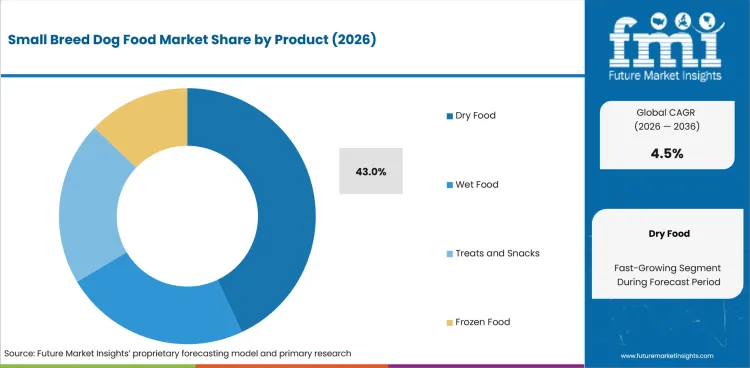
Dry food accounts for 43.0% of the product segment, including kibble and dehydrated formats that offer convenience, dental health benefits, and cost-per-serving affordability for daily small breed feeding routines.
Insights into the Flavor Segment
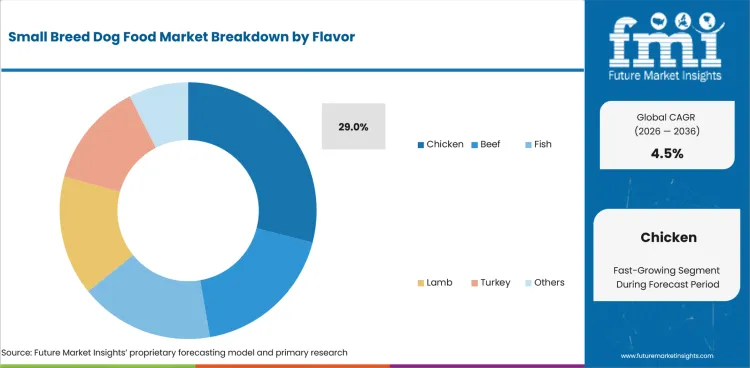
By flavor, chicken holds 29.0% share, reflecting its position as the most commonly available and palatable protein source across mass and premium small breed dog food formulations globally.
Small Breed Dog Food Market Drivers, Restraints, and Opportunities
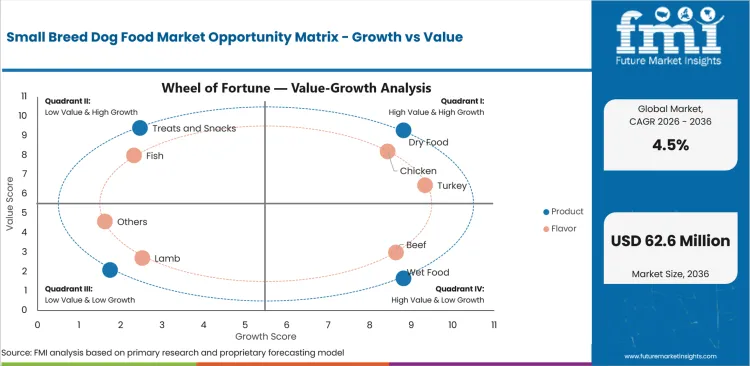
- Nestle Purina Petcare holds an estimated 33.0% market share through its Pro Plan and ONE SmartBlend small breed formulations with veterinary endorsement and broad retail distribution.
- Mars, Inc., Hill's Pet Nutrition, and Blue Buffalo compete on veterinary recommendation, premium ingredient positioning, and breed-specific formulation expertise.
- The competitive landscape strongly favors established pet food companies with R&D investment, veterinary networks, and retail distribution scale required to sustain brand leadership in the specialized nutrition segment.
The Small Breed Dog Food market is shaped by demand drivers, supply constraints, and emerging opportunities. Growth is supported by expanding application requirements, while cost pressures and competitive dynamics influence adoption rates.
Primary Demand Drivers
Rising small breed dog ownership in urban apartments, where Chihuahuas, Pomeranians, Yorkshire Terriers, and similar breeds are preferred for space and lifestyle compatibility, is sustaining demand for breed-size-specific nutrition.
Supply and Cost Dynamics
Growing pet owner awareness that small breed dogs have distinct nutritional requirements including higher caloric density, smaller kibble size, and specific protein-to-fat ratios is shifting purchasing from general to specialized formulations.
Emerging Growth Opportunities
Premiumization of pet nutrition through grain-free, high-protein, and breed-specific formulations is driving value growth that exceeds volume increases in the small breed dog food category.
Analysis of Small Breed Dog Food Market By Key Countries
.webp "Top Country Growth Comparison Small Breed Dog Food Market Cagr (2026 2036)")
| Country | CAGR |
|---|---|
| South Korea | 4.6% |
| Japan | 4.4% |
| USA | 4.1% |
| UK | 3.9% |
Source: FMI analysis based on primary research and proprietary forecasting model
- South Korea at 4.6%: supported by local market conditions and sector investment.
- Japan at 4.4%: supported by local market conditions and sector investment.
- USA at 4.1%: supported by local market conditions and sector investment.
- UK at 3.9%: supported by local market conditions and sector investment.
The global small breed dog food market is expected to grow at a rate of 4.5% per year from 2026 to 2036. The study covers more than 30 countries, and the main markets are listed below.
Demand Outlook for Small Breed Dog Food Market in South Korea
South Korea is projected to expand at 4.6% through 2036. The concentration of small breed dog ownership among urban apartment dwellers, combined with Korean consumer willingness to invest in premium pet nutrition and the strength of pet specialty retail distribution, creates the highest growth rate in the small breed segment.
- Concentrated small breed dog ownership among urban apartment dwellers creates the highest per-capita demand for size-specific nutrition in the global market.
- Premium pet nutrition culture and consumer willingness to invest in veterinary-recommended formulations sustain above-average spending per dog on specialized small breed food.
- Pet specialty retail distribution strength provides consumer access to the full range of breed-specific formulations with expert recommendation support at the point of purchase.
Future Outlook for Small Breed Dog Food Market in Japan
Japan is projected to grow at 4.4% through 2036. Small breed dogs dominate the Japanese pet population, with breeds including Chihuahuas, Toy Poodles, and Shiba Inus creating concentrated demand for size-specific nutrition formulations through pet specialty and convenience store distribution channels.
- Small breed dogs including Chihuahuas, Toy Poodles, and Shiba Inus dominate the Japanese pet population, creating concentrated demand for size-specific nutrition formulations.
- Convenience store distribution alongside pet specialty channels provides uniquely broad retail accessibility for small breed dog food products in the Japanese market.
- Consumer preference for quality and safety in pet nutrition sustains demand for brands with transparent ingredient sourcing and documented manufacturing quality standards.
Opportunity Analysis of Small Breed Dog Food Market in the United States
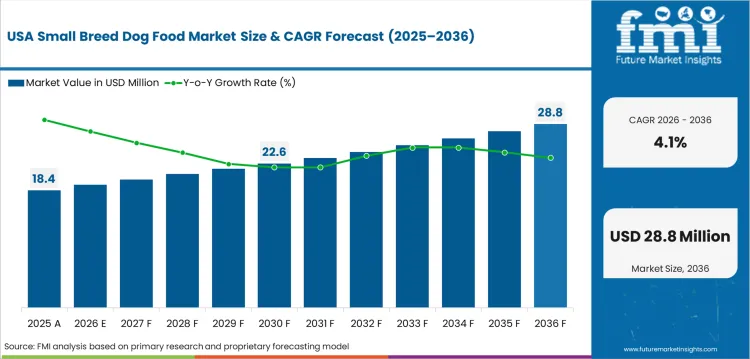
The United States is projected to grow at 4.1% through 2036. The scale of the US pet food market, combined with growing consumer adoption of breed-specific nutrition and veterinary recommendation pathways, sustains demand across mass, premium, and prescription diet segments for small breed dogs.
- The scale of the US pet food market and growing adoption of breed-specific nutrition create the largest revenue opportunity for small breed formulations across mass and premium tiers.
- Veterinary recommendation pathways influence purchasing decisions, sustaining demand for brands with documented clinical nutrition benefits and professional endorsement.
- Online subscription models through Chewy and Amazon are growing as a distribution channel, providing convenient recurring delivery for daily feeding products.
In-depth Analysis of Small Breed Dog Food Market in UK
The United Kingdom is projected to grow at 3.9% through 2036. Growing small breed dog popularity in UK households and the influence of veterinary nutrition guidance on purchasing decisions sustain demand for formulations addressing dental health, weight management, and age-specific nutritional requirements.
- Growing small breed dog popularity in British households creates expanding demand for formulations addressing breed-specific dental health, weight management, and life-stage nutrition needs.
- Veterinary guidance influence on pet food purchasing is increasing, with more pet owners selecting products based on clinical nutrition recommendations rather than marketing claims alone.
- Online pet food delivery services provide convenient distribution access for recurring small breed food purchases, reducing dependence on in-store shopping for heavy, frequently purchased products.
Competitive Landscape and Strategic Positioning
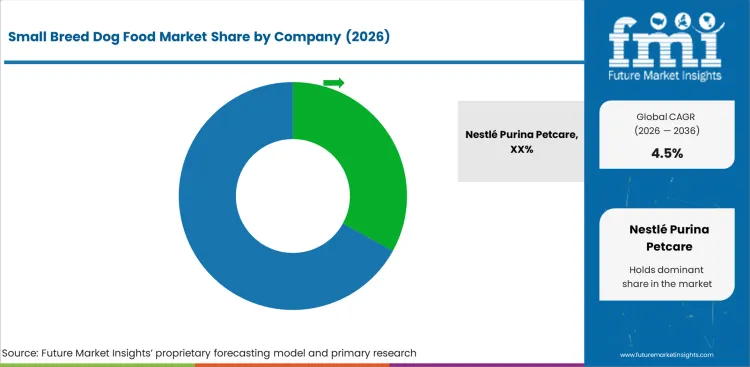
- Nestle Purina Petcare holds an estimated 33.0% market share through its Pro Plan and ONE SmartBlend small breed formulations with veterinary endorsement and broad retail distribution.
- Mars, Inc., Hill's Pet Nutrition, and Blue Buffalo compete on veterinary recommendation, premium ingredient positioning, and breed-specific formulation expertise.
- The competitive landscape strongly favors established pet food companies with R&D investment, veterinary networks, and retail distribution scale required to sustain brand leadership in the specialized nutrition segment.
Nestle Purina Petcare holds an estimated 33.0% market share through its integrated approach combining veterinary science, manufacturing scale, and multi-channel distribution for small breed dog nutrition.
Mars, Inc. competes through its Pedigree and Royal Canin brands. Hill's Pet Nutrition leverages veterinary clinic recommendations. Blue Buffalo targets the natural and grain-free premium segment.
The competitive landscape reflects high barriers to entry due to the R&D investment, regulatory compliance, and veterinary endorsement required to establish credibility in breed-specific pet nutrition.
Key Companies in the Small Breed Dog Food Market
Key global companies leading the small breed dog food market include:
- Nestlé Purina Petcare, Mars, Inc., Hill's Pet Nutrition, Blue Buffalo hold established positions through product portfolios, brand recognition, and distribution relationships.
- Wellness Pet Company, Merrick Pet Care, Canidae are specialized players focusing on differentiation and niche positioning in specific product categories.
- Acana (Champion Petfoods), Fromm Family Foods represent emerging participants with growth potential through product or design advancement.
Competitive Benchmarking: Small Breed Dog Food Market
| Company | Brand Portfolio | Veterinary Endorsement | Formulation R&D | Distribution Scale |
|---|---|---|---|---|
| Nestle Purina Petcare | High | Strong | Strong | Global |
| Mars, Inc. | High | Strong | Strong | Global |
| Hill's Pet Nutrition | Medium | Strong | Strong | Global |
| Blue Buffalo | Medium | Moderate | Strong | N. America |
Source: Future Market Insights competitive analysis, 2026.
Key Developments in Small Breed Dog Food Market
- In 2025, Nestle Purina launched an updated Pro Plan Small Breed formula with added dental care enzymes targeting the prevalent dental health issues in dogs under 10 kilograms.
- In 2025, Hill's Pet Nutrition expanded its Science Diet Small Paws range with a weight management formulation addressing the obesity risk common in sedentary small breed dogs.
Key Players in the Small Breed Dog Food Market
Major Global Players
- Nestlé Purina Petcare
- Mars, Inc.
- Hill's Pet Nutrition
- Blue Buffalo
Emerging Players/Startups
- Wellness Pet Company
- Merrick Pet Care
- Canidae
- Acana (Champion Petfoods)
- Fromm Family Foods
Report Scope and Coverage
| Parameter | Details |
|---|---|
| Quantitative Units | USD 40.34 Million to USD 62.64 Million, at a CAGR of 4.5% |
| Market Definition | The small breed dog food market covers nutrition products formulated specifically for dogs weighing under 10 kilograms including dry kibble, wet food, treats, and frozen formulations. |
| Regions Covered | North America, Latin America, Europe, East Asia, South Asia and Pacific, Middle East and Africa |
| Countries Covered | South Korea, Japan, USA, UK, 30 plus countries |
| Key Companies Profiled | Nestlé Purina Petcare, Mars, Inc., Hill's Pet Nutrition, Blue Buffalo |
| Forecast Period | 2026 to 2036 |
| Approach | Hybrid bottom up and top down methodology starting with verified transaction data, projecting adoption velocity across segments and regions. |
Market Segmentation Analysis
Small Breed Dog Food Market Segmented by Product:
-
- Dry Food
- Kibble
- Dehydrated Food
- Wet Food
- Canned Food
- Pouch Food
- Treats and Snacks
- Training Treats
- Dental Treats
- Frozen Food
- Frozen Raw Meals
- Frozen Ready Meals
- Dry Food
Small Breed Dog Food Market Segmented by Flavor:
-
- Chicken
- Chicken Breast Formula
- Chicken Mixed Recipe
- Beef
- Beef Protein Formula
- Beef Mixed Recipe
- Fish
- Salmon Formula
- Tuna Formula
- Lamb
- Lamb Protein Formula
- Lamb Mixed Recipe
- Turkey
- Turkey Protein Formula
- Turkey Mixed Recipe
- Others
- Duck Formula
- Vegetarian Formula
- Chicken
Small Breed Dog Food Market Segmented by Price Tier:
-
- Mass
- Affordable Daily Nutrition
- Standard Commercial Range
- Premium
- Grain Free Premium Range
- High Protein Specialty Range
- Mass
Small Breed Dog Food Market Segmented by Sales Channel:
-
- Online Retailers
- E Commerce Platforms
- Brand Websites
- Modern Trade
- Supermarkets and Hypermarkets
- Large Retail Chains
- Pet Specialty Stores
- Pet Care Stores
- Veterinary Retail Stores
- Wholesalers and Distributors
- Regional Distribution
- Bulk Supply Partners
- Pharmacy and Drug Stores
- Retail Pharmacies
- Health Stores
- Convenience Stores
- Urban Stores
- Local Stores
- Online Retailers
Small Breed Dog Food Market Segmented by End User:
-
- Residential
- Household Pet Owners
- Multi Pet Families
- Commercial
- Pet Boarding Centers
- Pet Day Care Centers
- Veterinary Clinics
- Clinic Nutrition Supply
- Recovery Diet Programs
- Residential
Small Breed Dog Food Market by Region:
- North America
- USA
- Canada
- Mexico
- Latin America
- Brazil
- Chile
- Rest of Latin America
- Western Europe
- Germany
- UK
- Italy
- Spain
- France
- Nordic
- BENELUX
- Rest of Western Europe
- Eastern Europe
- Russia
- Poland
- Hungary
- Balkan & Baltic
- Rest of Eastern Europe
- East Asia
- China
- Japan
- South Korea
- South Asia and Pacific
- India
- ASEAN
- Australia & New Zealand
- Rest of South Asia and Pacific
- Middle East & Africa
- Kingdom of Saudi Arabia
- Other GCC Countries
- Turkiye
- South Africa
- Other African Union
- Rest of Middle East & Africa
Research Sources and Bibliography
- 1. Association of American Feed Control Officials. (2025). AAFCO Dog Food Nutrient Profiles. AAFCO.
- 2. European Pet Food Industry Federation. (2025). FEDIAF Nutritional Guidelines for Dogs. FEDIAF.
- 3. Nestle Purina. (2025). Annual Report 2024: Pet Nutrition Division. Nestle.
- 4. World Small Animal Veterinary Association. (2024). WSAVA Nutrition Assessment Guidelines. WSAVA.
- 5. American Kennel Club. (2025). AKC Small Breed Dog Ownership Report. AKC.
This bibliography is provided for reader reference. The full Future Market Insights report contains the complete reference list with publication dates, URLs, and supporting data for all cited works.
This Report Answers
- Estimating the size of the market and revenue from 2026 to 2036.
- Segmentation by product, flavor, price tier, sales channel, end user.
- Insights about more than 30 markets in the region.
- Analysis of trends shaping the market.
- Assessment of the competitive landscape.
- Finding investment opportunities across key application areas.
- Supply chain and procurement pattern tracking.
- Delivery of data in PDF and Excel formats.
Frequently Asked Questions
How big is the small breed dog food market in 2026?
The global small breed dog food market is estimated to be valued at USD 40.3 million in 2026.
What will be the size of small breed dog food market in 2036?
The market size for the small breed dog food market is projected to reach USD 62.6 million by 2036.
How much will be the small breed dog food market growth between 2026 and 2036?
The small breed dog food market is expected to grow at a 4.5% CAGR between 2026 and 2036.
What are the key product types in the small breed dog food market?
The key product types in small breed dog food market are dry food, kibble, dehydrated food, wet food, canned food, pouch food, treats and snacks, training treats, dental treats, frozen food, frozen raw meals and frozen ready meals.
Which flavor segment is expected to contribute significant share in the small breed dog food market in 2026?
In terms of flavor, chicken segment is expected to command 29.0% share in the small breed dog food market in 2026.
Preview the report firsthand - request a free sample
Get SampleGet the brochure for pricing and purchase details.
Get PDFTable of Content
- Executive Summary
- Global Market Outlook
- Demand-side Trends
- Supply-side Trends
- Technology Roadmap Analysis
- Analysis and Recommendations
- Market Overview
- Market Coverage / Taxonomy
- Market Definition / Scope / Limitations
- Research Methodology
- Chapter Orientation
- Analytical Lens and Working Hypotheses
- Market Structure, Signals, and Trend Drivers
- Benchmarking and Cross-market Comparability
- Market Sizing, Forecasting, and Opportunity Mapping
- Research Design and Evidence Framework
- Desk Research Programme (Secondary Evidence)
- Company Annual and Sustainability Reports
- Peer-reviewed Journals and Academic Literature
- Corporate Websites, Product Literature, and Technical Notes
- Earnings Decks and Investor Briefings
- Statutory Filings and Regulatory Disclosures
- Technical White Papers and Standards Notes
- Trade Journals, Industry Magazines, and Analyst Briefs
- Conference Proceedings, Webinars, and Seminar Materials
- Government Statistics Portals and Public Data Releases
- Press Releases and Reputable Media Coverage
- Specialist Newsletters and Curated Briefings
- Sector Databases and Reference Repositories
- FMI Internal Proprietary Databases and Historical Market Datasets
- Subscription Datasets and Paid Sources
- Social Channels, Communities, and Digital Listening Inputs
- Additional Desk Sources
- Expert Input and Fieldwork (Primary Evidence)
- Primary Modes
- Qualitative Interviews and Expert Elicitation
- Quantitative Surveys and Structured Data Capture
- Blended Approach
- Why Primary Evidence is Used
- Field Techniques
- Interviews
- Surveys
- Focus Groups
- Observational and In-context Research
- Social and Community Interactions
- Stakeholder Universe Engaged
- C-suite Leaders
- Board Members
- Presidents and Vice Presidents
- R&D and Innovation Heads
- Technical Specialists
- Domain Subject-matter Experts
- Scientists
- Physicians and Other Healthcare Professionals
- Governance, Ethics, and Data Stewardship
- Research Ethics
- Data Integrity and Handling
- Primary Modes
- Tooling, Models, and Reference Databases
- Desk Research Programme (Secondary Evidence)
- Data Engineering and Model Build
- Data Acquisition and Ingestion
- Cleaning, Normalisation, and Verification
- Synthesis, Triangulation, and Analysis
- Quality Assurance and Audit Trail
- Market Background
- Market Dynamics
- Drivers
- Restraints
- Opportunity
- Trends
- Scenario Forecast
- Demand in Optimistic Scenario
- Demand in Likely Scenario
- Demand in Conservative Scenario
- Opportunity Map Analysis
- Product Life Cycle Analysis
- Supply Chain Analysis
- Investment Feasibility Matrix
- Value Chain Analysis
- PESTLE and Porter’s Analysis
- Regulatory Landscape
- Regional Parent Market Outlook
- Production and Consumption Statistics
- Import and Export Statistics
- Market Dynamics
- Global Market Analysis 2021 to 2025 and Forecast, 2026 to 2036
- Historical Market Size Value (USD Million) Analysis, 2021 to 2025
- Current and Future Market Size Value (USD Million) Projections, 2026 to 2036
- Y-o-Y Growth Trend Analysis
- Absolute $ Opportunity Analysis
- Global Market Pricing Analysis 2021 to 2025 and Forecast 2026 to 2036
- Global Market Analysis 2021 to 2025 and Forecast 2026 to 2036, By Product
- Introduction / Key Findings
- Historical Market Size Value (USD Million) Analysis By Product , 2021 to 2025
- Current and Future Market Size Value (USD Million) Analysis and Forecast By Product , 2026 to 2036
- Dry Food
- Kibble
- Dehydrated Food
- Wet Food
- Canned Food
- Pouch Food
- Treats and Snacks
- Training Treats
- Dental Treats
- Frozen Food
- Dry Food
- Y-o-Y Growth Trend Analysis By Product , 2021 to 2025
- Absolute $ Opportunity Analysis By Product , 2026 to 2036
- Global Market Analysis 2021 to 2025 and Forecast 2026 to 2036, By Flavor
- Introduction / Key Findings
- Historical Market Size Value (USD Million) Analysis By Flavor, 2021 to 2025
- Current and Future Market Size Value (USD Million) Analysis and Forecast By Flavor, 2026 to 2036
- Chicken
- Chicken Breast Formula
- Chicken Mixed Recipe
- Beef
- Beef Protein Formula
- Beef Mixed Recipe
- Fish
- Salmon Formula
- Tuna Formula
- Lamb
- Chicken
- Y-o-Y Growth Trend Analysis By Flavor, 2021 to 2025
- Absolute $ Opportunity Analysis By Flavor, 2026 to 2036
- Global Market Analysis 2021 to 2025 and Forecast 2026 to 2036, By Price Tier
- Introduction / Key Findings
- Historical Market Size Value (USD Million) Analysis By Price Tier, 2021 to 2025
- Current and Future Market Size Value (USD Million) Analysis and Forecast By Price Tier, 2026 to 2036
- Mass
- Affordable Daily Nutrition
- Standard Commercial Range
- Premium
- Grain Free Premium Range
- High Protein Specialty Range
- Mass
- Y-o-Y Growth Trend Analysis By Price Tier, 2021 to 2025
- Absolute $ Opportunity Analysis By Price Tier, 2026 to 2036
- Global Market Analysis 2021 to 2025 and Forecast 2026 to 2036, By Sales Channel
- Introduction / Key Findings
- Historical Market Size Value (USD Million) Analysis By Sales Channel, 2021 to 2025
- Current and Future Market Size Value (USD Million) Analysis and Forecast By Sales Channel, 2026 to 2036
- Online Retailers
- E Commerce Platforms
- Brand Websites
- Modern Trade
- Supermarkets and Hypermarkets
- Large Retail Chains
- Pet Specialty Stores
- Pet Care Stores
- Veterinary Retail Stores
- Wholesalers and Distributors
- Online Retailers
- Y-o-Y Growth Trend Analysis By Sales Channel, 2021 to 2025
- Absolute $ Opportunity Analysis By Sales Channel, 2026 to 2036
- Global Market Analysis 2021 to 2025 and Forecast 2026 to 2036, By End User
- Introduction / Key Findings
- Historical Market Size Value (USD Million) Analysis By End User, 2021 to 2025
- Current and Future Market Size Value (USD Million) Analysis and Forecast By End User, 2026 to 2036
- Residential
- Household Pet Owners
- Multi Pet Families
- Commercial
- Pet Boarding Centers
- Pet Day Care Centers
- Veterinary Clinics
- Clinic Nutrition Supply
- Recovery Diet Programs
- Residential
- Y-o-Y Growth Trend Analysis By End User, 2021 to 2025
- Absolute $ Opportunity Analysis By End User, 2026 to 2036
- Global Market Analysis 2021 to 2025 and Forecast 2026 to 2036, By Region
- Introduction
- Historical Market Size Value (USD Million) Analysis By Region, 2021 to 2025
- Current Market Size Value (USD Million) Analysis and Forecast By Region, 2026 to 2036
- North America
- Latin America
- Western Europe
- Eastern Europe
- East Asia
- South Asia and Pacific
- Middle East & Africa
- Market Attractiveness Analysis By Region
- North America Market Analysis 2021 to 2025 and Forecast 2026 to 2036, By Country
- Historical Market Size Value (USD Million) Trend Analysis By Market Taxonomy, 2021 to 2025
- Market Size Value (USD Million) Forecast By Market Taxonomy, 2026 to 2036
- By Country
- USA
- Canada
- Mexico
- By Product
- By Flavor
- By Price Tier
- By Sales Channel
- By End User
- By Country
- Market Attractiveness Analysis
- By Country
- By Product
- By Flavor
- By Price Tier
- By Sales Channel
- By End User
- Key Takeaways
- Latin America Market Analysis 2021 to 2025 and Forecast 2026 to 2036, By Country
- Historical Market Size Value (USD Million) Trend Analysis By Market Taxonomy, 2021 to 2025
- Market Size Value (USD Million) Forecast By Market Taxonomy, 2026 to 2036
- By Country
- Brazil
- Chile
- Rest of Latin America
- By Product
- By Flavor
- By Price Tier
- By Sales Channel
- By End User
- By Country
- Market Attractiveness Analysis
- By Country
- By Product
- By Flavor
- By Price Tier
- By Sales Channel
- By End User
- Key Takeaways
- Western Europe Market Analysis 2021 to 2025 and Forecast 2026 to 2036, By Country
- Historical Market Size Value (USD Million) Trend Analysis By Market Taxonomy, 2021 to 2025
- Market Size Value (USD Million) Forecast By Market Taxonomy, 2026 to 2036
- By Country
- Germany
- UK
- Italy
- Spain
- France
- Nordic
- BENELUX
- Rest of Western Europe
- By Product
- By Flavor
- By Price Tier
- By Sales Channel
- By End User
- By Country
- Market Attractiveness Analysis
- By Country
- By Product
- By Flavor
- By Price Tier
- By Sales Channel
- By End User
- Key Takeaways
- Eastern Europe Market Analysis 2021 to 2025 and Forecast 2026 to 2036, By Country
- Historical Market Size Value (USD Million) Trend Analysis By Market Taxonomy, 2021 to 2025
- Market Size Value (USD Million) Forecast By Market Taxonomy, 2026 to 2036
- By Country
- Russia
- Poland
- Hungary
- Balkan & Baltic
- Rest of Eastern Europe
- By Product
- By Flavor
- By Price Tier
- By Sales Channel
- By End User
- By Country
- Market Attractiveness Analysis
- By Country
- By Product
- By Flavor
- By Price Tier
- By Sales Channel
- By End User
- Key Takeaways
- East Asia Market Analysis 2021 to 2025 and Forecast 2026 to 2036, By Country
- Historical Market Size Value (USD Million) Trend Analysis By Market Taxonomy, 2021 to 2025
- Market Size Value (USD Million) Forecast By Market Taxonomy, 2026 to 2036
- By Country
- China
- Japan
- South Korea
- By Product
- By Flavor
- By Price Tier
- By Sales Channel
- By End User
- By Country
- Market Attractiveness Analysis
- By Country
- By Product
- By Flavor
- By Price Tier
- By Sales Channel
- By End User
- Key Takeaways
- South Asia and Pacific Market Analysis 2021 to 2025 and Forecast 2026 to 2036, By Country
- Historical Market Size Value (USD Million) Trend Analysis By Market Taxonomy, 2021 to 2025
- Market Size Value (USD Million) Forecast By Market Taxonomy, 2026 to 2036
- By Country
- India
- ASEAN
- Australia & New Zealand
- Rest of South Asia and Pacific
- By Product
- By Flavor
- By Price Tier
- By Sales Channel
- By End User
- By Country
- Market Attractiveness Analysis
- By Country
- By Product
- By Flavor
- By Price Tier
- By Sales Channel
- By End User
- Key Takeaways
- Middle East & Africa Market Analysis 2021 to 2025 and Forecast 2026 to 2036, By Country
- Historical Market Size Value (USD Million) Trend Analysis By Market Taxonomy, 2021 to 2025
- Market Size Value (USD Million) Forecast By Market Taxonomy, 2026 to 2036
- By Country
- Kingdom of Saudi Arabia
- Other GCC Countries
- Turkiye
- South Africa
- Other African Union
- Rest of Middle East & Africa
- By Product
- By Flavor
- By Price Tier
- By Sales Channel
- By End User
- By Country
- Market Attractiveness Analysis
- By Country
- By Product
- By Flavor
- By Price Tier
- By Sales Channel
- By End User
- Key Takeaways
- Key Countries Market Analysis
- USA
- Pricing Analysis
- Market Share Analysis, 2025
- By Product
- By Flavor
- By Price Tier
- By Sales Channel
- By End User
- Canada
- Pricing Analysis
- Market Share Analysis, 2025
- By Product
- By Flavor
- By Price Tier
- By Sales Channel
- By End User
- Mexico
- Pricing Analysis
- Market Share Analysis, 2025
- By Product
- By Flavor
- By Price Tier
- By Sales Channel
- By End User
- Brazil
- Pricing Analysis
- Market Share Analysis, 2025
- By Product
- By Flavor
- By Price Tier
- By Sales Channel
- By End User
- Chile
- Pricing Analysis
- Market Share Analysis, 2025
- By Product
- By Flavor
- By Price Tier
- By Sales Channel
- By End User
- Germany
- Pricing Analysis
- Market Share Analysis, 2025
- By Product
- By Flavor
- By Price Tier
- By Sales Channel
- By End User
- UK
- Pricing Analysis
- Market Share Analysis, 2025
- By Product
- By Flavor
- By Price Tier
- By Sales Channel
- By End User
- Italy
- Pricing Analysis
- Market Share Analysis, 2025
- By Product
- By Flavor
- By Price Tier
- By Sales Channel
- By End User
- Spain
- Pricing Analysis
- Market Share Analysis, 2025
- By Product
- By Flavor
- By Price Tier
- By Sales Channel
- By End User
- France
- Pricing Analysis
- Market Share Analysis, 2025
- By Product
- By Flavor
- By Price Tier
- By Sales Channel
- By End User
- India
- Pricing Analysis
- Market Share Analysis, 2025
- By Product
- By Flavor
- By Price Tier
- By Sales Channel
- By End User
- ASEAN
- Pricing Analysis
- Market Share Analysis, 2025
- By Product
- By Flavor
- By Price Tier
- By Sales Channel
- By End User
- Australia & New Zealand
- Pricing Analysis
- Market Share Analysis, 2025
- By Product
- By Flavor
- By Price Tier
- By Sales Channel
- By End User
- China
- Pricing Analysis
- Market Share Analysis, 2025
- By Product
- By Flavor
- By Price Tier
- By Sales Channel
- By End User
- Japan
- Pricing Analysis
- Market Share Analysis, 2025
- By Product
- By Flavor
- By Price Tier
- By Sales Channel
- By End User
- South Korea
- Pricing Analysis
- Market Share Analysis, 2025
- By Product
- By Flavor
- By Price Tier
- By Sales Channel
- By End User
- Russia
- Pricing Analysis
- Market Share Analysis, 2025
- By Product
- By Flavor
- By Price Tier
- By Sales Channel
- By End User
- Poland
- Pricing Analysis
- Market Share Analysis, 2025
- By Product
- By Flavor
- By Price Tier
- By Sales Channel
- By End User
- Hungary
- Pricing Analysis
- Market Share Analysis, 2025
- By Product
- By Flavor
- By Price Tier
- By Sales Channel
- By End User
- Kingdom of Saudi Arabia
- Pricing Analysis
- Market Share Analysis, 2025
- By Product
- By Flavor
- By Price Tier
- By Sales Channel
- By End User
- Turkiye
- Pricing Analysis
- Market Share Analysis, 2025
- By Product
- By Flavor
- By Price Tier
- By Sales Channel
- By End User
- South Africa
- Pricing Analysis
- Market Share Analysis, 2025
- By Product
- By Flavor
- By Price Tier
- By Sales Channel
- By End User
- USA
- Market Structure Analysis
- Competition Dashboard
- Competition Benchmarking
- Market Share Analysis of Top Players
- By Regional
- By Product
- By Flavor
- By Price Tier
- By Sales Channel
- By End User
- Competition Analysis
- Competition Deep Dive
- Nestlé Purina Petcare
- Overview
- Product Portfolio
- Profitability by Market Segments (Product/Age /Sales Channel/Region)
- Sales Footprint
- Strategy Overview
- Marketing Strategy
- Product Strategy
- Channel Strategy
- Mars, Inc.
- Hill's Pet Nutrition
- Blue Buffalo
- Other Companies (Combined)
- Nestlé Purina Petcare
- Competition Deep Dive
- Assumptions & Acronyms Used


