

- Market Size (2026)
- USD 3.9 Bn
- Forecast (2036)
- USD 7.4 Bn
- CAGR (2026 to 2036)
- 6.6%
Source-Separated Household Biowaste to Biogas and Compost Plants in Europe Industry By FMI
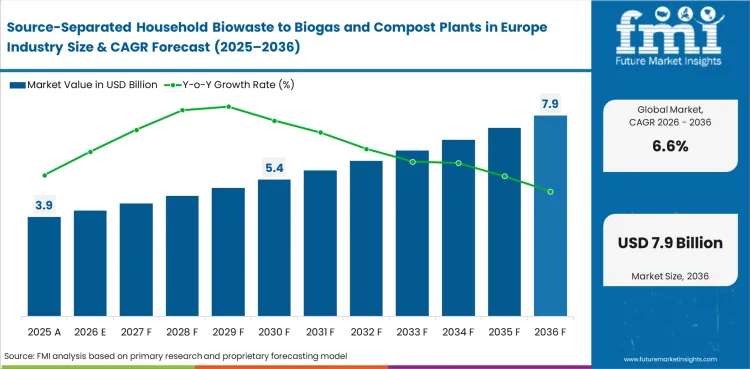
Source-separated household biowaste to biogas and compost plants in Europe industry was worth around USD 3.7 billion in 2025. As per FMI analyst, the market size is expected to be valued at USD 3.9 billion in 2026 and USD 7.4 billion by 2036. That implies a 6.6% CAGR from 2026 to 2036.
Summary of Source-Separated Household Biowaste to Biogas and Compost Plants in Europe Industry
- Source-Separated Household Biowaste to Biogas and Compost Plants in Europe Market is expected to reach USD 7.4 billion by 2036.
- The market is estimated at a 6.6% CAGR from 2026 to 2036.
- Industry value stood at USD 3.7 billion in 2025, while market size is estimated at USD 3.9 billion in 2026.
- Incremental opportunity across the forecast period totals USD 3.5 billion.
- Composting is projected to account for 57.0% share in 2026 by treatment route as Europe carries a broader installed plant base.
- Door-to-door collection is expected to represent 46.0% share in 2026 by collection scheme as cleaner household capture supports better treatment performance.
- Municipal contracts are projected to hold 52.0% of ownership model demand in 2026 as household biowaste treatment capacity is closely connected to local authority systems.
Key Takeaways, Market Size, and Forecast
- Source-Separated Household Biowaste to Biogas and Compost Plants in Europe Industry is projected to grow from USD 3.9 billion in 2026 to USD 7.4 billion by 2036, at a CAGR of 6.6%.
- The source-separated household biowaste to biogas and compost plants in Europe industry was valued at USD 3.7 billion in 2025.
- By 2036, the Source-Separated Household Biowaste to Biogas and Compost Plants in Europe Industry is expected to be worth USD 7.4 billion.
- From 2026 to 2036, the industry is anticipated to expand at a CAGR of 6.6%.
- The industry is predicted to create an incremental opportunity of USD 3.5 billion between 2026 and 2036.
- In 2026, Composting is expected to account for 57.0% of the treatment route segment.
- Spain (7.8%) and Poland (7.5%) are projected to be two of the fastest growing markets.
Source-Separated Household Biowaste to Biogas and Compost Plants in Europe Industry Key Takeaways
| Parameter | Details |
|---|---|
| Market Value 2026 | USD 3.9 billion |
| Forecast Value 2036 | USD 7.4 billion |
| CAGR 2026 to 2036 | 6.6% |
| Estimated Market Value 2025 | USD 3.7 billion |
| Incremental Opportunity | USD 3.5 billion |
| Leading Treatment Route | Composting estimated at 57% share in 2026 |
| Leading Collection Scheme | Door-to-door estimated at 46% share in 2026 |
| Leading Output Product | Compost estimated at 41% share in 2026 |
| Leading Ownership Model | Municipal contracts estimated at 52% share in 2026 |
| Key Companies | Veolia, SUEZ, PreZero, FCC Medio Ambiente, Indaver |
Source: FMI analysis based on primary research and proprietary forecasting model
Incremental opportunity over the period is likely to be USD 3.5 billion. Demand is rising with stricter separate collection rules and stronger value from biogas and biomethane markets. Europe’s household organics treatment industry is moving into a stricter revenue model as municipalities channel cleaner kitchen and garden waste into separate collection. Plant income is linked more closely to feedstock quality and outlet value, while simple waste volume offers a weaker guide. EU taxonomy rules and LIFE BIOBEST estimates point to a major rise in separately collected biowaste through 2035, supporting further plant investment.
Feedstock quality and outlet value shape plant economics in this industry. Municipal contracts guide much of the new investment because they support cleaner intake and steadier output sales. Anaerobic digestion is gaining ground in markets linked to gas upgrading. Spain is expected to lead forecast growth at a 7.8% CAGR, followed by Poland at a 7.5% CAGR. France is predicted to reach a 7.1% CAGR, the Netherlands 6.8% CAGR, and Italy 6.3% CAGR. Germany is projected to grow at a 5.9% CAGR from a more mature base, while Sweden is expected to record a 5.7% CAGR through 2036. Operators with cleaner intake control and reliable outlet sales are expected to hold stronger contract positions.
Source-Separated Household Biowaste to Biogas and Compost Plants in Europe Industry Definition
FMI defines source-separated household biowaste to biogas and compost plants industry in Europe as the revenue generated by facilities to process separately collected household kitchen waste and garden waste into compost, digestate, biogas, or biomethane across European municipal systems. Coverage includes composting plants, anaerobic digestion plants, and integrated biological treatment assets used for household organics recovery under regulated collection and treatment frameworks.
Source-Separated Household Biowaste to Biogas and Compost Plants in Europe Industry Inclusions
Coverage includes treatment route segmentation across composting, anaerobic digestion, and integrated plants. Feedstock segmentation covers kitchen-garden, kitchen only, garden only, and mixed organics. Collection scheme segmentation covers door-to-door, kerbside bins, bring points, and PAYT-linked systems. Plant scale segmentation covers below 25 ktpa, 25 to 75 ktpa, 75 to 150 ktpa, and above 150 ktpa. Output product segmentation covers compost, digestate, biogas, and biomethane. Technology configuration segmentation covers enclosed tunnels, open windrows, in-vessel systems, dry digestion, and wet digestion. Ownership model segmentation covers municipal contracts, PPP plants, private merchant plants, and utility-owned assets. End-use outlet segmentation covers agriculture, horticulture, landscaping, grid injection, and CHP. Forecasting covers 2025 as the base estimate and 2026 to 2036 as the assessment period.
Source-Separated Household Biowaste to Biogas and Compost Plants in Europe Industry Exclusions
Scope excludes mixed municipal waste sent to generic sorting or MBT lines, sewage sludge-only anaerobic digestion assets, landfill gas recovery systems, and commercial food waste treatment streams collected outside household municipal programs.
Source-Separated Household Biowaste to Biogas and Compost Plants in Europe Industry Research Methodology
- Primary Research included structured review of operator positioning across Veolia, SUEZ, PreZero, FCC Medio Ambiente, Indaver, REMONDIS, and Urbaser through official activity disclosures and treatment portfolio references.
- Desk Research aggregated ECN reports, LIFE BIOBEST guidance, Eurostat waste data, EU taxonomy criteria, and European Biogas Association reporting to establish the baseline operating context.
- Market Sizing and Forecasting used a bottom-up treatment revenue model anchored to separately collected biowaste throughput and blended realized value from gate fees plus output monetization.
- Data Validation and Update Cycle cross-checked projections against treatment capacity direction, municipal waste generation, and renewable gas deployment signals across Europe.
Why Is the Source-Separated Household Biowaste to Biogas and Compost Plants in Europe Industry Growing?
- Post-2023 collection mandates are increasing the flow of household organics into formal treatment systems across European municipalities.
- Gas upgrading economics are improving the revenue profile of anaerobic digestion plants serving food waste management and municipal organics programs.
- Compost and digestate quality standards are raising the premium attached to cleaner intake streams and better process control.
Separate collection rules across Europe are lifting household organics capture and sending cleaner feedstock to composting and anaerobic digestion plants. Cleaner collection systems improve usable yield and reduce reject handling. That links plant income more closely to feedstock quality. Investment pressure is rising across the EU27 because separately collected biowaste must grow from 38 million tonnes to 78 million tonnes by 2035. Collection design now matters as much as treatment technology because plant use rates and output quality both start with intake discipline. Renewable gas supplied 22 bcm to Europe in 2023, which is pushing more operators toward digestion plants with stronger gas and digestate value.
Segmental Analysis
Key Facts About Segments
- Composting leads with 57.0% share in 2026 as Europe has a larger installed base of biological treatment plants.
- Kitchen-garden feedstock contributes 44.0% share in 2026 as municipal systems often collect food and green waste.
- Door-to-door collection reaches 46.0% share in 2026 as cleaner capture improves yield and reduces reject pressure.
- Plants sized at 25 to 75 ktpa hold 38.0% share as municipalities favor practical hauling distance.
- Compost accounts for 41.0% share in 2026 as soil use offers the broadest outlet base.
- Enclosed tunnels represent 33.0% share in 2026 as odor control carries higher weight in treatment.
- Municipal contracts reach 52.0% share in 2026 as local authority systems anchor treatment capacity across Europe.
- Agriculture reaches 49.0% share in 2026 as compost and digestate move most easily into soil improvement demand.
This segment structure is shaped by feedstock quality and outlet value. Cleaner intake improves usable yield and reduces rejects across composting and anaerobic digestion plants. Contract design matters more when municipal systems place greater weight on stable output quality and clearer sales realization. Plant performance depends more on collection discipline and outlet strength than on waste volume alone.
Source-Separated Household Biowaste to Biogas and Compost Plants in Europe Industry Analysis by Collection Scheme
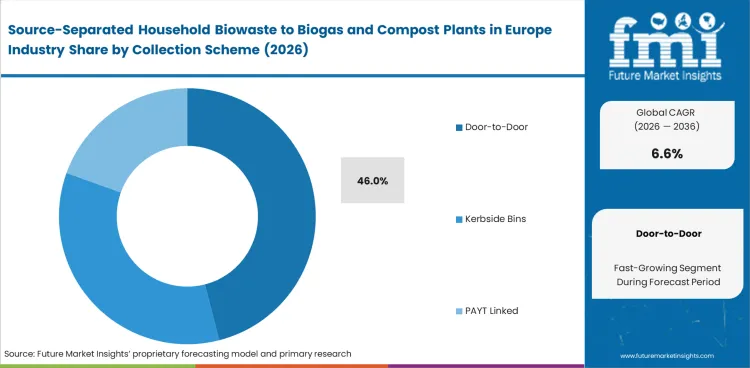
Door-to-door systems lead this segment because they usually improve household participation and separation quality. Municipal authorities use them to lift capture quality and reduce contamination at treatment plants. Door-to-door collection is likely to represent 46.0% share in 2026. Cleaner feedstock reduces rejects and supports better compost or digestate quality. This lead comes from tighter household control and steadier plant intake over time.
- Direct household pickup can improve source purity more effectively than systems relying mainly on bring-point behavior.
- Lower contamination supports better usable yield inside composting plants and digestion facilities processing household organics.
- Service visibility is stronger under direct collection formats and helps municipalities manage participation more closely.
Source-Separated Household Biowaste to Biogas and Compost Plants in Europe Industry Analysis by Plant Scale
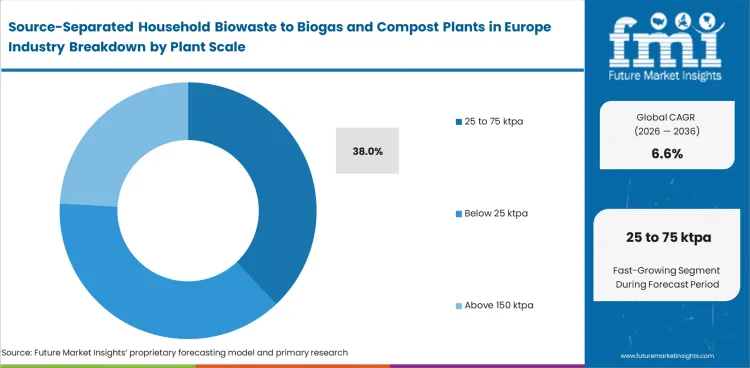
Mid-sized plants lead this segment because many municipal systems want practical hauling distances and manageable operating footprints. Smaller plants can serve local systems, though they often lose some scale efficiency. Large centralized plants need stronger feedstock security and tighter transport economics. Plants in the 25 to 75 ktpa range are expected to account for 38.0% share in 2026. These facilities balance throughput with service reach and fit inter-municipal treatment structures without excessive transport burden.
- Mid-sized plants can align more easily with inter-municipal service areas and practical waste hauling distances.
- Capital intensity is more manageable than very large sites requiring wider catchment security and larger logistics commitments.
- Plant utilization tends to improve under balanced throughput and more predictable local feedstock inflows.
Source-Separated Household Biowaste to Biogas and Compost Plants in Europe Industry Analysis by Output Product
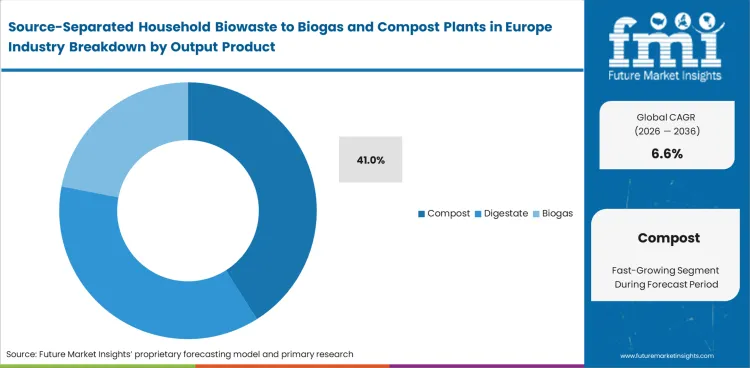
Compost leads the output product segment because soil application provides the broadest outlet base in Europe. Compost sales connect more directly with agriculture and landscaping demand than energy-linked outputs in many local systems. Digestate is gaining relevance in digestion-led assets, though its final value depends more on quality and local agronomic acceptance. Compost is anticipated to account for 41.0% share in 2026. This lead reflects established soil amendment demand across municipal recovery systems.
- Agriculture and landscaping absorb compost volumes more steadily across European recovery systems serving municipal organics.
- Outlet familiarity supports easier offtake planning for plants operating under local authority treatment contracts.
- Compost quality improves commercial acceptance once cleaner intake control reduces physical contamination across production cycles.
Source-Separated Household Biowaste to Biogas and Compost Plants in Europe Industry Analysis by Ownership Model
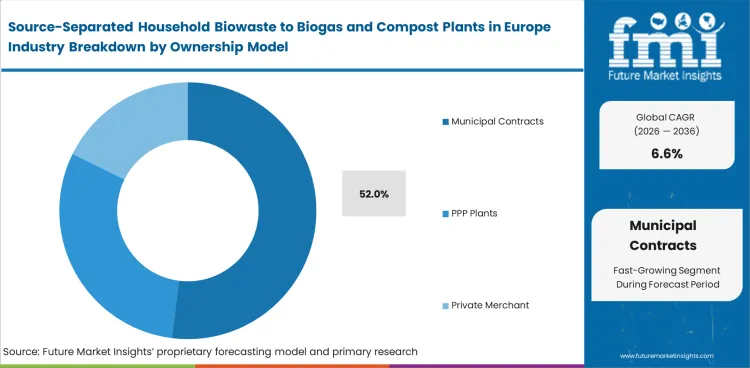
Municipal contracts are projected to contribute 52.0% share in 2026 within the ownership model segment. Household biowaste treatment is linked to local authority collection obligations and public service structures across Europe. Contracted systems account for the largest share of treatment capacity and guide investment timing for many plant operators. PPP plants and private merchant assets have roles in selected markets, though local authority frameworks anchor volume visibility more consistently. Ownership leadership comes from public collection responsibility and from the central role of municipal waste planning in household organics treatment.
- Local authority systems control household collection structures and shape most feedstock availability for treatment plants.
- Contract visibility can support steadier plant utilization and clearer planning across collection and treatment interfaces.
- Ownership patterns benefit the operators who are able to align plant performance with public service obligations and local permitting discipline.
Source-Separated Household Biowaste to Biogas and Compost Plants in Europe Industry Analysis by End-use Outlet
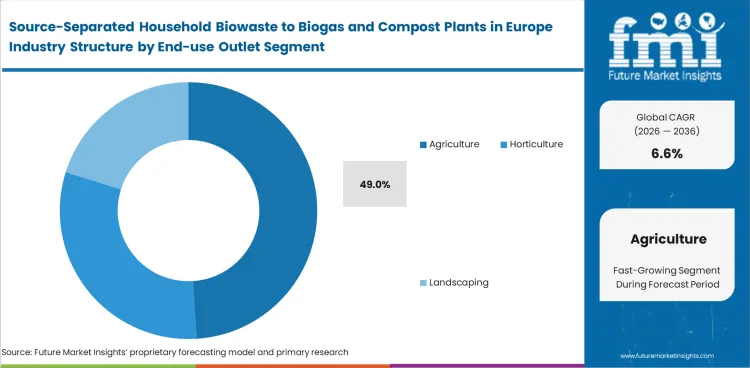
End-use outlet analysis begins with agriculture, since soil improvement demand offers the broadest placement base for compost and digestate sales across Europe. Agriculture is estimated to account for 49.0% share in 2026 within the end-use outlet segment. Horticulture and landscaping support useful secondary demand, though field application carries a larger volume absorption for recovered organic products. Outlet depth in agriculture improves treatment economics by providing a repeatable channel for biological recovery outputs. End-use leadership reflects volume absorption and the practical role of soil amendment demand in supporting plant revenue discipline. Organic fertilizers is the closest internal reference for downstream soil-input demand linked with compost and digestate sales.
- Field application can absorb larger recovered organic volumes than many smaller outlet categories across local markets.
- Agronomic use supports a direct value case for compost and digestates produced from cleaner household organics.
- Outlet stability improves once operators maintain product quality and align sales with local soil improvement demand.
Drivers, Restraints, and Opportunities for Source-Separated Household Biowaste to Biogas and Compost Plants in Europe Industry
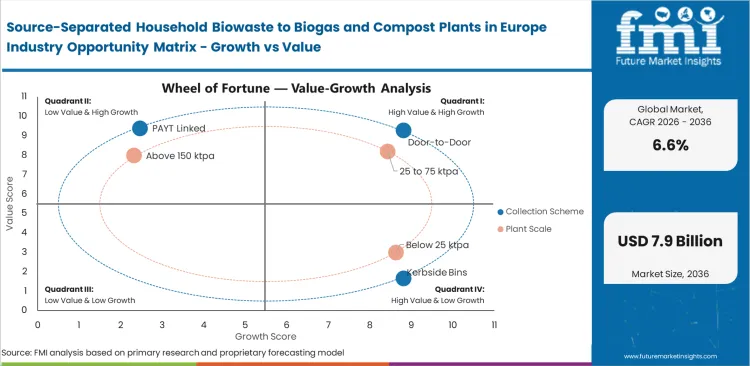
- Separate collection rules are improving feedstock quality and lifting usable household organics supply for European treatment plants.
- Weak collection discipline reduces plant income as contamination raises reject loads and lowers compost or digestate realization.
- Biomethane-linked digestion plants create higher upside as gas upgrading expands revenue options beyond compost and digestate sales
Separate Collection Rules Improve Feedstock Quality
EU policies are giving household biowaste treatment a clearer revenue base because separate collection sends cleaner organic material into formal plant networks. Taxonomy support can improve financing for plants serving regulated household organics streams. Cleaner intake lowers reject handling and improves output quality. Uneven rollout and slower permitting can reduce project visibility in regions with weaker collection systems or less mature outlets. Biomethane-linked digestion adds wider income potential, and mid-sized municipal assets still offer a practical expansion route.
Biowaste Treatment Fees Are Resetting Higher
Gate fees for household biowaste treatment are rising, resetting revenue expectations for composting and anaerobic digestion plants across Europe. In August 2025, WRAP reported that the median gate fee for food waste sent to anaerobic digestion in the UK reached £24 per tonne in 2024/25, up from £20 per tonne in 2023/24. In‑vessel composting fees stood at £73 per tonne for mixed food and green waste, £72 for food waste only, and £57 for green waste only. These figures act as a direct pricing signal for Europe’s source‑separated household biowaste industry, where gate fees sit at the centre of plant revenue planning. WRAP also noted that the standard landfill tax increased from £103.70 to £126.15 per tonne on 1 April 2025, further strengthening the commercial case for organics treatment over disposal.
Compost Selling Prices Are Moving With Handling Costs
Alongside higher gate fees finished compost pricing is being reshaped by downstream handling and logistics costs. In October 2025, Causeway Coast and Glens Borough Council proposed increasing the compost selling price at the Letterloan Composting Facility from £12 to £20 per tonne plus VAT. During 2024-25, Natural World Products processed around 12,900 tonnes of biowaste for the council, while 1,964 tonnes of compost were sold. This shows that compost values can move sharply even when treatment is already covered within a biowaste contract gate fee. Once processing shifts off‑site, haulage and site handling costs begin to reprice the finished compost outlet, directly affecting plant margin recovery and local offtake planning.
Regional Analysis
.webp "Top Country Growth Comparison Source Separated Household Biowaste To Biogas And Compost Plants In Europe Industry Cagr (2026 2036)")
Regional growth across Europe is moving at different speeds under a common policy base. Country variation comes from collection maturity, municipal execution depth, and the local balance between compost outlets and renewable gas economics.
Demand Outlook for Source-Separated Household Biowaste to Biogas and Compost Plants in Spain
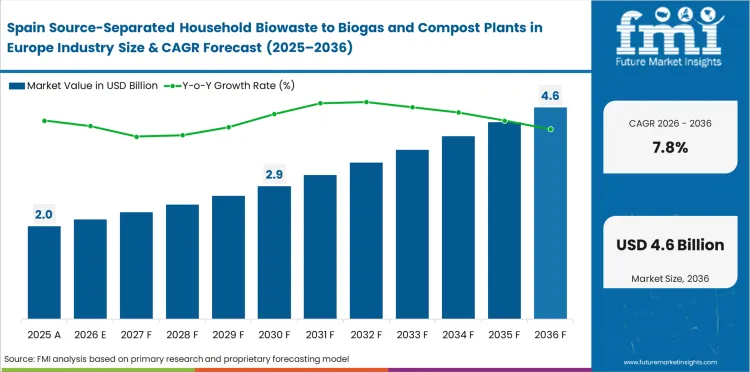
Spain is projected to grow at 7.8% CAGR through 2036 as collection expansion and treatment build-out continue from a lower maturity base than Germany or the Netherlands. Municipal systems across Spain still have room to raise source-separated household organics capture. Treatment demand benefits from this catch-up cycle and from a wider policy focus on biological recovery. Anaerobic digestion can create stronger value in regions linked to gas upgrading, while compost outlets stay important in areas with agronomic demand. Contract access favors operators that combine clean collection interfaces with flexible treatment configurations.
Future Outlook for Source-Separated Household Biowaste to Biogas and Compost Plants in Poland
Poland carries a fast-growth profile as formal household organics collection and treatment capacity continue to rise through the forecast period. Sales in Poland are expected to increase at a CAGR of 7.5% during the assessment period. Industry expansion is tied to system formalization as municipal authorities improve separate collection and direct more household organics to compliant treatment platforms. Plant economics in Poland are likely to depend more on collection discipline and basic treatment execution than on advanced gas monetization in the early stages of scale-up. Revenue visibility improves most for operators that align clean intake management with dependable local outlets for compost or digestate.
Source-Separated Household Biowaste to Biogas and Compost Plants in France Analysis
France combines policy depth with a large municipal operating base, creating a broader platform for treatment demand than many mid‑sized European industries. Local authority implementation and organics collection discipline create a solid base for biological treatment assets. Digestion-linked value can improve in markets aligned with renewable gas development while compost demand keeps wide utility across soil-focused applications. Source-separated household biowaste to biogas and compost plant demand in France is anticipated to rise at a CAGR of 7.1% through 2036. Revenue quality in France will stay connected to municipal execution and finished product offtake discipline rather than nominal collection expansion alone.
Source-Separated Household Biowaste to Biogas and Compost Plants in the Netherlands Outlook
Netherlands is expected to expand through 2036 at 6.8% CAGR as advanced waste handling practices and renewable gas orientation support value realization. Dutch treatment economics benefit from operational maturity and a stronger ability to integrate biological treatment into broader resource recovery systems. Market growth is less about basic infrastructure catch-up and more about improved monetization from digestion and cleaner organic flows. Contract competition leans toward operators with tight operating control and stronger outlet management. Value expansion in the Netherlands should hold above the regional average so long as revenue realization across gas and soil products stays disciplined.
Assessment of Source-Separated Household Biowaste to Biogas and Compost Plants in Italy
Italy offers a large household organics base and a long-running role in compost-linked treatment, which keeps plant demand commercially relevant across multiple regional systems. Collection performance and local contract design can vary, which creates uneven treatment economics by municipality. Compost demand stays central in Italy as soil application and horticultural use support outlet depth. Digestion-linked upside is present in selected local systems with stronger gas economics. Industry demand in Italy is expected to grow at a CAGR of 6.3% during the study period. Contract quality and feedstock cleanliness will continue to shape value capture more directly than simple tonnage growth.
Demand Outlook for Source-Separated Household Biowaste to Biogas and Compost Plants in Germany
Germany carries one of the most mature treatment profiles in Europe, which places more attention on process discipline and outlet quality than on rapid greenfield build-out. The industry is predicted to rise at a 5.9% CAGR through 2036, and the steadier pace reflects installed base maturity rather than weak demand conditions. Composting has deep roots in German organics treatment and digestion has commercial room in the renewable gas context. Mature systems often raise the bar for input quality and operating consistency, which narrows room for poorly structured plant economics. Operator positioning in Germany thus improves through contract discipline and output quality rather than aggressive volume chasing.
Future Potential for Source-Separated Household Biowaste to Biogas and Compost Plants in Sweden
Sweden is estimated to post around 5.7% CAGR through 2036 as municipal organics systems build on an already established recovery culture. Growth in Sweden is less explosive than Spain or Poland, though operating quality can support sound value capture. Digestion-linked assets have a credible case in Sweden due to the country’s wider renewable energy orientation. Household organics treatment has a cleaner path into higher-value recovery models than in less mature markets with weaker output channels. Market access will be of help to the operators who can maintain low contamination and link plant performance with dependable end-use demand under municipal service contracts.
Competition Landscape of Source-Separated Household Biowaste to Biogas and Compost Plants in Europe Industry
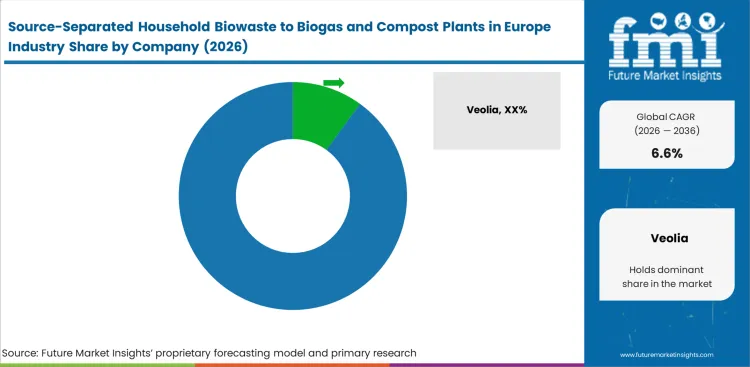
Scale helps major operators reach more tenders, but contract success still starts with local operating credibility. Veolia and SUEZ bring broad European waste treatment exposure into large municipal discussions. PreZero and FCC Medio Ambiente are stronger in specific country systems and benefit from integrated service control. Indaver, REMONDIS, and Urbaser add weight in tenders linked to regional treatment footprints. The market stays fragmented because municipal tender cycles and permitting conditions keep contract access highly local.
Operating advantage comes from cleaner intake handling and dependable outlet management. Household biowaste treatment loses value quickly when contamination enters the system and output quality falls. Operators that combine disciplined collection interfaces with stable treatment performance can hold stronger contract economics over time. This category depends more on source separation quality than on scale alone.
Commercial differentiation comes from tender fit and outlet discipline. Municipal authorities want plants able to handle local feedstock conditions without excessive rejects or weak finished product realization. Large operators can spread technical know-how across multiple contracts, though local contract structure keeps room for regional specialists and country-focused portfolios. Competitive balance is likely to stay fragmented as no single operator controls household biowaste treatment access across Europe’s municipal systems.
Competitive Benchmarking for Source-Separated Household Biowaste to Biogas and Compost Plants in Europe Industry
| Company | Organic Treatment Breadth | Biogas / Biomethane Capability | Municipal Contract Access | European Footprint |
|---|---|---|---|---|
| Veolia | High | High | Strong | Pan-European |
| SUEZ | High | High | Strong | Pan-European |
| PreZero | High | High | Strong | Pan-European |
| FCC Medio Ambiente | High | Medium | Strong | Europe-focused |
| Indaver | Medium | High | Strong | Europe-focused |
| REMONDIS | High | High | Strong | Pan-European |
| Urbaser | Medium | Medium | Strong | Pan-European |
Source: Future Market Insights competitive analysis, 2026. Ratings reflect relative positioning based on software depth, road-test integration, scenario support, and geographic reach.
Recent Developments
- March 2025: England confirmed mandatory separate household food and garden waste collection from March 2026, creating a stronger feedstock base for biogas and compost plants.
- April 2025: ADEME reported that 32.1 million people in France now have access to a biowaste sorting solution, lifting household source-separation volumes for downstream treatment.
- April 2026: SUEZ launched Digelis FoodWaste in France, improving pre-treatment efficiency for source-separated biowaste and supporting higher-value anaerobic digestion output.
Key Players
- Veolia
- SUEZ
- PreZero
- FCC Medio Ambiente
- Indaver
- REMONDIS
- Urbaser
Scope of the Report
| Metric | Value |
|---|---|
| Quantitative Units | USD 3.7 billion (2025) to USD 7.4 billion (2036), at a CAGR of 6.6% |
| Market Definition | The source-separated household biowaste to biogas and compost plants industry in Europe comprises composting plants, anaerobic digestion plants, and integrated biological treatment facilities processing separately collected household kitchen waste and garden waste into compost, digestate, biogas, and biomethane across European municipal waste systems. |
| Segmentation |
|
| Regions Covered | Europe |
| Countries Covered | Spain, Poland, France, Netherlands, Italy, Germany, Sweden, and other European countries |
| Key Companies Profiled | Veolia, SUEZ, PreZero, FCC Medio Ambiente, Indaver, REMONDIS, Urbaser, and other regional operators |
| Forecast Period | 2026 to 2036 |
| Approach | Hybrid bottom-up and top-down methodology using separately collected household biowaste treatment volumes, municipal collection coverage, composting and anaerobic digestion revenue modeling, and country-level policy adoption assessment, supported by operator mapping and secondary industry data. |
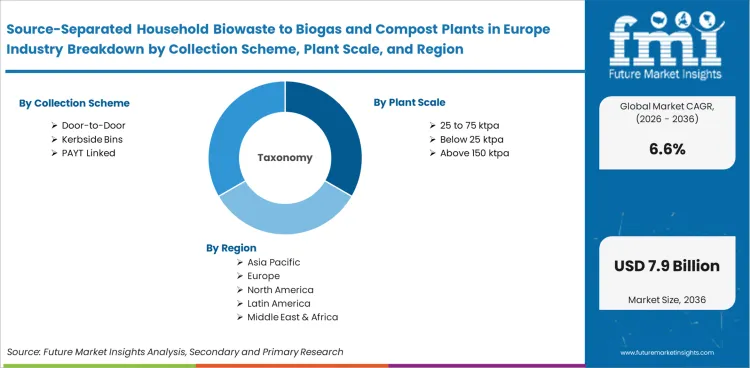
Source-Separated Household Biowaste to Biogas and Compost Plants in Europe Industry by Segments
By Collection Scheme
- Door-to-door
- Kerbside bins
- Bring points
- PAYT-linked
By Plant Scale
- Below 25 ktpa
- 25 to 75 ktpa
- 75 to 150 ktpa
- Above 150 ktpa
By Output Product
- Compost
- Digestate
- Biogas
- Biomethane
By Ownership Model
- Municipal contracts
- PPP plants
- Private merchant
- Utility-owned
By End-use Outlet
- Agriculture
- Horticulture
- Landscaping
- Grid injection
- CHP
By Region
- Western Europe
- Germany
- France
- Netherlands
- Belgium
- Austria
- Northern Europe
- Denmark
- Sweden
- Norway
- Southern Europe
- Italy
- Spain
- Portugal
- Greece
- Eastern Europe
- Poland
- Czech Republic
Bibliography
- Department for Environment, Food & Rural Affairs. (2025, March 27). Simpler recycling: Household recycling in England. GOV.UK.
- SUEZ. (2026, April 9). SUEZ launches Digelis FoodWaste, a biowaste preparation technology combining water and energy efficiency. SUEZ.
- WRAP. (2025, August 27). UK Gate Fees Report 2024-25. WRAP.
- Causeway Coast and Glens Borough Council. (2025, October 14). Sale of Compost at Letterloan Composting Facility.
- Bio-based Industries Consortium. (2024). Bio-waste generation in the EU: Current capture levels and future potential.
- European Biogas Association. (2024, December). Statistical Report 2024.
- European Court of Auditors. (2025). Special report 23/2025: Municipal waste management.
- Municipal Waste Europe. (2025, July 7). Joint position paper: Unlocking the full potential of biowaste in the circular bioeconomy.
- Nohales, G., & Stinavage, M. (2024, June). LIFE BIOBEST D3.2: Guideline on governance and economic incentives.
- Nohales, G. (2024, June). LIFE BIOBEST D3.1: Guideline on the separate collection of bio-waste.
- Friege, H., Rousta, K., & Baldwin, C. (2025, December 19). Using differentiated waste fees to encourage the sustainable recycling of organic waste. Sustainability, 18(1), Article 52.
This bibliography is provided for reader reference and is not exhaustive. The full report contains the complete reference list and detailed citations.
This Report Addresses
- What revenue level defines the Europe household source-separated biowaste plant market in 2025 and 2036.
- Which treatment route carries the largest 2026 share, and which route is expanding faster.
- How separate collection design influences plant revenue quality and reject burdens.
- Which output product holds the broadest commercial base across Europe in 2026.
- Why Spain and Poland are moving ahead of mature Western European industries on forecast growth.
- How municipal contract structure shapes competition across large operators and regional specialists.
- Which commercial risks limit faster value conversion across household organics treatment systems.
Frequently Asked Questions
What size is the market in 2026?
FMI estimates market value at USD 3.9 billion in 2026.
How large can the market reach by 2036?
Forecast value reaches USD 7.4 billion by 2036 under the base case model.
What CAGR is expected across the forecast period?
Market demand is projected to expand at a 6.6% CAGR from 2026 through 2036.
Which treatment route leads the market?
Composting leads treatment route demand with an estimated 57% share in 2026.
Which collection scheme carries the largest share?
Door-to-door collection leads collection scheme demand with an estimated 46% share in 2026.
Which output product holds the broadest commercial base?
Compost leads output product demand with an estimated 41% share in 2026.
Which country posts the fastest forecast growth?
Spain leads country expansion with forecast demand rising at 7.8% CAGR through 2036.
What is the main commercial issue shaping plant economics?
Feedstock purity has the strongest commercial effect since it influences rejects, output quality, and realized revenue.
Preview the report firsthand - request a free sample
Get SampleGet the brochure for pricing and purchase details.
Get PDFTable of Content
- Executive Summary
- Global Market Outlook
- Demand-side Trends
- Supply-side Trends
- Technology Roadmap Analysis
- Analysis and Recommendations
- Market Definition / Scope / Limitations
- Research Methodology
- Chapter Orientation
- Analytical Lens and Working Hypotheses
- Market Structure, Signals, and Trend Drivers
- Benchmarking and Cross-market Comparability
- Market Sizing, Forecasting, and Opportunity Mapping
- Research Design and Evidence Framework
- Desk Research Programme (Secondary Evidence)
- Company Annual and Sustainability Reports
- Peer-reviewed Journals and Academic Literature
- Corporate Websites, Product Literature, and Technical Notes
- Earnings Decks and Investor Briefings
- Statutory Filings and Regulatory Disclosures
- Technical White Papers and Standards Notes
- Trade Journals, Industry Magazines, and Analyst Briefs
- Conference Proceedings, Webinars, and Seminar Materials
- Subscription Datasets and Paid Sources
- Social Channels, Communities, and Digital Listening Inputs
- Additional Desk Sources
- Expert Input and Fieldwork (Primary Evidence)
- Primary Modes
- Qualitative Interviews and Expert Elicitation
- Quantitative Surveys and Structured Data Capture
- Blended Approach
- Why Primary Evidence is Used
- Field Techniques
- Interviews
- Surveys
- Focus Groups
- Observational and In-context Research
- Social and Community Interactions
- Stakeholder Universe Engaged
- C-suite Leaders
- Board Members
- Presidents and Vice Presidents
- R&D and Innovation Heads
- Technical Specialists
- Domain Subject-matter Experts
- Scientists
- Physicians and Other Healthcare Professionals
- Governance, Ethics, and Data Stewardship
- Research Ethics
- Data Integrity and Handling
- Primary Modes
- Tooling, Models, and Reference Databases
- Desk Research Programme (Secondary Evidence)
- Data Engineering and Model Build
- Data Acquisition and Ingestion
- Cleaning, Normalisation, and Verification
- Synthesis, Triangulation, and Analysis
- Quality Assurance and Audit Trail
- Market Background
- Market Dynamics
- Drivers
- Restraints
- Opportunity
- Trends
- Scenario Forecast
- Demand in Optimistic Scenario
- Global Market Analysis 2021 to 2025 and Forecast, 2026 to 2036
- Historical Market Size Value (USD Million) Analysis, 2021 to 2025
- Current and Future Market Size Value (USD Million) Projections, 2026 to 2036
- Y-o-Y Growth Trend Analysis
- Absolute $ Opportunity Analysis
- Global Market Pricing Analysis 2021 to 2025 and Forecast 2026 to 2036
- Global Market Analysis 2021 to 2025 and Forecast 2026 to 2036, By Collection Scheme
- Introduction / Key Findings
- Historical Market Size Value (USD Million) Analysis By Collection Scheme , 2021 to 2025
- Current and Future Market Size Value (USD Million) Analysis and Forecast By Collection Scheme , 2026 to 2036
- Door-to-Door
- Kerbside Bins
- PAYT Linked
- Door-to-Door
- Y-o-Y Growth Trend Analysis By Collection Scheme , 2021 to 2025
- Absolute $ Opportunity Analysis By Collection Scheme , 2026 to 2036
- Global Market Analysis 2021 to 2025 and Forecast 2026 to 2036, By Plant Scale
- Introduction / Key Findings
- Historical Market Size Value (USD Million) Analysis By Plant Scale, 2021 to 2025
- Current and Future Market Size Value (USD Million) Analysis and Forecast By Plant Scale, 2026 to 2036
- 25 to 75 ktpa
- Below 25 ktpa
- Above 150 ktpa
- 25 to 75 ktpa
- Y-o-Y Growth Trend Analysis By Plant Scale, 2021 to 2025
- Absolute $ Opportunity Analysis By Plant Scale, 2026 to 2036
- Global Market Analysis 2021 to 2025 and Forecast 2026 to 2036, By Output Product
- Introduction / Key Findings
- Historical Market Size Value (USD Million) Analysis By Output Product, 2021 to 2025
- Current and Future Market Size Value (USD Million) Analysis and Forecast By Output Product, 2026 to 2036
- Compost
- Digestate
- Biogas
- Compost
- Y-o-Y Growth Trend Analysis By Output Product, 2021 to 2025
- Absolute $ Opportunity Analysis By Output Product, 2026 to 2036
- Global Market Analysis 2021 to 2025 and Forecast 2026 to 2036, By Ownership Model
- Introduction / Key Findings
- Historical Market Size Value (USD Million) Analysis By Ownership Model, 2021 to 2025
- Current and Future Market Size Value (USD Million) Analysis and Forecast By Ownership Model, 2026 to 2036
- Municipal Contracts
- PPP Plants
- Private Merchant
- Municipal Contracts
- Y-o-Y Growth Trend Analysis By Ownership Model, 2021 to 2025
- Absolute $ Opportunity Analysis By Ownership Model, 2026 to 2036
- Global Market Analysis 2021 to 2025 and Forecast 2026 to 2036, By End-use Outlet
- Introduction / Key Findings
- Historical Market Size Value (USD Million) Analysis By End-use Outlet, 2021 to 2025
- Current and Future Market Size Value (USD Million) Analysis and Forecast By End-use Outlet, 2026 to 2036
- Agriculture
- Horticulture
- Landscaping
- Agriculture
- Y-o-Y Growth Trend Analysis By End-use Outlet, 2021 to 2025
- Absolute $ Opportunity Analysis By End-use Outlet, 2026 to 2036
- Global Market Analysis 2021 to 2025 and Forecast 2026 to 2036, By Region
- Introduction
- Historical Market Size Value (USD Million) Analysis By Region, 2021 to 2025
- Current Market Size Value (USD Million) Analysis and Forecast By Region, 2026 to 2036
- North America
- Latin America
- Western Europe
- Eastern Europe
- East Asia
- South Asia and Pacific
- Middle East & Africa
- Market Attractiveness Analysis By Region
- North America Market Analysis 2021 to 2025 and Forecast 2026 to 2036, By Country
- Historical Market Size Value (USD Million) Trend Analysis By Market Taxonomy, 2021 to 2025
- Market Size Value (USD Million) Forecast By Market Taxonomy, 2026 to 2036
- By Country
- USA
- Canada
- Mexico
- By Collection Scheme
- By Plant Scale
- By Output Product
- By Ownership Model
- By End-use Outlet
- By Country
- Market Attractiveness Analysis
- By Country
- By Collection Scheme
- By Plant Scale
- By Output Product
- By Ownership Model
- By End-use Outlet
- Key Takeaways
- Latin America Market Analysis 2021 to 2025 and Forecast 2026 to 2036, By Country
- Historical Market Size Value (USD Million) Trend Analysis By Market Taxonomy, 2021 to 2025
- Market Size Value (USD Million) Forecast By Market Taxonomy, 2026 to 2036
- By Country
- Brazil
- Chile
- Rest of Latin America
- By Collection Scheme
- By Plant Scale
- By Output Product
- By Ownership Model
- By End-use Outlet
- By Country
- Market Attractiveness Analysis
- By Country
- By Collection Scheme
- By Plant Scale
- By Output Product
- By Ownership Model
- By End-use Outlet
- Key Takeaways
- Western Europe Market Analysis 2021 to 2025 and Forecast 2026 to 2036, By Country
- Historical Market Size Value (USD Million) Trend Analysis By Market Taxonomy, 2021 to 2025
- Market Size Value (USD Million) Forecast By Market Taxonomy, 2026 to 2036
- By Country
- Germany
- UK
- Italy
- Spain
- France
- Nordic
- BENELUX
- Rest of Western Europe
- By Collection Scheme
- By Plant Scale
- By Output Product
- By Ownership Model
- By End-use Outlet
- By Country
- Market Attractiveness Analysis
- By Country
- By Collection Scheme
- By Plant Scale
- By Output Product
- By Ownership Model
- By End-use Outlet
- Key Takeaways
- Eastern Europe Market Analysis 2021 to 2025 and Forecast 2026 to 2036, By Country
- Historical Market Size Value (USD Million) Trend Analysis By Market Taxonomy, 2021 to 2025
- Market Size Value (USD Million) Forecast By Market Taxonomy, 2026 to 2036
- By Country
- Russia
- Poland
- Hungary
- Balkan & Baltic
- Rest of Eastern Europe
- By Collection Scheme
- By Plant Scale
- By Output Product
- By Ownership Model
- By End-use Outlet
- By Country
- Market Attractiveness Analysis
- By Country
- By Collection Scheme
- By Plant Scale
- By Output Product
- By Ownership Model
- By End-use Outlet
- Key Takeaways
- East Asia Market Analysis 2021 to 2025 and Forecast 2026 to 2036, By Country
- Historical Market Size Value (USD Million) Trend Analysis By Market Taxonomy, 2021 to 2025
- Market Size Value (USD Million) Forecast By Market Taxonomy, 2026 to 2036
- By Country
- China
- Japan
- South Korea
- By Collection Scheme
- By Plant Scale
- By Output Product
- By Ownership Model
- By End-use Outlet
- By Country
- Market Attractiveness Analysis
- By Country
- By Collection Scheme
- By Plant Scale
- By Output Product
- By Ownership Model
- By End-use Outlet
- Key Takeaways
- South Asia and Pacific Market Analysis 2021 to 2025 and Forecast 2026 to 2036, By Country
- Historical Market Size Value (USD Million) Trend Analysis By Market Taxonomy, 2021 to 2025
- Market Size Value (USD Million) Forecast By Market Taxonomy, 2026 to 2036
- By Country
- India
- ASEAN
- Australia & New Zealand
- Rest of South Asia and Pacific
- By Collection Scheme
- By Plant Scale
- By Output Product
- By Ownership Model
- By End-use Outlet
- By Country
- Market Attractiveness Analysis
- By Country
- By Collection Scheme
- By Plant Scale
- By Output Product
- By Ownership Model
- By End-use Outlet
- Key Takeaways
- Middle East & Africa Market Analysis 2021 to 2025 and Forecast 2026 to 2036, By Country
- Historical Market Size Value (USD Million) Trend Analysis By Market Taxonomy, 2021 to 2025
- Market Size Value (USD Million) Forecast By Market Taxonomy, 2026 to 2036
- By Country
- Kingdom of Saudi Arabia
- Other GCC Countries
- Turkiye
- South Africa
- Other African Union
- Rest of Middle East & Africa
- By Collection Scheme
- By Plant Scale
- By Output Product
- By Ownership Model
- By End-use Outlet
- By Country
- Market Attractiveness Analysis
- By Country
- By Collection Scheme
- By Plant Scale
- By Output Product
- By Ownership Model
- By End-use Outlet
- Key Takeaways
- Key Countries Market Analysis
- USA
- Pricing Analysis
- Market Share Analysis, 2025
- By Collection Scheme
- By Plant Scale
- By Output Product
- By Ownership Model
- By End-use Outlet
- Canada
- Pricing Analysis
- Market Share Analysis, 2025
- By Collection Scheme
- By Plant Scale
- By Output Product
- By Ownership Model
- By End-use Outlet
- Mexico
- Pricing Analysis
- Market Share Analysis, 2025
- By Collection Scheme
- By Plant Scale
- By Output Product
- By Ownership Model
- By End-use Outlet
- Brazil
- Pricing Analysis
- Market Share Analysis, 2025
- By Collection Scheme
- By Plant Scale
- By Output Product
- By Ownership Model
- By End-use Outlet
- Chile
- Pricing Analysis
- Market Share Analysis, 2025
- By Collection Scheme
- By Plant Scale
- By Output Product
- By Ownership Model
- By End-use Outlet
- Germany
- Pricing Analysis
- Market Share Analysis, 2025
- By Collection Scheme
- By Plant Scale
- By Output Product
- By Ownership Model
- By End-use Outlet
- UK
- Pricing Analysis
- Market Share Analysis, 2025
- By Collection Scheme
- By Plant Scale
- By Output Product
- By Ownership Model
- By End-use Outlet
- Italy
- Pricing Analysis
- Market Share Analysis, 2025
- By Collection Scheme
- By Plant Scale
- By Output Product
- By Ownership Model
- By End-use Outlet
- Spain
- Pricing Analysis
- Market Share Analysis, 2025
- By Collection Scheme
- By Plant Scale
- By Output Product
- By Ownership Model
- By End-use Outlet
- France
- Pricing Analysis
- Market Share Analysis, 2025
- By Collection Scheme
- By Plant Scale
- By Output Product
- By Ownership Model
- By End-use Outlet
- India
- Pricing Analysis
- Market Share Analysis, 2025
- By Collection Scheme
- By Plant Scale
- By Output Product
- By Ownership Model
- By End-use Outlet
- ASEAN
- Pricing Analysis
- Market Share Analysis, 2025
- By Collection Scheme
- By Plant Scale
- By Output Product
- By Ownership Model
- By End-use Outlet
- Australia & New Zealand
- Pricing Analysis
- Market Share Analysis, 2025
- By Collection Scheme
- By Plant Scale
- By Output Product
- By Ownership Model
- By End-use Outlet
- China
- Pricing Analysis
- Market Share Analysis, 2025
- By Collection Scheme
- By Plant Scale
- By Output Product
- By Ownership Model
- By End-use Outlet
- Japan
- Pricing Analysis
- Market Share Analysis, 2025
- By Collection Scheme
- By Plant Scale
- By Output Product
- By Ownership Model
- By End-use Outlet
- South Korea
- Pricing Analysis
- Market Share Analysis, 2025
- By Collection Scheme
- By Plant Scale
- By Output Product
- By Ownership Model
- By End-use Outlet
- Russia
- Pricing Analysis
- Market Share Analysis, 2025
- By Collection Scheme
- By Plant Scale
- By Output Product
- By Ownership Model
- By End-use Outlet
- Poland
- Pricing Analysis
- Market Share Analysis, 2025
- By Collection Scheme
- By Plant Scale
- By Output Product
- By Ownership Model
- By End-use Outlet
- Hungary
- Pricing Analysis
- Market Share Analysis, 2025
- By Collection Scheme
- By Plant Scale
- By Output Product
- By Ownership Model
- By End-use Outlet
- Kingdom of Saudi Arabia
- Pricing Analysis
- Market Share Analysis, 2025
- By Collection Scheme
- By Plant Scale
- By Output Product
- By Ownership Model
- By End-use Outlet
- Turkiye
- Pricing Analysis
- Market Share Analysis, 2025
- By Collection Scheme
- By Plant Scale
- By Output Product
- By Ownership Model
- By End-use Outlet
- South Africa
- Pricing Analysis
- Market Share Analysis, 2025
- By Collection Scheme
- By Plant Scale
- By Output Product
- By Ownership Model
- By End-use Outlet
- USA
- Market Structure Analysis
- Competition Dashboard
- Competition Benchmarking
- Market Share Analysis of Top Players
- By Regional
- By Collection Scheme
- By Plant Scale
- By Output Product
- By Ownership Model
- By End-use Outlet
- Competition Analysis
- Competition Deep Dive
- Veolia
- Overview
- Product Portfolio
- Profitability by Market Segments (Product/Age /Sales Channel/Region)
- Sales Footprint
- Strategy Overview
- Marketing Strategy
- Product Strategy
- Channel Strategy
- SUEZ
- PreZero
- FCC Medio Ambiente
- Indaver
- REMONDIS
- Urbaser
- Veolia
- Competition Deep Dive
- Market Dynamics
- Assumptions & Acronyms Used


