

- Industry Size (2026)
- USD 8.9 Mn
- Forecast (2036)
- USD 12.3 Mn
- CAGR (2026 to 2036)
- 3.2%
Demand for Canola Lecithin in South Korea Forecast and Outlook 2026 to 2036
Sales of canola lecithin in South Korea are projected to be valued at USD 8.9 million in 2026. The industry is likely to reach USD 12.3 million by 2036, advancing at a compound annual growth rate of 3.2%. South Korean food processing industry is progressively shifting towards alternative emulsifiers as manufacturers seek to diversify supply chains and address the growing consumer demand for allergen-free labeling. While soy-derived ingredients have traditionally dominated, the rising prevalence of soy allergies and the clean-label movement are propelling the adoption of rapeseed-based alternatives that offer similar functionality without the associated allergenic stigma.
The industry trajectory is heavily influenced by the sophisticated demands of the domestic bakery and confectionery sectors, which require consistent texturizing agents to maintain product quality. European-influenced pastry trends and the popularity of "soft-texture" breads drive the consumption of high-quality liquid emulsifiers that improve dough machinability and shelf stability. Furthermore, the expansion of the plant-based milk and meat alternative categories is creating new avenues for utilization, as formulators prefer non-soy inputs to distinguish their products in a crowded retail space.
Quick Stats for Demand for Canola Lecithin in South Korea
- Demand for Canola Lecithin in South Korea Industry Value (2026): USD 8.9 million
- Demand for Canola Lecithin in South Korea Industry Forecast Value (2036): USD 12.3 million
- Demand for Canola Lecithin in South Korea Forecast CAGR: 3.2%
- Demand for Canola Lecithin in South Korea Leading Form: Liquid (62.0%)
- Demand for Canola Lecithin in South Korea Leading End Use: Food and Beverages (45.0%)
- Demand for Canola Lecithin in South Korea Leading Functionality: Emulsification (52.0%)
- Demand for Canola Lecithin in South Korea Key Growth Regions: Jeju, South Gyeongsang, South Jeolla, North Jeolla
- Demand for Canola Lecithin in South Korea Key Players: Cargill, Ciranda, Austrade Inc., Lecico, American Chemie
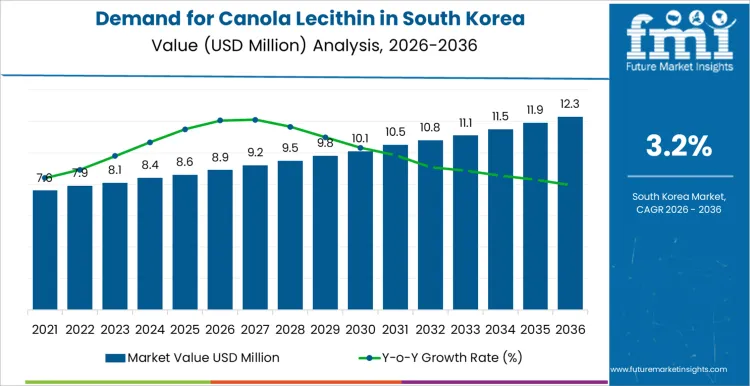
Technological advancements in extraction and filtration are enhancing the sensory profile of rapeseed derivatives, making them more suitable for flavor-sensitive applications. Manufacturers are increasingly utilizing fractionated lecithin to achieve specific functional properties, such as higher heat stability for frying oils or better dispersibility in instant beverage powders. The integration of canola proteins and lecithin into a single waste-reduction stream reflects a broader industry move towards upcycling agricultural by-products. This technical evolution ensures that these ingredients meet the rigorous standards of South Korea's health-conscious consumers.
Demand for Canola Lecithin in South Korea Key Takeaways
| Metric | Value |
|---|---|
| Industry Size (2026) | USD 8.9 million |
| Industry Value (2036) | USD 12.3 million |
| CAGR (2026 to 2036) | 3.2% |
What Factors Are Driving the Switch to Rapeseed Derivatives?
A primary catalyst for growth is the heightened consumer scrutiny regarding food labels and potential allergens. South Korean parents are increasingly cautious about soy presence in infant formulas and children's snacks, prompting manufacturers to switch to canola lecithin to secure "allergen-free" claims. The robust growth of the convenience food sector, particularly ready-to-eat meals and sauces, necessitates stable emulsifiers that prevent separation during transport and storage. Additionally, the fluctuating prices of soy lecithin due to global trade dynamics encourage procurement managers to diversify their ingredient portfolios with price-competitive rapeseed alternatives.
How is the Sector Structured Across Key Segments?
The sector is segmented to address the logistical needs of importers and the functional requirements of end-users. It is primarily categorized by form, reflecting the physical state of the material upon entry. The end use segment highlights the diverse industrial verticals consuming these byproducts. Each segment plays a vital role, where bulk shipments drive volume through lower unit costs and fungal cultivation drives value through consistent consumption cycles.
Why is the Powder Variation Gaining Traction in Industrial Formulation?
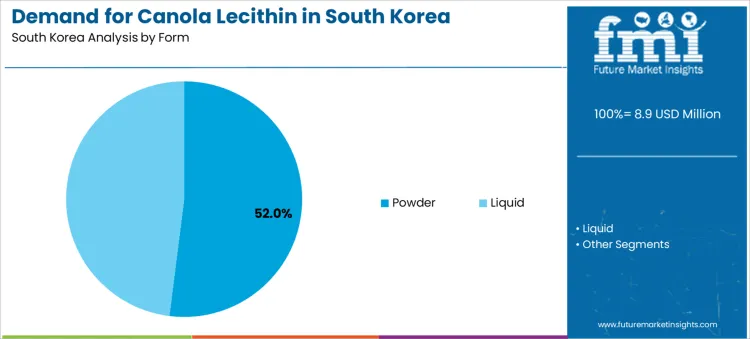
The Powder segment captures a significant market share of 52.0%, driven by its ease of handling and longer shelf life compared to fluid alternatives. Manufacturers favor powdered canola lecithin for its superior ability to blend into dry mixes, such as baking premixes and protein powders, without altering the moisture content of the final product. This form effectively mitigates the risk of oil separation during storage, ensuring consistent product quality in large-scale operations. Furthermore, the logistical advantages of transporting lightweight, concentrated powder reduce shipping costs for global distributors. Its versatility in non-food applications, particularly in animal feed compaction, further solidifies its standing as a preferred choice for industrial buyers seeking efficiency and formulation stability.
How is the Standard Grade Lecithin the Backbone of Conventional Processing?
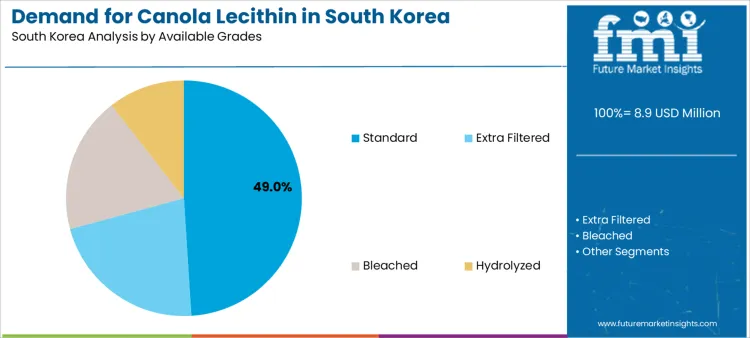
The Standard grade segment accounts for a dominant share of 49.0%, serving as the primary choice for cost-effective, high-volume manufacturing processes. This grade retains the essential phospholipids required for effective emulsification, making it indispensable for producers of margarine, chocolates, and baked goods who prioritize functionality over aesthetic refinement. Unlike highly refined alternatives, standard canola lecithin offers a robust balance of viscosity and surface activity, which is crucial for maintaining texture in automated production lines. Industrial users appreciate its minimal processing requirements, which align with the growing demand for less-refined ingredient lists in the B2B sector. Its broad compatibility with both water-in-oil and oil-in-water systems ensures its continued ubiquity across diverse manufacturing sectors.
Why Food and Beverages Anchoring Demand Through Clean Label Trends?
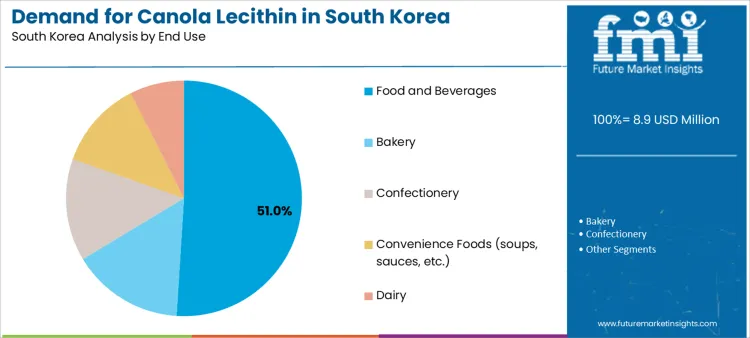
The Food and Beverages segment holds the largest market share of 51.0%, fueled by the escalating industry shift toward allergen-free and non-GMO plant-based ingredients. Canola lecithin has emerged as a critical alternative to soy, allowing food technologists to reformulate products like salad dressings, instant soups, and dairy alternatives without compromising mouthfeel or stability. Manufacturers are increasingly utilizing this ingredient to improve the texture of gluten-free bakery items, where it compensates for the lack of structural elasticity usually provided by wheat proteins. Additionally, its neutral flavor profile ensures it does not interfere with the sensory attributes of delicate confectioneries. This segment's growth is sustained by the imperative for companies to clean up their labels while maintaining the functional integrity of mass-produced consumable goods.
How Wetting Agents are Enhancing Dispersion in High-Speed Production?
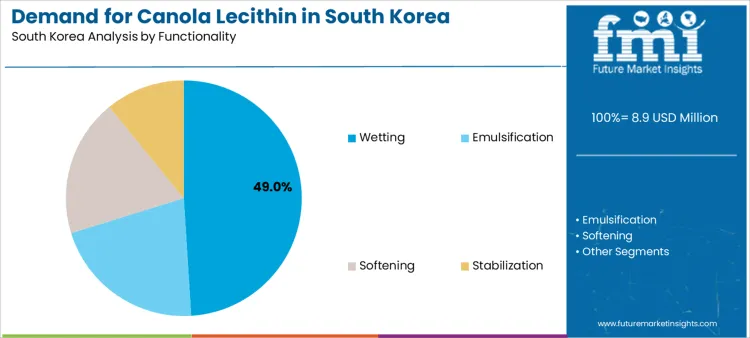
The Wetting functionality segment secures a substantial market share of 49.0%, addressing the critical need for rapid dispersion in instantized product manufacturing. In industrial settings, the ability of a powder to sink and dissolve quickly in liquid is paramount for operational efficiency, particularly in the production of instant cocoa, milk powders, and protein supplements. Canola lecithin lowers the surface tension at the solid-liquid interface, preventing clump formation and ensuring a smooth, homogenous mixture in mixing tanks. This capability reduces downtime associated with equipment clogging and inconsistent batch quality. For manufacturers of ready-to-mix beverages, superior wetting properties translate directly to consumer satisfaction, driving the adoption of lecithin-coated powders that promise instant reconstitution and stability.
Will Non-GMO Trends Reshape Sourcing?
A significant trend is the growing preference for non-GMO ingredients. While much of the global canola crop is genetically modified, there is a distinct premium segment in South Korea for certified non-GMO clean label emulsifiers. Suppliers who can guarantee identity preservation (IP) from farm to factory are gaining traction among premium health food brands. This shift forces importers to establish rigorous traceability protocols, ensuring that their natural food emulsifiers meet the stringent testing standards of domestic retailers.
Does Price Volatility Hinder Adoption?
The most significant restraint is the price sensitivity of the food manufacturing sector. Canola lecithin often carries a price premium over commodity soy lecithin due to lower global production volumes. When supply chains for canola meal and oil are disrupted, ingredient prices can spike, prompting manufacturers to revert to cheaper soy alternatives. Overcoming this requires suppliers to demonstrate the superior functionality or marketing value of rapeseed lecithin to justify the cost difference to procurement teams.
How Can Cosmetic Applications Unlock Value?
The emerging field of personal care presents a frontier of opportunity. South Korea's K-Beauty industry is constantly seeking novel phosphatidylcholine sources for liposomes and skin-conditioning agents. Canola lecithin's emollient properties make it a viable ingredient for creams and lotions, offering a "plant-based" and "cruelty-free" claim. Diversifying into the cosmetic supply chain allows lecithin producers to tap into a high-margin industry that is less sensitive to raw material price fluctuations than the food sector.
How is the Lecithin Landscape Evolving Across South Korea's Regions?
The regional ananlyis shows a distinct pattern where food processing hubs drive industrial volume, while eco-conscious zones focus on organic and premium grade consumption. High-growth areas are characterizing their development by attracting food tech startups. As distinct provinces implement local food safety and quality initiatives, the utilization of emulsifiers is becoming tailored to regional production specialties.
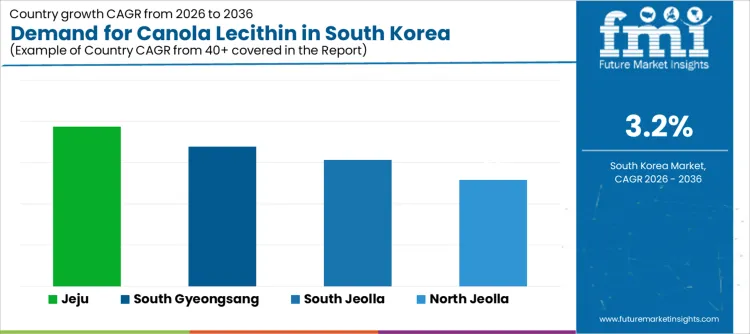
| Region | CAGR (2026 to 2036) |
|---|---|
| Jeju | 3.9% |
| South Gyeongsang | 3.4% |
| South Jeolla | 3.1% |
| North Jeolla | 2.6% |
Why is Clean Label Driving Demand in Jeju?
Adoption of natural emulsifiers in Jeju is projected to expand at a CAGR of 3.9%. The island's strong brand image as a clean, natural destination influences its local food industry. Producers of Jeju chocolates, tangerine snacks, and dairy products prioritize ingredients that align with this eco-friendly image. The demand is driven by the need for non-GMO, allergen-free emulsifiers in souvenir food products sold to tourists. Small-scale artisanal producers are key adopters of high-quality, traceability-certified lecithin.
How is Industrial Baking Influencing South Gyeongsang?
Sales of fluid lecithin in South Gyeongsang are likely to reach a CAGR of 3.4%. This region hosts substantial industrial zones with large-scale food manufacturing plants serving the southeastern population belt. The demand is fueled by the mass production of breads, noodles, and processed snacks. Factory operators require reliable, bulk supply of standard grade lecithin to maintain continuous production lines. The focus here is on cost-efficiency and consistent rheological performance for automated dosing systems.
What Role Does Convenience Food Play in South Jeolla?
The emulsifier sector in South Jeolla is anticipated to rise at a CAGR of 3.1%. Known for its rich culinary heritage, the region is modernizing its food processing capabilities to produce packaged sauces, marinades, and ready meals. The demand is driven by the need for stabilizing agents that prevent oil separation in retort pouches and bottled condiments. Canola lecithin's neutral taste profile makes it a preferred choice for preserving the authentic flavors of regional cuisine in shelf-stable formats.
How is the Food Cluster Shaping North Jeolla?
Deployment of functional ingredients in North Jeolla is expected to increase at a CAGR of 2.6%. The presence of the National Food Cluster draws innovative food companies focusing on health and wellness products. The demand is driven by R&D centers developing functional beverages and senior-friendly foods. These entities utilize specialized hydrolyzed and fractionated grades to create stable emulsions in protein drinks and nutritional supplements, supporting a knowledge-driven approach to ingredient selection.
What Strategies Define Leadership in Ingredient Supply?
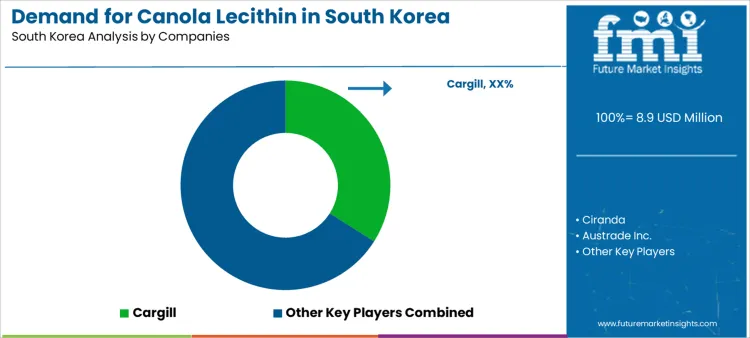
The competitive landscape is characterized by a reliance on imports from major agricultural producers like Canada and Australia, given the limited domestic cultivation of oilseeds. Cargill maintains a dominant position with a 34.0% share, leveraging its global supply chain and technical expertise to offer standardized fluid and de oiled lecithin solutions. Competition is intensifying as specialized distributors introduce premium European grades, targeting niche organic and non-GMO segments. This rivalry ensures a steady supply of diverse product grades, supporting the sector's gradual expansion through 2036.
How Are Niche Distributors Gaining Ground?
A key trend is the rise of specialized distributors connecting European and North American producers with Korean SMEs. Companies like Ciranda and American Chemie focus on flexible logistics, offering smaller packaging sizes (pails and drums) suitable for independent bakeries and cosmetic startups. They often bundle lecithin with other functional ingredients, providing a one-stop sourcing solution. This agility allows them to capture the high-margin, low-volume segment that larger commodity players may overlook, fostering loyalty among boutique brands.
Key Companies
- Cargill
- Ciranda
- Austrade Inc.
- Lecico
- American Chemie
- ADM (Archer Daniels Midland)
- Bunge
- Stern-Wywiol Gruppe
- Lipoid
- Lasenor
Scope of Report
| Items | Values |
|---|---|
| Quantitative Units | USD Million |
| Form | Powder, Liquid |
| Available Grades | Standard, Extra Filtered, Bleached, Hydrolyzed |
| End Use | Food and Beverages, Bakery, Confectionery, Convenience Foods, Dairy |
| Functionality | Wetting, Emulsification, Softening, Stabilization |
| Regions Covered | Jeju, South Gyeongsang, South Jeolla, North Jeolla |
| Key Companies Profiled | Cargill, Ciranda, Austrade, Lecico, American Chemie, and others. |
Demand for Canola Lecithin in South Korea by Segments
By Form
- Powder
- Liquid
By Available Grades
- Standard
- Extra Filtered
- Bleached
- Hydrolyzed
By End Use
- Food and Beverages
- Bakery
- Confectionery
- Convenience Foods
- Dairy
By Functionality
- Wetting
- Emulsification
- Softening
- Stabilization
Bibliography
- Ministry of Food and Drug Safety. (2025, July 3). 2025 imported food inspection yearbook: 2024 results. Ministry of Food and Drug Safety, Republic of Korea.
- Ministry of Food and Drug Safety. (2025, May 29). 2024 food production performance statistics. Ministry of Food and Drug Safety, Republic of Korea.
- Rural Development Administration. (2024, November 22). Public forum to promote upcycling of agricultural byproducts and gather stakeholder input. Rural Development Administration, Republic of Korea.
- Statistics Korea. (2025, February 2). Monthly industrial statistics, December 2024. Statistics Korea, Republic of Korea.
- Ministry of Food and Drug Safety. (2025, November 6). MFDS data portal: Food import status by year, regional office, and item (2001 to 2023). Ministry of Food and Drug Safety, Republic of Korea.
Frequently Asked Questions
How big is the demand for Canola Lecithin in South Korea in 2026?
The demand for canola lecithin in South Korea is estimated to be valued at USD 8.9 million in 2026.
What will be the size of Canola Lecithin in South Korea in 2036?
The industry size for the canola lecithin in South Korea is projected to reach USD 12.3 million by 2036.
How much will be the demand for Canola Lecithin in South Korea growth between 2026 and 2036?
The demand for canola lecithin in South Korea is expected to grow at a 3.2% CAGR between 2026 and 2036.
What are the key product types in the Canola Lecithin in South Korea?
The key product types in canola lecithin in South Korea are powder and liquid.
Which end user segment is expected to contribute significant share in the Canola Lecithin in South Korea in 2026?
In terms of end use, the food and beverages segment is expected to command 45.0% share in the canola lecithin in South Korea in 2026.
Preview the report firsthand - request a free sample
Get SampleGet the brochure for pricing and purchase details.
Get PDFTable of Content
- Executive Summary
- South Korea Market Outlook
- Demand-side Trends
- Supply-side Trends
- Technology Roadmap Analysis
- Analysis and Recommendations
- Market Overview
- Market Coverage / Taxonomy
- Market Definition / Scope / Limitations
- Market Background
- Market Dynamics
- Drivers
- Restraints
- Opportunity
- Trends
- Scenario Forecast
- Demand in Optimistic Scenario
- Demand in Likely Scenario
- Demand in Conservative Scenario
- Opportunity Map Analysis
- Product Life Cycle Analysis
- Supply Chain Analysis
- Investment Feasibility Matrix
- Value Chain Analysis
- PESTLE and Porter’s Analysis
- Regulatory Landscape
- Regional Parent Market Outlook
- Production and Consumption Statistics
- Import and Export Statistics
- Market Dynamics
- South Korea Market Analysis 2021 to 2025 and Forecast, 2026 to 2036
- Historical Market Size Value (USD Million) Analysis, 2021 to 2025
- Current and Future Market Size Value (USD Million) Projections, 2026 to 2036
- Y-o-Y Growth Trend Analysis
- Absolute $ Opportunity Analysis
- South Korea Market Pricing Analysis 2021 to 2025 and Forecast 2026 to 2036
- South Korea Market Analysis 2021 to 2025 and Forecast 2026 to 2036, By Form
- Introduction / Key Findings
- Historical Market Size Value (USD Million) Analysis By Form , 2021 to 2025
- Current and Future Market Size Value (USD Million) Analysis and Forecast By Form , 2026 to 2036
- Powder
- Liquid
- Powder
- Y-o-Y Growth Trend Analysis By Form , 2021 to 2025
- Absolute $ Opportunity Analysis By Form , 2026 to 2036
- South Korea Market Analysis 2021 to 2025 and Forecast 2026 to 2036, By Available Grades
- Introduction / Key Findings
- Historical Market Size Value (USD Million) Analysis By Available Grades, 2021 to 2025
- Current and Future Market Size Value (USD Million) Analysis and Forecast By Available Grades, 2026 to 2036
- Standard
- Extra Filtered
- Bleached
- Hydrolyzed
- Standard
- Y-o-Y Growth Trend Analysis By Available Grades, 2021 to 2025
- Absolute $ Opportunity Analysis By Available Grades, 2026 to 2036
- South Korea Market Analysis 2021 to 2025 and Forecast 2026 to 2036, By End Use
- Introduction / Key Findings
- Historical Market Size Value (USD Million) Analysis By End Use, 2021 to 2025
- Current and Future Market Size Value (USD Million) Analysis and Forecast By End Use, 2026 to 2036
- Food and Beverages
- Bakery
- Confectionery
- Convenience Foods (soups, sauces, etc.)
- Dairy
- Food and Beverages
- Y-o-Y Growth Trend Analysis By End Use, 2021 to 2025
- Absolute $ Opportunity Analysis By End Use, 2026 to 2036
- South Korea Market Analysis 2021 to 2025 and Forecast 2026 to 2036, By Functionality
- Introduction / Key Findings
- Historical Market Size Value (USD Million) Analysis By Functionality, 2021 to 2025
- Current and Future Market Size Value (USD Million) Analysis and Forecast By Functionality, 2026 to 2036
- Wetting
- Emulsification
- Softening
- Stabilization
- Wetting
- Y-o-Y Growth Trend Analysis By Functionality, 2021 to 2025
- Absolute $ Opportunity Analysis By Functionality, 2026 to 2036
- Market Structure Analysis
- Competition Dashboard
- Competition Benchmarking
- Market Share Analysis of Top Players
- By Regional
- By Form
- By Available Grades
- By End Use
- By Functionality
- Competition Analysis
- Competition Deep Dive
- Cargill
- Overview
- Product Portfolio
- Profitability by Market Segments (Product/Age /Sales Channel/Region)
- Sales Footprint
- Strategy Overview
- Marketing Strategy
- Product Strategy
- Channel Strategy
- Ciranda
- Austrade Inc.
- Lecico
- American Chemie
- Cargill
- Competition Deep Dive
- Assumptions & Acronyms Used
- Research Methodology


