

- Industry Size (2026)
- USD 1.8 Bn
- Forecast (2036)
- USD 3.2 Bn
- CAGR (2026 to 2036)
- 6%
Sporocidal and Sterilant Chemicals Market Forecast and Outlook 2026 to 2036
The global sporocidal and sterilant chemicals market is projected to grow from USD 1.8 billion in 2026 to USD 3.2 billion by 2036, advancing at a 6% CAGR. This growth is driven by the rising demand for advanced sterilization solutions across industries such as healthcare, pharmaceuticals, food processing, and biotechnology. These chemicals are crucial for eliminating resistant microorganisms, including spores, which are often not eradicated by standard disinfectants. Initially used primarily in healthcare environments, sporocidal chemicals are now widely adopted across industries with stringent sterilization requirements. Innovations in sterilization technologies, such as gas-based and vaporized hydrogen peroxide systems, will contribute significantly to the market’s expansion.
Quick Stats for Sporocidal and Sterilant Chemicals Market
- Sporocidal and Sterilant Chemicals Market Value (2026): USD 1.8 billion
- Sporocidal and Sterilant Chemicals Market Forecast Value (2036): USD 3.2 billion
- Sporocidal and Sterilant Chemicals Market Forecast CAGR (2026-2036): 6%
- Leading Sterilant/Sporicide Type in Sporocidal and Sterilant Chemicals Market: Peracetic Acid Systems
- Key Growth Regions in Sporocidal and Sterilant Chemicals Market: Asia Pacific, North America, Europe
- Top Players in Sporocidal and Sterilant Chemicals Market: STERIS, Advanced Sterilization Products (ASP), Getinge, Ecolab, 3M, Reckitt, Cantel (STERIS), Metrex, Schülke & Mayr, Paul Hartmann
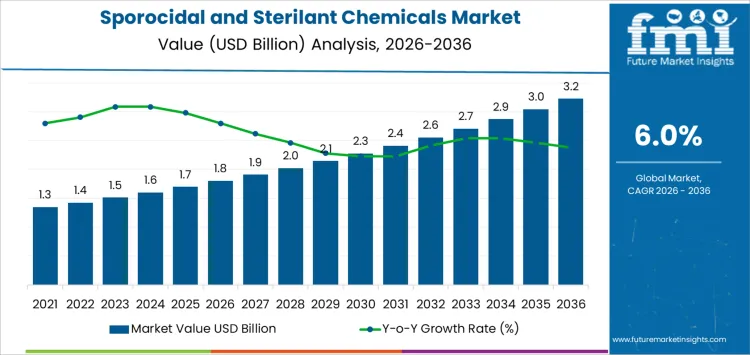
Segment-wise, peracetic acid systems lead the market with a 28% share due to their high efficacy in killing spores and bacteria, especially in high-risk healthcare settings. Hydrogen peroxide systems, glutaraldehyde & aldehydes, and other specialized sterilants like OPA and chlorine dioxide also contribute significantly. In terms of end-use settings, hospitals dominate the market, holding 54% of the share, driven by the demand for reliable sterilization and infection control. China and Brazil show strong growth, supported by expanding healthcare infrastructures and heightened awareness of sterilization standards. The USA and Germany exhibit steady growth, with innovation in sterilization technologies playing a key role.
Sporocidal and Sterilant Chemicals Market Key Takeaways
| Metric | Value |
|---|---|
| Industry Value (2026) | USD 1.8 billion |
| Forecast Value (2036) | USD 3.2 billion |
| Forecast CAGR (2026-2036) | 6% |
How is the Global Sporocidal and Sterilant Chemicals Sector Advancing?
The global sporocidal and sterilant chemicals market is expanding rapidly, driven by increasing demand for advanced disinfection solutions in healthcare, pharmaceutical, food processing, and biotechnology sectors. These chemicals are essential for eliminating tough, resistant microorganisms, including spores that are often not destroyed by standard disinfectants. Initially used primarily in critical healthcare environments such as hospitals and labs, the scope of sporocidal chemicals has broadened as industries face stricter sterilization requirements and the need for higher-level decontamination methods.
The demand for sporocidal and sterilant chemicals is expected to continue growing, propelled by innovations in sterilization technologies and a heightened focus on infection prevention in environments requiring high cleanliness standards. The rise in hospital-acquired infections (HAIs) and the growing recognition of microbial contamination risks are expected to drive demand for more effective sterilants. Furthermore, newer sterilization technologies, such as gas-based and vaporized hydrogen peroxide systems, will contribute to market expansion. However, challenges related to regulatory compliance, rising costs of raw materials, and the need for environmentally sustainable sterilization solutions will shape the sector’s development. As businesses and healthcare institutions prioritize hygiene and safety, sporocidal and sterilant chemicals will remain essential for maintaining sterile environments across a range of industries.
What is the Segment-Wise Analysis for the Global Sporocidal and Sterilant Chemicals Market?
The global sporocidal and sterilant chemicals market is driven by sterilant/sporicide types and end-use settings. Peracetic acid systems lead with a 28% share due to their strong effectiveness in killing spores and bacteria, particularly in high-risk healthcare environments. Other significant sterilants include hydrogen peroxide systems, glutaraldehyde & aldehydes, and other specialized sterilants like OPA and chlorine dioxide. In terms of end-use settings, hospitals dominate the market with a 54% share, driven by the need for reliable sterilization and disinfection in patient care areas.
Why Do Peracetic Acid Systems Lead the Global Sporocidal and Sterilant Chemicals Market?
Peracetic acid systems hold a 28% share of the global sporocidal and sterilant chemicals market due to their exceptional efficacy in killing spores, bacteria, and viruses. These systems are highly effective for sterilizing medical equipment, surfaces, and devices, particularly in environments like hospitals and clinics, where infection control is critical. Peracetic acid is known for its rapid action, broad-spectrum antimicrobial properties, and compatibility with a wide range of materials. As the healthcare sector continues to prioritize stringent sterilization and infection control, peracetic acid systems maintain their dominance in the market for sterilizing and sporicidal applications.
Why Do Hospitals Hold the Largest Share in the Global Sporocidal and Sterilant Chemicals Market?
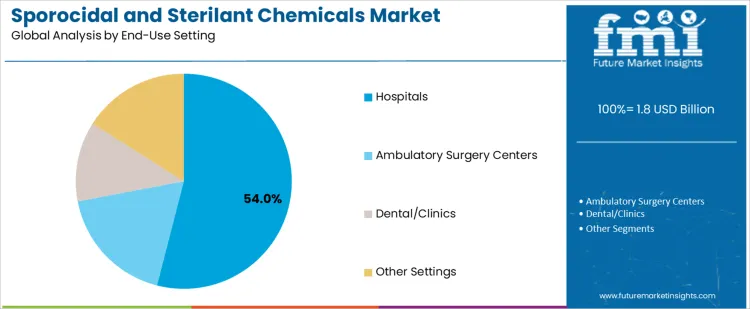
Hospitals account for 54% of the global sporocidal and sterilant chemicals market due to their essential need for rigorous sterilization and infection control. Healthcare facilities, particularly hospitals, require effective sterilants to ensure that medical equipment, surfaces, and patient areas remain free from harmful pathogens. As hospitals handle a high volume of patients, the need for reliable and fast-acting sterilization chemicals to prevent hospital-acquired infections (HAIs) remains paramount. The demand for sporocidal and sterilant chemicals in hospitals is driven by stringent hygiene standards, regulatory requirements, and patient safety concerns, making this sector the largest contributor to the market.
What is Shaping the Sporocidal and Sterilant Chemicals Market?
The sporocidal and sterilant chemicals market is driven by the critical need to eliminate the most resilient pathogens, including spores, from medical instruments, surfaces, and high risk environments. Hospitals, surgical centers, pharmaceutical manufacturing, and laboratories rely on these high efficacy chemicals to achieve sterilization levels that prevent infection and contamination. Stringent hygiene and safety protocols, particularly in healthcare and life science settings, elevate demand for chemicals that deliver reliable sterilization.
What Are the Constraints Limiting the Adoption of Sporocidal and Sterilant Chemicals?
Adoption of sporocidal and sterilant chemicals is constrained by safety concerns and formulation complexity. Highly potent chemicals can pose risks to users if not handled with proper protection, limiting their use to trained professionals and specialized settings. Some agents may cause material corrosion, discoloration, or degradation of sensitive instruments, creating compatibility challenges. Regulatory compliance for approval and safe use adds development time and cost. The premium pricing of advanced sterilant chemicals can be a hurdle for adoption in budget constrained healthcare facilities or smaller labs.
What Are the Key Trends Shaping the Sporocidal and Sterilant Chemicals Market?
Key trends include a shift toward safer, low toxicity sporocidal formulations that maintain high efficacy without compromising user health or instrument integrity. There is growing adoption of sterilants that work at lower temperatures and shorter exposure times, improving workflow efficiency in hospitals and labs. The demand for eco friendly, biodegradable sterilants is rising as sustainability gains priority. Hybrid products that combine sporocidal and high level disinfection functions are becoming more common. The integration of ready to use formats, automated delivery systems, and compliance tracking technologies is influencing market evolution.
What is the Growth Outlook for the Sporocidal and Sterilant Chemicals Market by Country?
| Country | CAGR (%) |
|---|---|
| USA | 5.7% |
| Japan | 4.6% |
| Germany | 5.6% |
| China | 7.0% |
| Brazil | 6.8% |
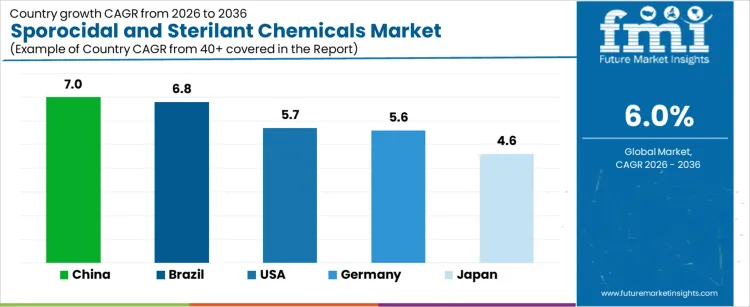
The sporocidal and sterilant chemicals market is experiencing strong growth globally, with China leading at a 7.0% CAGR, driven by the increasing demand for infection control in both healthcare and industrial settings. Brazil follows closely at 6.8%, supported by rising awareness of sterilization standards in healthcare. The USA and Germany show steady growth at 5.7% and 5.6%, respectively, reflecting consistent demand across various sectors such as healthcare, pharmaceuticals, and food industries. Japan’s market grows at a moderate pace of 4.6%, driven by stringent regulations and a strong healthcare system.
Why is the Sporocidal and Sterilant Chemicals Market Growing in China?
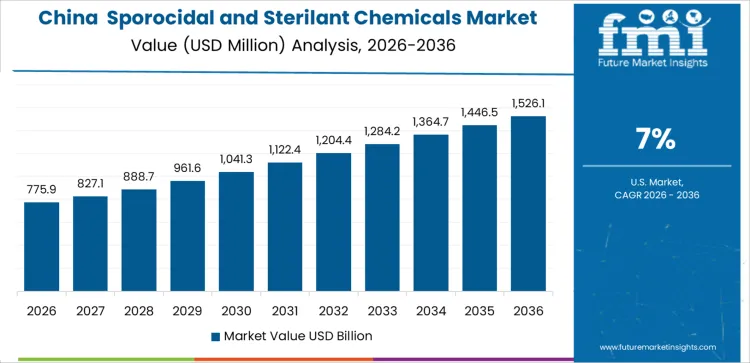
China’s sporocidal and sterilant chemicals market is growing at a 7.0% CAGR, driven by rapid industrialization, healthcare infrastructure development, and increased demand for infection control. As China continues to expand its healthcare system, the need for effective sterilization and disinfection products in hospitals, clinics, and pharmaceutical facilities is rising. The increasing manufacturing and food industries require sterilization chemicals to maintain product quality and safety. China’s government has also focused on improving healthcare standards and sanitation, further driving the adoption of sporocidal and sterilant chemicals. With growing urbanization, healthcare demand, and industrial needs, China’s market for sterilization products is expected to grow significantly, maintaining a strong pace of expansion.
What is Contributing to the Growth of the Sporocidal and Sterilant Chemicals Market in Brazil?
Brazil’s sporocidal and sterilant chemicals market is growing at a 6.8% CAGR, fueled by the rising demand for effective infection control solutions in healthcare, pharmaceuticals, and food industries. As Brazil continues to expand its healthcare infrastructure, the need for sterilization and disinfection products, particularly in hospitals and clinics, is increasing. Brazil’s focus on improving healthcare quality, alongside government regulations promoting hygiene and sanitation, is driving the market. The growth of the pharmaceutical and food industries, where sterilization plays a key role in maintaining safety and product integrity, is contributing to the demand. The increased awareness of infection control practices and hygiene standards further supports Brazil’s growing sterilization chemicals market.
How is the Sporocidal and Sterilant Chemicals Market Expanding in the USA?
The USA’s sporocidal and sterilant chemicals market is growing at a 5.7% CAGR, driven by the continued need for infection control solutions in healthcare and industrial applications. The demand for effective sterilization chemicals in hospitals, pharmaceutical manufacturing, and food industries is rising as the focus on hygiene and safety intensifies. The USA’s strict regulatory environment and high standards for sanitation in healthcare facilities are contributing to the market’s growth. The increasing adoption of advanced sterilization technologies and the growing awareness of hygiene practices in public and commercial spaces are driving the demand for sporocidal and sterilant chemicals. As infection prevention and control remain priorities, the market for sterilization chemicals in the USA is expected to continue growing steadily.
Why is the Sporocidal and Sterilant Chemicals Market Growing in Japan?
Japan’s sporocidal and sterilant chemicals market is growing at a 4.6% CAGR, driven by the country’s stringent healthcare regulations and a strong focus on hygiene standards. Japan’s aging population, combined with the need for infection control in healthcare facilities, is contributing to the rising demand for sterilization products. The market is also supported by Japan’s advanced pharmaceutical and food industries, which require sterilization chemicals to ensure product safety and integrity. Japan’s government continues to emphasize the importance of public health, encouraging the use of sterilization products across sectors. With continued investment in healthcare infrastructure and growing awareness of hygiene, Japan’s market for sporocidal and sterilant chemicals is expected to maintain steady growth.
What is Shaping the Sporocidal and Sterilant Chemicals Market Growth in Germany?
Germany’s sporocidal and sterilant chemicals market is growing at a 5.6% CAGR, supported by the country’s strong healthcare system, pharmaceutical industry, and stringent hygiene regulations. As Germany continues to expand its healthcare and pharmaceutical sectors, the demand for effective sterilization products in hospitals, laboratories, and manufacturing facilities is rising. Germany’s focus on maintaining high standards for sanitation and infection control, especially in healthcare and food sectors, is driving the adoption of sterilization chemicals. The country’s commitment to sustainability is encouraging the development and use of eco-friendly sterilant chemicals. With continuous investments in healthcare infrastructure and increasing awareness of infection prevention, Germany’s market for sterilization chemicals is expected to continue its steady growth.
How are Leading Companies Competing in the Sporocidal and Sterilant Chemicals Market?
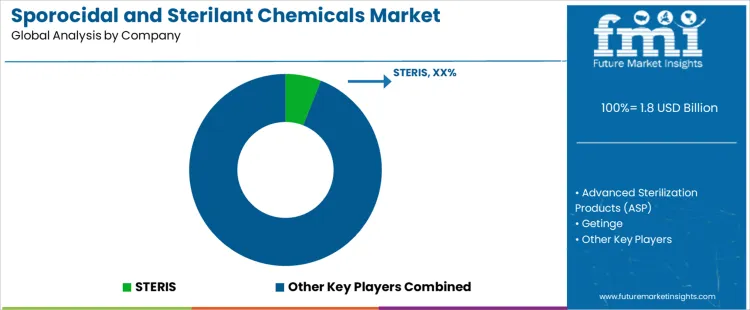
Ecolab, Schülke & Mayr, 3M, and Reckitt each bring unique strategies to the sporocidal and sterilant chemicals market. Ecolab offers broad-spectrum sterilants with regulatory backing and detailed application guidance for healthcare settings. 3M focuses on providing ready-to-use formulas that prioritize convenience while meeting regulatory standards. Reckitt emphasizes rapid sporicidal action with products designed for high-risk areas. Schülke & Mayr, meanwhile, promotes scientifically validated disinfectants backed by compliance support, ensuring efficacy in clinical environments.
STERIS, Advanced Sterilization Products (ASP), Getinge, Metrex, Cantel, and Paul Hartmann provide comprehensive sterilization solutions tailored for specialized clinical needs. STERIS and ASP lead with advanced sterilant chemistries for surgical instruments and complex devices, backed by detailed efficacy data. Cantel focuses on sterilant chemistries designed for endoscopy and sensitive tools, while Metrex offers sporocidal products with educational resources to ensure proper application. Getinge integrates sterilant chemicals with automated systems for seamless workflow in medical settings, and Paul Hartmann provides reliable solutions designed for front-line use.
Key Players in Sporocidal and Sterilant Chemicals Market
- STERIS
- Advanced Sterilization Products (ASP)
- Getinge
- Ecolab
- 3M
- Reckitt
- Cantel (STERIS)
- Metrex
- Schülke & Mayr
- Paul Hartmann
Scope of Report
| Items | Values |
|---|---|
| Quantitative Units (2025) | USD billion |
| End Use Application | Hospitals, Ambulatory Surgery Centers, Dental/Clinics, Other Settings |
| Sterilant/Sporicide Type | Peracetic Acid Systems, Hydrogen Peroxide Systems, Glutaraldehyde & Aldehydes, Other Sterilants (e.g., OPA, chlorine dioxide) |
| Use Mode | High-Level Disinfection (HLD), Cold Sterilization, Surface Sporocidal Use, Other Uses |
| Compatibility Target | Heat-Sensitive Devices, General Instruments, Endoscopes, Other Targets |
| End-Use Sector | Hospitals, Ambulatory Surgery Centers, Dental/Clinics, Other Settings |
| Regions Covered | Asia Pacific, Europe, North America, Latin America, Middle East & Africa |
| Countries Covered | USA, China, Japan, South Korea, India, Australia & New Zealand, ASEAN, Germany, UK, France, Italy, Spain, Nordic, BENELUX, Brazil, Chile, Mexico, Saudi Arabia, Other GCC Countries, Turkey, South Africa, Other African Union, Rest of Regions |
| Key Companies Profiled | STERIS, Advanced Sterilization Products (ASP), Getinge, Ecolab, 3M, Reckitt, Cantel (STERIS), Metrex, Schülke & Mayr, Paul Hartmann |
| Additional Attributes | Dollar sales by sterilant/sporicide type, use mode, and compatibility target; regional CAGR and growth outlook; distribution channels including hospital contracts, GPO/IDN programs, and distributor supply; innovation trends in peracetic acid and hydrogen peroxide systems; competitive position |
Sporocidal and Sterilant Chemicals Market by Segments
Sterilant/Sporicide Type
- Peracetic Acid Systems
- Hydrogen Peroxide Systems
- Glutaraldehyde & Aldehydes
- Other Sterilants (e.g., OPA, chlorine dioxide)
Use Mode
- High-Level Disinfection (HLD)
- Cold Sterilization
- Surface Sporocidal Use
- Other Uses
End-Use Setting
- Hospitals
- Ambulatory Surgery Centers
- Dental/Clinics
- Other Settings
Compatibility Target
- Heat-Sensitive Devices
- General Instruments
- Endoscopes
- Other Targets
Region
- Asia Pacific
- China
- Japan
- South Korea
- India
- Australia & New Zealand
- ASEAN
- Rest of Asia Pacific
- Europe
- Germany
- United Kingdom
- France
- Italy
- Spain
- Nordic
- BENELUX
- Rest of Europe
- North America
- United States
- Canada
- Mexico
- Latin America
- Brazil
- Chile
- Rest of Latin America
- Middle East & Africa
- Kingdom of Saudi Arabia
- Other GCC Countries
- Turkey
- South Africa
- Other African Union
- Rest of Middle East & Africa
Frequently Asked Questions
How big is the sporocidal and sterilant chemicals market in 2026?
The global sporocidal and sterilant chemicals market is estimated to be valued at USD 1.8 billion in 2026.
What will be the size of sporocidal and sterilant chemicals market in 2036?
The market size for the sporocidal and sterilant chemicals market is projected to reach USD 3.2 billion by 2036.
How much will be the sporocidal and sterilant chemicals market growth between 2026 and 2036?
The sporocidal and sterilant chemicals market is expected to grow at a 6.0% CAGR between 2026 and 2036.
What are the key product types in the sporocidal and sterilant chemicals market?
The key product types in sporocidal and sterilant chemicals market are peracetic acid systems, hydrogen peroxide systems, glutaraldehyde & aldehydes and other sterilants (e.g., opa, chlorine dioxide).
Which use mode segment to contribute significant share in the sporocidal and sterilant chemicals market in 2026?
In terms of use mode, high-level disinfection (hld) segment to command 44.0% share in the sporocidal and sterilant chemicals market in 2026.
Preview the report firsthand - request a free sample
Get SampleGet the brochure for pricing and purchase details.
Get PDFTable of Content
- Executive Summary
- Global Market Outlook
- Demand-side Trends
- Supply-side Trends
- Technology Roadmap Analysis
- Analysis and Recommendations
- Market Overview
- Market Coverage / Taxonomy
- Market Definition / Scope / Limitations
- Market Background
- Market Dynamics
- Drivers
- Restraints
- Opportunity
- Trends
- Scenario Forecast
- Demand in Optimistic Scenario
- Demand in Likely Scenario
- Demand in Conservative Scenario
- Opportunity Map Analysis
- Product Life Cycle Analysis
- Supply Chain Analysis
- Investment Feasibility Matrix
- Value Chain Analysis
- PESTLE and Porter’s Analysis
- Regulatory Landscape
- Regional Parent Market Outlook
- Production and Consumption Statistics
- Import and Export Statistics
- Market Dynamics
- Global Market Analysis 2021 to 2025 and Forecast, 2026 to 2036
- Historical Market Size Value (USD Million) Analysis, 2021 to 2025
- Current and Future Market Size Value (USD Million) Projections, 2026 to 2036
- Y-o-Y Growth Trend Analysis
- Absolute $ Opportunity Analysis
- Global Market Pricing Analysis 2021 to 2025 and Forecast 2026 to 2036
- Global Market Analysis 2021 to 2025 and Forecast 2026 to 2036, By Sterilant/Sporicide Type
- Introduction / Key Findings
- Historical Market Size Value (USD Million) Analysis By Sterilant/Sporicide Type , 2021 to 2025
- Current and Future Market Size Value (USD Million) Analysis and Forecast By Sterilant/Sporicide Type , 2026 to 2036
- Peracetic Acid Systems
- Hydrogen Peroxide Systems
- Glutaraldehyde & Aldehydes
- Other Sterilants (e.g., OPA, chlorine dioxide)
- Y-o-Y Growth Trend Analysis By Sterilant/Sporicide Type , 2021 to 2025
- Absolute $ Opportunity Analysis By Sterilant/Sporicide Type , 2026 to 2036
- Global Market Analysis 2021 to 2025 and Forecast 2026 to 2036, By Use Mode
- Introduction / Key Findings
- Historical Market Size Value (USD Million) Analysis By Use Mode, 2021 to 2025
- Current and Future Market Size Value (USD Million) Analysis and Forecast By Use Mode, 2026 to 2036
- High-Level Disinfection (HLD)
- Cold Sterilization
- Surface Sporocidal Use
- Other Uses
- Y-o-Y Growth Trend Analysis By Use Mode, 2021 to 2025
- Absolute $ Opportunity Analysis By Use Mode, 2026 to 2036
- Global Market Analysis 2021 to 2025 and Forecast 2026 to 2036, By End-Use Setting
- Introduction / Key Findings
- Historical Market Size Value (USD Million) Analysis By End-Use Setting, 2021 to 2025
- Current and Future Market Size Value (USD Million) Analysis and Forecast By End-Use Setting, 2026 to 2036
- Hospitals
- Ambulatory Surgery Centers
- Dental/Clinics
- Other Settings
- Y-o-Y Growth Trend Analysis By End-Use Setting, 2021 to 2025
- Absolute $ Opportunity Analysis By End-Use Setting, 2026 to 2036
- Global Market Analysis 2021 to 2025 and Forecast 2026 to 2036, By Compatibility Target
- Introduction / Key Findings
- Historical Market Size Value (USD Million) Analysis By Compatibility Target, 2021 to 2025
- Current and Future Market Size Value (USD Million) Analysis and Forecast By Compatibility Target, 2026 to 2036
- Heat-Sensitive Devices
- General Instruments
- Endoscopes
- Other Targets
- Y-o-Y Growth Trend Analysis By Compatibility Target, 2021 to 2025
- Absolute $ Opportunity Analysis By Compatibility Target, 2026 to 2036
- Global Market Analysis 2021 to 2025 and Forecast 2026 to 2036, By Region
- Introduction
- Historical Market Size Value (USD Million) Analysis By Region, 2021 to 2025
- Current Market Size Value (USD Million) Analysis and Forecast By Region, 2026 to 2036
- North America
- Latin America
- Western Europe
- Eastern Europe
- East Asia
- South Asia and Pacific
- Middle East & Africa
- Market Attractiveness Analysis By Region
- North America Market Analysis 2021 to 2025 and Forecast 2026 to 2036, By Country
- Historical Market Size Value (USD Million) Trend Analysis By Market Taxonomy, 2021 to 2025
- Market Size Value (USD Million) Forecast By Market Taxonomy, 2026 to 2036
- By Country
- USA
- Canada
- Mexico
- By Sterilant/Sporicide Type
- By Use Mode
- By End-Use Setting
- By Compatibility Target
- By Country
- Market Attractiveness Analysis
- By Country
- By Sterilant/Sporicide Type
- By Use Mode
- By End-Use Setting
- By Compatibility Target
- Key Takeaways
- Latin America Market Analysis 2021 to 2025 and Forecast 2026 to 2036, By Country
- Historical Market Size Value (USD Million) Trend Analysis By Market Taxonomy, 2021 to 2025
- Market Size Value (USD Million) Forecast By Market Taxonomy, 2026 to 2036
- By Country
- Brazil
- Chile
- Rest of Latin America
- By Sterilant/Sporicide Type
- By Use Mode
- By End-Use Setting
- By Compatibility Target
- By Country
- Market Attractiveness Analysis
- By Country
- By Sterilant/Sporicide Type
- By Use Mode
- By End-Use Setting
- By Compatibility Target
- Key Takeaways
- Western Europe Market Analysis 2021 to 2025 and Forecast 2026 to 2036, By Country
- Historical Market Size Value (USD Million) Trend Analysis By Market Taxonomy, 2021 to 2025
- Market Size Value (USD Million) Forecast By Market Taxonomy, 2026 to 2036
- By Country
- Germany
- UK
- Italy
- Spain
- France
- Nordic
- BENELUX
- Rest of Western Europe
- By Sterilant/Sporicide Type
- By Use Mode
- By End-Use Setting
- By Compatibility Target
- By Country
- Market Attractiveness Analysis
- By Country
- By Sterilant/Sporicide Type
- By Use Mode
- By End-Use Setting
- By Compatibility Target
- Key Takeaways
- Eastern Europe Market Analysis 2021 to 2025 and Forecast 2026 to 2036, By Country
- Historical Market Size Value (USD Million) Trend Analysis By Market Taxonomy, 2021 to 2025
- Market Size Value (USD Million) Forecast By Market Taxonomy, 2026 to 2036
- By Country
- Russia
- Poland
- Hungary
- Balkan & Baltic
- Rest of Eastern Europe
- By Sterilant/Sporicide Type
- By Use Mode
- By End-Use Setting
- By Compatibility Target
- By Country
- Market Attractiveness Analysis
- By Country
- By Sterilant/Sporicide Type
- By Use Mode
- By End-Use Setting
- By Compatibility Target
- Key Takeaways
- East Asia Market Analysis 2021 to 2025 and Forecast 2026 to 2036, By Country
- Historical Market Size Value (USD Million) Trend Analysis By Market Taxonomy, 2021 to 2025
- Market Size Value (USD Million) Forecast By Market Taxonomy, 2026 to 2036
- By Country
- China
- Japan
- South Korea
- By Sterilant/Sporicide Type
- By Use Mode
- By End-Use Setting
- By Compatibility Target
- By Country
- Market Attractiveness Analysis
- By Country
- By Sterilant/Sporicide Type
- By Use Mode
- By End-Use Setting
- By Compatibility Target
- Key Takeaways
- South Asia and Pacific Market Analysis 2021 to 2025 and Forecast 2026 to 2036, By Country
- Historical Market Size Value (USD Million) Trend Analysis By Market Taxonomy, 2021 to 2025
- Market Size Value (USD Million) Forecast By Market Taxonomy, 2026 to 2036
- By Country
- India
- ASEAN
- Australia & New Zealand
- Rest of South Asia and Pacific
- By Sterilant/Sporicide Type
- By Use Mode
- By End-Use Setting
- By Compatibility Target
- By Country
- Market Attractiveness Analysis
- By Country
- By Sterilant/Sporicide Type
- By Use Mode
- By End-Use Setting
- By Compatibility Target
- Key Takeaways
- Middle East & Africa Market Analysis 2021 to 2025 and Forecast 2026 to 2036, By Country
- Historical Market Size Value (USD Million) Trend Analysis By Market Taxonomy, 2021 to 2025
- Market Size Value (USD Million) Forecast By Market Taxonomy, 2026 to 2036
- By Country
- Kingdom of Saudi Arabia
- Other GCC Countries
- Turkiye
- South Africa
- Other African Union
- Rest of Middle East & Africa
- By Sterilant/Sporicide Type
- By Use Mode
- By End-Use Setting
- By Compatibility Target
- By Country
- Market Attractiveness Analysis
- By Country
- By Sterilant/Sporicide Type
- By Use Mode
- By End-Use Setting
- By Compatibility Target
- Key Takeaways
- Key Countries Market Analysis
- USA
- Pricing Analysis
- Market Share Analysis, 2025
- By Sterilant/Sporicide Type
- By Use Mode
- By End-Use Setting
- By Compatibility Target
- Canada
- Pricing Analysis
- Market Share Analysis, 2025
- By Sterilant/Sporicide Type
- By Use Mode
- By End-Use Setting
- By Compatibility Target
- Mexico
- Pricing Analysis
- Market Share Analysis, 2025
- By Sterilant/Sporicide Type
- By Use Mode
- By End-Use Setting
- By Compatibility Target
- Brazil
- Pricing Analysis
- Market Share Analysis, 2025
- By Sterilant/Sporicide Type
- By Use Mode
- By End-Use Setting
- By Compatibility Target
- Chile
- Pricing Analysis
- Market Share Analysis, 2025
- By Sterilant/Sporicide Type
- By Use Mode
- By End-Use Setting
- By Compatibility Target
- Germany
- Pricing Analysis
- Market Share Analysis, 2025
- By Sterilant/Sporicide Type
- By Use Mode
- By End-Use Setting
- By Compatibility Target
- UK
- Pricing Analysis
- Market Share Analysis, 2025
- By Sterilant/Sporicide Type
- By Use Mode
- By End-Use Setting
- By Compatibility Target
- Italy
- Pricing Analysis
- Market Share Analysis, 2025
- By Sterilant/Sporicide Type
- By Use Mode
- By End-Use Setting
- By Compatibility Target
- Spain
- Pricing Analysis
- Market Share Analysis, 2025
- By Sterilant/Sporicide Type
- By Use Mode
- By End-Use Setting
- By Compatibility Target
- France
- Pricing Analysis
- Market Share Analysis, 2025
- By Sterilant/Sporicide Type
- By Use Mode
- By End-Use Setting
- By Compatibility Target
- India
- Pricing Analysis
- Market Share Analysis, 2025
- By Sterilant/Sporicide Type
- By Use Mode
- By End-Use Setting
- By Compatibility Target
- ASEAN
- Pricing Analysis
- Market Share Analysis, 2025
- By Sterilant/Sporicide Type
- By Use Mode
- By End-Use Setting
- By Compatibility Target
- Australia & New Zealand
- Pricing Analysis
- Market Share Analysis, 2025
- By Sterilant/Sporicide Type
- By Use Mode
- By End-Use Setting
- By Compatibility Target
- China
- Pricing Analysis
- Market Share Analysis, 2025
- By Sterilant/Sporicide Type
- By Use Mode
- By End-Use Setting
- By Compatibility Target
- Japan
- Pricing Analysis
- Market Share Analysis, 2025
- By Sterilant/Sporicide Type
- By Use Mode
- By End-Use Setting
- By Compatibility Target
- South Korea
- Pricing Analysis
- Market Share Analysis, 2025
- By Sterilant/Sporicide Type
- By Use Mode
- By End-Use Setting
- By Compatibility Target
- Russia
- Pricing Analysis
- Market Share Analysis, 2025
- By Sterilant/Sporicide Type
- By Use Mode
- By End-Use Setting
- By Compatibility Target
- Poland
- Pricing Analysis
- Market Share Analysis, 2025
- By Sterilant/Sporicide Type
- By Use Mode
- By End-Use Setting
- By Compatibility Target
- Hungary
- Pricing Analysis
- Market Share Analysis, 2025
- By Sterilant/Sporicide Type
- By Use Mode
- By End-Use Setting
- By Compatibility Target
- Kingdom of Saudi Arabia
- Pricing Analysis
- Market Share Analysis, 2025
- By Sterilant/Sporicide Type
- By Use Mode
- By End-Use Setting
- By Compatibility Target
- Turkiye
- Pricing Analysis
- Market Share Analysis, 2025
- By Sterilant/Sporicide Type
- By Use Mode
- By End-Use Setting
- By Compatibility Target
- South Africa
- Pricing Analysis
- Market Share Analysis, 2025
- By Sterilant/Sporicide Type
- By Use Mode
- By End-Use Setting
- By Compatibility Target
- USA
- Market Structure Analysis
- Competition Dashboard
- Competition Benchmarking
- Market Share Analysis of Top Players
- By Regional
- By Sterilant/Sporicide Type
- By Use Mode
- By End-Use Setting
- By Compatibility Target
- Competition Analysis
- Competition Deep Dive
- STERIS
- Overview
- Product Portfolio
- Profitability by Market Segments (Product/Age /Sales Channel/Region)
- Sales Footprint
- Strategy Overview
- Marketing Strategy
- Product Strategy
- Channel Strategy
- Advanced Sterilization Products (ASP)
- Getinge
- Ecolab
- 3M
- Reckitt
- Cantel (STERIS)
- Metrex
- Schülke & Mayr
- Paul Hartmann
- STERIS
- Competition Deep Dive
- Assumptions & Acronyms Used
- Research Methodology


