

- Industry Size (2026)
- USD 2846.2 Mn
- Forecast (2036)
- USD 3884.1 Mn
- CAGR (2026 to 2036)
- 3.2%
Demand for Organic Milk in the UK 2026 to 2036
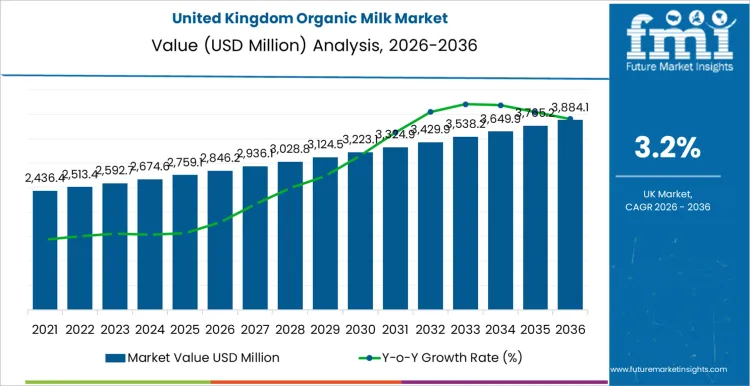
Demand for organic milk in the UK stands at USD 2,846.2 million in 2026 and is projected to reach USD 3,884.1 million by 2036, reflecting a 3.2% CAGR. This demand trajectory reflects how organic dairy has moved into routine household consumption rather than remaining a discretionary premium choice. Purchasing decisions increasingly align with daily nutrition planning, ethical sourcing expectations, and long-term food quality preferences.
Organic milk purchasing in the UK is shaped by trust in certification, consistency of taste, and assurance around farming practices. Buyers treat organic milk as a staple that must deliver reliable freshness, stable shelf life, and predictable availability across retail formats. Sensory attributes such as creaminess and mouthfeel influence repeat purchasing, especially among households that prioritize whole milk consumption and view minimal processing as part of product integrity.
Supply chain discipline reinforces demand stability. Retailers favor suppliers capable of maintaining certified volumes across seasons while meeting strict segregation and traceability requirements. Processors align organic milk intake with long-term farm contracts that support steady throughput and pricing predictability. Demand strength is sustained by everyday usability, dependable supply, and alignment with household values tied to animal welfare and farming transparency rather than short-term dietary shifts.
Quick Stats for Organic Milk Industry in the UK
- Organic Milk Industry Value (2026): USD 2,846.2 million
- Organic Milk Industry Forecast Value (2036): USD 3,884.1 million
- Organic Milk Industry Forecast CAGR 2026 to 2036: 3.2%
- Leading Source by Demand Share: Buffalo
- Fastest-Growing Regions: England, Scotland, Wales, Northern Ireland
- Key Industry Participants: Arla Foods amba, Fonterra Co-operative Group Limited, Organic Valley, Donegal Investment Group plc, Govind Milk and Milk Products
Organic Milk Industry in the UK Key Takeaways
| Metric | Value |
|---|---|
| Industry Value (2026) | USD 2,846.2 million |
| Industry Forecast Value (2036) | USD 3,884.1 million |
| Forecast CAGR (2026 to 2036) | 3.2% |
Why is the UK Building Steady Demand for Organic Milk?
UK consumers increasingly turn to organic milk because food choices are now influenced by health awareness and environmental concern. People associate organic dairy with reduced pesticide exposure and pasture-based farming, which aligns with a preference for products perceived as cleaner and more natural. This drives everyday purchasing decisions at supermarkets and local grocers rather than occasional trial buys.
Retail assortment in the UK mirrors this shift. Major supermarket chains and convenience stores allocate more shelf space to certified organic milk variants, with notable growth in own-label organic dairy lines. Independent retailers and online grocers experiment with subscription and doorstep delivery models, offering consumers regular access to organic milk without extra effort. Retailers respond because shoppers increasingly prioritise welfare standards and provenance.
Supply dynamics also support consumption patterns. UK dairy farmers boosting organic conversion find incentives in premium pricing and long-term contracts with processors. Investment in pasture management and certification pathways enables consistent availability of organic milk throughout the year. As supply reliability improves, households feel confident substituting conventional milk with organic options as part of habitual grocery shopping.
How is Organic Milk Demand Segmented by Source, Type, and Pasteurisation in the UK?
Demand for organic milk in the UK reflects how consumers and processors balance nutritional perception, taste expectations, and processing familiarity. Segmentation patterns align with product richness preferences, sourcing trust, and handling methods that preserve sensory attributes while meeting safety standards.
Why does buffalo-sourced organic milk dominate source selection?
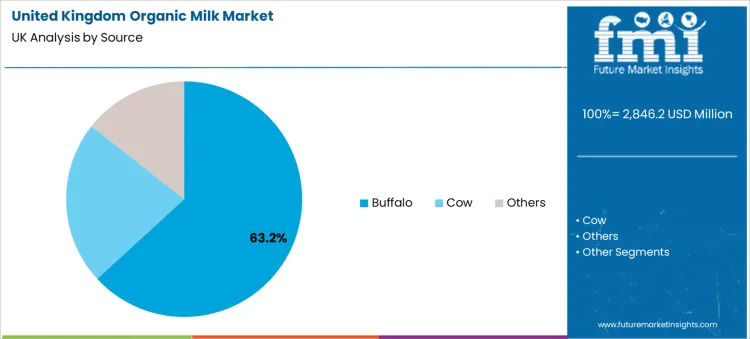
Buffalo milk holds a 63.2% share, placing it as the leading source. This preference is tied to its higher natural fat content, fuller mouthfeel, and perceived nutritional density. Consumers selecting organic dairy often associate richness with authenticity and value, which strengthens demand for buffalo-derived offerings. Processors also benefit from its functional properties in downstream applications such as yogurt, cheese, and cream-based products, where consistency and yield stability matter.
What sustains whole milk as the most selected organic milk type?
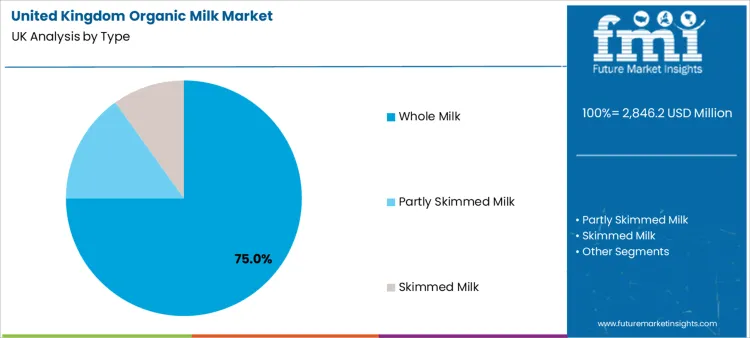
Whole milk accounts for a 75.0% share, reflecting strong preference for unaltered fat profiles. Buyers of organic milk tend to prioritize natural composition over calorie reduction, viewing fat retention as part of the product’s integrity. Whole milk supports flavour retention and satiety, reinforcing repeat purchasing across households that treat organic dairy as a core staple rather than a dietary substitute.
Why does vat pasteurization remain the leading processing choice?
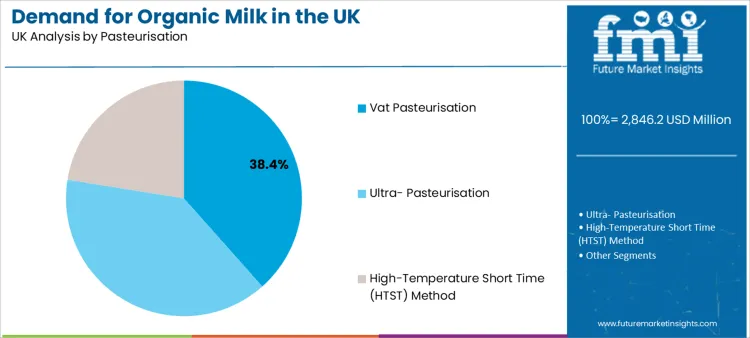
Vat pasteurization represents a 38.4% share, indicating preference for gentler heat treatment. This method preserves flavour complexity and maintains protein structure, which aligns with expectations tied to organic positioning. Smaller batch control and longer processing times suit producers focused on quality perception rather than volume throughput. Consumers often associate vat pasteurization with traditional handling practices, reinforcing trust and willingness to pay for perceived authenticity.
What are the Key Dynamics in Demand for Organic Milk in the UK?
Demand for organic milk in the UK is shaped by consumer emphasis on food quality, animal welfare, and environmental sustainability. UK shoppers often view organic certification as an indicator of reduced pesticide use and pasture-based farming standards. Retail expansion of organic lines in supermarkets and growth of online grocery platforms have expanded access beyond specialist outlets. Price sensitivity remains a moderating factor, with demand strongest among households prioritizing perceived health and ethical attributes over cost.
How do consumer values and purchasing behavior drive demand?
Perceptions around organic milk are closely linked to beliefs about animal welfare and natural farming practices. UK consumers who choose organic milk frequently cite grazing standards, absence of synthetic inputs, and traceability of farming practices as motivation for purchase. Organic milk is often featured in premium chilled sections, where clear certification marks and producer stories reinforce trust. Growth in households reducing processed food consumption has also boosted organic fluid milk sales, as shoppers substitute conventional dairy with products seen as aligning better with clean-label expectations. Smaller families and older demographics contribute a disproportionate share of organic milk purchases, reflecting both disposable income allocation and long-standing consumption patterns.
What do price dynamics and supply chain factors mean for continued uptake?
Price differentials between organic and conventional milk significantly influence how widely organic options are purchased across UK regions. Organic milk production incurs higher feed, land, and certification costs, which are reflected in retail pricing that some consumers find difficult to justify on a routine basis. Seasonal variability in pasture quality affects UK organic milk yields and can create supply fluctuations that influence retail availability and pricing. Smaller dairy farms transitioning to organic systems face ramp-up periods that delay volume growth, which in turn restricts retail assortment breadth in some areas. Infrastructure for collection and chilled distribution also influences where organic milk is stocked affordably, with urban centers often showing higher penetration than rural or lower-income industries.
How is Organic Milk Demand Evolving across Key Regions in the UK?
Demand for organic milk across the UK progresses as retailers reinforce provenance standards and consumers prioritize traceable dairy sourcing. Regional variation reflects farm conversion rates, processing capacity alignment, contract stability, and how effectively supply chains support segregation, certification, and consistent volumes across retail and foodservice channels.
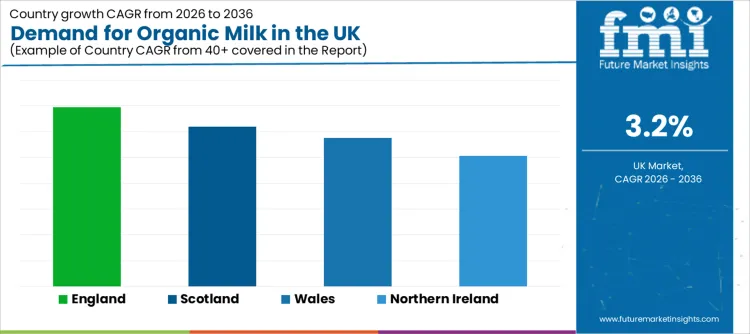
| Region | CAGR 2026 to 2036 |
|---|---|
| England | 3.5% |
| Scotland | 3.1% |
| Wales | 2.9% |
| Northern Ireland | 2.5% |
Why is England leading expansion through retail pull and processing scale alignment?
England grows at 3.5%, supported by stronger retail pull and a larger base of certified processing facilities. Demand rises where long-term supply contracts encourage farm conversion and stabilize pricing expectations. Processors value predictable volumes that fit existing bottling and distribution networks, supporting consistent shelf availability and reducing complexity in managing parallel conventional and organic milk streams.
How is Scotland progressing through farm-led supply growth and regional loyalty?
Scotland expands at 3.1%, shaped by steady farm participation and strong regional loyalty toward organic dairy. Demand builds where processors secure dedicated milk pools and maintain clear identity preservation through collection and processing. Buyers focus on maintaining quality consistency across seasonal yield shifts while ensuring certification requirements align with practical on-farm management conditions.
What is shaping Wales as producers balance conversion pace with margin discipline?
Wales advances at 2.9%, driven by cautious expansion among dairy producers assessing conversion costs and margin resilience. Demand strengthens when organic premiums offset certification and feed expenses without pressuring farm economics. Processors prioritize reliable supply partners and route efficiency, favouring regions where collection logistics remain manageable and yield variability stays within forecasted ranges.
Why is Northern Ireland showing measured growth linked to selective sourcing strategies?
Northern Ireland records 2.5% growth, reflecting selective sourcing and tighter processor intake planning. Adoption progresses where farms meet organic standards while sustaining output consistency. Demand improves when processors confirm long-term offtake commitments and manage cross-border logistics smoothly, ensuring organic milk volumes integrate cleanly into established dairy processing and distribution systems.
What Defines the Competitive Landscape for Organic Milk in the UK?
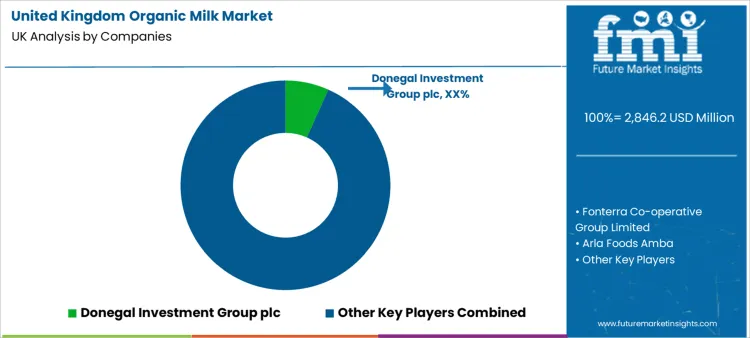
Demand for organic milk in the UK is shaped by consumer trust in certification, animal welfare expectations, and premium pricing tolerance. Buyers prioritize verified organic standards, consistent taste, nutritional perception, and transparent farm sourcing. Assessment also includes shelf life performance, chilled supply reliability, and availability across major grocery channels. Retail procurement favors suppliers with stable farmer networks, year-round volume assurance, and strong brand credibility. Trend in the UK industry reflects steady mainstreaming of organic milk within everyday consumption, supported by retailer private labels and expanding ethical purchasing behavior.
Arla Foods amba holds leading positioning in the UK through extensive organic dairy sourcing, cooperative farmer integration, and strong supermarket penetration. Fonterra participates through selective organic offerings supported by global dairy expertise and ingredient supply relationships. Organic Valley maintains relevance among values-driven consumers through cooperative-led branding and strict organic positioning. Donegal Investment Group plc supports demand indirectly via upstream dairy assets aligned with organic supply chains. Govind Milk and Milk Products remains limited to niche and specialty distribution channels. Competitive differentiation centers on certification credibility, farmer integration depth, retail access, and price stability management.
Key Industry Participants
- Donegal Investment Group plc
- Fonterra Co-operative Group Limited
- Arla Foods Amba
- Govind Milk and Milk Products
- Organic Valley
Scope of Report
| Items | Values |
|---|---|
| Quantitative Units | USD million |
| Source | Buffalo; Cow; Others |
| Type | Whole Milk; Partly Skimmed Milk; Skimmed Milk |
| Pasteurisation | Vat Pasteurisation; Ultra-Pasteurisation; High-Temperature Short Time (HTST) Method |
| Flavour | Flavoured (Chocolate, Strawberry, Vanilla, Others); Non-Flavoured |
| Packaging | Bottle; Tetra Packs; Pouches; Cans; Bulk Packs |
| Distribution Channel | Modern Trade; Retailer; Speciality Store; HORECA; Convenience Store |
| Regions Covered | England; Scotland; Wales; Northern Ireland |
| Key Companies Profiled | Donegal Investment Group plc; Fonterra Co-operative Group Limited; Arla Foods Amba; Govind Milk and Milk Products; Organic Valley |
Organic Milk Demand in the UK by Segments
Source:
- Buffalo
- Cow
- Others
Type:
- Whole Milk
- Partly Skimmed Milk
- Skimmed Milk
Pasteurisation:
- Vat Pasteurisation
- Ultra- Pasteurisation
- High-Temperature Short Time (HTST) Method
Flavour:
- Flavoured (Chocolate, Strawberry, Vanilla, Others)
- Non-Flavoured
Packaging:
- Bottle
- Tetra Packs
- Pouches
- Cans
- Bulk Packs
Distribution Channel:
- Modern Trade
- Retailer
- Speciality Store
- HORECA
- Convenience Store
By Region
- England
- Scotland
- Wales
- Northern Ireland
Bibliography
- Department for Environment, Food & Rural Affairs. (2023). Organic farming statistics: United Kingdom 2022. UK Government.
- Department for Environment, Food & Rural Affairs. (2024). UK food security report 2024. UK Government.
- Soil Association. (2023). Organic market report 2023. Soil Association.
- Soil Association. (2024). Organic certification standards and dairy production requirements. Soil Association Certification Ltd.
- Office for National Statistics. (2023). Family food 2021-2022: Food purchasing and consumption in the UK. ONS.
- British Retail Consortium. (2024). Retail grocery trends and consumer attitudes to sustainability. BRC.
- Food Standards Agency. (2023). Food labelling and organic certification guidance for the UK market. FSA.
Frequently Asked Questions
How big is the demand for organic milk in the uk in 2026?
The demand for organic milk in the uk is estimated to be valued at USD 2,846.2 million in 2026.
What will be the size of organic milk in the uk in 2036?
The market size for the organic milk in the uk is projected to reach USD 3,884.1 million by 2036.
How much will be the demand for organic milk in the uk growth between 2026 and 2036?
The demand for organic milk in the uk is expected to grow at a 3.2% CAGR between 2026 and 2036.
What are the key product types in the organic milk in the uk?
The key product types in organic milk in the uk are buffalo, cow and others.
Which type segment is expected to contribute significant share in the organic milk in the uk in 2026?
In terms of type, whole milk segment is expected to command 75.0% share in the organic milk in the uk in 2026.
Preview the report firsthand - request a free sample
Get SampleGet the brochure for pricing and purchase details.
Get PDFTable of Content
- Executive Summary
- UK Market Outlook
- Demand-side Trends
- Supply-side Trends
- Technology Roadmap Analysis
- Analysis and Recommendations
- Market Overview
- Market Coverage / Taxonomy
- Market Definition / Scope / Limitations
- Market Background
- Market Dynamics
- Drivers
- Restraints
- Opportunity
- Trends
- Scenario Forecast
- Demand in Optimistic Scenario
- Demand in Likely Scenario
- Demand in Conservative Scenario
- Opportunity Map Analysis
- Product Life Cycle Analysis
- Supply Chain Analysis
- Investment Feasibility Matrix
- Value Chain Analysis
- PESTLE and Porter’s Analysis
- Regulatory Landscape
- Regional Parent Market Outlook
- Production and Consumption Statistics
- Import and Export Statistics
- Market Dynamics
- UK Market Analysis 2021 to 2025 and Forecast, 2026 to 2036
- Historical Market Size Value (USD Million) Analysis, 2021 to 2025
- Current and Future Market Size Value (USD Million) Projections, 2026 to 2036
- Y-o-Y Growth Trend Analysis
- Absolute $ Opportunity Analysis
- UK Market Pricing Analysis 2021 to 2025 and Forecast 2026 to 2036
- UK Market Analysis 2021 to 2025 and Forecast 2026 to 2036, By Source
- Introduction / Key Findings
- Historical Market Size Value (USD Million) Analysis By Source , 2021 to 2025
- Current and Future Market Size Value (USD Million) Analysis and Forecast By Source , 2026 to 2036
- Buffalo
- Cow
- Others
- Buffalo
- Y-o-Y Growth Trend Analysis By Source , 2021 to 2025
- Absolute $ Opportunity Analysis By Source , 2026 to 2036
- UK Market Analysis 2021 to 2025 and Forecast 2026 to 2036, By Type
- Introduction / Key Findings
- Historical Market Size Value (USD Million) Analysis By Type, 2021 to 2025
- Current and Future Market Size Value (USD Million) Analysis and Forecast By Type, 2026 to 2036
- Whole Milk
- Partly Skimmed Milk
- Skimmed Milk
- Whole Milk
- Y-o-Y Growth Trend Analysis By Type, 2021 to 2025
- Absolute $ Opportunity Analysis By Type, 2026 to 2036
- UK Market Analysis 2021 to 2025 and Forecast 2026 to 2036, By Pasteurisation
- Introduction / Key Findings
- Historical Market Size Value (USD Million) Analysis By Pasteurisation, 2021 to 2025
- Current and Future Market Size Value (USD Million) Analysis and Forecast By Pasteurisation, 2026 to 2036
- Vat Pasteurisation
- Ultra- Pasteurisation
- High-Temperature Short Time (HTST) Method
- Vat Pasteurisation
- Y-o-Y Growth Trend Analysis By Pasteurisation, 2021 to 2025
- Absolute $ Opportunity Analysis By Pasteurisation, 2026 to 2036
- UK Market Analysis 2021 to 2025 and Forecast 2026 to 2036, By Flavour
- Introduction / Key Findings
- Historical Market Size Value (USD Million) Analysis By Flavour, 2021 to 2025
- Current and Future Market Size Value (USD Million) Analysis and Forecast By Flavour, 2026 to 2036
- Flavoured (Chocolate, Strawberry, Vanilla, Others)
- Non-Flavoured
- Flavoured (Chocolate, Strawberry, Vanilla, Others)
- Y-o-Y Growth Trend Analysis By Flavour, 2021 to 2025
- Absolute $ Opportunity Analysis By Flavour, 2026 to 2036
- UK Market Analysis 2021 to 2025 and Forecast 2026 to 2036, By Packaging
- Introduction / Key Findings
- Historical Market Size Value (USD Million) Analysis By Packaging, 2021 to 2025
- Current and Future Market Size Value (USD Million) Analysis and Forecast By Packaging, 2026 to 2036
- Bottle
- Tetra Packs
- Pouches
- Cans
- Bulk Packs
- Bottle
- Y-o-Y Growth Trend Analysis By Packaging, 2021 to 2025
- Absolute $ Opportunity Analysis By Packaging, 2026 to 2036
- UK Market Analysis 2021 to 2025 and Forecast 2026 to 2036, By Distribution Channel
- Introduction / Key Findings
- Historical Market Size Value (USD Million) Analysis By Distribution Channel, 2021 to 2025
- Current and Future Market Size Value (USD Million) Analysis and Forecast By Distribution Channel, 2026 to 2036
- Modern Trade
- Retailer
- Speciality Store
- HORECA
- Convenience Store
- Modern Trade
- Y-o-Y Growth Trend Analysis By Distribution Channel, 2021 to 2025
- Absolute $ Opportunity Analysis By Distribution Channel, 2026 to 2036
- Market Structure Analysis
- Competition Dashboard
- Competition Benchmarking
- Market Share Analysis of Top Players
- By Regional
- By Source
- By Type
- By Pasteurisation
- By Flavour
- By Packaging
- By Distribution Channel
- Competition Analysis
- Competition Deep Dive
- Donegal Investment Group plc
- Overview
- Product Portfolio
- Profitability by Market Segments (Product/Age /Sales Channel/Region)
- Sales Footprint
- Strategy Overview
- Marketing Strategy
- Product Strategy
- Channel Strategy
- Fonterra Co-operative Group Limited
- Arla Foods Amba
- Govind Milk and Milk Products
- Organic Valley
- Donegal Investment Group plc
- Competition Deep Dive
- Assumptions & Acronyms Used
- Research Methodology


