

- Industry Size (2026)
- USD 19.07 Mn
- Forecast (2036)
- USD 30.48 Mn
- CAGR (2026 to 2036)
- 4.80%
Demand for Banana Milk in USA Market Size, Market Forecast and Outlook By FMI
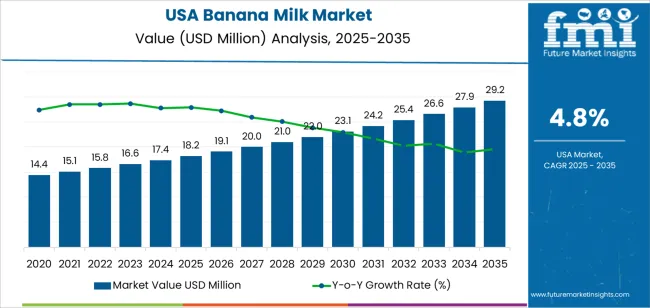
The demand for banana milk in usa market was valued at USD 18.20 in 2025, projected to reachUSD 19.07 Million in 2026, and is forecast to expand to USD 30.48 Million by 2036 at a 4.80% CAGR. As per FMI, this trajectory creates an incremental opportunity of USD 11.41 usd over the forecast period. Growing consumer demand for dairy alternatives that deliver both taste acceptability and allergen avoidance is opening a structural niche for banana-based milk products. Unlike almond or oat milk, banana milk offers a naturally sweet flavor profile that reduces the need for added sweeteners, positioning it as a clean-label entry point for consumers transitioning away from conventional dairy.
Summary of Demand for Banana Milk in USA Market
- Market Snapshot
- The demand for banana milk in usa market is valued at USD 18.20 usd in 2025 and is projected to reach USD 30.48 usd by 2036.
- The industry is expected to grow at a 4.80% CAGR from 2026 to 2036, creating an incremental opportunity of USD 11.41 usd.
- The market is a niche, clean-label plant-based dairy alternative category where allergen avoidance, natural sweetness positioning, and specialty retail shelf expansion define competitive positioning.
- Demand and Growth Drivers
- Allergen-avoidance behavior among consumers with nut, soy, and lactose sensitivities is driving adoption of banana milk as a multi-allergen-free alternative.
- Banana milk's natural sweetness profile reduces the need for added sugars, aligning with the clean-label and reduced-sugar reformulation priorities of millennial and Gen Z consumers.
- Specialty retail shelf expansion at Whole Foods Market and Sprouts Farmers Market is increasing consumer trial access and brand visibility.
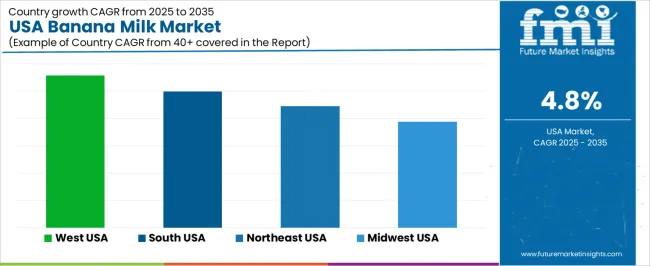
- Among regions, West USA leads at 5.6% CAGR, followed by South USA at 5.0%, Northeast USA at 4.5%, Midwest USA at 3.9%.
- Product and Segment View
- The market covers banana-based milk alternative beverages in conventional and organic formats, spanning sweetened and unsweetened varieties, distributed through indirect retail and direct-to-consumer channels in the United States.
- Conventional leads by Nature with 72.0% share in 2026.
- Sweetened leads by Flavor with 65.0% share in 2026.
- The scope includes banana-based milk beverages in shelf-stable and refrigerated formats, excluding banana-flavored dairy milk, banana smoothie products, and banana-infused protein shakes where banana milk is not the primary ingredient.
- Geography and Competitive Outlook
- West USA and South USA are the fastest-growing regions driven by health-conscious consumer density and specialty retail expansion, while Midwest USA reflects gradual adoption as dairy alternatives gain mainstream traction.
- Competition is shaped by brand differentiation through clean-label formulation, specialty retail distribution access, and direct-to-consumer subscription model effectiveness, with key players including Banana Wave (Moolala), Koita Foods, Alpro (Danone), Good Karma Foods, Mooala.
Demand for Banana Milk in USA Market Key Takeaways
| Metric | Details |
|---|---|
| Industry Size (2026) | USD 19.07 Million |
| Industry Value (2036) | USD 30.48 Million |
| CAGR (2026 to 2036) | 4.80% |
Source: Future Market Insights, 2026
Based on FMI's analysis, banana milk demand in the United States is being propelled by a convergence of allergen-avoidance behavior and clean-label sweetness preferences among millennial and Gen Z consumers. The Plant Based Foods Association reported a 6.2% year-over-year increase in plant-based milk retail sales in 2024, with banana milk emerging as one of the fastest-growing niche sub-segments within the category. Whole Foods Market and Sprouts Farmers Market both expanded banana milk shelf space in their 2025 spring resets, adding new SKUs from brands including Mooala and Banana Wave. FMI opines that banana milk occupies a unique positioning advantage as the only major plant milk that delivers inherent sweetness without requiring added sugars, which aligns directly with the clean-label, reduced-sugar reformulation priorities driving the broader plant-based beverage category.
All major regions reflect differentiated adoption trajectories. West USA sets a 5.6% CAGR pace, South USA sets a 5.0% CAGR pace, Northeast USA sets a 4.5% CAGR pace, Midwest USA sets a 3.9% CAGR pace. West USA leads at 5.6% CAGR, driven by California's concentration of health-conscious consumers and natural grocery retail density. South USA follows at 5.0%, reflecting the expanding specialty grocery footprint in metropolitan areas like Atlanta and Dallas. Midwest USA shows the most measured growth at 3.9%, reflecting slower specialty retail penetration and established dairy consumption habits.
Demand for Banana Milk in USA Market Definition
Demand for banana milk in the USA covers the retail and direct-to-consumer consumption of banana-based milk alternative beverages. The category includes products where banana serves as the primary base ingredient, processed into a liquid milk-substitute format for drinking, cereal use, and cooking applications.
Demand for Banana Milk in USA Market Inclusions
Market scope includes banana-based milk beverages in conventional and organic formats, covering sweetened and unsweetened varieties distributed through retail (indirect) and direct-to-consumer (direct) channels in the United States.
Demand for Banana Milk in USA Market Exclusions
Banana-flavored conventional dairy milk, banana smoothie products, banana-infused protein shakes, and banana-based yogurt alternatives are excluded from the defined scope.
Demand for Banana Milk in USA Market Research Methodology
- Primary Research: Analysts engaged with plant-based beverage brand founders, specialty grocery category managers, and natural products distribution executives to map the shelf-space allocation decisions and consumer trial conversion rates shaping banana milk adoption.
- Desk Research: Data collection aggregated Plant Based Foods Association retail sales reports, USDA dairy alternative import and production statistics, and specialty retail chain annual category performance data.
- Market-Sizing and Forecasting: Baseline values derive from a bottom-up aggregation of retail scanner data from natural and conventional grocery channels, applying region-specific plant-milk adoption curves to project future consumption velocity.
- Data Validation and Update Cycle: Projections are tested against publicly reported plant-based beverage category performance from major U.S. retailers and cross-referenced with USDA consumption survey data.
Why is the Demand for Banana Milk in USA Growing?
Demand for banana milk in the USA is rising alongside increasing consumer interest in plant based beverages and dairy alternatives. Many consumers are shifting away from traditional dairy because of lactose intolerance, dietary preferences, or eco conscious choices. In this context, banana milk stands out as a flavored, often dairy free alternative that delivers sweetness and a creamy texture without reliance on cow’s milk. As part of the broader growth of plant based and flavored milk alternatives, banana milk benefits from this shift in consumption habits.
At the same time, beverage trends toward convenience, nutrition, and taste are fueling adoption of ready to drink banana milk products. Consumers increasingly seek on the go beverage options that offer pleasant flavor along with perceived nutritional or functional benefits. Banana milk fits this demand as a palatable, easy to consume product. Producers frequently enhance banana milk formulations with added nutrients, vitamins, or minerals to appeal to health conscious buyers.
Given the growing acceptance of plant based milks, rising consumer interest in flavored and functional beverages, and the appeal of banana milk’s taste and convenience, demand for banana milk in the USA is likely to continue growing steadily over the coming years.
What Is the Current State of the Demand for Banana Milk in the USA in Terms of Nature and Flavor?
The demand for banana milk in the USA is primarily driven by nature and flavor. The leading nature is conventional, accounting for 72% of the market share, while sweetened is the dominant flavor, capturing 65% of the demand. Banana milk, known for its creamy texture and naturally sweet banana flavor, is increasingly popular among consumers seeking plant-based milk alternatives. The growing focus on flavor customization and dietary preferences continues to drive demand for both conventional and sweetened versions of banana milk in the USA.
How Is Conventional Banana Milk Leading the Demand in the USA?
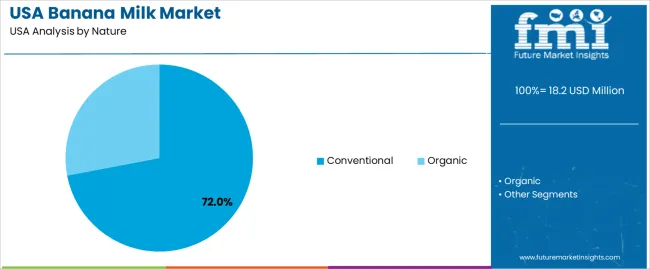
Conventional banana milk leads the demand in the USA, holding 72% of the market share. Conventional banana milk is typically made from a combination of water, bananas, and added sweeteners or flavorings, offering a rich and smooth taste that appeals to a broad range of consumers. This version is widely available in supermarkets and grocery stores and is generally less expensive than its organic counterparts, making it more accessible to a larger consumer base.
The demand for conventional banana milk is driven by its affordability, availability, and familiarity. As more consumers look for plant-based alternatives to dairy, conventional banana milk provides a flavorful and cost-effective option. It is also a popular choice for consumers who enjoy sweetened beverages but prefer a non-dairy alternative. With the growing interest in plant-based and lactose-free products in the USA, conventional banana milk is expected to maintain its dominant position in the market.
How Is Sweetened Banana Milk Leading the Flavor Demand in the USA?
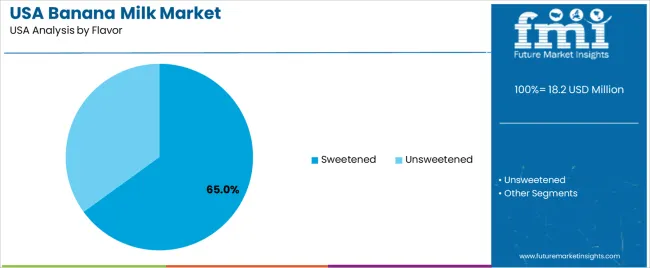
Sweetened banana milk leads the flavor demand in the USA, capturing 65% of the market share. Sweetened banana milk typically contains added sugar or sweeteners to enhance the natural sweetness of the banana flavor, making it more appealing to consumers who enjoy a sweeter taste in their beverages. This version is often favored by individuals who are looking for a dessert-like drink or a sweet alternative to traditional dairy milk.
The demand for sweetened banana milk is driven by consumer preferences for sweeter flavors, particularly in the growing plant-based beverage market. Sweetened banana milk is popular in smoothies, cereals, and as a standalone drink, offering a satisfying and indulgent option for those seeking comfort and flavor in their beverages. As consumers continue to explore plant-based alternatives to traditional dairy products, sweetened banana milk is expected to remain a strong choice, particularly in the snack and beverage categories.
What is the Summary of Demand for Banana Milk in the USA?
Demand for banana milk in the USA is growing as consumers increasingly seek plant based and flavored milk alternatives. Banana milk is gaining popularity due to its unique taste profile and appeal to consumers looking for lactose free, allergen friendly beverages. The rise in the demand for convenient, ready to drink beverages, coupled with health trends favoring dairy alternatives, has supported the growth of banana milk. As lifestyles become busier, consumers are looking for easy-to-consume beverages that provide both taste and nutritional value, which makes banana milk an attractive option.
What are the Drivers of Demand for Banana Milk in the USA?
Several factors are driving the growing demand for banana milk in the USA. The increasing interest in plant based alternatives to dairy products is a significant driver, as more consumers opt for lactose free and vegan-friendly options. The appeal of banana milk as a flavored and novel beverage also attracts consumers, especially younger demographics who seek variety beyond traditional milk options. Additionally, the convenience of ready to drink packaging caters to on the go consumers, making banana milk a popular choice in busy lifestyles. As health awareness grows, banana milk’s nutrient profile, including potassium and fiber, makes it an appealing option for consumers looking for nutritious and functional beverages.
What are the Restraints on Demand for Banana Milk in the USA?
Despite the growing interest, there are factors that may restrain the demand for banana milk in the USA. Competition from other plant based milks, such as almond, oat, and soy, can limit banana milk's market share, as these alternatives have established consumer bases. Additionally, some consumers may be concerned about the nutritional content of banana milk, particularly its lower protein content compared to dairy milk, which could limit its appeal for those seeking more complete nutritional profiles. Price sensitivity may also be a restraint, as the cost of banana milk could be higher compared to traditional dairy or other plant based alternatives, making it less attractive to cost conscious buyers. Finally, consumer trends toward less processed or unflavored beverages may reduce interest in flavored milk options like banana milk.
What are the Key Trends Influencing Demand for Banana Milk in the USA?
Key trends influencing the demand for banana milk in the USA include the growing shift toward plant based and dairy alternative beverages. As more consumers reduce their dairy intake due to health or ethical reasons, plant based milks like banana milk are benefiting from this broader trend. There is also increasing interest in flavored milk alternatives, as consumers look for unique and exotic options beyond traditional flavors. The convenience of ready to drink beverages, particularly in shelf stable formats, is another trend driving the demand for banana milk, as busy consumers seek convenient and nutritious options. Additionally, as more consumers prioritize health and wellness, banana milk's natural sweetness, potential vitamins, and dairy-free profile align with the growing demand for functional beverages.
What is the Regional Demand Outlook for Banana Milk in the USA?
The demand for banana milk in the USA is projected to grow steadily across regions, with the West USA leading at a CAGR of 5.6%. The South USA follows with a CAGR of 5.0%, driven by increasing interest in plant-based and flavored milk products. The Northeast USA is expected to grow at 4.5%, while the Midwest USA shows a slightly lower growth rate of 3.9%. These regional variations are influenced by factors such as consumer preferences, regional dietary trends, availability of plant-based alternatives, and regional market maturity.
.webp "Top Country Growth Comparison Usa Banana Milk Market Cagr (2026 2036)")
| Region | CAGR (%) |
|---|---|
| West USA | 5.6 |
| South USA | 5.0 |
| Northeast USA | 4.5 |
| Midwest USA | 3.9 |
What Drives Demand for Banana Milk in the West USA?
In the West USA, the demand for banana milk is expected to grow at a CAGR of 5.6%. This growth is supported by the region’s strong trend toward plant-based products and innovative food options. The West, particularly states like California and Oregon, has a large market for alternative dairy products, with consumers increasingly seeking new, nutritious, and eco-friendly beverages. The demand for banana milk is also driven by health-conscious consumers who are drawn to its dairy-free, high-protein content and naturally sweet flavor. Additionally, the West USA has a large, diverse population with a high level of awareness about the benefits of plant-based diets, further fueling the growth of banana milk in the region.
Why is Demand for Banana Milk Growing in the South USA?
In the South USA, the demand for banana milk is projected to grow at a CAGR of 5.0%, reflecting an increasing shift toward plant-based beverages and unique flavored milk options. The South has witnessed growing interest in non-dairy milk alternatives, driven by concerns about lactose intolerance, vegan diets, and the desire for healthier food choices. Banana milk, with its naturally sweet flavor and nutritional benefits, appeals to health-conscious consumers in the region. Additionally, Southern states are known for embracing innovative food and beverage trends, which contributes to the growing popularity of banana milk in the South. As retail availability increases, this trend is expected to expand further.
What Supports Growth in the Northeast USA for Banana Milk?
In the Northeast USA, the demand for banana milk is expected to grow at a CAGR of 4.5%. The Northeast, with its large metropolitan areas like New York and Boston, has a diverse and health-conscious consumer base that is increasingly adopting plant-based diets. Banana milk fits well with this trend, offering a dairy-free, nutritious alternative to traditional milk. As more consumers seek variety in their beverage choices, the appeal of flavored and plant-based milks, including banana milk, continues to rise. The region’s strong retail infrastructure and increasing awareness of dietary preferences further support the growth of banana milk in the Northeast.
How is Demand for Banana Milk Growing in the Midwest USA?
In the Midwest USA, the demand for banana milk is projected to grow at a CAGR of 3.9%. The Midwest, traditionally known for its strong dairy consumption, is gradually embracing plant-based alternatives as consumer preferences evolve. While dairy remains a staple in the region, there is growing awareness of lactose intolerance and plant-based diets, particularly among younger consumers. As demand for alternative milk options like oat, almond, and coconut milk rises, banana milk is becoming a popular addition to the range of available plant-based beverages. Despite slower growth compared to other regions, the Midwest’s growing interest in health and wellness, coupled with the increasing availability of plant-based products, will contribute to steady demand growth for banana milk in the region.
What is the Competitive Landscape for the Banana Milk Market in USA?
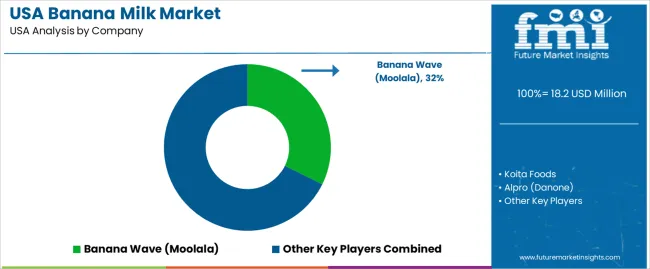
Demand for banana milk style beverages in the USA is rising as consumers increasingly prefer plant based, lactose free and allergen friendly alternatives to traditional dairy. Firms offering banana milk focus on non dairy, gluten free and nut free formulations to appeal to health conscious, vegan and allergy sensitive consumers. Among these firms, Banana Wave (also known as Moolala) holds about 32.3% of the U.S. banana milk market. Other important players in this space include Koita Foods, Alpro (owned by Danone), Good Karma Foods and Mooala. These companies supply banana based milks for direct consumption, smoothies, breakfast cereals, and as dairy substitutes in recipes.
Competition among these providers generally centres on product formulation, ingredient sourcing, packaging formats, and distribution reach. Some emphasise clean label ingredients and allergen free recipes to meet demand from health oriented consumers. Others invest in shelf stable packaging and fortified nutrition to improve convenience and appeal. Firms also differentiate via flavor variations, protein or nutrient fortification, and strategic retail placement in mainstream supermarkets and online grocery channels. The resulting market remains dynamic. Suppliers continually refine banana milk products to respond to evolving consumer tastes, dietary preferences, and non dairy beverage trends.
Key Players of the Banana Milk Industry in USA
- Banana Wave (Moolala)
- Koita Foods
- Alpro (Danone)
- Good Karma Foods
- Mooala
Scope of the Report
| Metric | Value |
|---|---|
| Quantitative Units | USD 19.07 usd to USD 30.48 usd, at a CAGR of 4.80% |
| Market Definition | Demand for banana milk in USA covers banana-based milk alternative beverages in conventional and organic formats, spanning sweetened and unsweetened varieties for retail and direct-to-consumer distribution. |
| Nature Segmentation | Conventional, Organic |
| Flavor Segmentation | Sweetened, Unsweetened |
| Sales Channel Segmentation | Indirect, Direct |
| Regions Covered | West USA, South USA, Northeast USA, Midwest USA |
| Key Companies Profiled | Banana Wave (Moolala), Koita Foods, Alpro (Danone), Good Karma Foods, Mooala |
| Forecast Period | 2026 to 2036 |
| Approach | Forecasting models apply a bottom-up methodology starting with retail scanner data and direct-to-consumer subscription volumes, projecting the category adoption rate across U.S. geographic regions. |
Key Segments of the Demand for Banana Milk in USA
Nature:
- Conventional
- Organic
Flavor:
- Sweetened
- Unsweetened
Sales Channel:
- Indirect
- Direct
Region:
- Northeast USA
- West USA
- Midwest USA
- South USA
Bibliography
- Plant Based Foods Association. (2025). U.S. Retail Sales Data for Plant-Based Foods. PBFA.
- United States Department of Agriculture. (2024). Dairy and Plant-Based Alternatives Market Report. USDA Economic Research Service.
- Food and Drug Administration. (2024). Guidance for Labeling of Plant-Based Milk Alternatives. FDA.
- Good Food Institute. (2025). State of the Industry Report: Plant-Based Milk. GFI.
- International Food Information Council. (2024). Food and Health Survey: Consumer Attitudes Toward Plant-Based Beverages. IFIC.
This bibliography is provided for reader reference. The full Future Market Insights report contains the complete reference list with primary research documentation.
Frequently Asked Questions
How large is the demand for banana milk in USA in 2026?
Demand for banana milk in the USA is estimated to be valued at USD 19.07 million in 2026.
What will be the market size of banana milk in USA by 2036?
Market size for banana milk in the USA is projected to reach USD 30.48 million by 2036.
What is the expected demand growth for banana milk in USA between 2026 and 2036?
Demand for banana milk in the USA is expected to grow at a CAGR of 4.80% between 2026 and 2036.
Which Nature segment leads in 2026?
Conventional accounts for 72.0% share in 2026 as price-sensitive consumers entering the plant-milk category prefer conventional-grade banana milk before trading up to organic variants.
Which Flavor segment leads?
Sweetened holds 65.0% share in 2026, as the added sweetener profile satisfies taste expectations for consumers transitioning from flavored dairy milk.
Which region is growing fastest for banana milk in USA?
West USA leads at 5.6% CAGR through 2036, supported by California's concentration of health-conscious consumers and natural grocery retail density.
What is included in this report?
The market covers banana-based milk beverages in conventional and organic formats, sweetened and unsweetened, distributed through retail and direct-to-consumer channels in the United States.
What is excluded from this report?
Banana-flavored dairy milk, banana smoothies, banana-infused protein shakes, and banana-based yogurt alternatives are excluded.
Preview the report firsthand - request a free sample
Get SampleGet the brochure for pricing and purchase details.
Get PDFTable of Content
- Executive Summary
- USA Market Outlook
- Demand-side Trends
- Supply-side Trends
- Technology Roadmap Analysis
- Analysis and Recommendations
- Market Overview
- Market Coverage / Taxonomy
- Market Definition / Scope / Limitations
- Research Methodology
- Chapter Orientation
- Analytical Lens and Working Hypotheses
- Market Structure, Signals, and Trend Drivers
- Benchmarking and Cross-market Comparability
- Market Sizing, Forecasting, and Opportunity Mapping
- Research Design and Evidence Framework
- Desk Research Programme (Secondary Evidence)
- Company Annual and Sustainability Reports
- Peer-reviewed Journals and Academic Literature
- Corporate Websites, Product Literature, and Technical Notes
- Earnings Decks and Investor Briefings
- Statutory Filings and Regulatory Disclosures
- Technical White Papers and Standards Notes
- Trade Journals, Industry Magazines, and Analyst Briefs
- Conference Proceedings, Webinars, and Seminar Materials
- Government Statistics Portals and Public Data Releases
- Press Releases and Reputable Media Coverage
- Specialist Newsletters and Curated Briefings
- Sector Databases and Reference Repositories
- FMI Internal Proprietary Databases and Historical Market Datasets
- Subscription Datasets and Paid Sources
- Social Channels, Communities, and Digital Listening Inputs
- Additional Desk Sources
- Expert Input and Fieldwork (Primary Evidence)
- Primary Modes
- Qualitative Interviews and Expert Elicitation
- Quantitative Surveys and Structured Data Capture
- Blended Approach
- Why Primary Evidence is Used
- Field Techniques
- Interviews
- Surveys
- Focus Groups
- Observational and In-context Research
- Social and Community Interactions
- Stakeholder Universe Engaged
- C-suite Leaders
- Board Members
- Presidents and Vice Presidents
- R&D and Innovation Heads
- Technical Specialists
- Domain Subject-matter Experts
- Scientists
- Physicians and Other Healthcare Professionals
- Governance, Ethics, and Data Stewardship
- Research Ethics
- Data Integrity and Handling
- Primary Modes
- Tooling, Models, and Reference Databases
- Desk Research Programme (Secondary Evidence)
- Data Engineering and Model Build
- Data Acquisition and Ingestion
- Cleaning, Normalisation, and Verification
- Synthesis, Triangulation, and Analysis
- Quality Assurance and Audit Trail
- Market Background
- Market Dynamics
- Drivers
- Restraints
- Opportunity
- Trends
- Scenario Forecast
- Demand in Optimistic Scenario
- Demand in Likely Scenario
- Demand in Conservative Scenario
- Opportunity Map Analysis
- Product Life Cycle Analysis
- Supply Chain Analysis
- Investment Feasibility Matrix
- Value Chain Analysis
- PESTLE and Porter’s Analysis
- Regulatory Landscape
- Regional Parent Market Outlook
- Production and Consumption Statistics
- Import and Export Statistics
- Market Dynamics
- USA Market Analysis 2021 to 2025 and Forecast, 2026 to 2036
- Historical Market Size Value (USD Million) Analysis, 2021 to 2025
- Current and Future Market Size Value (USD Million) Projections, 2026 to 2036
- Y-o-Y Growth Trend Analysis
- Absolute $ Opportunity Analysis
- USA Market Pricing Analysis 2021 to 2025 and Forecast 2026 to 2036
- USA Market Analysis 2021 to 2025 and Forecast 2026 to 2036, By Nature
- Introduction / Key Findings
- Historical Market Size Value (USD Million) Analysis By Nature , 2021 to 2025
- Current and Future Market Size Value (USD Million) Analysis and Forecast By Nature , 2026 to 2036
- Conventional
- Organic
- Conventional
- Y-o-Y Growth Trend Analysis By Nature , 2021 to 2025
- Absolute $ Opportunity Analysis By Nature , 2026 to 2036
- USA Market Analysis 2021 to 2025 and Forecast 2026 to 2036, By Flavor
- Introduction / Key Findings
- Historical Market Size Value (USD Million) Analysis By Flavor, 2021 to 2025
- Current and Future Market Size Value (USD Million) Analysis and Forecast By Flavor, 2026 to 2036
- Sweetened
- Unsweetened
- Sweetened
- Y-o-Y Growth Trend Analysis By Flavor, 2021 to 2025
- Absolute $ Opportunity Analysis By Flavor, 2026 to 2036
- USA Market Analysis 2021 to 2025 and Forecast 2026 to 2036, By Sales Channel
- Introduction / Key Findings
- Historical Market Size Value (USD Million) Analysis By Sales Channel, 2021 to 2025
- Current and Future Market Size Value (USD Million) Analysis and Forecast By Sales Channel, 2026 to 2036
- Indirect
- Direct
- Indirect
- Y-o-Y Growth Trend Analysis By Sales Channel, 2021 to 2025
- Absolute $ Opportunity Analysis By Sales Channel, 2026 to 2036
- USA Market Analysis 2021 to 2025 and Forecast 2026 to 2036, By Region
- Introduction
- Historical Market Size Value (USD Million) Analysis By Region, 2021 to 2025
- Current Market Size Value (USD Million) Analysis and Forecast By Region, 2026 to 2036
- West
- South
- Northeast
- Midwest
- Market Attractiveness Analysis By Region
- West Market Analysis 2021 to 2025 and Forecast 2026 to 2036, By Country
- Historical Market Size Value (USD Million) Trend Analysis By Market Taxonomy, 2021 to 2025
- Market Size Value (USD Million) Forecast By Market Taxonomy, 2026 to 2036
- By Country
- By Nature
- By Flavor
- By Sales Channel
- By Country
- Market Attractiveness Analysis
- By Country
- By Nature
- By Flavor
- By Sales Channel
- Key Takeaways
- South Market Analysis 2021 to 2025 and Forecast 2026 to 2036, By Country
- Historical Market Size Value (USD Million) Trend Analysis By Market Taxonomy, 2021 to 2025
- Market Size Value (USD Million) Forecast By Market Taxonomy, 2026 to 2036
- By Country
- By Nature
- By Flavor
- By Sales Channel
- By Country
- Market Attractiveness Analysis
- By Country
- By Nature
- By Flavor
- By Sales Channel
- Key Takeaways
- Northeast Market Analysis 2021 to 2025 and Forecast 2026 to 2036, By Country
- Historical Market Size Value (USD Million) Trend Analysis By Market Taxonomy, 2021 to 2025
- Market Size Value (USD Million) Forecast By Market Taxonomy, 2026 to 2036
- By Country
- By Nature
- By Flavor
- By Sales Channel
- By Country
- Market Attractiveness Analysis
- By Country
- By Nature
- By Flavor
- By Sales Channel
- Key Takeaways
- Midwest Market Analysis 2021 to 2025 and Forecast 2026 to 2036, By Country
- Historical Market Size Value (USD Million) Trend Analysis By Market Taxonomy, 2021 to 2025
- Market Size Value (USD Million) Forecast By Market Taxonomy, 2026 to 2036
- By Country
- By Nature
- By Flavor
- By Sales Channel
- By Country
- Market Attractiveness Analysis
- By Country
- By Nature
- By Flavor
- By Sales Channel
- Key Takeaways
- Key Countries Market Analysis
- West
- Pricing Analysis
- Market Share Analysis, 2025
- By Nature
- By Flavor
- By Sales Channel
- South
- Pricing Analysis
- Market Share Analysis, 2025
- By Nature
- By Flavor
- By Sales Channel
- Northeast
- Pricing Analysis
- Market Share Analysis, 2025
- By Nature
- By Flavor
- By Sales Channel
- Midwest
- Pricing Analysis
- Market Share Analysis, 2025
- By Nature
- By Flavor
- By Sales Channel
- West
- Market Structure Analysis
- Competition Dashboard
- Competition Benchmarking
- Market Share Analysis of Top Players
- By Regional
- By Nature
- By Flavor
- By Sales Channel
- Competition Analysis
- Competition Deep Dive
- Banana Wave (Moolala)
- Overview
- Product Portfolio
- Profitability by Market Segments (Product/Age /Sales Channel/Region)
- Sales Footprint
- Strategy Overview
- Marketing Strategy
- Product Strategy
- Channel Strategy
- Koita Foods
- Alpro (Danone)
- Good Karma Foods
- Mooala
- Banana Wave (Moolala)
- Competition Deep Dive
- Assumptions & Acronyms Used


