

- Industry Size (2025)
- USD 45.4 Bn
- Forecast (2035)
- USD 69.0 Bn
- CAGR (2025 to 2035)
- 4.3%
Demand for Fortified Milk & Dairy in USA Forecast and Outlook 2025 to 2035
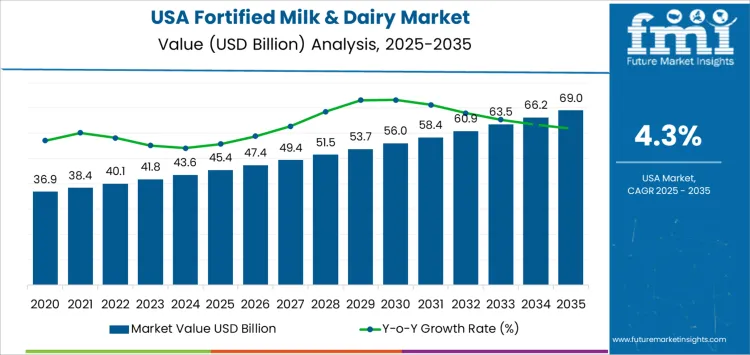
The demand for fortified milk and dairy in the USA is poised for steady growth from 2025 to 2035, with a forecasted value of USD 69.0 billion by 2035, growing at a CAGR of 4.3%. In 2025, the industry is valued at USD 45.4 billion, driven by increasing consumer awareness of the health benefits provided by fortified products. Milk leads the demand with 23%, followed by milk powder and formula, flavored milk, cheese, and dairy-based yogurt. As consumers become more focused on bone health and overall wellness, fortified milk, enriched with essential nutrients like calcium, vitamin D, and omega-3 fatty acids, remains a popular choice across age groups. Online stores are the dominant sales channel, accounting for 30% of the demand, due to the growing trend of e-commerce and convenience shopping.
Quick Stats of the Demand for Fortified Milk & Dairy in USA
- Demand for Fortified Milk & Dairy in USA Value (2025): USD 45.4 billion
- Demand for Fortified Milk & Dairy in USA Forecast Value (2035): USD 69.0 billion
- Demand for Fortified Milk & Dairy in USA Forecast CAGR (2025-2035): 4.3%
- Demand for Fortified Milk & Dairy in USA Leading Product Type: Milk
- Demand for Fortified Milk & Dairy in USA Key Growth Regions: West USA, South USA, Northeast USA, Midwest USA
- Demand for Fortified Milk & Dairy in USA Top Players: Arla Foods Ltd, FrieslandCampina, Fonterra Co-operative Group, Guangming Dairy Co. Ltd., The Kraft Heinz Company
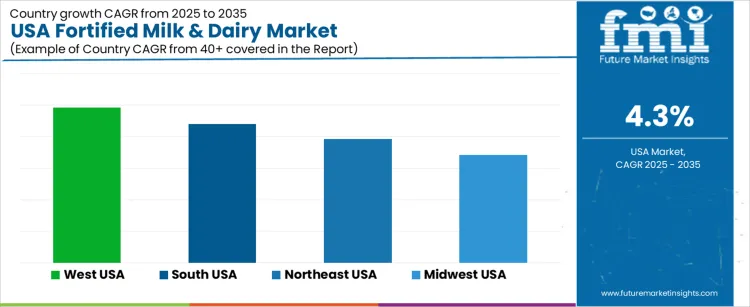
West USA leads the demand with a 4.9% CAGR, driven by health-conscious consumers seeking fortified dairy options that align with their wellness goals. South USA follows with a 4.4% CAGR, supported by the region's increasing focus on nutrition and functional dairy products, while Northeast USA experiences a 3.9% CAGR, with strong urban demand for convenient, nutrient-rich options. Midwest USA shows a 3.4% CAGR, with steady growth fueled by the region's strong dairy culture and increasing awareness of fortified products' health benefits. Leading companies in the industry include Arla Foods Ltd, FrieslandCampina, and Fonterra Co-operative Group, each focusing on innovation and sustainability to meet the growing demand for fortified dairy products. As the industry continues to expand, regional differences and product preferences will play a crucial role in shaping the demand for fortified milk and dairy in the USA.
Demand for Fortified Milk & Dairy in USA Key Takeaways
| Metric | Value |
|---|---|
| Demand for Fortified Milk & Dairy in USA Value (2025) | USD 45.4 billion |
| Demand for Fortified Milk & Dairy in USA Forecast Value (2035) | USD 69.0 billion |
| Demand for Fortified Milk & Dairy in USA Forecast CAGR (2025-2035) | 4.3% |
Why is the Demand for Fortified Milk & Dairy in USA Growing?
The demand for fortified milk and dairy in the USA is growing due to increased consumer awareness of the nutritional benefits these products offer. Fortified milk and dairy products, enriched with vitamins and minerals like vitamin D, calcium, and omega-3 fatty acids, cater to the growing consumer focus on health and wellness. As consumers become more aware of the need for balanced nutrition, especially for bone health, fortified dairy products are becoming a popular choice for individuals of all age groups. The expanding availability of fortified options across various dairy categories, including milk, cheese, yogurt, and butter, is further driving demand.
Key drivers for this growth include the rising adoption of healthier lifestyles and the growing trend of functional foods. The increasing preference for foods that provide additional health benefits, beyond basic nutrition, is fueling the demand for fortified dairy products. The rise in the aging population, which requires more nutrient-dense foods to maintain bone health and prevent chronic diseases, is contributing to the popularity of fortified milk and dairy. The convenience of consuming these products as part of daily diets also plays a role in their growing consumption.
While the demand for fortified milk and dairy continues to increase, challenges such as price sensitivity, consumer skepticism regarding added nutrients, and competition from plant-based alternatives may impact growth. Despite these challenges, the shift toward nutrient-enriched products and the continuous innovation in dairy formulations is expected to drive the industry forward through 2035.
What is the Segment-Wise Analysis of Demand for Fortified Milk & Dairy in USA?
Demand for fortified milk and dairy in the USA is segmented by product type, sales channel, micronutrients, and region. By product type, milk leads with 23% of the demand, followed by milk powder and formula, flavored milk, cheese, and dairy-based yogurt. In terms of sales channels, online stores account for 30% of the demand, with convenience stores, departmental stores, drug stores, and modern trade making up the remaining share. Micronutrient demand is primarily focused on vitamins and minerals. Regionally, demand is distributed across West USA, South USA, Northeast USA, and Midwest USA.
How Does Milk Lead the Demand for Fortified Milk & Dairy in USA?
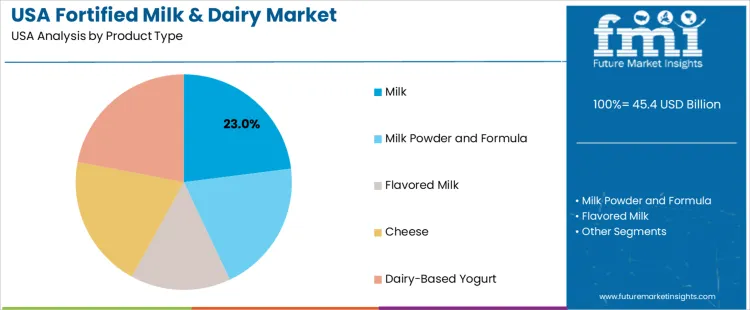
Milk accounts for 23% of the demand for fortified milk and dairy in the USA, driven by its wide consumption and the nutritional benefits it offers. Fortified milk is a significant source of essential nutrients, such as calcium and vitamin D, which are vital for maintaining strong bones and supporting immune health. Its popularity spans all age groups, from children to adults, contributing to its dominant position in the fortified dairy industry. The increasing awareness of the health benefits associated with fortified milk, especially in terms of bone health and overall wellness, continues to drive consumer demand. Milk’s versatility as a base for other dairy products like flavored milk and yogurt helps reinforce its leadership in the industry. As consumers increasingly seek functional and health-boosting beverages, the demand for fortified milk is expected to remain strong, solidifying its role as a key player in the fortified dairy sector.
Why Do Online Stores Lead the Demand for Fortified Milk & Dairy in USA?
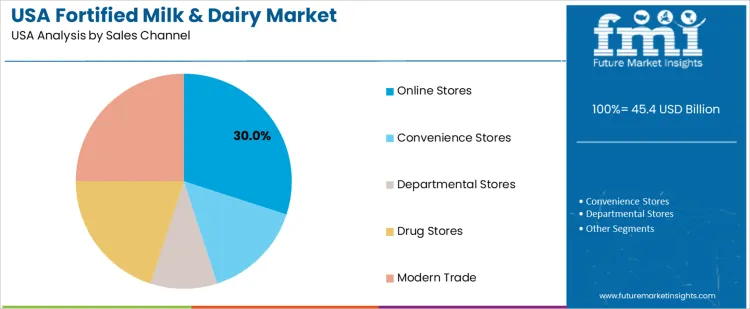
Online stores account for 30% of the demand for fortified milk and dairy in the USA, driven by the convenience of shopping from home and the growing preference for direct-to-consumer delivery services. The rise of e-commerce has made it easier for consumers to access a wide variety of fortified dairy products, such as milk and yogurt, with the added benefit of home delivery. The increasing trend of online grocery shopping, accelerated by the pandemic, has further fueled the growth of digital platforms for purchasing these products. Online stores provide consumers the ability to compare prices, read reviews, and choose from a wide range of brands, enhancing the shopping experience. As e-commerce continues to expand, the demand for fortified milk and dairy products through online stores is expected to grow, establishing online platforms as a dominant and preferred channel for purchasing these products in the USA.
What are the Key Trends, Drivers, and Restraints in Demand for Fortified Milk & Dairy in USA?
Demand for fortified milk and dairy in the USA is increasing as consumers seek products that provide added health benefits beyond basic nutrition. Fortified milk and dairy products combine essential nutrients like vitamins, minerals, proteins, and probiotics to enhance overall wellness, improve bone health, support immunity, and promote digestive health. Health-conscious consumers, particularly older adults and those with dietary deficiencies, are driving this demand. The convenience of fortified milk, yogurt, and dairy drinks further supports growth. The higher cost of fortified dairy compared to regular options may limit adoption among price-sensitive consumers. There is also some skepticism about the processing involved in fortified dairy, with certain consumers preferring whole, natural options.
Why is Demand for Fortified Milk & Dairy Growing in USA?
The growing demand for fortified milk and dairy in the USA is driven by increasing consumer awareness of the importance of functional foods that provide multiple health benefits. Fortified dairy products offer a convenient and accessible way to improve nutrition without the need for additional supplements or drastic dietary changes. Fortified milk, yogurt, and dairy drinks provide essential nutrients like vitamin D, calcium, and probiotics, supporting bone health, immunity, and digestive function. This has made fortified dairy particularly appealing to children, the elderly, and individuals with specific dietary needs. The rise in health-consciousness, preventive nutrition, and convenience also plays a significant role in the industry's growth. Fortified dairy products are now widely available through supermarkets, hypermarkets, and e-commerce platforms, making them increasingly accessible to a broader range of consumers across the USA.
How are Technological and Product Innovations Driving Fortified Milk & Dairy Demand in USA?
Technological advancements in dairy processing and fortification have played a pivotal role in the growing demand for fortified milk and dairy products in the USA. Innovations in formulation have made it possible to add essential nutrients like calcium, vitamin D, and probiotics without compromising taste, texture, or shelf life. Manufacturers now offer a wide range of fortified dairy products, such as vitamin-enriched milk, probiotic yogurt, and mineral-fortified dairy drinks, catering to diverse health needs. Packaging improvements, such as better seals and containers, help maintain product freshness and extend shelf life. These innovations not only ensure that the nutritional content remains intact but also enhance the consumer experience by providing more options that meet modern dietary preferences. As the demand for functional foods continues to rise, these technological advancements enable fortified dairy to meet the evolving needs of health-conscious consumers.
What are the Key Challenges and Risks That Could Limit Fortified Milk & Dairy Demand in USA?
One significant factor is the higher cost of fortified dairy products compared to regular dairy, which could deter price-sensitive consumers from making the switch. Some consumers are skeptical about the processing involved in fortifying dairy and prefer whole, natural options instead. The growing popularity of plant-based alternatives among lactose-intolerant individuals or those seeking dairy-free diets presents another challenge, as it limits the target industry for fortified dairy products. Furthermore, regulatory concerns regarding fortification claims and nutrient dosages could constrain product development and marketing. Finally, shifting dietary trends, such as the move towards low-dairy or low-fat diets, may dampen demand for fortified dairy, especially among younger, health-conscious consumers seeking alternatives that align with their dietary preferences.
What is the Regional Demand Outlook for Fortified Milk & Dairy in USA?
| Region | CAGR (%) |
|---|---|
| West USA | 4.9% |
| South USA | 4.4% |
| Northeast USA | 3.9% |
| Midwest USA | 3.4% |
Demand for fortified milk and dairy in the USA is growing steadily, with West USA leading at a 4.9% CAGR, driven by health-conscious consumers seeking products enriched with essential nutrients like calcium and vitamin D. South USA follows with a 4.4% CAGR, supported by the region’s focus on nutrition and the rising popularity of functional dairy products. Northeast USA experiences a 3.9% CAGR, driven by urban demand for convenient, nutrient-rich dairy options. Midwest USA shows a 3.4% CAGR, with steady growth fueled by the region’s strong dairy culture and increasing awareness of the health benefits of fortified products.
How is Demand for Fortified Milk & Dairy Growing in West USA?
West USA leads the demand for fortified milk and dairy, growing at a 4.9% CAGR. The region’s health-conscious consumers are driving the adoption of fortified milk products, particularly those enriched with vitamins and minerals such as calcium and vitamin D. The growing focus on wellness and nutrition is encouraging the shift towards dairy products that provide added health benefits. Cities like Los Angeles and San Francisco are seeing a high demand for organic and plant-based fortified milk alternatives, supporting the rise in fortified dairy consumption. As the population becomes more aware of bone health and the importance of dairy in maintaining overall wellness, fortified milk and dairy products are increasingly being incorporated into daily diets. As the trend toward healthier, functional foods continues, the demand for fortified milk and dairy products in West USA will continue to grow, driven by both innovations in product offerings and the region’s large, health-conscious population.
Why is Demand for Fortified Milk & Dairy Rising in South USA?
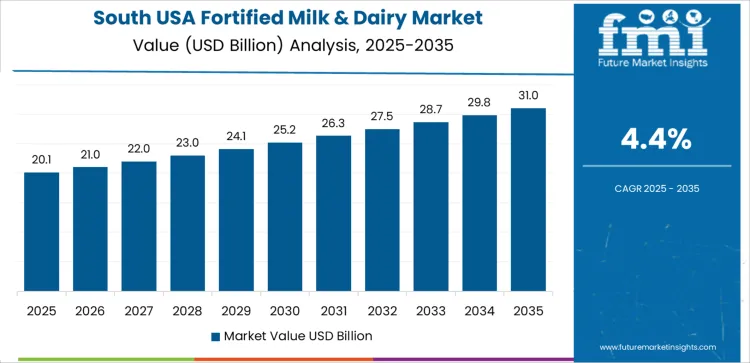
South USA is experiencing strong demand for fortified milk and dairy, with a 4.4% CAGR. The region’s growing focus on nutrition and health is driving the consumption of fortified dairy products, particularly among families and children. Fortified milk products, such as those enriched with calcium and vitamin D, are gaining popularity as consumers become more aware of their role in bone health and overall wellness. States like Texas and Florida are witnessing an increase in fortified dairy consumption, supported by the rising trend of functional foods. The popularity of flavored and fortified milk drinks, such as protein-enriched dairy beverages, is further boosting demand. The South’s strong cultural preference for dairy-based products, including milk, cheese, and yogurt, continues to support this growth, with fortified versions offering consumers added health benefits. As more consumers focus on health-conscious choices, the demand for fortified milk and dairy products in the South is expected to continue to rise steadily.
How is Demand for Fortified Milk & Dairy Expanding in Northeast USA?
Northeast USA is seeing steady demand for fortified milk and dairy, with a 3.9% CAGR. Urban areas like New York and Boston are driving the adoption of fortified dairy products, as consumers look for convenient, nutrient-rich options to complement their busy lifestyles. Fortified milk, with added nutrients like calcium and vitamin D, is becoming an essential part of the daily diet for health-conscious individuals. The rise in awareness of the benefits of fortified dairy for bone health, especially among older adults, is further supporting this demand. In addition, the growing popularity of plant-based alternatives enriched with similar nutrients is contributing to the demand for fortified milk and dairy in the region. As consumers in the Northeast continue to prioritize wellness and functional foods, fortified dairy products are expected to experience steady growth, driven by the region’s focus on nutritional benefits and convenience.
Why is Demand for Fortified Milk & Dairy Growing in Midwest USA?
Midwest USA is experiencing moderate demand for fortified milk and dairy, with a 3.4% CAGR. The region’s strong dairy culture, along with increasing health awareness, is supporting the growth of fortified milk and dairy products. Fortified dairy, especially those enriched with vitamins and minerals such as vitamin D, is becoming more popular as consumers look for ways to boost their nutrition. As the demand for functional foods rises, dairy products offering added health benefits, particularly for bone health, are gaining traction. The Midwest’s focus on family-friendly, nutrient-dense products is further driving the consumption of fortified milk, especially among children and older adults. While growth is moderate compared to other regions, the demand for fortified milk and dairy is expected to continue rising steadily, driven by increasing consumer awareness of the health benefits and the region’s strong preference for dairy-based foods.
What is the Competitive Landscape of Fortified Milk & Dairy Demand in USA?
Demand for fortified milk and dairy products in the USA is rising as consumers become more health-conscious and seek nutritional benefits beyond standard dairy. Fortified milk and dairy offer added vitamins and minerals, such as calcium and vitamin D, making them popular in households focused on supporting bone health and overall wellness. The industry for fortified dairy products is expanding with the growing interest in functional foods that provide specific health benefits, especially among children and older adults.
FrieslandCampina and Fonterra Co-operative Group emphasize innovation and sustainability, offering fortified dairy products that align with modern consumer preferences for clean-label and environmentally-friendly options. Their global reach and expertise in dairy production enable them to deliver cost-effective, high-quality solutions. Guangming Dairy Co. Ltd. and The Kraft Heinz Company focus on regional consumer preferences, with an emphasis on affordability and accessibility. These companies are increasingly differentiating their products through targeted marketing, customized formulations, and expanding their distribution networks, ensuring a strong position in the competitive landscape of fortified milk and dairy in the USA.
Key Players in USA Fortified Milk & Dairy Demand
- Arla Foods Ltd
- FrieslandCampina
- Fonterra Co-operative Group
- Guangming Dairy Co. Ltd.
- The Kraft Heinz Company
Scope of Report
| Items | Values |
|---|---|
| Quantitative Units (2025) | USD billion |
| Product Type | Milk, Milk Powder and Formula, Flavored Milk, Cheese, Dairy-Based Yogurt |
| Micronutrients | Vitamins, Minerals |
| Sales Channel | Online Stores, Convenience Stores, Departmental Stores, Drug Stores, Modern Trade |
| Regions Covered | West USA, South USA, Northeast USA, Midwest USA |
| Countries Covered | USA |
| Key Companies Profiled | Arla Foods Ltd, FrieslandCampina, Fonterra Co-operative Group, Guangming Dairy Co. Ltd., The Kraft Heinz Company |
| Additional Attributes | Dollar sales by product type and micronutrient; regional CAGR and growth trends; increasing demand for flavored milk and dairy-based yogurt; distribution channels in retail, convenience, and e-commerce. |
USA Fortified Milk & Dairy Demand by Key Segments
Product Type
- Milk
- Milk Powder and Formula
- Flavored Milk
- Cheese
- Dairy-Based Yogurt
Micronutrients
- Vitamins
- Minerals
Sales Channel
- Online Stores
- Convenience Stores
- Departmental Stores
- Drug Stores
- Modern Trade
Region
- West USA
- South USA
- Northeast USA
- Midwest USA
Frequently Asked Questions
How big is the demand for fortified milk & dairy in USA in 2025?
The demand for fortified milk & dairy in USA is estimated to be valued at USD 45.4 billion in 2025.
What will be the size of fortified milk & dairy in USA in 2035?
The market size for the fortified milk & dairy in USA is projected to reach USD 69.0 billion by 2035.
How much will be the demand for fortified milk & dairy in USA growth between 2025 and 2035?
The demand for fortified milk & dairy in USA is expected to grow at a 4.3% CAGR between 2025 and 2035.
What are the key product types in the fortified milk & dairy in USA?
The key product types in fortified milk & dairy in USA are milk, milk powder and formula, flavored milk, cheese and dairy-based yogurt.
Which micronutrients segment is expected to contribute significant share in the fortified milk & dairy in USA in 2025?
In terms of micronutrients, vitamins segment is expected to command 35.0% share in the fortified milk & dairy in USA in 2025.
Preview the report firsthand - request a free sample
Get SampleGet the brochure for pricing and purchase details.
Get PDFTable of Content
- Executive Summary
- USA Market Outlook
- Demand-side Trends
- Supply-side Trends
- Technology Roadmap Analysis
- Analysis and Recommendations
- Market Overview
- Market Coverage / Taxonomy
- Market Definition / Scope / Limitations
- Market Background
- Market Dynamics
- Drivers
- Restraints
- Opportunity
- Trends
- Scenario Forecast
- Demand in Optimistic Scenario
- Demand in Likely Scenario
- Demand in Conservative Scenario
- Opportunity Map Analysis
- Product Life Cycle Analysis
- Supply Chain Analysis
- Investment Feasibility Matrix
- Value Chain Analysis
- PESTLE and Porter’s Analysis
- Regulatory Landscape
- Regional Parent Market Outlook
- Production and Consumption Statistics
- Import and Export Statistics
- Market Dynamics
- USA Market Analysis 2020 to 2024 and Forecast, 2025 to 2035
- Historical Market Size Value (USD Million) Analysis, 2020 to 2024
- Current and Future Market Size Value (USD Million) Projections, 2025 to 2035
- Y-o-Y Growth Trend Analysis
- Absolute $ Opportunity Analysis
- USA Market Pricing Analysis 2020 to 2024 and Forecast 2025 to 2035
- USA Market Analysis 2020 to 2024 and Forecast 2025 to 2035, By Product Type
- Introduction / Key Findings
- Historical Market Size Value (USD Million) Analysis By Product Type , 2020 to 2024
- Current and Future Market Size Value (USD Million) Analysis and Forecast By Product Type , 2025 to 2035
- Milk
- Milk Powder and Formula
- Flavored Milk
- Cheese
- Dairy-Based Yogurt
- Y-o-Y Growth Trend Analysis By Product Type , 2020 to 2024
- Absolute $ Opportunity Analysis By Product Type , 2025 to 2035
- USA Market Analysis 2020 to 2024 and Forecast 2025 to 2035, By Micronutrients
- Introduction / Key Findings
- Historical Market Size Value (USD Million) Analysis By Micronutrients, 2020 to 2024
- Current and Future Market Size Value (USD Million) Analysis and Forecast By Micronutrients, 2025 to 2035
- Vitamins
- Minerals
- Y-o-Y Growth Trend Analysis By Micronutrients, 2020 to 2024
- Absolute $ Opportunity Analysis By Micronutrients, 2025 to 2035
- USA Market Analysis 2020 to 2024 and Forecast 2025 to 2035, By Sales Channel
- Introduction / Key Findings
- Historical Market Size Value (USD Million) Analysis By Sales Channel, 2020 to 2024
- Current and Future Market Size Value (USD Million) Analysis and Forecast By Sales Channel, 2025 to 2035
- Online Stores
- Convenience Stores
- Departmental Stores
- Drug Stores
- Modern Trade
- Y-o-Y Growth Trend Analysis By Sales Channel, 2020 to 2024
- Absolute $ Opportunity Analysis By Sales Channel, 2025 to 2035
- Market Structure Analysis
- Competition Dashboard
- Competition Benchmarking
- Market Share Analysis of Top Players
- By Regional
- By Product Type
- By Micronutrients
- By Sales Channel
- Competition Analysis
- Competition Deep Dive
- FrieslandCampina
- Overview
- Product Portfolio
- Profitability by Market Segments (Product/Age /Sales Channel/Region)
- Sales Footprint
- Strategy Overview
- Marketing Strategy
- Product Strategy
- Channel Strategy
- Fonterra Co-operative Group
- Guangming Dairy Co. Ltd.
- The Kraft Heinz Company
- FrieslandCampina
- Competition Deep Dive
- Assumptions & Acronyms Used
- Research Methodology


