

- Industry Size (2025)
- USD 1.7 Bn
- Forecast (2035)
- USD 2.5 Bn
- CAGR (2025 to 2035)
- 4.3%
Demand for Fava Beans in USA Forecast and Outlook 2025 to 2035
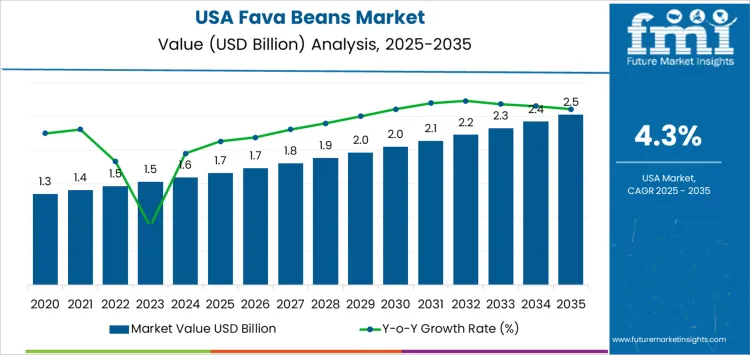
Demand for fava beans in the USA is expected to grow from USD 1.7 billion in 2025 to USD 2.5 billion by 2035, reflecting a compound annual growth rate (CAGR) of 4.3%. This growth is driven by the increasing adoption of fava beans as a plant-based protein source in various food products, including plant-based meat alternatives, snacks, and other processed foods. As consumer interest in plant-based diets and sustainable food sources rises, fava beans, known for their high nutritional value and versatility, are becoming a popular ingredient in both mainstream and specialty food products.
The market is further supported by the growing demand for functional foods and plant-based proteins that provide health benefits, such as improved digestion and enhanced muscle repair. As more consumers turn to plant-based options for their dietary needs, fava beans are expected to become a staple in plant-based product offerings across the food industry. The continued focus on sustainability and ethical sourcing will likely enhance the appeal of fava beans as a key ingredient in future food innovations.
Quick Stats of the Demand for Fava Beans in USA
- Demand for Fava Beans in USA Value (2025): USD 1.7 billion
- Demand for Fava Beans in USA Forecast Value (2035): USD 2.5 billion
- Demand for Fava Beans in USA Forecast CAGR (2025-2035): 4.3%
- Demand for Fava Beans in USA Leading Form: Fresh (54%)
- Demand for Fava Beans in USA Key Growth Regions: West USA, South USA, Northeast USA, Midwest USA
- Demand for Fava Beans in USA Key Players: Prairie Fava Ltd., Unigrain Pty Ltd, Roland Beans, Aviip Group, Alberta Pulse Growers Commission
What is the Growth Forecast for the Fava Beans Market through 2035?
The inflection point mapping for the fava beans market in the USA reveals steady growth, with key shifts occurring as the market matures. Starting at USD 1.7 billion in 2025, the market shows a consistent increase to USD 1.7 billion in 2026, with a slight growth to USD 1.8 billion in 2027. This early period reflects a stable demand for fava beans, driven by their increasing recognition as a plant-based protein source.
In 2028, the market reaches USD 1.9 billion, marking the first significant inflection point where growth begins to accelerate. The demand for fava beans continues to increase, reaching USD 2.0 billion in 2029 and USD 2.0 billion in 2030. This indicates that, during this phase, the market experiences accelerated adoption driven by increased product availability and consumer interest in plant-based proteins. As the market matures, growth stabilizes slightly, reaching USD 2.1 billion in 2031 and USD 2.2 billion in 2032. By 2035, the market reaches USD 2.5 billion, reflecting consistent growth over the decade, with inflection points marking periods of acceleration in consumer demand and product integration within the broader plant-based food sector.
USA Fava Beans Industry Key Takeaways
| Metric | Value |
|---|---|
| Industry Sales Value (2025) | USD 1.7 billion |
| Industry Forecast Value (2035) | USD 2.5 billion |
| Industry Forecast CAGR (2025-2035) | 4.3% |
Why is the Demand for Fava Beans Growing in the USA?
Demand for fava beans in the USA is rising as more consumers shift toward plant-based diets, driven by health consciousness, sustainability awareness, and interest in nutritious, high-protein foods. Fava beans are rich in protein, dietary fiber, vitamins and minerals - making them a valuable alternative to meat and other animal-based proteins. Because of their nutritional profile, consumers who are vegetarian, vegan, flexitarian, or simply seeking to reduce meat intake are increasingly incorporating fava beans into their meals. This shift is contributing to growing demand across groceries, health-food stores, and mainstream retail outlets for whole fava beans, bean pastes, flours, and processed products based on fava.
At the same time, growth in food-processing and plant-based product innovation is boosting demand for fava beans in the USA. Food manufacturers and meat-alternative producers are using fava bean protein, flour, and isolates to develop products such as meat substitutes, protein-fortified snacks, dairy-alternative beverages, and convenient ready-to-eat meals. Because fava-derived ingredients can be processed to have neutral flavor, good functional properties, and high nutritional value, they are becoming a preferred base for clean-label, allergen-friendly, non-GMO, and sustainable food products.
What Are the Key Segments in Fava Beans Market in the USA?
Overview The fava beans market in the USA is segmented by product type and form. Whole fava beans lead the product type segment, accounting for 46% of the market share. In terms of form, fresh fava beans dominate with 54% of the market. The growing interest in plant-based protein sources, as well as the versatility of fava beans in various culinary applications, is driving the demand across different consumer segments.
Which Product Type Drives Fava Beans Demand in the USA?
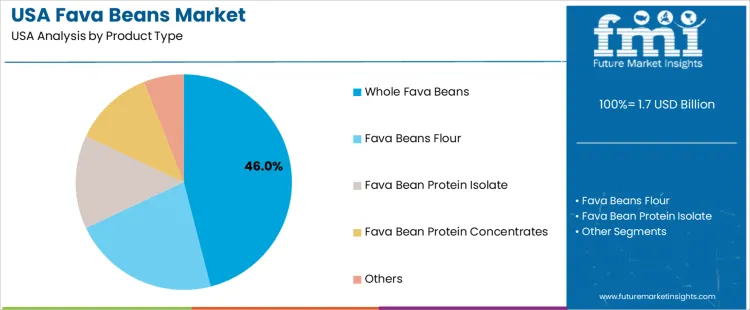
Whole fava beans represent the largest product segment in the USA, holding 46% of the market share. This form of fava beans is highly valued for its nutritional content, including a rich supply of plant-based protein, fiber, and essential vitamins and minerals. Whole fava beans are widely used in soups, stews, salads, and traditional dishes, particularly in Mediterranean and Middle Eastern cuisines. As consumers continue to seek plant-based alternatives for meat and other animal products, the demand for whole fava beans is expected to rise. Other product types, such as fava bean flour, fava bean protein isolate, and fava bean protein concentrates, are also growing, driven by the increasing popularity of plant-based proteins in the food industry.
Which Form Drives Fava Beans Demand in the USA?
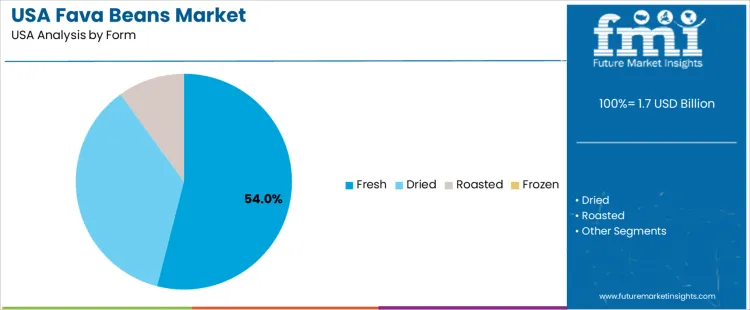
Fresh fava beans are the most popular form, holding 54% of the market share. This form is favored for its use in cooking, offering a fresh, vibrant flavor and a variety of culinary applications. Fresh fava beans are commonly used in salads, sautés, and as a side dish, and are prized for their high-quality taste and texture. While dried and roasted forms are also used, especially in processed foods and snacks, fresh fava beans remain the preferred choice for consumers seeking natural, minimally processed ingredients. As the trend toward fresh, whole foods continues to rise, the demand for fresh fava beans is expected to remain strong.
What is the Summary of Demand for Fava Beans in USA?
Demand for fava beans in the USA has been steadily increasing as American consumers embrace nutritious legumes, plant-based proteins, and diverse culinary ingredients. The US market for fava beans, including both dry beans and processed forms like frozen or canned beans, is projected to grow significantly. Fava beans appeal due to their protein and fiber content, versatility in cooking, and suitability for vegetarian, vegan, or flexitarian diets. Their use spans home cooking, plant-based foods, food service, and ingredient supply chains. As interest in plant-based eating grows, fava beans are becoming a popular choice among a broader consumer base.
What are the Drivers of Demand for Fava Beans in USA?
Several factors are supporting rising demand for fava beans in the USA. First, there is growing awareness about plant-based diets, healthy eating, and the nutritional benefits of legumes, including high protein, dietary fiber, and essential micronutrients. Fava beans are an excellent protein-rich, nutritious, and sustainable alternative. Second, the increasing popularity of vegetarian, vegan, and flexitarian eating patterns supports the demand for fava beans as a plant-based protein source. Third, the expansion of fava bean supply through domestic production and imports ensures variety and availability, making them accessible to a wider consumer base. Finally, evolving consumer tastes, culinary experimentation, and the rise of international cuisines increase the demand for versatile ingredients like fava beans.
What are the Restraints on Demand for Fava Beans in USA?
Despite growing interest, several factors limit the broader adoption of fava beans in the USA. One major restraint is limited consumer familiarity, as many Americans may view fava beans as a niche ingredient rather than a staple. Second, some consumers may find it challenging to incorporate fava beans into their daily cooking due to lack of knowledge on how to prepare them. Third, supply limitations and production scale constraints mean that the USA relies on imports for a significant portion of its fava bean supply, leading to potential price and availability fluctuations. Finally, concerns over flavor preferences, preparation time, and dietary restrictions may deter some consumers from using fava beans regularly.
What are the Key Trends Influencing Demand for Fava Beans in USA?
Several key trends are shaping the demand for fava beans in the USA. One significant trend is the growing popularity of plant-based protein and meat-alternative products. As consumers seek sustainable and protein-rich options, fava bean protein is increasingly used in meat substitutes, protein-rich snacks, and health-food products. Second, there is an increasing interest in global and Mediterranean cuisines, where fava beans play a key role in soups, stews, spreads, salads, and other dishes.
Third, the rising demand for clean-label, high-fiber, and nutrient-dense ingredients in health-conscious diets supports the consumption of beans over processed foods. Fourth, innovations in the food industry, such as the use of fava bean protein or flour in processed foods and plant-based alternatives, are making beans more accessible beyond traditional bean dishes. Finally, improvements in the supply chain and import infrastructure are increasing the availability of dried, canned, or frozen fava beans, broadening their reach across supermarkets in the USA.
What is the Regional Demand Outlook for the Fava Beans Market in the USA?
The Fava Beans market in the USA is expected to grow steadily across various regions, with the West USA leading the way at a projected CAGR of 4.9%. South USA follows closely with a growth rate of 4.4%, while the Northeast USA is expected to grow at 3.9%. The Midwest USA shows moderate growth with a CAGR of 3.4%. Fava beans, known for their high nutritional value and versatility in plant-based diets, are gaining popularity due to increasing consumer awareness of sustainable and healthy food options. As demand for plant-based protein sources and legumes rises, Fava beans are increasingly being incorporated into a variety of food products, driving market growth.
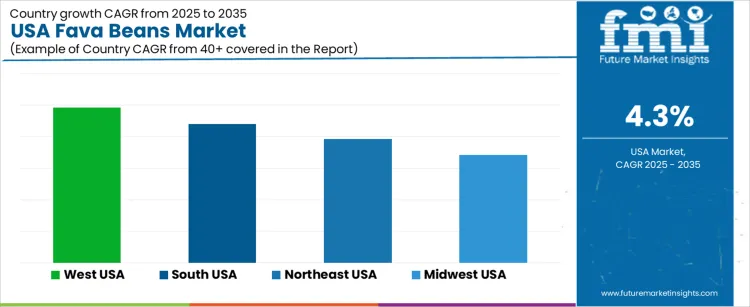
| Region | CAGR (%) |
|---|---|
| West USA | 4.9 |
| South USA | 4.4 |
| Northeast USA | 3.9 |
| Midwest USA | 3.4 |
What is Driving the Growth of Fava Beans in West USA?
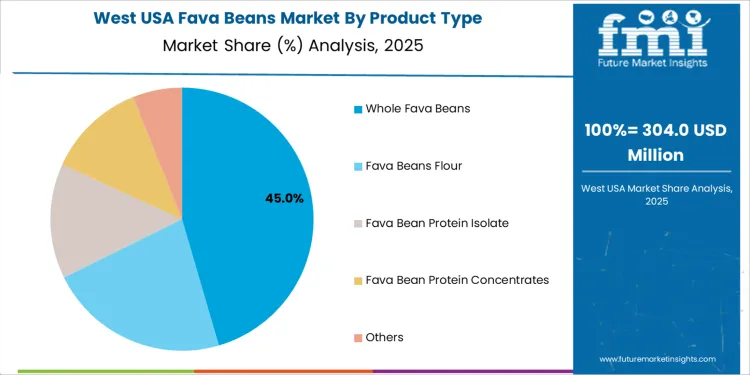
The West USA is projected to experience the highest growth in the Fava Beans market, with a projected CAGR of 4.9%. The region’s growing focus on plant-based diets and healthy food alternatives is fueling the demand for legumes like fava beans, which are rich in protein, fiber, and essential nutrients. As consumers in the West USA increasingly prioritize sustainable, organic, and locally sourced foods, fava beans are becoming a popular ingredient in plant-based products such as meat substitutes, soups, and salads.
Additionally, the West’s vibrant food culture, with its emphasis on innovative culinary experiences and multicultural cuisine, is contributing to the adoption of fava beans in both traditional and fusion dishes. The rise of health-conscious eating habits, particularly in California and other West Coast states, further supports the growing demand for fava beans as part of a balanced, plant-forward diet.
Why is the Fava Beans Market Expanding in South USA?
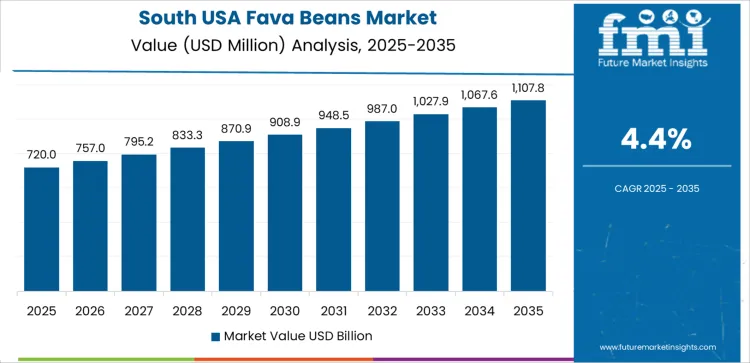
In South USA, the demand for fava beans is projected to grow at a CAGR of 4.4%. The region’s increasing interest in healthy eating and plant-based diets is contributing to the rise in popularity of legumes like fava beans. Known for their versatility in cooking and their nutritional benefits, fava beans are being incorporated into various dishes, from salads to casseroles. As Southern cuisine continues to evolve and embrace healthier ingredients, fava beans are finding their way into both traditional and contemporary recipes.
The growing awareness of the environmental benefits of plant-based proteins is also driving demand for fava beans in South USA, where the agricultural industry is embracing more sustainable farming practices. Additionally, the rising availability of plant-based food products in grocery stores and restaurants is helping to further drive the market growth in the region.
How is the Fava Beans Market Growing in Northeast USA?
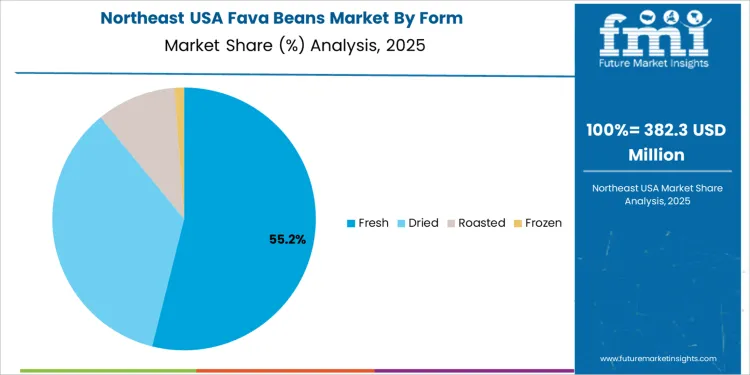
In Northeast USA, the Fava Beans market is projected to grow at a CAGR of 3.9%. The Northeast’s focus on sustainability, health-conscious eating, and locally sourced ingredients is driving the demand for fava beans. With cities like New York and Boston at the forefront of plant-based eating trends, fava beans are increasingly being incorporated into food products aimed at health-conscious consumers. As more people adopt vegetarian and vegan diets, fava beans are seen as an excellent source of plant-based protein, making them a staple in plant-forward dishes such as vegan burgers, protein bars, and salads. The growing demand for legumes as an alternative to animal protein, coupled with the Northeast's emphasis on sustainable agriculture, is contributing to the steady growth of the fava beans market in the region.
What is Contributing to the Growth of Fava Beans in Midwest USA?
In Midwest USA, the Fava Beans market is expected to grow at a CAGR of 3.4%. While the Midwest has traditionally been known for its meat-centric food culture, there is a growing shift toward plant-based eating, particularly in urban areas like Chicago and Minneapolis. As consumers in the region become more health-conscious and environmentally aware, they are turning to plant-based protein sources like fava beans.
Additionally, fava beans are being promoted for their nutritional benefits, such as their high fiber, protein, and iron content. With the increasing interest in legumes and plant-based foods, the Midwest is seeing more fava bean products available in grocery stores and restaurants, further fueling market growth. As the region’s food culture evolves and embraces healthier, sustainable options, the demand for fava beans is expected to rise steadily.
What is the Competitive Landscape for Demand for Fava Beans in the USA?
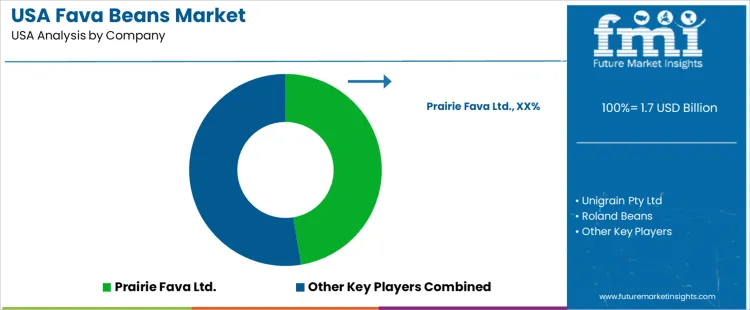
Demand for fava beans in the USA has grown as consumers increasingly embrace plant-based diets, seek high-protein and high-fiber alternatives to meat, and show rising interest in global cuisines. Fava beans are recognized for their strong nutritional profile - rich in protein, dietary fiber, essential vitamins and minerals - which aligns with the broader trend toward health-conscious eating and sustainable food choices. Growing awareness of their versatility in cooking - from traditional dishes to modern vegetarian and vegan recipes - supports their rising popularity. The market for fava beans in North America is expanding as supply chains, distribution, and consumer familiarity improve.
On the supply side, a group of key producers and distributors compete to meet growing USA demand. According to your list, Prairie Fava Ltd. holds a substantial share, followed by Unigrain Pty Ltd, Roland Beans, Aviip Group, and Alberta Pulse Growers Commission. These firms offer a variety of fava bean products including whole beans, dried beans, or processed fava products for food manufacturing and retail.
Suppliers compete based on product quality (nutritional content, freshness or processing standards), reliability and scale of supply, range of product forms (whole beans, flour, protein ingredients), and ability to meet demand from both retail consumers and food-service or processing industries. Firms that ensure consistent quality, sustainable sourcing, and wide distribution are better positioned to capture growth as demand for plant-based, nutritious, and sustainable foods grows in the USA
Key Players of the Fava Beans Industry in USA
- Prairie Fava Ltd.
- Unigrain Pty Ltd
- Roland Beans
- Aviip Group
- Alberta Pulse Growers Commission
Scope of the Report
| Items | Details |
|---|---|
| Quantitative Units | USD Billion |
| Regions Covered | USA |
| Product Type | Whole Fava Beans, Fava Beans Flour, Fava Bean Protein Isolate, Fava Bean Protein Concentrates, Others |
| Form | Fresh, Dried, Roasted, Frozen |
| Application | Food & Beverages, Animal Feed, Others |
| Distribution Channel | B2B, B2C |
| Key Companies Profiled | Prairie Fava Ltd., Unigrain Pty Ltd, Roland Beans, Aviip Group, Alberta Pulse Growers Commission |
| Additional Attributes | Dollar sales by product type and form show growing demand for dried and processed fava beans and protein isolates - driven by rising interest in plant-based proteins and sustainable food. Food & beverages dominates applications, while protein-rich fava derivatives are gaining traction in meat-alternative and functional-food products. |
Key Segments in the Demand for Fava Beans in USA
Product Type
- Whole Fava Beans
- Fava Bean Flour
- Fava Bean Protein Isolate
- Fava Bean Protein Concentrates
- Others
Form
- Fresh
- Dried
- Roasted
- Frozen
Application
- Food & Beverages
- Animal Feed
- Others
Distribution Channel
- B2B
- B2C
Region
- Northeast USA
- West USA
- Midwest USA
- South USA
Frequently Asked Questions
How big is the demand for fava beans in USA in 2025?
The demand for fava beans in USA is estimated to be valued at USD 1.7 billion in 2025.
What will be the size of fava beans in USA in 2035?
The market size for the fava beans in USA is projected to reach USD 2.5 billion by 2035.
How much will be the demand for fava beans in USA growth between 2025 and 2035?
The demand for fava beans in USA is expected to grow at a 4.3% CAGR between 2025 and 2035.
What are the key product types in the fava beans in USA?
The key product types in fava beans in USA are whole fava beans, fava beans flour, fava bean protein isolate, fava bean protein concentrates and others.
Which form segment is expected to contribute significant share in the fava beans in USA in 2025?
In terms of form, fresh segment is expected to command 54.0% share in the fava beans in USA in 2025.
Preview the report firsthand - request a free sample
Get SampleGet the brochure for pricing and purchase details.
Get PDFTable of Content
- Executive Summary
- USA Market Outlook
- Demand-side Trends
- Supply-side Trends
- Technology Roadmap Analysis
- Analysis and Recommendations
- Market Overview
- Market Coverage / Taxonomy
- Market Definition / Scope / Limitations
- Market Background
- Market Dynamics
- Drivers
- Restraints
- Opportunity
- Trends
- Scenario Forecast
- Demand in Optimistic Scenario
- Demand in Likely Scenario
- Demand in Conservative Scenario
- Opportunity Map Analysis
- Product Life Cycle Analysis
- Supply Chain Analysis
- Investment Feasibility Matrix
- Value Chain Analysis
- PESTLE and Porter’s Analysis
- Regulatory Landscape
- Regional Parent Market Outlook
- Production and Consumption Statistics
- Import and Export Statistics
- Market Dynamics
- USA Market Analysis 2020 to 2024 and Forecast, 2025 to 2035
- Historical Market Size Value (USD Million) Analysis, 2020 to 2024
- Current and Future Market Size Value (USD Million) Projections, 2025 to 2035
- Y-o-Y Growth Trend Analysis
- Absolute $ Opportunity Analysis
- USA Market Pricing Analysis 2020 to 2024 and Forecast 2025 to 2035
- USA Market Analysis 2020 to 2024 and Forecast 2025 to 2035, By Product Type
- Introduction / Key Findings
- Historical Market Size Value (USD Million) Analysis By Product Type , 2020 to 2024
- Current and Future Market Size Value (USD Million) Analysis and Forecast By Product Type , 2025 to 2035
- Whole Fava Beans
- Fava Beans Flour
- Fava Bean Protein Isolate
- Fava Bean Protein Concentrates
- Others
- Y-o-Y Growth Trend Analysis By Product Type , 2020 to 2024
- Absolute $ Opportunity Analysis By Product Type , 2025 to 2035
- USA Market Analysis 2020 to 2024 and Forecast 2025 to 2035, By Form
- Introduction / Key Findings
- Historical Market Size Value (USD Million) Analysis By Form, 2020 to 2024
- Current and Future Market Size Value (USD Million) Analysis and Forecast By Form, 2025 to 2035
- Fresh
- Dried
- Roasted
- Frozen
- Y-o-Y Growth Trend Analysis By Form, 2020 to 2024
- Absolute $ Opportunity Analysis By Form, 2025 to 2035
- USA Market Analysis 2020 to 2024 and Forecast 2025 to 2035, By Application
- Introduction / Key Findings
- Historical Market Size Value (USD Million) Analysis By Application, 2020 to 2024
- Current and Future Market Size Value (USD Million) Analysis and Forecast By Application, 2025 to 2035
- Food & Beverages
- Animal Feed
- Others
- Y-o-Y Growth Trend Analysis By Application, 2020 to 2024
- Absolute $ Opportunity Analysis By Application, 2025 to 2035
- USA Market Analysis 2020 to 2024 and Forecast 2025 to 2035, By Distribution Channel
- Introduction / Key Findings
- Historical Market Size Value (USD Million) Analysis By Distribution Channel, 2020 to 2024
- Current and Future Market Size Value (USD Million) Analysis and Forecast By Distribution Channel, 2025 to 2035
- B2B
- B2C
- Y-o-Y Growth Trend Analysis By Distribution Channel, 2020 to 2024
- Absolute $ Opportunity Analysis By Distribution Channel, 2025 to 2035
- Market Structure Analysis
- Competition Dashboard
- Competition Benchmarking
- Market Share Analysis of Top Players
- By Regional
- By Product Type
- By Form
- By Application
- By Distribution Channel
- Competition Analysis
- Competition Deep Dive
- Prairie Fava Ltd.
- Overview
- Product Portfolio
- Profitability by Market Segments (Product/Age /Sales Channel/Region)
- Sales Footprint
- Strategy Overview
- Marketing Strategy
- Product Strategy
- Channel Strategy
- Unigrain Pty Ltd
- Roland Beans
- Aviip Group
- Alberta Pulse Growers Commission
- Prairie Fava Ltd.
- Competition Deep Dive
- Assumptions & Acronyms Used
- Research Methodology


