

- Industry Size (2025)
- USD 0.4 Bn
- Forecast (2035)
- USD 0.6 Bn
- CAGR (2025 to 2035)
- 3.3%
Demand for Liquid Flavors in USA 2025 to 2035
The demand for liquid flavors in the USA is valued at USD 0.4 billion in 2025 and is forecasted to reach USD 0.6 billion by 2035, reflecting a CAGR of 3.3%. Demand is shaped by increased USAge of flavor concentrates across packaged food, functional beverages, dairy items, and bakery formulations. Manufacturers focus on natural taste enhancement and clean-label positioning to meet shifting consumer preferences for recognizable ingredients with reduced artificial additives. Organic liquid flavors lead overall USAge due to the rising selection of organic-certified beverages, confectionery, and ready-to-drink applications. These products support targeted formulation needs, including sweetness modulation, masking for plant proteins, and flavor consistency across both refrigerated and shelf-stable products.
The West, South, and Northeast regions record the highest adoption levels based on strong processed food consumption, advanced manufacturing capabilities, and broad availability through B2B distribution channels. Growth is also supported by product innovation for low-sugar beverages and plant-derived dairy alternatives. Key suppliers include International Flavors & Fragrances Inc., Gold Coast Ingredients, Nature’s Flavors, Inc., Takasago International Corporation, and McCormick & Company, Inc. Their strategies emphasize regulatory-compliant natural ingredients, scalable supply partnerships with food producers, and stability improvements to support wider deployment in high-volume processing environments.
Quick Stats for USA Liquid Flavors Demand
- USA Liquid Flavors Sales Value (2025): USD 0.4 billion
- USA Liquid Flavors Forecast Value (2035): USD 0.6 billion
- USA Liquid Flavors Forecast CAGR (2025–2035): 3.3%
- Leading Product Type in USA Liquid Flavors Demand: Organic Flavors
- Key Growth Regions in USA Liquid Flavors Demand: West USA, South USA, Northeast USA
- Top Players in USA Liquid Flavors Demand: International Flavors & Fragrances Inc., Gold Coast Ingredients, Nature’s Flavors, Inc., Takasago International Corporation, McCormick & Company, Inc.
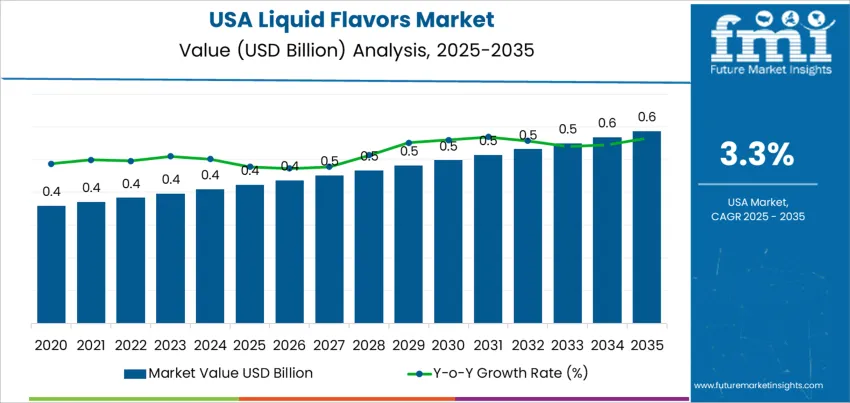
What is the Growth Forecast for Liquid Flavors Industry in USA through 2035?
Demand for liquid flavors in the United States is advancing, yet the category displays characteristics of a maturing stage as saturation pressures increase in mainstream food and beverage applications. Penetration in core segments such as carbonated beverages, confectionery, and dairy is already high, limiting incremental volume gains from legacy categories. Established flavor portfolios from major suppliers support consistent availability, but competitive overlap creates reduced differentiation and slower new-customer acquisition.
Innovation-driven niches contribute ongoing growth and delay a full saturation point. Demand rises from emerging functional beverages, ready-to-drink nutrition formats, plant-based foods, and reformulated low-sugar products where liquid flavor systems enable masking, enhancement, and clean-label positioning. Custom formulations tailored to regional taste preferences and natural-source flavor technologies sustain replacement and upgrade cycles.
Customer procurement dynamics, including long development cycles and strong supplier relationships, create moderate switching barriers that can stabilize demand rather than accelerate it. While liquid flavors maintain essential value across product manufacturing, the approach toward a saturation threshold in traditional categories means future growth depends on specialty applications linked to health, wellness, and evolving sensory expectations within the United States.
USA Liquid Flavors Key Takeaways
| Metric | Value |
|---|---|
| USA Liquid Flavors Sales Value (2025) | USD 0.4 billion |
| USA Liquid Flavors Forecast Value (2035) | USD 0.6 billion |
| USA Liquid Flavors Forecast CAGR (2025-2035) | 3.3% |
Why is the Demand for Liquid Flavors in the USA Growing?
Demand for liquid flavors in the USA is increasing because food, beverage and snack manufacturers require flexible flavor solutions that can be easily incorporated into a wide range of processed foods. Liquid flavor concentrates allow consistent taste profiles across batches while supporting flavor complexity in beverages, dairy products, confectionery and savory items. Ready-to-drink beverages, flavored waters and functional drinks rely heavily on liquid flavor systems to meet consumer expectations for varied taste options. Growth in clean-label and natural ingredient trends encourages use of natural or nature-identical flavor extracts that can mix into both hot and cold preparations. Manufacturers benefit from liquid formats that dissolve easily and avoid grainy or uneven texture, which is important in premium and fortified products.
Snack producers use liquid coatings for flavoring chips, nuts and extruded snacks because they provide uniform coverage and reduce waste compared to powder coatings. Ice cream and frozen dessert manufacturers adopt liquid flavor blends to maintain taste quality after processing and freezing. Constraints include regulatory compliance around allowable concentrations for certain flavor components and cost sensitivity for high-intensity natural extracts. Supply chain volatility in raw material sourcing may influence consistent availability. Some manufacturers invest in alternate flavor delivery systems such as taste-modifying coatings or encapsulated flavors depending on product requirements.
Which Product Types, Applications, and Formulations Lead Demand for Liquid Flavors in the USA?
Demand for liquid flavors in the United States is shaped by innovation in beverage formulation, consumer preference for bold sensory profiles, and the transition toward cleaner ingredient labels across industries. Foodservice operators, packaged food brands, and nutraceutical companies incorporate liquid flavors to improve consistency, dosage accuracy, and processing stability. Growth is reinforced by flavor customization in wellness beverages, confectionery, dairy alternatives, and personal care products. Regulatory compliance and multipurpose formulation compatibility guide procurement decisions.
By Product Type, Organic Flavors Lead Consumption
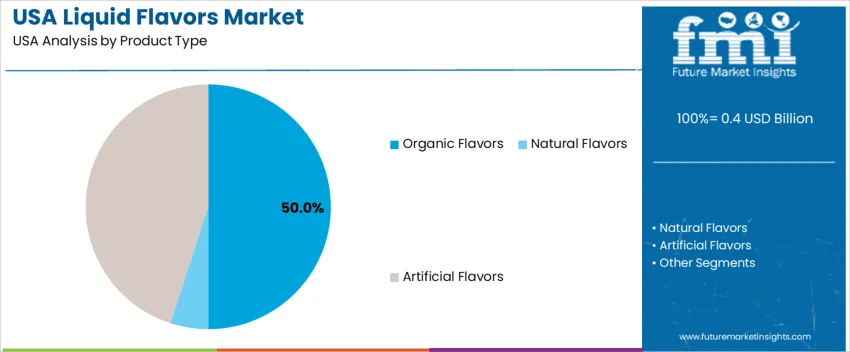
Organic flavors hold 50.0%, driven by strong U.S. consumer alignment with clean-label claims, USDA-certified inputs, and rising adoption across wellness beverages and fortified foods. Artificial flavors account for 45.0%, sustaining demand due to cost efficiency and long shelf stability, primarily in mass-market carbonated soft drinks, candies, and flavored syrups. Natural flavors hold 5.0%, concentrated in premium and health-positioned segments but challenged by raw material pricing and availability. Product selection reflects brand differentiation strategies tied to transparency, regulation, and evolving consumer scrutiny on synthetics.
Key Points:
- Organic flavors dominate due to regulatory-backed clean-label demand
- Artificial formats remain essential for cost and stability advantages
- Natural flavors expand slowly in premium categories
By Application, Beverages Hold the Largest Share
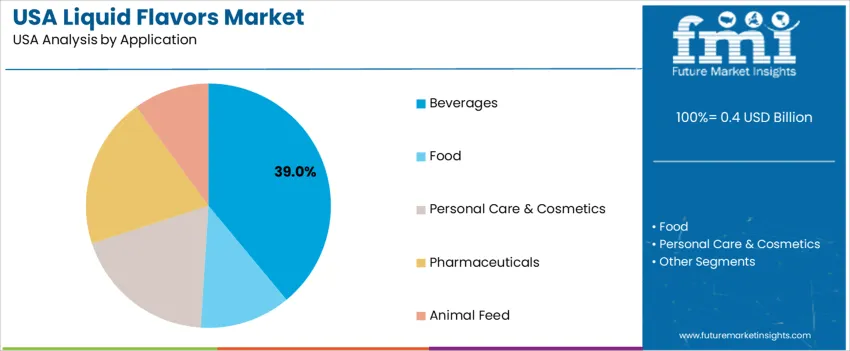
Beverages represent 39.0%, supported by frequent reformulation cycles in flavored water, energy drinks, tea, and nutritional beverages. Pharmaceuticals account for 20.0%, where taste masking improves patient adherence across syrups and oral solutions. Personal care and cosmetics hold 19.0%, with flavors used in oral hygiene, lip care, and aromatics. Food applications record 12.0%, used in sauces, bakery fillings, and dairy alternatives. Animal feed holds 10.0%, mainly to enhance palatability. Distribution reflects the dominance of high-volume beverage manufacturing and regulatory-approved pharmaceutical flavors.
Key Points:
- Beverages drive continuous reformulation and rapid uptake
- Pharma uptake tied to taste-masked dosage forms
- Personal care utilizes flavors for sensory appeal and brand identity
By Formulation, Oil-Soluble Flavors Lead Demand
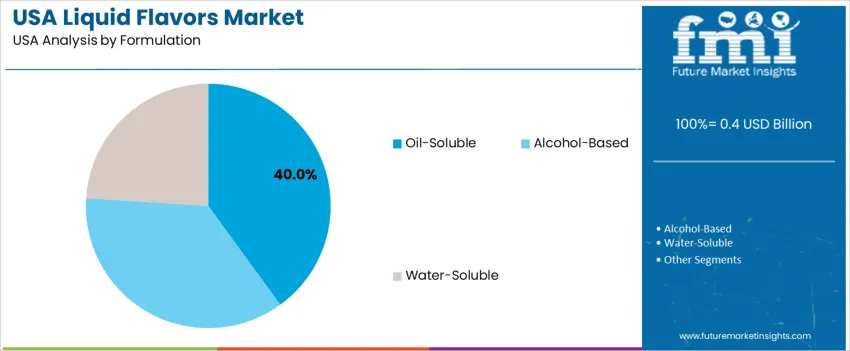
Oil-soluble flavors hold 40.0%, favored in fat-based food matrices, lip care products, and oil carriers in nutraceuticals. Alcohol-based formats account for 36.0%, serving extracts, concentrated beverage enhancers, and volatile aroma preservation. Water-soluble flavors hold 24.0%, used in instant beverage mixes and powdered food formulations. Formulation trends prioritize stability across thermal processes, high solubility during mixing, and preserved aroma intensity in shelf-stable products.
Key Points:
- Oil-soluble flavors support high-fat foods and cosmetics
- Alcohol-based forms maintain aroma strength in beverages
- Water-soluble flavors assist rapid dispersion in powdered foods
What are the Drivers, Restraints, and Key Trends of the Demand for Liquid Flavors in the USA?
Growth of food and beverage innovation, increased focus on taste enhancement in reduced-sugar formulations and rising demand from foodservice channels drive demand.
In the United States, liquid flavors support product development in beverages, dairy alternatives, bakery fillings and confectionery as brands compete through differentiated taste profiles. Reformulation strategies in sodas, teas and flavored waters rely on concentrated liquid flavors to maintain taste while reducing sugar. Foodservice operators use liquid flavors for consistent results in syrups, sauces and drink customizations, especially in quick-service restaurants and cafés. Private-label manufacturers expand flavored offerings in snacks and ready-to-drink beverages, sustaining steady procurement. The rise of small-batch and craft producers in beverages and desserts also reinforces demand for versatile liquid flavor systems.
Regulatory compliance costs, volatility in natural ingredient pricing and competition from powdered flavor formats restrain demand.
Liquid flavors using natural components may require strict labeling compliance related to allergens and additive classifications, adding cost for formulation adjustment and documentation. Price fluctuations of vanilla, citrus oils or spice extracts influence manufacturing costs and may reduce USAge in cost-sensitive categories. Powdered flavors remain preferred in dry products such as instant mixes and powdered beverages due to longer shelf life and simplified logistics. These constraints limit rapid conversion across all product types.
Shift toward natural and clean-label flavor solutions, increased demand for flavor customization and rising use in plant-based and functional beverages define key trends.
Manufacturers expand natural liquid flavors derived from botanical sources to align with clean-label positioning. Beverage brands adopt customizable flavor bases for limited-time offerings, seasonal menus and café-style product launches in retail. Plant-based dairy, energy beverages and protein shakes rely heavily on liquid flavors to mask off-notes and achieve familiar taste profiles such as vanilla, chocolate and fruit varieties. Single-serve and low-sugar formats focus on flavor impact while maintaining healthier nutrition positions. These developments indicate sustained demand for liquid flavors within the U.S. food and beverage industry supported by taste innovation and lifestyle-oriented product evolution.
Analysis of the Demand for Liquid Flavors in the USA by Region
Demand for liquid flavors in the United States is growing as beverage manufacturers, dairy processors, confectionery brands, and quick-service restaurants introduce customized flavor systems to improve product differentiation. Growth is further supported by formulation needs in low-sugar beverages, functional drinks, plant-based dairy alternatives, and ready-to-drink coffees. Clean-label reformulations require flavor stability with natural extracts, botanical profiles, and heat-resistant compounds used in processed foods. Flavor houses expand R&D facilities to support tailored solutions for regional taste preferences. West USA leads with 3.8% CAGR, followed by South USA (3.4%), Northeast USA (3.1%), and Midwest USA (2.7%), reflecting variation in beverage innovation, private-label penetration, and manufacturing concentration.
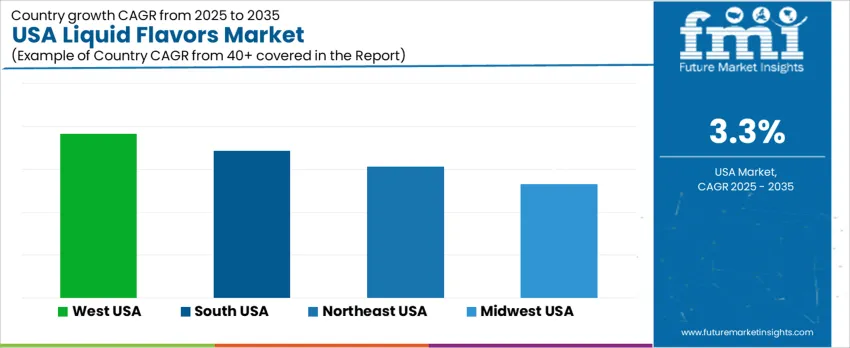
| Region | CAGR (2025-2035) |
|---|---|
| West USA | 3.8% |
| South USA | 3.4% |
| Northeast USA | 3.1% |
| Midwest USA | 2.7% |
How is the West USA driving demand for liquid flavors?
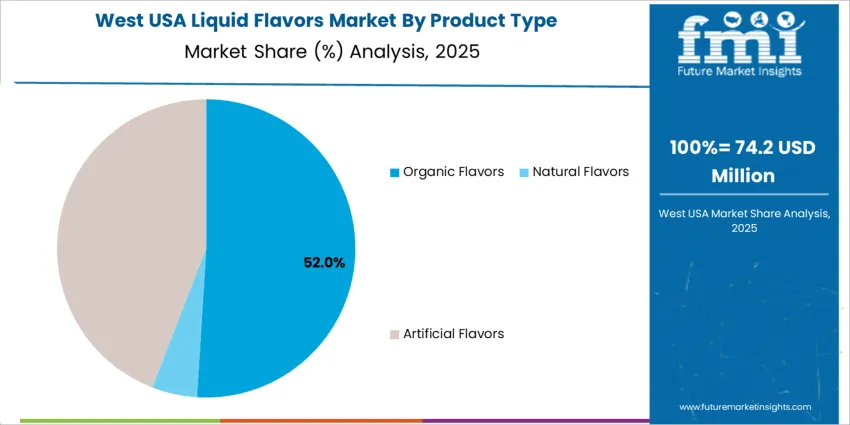
West USA demonstrates a 3.8% CAGR, driven by high innovation intensity across beverage and dairy-alternative industries in California, Washington, and Colorado. Startups and specialty drink producers experiment with botanical, tropical, and functional flavor profiles formulated for kombucha, energy drinks, and cold-brew coffees. Food-service chains rely on liquid flavor systems enabling customization in smoothies, protein shakes, and seasonal beverages. Health-forward consumers seek natural and organic flavor extracts with reduced artificial sweeteners. Co-packing facilities in the region invest in dosing accuracy, heat stability, and multi-product production lines enabling quick flavor-switch operations. Export-linked operations in the Pacific Coast enhance adoption of globally inspired taste trends.
- Beverage innovation and functional-drink expansion
- Food-service chains utilizing customizable flavor additions
- Natural flavoring demand aligned with clean-label requirements
- Flexible co-packing infrastructure supporting small-batch runs
How is the South USA shaping demand for liquid flavors?
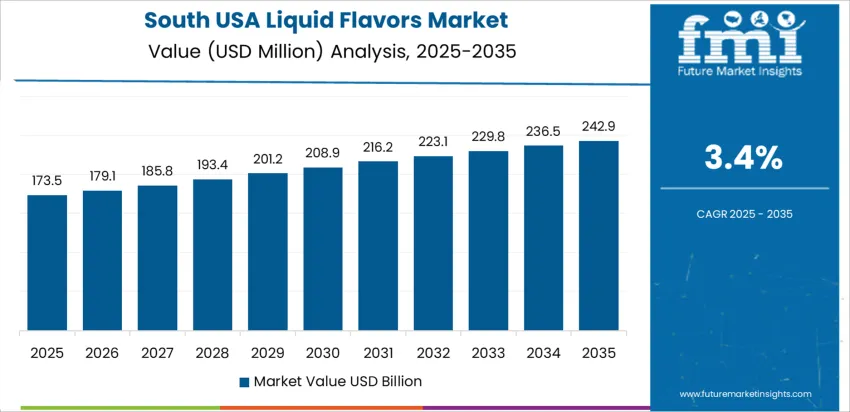
South USA grows at 3.4% CAGR, supported by strong carbonated soft drink, flavored water, and confectionery production in Texas, Georgia, and Florida. Consumer preference for sweet, fruity, and indulgent profiles drives flavor diversity across frozen treats and dairy formulations. Regional co-manufacturers rely on cost-efficient flavor systems compatible with high-volume output. Warm climates sustain seasonal beverage demand throughout the year, strengthening utilization of citrus and tropical additives. Retailers expand private-label flavored beverages requiring stable and affordable liquid flavor formulations. Procurement focuses on bulk flavor formats supporting mass-market price positioning.
- Strong beverage and confectionery manufacturing footprint
- Warm-climate consumption boosting flavored-drink frequency
- Private-label category expansion shaping procurement
- Bulk liquid flavor systems maintaining affordability
How is the Northeast USA influencing procurement of liquid flavors?
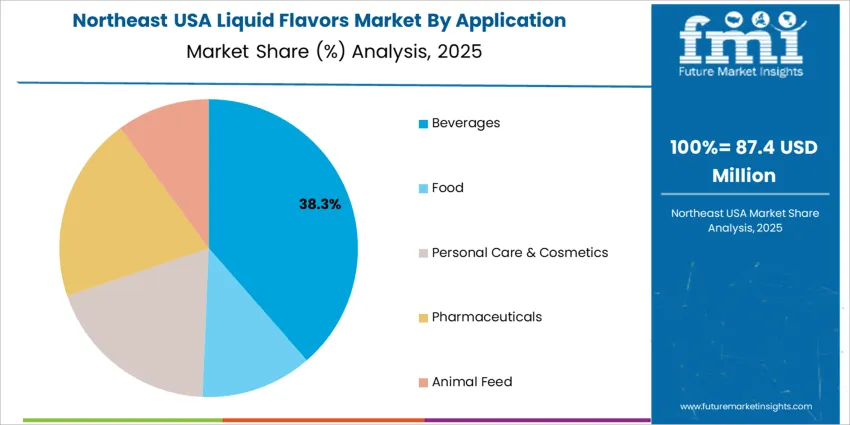
Northeast USA records 3.1% CAGR, influenced by premium beverage launches, coffee-based drink development, and seasonal bakery flavors. Dense metropolitan industries such as New York and Boston adopt international flavor inspirations including floral, herbal, and specialty fruit notes. Café chains integrate customizable syrups and liquid concentrates to enhance beverage menu rotation. Regulatory compliance expectations increase reliance on validated natural extracts and allergen-controlled flavor lines. Producers prioritize smaller batch manufacturing for limited-edition and holiday releases. Distribution requires strong cold-chain performance for dairy-associated flavor applications.
- Premiumization driving artisan flavor experimentation
- Café and QSR menu variety sustaining flavor-syrup USAge
- Strong compliance focus favoring clean-label approvals
- Seasonal merchandising supporting short-run flavor production
How is the Midwest USA contributing to demand growth?
Midwest USA advances at 2.7% CAGR, reflecting steady flavor incorporation in mainstream convenience foods, dairy products, and ready-to-drink coffees manufactured across Illinois, Ohio, and Wisconsin. Product developers emphasize flavor consistency and shelf-life strength suitable for nationwide distribution. Value-driven shoppers gravitate toward recognizable flavor profiles such as vanilla, chocolate, and caramel. Regional bottlers and dairy processors prioritize scalable flavor systems compatible with legacy production lines. Homegrown food brands evaluate liquid flavors that maintain performance under thermal processing conditions used in canned and shelf-stable goods.
- Mainstream brand reliance on classic flavor profiles
- Shelf-stability requirements driving formulation choices
- Cost-focused production shaping flavor selection criteria
- Large-scale processors ensuring consistent national supply
How is competitive positioning structured among suppliers of liquid flavors in the United States?
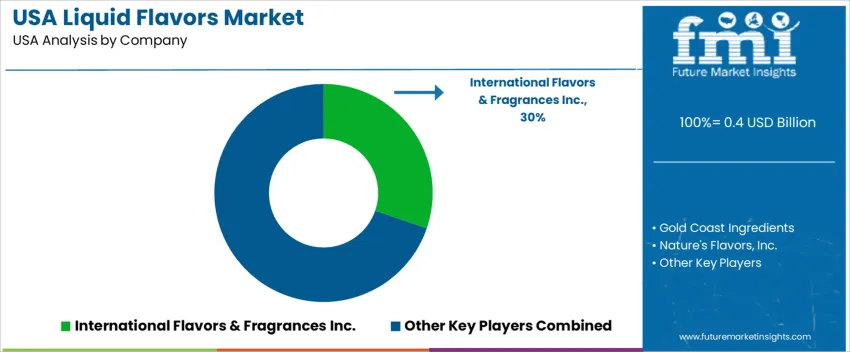
The United States liquid flavors segment shows balanced competition, where operational scale, regulatory compliance, and formulation expertise influence supplier preference among food, beverage, and nutrition manufacturers. International Flavors & Fragrances Inc. holds an estimated 30.3%, supported by integrated research capabilities, broad sensory libraries, and established supply agreements with multinational brand owners across beverages, dairy, and confectionery.
Gold Coast Ingredients focuses on customized formulations and rapid development cycles for niche applications, including flavored powders transitioning into liquid variants. Its presence is reinforced by responsiveness to emerging taste profiles demanded by smaller brands. Nature’s Flavors, Inc. targets clean-label and organic formulations, supplying natural bases that align with labeling transparency requirements in the United States retail environment. Its position is strengthened by certifications and specialization in plant-derived extras.
Takasago International Corporation competes through aroma chemistry expertise and regional innovation centers that address localized taste preferences in beverages and sweet goods. McCormick & Company, Inc. leverages its consumer brand familiarity and internal flavor systems derived from spices and natural extracts, allowing a strong role in savory development and co-manufacturing. Supplier selection increasingly reflects the ability to deliver regulatory-ready liquid flavor systems, documentation for compliant claims, and support for reformulation programs aimed at reduced sugar, plant-based matrices, and stability across diverse processing conditions in the United States.
Key Players in USA Liquid Flavors Demand
- International Flavors & Fragrances Inc.
- Gold Coast Ingredients
- Nature's Flavors, Inc.
- Takasago International Corporation
- McCormick & Company, Inc.
Scope of the Report
| Items | Values |
|---|---|
| Quantitative Units | USD billion |
| Product Type | Organic Flavors, Natural Flavors, Artificial Flavors |
| Application | Beverages, Food, Personal Care & Cosmetics, Pharmaceuticals, Animal Feed |
| Formulation | Oil-Soluble, Alcohol-Based, Water-Soluble |
| Regions Covered | West USA, South USA, Northeast USA, Midwest USA |
| Key Companies Profiled | International Flavors & Fragrances Inc., Gold Coast Ingredients, Nature's Flavors, Inc., Takasago International Corporation, McCormick & Company, Inc. |
| Additional Attributes | Dollar sales by formulation type, product type, and end-use segments; regional adoption across West, South, Northeast, and Midwest; innovation in clean-label liquid flavoring and flavor encapsulation; demand increases in functional beverages, plant-based food products, and health-oriented formulations; competitive differentiation through regulatory compliance, sensory enhancement, and shelf-life stability improvements. |
USA Liquid Flavors Demand by Segments
Product Type:
- Organic Flavors
- Natural Flavors
- Artificial Flavors
Application:
- Beverages
- Food
- Personal Care & Cosmetics
- Pharmaceuticals
- Animal Feed
Formulation:
- Oil-Soluble
- Alcohol-Based
- Water-Soluble
Region:
- West USA
- South USA
- Northeast USA
- Midwest USA
Frequently Asked Questions
How big is the demand for liquid flavors in USA in 2025?
The demand for liquid flavors in USA is estimated to be valued at USD 0.4 billion in 2025.
What will be the size of liquid flavors in USA in 2035?
The market size for the liquid flavors in USA is projected to reach USD 0.6 billion by 2035.
How much will be the demand for liquid flavors in USA growth between 2025 and 2035?
The demand for liquid flavors in USA is expected to grow at a 3.3% CAGR between 2025 and 2035.
What are the key product types in the liquid flavors in USA?
The key product types in liquid flavors in USA are organic flavors, natural flavors and artificial flavors.
Which application segment is expected to contribute significant share in the liquid flavors in USA in 2025?
In terms of application, beverages segment is expected to command 39.0% share in the liquid flavors in USA in 2025.
Preview the report firsthand - request a free sample
Get SampleGet the brochure for pricing and purchase details.
Get PDFTable of Content
- Executive Summary
- USA Market Outlook
- Demand-side Trends
- Supply-side Trends
- Technology Roadmap Analysis
- Analysis and Recommendations
- Market Overview
- Market Coverage / Taxonomy
- Market Definition / Scope / Limitations
- Market Background
- Market Dynamics
- Drivers
- Restraints
- Opportunity
- Trends
- Scenario Forecast
- Demand in Optimistic Scenario
- Demand in Likely Scenario
- Demand in Conservative Scenario
- Opportunity Map Analysis
- Product Life Cycle Analysis
- Supply Chain Analysis
- Investment Feasibility Matrix
- Value Chain Analysis
- PESTLE and Porter’s Analysis
- Regulatory Landscape
- Regional Parent Market Outlook
- Production and Consumption Statistics
- Import and Export Statistics
- Market Dynamics
- USA Market Analysis 2020 to 2024 and Forecast, 2025 to 2035
- Historical Market Size Value (USD Million) Analysis, 2020 to 2024
- Current and Future Market Size Value (USD Million) Projections, 2025 to 2035
- Y-o-Y Growth Trend Analysis
- Absolute $ Opportunity Analysis
- USA Market Pricing Analysis 2020 to 2024 and Forecast 2025 to 2035
- USA Market Analysis 2020 to 2024 and Forecast 2025 to 2035, By Product Type
- Introduction / Key Findings
- Historical Market Size Value (USD Million) Analysis By Product Type , 2020 to 2024
- Current and Future Market Size Value (USD Million) Analysis and Forecast By Product Type , 2025 to 2035
- Organic Flavors
- Natural Flavors
- Artificial Flavors
- Y-o-Y Growth Trend Analysis By Product Type , 2020 to 2024
- Absolute $ Opportunity Analysis By Product Type , 2025 to 2035
- USA Market Analysis 2020 to 2024 and Forecast 2025 to 2035, By Application
- Introduction / Key Findings
- Historical Market Size Value (USD Million) Analysis By Application, 2020 to 2024
- Current and Future Market Size Value (USD Million) Analysis and Forecast By Application, 2025 to 2035
- Beverages
- Food
- Personal Care & Cosmetics
- Pharmaceuticals
- Animal Feed
- Y-o-Y Growth Trend Analysis By Application, 2020 to 2024
- Absolute $ Opportunity Analysis By Application, 2025 to 2035
- USA Market Analysis 2020 to 2024 and Forecast 2025 to 2035, By Formulation
- Introduction / Key Findings
- Historical Market Size Value (USD Million) Analysis By Formulation, 2020 to 2024
- Current and Future Market Size Value (USD Million) Analysis and Forecast By Formulation, 2025 to 2035
- Oil-Soluble
- Alcohol-Based
- Water-Soluble
- Y-o-Y Growth Trend Analysis By Formulation, 2020 to 2024
- Absolute $ Opportunity Analysis By Formulation, 2025 to 2035
- Market Structure Analysis
- Competition Dashboard
- Competition Benchmarking
- Market Share Analysis of Top Players
- By Regional
- By Product Type
- By Application
- By Formulation
- Competition Analysis
- Competition Deep Dive
- International Flavors & Fragrances Inc.
- Overview
- Product Portfolio
- Profitability by Market Segments (Product/Age /Sales Channel/Region)
- Sales Footprint
- Strategy Overview
- Marketing Strategy
- Product Strategy
- Channel Strategy
- Gold Coast Ingredients
- Nature's Flavors, Inc.
- Takasago International Corporation
- McCormick & Company, Inc.
- International Flavors & Fragrances Inc.
- Competition Deep Dive
- Assumptions & Acronyms Used
- Research Methodology


