

- Industry Size (2026)
- USD 21.4 Bn
- Forecast (2036)
- USD 36.6 Bn
- CAGR (2026 to 2036)
- 5.5%
Flavors Market Forecast and Outlook 2026 to 2036
Flavors industry valuation is set to reach USD 21.4 billion in 2026, driven by an intensifying consumer preference for authentic taste profiles. Revenue from the sales of flavors is projected to expand at a steady CAGR of 5.5% through 2036, pushing total sector worth beyond USD 36.6 billion by the conclusion of this assessment period. Increasing demand for processed food and beverages acts as a primary catalyst for this financial trajectory.
Manufacturers are channeling significant capital into developing clean-label formulations, aiming to address health-conscious consumer demands without compromising sensory experiences. Product developers are shifting focus from synthetic additives to plant-based extracts, redefining procurement habits in major global economies. Such behavioral changes encourage ingredient suppliers to introduce comprehensive natural flavor portfolios utilizing advanced extraction technologies.
Quick Stats for Flavors Market
- Flavors Industry Value (2026): USD 21.4 Billion
- Flavors Industry Forecast Value (2036): USD 36.6 Billion
- Flavors Industry Forecast CAGR: 5.5%
- Flavors Industry Leading Form: Powder (54.7%)
- Flavors Industry Leading End Use: Food (48.9%)
- Flavors Industry Leading Functionality: Natural (61.4%)
- Flavors Industry Key Growth Regions: China, India, Germany
- Flavors Industry Key Players: Givaudan, Firmenich SA, Symrise AG, Sensient Technologies Corporation, International Flavors & Fragrances Inc.
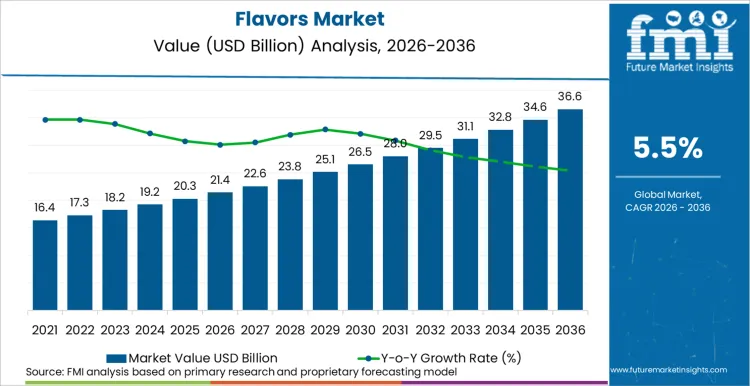
Rising health awareness and changing dietary habits are significantly influencing industry expansion. Food technologists emphasize sensory innovation, utilizing exotic fruit and botanical blends to create unique taste experiences. Clinical trials investigating the metabolic impact of artificial additives are creating needs for safer alternatives, instilling confidence among regulators regarding future product pipelines.
Growing awareness regarding the transparency of ingredient sourcing continues to fuel demand for traceable supply chains, creating sustained opportunities for ethical sourcing certification bodies. Government health initiatives targeting sugar reduction are facilitating wider adoption of flavor modulators in low-calorie products. Companies are witnessing robust growth potential in developing nations, where urbanization and rising disposable incomes align perfectly with increased consumption of packaged goods.
Researchers are combining natural flavours insights with fermentation technologies to produce consistent profiles. Development of encapsulated flavours solutions is gaining traction, addressing stability challenges in complex matrices. Focus is shifting toward comprehensive clean label flavors strategies that eliminate artificial carriers. Advancements in flavor compounds analysis enable chemists to map molecular structures precisely, enhancing replication accuracy while significantly reducing reliance on seasonal raw materials. These innovations are pivotal in shaping a future where taste innovation is both sustainable and accessible.
Flavors Market Key Takeaways
| Metric | Value |
|---|---|
| Industry Size (2026) | USD 21.4 Billion |
| Industry Value (2036) | USD 36.6 Billion |
| CAGR 2026 to 2036 | 5.5% |
Source: Future Market Insights’ proprietary forecasting model and primary research
What Drivers Are Accelerating Natural Adoption?
Shift toward plant-based diets is serving as a significant catalyst for broader acceptance of botanical extracts. Recent breakthroughs in natural food flavors extraction have complemented formulation protocols by preserving volatile compounds effectively. This holistic approach appeals to consumers seeking transparency in labeling. Clinical success of biotic enhanced flavors integration in functional foods has expanded application possibilities. Education programs highlighting potential allergen risks associated with synthetic agents are driving procurement proactivity. Pharmaceutical firms are capitalizing on these trends by introducing flavoring agents variants for palatable drug delivery. Integrating functional flavor solutions into wellness products is becoming considered standard, ensuring diverse nutritional needs are met without sacrificing taste.
How Is the Flavors Market Segmented Across Key Categories?
Global landscape is intricately segmented to address diverse requirements of the food and beverage industry, categorizing sector by nature, form, and application. Structural division allows stakeholders to identify specific growth pockets, such as rising demand for powdered formats in dry mixes or preference for liquid extracts in beverages. By analyzing these segments, manufacturers can tailor production lines to meet distinct needs of artisanal producers versus large-scale industrial processors. Segmentation also highlights shift from artificial profiles to authentic, nature-identical, and fully natural solutions. As industry matures, granular segmentation becomes essential for understanding flow of capital and innovation, ensuring product development aligns perfectly with evolving consumer palates.
Why Do Natural Flavors Maintain Dominance?
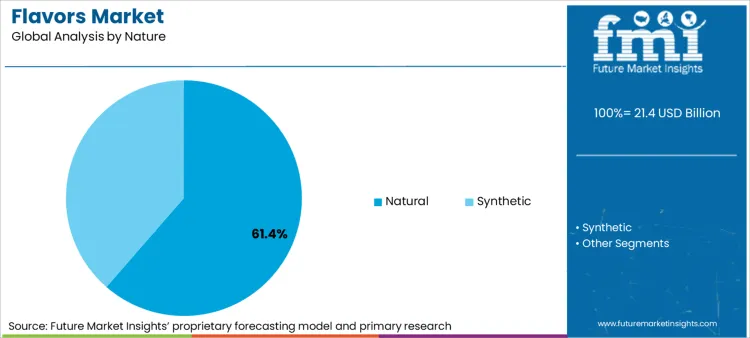
Natural flavors account for 61.4% of share in 2026, driven by a paradigm shift towards clean eating. Leadership position is underpinned by regulatory guidelines favoring ingredients derived from plant or animal sources. Segment benefits from continuous extraction improvements, such as supercritical fluid technology. Research focused on citrus flavours stability is renewing interest among beverage manufacturers. Critical role in managing food flavour enhancer formulations further solidifies standing, as these components improve mouthfeel. As healthcare systems prioritize preventative nutrition, demand for authentic natural profiles is expected to remain robust.
Why Is Powder the Preferred Form?
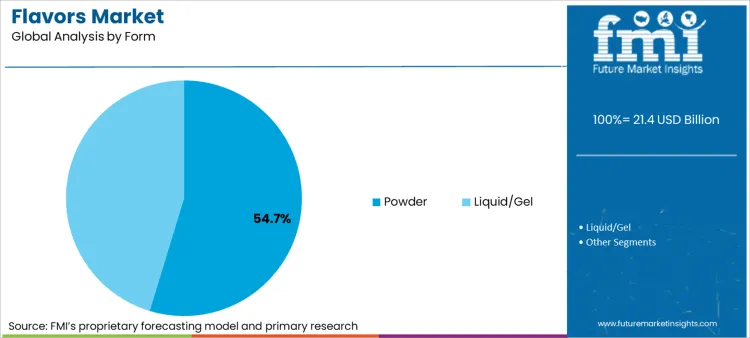
Powder form commands 54.7% share of sector in 2026, reflecting global reliance on shelf-stable ingredients for processed foods. Dominance is inextricably linked to ease of handling and superior storage stability compared to liquids. Manufacturers rely on specialized confectionery ingredients blending to distribute flavor evenly in dry matrices. These settings are essential for handling mass production of snacks and seasonings, driving priority status in procurement budgets. Relentless pursuit of extended shelf life ensures products designed specifically for low-moisture environments remain top priority. High production volume necessitates dynamic inventory supply, bolstering sustained revenue streams for ingredient suppliers.
Why Does Food Application Lead the Sector?
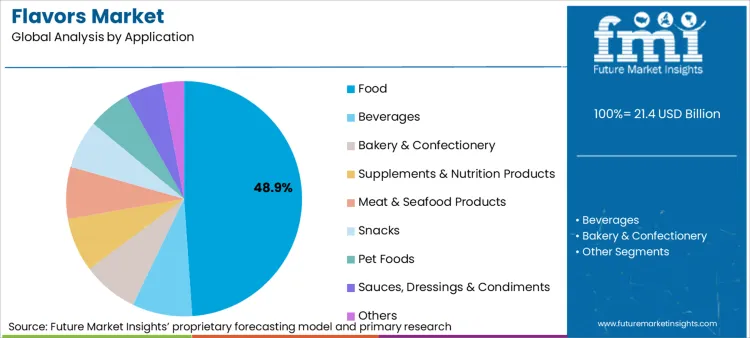
Food applications capture 48.9% of market share in 2026, owing to extensive use in bakery, dairy, and savory products. Dominance stems from constant innovation in packaged food varieties requiring distinct taste profiles to differentiate brands. Consumers prefer these products for their convenience and variety. Usage in treating flavor loss during processing drives continuous volume growth. Compatibility with various food flavors matrices allows for versatile application across sub-segments like meat alternatives. Manufacturers focusing on savory and sweet profiles for these high-volume categories secure significant loyalty among food processors.
Flavors Market Dynamics
How Will Beverage Innovation Impact Sales?
Functional beverage adoption is set to reshape sales landscapes by demanding complex flavor masking and enhancement. As beverage flavoring trends evolve, consumers access drinks with added vitamins and proteins requiring sophisticated taste modulation. Shift toward low-sugar formulations creates demand for sweetness enhancers that do not add calories. Manufacturers failing to position flavors as functional solutions risk losing visibility among health-focused brands. Availability of beverage flavoring agent options for hydration products drives complimentary consumption. Rise of flavoring cosmetic formulation agents usage stimulates innovation, with companies differentiating offerings by cross-pollinating trends between food and personal care.
How Will the Flavors Industry Evolve in Major Nations?
Global landscape for flavor ingredients is characterized by diverse growth patterns, influenced by culinary traditions and industrial capabilities. Established markets prioritize clean label and sustainable sourcing, whereas emerging economies rely on cost-effective synthetic and nature-identical options. Asia-Pacific is emerging as rapid growth hub due to booming processed food sectors and changing urban lifestyles. Conversely, North American sectors pivot towards organic and non-GMO certifications. Government initiatives in developing nations supporting food safety standards ensure sustained demand for compliant ingredients across all geographies.
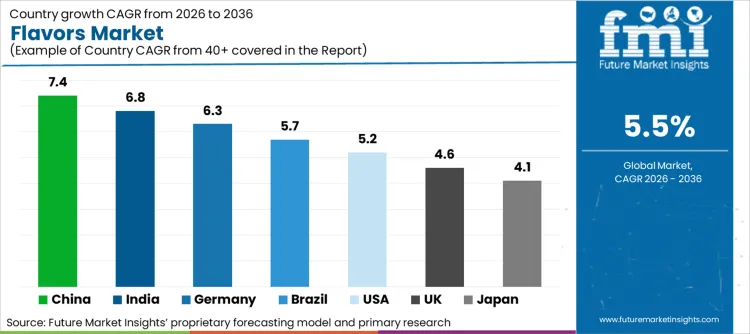
| Country | CAGR (2026 to 2036) |
|---|---|
| China | 7.4% |
| India | 6.8% |
| Germany | 6.3% |
| Brazil | 5.7% |
| USA | 5.2% |
| UK | 4.6% |
| Japan | 4.1% |
Source: FMI analysis based on primary research and proprietary forecasting model
Why is the Flavors Industry in China Growing?
Sales of flavor ingredients in China are set to grow at 7.4% CAGR through 2036. Expansion is underpinned by rapid urbanization and expanding middle-class consumption of packaged foods. Growth is fueled by widespread availability of domestic manufacturing capabilities lowering production costs. Rapid adoption of western dietary habits drives revenue generation per capita. Presence of major ingredient players establishing local R&D centers streamlines supply chains. Emphasis on modernizing traditional cuisine with convenient formats continues to be primary driver, maintaining China's position as critical revenue generator.
Why is the Flavors Sector in India Expanding?
Demand for taste solutions in India is projected to rise at 6.8% CAGR during assessment period. Initiatives emphasizing food processing infrastructure foster favorable environment for domestic and international vendors. Increasing investment in cold chain logistics creates massive supply channel for fresh and processed food delivery. Rising youth population requiring diverse snack and beverage options prompts local brands to seek scalable solutions. Shift is supported by government policies encouraging "Make in India" for food products, accelerating uptake of localized flavors across country and fueling sector expansion.
Why is the Flavors Industry in Germany Showing Potential?
Flavors industry in Germany is poised to expand at 6.3% CAGR. Surge is largely attributed to strong demand for organic and natural products. Government focus on strict food safety regulations encourages facilities to opt for high-quality, traceable ingredients. Increasing partnerships between German technology firms and global extractors necessitate availability of advanced processing machinery. Cost advantages of efficient manufacturing combined with rising demand for vegan products attract significant investment. Strict adherence to EU labeling standards further drives adoption of clean label systems.
Why is the Flavors Industry in Brazil Growing?
Sales of food ingredients in Brazil are set to grow at 5.7% CAGR. Expansion is underpinned by vibrant agricultural sector providing abundant raw materials for extraction. Growth is fueled by increasing consumption of processed meat and dairy products. Moderate adoption of premium, exotic fruit flavors drives revenue generation in export markets. Presence of leading regional producers ensures steady supply of unique botanical profiles. Emphasis on naturalness and sustainability continues to be primary driver, maintaining Brazil position as steady revenue generator.
Why is the Flavors Sector in the USA Expanding?
Demand for innovative taste profiles in USA is projected to rise at 5.2% CAGR. Initiatives emphasizing health and wellness foster favorable environment for sugar-reduction and functional ingredients. Increasing investment in plant-based meat alternatives creates steady supply channel for savory masking agents. High standards of consumer expectation regarding label transparency prompts brands to seek authentic natural sources. Shift is supported by strong retail demand for limited edition and seasonal products, accelerating uptake of novel combinations across country and fueling sector expansion.
Why is the Flavors Industry in the UK Growing?
Revenue from flavor additives in UK is set to grow at 4.6% CAGR. Expansion is underpinned by stringent sugar tax regulations driving reformulation efforts. Growth is fueled by strong artisanal food and craft beverage movement. Moderate adoption of ethnic and spicy profiles drives revenue generation in savory segments. Presence of innovative food tech startups ensures rapid uptake of experimental tastes. Emphasis on ethical sourcing and fair trade continues to be primary driver, maintaining UK position as influential revenue generator.
Why is the Flavors Industry in Japan Showing Stability?
Flavors industry in Japan is poised to expand at 4.1% CAGR. Surge is largely attributed to sophisticated consumer palate demanding subtle and high-quality profiles. Government focus on functional foods for aging population encourages facilities to opt for health-enhancing ingredients. Increasing partnerships between pharmaceutical and food companies necessitate availability of high-purity extracts. High healthcare standards combined with interest in fermentation technology attract significant investment. Strict adherence to quality consistency further drives adoption of premium ingredients.
What is the Competitive Outlook for the Flavors Market?
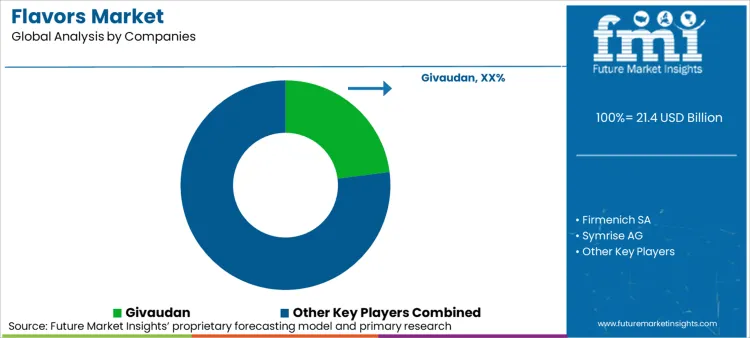
Market participants are increasingly focusing on vertical integration to capture value from farm to fork. Leading players like Givaudan and Firmenich are directing investment toward biotechnology startups for sustainable ingredient production. Significant trend involves developing AI-driven flavor prediction models to anticipate consumer preferences. Companies actively engage in strategic collaborations with agricultural cooperatives to secure raw material supply. Sustainability emerges as competitive frontier, with providers exploring upcycled ingredients from food waste. Consolidation activities remain high as large ingredient conglomerates acquire specialized essential oil firms to broaden their natural portfolios against regional competitors. Givaudan holds a significant 17.8% share, leveraging its extensive global footprint.
Key Players in Flavors Market
- Givaudan
- Firmenich SA
- Symrise AG
- Sensient Technologies Corporation
- International Flavors & Fragrances Inc.
- Takasago International Corporation
- Kerry Group plc
- MANE
- Robertet Group
- Huabao Flavours & Fragrances Co., Ltd.
Scope of Report
| Items | Values |
|---|---|
| Quantitative Units | USD Billion |
| Nature | Natural, Synthetic |
| Form | Powder, Liquid/Gel |
| Application | Food, Bakery & Confectionery, Supplements & Nutrition Products, Meat & Seafood Products, Snacks, Pet Foods, Sauces, Dressings & Condiments, Others, Beverages, Juices & Juice Concentrates, Functional Beverages, Alcoholic Beverages, Carbonated Soft Drinks, Others, Others |
| Regions | North America, Europe, East Asia, South Asia, Latin America, MEA |
Flavors Market by Segments
Nature:
- Natural
- Synthetic
Form:
- Powder
- Liquid/Gel
Application:
- Food
- Bakery & Confectionery
- Supplements & Nutrition Products
- Meat & Seafood Products
- Snacks
- Pet Foods
- Sauces, Dressings & Condiments
- Others
- Beverages
- Juices & Juice Concentrates
- Functional Beverages
- Alcoholic Beverages
- Carbonated Soft Drinks
- Others
- Others
Bibliography
- USA Food and Drug Administration. (2024). Generally recognized as safe (GRAS) notification program: Current framework, safety evaluation process, and regulatory status of flavoring substances. USA Food and Drug Administration, United States.
- USA Food and Drug Administration. (2023, September 25). Food additive listings: Food Additive Status List and regulatory classification of flavoring substances. USA Food and Drug Administration, United States.
- European Commission. (2024). Guidance on the implementation of Regulation (EC) No 1334/2008 on flavourings and certain food ingredients with flavouring properties. European Commission, European Union.
- Joint FAO/WHO Expert Committee on Food Additives. (2024). Compendium of food additive specifications and safety evaluations for flavouring agents. Food and Agriculture Organization of the United Nations and World Health Organization.
- Food and Agriculture Organization of the United Nations. (2025). Flavourings and food additives in food reformulation and safety management: Regulatory considerations and market compliance. Food and Agriculture Organization of the United Nations.
Frequently Asked Questions
How big is the flavors market in 2026?
The global flavors market is estimated to be valued at USD 21.4 billion in 2026.
What will be the size of flavors market in 2036?
The market size for the flavors market is projected to reach USD 36.6 billion by 2036.
How much will be the flavors market growth between 2026 and 2036?
The flavors market is expected to grow at a 5.5% CAGR between 2026 and 2036.
What are the key product types in the flavors market?
The key product types in flavors market are food, beverages, bakery & confectionery, supplements & nutrition products, meat & seafood products, snacks, pet foods, sauces, dressings & condiments and others.
Which nature segment to contribute significant share in the flavors market in 2026?
In terms of nature, natural segment to command 61.4% share in the flavors market in 2026.
Preview the report firsthand - request a free sample
Get SampleGet the brochure for pricing and purchase details.
Get PDFTable of Content
- Executive Summary
- Global Market Outlook
- Demand-side Trends
- Supply-side Trends
- Technology Roadmap Analysis
- Analysis and Recommendations
- Market Overview
- Market Coverage / Taxonomy
- Market Definition / Scope / Limitations
- Market Background
- Market Dynamics
- Drivers
- Restraints
- Opportunity
- Trends
- Scenario Forecast
- Demand in Optimistic Scenario
- Demand in Likely Scenario
- Demand in Conservative Scenario
- Opportunity Map Analysis
- Product Life Cycle Analysis
- Supply Chain Analysis
- Investment Feasibility Matrix
- Value Chain Analysis
- PESTLE and Porter’s Analysis
- Regulatory Landscape
- Regional Parent Market Outlook
- Production and Consumption Statistics
- Import and Export Statistics
- Market Dynamics
- Global Market Analysis 2021 to 2025 and Forecast, 2026 to 2036
- Historical Market Size Value (USD Million) Analysis, 2021 to 2025
- Current and Future Market Size Value (USD Million) Projections, 2026 to 2036
- Y-o-Y Growth Trend Analysis
- Absolute $ Opportunity Analysis
- Global Market Pricing Analysis 2021 to 2025 and Forecast 2026 to 2036
- Global Market Analysis 2021 to 2025 and Forecast 2026 to 2036, By Application
- Introduction / Key Findings
- Historical Market Size Value (USD Million) Analysis By Application , 2021 to 2025
- Current and Future Market Size Value (USD Million) Analysis and Forecast By Application , 2026 to 2036
- Food
- Beverages
- Bakery & Confectionery
- Supplements & Nutrition Products
- Meat & Seafood Products
- Snacks
- Pet Foods
- Sauces, Dressings & Condiments
- Others
- Food
- Y-o-Y Growth Trend Analysis By Application , 2021 to 2025
- Absolute $ Opportunity Analysis By Application , 2026 to 2036
- Global Market Analysis 2021 to 2025 and Forecast 2026 to 2036, By Nature
- Introduction / Key Findings
- Historical Market Size Value (USD Million) Analysis By Nature, 2021 to 2025
- Current and Future Market Size Value (USD Million) Analysis and Forecast By Nature, 2026 to 2036
- Natural
- Synthetic
- Natural
- Y-o-Y Growth Trend Analysis By Nature, 2021 to 2025
- Absolute $ Opportunity Analysis By Nature, 2026 to 2036
- Global Market Analysis 2021 to 2025 and Forecast 2026 to 2036, By Form
- Introduction / Key Findings
- Historical Market Size Value (USD Million) Analysis By Form, 2021 to 2025
- Current and Future Market Size Value (USD Million) Analysis and Forecast By Form, 2026 to 2036
- Powder
- Liquid/Gel
- Powder
- Y-o-Y Growth Trend Analysis By Form, 2021 to 2025
- Absolute $ Opportunity Analysis By Form, 2026 to 2036
- Global Market Analysis 2021 to 2025 and Forecast 2026 to 2036, By Region
- Introduction
- Historical Market Size Value (USD Million) Analysis By Region, 2021 to 2025
- Current Market Size Value (USD Million) Analysis and Forecast By Region, 2026 to 2036
- North America
- Latin America
- Western Europe
- Eastern Europe
- East Asia
- South Asia and Pacific
- Middle East & Africa
- Market Attractiveness Analysis By Region
- North America Market Analysis 2021 to 2025 and Forecast 2026 to 2036, By Country
- Historical Market Size Value (USD Million) Trend Analysis By Market Taxonomy, 2021 to 2025
- Market Size Value (USD Million) Forecast By Market Taxonomy, 2026 to 2036
- By Country
- USA
- Canada
- Mexico
- By Application
- By Nature
- By Form
- By Country
- Market Attractiveness Analysis
- By Country
- By Application
- By Nature
- By Form
- Key Takeaways
- Latin America Market Analysis 2021 to 2025 and Forecast 2026 to 2036, By Country
- Historical Market Size Value (USD Million) Trend Analysis By Market Taxonomy, 2021 to 2025
- Market Size Value (USD Million) Forecast By Market Taxonomy, 2026 to 2036
- By Country
- Brazil
- Chile
- Rest of Latin America
- By Application
- By Nature
- By Form
- By Country
- Market Attractiveness Analysis
- By Country
- By Application
- By Nature
- By Form
- Key Takeaways
- Western Europe Market Analysis 2021 to 2025 and Forecast 2026 to 2036, By Country
- Historical Market Size Value (USD Million) Trend Analysis By Market Taxonomy, 2021 to 2025
- Market Size Value (USD Million) Forecast By Market Taxonomy, 2026 to 2036
- By Country
- Germany
- UK
- Italy
- Spain
- France
- Nordic
- BENELUX
- Rest of Western Europe
- By Application
- By Nature
- By Form
- By Country
- Market Attractiveness Analysis
- By Country
- By Application
- By Nature
- By Form
- Key Takeaways
- Eastern Europe Market Analysis 2021 to 2025 and Forecast 2026 to 2036, By Country
- Historical Market Size Value (USD Million) Trend Analysis By Market Taxonomy, 2021 to 2025
- Market Size Value (USD Million) Forecast By Market Taxonomy, 2026 to 2036
- By Country
- Russia
- Poland
- Hungary
- Balkan & Baltic
- Rest of Eastern Europe
- By Application
- By Nature
- By Form
- By Country
- Market Attractiveness Analysis
- By Country
- By Application
- By Nature
- By Form
- Key Takeaways
- East Asia Market Analysis 2021 to 2025 and Forecast 2026 to 2036, By Country
- Historical Market Size Value (USD Million) Trend Analysis By Market Taxonomy, 2021 to 2025
- Market Size Value (USD Million) Forecast By Market Taxonomy, 2026 to 2036
- By Country
- China
- Japan
- South Korea
- By Application
- By Nature
- By Form
- By Country
- Market Attractiveness Analysis
- By Country
- By Application
- By Nature
- By Form
- Key Takeaways
- South Asia and Pacific Market Analysis 2021 to 2025 and Forecast 2026 to 2036, By Country
- Historical Market Size Value (USD Million) Trend Analysis By Market Taxonomy, 2021 to 2025
- Market Size Value (USD Million) Forecast By Market Taxonomy, 2026 to 2036
- By Country
- India
- ASEAN
- Australia & New Zealand
- Rest of South Asia and Pacific
- By Application
- By Nature
- By Form
- By Country
- Market Attractiveness Analysis
- By Country
- By Application
- By Nature
- By Form
- Key Takeaways
- Middle East & Africa Market Analysis 2021 to 2025 and Forecast 2026 to 2036, By Country
- Historical Market Size Value (USD Million) Trend Analysis By Market Taxonomy, 2021 to 2025
- Market Size Value (USD Million) Forecast By Market Taxonomy, 2026 to 2036
- By Country
- Kingdom of Saudi Arabia
- Other GCC Countries
- Turkiye
- South Africa
- Other African Union
- Rest of Middle East & Africa
- By Application
- By Nature
- By Form
- By Country
- Market Attractiveness Analysis
- By Country
- By Application
- By Nature
- By Form
- Key Takeaways
- Key Countries Market Analysis
- USA
- Pricing Analysis
- Market Share Analysis, 2025
- By Application
- By Nature
- By Form
- Canada
- Pricing Analysis
- Market Share Analysis, 2025
- By Application
- By Nature
- By Form
- Mexico
- Pricing Analysis
- Market Share Analysis, 2025
- By Application
- By Nature
- By Form
- Brazil
- Pricing Analysis
- Market Share Analysis, 2025
- By Application
- By Nature
- By Form
- Chile
- Pricing Analysis
- Market Share Analysis, 2025
- By Application
- By Nature
- By Form
- Germany
- Pricing Analysis
- Market Share Analysis, 2025
- By Application
- By Nature
- By Form
- UK
- Pricing Analysis
- Market Share Analysis, 2025
- By Application
- By Nature
- By Form
- Italy
- Pricing Analysis
- Market Share Analysis, 2025
- By Application
- By Nature
- By Form
- Spain
- Pricing Analysis
- Market Share Analysis, 2025
- By Application
- By Nature
- By Form
- France
- Pricing Analysis
- Market Share Analysis, 2025
- By Application
- By Nature
- By Form
- India
- Pricing Analysis
- Market Share Analysis, 2025
- By Application
- By Nature
- By Form
- ASEAN
- Pricing Analysis
- Market Share Analysis, 2025
- By Application
- By Nature
- By Form
- Australia & New Zealand
- Pricing Analysis
- Market Share Analysis, 2025
- By Application
- By Nature
- By Form
- China
- Pricing Analysis
- Market Share Analysis, 2025
- By Application
- By Nature
- By Form
- Japan
- Pricing Analysis
- Market Share Analysis, 2025
- By Application
- By Nature
- By Form
- South Korea
- Pricing Analysis
- Market Share Analysis, 2025
- By Application
- By Nature
- By Form
- Russia
- Pricing Analysis
- Market Share Analysis, 2025
- By Application
- By Nature
- By Form
- Poland
- Pricing Analysis
- Market Share Analysis, 2025
- By Application
- By Nature
- By Form
- Hungary
- Pricing Analysis
- Market Share Analysis, 2025
- By Application
- By Nature
- By Form
- Kingdom of Saudi Arabia
- Pricing Analysis
- Market Share Analysis, 2025
- By Application
- By Nature
- By Form
- Turkiye
- Pricing Analysis
- Market Share Analysis, 2025
- By Application
- By Nature
- By Form
- South Africa
- Pricing Analysis
- Market Share Analysis, 2025
- By Application
- By Nature
- By Form
- USA
- Market Structure Analysis
- Competition Dashboard
- Competition Benchmarking
- Market Share Analysis of Top Players
- By Regional
- By Application
- By Nature
- By Form
- Competition Analysis
- Competition Deep Dive
- Givaudan
- Overview
- Product Portfolio
- Profitability by Market Segments (Product/Age /Sales Channel/Region)
- Sales Footprint
- Strategy Overview
- Marketing Strategy
- Product Strategy
- Channel Strategy
- Firmenich SA
- Symrise AG
- Sensient Technologies Corporation
- International Flavors & Fragrances Inc.
- Takasago International Corporation
- Kerry Group plc
- MANE
- Robertet Group
- Huabao Flavours & Fragrances Co., Ltd.
- Givaudan
- Competition Deep Dive
- Assumptions & Acronyms Used
- Research Methodology


