

- Industry Size (2025)
- USD 4.3 Bn
- Forecast (2035)
- USD 7.7 Bn
- CAGR (2025 to 2035)
- 6.0%
Demand for Prefabricated Building System in USA Forecast and Outlook 2025 to 2035
The demand for prefabricated building systems in the USA is expected to grow from USD 4.3 billion in 2025 to USD 7.7 billion by 2035, reflecting a compound annual growth rate (CAGR) of 6.0%. This growth is driven by the increasing need for faster, cost-efficient, and sustainable construction solutions across residential, commercial, and industrial sectors. Prefabricated building systems, known for their ability to reduce construction time, labor costs, and waste, are gaining popularity as the demand for efficient and eco-friendly buildings rises. These systems offer significant advantages, particularly in areas such as modular housing, healthcare facilities, and disaster recovery.
The market is also supported by the growing trend towards sustainable construction and green building practices. As building regulations become more stringent and consumers demand environmentally responsible construction options, prefabricated systems, which reduce energy consumption and waste, are becoming an increasingly viable choice. The prefabricated building system market in the USA is expected to expand steadily over the next decade, driven by advancements in building technologies, materials, and design flexibility.
Quick Stats of the Demand for Prefabricated Building System in USA
- Demand for Prefabricated Building System in USA Value (2025): USD 4.3 billion
- Demand for Prefabricated Building System in USA Forecast Value (2035): USD 7.7 billion
- Demand for Prefabricated Building System in USA Forecast CAGR (2025-2035): 6.0%
- Demand for Prefabricated Building System in USA Leading Weight: Light Weight (less than 2 tons) (65%)
- Demand for Prefabricated Building System in USA Key Growth Regions: West USA, South USA, Northeast USA, Midwest USA
- Demand for Prefabricated Building System in USA Key Players: Karmod Prefabricated Building Technologies, Volumetric Building Companies, Red Sea Housing, Bajaj Steel Industries Ltd., TSSC Harwal Group
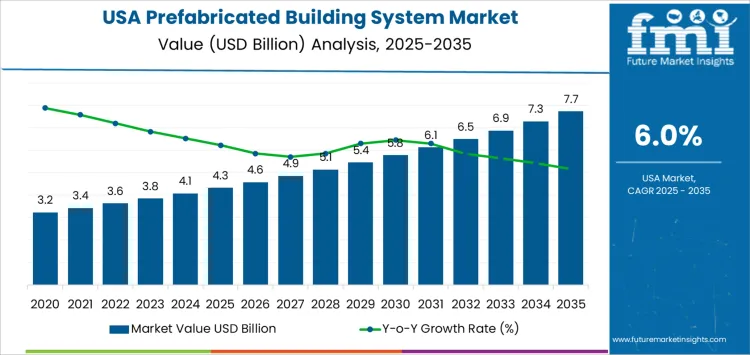
What is the Growth Forecast for the Prefabricated Building System Market through 2035?
The absolute dollar opportunity for the prefabricated building system market in the USA is significant, reflecting an increase of USD 3.4 billion over the forecast period. Starting at USD 4.3 billion in 2025, the market will experience consistent growth, reaching USD 4.6 billion in 2026, USD 4.9 billion in 2027, and USD 5.1 billion in 2028. The growth will continue steadily as adoption of prefabricated systems accelerates in various sectors, from residential to commercial buildings. By 2030, the market value is expected to reach USD 5.8 billion, with further increases to USD 6.1 billion in 2031, and USD 6.5 billion in 2032.
The total absolute dollar opportunity between 2025 and 2035 will be driven by the ongoing demand for quicker, more efficient, and sustainable construction methods. By 2035, the market is projected to reach USD 7.7 billion, reflecting substantial growth as prefabricated building systems become more widely adopted across the USA. The steady increase in market value over the decade highlights the growing preference for cost-effective, time-saving, and environmentally friendly building solutions.
USA Prefabricated Building System Industry Key Takeaways
| Metric | Value |
|---|---|
| Industry Sales Value (2025) | USD 4.3 billion |
| Industry Forecast Value (2035) | USD 7.7 billion |
| Industry Forecast CAGR (2025-2035) | 6% |
Why is the Demand for Prefabricated Building Systems Growing in the USA?
Demand for prefabricated building systems in the USA is growing because developers, builders, and policy makers are increasingly seeking faster, more cost effective and reliable construction methods. Prefabricated or modular construction allows major parts of buildings, such as walls, rooms, or entire units, to be built off site in factories and then transported to the site for assembly. This method reduces construction timelines significantly compared to traditional on site building. With growing housing shortages, rising construction costs, and skilled labor shortages in many parts of the country, prefabricated systems offer a practical solution to deliver housing and commercial space more efficiently and affordably.
At the same time shifting priorities in sustainability, building quality, and economic pressures are driving adoption across residential and commercial segments. Prefabricated systems often offer better quality control because factory built components are produced under controlled conditions. Additionally, modular and prefab buildings tend to generate less waste, allow for more energy efficient designs, and support modern demands for sustainable construction. As demand rises for affordable housing, rapid urban development, disaster resilient construction, and environmentally friendly building methods, the market for prefabricated building systems in the USA is poised to grow steadily in coming years.
What Are the Key Segments in Prefabricated Building System Market in the USA?
The prefabricated building system market in the USA is segmented by application and weight. Residential applications lead the market, holding 50% of the market share. In terms of weight, lightweight prefabricated systems (less than 2 tons) dominate, accounting for 65% of the market. The demand for prefabricated building systems is growing due to the increasing need for efficient, cost-effective, and sustainable construction solutions across various sectors, particularly residential construction.
Which Application Drives Prefabricated Building System Demand in the USA?
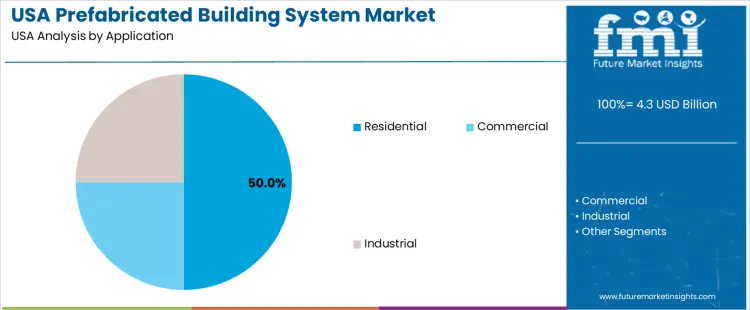
Residential applications are the dominant segment in the prefabricated building system market, representing 50% of the total demand. The growing interest in prefabricated homes can be attributed to the rising need for affordable, sustainable, and quick-to-build housing options. These systems allow for faster construction timelines and lower labor costs, making them highly attractive in the residential sector. Additionally, residential prefabricated buildings are considered more energy-efficient, with better insulation and reduced waste during construction. This sector’s dominance is also driven by increasing urbanization, population growth, and the need for housing solutions that meet both environmental and economic needs. In the USA, the residential market continues to expand as consumers and builders seek innovative solutions to address housing shortages and rising construction costs. While commercial and industrial applications also contribute to market demand, the residential sector remains the largest driver due to the significant interest in affordable and rapid housing construction.
Which Weight Category Drives Prefabricated Building System Demand in the USA?
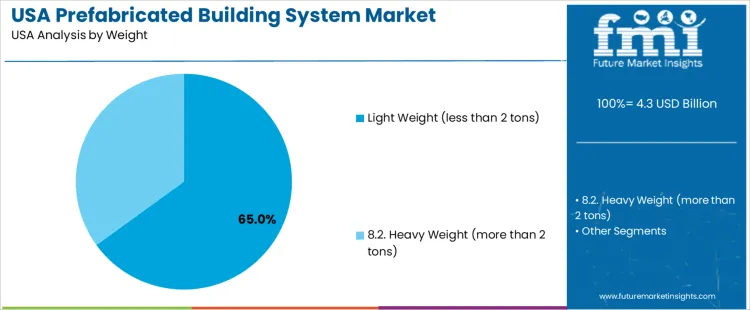
Lightweight prefabricated building systems (less than 2 tons) are the dominant category, holding 65% of the market share. These systems are particularly favored in residential construction due to their ease of transport, faster assembly, and reduced labor costs. The lightweight systems are ideal for modular homes and small structures, offering flexibility and reduced foundation requirements. Additionally, they are highly energy-efficient and contribute to lower overall construction costs, making them a preferred choice for builders and homeowners seeking affordable, eco-friendly housing solutions. Heavyweight prefabricated systems (more than 2 tons) are used less frequently but are still relevant in commercial and industrial applications where larger, more durable structures are needed. However, the shift toward lightweight solutions continues to dominate, driven by consumer demand for cost-effective, flexible, and quick-to-deploy housing solutions in the residential sector.
What is the Summary of Demand for Prefabricated Building System in USA?
Demand for prefabricated building systems in the USA is rising due to their efficiency, cost-effectiveness, and sustainability. These systems, which involve constructing buildings in sections at a factory before assembling them on-site, are gaining popularity across various sectors, including residential, commercial, and industrial construction. As construction projects seek to reduce costs, shorten timelines, and minimize environmental impact, prefabricated building systems are becoming a viable alternative to traditional building methods. With continued urbanization and a growing focus on sustainable development, the prefabricated building system market in the USA is expected to see significant growth in the coming years.
What are the Drivers of Demand for Prefabricated Building System in USA?
Several factors are driving the demand for prefabricated building systems in the USA. First, their ability to reduce construction time and labor costs makes them highly attractive to developers and contractors seeking efficiency. Second, the increasing need for sustainable and environmentally friendly construction practices is encouraging the use of prefabricated systems, as they often produce less waste and require fewer resources compared to traditional methods. Third, advancements in construction technology and materials are improving the quality, durability, and aesthetic appeal of prefabricated buildings, making them more appealing for both residential and commercial applications. Additionally, the rise in demand for affordable housing and quick-build structures is fueling the adoption of prefabricated building systems as a solution to meet these needs.
What are the Restraints on Demand for Prefabricated Building System in USA?
Despite the growing demand, several factors may limit the adoption of prefabricated building systems in the USA. One challenge is the upfront cost of materials and technology, which can be higher than conventional building methods, particularly for customized or high-end projects. Another restraint is the limited availability of qualified labor and expertise in prefabricated construction, which can affect the speed and quality of the installation process. Additionally, some zoning regulations and building codes in certain areas may not easily accommodate prefabricated structures, leading to delays or increased costs. Lastly, while prefabricated systems are often more sustainable, their environmental impact still depends on the sourcing and manufacturing of the materials used, which could deter eco-conscious buyers if the production process is not transparent or fully sustainable.
What are the Key Trends Influencing Demand for Prefabricated Building System in USA?
Several key trends are shaping the demand for prefabricated building systems in the USA. One significant trend is the increasing focus on sustainability and green building practices, which has led to the growing popularity of prefabricated systems due to their lower environmental footprint. Another trend is the rise of modular construction, where prefabricated components are used to create flexible, scalable structures that can be easily modified or expanded. The demand for affordable housing, especially in urban areas, is also driving the adoption of prefabricated building systems as they offer a cost-effective solution to housing shortages. Finally, advancements in 3D printing and other construction technologies are further enhancing the capabilities and appeal of prefabricated building systems, making them more customizable and adaptable to various construction needs.
What is the Regional Demand Outlook for the Prefabricated Building System Market in the USA?
The Prefabricated Building System market in the USA is projected to experience steady growth, with the West USA leading the way at a CAGR of 6.9%. South USA follows closely with a growth rate of 6.2%, while the Northeast USA is expected to grow at 5.5%. The Midwest USA shows moderate growth with a CAGR of 4.8%. Prefabricated building systems, known for their cost-effectiveness, speed of construction, and environmental benefits, are gaining popularity across various industries, including residential, commercial, and industrial sectors. As demand for sustainable and efficient building solutions rises, the market for prefabricated buildings is expanding across the United States.
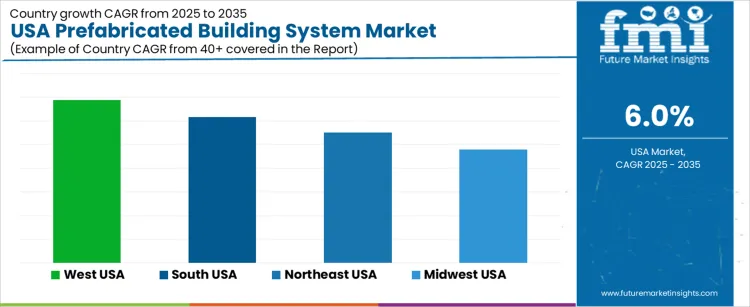
| Region | CAGR (2025-2035) |
|---|---|
| West USA | 6.9% |
| South USA | 6.2% |
| Northeast USA | 5.5% |
| Midwest USA | 4.8% |
What is Driving the Growth of Prefabricated Building Systems in the West USA?
The West USA is projected to experience the highest growth in the Prefabricated Building System market, with a projected CAGR of 6.9%. The region’s increasing demand for sustainable, cost-effective, and efficient building solutions is a key factor driving the adoption of prefabricated building systems. With cities like Los Angeles, San Francisco, and Seattle at the forefront of construction innovation, there is a growing emphasis on reducing construction time and minimizing environmental impact. Prefabricated buildings, which can be quickly assembled on-site and are made from sustainable materials, fit well with the West’s commitment to green building practices. Additionally, the region’s rapidly growing population and the ongoing need for affordable housing are contributing to the increased demand for prefabricated buildings. As developers seek ways to streamline construction projects, the use of prefabricated systems is expected to continue rising.
Why is the Prefabricated Building System Market Expanding in South USA?
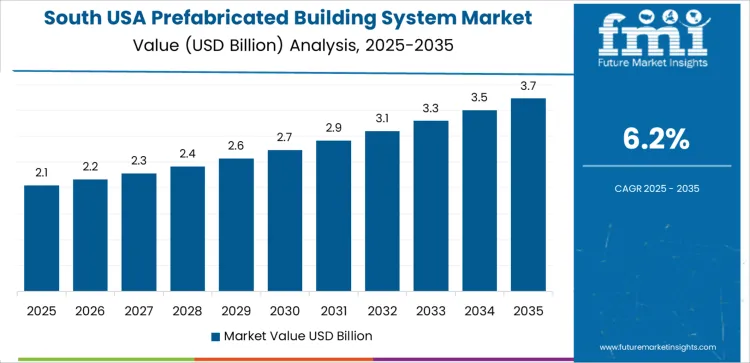
In South USA, the demand for prefabricated building systems is projected to grow at a CAGR of 6.2%. The region’s construction industry is increasingly adopting prefabricated systems due to their ability to reduce construction costs and time. States like Texas, Florida, and Georgia, which are experiencing significant population growth and urbanization, are seeing a rise in the demand for affordable housing and infrastructure projects. Prefabricated buildings offer a practical solution to meet these needs while minimizing construction delays and labor costs. Additionally, as the South USA embraces more sustainable building practices, the environmental benefits of prefabricated systems-such as reduced material waste and energy-efficient designs — are further driving market growth. As construction firms seek ways to optimize their processes and meet the growing demand for new buildings, prefabricated systems are becoming an increasingly popular choice.
How is the Prefabricated Building System Market Growing in Northeast USA?
In Northeast USA, the Prefabricated Building System market is projected to grow at a CAGR of 5.5%. The region’s growing focus on sustainable construction and energy-efficient building practices is contributing to the rising adoption of prefabricated systems. With cities like New York, Boston, and Philadelphia leading the charge in urban development and infrastructure improvements, there is a growing need for fast, cost-effective, and sustainable construction methods. Prefabricated buildings, which can be assembled quickly and offer energy-efficient designs, are particularly appealing in the Northeast’s competitive and environmentally conscious market. As more developers and builders turn to off-site construction to meet tight project deadlines and reduce costs, the demand for prefabricated building systems is expected to continue growing. Additionally, the region’s push toward green building certifications and LEED-compliant structures is fueling the adoption of prefabricated systems.
What is Contributing to the Growth of Prefabricated Building Systems in Midwest USA?
In Midwest USA, the Prefabricated Building System market is expected to grow at a more moderate rate of 4.8%. The region’s focus on cost-effective construction methods, combined with the need for affordable housing and commercial space, is driving the demand for prefabricated buildings. As cities like Chicago, Detroit, and Indianapolis work to revitalize urban areas and meet the housing demands of their growing populations, prefabricated systems offer an efficient and affordable solution. Additionally, the increasing emphasis on sustainable building practices in the Midwest is encouraging the adoption of prefabricated systems, which are known for their reduced environmental impact and faster construction times. While the Midwest’s adoption of prefabricated systems is slightly slower compared to other regions, it is expected to continue gaining traction as construction companies look for ways to streamline their processes and reduce costs.
What is the Competitive Landscape for Demand for Prefabricated Building Systems in the USA?
Demand for prefabricated building systems in the USA has been rising steadily as developers, governments, and large-scale projects seek faster, more cost-efficient, and sustainable construction solutions. Prefabricated systems reduce on-site construction time by allowing much of the building to be manufactured off-site and assembled quickly on location. This rapid assembly time helps meet tight project timelines, labor shortages, and rising demand for affordable housing, commercial buildings, temporary facilities, and modular developments. The modular construction segment, which includes volumetric modules, panels, and other prefab components, is experiencing growth across residential, commercial, industrial, and institutional sectors.
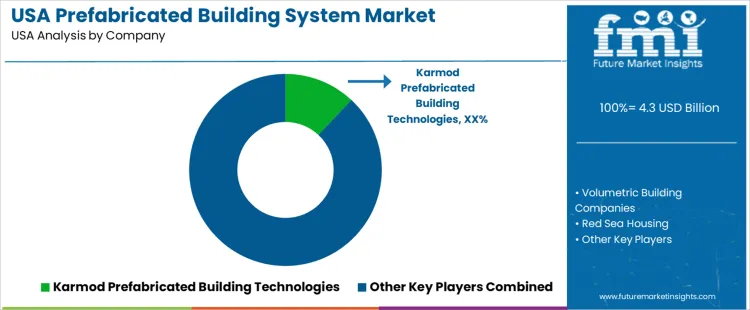
On the supply side, a group of firms competes to serve USA demand using different prefabrication approaches. According to your list, Karmod Prefabricated Building Technologies accounts for a portion of supply (approximately 12%), along with other providers including Volumetric Building Companies, Red Sea Housing, Bajaj Steel Industries Ltd., and TSSC Harwal Group. These firms offer varied prefab building solutions, from volumetric modular units to panelized or steel-framed prefab systems, targeting different use cases such as housing, commercial, industrial, or temporary structures. Competition among them centers on module quality, manufacturing speed, design flexibility, compliance with USAbuilding codes and standards, cost-effectiveness, and reliability of delivery. Companies that provide standardized, code-compliant, adaptable prefab systems with efficient supply chains and competitive pricing are best positioned to capture growth. As demand for faster, greener, and scalable construction expands, suppliers combining strong manufacturing capacity, quality control, and flexible product offerings are likely to lead in the USA prefabricated building system market.
Key Players of the Prefabricated Building System Industry in USA
- Karmod Prefabricated Building Technologies
- Volumetric Building Companies
- Red Sea Housing
- Bajaj Steel Industries Ltd.
- TSSC Harwal Group
Scope of the Report
| Items | Details |
|---|---|
| Quantitative Units | USD Billion |
| Regions Covered | USA |
| Application | Residential, Commercial, Industrial |
| Dimension (System Type) | Skeleton System, Panel System, Cellular System, Combined System |
| Key Companies Profiled | Karmod Prefabricated Building Technologies; Volumetric Building Companies; Red Sea Housing; Bajaj Steel Industries Ltd.; TSSC Harwal Group |
| Additional Attributes | Dollar sales by application and system type show the USA prefabricated building market growing fast-residential and commercial uses dominate. Panel and combined systems are especially popular due to speed and cost advantages over traditional construction. Demand is being driven by rising housing demand, labor shortages in the construction sector, and a push for quicker, more efficient build outs. |
Key Segments in the Demand for Prefabricated Building System in USA
Application
- Residential
- Commercial
- Industrial
Weight
- Light Weight (less than 2 tons)
- Heavy Weight (more than 2 tons)
Dimension / System Type
- Skeleton System
- Panel System
- Cellular System
- Combined System
Region
- Northeast USA
- West USA
- Midwest USA
- South USA
Frequently Asked Questions
How big is the demand for prefabricated building system in USA in 2025?
The demand for prefabricated building system in USA is estimated to be valued at USD 4.3 billion in 2025.
What will be the size of prefabricated building system in USA in 2035?
The market size for the prefabricated building system in USA is projected to reach USD 7.7 billion by 2035.
How much will be the demand for prefabricated building system in USA growth between 2025 and 2035?
The demand for prefabricated building system in USA is expected to grow at a 6.0% CAGR between 2025 and 2035.
What are the key product types in the prefabricated building system in USA?
The key product types in prefabricated building system in USA are residential, commercial and industrial.
Which weight segment is expected to contribute significant share in the prefabricated building system in USA in 2025?
In terms of weight, light weight (less than 2 tons) segment is expected to command 65.0% share in the prefabricated building system in USA in 2025.
Preview the report firsthand - request a free sample
Get SampleGet the brochure for pricing and purchase details.
Get PDFTable of Content
- Executive Summary
- USA Market Outlook
- Demand-side Trends
- Supply-side Trends
- Technology Roadmap Analysis
- Analysis and Recommendations
- Market Overview
- Market Coverage / Taxonomy
- Market Definition / Scope / Limitations
- Market Background
- Market Dynamics
- Drivers
- Restraints
- Opportunity
- Trends
- Scenario Forecast
- Demand in Optimistic Scenario
- Demand in Likely Scenario
- Demand in Conservative Scenario
- Opportunity Map Analysis
- Product Life Cycle Analysis
- Supply Chain Analysis
- Investment Feasibility Matrix
- Value Chain Analysis
- PESTLE and Porter’s Analysis
- Regulatory Landscape
- Regional Parent Market Outlook
- Production and Consumption Statistics
- Import and Export Statistics
- Market Dynamics
- USA Market Analysis 2020 to 2024 and Forecast, 2025 to 2035
- Historical Market Size Value (USD Million) Analysis, 2020 to 2024
- Current and Future Market Size Value (USD Million) Projections, 2025 to 2035
- Y-o-Y Growth Trend Analysis
- Absolute $ Opportunity Analysis
- USA Market Pricing Analysis 2020 to 2024 and Forecast 2025 to 2035
- USA Market Analysis 2020 to 2024 and Forecast 2025 to 2035, By Application
- Introduction / Key Findings
- Historical Market Size Value (USD Million) Analysis By Application , 2020 to 2024
- Current and Future Market Size Value (USD Million) Analysis and Forecast By Application , 2025 to 2035
- Residential
- Commercial
- Industrial
- Y-o-Y Growth Trend Analysis By Application , 2020 to 2024
- Absolute $ Opportunity Analysis By Application , 2025 to 2035
- USA Market Analysis 2020 to 2024 and Forecast 2025 to 2035, By Weight
- Introduction / Key Findings
- Historical Market Size Value (USD Million) Analysis By Weight, 2020 to 2024
- Current and Future Market Size Value (USD Million) Analysis and Forecast By Weight, 2025 to 2035
- Light Weight (less than 2 tons)
- 8.2. Heavy Weight (more than 2 tons)
- Y-o-Y Growth Trend Analysis By Weight, 2020 to 2024
- Absolute $ Opportunity Analysis By Weight, 2025 to 2035
- USA Market Analysis 2020 to 2024 and Forecast 2025 to 2035, By Dimension
- Introduction / Key Findings
- Historical Market Size Value (USD Million) Analysis By Dimension, 2020 to 2024
- Current and Future Market Size Value (USD Million) Analysis and Forecast By Dimension, 2025 to 2035
- Skeleton System
- Panel System
- Cellular System
- Combined System
- Y-o-Y Growth Trend Analysis By Dimension, 2020 to 2024
- Absolute $ Opportunity Analysis By Dimension, 2025 to 2035
- Market Structure Analysis
- Competition Dashboard
- Competition Benchmarking
- Market Share Analysis of Top Players
- By Regional
- By Application
- By Weight
- By Dimension
- Competition Analysis
- Competition Deep Dive
- Karmod Prefabricated Building Technologies
- Overview
- Product Portfolio
- Profitability by Market Segments (Product/Age /Sales Channel/Region)
- Sales Footprint
- Strategy Overview
- Marketing Strategy
- Product Strategy
- Channel Strategy
- Volumetric Building Companies
- Red Sea Housing
- Bajaj Steel Industries Ltd.
- TSSC Harwal Group
- Karmod Prefabricated Building Technologies
- Competition Deep Dive
- Assumptions & Acronyms Used
- Research Methodology


