

- Industry Size (2026)
- USD 0.9 Bn
- Forecast (2036)
- USD 1.8 Bn
- CAGR (2026 to 2036)
- 7.2%
Veneer Splicing Machine Market Forecast and Outlook 2026 to 2036
The veneer splicing machine market stands at USD 0.9 billion in 2026, and is projected to reach USD 1.8 billion by 2036, implying a CAGR of 7.2%. In veneer processing, the economic value of splicing equipment comes from converting narrow, irregular sheets into usable panel faces with predictable visual quality. Rising grade requirements in furniture, flooring, and decorative panels increase the cost of discard and rework, which shifts attention toward better joining accuracy and sheet alignment. Regions with export oriented panel industries face stricter appearance tolerances, which raises the priority of controlled splicing and defect management over simple volume throughput.
Investment decisions are usually triggered by quality audits, customer rejections, or changes in panel mix rather than by capacity expansion alone. Mills that move into higher value surfaces or thinner veneers encounter tighter joining tolerances and lower room for manual correction. Equipment selection therefore focuses on seam visibility, adhesive control, and downstream sanding behavior. Larger producers standardize splicing formats across lines to stabilize grading and simplify operator training. The market grows through rising surface quality expectations and yield optimization pressure, not through uniform modernization of all veneer and plywood production lines.
Quick Stats for Veneer Splicing Machine Market
- Veneer Splicing Machine Market Value (2026): USD 0.9 billion
- Veneer Splicing Machine Market Forecast Value (2036): USD 1.8 billion
- Veneer Splicing Machine Market Forecast CAGR 2026 to 2036: 7.2%
- Leading Type in Veneer Splicing Machine Market: Automatic veneer splicing machines
- Key Growth Regions in Veneer Splicing Machine Market: Asia Pacific, Europe, North America
- Top Players in Veneer Splicing Machine Market: Weinig Group, Homag Group, SCM Group, Biesse Group, Dieffenbacher, Rubner Holzbau, Mayer & Cie.

What is the Growth Forecast for Veneer Splicing Machine Market through 2036?
The veneer splicing machine market grows in a way that closely follows panel manufacturing capacity and furniture production cycles rather than broad machinery investment trends. When the market is near USD 0.6 billion, spending is largely replacement-driven, with many mills operating long-installed equipment and only gradually upgrading. Movement to around USD 0.7 billion and then to roughly USD 0.8 billion reflects steady additions in plywood, furniture, and decorative panel plants rather than any wave of new factory construction. By the time the market reaches about USD 0.9 billion, splicing machines are increasingly viewed as yield-optimization tools, not just as joining equipment, because veneer recovery rates and surface consistency directly affect downstream value.
As producers focus more on material efficiency and throughput, the market advances through approximately USD 1.0 billion, USD 1.2 billion, and then about USD 1.4 billion, driven by upgrades to higher-speed, more accurate, and more automated splicing lines. When spending moves into the USD 1.5 to 1.6 billion range, new installations in emerging furniture manufacturing regions and panel export hubs begin to contribute alongside replacement demand. Approaching roughly USD 1.7 to 1.8 billion, growth is increasingly supported by higher machine value per line and wider adoption of continuous and automatic splicing systems rather than by a simple increase in the number of veneer plants. The market remains closely tied to wood processing economics, yield improvement, and labor efficiency rather than to general capital equipment cycles.
Veneer Splicing Machine Market Key Takeaways
| Metric | Value |
|---|---|
| Market Value (2026) | USD 0.9 billion |
| Forecast Value (2036) | USD 1.8 billion |
| Forecast CAGR 2026 to 2036 | 7.2% |
How Is the Veneer Splicing Machine Market Enhancing Wood Panel Manufacturing Efficiency?
Wood panel manufacturers increasingly rely on veneer splicing machines to produce larger, defect-free sheets by joining smaller veneer pieces with precision. Historically, manual splicing limited panel size, consistency, and production speed, increasing labor requirements and material waste. Modern veneer splicing machines integrate automated feeding, precise alignment, and adhesive application systems to deliver consistent, high-quality panels suitable for plywood, furniture, and laminated boards. Panel manufacturers, furniture producers, and industrial wood processors prioritize splicing accuracy, machine reliability, and cycle time. Early adoption focused on high-end furniture and specialty panels, while current demand spans mass-produced plywood, modular interiors, and commercial wood products, driven by production efficiency, reduced waste, and consistent quality. Alignment precision, adhesive application, and operational speed influence supplier selection.
Reducing production variability and improving material utilization are shaping market growth. Compared with manual splicing, automated machines emphasize uniformity, speed, and minimized defects, supporting higher throughput and lower labor costs. Cost structures depend on machine durability, automation level, and maintenance requirements, concentrating margins among suppliers capable of delivering reliable, high-performance equipment. Manufacturers adopt veneer splicing machines to enhance production efficiency, maintain consistent panel quality, and optimize raw material usage. By 2036, these machines are expected to be standard in plywood, furniture, and laminated wood production, supporting scalable operations, precision panel fabrication, and reduced material loss.
What Factors Are Shaping the Demand for Veneer Splicing Machine Market, Segment wise by Machine Type and End Use Industry, in 2026?
The Veneer Splicing Machine Market in 2026 is segmented by machine type and by end use industry. By machine category, demand in the Veneer Splicing Machine Market is divided into automatic veneer splicing machines, semi automatic veneer splicers, manual veneer splicing machines, and CNC integrated splicing units, each designed for different production speeds, labor involvement, and accuracy requirements. By end use, demand in the Veneer Splicing Machine Market is organized around furniture manufacturing, panel and board production, architectural woodwork, and custom woodworking shops, which differ in batch size, material handling flow, and tolerance for manual intervention. These segments show how equipment selection in the Veneer Splicing Machine Market balances throughput, consistency, and workforce dependence.
Why Do Automatic Veneer Splicing Machines Dominate Demand in the Veneer Splicing Machine Market?

Automatic veneer splicing machines account for about 48% of demand in the Veneer Splicing Machine Market in 2026 because furniture and panel producers require consistent output at stable quality levels. These machines reduce dependence on skilled manual labor and maintain uniform seam quality across long production runs. In the Veneer Splicing Machine Market, many manufacturers operate continuous or semi continuous lines where interruptions and rework create cost and scheduling problems. Automatic systems integrate more easily into such lines and support predictable takt times. Once installed, these machines are used intensively, which justifies the higher upfront cost. This combination of productivity, quality control, and line integration keeps automatic machines as the largest machine type segment in the Veneer Splicing Machine Market.
Semi-automatic, manual, and CNC integrated units in the Veneer Splicing Machine Market serve more specialized roles. Semi-automatic machines balance cost and output in mid-sized workshops. Manual machines are used where volumes are low or labor is readily available. CNC integrated systems fit high precision or custom production environments, but their higher complexity and cost limit adoption scale. These categories remain important, but they do not match the broad production volume requirements that favor fully automatic equipment in the Veneer Splicing Machine Market.
Why Does Furniture Manufacturing Lead End Use Demand in the Veneer Splicing Machine Market?

Furniture manufacturing represents about 44% of demand in the Veneer Splicing Machine Market in 2026 because furniture producers consume large volumes of spliced veneer sheets for panels, doors, and decorative surfaces. Many furniture plants operate high throughput finishing lines where consistent veneer width and seam quality are critical for downstream lamination and pressing processes. In the Veneer Splicing Machine Market, furniture production also shows relatively stable demand compared with project based architectural work. Standardized designs and repeat production runs increase machine utilization rates and support continuous investment in splicing equipment.
Panel production, architectural woodwork, and custom shops in the Veneer Splicing Machine Market follow different purchasing patterns. Panel and board producers often centralize splicing in fewer lines. Architectural projects are tied to construction cycles and vary in size. Custom shops prioritize flexibility over volume. These segments invest in equipment, but their production rhythms are less uniform. As a result, furniture manufacturing remains the largest and most consistent source of demand in the Veneer Splicing Machine Market.
How Are the Key Dynamics Reshaping the Veneer Splicing Machine Market?
The category is being shaped by yield optimization pressure, cautious capital spending, and the move toward standardized panel production lines. Veneer producers want higher recovery from logs and more consistent sheet quality, but investments in new machinery are weighed carefully because margins depend on raw material cost and throughput stability. At the same time, larger panel and furniture manufacturers are standardizing line layouts to simplify training, maintenance, and quality control. This creates a market where growth comes mainly from line upgrades and capacity expansions rather than from frequent replacement of existing machines, and where being specified into standard production lines matters more than one off equipment sales.
Why Is Yield and Consistency Driving Splicing Machine Demand?
Demand is anchored in raw material economics. Veneer is costly and variable, and every percentage point of yield improvement directly affects margins. Splicing machines allow producers to join narrower or defect trimmed sheets into usable panels, reducing waste and stabilizing sheet dimensions. Consistent veneer width and quality also simplify downstream pressing and finishing. As customers demand more uniform surfaces, producers rely more on controlled splicing rather than manual assembly. Once a plant designs its line around a certain splicing capacity and format, the machine becomes a core process step. Volume then follows panel output growth and new line installations rather than discretionary upgrades.
What Is Slowing Wider Adoption of New Machines?
The main barrier is capital risk and integration disruption. Splicing machines sit in the middle of continuous veneer lines, and changing them affects upstream drying and downstream pressing schedules. Any commissioning problems can stop the whole line. Many plants prefer to keep proven machines running as long as possible, even if newer models offer better automation. Investment decisions are also tied to wood supply cycles and panel demand, which are volatile. When markets are uncertain, producers delay upgrades. These factors keep replacement cycles long and concentrate new sales in greenfield plants, major expansions, or complete line modernizations.
How Are Standardized Production Lines Changing Procurement?
The trend is toward line level standardization. Large panel and furniture groups increasingly design repeatable production lines that can be replicated across sites. Splicing machines are selected as part of these line packages rather than as standalone purchases. This favors suppliers that can integrate mechanically and digitally with the rest of the line and support long term service. Procurement shifts to framework agreements covering multiple plants or phases. Once a machine type is approved in the standard line design, it benefits from repeat orders. Over time, success depends on being part of these reference lines rather than competing only on individual machine features.
What is the Demand for Veneer Splicing Machines by Country?

| Country | CAGR (%) |
|---|---|
| US | 6.8% |
| UK | 6.5% |
| China | 7.8% |
| India | 8.2% |
| Brazil | 7.0% |
Demand for veneer splicing machines is rising as furniture and panel manufacturers adopt automated solutions to enhance production efficiency, reduce material waste, and improve product quality. India leads with an 8.2% CAGR, driven by growth in furniture production, increasing demand for high-quality veneer panels, and adoption of precision machinery. China follows at 7.8%, supported by large-scale panel manufacturing and expansion of the furniture industry. Brazil records 7.0% growth, shaped by demand for veneer-based products and modernization of manufacturing operations. The US grows at 6.8%, influenced by replacement demand and use of splicing machines in high-end furniture production. The UK shows 6.5% CAGR, reflecting steady adoption across commercial and residential panel manufacturing.
How is the United States experiencing growth in the veneer splicing machine market?
United States is experiencing growth at a CAGR of 6.8%, driven by wood panel and furniture manufacturing hubs in California, Michigan, and North Carolina. Installed base size and predictable replacement cycles encourage steady adoption of veneer splicing machines in large-scale production facilities. Industry concentration among furniture OEMs and panel manufacturers anchors demand. Investments focus on precision, automation, and integration with existing production lines. Growth reflects ongoing demand for high-quality furniture, efficient panel production, and modernization of manufacturing processes.
- Wood panel and furniture manufacturers drive adoption.
- Industrial clusters concentrate demand.
- Precision and automation guide investment.
- Replacement cycles support recurring demand.
How is the United Kingdom witnessing growth in the veneer splicing machine market?
United Kingdom is witnessing growth at a CAGR of 6.5%, supported by labor cost structure and productivity pressures in furniture and joinery workshops in London, Manchester, and Birmingham. Market concentration is moderate, with small to medium-sized workshops driving demand. Investments prioritize operator-friendly machines, reliability, and efficiency in panel splicing. Growth reflects the need for higher productivity, reduced waste, and modernization of traditional woodworking processes.
- Furniture and joinery workshops drive adoption.
- Urban workshops concentrate demand.
- Operator-friendly and reliable machines guide investment.
- Productivity pressures influence adoption.
How is China experiencing growth in the veneer splicing machine market?
China is experiencing growth at a CAGR of 7.8%, fueled by large-scale furniture and plywood manufacturing in Guangdong, Zhejiang, and Jiangsu. Market concentration is high in industrial clusters, supporting rapid adoption of automated veneer splicing machines. Investments focus on high-throughput systems, durability, and integration with mass production lines. Growth reflects increasing domestic furniture demand, industrial expansion, and adoption of automated machinery to improve efficiency and quality.
- Furniture and plywood manufacturing drive adoption.
- Industrial clusters concentrate demand.
- High-throughput and durable machines guide investment.
- Automation adoption accelerates growth.
How is India witnessing growth in the veneer splicing machine market?
India is experiencing growth at a CAGR of 8.2%, supported by urban furniture production and modular panel manufacturing in Mumbai, Bengaluru, and Chennai. Installed base size and replacement cycles encourage adoption of both semi-automatic and fully automated splicing machines. Industry concentration exists in urban furniture hubs, with workshops and small manufacturers contributing to demand. Investments focus on cost-effective, durable machines suitable for high-volume production. Growth reflects rising residential and commercial furniture demand, modernization of production techniques, and expansion of modular housing projects.
- Urban furniture and panel production drive adoption.
- Furniture hubs concentrate demand.
- Cost-effective and durable machines guide investment.
- Replacement cycles support recurring demand.
How is Brazil experiencing growth in the veneer splicing machine market?
Brazil is experiencing growth at a CAGR of 7%, driven by furniture and plywood manufacturing clusters in São Paulo, Rio de Janeiro, and Paraná. Market concentration is moderate, with regional adoption across urban industrial zones. Investments focus on machine reliability, ease of maintenance, and integration with existing production workflows. Growth reflects steady demand for high-quality furniture, efficiency improvements in panel production, and the replacement of outdated machinery with modern veneer splicing systems.
- Furniture and plywood manufacturing drive adoption.
- Urban industrial zones concentrate demand.
- Reliability and workflow integration guide investment.
- Modernization of machinery supports growth.
How Are Manufacturers Competing in the Veneer Splicing Machine Market Through Technology and Integration?
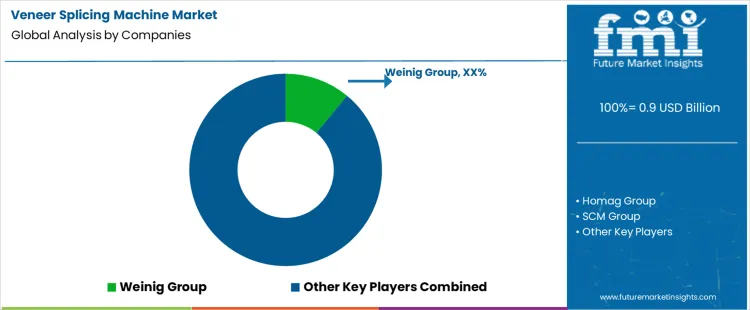
In the veneer splicing machine market, suppliers differentiate through precision join quality, automation level, and integration with upstream and downstream woodworking systems. Weinig Group offers splicing solutions with high-precision feed systems and control software designed for consistent joint performance in panel and board production. Homag Group supplies machines that integrate with digital workflows and in-line quality monitoring, supporting high throughput and reduced setup times. SCM Group develops splicers with robust build quality and flexible configurations to handle varied veneer thicknesses and species. Biesse Group provides automated splicing platforms that connect to material handling and cutting cells to streamline continuous production. Dieffenbacher focuses on heavy-duty machines with thermal and adhesive application control tailored to industrial panel manufacturing.
Rubner Holzbau offers splicing solutions that emphasize customization for engineered timber and specialty wood products, with service support for integration into timber construction lines. Mayer & Cie. supplies veneer splicers engineered for reliability and ease of maintenance, targeting workshops and medium-scale producers. Other regional and specialized suppliers provide machines optimized for niche applications such as curved surfaces or mixed species splicing. Key differentiators include control accuracy, adhesive application consistency, ease of operator changeover, and compatibility with CNC and material handling systems. Suppliers that combine precise mechanical design, digital interfaces, and integration support maintain relevance as producers prioritize quality, throughput, and reduced manual intervention in veneer processing operations.
Key Players in the Veneer Splicing Machine Market
- Weinig Group
- Homag Group
- SCM Group
- Biesse Group
- Dieffenbacher
- Rubner Holzbau
- Mayer & Cie.
Scope of the Report
| Items | Values |
|---|---|
| Quantitative Units (2026) | USD billion |
| Machine Type | Automatic veneer splicing machines, Semi-automatic veneer splicers, Manual veneer splicing machines, CNC-integrated splicing units |
| End-Use Industry | Furniture manufacturing, Panel and board production, Architectural woodwork, Custom woodworking shops |
| Regions Covered | Asia Pacific, Europe, North America, Latin America, Middle East & Africa |
| Countries Covered | China, Japan, South Korea, India, Australia & New Zealand, ASEAN, Germany, United Kingdom, France, Italy, Spain, Nordic, BENELUX, United States, Canada, Mexico, Brazil, Chile, Saudi Arabia, Turkey, South Africa, and other regional markets |
| Key Companies Profiled | Weinig Group, Homag Group, SCM Group, Biesse Group, Dieffenbacher, Rubner Holzbau, Mayer & Cie. |
| Additional Attributes | Dollar sales by machine type and end use; automatic machines and furniture manufacturing as leading segments; demand driven by yield optimization, surface quality standards, and labor efficiency; growth led by line upgrades and adoption of automated and continuous splicing systems; purchasing shaped by integration needs, reliability, and adhesive and seam quality control. |
Veneer Splicing Machine Market Segmentation
Machine Type:
- Automatic veneer splicing machines
- Semi-automatic veneer splicers
- Manual veneer splicing machines
- CNC-integrated splicing units
End-Use Industry:
- Furniture manufacturing
- Panel and board production
- Architectural woodwork
- Custom woodworking shops
Region
- Asia Pacific
- China
- Japan
- South Korea
- India
- Australia & New Zealand
- ASEAN
- Rest of Asia Pacific
- Europe
- Germany
- United Kingdom
- France
- Italy
- Spain
- Nordic
- BENELUX
- Rest of Europe
- North America
- United States
- Canada
- Mexico
- Latin America
- Brazil
- Chile
- Rest of Latin America
- Middle East & Africa
- Kingdom of Saudi Arabia
- Other GCC Countries
- Turkey
- South Africa
- Other African Union
- Rest of Middle East & Africa
Bibliography
- Food and Agriculture Organization of the United Nations. (2024). Global Forest Products Facts and Figures 2023. FAO.
- Food and Agriculture Organization of the United Nations. (n.d.). FAOSTAT Forestry Database (accessed 2025). FAO.
- European Commission. (2023). Regulation (EU) 2023/1230 on machinery products (Machinery Regulation). Official Journal of the European Union.
- International Organization for Standardization. (2024). ISO 19085-9: Woodworking machines Safety Part 9: Circular saw benches (with and without sliding table). ISO.
- Occupational Safety and Health Administration. (2025). Woodworking standards and machine guarding requirements. USA Department of Labor.
Frequently Asked Questions
How big is the veneer splicing machine market in 2026?
The global veneer splicing machine market is estimated to be valued at USD 0.9 billion in 2026.
What will be the size of veneer splicing machine market in 2036?
The market size for the veneer splicing machine market is projected to reach USD 1.8 billion by 2036.
How much will be the veneer splicing machine market growth between 2026 and 2036?
The veneer splicing machine market is expected to grow at a 7.2% CAGR between 2026 and 2036.
What are the key product types in the veneer splicing machine market?
The key product types in veneer splicing machine market are automatic veneer splicing machines , semi‑automatic veneer splicers, manual veneer splicing machines and cnc‑integrated splicing units.
Which end‑use industry segment to contribute significant share in the veneer splicing machine market in 2026?
In terms of end‑use industry, furniture manufacturing segment to command 44.0% share in the veneer splicing machine market in 2026.
Preview the report firsthand - request a free sample
Get SampleGet the brochure for pricing and purchase details.
Get PDFTable of Content
- Executive Summary
- Global Market Outlook
- Demand-side Trends
- Supply-side Trends
- Technology Roadmap Analysis
- Analysis and Recommendations
- Market Overview
- Market Coverage / Taxonomy
- Market Definition / Scope / Limitations
- Market Background
- Market Dynamics
- Drivers
- Restraints
- Opportunity
- Trends
- Scenario Forecast
- Demand in Optimistic Scenario
- Demand in Likely Scenario
- Demand in Conservative Scenario
- Opportunity Map Analysis
- Product Life Cycle Analysis
- Supply Chain Analysis
- Investment Feasibility Matrix
- Value Chain Analysis
- PESTLE and Porter’s Analysis
- Regulatory Landscape
- Regional Parent Market Outlook
- Production and Consumption Statistics
- Import and Export Statistics
- Market Dynamics
- Global Market Analysis 2021 to 2025 and Forecast, 2026 to 2036
- Historical Market Size Value (USD Million) Analysis, 2021 to 2025
- Current and Future Market Size Value (USD Million) Projections, 2026 to 2036
- Y-o-Y Growth Trend Analysis
- Absolute $ Opportunity Analysis
- Global Market Pricing Analysis 2021 to 2025 and Forecast 2026 to 2036
- Global Market Analysis 2021 to 2025 and Forecast 2026 to 2036, By Machine Type
- Introduction / Key Findings
- Historical Market Size Value (USD Million) Analysis By Machine Type, 2021 to 2025
- Current and Future Market Size Value (USD Million) Analysis and Forecast By Machine Type, 2026 to 2036
- Automatic veneer splicing machines
- Semi‑automatic veneer splicers
- Manual veneer splicing machines
- CNC‑integrated splicing units
- Automatic veneer splicing machines
- Y-o-Y Growth Trend Analysis By Machine Type, 2021 to 2025
- Absolute $ Opportunity Analysis By Machine Type, 2026 to 2036
- Global Market Analysis 2021 to 2025 and Forecast 2026 to 2036, By End‑Use Industry
- Introduction / Key Findings
- Historical Market Size Value (USD Million) Analysis By End‑Use Industry, 2021 to 2025
- Current and Future Market Size Value (USD Million) Analysis and Forecast By End‑Use Industry, 2026 to 2036
- Furniture manufacturing
- Panel and board production
- Architectural woodwork
- Custom woodworking shops
- Furniture manufacturing
- Y-o-Y Growth Trend Analysis By End‑Use Industry, 2021 to 2025
- Absolute $ Opportunity Analysis By End‑Use Industry, 2026 to 2036
- Global Market Analysis 2021 to 2025 and Forecast 2026 to 2036, By Region
- Introduction
- Historical Market Size Value (USD Million) Analysis By Region, 2021 to 2025
- Current Market Size Value (USD Million) Analysis and Forecast By Region, 2026 to 2036
- North America
- Latin America
- Western Europe
- Eastern Europe
- East Asia
- South Asia and Pacific
- Middle East & Africa
- Market Attractiveness Analysis By Region
- North America Market Analysis 2021 to 2025 and Forecast 2026 to 2036, By Country
- Historical Market Size Value (USD Million) Trend Analysis By Market Taxonomy, 2021 to 2025
- Market Size Value (USD Million) Forecast By Market Taxonomy, 2026 to 2036
- By Country
- USA
- Canada
- Mexico
- By Machine Type
- By End‑Use Industry
- By Country
- Market Attractiveness Analysis
- By Country
- By Machine Type
- By End‑Use Industry
- Key Takeaways
- Latin America Market Analysis 2021 to 2025 and Forecast 2026 to 2036, By Country
- Historical Market Size Value (USD Million) Trend Analysis By Market Taxonomy, 2021 to 2025
- Market Size Value (USD Million) Forecast By Market Taxonomy, 2026 to 2036
- By Country
- Brazil
- Chile
- Rest of Latin America
- By Machine Type
- By End‑Use Industry
- By Country
- Market Attractiveness Analysis
- By Country
- By Machine Type
- By End‑Use Industry
- Key Takeaways
- Western Europe Market Analysis 2021 to 2025 and Forecast 2026 to 2036, By Country
- Historical Market Size Value (USD Million) Trend Analysis By Market Taxonomy, 2021 to 2025
- Market Size Value (USD Million) Forecast By Market Taxonomy, 2026 to 2036
- By Country
- Germany
- UK
- Italy
- Spain
- France
- Nordic
- BENELUX
- Rest of Western Europe
- By Machine Type
- By End‑Use Industry
- By Country
- Market Attractiveness Analysis
- By Country
- By Machine Type
- By End‑Use Industry
- Key Takeaways
- Eastern Europe Market Analysis 2021 to 2025 and Forecast 2026 to 2036, By Country
- Historical Market Size Value (USD Million) Trend Analysis By Market Taxonomy, 2021 to 2025
- Market Size Value (USD Million) Forecast By Market Taxonomy, 2026 to 2036
- By Country
- Russia
- Poland
- Hungary
- Balkan & Baltic
- Rest of Eastern Europe
- By Machine Type
- By End‑Use Industry
- By Country
- Market Attractiveness Analysis
- By Country
- By Machine Type
- By End‑Use Industry
- Key Takeaways
- East Asia Market Analysis 2021 to 2025 and Forecast 2026 to 2036, By Country
- Historical Market Size Value (USD Million) Trend Analysis By Market Taxonomy, 2021 to 2025
- Market Size Value (USD Million) Forecast By Market Taxonomy, 2026 to 2036
- By Country
- China
- Japan
- South Korea
- By Machine Type
- By End‑Use Industry
- By Country
- Market Attractiveness Analysis
- By Country
- By Machine Type
- By End‑Use Industry
- Key Takeaways
- South Asia and Pacific Market Analysis 2021 to 2025 and Forecast 2026 to 2036, By Country
- Historical Market Size Value (USD Million) Trend Analysis By Market Taxonomy, 2021 to 2025
- Market Size Value (USD Million) Forecast By Market Taxonomy, 2026 to 2036
- By Country
- India
- ASEAN
- Australia & New Zealand
- Rest of South Asia and Pacific
- By Machine Type
- By End‑Use Industry
- By Country
- Market Attractiveness Analysis
- By Country
- By Machine Type
- By End‑Use Industry
- Key Takeaways
- Middle East & Africa Market Analysis 2021 to 2025 and Forecast 2026 to 2036, By Country
- Historical Market Size Value (USD Million) Trend Analysis By Market Taxonomy, 2021 to 2025
- Market Size Value (USD Million) Forecast By Market Taxonomy, 2026 to 2036
- By Country
- Kingdom of Saudi Arabia
- Other GCC Countries
- Turkiye
- South Africa
- Other African Union
- Rest of Middle East & Africa
- By Machine Type
- By End‑Use Industry
- By Country
- Market Attractiveness Analysis
- By Country
- By Machine Type
- By End‑Use Industry
- Key Takeaways
- Key Countries Market Analysis
- USA
- Pricing Analysis
- Market Share Analysis, 2025
- By Machine Type
- By End‑Use Industry
- Canada
- Pricing Analysis
- Market Share Analysis, 2025
- By Machine Type
- By End‑Use Industry
- Mexico
- Pricing Analysis
- Market Share Analysis, 2025
- By Machine Type
- By End‑Use Industry
- Brazil
- Pricing Analysis
- Market Share Analysis, 2025
- By Machine Type
- By End‑Use Industry
- Chile
- Pricing Analysis
- Market Share Analysis, 2025
- By Machine Type
- By End‑Use Industry
- Germany
- Pricing Analysis
- Market Share Analysis, 2025
- By Machine Type
- By End‑Use Industry
- UK
- Pricing Analysis
- Market Share Analysis, 2025
- By Machine Type
- By End‑Use Industry
- Italy
- Pricing Analysis
- Market Share Analysis, 2025
- By Machine Type
- By End‑Use Industry
- Spain
- Pricing Analysis
- Market Share Analysis, 2025
- By Machine Type
- By End‑Use Industry
- France
- Pricing Analysis
- Market Share Analysis, 2025
- By Machine Type
- By End‑Use Industry
- India
- Pricing Analysis
- Market Share Analysis, 2025
- By Machine Type
- By End‑Use Industry
- ASEAN
- Pricing Analysis
- Market Share Analysis, 2025
- By Machine Type
- By End‑Use Industry
- Australia & New Zealand
- Pricing Analysis
- Market Share Analysis, 2025
- By Machine Type
- By End‑Use Industry
- China
- Pricing Analysis
- Market Share Analysis, 2025
- By Machine Type
- By End‑Use Industry
- Japan
- Pricing Analysis
- Market Share Analysis, 2025
- By Machine Type
- By End‑Use Industry
- South Korea
- Pricing Analysis
- Market Share Analysis, 2025
- By Machine Type
- By End‑Use Industry
- Russia
- Pricing Analysis
- Market Share Analysis, 2025
- By Machine Type
- By End‑Use Industry
- Poland
- Pricing Analysis
- Market Share Analysis, 2025
- By Machine Type
- By End‑Use Industry
- Hungary
- Pricing Analysis
- Market Share Analysis, 2025
- By Machine Type
- By End‑Use Industry
- Kingdom of Saudi Arabia
- Pricing Analysis
- Market Share Analysis, 2025
- By Machine Type
- By End‑Use Industry
- Turkiye
- Pricing Analysis
- Market Share Analysis, 2025
- By Machine Type
- By End‑Use Industry
- South Africa
- Pricing Analysis
- Market Share Analysis, 2025
- By Machine Type
- By End‑Use Industry
- USA
- Market Structure Analysis
- Competition Dashboard
- Competition Benchmarking
- Market Share Analysis of Top Players
- By Regional
- By Machine Type
- By End‑Use Industry
- Competition Analysis
- Competition Deep Dive
- Weinig Group
- Overview
- Product Portfolio
- Profitability by Market Segments (Product/Age /Sales Channel/Region)
- Sales Footprint
- Strategy Overview
- Marketing Strategy
- Product Strategy
- Channel Strategy
- Homag Group
- SCM Group
- Biesse Group
- Dieffenbacher
- Rubner Holzbau
- Mayer & Cie.
- Weinig Group
- Competition Deep Dive
- Assumptions & Acronyms Used
- Research Methodology


