

- Market Size (2026)
- USD 3.8 Bn
- Forecast (2036)
- USD 18.6 Bn
- CAGR (2026 to 2036)
- 17.2%
Zonal Vehicle Control Unit Architectures Market Size, Forecast, and Outlook By FMI
Summary of the Zonal Vehicle Control Unit Architectures Market
- Demand and Growth Drivers
- Automakers are moving toward zonal E/E layouts as new vehicle platforms need shorter wiring paths and cleaner local control. Software defined vehicle programs increase the need for zone controllers that can connect sensors and power loads with central computers.
- Electric vehicles are raising demand for local power distribution as 48V loads and smart fusing become more important. Platform redesign gives OEMs a clearer route to use zone control units during early vehicle architecture planning.
- Product and Segment View
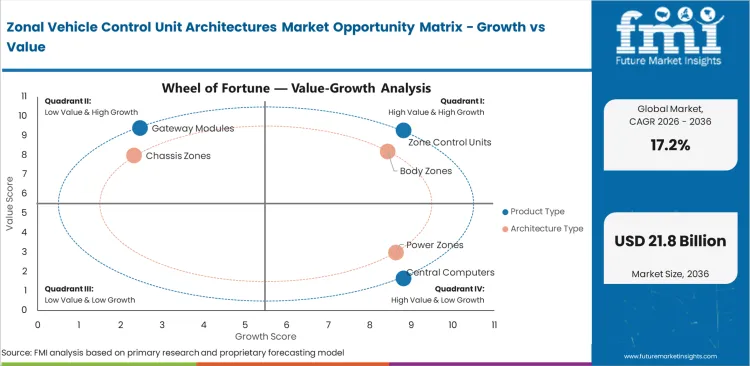
- Zone control units lead the product type, supported by their role in local I/O handling and power control. Gateway modules are expected to stay important in mixed architectures where older domain ECUs and newer zone controllers operate together.
- Body zones lead the architecture demand as doors and cabin electronics create natural control areas. Power zones are expected to gain traction as EV platforms need better local current control and diagnostics near high-load systems.
- OEM line-fit is dominates sales as zonal control must be integrated with wiring layout, software architecture and vehicle safety validation before production.
- Geography and Competitive Outlook
- China holds a key market, while India is expected to sustain strong demand through EV platform growth and rising local electronics content.
- Germany and France support demand through premium vehicle engineering and European E/E architecture programs. The United States stays relevant because software defined vehicle programs and strong EV platform activity.
- Companies that can combine zone controller hardware, embedded software, safety validation, and OEM program access are likely to gain traction during the forecast period.
- Analyst Opinion
- Nikhil Kaitwade, Principal Consultant at FMI says, “Zonal architectures are becoming important because automakers need simpler wiring and better software control inside electric vehicles. I see the strongest opportunity in platforms where the zone controller handles local power and sensor signals before data moves to a central computer. Suppliers will gain an advantage when they can prove safety compliance, cybersecurity readiness, and stable software integration.”
- Zonal Vehicle Control Unit Architectures Market Value Analysis
- Zonal vehicle control unit architectures are shifting beyond premium EV programs and entering broader software defined vehicle platforms.
- OEM interest is rising as automakers work to reduce wiring complexity and place local control closer to sensors and actuators.
- Central compute programs create a stronger need for stable links between vehicle zones and main control units.
- EV platform redesign, 48V power distribution and smart fusing are creating a clearer revenue path for zone controller suppliers.
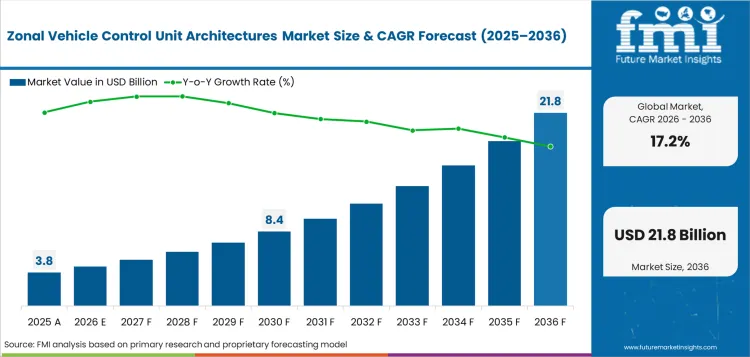
Key Takeaways, Market Size, and Forecast
- The zonal vehicle control unit architectures market was valued at USD 3.2 billion in 2025.
- By 2036, the Zonal Vehicle Control Unit Architectures Market is expected to be worth USD 18.6 billion.
- From 2026 to 2036, the market is forecast to expand at 17.2% CAGR.
- The market is projected to create an incremental opportunity of USD 14.8 billion between 2026 and 2036.
- In 2026, zone control units are expected to account for 33.0% of the product type segment, driven by OEM demand for local I/O and power control.
- OEM fitment is forecast to hold 82.0% of sales channel demand in 2026, as zonal architecture needs design-stage integration.
- China (19.8%) and India (19.1%) are the two fastest growing markets in the world.
Strategic Pointers: Zonal Vehicle Control Unit Architectures Market
Aptiv’s 2026 zone controller white paper shows why zonal vehicle control units are shifting from ECU reduction to power and data consolidation. In one OEM case, Aptiv reported removal of nine ECUs and hundreds of wires with an 8.5 kg weight cut. It also cited a doorsill cable-area reduction from 8.60 cm² to 2.41 cm². TI’s October 2024 paper links zonal modules with OTA maintenance and FOTA updates, which supports longer software revenue after vehicle launch. NXP’s Zone Control POC identifies Ethernet backbone use with PDU gateway and PDU tunnel functions. It also adds DDS applications and TSN features as practical requirements for zonal platforms. AUTOSAR FO R24-11 treats TSN as an IEEE 802.1 Ethernet method for low-latency and reliable transmission. SAE Technical Paper 2024-28-0121 by K. Appajosyula shows why Ethernet-based IDS is becoming relevant as ADAS and V2X traffic move through zonal networks. This points to a supplier shift toward lighter wiring, integrated security and software-supported control units.
Zonal Vehicle Control Unit Architectures Market Definition
The zonal vehicle control unit architectures market includes electronic control units, gateway modules, local power controllers, and software interfaces used in zone-based vehicle electrical systems.
Zonal Vehicle Control Unit Architectures Market Inclusions
Market scope covers commercially traded zone control units, central computers, gateway modules, power modules, body controllers, body zones, power zones, chassis zones, mixed zones, battery EVs, hybrid vehicles, passenger cars, commercial vehicles, OEM fitment, Tier-1 supply, engineering services, and aftermarket retrofit activity across 2026 to 2036. The key stakeholders include zone controller manufacturers, automotive semiconductor suppliers, Tier-1 electronics providers, wiring harness suppliers, software platform developers, OEMs, EV manufacturers, system integrators, engineering service providers, validation labs, distributors, and regulatory bodies.
Zonal Vehicle Control Unit Architectures Market Exclusions
Scope excludes conventional single-function ECUs, infotainment-only computers, telematics boxes without zone control, standalone sensors, wiring harnesses sold without electronic control, and service tools used only for repair diagnostics.
Zonal Vehicle Control Unit Architectures Market Research Methodology
- Primary Research: FMI analysts reviewed Tier-1 suppliers, automotive semiconductor firms, vehicle platform engineers, and software integration providers active in zone controller programs.
- Desk Research: The study used company product disclosures, automotive E/E architecture references, software defined vehicle updates, and regulatory information tied to vehicle electronics safety.
- Market Sizing and Forecasting: The model combined controller unit volumes, vehicle platform penetration, regional EV output, controller pricing, and country-level architecture readiness.
- Data Validation: Forecasts were checked against OEM platform direction, Tier-1 product launches, semiconductor roadmaps, and adoption signals across 2024 to 2026.
Why is the Zonal Vehicle Control Unit Architectures Market Growing?
- OEMs are using zonal layouts to reduce wiring complexity and move local functions closer to sensors and actuators.
- Central compute platforms need zone controllers to handle real-time body signals and power control near the vehicle edge.
- EV platforms increase controller demand as 48V power distribution and software updates become important in new vehicle designs.
- Growth in automotive sensors increases the need for cleaner signal routing, which improves the case for zone-based E/E layouts.
Software defined vehicle programs are giving zonal control units a clearer technical role. Central computers need reliable data flow from local vehicle areas, and zone controllers create that link by managing sensors and actuators near the source. A zonal layout helps OEMs reduce system complexity and gives software developers a more stable base for feature updates. Suppliers with strong controller hardware and software integration can gain earlier access to vehicle platform work. Growth is concentrated in EV programs where automakers can redesign wiring and controller placement from the beginning.
Power distribution has become a core reason for zonal architecture adoption. Smart fusing and local load control allow OEMs to manage power closer to the vehicle function. That creates demand for controllers able to combine local I/O and diagnostic coverage inside one unit. OEMs can reduce harness weight and assembly effort when power management is grouped by vehicle area. This gives Tier-1 suppliers a clearer value story beyond replacing older electronic boxes.
Market Segmentation Analysis
- In 2026, zone control units are forecast to take 33.0% of the product type mix.
- By 2026, body zones are expected to cover 30.0% of architecture use.
- Battery EVs are forecast to represent 38.0% of vehicle platform use in 2026.
- Power distribution is estimated to hold 29.0% of function demand by 2026.
- 48V systems are projected to lead in 2026 with 45.0% share.
- OEM fitment is forecast to account for 82.0% of sales channel demand in 2026.
The market is divided by product type, architecture type, vehicle platform, function, voltage class, and sales channel. Product type covers zone control units, central computers, gateway modules, power modules, and body controllers. Architecture type includes body zones, power zones, chassis zones, and mixed zones. Vehicle platform covers battery EVs, hybrid vehicles, passenger cars, and commercial vehicles. Sales channel demand is led by OEM fitment because zonal design needs early integration with vehicle software and harness engineering.
Insights into the Zone Control Units Product Type Segment
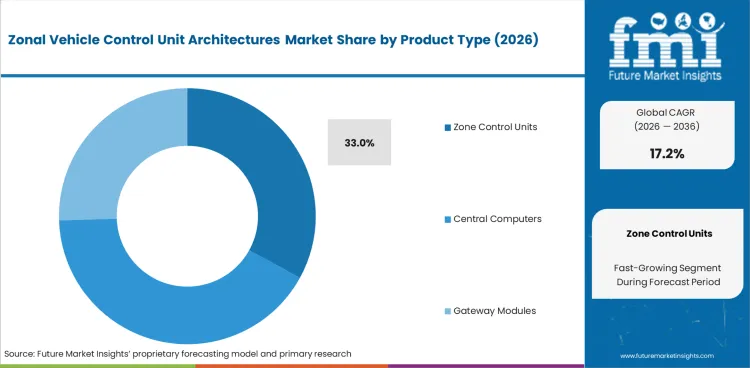
- Zone control units are projected to take 33.0% of the product mix in 2026. OEMs use them to bring local I/O and signal routing into fewer electronic modules.
- Central computers follow as software defined vehicle programs need a stronger compute layer above vehicle zones. Zone control units remain important because they manage local functions before data reaches the main computer.
Insights into the Body Zones Architecture Type Segment
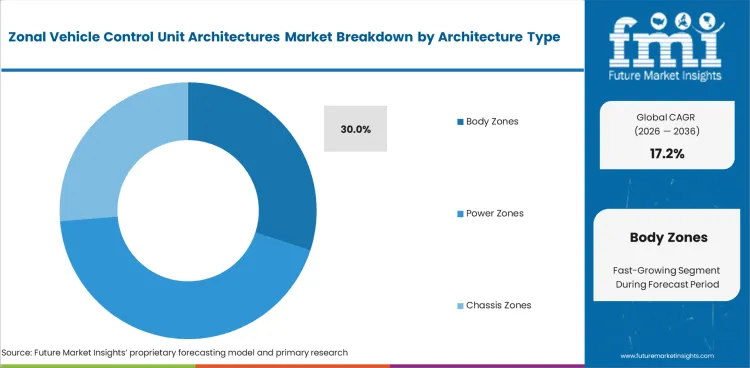
- By 2026, body zones are expected to cover 30.0% of architecture use. Door systems and lighting controls create clear physical areas for zonal layouts.
- Power zones are gaining traction in electric vehicles as higher electrical loads need stable local current control. Body zones keep early volume strength because cabin and exterior functions are easier to consolidate.
Insights into the Battery EVs Vehicle Platform Segment
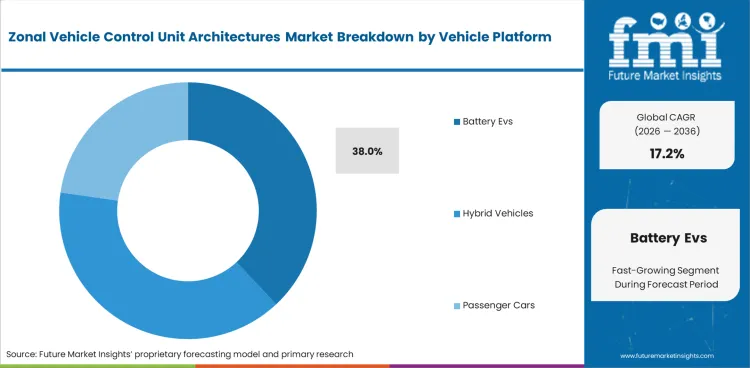
- By 2026, battery EVs are forecast to represent 38.0% of vehicle platform demand. New EV programs allow cleaner wiring paths and controller placement from the design stage.
- Hybrid vehicles carry steady demand for mixed-voltage control. Battery EVs show stronger fit because automakers can build zonal architecture into fresh platforms without legacy wiring limits.
Insights into the Power Distribution Function Segment
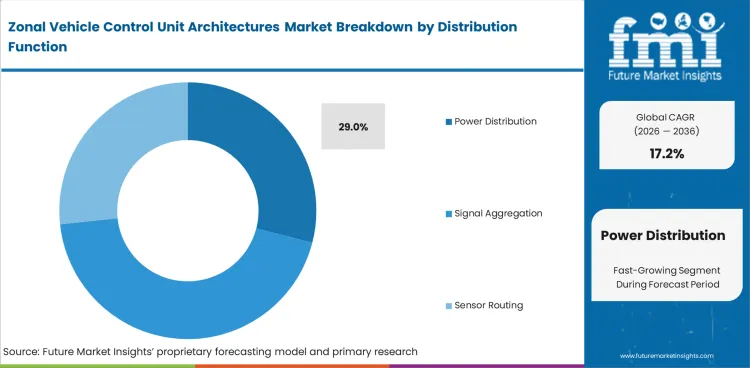
- Power distribution is estimated to hold 29.0% of function value by the forecast period as OEMs use smart fusing and local load control to reduce wiring complexity.
- Sensor routing is gaining relevance as ADAS content rises across vehicle platforms. Power distribution keeps stronger value because it affects controller placement and electrical safety.
Insights into the OEM Fitment Sales Channel Segment
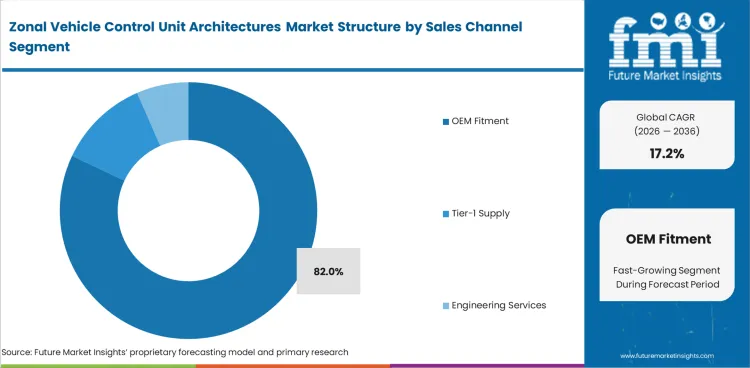
- OEM fitment is projected to lead in 2026 with 82.0% share. Zonal systems need secure access to vehicle electronics and software architecture from the production stage.
- Engineering services support early architecture migration and validation work. Factory-fit systems have stronger access to wiring design with safety documentation and software update control.
Insights into the 48V Systems Voltage Class Segment
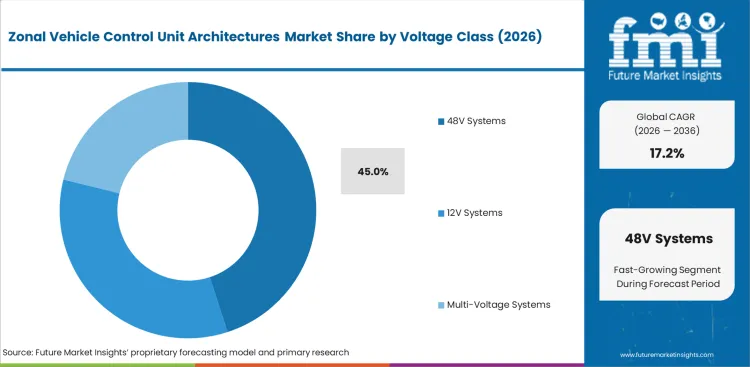
- 48V systems are projected to take 45.0% of voltage class demand in 2026. OEMs use them to manage higher electrical loads without moving every function into high-voltage design.
- Multi-voltage systems follow in premium EVs where 12V body functions and higher-voltage subsystems need coordinated power control across vehicle zones.
Zonal Vehicle Control Unit Architectures Market Drivers, Restraints, and Opportunities
- Wiring simplification drives demand as OEMs seek lower harness weight and easier platform assembly.
- Software update readiness strengthens demand because zone controllers make local functions easier to manage from central compute systems.
- High validation cost limits faster use in price-sensitive models where controller savings need clear proof.
- Growth in automotive electric drivetrain components increases controller needs because electrified platforms require better power routing and local diagnostics.
Wiring Harness Reduction
Vehicle wiring is one of the main pressure points behind zonal architecture adoption. Traditional E/E systems spread many control units across vehicle domains, which increases harness length and assembly work. Automakers gain a practical benefit when local signals and power paths are handled closer to the source. Supplier selection depends on power switching capability and safety coverage inside one controller package. Controller suppliers with proven series production experience can secure earlier platform roles.
Central Compute Integration
Central compute needs reliable local control near the physical vehicle edge. Zone controllers collect signals and handle local power before the main computer processes higher-level functions. Aptiv states that flat-cable architecture can reduce harness weight by up to 40.0% in suitable vehicle designs. This supports zonal control adoption because lighter and simpler wiring gives OEMs a clearer reason to redesign E/E layouts. OEMs benefit when zone controllers can work across several software generations with limited hardware change. Semiconductor suppliers improve when their platforms can deliver real-time control and safe communication.
Analysis of Zonal Vehicle Control Unit Architectures Market by Key Countries
.webp "Top Country Growth Comparison Zonal Vehicle Control Unit Architectures Market Cagr (2026 2036)")
| Country | CAGR |
|---|---|
| China | 19.8% |
| India | 19.1% |
| US | 17.6% |
| Germany | 16.8% |
| France | 16.2% |
| Japan | 15.4% |
| UK | 15.1% |
| Brazil | 14.3% |
Source: FMI analysis based on primary research and proprietary forecasting model.
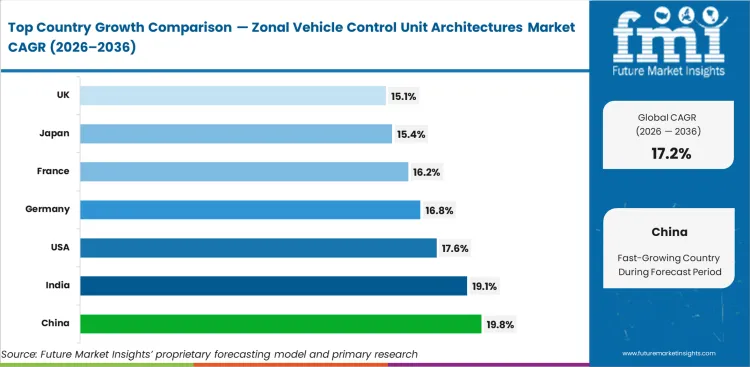
Zonal Vehicle Control Unit Architectures Market CAGR Analysis by Country
- China leads at 19.8% CAGR, supported by rapid EV platform renewal and local software-defined vehicle programs.
- India follows at 19.1% CAGR as EV manufacturing expands and local vehicle platforms use more embedded electronics.
- The USA is forecast at 17.6% CAGR, driven by premium EV programs and wider use of central compute architectures.
- Germany and France are projected at 16.8% CAGR and 16.2% CAGR, supported by premium vehicle engineering and European E/E architecture migration.
- Japan at 15.4% CAGR and the UK at 15.1% CAGR advance through hybrid platform renewal, safety-focused electronics planning, and EV architecture validation work.
- Brazil is expected to record 14.3% CAGR as regional vehicle platforms add more centralized control, although cost-sensitive models may slow adoption.
- The global market for zonal vehicle control unit architectures is expected to grow at 17.2% CAGR from 2026 to 2036.
Demand Outlook for Zonal Vehicle Control Unit Architectures Market in the UK
UK demand depends on EV architecture validation and specialist software development. The country is expected to grow at 15.1% CAGR through 2036 as vehicle programs place more value on wiring reduction and central compute readiness. Midlands engineering activity supports zone controller testing for premium and specialty vehicles. Oxfordshire strengthens demand through EV programs and advanced software work. Suppliers with safety validation depth and integration support can gain better access to early architecture programs.
- Midlands automotive engineering supports zone controller validation for premium and specialty vehicle programs.
- Oxfordshire EV activity raises demand for software and electronics work tied to zonal architecture planning.
- UK motorsport engineering capability helps fast testing across control hardware and embedded software.
Sales Analysis of Zonal Vehicle Control Unit Architectures Market in the USA
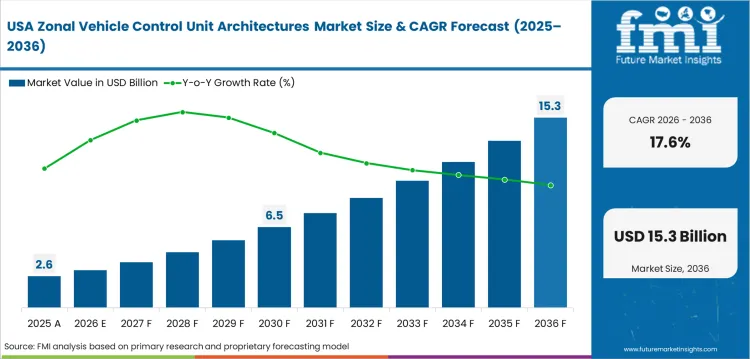
USA growth is built around premium EV platforms and central compute programs. The country is forecast to record 17.6% CAGR from 2026 to 2036 as automakers simplify wiring and move more control closer to vehicle zones. Michigan and California form major revenue pockets through OEM engineering and EV production. Zone controllers gain value when ADAS and power distribution need cleaner communication with vehicle computers. Suppliers must prove cybersecurity and safety performance to secure extended vehicle programs.
- Michigan OEM engineering keeps zone controller design close to platform-level E/E decisions.
- California EV makers create demand for simplified wiring and faster software update cycles.
- Texas manufacturing growth supports electronics demand across connected and electric vehicle platforms.
Demand Analysis of Zonal Vehicle Control Unit Architectures Market in Japan
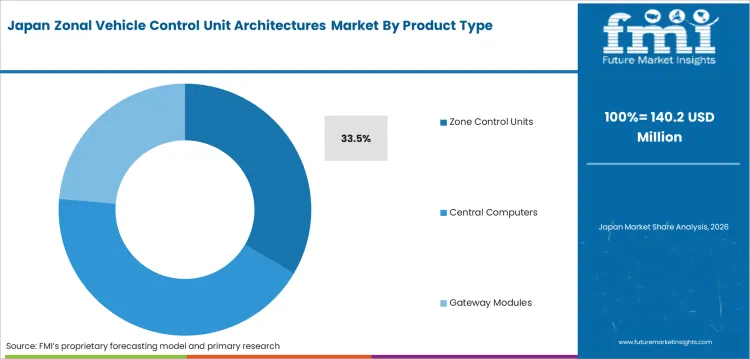
Japan is projected to grow at 15.4% CAGR through 2036, as hybrid platforms and battery EVs increase local control needs. Vehicle electronics migration is careful because Japanese OEMs place high value on reliability. Architecture shifts usually move through disciplined model cycles, which favors proven zone control units. Aichi stays central through Toyota-linked engineering and supplier networks. Kanagawa adds value through EV electronics work across passenger platforms. Suppliers with strong validation records and long-term OEM ties can gain steady program access.
- Aichi Prefecture supports controller demand through Toyota-linked vehicle engineering and supplier networks.
- Kanagawa engineering activity increases EV electronics development across passenger vehicle platforms.
- Japan’s hybrid vehicle base creates demand for multi-voltage control and stable power routing.
Opportunity Analysis of Zonal Vehicle Control Unit Architectures Market in China
China is the fastest-growing country as local EV makers refresh platforms around software defined architectures. The market is forecast at 19.8% CAGR through 2036 supported by rapid EV model renewal and local electronics supply. Beijing and Shanghai create a wide base for centralized compute and zone control development. Shenzhen strengthens supplier access through automotive electronics and semiconductor supply chains. Local suppliers can win high-volume programs on cost and speed, while global suppliers keep relevance in premium and export-ready platforms.
- Beijing EV and intelligent vehicle activity supports testing for centralized compute and local zone controllers.
- Shanghai gives suppliers access to EV makers and software-rich vehicle programs.
- Shenzhen supports zone controller production through electronics supply chains and local component clusters.
Future Outlook for Zonal Vehicle Control Unit Architectures Market in India
India is forecast to advance at 19.1% CAGR through 2036 as local EV programs add more embedded control content. Electronic architecture planning is moving beyond basic control units and into zonal layouts. Chennai and Pune support controller integration for passenger cars and commercial vehicles. Bengaluru strengthens software work for central compute and zone control programs. Local cost sensitivity keeps controller design practical. Scalable hardware has stronger potential across high-volume platforms.
- Chennai automotive clusters support EV platform engineering for passenger cars and commercial vehicles.
- Bengaluru software centers strengthen embedded control development for zonal and central compute programs.
- Pune supplier networks improve access to controller integration work for domestic OEM platforms.
In-depth Analysis of Zonal Vehicle Control Unit Architectures Market in Germany
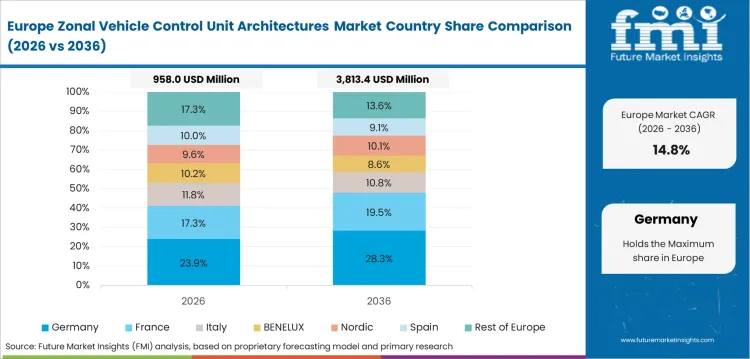
Germany’s growth is tied to premium vehicle platforms and deep Tier-1 supplier capability. OEMs are moving from domain-based layouts toward zone-based E/E structures to reduce wiring complexity. Bavaria and Baden-Württemberg create strong revenue pockets through premium vehicle engineering and supplier concentration. Lower Saxony adds platform-level opportunity through Volkswagen’s EV and software architecture work. The country is expected to grow at 16.8% CAGR through 2036. Suppliers with safety documentation and long vehicle life reliability improve program strength.
- Bavaria supports demand through BMW-linked premium vehicle architecture and control unit validation.
- Baden-Württemberg strengthens supplier access through Mercedes-Benz and Bosch engineering networks.
- Lower Saxony adds demand through Volkswagen platforms and EV software architecture work.
Sales Outlook for Zonal Vehicle Control Unit Architectures Market in France
France is gaining value through European platform renewal and compact EV development. Automakers are adding cleaner E/E layouts to cost-controlled vehicle programs, placing the country at 16.2% CAGR through 2036. Île-de-France supports software and architecture planning through engineering centers. Hauts-de-France adds opportunity through EV production and supplier activity. Renault-linked platforms create a practical route for zone controllers in compact and mid-range vehicles.
- Île-de-France supports architecture planning through vehicle software and electronics engineering centers.
- Hauts-de-France manufacturing activity increases controller demand tied to European EV production.
- Renault-linked platforms support centralized architecture use across compact electric vehicles.
In-depth Analysis of Zonal Vehicle Control Unit Architectures Market in Brazil
Demand for zonal vehicle control unit architectures in Brazil is expected to grow at a CAGR of 14.3% as local vehicle platforms add smarter body control and centralized electronics. São Paulo and Paraná create key revenue pockets through vehicle production and supplier networks. Full zonal adoption will move slower than in China or India as cost-sensitive platforms need clear savings.
- São Paulo supports controller demand through vehicle manufacturing and regional supplier networks.
- Paraná production activity gives suppliers access to compact vehicle and light commercial programs.
- Brazil’s flex-fuel vehicle base slows full EV architecture adoption while electronics upgrades continue across new models.
Competitive Landscape and Strategic Positioning
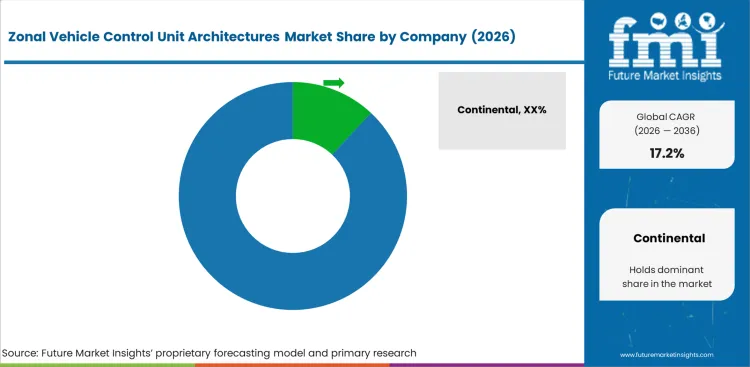
- Competition is concentrated around Tier-1 suppliers with vehicle architecture and embedded software depth.
- Semiconductor suppliers gain influence when processors can deliver safe real-time control for domain and zonal systems.
- Specialist engineering firms compete through integration work for OEMs moving away from older E/E layouts.
- Entry barriers are high because safety validation and platform approval take several years.
Competition in zonal vehicle control unit architectures depends on platform access. Tier-1 suppliers need early involvement in vehicle E/E planning because controller placement affects wiring and software communication. OEMs prefer suppliers able to handle hardware, embedded software and validation in one program. Continental, Bosch, Aptiv and ZF have an advantage through long automotive electronics experience.
Semiconductor capability is becoming a core competitive factor. NXP, Renesas, Infineon and STMicroelectronics give controller suppliers the processing base needed for real-time control. Demand for automotive semiconductor content rises as zonal systems combine local power switching and communication functions. Processor choice affects safety timing and communication performance across the vehicle. Strong silicon ecosystems can shorten development time and reduce integration risk for OEMs.
Key Companies in the Zonal Vehicle Control Unit Architectures Market
Key companies in this market compete through controller hardware, embedded software, safety engineering, and OEM platform access.
- Global Tier-1 Suppliers: Continental, Bosch, Aptiv, ZF, Valeo, Magna, Denso, and Marelli hold strong positions through automotive electronics production and direct OEM program access.
- Semiconductor and Platform Providers: NXP, Qualcomm, Infineon, Renesas, and STMicroelectronics serve the controller ecosystem through processors and power devices.
- Engineering and Integration Specialists: Elektrobit, KPIT, Vector Informatik, and ETAS handle software integration and toolchains used in zonal architecture development.
Competitive Benchmarking: Zonal Vehicle Control Unit Architectures Market
| Company | Zone Controller Depth | Power Distribution Capability | Software Integration Support | Geographic Footprint |
|---|---|---|---|---|
| Continental | High | High | Strong | Global |
| Bosch | High | High | Strong | Global |
| Aptiv | High | High | Strong | Global |
| NXP | High | Medium | Strong | Global |
| ZF | Medium | Medium | Strong | Global |
| Denso | Medium | Medium | Strong | Japan, Global |
| Valeo | Medium | Medium | Moderate | Europe, Asia |
| Magna | Medium | Medium | Moderate | Global |
| Marelli | Medium | Medium | Moderate | Europe, Asia |
| Renesas | Medium | Medium | Strong | Japan, Global |
Source: Future Market Insights competitive analysis, 2026.
Key Developments in Zonal Vehicle Control Unit Architectures Market
- In April 2025, Continental showcased its In2Visible Overhead Console at Auto Shanghai 2025.
- In January 2026, Valeo and Seeing Machines announced that their joint In-Cabin Monitoring Solutions would be featured at CES 2026.
Key Players in the Zonal Vehicle Control Unit Architectures Market
Global Tier-1 Suppliers
- Continental
- Bosch
- Aptiv
- ZF
- Valeo
- Magna
- Denso
- Marelli
Semiconductor and Platform Providers
- NXP
- Qualcomm
- Infineon
- Renesas
- STMicroelectronics
Engineering and Integration Specialists
- Elektrobit
- KPIT
- Vector Informatik
- ETAS
Report Scope and Coverage
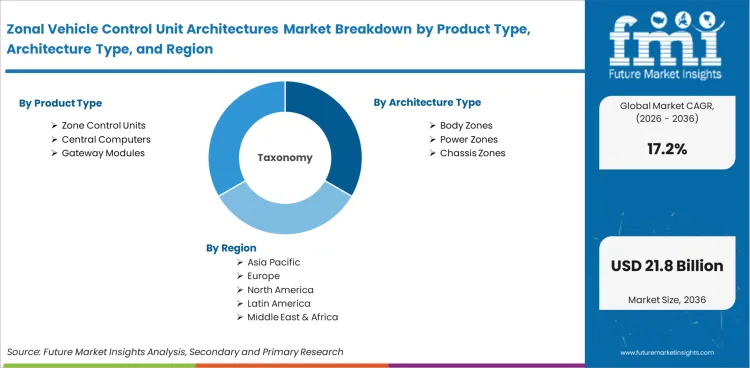
| Parameter | Details |
|---|---|
| Quantitative Units | USD 3.8 billion in 2026 to USD 18.6 billion by 2036, at 17.2% CAGR |
| Market Definition | Electronic control units and related architecture modules used to group local vehicle functions by physical zone |
| Regions Covered | North America, Latin America, Europe, East Asia, South Asia and Pacific, Middle East and Africa |
| Countries Covered | UK, US, Japan, China, India, Germany, France, Brazil, and 30+ countries |
| Key Companies Profiled | Continental, Bosch, Aptiv, NXP, ZF, Denso, Valeo, Magna, Marelli, Renesas |
| Forecast Period | 2026 to 2036 |
| Approach | Hybrid bottom-up and top-down methodology using vehicle platform adoption, controller content, and regional E/E architecture readiness |
Zonal Vehicle Control Unit Architectures Market by Segments
Zonal Vehicle Control Unit Architectures Market by Product Type
- Zone Control Units
- Central Computers
- Gateway Modules
- Power Modules
- Body Controllers
Zonal Vehicle Control Unit Architectures Market by Architecture Type
- Body Zones
- Power Zones
- Chassis Zones
- Mixed Zones
Zonal Vehicle Control Unit Architectures Market by Vehicle Platform
- Battery EVs
- Hybrid Vehicles
- Passenger Cars
- Commercial Vehicles
Zonal Vehicle Control Unit Architectures Market by Function
- Power Distribution
- Signal Aggregation
- Sensor Routing
- Actuator Control
- Diagnostics
Zonal Vehicle Control Unit Architectures Market by Voltage Class
- 12V Systems
- 48V Systems
- Multi-Voltage Systems
Zonal Vehicle Control Unit Architectures Market by Sales Channel
- OEM Fitment
- Tier-1 Supply
- Engineering Services
- Aftermarket Retrofit
Zonal Vehicle Control Unit Architectures Market by Region
- North America
- USA
- Canada
- Mexico
- Latin America
- Brazil
- Chile
- Rest of Latin America
- Western Europe
- Germany
- UK
- Italy
- Spain
- France
- Nordic
- BENELUX
- Rest of Western Europe
- Eastern Europe
- Russia
- Poland
- Hungary
- Balkan & Baltic
- Rest of Eastern Europe
- East Asia
- China
- Japan
- South Korea
- South Asia and Pacific
- India
- ASEAN
- Australia & New Zealand
- Rest of South Asia and Pacific
- Middle East & Africa
- Kingdom of Saudi Arabia
- Other GCC Countries
- Turkiye
- South Africa
- Other African Union
- Rest of Middle East & Africa
Research Sources and Bibliography
- Continental AG. (2025, April 15). Safe, exciting, autonomous: Solutions for automated driving and light projection debut at Auto Shanghai.
- Valeo. (2026, January 5). Valeo unveils safety-enhancing advanced monitoring applications powered by Seeing Machines at CES 2026.
- Aptiv PLC. (2024, May 16). Flat cables bring new dimension to electrical architecture.
- NXP Semiconductors. (2024, March 28). NXP breaks through integration barriers for software-defined vehicle development with open S32 CoreRide platform.
- Bosch. (2026, April 10). Bosch and Qualcomm expand collaboration to strategic ADAS solutions.
This Report Answers
- What is the current and future size of the zonal vehicle control unit architectures market?
- How fast is demand forecast to grow between 2026 and 2036?
- Which product type is forecast to lead demand by 2026?
- Which vehicle platform is set to account for the highest system demand?
- Why are OEMs moving from domain-based layouts to zone-based architectures?
- How do software defined vehicles drive demand for zone control units?
- Which countries are forecast to grow fastest through 2036?
- How do power distribution and smart fusing affect supplier selection?
- Which companies are active in zonal vehicle control unit architectures?
- How does FMI estimate and validate the market forecast?
Frequently Asked Questions
What is the global market demand for zonal vehicle control unit architectures in 2026?
In 2026, global demand is forecast to reach USD 3.8 billion as OEMs redesign E/E systems around local control.
How big will the zonal vehicle control unit architectures market be by 2036?
By 2036, the market is forecast to reach USD 18.6 billion as EV platforms adopt more centralized electronic layouts.
How fast is demand forecast to grow from 2026 to 2036?
Demand is forecast to grow at 17.2% CAGR between 2026 and 2036.
Which product type is forecast to lead by 2026?
Zone control units are forecast to account for 33.0% of product demand in 2026.
Which sales channel is forecast to lead demand by 2026?
OEM fitment is set to represent 82.0% of sales channel demand in 2026 due to platform-level design needs.
What is driving demand growth in China?
China records 19.8% CAGR through 2036 as EV makers refresh platforms around software control.
What does this market include?
The market includes zone controllers, gateway modules, power modules and software interfaces used in zone-based vehicle E/E systems.
How does FMI forecast this market?
FMI uses controller content, vehicle platform adoption and supplier participation to validate market forecasts.
Preview the report firsthand - request a free sample
Get SampleGet the brochure for pricing and purchase details.
Get PDFTable of Content
- Executive Summary
- Global Market Outlook
- Demand-side Trends
- Supply-side Trends
- Technology Roadmap Analysis
- Analysis and Recommendations
- Market Overview
- Market Coverage / Taxonomy
- Market Definition / Scope / Limitations
- Research Methodology
- Chapter Orientation
- Analytical Lens and Working Hypotheses
- Market Structure, Signals, and Trend Drivers
- Benchmarking and Cross-market Comparability
- Market Sizing, Forecasting, and Opportunity Mapping
- Research Design and Evidence Framework
- Desk Research Programme (Secondary Evidence)
- Company Annual and Sustainability Reports
- Peer-reviewed Journals and Academic Literature
- Corporate Websites, Product Literature, and Technical Notes
- Earnings Decks and Investor Briefings
- Statutory Filings and Regulatory Disclosures
- Technical White Papers and Standards Notes
- Trade Journals, Industry Magazines, and Analyst Briefs
- Conference Proceedings, Webinars, and Seminar Materials
- Government Statistics Portals and Public Data Releases
- Press Releases and Reputable Media Coverage
- Specialist Newsletters and Curated Briefings
- Sector Databases and Reference Repositories
- FMI Internal Proprietary Databases and Historical Market Datasets
- Subscription Datasets and Paid Sources
- Social Channels, Communities, and Digital Listening Inputs
- Additional Desk Sources
- Expert Input and Fieldwork (Primary Evidence)
- Primary Modes
- Qualitative Interviews and Expert Elicitation
- Quantitative Surveys and Structured Data Capture
- Blended Approach
- Why Primary Evidence is Used
- Field Techniques
- Interviews
- Surveys
- Focus Groups
- Observational and In-context Research
- Social and Community Interactions
- Stakeholder Universe Engaged
- C-suite Leaders
- Board Members
- Presidents and Vice Presidents
- R&D and Innovation Heads
- Technical Specialists
- Domain Subject-matter Experts
- Scientists
- Physicians and Other Healthcare Professionals
- Governance, Ethics, and Data Stewardship
- Research Ethics
- Data Integrity and Handling
- Primary Modes
- Tooling, Models, and Reference Databases
- Desk Research Programme (Secondary Evidence)
- Data Engineering and Model Build
- Data Acquisition and Ingestion
- Cleaning, Normalisation, and Verification
- Synthesis, Triangulation, and Analysis
- Quality Assurance and Audit Trail
- Market Background
- Market Dynamics
- Drivers
- Restraints
- Opportunity
- Trends
- Scenario Forecast
- Demand in Optimistic Scenario
- Demand in Likely Scenario
- Demand in Conservative Scenario
- Opportunity Map Analysis
- Product Life Cycle Analysis
- Supply Chain Analysis
- Investment Feasibility Matrix
- Value Chain Analysis
- PESTLE and Porter’s Analysis
- Regulatory Landscape
- Regional Parent Market Outlook
- Production and Consumption Statistics
- Import and Export Statistics
- Market Dynamics
- Global Market Analysis 2021 to 2025 and Forecast, 2026 to 2036
- Historical Market Size Value (USD Million) Analysis, 2021 to 2025
- Current and Future Market Size Value (USD Million) Projections, 2026 to 2036
- Y-o-Y Growth Trend Analysis
- Absolute $ Opportunity Analysis
- Global Market Pricing Analysis 2021 to 2025 and Forecast 2026 to 2036
- Global Market Analysis 2021 to 2025 and Forecast 2026 to 2036, By Product Type
- Introduction / Key Findings
- Historical Market Size Value (USD Million) Analysis By Product Type , 2021 to 2025
- Current and Future Market Size Value (USD Million) Analysis and Forecast By Product Type , 2026 to 2036
- Zone Control Value (USD Million)s
- Central Computers
- Gateway Modules
- Zone Control Value (USD Million)s
- Y-o-Y Growth Trend Analysis By Product Type , 2021 to 2025
- Absolute $ Opportunity Analysis By Product Type , 2026 to 2036
- Global Market Analysis 2021 to 2025 and Forecast 2026 to 2036, By Architecture Type
- Introduction / Key Findings
- Historical Market Size Value (USD Million) Analysis By Architecture Type, 2021 to 2025
- Current and Future Market Size Value (USD Million) Analysis and Forecast By Architecture Type, 2026 to 2036
- Body Zones
- Power Zones
- Chassis Zones
- Body Zones
- Y-o-Y Growth Trend Analysis By Architecture Type, 2021 to 2025
- Absolute $ Opportunity Analysis By Architecture Type, 2026 to 2036
- Global Market Analysis 2021 to 2025 and Forecast 2026 to 2036, By Vehicle Platform
- Introduction / Key Findings
- Historical Market Size Value (USD Million) Analysis By Vehicle Platform, 2021 to 2025
- Current and Future Market Size Value (USD Million) Analysis and Forecast By Vehicle Platform, 2026 to 2036
- Battery Evs
- Hybrid Vehicles
- Passenger Cars
- Battery Evs
- Y-o-Y Growth Trend Analysis By Vehicle Platform, 2021 to 2025
- Absolute $ Opportunity Analysis By Vehicle Platform, 2026 to 2036
- Global Market Analysis 2021 to 2025 and Forecast 2026 to 2036, By Distribution Function
- Introduction / Key Findings
- Historical Market Size Value (USD Million) Analysis By Distribution Function, 2021 to 2025
- Current and Future Market Size Value (USD Million) Analysis and Forecast By Distribution Function, 2026 to 2036
- Power Distribution
- Signal Aggregation
- Sensor Routing
- Power Distribution
- Y-o-Y Growth Trend Analysis By Distribution Function, 2021 to 2025
- Absolute $ Opportunity Analysis By Distribution Function, 2026 to 2036
- Global Market Analysis 2021 to 2025 and Forecast 2026 to 2036, By Sales Channel
- Introduction / Key Findings
- Historical Market Size Value (USD Million) Analysis By Sales Channel, 2021 to 2025
- Current and Future Market Size Value (USD Million) Analysis and Forecast By Sales Channel, 2026 to 2036
- OEM Fitment
- Tier-1 Supply
- Engineering Services
- OEM Fitment
- Y-o-Y Growth Trend Analysis By Sales Channel, 2021 to 2025
- Absolute $ Opportunity Analysis By Sales Channel, 2026 to 2036
- Global Market Analysis 2021 to 2025 and Forecast 2026 to 2036, By Voltage Class
- Introduction / Key Findings
- Historical Market Size Value (USD Million) Analysis By Voltage Class, 2021 to 2025
- Current and Future Market Size Value (USD Million) Analysis and Forecast By Voltage Class, 2026 to 2036
- 48V Systems
- 12V Systems
- Multi-Voltage Systems
- 48V Systems
- Y-o-Y Growth Trend Analysis By Voltage Class, 2021 to 2025
- Absolute $ Opportunity Analysis By Voltage Class, 2026 to 2036
- Global Market Analysis 2021 to 2025 and Forecast 2026 to 2036, By Region
- Introduction
- Historical Market Size Value (USD Million) Analysis By Region, 2021 to 2025
- Current Market Size Value (USD Million) Analysis and Forecast By Region, 2026 to 2036
- North America
- Latin America
- Western Europe
- Eastern Europe
- East Asia
- South Asia and Pacific
- Middle East & Africa
- Market Attractiveness Analysis By Region
- North America Market Analysis 2021 to 2025 and Forecast 2026 to 2036, By Country
- Historical Market Size Value (USD Million) Trend Analysis By Market Taxonomy, 2021 to 2025
- Market Size Value (USD Million) Forecast By Market Taxonomy, 2026 to 2036
- By Country
- USA
- Canada
- Mexico
- By Product Type
- By Architecture Type
- By Vehicle Platform
- By Distribution Function
- By Sales Channel
- By Voltage Class
- By Country
- Market Attractiveness Analysis
- By Country
- By Product Type
- By Architecture Type
- By Vehicle Platform
- By Distribution Function
- By Sales Channel
- By Voltage Class
- Key Takeaways
- Latin America Market Analysis 2021 to 2025 and Forecast 2026 to 2036, By Country
- Historical Market Size Value (USD Million) Trend Analysis By Market Taxonomy, 2021 to 2025
- Market Size Value (USD Million) Forecast By Market Taxonomy, 2026 to 2036
- By Country
- Brazil
- Chile
- Rest of Latin America
- By Product Type
- By Architecture Type
- By Vehicle Platform
- By Distribution Function
- By Sales Channel
- By Voltage Class
- By Country
- Market Attractiveness Analysis
- By Country
- By Product Type
- By Architecture Type
- By Vehicle Platform
- By Distribution Function
- By Sales Channel
- By Voltage Class
- Key Takeaways
- Western Europe Market Analysis 2021 to 2025 and Forecast 2026 to 2036, By Country
- Historical Market Size Value (USD Million) Trend Analysis By Market Taxonomy, 2021 to 2025
- Market Size Value (USD Million) Forecast By Market Taxonomy, 2026 to 2036
- By Country
- Germany
- UK
- Italy
- Spain
- France
- Nordic
- BENELUX
- Rest of Western Europe
- By Product Type
- By Architecture Type
- By Vehicle Platform
- By Distribution Function
- By Sales Channel
- By Voltage Class
- By Country
- Market Attractiveness Analysis
- By Country
- By Product Type
- By Architecture Type
- By Vehicle Platform
- By Distribution Function
- By Sales Channel
- By Voltage Class
- Key Takeaways
- Eastern Europe Market Analysis 2021 to 2025 and Forecast 2026 to 2036, By Country
- Historical Market Size Value (USD Million) Trend Analysis By Market Taxonomy, 2021 to 2025
- Market Size Value (USD Million) Forecast By Market Taxonomy, 2026 to 2036
- By Country
- Russia
- Poland
- Hungary
- Balkan & Baltic
- Rest of Eastern Europe
- By Product Type
- By Architecture Type
- By Vehicle Platform
- By Distribution Function
- By Sales Channel
- By Voltage Class
- By Country
- Market Attractiveness Analysis
- By Country
- By Product Type
- By Architecture Type
- By Vehicle Platform
- By Distribution Function
- By Sales Channel
- By Voltage Class
- Key Takeaways
- East Asia Market Analysis 2021 to 2025 and Forecast 2026 to 2036, By Country
- Historical Market Size Value (USD Million) Trend Analysis By Market Taxonomy, 2021 to 2025
- Market Size Value (USD Million) Forecast By Market Taxonomy, 2026 to 2036
- By Country
- China
- Japan
- South Korea
- By Product Type
- By Architecture Type
- By Vehicle Platform
- By Distribution Function
- By Sales Channel
- By Voltage Class
- By Country
- Market Attractiveness Analysis
- By Country
- By Product Type
- By Architecture Type
- By Vehicle Platform
- By Distribution Function
- By Sales Channel
- By Voltage Class
- Key Takeaways
- South Asia and Pacific Market Analysis 2021 to 2025 and Forecast 2026 to 2036, By Country
- Historical Market Size Value (USD Million) Trend Analysis By Market Taxonomy, 2021 to 2025
- Market Size Value (USD Million) Forecast By Market Taxonomy, 2026 to 2036
- By Country
- India
- ASEAN
- Australia & New Zealand
- Rest of South Asia and Pacific
- By Product Type
- By Architecture Type
- By Vehicle Platform
- By Distribution Function
- By Sales Channel
- By Voltage Class
- By Country
- Market Attractiveness Analysis
- By Country
- By Product Type
- By Architecture Type
- By Vehicle Platform
- By Distribution Function
- By Sales Channel
- By Voltage Class
- Key Takeaways
- Middle East & Africa Market Analysis 2021 to 2025 and Forecast 2026 to 2036, By Country
- Historical Market Size Value (USD Million) Trend Analysis By Market Taxonomy, 2021 to 2025
- Market Size Value (USD Million) Forecast By Market Taxonomy, 2026 to 2036
- By Country
- Kingdom of Saudi Arabia
- Other GCC Countries
- Turkiye
- South Africa
- Other African Union
- Rest of Middle East & Africa
- By Product Type
- By Architecture Type
- By Vehicle Platform
- By Distribution Function
- By Sales Channel
- By Voltage Class
- By Country
- Market Attractiveness Analysis
- By Country
- By Product Type
- By Architecture Type
- By Vehicle Platform
- By Distribution Function
- By Sales Channel
- By Voltage Class
- Key Takeaways
- Key Countries Market Analysis
- USA
- Pricing Analysis
- Market Share Analysis, 2025
- By Product Type
- By Architecture Type
- By Vehicle Platform
- By Distribution Function
- By Sales Channel
- By Voltage Class
- Canada
- Pricing Analysis
- Market Share Analysis, 2025
- By Product Type
- By Architecture Type
- By Vehicle Platform
- By Distribution Function
- By Sales Channel
- By Voltage Class
- Mexico
- Pricing Analysis
- Market Share Analysis, 2025
- By Product Type
- By Architecture Type
- By Vehicle Platform
- By Distribution Function
- By Sales Channel
- By Voltage Class
- Brazil
- Pricing Analysis
- Market Share Analysis, 2025
- By Product Type
- By Architecture Type
- By Vehicle Platform
- By Distribution Function
- By Sales Channel
- By Voltage Class
- Chile
- Pricing Analysis
- Market Share Analysis, 2025
- By Product Type
- By Architecture Type
- By Vehicle Platform
- By Distribution Function
- By Sales Channel
- By Voltage Class
- Germany
- Pricing Analysis
- Market Share Analysis, 2025
- By Product Type
- By Architecture Type
- By Vehicle Platform
- By Distribution Function
- By Sales Channel
- By Voltage Class
- UK
- Pricing Analysis
- Market Share Analysis, 2025
- By Product Type
- By Architecture Type
- By Vehicle Platform
- By Distribution Function
- By Sales Channel
- By Voltage Class
- Italy
- Pricing Analysis
- Market Share Analysis, 2025
- By Product Type
- By Architecture Type
- By Vehicle Platform
- By Distribution Function
- By Sales Channel
- By Voltage Class
- Spain
- Pricing Analysis
- Market Share Analysis, 2025
- By Product Type
- By Architecture Type
- By Vehicle Platform
- By Distribution Function
- By Sales Channel
- By Voltage Class
- France
- Pricing Analysis
- Market Share Analysis, 2025
- By Product Type
- By Architecture Type
- By Vehicle Platform
- By Distribution Function
- By Sales Channel
- By Voltage Class
- India
- Pricing Analysis
- Market Share Analysis, 2025
- By Product Type
- By Architecture Type
- By Vehicle Platform
- By Distribution Function
- By Sales Channel
- By Voltage Class
- ASEAN
- Pricing Analysis
- Market Share Analysis, 2025
- By Product Type
- By Architecture Type
- By Vehicle Platform
- By Distribution Function
- By Sales Channel
- By Voltage Class
- Australia & New Zealand
- Pricing Analysis
- Market Share Analysis, 2025
- By Product Type
- By Architecture Type
- By Vehicle Platform
- By Distribution Function
- By Sales Channel
- By Voltage Class
- China
- Pricing Analysis
- Market Share Analysis, 2025
- By Product Type
- By Architecture Type
- By Vehicle Platform
- By Distribution Function
- By Sales Channel
- By Voltage Class
- Japan
- Pricing Analysis
- Market Share Analysis, 2025
- By Product Type
- By Architecture Type
- By Vehicle Platform
- By Distribution Function
- By Sales Channel
- By Voltage Class
- South Korea
- Pricing Analysis
- Market Share Analysis, 2025
- By Product Type
- By Architecture Type
- By Vehicle Platform
- By Distribution Function
- By Sales Channel
- By Voltage Class
- Russia
- Pricing Analysis
- Market Share Analysis, 2025
- By Product Type
- By Architecture Type
- By Vehicle Platform
- By Distribution Function
- By Sales Channel
- By Voltage Class
- Poland
- Pricing Analysis
- Market Share Analysis, 2025
- By Product Type
- By Architecture Type
- By Vehicle Platform
- By Distribution Function
- By Sales Channel
- By Voltage Class
- Hungary
- Pricing Analysis
- Market Share Analysis, 2025
- By Product Type
- By Architecture Type
- By Vehicle Platform
- By Distribution Function
- By Sales Channel
- By Voltage Class
- Kingdom of Saudi Arabia
- Pricing Analysis
- Market Share Analysis, 2025
- By Product Type
- By Architecture Type
- By Vehicle Platform
- By Distribution Function
- By Sales Channel
- By Voltage Class
- Turkiye
- Pricing Analysis
- Market Share Analysis, 2025
- By Product Type
- By Architecture Type
- By Vehicle Platform
- By Distribution Function
- By Sales Channel
- By Voltage Class
- South Africa
- Pricing Analysis
- Market Share Analysis, 2025
- By Product Type
- By Architecture Type
- By Vehicle Platform
- By Distribution Function
- By Sales Channel
- By Voltage Class
- USA
- Market Structure Analysis
- Competition Dashboard
- Competition Benchmarking
- Market Share Analysis of Top Players
- By Regional
- By Product Type
- By Architecture Type
- By Vehicle Platform
- By Distribution Function
- By Sales Channel
- By Voltage Class
- Competition Analysis
- Competition Deep Dive
- Continental
- Overview
- Product Portfolio
- Profitability by Market Segments (Product/Age /Sales Channel/Region)
- Sales Footprint
- Strategy Overview
- Marketing Strategy
- Product Strategy
- Channel Strategy
- Bosch
- Aptiv
- ZF
- Valeo
- Magna
- Denso
- Continental
- Competition Deep Dive
- Assumptions & Acronyms Used


