


Pea Protein Market
The pea protein market is segmented by product type (pea protein isolates, pea protein concentrates, textured pea protein, and hydrolyzed pea protein), end use, and region. Forecast for 2026 to 2036.
Pea Protein Market Size, Market Forecast and Outlook By FMI
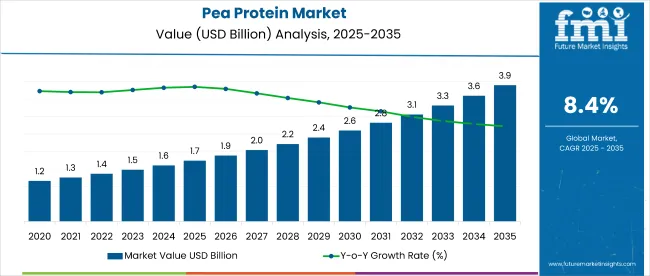
Pea protein market is expected to expand from USD 1.82 billion in 2026 to USD 4.08 billion by 2036. The market is likely to register an 8.4% CAGR during the forecast period. Pea protein isolates are anticipated to lead with 47% share, while food processing is projected to account for 50% of end-use demand in 2026.
Summary of the Pea Protein Market
- Demand and Growth Drivers
- Plant-based eating patterns are increasing demand for legume-based protein ingredients.
- Clean-label product development is making pea protein more relevant in packaged foods.
- Sports nutrition and wellness products are widening use beyond meat alternatives.
- Product and Segment View
- Pea protein isolates remain the leading product type due to higher protein purity.
- Food processing holds the largest end-use position across snacks and meat substitutes.
- Textured pea protein is gaining use where plant-based products need better bite.
- Geography and Competitive Outlook
- China gains from food processing expansion and rising nutritional awareness.
- Germany benefits from strong demand for environmentally aligned protein ingredients.
- USA growth is supported by sports nutrition and clean-label reformulation.
- Analyst Opinion
- Nandini Roy Choudhury, Principal Consultant for Food and Beverage at FMI, opines, “Pea protein is becoming a practical ingredient choice for manufacturers balancing nutrition, allergen concerns, and sustainability claims. Isolates will keep leading demand where purity and functionality matter, while textured formats can gain faster acceptance in plant-based meat and savory applications.”
- Pea Protein Market Value Analysis
- Pea protein is moving from niche plant protein into mainstream food formulation.
- Isolates remain preferred where protein level and neutral functionality matter most.
- Food processing demand is widening through meat alternatives and bakery fortification.
- Supplier strength depends on crop sourcing, extraction efficiency, and stable quality.
How Are the Segments Classified in the Pea Protein Market?
The global market is classified into product type, end use, and region. By product type, the market is divided into pea protein isolates, pea protein concentrates, textured pea protein, and hydrolyzed pea protein. In terms of end use, the market is classified into food processing, nutritional supplements, sports nutrition, meat substitutes, beverages, bakery products, and dairy alternatives. By region, the market is divided into North America, Latin America, Western Europe, Eastern Europe, East Asia, South Asia & Pacific, and Middle East & Africa.
Which Product Type Accounts for the Largest Share in the Pea Protein Market?
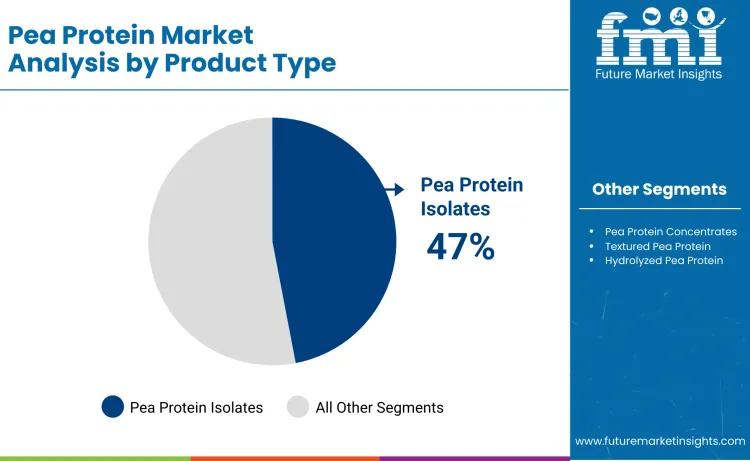
Pea protein isolates hold 47%, making them the leading product-type segment globally. Pea protein isolate platforms support high protein content requirements, exceptional purity standards, and superior functional properties across food and nutritional applications. Pea protein concentrates maintain demand in cost-sensitive applications where moderate protein content meets formulation needs. Textured pea protein serves meat alternative applications requiring specific texture and mouthfeel characteristics. Product-type distribution reflects processing sophistication, application requirements, and premium positioning strategies that influence market segmentation.
Which End Use Segment Represents the Largest Share in the Pea Protein Market?
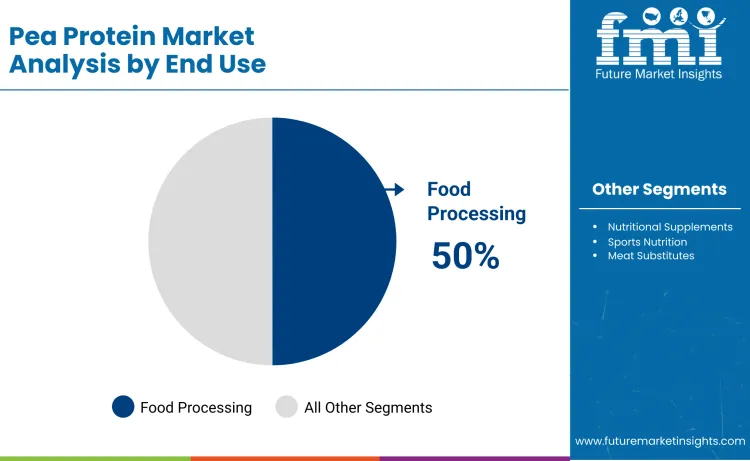
Food processing holds 50%, making it the largest end-use segment globally. Food processing applications support widespread ingredient integration, product development opportunities, and manufacturing scalability across processed food categories. Nutritional supplements serve targeted consumer health requirements through concentrated protein delivery systems. Sports nutrition addresses performance-oriented applications requiring rapid absorption and muscle recovery support. End-use distribution reflects application versatility, market maturity, and consumer adoption patterns across diverse nutritional categories.
What are the Key Dynamics in the Pea Protein Market?
Global demand grows as food manufacturers, nutritional companies, and ingredient suppliers explore plant-based protein solutions to enhance product nutritional profiles, address consumer health preferences, and support environmental goals. Pea protein supports product development improvements in applications where plant-based ingredients directly affect consumer acceptance and market positioning. Manufacturers deploy isolates, concentrates, and specialized formulations for comprehensive nutrition and functional applications. Processing platforms manage ingredient sourcing, quality control, and supply chain coordination across agricultural and manufacturing networks.
How are Consumer Health Trends and Food Industry Innovation Influencing Adoption of Pea Protein?
Food manufacturing facilities experience growing demand for plant-based ingredients, which strengthens interest in pea protein solutions that enhance nutritional content across processed food, beverage, and supplement categories. Food companies and ingredient suppliers use pea protein for comprehensive formulation strategies to improve protein quality during product development and reformulation projects. Protein ingredients deliver consistent performance across application variations that affect texture, taste, and nutritional outcomes. Food processors, nutritional companies, and supplement manufacturers adopt pea protein solutions to support clean-label requirements and consumer health preferences. Ingredient suppliers oversee sourcing using agricultural partnerships for improved quality and supply reliability. Digital supply platforms integrate protein procurement with manufacturing systems, enabling scheduled deliveries and consistent ingredient availability. Quality control systems and regulatory compliance modules improve ingredient standards across varied food manufacturing environments.
How do Agricultural Factors, Processing Costs, and Regulatory Standards Affect Market Scalability?
Agricultural conditions shape protein availability through crop yields, quality variations, seasonal factors, and regional production capacity that influence supply chain stability. Manufacturers assess investment requirements for extraction equipment, purification technologies, and processing facility development. Market dynamics influence pricing strategies, affecting ingredient accessibility in cost-sensitive formulation segments. Raw material quality and processing capacity create supply challenges across different geographic regions. Food manufacturers balance pea protein adoption with formulation requirements and nutritional performance expectations. Processing and distribution facilities require coordination with agricultural supply networks, affecting ingredient availability and market penetration. Regulatory programs in several regions maintain food safety and labeling standards, which influence long-term investment strategies for plant-based protein ingredient operations.
How is Demand for Pea Protein Market Evolving Across Key Countries?
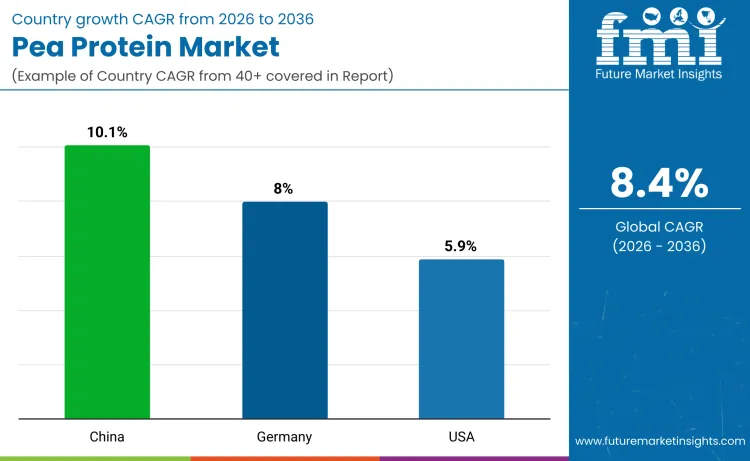
Demand for pea protein is rising due to increased health consciousness, plant-based diet adoption, and growing environmental awareness that drives consumer preference for alternative protein sources. China records a CAGR of 10.1% supported by expanding food processing industry and rising consumer interest in nutritional enhancement. USA shows a 5.9% CAGR driven by sports nutrition market growth and clean-label product development trends. Germany posts an 8.0% CAGR supported by environmental consciousness and regulatory frameworks favoring plant-based ingredients. Regional growth patterns reflect consumer behavior shifts, regulatory environments, and industry development supporting plant protein adoption.
| Country | CAGR (2026 to 2036) |
|---|---|
| China | 10.1% |
| USA | 5.9% |
| Germany | 8.0% |
What are the Opportunities for Pea Protein Providers in China?
China drives demand through rapid food industry expansion, growing consumer health awareness, and increasing adoption of plant-based ingredients across processed food and nutritional product categories. The Chinese pea protein market is slated to grow at CAGR of 10.1% during the study period. This reflects active integration of plant proteins across dairy alternatives, meat substitutes, and nutritional supplements that address urbanization and dietary diversification trends. Food manufacturers use pea protein ingredients to enhance product nutritional profiles and address consumer demand for healthier food options effectively. Government policies support food industry modernization improving ingredient quality standards and enabling advanced processing technologies. Ingredient suppliers introduce cost-effective protein solutions suited for large-scale food manufacturing operations.
What is the USA Pea Protein Market Size?
USA supports rising demand due to sports nutrition market expansion, clean-label product trends, and increasing consumer preference for plant-based ingredients across food and supplement applications. USA pea protein market is poised to grow at a CAGR of 5.9% during the study period, showing consistent adoption of plant protein ingredients across established food manufacturing and nutritional supplement networks. Growing sports nutrition requirements benefit from proteins that support muscle development and recovery at competitive performance standards. Manufacturing platforms integrate traditional and plant-based protein approaches to address diverse consumer preferences and dietary requirements. Regulatory frameworks and quality standards support ingredient adoption across expanding health and wellness product categories.
What Challenges Do Pea Protein Providers Face in Germany?
Germany drives demand through environmental consciousness, regulatory frameworks supporting plant-based ingredients, and consumer preference for products that align with health and environmental values across food and nutritional categories. The demand for pea protein is anticipated to grow at a CAGR of 8.0% during the study period, reflecting steady adoption of plant proteins across food processing, sports nutrition, and specialty dietary applications that meet stringent quality and environmental standards. Consumer health awareness patterns favor ingredients that provide nutritional benefits while supporting environmental goals and dietary preferences. Food manufacturers integrate pea protein to address clean-label requirements and consumer demands for healthier product formulations.
What is the Competitive Landscape of Pea Protein Market Globally?
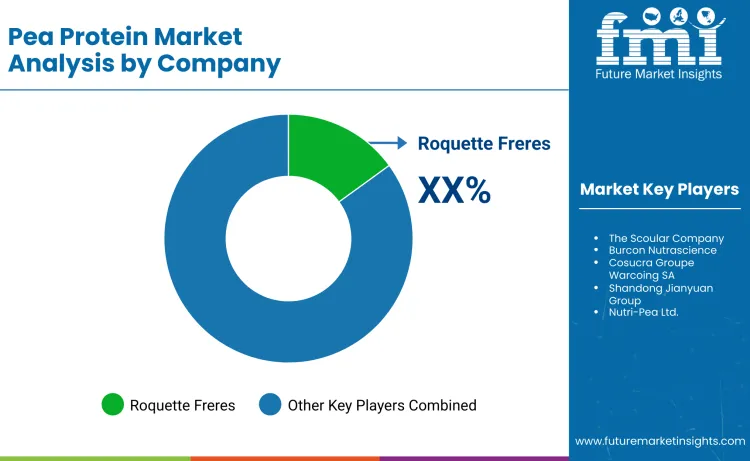
The pea protein market is moderately consolidated, with several key players driving technological advancement and market expansion. Roquette Freres is a leading player, known for its advanced extraction technologies and comprehensive ingredient solutions for food and nutrition markets. The company operates globally, focusing on providing high-quality pea protein ingredients for diverse applications across food processing, nutritional supplements, and specialty formulations. Roquette Freres' strong research capabilities and continuous improvements in processing technology give it a competitive advantage.
The Scoular Company competes through agricultural sourcing expertise and supply chain optimization, focusing on ingredient quality and supply reliability for food and feed applications. BurconNutrascience has established a strong position in protein extraction innovation, particularly in advanced purification technologies that enhance protein functionality and purity levels.
CosucraGroupeWarcoing SA concentrates on specialty protein ingredients and innovative formulations that address specific nutritional and functional requirements across food and nutritional applications. Axiom Foods Inc. targets allergen-free protein solutions through specialized processing technologies that ensure product safety and quality across sensitive application categories.
Key Players in the Pea Protein Market
- Roquette Freres
- The Scoular Company
- BurconNutrascience
- CosucraGroupeWarcoing SA
- Shandong Jianyuan Group
- Nutri-Pea Ltd.
- Sotexpro SA
- Axiom Foods Inc.
- Ingredion Inc.
- Martin & Pleasance
- Fenchem Inc.
Scope of the Report
| Items | Values |
|---|---|
| Quantitative Units | USD billion |
| Product Type | Pea Protein Isolates, Pea Protein Concentrates, Textured Pea Protein, Hydrolyzed Pea Protein |
| End Use | Food Processing, Nutritional Supplements, Sports Nutrition, Meat Substitutes, Beverages, Bakery Products, Dairy Alternatives |
| Regions Covered | North America, Latin America, Western Europe, Eastern Europe, East Asia, South Asia & Pacific, Middle East & Africa |
| Countries Covered | China, USA, Germany, India, United Kingdom, France, Italy, and 40+ countries |
| Key Companies Profiled | Roquette Freres, The Scoular Company, Burcon Nutrascience , Cosucra Groupe Warcoing SA, Axiom Foods Inc. |
| Additional Attributes | Dollar sales by product type and end use application; adoption trends across food processing and nutritional supplement industries; growth driven by plant-based diet adoption, health consciousness, and environmental awareness; integration with food manufacturing processes, extraction technologies, and quality control systems; market influences from agricultural factors, regulatory standards, and consumer preference evolution; competitive landscape analysis of ingredient suppliers and processing technology providers. |
Pea Protein Market by Segments
By Product Type:
- Pea Protein Isolates
- Pea Protein Concentrates
- Textured Pea Protein
- Hydrolyzed Pea Protein
By End Use:
- Food Processing
- Nutritional Supplements
- Sports Nutrition
- Meat Substitutes
- Beverages
- Bakery Products
- Dairy Alternatives
Region:
- North America
- United States
- Canada
- Mexico
- Latin America
- Brazil
- Argentina
- Rest of Latin America
- Western Europe
- Germany
- United Kingdom
- France
- Italy
- Spain
- Netherlands
- Rest of Western Europe
- Eastern Europe
- Poland
- Russia
- Rest of Eastern Europe
- East Asia
- China
- Japan
- South Korea
- Rest of East Asia
- South Asia & Pacific
- India
- Australia
- Rest of South Asia & Pacific
- Middle East & Africa
- Saudi Arabia
- UAE
- South Africa
- Rest of Middle East & Africa
Frequently Asked Questions
How big is the pea protein market in 2026?
The global pea protein market is valued at USD 1.82 billion in 2026.
What will be the size of the pea protein market in 2036?
The pea protein market is projected to reach USD 4.08 billion by 2036.
How fast will the pea protein market grow between 2026 and 2036?
The pea protein market will grow at a CAGR of 8.4% from 2026 to 2036.
Which product type leads the pea protein market in 2026?
Pea protein isolates lead the market with a 47% share in 2026.
Which end-use segment contributes the largest share in the pea protein market?
The food processing segment dominates the pea protein market with a 50% share.
Table of Content
- Executive Summary
- Global Market Outlook
- Demand Side Trends
- Supply Side Trends
- Technology Roadmap Analysis
- Analysis and Recommendations
- Market Overview
- Market Coverage / Taxonomy
- Market Definition / Scope / Limitations
- Market Background
- Market Dynamics
- Drivers
- Restraints
- Opportunities
- Trends
- Scenario Forecast
- Demand in Optimistic Scenario
- Demand in Likely Scenario
- Demand in Conservative Scenario
- Opportunity Map Analysis
- Product Life Cycle Analysis
- Supply Chain Analysis
- Investment Feasibility Matrix
- Value Chain Analysis
- PESTLE and Porter’s Analysis
- Regulatory Landscape
- Regional Parent Market Outlook
- Production and Consumption Statistics
- Import and Export Statistics
- Market Dynamics
- Global Market Analysis 2020 to 2024 and Forecast 2025 to 2035
- Historical Market Size Value (USD Billion) Analysis, 2020-2024
- Current and Future Market Size Value (USD Billion) Forecast, 2025-2035
- Year‑on‑Year Growth Analysis
- Absolute $ Opportunity Analysis
- Global Pricing Analysis 2020 to 2024 and Forecast 2025 to 2035
- Global Market Analysis 2020 to 2024 and Forecast 2025 to 2035, By Product Type
- Introduction / Key Findings
- Historical Market Size Value (USD Billion) Analysis By Product Type, 2020-2024
- Current and Future Market Size Value (USD Billion) Forecast By Product Type, 2025-2035
- Pea Protein Isolates
- Pea Protein Concentrates
- Textured Pea Protein
- Hydrolyzed Pea Protein
- Y‑o‑Y Growth Trend Analysis By Product Type, 2020-2024
- Absolute $ Opportunity Analysis By Product Type, 2025-2035
- Global Market Analysis 2020 to 2024 and Forecast 2025 to 2035, By End Use
- Introduction / Key Findings
- Historical Market Size Value (USD Billion) Analysis By End Use, 2020-2024
- Current and Future Market Size Value (USD Billion) Forecast By End Use, 2025-2035
- Food Processing
- Nutritional Supplements
- Sports Nutrition
- Meat Substitutes
- Beverages
- Bakery Products
- Dairy Alternatives
- Y‑o‑Y Growth Trend Analysis By End Use, 2020-2024
- Absolute $ Opportunity Analysis By End Use, 2025-2035
- Market Structure Analysis
- Competition Dashboard
- Competition Benchmarking
- Market Share Analysis of Top Players
- By Region
- By Product Type
- By End Use
- Competition Analysis
- Competition Deep Dive
- Roquette Freres
- The Scoular Company
- Burcon Nutrascience
- Cosucra Groupe Warcoing SA
- Axiom Foods Inc.
- Competition Deep Dive
- Assumptions & Acronyms Used
- Research Methodology
List of Tables
- Table 1: Global Market Value (USD Billion) & Units Forecast by Region, 2026-2036
- Table 2: Global Market Value (USD Billion) & Units Forecast by Product Type, 2026-2036
- Table 3: Global Market Value (USD Billion) & Units Forecast by End Use, 2026-2036
- Table 4: North America Market Value (USD Billion) & Units Forecast by Country, 2026-2036
- Table 5: North America Market Value (USD Billion) & Units Forecast by Product Type, 2026-2036
- Table 6: North America Market Value (USD Billion) & Units Forecast by End Use, 2026-2036
- Table 7: Western Europe Market Value (USD Billion) & Units Forecast by Country, 2026-2036
- Table 8: Western Europe Market Value (USD Billion) & Units Forecast by Product Type, 2026-2036
- Table 9: Western Europe Market Value (USD Billion) & Units Forecast by End Use, 2026-2036
- Table 10: Eastern Europe Market Value (USD Billion) & Units Forecast by Country, 2026-2036
- Table 11: Eastern Europe Market Value (USD Billion) & Units Forecast by Product Type, 2026-2036
- Table 12: Eastern Europe Market Value (USD Billion) & Units Forecast by End Use, 2026-2036
- Table 13: East Asia Market Value (USD Billion) & Units Forecast by Country, 2026-2036
- Table 14: East Asia Market Value (USD Billion) & Units Forecast by Product Type, 2026-2036
- Table 15: East Asia Market Value (USD Billion) & Units Forecast by End Use, 2026-2036
- Table 16: South Asia & Pacific Market Value (USD Billion) & Units Forecast by Country, 2026-2036
- Table 17: South Asia & Pacific Market Value (USD Billion) & Units Forecast by Product Type, 2026-2036
- Table 18: South Asia & Pacific Market Value (USD Billion) & Units Forecast by End Use, 2026-2036
- Table 19: Middle East & Africa Market Value (USD Billion) & Units Forecast by Country, 2026-2036
- Table 20: Middle East & Africa Market Value (USD Billion) & Units Forecast by Product Type, 2026-2036
- Table 21: Middle East & Africa Market Value (USD Billion) & Units Forecast by End Use, 2026-2036
List of Figures
- Figure 1: Global Market Value Share (%), Growth Rate (Y-o-Y), and Value (USD Billion) Projection by Product Type, 2026-2036
- Figure 2: Global Market Value Share (%), Growth Rate (Y-o-Y), and Value (USD Billion) Projection by End Use, 2026-2036
- Figure 3: Global Market Value Share (%), Growth Rate (Y-o-Y), and Value (USD Billion) Projection by Region, 2026-2036
- Figure 4: China Market Value Share (%), Growth Rate (Y-o-Y), and Value (USD Billion) Projection by Product Type, 2026-2036
- Figure 5: China Market Value Share (%), Growth Rate (Y-o-Y), and Value (USD Billion) Projection by End Use, 2026-2036
- Figure 6: USA Market Value Share (%), Growth Rate (Y-o-Y), and Value (USD Billion) Projection by Product Type, 2026-2036
- Figure 7: USA Market Value Share (%), Growth Rate (Y-o-Y), and Value (USD Billion) Projection by End Use, 2026-2036
- Figure 8: Germany Market Value Share (%), Growth Rate (Y-o-Y), and Value (USD Billion) Projection by Product Type, 2026-2036
- Figure 9: Germany Market Value Share (%), Growth Rate (Y-o-Y), and Value (USD Billion) Projection by End Use, 2026-2036
Full Research Suite comprises of:

Market outlook & trends analysis
Interviews & case studies
Strategic recommendations
Vendor profiles & capabilities analysis
5-year forecasts
8 regions and 60+ country-level data splits
Market segment data splits
12 months of continuous data updates
DELIVERED AS:
PDF EXCEL ONLINE


