

- Industry Size (2025)
- USD 6.2 Bn
- Forecast (2035)
- USD 23.8 Bn
- CAGR (2025 to 2035)
- 14.5%
24-7 Parcel Locker Network Operations Market Forecast and Outlook 2026 to 2036
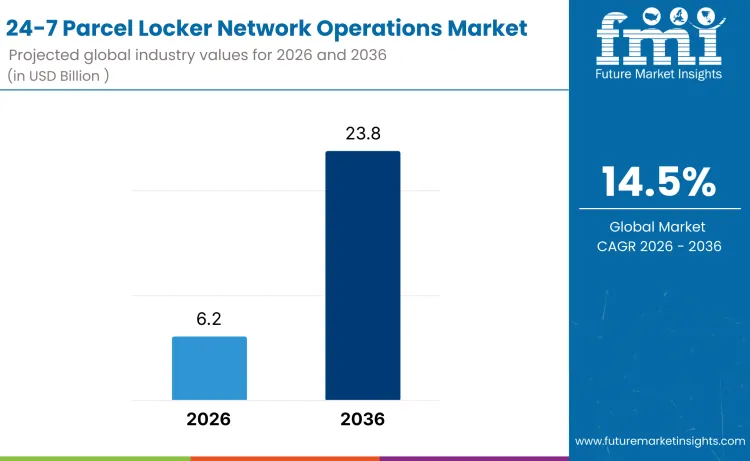
The 24-7 parcel locker network operations market is valued at USD 6.2 billion in 2026 and is projected to reach USD 23.8 billion by 2036, reflecting a CAGR of 14.5%. Demand rises as e-commerce volumes grow and delivery networks prioritize secure, self-service pickup options that reduce last-mile costs and failed delivery attempts. Expansion of contactless delivery preferences and round-the-clock accessibility strengthens adoption across residential, commercial, and transit locations.
Outdoor parcel lockers lead locker-type usage because they offer durability, weather resistance, and flexible placement in high-traffic public zones. Their interoperability with carrier systems, enhanced security controls, and modular configurations support large parcel throughput. Real-time access management, remote diagnostics, and IoT connectivity improve uptime and operational reliability for distributed locker networks.
Quick Stats for 24-7 Parcel Locker Network Operations Market
- Market Value (2026): USD 6.2 billion
- Market Forecast Value (2036): USD 23.8 billion
- Forecast CAGR (2026 to 2036): 14.5%
- Leading Locker Type in Global Demand: Outdoor Parcel Lockers
- Key Growth Regions in Global Demand: China, India, USA, Japan
- Top Players in Global Demand: InPost S.A., Amazon Hub, Quadient, KEBA Group, TZ Limited
China, India, USA, and Japan represent core growth regions due to dense online-shopping activity and urban logistics modernization. InPost S.A., Amazon Hub, Quadient, KEBA Group, and TZ Limited shape competitive activity through expanded locker footprints, improved smart-locker software, and integrated delivery orchestration tools that streamline parcel handoff across multi-carrier ecosystems.
24-7 Parcel Locker Network Operations Market Key Takeaways
| Metric | Value |
|---|---|
| Market Value (2026) | USD 6.2 billion |
| Market Forecast Value (2036) | USD 23.8 billion |
| Forecast CAGR (2026 to 2036) | 14.5% |
How Are the Segments Classified in the 24-7 Parcel Locker Network Operations Market?
Demand for 24/7 parcel-locker networks is shaped by urban delivery density, contactless pickup expectations, and requirements for secure automated storage across retail, residential, and commercial locations. Buyers evaluate locker durability, network scalability, temperature-controlled capability, and compatibility with carrier or retailer delivery systems. Adoption patterns reflect rapid e-commerce expansion, high return volumes, and the shift toward unattended last-mile solutions.
Which Locker Type Accounts for the Largest Share of Global Demand?
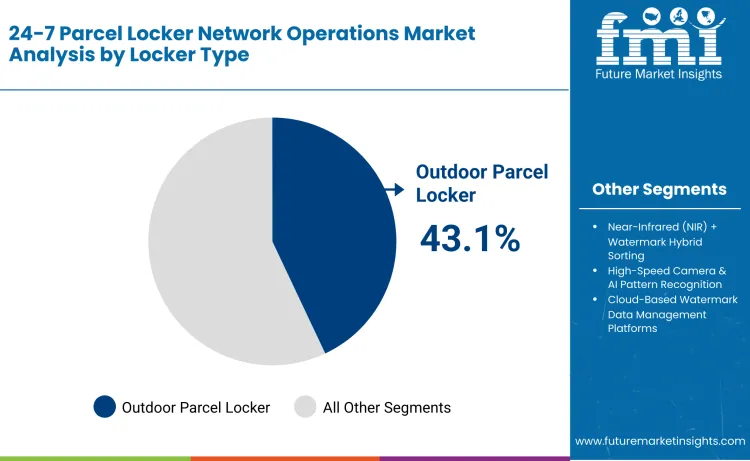
Outdoor parcel lockers hold 43.1%, making them the leading locker-type segment globally. Outdoor installations support high traffic, extended accessibility, and broad deployment across transit hubs, residential clusters, and retail exteriors. Indoor parcel lockers support secure placement in malls, offices, and mixed-use buildings where controlled environments reduce wear and improve user safety. Temperature-controlled lockers support grocery, meal-kit, and pharmaceutical deliveries requiring refrigerated or heated storage. Smart modular lockers support flexible scaling and configuration for diverse parcel sizes. Locker-type distribution reflects environmental exposure, user access patterns, and suitability for unattended delivery.
Key Points:
- Outdoor lockers support high-access, high-traffic installations.
- Indoor lockers suit controlled, secure building environments.
- Temperature-controlled units enable food and pharmaceutical delivery.
- Modular lockers support scalable, multi-size parcel handling.
Which Deployment Model Represents the Largest Share of Global Demand?
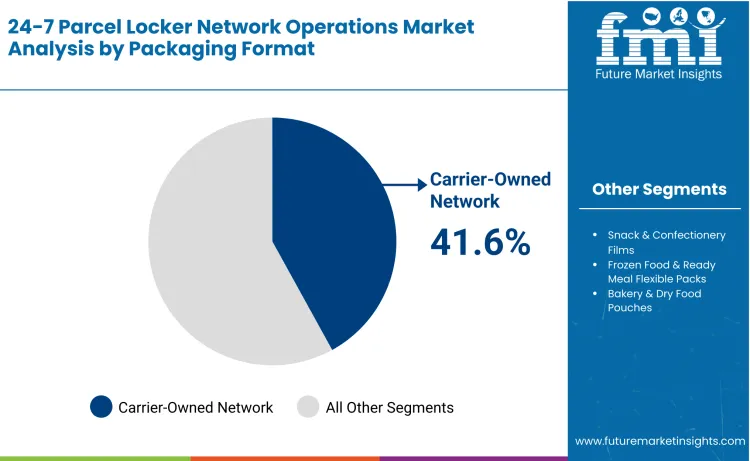
Carrier-owned networks hold 41.6%, making them the largest deployment-model segment globally. Carriers use lockers to reduce failed deliveries, improve route efficiency, and manage peak-volume surges. Retailer-owned networks support click-and-collect programs and omnichannel fulfillment initiatives. Third-party locker operators provide shared access to multiple carriers or retailers, supporting neutral-network infrastructure. Public-private shared networks enable city-level parcel management strategies across transit or municipal locations. Deployment-model distribution reflects control requirements, integration needs, and delivery-volume concentration.
Key Points:
- Carrier-owned networks improve route reliability and reduce re-delivery.
- Retailer-owned networks enhance Omni channel pickup capability.
- Third-party operators support multi-carrier access.
- Shared networks address city-scale parcel-management needs.
Which Application Accounts for the Largest Share of Global Demand?
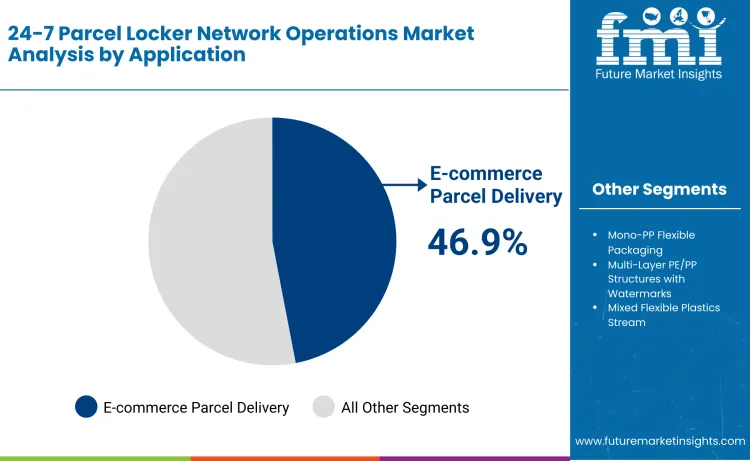
E-commerce parcel delivery holds 46.9%, making it the largest application segment globally. Lockers support unattended delivery, reduce doorstep congestion, and improve delivery density for e-commerce carriers. Click-and-collect retail enables customers to retrieve online or in-store orders through automated pickup. Returns and reverse logistics benefit from simplified drop-off through locker returns, reducing store workload. Enterprise and office package management supports secure indoor delivery handling in workplaces. Application distribution reflects parcel volume, pickup flexibility, and operational efficiency across last-mile workflows.
Key Points:
- E-commerce generates highest locker utilization due to parcel density.
- Click-and-collect supports Omni channel retail pickup.
- Reverse logistics gain efficiency through locker-based returns.
- Enterprise delivery benefits from secure indoor package handling.
What are the Key Dynamics in the 24-7 Parcel Locker Network Operations Market?
Global demand rises as carriers, retailers, and property operators adopt parcel lockers to reduce failed deliveries, stabilize last mile costs, and expand round-the-clock pickup capacity. Locker networks support predictable parcel flow in residential, commercial, and transit locations. Operators use digital platforms for authentication, slot allocation, and occupancy monitoring. E-commerce growth increases interest in solutions that reduce doorstep congestion while improving delivery density across high volume urban and suburban zones.
How are last mile efficiency goals and consumer pickup preferences shaping parcel locker adoption?
Carriers deploy lockers to consolidate deliveries into high density nodes, improving route efficiency and reducing repeat delivery attempts. Retailers integrate click and collect workflows that enable customers to retrieve parcels at flexible times without staff involvement. Property owners adopt lockers to manage rising parcel volumes in multifamily buildings. Transit hubs use lockers to support commuter pickup patterns. Operators rely on occupancy and dwell time analytics to optimize slot utilization. Authentication via QR codes or mobile apps reduces handoff time. Deployments in suburban retail centres create stable pickup corridors aligned with store driven foot traffic.
How do capital costs, site availability constraints, and operational integration challenges influence network scalability?
Locker operators face expenditure for hardware procurement, installation, connectivity, and real estate agreements. Suitable sites require secure placement, power access, and predictable user traffic, which narrows viable deployment options. Carriers encounter integration challenges linking locker networks with routing engines, parcel status systems, and customer notifications. Vandalism risk and maintenance needs create additional operational planning. Locations with low pickup turnover limit economic feasibility. Property managers evaluate space tradeoffs when allocating indoor or covered areas. Variability in municipal rules governing outdoor equipment placement influences site approval timelines and deployment density.
How is Demand for 24-7 Parcel Locker Network Operations Market Evolving Across Key Countries?
Demand for the 24-7 parcel locker network operations market is rising due to increased e-commerce volume, interest in secure unattended delivery, and strong adoption of automated last-mile solutions. China records a CAGR of 16.1% supported by dense parcel flows and widespread locker deployment. India shows a 15.4% CAGR driven by expanding urban delivery networks and rising consumer uptake of self-service pickup. USA posts a 14.2% CAGR supported by strong parcel demand and broader integration of automated delivery points. Japan holds a 13.3% CAGR linked with structured logistics planning. UK records a 12.7% CAGR supported by urban consolidation efforts and convenience-driven adoption.
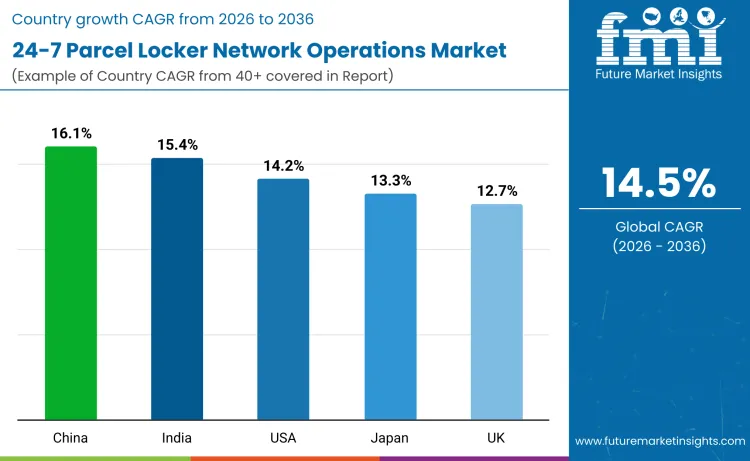
| Country | CAGR (%) |
|---|---|
| China | 16.1% |
| India | 15.4% |
| USA | 14.2% |
| Japan | 13.3% |
| UK | 12.7% |
How is China driving demand for 24-7 Parcel Locker Network Operations?
China drives demand due to high parcel density, strong e-commerce infrastructure, and early adoption of automated last-mile systems. The country’s CAGR of 16.1% reflects extensive deployment of parcel lockers across residential communities, commercial districts, and transit hubs. Logistics operators rely on lockers to reduce failed deliveries and improve route efficiency. Real-time software platforms support slot allocation, security monitoring, and high-volume handling. Municipal policies encourage use of unattended delivery to reduce congestion in dense areas. Consumers exhibit strong acceptance of locker-based pickup due to convenience and reliable access at any hour.
- Extensive deployment across residential and commercial zones
- High parcel density supporting continuous usage
- Municipal support for congestion-reducing delivery models
- Strong consumer adoption of unattended pickup systems
How is India driving demand for 24-7 Parcel Locker Network Operations?
India supports rising demand due to expanding e-commerce, high delivery failures in dense cities, and growing interest in secure self-service pickup points. The country’s CAGR of 15.4% reflects increased deployment of parcel lockers across transit hubs, retail storefronts, and apartment clusters. Delivery platforms use lockers to reduce reattempts and improve cost efficiency. Consumers adopt locker pickup to avoid missed deliveries and enhance package security. Logistics operators integrate digital tools for slot scheduling, remote access control, and real-time tracking. Urban population growth strengthens locker uptake across major metro regions.
- High e-commerce growth increasing parcel volumes
- Reduction of failed deliveries through locker deployment
- Consumer interest in secure and flexible pickup options
- Integration of digital access and tracking systems
How is the USA driving demand for 24-7 Parcel Locker Network Operations?
The USA drives demand through strong parcel throughput, widespread residential delivery challenges, and increased reliance on automated pickup solutions. The country’s CAGR of 14.2% reflects steady installation of parcel lockers across retail outlets, multifamily housing, and logistics access points. Delivery carriers use lockers to streamline last-mile routes and reduce operational costs. Retailers integrate self-service pickup to enhance order-fulfilment flexibility. Software platforms support authentication, access control, and notification workflows. Urban and suburban communities adopt parcel lockers to improve package security and reduce theft risk.
- Broad carrier and retailer deployment of automated lockers
- Reduced reattempts improving delivery efficiency
- Strong consumer interest in secure pickup alternatives
- Software-enabled tracking and access control systems
How is Japan driving demand for 24-7 Parcel Locker Network Operations?
Japan drives demand due to compact urban environments, strong emphasis on delivery efficiency, and structured approach to unattended parcel handling. The country’s CAGR of 13.3% reflects consistent adoption of lockers across train stations, residential complexes, and commercial corridors. Logistics operators use lockers to manage repeated delivery attempts in dense neighborhoods. Consumers value predictable and secure 24-hour access. Municipal programs support unattended delivery to reduce street congestion. Advanced authentication systems improve accuracy and ensure secure parcel retrieval.
- Locker placement across transit and residential zones
- Reduction of repeated delivery attempts
- Strong user preference for reliable 24-hour pickup
- Municipal reinforcement of unattended delivery models
How is the UK driving demand for 24-7 Parcel Locker Network Operations?
The UK supports demand through focus on urban freight efficiency, congestion-reduction initiatives, and strong acceptance of click-and-collect models. The country’s CAGR of 12.7% reflects steady expansion of locker networks in supermarkets, fuel stations, and residential communities. Logistics companies integrate lockers to reduce vehicle entry into dense city centers. Retailers use lockers to enhance fulfilment flexibility and limit in-store congestion. National emphasis on sustainable urban delivery strengthens interest in automated pickup systems. Locker networks support predictable access for consumers seeking secure and flexible parcel retrieval.
- Strong integration of click-and-collect systems
- Reduced delivery-vehicle congestion through locker use
- Retail adoption for flexible order fulfilment
- National support for sustainable last-mile solutions
What is the competitive landscape of demand for 24-7 parcel locker network operations globally?
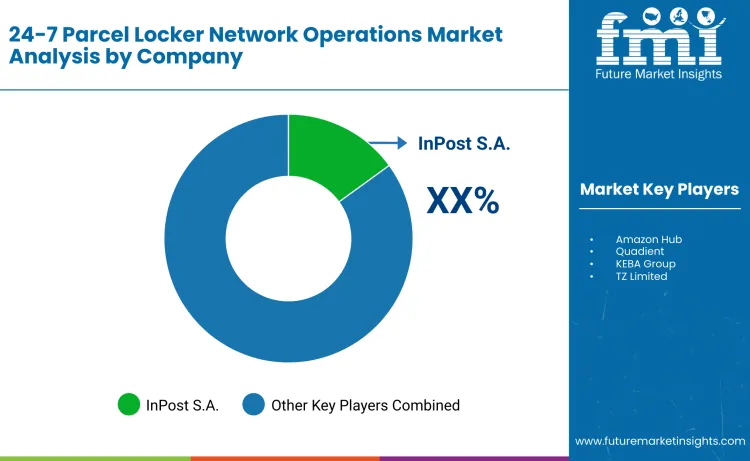
Demand for 24-7 parcel locker network operations expands as e-commerce providers, postal operators, and logistics firms pursue secure, contactless, and time-flexible delivery alternatives. Requirements center on locker network density, compartment durability, access reliability, and integration with carrier routing systems. Buyers evaluate software stability, user authentication methods, occupancy analytics, and suitability for indoor and outdoor placements.
Procurement teams prioritize vandal-resistance, power efficiency, remote monitoring tools, and compatibility with multi-carrier workflows. Trend in the global market reflects heightened interest in reducing failed deliveries, optimizing last-mile costs, and supporting urban consolidation policies across dense cities and residential areas.
Amazon Hub participates with large locker networks placed in retail, residential, and campus environments linked directly to e-commerce ordering platforms. Quadient contributes through automated parcel solutions used by postal operators and retailers operating multi-carrier delivery environments.
KEBA Group maintains visibility with ruggedized locker hardware and control systems designed for high-volume parcel throughput. TZ Limited supports demand with electronic locker technologies for commercial and residential buildings that require secure 24/7 access.
Key Players in the 24-7 Parcel Locker Network Operations Market
- InPost S.A.
- Amazon Hub
- Quadient
- KEBA Group
- TZ Limited
Scope of the Report
| Items | Values |
|---|---|
| Quantitative Units | USD billion |
| Locker Type | Outdoor Parcel Lockers, Indoor Parcel Lockers, Temperature-Controlled Lockers, Smart Modular Lockers |
| Deployment Model | Carrier-Owned Networks, Retailer-Owned Networks, Third-Party Locker Operators, Public-Private Shared Networks |
| Application | E-commerce Parcel Delivery, Click-and-Collect Retail, Returns & Reverse Logistics, Enterprise / Office Package Management |
| End-User | Logistics & Courier Companies, Retail & E-commerce Platforms, Residential Complexes, Corporate & Public Facilities |
| Regions Covered | Asia Pacific, Europe, North America, Latin America, Middle East & Africa |
| Countries Covered | India, China, USA, Germany, South Korea, Japan, Italy, and 40+ countries |
| Key Companies Profiled | InPost S.A., Amazon Hub, Quadient, KEBA Group, TZ Limited |
| Additional Attributes | Dollar sales by locker type, deployment model, and application; regional adoption trends driven by last-mile delivery optimization and consumer preference for 24-hour pickup; integration with smart access control, IoT connectivity, telematics, and real-time locker availability systems; expansion of refrigerated and temperature-controlled lockers for grocery and pharmacy segments; network optimization for high-density urban locations and suburban expansion; competitive landscape covering carrier, retailer, and third-party locker operators; regulatory considerations around public-space deployment and data security. |
24-7 Parcel Locker Network Operations Market by Segment
By Locker Type:
- Outdoor Parcel Lockers
- Indoor Parcel Lockers
- Temperature-Controlled (Refrigerated/Heated) Lockers
- Smart Modular Lockers
By Deployment Model:
- Carrier-Owned Networks
- Retailer-Owned Networks
- Third-Party Locker Operators
- Public-Private Shared Networks
By Application:
- E-commerce Parcel Delivery
- Click-and-Collect Retail
- Returns & Reverse Logistics
- Enterprise / Office Package Management
By End-User:
- Logistics & Courier Companies
- Retail & E-commerce Platforms
- Residential Complexes
- Corporate & Public Facilities
Region:
- Asia Pacific
- China
- Japan
- South Korea
- India
- Australia & New Zealand
- ASEAN
- Rest of Asia Pacific
- Europe
- Germany
- United Kingdom
- France
- Italy
- Spain
- Nordic
- BENELUX
- Rest of Europe
- North America
- United States
- Canada
- Mexico
- Latin America
- Brazil
- Chile
- Rest of Latin America
- Middle East & Africa
- Kingdom of Saudi Arabia
- Other GCC Countries
- Turkey
- South Africa
- Other African Union
- Rest of Middle East & Africa
Frequently Asked Questions
What is the size of the 24-7 parcel locker network operations market in 2026?
The market is valued at USD 6.2 billion in 2026 due to increased deployment of always-accessible parcel pickup infrastructure.
What will be the industry size by 2036?
Industry value will reach USD 23.8 billion by 2036 as carriers and retailers scale locker networks to improve delivery reliability and reduce last-mile congestion.
What is the CAGR for 2026-2036?
The 24-7 parcel locker network operations market expands at a 14.5% CAGR during the forecast period.
Which locker-type segment leads in 2026?
Outdoor parcel lockers hold 43.1% share owing to weather-resistant construction and suitability for high-traffic public zones.
Which deployment-model segment holds the highest share?
Carrier-owned networks lead with 41.6% share, supported by direct integration with carrier routing systems and controlled service operations.
Preview the report firsthand - request a free sample
Get SampleGet the brochure for pricing and purchase details.
Get PDFTable of Content
- Executive Summary
- Market Overview
- Global Market Value, 2020-2026
- Global Market Forecast, 2026-2036
- Market Dynamics
- Drivers
- Restraints
- Opportunities
- Regulatory & Standards Landscape
- Technology & Smart Locker Innovation Outlook
- Market Segmentation Analysis
- By Locker Type
- Outdoor Parcel Lockers
- Indoor Parcel Lockers
- Temperature-Controlled Lockers
- Smart Modular Lockers
- By Deployment Model
- Carrier-Owned Networks
- Retailer-Owned Networks
- Third-Party Locker Operators
- Public-Private Shared Networks
- By Application
- E-commerce Parcel Delivery
- Click-and-Collect Retail
- Returns & Reverse Logistics
- Enterprise / Office Package Management
- By End-User
- Logistics & Courier Companies
- Retail & E-commerce Platforms
- Residential Complexes
- Corporate & Public Facilities
- By Locker Type
- Regional Outlook
- Asia Pacific
- Europe
- North America
- Latin America
- Middle East & Africa
- Country-Level Outlook
- China
- India
- USA
- Japan
- United Kingdom
- Germany
- South Korea
- Italy
- Australia & New Zealand
- ASEAN
- Brazil
- Chile
- Turkey
- South Africa
- Other GCC Countries
- Rest of Europe
- Rest of Latin America
- Rest of Middle East & Africa
- Competitive Landscape
- Market Structure Overview
- Company Positioning
- Strategic Initiatives
- Key Player Profiles
- Scope of the Report
- Research Methodology
- Assumptions & Acronyms


