

- Industry Size (2026)
- USD 808.08 Mn
- Forecast (2036)
- USD 1681.0 Mn
- CAGR (2026 to 2036)
- 7.6%
Augmented Glenoid Systems Market Forecast and Outlook 2026 to 2036
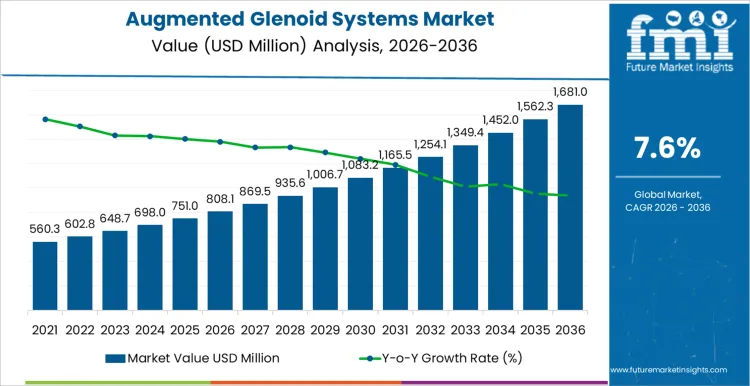
The augmented glenoid systems market is predicted to achieve a valuation of USD 808.08 million in 2026 and is expected to reach USD 1,681.0 million by 2036 at a 7.6% CAGR. Adoption depends on patient anatomy, glenoid wear patterns, and preoperative planning tools rather than brand recognition. Once a hospital or surgical center approves an implant system, future cases rely on the same specifications to maintain surgical workflow consistency. Surgeons evaluate implant modularity, fixation options, and instrumentation ergonomics. Procurement monitors lot traceability, sterilization compliance, and service support. Case scheduling, inventory positioning, and training requirements influence award decisions.
Market behavior follows procedural volume, surgeon preference, and expansion of orthopedic programs rather than promotional campaigns. Manufacturing focuses on material consistency, machining precision, and instrumentation alignment. Release requires dimensional checks, fatigue testing, and sterilization verification. Distributors maintain kits near high-volume hospitals to meet procedure timing. Service teams support training, implant trialing, and intraoperative troubleshooting. Profitability relies on yield, repeatability, and predictable surgical adoption rather than aggressive price discounts or frequent system redesigns. Expansion aligns with joint replacement volumes and regional program growth.
Quick Stats for Augmented Glenoid Systems Market
- Augmented Glenoid Systems Market Value (2026): USD 808.08 million
- Augmented Glenoid Systems Market Forecast Value (2036): USD 1,681.0 million
- Augmented Glenoid Systems Market Forecast CAGR 2026 to 2036: 7.6%
- Leading Type in Augmented Glenoid Systems Market: Metal augmented glenoids
- Key Growth Regions in Augmented Glenoid Systems Market: Asia Pacific, North America, Europe
- Top Players in Augmented Glenoid Systems Market: Zimmer Biomet Holdings, Inc., Stryker Corporation, DePuy Synthes, Inc., Exactech, Inc., Arthrex, Inc.
What Is the Growth Forecast for the Augmented Glenoid Systems Market through 2036?
Surgical workflow integration and implant standardization shape demand in the augmented glenoid systems market more than total joint replacement procedure volumes. In 2026, at about USD 808.08 million, demand is concentrated in orthopedic or even bedless hospitals, specialized joint centers, and high volume surgical networks where implant geometry and instrumentation guides are critical to accuracy. System selection is locked during preoperative planning protocols and remains in use across multiple revision cycles, which ties purchasing to case scheduling and platform adoption rather than short term procedure fluctuations. Uptake rises as surgeons expand use of augmented implants for complex rotator cuff and bone deficiency cases. The growth path reflects broader clinical acceptance and adoption of advanced implant designs rather than replacement of conventional systems.
Inventory strategy and clinical support considerations drive the later phase of the augmented glenoid systems market. As value approaches roughly USD 1,681.0 million by 2036, buyers focus on component availability, instrumentation compatibility, and surgical workflow integration. Manufacturers invest in modular implants, streamlined instrumentation kits, and training support for surgical teams. The move from the mid eight hundred into the high one point nine billion reflects accumulated adoption across multiple hospitals and orthopedic networks rather than a single increase in shoulder replacement procedures. Suppliers that combine consistent product quality, dependable delivery, and strong clinical support tend to secure long term positions in implant portfolios.
Augmented Glenoid Systems Market Key Takeaways
| Metric | Value |
|---|---|
| Market Value (2026) | USD 808.08 million |
| Forecast Value (2036) | USD 1,681.0 million |
| Forecast CAGR 2026 to 2036 | 7.6% |
How Is the Augmented Glenoid Systems Market Enhancing Shoulder Arthroplasty Outcomes?
Augmented glenoid systems are implants designed to compensate for bone loss or deformity in the glenoid during total shoulder arthroplasty. Earlier procedures relied on standard glenoid components, which could lead to malalignment, instability, or early loosening in patients with asymmetric wear or posterior erosion. Modern augmented designs use angled or stepped implants, patient-specific instrumentation, and preoperative planning to achieve optimal positioning and load distribution. Surgeons evaluate these systems based on implant geometry, fixation method, material properties, and compatibility with existing humeral components. Adoption is concentrated in orthopedic centers treating osteoarthritis, rotator cuff arthropathy, or post-traumatic deformity. Clinical outcomes, including implant stability, range of motion, and revision rates, guide selection and influence case planning and inventory management.
Manufacturers differentiate products through design innovation, modularity, instrumentation accuracy, and validated clinical data. Earlier adoption was limited to specialized surgeons, which slowed feedback on long-term outcomes and restricted scale. Current programs emphasize reproducible implantation, instrumentation efficiency, and training support to standardize procedures across multiple hospitals. Suppliers compete on component consistency, surgical kit completeness, and regulatory support rather than price alone. Hospitals evaluate total value through reduced revision surgeries, procedure time efficiency, and predictable postoperative outcomes. Distributors and sales teams add value by providing hands-on training, digital preoperative planning tools, and reliable instrument supply. Over time, demand follows the growth in elective shoulder arthroplasty, aging populations, and preference for implants that improve alignment and reduce complications in complex glenoid anatomy cases.
What Factors Are Shaping the Demand for Augmented Glenoid Systems Market in 2026 by Product Type and Application?
Demand in the Augmented Glenoid Systems Market is driven by anatomical complexity, surgical workflow optimization, and implant durability requirements rather than short-term purchasing trends. Hospitals and orthopedic centers select devices that facilitate proper joint alignment, ensure long-term fixation, and integrate with surgical planning software. Segment adoption reflects differences in material, design, and ease of implantation. Suppliers that provide preoperative planning tools, training, and technical support can secure repeat orders. Market growth is concentrated in primary shoulder arthroplasty and revision procedures, creating predictable volumes for manufacturers that can combine device reliability, service support, and supply consistency to maintain long-term relationships with high-volume orthopedic centers.
How Does Product Type Influence Supplier Responsibilities and Clinical Integration in the Augmented Glenoid Systems Market?
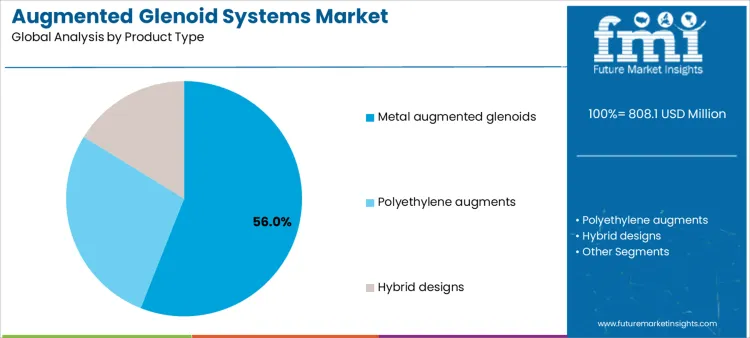
Metal augmented glenoids account for approximately 56% of demand because they provide structural support in cases of severe glenoid bone loss, enhancing surgical outcomes. Suppliers must provide surgical guides, instrumentation, and training to ensure proper placement and minimize intraoperative complications. Polyethylene augments are used for less severe defects, offering cost efficiency and ease of implantation while requiring guidance on alignment and fixation. Hybrid designs combine metal and polyethylene elements, increasing the need for precise surgical technique and post-market support. Product type selection impacts supplier involvement in training programs, procedural planning, and technical service, influencing adoption across hospitals with varying surgical volume and expertise.
Operational and clinical workflow considerations vary significantly with product type. Metal augments require precise preoperative imaging, instrumentation, and intraoperative guidance to ensure proper seating and load distribution. Polyethylene augments emphasize alignment and mechanical stability while maintaining simplified surgical steps. Hybrid designs necessitate coordination between implant components and fixation systems, requiring additional technical support from suppliers. Once a product type is established in a facility’s shoulder arthroplasty program, switching is limited due to inventory, training, and validation protocols. Suppliers offering comprehensive support, planning tools, and instrument reliability can gain long-term adoption and strengthen relationships with high-volume orthopedic centers.
Why Does Application Mix Determine Volume Concentration and Supplier Strategy in the Augmented Glenoid Systems Market?
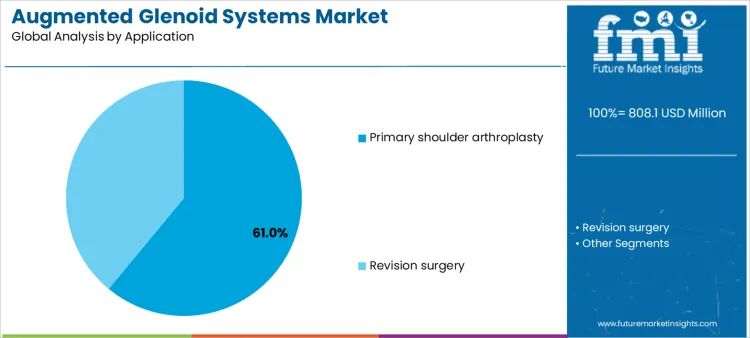
Primary shoulder arthroplasty accounts for approximately 61% of demand due to the high procedural volume and standardized adoption of augmented glenoids to optimize implant longevity and functional outcomes. Revision surgeries, although lower in frequency, require specialized devices that accommodate bone defects and prior implant conditions, creating niche, high-value opportunities for suppliers. Application-specific needs drive purchasing, inventory management, and service agreements, emphasizing the importance of preoperative planning tools, surgical guides, and consumable availability. Companies that align their product offerings and support services to both high-volume primary and specialized revision applications can maximize market penetration and revenue stability.
Supplier strategy is shaped by the clinical mix and procedural complexity. High-volume primary arthroplasty programs favor predictable supply, integrated instrumentation, and training support to reduce intraoperative variability. Revision procedures demand specialized instrumentation, technical guidance, and closer post-sale support, increasing supplier engagement. Hybrid or customized implants offer opportunities for premium service contracts and enhanced technical collaboration. Segment demand moves with procedural frequency, hospital specialization, and adoption of advanced shoulder arthroplasty techniques rather than short-term purchasing trends. Suppliers that offer robust preoperative planning, technical training, and responsive support can secure both repeat business and high-value accounts.
How is the Augmented Glenoid Systems Market Being Defined by Surgical Accuracy and Implant Stability?
The Augmented Glenoid Systems Market is shaped by orthopedic surgeons’ need to address complex shoulder anatomy and bone loss during total shoulder arthroplasty. Implants are evaluated based on stability, alignment precision, and compatibility with standard surgical instrumentation. Selection decisions involve surgeons, operating room staff, and hospital procurement teams. Suppliers that provide systems with consistent design, modular options, and clear surgical guides are preferred. This positions augmented glenoid systems as critical tools for surgical success rather than optional enhancements, emphasizing reproducibility, clinical confidence, and reliable supply.
How Are Preoperative Planning and Surgical Protocols Influencing Supplier Expectations in the Augmented Glenoid Systems Market?
Hospitals and orthopedic centers increasingly follow standardized preoperative planning and implant placement protocols. This drives demand in the Augmented Glenoid Systems Market toward systems that support accurate planning, intraoperative guidance, and consistent placement across different surgeons and cases. Buyers prefer implants that integrate with imaging software, navigation systems, and standard instrumentation. Suppliers are evaluated on design consistency, training support, and surgical documentation rather than on isolated features. Systems that align with established surgical protocols are more likely to be adopted across multiple facilities.
Where is Recurring Demand Being Built in the Augmented Glenoid Systems Market?
Recurring demand comes from hospitals and orthopedic centers performing high volumes of shoulder arthroplasty and revision procedures. Each case requires reliable implants and associated instrumentation, creating predictable repeat orders. The Augmented Glenoid Systems Market also benefits when hospital networks standardize on a single system across multiple surgeons or sites. Suppliers that provide training, surgical support, and consistent product availability secure long-term partnerships. Embedding systems into surgical protocols ensures ongoing demand tied to procedure volume and revision cases.
Why do Cost and Surgical Risk Considerations Limit Broader Adoption in the Augmented Glenoid Systems Market?
Augmented glenoid systems carry higher per-procedure costs and may require additional surgical planning and training. Hospitals weigh cost against the clinical benefit for complex cases, which can slow adoption in routine procedures. The Augmented Glenoid Systems Market also faces adoption constraints from surgeon familiarity, regulatory compliance, and procurement cycles. Suppliers entering the market must provide robust clinical support, training resources, and consistent product availability. As a result, usage is concentrated in high-volume orthopedic centers and revision surgery programs.
What is the Demand for Augmented Glenoid Systems by Country?
| Country | CAGR |
|---|---|
| USA | 10.2 |
| Brazil | 10.7 |
| China | 11.2 |
| India | 11.4 |
| Germany | 8.4 |
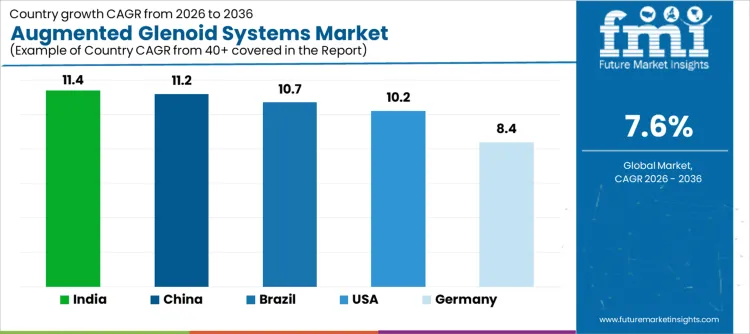
Demand for augmented glenoid systems is rising as orthopedic surgeons adopt advanced shoulder replacement solutions to improve implant stability, range of motion, and long term outcomes. India leads with an 11.4% CAGR, supported by increasing incidence of osteoarthritis, expansion of orthopedic surgical centers, and growing preference for advanced implant technologies. China follows at 11.2%, driven by large patient volumes, rising joint replacement procedures, and modernization of surgical infrastructure. Brazil records 10.7%, reflecting increased adoption in private and specialty hospitals. The USA grows at 10.2%, shaped by replacement demand and technology upgrades in shoulder arthroplasty. Germany, at 8.4%, reflects steady demand in a mature orthopedic device market with established surgical protocols.
How Are Procedure Expansion and Implant Complexity Influencing the Augmented Glenoid Systems Market in the United States?
Projected demand in United States for augmented glenoid systems is expanding at a 10.2% CAGR due to increased shoulder arthroplasty procedures and complexity of glenoid defects in aging patients. Hospitals and orthopedic groups prioritize implant selection that ensures accurate alignment, stability, and durability. Suppliers are evaluated on instrument precision, delivery timelines, and integration with existing prosthesis platforms. Volume adoption is concentrated in tertiary care centers and specialized joint replacement programs. Training programs for surgeons, including workshops and cadaver labs, influence device preference. Import systems dominate high specification cases, while domestic suppliers cover standard offerings. Capital investment follows program expansion, and replacement cycles are driven by case volumes. Commercial opportunities exist for suppliers providing comprehensive surgical support packages, maintenance, and standardized instrument kits.
Why Are Network Expansion and Surgeon Training Driving the Augmented Glenoid Systems Market in Brazil?
Brazil is experiencing a 10.7% CAGR in augmented glenoid systems as private hospital chains expand orthopedic service lines and specialized shoulder programs. Decision making is controlled by network purchasing offices and orthopedic surgery committees. Device selection prioritizes implants with precise glenoid geometry, modularity, and ease of instrumentation use. Import suppliers serve premium procedures, while domestic manufacturers cover routine joint replacements. Surgeon training, hands-on workshops, and intraoperative guidance support adoption. Deployment is concentrated in urban teaching hospitals and high-volume surgical centers. Capital allocations follow hospital expansion projects and procedure growth targets. Replacement cycles correlate with patient volume and revision surgeries. Commercial opportunities exist for companies providing integrated supply solutions, instrument sterilization services, and long-term technical support for hospital networks and surgical teams.
What Operational Factors Are Driving the Augmented Glenoid Systems Market in China?
Augmented glenoid systems market in China is on an 11.2% CAGR trajectory due to large-scale hospital network expansion, high-volume joint replacement programs, and the increasing prevalence of complex shoulder cases. Procurement authority rests with orthopedic committees and hospital central purchasing groups. Adoption focuses on modular glenoid implants, patient specific instrumentation, and implant durability under high surgical throughput. Domestic suppliers provide standard devices at scale, while international brands supply precision and advanced instrumentation. Training programs, intraoperative guidance, and workflow integration shape adoption rates. Once validated, systems are standardized across multiple hospitals in provincial clusters. Capital spending aligns with hospital buildouts and procedural expansion. Replacement cycles reflect surgical volume. Suppliers benefit from early engagement in hospital program planning, integration of instruments, and clinical support services.
Why Are Hospital Service Line Growth and Workflow Optimization Shaping the Augmented Glenoid Systems Market in India?
India is witnessing a 11.4% CAGR in augmented glenoid systems due to expansion of private orthopedic networks, specialty joint replacement centers, and rising adoption of complex arthroplasty procedures. Procurement is guided by surgical committees, network purchasing offices, and capital boards. Implant selection emphasizes modularity, precision alignment, and instrument compatibility with existing systems. Imported implants dominate advanced procedures, while local suppliers supply standard systems. Surgeon workshops, training programs, and adoption of standardized surgical protocols influence device uptake. Deployment is concentrated in urban high-volume centers. Capital allocation aligns with program launches and hospital expansions. Replacement cycles follow procedural load rather than implant aging. Commercial success depends on suppliers offering complete surgical solutions, training support, and long-term clinical service contracts across multiple networked hospitals.
How Are Regulatory Guidelines and Clinical Standards Shaping the Augmented Glenoid Systems Market in Germany?
Germany is experiencing an 8.4% CAGR in augmented glenoid systems as university hospitals, orthopedic centers, and regional hospitals implement regulatory guidelines, quality standards, and structured procurement frameworks. Adoption is concentrated on implants supporting complex glenoid anatomy and reverse arthroplasty procedures. Procurement decisions rely on surgical committees, central purchasing offices, and compliance with hospital technology assessment protocols. Device selection emphasizes durability, precise implantation, and instrumentation ergonomics. International suppliers dominate premium implants, while domestic providers supply standard systems. Once approved, implants and instruments are deployed across multiple departments. Training and intraoperative guidance programs influence utilization. Replacement cycles follow surgical volumes. Capital spending aligns with hospital expansion. Suppliers can capture opportunities through integrated instrument kits, technical support, and standardized surgical training across hospital networks.
How Do Manufacturers Compete for Adoption in the Augmented Glenoid Systems Market?

Augmented glenoid system selection follows surgical workflow design, implant compatibility, and bone preservation requirements rather than catalog presence. Orthopedic teams define glenoid version correction, fixation method, implant geometry, and instrumentation fit before naming suppliers. Zimmer Biomet, Stryker, DePuy Synthes, Exactech, Arthrex compete during the planning and preoperative evaluation stages. Once an implant platform enters surgical protocols, procedure guides, navigation data, and tray sets anchor the choice. Zimmer Biomet leverages preoperative planning software and instrument integration. Stryker positions products with modular baseplates and instrumentation for complex arthroplasty cases. DePuy Synthes emphasizes long term clinical data and standardized implant portfolios. Exactech focuses on workflow simplicity and surgeon usability. Arthrex targets minimally invasive approaches and educational support for adoption.
Competitive positioning reflects surgical confidence, instrumentation quality, and implant performance rather than price alone. Surgeons assess implant fit, bone preservation, ease of insertion, and modular flexibility during planning and cadaver trials. Operating teams value repeatable instrumentation and tray standardization across procedure volumes. Zimmer Biomet benefits from comprehensive planning software and global training programs. Stryker secures adoption where modularity and intraoperative flexibility guide surgeon preference. DePuy Synthes holds share through evidence based outcomes and standardization across hospital networks. Exactech competes in centers valuing streamlined workflow and minimal steps. Arthrex attracts surgeons seeking procedural education and minimally invasive instrumentation. Market positions differ by hospital size, surgical volume, and surgeon training background.
Key Players in the Augmented Glenoid Systems Market
- Zimmer Biomet Holdings, Inc.
- Stryker Corporation
- DePuy Synthes, Inc.
- Exactech, Inc.
- Arthrex, Inc.
Scope of the Report
| Items | Values |
|---|---|
| Quantitative Units (2026) | USD million |
| Product Type | Metal augmented glenoids; Polyethylene augments; Hybrid designs |
| Application | Primary shoulder arthroplasty; Revision surgery |
| End User | Hospitals; Orthopedic centers; ASCs |
| Region | Asia Pacific; Europe; North America; Latin America; Middle East & Africa |
| Countries Covered | United States, Canada, Mexico, Germany, United Kingdom, France, Italy, Spain, Nordic, BENELUX, China, Japan, South Korea, India, Australia & New Zealand, ASEAN, Brazil, Chile, Saudi Arabia, Turkey, South Africa, Rest of regions |
| Key Companies Profiled | Zimmer Biomet Holdings, Inc.; Stryker Corporation; DePuy Synthes, Inc.; Exactech, Inc.; Arthrex, Inc. |
| Additional Attributes | Dollar by sales by product and application, metal versus polyethylene mix, implant and instrumentation kit utilization, preoperative planning software adoption, tray standardization trends, revision versus primary case split, inventory turnover cycles, training and surgical support intensity, regulatory and sterility compliance requirements |
Augmented Glenoid Systems Market Segmentation
Product Type:
- Metal augmented glenoids
- Polyethylene augments
- Hybrid designs
Application:
- Primary shoulder arthroplasty
- Revision surgery
End User:
- Hospitals
- Orthopedic centers
- ASCs
Region:
- Asia Pacific
- China
- Japan
- South Korea
- India
- Australia & New Zealand
- ASEAN
- Rest of Asia Pacific
- Europe
- Germany
- United Kingdom
- France
- Italy
- Spain
- Nordic
- BENELUX
- Rest of Europe
- North America
- United States
- Canada
- Mexico
- Latin America
- Brazil
- Chile
- Rest of Latin America
- Middle East & Africa
- Kingdom of Saudi Arabia
- Other GCC Countries
- Turkey
- South Africa
- Other African Union
- Rest of Middle East & Africa
Bibliography
- Lau, E. N., Rasquinha, T. J., & Frankle, M. A. (2025). Augmented versus standard glenoid baseplate use in reverse total shoulder arthroplasty: Systematic review of clinical outcomes. JSES International. Advance online publication.
- Goetti, P., Lannes, X., Becce, F., Farron, A., Hoffmann, L., & Terrier, A. (2026). Five-year outcomes of anatomic total shoulder arthroplasty with Aequalis Perform+ posterior augmented glenoid implants in Walch B2 and B3 glenoids. The Journal of Shoulder and Elbow Surgery, 35(1), e13–e21.
- Park, J. H., Lee, J. H., Kim, H. G., Kim, S. C., & Yoo, J. C. (2024). Clinical and radiological outcomes with an augmented baseplate for superior glenoid wear in reverse shoulder arthroplasty. The Bone & Joint Journal, 106(3), 268–276.
- Singh, A., et al. (2025). Glenoid augments and revision risk following reverse and anatomic shoulder arthroplasty. Journal of Shoulder and Elbow Surgery. Advance online publication.
Frequently Asked Questions
How big is the augmented glenoid systems market in 2026?
The global augmented glenoid systems market is estimated to be valued at USD 808.1 million in 2026.
What will be the size of augmented glenoid systems market in 2036?
The market size for the augmented glenoid systems market is projected to reach USD 1,681.0 million by 2036.
How much will be the augmented glenoid systems market growth between 2026 and 2036?
The augmented glenoid systems market is expected to grow at a 7.6% CAGR between 2026 and 2036.
What are the key product types in the augmented glenoid systems market?
The key product types in augmented glenoid systems market are metal augmented glenoids, polyethylene augments and hybrid designs.
Which application segment to contribute significant share in the augmented glenoid systems market in 2026?
In terms of application, primary shoulder arthroplasty segment to command 61.0% share in the augmented glenoid systems market in 2026.
Preview the report firsthand - request a free sample
Get SampleGet the brochure for pricing and purchase details.
Get PDFTable of Content
- Executive Summary
- Global Market Outlook
- Demand-side Trends
- Supply-side Trends
- Technology Roadmap Analysis
- Analysis and Recommendations
- Market Overview
- Market Coverage / Taxonomy
- Market Definition / Scope / Limitations
- Market Background
- Market Dynamics
- Drivers
- Restraints
- Opportunity
- Trends
- Scenario Forecast
- Demand in Optimistic Scenario
- Demand in Likely Scenario
- Demand in Conservative Scenario
- Opportunity Map Analysis
- Product Life Cycle Analysis
- Supply Chain Analysis
- Investment Feasibility Matrix
- Value Chain Analysis
- PESTLE and Porter’s Analysis
- Regulatory Landscape
- Regional Parent Market Outlook
- Production and Consumption Statistics
- Import and Export Statistics
- Market Dynamics
- Global Market Analysis 2021 to 2025 and Forecast, 2026 to 2036
- Historical Market Size Value (USD Million) Analysis, 2021 to 2025
- Current and Future Market Size Value (USD Million) Projections, 2026 to 2036
- Y-o-Y Growth Trend Analysis
- Absolute $ Opportunity Analysis
- Global Market Pricing Analysis 2021 to 2025 and Forecast 2026 to 2036
- Global Market Analysis 2021 to 2025 and Forecast 2026 to 2036, By Product Type
- Introduction / Key Findings
- Historical Market Size Value (USD Million) Analysis By Product Type , 2021 to 2025
- Current and Future Market Size Value (USD Million) Analysis and Forecast By Product Type , 2026 to 2036
- Metal augmented glenoids
- Polyethylene augments
- Hybrid designs
- Metal augmented glenoids
- Y-o-Y Growth Trend Analysis By Product Type , 2021 to 2025
- Absolute $ Opportunity Analysis By Product Type , 2026 to 2036
- Global Market Analysis 2021 to 2025 and Forecast 2026 to 2036, By Application
- Introduction / Key Findings
- Historical Market Size Value (USD Million) Analysis By Application, 2021 to 2025
- Current and Future Market Size Value (USD Million) Analysis and Forecast By Application, 2026 to 2036
- Primary shoulder arthroplasty
- Revision surgery
- Primary shoulder arthroplasty
- Y-o-Y Growth Trend Analysis By Application, 2021 to 2025
- Absolute $ Opportunity Analysis By Application, 2026 to 2036
- Global Market Analysis 2021 to 2025 and Forecast 2026 to 2036, By End User
- Introduction / Key Findings
- Historical Market Size Value (USD Million) Analysis By End User, 2021 to 2025
- Current and Future Market Size Value (USD Million) Analysis and Forecast By End User, 2026 to 2036
- Hospitals
- Orthopedic centers
- ASCs
- Hospitals
- Y-o-Y Growth Trend Analysis By End User, 2021 to 2025
- Absolute $ Opportunity Analysis By End User, 2026 to 2036
- Global Market Analysis 2021 to 2025 and Forecast 2026 to 2036, By Region
- Introduction
- Historical Market Size Value (USD Million) Analysis By Region, 2021 to 2025
- Current Market Size Value (USD Million) Analysis and Forecast By Region, 2026 to 2036
- North America
- Latin America
- Western Europe
- Eastern Europe
- East Asia
- South Asia and Pacific
- Middle East & Africa
- Market Attractiveness Analysis By Region
- North America Market Analysis 2021 to 2025 and Forecast 2026 to 2036, By Country
- Historical Market Size Value (USD Million) Trend Analysis By Market Taxonomy, 2021 to 2025
- Market Size Value (USD Million) Forecast By Market Taxonomy, 2026 to 2036
- By Country
- USA
- Canada
- Mexico
- By Product Type
- By Application
- By End User
- By Country
- Market Attractiveness Analysis
- By Country
- By Product Type
- By Application
- By End User
- Key Takeaways
- Latin America Market Analysis 2021 to 2025 and Forecast 2026 to 2036, By Country
- Historical Market Size Value (USD Million) Trend Analysis By Market Taxonomy, 2021 to 2025
- Market Size Value (USD Million) Forecast By Market Taxonomy, 2026 to 2036
- By Country
- Brazil
- Chile
- Rest of Latin America
- By Product Type
- By Application
- By End User
- By Country
- Market Attractiveness Analysis
- By Country
- By Product Type
- By Application
- By End User
- Key Takeaways
- Western Europe Market Analysis 2021 to 2025 and Forecast 2026 to 2036, By Country
- Historical Market Size Value (USD Million) Trend Analysis By Market Taxonomy, 2021 to 2025
- Market Size Value (USD Million) Forecast By Market Taxonomy, 2026 to 2036
- By Country
- Germany
- UK
- Italy
- Spain
- France
- Nordic
- BENELUX
- Rest of Western Europe
- By Product Type
- By Application
- By End User
- By Country
- Market Attractiveness Analysis
- By Country
- By Product Type
- By Application
- By End User
- Key Takeaways
- Eastern Europe Market Analysis 2021 to 2025 and Forecast 2026 to 2036, By Country
- Historical Market Size Value (USD Million) Trend Analysis By Market Taxonomy, 2021 to 2025
- Market Size Value (USD Million) Forecast By Market Taxonomy, 2026 to 2036
- By Country
- Russia
- Poland
- Hungary
- Balkan & Baltic
- Rest of Eastern Europe
- By Product Type
- By Application
- By End User
- By Country
- Market Attractiveness Analysis
- By Country
- By Product Type
- By Application
- By End User
- Key Takeaways
- East Asia Market Analysis 2021 to 2025 and Forecast 2026 to 2036, By Country
- Historical Market Size Value (USD Million) Trend Analysis By Market Taxonomy, 2021 to 2025
- Market Size Value (USD Million) Forecast By Market Taxonomy, 2026 to 2036
- By Country
- China
- Japan
- South Korea
- By Product Type
- By Application
- By End User
- By Country
- Market Attractiveness Analysis
- By Country
- By Product Type
- By Application
- By End User
- Key Takeaways
- South Asia and Pacific Market Analysis 2021 to 2025 and Forecast 2026 to 2036, By Country
- Historical Market Size Value (USD Million) Trend Analysis By Market Taxonomy, 2021 to 2025
- Market Size Value (USD Million) Forecast By Market Taxonomy, 2026 to 2036
- By Country
- India
- ASEAN
- Australia & New Zealand
- Rest of South Asia and Pacific
- By Product Type
- By Application
- By End User
- By Country
- Market Attractiveness Analysis
- By Country
- By Product Type
- By Application
- By End User
- Key Takeaways
- Middle East & Africa Market Analysis 2021 to 2025 and Forecast 2026 to 2036, By Country
- Historical Market Size Value (USD Million) Trend Analysis By Market Taxonomy, 2021 to 2025
- Market Size Value (USD Million) Forecast By Market Taxonomy, 2026 to 2036
- By Country
- Kingdom of Saudi Arabia
- Other GCC Countries
- Turkiye
- South Africa
- Other African Union
- Rest of Middle East & Africa
- By Product Type
- By Application
- By End User
- By Country
- Market Attractiveness Analysis
- By Country
- By Product Type
- By Application
- By End User
- Key Takeaways
- Key Countries Market Analysis
- USA
- Pricing Analysis
- Market Share Analysis, 2025
- By Product Type
- By Application
- By End User
- Canada
- Pricing Analysis
- Market Share Analysis, 2025
- By Product Type
- By Application
- By End User
- Mexico
- Pricing Analysis
- Market Share Analysis, 2025
- By Product Type
- By Application
- By End User
- Brazil
- Pricing Analysis
- Market Share Analysis, 2025
- By Product Type
- By Application
- By End User
- Chile
- Pricing Analysis
- Market Share Analysis, 2025
- By Product Type
- By Application
- By End User
- Germany
- Pricing Analysis
- Market Share Analysis, 2025
- By Product Type
- By Application
- By End User
- UK
- Pricing Analysis
- Market Share Analysis, 2025
- By Product Type
- By Application
- By End User
- Italy
- Pricing Analysis
- Market Share Analysis, 2025
- By Product Type
- By Application
- By End User
- Spain
- Pricing Analysis
- Market Share Analysis, 2025
- By Product Type
- By Application
- By End User
- France
- Pricing Analysis
- Market Share Analysis, 2025
- By Product Type
- By Application
- By End User
- India
- Pricing Analysis
- Market Share Analysis, 2025
- By Product Type
- By Application
- By End User
- ASEAN
- Pricing Analysis
- Market Share Analysis, 2025
- By Product Type
- By Application
- By End User
- Australia & New Zealand
- Pricing Analysis
- Market Share Analysis, 2025
- By Product Type
- By Application
- By End User
- China
- Pricing Analysis
- Market Share Analysis, 2025
- By Product Type
- By Application
- By End User
- Japan
- Pricing Analysis
- Market Share Analysis, 2025
- By Product Type
- By Application
- By End User
- South Korea
- Pricing Analysis
- Market Share Analysis, 2025
- By Product Type
- By Application
- By End User
- Russia
- Pricing Analysis
- Market Share Analysis, 2025
- By Product Type
- By Application
- By End User
- Poland
- Pricing Analysis
- Market Share Analysis, 2025
- By Product Type
- By Application
- By End User
- Hungary
- Pricing Analysis
- Market Share Analysis, 2025
- By Product Type
- By Application
- By End User
- Kingdom of Saudi Arabia
- Pricing Analysis
- Market Share Analysis, 2025
- By Product Type
- By Application
- By End User
- Turkiye
- Pricing Analysis
- Market Share Analysis, 2025
- By Product Type
- By Application
- By End User
- South Africa
- Pricing Analysis
- Market Share Analysis, 2025
- By Product Type
- By Application
- By End User
- USA
- Market Structure Analysis
- Competition Dashboard
- Competition Benchmarking
- Market Share Analysis of Top Players
- By Regional
- By Product Type
- By Application
- By End User
- Competition Analysis
- Competition Deep Dive
- Zimmer Biomet
- Overview
- Product Portfolio
- Profitability by Market Segments (Product/Age /Sales Channel/Region)
- Sales Footprint
- Strategy Overview
- Marketing Strategy
- Product Strategy
- Channel Strategy
- Stryker
- DePuy Synthes
- Exactech
- Arthrex
- Others
- Zimmer Biomet
- Competition Deep Dive
- Assumptions & Acronyms Used
- Research Methodology


