

- Industry Size (2026)
- USD 720 Mn
- Forecast (2036)
- USD 1971.9 Mn
- CAGR (2026 to 2036)
- 10.6%
Bio-Derived Drop-In Polyolefin Alternatives Market Forecast and Outlook (2026–2036)
The bio-derived drop-in polyolefin alternatives market is expected to grow from USD 720 million in 2026 to USD 1,971.9 million by 2036, reflecting a compound annual growth rate (CAGR) of 10.6%. These alternatives, derived from renewable sources, are gaining traction as sustainable solutions to replace traditional petroleum-based polyolefins. With growing concerns about environmental impact and a push for a circular economy, bio-derived polyolefins offer a sustainable option for industries such as packaging, automotive, and consumer goods. The demand for bio-based alternatives is driven by regulatory pressure, consumer preference for eco-friendly products, and advances in bioengineering and material science.
The market growth is further supported by the expanding global initiatives aimed at reducing carbon emissions and plastic waste. As industries strive to meet these targets, the adoption of bio-derived drop-in polyolefin alternatives is expected to increase. Technological innovations that improve the performance and cost-competitiveness of these materials will also play a key role in accelerating their integration into existing production processes.
Quick Stats of the Bio-Derived Drop-In Polyolefin Alternatives Market
- Bio-Derived Drop-In Polyolefin Alternatives Market Value (2026): USD 720 million
- Bio-Derived Drop-In Polyolefin Alternatives Market Forecast Value (2036): USD 1,971.9 million
- Bio-Derived Drop-In Polyolefin Alternatives Market Global Forecast CAGR (2026-2035): 10.6%
- Bio-Derived Drop-In Polyolefin Alternatives Market Leading Segment: Technology (Bio-naphtha & ethanol-based polymerisation) 55%
- Key Growth Regions in Bio-Derived Drop-In Polyolefin Alternatives Market: China
- Top Players in Bio-Derived Drop-In Polyolefin Alternatives Market: Braskem, Borealis, Sinopec partners, UFlex, Dow
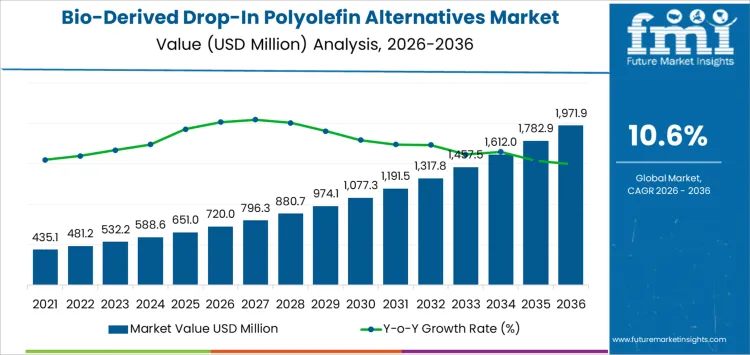
What is the Growth Forecast for the Bio-Derived Drop-In Polyolefin Alternatives Market through 2036?
The growth momentum analysis for the bio-derived drop-in polyolefin alternatives market shows consistent and steady growth, with noticeable acceleration as the market matures. Starting at USD 720 million in 2026, the market grows to USD 797.2 million in 2027 and USD 883.5 million in 2028, reflecting gradual adoption as industries begin integrating bio-based materials into their operations.
From 2028 to 2030, the market continues to expand, reaching USD 979.6 million in 2029 and USD 1,087.4 million in 2030. This period marks an acceleration phase as the advantages of bio-derived materials-such as reduced environmental impact and compliance with sustainability regulations-become more apparent. Between 2030 and 2035, the market grows rapidly, reaching USD 1,208 million in 2031, USD 1,343 million in 2032, and USD 1,494.9 million in 2033. By 2035, the market is projected to reach USD 1,666 million, with the final value of USD 1,971.9 million expected in 2036. The growth momentum analysis indicates strong acceleration, driven by advancements in bio-based material technology, regulatory support, and the increasing adoption of sustainable practices across industries.
Bio-Derived Drop-In Polyolefin Alternatives Market Key Takeaways
| Metric | Value |
|---|---|
| Industry Sales Value (2026) | USD 720.0 million |
| Industry Forecast Value (2036) | USD 1,971.9 million |
| Industry Forecast CAGR (2026-2036) | 10.6% |
What Is Driving the Demand for the Bio-Derived Drop-In Polyolefin Alternatives Market Globally?
The demand for bio-derived drop-in polyolefin alternatives is driven by growing regulatory pressure to reduce greenhouse gas emissions and dependency on fossil-based feedstocks, alongside rising corporate commitments to sustainability and circularity. Polyolefins such as polyethylene (PE) and polypropylene (PP) are widely used in packaging, consumer goods, automotive parts, and industrial applications, but their production from petroleum contributes to lifecycle carbon emissions and creates challenges for end-of-life management. Bio-derived alternatives use renewable feedstocks such as plant oils, sugarcane, or agricultural residues to produce polymers that are chemically equivalent to conventional polyolefins.
Because they are "drop-in," these materials can be processed on existing production lines without major capital investment or requalification of processing equipment, making them attractive to manufacturers seeking to reduce environmental impact without disrupting operations. Brand owners facing regulatory mandates for recycled or renewable content in products and packaging are increasingly adopting these materials to meet targets while maintaining product performance and compliance.
Future demand for bio-derived drop-in polyolefin alternatives is expected to grow as markets shift toward lower carbon footprints and more resilient supply chains. Advancements in biotechnology, catalysis, and fermentation processes are improving yields and cost profiles of bio-based feedstocks, making them more competitive with traditional fossil routes. Expansion of policy frameworks that incentivize renewable content, such as low-carbon fuel standards, carbon pricing, and extended producer responsibility schemes, will reinforce industry interest in renewably sourced polymers. Consumer preferences for sustainable products, especially in fast-moving consumer goods and packaging, are also driving uptake.
As sustainability reporting and environmental, social, and governance (ESG) criteria become more integrated into corporate strategy and investment decisions, companies will increasingly prioritize materials that support lower lifecycle emissions. Continued growth in infrastructure for biomass supply, coupled with investment in scalable production capacity, will help transition bio-derived drop-in polyolefin alternatives from niche to mainstream use across global markets.
What is the Segment Analysis for the Bio-Derived Drop-In Polyolefin Alternatives Market?
The bio-derived drop-in polyolefin alternatives market is primarily driven by material types and technologies. Bio-PE and bio-PP (drop-in) dominate, comprising 55% of the market share, offering sustainable alternatives to conventional polyolefins. Bio-naphtha and ethanol-based polymerization lead technology adoption, with 55% of the market share, allowing for bio-based polyolefins that retain traditional performance. Other technologies like mass-balance certification and drop-in resin compounding are also contributing. This market is growing due to the rising demand for sustainable packaging, regulatory pressures, and consumer preferences for eco-friendly alternatives. As industries aim to reduce their environmental footprint, the market for bio-derived polyolefin alternatives is expected to expand significantly.
What is Driving Growth in the Bio-PE and Bio-PP (Drop-In) Segment of the Bio-Derived Polyolefin Alternatives Market?
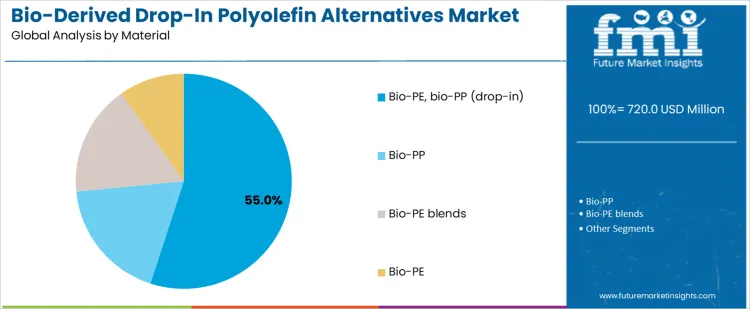
The bio-PE and bio-PP (drop-in) segment is the largest material category in the bio-derived drop-in polyolefin alternatives market, accounting for 55% of the market share. This segment’s growth is driven by the increasing demand for sustainable packaging materials that offer the same high performance as traditional polyolefins but with a reduced environmental impact. Bio-PE and bio-PP are derived from renewable sources, such as sugarcane, and can be used as direct substitutes for conventional polyolefins in various applications, including food packaging, consumer goods, and automotive.
The "drop-in" nature of these materials, meaning they can be seamlessly integrated into existing production processes without significant modifications, makes them highly attractive to manufacturers seeking to transition to bio-based alternatives. As consumer demand for eco-friendly products rises and regulatory frameworks around sustainability become stricter, bio-PE and bio-PP (drop-in) are expected to play a central role in the adoption of bio-based materials across industries. Additionally, the scalability of these materials and the advancements in bio-based production technologies are further driving growth in this segment.
What is Contributing to the Growth of Bio-Naphtha and Ethanol-Based Polymerization Technology in the Bio-Derived Polyolefin Alternatives Market?
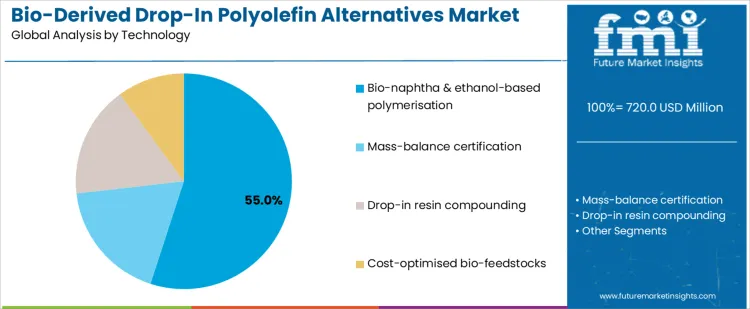
Bio-naphtha and ethanol-based polymerization technology are the leading technologies in the bio-derived drop-in polyolefin alternatives market, holding 55% of the market share. This growth is primarily driven by the ability of these technologies to produce bio-based polyolefins that are chemically identical to their petroleum-derived counterparts. Bio-naphtha and ethanol are renewable feedstocks that can be used in polymerization processes to create bio-based polyethylene (PE) and polypropylene (PP) with the same high-performance characteristics as traditional polyolefins.
The advantage of using bio-naphtha and ethanol-based polymerization is that it enables the production of drop-in materials without requiring significant changes to existing manufacturing infrastructure. As sustainability becomes a key focus for industries such as packaging, automotive, and consumer goods, these technologies are increasingly seen as a viable solution to reduce the carbon footprint associated with plastic production. Additionally, as bio-naphtha and ethanol are derived from renewable sources, they align with global efforts to reduce dependence on fossil fuels. The growing focus on reducing plastic waste and the push for a circular economy is expected to further drive the adoption of bio-naphtha and ethanol-based polymerization technologies in the bio-derived polyolefins market.
What are the Key Dynamics of the Global Bio-Derived Drop-In Polyolefin Alternatives Market?
The global bio-derived drop-in polyolefin alternatives market is growing as manufacturers shift toward sustainable feedstocks while maintaining performance of conventional polyethylene and polypropylene. These bio-based polyolefins are designed to replace fossil-derived resins without changing existing processing lines, enabling faster adoption by converters. Growth reflects corporate sustainability commitments, regulatory pressure on plastic emissions, and expanding availability of bio-based raw materials. Demand spans packaging, consumer goods, automotive, and industrial applications where high performance and reduced lifecycle carbon footprint are priorities for brands and end users globally.
What are the Key Drivers for the Global Bio-Derived Drop-In Polyolefin Alternatives Market?
Growing regulatory focus on reducing greenhouse gas emissions and lowering reliance on fossil resources motivates adoption of bio-derived resins that meet sustainability criteria. Brands and converters seek materials that deliver equivalent mechanical and barrier performance to traditional polyolefins while supporting environmental reporting and goals. Consumer demand for greener products and transparency drives investment in alternative materials that carry lower carbon intensity. Expansion of renewable feedstock production, including plant-based ethanol and waste biomass pathways, improves supply availability. Corporate commitments to circular economy principles encourage use of drop-in alternatives that integrate with existing recycling and processing infrastructure.
What are the Restraints for the Global Bio-Derived Drop-In Polyolefin Alternatives Market?
One restraint is the higher cost of bio-derived feedstocks and production compared with conventional fossil-based polyolefins, which can deter adoption in price-sensitive segments. Variability in raw material supply due to agricultural or biomass feedstock limitations can affect consistency of supply and pricing stability. Technical challenges remain in ensuring that bio-derived alternatives match all performance requirements across demanding applications without modification. Infrastructure for bio-feedstock collection and processing is uneven across regions, limiting scale in some markets. Uncertainty in long-term policy incentives and fluctuating oil prices can influence investment decisions by converters and brands.
What is the Key Trends in the Global Bio-Derived Drop-In Polyolefin Alternatives Market?
A key trend is integration of hybrid material approaches that combine bio-based content with enhanced recyclability characteristics that support circular lifecycle goals. Technology developers are focusing on improving yields and cost efficiency through advanced fermentation, catalytic conversion and biomass pretreatment techniques. Collaboration between resin producers, brand owners and converters is increasing to qualify bio-derived alternatives across specific end-use requirements and processing conditions. Expansion of certification schemes and sustainability labeling supports transparency and market confidence. Investment in partnerships and joint ventures to build regional production hubs for bio-derived polyolefins is rising as companies secure supply and respond to evolving regulatory frameworks.
What is the Country-Wise Analysis of the Bio-Derived Drop-In Polyolefin Alternatives Market?
The bio-derived drop-in polyolefin alternatives market is expected to grow steadily, driven by increasing demand for sustainable and eco-friendly materials in the packaging and manufacturing industries. These bio-based alternatives offer the same performance as traditional polyolefins but with a reduced environmental footprint, making them attractive to industries focused on sustainability. The market is being shaped by consumer demand for more sustainable products, government regulations encouraging the reduction of fossil fuel-based materials, and technological advancements in bio-derived materials. Countries like India and China are projected to experience high growth due to expanding manufacturing sectors and increasing environmental awareness. In developed markets such as the USA and Germany, the adoption is driven by strong regulatory frameworks and growing corporate responsibility to meet sustainability goals.
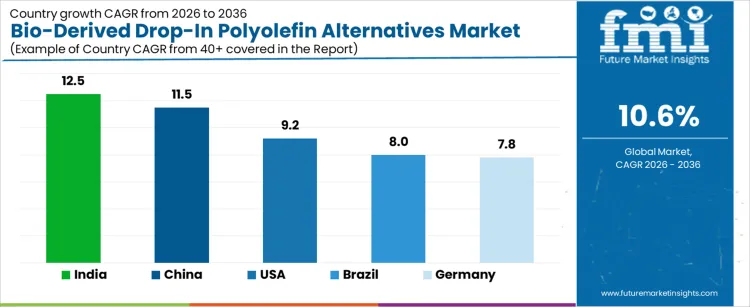
| Country | CAGR (2026-2036) |
|---|---|
| USA | 9.2% |
| Germany | 7.8% |
| China | 11.5% |
| India | 12.5% |
| Brazil | 8% |
What is the Growth Outlook for the Bio-Derived Drop-In Polyolefin Alternatives Market in the USA?
The bio-derived drop-in polyolefin alternatives market in the United States is expected to grow at a moderate pace, with a projected CAGR of 9.2%. This growth is driven by increasing consumer demand for sustainable packaging and manufacturing materials across various industries, including food and beverages, consumer goods, and automotive. Regulatory pressures to reduce the environmental impact of packaging materials, along with a shift toward renewable and biodegradable options, are also contributing to the adoption of bio-derived alternatives. Furthermore, advancements in bio-polymer technology and the rising number of eco-conscious consumers are accelerating market growth. As companies continue to embrace sustainability goals and respond to regulatory frameworks, the demand for bio-derived drop-in polyolefin alternatives is expected to rise steadily in the USA
What is the Market Outlook for the Bio-Derived Drop-In Polyolefin Alternatives Market in Germany?
The bio-derived drop-in polyolefin alternatives market in Germany is projected to grow at a steady rate, with a projected CAGR of 7.8%. Germany is a leader in environmental sustainability and innovation, with strong regulatory frameworks promoting the use of renewable materials. The market is driven by growing demand from the packaging, automotive, and consumer goods sectors, where companies are increasingly adopting sustainable alternatives to fossil fuel-based materials. Germany’s commitment to reducing carbon emissions and waste, along with its advanced manufacturing infrastructure, makes it a key market for bio-derived alternatives. As Germany continues to prioritize sustainability in both public and private sectors, the demand for bio-based drop-in polyolefin alternatives is expected to experience consistent growth.
What is the Growth Forecast for the Bio-Derived Drop-In Polyolefin Alternatives Market in China?
The bio-derived drop-in polyolefin alternatives market in China is expected to grow rapidly, with a projected CAGR of 11.5%. China’s large-scale manufacturing sector, expanding consumer market, and increasing focus on environmental sustainability are driving the demand for sustainable and bio-based materials. The country’s government has implemented several initiatives to reduce plastic waste and promote the adoption of renewable materials in industrial production. As China becomes more committed to sustainability and reducing its reliance on fossil fuels, the demand for bio-derived alternatives to polyolefins is expected to rise significantly. Furthermore, China’s position as a global manufacturing hub for industries such as packaging and automotive provides a strong foundation for the growth of bio-based drop-in alternatives.
What is the Market Outlook for the Bio-Derived Drop-In Polyolefin Alternatives Market in India?
The bio-derived drop-in polyolefin alternatives market in India is projected to grow at the highest rate globally, with a projected CAGR of 12.5%. India’s rapidly expanding manufacturing sector, coupled with increasing consumer demand for sustainable and eco-friendly products, is driving the demand for bio-based polyolefin alternatives. As India faces growing environmental challenges, there is a push for renewable materials in industries such as packaging, automotive, and consumer goods. The Indian government’s initiatives to reduce plastic waste and promote the circular economy are contributing to the adoption of bio-derived alternatives. With a large and growing middle class, along with rising awareness of environmental issues, India is set to experience robust market growth in the bio-derived drop-in polyolefin alternatives sector.
What are the Growth Prospects for the Bio-Derived Drop-In Polyolefin Alternatives Market in Brazil?
The bio-derived drop-in polyolefin alternatives market in Brazil is expected to grow at a moderate pace, with a projected CAGR of 8%. Brazil’s manufacturing sector, particularly in packaging and consumer goods, is increasingly adopting sustainable materials as consumer demand for eco-friendly products rises. Brazil’s regulatory environment, which is moving toward reducing plastic waste and promoting the use of renewable resources, is encouraging businesses to seek alternatives to traditional polyolefins. While the adoption of bio-derived alternatives has been slower compared to other regions, the growing focus on sustainability and Brazil’s efforts to reduce its environmental impact will continue to drive market growth in the coming years. As the demand for green solutions increases, Brazil is expected to see steady growth in the bio-derived drop-in polyolefin alternatives market.
What is the Competitive Landscape for the Bio-Derived Drop-In Polyolefin Alternatives Market?
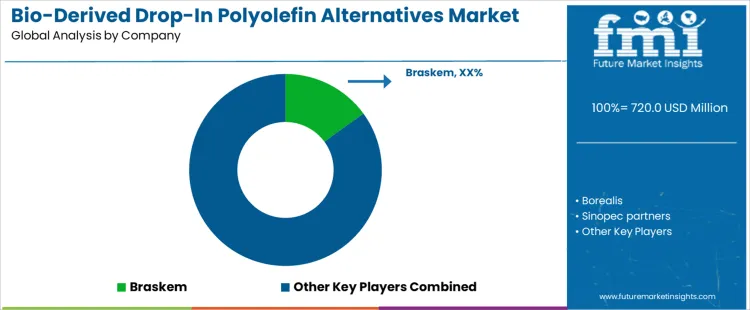
The bio-derived drop-in polyolefin alternatives market is experiencing growth as industries seek sustainable alternatives to traditional fossil-based polyolefins. Braskem leads the market with its bio-derived polyolefins, offering a range of sustainable, drop-in solutions made from renewable sources. Their advanced bio-based technologies position them as a dominant player in this space, focusing on reducing environmental impact while maintaining the same performance as conventional polyolefins.
Borealis, Sinopec Partners, and UFlex are key competitors, each providing bio-derived polyolefin alternatives designed to meet sustainability and performance standards. Borealis focuses on enhancing its product offerings with renewable materials, while Sinopec Partners develops sustainable polyolefins in collaboration with various partners. UFlex offers eco-friendly packaging solutions with bio-derived drop-in polyolefins, targeting various industries, including packaging.
Dow further contributes to the competitive landscape by providing bio-derived drop-in polyolefins, focusing on the development of circular, sustainable solutions that offer compatibility with existing production processes. These companies compete through product innovation, sustainability efforts, and the ability to provide high-performance alternatives to traditional polyolefins, aligning with the growing demand for bio-based and environmentally responsible solutions across various industries.
Key Players of the Bio-Derived Drop-In Polyolefin Alternatives Market
- Braskem
- Borealis
- Sinopec partners
- UFlex
- Dow
Scope of the Report
| Items | Values |
|---|---|
| Quantitative Units (2026) | USD Million |
| End-use / Application | Flexible Food Packaging, FMCG & Personal Care, Export Packaging, Food & Agriculture, Domestic FMCG, Specialty Uses |
| Packaging Format / Type | Films & Pouches, Bottles & Closures, Flexible Laminates, Films & Liners, Others |
| Material | Bio-PE, Bio-PP (Drop-in), Bio-PP, Bio-PE Blends, Others |
| Technology | Bio-Naphtha & Ethanol-Based Polymerisation, Mass-Balance Certification, Drop-In Resin Compounding, Cost-Optimised Bio-Feedstocks |
| Companies | Braskem, Borealis, Sinopec Partners, UFlex, Dow |
| Regions Covered | North America, Latin America, Western Europe, Eastern Europe, South Asia and Pacific, East Asia, Middle East & Africa |
| Countries Covered | United States, Canada, Mexico, Brazil, Argentina, Germany, France, United Kingdom, Italy, Spain, Netherlands, China, India, Japan, South Korea, ANZ, GCC Countries, South Africa |
| Additional Attributes | Dollar by sales by end-use/application, packaging format/type, material, technology, and region. Includes market trends in bio-derived polyolefin alternatives, focusing on bio-PE and bio-PP materials, bio-naphtha & ethanol-based polymerisation, and mass-balance certification. Highlights the role of drop-in resin compounding and cost-optimised bio-feedstocks in FMCG, personal care, and export packaging. Focus on sustainability, regulatory compliance, market share, and competitive positioning of key companies in the bio-derived packaging space. |
Bio-Derived Drop-In Polyolefin Alternatives Market Segmentation
End-use / Application
- Flexible food packaging
- FMCG & personal care
- Export packaging
- Food & agriculture
- Domestic FMCG
- Specialty uses
Packaging Format / Type
- Films & pouches
- Bottles & closures
- Flexible laminates
- Films & liners
- Others
Material
- Bio-PE, bio-PP (drop-in)
- Bio-PP
- Bio-PE blends
- Bio-PE
- Others
Technology
- Bio-naphtha & ethanol-based polymerisation
- Mass-balance certification
- Drop-in resin compounding
- Cost-optimised bio-feedstocks
- Others
Region
- Asia Pacific
- China
- Japan
- South Korea
- India
- Australia & New Zealand
- ASEAN
- Rest of Asia Pacific
- Europe
- Germany
- United Kingdom
- France
- Italy
- Spain
- Nordic
- BENELUX
- Rest of Europe
- North America
- United States
- Canada
- Mexico
- Latin America
- Brazil
- Chile
- Rest of Latin America
- Middle East & Africa
- Kingdom of Saudi Arabia
- Other GCC Countries
- Turkey
- South Africa
- Other African Union
- Rest of Middle East & Africa
Frequently Asked Questions
How big is the bio-derived drop-in polyolefin alternatives market in 2026?
The global bio-derived drop-in polyolefin alternatives market is estimated to be valued at USD 720.0 million in 2026.
What will be the size of bio-derived drop-in polyolefin alternatives market in 2036?
The market size for the bio-derived drop-in polyolefin alternatives market is projected to reach USD 1,971.9 million by 2036.
How much will be the bio-derived drop-in polyolefin alternatives market growth between 2026 and 2036?
The bio-derived drop-in polyolefin alternatives market is expected to grow at a 10.6% CAGR between 2026 and 2036.
What are the key product types in the bio-derived drop-in polyolefin alternatives market?
The key product types in bio-derived drop-in polyolefin alternatives market are flexible food packaging, FMCG & personal care, export packaging, food & agriculture, domestic FMCG and specialty uses.
Which packaging format segment to contribute significant share in the bio-derived drop-in polyolefin alternatives market in 2026?
In terms of packaging format, films & pouches segment to command 40.0% share in the bio-derived drop-in polyolefin alternatives market in 2026.
Preview the report firsthand - request a free sample
Get SampleGet the brochure for pricing and purchase details.
Get PDFTable of Content
- Executive Summary
- Global Market Outlook
- Demand-side Trends
- Supply-side Trends
- Technology Roadmap Analysis
- Analysis and Recommendations
- Market Overview
- Market Coverage / Taxonomy
- Market Definition / Scope / Limitations
- Market Background
- Market Dynamics
- Drivers
- Restraints
- Opportunity
- Trends
- Scenario Forecast
- Demand in Optimistic Scenario
- Demand in Likely Scenario
- Demand in Conservative Scenario
- Opportunity Map Analysis
- Product Life Cycle Analysis
- Supply Chain Analysis
- Investment Feasibility Matrix
- Value Chain Analysis
- PESTLE and Porter’s Analysis
- Regulatory Landscape
- Regional Parent Market Outlook
- Production and Consumption Statistics
- Import and Export Statistics
- Market Dynamics
- Global Market Analysis 2021 to 2025 and Forecast, 2026 to 2036
- Historical Market Size Value (USD Million) Analysis, 2021 to 2025
- Current and Future Market Size Value (USD Million) Projections, 2026 to 2036
- Y-o-Y Growth Trend Analysis
- Absolute $ Opportunity Analysis
- Global Market Pricing Analysis 2021 to 2025 and Forecast 2026 to 2036
- Global Market Analysis 2021 to 2025 and Forecast 2026 to 2036, By End-use
- Introduction / Key Findings
- Historical Market Size Value (USD Million) Analysis By End-use , 2021 to 2025
- Current and Future Market Size Value (USD Million) Analysis and Forecast By End-use , 2026 to 2036
- Flexible food packaging
- FMCG & personal care
- Export packaging
- Food & agriculture
- Domestic FMCG
- Specialty uses
- Y-o-Y Growth Trend Analysis By End-use , 2021 to 2025
- Absolute $ Opportunity Analysis By End-use , 2026 to 2036
- Global Market Analysis 2021 to 2025 and Forecast 2026 to 2036, By Packaging Format
- Introduction / Key Findings
- Historical Market Size Value (USD Million) Analysis By Packaging Format, 2021 to 2025
- Current and Future Market Size Value (USD Million) Analysis and Forecast By Packaging Format, 2026 to 2036
- Films & pouches
- Bottles & closures
- Flexible laminates
- Films & liners
- Y-o-Y Growth Trend Analysis By Packaging Format, 2021 to 2025
- Absolute $ Opportunity Analysis By Packaging Format, 2026 to 2036
- Global Market Analysis 2021 to 2025 and Forecast 2026 to 2036, By Material
- Introduction / Key Findings
- Historical Market Size Value (USD Million) Analysis By Material, 2021 to 2025
- Current and Future Market Size Value (USD Million) Analysis and Forecast By Material, 2026 to 2036
- Bio-PE, bio-PP (drop-in)
- Bio-PP
- Bio-PE blends
- Bio-PE
- Y-o-Y Growth Trend Analysis By Material, 2021 to 2025
- Absolute $ Opportunity Analysis By Material, 2026 to 2036
- Global Market Analysis 2021 to 2025 and Forecast 2026 to 2036, By Technology
- Introduction / Key Findings
- Historical Market Size Value (USD Million) Analysis By Technology, 2021 to 2025
- Current and Future Market Size Value (USD Million) Analysis and Forecast By Technology, 2026 to 2036
- Bio-naphtha & ethanol-based polymerisation
- Mass-balance certification
- Drop-in resin compounding
- Cost-optimised bio-feedstocks
- Y-o-Y Growth Trend Analysis By Technology, 2021 to 2025
- Absolute $ Opportunity Analysis By Technology, 2026 to 2036
- Global Market Analysis 2021 to 2025 and Forecast 2026 to 2036, By Region
- Introduction
- Historical Market Size Value (USD Million) Analysis By Region, 2021 to 2025
- Current Market Size Value (USD Million) Analysis and Forecast By Region, 2026 to 2036
- North America
- Latin America
- Western Europe
- Eastern Europe
- East Asia
- South Asia and Pacific
- Middle East & Africa
- Market Attractiveness Analysis By Region
- North America Market Analysis 2021 to 2025 and Forecast 2026 to 2036, By Country
- Historical Market Size Value (USD Million) Trend Analysis By Market Taxonomy, 2021 to 2025
- Market Size Value (USD Million) Forecast By Market Taxonomy, 2026 to 2036
- By Country
- USA
- Canada
- Mexico
- By End-use
- By Packaging Format
- By Material
- By Technology
- By Country
- Market Attractiveness Analysis
- By Country
- By End-use
- By Packaging Format
- By Material
- By Technology
- Key Takeaways
- Latin America Market Analysis 2021 to 2025 and Forecast 2026 to 2036, By Country
- Historical Market Size Value (USD Million) Trend Analysis By Market Taxonomy, 2021 to 2025
- Market Size Value (USD Million) Forecast By Market Taxonomy, 2026 to 2036
- By Country
- Brazil
- Chile
- Rest of Latin America
- By End-use
- By Packaging Format
- By Material
- By Technology
- By Country
- Market Attractiveness Analysis
- By Country
- By End-use
- By Packaging Format
- By Material
- By Technology
- Key Takeaways
- Western Europe Market Analysis 2021 to 2025 and Forecast 2026 to 2036, By Country
- Historical Market Size Value (USD Million) Trend Analysis By Market Taxonomy, 2021 to 2025
- Market Size Value (USD Million) Forecast By Market Taxonomy, 2026 to 2036
- By Country
- Germany
- UK
- Italy
- Spain
- France
- Nordic
- BENELUX
- Rest of Western Europe
- By End-use
- By Packaging Format
- By Material
- By Technology
- By Country
- Market Attractiveness Analysis
- By Country
- By End-use
- By Packaging Format
- By Material
- By Technology
- Key Takeaways
- Eastern Europe Market Analysis 2021 to 2025 and Forecast 2026 to 2036, By Country
- Historical Market Size Value (USD Million) Trend Analysis By Market Taxonomy, 2021 to 2025
- Market Size Value (USD Million) Forecast By Market Taxonomy, 2026 to 2036
- By Country
- Russia
- Poland
- Hungary
- Balkan & Baltic
- Rest of Eastern Europe
- By End-use
- By Packaging Format
- By Material
- By Technology
- By Country
- Market Attractiveness Analysis
- By Country
- By End-use
- By Packaging Format
- By Material
- By Technology
- Key Takeaways
- East Asia Market Analysis 2021 to 2025 and Forecast 2026 to 2036, By Country
- Historical Market Size Value (USD Million) Trend Analysis By Market Taxonomy, 2021 to 2025
- Market Size Value (USD Million) Forecast By Market Taxonomy, 2026 to 2036
- By Country
- China
- Japan
- South Korea
- By End-use
- By Packaging Format
- By Material
- By Technology
- By Country
- Market Attractiveness Analysis
- By Country
- By End-use
- By Packaging Format
- By Material
- By Technology
- Key Takeaways
- South Asia and Pacific Market Analysis 2021 to 2025 and Forecast 2026 to 2036, By Country
- Historical Market Size Value (USD Million) Trend Analysis By Market Taxonomy, 2021 to 2025
- Market Size Value (USD Million) Forecast By Market Taxonomy, 2026 to 2036
- By Country
- India
- ASEAN
- Australia & New Zealand
- Rest of South Asia and Pacific
- By End-use
- By Packaging Format
- By Material
- By Technology
- By Country
- Market Attractiveness Analysis
- By Country
- By End-use
- By Packaging Format
- By Material
- By Technology
- Key Takeaways
- Middle East & Africa Market Analysis 2021 to 2025 and Forecast 2026 to 2036, By Country
- Historical Market Size Value (USD Million) Trend Analysis By Market Taxonomy, 2021 to 2025
- Market Size Value (USD Million) Forecast By Market Taxonomy, 2026 to 2036
- By Country
- Kingdom of Saudi Arabia
- Other GCC Countries
- Turkiye
- South Africa
- Other African Union
- Rest of Middle East & Africa
- By End-use
- By Packaging Format
- By Material
- By Technology
- By Country
- Market Attractiveness Analysis
- By Country
- By End-use
- By Packaging Format
- By Material
- By Technology
- Key Takeaways
- Key Countries Market Analysis
- USA
- Pricing Analysis
- Market Share Analysis, 2025
- By End-use
- By Packaging Format
- By Material
- By Technology
- Canada
- Pricing Analysis
- Market Share Analysis, 2025
- By End-use
- By Packaging Format
- By Material
- By Technology
- Mexico
- Pricing Analysis
- Market Share Analysis, 2025
- By End-use
- By Packaging Format
- By Material
- By Technology
- Brazil
- Pricing Analysis
- Market Share Analysis, 2025
- By End-use
- By Packaging Format
- By Material
- By Technology
- Chile
- Pricing Analysis
- Market Share Analysis, 2025
- By End-use
- By Packaging Format
- By Material
- By Technology
- Germany
- Pricing Analysis
- Market Share Analysis, 2025
- By End-use
- By Packaging Format
- By Material
- By Technology
- UK
- Pricing Analysis
- Market Share Analysis, 2025
- By End-use
- By Packaging Format
- By Material
- By Technology
- Italy
- Pricing Analysis
- Market Share Analysis, 2025
- By End-use
- By Packaging Format
- By Material
- By Technology
- Spain
- Pricing Analysis
- Market Share Analysis, 2025
- By End-use
- By Packaging Format
- By Material
- By Technology
- France
- Pricing Analysis
- Market Share Analysis, 2025
- By End-use
- By Packaging Format
- By Material
- By Technology
- India
- Pricing Analysis
- Market Share Analysis, 2025
- By End-use
- By Packaging Format
- By Material
- By Technology
- ASEAN
- Pricing Analysis
- Market Share Analysis, 2025
- By End-use
- By Packaging Format
- By Material
- By Technology
- Australia & New Zealand
- Pricing Analysis
- Market Share Analysis, 2025
- By End-use
- By Packaging Format
- By Material
- By Technology
- China
- Pricing Analysis
- Market Share Analysis, 2025
- By End-use
- By Packaging Format
- By Material
- By Technology
- Japan
- Pricing Analysis
- Market Share Analysis, 2025
- By End-use
- By Packaging Format
- By Material
- By Technology
- South Korea
- Pricing Analysis
- Market Share Analysis, 2025
- By End-use
- By Packaging Format
- By Material
- By Technology
- Russia
- Pricing Analysis
- Market Share Analysis, 2025
- By End-use
- By Packaging Format
- By Material
- By Technology
- Poland
- Pricing Analysis
- Market Share Analysis, 2025
- By End-use
- By Packaging Format
- By Material
- By Technology
- Hungary
- Pricing Analysis
- Market Share Analysis, 2025
- By End-use
- By Packaging Format
- By Material
- By Technology
- Kingdom of Saudi Arabia
- Pricing Analysis
- Market Share Analysis, 2025
- By End-use
- By Packaging Format
- By Material
- By Technology
- Turkiye
- Pricing Analysis
- Market Share Analysis, 2025
- By End-use
- By Packaging Format
- By Material
- By Technology
- South Africa
- Pricing Analysis
- Market Share Analysis, 2025
- By End-use
- By Packaging Format
- By Material
- By Technology
- USA
- Market Structure Analysis
- Competition Dashboard
- Competition Benchmarking
- Market Share Analysis of Top Players
- By Regional
- By End-use
- By Packaging Format
- By Material
- By Technology
- Competition Analysis
- Competition Deep Dive
- Braskem
- Overview
- Product Portfolio
- Profitability by Market Segments (Product/Age /Sales Channel/Region)
- Sales Footprint
- Strategy Overview
- Marketing Strategy
- Product Strategy
- Channel Strategy
- Borealis
- Sinopec partners
- UFlex
- Dow
- Braskem
- Competition Deep Dive
- Assumptions & Acronyms Used
- Research Methodology


