


Biodegradable Packaging Market
The Biodegradable Packaging Market is segmented by Material Type (PLA-Based Packaging, Starch-Based Packaging, PHA-Based Packaging, Cellulose-Based Packaging), Application, End Use, Biodegradation Timeline, Product, Technology, Distribution Channel, and Region. Forecast for 2026 to 2036.
Historical Data Covered: 2016 to 2024 | Base Year: 2025 | Estimated Year: 2026 | Forecast Period: 2027 to 2036
Biodegradable Packaging Market Size, Market Forecast and Outlook By FMI
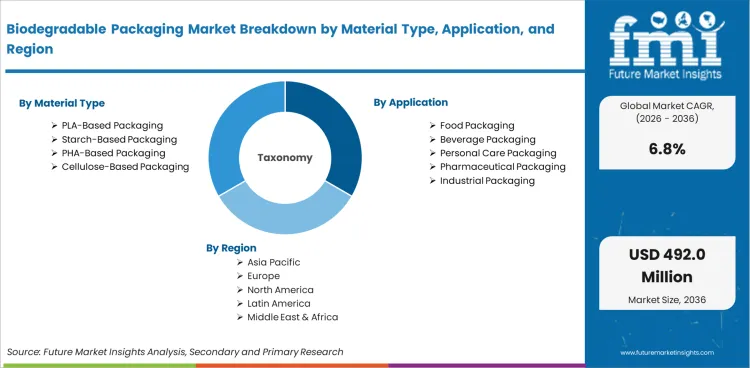
Biodegradable packaging sales were valued at USD 238.6 million in 2025. The market is estimated to reach USD 254.8 million in 2026 and expand at a CAGR of 6.8% between 2026 and 2036 to reach USD 492.0 million by 2036. PLA-based packaging is expected to lead with a 41.0% material type share, and Food Packaging will lead the application segment with a 30.0% share.
Summary of the Biodegradable Packaging Market
- Demand and Growth Drivers
- Food packaging replacement backs biodegradable packaging use as brands need disposal claims across food-contact formats.
- Compostability rules reinforce material review as converters need documented disposal pathways before pack approval.
- Resin availability improves buyer confidence as PLA and starch-based formats gain wider processing familiarity.
- Product and Segment View
- PLA-Based Packaging is projected to capture 41.0% of the material type segment in 2026 as converters favor familiar processing across food and retail packs.
- Fresh and prepared food formats place Food Packaging at an expected 30.0% share of the application segment in 2026.
- Direct Sales is anticipated to hold 54.0% of the distribution channel in 2026 as large buyers prefer tighter specification control.
- Geography and Competitive Outlook
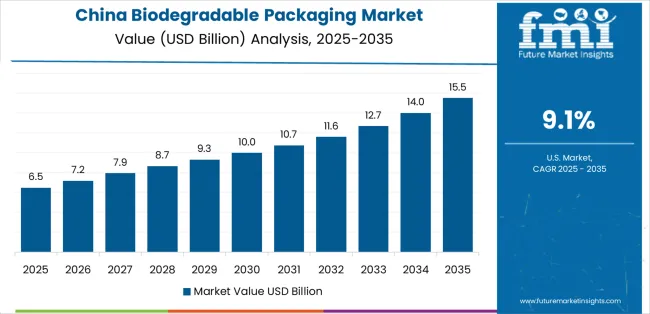
- China is expected to record a CAGR of 9.1% through 2036 because of domestic packaging replacement and converter scale.
- India is projected to expand at 8.9% CAGR by 2036, as biodegradable bags gain price relief and retail pull.
- Companies combining polymer depth with compostability records are strengthening their market position during the forecast period.
- Analyst Opinion
- Ismail Sutaria, Principal Consultant at FMI says, “Biodegradable packaging is an approval-led choice for brands seeking lower claim risk and smoother conversion. Brand owners need pack strength and compostability records together. Resin pricing and certification pressure persist, so manufacturers must check disposal claims and line compatibility first.”
- Biodegradable Packaging Market Value Analysis
- Biodegradable packaging is moving from limited product trials into planned replacement across food and consumer goods packs.
- Pack approval needs for food containers and flexible films are increasing demand across biodegradable packaging applications.
- The market is benefiting from deeper use of bioplastics for packaging across regulated consumer goods programs.
- Packaging records meeting disposal and material claim requirements are becoming necessary for supplier approval.
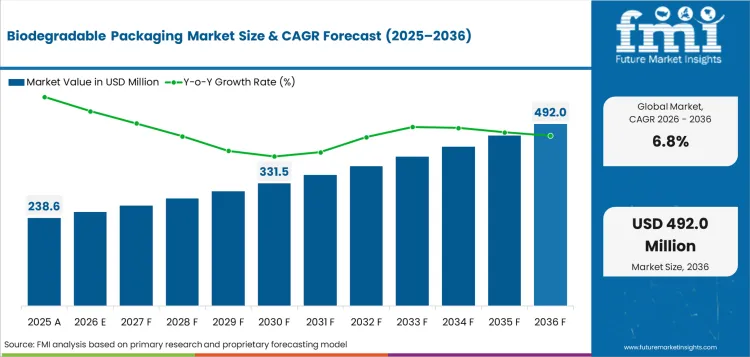
Biodegradable Packaging Market Definition
The biodegradable packaging market includes packaging materials designed to break down through biological action under defined disposal conditions. Scope includes PLA-based packs, starch-based formats, cellulose containers, flexible films, and molded protective formats. Use cases include food packaging, beverage packaging, personal care packs, and retail consumer goods. Standard fossil-based plastic packs without biodegradation claims are outside the scope.
Biodegradable Packaging Market Inclusions
Market scope covers all commercially traded biodegradable packaging products categorized by material type, including PLA-based packaging and starch-based packaging; application, including food packaging and beverage packaging; end use, including retail and consumer goods and food service industry; product type, including rigid packaging and flexible packaging; technology, including conventional biodegradable packaging and advanced biodegradable packaging; and distribution channel, including direct sales and indirect sales. Revenue scope covers the forecast period from 2026 to 2036 for all covered product groups. The covered parties include biodegradable packaging manufacturers; biopolymer resin suppliers; packaging converters; food and beverage brands; retail chains; foodservice operators; e-commerce companies; distributors; certification bodies; waste management firms; and regulatory bodies.
Biodegradable Packaging Market Exclusions
Scope does not include standard fossil-based plastic packaging, reusable industrial crates, metal cans, glass bottles, or packaging machinery sold apart from biodegradable packaging materials.
Biodegradable Packaging Market Research Methodology
- Primary Research: FMI analysts interviewed packaging converters, resin suppliers, foodservice buyers, and retail packaging decision teams in priority markets.
- Desk Research: Combined data from packaging rules, official waste statistics, company product portfolios, and biodegradable material references.
- Market sizing and forecasting: Combined product demand across material type, application, product form, technology, and country groups from the bottom up.
- Data validation: Reviewed every three months against packaging replacement activity, official regulatory signals, and company portfolio coverage.
Why is the Biodegradable Packaging Market Growing?
- Food brands are using biodegradable packs to reduce packaging claim risk across food-contact formats.
- Packaging converters are qualifying PLA and cellulose formats earlier to avoid delays during material switchovers.
- Retailers are reviewing biodegradable bags and containers as policy pressure rises around single-use plastic formats.
EU packaging rules are creating a stricter approval setting for biodegradable and compostable alternatives. Packaging producers now need clearer proof around material composition and disposal claims. Brand owners are reviewing biodegradable formats more carefully before adding them to approved packaging lists. Clear documentation will help packaging firms reduce claim risk during retail and foodservice approval reviews.
Plastic packaging pressure is pushing brands to review alternative materials with documented disposal claims. Packaging teams are giving more attention to sustainable packaging and compostable formats during material approval. Products that combine practical performance with credible end-of-life records are gaining better acceptance. Packaging manufacturers with tested formats can help brand owners reduce claim risk during replacement decisions.
Market Segmentation Analysis
- PLA-Based Packaging is estimated to capture 41.0% of the material type segment in 2026 as converters favor predictable sealing behavior in food-contact packs.
- Food Packaging is expected to represent 30.0% of the application mix in 2026 through steady use in prepared meals and fresh food formats.
- Large-volume brand contracts place Direct Sales at an expected 54.0% share of the distribution channel in 2026 for tighter specification control.
- Conventional Biodegradable Packaging is estimated to account for 62.0% of the technology segment in 2026 since converters face fewer line-change requirements.
- Easier household disposal communication lifts Home Compostable formats to an estimated 46.0% share of the biodegradation timeline segment in 2026.
The market for biodegradable packaging is divided into seven primary segment groups based on material type, application, end use, biodegradation timeline, product, technology, and distribution channel. Material type includes PLA-Based Packaging, Starch-Based Packaging, PHA-Based Packaging, and Cellulose-Based Packaging. Application includes Food Packaging, Beverage Packaging, Personal Care Packaging, Pharmaceutical Packaging, and Industrial Packaging. Product includes Rigid Packaging, Flexible Packaging, and Protective Packaging. Technology includes Conventional Biodegradable Packaging, Advanced Biodegradable Packaging, and Smart and Functional Packaging.
Insights into the PLA-Based Packaging Material Type Segment
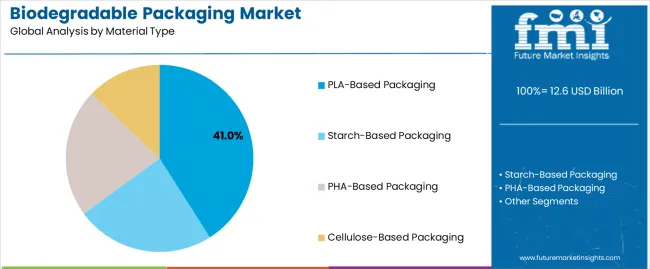
- In 2026, PLA-Based Packaging is estimated to make up 41.0% of the material type segment. PLA formats support food-contact packaging lines through familiar processing behavior and practical converter handling needs.
- Starch-based and cellulose-based options serve selected packaging programs with lower performance pressure. Their use improves in projects focused on simple disposal claims and easier material substitution.
Insights into the Food Packaging Application Segment
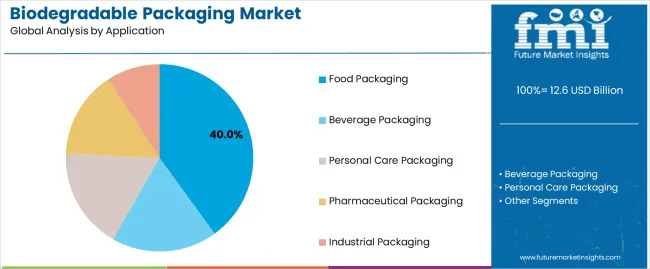
- Food Packaging is expected to hold 30.0% of the application segment in 2026. Packaged meals and fresh foods need biodegradable containers which balance shelf protection with disposal claim requirements.
- Beverage and personal care packaging require tighter barrier control before broader replacement. Their approval path is longer as leakage resistance and product compatibility need tighter testing.
Insights into the Retail & Consumer Goods End Use Segment
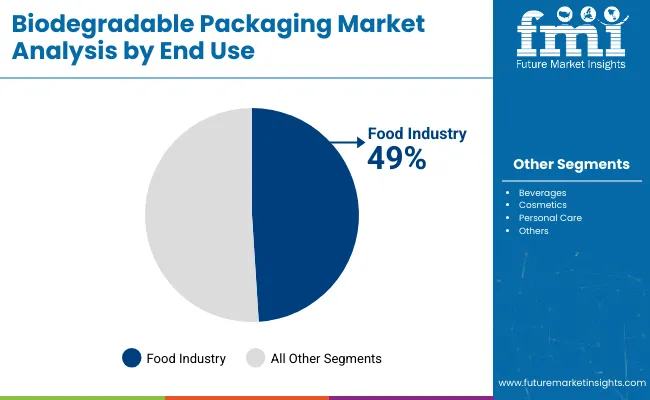
- Retail & Consumer Goods are projected to contribute 38.0% share of the end use segment in 2026. Brand owners use biodegradable formats to manage plastic replacement across private label and consumer-facing packs.
- Food service users prefer containers with heat resistance and clear compostability records. E-commerce packaging teams review protective formats where cushioning performance and disposal claims work together.
Insights into the Home Compostable Biodegradation Timeline Segment
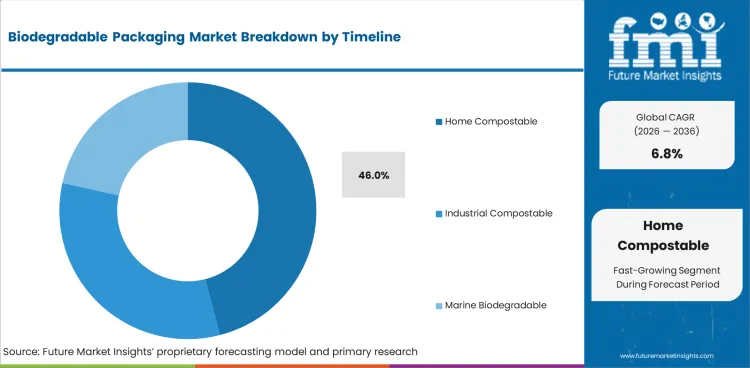
- In 2026, Home Compostable formats are forecast to hold 46.0% share of the biodegradation timeline segment. Consumer-facing disposal claims make this group useful for retail and foodservice packaging programs.
- Industrial compostable formats address controlled waste systems and institutional foodservice needs. Marine biodegradable options stay selective as testing expectations and use cases are more limited.
Insights into the Rigid Packaging Product Segment
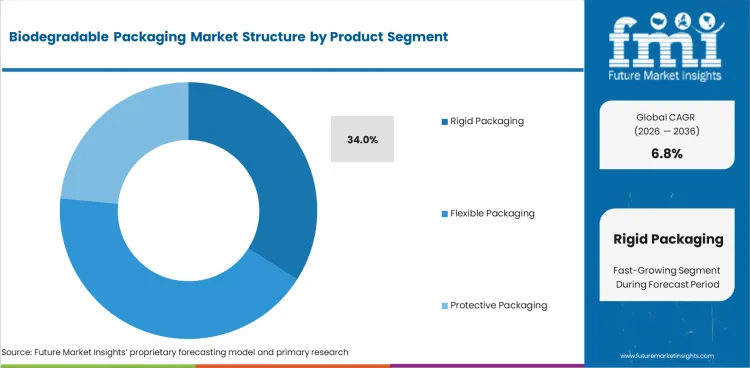
- Rigid Packaging is projected to account for 34.0% of the product segment in 2026. Food containers and takeaway boxes require shape stability during handling and heat exposure.
- Flexible formats serve films and pouches where lower material use improves packaging economics. Protective packaging gains relevance in shipping applications which require cushioning with disposal claim alignment.
Biodegradable Packaging Market Drivers, Restraints, and Opportunities
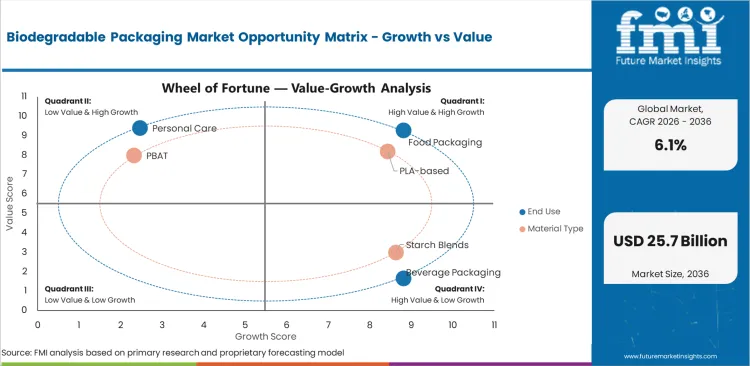
- Compostability documentation increases structured demand for packaging suppliers with tested material claims.
- Higher resin and conversion costs increase pricing pressure for smaller packaging buyers.
- Flexible films improve opportunity through seal performance and lower material use per pack.
Biodegradable packaging keeps growing as food and retail brands need packaging with disposal claims and reliable product protection. Cost pressure and limits in barrier performance can slow higher use across flexible formats. Growth continues through food containers, compostable films, and retail packaging applications.
Corn Feedstock Softness Eases Starch-Based Packaging Costs
The 2024/25 corn season-average farm price was lowered by 5 cents to USD 4.30 per bushel, while the 2025/26 price stayed at USD 4.20 per bushel according to the USDA Economic Research Service report. Finished pack prices will not fall immediately because extrusion and film conversion costs are above commodity feedstock. Certification and compostability testing keep cost pressure in place for approved packaging formats. Softer corn pricing gives resin suppliers and packaging buyers more room to negotiate annual contracts. This effect is more visible in foodservice trays and compostable bags that compete with lower-cost conventional plastics. Flexible compostable formats face similar pressure during price reviews.
Capacity Expansion Is Moderating Bioplastic Premiums
Global biobased plastics production capacity is forecast to double from 2.31 million tonnes in 2025 to about 4.69 million tonnes by 2030, as reported by European Bioplastics in February 2026. Packaging is the largest application in 2025, accounting for 41.3% or 0.95 million tonnes. New capacity should ease biodegradable packaging premiums as supplier comparisons improve. Specialty grades with food-contact or heat-resistance needs may keep higher prices through certified compostability requirements in tighter approval programs.
Analysis of Biodegradable Packaging Market By Key Countries
.webp "Top Country Growth Comparison Biodegradable Packaging Market Cagr (2026 2036)")
| Country | CAGR |
|---|---|
| China | 9.1% |
| India | 8.9% |
| USA | 6.4% |
| Germany | 6.7% |
| Brazil | 8.2% |
| UK | 5.5% |
| Japan | 4.9% |
Source: Future Market Insights, 2026.
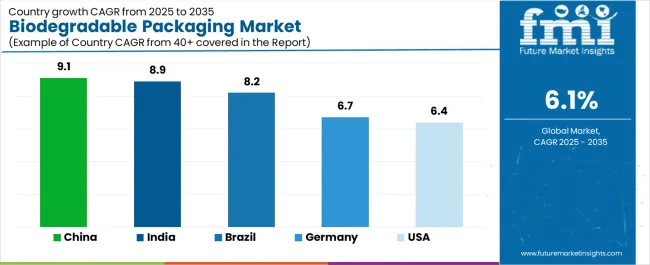
Biodegradable Packaging Market CAGR Analysis By Country
- China is projected to record a 9.1% CAGR by 2036 as parcel flows and food packaging volumes create a large conversion base.
- India’s 8.9% CAGR reflects biodegradable bag tax relief and local compostable material scale-up during the forecast period.
- Recycling infrastructure pressure and state-level packaging reviews place the USA at a 6.4% CAGR for 2026 to 2036.
- Germany is expected to expand at a 6.7% CAGR as mature sorting systems raise packaging discipline over the next decade.
- Brazil’s 8.2% CAGR is supported by food packaging investment and cellulose-based biodegradable format development across the forecast years.
- Producer responsibility rules keep the UK on a measured path, with demand projected at a 5.5% CAGR by 2036.
- Japan is forecast at 4.9% CAGR as quality-sensitive food and retail channels extend material approval cycles toward 2036.
Demand for biodegradable packaging is forecast to rise at 6.8% CAGR from 2026 to 2036. Country-level analysis covers the main markets contributing to this forecast, with the listed markets shown below.
Demand Outlook for Biodegradable Packaging Market in China
China’s biodegradable packaging industry is projected to record a CAGR of 9.1% through 2036. China’s large express delivery network creates a large base for packaging replacement across e-commerce and retail shipments. Local converters can gain from brands seeking biodegradable paper and plastic packaging with scale and stable material access.
- E-commerce packaging gives converters a large base for films and protective packaging trials.
- Food delivery channels need packaging with strength and credible end-of-life records.
- Local supply depth helps shorten testing cycles for PLA and starch-based packaging buyers.
Sales Analysis of Biodegradable Packaging Market in India
India’s biodegradable packaging sector is expected to expand at a CAGR of 8.9% during the assessment period. Government tax changes reduced GST on biodegradable bags from 18% to 5% in September 2025. The price relief improves buyer interest in biodegradable bags across retail and small business channels. Packaging suppliers with low-cost product lines can gain from buyers seeking faster plastic replacement.
- Lower GST improves the price position of biodegradable bags for retailers.
- Local converters can serve smaller buyers needing bag formats with basic certification records.
- Starch-based and compostable materials gain review as buyers compare cost and pack strength.
Demand Outlook for Biodegradable Packaging Market in the United States
The USA biodegradable packaging industry is forecast to grow at a CAGR of 6.4% by 2036. EPA’s August 2024 recycling infrastructure assessment estimated USD 36.5 billion to USD 43.4 billion in investment needs for curbside collection and processing infrastructure. This cost level keeps material choice under review for packaging buyers. Suppliers offering pack formats aligned with recycling or composting systems can reduce buyer uncertainty.
- Recycling infrastructure gaps push brands to review end-of-life claims before material approval.
- Foodservice buyers compare compostable containers with paper and standard plastic alternatives.
- Film producers need better seal behavior before biodegradable flexible packs scale across brands.
Opportunity Analysis of Biodegradable Packaging Market in Germany
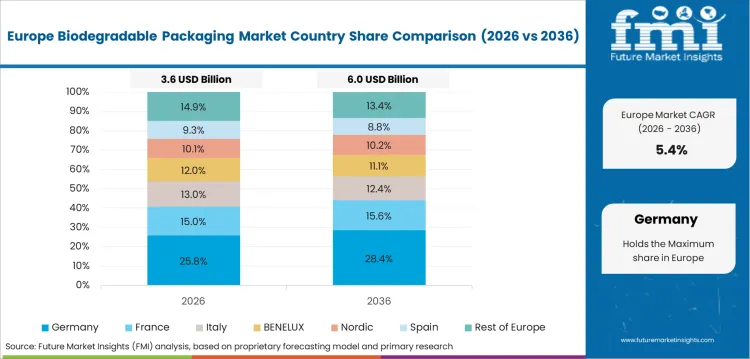
The biodegradable packaging segment in Germany is forecast to advance at 6.7% CAGR over the forecast years. Germany recycled around 5.5 million tonnes of packaging waste collected by dual systems in 2024. UBA reported a 70% recycling rate for plastic packaging. This established system base raises expectations for packaging documentation and material sorting performance.
- Mature sorting systems increase the need for accurate disposal and material records.
- Food and personal care packs must pass tighter performance checks before conversion.
- Certified biodegradable formats can gain review where standard plastic alternatives face pressure.
Future Outlook for Biodegradable Packaging Market in Brazil
Brazil’s biodegradable packaging industry is projected to rise at 8.2% CAGR through 2036. Suframa reported a planned biodegradable packaging facility in Manaus with 20 automated machines and a 90,000 square meter plant. The project is designed for rigid cellulose packaging used in food applications. Local suppliers can gain if they meet cost expectations across cups and ready-meal containers.
- Foodservice packs create demand for rigid containers with heat and shape stability.
- Cellulose-based packaging can attract buyers seeking a plant-based replacement story.
- Price discipline is important as buyers compare biodegradable containers with paper formats.
Demand Outlook for Biodegradable Packaging Market in the United Kingdom
The UK biodegradable packaging industry is expected to post 5.5% CAGR through 2036. UK 2024 packaging waste data indicated 12.7 million tonnes of packaging waste and a 64.1% recycling rate under Methodology 1. Plastic packaging waste stood at 2.3 million tonnes, with a 51.0% recycling rate. This increases pressure for better pack design and end-of-life guidance.
- Producer responsibility rules make packaging data quality a higher priority for suppliers.
- Grocery buyers review biodegradable formats against paper packaging and recyclable plastic options.
- Foodservice operators need containers with credible disposal claims and practical performance.
In-depth Analysis of Biodegradable Packaging Market in Japan
Japan’s biodegradable packaging industry is expected to post 4.9% CAGR through 2036. Japan’s Ministry of the Environment estimated FY2024 marine plastic litter discharge at 13,000 to 31,000 tonnes. This reinforces policy attention around plastic leakage and material circularity. Packaging suppliers need documented quality records as Japanese buyers test appearance and function before broader material replacement.
- Quality-sensitive buyers require stable surface finish and pack strength before approval.
- Food and cosmetic brands review biodegradable formats through longer qualification cycles.
- Supplier documentation can help reduce buyer concern around disposal claims and pack durability.
Competitive Landscape and Strategic Positioning
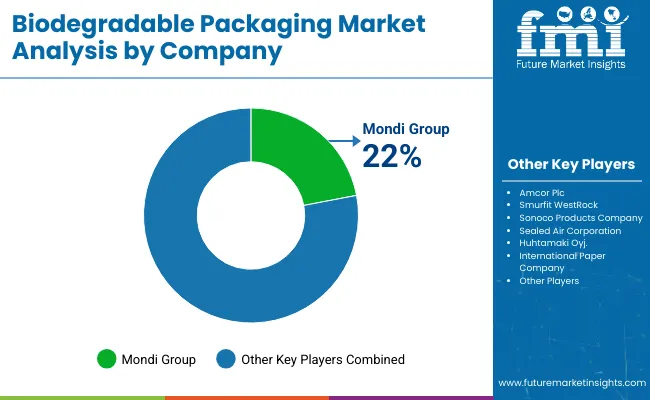
Competition in biodegradable packaging centers on resin access and compostability proof across food and retail applications. Converter assistance matters as line trials can slow approval for new films and containers.
- NatureWorks LLC holds an established position through PLA resin supply depth and application coverage for converters.
- BASF SE and Novamont S.p.A. emphasize biodegradable polymer portfolios and compostability focused material systems.
- Specialist providers focus on cellulose and PHA formats for applications needing specific performance profiles.
NatureWorks LLC has an established position in PLA-based materials used across foodservice packaging and flexible packaging. BASF SE brings biodegradable polymer breadth across packaging and adjacent applications. Novamont S.p.A. and Corbion N.V. focus on bioplastic resin depth and compostability documentation practices. Futamura Chemical Co., Ltd. adds film capability for companies reviewing flexible biodegradable formats.
Competitive barriers include resin price variation and strict packaging claim requirements across regulated retail channels. Material consistency and faster converter testing are main priorities across long approval cycles. Companies offering documented material records and processing help can reduce failed line trials for brand owners. Producers with broader polymer menus and practical converter guidance are better placed to win repeat packaging programs.
Key Companies in the Biodegradable Packaging Market
Global companies active in the biodegradable packaging market include:
- NatureWorks LLC, BASF SE, and Novamont S.p.A. have large polymer infrastructure for PLA and biodegradable resin supply.
- Corbion N.V., Total Corbion PLA, and Danimer Scientific, Inc. serve converters through resin depth and application-specific material platforms.
- Futamura Chemical Co., Ltd., Biome Bioplastics Limited, Plastipak Holdings, Inc., and Sealed Air Corporation hold specialist positions across films, rigid formats, and protective packaging.
Competitive Benchmarking: Biodegradable Packaging Market
| Company | Material Portfolio Depth | Compostability Documentation | Converter Reach | Geographic Footprint |
|---|---|---|---|---|
| NatureWorks LLC | High | High | Strong | North America, Europe, and Asia Pacific presence with PLA manufacturing in the USA and Thailand |
| BASF SE | High | High | Strong | Global presence across Europe, North America, and Asia Pacific through compostable polymer supply |
| Novamont S.p.A. | High | High | Moderate | Italy-led European footprint with focus on biodegradable and compostable bioplastics |
| Corbion N.V. | High | Medium | Strong | Global footprint across Europe, Asia Pacific, and the Americas |
| Total Corbion PLA | High | Medium | Strong | Thailand-based PLA production with global supply reach |
| Biome Bioplastics Limited | Medium | Medium | Moderate | UK-based specialist serving global bioplastics customers |
| Danimer Scientific, Inc. | Medium | Medium | Moderate | USA-centric PHA technology and production footprint |
| Futamura Chemical Co., Ltd. | Medium | High | Moderate | Japan, UK, and USA production base with global sales access |
| Plastipak Holdings, Inc. | Medium | Medium | Strong | North America, Europe, Africa, and South America packaging footprint |
| Sealed Air Corporation | Medium | Medium | Strong | Global food and protective packaging network |
Source: Future Market Insights, 2026.
Key Developments in Biodegradable Packaging Market
- March 2025, NatureWorks introduced the Ingeo Extend platform for BOPLA films. The new grades are designed for up to 8x faster compostability than existing PLA grades.
- October 2024, Aliprot announced a biodegradable packaging factory in Manaus. The project includes R$ 200 million in structure investment and US$ 12 million in equipment.
Key Players in the Biodegradable Packaging Market
Major Global Players:
- NatureWorks LLC
- BASF SE
- Novamont S.p.A.
- Corbion N.V.
- Total Corbion PLA
- Danimer Scientific, Inc.
- Sealed Air Corporation
Specialist Players:
- Biome Bioplastics Limited
- Futamura Chemical Co., Ltd.
- Plastipak Holdings, Inc.
Report Scope and Coverage
| Parameter | Details |
|---|---|
| Quantitative Units | USD 254.8 million to USD 492.0 million, at a CAGR of 6.8% |
| Market Definition | The biodegradable packaging market covers packaging materials designed to break down through biological action under defined disposal conditions. |
| Regions Covered | North America, Latin America, Europe, East Asia, South Asia and Pacific, Middle East and Africa |
| Countries Covered | USA, UK, Germany, China, India, Brazil, Japan, and 30 plus countries |
| Key Companies Profiled | NatureWorks LLC, BASF SE, Novamont S.p.A., Corbion N.V., Total Corbion PLA, Biome Bioplastics Limited, Danimer Scientific, Inc., Futamura Chemical Co., Ltd., Plastipak Holdings, Inc., Sealed Air Corporation |
| Forecast Period | 2026 to 2036 |
| Approach | Hybrid bottom-up and top-down methodology starting with product demand and verified packaging replacement patterns |
Source: Future Market Insights, 2026.
Biodegradable Packaging Market by Segments
Biodegradable Packaging Market Segmented by Material Type:
- PLA-Based Packaging
- Starch-Based Packaging
- PHA-Based Packaging
- Cellulose-Based Packaging
Biodegradable Packaging Market Segmented by Application:
- Food Packaging
- Beverage Packaging
- Personal Care Packaging
- Pharmaceutical Packaging
- Industrial Packaging
Biodegradable Packaging Market Segmented by End Use:
- Retail & Consumer Goods
- Food Service Industry
- E-commerce & Logistics
- Agriculture
- Healthcare
Biodegradable Packaging Market Segmented by Biodegradation Timeline:
- Home Compostable
- Industrial Compostable
- Marine Biodegradable
Biodegradable Packaging Market Segmented by Product:
- Rigid Packaging
- Flexible Packaging
- Protective Packaging
Biodegradable Packaging Market Segmented by Technology:
- Conventional Biodegradable Packaging
- Advanced Biodegradable Packaging
- Smart and Functional Packaging
Biodegradable Packaging Market Segmented by Distribution Channel:
- Direct Sales
- Indirect Sales
Biodegradable Packaging Market by Region:
- North America
- USA
- Canada
- Mexico
- Latin America
- Brazil
- Chile
- Rest of Latin America
- Europe
- Germany
- UK
- Italy
- Spain
- France
- Rest of Europe
- East Asia
- China
- Japan
- South Korea
- South Asia and Pacific
- India
- ASEAN
- Australia & New Zealand
- Rest of South Asia and Pacific
- Middle East and Africa
- Saudi Arabia
- Other GCC Countries
- South Africa
- Rest of Middle East and Africa
Research Sources and Bibliography
- USA Department of Agriculture, Economic Research Service. (2025, July 15). Feed outlook: July 2025 (FDS-25g).
- European Bioplastics e.V. (2025, December 2). Bioplastics market development update 2025. Retrieved from
- USA Environmental Protection Agency. (2025, August 6). USA Recycling Infrastructure Assessment and State Data Collection Reports. USA EPA.
- Superintendência da Zona Franca de Manaus. (2024, October 29). Aliprot anuncia nova fábrica de embalagens biodegradáveis no Polo Industrial de Manaus em 2025. Suframa.
- Government of India. (2025, September 9). GST Reforms in Chemicals and Fertilizers Sector. Press Information Bureau
- GOV.UK. (2025, July 23). UK statistics on waste. Department for Environment, Food & Rural Affairs.
- Ministry of the Environment Japan. (2025, December). Country Report about plastic waste in Japan. Government of Japan.
- Ministry of the Environment Japan. (2025, December). Results as of the FY2024 estimated amount of marine plastic litter discharged in Japan. Government of Japan.
- NatureWorks LLC. (2025, March 18). Ingeo Extend: An exceptional solution offering manufacturing efficiency and faster biodegradability of BOPLA films.
- Umweltbundesamt. (2026, January 27). Facts against myths: Packaging waste recycling in Germany is working. German Environment Agency.
This Report Answers
- What is the current and future size of the biodegradable packaging market?
- How fast is the biodegradable packaging market expected to expand between 2026 and 2036?
- Which material type is expected to lead the market by 2026?
- Which application segment is expected to account for the highest demand by 2026?
- What factors are driving demand for biodegradable packaging globally?
- How are compostability claims influencing packaging supplier selection?
- Why is PLA-Based Packaging the main material type in this market?
- How are food packaging needs creating demand for biodegradable formats?
- Which countries are projected to record faster expansion through 2036?
- What is driving market expansion in China and India?
- Who are the key companies active in the biodegradable packaging market?
- How does FMI estimate and validate the market forecast?
Frequently Asked Questions
What is the global market demand for Biodegradable Packaging in 2026?
In 2026, the global market for biodegradable packaging is expected to be worth USD 254.8 million.
How big will the market for Biodegradable Packaging be in 2036?
By 2036, the market for biodegradable packaging is expected to be worth USD 492.0 million.
How much is demand for Biodegradable Packaging expected to expand between 2026 and 2036?
Between 2026 and 2036, demand for biodegradable packaging is expected to expand at a CAGR of 6.8%.
Which material type segment is likely to be the best seller globally by 2026?
PLA-Based Packaging is expected to make up 41.0% of the material type segment in 2026.
What is causing demand to rise in China?
The China biodegradable packaging market is projected to record 9.1% CAGR through 2036 because of parcel packaging and domestic converter activity.
What is causing demand to rise in India?
The India biodegradable packaging market is projected to expand at 8.9% CAGR through 2036, backed by biodegradable bag tax relief and local material conversion.
What does this report mean by Biodegradable Packaging Market definition?
The biodegradable packaging market includes packaging made from materials designed to break down through biological action under defined disposal conditions.
How does FMI make the Biodegradable Packaging forecast and check it?
Forecasting models use a hybrid bottom-up and top-down approach, starting with product demand and checking it against country-level replacement patterns.
Table of Content
- Executive Summary
- Global Market Outlook
- Demand to side Trends
- Supply to side Trends
- Technology Roadmap Analysis
- Analysis and Recommendations
- Market Overview
- Market Coverage / Taxonomy
- Market Definition / Scope / Limitations
- Research Methodology
- Chapter Orientation
- Analytical Lens and Working Hypotheses
- Market Structure, Signals, and Trend Drivers
- Benchmarking and Cross-market Comparability
- Market Sizing, Forecasting, and Opportunity Mapping
- Research Design and Evidence Framework
- Desk Research Programme (Secondary Evidence)
- Company Annual and Sustainability Reports
- Peer-reviewed Journals and Academic Literature
- Corporate Websites, Product Literature, and Technical Notes
- Earnings Decks and Investor Briefings
- Statutory Filings and Regulatory Disclosures
- Technical White Papers and Standards Notes
- Trade Journals, Industry Magazines, and Analyst Briefs
- Conference Proceedings, Webinars, and Seminar Materials
- Government Statistics Portals and Public Data Releases
- Press Releases and Reputable Media Coverage
- Specialist Newsletters and Curated Briefings
- Sector Databases and Reference Repositories
- FMI Internal Proprietary Databases and Historical Market Datasets
- Subscription Datasets and Paid Sources
- Social Channels, Communities, and Digital Listening Inputs
- Additional Desk Sources
- Expert Input and Fieldwork (Primary Evidence)
- Primary Modes
- Qualitative Interviews and Expert Elicitation
- Quantitative Surveys and Structured Data Capture
- Blended Approach
- Why Primary Evidence is Used
- Field Techniques
- Interviews
- Surveys
- Focus Groups
- Observational and In-context Research
- Social and Community Interactions
- Stakeholder Universe Engaged
- C-suite Leaders
- Board Members
- Presidents and Vice Presidents
- R&D and Innovation Heads
- Technical Specialists
- Domain Subject-matter Experts
- Scientists
- Physicians and Other Healthcare Professionals
- Governance, Ethics, and Data Stewardship
- Research Ethics
- Data Integrity and Handling
- Primary Modes
- Tooling, Models, and Reference Databases
- Desk Research Programme (Secondary Evidence)
- Data Engineering and Model Build
- Data Acquisition and Ingestion
- Cleaning, Normalisation, and Verification
- Synthesis, Triangulation, and Analysis
- Quality Assurance and Audit Trail
- Market Background
- Market Dynamics
- Drivers
- Restraints
- Opportunity
- Trends
- Scenario Forecast
- Demand in Optimistic Scenario
- Demand in Likely Scenario
- Demand in Conservative Scenario
- Opportunity Map Analysis
- Product Life Cycle Analysis
- Supply Chain Analysis
- Investment Feasibility Matrix
- Value Chain Analysis
- PESTLE and Porter’s Analysis
- Regulatory Landscape
- Regional Parent Market Outlook
- Production and Consumption Statistics
- Import and Export Statistics
- Market Dynamics
- Global Market Analysis 2021 to 2025 and Forecast, 2026 to 2036
- Historical Market Size Value (USD Million) Analysis, 2021 to 2025
- Current and Future Market Size Value (USD Million) Projections, 2026 to 2036
- Y to o to Y Growth Trend Analysis
- Absolute $ Opportunity Analysis
- Global Market Pricing Analysis 2021 to 2025 and Forecast 2026 to 2036
- Global Market Analysis 2021 to 2025 and Forecast 2026 to 2036, By Service Type
- Introduction / Key Findings
- Historical Market Size Value (USD Million) Analysis By Service Type , 2021 to 2025
- Current and Future Market Size Value (USD Million) Analysis and Forecast By Service Type , 2026 to 2036
- Restomod Builds
- Full Restoration
- Preservation Work
- Partial Repairs
- Restomod Builds
- Y to o to Y Growth Trend Analysis By Service Type , 2021 to 2025
- Absolute $ Opportunity Analysis By Service Type , 2026 to 2036
- Global Market Analysis 2021 to 2025 and Forecast 2026 to 2036, By Vehicle Type
- Introduction / Key Findings
- Historical Market Size Value (USD Million) Analysis By Vehicle Type, 2021 to 2025
- Current and Future Market Size Value (USD Million) Analysis and Forecast By Vehicle Type, 2026 to 2036
- Muscle Cars
- Sports Cars
- Classic SUVs
- Luxury Classics
- Pickup Trucks
- Muscle Cars
- Y to o to Y Growth Trend Analysis By Vehicle Type, 2021 to 2025
- Absolute $ Opportunity Analysis By Vehicle Type, 2026 to 2036
- Global Market Analysis 2021 to 2025 and Forecast 2026 to 2036, By Service Scope
- Introduction / Key Findings
- Historical Market Size Value (USD Million) Analysis By Service Scope, 2021 to 2025
- Current and Future Market Size Value (USD Million) Analysis and Forecast By Service Scope, 2026 to 2036
- Body and Paint Work
- Powertrain Upgrades
- Interior Restoration
- Chassis Work
- Electrical Systems
- Body and Paint Work
- Y to o to Y Growth Trend Analysis By Service Scope, 2021 to 2025
- Absolute $ Opportunity Analysis By Service Scope, 2026 to 2036
- Global Market Analysis 2021 to 2025 and Forecast 2026 to 2036, By Customer Group
- Introduction / Key Findings
- Historical Market Size Value (USD Million) Analysis By Customer Group, 2021 to 2025
- Current and Future Market Size Value (USD Million) Analysis and Forecast By Customer Group, 2026 to 2036
- Private Collectors
- Enthusiast Owners
- Dealers
- Museums
- Private Collectors
- Y to o to Y Growth Trend Analysis By Customer Group, 2021 to 2025
- Absolute $ Opportunity Analysis By Customer Group, 2026 to 2036
- Global Market Analysis 2021 to 2025 and Forecast 2026 to 2036, By Sales Channel
- Introduction / Key Findings
- Historical Market Size Value (USD Million) Analysis By Sales Channel, 2021 to 2025
- Current and Future Market Size Value (USD Million) Analysis and Forecast By Sales Channel, 2026 to 2036
- Direct Workshop
- Specialist Network
- Online Lead
- Auction Referral
- Direct Workshop
- Y to o to Y Growth Trend Analysis By Sales Channel, 2021 to 2025
- Absolute $ Opportunity Analysis By Sales Channel, 2026 to 2036
- Global Market Analysis 2021 to 2025 and Forecast 2026 to 2036, By Region
- Introduction
- Historical Market Size Value (USD Million) Analysis By Region, 2021 to 2025
- Current Market Size Value (USD Million) Analysis and Forecast By Region, 2026 to 2036
- North America
- Latin America
- Western Europe
- Eastern Europe
- East Asia
- South Asia and Pacific
- Middle East & Africa
- Market Attractiveness Analysis By Region
- North America Market Analysis 2021 to 2025 and Forecast 2026 to 2036, By Country
- Historical Market Size Value (USD Million) Trend Analysis By Market Taxonomy, 2021 to 2025
- Market Size Value (USD Million) Forecast By Market Taxonomy, 2026 to 2036
- By Country
- USA
- Canada
- Mexico
- By Service Type
- By Vehicle Type
- By Service Scope
- By Customer Group
- By Sales Channel
- By Country
- Market Attractiveness Analysis
- By Country
- By Service Type
- By Vehicle Type
- By Service Scope
- By Customer Group
- By Sales Channel
- Key Takeaways
- Latin America Market Analysis 2021 to 2025 and Forecast 2026 to 2036, By Country
- Historical Market Size Value (USD Million) Trend Analysis By Market Taxonomy, 2021 to 2025
- Market Size Value (USD Million) Forecast By Market Taxonomy, 2026 to 2036
- By Country
- Brazil
- Chile
- Rest of Latin America
- By Service Type
- By Vehicle Type
- By Service Scope
- By Customer Group
- By Sales Channel
- By Country
- Market Attractiveness Analysis
- By Country
- By Service Type
- By Vehicle Type
- By Service Scope
- By Customer Group
- By Sales Channel
- Key Takeaways
- Western Europe Market Analysis 2021 to 2025 and Forecast 2026 to 2036, By Country
- Historical Market Size Value (USD Million) Trend Analysis By Market Taxonomy, 2021 to 2025
- Market Size Value (USD Million) Forecast By Market Taxonomy, 2026 to 2036
- By Country
- Germany
- UK
- Italy
- Spain
- France
- Nordic
- BENELUX
- Rest of Western Europe
- By Service Type
- By Vehicle Type
- By Service Scope
- By Customer Group
- By Sales Channel
- By Country
- Market Attractiveness Analysis
- By Country
- By Service Type
- By Vehicle Type
- By Service Scope
- By Customer Group
- By Sales Channel
- Key Takeaways
- Eastern Europe Market Analysis 2021 to 2025 and Forecast 2026 to 2036, By Country
- Historical Market Size Value (USD Million) Trend Analysis By Market Taxonomy, 2021 to 2025
- Market Size Value (USD Million) Forecast By Market Taxonomy, 2026 to 2036
- By Country
- Russia
- Poland
- Hungary
- Balkan & Baltic
- Rest of Eastern Europe
- By Service Type
- By Vehicle Type
- By Service Scope
- By Customer Group
- By Sales Channel
- By Country
- Market Attractiveness Analysis
- By Country
- By Service Type
- By Vehicle Type
- By Service Scope
- By Customer Group
- By Sales Channel
- Key Takeaways
- East Asia Market Analysis 2021 to 2025 and Forecast 2026 to 2036, By Country
- Historical Market Size Value (USD Million) Trend Analysis By Market Taxonomy, 2021 to 2025
- Market Size Value (USD Million) Forecast By Market Taxonomy, 2026 to 2036
- By Country
- China
- Japan
- South Korea
- By Service Type
- By Vehicle Type
- By Service Scope
- By Customer Group
- By Sales Channel
- By Country
- Market Attractiveness Analysis
- By Country
- By Service Type
- By Vehicle Type
- By Service Scope
- By Customer Group
- By Sales Channel
- Key Takeaways
- South Asia and Pacific Market Analysis 2021 to 2025 and Forecast 2026 to 2036, By Country
- Historical Market Size Value (USD Million) Trend Analysis By Market Taxonomy, 2021 to 2025
- Market Size Value (USD Million) Forecast By Market Taxonomy, 2026 to 2036
- By Country
- India
- ASEAN
- Australia & New Zealand
- Rest of South Asia and Pacific
- By Service Type
- By Vehicle Type
- By Service Scope
- By Customer Group
- By Sales Channel
- By Country
- Market Attractiveness Analysis
- By Country
- By Service Type
- By Vehicle Type
- By Service Scope
- By Customer Group
- By Sales Channel
- Key Takeaways
- Middle East & Africa Market Analysis 2021 to 2025 and Forecast 2026 to 2036, By Country
- Historical Market Size Value (USD Million) Trend Analysis By Market Taxonomy, 2021 to 2025
- Market Size Value (USD Million) Forecast By Market Taxonomy, 2026 to 2036
- By Country
- Kingdom of Saudi Arabia
- Other GCC Countries
- Turkiye
- South Africa
- Other African Union
- Rest of Middle East & Africa
- By Service Type
- By Vehicle Type
- By Service Scope
- By Customer Group
- By Sales Channel
- By Country
- Market Attractiveness Analysis
- By Country
- By Service Type
- By Vehicle Type
- By Service Scope
- By Customer Group
- By Sales Channel
- Key Takeaways
- Key Countries Market Analysis
- USA
- Pricing Analysis
- Market Share Analysis, 2025
- By Service Type
- By Vehicle Type
- By Service Scope
- By Customer Group
- By Sales Channel
- Canada
- Pricing Analysis
- Market Share Analysis, 2025
- By Service Type
- By Vehicle Type
- By Service Scope
- By Customer Group
- By Sales Channel
- Mexico
- Pricing Analysis
- Market Share Analysis, 2025
- By Service Type
- By Vehicle Type
- By Service Scope
- By Customer Group
- By Sales Channel
- Brazil
- Pricing Analysis
- Market Share Analysis, 2025
- By Service Type
- By Vehicle Type
- By Service Scope
- By Customer Group
- By Sales Channel
- Chile
- Pricing Analysis
- Market Share Analysis, 2025
- By Service Type
- By Vehicle Type
- By Service Scope
- By Customer Group
- By Sales Channel
- Germany
- Pricing Analysis
- Market Share Analysis, 2025
- By Service Type
- By Vehicle Type
- By Service Scope
- By Customer Group
- By Sales Channel
- UK
- Pricing Analysis
- Market Share Analysis, 2025
- By Service Type
- By Vehicle Type
- By Service Scope
- By Customer Group
- By Sales Channel
- Italy
- Pricing Analysis
- Market Share Analysis, 2025
- By Service Type
- By Vehicle Type
- By Service Scope
- By Customer Group
- By Sales Channel
- Spain
- Pricing Analysis
- Market Share Analysis, 2025
- By Service Type
- By Vehicle Type
- By Service Scope
- By Customer Group
- By Sales Channel
- France
- Pricing Analysis
- Market Share Analysis, 2025
- By Service Type
- By Vehicle Type
- By Service Scope
- By Customer Group
- By Sales Channel
- India
- Pricing Analysis
- Market Share Analysis, 2025
- By Service Type
- By Vehicle Type
- By Service Scope
- By Customer Group
- By Sales Channel
- ASEAN
- Pricing Analysis
- Market Share Analysis, 2025
- By Service Type
- By Vehicle Type
- By Service Scope
- By Customer Group
- By Sales Channel
- Australia & New Zealand
- Pricing Analysis
- Market Share Analysis, 2025
- By Service Type
- By Vehicle Type
- By Service Scope
- By Customer Group
- By Sales Channel
- China
- Pricing Analysis
- Market Share Analysis, 2025
- By Service Type
- By Vehicle Type
- By Service Scope
- By Customer Group
- By Sales Channel
- Japan
- Pricing Analysis
- Market Share Analysis, 2025
- By Service Type
- By Vehicle Type
- By Service Scope
- By Customer Group
- By Sales Channel
- South Korea
- Pricing Analysis
- Market Share Analysis, 2025
- By Service Type
- By Vehicle Type
- By Service Scope
- By Customer Group
- By Sales Channel
- Russia
- Pricing Analysis
- Market Share Analysis, 2025
- By Service Type
- By Vehicle Type
- By Service Scope
- By Customer Group
- By Sales Channel
- Poland
- Pricing Analysis
- Market Share Analysis, 2025
- By Service Type
- By Vehicle Type
- By Service Scope
- By Customer Group
- By Sales Channel
- Hungary
- Pricing Analysis
- Market Share Analysis, 2025
- By Service Type
- By Vehicle Type
- By Service Scope
- By Customer Group
- By Sales Channel
- Kingdom of Saudi Arabia
- Pricing Analysis
- Market Share Analysis, 2025
- By Service Type
- By Vehicle Type
- By Service Scope
- By Customer Group
- By Sales Channel
- Turkiye
- Pricing Analysis
- Market Share Analysis, 2025
- By Service Type
- By Vehicle Type
- By Service Scope
- By Customer Group
- By Sales Channel
- South Africa
- Pricing Analysis
- Market Share Analysis, 2025
- By Service Type
- By Vehicle Type
- By Service Scope
- By Customer Group
- By Sales Channel
- USA
- Market Structure Analysis
- Competition Dashboard
- Competition Benchmarking
- Market Share Analysis of Top Players
- By Regional
- By Service Type
- By Vehicle Type
- By Service Scope
- By Customer Group
- By Sales Channel
- Competition Analysis
- Competition Deep Dive
- Singer Vehicle Design
- Overview
- Product Portfolio
- Profitability by Market Segments (Product/Age /Sales Channel/Region)
- Sales Footprint
- Strategy Overview
- Marketing Strategy
- Product Strategy
- Channel Strategy
- Ringbrothers
- Kindig-It Design
- Velocity Restorations
- Gateway Bronco
- Revology Cars
- ECD Automotive Design
- Everrati Automotive Limited
- Singer Vehicle Design
- Competition Deep Dive
- Assumptions & Acronyms Used
List of Tables
- Table 1: Global Market Value (USD Million) Forecast by Region, 2021 to 2036
- Table 2: Global Market Value (USD Million) Forecast by Service Type , 2021 to 2036
- Table 3: Global Market Value (USD Million) Forecast by Vehicle Type, 2021 to 2036
- Table 4: Global Market Value (USD Million) Forecast by Service Scope, 2021 to 2036
- Table 5: Global Market Value (USD Million) Forecast by Customer Group, 2021 to 2036
- Table 6: Global Market Value (USD Million) Forecast by Sales Channel, 2021 to 2036
- Table 7: North America Market Value (USD Million) Forecast by Country, 2021 to 2036
- Table 8: North America Market Value (USD Million) Forecast by Service Type , 2021 to 2036
- Table 9: North America Market Value (USD Million) Forecast by Vehicle Type, 2021 to 2036
- Table 10: North America Market Value (USD Million) Forecast by Service Scope, 2021 to 2036
- Table 11: North America Market Value (USD Million) Forecast by Customer Group, 2021 to 2036
- Table 12: North America Market Value (USD Million) Forecast by Sales Channel, 2021 to 2036
- Table 13: Latin America Market Value (USD Million) Forecast by Country, 2021 to 2036
- Table 14: Latin America Market Value (USD Million) Forecast by Service Type , 2021 to 2036
- Table 15: Latin America Market Value (USD Million) Forecast by Vehicle Type, 2021 to 2036
- Table 16: Latin America Market Value (USD Million) Forecast by Service Scope, 2021 to 2036
- Table 17: Latin America Market Value (USD Million) Forecast by Customer Group, 2021 to 2036
- Table 18: Latin America Market Value (USD Million) Forecast by Sales Channel, 2021 to 2036
- Table 19: Western Europe Market Value (USD Million) Forecast by Country, 2021 to 2036
- Table 20: Western Europe Market Value (USD Million) Forecast by Service Type , 2021 to 2036
- Table 21: Western Europe Market Value (USD Million) Forecast by Vehicle Type, 2021 to 2036
- Table 22: Western Europe Market Value (USD Million) Forecast by Service Scope, 2021 to 2036
- Table 23: Western Europe Market Value (USD Million) Forecast by Customer Group, 2021 to 2036
- Table 24: Western Europe Market Value (USD Million) Forecast by Sales Channel, 2021 to 2036
- Table 25: Eastern Europe Market Value (USD Million) Forecast by Country, 2021 to 2036
- Table 26: Eastern Europe Market Value (USD Million) Forecast by Service Type , 2021 to 2036
- Table 27: Eastern Europe Market Value (USD Million) Forecast by Vehicle Type, 2021 to 2036
- Table 28: Eastern Europe Market Value (USD Million) Forecast by Service Scope, 2021 to 2036
- Table 29: Eastern Europe Market Value (USD Million) Forecast by Customer Group, 2021 to 2036
- Table 30: Eastern Europe Market Value (USD Million) Forecast by Sales Channel, 2021 to 2036
- Table 31: East Asia Market Value (USD Million) Forecast by Country, 2021 to 2036
- Table 32: East Asia Market Value (USD Million) Forecast by Service Type , 2021 to 2036
- Table 33: East Asia Market Value (USD Million) Forecast by Vehicle Type, 2021 to 2036
- Table 34: East Asia Market Value (USD Million) Forecast by Service Scope, 2021 to 2036
- Table 35: East Asia Market Value (USD Million) Forecast by Customer Group, 2021 to 2036
- Table 36: East Asia Market Value (USD Million) Forecast by Sales Channel, 2021 to 2036
- Table 37: South Asia and Pacific Market Value (USD Million) Forecast by Country, 2021 to 2036
- Table 38: South Asia and Pacific Market Value (USD Million) Forecast by Service Type , 2021 to 2036
- Table 39: South Asia and Pacific Market Value (USD Million) Forecast by Vehicle Type, 2021 to 2036
- Table 40: South Asia and Pacific Market Value (USD Million) Forecast by Service Scope, 2021 to 2036
- Table 41: South Asia and Pacific Market Value (USD Million) Forecast by Customer Group, 2021 to 2036
- Table 42: South Asia and Pacific Market Value (USD Million) Forecast by Sales Channel, 2021 to 2036
- Table 43: Middle East & Africa Market Value (USD Million) Forecast by Country, 2021 to 2036
- Table 44: Middle East & Africa Market Value (USD Million) Forecast by Service Type , 2021 to 2036
- Table 45: Middle East & Africa Market Value (USD Million) Forecast by Vehicle Type, 2021 to 2036
- Table 46: Middle East & Africa Market Value (USD Million) Forecast by Service Scope, 2021 to 2036
- Table 47: Middle East & Africa Market Value (USD Million) Forecast by Customer Group, 2021 to 2036
- Table 48: Middle East & Africa Market Value (USD Million) Forecast by Sales Channel, 2021 to 2036
List of Figures
- Figure 1: Global Market Pricing Analysis
- Figure 2: Global Market Value (USD Million) Forecast 2021-2036
- Figure 3: Global Market Value Share and BPS Analysis by Service Type , 2026 and 2036
- Figure 4: Global Market Y-o-Y Growth Comparison by Service Type , 2026-2036
- Figure 5: Global Market Attractiveness Analysis by Service Type
- Figure 6: Global Market Value Share and BPS Analysis by Vehicle Type, 2026 and 2036
- Figure 7: Global Market Y-o-Y Growth Comparison by Vehicle Type, 2026-2036
- Figure 8: Global Market Attractiveness Analysis by Vehicle Type
- Figure 9: Global Market Value Share and BPS Analysis by Service Scope, 2026 and 2036
- Figure 10: Global Market Y-o-Y Growth Comparison by Service Scope, 2026-2036
- Figure 11: Global Market Attractiveness Analysis by Service Scope
- Figure 12: Global Market Value Share and BPS Analysis by Customer Group, 2026 and 2036
- Figure 13: Global Market Y-o-Y Growth Comparison by Customer Group, 2026-2036
- Figure 14: Global Market Attractiveness Analysis by Customer Group
- Figure 15: Global Market Value Share and BPS Analysis by Sales Channel, 2026 and 2036
- Figure 16: Global Market Y-o-Y Growth Comparison by Sales Channel, 2026-2036
- Figure 17: Global Market Attractiveness Analysis by Sales Channel
- Figure 18: Global Market Value (USD Million) Share and BPS Analysis by Region, 2026 and 2036
- Figure 19: Global Market Y-o-Y Growth Comparison by Region, 2026-2036
- Figure 20: Global Market Attractiveness Analysis by Region
- Figure 21: North America Market Incremental Dollar Opportunity, 2026-2036
- Figure 22: Latin America Market Incremental Dollar Opportunity, 2026-2036
- Figure 23: Western Europe Market Incremental Dollar Opportunity, 2026-2036
- Figure 24: Eastern Europe Market Incremental Dollar Opportunity, 2026-2036
- Figure 25: East Asia Market Incremental Dollar Opportunity, 2026-2036
- Figure 26: South Asia and Pacific Market Incremental Dollar Opportunity, 2026-2036
- Figure 27: Middle East & Africa Market Incremental Dollar Opportunity, 2026-2036
- Figure 28: North America Market Value Share and BPS Analysis by Country, 2026 and 2036
- Figure 29: North America Market Value Share and BPS Analysis by Service Type , 2026 and 2036
- Figure 30: North America Market Y-o-Y Growth Comparison by Service Type , 2026-2036
- Figure 31: North America Market Attractiveness Analysis by Service Type
- Figure 32: North America Market Value Share and BPS Analysis by Vehicle Type, 2026 and 2036
- Figure 33: North America Market Y-o-Y Growth Comparison by Vehicle Type, 2026-2036
- Figure 34: North America Market Attractiveness Analysis by Vehicle Type
- Figure 35: North America Market Value Share and BPS Analysis by Service Scope, 2026 and 2036
- Figure 36: North America Market Y-o-Y Growth Comparison by Service Scope, 2026-2036
- Figure 37: North America Market Attractiveness Analysis by Service Scope
- Figure 38: North America Market Value Share and BPS Analysis by Customer Group, 2026 and 2036
- Figure 39: North America Market Y-o-Y Growth Comparison by Customer Group, 2026-2036
- Figure 40: North America Market Attractiveness Analysis by Customer Group
- Figure 41: North America Market Value Share and BPS Analysis by Sales Channel, 2026 and 2036
- Figure 42: North America Market Y-o-Y Growth Comparison by Sales Channel, 2026-2036
- Figure 43: North America Market Attractiveness Analysis by Sales Channel
- Figure 44: Latin America Market Value Share and BPS Analysis by Country, 2026 and 2036
- Figure 45: Latin America Market Value Share and BPS Analysis by Service Type , 2026 and 2036
- Figure 46: Latin America Market Y-o-Y Growth Comparison by Service Type , 2026-2036
- Figure 47: Latin America Market Attractiveness Analysis by Service Type
- Figure 48: Latin America Market Value Share and BPS Analysis by Vehicle Type, 2026 and 2036
- Figure 49: Latin America Market Y-o-Y Growth Comparison by Vehicle Type, 2026-2036
- Figure 50: Latin America Market Attractiveness Analysis by Vehicle Type
- Figure 51: Latin America Market Value Share and BPS Analysis by Service Scope, 2026 and 2036
- Figure 52: Latin America Market Y-o-Y Growth Comparison by Service Scope, 2026-2036
- Figure 53: Latin America Market Attractiveness Analysis by Service Scope
- Figure 54: Latin America Market Value Share and BPS Analysis by Customer Group, 2026 and 2036
- Figure 55: Latin America Market Y-o-Y Growth Comparison by Customer Group, 2026-2036
- Figure 56: Latin America Market Attractiveness Analysis by Customer Group
- Figure 57: Latin America Market Value Share and BPS Analysis by Sales Channel, 2026 and 2036
- Figure 58: Latin America Market Y-o-Y Growth Comparison by Sales Channel, 2026-2036
- Figure 59: Latin America Market Attractiveness Analysis by Sales Channel
- Figure 60: Western Europe Market Value Share and BPS Analysis by Country, 2026 and 2036
- Figure 61: Western Europe Market Value Share and BPS Analysis by Service Type , 2026 and 2036
- Figure 62: Western Europe Market Y-o-Y Growth Comparison by Service Type , 2026-2036
- Figure 63: Western Europe Market Attractiveness Analysis by Service Type
- Figure 64: Western Europe Market Value Share and BPS Analysis by Vehicle Type, 2026 and 2036
- Figure 65: Western Europe Market Y-o-Y Growth Comparison by Vehicle Type, 2026-2036
- Figure 66: Western Europe Market Attractiveness Analysis by Vehicle Type
- Figure 67: Western Europe Market Value Share and BPS Analysis by Service Scope, 2026 and 2036
- Figure 68: Western Europe Market Y-o-Y Growth Comparison by Service Scope, 2026-2036
- Figure 69: Western Europe Market Attractiveness Analysis by Service Scope
- Figure 70: Western Europe Market Value Share and BPS Analysis by Customer Group, 2026 and 2036
- Figure 71: Western Europe Market Y-o-Y Growth Comparison by Customer Group, 2026-2036
- Figure 72: Western Europe Market Attractiveness Analysis by Customer Group
- Figure 73: Western Europe Market Value Share and BPS Analysis by Sales Channel, 2026 and 2036
- Figure 74: Western Europe Market Y-o-Y Growth Comparison by Sales Channel, 2026-2036
- Figure 75: Western Europe Market Attractiveness Analysis by Sales Channel
- Figure 76: Eastern Europe Market Value Share and BPS Analysis by Country, 2026 and 2036
- Figure 77: Eastern Europe Market Value Share and BPS Analysis by Service Type , 2026 and 2036
- Figure 78: Eastern Europe Market Y-o-Y Growth Comparison by Service Type , 2026-2036
- Figure 79: Eastern Europe Market Attractiveness Analysis by Service Type
- Figure 80: Eastern Europe Market Value Share and BPS Analysis by Vehicle Type, 2026 and 2036
- Figure 81: Eastern Europe Market Y-o-Y Growth Comparison by Vehicle Type, 2026-2036
- Figure 82: Eastern Europe Market Attractiveness Analysis by Vehicle Type
- Figure 83: Eastern Europe Market Value Share and BPS Analysis by Service Scope, 2026 and 2036
- Figure 84: Eastern Europe Market Y-o-Y Growth Comparison by Service Scope, 2026-2036
- Figure 85: Eastern Europe Market Attractiveness Analysis by Service Scope
- Figure 86: Eastern Europe Market Value Share and BPS Analysis by Customer Group, 2026 and 2036
- Figure 87: Eastern Europe Market Y-o-Y Growth Comparison by Customer Group, 2026-2036
- Figure 88: Eastern Europe Market Attractiveness Analysis by Customer Group
- Figure 89: Eastern Europe Market Value Share and BPS Analysis by Sales Channel, 2026 and 2036
- Figure 90: Eastern Europe Market Y-o-Y Growth Comparison by Sales Channel, 2026-2036
- Figure 91: Eastern Europe Market Attractiveness Analysis by Sales Channel
- Figure 92: East Asia Market Value Share and BPS Analysis by Country, 2026 and 2036
- Figure 93: East Asia Market Value Share and BPS Analysis by Service Type , 2026 and 2036
- Figure 94: East Asia Market Y-o-Y Growth Comparison by Service Type , 2026-2036
- Figure 95: East Asia Market Attractiveness Analysis by Service Type
- Figure 96: East Asia Market Value Share and BPS Analysis by Vehicle Type, 2026 and 2036
- Figure 97: East Asia Market Y-o-Y Growth Comparison by Vehicle Type, 2026-2036
- Figure 98: East Asia Market Attractiveness Analysis by Vehicle Type
- Figure 99: East Asia Market Value Share and BPS Analysis by Service Scope, 2026 and 2036
- Figure 100: East Asia Market Y-o-Y Growth Comparison by Service Scope, 2026-2036
- Figure 101: East Asia Market Attractiveness Analysis by Service Scope
- Figure 102: East Asia Market Value Share and BPS Analysis by Customer Group, 2026 and 2036
- Figure 103: East Asia Market Y-o-Y Growth Comparison by Customer Group, 2026-2036
- Figure 104: East Asia Market Attractiveness Analysis by Customer Group
- Figure 105: East Asia Market Value Share and BPS Analysis by Sales Channel, 2026 and 2036
- Figure 106: East Asia Market Y-o-Y Growth Comparison by Sales Channel, 2026-2036
- Figure 107: East Asia Market Attractiveness Analysis by Sales Channel
- Figure 108: South Asia and Pacific Market Value Share and BPS Analysis by Country, 2026 and 2036
- Figure 109: South Asia and Pacific Market Value Share and BPS Analysis by Service Type , 2026 and 2036
- Figure 110: South Asia and Pacific Market Y-o-Y Growth Comparison by Service Type , 2026-2036
- Figure 111: South Asia and Pacific Market Attractiveness Analysis by Service Type
- Figure 112: South Asia and Pacific Market Value Share and BPS Analysis by Vehicle Type, 2026 and 2036
- Figure 113: South Asia and Pacific Market Y-o-Y Growth Comparison by Vehicle Type, 2026-2036
- Figure 114: South Asia and Pacific Market Attractiveness Analysis by Vehicle Type
- Figure 115: South Asia and Pacific Market Value Share and BPS Analysis by Service Scope, 2026 and 2036
- Figure 116: South Asia and Pacific Market Y-o-Y Growth Comparison by Service Scope, 2026-2036
- Figure 117: South Asia and Pacific Market Attractiveness Analysis by Service Scope
- Figure 118: South Asia and Pacific Market Value Share and BPS Analysis by Customer Group, 2026 and 2036
- Figure 119: South Asia and Pacific Market Y-o-Y Growth Comparison by Customer Group, 2026-2036
- Figure 120: South Asia and Pacific Market Attractiveness Analysis by Customer Group
- Figure 121: South Asia and Pacific Market Value Share and BPS Analysis by Sales Channel, 2026 and 2036
- Figure 122: South Asia and Pacific Market Y-o-Y Growth Comparison by Sales Channel, 2026-2036
- Figure 123: South Asia and Pacific Market Attractiveness Analysis by Sales Channel
- Figure 124: Middle East & Africa Market Value Share and BPS Analysis by Country, 2026 and 2036
- Figure 125: Middle East & Africa Market Value Share and BPS Analysis by Service Type , 2026 and 2036
- Figure 126: Middle East & Africa Market Y-o-Y Growth Comparison by Service Type , 2026-2036
- Figure 127: Middle East & Africa Market Attractiveness Analysis by Service Type
- Figure 128: Middle East & Africa Market Value Share and BPS Analysis by Vehicle Type, 2026 and 2036
- Figure 129: Middle East & Africa Market Y-o-Y Growth Comparison by Vehicle Type, 2026-2036
- Figure 130: Middle East & Africa Market Attractiveness Analysis by Vehicle Type
- Figure 131: Middle East & Africa Market Value Share and BPS Analysis by Service Scope, 2026 and 2036
- Figure 132: Middle East & Africa Market Y-o-Y Growth Comparison by Service Scope, 2026-2036
- Figure 133: Middle East & Africa Market Attractiveness Analysis by Service Scope
- Figure 134: Middle East & Africa Market Value Share and BPS Analysis by Customer Group, 2026 and 2036
- Figure 135: Middle East & Africa Market Y-o-Y Growth Comparison by Customer Group, 2026-2036
- Figure 136: Middle East & Africa Market Attractiveness Analysis by Customer Group
- Figure 137: Middle East & Africa Market Value Share and BPS Analysis by Sales Channel, 2026 and 2036
- Figure 138: Middle East & Africa Market Y-o-Y Growth Comparison by Sales Channel, 2026-2036
- Figure 139: Middle East & Africa Market Attractiveness Analysis by Sales Channel
- Figure 140: Global Market - Tier Structure Analysis
- Figure 141: Global Market - Company Share Analysis
Full Research Suite comprises of:

Market outlook & trends analysis
Interviews & case studies
Strategic recommendations
Vendor profiles & capabilities analysis
5-year forecasts
8 regions and 60+ country-level data splits
Market segment data splits
12 months of continuous data updates
DELIVERED AS:
PDF EXCEL ONLINE


