

- Industry Size (2026)
- USD 408.9 Mn
- Forecast (2036)
- USD 746.2 Mn
- CAGR (2026 to 2036)
- 6.2%
Gas-Phase Activated Carbon Impregnations Market Forecast and Outlook 2026 to 2036
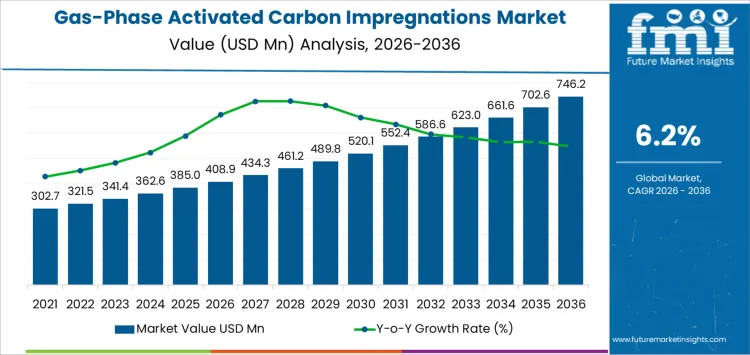
The global gas-phase activated carbon impregnations market is valued at USD 408.9 million in 2026 and is projected to reach USD 746.2 million by 2036, advancing at a 6.2% CAGR. This growth is driven by the increasing demand for efficient air purification and filtration solutions to remove volatile organic compounds (VOCs), odors, and other contaminants. Gas-phase activated carbon impregnations are used across various industries, including industrial air purification, wastewater treatment, and environmental protection, with a growing focus on compliance with stringent environmental regulations. Potassium hydroxide (KOH) impregnation leads the market with a 22% share due to its effectiveness in adsorbing acidic gases like hydrogen sulfide and carbon dioxide, making it vital in industries such as chemical manufacturing and oil refining.
Quick Stats for Gas-Phase Activated Carbon Impregnations Market
- Gas-Phase Activated Carbon Impregnations Market Value (2026): USD 408.9 million
- Gas-Phase Activated Carbon Impregnations Market Forecast Value (2036): USD 746.2 million
- Gas-Phase Activated Carbon Impregnations Market Forecast CAGR (2026-2036): 6.2%
- Leading Impregnation Type in Gas-Phase Activated Carbon Impregnations Market: Potassium hydroxide (KOH) impregnation
- Key Growth Regions in Gas-Phase Activated Carbon Impregnations Market: Asia Pacific, North America
- Top Players in Gas-Phase Activated Carbon Impregnations Market: Calgon Carbon (Kurary Group), Cabot Norit Activated Carbon, Haycarb PLC, Jacobi Carbons (Osaka Gas Chemicals), Eurocarb / Desotec
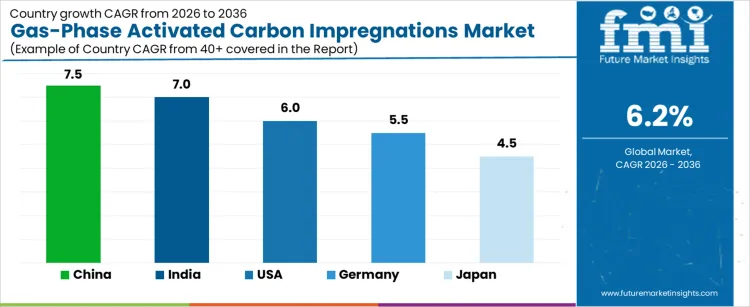
China leads the market with a 7.5% CAGR, driven by expanding industrial sectors and heightened demand for air purification solutions. India follows with a 7.0% growth rate, fueled by industrialization and increased environmental awareness. The USA and Germany show steady growth at 6.0% and 5.5%, respectively, supported by consistent demand across industries like petrochemicals and manufacturing. Japan’s market grows at a more moderate pace of 4.5%. Key players in the market, including Calgon Carbon and Cabot Norit, continue to innovate and offer specialized impregnation solutions to meet evolving environmental standards.
Gas-Phase Activated Carbon Impregnations Market Key Takeaways
| Metric | Value |
|---|---|
| Industry Value (2026) | USD 408.9 million |
| Forecast Value (2036) | USD 746.2 million |
| Forecast CAGR (2026-2036) | 6.2% |
How is the Global Gas-Phase Activated Carbon Impregnations Sector Advancing?
The global gas-phase activated carbon impregnations market is expanding due to increasing demand for efficient air purification and filtration solutions across various industries. Gas-phase activated carbon impregnations are primarily used to remove volatile organic compounds (VOCs), odors, and other contaminants from air, making them crucial in sectors such as industrial air filtration, water treatment, and environmental protection. Initially, these solutions were focused on industrial applications, but the market has broadened as environmental regulations tighten and the need for clean air solutions increases in commercial and residential buildings.
The market for gas-phase activated carbon impregnations is set to grow due to the rising awareness of air quality and health impacts. Innovations in impregnation technologies and the development of more efficient, longer-lasting solutions will further boost demand. Additionally, stricter environmental regulations in both developed and emerging markets will drive the adoption of these products. Challenges such as high production costs, competition from alternative filtration technologies, and the need for constant innovation will shape market dynamics. As air quality continues to be a global priority, gas-phase activated carbon impregnations will remain a key solution in tackling air pollution and maintaining healthier environments.
What Is the Segment-Wise Analysis for the Global Gas-Phase Activated Carbon Impregnations Market?
The global gas-phase activated carbon impregnation market is shaped by impregnation types and end-use applications. Potassium hydroxide (KOH) impregnation leads with a 22% share, enhancing activated carbon’s ability to adsorb acidic gases. Other notable types include iodine-based impregnation, phosphoric acid, metal salt impregnation, and sulfur-impregnated carbon. In end-use applications, industrial air purification, especially in chemical plants and refineries, accounts for 30%, driven by the need to control emissions and maintain air quality in industrial environments.
Why Does Potassium Hydroxide (KOH) Impregnation Lead the Global Gas-Phase Activated Carbon Impregnations Market?
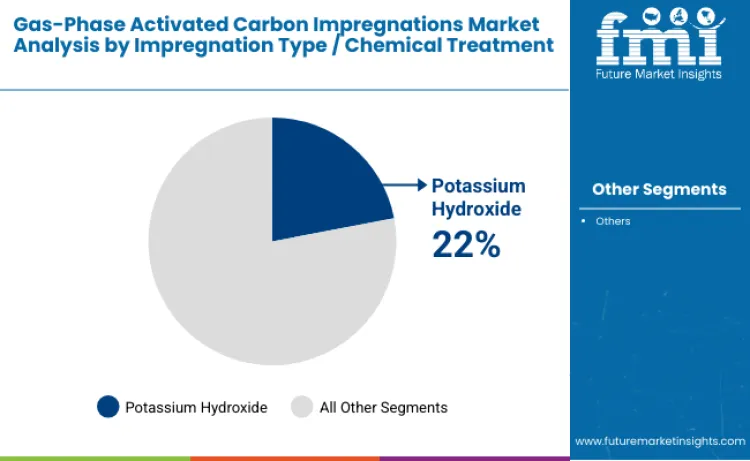
Potassium hydroxide (KOH) impregnation holds a 22% share in the global gas-phase activated carbon impregnation market due to its ability to significantly enhance the adsorption capacity of activated carbon, particularly for acidic gases like hydrogen sulfide and carbon dioxide. KOH impregnation improves the carbon's reactivity, enabling it to capture a wider range of pollutants effectively. It is widely used in industries like chemical manufacturing, oil refining, and air purification, where controlling emissions and removing harmful gases are critical. As regulatory standards on air quality become more stringent, the demand for highly efficient, KOH-impregnated activated carbon continues to rise, reinforcing its leading position in the market.
Why Does Industrial Air Purification Hold the Largest Share in the Global Gas-Phase Activated Carbon Impregnations Market?
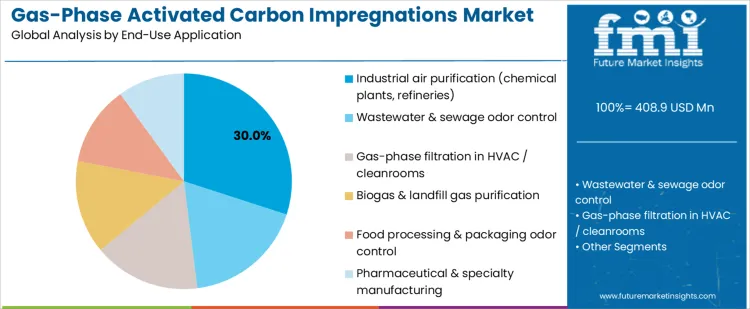
Industrial air purification, especially in chemical plants and refineries, accounts for 30% of the global gas-phase activated carbon impregnation market due to the high demand for removing toxic gases and pollutants from industrial emissions. Industrial facilities often handle hazardous chemicals and release volatile organic compounds (VOCs), sulfur compounds, and other harmful pollutants into the air, requiring effective filtration and purification solutions. Gas-phase activated carbon impregnated with various chemicals is highly effective in adsorbing and removing these contaminants, ensuring compliance with environmental regulations and maintaining safe working conditions. As industries increasingly focus on improving air quality and reducing environmental impact, the industrial air purification sector continues to drive growth in the market.
What is Shaping the Gas‑Phase Activated Carbon Impregnations Market?
The gas‑phase activated carbon impregnations market is shaped by the increasing need for advanced air purification and odor control solutions across industrial, commercial, and residential applications. Impregnated activated carbon enhances adsorption performance for specific gases, volatile organic compounds (VOCs), and contaminants, making it critical for air filtration systems in chemical plants, wastewater facilities, HVAC units, and public buildings. Heightened environmental regulations on air emissions and indoor air quality standards are accelerating adoption.
What Are the Key Drivers for the Gas‑Phase Activated Carbon Impregnations Market?
The market is driven by the need for efficient removal of hazardous gases, odors, and VOCs in industrial and municipal applications. Stringent air quality and emissions regulations are compelling industries to adopt high‑performance gas‑phase filtration solutions. Growth in sectors such as petrochemicals, pharmaceuticals, food and beverage, and wastewater treatment increases demand for impregnated carbon that targets specific contaminants. The rising adoption of advanced HVAC and indoor air quality systems in commercial and residential spaces is also fueling demand.
What Are the Constraints Limiting the Adoption of Gas‑Phase Activated Carbon Impregnations?
Adoption of gas‑phase activated carbon impregnations is constrained by the higher cost compared with standard activated carbon products. Specialized impregnation processes and materials increase manufacturing expenses, which can limit uptake in price‑sensitive applications. Performance of impregnated carbon can be highly specific to target compounds, making selection complex for users with diverse contaminant profiles. Spent carbon disposal poses environmental and regulatory challenges, particularly when it has adsorbed hazardous substances.
What is the Growth Outlook for the Gas-Phase Activated Carbon Impregnations Market by Country?
| Country | CAGR (%) |
|---|---|
| China | 7.5% |
| USA | 6.0% |
| Germany | 5.5% |
| India | 7.0% |
| Japan | 4.5% |
The gas-phase activated carbon impregnations market is experiencing strong growth globally, with China leading at a 7.5% CAGR, driven by expanding industrial sectors and increased demand for air purification solutions. India follows closely at 7.0%, supported by rapid industrialization and growing awareness of environmental issues. The USA shows steady growth at 6.0%, fueled by consistent demand across industries such as manufacturing and chemical processing. Germany's market grows at 5.5%, driven by environmental regulations and demand for sustainable filtration solutions. Japan’s market grows at a moderate 4.5%, reflecting stable demand across industrial and environmental applications.
Why is the Gas-Phase Activated Carbon Impregnations Market Growing in China?
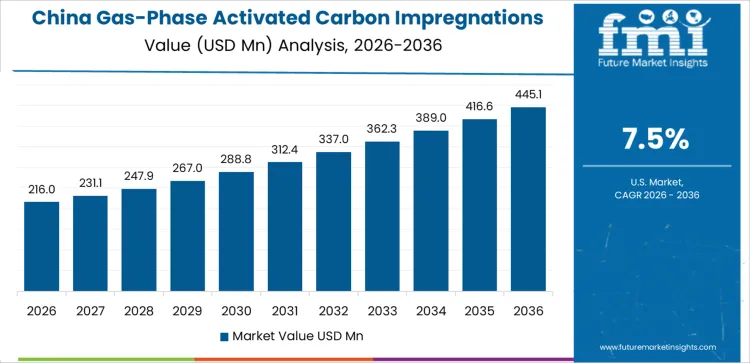
China’s gas-phase activated carbon impregnations market is growing at a 7.5% CAGR, driven by the country’s rapid industrialization and increasing demand for air purification and environmental control solutions. As China’s manufacturing, chemical processing, and energy sectors continue to expand, the need for effective filtration and pollution control technologies is rising. Activated carbon impregnations are increasingly used to remove contaminants from gases, particularly in industries such as petrochemicals and waste management. China’s focus on environmental protection and air quality improvement, coupled with government regulations on industrial emissions, is boosting the demand for gas-phase activated carbon impregnations. As industrial activity grows and environmental standards become more stringent, the market for these products is expected to continue growing robustly.
What is Contributing to the Growth of the Gas-Phase Activated Carbon Impregnations Market in India?
India’s gas-phase activated carbon impregnations market is growing at a 7.0% CAGR, fueled by rapid industrialization and growing environmental awareness. The country’s expanding manufacturing, chemical, and energy sectors are driving demand for efficient filtration and pollution control solutions. As India continues to urbanize, the need for air purification in residential, commercial, and industrial settings is increasing. India’s government is focusing on improving air quality and regulating emissions from industrial plants, which is further boosting the adoption of activated carbon impregnations. The rising concern about environmental pollution, particularly in cities with high levels of industrial activity, is contributing to the market’s growth. With a growing emphasis on sustainable solutions, India’s market for gas-phase activated carbon impregnations is expected to expand rapidly.
How is the Gas-Phase Activated Carbon Impregnations Market Expanding in the USA?
The USA’s gas-phase activated carbon impregnations market is growing at a 6.0% CAGR, supported by consistent demand across various industries, including chemical manufacturing, petrochemicals, and waste management. As environmental regulations in the USA become stricter, industries are increasingly adopting air purification and emission control technologies to meet government standards. Gas-phase activated carbon impregnations are used to remove harmful contaminants from industrial gases, making them essential in industries focused on reducing their environmental impact. There is a rising awareness of air quality, particularly in urban areas, leading to the increased adoption of air purification systems that utilize activated carbon impregnations. The USA’s focus on sustainability and clean technology ensures continued growth in the gas-phase activated carbon impregnations market.
Why is the Gas-Phase Activated Carbon Impregnations Market Growing in Japan?
Japan’s gas-phase activated carbon impregnations market is growing at a 4.5% CAGR, driven by stable demand from various industrial and environmental applications. Japan’s stringent environmental regulations and focus on air quality control are significant contributors to the demand for activated carbon impregnations, which are used to purify gases in manufacturing and energy sectors. Additionally, the Japanese government’s commitment to sustainability and clean technology encourages the use of effective air purification solutions. As Japan continues to address pollution concerns and meet international environmental standards, the market for gas-phase activated carbon impregnations is expected to continue growing steadily, driven by consistent demand from industrial applications and air purification systems.
What is Shaping the Gas-Phase Activated Carbon Impregnations Market Growth in Germany?
Germany’s gas-phase activated carbon impregnations market is growing at a 5.5% CAGR, supported by the country’s stringent environmental regulations and increasing demand for sustainable filtration solutions. Germany is known for its strong commitment to environmental protection, and industries such as manufacturing, petrochemicals, and waste management are increasingly adopting activated carbon impregnations to meet air quality and emission standards. As the demand for cleaner technologies rises, especially in urban areas with high industrial activity, the market for gas-phase activated carbon impregnations is expanding. Additionally, Germany’s focus on improving air quality and promoting sustainable practices across sectors ensures that the market will continue growing steadily, driven by both industrial applications and regulatory requirements.
How are Key Firms Competing in the Gas‑Phase Activated Carbon Impregnations Market
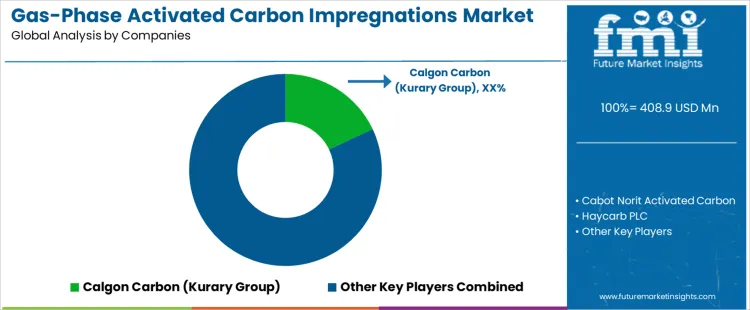
Calgon Carbon (part of Kuraray Group), Cabot Norit Activated Carbon, Haycarb PLC, Jacobi Carbons (Osaka Gas Chemicals), and Eurocarb / Desotec compete with specialized gas‑phase activated carbon impregnations designed to adsorb gaseous pollutants and volatile compounds in industrial and environmental applications. Calgon Carbon emphasizes decades of experience with high‑quality activated carbons in gas treatment and tailored pellet and granular products engineered for specific air purification challenges. Cabot Norit positions high‑performance activated carbon solutions with global support and technical services to meet rigorous gas‑phase purification needs across industries. Haycarb PLC’s brochures highlight coconut shell‑derived impregnated carbons that appeal to buyers seeking renewable raw materials and strong adsorption properties for gas streams.
Jacobi Carbons under the Osaka Gas Chemicals umbrella promotes broad product grades and customizable impregnation chemistries backed by international production and distribution capabilities. Eurocarb / Desotec materials showcase solutions focused on industrial air purification and odor control, often paired with engineering support for system integration. Across firms, product collateral stresses adsorption capacity, pore structure optimization, and application‑specific solutions. Competitive strategies hinge on technical differentiation, capacity to tailor carbons for target gases, global reach, and clear performance data to influence procurement for environmental control and industrial purification projects.
Key Players in Gas-Phase Activated Carbon Impregnations Market
- Calgon Carbon (Kurary Group)
- Cabot Norit Activated Carbon
- Haycarb PLC
- Jacobi Carbons (Osaka Gas Chemicals)
- Eurocarb / Desotec
Scope of Report
| Items | Values |
|---|---|
| Quantitative Units (2026) | USD million |
| End Use Application | Industrial Air Purification (chemical plants, refineries), Wastewater & Sewage Odor Control, Gas-phase Filtration in HVAC / Cleanrooms, Biogas & Landfill Gas Purification, Food Processing & Packaging Odor Control, Pharmaceutical & Specialty Manufacturing |
| Impregnation Type / Chemical Treatment | Potassium Hydroxide (KOH) Impregnation, Potassium Iodide (KI) / Iodine-Based Impregnation, Phosphoric & Phosphates (Acid Gas Control), Metal Salt Impregnation (Cu, Zn, Mn Blends), Sulfur-Impregnated Activated Carbon, Amine-Functionalized Impregnations, Proprietary Multi-Functional Blends (Composite Formulations) |
| Gas / Contaminant Type Treated | Acidic Gases (SO₂, HCl, HF), VOCs & Hydrocarbons, Ammonia & Amines, Hydrogen Sulfide (H₂S) & Mercaptans, Ozone, Oxidizers & Specialty Industrial Gases, Odor Control (Wastewater, Food, Municipal) |
| Activated Carbon Base Material | Coal-Based Activated Carbon, Coconut-Shell Activated Carbon, Wood-Based Activated Carbon, Composite Carbons (Blends, Re-Agglomerated Grades), Synthetic / Polymer-Derived Carbons |
| Regions Covered | Asia Pacific, Europe, North America, Latin America, Middle East & Africa |
| Countries Covered | USA, China, Japan, South Korea, India, Australia & New Zealand, ASEAN, Germany, UK, France, Italy, Spain, Nordic, BENELUX, Brazil, Chile, Mexico, Saudi Arabia, Other GCC Countries, Turkey, South Africa, Other African Union, Rest of Regions |
| Key Companies Profiled | Calgon Carbon (Kurary Group), Cabot Norit Activated Carbon, Haycarb PLC, Jacobi Carbons (Osaka Gas Chemicals), Eurocarb / Desotec |
| Additional Attributes | Dollar sales by impregnation type, gas/contaminant type treated, and activated carbon base material; regional CAGR and growth outlook; distribution channels including direct sales, GPO/IDN programs, and distributor supply; innovation trends in multi-functional blends and sulfur-impregnated carbon; competitive positioning of global vs regional suppliers. |
Gas-Phase Activated Carbon Impregnations Market by Segments
Impregnation Type / Chemical Treatment
- Potassium hydroxide (KOH) impregnation
- Potassium iodide (KI) / iodine-based impregnation
- Phosphoric & phosphates (acid gas control)
- Metal salt impregnation (Cu, Zn, Mn blends)
- Sulfur-impregnated activated carbon
- Amine-functionalized impregnations (amine-promoted adsorption)
- Proprietary multi-functional blends (composite formulations)
Gas / Contaminant Type Treated
- Acidic gases (SO₂, HCl, HF)
- VOCs & hydrocarbons
- Ammonia & amines
- Hydrogen sulfide (H₂S) & mercaptans
- Ozone, oxidizers & specialty industrial gases
- Odor control (wastewater, food, municipal)
Activated Carbon Base Material
- Coal-based activated carbon
- Coconut-shell activated carbon
- Wood-based activated carbon
- Composite carbons (blends, re-agglomerated grades)
- Synthetic / polymer-derived carbons
End-Use Application
- Industrial air purification (chemical plants, refineries)
- Wastewater & sewage odor control
- Gas-phase filtration in HVAC / cleanrooms
- Biogas & landfill gas purification
- Food processing & packaging odor control
- Pharmaceutical & specialty manufacturing
Region
- Asia Pacific
- China
- Japan
- South Korea
- India
- Australia & New Zealand
- ASEAN
- Rest of Asia Pacific
- Europe
- Germany
- United Kingdom
- France
- Italy
- Spain
- Nordic
- BENELUX
- Rest of Europe
- North America
- United States
- Canada
- Mexico
- Latin America
- Brazil
- Chile
- Rest of Latin America
- Middle East & Africa
- Kingdom of Saudi Arabia
- Other GCC Countries
- Turkey
- South Africa
- Other African Union
- Rest of Middle East & Africa
Frequently Asked Questions
How big is the gas-phase activated carbon impregnations market in 2026?
The global gas-phase activated carbon impregnations market is estimated to be valued at USD 408.9 mn in 2026.
What will be the size of gas-phase activated carbon impregnations market in 2036?
The market size for the gas-phase activated carbon impregnations market is projected to reach USD 746.2 mn by 2036.
How much will be the gas-phase activated carbon impregnations market growth between 2026 and 2036?
The gas-phase activated carbon impregnations market is expected to grow at a 6.2% CAGR between 2026 and 2036.
What are the key product types in the gas-phase activated carbon impregnations market?
The key product types in gas-phase activated carbon impregnations market are potassium hydroxide (koh) impregnation, potassium iodide (ki) / iodine-based impregnation, phosphoric & phosphates (acid gas control), metal salt impregnation (cu, zn, mn blends), sulfur-impregnated activated carbon, amine-functionalized impregnations (amine-promoted adsorption) and proprietary multi-functional blends (composite formulations).
Which gas / contaminant type treated segment to contribute significant share in the gas-phase activated carbon impregnations market in 2026?
In terms of gas / contaminant type treated, acidic gases (so₂, hcl, hf) segment to command 25.0% share in the gas-phase activated carbon impregnations market in 2026.
Preview the report firsthand - request a free sample
Get SampleGet the brochure for pricing and purchase details.
Get PDFTable of Content
- Executive Summary
- Global Market Outlook
- Demand-side Trends
- Supply-side Trends
- Technology Roadmap Analysis
- Analysis and Recommendations
- Market Overview
- Market Coverage / Taxonomy
- Market Definition / Scope / Limitations
- Market Background
- Market Dynamics
- Drivers
- Restraints
- Opportunity
- Trends
- Scenario Forecast
- Demand in Optimistic Scenario
- Demand in Likely Scenario
- Demand in Conservative Scenario
- Opportunity Map Analysis
- Product Life Cycle Analysis
- Supply Chain Analysis
- Investment Feasibility Matrix
- Value Chain Analysis
- PESTLE and Porter’s Analysis
- Regulatory Landscape
- Regional Parent Market Outlook
- Production and Consumption Statistics
- Import and Export Statistics
- Market Dynamics
- Global Market Analysis 2021 to 2025 and Forecast, 2026 to 2036
- Historical Market Size Value (USD Million) Analysis, 2021 to 2025
- Current and Future Market Size Value (USD Million) Projections, 2026 to 2036
- Y-o-Y Growth Trend Analysis
- Absolute $ Opportunity Analysis
- Global Market Pricing Analysis 2021 to 2025 and Forecast 2026 to 2036
- Global Market Analysis 2021 to 2025 and Forecast 2026 to 2036, By Impregnation Type / Chemical Treatment
- Introduction / Key Findings
- Historical Market Size Value (USD Million) Analysis By Impregnation Type / Chemical Treatment , 2021 to 2025
- Current and Future Market Size Value (USD Million) Analysis and Forecast By Impregnation Type / Chemical Treatment , 2026 to 2036
- Potassium hydroxide (KOH) impregnation
- Potassium iodide (KI) / iodine-based impregnation
- Phosphoric & phosphates (acid gas control)
- Metal salt impregnation (Cu, Zn, Mn blends)
- Sulfur-impregnated activated carbon
- Amine-functionalized impregnations (amine-promoted adsorption)
- Proprietary multi-functional blends (composite formulations)
- Y-o-Y Growth Trend Analysis By Impregnation Type / Chemical Treatment , 2021 to 2025
- Absolute $ Opportunity Analysis By Impregnation Type / Chemical Treatment , 2026 to 2036
- Global Market Analysis 2021 to 2025 and Forecast 2026 to 2036, By Gas / Contaminant Type Treated
- Introduction / Key Findings
- Historical Market Size Value (USD Million) Analysis By Gas / Contaminant Type Treated, 2021 to 2025
- Current and Future Market Size Value (USD Million) Analysis and Forecast By Gas / Contaminant Type Treated, 2026 to 2036
- Acidic gases (SO₂, HCl, HF)
- VOCs & hydrocarbons
- Ammonia & amines
- Hydrogen sulfide (H₂S) & mercaptans
- Ozone, oxidizers & specialty industrial gases
- Odor control (wastewater, food, municipal)
- Y-o-Y Growth Trend Analysis By Gas / Contaminant Type Treated, 2021 to 2025
- Absolute $ Opportunity Analysis By Gas / Contaminant Type Treated, 2026 to 2036
- Global Market Analysis 2021 to 2025 and Forecast 2026 to 2036, By Activated Carbon Base Material
- Introduction / Key Findings
- Historical Market Size Value (USD Million) Analysis By Activated Carbon Base Material, 2021 to 2025
- Current and Future Market Size Value (USD Million) Analysis and Forecast By Activated Carbon Base Material, 2026 to 2036
- Coal-based activated carbon
- Coconut-shell activated carbon
- Wood-based activated carbon
- Composite carbons (blends, re-agglomerated grades)
- Synthetic / polymer-derived carbons
- Y-o-Y Growth Trend Analysis By Activated Carbon Base Material, 2021 to 2025
- Absolute $ Opportunity Analysis By Activated Carbon Base Material, 2026 to 2036
- Global Market Analysis 2021 to 2025 and Forecast 2026 to 2036, By End-Use Application
- Introduction / Key Findings
- Historical Market Size Value (USD Million) Analysis By End-Use Application, 2021 to 2025
- Current and Future Market Size Value (USD Million) Analysis and Forecast By End-Use Application, 2026 to 2036
- Industrial air purification (chemical plants, refineries)
- Wastewater & sewage odor control
- Gas-phase filtration in HVAC / cleanrooms
- Biogas & landfill gas purification
- Food processing & packaging odor control
- Pharmaceutical & specialty manufacturing
- Y-o-Y Growth Trend Analysis By End-Use Application, 2021 to 2025
- Absolute $ Opportunity Analysis By End-Use Application, 2026 to 2036
- Global Market Analysis 2021 to 2025 and Forecast 2026 to 2036, By Region
- Introduction
- Historical Market Size Value (USD Million) Analysis By Region, 2021 to 2025
- Current Market Size Value (USD Million) Analysis and Forecast By Region, 2026 to 2036
- North America
- Latin America
- Western Europe
- Eastern Europe
- East Asia
- South Asia and Pacific
- Middle East & Africa
- Market Attractiveness Analysis By Region
- North America Market Analysis 2021 to 2025 and Forecast 2026 to 2036, By Country
- Historical Market Size Value (USD Million) Trend Analysis By Market Taxonomy, 2021 to 2025
- Market Size Value (USD Million) Forecast By Market Taxonomy, 2026 to 2036
- By Country
- USA
- Canada
- Mexico
- By Impregnation Type / Chemical Treatment
- By Gas / Contaminant Type Treated
- By Activated Carbon Base Material
- By End-Use Application
- By Country
- Market Attractiveness Analysis
- By Country
- By Impregnation Type / Chemical Treatment
- By Gas / Contaminant Type Treated
- By Activated Carbon Base Material
- By End-Use Application
- Key Takeaways
- Latin America Market Analysis 2021 to 2025 and Forecast 2026 to 2036, By Country
- Historical Market Size Value (USD Million) Trend Analysis By Market Taxonomy, 2021 to 2025
- Market Size Value (USD Million) Forecast By Market Taxonomy, 2026 to 2036
- By Country
- Brazil
- Chile
- Rest of Latin America
- By Impregnation Type / Chemical Treatment
- By Gas / Contaminant Type Treated
- By Activated Carbon Base Material
- By End-Use Application
- By Country
- Market Attractiveness Analysis
- By Country
- By Impregnation Type / Chemical Treatment
- By Gas / Contaminant Type Treated
- By Activated Carbon Base Material
- By End-Use Application
- Key Takeaways
- Western Europe Market Analysis 2021 to 2025 and Forecast 2026 to 2036, By Country
- Historical Market Size Value (USD Million) Trend Analysis By Market Taxonomy, 2021 to 2025
- Market Size Value (USD Million) Forecast By Market Taxonomy, 2026 to 2036
- By Country
- Germany
- UK
- Italy
- Spain
- France
- Nordic
- BENELUX
- Rest of Western Europe
- By Impregnation Type / Chemical Treatment
- By Gas / Contaminant Type Treated
- By Activated Carbon Base Material
- By End-Use Application
- By Country
- Market Attractiveness Analysis
- By Country
- By Impregnation Type / Chemical Treatment
- By Gas / Contaminant Type Treated
- By Activated Carbon Base Material
- By End-Use Application
- Key Takeaways
- Eastern Europe Market Analysis 2021 to 2025 and Forecast 2026 to 2036, By Country
- Historical Market Size Value (USD Million) Trend Analysis By Market Taxonomy, 2021 to 2025
- Market Size Value (USD Million) Forecast By Market Taxonomy, 2026 to 2036
- By Country
- Russia
- Poland
- Hungary
- Balkan & Baltic
- Rest of Eastern Europe
- By Impregnation Type / Chemical Treatment
- By Gas / Contaminant Type Treated
- By Activated Carbon Base Material
- By End-Use Application
- By Country
- Market Attractiveness Analysis
- By Country
- By Impregnation Type / Chemical Treatment
- By Gas / Contaminant Type Treated
- By Activated Carbon Base Material
- By End-Use Application
- Key Takeaways
- East Asia Market Analysis 2021 to 2025 and Forecast 2026 to 2036, By Country
- Historical Market Size Value (USD Million) Trend Analysis By Market Taxonomy, 2021 to 2025
- Market Size Value (USD Million) Forecast By Market Taxonomy, 2026 to 2036
- By Country
- China
- Japan
- South Korea
- By Impregnation Type / Chemical Treatment
- By Gas / Contaminant Type Treated
- By Activated Carbon Base Material
- By End-Use Application
- By Country
- Market Attractiveness Analysis
- By Country
- By Impregnation Type / Chemical Treatment
- By Gas / Contaminant Type Treated
- By Activated Carbon Base Material
- By End-Use Application
- Key Takeaways
- South Asia and Pacific Market Analysis 2021 to 2025 and Forecast 2026 to 2036, By Country
- Historical Market Size Value (USD Million) Trend Analysis By Market Taxonomy, 2021 to 2025
- Market Size Value (USD Million) Forecast By Market Taxonomy, 2026 to 2036
- By Country
- India
- ASEAN
- Australia & New Zealand
- Rest of South Asia and Pacific
- By Impregnation Type / Chemical Treatment
- By Gas / Contaminant Type Treated
- By Activated Carbon Base Material
- By End-Use Application
- By Country
- Market Attractiveness Analysis
- By Country
- By Impregnation Type / Chemical Treatment
- By Gas / Contaminant Type Treated
- By Activated Carbon Base Material
- By End-Use Application
- Key Takeaways
- Middle East & Africa Market Analysis 2021 to 2025 and Forecast 2026 to 2036, By Country
- Historical Market Size Value (USD Million) Trend Analysis By Market Taxonomy, 2021 to 2025
- Market Size Value (USD Million) Forecast By Market Taxonomy, 2026 to 2036
- By Country
- Kingdom of Saudi Arabia
- Other GCC Countries
- Turkiye
- South Africa
- Other African Union
- Rest of Middle East & Africa
- By Impregnation Type / Chemical Treatment
- By Gas / Contaminant Type Treated
- By Activated Carbon Base Material
- By End-Use Application
- By Country
- Market Attractiveness Analysis
- By Country
- By Impregnation Type / Chemical Treatment
- By Gas / Contaminant Type Treated
- By Activated Carbon Base Material
- By End-Use Application
- Key Takeaways
- Key Countries Market Analysis
- USA
- Pricing Analysis
- Market Share Analysis, 2025
- By Impregnation Type / Chemical Treatment
- By Gas / Contaminant Type Treated
- By Activated Carbon Base Material
- By End-Use Application
- Canada
- Pricing Analysis
- Market Share Analysis, 2025
- By Impregnation Type / Chemical Treatment
- By Gas / Contaminant Type Treated
- By Activated Carbon Base Material
- By End-Use Application
- Mexico
- Pricing Analysis
- Market Share Analysis, 2025
- By Impregnation Type / Chemical Treatment
- By Gas / Contaminant Type Treated
- By Activated Carbon Base Material
- By End-Use Application
- Brazil
- Pricing Analysis
- Market Share Analysis, 2025
- By Impregnation Type / Chemical Treatment
- By Gas / Contaminant Type Treated
- By Activated Carbon Base Material
- By End-Use Application
- Chile
- Pricing Analysis
- Market Share Analysis, 2025
- By Impregnation Type / Chemical Treatment
- By Gas / Contaminant Type Treated
- By Activated Carbon Base Material
- By End-Use Application
- Germany
- Pricing Analysis
- Market Share Analysis, 2025
- By Impregnation Type / Chemical Treatment
- By Gas / Contaminant Type Treated
- By Activated Carbon Base Material
- By End-Use Application
- UK
- Pricing Analysis
- Market Share Analysis, 2025
- By Impregnation Type / Chemical Treatment
- By Gas / Contaminant Type Treated
- By Activated Carbon Base Material
- By End-Use Application
- Italy
- Pricing Analysis
- Market Share Analysis, 2025
- By Impregnation Type / Chemical Treatment
- By Gas / Contaminant Type Treated
- By Activated Carbon Base Material
- By End-Use Application
- Spain
- Pricing Analysis
- Market Share Analysis, 2025
- By Impregnation Type / Chemical Treatment
- By Gas / Contaminant Type Treated
- By Activated Carbon Base Material
- By End-Use Application
- France
- Pricing Analysis
- Market Share Analysis, 2025
- By Impregnation Type / Chemical Treatment
- By Gas / Contaminant Type Treated
- By Activated Carbon Base Material
- By End-Use Application
- India
- Pricing Analysis
- Market Share Analysis, 2025
- By Impregnation Type / Chemical Treatment
- By Gas / Contaminant Type Treated
- By Activated Carbon Base Material
- By End-Use Application
- ASEAN
- Pricing Analysis
- Market Share Analysis, 2025
- By Impregnation Type / Chemical Treatment
- By Gas / Contaminant Type Treated
- By Activated Carbon Base Material
- By End-Use Application
- Australia & New Zealand
- Pricing Analysis
- Market Share Analysis, 2025
- By Impregnation Type / Chemical Treatment
- By Gas / Contaminant Type Treated
- By Activated Carbon Base Material
- By End-Use Application
- China
- Pricing Analysis
- Market Share Analysis, 2025
- By Impregnation Type / Chemical Treatment
- By Gas / Contaminant Type Treated
- By Activated Carbon Base Material
- By End-Use Application
- Japan
- Pricing Analysis
- Market Share Analysis, 2025
- By Impregnation Type / Chemical Treatment
- By Gas / Contaminant Type Treated
- By Activated Carbon Base Material
- By End-Use Application
- South Korea
- Pricing Analysis
- Market Share Analysis, 2025
- By Impregnation Type / Chemical Treatment
- By Gas / Contaminant Type Treated
- By Activated Carbon Base Material
- By End-Use Application
- Russia
- Pricing Analysis
- Market Share Analysis, 2025
- By Impregnation Type / Chemical Treatment
- By Gas / Contaminant Type Treated
- By Activated Carbon Base Material
- By End-Use Application
- Poland
- Pricing Analysis
- Market Share Analysis, 2025
- By Impregnation Type / Chemical Treatment
- By Gas / Contaminant Type Treated
- By Activated Carbon Base Material
- By End-Use Application
- Hungary
- Pricing Analysis
- Market Share Analysis, 2025
- By Impregnation Type / Chemical Treatment
- By Gas / Contaminant Type Treated
- By Activated Carbon Base Material
- By End-Use Application
- Kingdom of Saudi Arabia
- Pricing Analysis
- Market Share Analysis, 2025
- By Impregnation Type / Chemical Treatment
- By Gas / Contaminant Type Treated
- By Activated Carbon Base Material
- By End-Use Application
- Turkiye
- Pricing Analysis
- Market Share Analysis, 2025
- By Impregnation Type / Chemical Treatment
- By Gas / Contaminant Type Treated
- By Activated Carbon Base Material
- By End-Use Application
- South Africa
- Pricing Analysis
- Market Share Analysis, 2025
- By Impregnation Type / Chemical Treatment
- By Gas / Contaminant Type Treated
- By Activated Carbon Base Material
- By End-Use Application
- USA
- Market Structure Analysis
- Competition Dashboard
- Competition Benchmarking
- Market Share Analysis of Top Players
- By Regional
- By Impregnation Type / Chemical Treatment
- By Gas / Contaminant Type Treated
- By Activated Carbon Base Material
- By End-Use Application
- Competition Analysis
- Competition Deep Dive
- Calgon Carbon (Kurary Group)
- Overview
- Product Portfolio
- Profitability by Market Segments (Product/Age /Sales Channel/Region)
- Sales Footprint
- Strategy Overview
- Marketing Strategy
- Product Strategy
- Channel Strategy
- Cabot Norit Activated Carbon
- Haycarb PLC
- Jacobi Carbons (Osaka Gas Chemicals)
- Eurocarb / Desotec
- Calgon Carbon (Kurary Group)
- Competition Deep Dive
- Assumptions & Acronyms Used
- Research Methodology


