

- Industry Size (2025)
- USD 1.5 Bn
- Forecast (2035)
- USD 2.9 Bn
- CAGR (2025 to 2035)
- 6.5%
Demand for Amino Acids in Japan Forecast and Outlook 2025 to 2035
The demand for amino acids in Japan is expected to grow from USD 1.5 billion in 2025 to USD 2.9 billion by 2035, reflecting a compound annual growth rate (CAGR) of 6.5%. Amino acids are essential organic compounds crucial for various industries, including food and beverages, animal feed, pharmaceuticals, and cosmetics. These compounds play an essential role in protein synthesis, metabolism, and immune function, making them vital in many therapeutic, nutritional, and industrial applications. With Japan's ongoing focus on enhancing nutrition, healthcare, and agriculture, the demand for amino acids will continue to rise steadily over the next decade.
In the food and beverage industry, amino acids are widely used to fortify functional foods and dietary supplements. Their application is growing, particularly with the increasing adoption of high-protein diets among health-conscious consumers. Similarly, in animal feed, amino acids are integral in improving livestock productivity and ensuring optimal growth rates in poultry, cattle, and aquaculture. The rising demand for animal proteins and increasing adoption of nutraceuticals and functional foods will further fuel the demand for amino acids. The demand for amino acid-based supplements for personalized nutrition and athletic performance is expanding rapidly, driven by the increasing popularity of sports nutrition.
Quick Stats of the Demand for Amino Acids in Japan
- Demand for Amino Acids in Japan Value (2025): USD 1.5 billion
- Demand for Amino Acids in Japan Forecast Value (2035): USD 2.9 billion
- Demand for Amino Acids in Japan Forecast CAGR (2025-2035): 6.5%
- Demand for Amino Acids in Japan Leading Product Type: Primers
- Demand for Amino Acids in Japan Key Growth Regions: Kyushu & Okinawa, Kanto, Kinki, Chubu, Tohoku, Rest of Japan
- Demand for Amino Acids in Japan Top Players: Kyowa Hakko Bio Co., Ltd., Evonik Industries AG, CJ CheilJedang Corporation, ADM (Archer Daniels Midland), Ajinomoto Co., Inc.
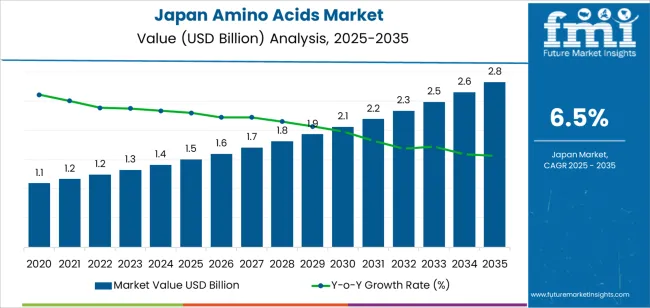
What is the Growth Forecast for the Demand for Amino Acids in Japan through 2035?
Between 2025 and 2030, the demand for amino acids in Japan is expected to increase from USD 1.5 billion to USD 1.9 billion. This phase will see steady growth, particularly in animal feed and the pharmaceuticals sectors, driven by the demand for enhanced livestock nutrition and the rising use of amino acids in biopharmaceuticals. The growing adoption of high-protein diets and the continued focus on improving health and wellness will contribute to the demand for amino acid supplements. There will be increasing investment in the functional foods sector as more consumers turn to natural solutions for health optimization.
From 2030 to 2035, the demand for amino acids will experience a sharp rise, growing from USD 1.9 billion to USD 2.9 billion. The accelerated growth during this period will be driven by the expanding sports nutrition industry, particularly with a growing interest in protein-based diets and functional foods. The increased use of amino acids in plant-based food products, which offer enhanced nutrition and taste, will be a significant factor in this rise. The growing use of amino acids in the cosmetic and pharmaceutical industries to promote skin health and improve muscle recovery will further drive industry expansion.
Demand for Amino Acids in Japan Key Takeaways
| Metric | Value |
|---|---|
| Demand for Amino Acids in Japan Value (2025) | USD 1.5 billion |
| Demand for Amino Acids in Japan Forecast Value (2035) | USD 2.9 billion |
| Demand for Amino Acids in Japan Forecast CAGR (2025-2035) | 6.5% |
Why is the Demand for Amino Acids in Japan Growing?
The demand for amino acids in Japan is increasing due to their wide range of applications in various industries, including food and beverages, pharmaceuticals, animal feed, and cosmetics. Amino acids are essential building blocks for protein synthesis and are used in a variety of products that promote health and wellness. The growing focus on nutrition, particularly in functional foods and supplements, is driving the demand for amino acids as consumers seek products that enhance physical performance, improve health, and support specific dietary needs.
A major driver of this growth is the increasing demand for functional foods and dietary supplements, particularly those that support muscle health, immunity, and overall wellness. Amino acids, such as branched-chain amino acids (BCAAs) and essential amino acids, are gaining popularity in the sports and fitness sectors for their ability to improve muscle recovery and endurance. As the trend toward health-conscious living and preventive healthcare continues to grow in Japan, amino acids are being incorporated into a broader range of products, including energy drinks, protein bars, and health supplements.
The demand for amino acids in animal nutrition is also contributing to industry growth. Amino acids are essential in animal feed formulations, helping to improve the growth and productivity of livestock. With Japan’s strong focus on food safety, sustainability, and high-quality animal products, the use of amino acids in animal feed is becoming increasingly important. As the demand for amino acids continues to rise in both human health and animal nutrition sectors, the industry for these products in Japan is expected to grow steadily through 2035.
What is the Segment-Wise Analysis of Demand for Amino Acids in Japan?
Demand for amino acids in Japan is segmented by product type and material type. By product type, demand is divided into primers, base coat, and clear coat/topcoat, with primers leading the demand at 38%. The demand is also segmented by material type, including acrylic enamel, acrylic urethane, acrylic lacquer, zinc phosphate, and epoxy, with acrylic enamel holding the largest share at 43%. Amino acids play a crucial role in enhancing the quality and performance of coatings used in various applications such as automotive, industrial, and consumer goods. Regionally, demand is divided into Kanto, Kinki, Chubu, Kyushu & Okinawa, Tohoku, and the Rest of Japan.
Why Do Primers Lead the Product Type Demand for Amino Acids?
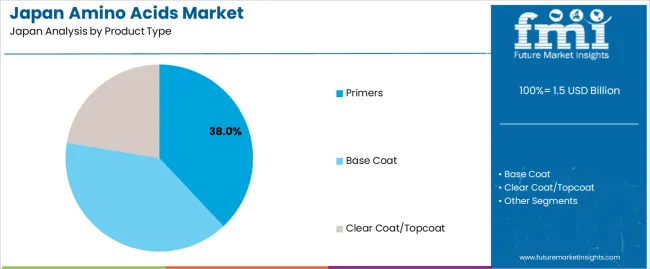
Primers account for 38% of the demand for amino acids in Japan. Amino acids are used as curing agents in primers, enhancing their adhesion and durability in various coatings. Primers play a vital role in surface preparation, ensuring that topcoats adhere effectively and provide long-lasting protection. They are particularly important in automotive, industrial, and decorative coatings, where the quality of the surface preparation significantly impacts the overall coating performance.
By improving the resistance of primers to wear, corrosion, and environmental factors, amino acids help ensure that the final coating is durable and protective. As industries place a greater emphasis on high-performance coatings that withstand tough conditions, the demand for amino acids in primers continues to grow. This ensures that primers remain the dominant product type in the amino acid coatings sector, helping to maintain high-quality standards in various applications.
How Does Acrylic Enamel Lead the Material Type Demand for Amino Acids?
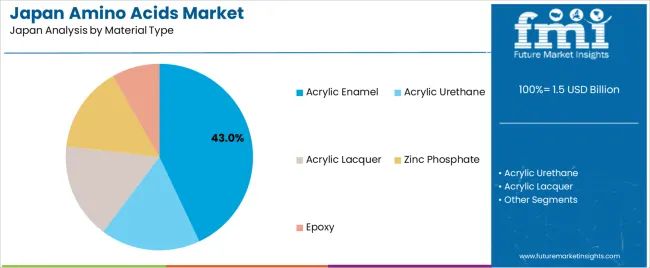
Acrylic enamel accounts for 43% of the demand for amino acids in Japan. This material is highly favored for its superior finish, durability, and resistance to environmental wear, making it a top choice for automotive and industrial applications. Acrylic enamel coatings are prized for their smooth, glossy appearance and ability to resist fading, cracking, and yellowing over time. Amino acids are used in the formulation of acrylic enamel to enhance the curing process, improve adhesion, and increase the longevity of the coating.
These characteristics make acrylic enamel particularly well-suited for demanding environments, where long-lasting protection is critical. As industries focus on premium coatings that provide both aesthetic appeal and superior durability, the demand for amino acids in acrylic enamel remains strong. This ongoing need for high-performance coatings ensures that acrylic enamel continues to lead the material type demand for amino acids in Japan.
What Are the Key Trends, Drivers, and Restraints in Demand for Amino Acids in Japan?
Demand for amino acids in Japan is rising mainly across sectors such as pharmaceuticals, food and beverage, dietary supplements, animal feed and cosmetics. Many pharmaceutical and nutraceutical companies use amino acids for drugs, parenteral nutrition, and functional health supplements. Functional foods and dietary supplements enriched with amino acids are increasingly popular among consumers seeking muscle support, immunity boost, or general wellness. Animal nutrition also contributes, with essential amino acids used in livestock feed to improve growth and health.
Why Demand for Amino Acids Is Growing in Japan?
Growing health awareness and an aging population in Japan encourage greater use of amino acid-based supplements and functional foods. According to recent analyses the segment of protein & amino‑acid supplements is expected to see among the fastest growth rates in the dietary supplements sector. The increased interest in healthy lifestyles and preventive nutrition supports that trend. On the industrial side, the pharmaceutical sector’s demand for high‑purity amino acids for therapeutic uses including clinical nutrition and biopharmaceuticals continues to grow. Animal feed producers also rely on amino acids such as methionine and threonine to support livestock health and productivity.
How Technological and Infrastructure Innovations Are Enabling Growth?
Advances in fermentation and synthesis technologies in Japan have made it easier and more efficient to produce high‑purity amino acids suitable for pharmaceutical, food, and supplement use. Improved manufacturing efficiency and quality control meet stringent regulatory standards required for drugs and nutraceuticals. Innovations also allow for the production of specialized amino acids (for example branched‑chain amino acids, L‑glutamine, L‑leucine) used in sports nutrition, clinical nutrition, and functional foods. These advances make amino acid production more scalable, cost‑effective, and reliable facilitating wider adoption across industries.
What Challenges Limit Wider Adoption of Amino Acids in Japan?
High production costs remain a significant barrier, especially for high‑purity pharmaceutical‑grade amino acids and small‑scale producers. Fluctuations in raw material prices and energy costs affect profitability and supply stability. Regulatory requirements and rigorous quality control standards add complexity and cost, which may deter new entrants or raise prices for end‑products. In sectors like functional foods or supplements, lack of awareness or skepticism among some consumers about benefits of amino‑acid supplementation may slow adoption. In animal feed and smaller scale applications, cost versus benefit may not always justify amino‑acid inclusion, limiting uptake.
What is the Regional Demand Outlook for Amino Acids in Japan?
| Region | CAGR (%) |
|---|---|
| Kyushu & Okinawa | 8.2% |
| Kanto | 7.5% |
| Kinki | 6.6% |
| Chubu | 5.8% |
| Tohoku | 5.1% |
| Rest of Japan | 4.8% |
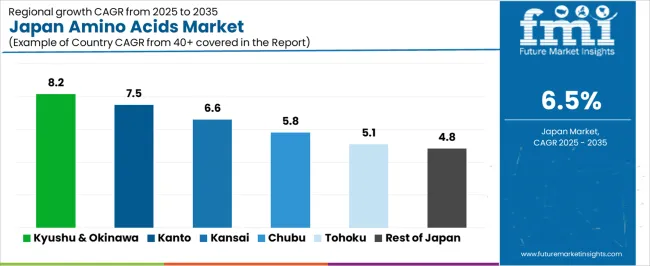
Demand for amino acids in Japan is growing steadily, with Kyushu & Okinawa leading at an 8.2% CAGR, driven by the region's strong agricultural and biotechnology sectors. The Kanto region follows with a 7.5% CAGR, supported by a large consumer base and robust industrial activities in the food, pharmaceuticals, and animal feed industries. Kinki shows a 6.6% CAGR, fueled by its industrial base and focus on innovation in biotechnology and food production. Chubu experiences a 5.8% CAGR, with growing demand from the pharmaceutical and food industries, particularly in applications like nutrition and supplements. Tohoku and the Rest of Japan see moderate growth at 5.1% and 4.8%, respectively, as demand for amino acids continues to rise across food and health-related applications.
How is Demand for Amino Acids Growing in Kyushu & Okinawa?
Kyushu & Okinawa is leading the demand for amino acids in Japan, with an 8.2% CAGR. This growth is largely driven by the region’s strong agricultural and biotechnology sectors. Kyushu is a key hub for the production of amino acids used in animal feed, agricultural products, and pharmaceuticals. The region is experiencing a rise in demand for amino acids due to increased use in food and dietary supplements, especially in the health-conscious population.
Kyushu’s emphasis on biotechnology research and development, coupled with government support for industrial innovation, is fueling growth. The region is also investing in sustainable agricultural practices, further driving the demand for amino acids as essential components in animal feed and plant nutrition. As biotechnology and agricultural industries continue to expand, Kyushu & Okinawa’s demand for amino acids is expected to remain strong.
Why is Demand for Amino Acids Growing in Kanto?
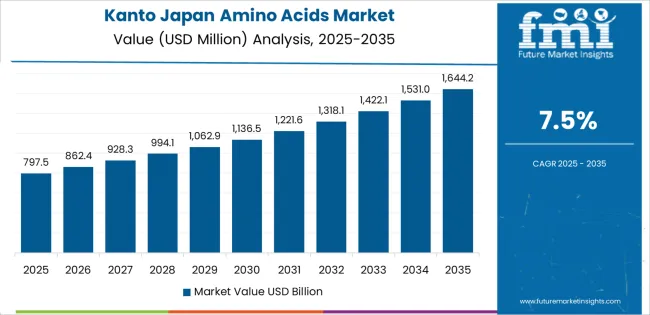
Kanto is seeing steady demand for amino acids, growing at a 7.5% CAGR. The region is home to Tokyo, one of the largest urban centers in Japan, and a major industrial hub. The growth in amino acid demand is driven by a combination of factors, including high consumption of food products and animal feed, as well as pharmaceutical and cosmetic industries. Kanto’s large consumer base, coupled with a growing interest in health and wellness, has led to an increased demand for amino acid-based dietary supplements and functional foods.
Kanto’s industrial sector, including food processing and biotechnology, is adopting amino acids for various applications in production processes. The region's focus on advancing biotechnology and sustainable food production is also contributing to the rising demand. With its strong economic and industrial infrastructure, Kanto is expected to maintain a leading role in Japan’s amino acid demand.
What is Driving Demand for Amino Acids in Kinki?
In Kinki, demand for amino acids is growing at a 6.6% CAGR, driven by the region's diverse industrial base and biotechnology advancements. Kinki, home to major cities like Osaka, is a significant hub for pharmaceutical, food, and beverage industries, all of which rely heavily on amino acids in their products. The pharmaceutical sector, in particular, uses amino acids for manufacturing medicinal compounds, while the food industry incorporates them into nutritional supplements, functional foods, and flavor enhancers.
Kinki’s focus on food innovation and biotechnology research is also contributing to growth, with increased demand for amino acids in new food products and supplements. Kinki’s large consumer population has a rising interest in health-conscious products, leading to a surge in demand for amino acids used in dietary supplements. As the region continues to innovate in food and biotechnology, Kinki’s demand for amino acids will remain strong.
How is Demand for Amino Acids Growing in Chubu?
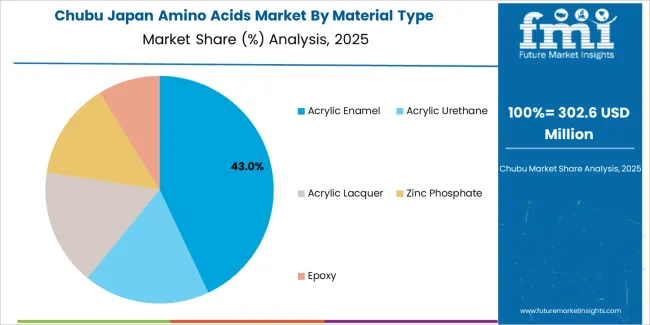
Chubu is seeing moderate growth in demand for amino acids, with a 5.8% CAGR. The region, which is home to Japan’s manufacturing and technology hubs, is increasingly relying on amino acids for applications in the food and pharmaceutical industries. Chubu’s food sector is a key driver of this demand, particularly in the production of health supplements, nutritional products, and functional foods. With an increasing focus on health and wellness, consumers in Chubu are seeking amino acids for their nutritional benefits, driving the demand for amino acid-based products.
The pharmaceutical industry in Chubu uses amino acids in the production of medicines and other healthcare products. As industries in the region continue to evolve, there is a growing need for amino acids to support both industrial and consumer products. With these trends, Chubu is expected to experience sustained growth in amino acid demand.
What is Driving Demand for Amino Acids in Tohoku?
Tohoku is witnessing moderate growth in demand for amino acids, with a 5.1% CAGR. The region’s agricultural industry plays a significant role in this growth, with increasing demand for amino acids in animal feed and agricultural products. As Tohoku focuses on improving agricultural productivity and sustainability, amino acids are becoming crucial components in plant nutrition and livestock feed. The growing demand for functional foods and dietary supplements in Japan is also contributing to the rise in amino acid demand, as Tohoku is involved in food production and innovation.
Tohoku’s biotechnology and pharmaceutical sectors are expanding, with amino acids playing a key role in drug formulation and health-related products. As industries across Tohoku continue to develop and modernize, the demand for amino acids is expected to rise steadily, driven by the region’s focus on enhancing food, health, and agricultural products.
Why is Demand for Amino Acids Growing in Rest of Japan?
The Rest of Japan is seeing steady demand for amino acids, with a 4.8% CAGR. This growth is driven by a combination of agricultural needs, increasing interest in health products, and the expanding food industry. As more regions outside major urban centers adopt advanced agricultural practices, the need for amino acids in animal feed and plant nutrition continues to grow. The demand for amino acids is also increasing in food and beverage production, as more consumers in rural areas seek functional foods, health supplements, and protein-rich diets.
The Rest of Japan is experiencing growth in both the pharmaceutical and food sectors, where amino acids are used in product formulation and nutritional supplements. As regional industries continue to mature, the demand for amino acids is expected to rise steadily, albeit at a more moderate pace compared to industrialized regions like Kanto and Kyushu & Okinawa.
What is the Competitive Landscape of Amino Acids Demand in Japan?
The demand for amino acids in Japan is growing due to their widespread use across various industries, including food and beverage, pharmaceuticals, animal feed, and personal care. Amino acids are essential building blocks for protein synthesis and have a critical role in maintaining health, enhancing metabolism, and improving growth and performance in livestock. As Japan's focus on health and wellness continues to rise, the demand for amino acids, particularly those used in dietary supplements and functional foods, is increasing. The expansion of the animal nutrition sector and the growth of biotechnological applications are further boosting the industry for amino acids.
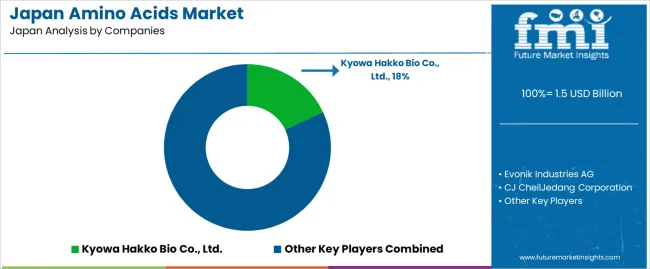
Key players in the amino acids industry in Japan include Kyowa Hakko Bio Co., Ltd., Evonik Industries AG, CJ CheilJedang Corporation, ADM (Archer Daniels Midland), and Ajinomoto Co., Inc. Kyowa Hakko Bio Co., Ltd. leads the industry with a significant share of 18.0%, providing a range of amino acids for the pharmaceutical, food, and animal nutrition sectors. Evonik Industries AG is another major player, offering amino acids that support animal feed and human health applications. CJ CheilJedang Corporation produces a variety of amino acids for food and nutrition applications, while ADM focuses on providing amino acids for both human nutrition and animal feed industries. Ajinomoto Co., Inc., known for its deep-rooted presence in Japan, is a key player, supplying amino acids for food, beverage, and health products.
Competition in the amino acids industry is driven by the increasing demand for high-quality, sustainable, and cost-effective products in various applications, including food processing, pharmaceuticals, and animal feed. Companies compete by offering amino acids that meet the evolving needs of health-conscious consumers, as well as the growing demand for animal nutrition. Innovation in production technologies, such as fermentation processes and biotechnological advancements, also plays a key role in the competitive dynamics.
Key Players in Japan Amino Acids Demand
- Kyowa Hakko Bio Co., Ltd.
- Evonik Industries AG
- CJ CheilJedang Corporation
- ADM (Archer Daniels Midland)
- Ajinomoto Co., Inc.
Scope of Report
| Items | Values |
|---|---|
| Quantitative Units (2025) | USD billion |
| Product Type | Primers, Base Coat, Clear Coat/Topcoat |
| Material Type | Acrylic Enamel, Acrylic Urethane, Acrylic Lacquer, Zinc Phosphate, Epoxy |
| Region | Kyushu & Okinawa, Kanto, Kinki, Chubu, Tohoku, Rest of Japan |
| Countries Covered | Japan |
| Key Companies Profiled | Kyowa Hakko Bio Co., Ltd., Evonik Industries AG, CJ CheilJedang Corporation, ADM (Archer Daniels Midland), Ajinomoto Co., Inc. |
| Additional Attributes | Dollar sales by product type and material; regional CAGR and adoption trends; demand trends in amino acids; growth in industrial coatings, food, and beverage sectors; technology adoption for amino acid-based solutions; vendor offerings including amino acid-based products and applications; regulatory influences and industry standards |
Japan Amino Acids Demand by Key Segments
Product Type
- Primers
- Base Coat
- Clear Coat/Topcoat
Material Type
- Acrylic Enamel
- Acrylic Urethane
- Acrylic Lacquer
- Zinc Phosphate
- Epoxy
Region
- Kyushu & Okinawa
- Kanto
- Kinki
- Chubu
- Tohoku
- Rest of Japan
Frequently Asked Questions
How big is the demand for amino acids in Japan in 2025?
The demand for amino acids in Japan is estimated to be valued at USD 1.5 billion in 2025.
What will be the size of amino acids in Japan in 2035?
The market size for the amino acids in Japan is projected to reach USD 2.8 billion by 2035.
How much will be the demand for amino acids in Japan growth between 2025 and 2035?
The demand for amino acids in Japan is expected to grow at a 6.5% CAGR between 2025 and 2035.
What are the key product types in the amino acids in Japan?
The key product types in amino acids in Japan are primers, base coat and clear coat/topcoat.
Which material type segment is expected to contribute significant share in the amino acids in Japan in 2025?
In terms of material type, acrylic enamel segment is expected to command 43.0% share in the amino acids in Japan in 2025.
Preview the report firsthand - request a free sample
Get SampleGet the brochure for pricing and purchase details.
Get PDFTable of Content
- Executive Summary
- Japan Market Outlook
- Demand-side Trends
- Supply-side Trends
- Technology Roadmap Analysis
- Analysis and Recommendations
- Market Overview
- Market Coverage / Taxonomy
- Market Definition / Scope / Limitations
- Market Background
- Market Dynamics
- Drivers
- Restraints
- Opportunity
- Trends
- Scenario Forecast
- Demand in Optimistic Scenario
- Demand in Likely Scenario
- Demand in Conservative Scenario
- Opportunity Map Analysis
- Product Life Cycle Analysis
- Supply Chain Analysis
- Investment Feasibility Matrix
- Value Chain Analysis
- PESTLE and Porter’s Analysis
- Regulatory Landscape
- Regional Parent Market Outlook
- Production and Consumption Statistics
- Import and Export Statistics
- Market Dynamics
- Japan Market Analysis 2020 to 2024 and Forecast, 2025 to 2035
- Historical Market Size Value (USD Million) Analysis, 2020 to 2024
- Current and Future Market Size Value (USD Million) Projections, 2025 to 2035
- Y-o-Y Growth Trend Analysis
- Absolute $ Opportunity Analysis
- Japan Market Pricing Analysis 2020 to 2024 and Forecast 2025 to 2035
- Japan Market Analysis 2020 to 2024 and Forecast 2025 to 2035, By Product Type
- Introduction / Key Findings
- Historical Market Size Value (USD Million) Analysis By Product Type , 2020 to 2024
- Current and Future Market Size Value (USD Million) Analysis and Forecast By Product Type , 2025 to 2035
- Primers
- Base Coat
- Clear Coat/Topcoat
- Y-o-Y Growth Trend Analysis By Product Type , 2020 to 2024
- Absolute $ Opportunity Analysis By Product Type , 2025 to 2035
- Japan Market Analysis 2020 to 2024 and Forecast 2025 to 2035, By Material Type
- Introduction / Key Findings
- Historical Market Size Value (USD Million) Analysis By Material Type, 2020 to 2024
- Current and Future Market Size Value (USD Million) Analysis and Forecast By Material Type, 2025 to 2035
- Acrylic Enamel
- Acrylic Urethane
- Acrylic Lacquer
- Zinc Phosphate
- Epoxy
- Y-o-Y Growth Trend Analysis By Material Type, 2020 to 2024
- Absolute $ Opportunity Analysis By Material Type, 2025 to 2035
- Market Structure Analysis
- Competition Dashboard
- Competition Benchmarking
- Market Share Analysis of Top Players
- By Regional
- By Product Type
- By Material Type
- Competition Analysis
- Competition Deep Dive
- Kyowa Hakko Bio Co., Ltd.
- Overview
- Product Portfolio
- Profitability by Market Segments (Product/Age /Sales Channel/Region)
- Sales Footprint
- Strategy Overview
- Marketing Strategy
- Product Strategy
- Channel Strategy
- Evonik Industries AG
- CJ CheilJedang Corporation
- ADM (Archer Daniels Midland)
- Ajinomoto Co., Inc.
- Kyowa Hakko Bio Co., Ltd.
- Competition Deep Dive
- Assumptions & Acronyms Used
- Research Methodology


