

- Industry Size (2025)
- USD 228.6 Mn
- Forecast (2035)
- USD 367.9 Mn
- CAGR (2025 to 2035)
- 4.9%
Demand for Cassava Flour in Japan Forecast and Outlook 2025 to 2035
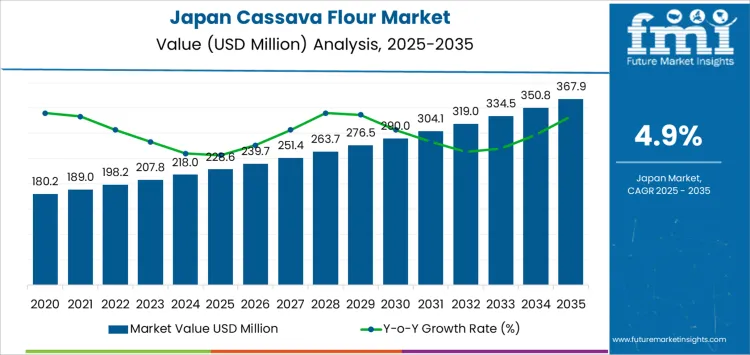
The demand for cassava flour in Japan is growing steadily due to the increasing adoption of gluten-free and plant-based diets, with a forecasted growth from USD 228.6 million in 2025 to USD 367.9 million by 2035, at a CAGR of 4.9%. A key trend driving this growth is the rising number of health-conscious consumers who seek gluten-free, allergen-free alternatives to traditional wheat flour. Cassava flour, known for its versatility and health benefits, including being rich in fiber and having a low glycemic index, is becoming a preferred ingredient for individuals with dietary restrictions such as gluten intolerance or those following vegan and plant-based diets. Its neutral taste and functionality make it an ideal replacement for wheat flour in various applications, particularly in the food & beverage industry.
Quick Stats of the Demand for Cassava Flour in Japan
- Demand for Cassava Flour in Japan Value (2025): USD 228.6 million
- Demand for Cassava Flour in Japan Forecast Value (2035): USD 367.9 million
- Demand for Cassava Flour in Japan Forecast CAGR (2025-2035): 4.9%
- Demand for Cassava Flour in Japan Leading Application: Food & Beverages
- Demand for Cassava Flour in Japan Key Growth Regions: Kyushu & Okinawa, Kanto, Kansai, Chubu, Tohoku, Rest of Japan
- Demand for Cassava Flour in Japan Top Players: DADTCO Rivers Cassava Processing Company, Green Hills Natural Foods, MHOGO Foods, Mocaf Factory, Psaltry International
The food and beverage sector, which accounts for 38% of the demand, is a major driver of this growth, as cassava flour is increasingly used in gluten-free products such as baked goods, snacks, and meat substitutes. Another significant trend is the rising popularity of plant-based diets, with cassava flour gaining traction as an ingredient in vegan and vegetarian recipes. Furthermore, the demand for organic cassava flour is also increasing, reflecting broader consumer interest in clean-label and sustainably sourced ingredients. The versatility of cassava flour extends beyond food, with applications in animal feed, pharmaceuticals, and personal care, contributing to its expanding role across industries. As the demand for gluten-free and plant-based products continues to rise, cassava flour is set to become a staple in both household kitchens and industrial food production, helping meet Japan’s evolving dietary preferences and sustainability goals.
Demand for Cassava Flour in Japan Key Takeaways
| Metric | Value |
|---|---|
| Demand for Cassava Flour in Japan Value (2025) | USD 228.6 million |
| Demand for Cassava Flour in Japan Forecast Value (2035) | USD 367.9 million |
| Demand for Cassava Flour in Japan Forecast CAGR (2025-2035) | 4.9% |
Why is the Demand for Cassava Flour in Japan Growing?
The demand for cassava flour in Japan is increasing as consumers seek gluten-free and grain-free alternatives to traditional wheat flour. With the rise of gluten intolerance and the growing trend toward healthier eating, cassava flour is becoming a popular choice for those with dietary restrictions. Cassava flour is made from the root of the cassava plant and is naturally gluten-free, high in fiber, and rich in essential vitamins, making it an appealing option for health-conscious individuals. As more Japanese consumers adopt gluten-free and grain-free diets, the demand for cassava flour is expected to rise significantly.
Another key driver of this demand is the increasing awareness of the health benefits associated with cassava flour. The flour is known for its high resistant starch content, which has positive effects on gut health and digestion. It also provides a low glycemic index, making it suitable for individuals looking to manage blood sugar levels. As Japan faces a growing focus on health and wellness, consumers are becoming more inclined to seek functional ingredients like cassava flour that offer both health benefits and culinary versatility.
The expanding popularity of plant-based and alternative diets also contributes to the demand for cassava flour. It is widely used in vegan and vegetarian recipes as a substitute for wheat flour, further driving its adoption in various food products, from baked goods to snack items. Furthermore, Japan's commitment to sustainability and local sourcing is influencing the growing interest in cassava flour as it is a crop that can be cultivated sustainably with minimal resource consumption. This demand is expected to continue to rise through 2035, as cassava flour becomes a staple in both health-focused and environmentally conscious food choices.
What is the Segment-Wise Analysis of Demand for Cassava Flour in Japan?
Demand for cassava flour in Japan is segmented by nature, application, distribution channel, and region. By nature, conventional cassava flour leads at 79%, followed by organic cassava flour. In terms of application, food & beverages dominate, accounting for 38%, with animal feed, pharmaceuticals, personal care & cosmetics, and other uses contributing to the demand. Distribution channels include direct/B2B and indirect/B2C, catering to different industry needs. Regionally, demand spans across Kyushu & Okinawa, Kanto, Kansai, Chubu, Tohoku, and the rest of Japan, with varying preferences based on local consumption patterns and industry requirements.
How Does Conventional Cassava Flour Lead the Demand for Cassava Flour in Japan?
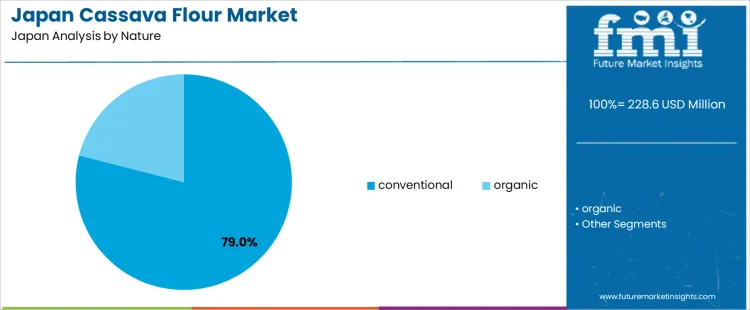
Conventional cassava flour accounts for 79% of the demand for cassava flour in Japan, driven by its wide availability and cost-effectiveness. As a staple ingredient in many processed foods, conventional cassava flour is used extensively in the food & beverage sector, including baked goods, snacks, and gluten-free products. Its neutral flavor and high starch content make it ideal for a variety of culinary applications. The demand for conventional cassava flour is particularly strong in regions like Kanto and Kansai, where its versatility in both household and industrial food production drives consumption. While organic cassava flour is growing in popularity, conventional options remain the dominant choice for manufacturers and consumers due to their affordability and functional properties. With the increasing trend toward gluten-free and healthier food alternatives, conventional cassava flour is positioned to continue leading the industry in Japan.
Why Does Food & Beverages Lead the Demand for Cassava Flour in Japan?
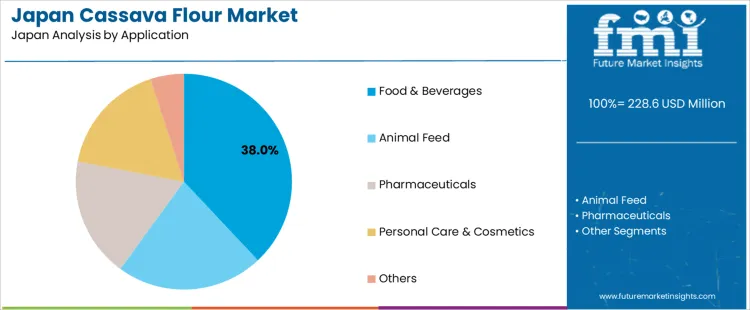
Food & beverages account for 38% of the demand for cassava flour in Japan, reflecting the growing trend of incorporating gluten-free, healthier ingredients in the food industry. Cassava flour is increasingly used in the production of gluten-free baked goods, snacks, and other food items, which appeals to both health-conscious consumers and those with dietary restrictions. The versatility of cassava flour, with its ability to mimic the texture of wheat flour, makes it an attractive alternative for various food products. As the demand for gluten-free and alternative grain-based products continues to rise, especially in urban areas like Kanto and Kansai, the food & beverage sector remains the largest end-user of cassava flour. The growing trend towards healthier eating and the need for gluten-free options in restaurants and food services further contributes to the dominance of food & beverages in the cassava flour industry in Japan.
What are the Key Trends, Drivers, and Restraints in Demand for Cassava Flour in Japan?
Demand for cassava flour in Japan is growing due to rising interest in gluten-free, allergen-friendly, and plant-based food alternatives. Cassava flour’s neutral taste and versatility make it an attractive substitute for wheat flour in gluten-free breads, pastries, snacks, and other processed foods. This demand is driven by the increasing health and wellness awareness among consumers, as well as the growing popularity of clean-label and gluten-free diets. As people become more aware of the health benefits and sustainability of plant-based products, cassava flour is becoming a viable option. The adoption of cassava flour is limited by factors such as lower consumer familiarity with the product, higher prices compared to traditional flours, and entrenched cooking habits that favor rice and wheat-based foods. The transition to cassava flour will depend on overcoming these challenges and raising consumer awareness.
Why is Demand for Cassava Flour Growing in Japan?
The demand for cassava flour in Japan is growing as dietary preferences shift toward gluten-free, plant-based, and allergen-friendly foods. With more people adopting health-conscious eating habits due to gluten sensitivity, dietary restrictions, or lifestyle choices, cassava flour offers a nutritious and versatile alternative to traditional flours. Cassava flour is rich in carbohydrates, fiber, and essential vitamins, making it a healthy ingredient for consumers looking to diversify their diets. The increasing popularity of gluten-free products in Japan’s food industry is contributing to the growth of cassava flour. Its mild taste and ability to substitute wheat flour in a wide range of applications, from baked goods to snacks, have made it a popular choice. As supply chains improve and global awareness of cassava’s benefits spreads, its appeal to Japanese consumers continues to grow, especially in health-conscious and alternative diet segments.
How are Industry Innovations Driving Cassava Flour Demand in Japan?
Technological advancements in cassava flour production are driving its increasing demand in Japan. Innovations in milling and processing techniques have improved the quality and consistency of cassava flour, making it more suitable for a wide range of culinary applications, such as gluten-free breads, pastries, and snacks. These improvements have made cassava flour more accessible to food manufacturers and consumers alike. There is growing interest in blending cassava flour with other flours to improve its functionality and texture, making it even more appealing for different food formulations. As the demand for gluten-free, clean-label products continues to rise, manufacturers are incorporating cassava flour into a variety of products. Improved distribution and better supply chains ensure that cassava flour is now more widely available in health food stores, and online platforms, helping it reach a larger audience in Japan.
What are the Key Challenges and Risks That Could Limit Cassava Flour Demand in Japan?
Despite its growing popularity, there are several challenges that could limit the demand for cassava flour in Japan. One major barrier is the lack of widespread consumer familiarity with cassava flour compared to traditional options like wheat and rice flour, which are deeply rooted in Japanese cooking. Consumers may be hesitant to experiment with a new ingredient, especially if they are unfamiliar with its flavor and texture. The higher cost of cassava flour compared to traditional flours also limits its appeal, particularly among price-sensitive consumers. Traditional Japanese dietary habits, which heavily rely on rice and wheat-based products, may slow the large-scale adoption of cassava flour. The availability of cassava in Japan is limited, and its supply relies on imports, which could make prices volatile and disrupt the supply chain, affecting consistent product availability and price stability.
What is the Regional Demand Outlook for Cassava Flour in Japan?
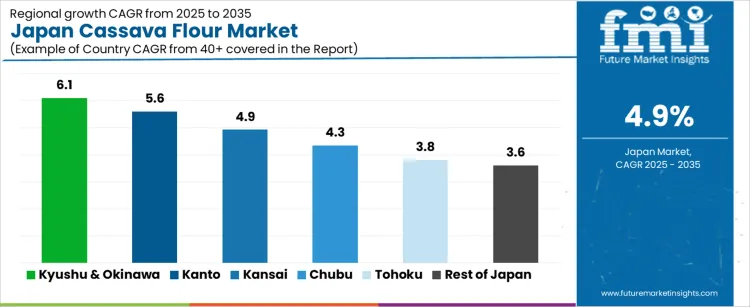
Demand for cassava flour in Japan is growing across all regions, with Kyushu & Okinawa leading at a 6.1% CAGR, driven by the increasing popularity of gluten-free and plant-based diets. Kanto follows with a 5.6% CAGR, supported by the region’s large urban population and a growing interest in alternative flours for health-conscious consumers. Kansai shows a 4.9% CAGR, driven by the region’s culinary culture and the rise in demand for gluten-free ingredients. Chubu experiences a 4.3% CAGR, with demand rising as food trends evolve toward healthier and sustainable options. Tohoku and the Rest of Japan see moderate growth at 3.8% and 3.6%, respectively, as consumers in these regions continue to embrace alternative flours, especially for gluten-free baking and cooking.
| Region | CAGR (%) |
|---|---|
| Kyushu & Okinawa | 6.1% |
| Kanto | 5.6% |
| Kansai | 4.9% |
| Chubu | 4.3% |
| Tohoku | 3.8% |
| Rest of Japan | 3.6% |
How is Demand for Cassava Flour Growing in Kyushu & Okinawa?
Kyushu & Okinawa leads the demand for cassava flour, growing at a 6.1% CAGR. The region’s increasing focus on health-conscious eating and the growing demand for gluten-free and plant-based products have driven the rise in cassava flour consumption. Okinawa’s culinary culture, which emphasizes fresh, natural ingredients, is embracing cassava flour as a gluten-free alternative in traditional dishes and baked goods. The region’s tourism sector is playing a role in boosting demand, as visitors from health-conscious industrys seek gluten-free options. As local consumers and food businesses prioritize healthier, sustainable alternatives, cassava flour is becoming a preferred choice in both home cooking and commercial foodservice. The growing availability of cassava flour in retail and specialty stores, combined with increasing awareness of its nutritional benefits, ensures that demand will continue to rise in Kyushu & Okinawa, positioning the region as a leader in the consumption of alternative flours.
Why is Demand for Cassava Flour Rising in Kanto?
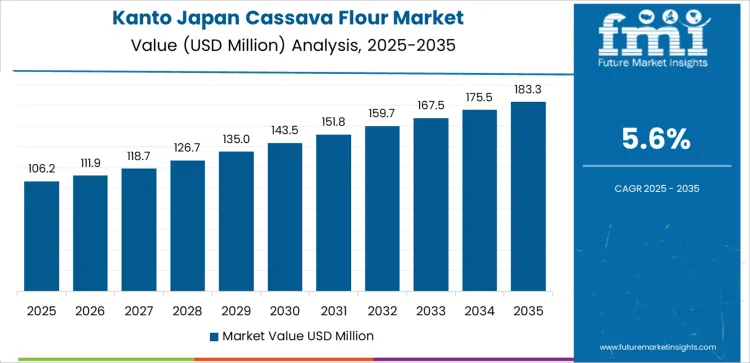
In Kanto, demand for cassava flour is rising at a 5.6% CAGR. The region’s large urban population, particularly in Tokyo, is a key driver behind the increasing popularity of gluten-free and alternative flours. As health-conscious consumers in Kanto continue to seek gluten-free options, cassava flour has gained recognition for its versatility in gluten-free baking and cooking. With the rise in demand for plant-based, allergen-free ingredients, Kanto’s food industry, including restaurants and bakeries, has increasingly adopted cassava flour in response to consumer preferences. The growing trend towards sustainable eating habits, which includes reducing reliance on wheat flour, further supports the demand for cassava flour in Kanto. As awareness of the health benefits of cassava flour continues to spread, particularly among those with dietary restrictions, the demand for this versatile ingredient is expected to remain strong and grow steadily across the region.
How is Demand for Cassava Flour Expanding in Kansai?
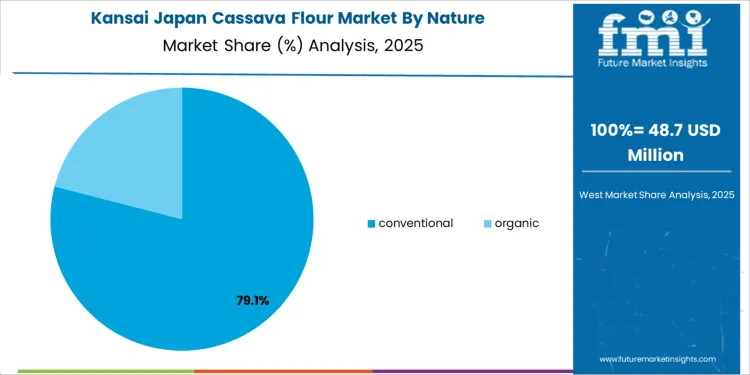
Kansai shows steady demand for cassava flour, growing at a 4.9% CAGR. The region’s rich food culture, particularly in cities like Osaka and Kyoto, has led to an increasing demand for gluten-free and alternative flours. As more consumers in Kansai turn to plant-based and gluten-free diets, the need for versatile, nutritious ingredients like cassava flour continues to rise. Cassava flour is becoming a popular ingredient in both home kitchens and the foodservice sector, particularly in restaurants that cater to dietary preferences such as gluten-free or vegan eating. Kansai’s strong culinary tradition, which values innovative, high-quality ingredients, is fueling the region’s adoption of cassava flour in both traditional and contemporary dishes. The growing awareness of the benefits of alternative flours, coupled with a rise in the number of gluten-free and health-conscious consumers, ensures steady growth in the demand for cassava flour in Kansai, a region known for its culinary innovation.
Why is Demand for Cassava Flour Growing in Chubu?
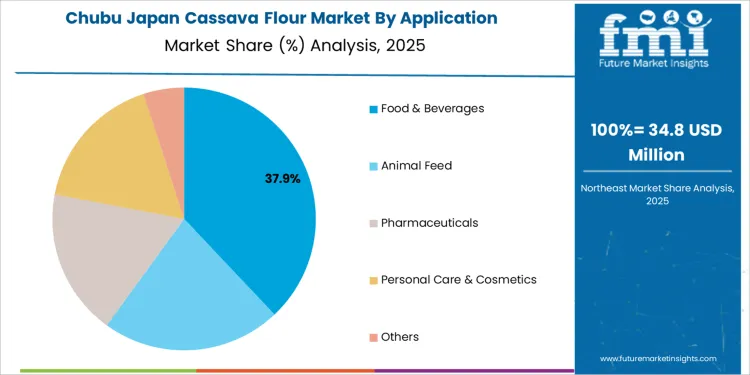
Chubu is experiencing steady demand for cassava flour, growing at a 4.3% CAGR. The region’s increasing focus on health and wellness, combined with a growing trend towards plant-based and gluten-free eating, is contributing to the rising demand for alternative flours. In urban centers like Nagoya, demand for gluten-free and allergen-free products has surged, with cassava flour gaining popularity due to its nutritional benefits and versatility in baking. As more consumers seek to reduce their gluten intake or explore alternative flours, cassava flour is increasingly being incorporated into various food products, from bread to pastries. The foodservice sector in Chubu is adopting cassava flour in response to customer demand for healthier and more inclusive menu options. With a growing emphasis on sustainability and wellness, the demand for cassava flour in Chubu is expected to continue expanding steadily, making it a key ingredient in the region’s evolving food culture.
How is Demand for Cassava Flour Expanding in Tohoku?
Tohoku is seeing moderate growth in cassava flour demand, with a 3.8% CAGR. While the region’s demand is smaller compared to more urbanized areas, there is a growing interest in gluten-free and plant-based products as consumers become more health-conscious. Tohoku’s agricultural traditions and focus on locally sourced ingredients are making cassava flour an attractive option in both home cooking and the foodservice sector. The region’s shift toward more sustainable and health-focused eating habits, along with the increasing availability of cassava flour in specialty stores, is driving the adoption of this alternative flour. Tohoku’s evolving food culture, influenced by global trends and dietary changes, is contributing to steady growth in demand for cassava flour. As consumers in Tohoku seek out gluten-free options and embrace healthier eating patterns, the demand for cassava flour will continue to grow, albeit at a moderate pace compared to larger urban centers.
Why is Demand for Cassava Flour Steady in the Rest of Japan?
The Rest of Japan is experiencing steady demand for cassava flour, with a 3.6% CAGR. While demand is slower in rural areas and smaller cities compared to urban centers, the growing trend toward plant-based and gluten-free diets is gaining traction in these regions. As more consumers in the Rest of Japan become aware of the health benefits of cassava flour, its adoption is slowly increasing in home kitchens and local foodservice businesses. The rising awareness of dietary restrictions, such as gluten intolerance, has contributed to the steady growth of cassava flour consumption in these areas. Although growth may be more gradual than in larger urban regions, the increasing availability of cassava flour in local stores and its inclusion in gluten-free product lines is ensuring its steady rise in popularity. As the broader food culture in the Rest of Japan evolves, demand for cassava flour is expected to continue to grow over time.
What is Fueling the Demand for Cassava Flour in Japan and Who Are the Key Suppliers?
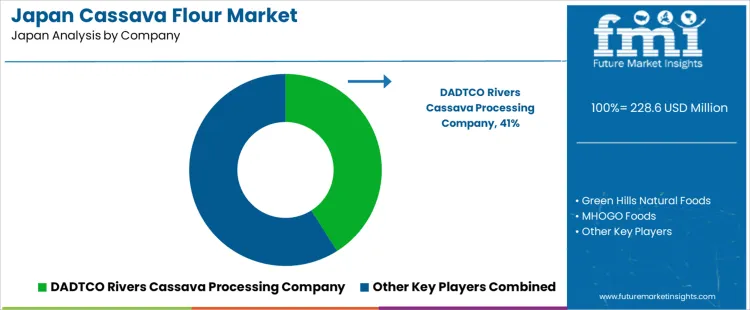
Demand for cassava flour in Japan has increased as more consumers and food manufacturers look for gluten free and plant based alternatives to wheat flour. Cassava flour is naturally gluten free, easy to digest, and useful in a wide variety of applications-from bakery items and snacks to thickening sauces and processed foods-which makes it attractive for people with dietary restrictions and those seeking cleaner label ingredients. Growing interest in health, functional foods, and varied dietary preferences has made cassava flour a practical substitute in both home cooking and industrial food production.
Leading global suppliers influencing the supply of cassava flour to Japan include DADTCO Rivers Cassava Processing Company, Green Hills Natural Foods, MHOGO Foods, Mocaf Factory, and Psaltry International. Among them, DADTCO Rivers stands out with a share of roughly 41.0%. These suppliers provide raw cassava flour as well as processed forms suited for bakery, snacks, pasta and other food products. Their production and distribution networks help ensure a stable supply, enabling food producers and retailers in Japan to source cassava flour reliably for domestic consumption or value added processing.
The increasing use of cassava flour in Japan is also supported by greater innovation in food formulation and processing. As food companies and artisan producers experiment with gluten free breads, pasta, baked goods, and snacks, cassava flour offers functional characteristics-such as good binding, neutral taste, and suitable texture that help maintain product quality. As demand for alternative flours continues, cassava flour is becoming a recognized ingredient in Japan’s evolving food landscape, helping meet consumer demand for dietary variety, health oriented choices, and allergen free products.
Key Players in Japan Cassava Flour Demand
- DADTCO Rivers Cassava Processing Company
- Green Hills Natural Foods
- MHOGO Foods
- Mocaf Factory
- Psaltry International
Scope of Report
| Items | Values |
|---|---|
| Quantitative Units (2025) | USD million |
| Nature | Conventional, Organic |
| Application | Food & Beverages, Animal Feed, Pharmaceuticals, Personal Care & Cosmetics, Others |
| Distribution Channel | Direct/B2B, Indirect/B2C |
| Region | Kyushu & Okinawa, Kanto, Kansai, Chubu, Tohoku, Rest of Japan |
| Countries Covered | Japan |
| Key Companies Profiled | DADTCO Rivers Cassava Processing Company, Green Hills Natural Foods, MHOGO Foods, Mocaf Factory, Psaltry International |
| Additional Attributes | Dollar sales by nature and application; regional CAGR and growth trends; increasing use in gluten-free food products; rise in demand for plant-based alternatives in animal feed and personal care applications |
Japan Cassava Flour Demand by Key Segments
Nature
- Conventional
- Organic
Application
- Food & Beverages
- Animal Feed
- Pharmaceuticals
- Personal Care & Cosmetics
- Others
Distribution Channel
- Direct/B2B
- Indirect/B2C
Region
- Kyushu & Okinawa
- Kanto
- Kansai
- Chubu
- Tohoku
- Rest of Japan
Frequently Asked Questions
How big is the demand for cassava flour in Japan in 2025?
The demand for cassava flour in Japan is estimated to be valued at USD 228.6 million in 2025.
What will be the size of cassava flour in Japan in 2035?
The market size for the cassava flour in Japan is projected to reach USD 367.9 million by 2035.
How much will be the demand for cassava flour in Japan growth between 2025 and 2035?
The demand for cassava flour in Japan is expected to grow at a 4.9% CAGR between 2025 and 2035.
What are the key product types in the cassava flour in Japan?
The key product types in cassava flour in Japan are conventional and organic.
Which application segment is expected to contribute significant share in the cassava flour in Japan in 2025?
In terms of application, food & beverages segment is expected to command 38.0% share in the cassava flour in Japan in 2025.
Preview the report firsthand - request a free sample
Get SampleGet the brochure for pricing and purchase details.
Get PDFTable of Content
- Executive Summary
- Japan Market Outlook
- Demand-side Trends
- Supply-side Trends
- Technology Roadmap Analysis
- Analysis and Recommendations
- Market Overview
- Market Coverage / Taxonomy
- Market Definition / Scope / Limitations
- Market Background
- Market Dynamics
- Drivers
- Restraints
- Opportunity
- Trends
- Scenario Forecast
- Demand in Optimistic Scenario
- Demand in Likely Scenario
- Demand in Conservative Scenario
- Opportunity Map Analysis
- Product Life Cycle Analysis
- Supply Chain Analysis
- Investment Feasibility Matrix
- Value Chain Analysis
- PESTLE and Porter’s Analysis
- Regulatory Landscape
- Regional Parent Market Outlook
- Production and Consumption Statistics
- Import and Export Statistics
- Market Dynamics
- Japan Market Analysis 2020 to 2024 and Forecast, 2025 to 2035
- Historical Market Size Value (USD Million) Analysis, 2020 to 2024
- Current and Future Market Size Value (USD Million) Projections, 2025 to 2035
- Y-o-Y Growth Trend Analysis
- Absolute $ Opportunity Analysis
- Japan Market Pricing Analysis 2020 to 2024 and Forecast 2025 to 2035
- Japan Market Analysis 2020 to 2024 and Forecast 2025 to 2035, By Nature
- Introduction / Key Findings
- Historical Market Size Value (USD Million) Analysis By Nature , 2020 to 2024
- Current and Future Market Size Value (USD Million) Analysis and Forecast By Nature , 2025 to 2035
- conventional
- organic
- Y-o-Y Growth Trend Analysis By Nature , 2020 to 2024
- Absolute $ Opportunity Analysis By Nature , 2025 to 2035
- Japan Market Analysis 2020 to 2024 and Forecast 2025 to 2035, By Application
- Introduction / Key Findings
- Historical Market Size Value (USD Million) Analysis By Application, 2020 to 2024
- Current and Future Market Size Value (USD Million) Analysis and Forecast By Application, 2025 to 2035
- Food & Beverages
- Animal Feed
- Pharmaceuticals
- Personal Care & Cosmetics
- Others
- Y-o-Y Growth Trend Analysis By Application, 2020 to 2024
- Absolute $ Opportunity Analysis By Application, 2025 to 2035
- Japan Market Analysis 2020 to 2024 and Forecast 2025 to 2035, By Distribution Channel
- Introduction / Key Findings
- Historical Market Size Value (USD Million) Analysis By Distribution Channel, 2020 to 2024
- Current and Future Market Size Value (USD Million) Analysis and Forecast By Distribution Channel, 2025 to 2035
- Direct/B2B
- Indirect/B2C
- Y-o-Y Growth Trend Analysis By Distribution Channel, 2020 to 2024
- Absolute $ Opportunity Analysis By Distribution Channel, 2025 to 2035
- Market Structure Analysis
- Competition Dashboard
- Competition Benchmarking
- Market Share Analysis of Top Players
- By Regional
- By Nature
- By Application
- By Distribution Channel
- Competition Analysis
- Competition Deep Dive
- DADTCO Rivers Cassava Processing Company
- Overview
- Product Portfolio
- Profitability by Market Segments (Product/Age /Sales Channel/Region)
- Sales Footprint
- Strategy Overview
- Marketing Strategy
- Product Strategy
- Channel Strategy
- Green Hills Natural Foods
- MHOGO Foods
- Mocaf Factory
- Psaltry International
- DADTCO Rivers Cassava Processing Company
- Competition Deep Dive
- Assumptions & Acronyms Used
- Research Methodology


