

- Industry Size (2025)
- USD 823.2 Mn
- Forecast (2035)
- USD 1402.8 Mn
- CAGR (2025 to 2035)
- 5.5%
Demand for Pigeon Pea in Japan Forecast and Outlook 2025 to 2035
Demand for pigeon pea in Japan is expected to grow from USD 823.2 million in 2025 to USD 1,402.8 million by 2035, reflecting a compound annual growth rate (CAGR) of 5.5%. Pigeon pea, an essential legume, is widely used in the food industry for its nutritional value, being rich in protein, fiber, and other important vitamins and minerals. As consumer demand for plant-based proteins and healthy food options continues to rise, pigeon pea is becoming increasingly popular in Japan as a versatile and nutritious ingredient in various cuisines, including vegetarian and vegan dishes.
The market is further supported by the growing trend of sustainable agriculture and plant-based diets. With Japan’s increasing focus on health and wellness, there is a shift toward including more legumes, such as pigeon pea, in the diet due to their potential health benefits. This demand is expected to grow as pigeon pea is integrated into more processed food products, snack foods, and functional food offerings, making it an important component of Japan’s evolving food landscape.
Quick Stats of the Demand for Pigeon Pea in Japan
- Demand for Pigeon Pea in Japan Value (2025): USD 823.2 million
- Demand for Pigeon Pea in Japan Forecast Value (2035): USD 1,402.8 million
- Demand for Pigeon Pea in Japan Forecast CAGR (2025-2035): 5.5%
- Demand for Pigeon Pea in Japan Leading Price Range: Premium (51%)
- Demand for Pigeon Pea in Japan Key Growth Regions: Kyushu & Okinawa, Kanto, Kansai, Chubu, Tohoku, Rest of Japan
- Demand for Pigeon Pea in Japan Key Players: MAF Co Ltd., Sun Impex, Interamsa Agroindustrial SAC, A.B.agro Company, Arvind Limited
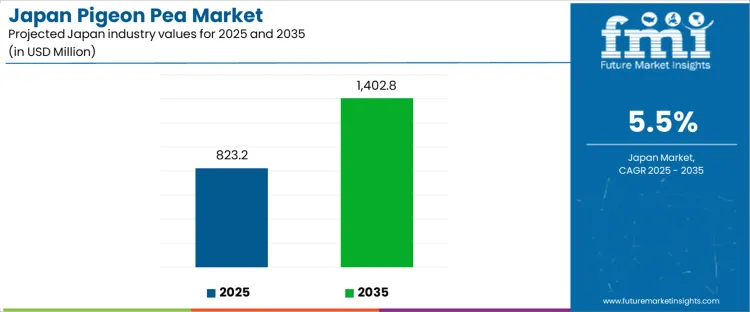
What is the Growth Forecast for the Pigeon Pea Market through 2035?
The compound absolute growth analysis for the pigeon pea market in Japan shows a steady and consistent increase in demand over the forecast period. Starting at USD 823.2 million in 2025, the market grows gradually to USD 868.3 million in 2026 and USD 915.8 million in 2027. This early-stage growth reflects increasing consumer awareness of the nutritional benefits of pigeon pea, along with its expanding use in plant-based food products and snacks.
From 2027 to 2030, the market continues to grow steadily, reaching USD 965.9 million in 2028, USD 1,018.8 million in 2029, and USD 1,074.6 million in 2030. This period marks a continued expansion driven by the rising popularity of plant-based proteins and increased availability of pigeon pea-based products. By 2035, the market is expected to reach USD 1,402.8 million, with the absolute growth analysis indicating that the demand for pigeon pea will experience steady, predictable increases driven by its growing role in plant-based diets, functional foods, and sustainable agriculture practices.
Key Takeaways of Pigeon Pea Industry in Japan
| Metric | Value |
|---|---|
| Industry Sales Value (2025) | USD 823.2 million |
| Industry Forecast Value (2035) | USD 1,402.8 million |
| Industry Forecast CAGR (2025-2035) | 5.5% |
What Is Driving the Demand for Pigeon Pea in Japan?
The demand for pigeon pea in Japan is driven by increasing interest in plant based proteins, nutrition awareness, and dietary diversification. As global dietary trends shift toward pulses and legumes for protein and fiber intake, pigeon pea is viewed as a nutritious alternative to animal protein. Its high protein content and versatility make it relevant for health conscious consumers, vegetarians, and those exploring legume based diets. Food manufacturers and importers also recognize pigeon pea as an ingredient for processed foods, plant protein products, and ethnic cuisine offerings, responding to changing consumer preferences and demand for variety.
Future demand for pigeon pea in Japan is expected to grow if interest in plant based diets and protein rich legumes continues to rise. Growth may be supported by use of pigeon pea in alternative protein products, pulses based foods, and meal solutions. If import supply remains steady and price competitiveness is maintained, pigeon pea could find a more established place in Japan’s food market. Challenges include limited domestic production, reliance on imports, consumer familiarity with more common legumes, and competition from traditional pulses.
What Are the Key Segments in Pigeon Pea Market in Japan?
The pigeon pea market in Japan is segmented by price range and form. Premium products lead the price range segment, accounting for 51% of the market share. In terms of form, frozen pigeon peas dominate, representing 35% of the market. The growing demand for plant-based protein sources and the increasing popularity of global cuisines are driving the adoption of pigeon peas in Japan.
Which Price Range Drives Pigeon Pea Demand in Japan?
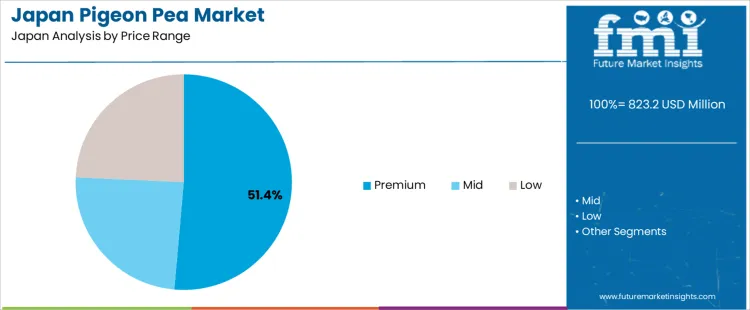
Premium pigeon peas are the most popular in the Japanese market, holding 51% of the market share. Premium products are typically characterized by higher quality, better taste, and more refined processing. These attributes make premium pigeon peas ideal for consumers looking for top-quality ingredients for gourmet or health-conscious dishes. The demand for premium pigeon peas is also driven by increasing consumer awareness of the nutritional benefits of plant-based protein sources, as well as their versatility in various international cuisines. While mid and low price ranges also cater to specific market segments, premium pigeon peas are the preferred choice for quality-focused consumers and high-end food products.
Which Form Drives Pigeon Pea Demand in Japan?
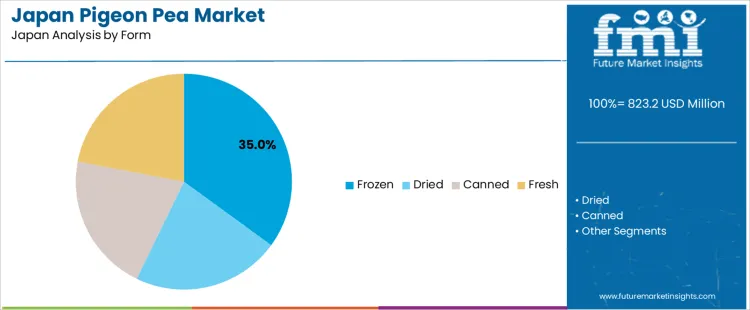
Frozen pigeon peas are the leading form in the market, accounting for 35% of the market share. Frozen pigeon peas offer the convenience of long shelf life while maintaining much of the taste and nutritional value of fresh peas. They are widely used in ready-to-cook meals and convenience foods, making them particularly popular among busy consumers. The convenience and practicality of frozen pigeon peas, along with their availability year-round, have driven their dominance in the market. While dried, canned, and fresh forms also play a role in the market, frozen pigeon peas remain the top choice due to their easy storage, long shelf life, and versatility in a wide range of dishes.
What is the Key Dynamics for Pigeon Pea Demand in Japan?
Demand for pigeon pea in Japan is currently modest but showing early signs of growth as dietary habits slowly shift toward more plant based proteins and diversified legume consumption. As awareness increases about the nutritional value of legumes, pigeon pea is being considered as an option for protein rich, fiber rich, and nutrient dense foods. Imports and distribution through health food, ethnic food, and specialty food channels are enabling more exposure. Given the low baseline consumption, there remains substantial room for market expansion if consumer acceptance grows.
What are the Key Drivers for Pigeon Pea Demand in Japan?
Growing interest in plant based diets and alternative protein sources among health conscious consumers supports demand for pigeon pea. The trend toward convenience foods and ready to cook or ready to eat meals also helps: pigeon peas can be used in soups, stews, curries or mixed legume products, appealing to urban consumers with limited preparation time. Rising interest in ethnic cuisines and international cooking styles increases familiarity with legumes not traditionally consumed in Japan. Import based supply allows availability even though domestic production is negligible, so supply chain imports support demand growth.
What are the Restraints for Pigeon Pea Demand in Japan?
One major restraint is low consumer awareness and limited culinary tradition of pigeon pea based dishes in mainstream Japanese diet, which may slow adoption. Supply depends heavily on imports from abroad, which can lead to price volatility and import related uncertainties. Competing legumes (domestic or imported) like soy, adzuki beans, and other pulses already popular in Japan may continue to dominate demand, making it hard for pigeon pea to gain share. For many consumers the taste, preparation time or unfamiliarity may present barriers.
What are the Key Trends in Pigeon Pea Demand in Japan?
A growing trend is integration of pigeon pea in plant based, health oriented foods and ready to eat convenience meals, leveraging its high protein and fiber content. Use of pigeon pea in ethnic cuisine, fusion recipes, and imported or specialty food products is rising as global food tastes influence Japanese households. There is gradual growth in demand for canned or pre processed legumes generally in Japan, which could benefit pigeon pea if it becomes part of those product lines. As vegetarian, flexitarian and health conscious segments grow, pigeon pea may gain traction as an alternative protein and nutritious legume choice.
What is the Regional Demand Outlook for Pigeon Pea in Japan?
The demand for pigeon pea in Japan is projected to grow steadily, with Kyushu & Okinawa leading the way at a projected CAGR of 6.8%. Kanto follows with a growth rate of 6.3%, while Kansai is expected to grow at 5.5%. Chubu is projected to grow at a rate of 4.9%, while Tohoku and Rest of Japan show more moderate growth, with CAGRs of 4.3% and 4.1%, respectively. The increasing popularity of plant-based diets, rising awareness of the nutritional benefits of legumes, and the growing demand for sustainable food sources are driving the adoption of pigeon pea in Japan.
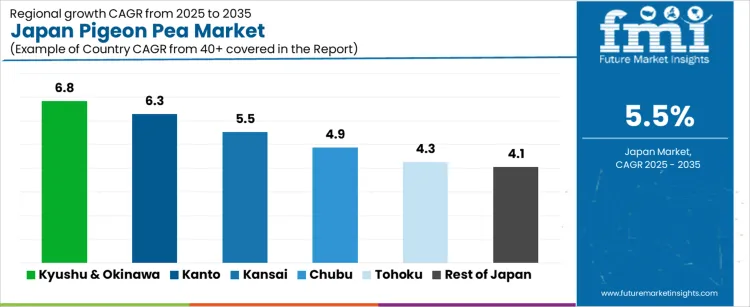
| Region | CAGR (2025-2035) |
|---|---|
| Kyushu & Okinawa | 6.8% |
| Kanto | 6.3% |
| Kansai | 5.5% |
| Chubu | 4.9% |
| Tohoku | 4.3% |
| Rest of Japan | 4.1% |
What is Driving the Growth of Pigeon Pea in Kyushu & Okinawa?
Kyushu & Okinawa is projected to experience the highest growth in the pigeon pea market, with a projected CAGR of 6.8%. The region's growing agricultural sector, particularly in legumes and pulse farming, is a significant driver of this growth. As consumers in Kyushu & Okinawa increasingly turn to plant-based and nutritious food options, pigeon pea, known for its high protein content and health benefits, is becoming more popular. Additionally, the rise in demand for sustainable and eco-friendly food sources in the region is further contributing to the growth of pigeon pea cultivation and consumption. The growing awareness of the importance of a balanced diet, along with the adoption of healthier eating habits, is expected to continue driving the demand for pigeon pea in this region.
Why is the Pigeon Pea Market Expanding in Kanto?
In Kanto, the demand for pigeon pea is projected to grow at a CAGR of 6.3%. Kanto, which includes Tokyo, is Japan’s largest region in terms of population and economic activity. The rising popularity of plant-based diets in urban centers is driving the adoption of legumes like pigeon pea, which are considered nutrient-dense and versatile. The increasing awareness of the environmental benefits of plant-based food choices, coupled with the growing interest in sustainable food systems, is contributing to the demand for pigeon pea. As the demand for alternative protein sources continues to rise in Kanto’s food sector, pigeon pea is becoming an increasingly important ingredient in various culinary applications. Furthermore, Kanto’s focus on healthy eating and functional foods is supporting the growth of pigeon pea in the region.
How is the Pigeon Pea Market Growing in Kansai?
In Kansai, the pigeon pea market is projected to grow at a CAGR of 5.5%. Kansai, which includes Osaka and Kyoto, has a strong culinary tradition and a growing interest in plant-based foods. The increasing demand for legumes in both traditional and modern Japanese cuisine is driving the consumption of pigeon pea. Kansai’s focus on health-conscious eating and its embrace of international food trends, such as veganism and vegetarianism, is contributing to the demand for alternative protein sources like pigeon pea. The region’s growing awareness of sustainable food practices and its efforts to reduce the environmental footprint of food production are also fueling the demand for legumes. As Kansai continues to prioritize health and sustainability, the market for pigeon pea is expected to expand steadily.
What is Contributing to the Growth of Pigeon Pea in Chubu?
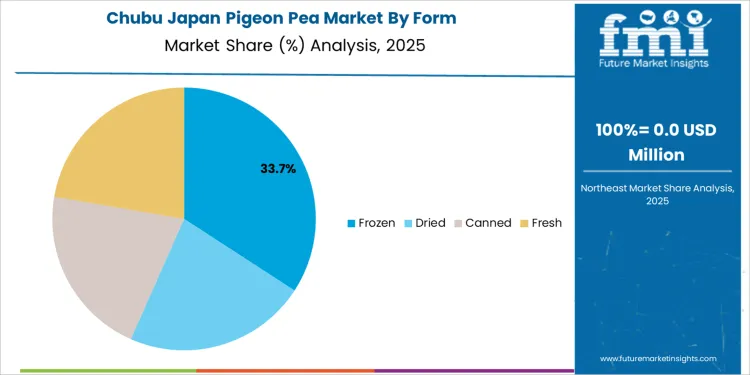
In Chubu, the pigeon pea market is expected to grow at a CAGR of 4.9%. Chubu, home to major industrial centers like Nagoya, is experiencing growing interest in plant-based foods, particularly as more consumers seek nutritious and environmentally friendly alternatives to animal-based proteins. The increasing awareness of the health benefits of legumes and the role they play in balanced diets is contributing to the rise in demand for pigeon pea in Chubu. Additionally, Chubu’s focus on agricultural innovation and sustainable farming practices is supporting the cultivation of pigeon pea and other pulses. As the region’s food sector continues to adopt plant-based ingredients and healthier food options, the demand for pigeon pea is expected to rise gradually.
What is Influencing the Growth of Pigeon Pea in Tohoku?
In Tohoku, the demand for pigeon pea is projected to grow at a CAGR of 4.3%. Although the growth rate is slower compared to more urbanized regions, the demand for pigeon pea in Tohoku is increasing as consumers become more aware of the health benefits of legumes. Tohoku’s agricultural focus on diverse crop production, including pulses and beans, is contributing to the region’s adoption of pigeon pea. As the region looks to enhance food security and reduce reliance on animal proteins, pigeon pea is becoming a popular alternative. The growing interest in plant-based diets and the need for sustainable food systems in Tohoku is expected to support steady growth in the market for pigeon pea.
What is Contributing to the Growth of Pigeon Pea in Rest of Japan?
In Rest of Japan, the pigeon pea market is expected to grow at a more moderate rate of 4.1%. While demand is lower compared to more industrialized regions, there is increasing interest in plant-based foods, particularly in rural areas where traditional diets are evolving. The adoption of pigeon pea in food production, especially in processed foods and functional foods, is gradually increasing as consumers in Rest of Japan seek healthier alternatives to animal-based proteins. The region’s focus on sustainable agriculture and the promotion of alternative food sources is expected to drive the growth of pigeon pea in these areas. As awareness of the benefits of legumes continues to rise, the market for pigeon pea in Rest of Japan is expected to expand slowly but steadily.
What is the Competitive Landscape for Demand for Pigeon Pea in Japan?
Demand for pigeon pea in Japan remains modest but shows signs of growing interest as dietary patterns slowly shift toward more plant based proteins and diversity in pulse consumption. Imported pulses, including legumes beyond traditional Japanese beans, are gaining traction due to rising demand for convenience foods, nutritional value, and global flavours. The broader trend toward ready to cook and canned or dried legume products supports niche demand for pigeon pea as producers and retailers explore alternate proteins and meal solutions.
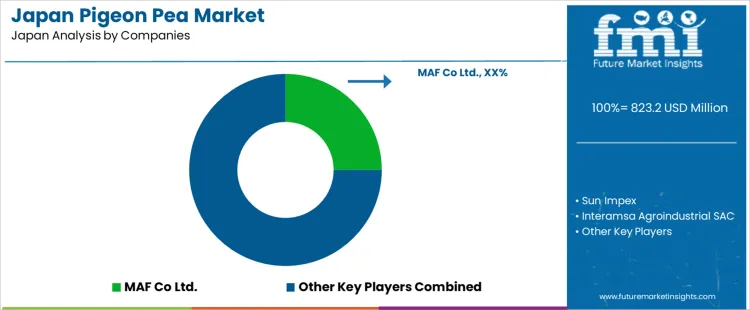
On the supply side, a set of international agribusiness and trading firms compete to supply pigeon pea to Japanese importers, food processors and wholesalers. According to your list, MAF Co Ltd. is identified with roughly 25 % share, alongside Sun Impex, Interamsa Agroindustrial SAC, A.B. agro Company, and Arvind Limited. These suppliers source pigeon pea from exporting countries and supply dried pulses, packaged legumes or bulk shipments suited for processing, retail or food service use. Competition among them focuses on reliability of supply, quality and cleanliness of legumes, cost competitiveness (considering import and logistics), and flexibility to supply small or large volumes depending on buyer needs. Suppliers that maintain consistent quality, transparent sourcing and competitive pricing are best placed to serve growth as Japanese consumers and food producers gradually broaden interest in pulses like pigeon pea.
Key Players of the Pigeon Pea Industry in Japan
- MAF Co Ltd.
- Sun Impex
- Interamsa Agroindustrial SAC
- A.B.agro Company
- Arvind Limited
Scope of the Report
| Items | Values |
|---|---|
| Quantitative Units (2025) | USD Million |
| Price Range | Premium, Mid, Low |
| Form | Frozen, Dried, Canned, Fresh |
| Distribution Channel | Super Market, Direct Store, Online, Grocery |
| End User | Pharmaceuticals, Food and Beverages, Dietary Supplements, Cosmetics |
| Companies | MAF Co Ltd., Sun Impex, Interamsa Agroindustrial SAC, A.B. agro Company, Arvind Limited |
| Regions Covered | Kyushu & Okinawa, Kanto, Kansai, Chubu, Tohoku, Rest of Japan |
| Additional Attributes | Dollar by sales by price range, form, distribution channel, end-user industry, and region. Includes quality and purity standards for different forms, impact on product formulations, market trends in the food, beverage, and dietary supplement sectors, distribution channel performance, cost-effectiveness, consumer preferences for premium versus low-cost options, market share and competitive positioning of key companies, sustainability in sourcing and production, and the role of pigeon pea in the pharmaceutical and cosmetic industries. |
Key Segments in the Demand for Pigeon Pea in Japan
Price Range
- Premium
- Mid
- Low
Form
- Frozen
- Dried
- Canned
- Fresh
Distribution Channel
- Super Market
- Direct Store
- Online
- Grocery
End User
- Pharmaceuticals
- Food and Beverages
- Dietary Supplements
- Cosmetics
Region
- Kyushu & Okinawa
- Kanto
- Kansai
- Chubu
- Tohoku
- Rest of Japan
Frequently Asked Questions
How big is the demand for pigeon pea in Japan in 2025?
The demand for pigeon pea in Japan is estimated to be valued at USD 823.2 million in 2025.
What will be the size of pigeon pea in Japan in 2035?
The market size for the pigeon pea in Japan is projected to reach USD 1,402.8 million by 2035.
How much will be the demand for pigeon pea in Japan growth between 2025 and 2035?
The demand for pigeon pea in Japan is expected to grow at a 5.5% CAGR between 2025 and 2035.
What are the key product types in the pigeon pea in Japan?
The key product types in pigeon pea in Japan are premium, mid and low.
Which form segment is expected to contribute significant share in the pigeon pea in Japan in 2025?
In terms of form, frozen segment is expected to command 35.0% share in the pigeon pea in Japan in 2025.
Preview the report firsthand - request a free sample
Get SampleGet the brochure for pricing and purchase details.
Get PDFTable of Content
- Executive Summary
- Japan Market Outlook
- Demand-side Trends
- Supply-side Trends
- Technology Roadmap Analysis
- Analysis and Recommendations
- Market Overview
- Market Coverage / Taxonomy
- Market Definition / Scope / Limitations
- Market Background
- Market Dynamics
- Drivers
- Restraints
- Opportunity
- Trends
- Scenario Forecast
- Demand in Optimistic Scenario
- Demand in Likely Scenario
- Demand in Conservative Scenario
- Opportunity Map Analysis
- Product Life Cycle Analysis
- Supply Chain Analysis
- Investment Feasibility Matrix
- Value Chain Analysis
- PESTLE and Porter’s Analysis
- Regulatory Landscape
- Regional Parent Market Outlook
- Production and Consumption Statistics
- Import and Export Statistics
- Market Dynamics
- Japan Market Analysis 2020 to 2024 and Forecast, 2025 to 2035
- Historical Market Size Value (USD Million) Analysis, 2020 to 2024
- Current and Future Market Size Value (USD Million) Projections, 2025 to 2035
- Y-o-Y Growth Trend Analysis
- Absolute $ Opportunity Analysis
- Japan Market Pricing Analysis 2020 to 2024 and Forecast 2025 to 2035
- Japan Market Analysis 2020 to 2024 and Forecast 2025 to 2035, By Price Range
- Introduction / Key Findings
- Historical Market Size Value (USD Million) Analysis By Price Range , 2020 to 2024
- Current and Future Market Size Value (USD Million) Analysis and Forecast By Price Range , 2025 to 2035
- Premium
- Mid
- Low
- Y-o-Y Growth Trend Analysis By Price Range , 2020 to 2024
- Absolute $ Opportunity Analysis By Price Range , 2025 to 2035
- Japan Market Analysis 2020 to 2024 and Forecast 2025 to 2035, By Form
- Introduction / Key Findings
- Historical Market Size Value (USD Million) Analysis By Form, 2020 to 2024
- Current and Future Market Size Value (USD Million) Analysis and Forecast By Form, 2025 to 2035
- Frozen
- Dried
- Canned
- Fresh
- Y-o-Y Growth Trend Analysis By Form, 2020 to 2024
- Absolute $ Opportunity Analysis By Form, 2025 to 2035
- Japan Market Analysis 2020 to 2024 and Forecast 2025 to 2035, By Distribution Channel
- Introduction / Key Findings
- Historical Market Size Value (USD Million) Analysis By Distribution Channel, 2020 to 2024
- Current and Future Market Size Value (USD Million) Analysis and Forecast By Distribution Channel, 2025 to 2035
- Super Market
- Direct Store
- Online
- Grocery
- Y-o-Y Growth Trend Analysis By Distribution Channel, 2020 to 2024
- Absolute $ Opportunity Analysis By Distribution Channel, 2025 to 2035
- Japan Market Analysis 2020 to 2024 and Forecast 2025 to 2035, By End User
- Introduction / Key Findings
- Historical Market Size Value (USD Million) Analysis By End User, 2020 to 2024
- Current and Future Market Size Value (USD Million) Analysis and Forecast By End User, 2025 to 2035
- Pharmaceuticals
- Food and Beverages
- Dietary Supplements
- Cosmetic
- Y-o-Y Growth Trend Analysis By End User, 2020 to 2024
- Absolute $ Opportunity Analysis By End User, 2025 to 2035
- Market Structure Analysis
- Competition Dashboard
- Competition Benchmarking
- Market Share Analysis of Top Players
- By Regional
- By Price Range
- By Form
- By Distribution Channel
- By End User
- Competition Analysis
- Competition Deep Dive
- MAF Co Ltd.
- Overview
- Product Portfolio
- Profitability by Market Segments (Product/Age /Sales Channel/Region)
- Sales Footprint
- Strategy Overview
- Marketing Strategy
- Product Strategy
- Channel Strategy
- Sun Impex
- Interamsa Agroindustrial SAC
- A.B.agro Company
- Arvind Limited
- MAF Co Ltd.
- Competition Deep Dive
- Assumptions & Acronyms Used
- Research Methodology


