

- Industry Size (2025)
- USD 5.9 Bn
- Forecast (2035)
- USD 11.6 Bn
- CAGR (2025 to 2035)
- 6.9%
Demand for Pigeon Pea in USA 2025 to 2035
The USA pigeon pea demand is valued at USD 5.9 billion in 2025 and is forecasted to reach USD 11.6 billion by 2035, reflecting a CAGR of 6.9%. Growth is fueled by rising consumption of plant-based proteins across diverse dietary segments. Immigration-driven culinary adoption and increased availability of ready-to-cook pea products strengthen product penetration in mainstream retail. Expanded utilization in soups, stews, and high-protein snack formulations supports stable volume growth.
Frozen pigeon pea leads usage due to its extended shelf life, ease of storage, and maintained nutritional profile post-processing. The format supports consistent supply and quality for both household and foodservice demand. Brands continue focusing on packaging enhancements and rapid freezing technologies that preserve texture and color while meeting clean-label expectations.
The West, South, and Northeast regions exhibit significant uptake based on concentrated populations consuming regional cuisines that incorporate pigeon pea. Key suppliers include MAF Co Ltd., Sun Impex, Interamsa Agroindustrial SAC, A.B. agro Company, and Arvind Limited. Their strategic focus includes expanded cold chain distribution, diversified sourcing from major cultivation zones, and supply agreements with retailers and ethnic food distributors to strengthen product accessibility across the USA.
Quick Stats for USA Pigeon Pea Demand
- USA Pigeon Pea Sales Value (2025): USD 5.9 billion
- USA Pigeon Pea Forecast Value (2035): USD 11.6 billion
- USA Pigeon Pea Forecast CAGR (2025–2035): 6.9%
- Leading Form in USA Pigeon Pea Demand: Frozen Pigeon Pea
- Key Growth Regions in USA Pigeon Pea Demand: West USA, South USA, Northeast USA
- Top Players in USA Pigeon Pea Demand: MAF Co Ltd., Sun Impex, Interamsa Agroindustrial SAC, A.B. agro Company, Arvind Limited
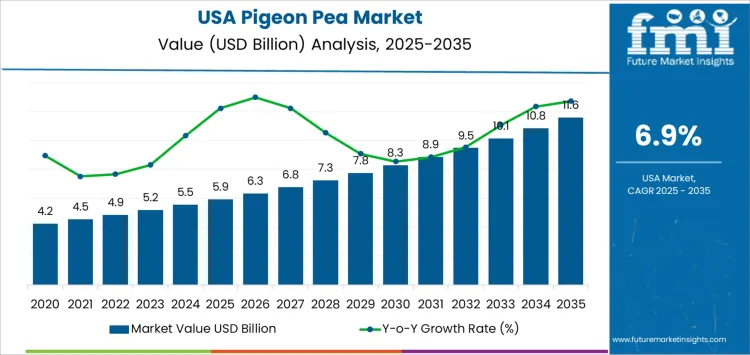
What is the Growth Forecast for Pigeon Pea Industry in USA through 2035?
Demand for pigeon pea in the United States shows a steady but controlled growth trajectory due to its niche consumer base. It is widely used within ethnic dietary patterns, particularly among Indian, African, and Caribbean populations, which gives the category a dependable baseline. The adoption rate among mainstream consumers remains limited, creating a gradual movement toward a saturation midpoint rather than rapid scale expansion.
Saturation effects become visible when the primary demand driver is population stability within these communities. While there is interest in plant-based proteins, pigeon pea competes with well-established alternatives such as chickpeas, lentils, black beans, and soy. These preferred substitutes slow the conversion rate of new users and moderate the push toward peak consumption.
Supply chain dependencies on imports also restrict sharp growth. Domestic production is minor, so pricing and availability can fluctuate based on international harvest conditions. This creates a ceiling effect for volume acceleration. The category is expected to progress, but the demand curve is likely to flatten as it approaches a stable consumption plateau driven by cultural relevance rather than broad dietary penetration.
USA Pigeon Pea Key Takeaways
| Metric | Value |
|---|---|
| USA Pigeon Pea Sales Value (2025) | USD 5.9 billion |
| USA Pigeon Pea Forecast Value (2035) | USD 11.6 billion |
| USA Pigeon Pea Forecast CAGR (2025-2035) | 6.9% |
Why is the Demand for Pigeon Pea in the USA Growing?
Demand for pigeon pea in the USA is rising because consumer interest in plant-based proteins, ethnic cuisines and sustainable food sources continues to expand. Pigeon pea offers high protein and fiber content, which attracts vegetarians, vegans and flexitarians seeking nutritious alternatives to meat or soy. Growing awareness of pulse crops’ benefits for digestive health and plant-based diets supports adoption across health-conscious demographics.
Ethnic communities and foodservice providers use pigeon pea in traditional dishes from South Asia, the Caribbean and Latin America. As global cuisine becomes more mainstream, restaurants and grocery retailers stock dried or canned pigeon pea to support diverse culinary offerings. Availability increases through specialty grocers and online retail platforms, which improves access beyond communities with historic dietary demand.
Food manufacturers and packaged-meal brands include pigeon pea in ready-to-eat meals, soups, snacks and plant-based protein blends. The legume’s nutritional profile and shelf stability support product development aimed at convenience and health. Constraints include limited awareness among general consumers unfamiliar with pigeon pea cooking and potential longer cooking times compared with common pulses such as beans or lentils. Import dependency or limited domestic production can affect supply stability and pricing.
Which Price Segments and Forms Lead Demand for Pigeon Pea in the USA?
Demand for pigeon pea in the United States is shaped by ethnic consumption patterns, dietary protein needs, and increasing adoption of plant-based food choices. Imported supply availability from major producing countries, including India and Africa, supports domestic distribution. Consumers prioritize convenience, product safety, and packaging suitability for meal preparation across multicultural households, foodservice outlets, and specialty retail channels.
By Price Range, Premium Pigeon Pea Holds the Largest Share
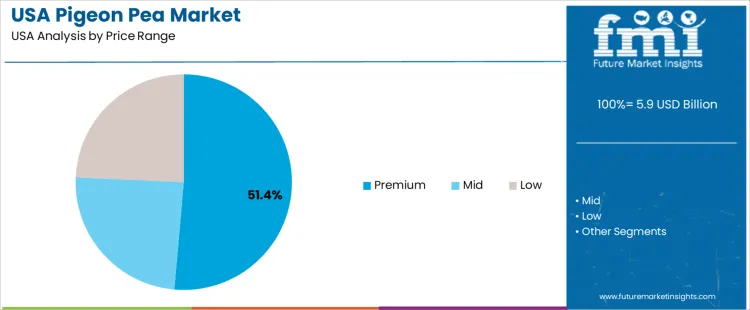
Premium-grade pigeon pea accounts for 51.4%, driven by strong purchases from diaspora communities and health-conscious consumers who prioritize quality, grain uniformity, and verified sourcing. Mid-range products represent 24.3%, serving mainstream retail shelves with balanced pricing and dependable cooking performance. The low-price segment accounts for 24.3%, supplied primarily through bulk outlets and wholesale formats where price sensitivity influences selection. Price segment distribution reflects USA reliance on imported, higher-quality produce that upholds food safety standards and culinary versatility in packaged and restaurant applications.
Key Points:
- Premium products dominate due to quality expectations among core consumer groups
- Mid-range formats support routine household use with moderate affordability
- Low-cost offerings meet institutional and bulk procurement requirements
By Form, Frozen Pigeon Pea Represents the Largest Share
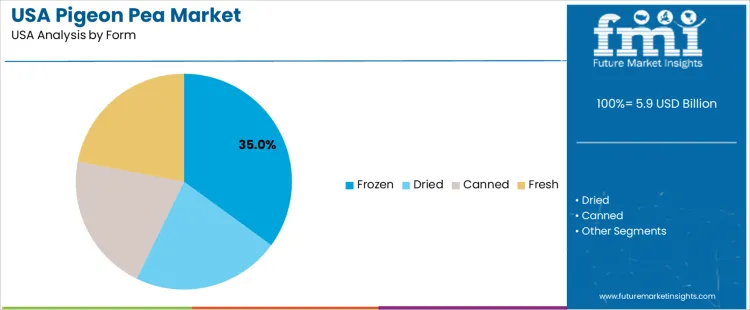
Frozen variants hold 35.0%, supported by longer shelf life, retention of texture and nutrients, and convenience for ready-to-cook dishes such as stews, curries, and soups. Dried pigeon pea accounts for 22.2%, used widely for traditional cooking and extended storage with low transportation weight. Fresh supply holds 22.0%, but is limited by perishability and seasonal import logistics. Canned products account for 20.8%, addressing time-saving food preparation across retail and restaurant channels. Form preferences in the USA reflect convenience-driven purchasing patterns and strengthened cold-chain distribution networks.
Key Points:
- Frozen forms lead due to convenience and quality consistency
- Dried peas support long-term storage and traditional cooking formats
- Canned products meet rapid-preparation requirements for households and foodservice
What are the Key Dynamics in the Pigeon Pea Industry?
Growth of South Asian and African diaspora populations, increased interest in plant-based protein and expansion of ethnic grocery channels drive demand.
In the United States, pigeon pea consumption is concentrated in Indian, Caribbean, East African and Latin communities where dishes such as dal, stews and rice-based meals are part of traditional diets. Immigration-driven population growth in major metropolitan areas increases recurring retail demand for dry pigeon peas and canned formats. Plant-forward eating behavior encourages broader consumer trial because pigeon pea offers a natural source of protein, fiber and micronutrients. Ethnic grocery stores, bulk food retailers and online marketplaces expand assortment to support easier access across states. Foodservice operators specializing in global cuisines incorporate pigeon pea as a staple ingredient, strengthening supply chains and sustaining import volumes throughout the year.
Dependence on imports, price fluctuations and limited familiarity among mainstream consumers restrain demand.
The United States relies heavily on imports from regions such as India and East Africa, which exposes domestic supply to climate variability and export policy changes. Price volatility can influence buyer decisions in retail and foodservice when substitute legumes such as lentils or chickpeas offer better value. Awareness outside ethnic communities remains limited because pigeon pea is less commonly promoted in mainstream supermarkets. Some consumers unfamiliar with soaking and cooking methods prefer ready-to-use legumes, which restricts demand for traditional dry product formats. These challenges limit rapid expansion into general packaged-food aisles.
Shift toward ready-to-cook convenience products, increased use in plant-based protein blends and rising presence in health-focused retail define key trends.
Manufacturers introduce quick-cooking and canned pigeon pea varieties to support convenience-oriented shoppers. Blended protein products, including patties, soups and pulse-based snacks, incorporate pigeon pea to diversify protein sources and enhance texture. Health-focused retailers promote pulse consumption for sustainability and nutritional benefits, improving visibility to wellness-oriented buyers. Food brands emphasize traceable sourcing and gluten-free positioning to attract new consumers. Recipe platforms and cultural-food influencers improve awareness of global cooking practices, gradually expanding usage beyond traditional cuisine. These developments indicate growing, community-driven demand for pigeon pea across the United States supported by dietary diversity and plant-protein interest.
Analysis of the Demand for Pigeon Pea in the USA by Region
Demand for pigeon pea in the United States is expanding due to increased consumption among ethnic communities, particularly South Asian, Caribbean, and African households. Food manufacturers are incorporating pigeon pea into ready-meal products, plant-protein recipes, and canned legume lines as consumer interest in high-fiber, non-GMO, and plant-forward diets rises. Import-driven supply chains remain essential as domestic cultivation is minimal. Growth is highest in West USA (8.0% CAGR), followed by South USA (7.1%), Northeast USA (6.4%), and Midwest USA (5.5%). Retail expansion, online grocery penetration, and enhanced sourcing from India, East Africa, and Latin America are strengthening availability throughout the United States.
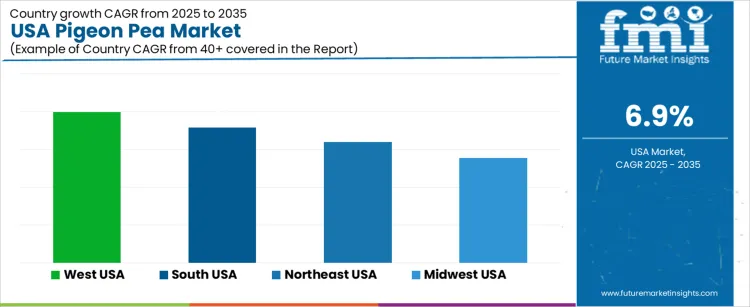
| Region | CAGR (2025-2035) |
|---|---|
| West USA | 8.0% |
| South USA | 7.1% |
| Northeast USA | 6.4% |
| Midwest USA | 5.5% |
How is the West USA driving demand for pigeon pea?
West USA posts 8.0% CAGR, the strongest regional expansion, driven by large South Asian and multicultural populations across California and Washington. Retailers in metropolitan areas stock split pigeon peas (toor dal) through mainstream supermarkets and ethnic-specialty chains, increasing year-round accessibility. Foodservice operators integrate pigeon pea into vegetarian menu items and protein-rich bowls marketed toward health-focused consumers. Import logistics through Pacific ports allow consistent supply flow from major producing countries. Ingredient buyers seek quality consistency in size, color, and cooking characteristics when sourcing bulk volumes for meal-kit producers and frozen entrée manufacturers.
- Diverse consumer base reinforcing household demand
- Broader grocery presence improving accessibility
- Restaurant vegetarian offerings aiding adoption
- Strong port infrastructure stabilizing imports
How is the South USA shaping demand?
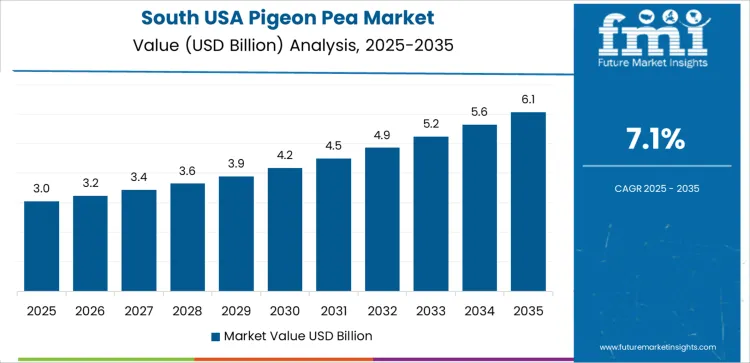
The South USA records 7.1% CAGR, supported by significant Caribbean and African-diaspora communities in Florida, Texas, and Georgia. Retail turnover grows through specialty grocers and discount chains targeting multicultural shoppers. Warm-weather states sustain rising consumption of plant-protein foods aligned with lifestyle wellness trends. Small-scale experimental cultivation in southern agricultural belts is monitored for local-sourcing opportunities, though imports remain dominant. Food processors evaluate pigeon pea for inclusion in bean mixes, canned soups, and private-label staples distributed through regional warehouse clubs. Procurement priorities include cost stability given currency-linked variability in global supply markets.
- Ethnic-demand concentration supporting strong retail movement
- Plant-protein trends accelerating packaged-food use
- Local-production exploration in warm-climate states
- Pricing control guiding contract-based purchasing
How is the Northeast USA contributing to growth?
Northeast USA expands at 6.4% CAGR, driven by dense immigrant populations and convenience-driven food purchasing across New York, New Jersey, and Massachusetts. Supermarkets add pigeon-pea product lines in canned, dry, and ready-to-cook categories aligned with multicultural merchandising strategies. Meal-kit services source pigeon pea for vegan recipes promoted to urban wellness consumers. Restaurants specializing in Indo-Caribbean cuisine help reinforce product familiarity. Import distributors maintain warehouse capacity in port-served metros to ensure steady supply. Buyers emphasize packaging quality and shelf-life performance for high-turnover items.
- Urban multicultural markets sustaining demand momentum
- Shelf-stable formats gaining presence in mainstream retail
- Foodservice adoption enhancing product recognition
- Port-based distribution ensuring inventory continuity
How is the Midwest USA maintaining adoption?
Midwest USA grows at 5.5% CAGR, reflecting steadier adoption in states such as Illinois, Michigan, and Ohio where demand is boosted by expanding multicultural communities. Retailers broaden global-food selections to support regional population shifts. CPG firms evaluate pigeon pea as a cost-efficient protein source for frozen entrées and canned comfort-food products. The region’s strong logistics infrastructure routes imported inventory from coastal entry points into major inland consumption hubs. Buyers maintain cautious procurement levels due to lower baseline familiarity among mainstream consumers but anticipate long-term category growth.
- Demographic diversification supporting volume gains
- Packaged-meal producers testing new product formats
- Inland distribution networks aiding availability
- Gradual consumer education shaping adoption trajectory
What is the competitive landscape of the demand for pigeon pea in the United States?
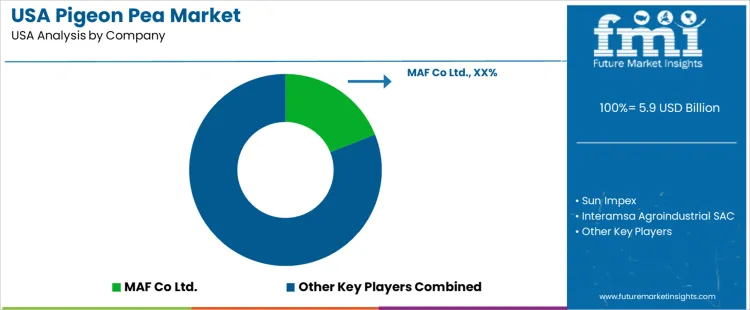
Demand for pigeon pea in the United States is relatively niche, driven mostly by immigrant communities, ethnic grocery demand, specialty food retailers, and limited-use applications in soups, stews, and vegetarian diets. Supply reliability, import logistics, and consistent quality (size, dryness, and cleanliness of pulses) determine which exporters maintain foothold among USA distributors and ethnic grocers. MAF Co Ltd. holds an estimated 19.0% share, benefiting from direct export relationships with USA importers that supply large ethnic-grocery chains and community supermarkets. Their consistency in packaging, adherence to export standards, and ability to supply mixed-size orders help maintain buyer confidence. Sun Impex competes through flexible lot sizes and cost-conscious pricing, supplying stackable bags often used by regional distributors targeting South-Asian and Caribbean diasporas. Their value offering appeals to budget-sensitive consumer segments or bulk-purchase households.
Interamsa Agroindustrial SAC focuses on quality differentiation, offering pigeon pea batches with strict grading and low-defect thresholds, which appeals to USA organic-food retailers or specialty stores emphasizing quality. A.B. agro Company serves smaller distributors and independent grocers, where pricing and small-batch flexibility matter more than scale. Their share reflects responsiveness to frequent, low-volume import orders. Arvind Limited maintains a modest presence, supplying niche demand in ethnic stores and regional urban centers where longstanding community preferences support continued pigeon-pea buying. The competitive strength depends on consistent import logistics, grading quality, and cultural demand concentration. Suppliers who combine reliable delivery with flexible packaging and responsiveness to ethnic-market demand remain best positioned to retain share in USA pigeon-pea trade.
Key Players in USA Pigeon Pea Demand
- MAF Co Ltd.
- Sun Impex
- Interamsa Agroindustrial SAC
- A.B.agro Company
- Arvind Limited
Scope of the Report
| Items | Values |
|---|---|
| Quantitative Units | USD billion |
| Price Range | Premium, Mid, Low |
| Form | Frozen, Dried, Canned, Fresh |
| Distribution Channel | Super Market, Direct Store, Online, Grocery |
| End User | Pharmaceuticals, Food and Beverages, Dietary Supplements, Cosmetic |
| Regions Covered | West USA, South USA, Northeast USA, Midwest USA |
| Key Companies Profiled | MAF Co Ltd., Sun Impex, Interamsa Agroindustrial SAC, A.B.agro Company, Arvind Limited |
| Additional Attributes | Dollar sales by form and price segments; import dependency for dried pigeon peas; consumption growth in foodservice and ethnic retail formats; adoption in plant-protein and dietary supplement industries; distribution expansion through mainstream grocery chains; compliance with US food safety and agricultural import regulations. |
USA Pigeon Pea Demand by Segments
Price Range:
- Premium
- Mid
- Low
Form:
- Frozen
- Dried
- Canned
- Fresh
Distribution Channel:
- Super Market
- Direct Store
- Online
- Grocery
End User:
- Pharmaceuticals
- Food and Beverages
- Dietary Supplements
- Cosmetic
Region:
- West USA
- South USA
- Northeast USA
- Midwest USA
Frequently Asked Questions
How big is the demand for pigeon pea in USA in 2025?
The demand for pigeon pea in USA is estimated to be valued at USD 5.9 billion in 2025.
What will be the size of pigeon pea in USA in 2035?
The market size for the pigeon pea in USA is projected to reach USD 11.6 billion by 2035.
How much will be the demand for pigeon pea in USA growth between 2025 and 2035?
The demand for pigeon pea in USA is expected to grow at a 6.9% CAGR between 2025 and 2035.
What are the key product types in the pigeon pea in USA?
The key product types in pigeon pea in USA are premium, mid and low.
Which form segment is expected to contribute significant share in the pigeon pea in USA in 2025?
In terms of form, frozen segment is expected to command 35.0% share in the pigeon pea in USA in 2025.
Preview the report firsthand - request a free sample
Get SampleGet the brochure for pricing and purchase details.
Get PDFTable of Content
- Executive Summary
- USA Market Outlook
- Demand-side Trends
- Supply-side Trends
- Technology Roadmap Analysis
- Analysis and Recommendations
- Market Overview
- Market Coverage / Taxonomy
- Market Definition / Scope / Limitations
- Market Background
- Market Dynamics
- Drivers
- Restraints
- Opportunity
- Trends
- Scenario Forecast
- Demand in Optimistic Scenario
- Demand in Likely Scenario
- Demand in Conservative Scenario
- Opportunity Map Analysis
- Product Life Cycle Analysis
- Supply Chain Analysis
- Investment Feasibility Matrix
- Value Chain Analysis
- PESTLE and Porter’s Analysis
- Regulatory Landscape
- Regional Parent Market Outlook
- Production and Consumption Statistics
- Import and Export Statistics
- Market Dynamics
- USA Market Analysis 2020 to 2024 and Forecast, 2025 to 2035
- Historical Market Size Value (USD Million) Analysis, 2020 to 2024
- Current and Future Market Size Value (USD Million) Projections, 2025 to 2035
- Y-o-Y Growth Trend Analysis
- Absolute $ Opportunity Analysis
- USA Market Pricing Analysis 2020 to 2024 and Forecast 2025 to 2035
- USA Market Analysis 2020 to 2024 and Forecast 2025 to 2035, By Price Range
- Introduction / Key Findings
- Historical Market Size Value (USD Million) Analysis By Price Range , 2020 to 2024
- Current and Future Market Size Value (USD Million) Analysis and Forecast By Price Range , 2025 to 2035
- Premium
- Mid
- Low
- Y-o-Y Growth Trend Analysis By Price Range , 2020 to 2024
- Absolute $ Opportunity Analysis By Price Range , 2025 to 2035
- USA Market Analysis 2020 to 2024 and Forecast 2025 to 2035, By Form
- Introduction / Key Findings
- Historical Market Size Value (USD Million) Analysis By Form, 2020 to 2024
- Current and Future Market Size Value (USD Million) Analysis and Forecast By Form, 2025 to 2035
- Frozen
- Dried
- Canned
- Fresh
- Y-o-Y Growth Trend Analysis By Form, 2020 to 2024
- Absolute $ Opportunity Analysis By Form, 2025 to 2035
- USA Market Analysis 2020 to 2024 and Forecast 2025 to 2035, By Distribution Channel
- Introduction / Key Findings
- Historical Market Size Value (USD Million) Analysis By Distribution Channel, 2020 to 2024
- Current and Future Market Size Value (USD Million) Analysis and Forecast By Distribution Channel, 2025 to 2035
- Super Market
- Direct Store
- Online
- Grocery
- Y-o-Y Growth Trend Analysis By Distribution Channel, 2020 to 2024
- Absolute $ Opportunity Analysis By Distribution Channel, 2025 to 2035
- USA Market Analysis 2020 to 2024 and Forecast 2025 to 2035, By End User
- Introduction / Key Findings
- Historical Market Size Value (USD Million) Analysis By End User, 2020 to 2024
- Current and Future Market Size Value (USD Million) Analysis and Forecast By End User, 2025 to 2035
- Pharmaceuticals
- Food and Beverages
- Dietary Supplements
- Cosmetic
- Y-o-Y Growth Trend Analysis By End User, 2020 to 2024
- Absolute $ Opportunity Analysis By End User, 2025 to 2035
- Market Structure Analysis
- Competition Dashboard
- Competition Benchmarking
- Market Share Analysis of Top Players
- By Regional
- By Price Range
- By Form
- By Distribution Channel
- By End User
- Competition Analysis
- Competition Deep Dive
- MAF Co Ltd.
- Overview
- Product Portfolio
- Profitability by Market Segments (Product/Age /Sales Channel/Region)
- Sales Footprint
- Strategy Overview
- Marketing Strategy
- Product Strategy
- Channel Strategy
- Sun Impex
- Interamsa Agroindustrial SAC
- A.B.agro Company
- Arvind Limited
- MAF Co Ltd.
- Competition Deep Dive
- Assumptions & Acronyms Used
- Research Methodology


