

- Industry Size (2026)
- USD 1.9 Bn
- Forecast (2036)
- USD 2.9 Bn
- CAGR (2026 to 2036)
- 4.5%
Pearlescent Skin and Hair Products Market Forecast and Outlook 2026 to 2036
The global pearlescent skin and hair products market is valued at USD 1.91 billion in 2026 and is projected to reach USD 2.99 billion by 2036, expanding at a 4.56% CAGR. As per Future Market Insights, growth is being driven by rising demand for multidimensional color effects in cosmetics, where pearlescent pigments create visual depth and luminosity beyond conventional matte colorants. Clean beauty positioning is also shaping adoption, as pearl extracts and mineral-based pigments support natural-origin narratives compared with petrochemical dyes. BASF SE noted in its 2023 Annual Report that its Care Chemicals division continues to support the cosmetics and personal care sector with effect pigments and active ingredients, highlighting ongoing innovation in sustainable pigment technologies and natural-origin materials, although pearlescent pigment revenues are not reported separately. Product activity reflects increasing development of natural-origin pearlescent systems using sustainably sourced mica, biodegradable synthetic alternatives, and biotechnology-derived pearl proteins to meet aesthetic and environmental expectations.
Growing emphasis on sustainable pigments and regulatory compliance is expanding the use of pearlescent effects across everyday cosmetic formulations. Restrictions on titanium dioxide nanoparticles in the European Union are encouraging formulators to adopt larger particle grades and alternative interference pigments, including iron oxides and synthetic fluorphlogopite. At the same time, increasing attention on ethical concerns around mica sourcing is driving greater uptake of synthetic mica and certified responsible supply chains. Mica continues to play a central role in delivering shimmer and luminosity in color cosmetics due to its physical properties and optical performance. As Eva Lagarde, CEO and founder of a beauty sustainability platform, notes, “Mica is a mineral powder, mostly used in colour cosmetics for its pearly effects. It’s very resistant to pressure or compression which makes it ideal for pressed powders, while its reflective properties offer a shimmery effect in foundations.” Future Market Insights observes that digital merchandising and clean beauty retail standards are heightening the importance of combining visual appeal with responsible sourcing, supporting continued category expansion through 2036.
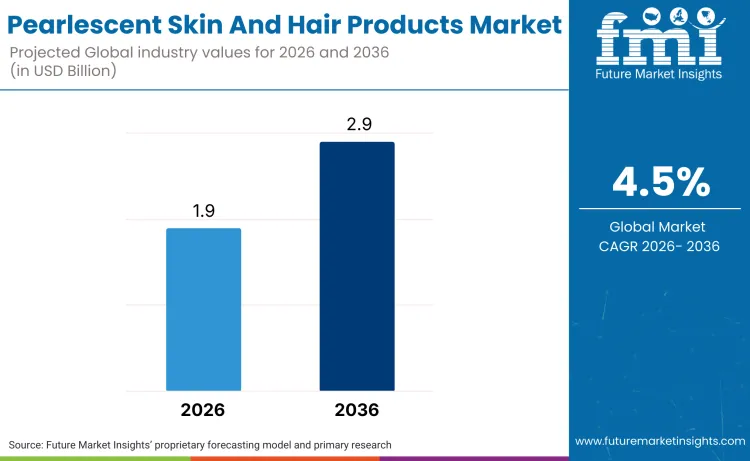
Summary of Pearlescent Skin and Hair Products Market
What Is Growth Outlook for Pearlescent Skin and Hair Products Market as per Future Market Insights Projection?
Future Market Insights projects the pearlescent skin and hair products market to expand at a CAGR of 4.56% from 2026 to 2036, increasing from USD 1.91 Billion in 2026 to USD 2.99 Billion by 2036.
FMI Research Approach: FMI proprietary forecasting model based on cosmetic color additive adoption trajectories, natural ingredient preference trends, sustainable mica sourcing adoption rates, and premium beauty product growth patterns across skin care, makeup, and hair care categories.
Which Country Holds Largest Share in Global Pearlescent Skin and Hair Products Market?
China holds a significant share supported by domestic mica production capacity, expanding cosmetics manufacturing infrastructure, and growing middle-class consumer demand for premium color cosmetics featuring pearlescent effects. Cosmetic ingredients market dynamics inform pearlescent pigment adoption modeling.
FMI Research Approach: FMI country-level revenue modeling by cosmetics production volumes, mica mining output, color cosmetics market penetration, and premium beauty product consumption patterns.
What Are Globally Unique Trends Shaping Pearlescent Skin and Hair Products Market?
Globally unique trends include biotechnology-derived pearl protein production through fermentation eliminating oyster harvesting, photochromic pearlescent pigments changing color under UV exposure creating dynamic makeup effects, and multifunctional formulations where pearlescent particles incorporate skincare actives including hyaluronic acid and vitamin C delivered through pigment particle surface modification enabling simultaneous aesthetic and treatment benefits. Specialty chemicals market innovation in effect pigments creates next-generation cosmetic ingredient opportunities.
FMI Research Approach: Biotechnology cosmetic ingredient trend tracking, multifunctional pigment development monitoring, and sustainable alternative material commercialization analysis.
Pearlescent Skin and Hair Products Market Key Takeaways
| Metric | Details |
|---|---|
| Industry Size (2026) | USD 1.9 Billion |
| Industry Value (2036) | USD 2.9 Billion |
| CAGR (2026-2036) | 4.5% |
Source: Future Market Insights (FMI) analysis, based on proprietary forecasting model and primary research
What Is Driving Wider Uptake of Pearlescent Skin and Hair Products?
Expectations around cosmetic aesthetics are evolving as pearlescent skin and hair products move from special-occasion use into routine beauty routines. According to Future Market Insights, consumers are placing greater emphasis on visual luminosity, glow-enhancing finishes, and premium sensory appeal, particularly in complexion products and hair care. Earlier pearlescent formats were often perceived as decorative accents limited to niche makeup applications, which constrained everyday usage. That perception is shifting as luminous finishes gain stronger placement within mainstream cosmetic and personal care assortments, supported by formulations designed for regular use without excessive shimmer.
Brand portfolio strategies mirror this transition. Beauty companies are integrating pearlescent pigments into foundations, primers, shampoos, and conditioners alongside matte alternatives rather than positioning them as novelty effects. These products deliver subtle light-reflective benefits that enhance skin tone and hair shine without disrupting established application routines. FMI notes that brands embedding pearlescent effects into core product lines, supported by clean-label pigment strategies and consistent visual outcomes, are better positioned to encourage repeat purchase as luminous finishes become part of everyday beauty use.
How is the Pearlescent Skin and Hair Products Market Segmented?
The pearlescent skin and hair products market is segmented by product type and application, reflecting routine cosmetic usage patterns across beauty categories. By product type, natural pearl essence formulations account for the largest share, supported by consumer preference for ingredient names associated with luxury and purity, even though most commercial pearl essence is derived from fish scale extraction rather than oyster nacre due to cost and sustainability constraints. By application, skin and body cosmetics such as foundations, highlighters, and body lotions account for the highest volume of use, as pearlescent effects are widely applied to enhance luminosity and visual depth in complexion products. Hair care represents a smaller share of volume, yet captures a higher share of value, as pearl-infused shampoos and conditioners command premium pricing through luxury positioning. The segmentation outlook also reflects ongoing reformulation away from titanium dioxide-mica systems toward iron oxide-based interference pigments, as regulatory scrutiny and safety concerns are encouraging adoption of alternative chemistries that deliver comparable optical effects.
Why Does Natural Pearl Essence Hold Dominant Product Type Share?
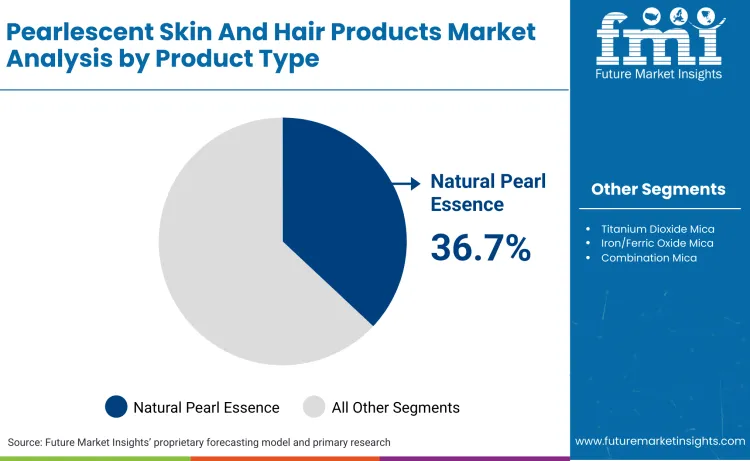
Natural pearl essence maintains 36.70% product type share due to premium positioning and cultural associations where pearl ingredients signal luxury, purity, and traditional Asian beauty wisdom from historical Chinese and Japanese pearl powder usage in skincare. The material's amino acid content including glycine, alanine, and leucine provides functional moisturization benefits beyond visual pearlescence, enabling dual marketing claims addressing both aesthetic luminosity and skin nourishment. However, transparency concerns are emerging as most commercial pearl essence consists of hydrolyzed fish scale guanine or synthetic guanine rather than actual oyster pearl nacre due to cost constraints where genuine pearl costs USD 800-2,400 per kilogram versus fish-derived alternatives at USD 120-380 per kilogram, creating authenticity questions that informed consumers increasingly raise regarding ingredient origin verification.
Why Do Cosmetics for Skin and Body Dominate Applications?
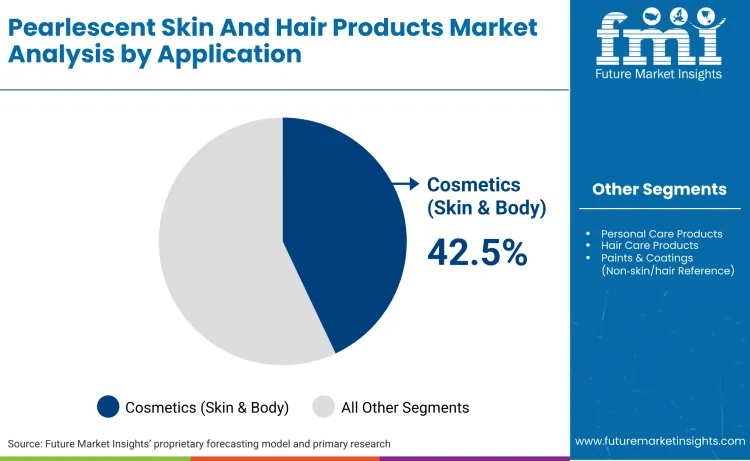
Cosmetics for skin and body hold 42.50% application share as categories including foundations, highlighters, blushes, eyeshadows, and body lotions extensively utilize pearlescent pigments creating luminous effects consumers seek for special occasions and daily enhancement. The application's direct visibility where facial makeup receives scrutiny under various lighting conditions creates quality requirements favoring premium pearlescent pigments with consistent particle size distribution and optical properties rather than commodity grades exhibiting batch variation. Color cosmetics particularly benefit from pearlescent technology as single interference pigments create multiple color appearances depending on viewing angles, enabling formulation simplification where fewer ingredients achieve complex aesthetic effects compared to conventional colorant blends requiring multiple dyes and lakes.
Why Does Asia Pacific Lead Regional Segments?
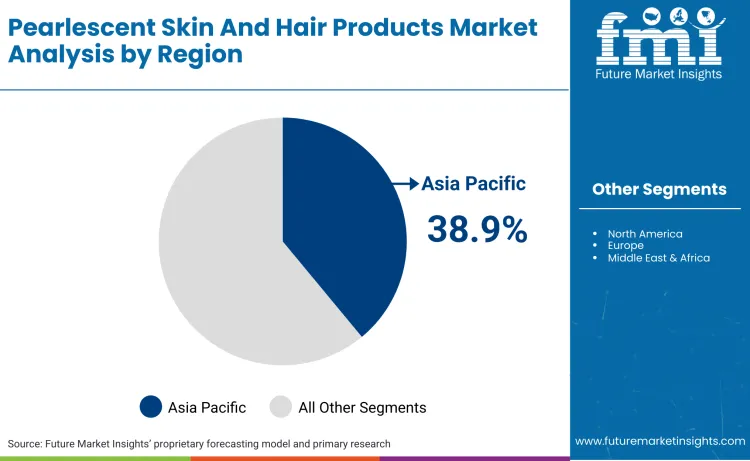
Asia Pacific captures 38.90% regional share driven by China's cosmetics manufacturing dominance, K-beauty and J-beauty trends emphasizing dewy glowing skin requiring pearlescent highlighters, and cultural preferences for luminous complexions contrasting with Western matte makeup trends. The region's domestic mica production particularly in India and China creates ingredient sourcing advantages reducing costs compared to importing from South American or African deposits incurring transportation expenses and import duties. Rising middle-class populations in China, India, and Southeast Asian countries create expanding addressable markets for premium pearlescent products as discretionary income growth enables trading up from mass-market to prestige beauty categories where pearlescent effects provide visible differentiation justifying price premiums.
How Are Ethical Sourcing and Supply Chain Transparency Reshaping Pearlescent Ingredient Strategies?
Sustainability scrutiny is intensifying around mica sourcing as investigative journalism and non-governmental organization reports document child labor in Indian and Chinese mica mining, particularly in Jharkhand and Bihar states where informal mining operations employ children in hazardous conditions. This exposure is forcing cosmetic brands to implement verified sourcing programs, including Responsible Mica Initiative membership that provides audit trails from mine to finished product, or to adopt synthetic mica alternatives produced through industrial processes that avoid human rights concerns entirely. Brands achieving verified ethical mica certification are communicating sourcing transparency as a competitive differentiator, while synthetic alternatives such as synthetic fluorphlogopite and calcium sodium borosilicate offer complete traceability advantages by eliminating mining-related risks.
Why Is Biotechnology-Based Pearl Essence Emerging as a Long-Term Innovation Pathway?
Biotechnology innovation is advancing as companies develop pearl protein analogs through precision fermentation, where engineered microorganisms produce nacre-identical proteins as sustainable alternatives to natural pearl essence. These bio-identical materials offer consistent quality, scalable production, and animal-free positioning that appeals to vegan consumers. Commercial adoption remains limited as production costs currently exceed conventional pearl essence pricing, requiring premium segment acceptance before broader mass-market viability is achieved through scale efficiencies and manufacturing optimization.
How Are Multifunctional Pigments Driving Convergence Between Color Cosmetics and Skincare?
Multifunctional pigments are emerging as pearlescent particles surface-modified with skincare actives such as antioxidants, peptides, and moisturizers deliver treatment benefits alongside aesthetic luminosity. This convergence enables hybrid products positioned as makeup with skincare benefits, aligning with consumer demand for routine simplification and functional beauty. The integration of color cosmetics and skincare performance within single formulations is reshaping product development strategies toward consolidated, multifunctional ingredient systems.
How Will Pearlescent Skin and Hair Products Market Expansion Unfold Across Key Global Regions?
The pearlescent skin and hair products market is poised for significant expansion with varying growth rates projected from 2026 to 2036. China leads with 6.156% CAGR driven by domestic cosmetics manufacturing scale, mica production capacity, and expanding middle-class demand for premium color cosmetics. India follows at 5.7% benefiting from mica mining industry, growing domestic beauty market, and increasing exports to international cosmetics manufacturers. Germany records 5.244% reflecting European specialty chemicals expertise and stringent quality standards supporting premium positioning. Brazil anticipates 4.788% growth from expanding beauty consciousness and domestic cosmetics industry development. The United States at 4.332% maintains substantial market scale through established prestige beauty retail and social media beauty trend influence. The United Kingdom at 3.876% and Japan at 3.42% show moderate growth from mature markets with high baseline consumption.
Pearlescent Skin and Hair Products Market Country CAGR (2026-2036)
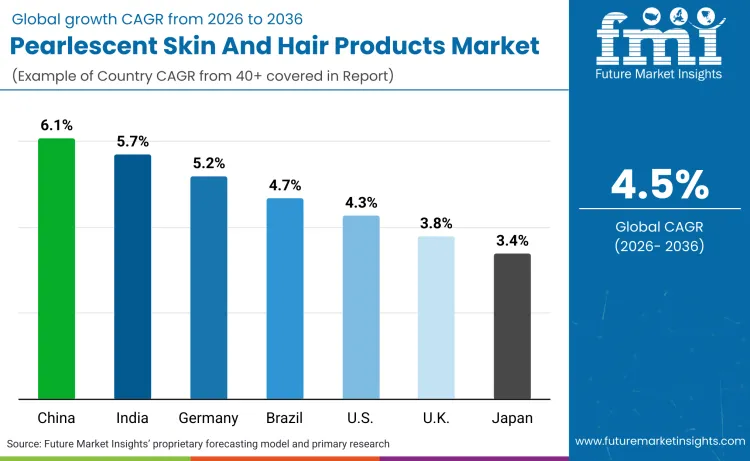
| Country | CAGR (2026-2036) |
|---|---|
| China | 6.1% |
| India | 5.7% |
| Germany | 5.2% |
| Brazil | 4.7% |
| United States | 4.3% |
| United Kingdom | 3.8% |
| Japan | 3.4% |
Source: Future Market Insights (FMI) analysis
How is Manufacturing Scale Fueling China's Growth?
China's 6.156% expansion reflects cosmetics manufacturing dominance where the country produces approximately 40% of global color cosmetics output according to China Chamber of Commerce for Import and Export of Medicines and Health Products, creating substantial demand for pearlescent pigments as foundational color additives in foundations, eyeshadows, and lipsticks. Domestic mica deposits in Sichuan and Xinjiang provinces provide local sourcing advantages reducing dependence on Indian imports that previously dominated supply chains. Chinese specialty chemical companies including Coloray and domestic manufacturers developed cost-competitive pearlescent pigment production capabilities priced 30-45% below European suppliers, enabling domestic cosmetics brands to incorporate premium effects at accessible price points. Middle-class expansion reaching 550 million consumers by 2023 per McKinsey China Consumer Report creates growing markets for premium pearlescent products as disposable income growth enables trading up from mass-market to prestige beauty categories where luminous effects signal quality and sophistication appealing to aspirational consumers.
Why is Mica Industry Driving India's Expansion?
India's 5.7% growth demonstrates mica mining industry significance where the country supplies approximately 60% of global natural mica used in cosmetics according to Bureau of Mines estimates, creating structural advantages in ingredient access and cost compared to countries lacking domestic deposits. Jharkhand and Bihar states contain primary mica reserves where mining activity supports local economies despite ongoing labor practice concerns driving international brands toward verified ethical sourcing programs. Indian specialty pigment manufacturers including Shimmer Pigments developed value-added processing capabilities converting raw mica into cosmetic-grade pearlescent pigments, capturing formulation margins beyond commodity mineral sales. Domestic cosmetics market growth reaching USD 20 billion in 2023 per Indian Cosmetics Market Association creates expanding local consumption alongside traditional export focus, with Indian consumers demonstrating increasing willingness to invest in premium pearlescent products as beauty consciousness rises among urban middle-class populations in Mumbai, Delhi, and Bangalore metropolitan centers.
How Does Technical Expertise Support Germany's Growth?
Germany's 5.244% expansion operates through specialty chemicals technical excellence where companies including BASF and Merck KGaA pioneered interference pigment technology and maintain global leadership in effect pigment innovation through continuous R&D investment. German manufacturers developed proprietary mica coating processes creating specialized optical effects including color-travel pigments shifting hue based on viewing angle, and dimensional pigments providing depth perception impossible through conventional colorants. This technical sophistication enables premium pricing where German-manufactured pearlescent pigments retail at EUR 35-85 per kilogram compared to Chinese commodity grades at EUR 12-28, justified through consistent quality, regulatory compliance documentation, and application support services including formulation consultation. German cosmetics brands including BASF's care chemicals division and independent German beauty companies utilize domestically-produced pigments emphasizing quality and traceability appealing to consumers prioritizing ingredient origin transparency and manufacturing standards.
What Drives Brazil's Beauty Consciousness Growth?
Brazil's 4.788% expansion reflects growing beauty consciousness where the Brazilian Association of Personal Hygiene, Perfumery and Cosmetics (ABIHPEC) reports the beauty market reached BRL 122 billion in 2023, with color cosmetics representing 18% of category value and exhibiting above-average growth rates. Brazilian consumers demonstrate particular affinity for luminous skin and glossy hair aesthetics aligned with beach culture and tropical climate lifestyle, creating natural fit for pearlescent products enhancing glow and shine. Domestic cosmetics manufacturers including Natura, O Boticário, and Grupo Boticário integrated pearlescent effects into product portfolios targeting mass-market and premium segments simultaneously through tiered pricing strategies. Brazil's cultural diversity where skin tones range across Fitzpatrick I-VI creates technical requirements for pearlescent pigments providing flattering luminosity across complexions without appearing ashy on darker skin or overly shimmery on lighter skin, driving demand for sophisticated interference pigments offering universal appeal.
How Does Social Media Influence Support USA's Growth?
USA maintains 4.332% CAGR through social media beauty trend influence where Instagram and TikTok content creators popularize highlighting techniques, strobing, and glass skin trends requiring pearlescent products to achieve viral aesthetic effects photographing distinctively under ring lights and smartphone cameras. Beauty influencers including makeup artists and skincare specialists demonstrate product application generating millions of views and subsequent consumer purchases, with pearlescent highlighters frequently ranking as top-selling color cosmetics at Sephora and Ulta Beauty specialty retailers. The USA clean beauty movement creates regulatory advantages for mica-based and pearl essence products positioned as natural alternatives to synthetic FD&C dyes, with programs including Sephora's Clean at Sephora and Credo Beauty providing retail gatekeeping that systematically favors mineral-based pearlescent ingredients. Premium beauty market maturity enables consumer willingness to invest USD 38-68 for prestige highlighters and USD 24-52 for pearl-infused hair care, supporting specialty chemical suppliers including BASF and Huntsman Corporation serving domestic cosmetics manufacturers with technical-grade pearlescent pigments.
What Strategic Moves Are Defining Competitive Landscape?
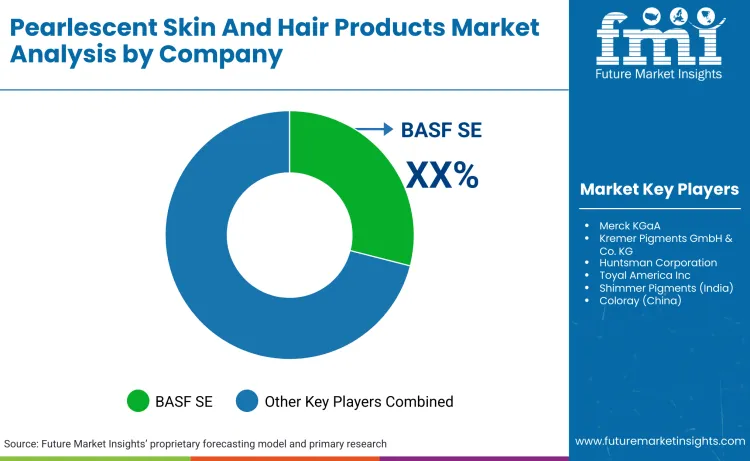
The competitive landscape for pearlescent pigments and opacifying cosmetic ingredients is increasingly shaped by specialty materials suppliers that are moving toward vertical integration to secure greater control over supply chains, from raw material sourcing through finished pigment production. This strategy supports tighter quality assurance, regulatory compliance, and cost management compared with fragmented supplier networks that depend on multi-vendor coordination. Key participants such as BASF SE, Merck KGaA, Kremer Pigments GmbH & Co. KG, Huntsman Corporation, Toyal America Inc., Shimmer Pigments (India), Coloray (China), DIC Corporation (Japan), Sun Chemical Corporation, and Eckart GmbH are strengthening upstream and downstream capabilities to improve supply reliability and technical support for cosmetic formulators. Suppliers that have established ethical mica sourcing programs, including participation in initiatives such as the Responsible Mica Initiative and the rollout of mine-to-market traceability systems, are reinforcing partnerships with cosmetics brands facing rising stakeholder scrutiny around human rights compliance and responsible raw material sourcing.
Future Market Insights observes that competition is progressively centered on sustainable innovation and multifunctional performance rather than scale alone. Suppliers are advancing synthetic mica to reduce reliance on natural mining, developing biotechnology-derived pearl proteins to avoid animal extraction, and exploring plant-based interference pigments that create optical effects through renewable material systems. Technical differentiation is also accelerating through multifunctional pigments, where surface modification with skincare actives enables single ingredients to deliver both aesthetic and treatment benefits. FMI notes that long-term competitive advantage will depend on suppliers’ ability to integrate sustainability credentials, regulatory readiness, and multifunctional performance into cosmetic formulation platforms rather than offering standalone pigment solutions.
Recent Developments:
- In 2023, BASF Care Chemicals division advanced sustainability initiatives in effect pigment production, focusing on natural-origin materials and transparent ingredient sourcing responding to clean beauty trends.
- In 2023, Merck KGaA expanded specialty pigment portfolio with new interference pigment grades offering enhanced optical effects for premium cosmetics applications.
- In 2023, responsible mica sourcing programs gained momentum with increased cosmetics brand participation in Responsible Mica Initiative auditing mine conditions and establishing ethical supply chain verification.
Key Players in Pearlescent Skin and Hair Products Market
- BASF SE
- Merck KGaA
- Kremer Pigments GmbH & Co. KG
- Huntsman Corporation
- Toyal America Inc.
- Shimmer Pigments (India)
- Coloray (China)
- DIC Corporation (Japan)
- Sun Chemical Corporation
- Eckart GmbH
Market Definition
The pearlescent skin and hair products market represents revenue generated from cosmetic color additives and effect pigments providing light-reflecting, light-interfering, or light-diffracting properties creating luminous, shimmering, or iridescent visual effects in skin care, hair care, and color cosmetics formulations. The market measures sales value of pearlescent pigments, pearl essence, mica-based interference pigments, and combination systems sold to cosmetics manufacturers for incorporation into foundations, highlighters, eyeshadows, lipsticks, body lotions, shampoos, conditioners, and styling products creating aesthetic luminosity and claimed functional benefits.
Inclusions cover natural pearl essence derived from oyster pearls or fish scales, titanium dioxide-coated mica creating interference effects, iron oxide-mica combinations providing color-shifting properties, and combination mica systems using multiple coating layers for complex optical effects. Applications include cosmetics for skin and body encompassing foundations, highlighters, and body lotions, personal care products including facial cleansers and moisturizers, and hair care products including shampoos, conditioners, and styling treatments. Regional coverage includes Asia Pacific as primary production and consumption hub, North America for premium beauty markets, Europe for specialty chemical expertise, Latin America for growing beauty consciousness, and Middle East and Africa for emerging markets.
Exclusions include non-cosmetic pearlescent pigments for automotive coatings, industrial paints, and plastic packaging falling outside personal care scope. Conventional matte colorants lacking light-reflective properties represent separate category. Glitter particles providing sparkle through plastic film rather than interference pigments fall outside market definition. Professional salon services and spa treatments using pearlescent products are excluded as market measures ingredient sales rather than service revenue. Counterfeit and unregulated cosmetics operating outside quality standards represent informal sector outside formal market measurement.
Scope of Report
| Items | Values |
|---|---|
| Quantitative Units (2026) | USD 1.9 Billion |
| Product Type | Natural Pearl Essence; Titanium Dioxide-Mica; Iron/Ferric Oxide-Mica; Combination Mica; Others |
| Application | Cosmetics (Skin & Body); Personal Care Products; Hair Care Products (Paints & Coatings and Plastics & Packaging excluded from skin and hair care scope) |
| Regions Covered | North America, Europe, Asia Pacific, Latin America, Middle East & Africa |
| Countries Covered | United States, Germany, United Kingdom, India, China, Brazil, and 40+ countries |
| Key Companies Profiled | BASF SE; Merck KGaA; Kremer Pigments GmbH & Co. KG; Huntsman Corporation; Toyal America Inc.; Shimmer Pigments (India); Coloray (China); DIC Corporation (Japan); Others |
| Additional Attributes | Dollar sales by product type, application, and region; country-wise growth analysis; adoption trends for pearlescent pigments in skin and hair products; regulatory impact on mica- and titanium dioxide-based pigments; competitive positioning of specialty pigment suppliers across premium cosmetics and personal care channels |
Pearlescent Skin and Hair Products Market by Segments
By Product Type:
- Natural Pearl Essence
- Titanium Dioxide Mica
- Iron/Ferric Oxide Mica
- Combination Mica
- Others
By Application:
- Cosmetics (Skin And Body)
- Personal Care Products
- Hair Care Products
By Region:
- Asia Pacific
- North America
- Europe
- Latin America
- Middle East & Africa
Bibliography
- China Chamber of Commerce for Import and Export of Medicines and Health Products. (2023). Cosmetics Manufacturing Statistics China. CCCMHPIE Reports.
- Bureau of Mines India. (2023). Mica Production and Export Statistics India. Government of India Ministry of Mines.
- Brazilian Association ABIHPEC. (2023). Beauty Market Statistics Brazil 2023. ABIHPEC Annual Report.
- Responsible Mica Initiative. (2023). Ethical Mica Sourcing Guidelines and Audit Standards. RMI Publications.
Frequently Asked Questions
What is the current global market size for pearlescent skin and hair products?
The global market is valued at USD 1.91 Billion in 2026, driven by premium positioning enabling luxury cosmetics, clean beauty movement adoption favoring natural mica and pearl ingredients, and social media influence popularizing luminous aesthetic effects.
What is the projected Compound Annual Growth Rate (CAGR) for pearlescent skin and hair products over the next 10 years?
The market is projected to grow at 4.56% CAGR from 2026 to 2036, reaching USD 2.99 Billion by 2036.
Which regions are experiencing the fastest expansion in pearlescent skin and hair products?
China leads with 6.156% growth, followed by India at 5.7% and Germany at 5.244%, driven by cosmetics manufacturing scale, mica mining industry advantages, and specialty chemical technical expertise respectively.
What are the primary drivers for pearlescent skin and hair products adoption?
Premium positioning justifying higher ingredient costs and clean beauty movement adoption enabling natural mica and pearl essence positioning compared to synthetic colorants are fueling pearlescent ingredient adoption across color cosmetics and premium personal care categories.
Who are the leading companies in the pearlescent skin and hair products industry?
BASF SE, Merck KGaA, Huntsman Corporation, DIC Corporation, and Shimmer Pigments are key players, differentiating through interference pigment technology innovation, ethical mica sourcing programs, multifunctional pigment development, and sustainable alternative material commercialization.
Preview the report firsthand - request a free sample
Get SampleGet the brochure for pricing and purchase details.
Get PDFTable of Content
- Pearlescent Skin and Hair Products Market Overview
- Market Introduction and Definition
- Market Taxonomy and Scope
- Market Evolution and Industry Context
- Pearlescent Skin and Hair Products Market Forecast and Outlook (2026-2036)
- Global Market Value Analysis and Growth Outlook
- Market Size and CAGR Assessment
- Key Drivers Influencing Market Expansion
- Market Restraints and Structural Challenges
- Opportunity Analysis and Strategic Imperatives
- Key Market Dynamics and Demand Analysis
- Why Is Demand for Pearlescent Skin and Hair Products Growing?
- Role of Clean Beauty and Sustainable Pigment Adoption
- Impact of Ethical Mica Sourcing and Regulatory Scrutiny
- Shift from Decorative Effects to Multifunctional Formulations
- Pearlescent Skin and Hair Products Market Segmentation Analysis
- Market Segmentation by Product Type
- Market Segmentation by Application
- Market Segmentation by Region
- Pearlescent Skin and Hair Products Market Analysis by Product Type
- Natural Pearl Essence
- Titanium Dioxide-Mica
- Iron / Ferric Oxide-Mica
- Combination Mica Systems
- Other Pearlescent Pigment Systems
- Pearlescent Skin and Hair Products Market Analysis by Application
- Cosmetics for Skin and Body
- Personal Care Products
- Hair Care Products
- Regional Analysis of Pearlescent Skin and Hair Products Market
- Asia Pacific
- North America
- Europe
- Latin America
- Middle East & Africa
- Country-Level Analysis
- China
- India
- Germany
- United States
- Brazil
- United Kingdom
- Japan
- Competitive Landscape and Strategic Analysis
- Market Share Analysis of Key Players
- Competitive Positioning and Differentiation Strategies
- Supply Chain Integration and Ethical Sourcing Initiatives
- Innovation Trends in Pearlescent Pigments
- Key Developments and Industry Updates
- Recent Product Launches
- Technology and Ingredient Innovation
- Strategic Partnerships and Supply Chain Initiatives
- Pearlescent Skin and Hair Products Market Definition and Scope
- Market Definition
- Inclusions and Exclusions
- Methodology and Assumptions
- Pearlescent Skin and Hair Products Market Segmentation Summary
- Frequently Asked Questions (FAQs)
- Bibliography and Research Sources


