

- Industry Size (2026)
- USD 4.04 Mn
- Forecast (2036)
- USD 5.82 Mn
- CAGR (2026 to 2036)
- 3.7%
Seitan Market Size, Market Forecast and Outlook By FMI
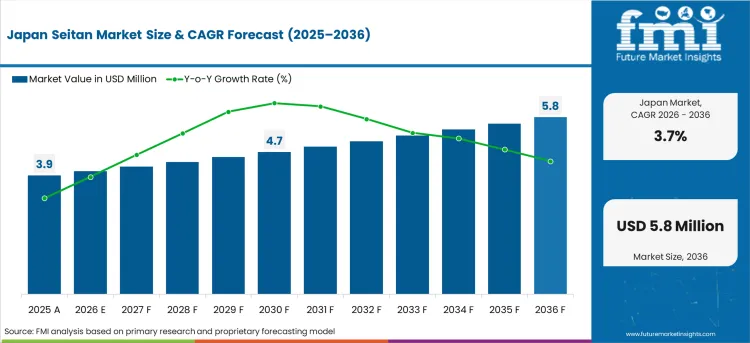
Demand for seitan in Japan was valued at USD Million 3.90 in 2025. Based on Future Market Insights' analysis, demand for seitan is estimated to grow to USD 4.04 Million in 2026 and USD 5.82 Million by 2036. FMI projects a CAGR of 3.7% during the forecast period from 2026 to 2036. This translates to an incremental opportunity worth USD 1.78 Million over the ten-year assessment window.
Summary of Seitan Market in Japan
- Market Snapshot
- Demand for seitan in Japan is valued at USD Million 3.90 in 2025 and is projected to reach USD Million 5.82 by 2036.
- The market is expected to grow at a 3.7% CAGR from 2026 to 2036, creating an incremental opportunity of USD Million 1.78.
- The market is a heritage-anchored, certification-driven plant protein category where organic positioning, cultural familiarity, and specialty retail distribution define procurement behavior.
- Demand and Growth Drivers
- Japan's traditional culinary use of wheat gluten in temple cuisine and processed food products provides a cultural familiarity advantage for seitan positioning.
- Health-conscious metropolitan consumers are driving organic seitan demand through specialty stores and online channels as part of plant-based dietary adoption.
- International plant-protein companies entering Japan through import distribution are expanding product variety and retail visibility for seitan-based offerings.
- Among key regions, Kyushu & Okinawa leads at 4.6% CAGR, followed by Kanto at 4.2%, Kansai at 3.7%, Chubu at 3.3%, Tohoku at 2.9%, and Rest of Japan at 2.7%.
- Product and Segment View
- Seitan in Japan includes organic and conventional wheat gluten protein products positioned for both plant-based dietary use and traditional culinary applications.
- Distribution channels span online stores, supermarkets, specialty stores, and hypermarkets serving health-conscious, vegetarian, and traditional cuisine consumers.
- Organic Seitan leads by Product Type with 57% share in 2026, driven by health-conscious metropolitan consumers seeking certified organic plant protein through specialty retail.
- Online Stores leads by Distribution Channel with 35% share in 2026, reflecting the direct-to-consumer convenience and product variety advantages of digital retail platforms.
- Scope includes seitan protein products for food use. Excluded are bulk vital wheat gluten for bread-making, soy and pea protein alternatives, and traditional fu products.
- Geography and Competitive Outlook
- Kyushu & Okinawa and Kanto are the fastest-growing regional clusters, driven by concentrated processing, distribution, and consumption infrastructure.
- Demand in Tohoku and Rest of Japan follows steadier, replacement-driven procurement cycles in established networks.
- Competition depends on organic certification credentials, cultural positioning strategy, distribution channel breadth, and the ability to bridge traditional Japanese wheat gluten heritage with modern plant-protein consumer expectations.
- Key players include Agrana Beteiligung AG, Anhui Ante Food Co., Ltd., Agridient, Inc., Archer Daniels Midland Company, Bryan W. Nash & Sons Ltd.
- Analyst Opinion at FMI
- Nandini Roy Choudhury, Principal Consultant for Food & Beverage analysts observe that: 'In my analysis, I have observed that seitan demand in Japan occupies a unique position at the intersection of the country's traditional wheat gluten culinary heritage and the emerging plant-based protein category. Unlike Western markets where seitan competes primarily against soy and pea protein alternatives, Japan's consumer base recognizes wheat gluten as an established ingredient in temple cuisine and traditional cooking. Producers who frame seitan exclusively through a Western plant-protein lens will miss the domestic positioning advantage that comes with cultural familiarity, while those who leverage the traditional connection can command premium pricing in specialty and organic retail channels.'
- Strategic Implications / Executive Takeaways
- Domestic wheat gluten processors should leverage Japan's traditional culinary heritage to position seitan as a culturally familiar protein option rather than importing Western plant-protein marketing frameworks.
- Retail buyers should expand organic seitan shelf allocation in specialty stores and health food sections of supermarkets to capture growing metropolitan health-conscious demand.
- Product developers should create ready-to-eat seitan formats compatible with bento and convenience store distribution to extend consumption beyond specialty cooking occasions.
Seitan Market Key Takeaways
| Metric | Details |
|---|---|
| Industry Size (2026) | USD 4.04 Million |
| Industry Value (2036) | USD 5.82 Million |
| CAGR (2026 to 2036) | 3.7% |
Source: Future Market Insights, 2026
Japan's seitan market holds a distinctive position among plant-based protein categories due to the country's long-standing culinary use of wheat gluten in traditional Buddhist temple cuisine (shojin ryori) and processed food products such as fu and yuba. Unlike most Western markets where seitan is positioned as a novel meat alternative, Japanese consumers recognize wheat gluten as an established ingredient with cultural familiarity. FMI analysts observe that the organic seitan sub-segment is growing faster than conventional, driven by health-conscious consumers in metropolitan areas who seek certified organic plant protein options through specialty stores and online channels. The competitive landscape includes both domestic wheat gluten processors and international plant-protein companies entering the Japanese market through import distribution networks.
Across Japanese prefectural clusters, growth trajectories vary based on industrial concentration and end-use demand density. Kyushu & Okinawa is projected to expand at 4.6% CAGR. Kanto is projected to expand at 4.2% CAGR. Kansai is projected to expand at 3.7% CAGR. Chubu is projected to expand at 3.3% CAGR. Tohoku is projected to expand at 2.9% CAGR. Rest of Japan is projected to expand at 2.7% CAGR. Kyushu & Okinawa leads the growth ranking, supported by concentrated processing and distribution infrastructure. Kanto, anchoring the Tokyo metropolitan consumption base, follows closely. Mature clusters such as Tohoku and Rest of Japan register steadier, replacement-driven demand patterns.
Seitan Market Definition
Seitan is a plant-based protein product derived from vital wheat gluten, produced through hydration and processing of wheat flour to isolate the gluten protein matrix. In the Japanese market, this category includes organic and conventional seitan products distributed through online stores, supermarkets, specialty stores, and hypermarkets. Applications span meat-alternative positioning in modern plant-based diets and traditional wheat gluten use in Japanese culinary preparations.
Seitan Market Inclusions
Market scope includes organic and conventional seitan products sold through online stores, supermarkets, specialty stores, and hypermarkets in Japan. The assessment covers market sizes by product type, distribution channel, and Japanese prefectural region for 2026 to 2036.
Seitan Market Exclusions
The scope excludes vital wheat gluten sold as a bulk commodity for bread-making, soy-based and pea-based meat alternatives, and traditional Japanese fu products manufactured under separate product classifications.
Seitan Market Research Methodology
- Primary Research: Analysts engaged with procurement managers, brand directors, and distribution leads at seitan manufacturing and distribution operations across Japan to map decision triggers and specification requirements.
- Desk Research: Data collection aggregated regulatory filings from the Ministry of Health, Labour and Welfare, trade statistics from Japan Customs, and published industry standards relevant to seitan production and distribution in Japan.
- Market-Sizing and Forecasting: Baseline values derive from a bottom-up aggregation of manufacturer shipments and import volumes, applying region-specific consumption curves to project demand velocity through 2036.
- Data Validation and Update Cycle: Projections are cross-checked against publicly reported production volumes, trade data, and downstream procurement disclosures from major producers and distributors operating in Japan.
Why is the Demand for Seitan in Japan Growing?
The demand for seitan in Japan is growing as more consumers seek plant-based protein Alternatives. Seitan, often referred to as wheat meat, is made from gluten and is used as a substitute for meat in vegetarian and vegan diets. With the increasing popularity of plant-based and flexitarian diets, seitan has become a favored option due to its meat-like texture, high protein content, and versatility in cooking. As consumers become more health-conscious and environmentally aware, they are turning to plant-based proteins like seitan as part of a sustainable and well-balanced diet.
A significant driver of seitan’s growth is the rising demand for plant-based food products in Japan. With an increasing number of individuals reducing their meat consumption for health or ethical reasons, there is a greater need for quality plant-based protein sources. Seitan, which is rich in protein And readily absorbs flavors, has gained popularity across various culinary traditions, from traditional Japanese dishes to Western-style preparations. As more food products made with seitan become available in retail and foodservice sectors, its accessibility and appeal to consumers have increased.
The growing awareness of the environmental impact of animal agriculture is further contributing to the demand for plant-based diets, including seitan. Many consumers are shifting towards plant-based alternatives as a means of reducing their environmental footprint, as plant-based proteins are typically more sustainable than animal-based proteins. This growing awareness around sustainability, combined with seitan’s nutritional benefits, positions it as a strong contender in the plant-based food sector. As demand for sustainable food options continues to rise, the demand for seitan in Japan is expected to experience steady growth through 2035.
What is the Segment-Wise Analysis of Demand for Seitan in Japan?
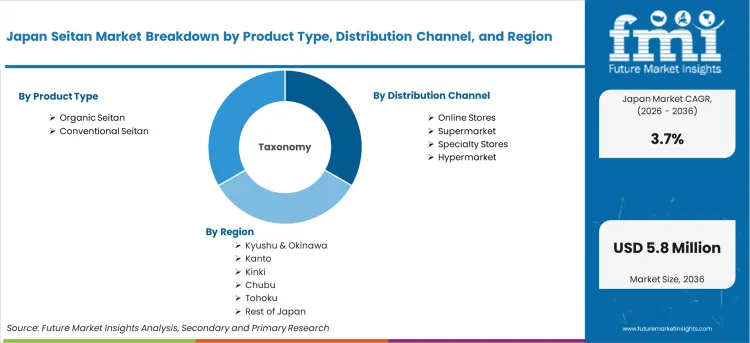
Demand for seitan in Japan is segmented by product type, distribution channel, and region. By product type, demand is divided into organic seitan and conventional seitan, with organic seitan leading at 57%. The demand is also segmented by distribution channel, including online stores, supermarkets, specialty stores, and hypermarkets, with online stores leading at 35%. Regionally, demand is spread across Kyushu & Okinawa, Kanto, Kansai, Chubu, Tohoku, and the rest of Japan.
Why Does Organic Seitan Lead the Demand for Seitan in Japan?
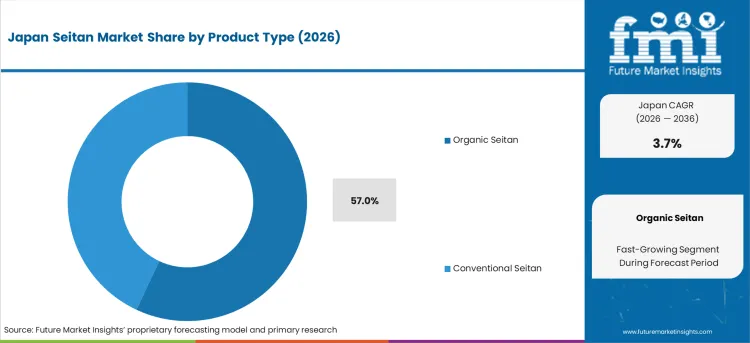
Organic seitan accounts for 57% of the demand in Japan, driven by the growing preference for clean-label and sustainable food products. Organic seitan is made from wheat gluten and is considered a versatile plant-based protein source, making it popular among health-conscious consumers and those following vegetarian or vegan diets. The demand for organic seitan is also influenced by the increasing awareness of the environmental and health benefits associated with organic farming practices.
Consumers are increasingly choosing organic alternatives due to concerns over pesticides, additives, and the environmental impact of conventional agriculture. As the demand for plant-based protein grows in Japan, organic seitan is expected to maintain its dominant position, driven by its perceived health benefits and environmentally friendly production methods.
Why Do Online Stores Lead the Demand for Seitan in Japan?
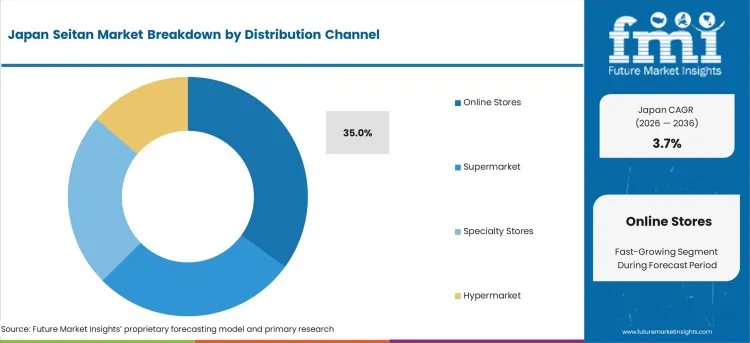
Online stores account for 35% of the demand for seitan in Japan, driven by the convenience, variety, and ease of access they offer to consumers. Online shopping platforms allow customers to explore a wide selection of seitan products from different brands, including both organic and conventional options, all from the comfort of their homes. The growing trend of e-commerce, combined with the increasing demand for plant-based products, has made online stores a key distribution channel for seitan.
Consumers can easily compare prices, read reviews, and find specific seitan products that suit their dietary preferences. The availability of home delivery services makes it even more convenient for consumers, particularly in urban areas. As e-commerce continues to expand in Japan, online stores will remain a dominant channel for purchasing seitan and other plant-based foods.
What are the Key Trends, Drivers, and Restraints in Demand for Seitan in Japan?
Seitan is included among meat substitutes alongside tofu, tempeh, and other protein Alternatives. As awareness of health, environmental, and ethical issues grows, seitan’s meat‑like texture and high protein content make it attractive to flexitarians, vegetarians, and those reducing meat consumption. The expanding vegan and vegetarian industry (and increasing interest among flexitarians) drives demand. Seitan’s adoption remains limited by relatively low consumer awareness compared with more traditional soy‑based proteins, and by its association with gluten, which may deter people with allergies or sensitivities.
Why is Demand for Seitan Growing in Japan?
Demand for seitan in Japan is growing because consumers increasingly value alternative protein sources, and plant‑based eating is gaining mainstream acceptance. The broader growth of the plant‑based food segment reflects shifting diet patterns motivated by health concerns, environmental awareness, and ethical considerations. Many consumers seek meat substitutes that deliver protein And mimic meat texture seitan fits this demand. Foodservice establishments and retailers are gradually expanding offerings of plant‑based meat substitutes, which helps make seitan more visible and accessible. As a result, seitan is gradually shifting from niche macrobiotic or vegetarian industrys to more general interest among flexitarians and health‑conscious consumers.
How are Technological & Industry Innovations Driving Seitan Demand in Japan?
Improvements in plant‑based food processing and product design are boosting seitan’s appeal. Advances in ingredient processing, texturization, and cooking technology allow manufacturers to deliver seitan products with more consistent texture, flavour, and better shelf‑life making them closer to conventional meat substitutes. Foodservice and retail channels now offer a wider variety of plant‑based meat alternatives (wheat‑protein, soy‑protein, etc.), making seitan more available in supermarkets, convenience stores, and restaurant menus. This broader distribution lowers barriers for consumers to try seitan. As plant‑based diets become more socially accepted, seitan benefits from growing general demand for meat alternatives.
What are the Key Challenges and Risks That Could Limit Seitan Demand in Japan?
Despite growing interest, several challenges limit seitan’s broader adoption in Japan. One issue is low consumer familiarity: many Japanese consumers are more accustomed to traditional soy‑based foods such as tofu or natto, while seitan remains less known. Gluten sensitivity or allergy concerns can deter some potential consumers. Also, the dominance of tofu and other established protein Alternatives means seitan competes against well‑entrenched products for shelf space and consumer trust. Taste and texture expectations still vary some consumers may find seitan less satisfying than meat or may not accept its flavour or chewiness which can limit repeat purchases.
What is the Regional Demand Outlook for Seitan in Japan?
.webp "Top Country Growth Comparison Japan Seitan Market Cagr (2026 2036)")
| Region | CAGR (%) |
|---|---|
| Kyushu & Okinawa | 4.6% |
| Kanto | 4.2% |
| Kansai | 3.7% |
| Chubu | 3.3% |
| Tohoku | 2.9% |
| Rest of Japan | 2.7% |
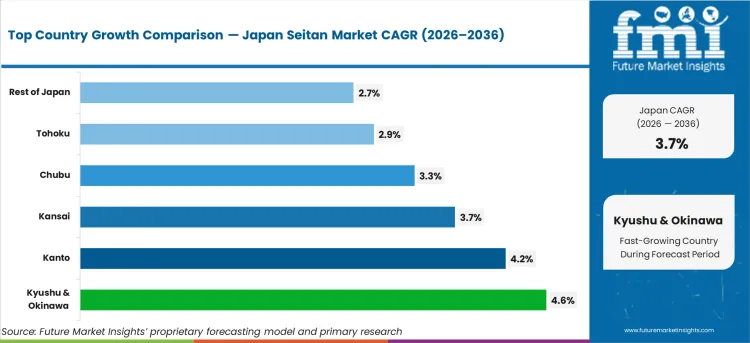
Demand for seitan in Japan is steadily growing across all regions, with Kyushu & Okinawa leading at a 4.6% CAGR, driven by increasing interest in plant-based diets and vegetarian options. Kanto follows with a 4.2% CAGR, supported by the region’s large urban population and growing demand for alternative protein sources. Kansai shows a 3.7% CAGR, with rising awareness of plant-based food benefits in the region’s food culture. Chubu experiences a 3.3% CAGR, as health-conscious consumers and foodservice businesses seek healthier alternatives. Tohoku and the Rest of Japan see moderate growth at 2.9% and 2.7%, respectively, reflecting a gradual shift toward plant-based diets, particularly among younger generations and in urban areas.
How is Demand for Seitan Growing in Kyushu & Okinawa?
Kyushu & Okinawa leads the demand for seitan, growing at a 4.6% CAGR. The region’s increasing interest in plant-based diets and growing health awareness is driving the adoption of seitan as an alternative protein source. In Okinawa, which has a strong tradition of health-conscious living, consumers are becoming more open to plant-based products, including seitan, due to its nutritional benefits and versatility in cooking.
Okinawa’s tourism industry is boosting demand for plant-based dining options, as health-conscious tourists seek out alternative protein-rich meals. Local food manufacturers and restaurants in Kyushu & Okinawa are increasingly including seitan in their menus, offering it as a substitute for meat in traditional dishes. As the region’s population becomes more aware of the environmental and health benefits of plant-based diets, demand for seitan is expected to continue growing steadily.
Why is Demand for Seitan Rising in Kanto?
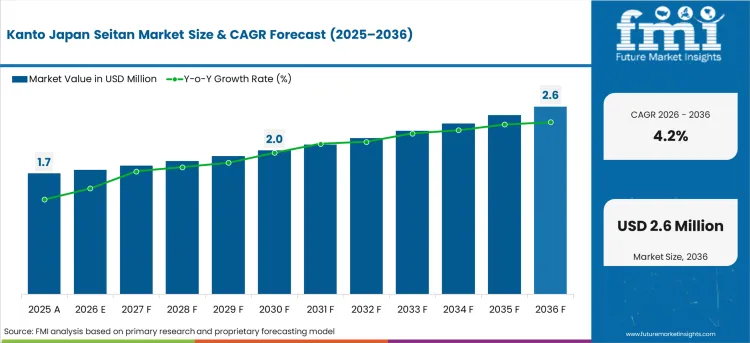
Kanto is experiencing strong demand for seitan, with a 4.2% CAGR. The region’s large urban population, particularly in Tokyo, is a key driver of this growth. As more consumers in Kanto turn to plant-based diets for health, ethical, and environmental reasons, seitan has become a popular alternative protein source. The rise of veganism and vegetarianism, especially among younger generations, is further driving the demand for seitan.
The growing availability of seitan in supermarkets, restaurants, and food delivery services is making it easier for consumers to incorporate it into their meals. With Kanto’s diverse food culture, which includes an increasing number of plant-based eateries, the demand for seitan is expected to continue rising. As consumers seek sustainable and healthier food choices, seitan is becoming an increasingly popular ingredient in the region.
How is Demand for Seitan Expanding in Kansai?
Kansai shows steady demand for seitan, growing at a 3.7% CAGR. The region’s strong culinary culture, particularly in Osaka, is becoming more receptive to plant-based options like seitan. As more consumers in Kansai adopt plant-based diets for health and environmental reasons, seitan is emerging as a popular alternative to meat. Kansai’s foodservice industry, including restaurants and cafes, is increasingly incorporating seitan into their menus, offering it as a protein-rich substitute in traditional dishes.
The region’s growing interest in wellness and plant-based eating, alongside the rising availability of plant-based products in local supermarkets, is contributing to this shift. With more consumers seeking healthier and sustainable food options, the demand for seitan is expected to continue growing in Kansai, especially as food trends evolve toward plant-based and meatless options.
Why is Demand for Seitan Growing in Chubu?
Chubu is experiencing steady demand for seitan, growing at a 3.3% CAGR. The region’s food industry is gradually embracing plant-based alternatives as consumers seek healthier and more sustainable meal options. Seitan, known for its high protein content and versatility, is becoming a popular meat substitute in Chubu, particularly among health-conscious consumers. As more individuals in urban areas like Nagoya embrace plant-based diets, demand for seitan is growing in both retail and foodservice sectors.
Restaurants in Chubu are increasingly offering seitan dishes to cater to the rising demand for vegan and vegetarian options. The growing awareness of the environmental impact of animal agriculture is encouraging more people to choose plant-based proteins like seitan. As Chubu continues to see shifts in consumer preferences toward plant-based diets, demand for seitan is expected to maintain steady growth.
How is Demand for Seitan Expanding in Tohoku?
Tohoku is seeing moderate demand for seitan, with a 2.9% CAGR. Although the region’s consumption of seitan is smaller compared to urban areas, there is a growing trend toward plant-based diets, particularly in larger cities like Sendai. Consumers in Tohoku are becoming more aware of the health benefits of plant-based eating, and seitan is increasingly seen as an alternative protein source. As more local restaurants and foodservice providers introduce plant-based options, including seitan, demand is gradually increasing.
The region’s traditional focus on fresh, locally sourced ingredients is also supporting the adoption of seitan, as more consumers opt for plant-based meals that align with their health and sustainability values. As awareness of plant-based diets continues to spread, Tohoku is expected to see steady growth in the demand for seitan, especially as younger generations embrace these food trends.
Why is Demand for Seitan Steady in the Rest of Japan?
The Rest of Japan is experiencing steady demand for seitan, with a 2.7% CAGR. While the adoption of seitan is slower in rural and smaller cities compared to urban centers, there is growing awareness of plant-based diets and the benefits of alternative protein sources. As more consumers in these areas become health-conscious and environmentally aware, the demand for seitan is gradually increasing. Local food producers and retailers are beginning to offer seitan as a protein Alternative in both supermarkets and foodservice establishments.
The rise of food delivery services and the increasing availability of plant-based meal options are helping to drive demand for seitan. As the Rest of Japan becomes more familiar with plant-based eating, demand for seitan is expected to continue growing steadily, particularly as awareness of sustainable and health-conscious food choices increases.
What is Driving the Demand for Seitan in Japan and Who Are the Key Players Shaping the Industry?
The demand for seitan in Japan is growing as consumers increasingly turn to plant-based and alternative protein sources for health, sustainability, and dietary reasons. Seitan, made from wheat gluten, is a popular meat substitute due to its high protein content and versatility in cooking. With the rise of vegetarianism, veganism, and flexitarian diets, many Japanese consumers are seeking protein-rich alternatives to traditional animal-based products. Seitan’s ability to mimic the texture of meat makes it an appealing choice for those looking to reduce their meat consumption while still enjoying familiar flavors and textures. Japan’s focus on health-conscious eating and sustainability is further driving the adoption of seitan in both home cooking and foodservice sectors.
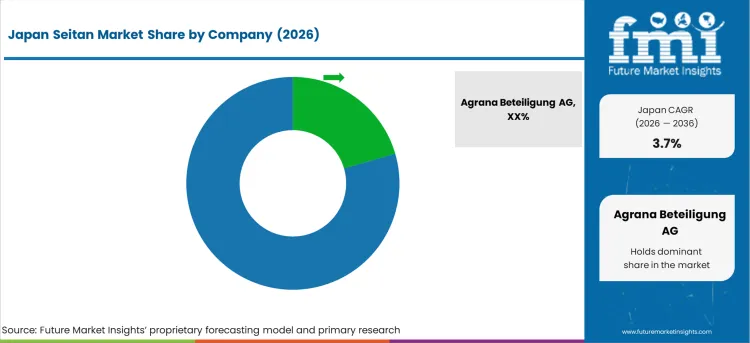
Key players shaping the seitan market in Japan include Agrana Beteiligung AG, Anhui Ante Food Co., Ltd., Agridient, Inc., Archer Daniels Midland Company, and Bryan W. Nash & Sons Ltd. Agrana Beteiligung AG leads the industry with a share of 20.5%, providing high-quality wheat gluten products that cater to the growing demand for plant-based proteins. These companies are at the forefront of innovation, offering seitan and other plant-based protein solutions for various food applications, including ready-to-eat meals, snacks, and meat alternatives. Their products are increasingly being incorporated into Japan’s evolving food industry, which is seeking to diversify and meet the rising consumer interest in plant-based foods.
The growth of the seitan industry in Japan is further supported by the increasing awareness of the environmental and health benefits of plant-based diets. As demand for meat substitutes continues to rise, seitan is expected to play a significant role in Japan’s food landscape. With continued innovations in flavor, texture, and product offerings, the industry for seitan is poised for sustained growth, catering to both the health-conscious and environmentally-aware Japanese population.
Key Players in Japan Seitan Demand
- Agrana Beteiligung AG
- Anhui Ante Food Co., Ltd.
- Agridient, Inc.
- Archer Daniels Midland Company
- Bryan W. Nash & Sons Ltd
Scope of the Report
| Metric | Value |
|---|---|
| Quantitative Units | USD Million 4.04 to USD Million 5.82, at a CAGR of 3.7% |
| Market Definition | Seitan is a plant-based protein product derived from vital wheat gluten, produced through hydration and processing of wheat flour to isolate the gluten protein matrix. In the Japanese market, this category includes organic and conventional seitan products distributed through online stores, supermarkets, specialty stores, and hypermarkets. |
| Segmentation | Product Type: Organic Seitan, Conventional Seitan; Distribution Channel: Online Stores, Supermarket, Specialty Stores, Hypermarket |
| Regions Covered | Kyushu & Okinawa, Kanto, Kansai, Chubu, Tohoku, Rest of Japan |
| Key Companies Profiled | Agrana Beteiligung AG, Anhui Ante Food Co., Ltd., Agridient, Inc., Archer Daniels Midland Company, Bryan W. Nash & Sons Ltd |
| Forecast Period | 2026 to 2036 |
| Approach | Forecasting models apply a bottom-up methodology starting with manufacturer shipment metrics and import volume data, cross-validated against downstream consumption patterns and regulatory compliance filings. |
Japan Seitan Demand by Key Segments
Product Type
- Organic Seitan
- Conventional Seitan
Distribution Channel
- Hypermarket
- Supermarket
- Specialty Stores
- Online Stores
Region
- Kyushu & Okinawa
- Kanto
- Kansai
- Chubu
- Tohoku
- Rest of Japan
Bibliography
- 1. Ministry of Agriculture, Forestry and Fisheries. (2025). Wheat Flour and Gluten Production Statistics. MAFF Japan.
- 2. Consumer Affairs Agency, Government of Japan. (2024). Organic JAS Certification Statistics. CAA.
- 3. Food and Agriculture Organization. (2024). Plant Protein Production and Trade Data. FAO.
- 4. Japan Health and Nutrition Food Association. (2025). Plant-Based Protein Market Report. JHNFA.
- 5. Ministry of Health, Labour and Welfare. (2024). Allergen Labeling Requirements: Wheat. MHLW.
This bibliography is provided for reader reference. The full Future Market Insights report contains the complete reference list with primary research documentation.
Frequently Asked Questions
How large is the demand for Seitan in Japan in 2026?
Demand for seitan in Japan is estimated to be valued at USD Million 4.04 in 2026.
What will be the market size of Seitan in Japan by 2036?
Market size for seitan in Japan is projected to reach USD Million 5.82 by 2036.
What is the expected demand growth for Seitan in Japan between 2026 and 2036?
Demand for seitan in Japan is expected to grow at a CAGR of 3.7% between 2026 and 2036.
Which Product Type is poised to lead sales in 2026?
Organic Seitan accounts for 57% share in 2026, driven by established procurement preferences and compatibility across primary end-use applications.
Which region is growing fastest for Seitan in Japan?
Kyushu & Okinawa is projected to grow at a CAGR of 4.6% during 2026 to 2036, leading all regional clusters in Japan.
What is included in the scope of this Seitan report?
Market scope includes organic and conventional seitan products sold through online stores, supermarkets, specialty stores, and hypermarkets in Japan. The assessment covers market sizes by product type, distribution channel, and Japanese prefectural region for 2026 to 2036.
What is excluded from the scope of this report?
The scope excludes vital wheat gluten sold as a bulk commodity for bread-making, soy-based and pea-based meat alternatives, and traditional Japanese fu products manufactured under separate product classifications..
How does FMI build and validate the Seitan forecast?
Forecasting models apply a bottom-up methodology starting with manufacturer shipment data and import volumes, cross-validated against downstream consumption patterns and regulatory compliance filings.
Preview the report firsthand - request a free sample
Get SampleGet the brochure for pricing and purchase details.
Get PDFTable of Content
- Executive Summary
- Japan Market Outlook
- Demand-side Trends
- Supply-side Trends
- Technology Roadmap Analysis
- Analysis and Recommendations
- Market Overview
- Market Coverage / Taxonomy
- Market Definition / Scope / Limitations
- Research Methodology
- Chapter Orientation
- Analytical Lens and Working Hypotheses
- Market Structure, Signals, and Trend Drivers
- Benchmarking and Cross-market Comparability
- Market Sizing, Forecasting, and Opportunity Mapping
- Research Design and Evidence Framework
- Desk Research Programme (Secondary Evidence)
- Company Annual and Sustainability Reports
- Peer-reviewed Journals and Academic Literature
- Corporate Websites, Product Literature, and Technical Notes
- Earnings Decks and Investor Briefings
- Statutory Filings and Regulatory Disclosures
- Technical White Papers and Standards Notes
- Trade Journals, Industry Magazines, and Analyst Briefs
- Conference Proceedings, Webinars, and Seminar Materials
- Government Statistics Portals and Public Data Releases
- Press Releases and Reputable Media Coverage
- Specialist Newsletters and Curated Briefings
- Sector Databases and Reference Repositories
- FMI Internal Proprietary Databases and Historical Market Datasets
- Subscription Datasets and Paid Sources
- Social Channels, Communities, and Digital Listening Inputs
- Additional Desk Sources
- Expert Input and Fieldwork (Primary Evidence)
- Primary Modes
- Qualitative Interviews and Expert Elicitation
- Quantitative Surveys and Structured Data Capture
- Blended Approach
- Why Primary Evidence is Used
- Field Techniques
- Interviews
- Surveys
- Focus Groups
- Observational and In-context Research
- Social and Community Interactions
- Stakeholder Universe Engaged
- C-suite Leaders
- Board Members
- Presidents and Vice Presidents
- R&D and Innovation Heads
- Technical Specialists
- Domain Subject-matter Experts
- Scientists
- Physicians and Other Healthcare Professionals
- Governance, Ethics, and Data Stewardship
- Research Ethics
- Data Integrity and Handling
- Primary Modes
- Tooling, Models, and Reference Databases
- Desk Research Programme (Secondary Evidence)
- Data Engineering and Model Build
- Data Acquisition and Ingestion
- Cleaning, Normalisation, and Verification
- Synthesis, Triangulation, and Analysis
- Quality Assurance and Audit Trail
- Market Background
- Market Dynamics
- Drivers
- Restraints
- Opportunity
- Trends
- Scenario Forecast
- Demand in Optimistic Scenario
- Demand in Likely Scenario
- Demand in Conservative Scenario
- Opportunity Map Analysis
- Product Life Cycle Analysis
- Supply Chain Analysis
- Investment Feasibility Matrix
- Value Chain Analysis
- PESTLE and Porter’s Analysis
- Regulatory Landscape
- Regional Parent Market Outlook
- Production and Consumption Statistics
- Import and Export Statistics
- Market Dynamics
- Japan Market Analysis 2021 to 2025 and Forecast, 2026 to 2036
- Historical Market Size Value (USD Million) Analysis, 2021 to 2025
- Current and Future Market Size Value (USD Million) Projections, 2026 to 2036
- Y-o-Y Growth Trend Analysis
- Absolute $ Opportunity Analysis
- Japan Market Pricing Analysis 2021 to 2025 and Forecast 2026 to 2036
- Japan Market Analysis 2021 to 2025 and Forecast 2026 to 2036, By Product Type
- Introduction / Key Findings
- Historical Market Size Value (USD Million) Analysis By Product Type , 2021 to 2025
- Current and Future Market Size Value (USD Million) Analysis and Forecast By Product Type , 2026 to 2036
- Organic Seitan
- Conventional Seitan
- Organic Seitan
- Y-o-Y Growth Trend Analysis By Product Type , 2021 to 2025
- Absolute $ Opportunity Analysis By Product Type , 2026 to 2036
- Japan Market Analysis 2021 to 2025 and Forecast 2026 to 2036, By Distribution Channel
- Introduction / Key Findings
- Historical Market Size Value (USD Million) Analysis By Distribution Channel, 2021 to 2025
- Current and Future Market Size Value (USD Million) Analysis and Forecast By Distribution Channel, 2026 to 2036
- Online Stores
- Supermarket
- Specialty Stores
- Hypermarket
- Online Stores
- Y-o-Y Growth Trend Analysis By Distribution Channel, 2021 to 2025
- Absolute $ Opportunity Analysis By Distribution Channel, 2026 to 2036
- Japan Market Analysis 2021 to 2025 and Forecast 2026 to 2036, By Region
- Introduction
- Historical Market Size Value (USD Million) Analysis By Region, 2021 to 2025
- Current Market Size Value (USD Million) Analysis and Forecast By Region, 2026 to 2036
- Kyushu & Okinawa
- Kanto
- Kinki
- Chubu
- Tohoku
- Rest of Japan
- Market Attractiveness Analysis By Region
- Kyushu & Okinawa Market Analysis 2021 to 2025 and Forecast 2026 to 2036, By Country
- Historical Market Size Value (USD Million) Trend Analysis By Market Taxonomy, 2021 to 2025
- Market Size Value (USD Million) Forecast By Market Taxonomy, 2026 to 2036
- By Country
- By Product Type
- By Distribution Channel
- By Country
- Market Attractiveness Analysis
- By Country
- By Product Type
- By Distribution Channel
- Key Takeaways
- Kanto Market Analysis 2021 to 2025 and Forecast 2026 to 2036, By Country
- Historical Market Size Value (USD Million) Trend Analysis By Market Taxonomy, 2021 to 2025
- Market Size Value (USD Million) Forecast By Market Taxonomy, 2026 to 2036
- By Country
- By Product Type
- By Distribution Channel
- By Country
- Market Attractiveness Analysis
- By Country
- By Product Type
- By Distribution Channel
- Key Takeaways
- Kinki Market Analysis 2021 to 2025 and Forecast 2026 to 2036, By Country
- Historical Market Size Value (USD Million) Trend Analysis By Market Taxonomy, 2021 to 2025
- Market Size Value (USD Million) Forecast By Market Taxonomy, 2026 to 2036
- By Country
- By Product Type
- By Distribution Channel
- By Country
- Market Attractiveness Analysis
- By Country
- By Product Type
- By Distribution Channel
- Key Takeaways
- Chubu Market Analysis 2021 to 2025 and Forecast 2026 to 2036, By Country
- Historical Market Size Value (USD Million) Trend Analysis By Market Taxonomy, 2021 to 2025
- Market Size Value (USD Million) Forecast By Market Taxonomy, 2026 to 2036
- By Country
- By Product Type
- By Distribution Channel
- By Country
- Market Attractiveness Analysis
- By Country
- By Product Type
- By Distribution Channel
- Key Takeaways
- Tohoku Market Analysis 2021 to 2025 and Forecast 2026 to 2036, By Country
- Historical Market Size Value (USD Million) Trend Analysis By Market Taxonomy, 2021 to 2025
- Market Size Value (USD Million) Forecast By Market Taxonomy, 2026 to 2036
- By Country
- By Product Type
- By Distribution Channel
- By Country
- Market Attractiveness Analysis
- By Country
- By Product Type
- By Distribution Channel
- Key Takeaways
- Rest of Japan Market Analysis 2021 to 2025 and Forecast 2026 to 2036, By Country
- Historical Market Size Value (USD Million) Trend Analysis By Market Taxonomy, 2021 to 2025
- Market Size Value (USD Million) Forecast By Market Taxonomy, 2026 to 2036
- By Country
- By Product Type
- By Distribution Channel
- By Country
- Market Attractiveness Analysis
- By Country
- By Product Type
- By Distribution Channel
- Key Takeaways
- Key Countries Market Analysis
- Kyushu & Okinawa
- Pricing Analysis
- Market Share Analysis, 2025
- By Product Type
- By Distribution Channel
- Kanto
- Pricing Analysis
- Market Share Analysis, 2025
- By Product Type
- By Distribution Channel
- Kinki
- Pricing Analysis
- Market Share Analysis, 2025
- By Product Type
- By Distribution Channel
- Chubu
- Pricing Analysis
- Market Share Analysis, 2025
- By Product Type
- By Distribution Channel
- Tohoku
- Pricing Analysis
- Market Share Analysis, 2025
- By Product Type
- By Distribution Channel
- Rest of Japan
- Pricing Analysis
- Market Share Analysis, 2025
- By Product Type
- By Distribution Channel
- Kyushu & Okinawa
- Market Structure Analysis
- Competition Dashboard
- Competition Benchmarking
- Market Share Analysis of Top Players
- By Regional
- By Product Type
- By Distribution Channel
- Competition Analysis
- Competition Deep Dive
- Agrana Beteiligung AG
- Overview
- Product Portfolio
- Profitability by Market Segments (Product/Age /Sales Channel/Region)
- Sales Footprint
- Strategy Overview
- Marketing Strategy
- Product Strategy
- Channel Strategy
- Anhui Ante Food Co., Ltd.
- Agridient, Inc.
- Archer Daniels Midland Company
- Bryan W. Nash & Sons Ltd
- Agrana Beteiligung AG
- Competition Deep Dive
- Assumptions & Acronyms Used


