

- Industry Size (2026)
- USD 820 Mn
- Forecast (2036)
- USD 2126.9 Mn
- CAGR (2026 to 2036)
- 10%
Low-Carbon PVC for Hospital and Healthcare Interior Surfaces Market Forecast and Outlook 2026 to 2036
The low-carbon PVC for hospital and healthcare interior surfaces market is valued at USD 820 million in 2026 and is projected to reach USD 2,126.9 million by 2036, growing at a compound annual growth rate (CAGR) of 10%. While the market presents significant upside, execution risk remains a key challenge. The complexity of developing and scaling low-carbon PVC solutions that meet healthcare standards for durability, hygiene, and safety creates potential delays and increased costs. Adoption friction will likely be experienced as healthcare facilities must navigate regulatory approvals and budget constraints, making the transition to new materials more gradual. Economic sensitivity further complicates matters, as hospitals and healthcare providers face competing priorities between sustainability and cost control. While demand for eco-friendly products is rising, procurement decisions are still heavily influenced by short-term financial pressures. Balancing innovation with proven performance will be crucial, and only those who can manage these risks effectively will secure long-term success in this evolving sector.
Quick Stats of the Low-Carbon PVC for Hospital and Healthcare Interior Surfaces Market
- Low-Carbon PVC for Hospital and Healthcare Interior Surfaces Market Value (2026): USD 820 million
- Low-Carbon PVC for Hospital and Healthcare Interior Surfaces Market Forecast Value (2036): USD 2,126.9 million
- Low-Carbon PVC for Hospital and Healthcare Interior Surfaces Market Global Forecast CAGR (2026-2036): 10%
- Low-Carbon PVC for Hospital and Healthcare Interior Surfaces Market Leading Segment: Application Segment (Healthcare Flooring Systems) 50%
- Key Growth Regions in Low-Carbon PVC for Hospital and Healthcare Interior Surfaces Market: USA, Germany, China, Japan, and South Korea
- Top Players in Low-Carbon PVC for Hospital and Healthcare Interior Surfaces Market: Armstrong World Industries, Gerflor, Tarkett, Forbo Flooring, LG Hausys, Polyflor, Altro, Mannington Mills, Beaulieu International Group, IVC Group

What is the Growth Forecast for the Low-Carbon PVC for Hospital and Healthcare Interior Surfaces Market through 2036?
The growth momentum analysis pattern for the low-carbon PVC for hospital and healthcare interior surfaces market indicates an initial period of strong acceleration followed by stable, predictable growth as the market matures. From 2026 to 2031, the market will grow from USD 820 million to USD 1.33 billion, reflecting an increase of USD 510 million. This early-phase acceleration is driven by increased awareness and demand for sustainable materials in healthcare settings. During these years, healthcare institutions will place a higher priority on adopting eco-friendly building materials, motivated by both regulatory pressures and the rising consumer demand for greener products. The adoption rate will be significant as low-carbon PVC becomes a go-to option for flooring, wall coverings, and other interior surfaces in hospitals, offering a combination of sustainability, durability, and ease of maintenance. Technological advancements in low-carbon PVC production will also support faster market uptake by making the material more cost-effective and competitive against traditional alternatives.
From 2031 to 2036, the market will continue to grow from USD 1.33 billion to USD 2.13 billion, reflecting an additional USD 900 million in value. However, the growth rate will slow, reflecting the deceleration phase as the technology becomes more widespread and integrated into hospital and healthcare interiors. While the material's adoption will remain strong, growth will shift from early adoption to optimization and efficiency, focusing on production scale and enhancing material performance. As the market matures, growth will become more stable, with ongoing improvements in sustainability and performance driving steady demand. The later years will see a shift towards refining existing technologies rather than rapid expansion, with the healthcare sector integrating low-carbon PVC into more standardized building practices.
Low-Carbon PVC for Hospital and Healthcare Interior Surfaces Market Key Takeaways
| Metric | Value |
|---|---|
| Industry Sales Value (2026) | USD 820 million |
| Industry Forecast Value (2036) | USD 2,126.9 million |
| Industry Forecast CAGR (2026-2036) | 10% |
What Is Driving the Demand for Low Carbon PVC for Hospital and Healthcare Interior Surfaces Market?
Historical demand for PVC materials in hospital and healthcare interior surfaces was shaped by widespread use of PVC in medical and construction applications because it meets durability, hygiene, and cleanability requirements in clinical settings. PVC flooring and wall coverings resist stains, chemicals, and heavy foot traffic common in health facilities, and they support infection control and maintenance efficiency across patient spaces, corridors, and treatment rooms. PVC sheet products with antimicrobial or anti static properties have been widely adopted in hospitals and cleanrooms for interiors, ceilings, and wall panels owing to these performance attributes. Decorative and protective PVC wall panels have replaced traditional finishes in many healthcare installations because they withstand rigorous cleaning regimens and contribute to safe, sanitary environments. PVC’s performance in these roles established a baseline of market demand long before sustainability became a central material selection criterion.
Future demand for low carbon PVC for hospital and healthcare interior surfaces will be shaped by expanding emphasis on sustainability, emissions reduction, and environmental performance in healthcare construction and renovation. The broader low carbon construction materials market is projected to grow significantly as regulators and institutions pursue lower embodied carbon in building components and lifecycle carbon reporting. Materials with reduced carbon footprint, including PVC produced with bio based or recycled inputs and energy efficient manufacturing, are gaining attention as healthcare systems incorporate sustainability targets into procurement standards. Growth drivers include demand for interior surfaces that meet strict hygiene and performance standards while also contributing to institutional goals for reduced environmental impact and improved building certification outcomes. Technical and adoption challenges include aligning low carbon PVC production with healthcare grade performance specifications and ensuring cost effective supply for large scale facilities, but integration of sustainable polymer variants into interior surfaces is likely to advance as carbon reporting and green building frameworks influence healthcare sector procurement decisions.
What are the Leading Segments in the Global Low-Carbon PVC for Hospital and Healthcare Interior Surfaces Market?
The global low-carbon PVC for hospital and healthcare interior surfaces market is segmented by application segment and facility type. Among application segments, healthcare flooring systems lead the market, capturing 50% of the share, followed by healthcare wall panels & cladding, ceiling & trim profiles, and specialty cleanroom & isolation surfaces. Healthcare flooring systems are favored due to their durability, ease of maintenance, and ability to meet strict hygiene standards required in healthcare settings. On the facility type side, hospitals & acute care centers dominate the market, holding 48% of the share, followed by outpatient clinics & ambulatory care, medical research & laboratory facilities, long-term care & assisted living, and specialty healthcare facilities. Hospitals and acute care centers represent the largest segment due to the critical need for high-performance interior surfaces that are both functional and sanitary in these environments.
What Drives the Growth of Healthcare Flooring Systems in the Low-Carbon PVC for Hospital and Healthcare Interior Surfaces Market?
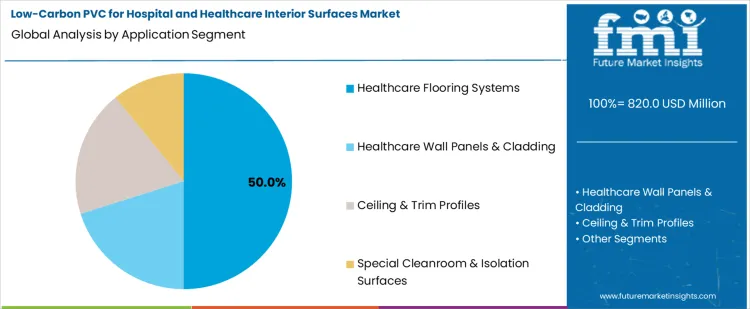
Healthcare flooring systems are the leading application in the low-carbon PVC for hospital and healthcare interior surfaces market, holding 50% of the share. This growth is driven by the essential role that flooring systems play in healthcare settings, where durability, hygiene, and easy maintenance are paramount. Low-carbon PVC flooring offers a sustainable solution by providing a robust, long-lasting, and low-maintenance surface that can withstand the heavy foot traffic, chemical exposure, and frequent cleaning requirements typical of healthcare environments. These flooring systems are also designed to reduce environmental impact by using renewable feedstocks and low-carbon production processes. Additionally, low-carbon PVC flooring systems are highly customizable, meeting the aesthetic and functional requirements of various healthcare spaces while also supporting health and safety standards. As sustainability becomes a critical focus in healthcare infrastructure development, low-carbon PVC flooring systems will continue to be a dominant solution, driving growth in this segment.
What is Driving the Demand for Hospitals & Acute Care Centers in the Low-Carbon PVC for Hospital and Healthcare Interior Surfaces Market?

Hospitals & acute care centers are the leading facility type in the low-carbon PVC for hospital and healthcare interior surfaces market, capturing 48% of the share. This demand is driven by the high standards required for healthcare interior surfaces in these critical facilities. Hospitals and acute care centers require materials that are not only durable and long-lasting but also easy to clean and maintain to prevent the spread of infections. Low-carbon PVC surfaces offer these benefits while also supporting the growing emphasis on sustainable building practices within healthcare. These facilities are increasingly adopting eco-friendly materials to meet regulatory standards and consumer demand for green healthcare environments. Furthermore, hospitals and acute care centers are high-traffic, high-use environments that demand high-performance, hygienic surfaces to ensure patient safety and comfort. As healthcare infrastructure increasingly prioritizes sustainability and cost-efficiency, the demand for low-carbon PVC in these critical facilities will continue to grow, ensuring their dominance in the market.
What are the Key Dynamics in the Low Carbon PVC for Hospital and Healthcare Interior Surfaces Market?
The low carbon PVC for hospital and healthcare interior surfaces market focuses on materials engineered to reduce greenhouse gas emissions while meeting stringent performance criteria for medical environments. PVC is widely used for flooring, wall panels, and other interior surfaces because it resists moisture, is easy to clean, and withstands frequent disinfection. Healthcare facilities increasingly prioritize material sustainability alongside infection control and durability. Low carbon PVC involves modifications to production processes, use of renewable energy, and alternative feedstocks to lower embodied emissions. Regulatory frameworks on building sustainability, reporting standards for embodied carbon, and purchaser demand for verified environmental credentials shape market activity. Adoption reflects the balance between performance, compliance with health standards, and environmental considerations.
What are the Main Drivers Supporting Growth in This Market?
Growth in the low carbon PVC for hospital and healthcare interior surfaces market is supported by hospital and facility owners’ focus on reducing the environmental footprint of construction and renovation projects. Green building initiatives in healthcare settings, including standards that emphasize embodied carbon reduction, drive interest in low carbon materials that retain required hygiene and safety performance. Healthcare administrators are also influenced by sustainability reporting and environmental targets set by governing bodies and accrediting organizations. Advances in production technology, such as energy efficient processing and integration of renewable feedstocks, make low carbon PVC more attainable. Rising construction and refurbishment activity in the health sector further sustains demand for interior materials that combine durability with lower carbon intensity.
What Restraints Are Limiting Market Expansion?
Market expansion is constrained by the higher cost of producing low carbon PVC compared with conventional grades, which can deter adoption in budget sensitive healthcare projects. Ensuring that low carbon PVC meets rigorous infection control and cleaning protocols adds complexity to formulation and testing, which can slow product introduction. Variability in regional definitions and standards for low carbon or environmentally preferable materials creates uncertainty for specifiers and manufacturers operating globally. Limited availability of certified low carbon feedstocks and fluctuations in renewable energy supply add to cost and supply chain challenges. Some facility managers may also prioritize short term cost and performance metrics over longer term environmental benefits when selecting surface materials.
What Emerging Trends Are Shaping the Future of This Market?
Emerging trends include greater integration of sustainability criteria into healthcare procurement policies, with material carbon footprint increasingly factored into specification decisions. Lifecycle assessment tools are being used more routinely to compare embodied emissions across interior surface options. Manufacturers are investing in process optimization to improve energy efficiency and traceability of feedstocks used in PVC production. There is growing interest in combining low carbon PVC with features that improve indoor environmental quality, such as low volatile organic compound emissions. Collaboration between healthcare organizations, material scientists, and certification bodies is strengthening to align performance requirements with environmental reporting protocols, supporting broader acceptance of low carbon PVC solutions.
What is the Country-Wise Analysis of the Low-Carbon PVC for Hospital and Healthcare Interior Surfaces Market?
The low-carbon PVC for hospital and healthcare interior surfaces market is expanding due to the growing demand for sustainable, eco-friendly materials in the healthcare sector. Low-carbon PVC is gaining traction in hospital interiors due to its durability, easy maintenance, and reduced environmental impact compared to traditional PVC. Developed markets such as the USA, Germany, and Japan are at the forefront of adopting low-carbon PVC in healthcare settings, driven by stringent sustainability regulations, increasing healthcare facility renovations, and the demand for green building materials. Emerging markets like China and South Korea are also witnessing growth, supported by government initiatives to reduce carbon emissions and a rising focus on green construction in healthcare facilities. As the global healthcare industry prioritizes sustainability, the market for low-carbon PVC for hospital and healthcare interior surfaces is expected to grow steadily.
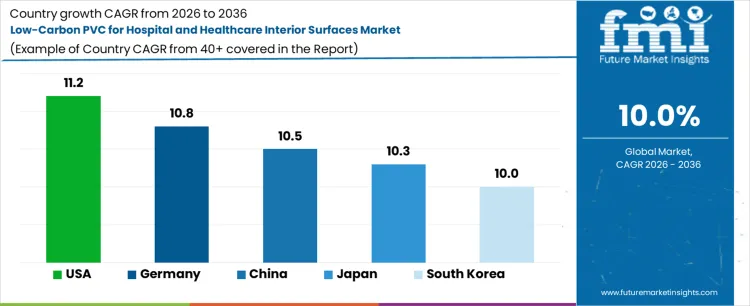
| Country | CAGR (2026-2036) |
|---|---|
| USA | 11.2% |
| Germany | 10.8% |
| China | 10.5% |
| Japan | 10.3% |
| South Korea | 10% |
What is the Growth Outlook for the Low-Carbon PVC for Hospital and Healthcare Interior Surfaces Market in the USA?

The low-carbon PVC for hospital and healthcare interior surfaces market in the USA is projected to grow steadily, with a projected CAGR of 11.2% from 2026 to 2036. As a leader in healthcare innovation, the USA is increasingly adopting sustainable materials in hospital design and renovation projects. The demand for low-carbon PVC is growing due to its environmental benefits and compliance with green building standards. Government regulations promoting sustainable construction practices, along with growing consumer awareness of environmental issues, are driving the adoption of low-carbon PVC in healthcare facilities. As the healthcare sector in the USA continues to prioritize sustainability, the market for low-carbon PVC for hospital and healthcare interior surfaces is expected to experience steady growth over the coming years.
What is the Market Outlook for the Low-Carbon PVC for Hospital and Healthcare Interior Surfaces Market in Germany?
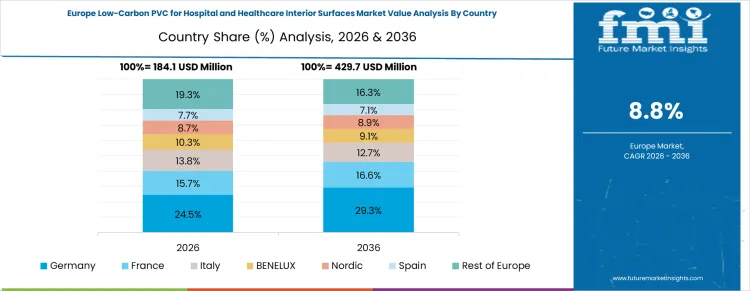
Germany is expected to see steady growth in the low-carbon PVC for hospital and healthcare interior surfaces market, with a projected CAGR of 10.8% from 2026 to 2036. Germany has long been a leader in sustainability and environmental innovation, and the demand for low-carbon materials in the healthcare sector is rising. As healthcare facilities in Germany focus on reducing their carbon footprints and complying with green building regulations, low-carbon PVC is becoming a preferred option for interior surfaces. The German government’s push for sustainability in construction, coupled with growing consumer demand for eco-friendly products, is expected to drive the market for low-carbon PVC in healthcare settings. With a strong commitment to sustainability, the market for low-carbon PVC in Germany is projected to continue its growth.
What is the Growth Forecast for the Low-Carbon PVC for Hospital and Healthcare Interior Surfaces Market in China?
China is projected to experience steady growth in the low-carbon PVC for hospital and healthcare interior surfaces market, with a projected CAGR of 10.5% from 2026 to 2036. As one of the largest construction markets globally, China is increasingly focusing on sustainable building materials, including in healthcare facilities. Government initiatives promoting sustainability, along with growing consumer and business demand for eco-friendly solutions, are driving the adoption of low-carbon PVC in hospital and healthcare interior surfaces. The demand for environmentally friendly materials is increasing as China works to reduce its carbon emissions and improve the sustainability of its manufacturing sector. The market for low-carbon PVC in China’s healthcare sector is expected to grow steadily as the country continues its shift towards greener construction practices.
What is the Market Outlook for the Low-Carbon PVC for Hospital and Healthcare Interior Surfaces Market in Japan?
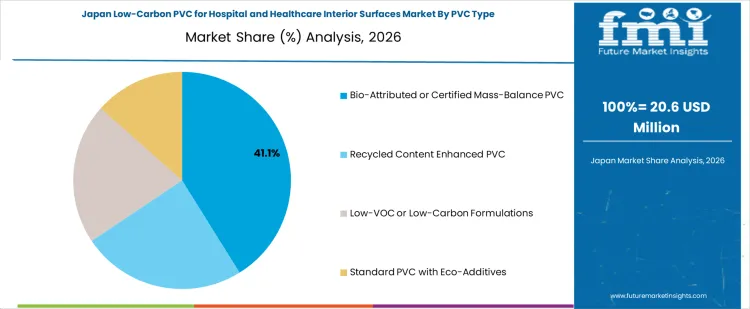
Japan is expected to see steady growth in the low-carbon PVC for hospital and healthcare interior surfaces market, with a projected CAGR of 10.3% from 2026 to 2036. Japan’s commitment to sustainability and innovation in the construction and healthcare sectors is driving the demand for low-carbon materials. The healthcare industry in Japan is increasingly adopting eco-friendly solutions in interior design and renovation, in line with the country’s sustainability goals. Government regulations supporting green building initiatives and a growing emphasis on reducing plastic waste are fueling the adoption of low-carbon PVC in hospital interiors. As the healthcare sector in Japan continues to prioritize sustainability and energy efficiency, the market for low-carbon PVC in hospital and healthcare interior surfaces is expected to grow steadily.
What is the Growth Forecast for the Low-Carbon PVC for Hospital and Healthcare Interior Surfaces Market in South Korea?
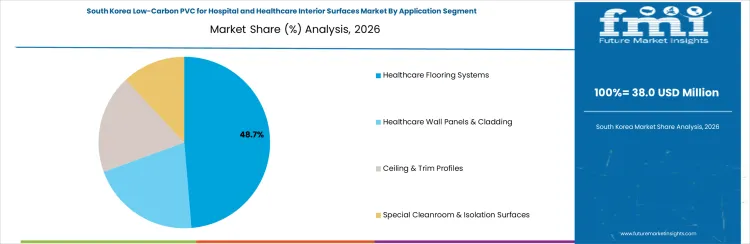
South Korea is projected to experience steady growth in the low-carbon PVC for hospital and healthcare interior surfaces market, with a projected CAGR of 10% from 2026 to 2036. South Korea is increasingly focused on sustainability, and the demand for low-carbon materials in healthcare construction and renovation projects is rising. Government policies promoting green technologies and sustainable building practices are driving the adoption of low-carbon PVC in healthcare settings. The growing awareness of environmental issues among consumers and businesses in South Korea is fueling the demand for eco-friendly materials, including low-carbon PVC. As the healthcare sector in South Korea continues to embrace sustainable materials and energy-efficient solutions, the market for low-carbon PVC in healthcare interior surfaces is expected to grow steadily.
What is the Competitive Landscape for the Low-Carbon PVC for Hospital and Healthcare Interior Surfaces Market?

The low-carbon PVC for hospital and healthcare interior surfaces market is expanding as the demand for sustainable, high-performance materials in healthcare environments increases. Armstrong World Industries leads the market with its innovative low-carbon PVC solutions designed for hospital and healthcare interiors, offering durable, easy-to-maintain surfaces that meet stringent sustainability and hygiene standards. Their focus on product performance, sustainability, and regulatory compliance has positioned them as a dominant player in the sector. Gerflor, Tarkett, and Forbo Flooring are significant competitors, each providing specialized low-carbon PVC materials that ensure safety, durability, and eco-friendliness in healthcare facilities. Gerflor specializes in innovative, sustainable flooring solutions for healthcare settings, while Tarkett and Forbo Flooring offer high-quality, low-carbon materials designed to reduce environmental impact and enhance indoor air quality.
LG Hausys, Polyflor, and Altro further contribute to the competitive landscape by offering their own low-carbon PVC solutions for hospital and healthcare interior applications. LG Hausys provides advanced, eco-friendly flooring materials, while Polyflor focuses on sustainable PVC products with superior hygiene properties. Altro offers durable, low-carbon surfaces designed specifically for healthcare environments, ensuring long-term performance and sustainability. Mannington Mills, Beaulieu International Group, and IVC Group also play a key role by offering their own low-carbon PVC solutions tailored for healthcare interior surfaces. These companies compete by focusing on product innovation, sustainability, and the growing demand for eco-conscious, high-performance materials in the healthcare sector. As healthcare facilities continue to prioritize sustainability and hygiene, the market for low-carbon PVC in hospital and healthcare interior surfaces is expected to grow, fostering further innovation and competition in the sector.
Key Players of the Low-Carbon PVC for Hospital and Healthcare Interior Surfaces Market
- Armstrong World Industries
- Gerflor
- Tarkett
- Forbo Flooring
- LG Hausys
- Polyflor
- Altro
- Mannington Mills
- Beaulieu International Group
- IVC Group
Scope of the Report
| Items | Values |
|---|---|
| Quantitative Units (2026) | USD million |
| PVC Type | Bio Attributed or Certified Mass Balance PVC, Recycled Content Enhanced PVC, Low VOC or Low Carbon Formulations, Standard PVC with Eco Additives |
| Application Segment | Healthcare Flooring Systems, Healthcare Wall Panels & Cladding, Ceiling & Trim Profiles, Special Cleanroom & Isolation Surfaces |
| Facility Type | Hospitals & Acute Care Centers, Outpatient Clinics & Ambulatory Care, Medical Research & Laboratory Facilities, Long Term Care & Assisted Living, Specialty Healthcare Facilities |
| Companies | Armstrong World Industries, Gerflor, Tarkett, Forbo Flooring, LG Hausys, Polyflor, Altro, Mannington Mills, Beaulieu International Group, IVC Group |
| Regions Covered | North America, Latin America, Western Europe, Eastern Europe, South Asia & Pacific, East Asia, Middle East & Africa |
| Countries Covered | United States, Canada, Mexico, Brazil, Argentina, Germany, France, United Kingdom, Italy, Spain, Netherlands, China, India, Japan, South Korea, ANZ, GCC Countries, South Africa |
| Additional Attributes | Dollar sales by PVC type, application segment, facility type, and region. Includes analysis of market trends in low carbon PVC for hospital and healthcare interior surfaces, performance in healthcare flooring, wall, ceiling, and cleanroom applications, cost and formulation drivers, regulatory and sustainability considerations impacting adoption of low carbon and recycled PVC in healthcare interiors, infection control and safety standards, competitive positioning and market share of key companies, innovations in low VOC and eco additive PVC technologies, and evaluation of influence on facility performance, indoor air quality, durability, and healthcare compliance outcomes. |
Low-Carbon PVC for Hospital and Healthcare Interior Surfaces Market Segmentation
PVC Type:
- Bio-Attributed or Certified Mass-Balance PVC
- Recycled Content Enhanced PVC
- Low-VOC or Low-Carbon Formulations
- Standard PVC with Eco-Additives
Application Segment:
- Healthcare Flooring Systems
- Healthcare Wall Panels & Cladding
- Ceiling & Trim Profiles
- Special Cleanroom & Isolation Surfaces
Facility Type:
- Hospitals & Acute Care Centers
- Outpatient Clinics & Ambulatory Care
- Medical Research & Laboratory Facilities
- Long-Term Care & Assisted Living
- Specialty Healthcare Facilities
Region:
- Asia Pacific
- China
- Japan
- South Korea
- India
- Australia & New Zealand
- ASEAN
- Rest of Asia Pacific
- Europe
- Germany
- United Kingdom
- France
- Italy
- Spain
- Nordic
- BENELUX
- Rest of Europe
- North America
- United States
- Canada
- Mexico
- Latin America
- Brazil
- Chile
- Rest of Latin America
- Middle East & Africa
- Kingdom of Saudi Arabia
- Other GCC Countries
- Turkey
- South Africa
- Other African Union
- Rest of Middle East & Africa
Frequently Asked Questions
How big is the low-carbon pvc for hospital and healthcare interior surfaces market in 2026?
The global low-carbon pvc for hospital and healthcare interior surfaces market is estimated to be valued at USD 820.0 million in 2026.
What will be the size of low-carbon pvc for hospital and healthcare interior surfaces market in 2036?
The market size for the low-carbon pvc for hospital and healthcare interior surfaces market is projected to reach USD 2,126.9 million by 2036.
How much will be the low-carbon pvc for hospital and healthcare interior surfaces market growth between 2026 and 2036?
The low-carbon pvc for hospital and healthcare interior surfaces market is expected to grow at a 10.0% CAGR between 2026 and 2036.
What are the key product types in the low-carbon pvc for hospital and healthcare interior surfaces market?
The key product types in low-carbon pvc for hospital and healthcare interior surfaces market are bio‑attributed or certified mass‑balance pvc, recycled content enhanced pvc, low‑voc or low‑carbon formulations and standard pvc with eco‑additives.
Which application segment segment to contribute significant share in the low-carbon pvc for hospital and healthcare interior surfaces market in 2026?
In terms of application segment, healthcare flooring systems segment to command 50.0% share in the low-carbon pvc for hospital and healthcare interior surfaces market in 2026.
Preview the report firsthand - request a free sample
Get SampleGet the brochure for pricing and purchase details.
Get PDFTable of Content
- Executive Summary
- Global Market Outlook
- Demand-side Trends
- Supply-side Trends
- Technology Roadmap Analysis
- Analysis and Recommendations
- Market Overview
- Market Coverage / Taxonomy
- Market Definition / Scope / Limitations
- Market Background
- Market Dynamics
- Drivers
- Restraints
- Opportunity
- Trends
- Scenario Forecast
- Demand in Optimistic Scenario
- Demand in Likely Scenario
- Demand in Conservative Scenario
- Opportunity Map Analysis
- Product Life Cycle Analysis
- Supply Chain Analysis
- Investment Feasibility Matrix
- Value Chain Analysis
- PESTLE and Porter’s Analysis
- Regulatory Landscape
- Regional Parent Market Outlook
- Production and Consumption Statistics
- Import and Export Statistics
- Market Dynamics
- Global Market Analysis 2021 to 2025 and Forecast, 2026 to 2036
- Historical Market Size Value (USD Million) Analysis, 2021 to 2025
- Current and Future Market Size Value (USD Million) Projections, 2026 to 2036
- Y-o-Y Growth Trend Analysis
- Absolute $ Opportunity Analysis
- Global Market Pricing Analysis 2021 to 2025 and Forecast 2026 to 2036
- Global Market Analysis 2021 to 2025 and Forecast 2026 to 2036, By PVC Type
- Introduction / Key Findings
- Historical Market Size Value (USD Million) Analysis By PVC Type , 2021 to 2025
- Current and Future Market Size Value (USD Million) Analysis and Forecast By PVC Type , 2026 to 2036
- Bio‑Attributed or Certified Mass‑Balance PVC
- Recycled Content Enhanced PVC
- Low‑VOC or Low‑Carbon Formulations
- Standard PVC with Eco‑Additives
- Bio‑Attributed or Certified Mass‑Balance PVC
- Y-o-Y Growth Trend Analysis By PVC Type , 2021 to 2025
- Absolute $ Opportunity Analysis By PVC Type , 2026 to 2036
- Global Market Analysis 2021 to 2025 and Forecast 2026 to 2036, By Application Segment
- Introduction / Key Findings
- Historical Market Size Value (USD Million) Analysis By Application Segment, 2021 to 2025
- Current and Future Market Size Value (USD Million) Analysis and Forecast By Application Segment, 2026 to 2036
- Healthcare Flooring Systems
- Healthcare Wall Panels & Cladding
- Ceiling & Trim Profiles
- Special Cleanroom & Isolation Surfaces
- Healthcare Flooring Systems
- Y-o-Y Growth Trend Analysis By Application Segment, 2021 to 2025
- Absolute $ Opportunity Analysis By Application Segment, 2026 to 2036
- Global Market Analysis 2021 to 2025 and Forecast 2026 to 2036, By Facility Type
- Introduction / Key Findings
- Historical Market Size Value (USD Million) Analysis By Facility Type, 2021 to 2025
- Current and Future Market Size Value (USD Million) Analysis and Forecast By Facility Type, 2026 to 2036
- Hospitals & Acute Care Centers
- Outpatient Clinics & Ambulatory Care
- Medical Research & Laboratory Facilities
- Long‑Term Care & Assisted Living
- Specialty Healthcare Facilities
- Hospitals & Acute Care Centers
- Y-o-Y Growth Trend Analysis By Facility Type, 2021 to 2025
- Absolute $ Opportunity Analysis By Facility Type, 2026 to 2036
- Global Market Analysis 2021 to 2025 and Forecast 2026 to 2036, By Region
- Introduction
- Historical Market Size Value (USD Million) Analysis By Region, 2021 to 2025
- Current Market Size Value (USD Million) Analysis and Forecast By Region, 2026 to 2036
- North America
- Latin America
- Western Europe
- Eastern Europe
- East Asia
- South Asia and Pacific
- Middle East & Africa
- Market Attractiveness Analysis By Region
- North America Market Analysis 2021 to 2025 and Forecast 2026 to 2036, By Country
- Historical Market Size Value (USD Million) Trend Analysis By Market Taxonomy, 2021 to 2025
- Market Size Value (USD Million) Forecast By Market Taxonomy, 2026 to 2036
- By Country
- USA
- Canada
- Mexico
- By PVC Type
- By Application Segment
- By Facility Type
- By Country
- Market Attractiveness Analysis
- By Country
- By PVC Type
- By Application Segment
- By Facility Type
- Key Takeaways
- Latin America Market Analysis 2021 to 2025 and Forecast 2026 to 2036, By Country
- Historical Market Size Value (USD Million) Trend Analysis By Market Taxonomy, 2021 to 2025
- Market Size Value (USD Million) Forecast By Market Taxonomy, 2026 to 2036
- By Country
- Brazil
- Chile
- Rest of Latin America
- By PVC Type
- By Application Segment
- By Facility Type
- By Country
- Market Attractiveness Analysis
- By Country
- By PVC Type
- By Application Segment
- By Facility Type
- Key Takeaways
- Western Europe Market Analysis 2021 to 2025 and Forecast 2026 to 2036, By Country
- Historical Market Size Value (USD Million) Trend Analysis By Market Taxonomy, 2021 to 2025
- Market Size Value (USD Million) Forecast By Market Taxonomy, 2026 to 2036
- By Country
- Germany
- UK
- Italy
- Spain
- France
- Nordic
- BENELUX
- Rest of Western Europe
- By PVC Type
- By Application Segment
- By Facility Type
- By Country
- Market Attractiveness Analysis
- By Country
- By PVC Type
- By Application Segment
- By Facility Type
- Key Takeaways
- Eastern Europe Market Analysis 2021 to 2025 and Forecast 2026 to 2036, By Country
- Historical Market Size Value (USD Million) Trend Analysis By Market Taxonomy, 2021 to 2025
- Market Size Value (USD Million) Forecast By Market Taxonomy, 2026 to 2036
- By Country
- Russia
- Poland
- Hungary
- Balkan & Baltic
- Rest of Eastern Europe
- By PVC Type
- By Application Segment
- By Facility Type
- By Country
- Market Attractiveness Analysis
- By Country
- By PVC Type
- By Application Segment
- By Facility Type
- Key Takeaways
- East Asia Market Analysis 2021 to 2025 and Forecast 2026 to 2036, By Country
- Historical Market Size Value (USD Million) Trend Analysis By Market Taxonomy, 2021 to 2025
- Market Size Value (USD Million) Forecast By Market Taxonomy, 2026 to 2036
- By Country
- China
- Japan
- South Korea
- By PVC Type
- By Application Segment
- By Facility Type
- By Country
- Market Attractiveness Analysis
- By Country
- By PVC Type
- By Application Segment
- By Facility Type
- Key Takeaways
- South Asia and Pacific Market Analysis 2021 to 2025 and Forecast 2026 to 2036, By Country
- Historical Market Size Value (USD Million) Trend Analysis By Market Taxonomy, 2021 to 2025
- Market Size Value (USD Million) Forecast By Market Taxonomy, 2026 to 2036
- By Country
- India
- ASEAN
- Australia & New Zealand
- Rest of South Asia and Pacific
- By PVC Type
- By Application Segment
- By Facility Type
- By Country
- Market Attractiveness Analysis
- By Country
- By PVC Type
- By Application Segment
- By Facility Type
- Key Takeaways
- Middle East & Africa Market Analysis 2021 to 2025 and Forecast 2026 to 2036, By Country
- Historical Market Size Value (USD Million) Trend Analysis By Market Taxonomy, 2021 to 2025
- Market Size Value (USD Million) Forecast By Market Taxonomy, 2026 to 2036
- By Country
- Kingdom of Saudi Arabia
- Other GCC Countries
- Turkiye
- South Africa
- Other African Union
- Rest of Middle East & Africa
- By PVC Type
- By Application Segment
- By Facility Type
- By Country
- Market Attractiveness Analysis
- By Country
- By PVC Type
- By Application Segment
- By Facility Type
- Key Takeaways
- Key Countries Market Analysis
- USA
- Pricing Analysis
- Market Share Analysis, 2025
- By PVC Type
- By Application Segment
- By Facility Type
- Canada
- Pricing Analysis
- Market Share Analysis, 2025
- By PVC Type
- By Application Segment
- By Facility Type
- Mexico
- Pricing Analysis
- Market Share Analysis, 2025
- By PVC Type
- By Application Segment
- By Facility Type
- Brazil
- Pricing Analysis
- Market Share Analysis, 2025
- By PVC Type
- By Application Segment
- By Facility Type
- Chile
- Pricing Analysis
- Market Share Analysis, 2025
- By PVC Type
- By Application Segment
- By Facility Type
- Germany
- Pricing Analysis
- Market Share Analysis, 2025
- By PVC Type
- By Application Segment
- By Facility Type
- UK
- Pricing Analysis
- Market Share Analysis, 2025
- By PVC Type
- By Application Segment
- By Facility Type
- Italy
- Pricing Analysis
- Market Share Analysis, 2025
- By PVC Type
- By Application Segment
- By Facility Type
- Spain
- Pricing Analysis
- Market Share Analysis, 2025
- By PVC Type
- By Application Segment
- By Facility Type
- France
- Pricing Analysis
- Market Share Analysis, 2025
- By PVC Type
- By Application Segment
- By Facility Type
- India
- Pricing Analysis
- Market Share Analysis, 2025
- By PVC Type
- By Application Segment
- By Facility Type
- ASEAN
- Pricing Analysis
- Market Share Analysis, 2025
- By PVC Type
- By Application Segment
- By Facility Type
- Australia & New Zealand
- Pricing Analysis
- Market Share Analysis, 2025
- By PVC Type
- By Application Segment
- By Facility Type
- China
- Pricing Analysis
- Market Share Analysis, 2025
- By PVC Type
- By Application Segment
- By Facility Type
- Japan
- Pricing Analysis
- Market Share Analysis, 2025
- By PVC Type
- By Application Segment
- By Facility Type
- South Korea
- Pricing Analysis
- Market Share Analysis, 2025
- By PVC Type
- By Application Segment
- By Facility Type
- Russia
- Pricing Analysis
- Market Share Analysis, 2025
- By PVC Type
- By Application Segment
- By Facility Type
- Poland
- Pricing Analysis
- Market Share Analysis, 2025
- By PVC Type
- By Application Segment
- By Facility Type
- Hungary
- Pricing Analysis
- Market Share Analysis, 2025
- By PVC Type
- By Application Segment
- By Facility Type
- Kingdom of Saudi Arabia
- Pricing Analysis
- Market Share Analysis, 2025
- By PVC Type
- By Application Segment
- By Facility Type
- Turkiye
- Pricing Analysis
- Market Share Analysis, 2025
- By PVC Type
- By Application Segment
- By Facility Type
- South Africa
- Pricing Analysis
- Market Share Analysis, 2025
- By PVC Type
- By Application Segment
- By Facility Type
- USA
- Market Structure Analysis
- Competition Dashboard
- Competition Benchmarking
- Market Share Analysis of Top Players
- By Regional
- By PVC Type
- By Application Segment
- By Facility Type
- Competition Analysis
- Competition Deep Dive
- Armstrong World Industries
- Overview
- Product Portfolio
- Profitability by Market Segments (Product/Age /Sales Channel/Region)
- Sales Footprint
- Strategy Overview
- Marketing Strategy
- Product Strategy
- Channel Strategy
- Gerflor
- Tarkett
- Forbo Flooring
- LG Hausys
- Polyflor
- Altro
- Mannington Mills
- Beaulieu International Group
- IVC Group
- Armstrong World Industries
- Competition Deep Dive
- Assumptions & Acronyms Used
- Research Methodology


