

- Market Size (2026)
- USD 444.0 Mn
- Forecast (2036)
- USD 940.0 Mn
- CAGR (2026 to 2036)
- 7.8%
Interior Materials for Pet-Friendly Vehicle Cabins Market Size, Market Forecast and Outlook By FMI
Summary of the Interior Materials for Pet-Friendly Vehicle Cabins Market
- Demand and Growth Drivers
- Rising pet ownership is increasing spending on washable and durable vehicle cabin surfaces.
- Demand for cargo protection continues as SUVs and crossovers carry pets during daily travel.
- Increased adoption of scratch-resistant seat covers supports cabin protection use in family vehicles.
- Premium trims support higher material value through low-odor surfaces and stain-resistant finishes.
- Product and Segment View
- Scratch-resistant seat covers are projected to account for 34.0% of product type in 2026.
- In 2026, coated textiles are expected to record 31.0% of the material share.
- Rear-seat and cargo-area applications are projected to capture 57.0% demand in 2026.
- SUVs and crossovers are expected to represent 46.0% of vehicle class segment in 2026.
- Geography and Competitive Outlook
- China is projected to record 9.2% CAGR during the forecast period.
- India is expected to advance at 8.5% CAGR by 2036 through pet care spending.
- Lear and Adient hold stronger positions through seating textile and foam capability.
- FORVIA and Covestro rely on recycled compounds and durable interior material systems.
- Analyst Opinion
- Nikhil Kaitwade, Principal Consultant at FMI states: “Our analysis indicates that pet-friendly cabin materials should not be assessed as soft accessories alone. The market is closer to automotive interior protection, where abrasion resistance, stain recovery, odor control, and installation fit determine commercial acceptance. OEMs are expected to favor materials that reduce warranty risk and preserve cabin appearance after repeated pet use. Aftermarket brands, in contrast, will compete on sizing accuracy, cleaning convenience, and the ability to convert pet owners through visible everyday utility. The most defensible suppliers are likely to be those that combine automotive-grade material validation with direct understanding of pet behavior inside enclosed cabins.”
- Interior Materials for Pet-Friendly Vehicle Cabins Market Value Analysis
- Scratch-resistant seat covers now serve rear-seat protection needs in family vehicles and SUVs.
- Coated textiles are in demand as pet owners need washable surfaces with acceptable cabin comfort.
- OEM line-fit channels support premium value as automakers integrate pet packages into lifestyle trims.
- Wider adoption depends on suppliers combining abrasion resistance with low odor and simple cleaning.
- Price pressure is highest in small cars since added material cost affects package acceptance.
Key Takeaways
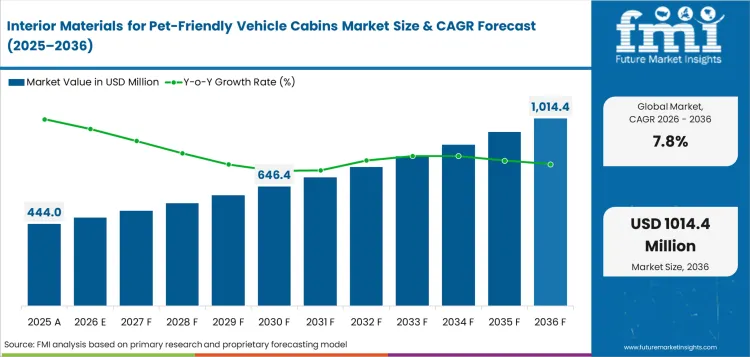
- Interior materials for pet-friendly vehicle cabins market valuation was USD 412.0 million in 2025.
- Revenue is expected to reach USD 940.0 million by 2036.
- Sales are set to expand at 7.8% CAGR across 2026 to 2036.
- Incremental opportunity across 2026 to 2036 is USD 496.0 million.
- Scratch-resistant seat covers are expected to lead product type with 34.0% share in 2026.
- China is likely to post a CAGR of 9.2% in the market through 2036.
- Coated textiles are projected to account for 31.0% material share in 2026.
- OEM line-fit channels are expected to contribute 62.0% of channel demand in 2026.
Interior Materials for Pet-Friendly Vehicle Cabins Market Definition
Interior materials for pet-friendly vehicle cabins include engineered surfaces used to protect vehicle interiors from pet-related wear. Scope includes scratch-resistant seat covers and coated textile systems. Cargo mats and floor liners are included within cabin protection use. Door protectors and trim skins are covered when designed for pet contact areas. Products serve passenger cars and SUVs. Electric vehicles create separate demand through premium cabin packages. Aftermarket kits and OEM line-fit materials are included across global vehicle applications.
Interior Materials for Pet-Friendly Vehicle Cabins Market Inclusions
Scope includes scratch-resistant seat covers and coated cabin textiles. Waterproof cargo mats and floor liners are included. Door protectors and headrest protection materials are within scope. Synthetic leather alternatives and recycled polyester systems are covered. OEM line-fit materials and dealer accessory products are included. Aftermarket kits and fleet retrofit solutions are included across global vehicle use.
Interior Materials for Pet-Friendly Vehicle Cabins Market Exclusions
Scope excludes pet crates and animal harness systems. General vehicle upholstery without pet-protection features is outside scope. Cleaning sprays and odor-removal chemicals are excluded. Standard floor mats without waterproof or pet-focused durability claims are outside market scope. Pet beds and non-vehicle animal accessories are excluded. Electronic pet monitoring systems are outside this material-focused scope.
Interior Materials for Pet-Friendly Vehicle Cabins Market Research Methodology
- Primary Research: FMI analysts reviewed cabin material suppliers and automotive accessory distributors. OEM trim planners and aftermarket product sellers were reviewed separately. The research focused on pet protection needs and material selection criteria. It reviewed warranty exposure and replacement behavior across fitted cabin products.
- Desk Research: Desk research covered vehicle production statistics and pet ownership data. Interior material regulations and recycled-content rules helped define supply exposure. Technical product literature and official company releases defined material scope. Automotive textile and polymer systems were reviewed separately.
- Market Sizing and Forecasting: The sizing model combined vehicle production and pet-ownership penetration. Material value per vehicle and accessory package pricing were considered after segment review. Forecasts were cross-checked with SUV demand and premium cabin customization. Aftermarket replacement patterns and OEM package adoption were reviewed separately.
- Data Validation:Validation compared company portfolios and public vehicle production signals. Pet population data and interior material developments were checked separately. Forecasts were adjusted for recycled-content rules and regional vehicle format shifts.
Why is Interior Materials for Pet-Friendly Vehicle Cabins Market Growing?
- Pet travel raises demand for washable cabin surfaces as rear seats face claw marks and fur exposure.
- SUV cargo areas use liners and mats as dogs create wet-paw and crate-friction damage.
- Premium vehicle buyers choose low-odor materials as cabin smell affects comfort and resale value.
- Recycled polymers gain interest as automakers prepare for stricter circular material requirements.
- Aftermarket kits create faster sales as owners upgrade existing vehicles without factory trim changes.
Pet travel concentrates wear across rear seats and cargo areas. Seat bolsters develop claw scratches during entry and exit, while cargo floors absorb moisture and crate friction during leisure travel. Moisture exposure and crate friction increase demand for coated textiles and waterproof mats with tested abrasion resistance. Suppliers need cabin materials that retain surface comfort after repeated cleaning cycles. Pet-friendly cabin protection are made of seat-covers and automotive soft trim interior materials that are upgraded for scratch resistance and easier cleaning. Vehicle-specific pet protection packages command higher prices than loose covers because they offer stronger attachment and OEM-style cabin finish.
SUVs and crossovers create the highest demand as owners use rear cargo space for pets and outdoor equipment. OICA reported global vehicle production at 96.4 million units in 2025, giving suppliers a larger base for fitted protection systems. Pet-friendly materials are used in molded cargo liners and washable rear-seat systems in these vehicles. Suppliers gain scale when one approved material platform supports multiple SUV vahicles. Suppliers with existing seat-cover and trim capabilities can serve pet-friendly cabin demand by adding scratch-resistant coatings and stronger attachment designs in automotive seating.
Market Segmentation Analysis
- Scratch-resistant seat covers are estimated to account for 34.0% share in 2026 due to large number of population with pets and direct pet contact in vehicles.
- In 2026, coated textiles are expected to hold 31.0% share due to washable surface performance.
- SUVs and crossovers are anticipated to capture 46.0% of vehicle class demand in 2026.
- OEM line-fit channels are set to represent 62.0% of channel demand in 2026.
- Rear-seat and cargo-area uses are expected to contribute 57.0% in 2026.
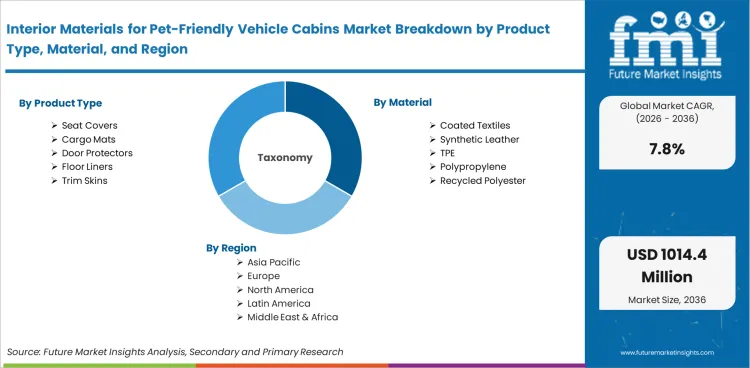
The market is divided into product type, material, application, vehicle class, sales channel, and region. Product type covers seat covers and cargo mats. Door protectors and floor liners are included. Trim skins are covered as well. Material includes coated textiles and synthetic leather. TPE and polypropylene are included. Recycled polyester is covered as well. Application includes rear seats and cargo areas. Door trim and floor zones are included. Vehicle class includes SUVs and passenger cars. EVs and premium vehicles are included. Sales channel includes OEM line-fit and aftermarket kits.
Interior Materials for Pet-Friendly Vehicle Cabins Market Analysis By Product Type
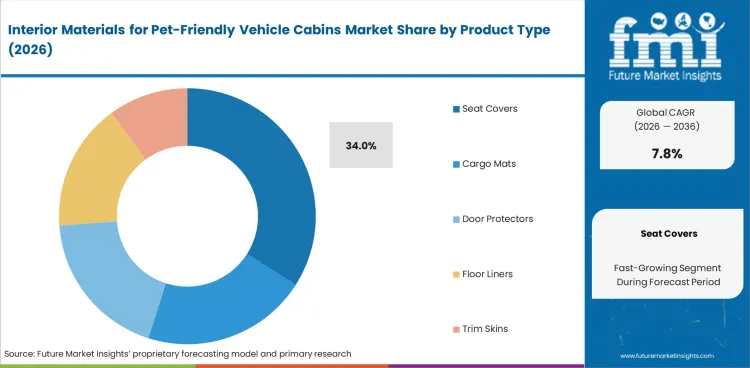
- Scratch-resistant seat covers are projected to account for 34.0% of product type share in 2026. Scratch-resistant seat covers lead because rear benches face the highest visible damage.
- Cargo mats follow closely as SUVs and crossovers need waterproof protection across rear loading areas.
Interior Materials for Pet-Friendly Vehicle Cabins Market Analysis By Material
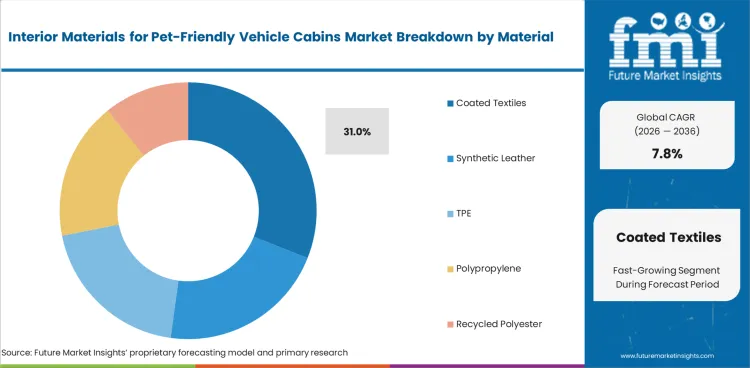
- Coated textiles are expected to represent 31.0% in 2026. Coated textiles are used in seat covers and door inserts because they combine comfort with cleaning performance.
- Synthetic leather alternatives gain value as premium buyers seek animal-free and wipe-clean surfaces. The segment links with POE artificial leather lightweight auto interiors through demand for durable surface substitutes.
Interior Materials for Pet-Friendly Vehicle Cabins Market Analysis By Application
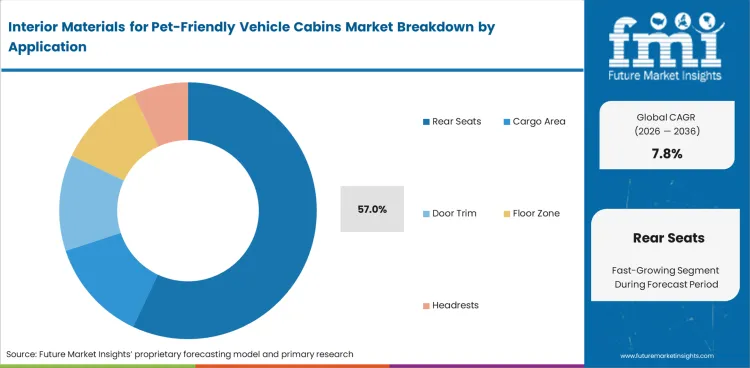
- Rear-seat and cargo-area applications are expected to represent 57.0% share in 2026, since pets spend most travel time in these places.
- Door trim protection is adopted in larger-dog vehicles to reduce scratch marks near windows and armrest areas.
Interior Materials for Pet-Friendly Vehicle Cabins Market Analysis By Vehicle Class
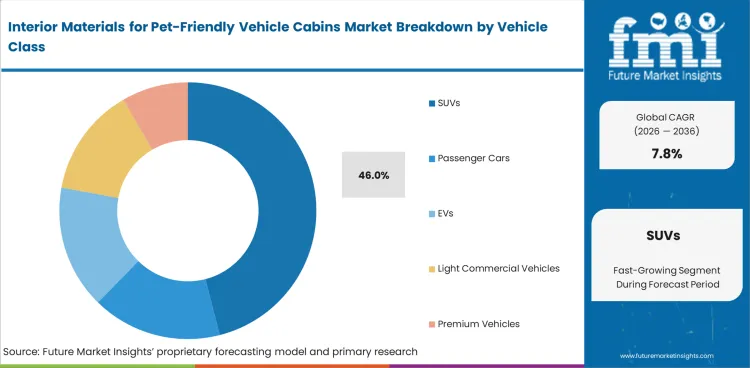
- SUVs and crossovers are anticipated to represent 46.0% demand in 2026 due to cargo-space use.
- Passenger cars retain demand in urban markets with smaller pets and compact vehicle ownership. Suppliers serving advanced automotive materials can adapt durable surfaces for EV cabin packages.
Interior Materials for Pet-Friendly Vehicle Cabins Market Analysis By Sales Channel
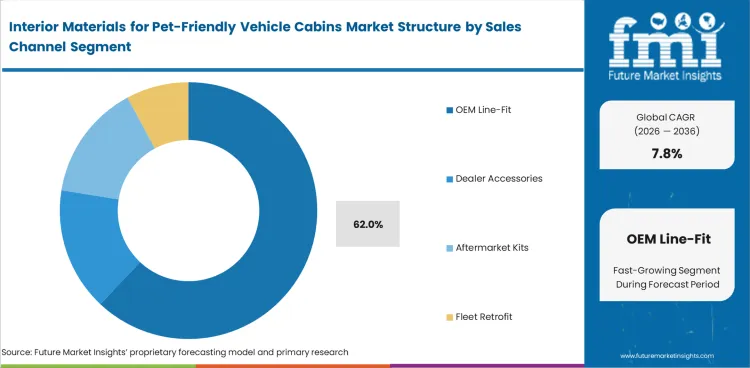
- OEM line-fit channels are expected to hold 62.0% share in 2026 through factory integration. OEM line-fit channels lead because factory materials deliver better appearance and fit.
- Aftermarket kits expand faster as owners upgrade vehicles already used for pet travel.
Interior Materials for Pet-Friendly Vehicle Cabins Market Drivers, Restraints, and Opportunities
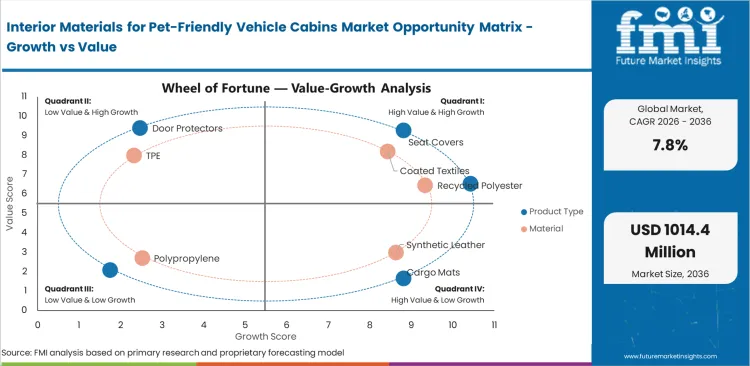
- Pet ownership drives demand for cabin protection as animals create repeated seat and cargo-zone wear.
- SUV and crossover use supports fitted liners because cargo areas carry crates and outdoor equipment.
- Recycled-content rules create opportunities for suppliers using verified recycled polymers and textiles.
- High material cost limits adoption in entry-level vehicles with tight cabin package budgets.
- Odor and cleaning tests create opportunities for suppliers with stronger validation data.
Cargo Protection Cost Control
Cargo protection is a defined purchase need as owners use SUVs for pet travel. Cargo mats reduce moisture exposure and protect carpeted surfaces from crate movement. Waterproof TPE and polypropylene liners offer lower cleaning effort after parks and road trips. Pet owners often purchase cargo protection before door or headrest protection. OEMs can include fitted cargo systems with lifestyle packages. Suppliers with molded fit and low odor can gain stronger dealer accessory placement. Cargo mats and molded cargo liners support automotive interior plastic components demand through higher use of TPE and polypropylene.
Recycled Material Qualification
Recycled material qualification creates opportunity and risk for suppliers. European circularity rules are raising interest in recycled polypropylene and polyester systems. Pet-friendly materials can help automakers meet circularity goals if durability remains acceptable. Recycled content must not weaken scratch resistance or increase odor concerns. Suppliers need traceability and stable batch quality. Closed-loop material platforms linked with can support future sourcing needs. Closed-loop material platforms that use end-of-life vehicle polymer and composite material recycling can help automakers secure verified recycled inputs for future cabin material programs.
Interior Trim Costs Tighten Pet Package Decisions
Flammability testing raises demand for validated pet-friendly cabin materials because scratch-resistant covers and cleanable coatings must meet FMVSS 302 burn-rate limits before OEM approval. For pet-friendly vehicle cabin materials, compliance cost is also a pricing and sourcing issue because durable trims sit inside the same cost pool as seating and interior trim systems. FRED data sourced from the USA Bureau of Labor Statistics show that the Producer Price Index for Motor Vehicle Seating and Interior Trim Manufacturing stood at 115.588 in March 2026. It was 115.486 in February 2026 and 115.524 in January 2026. This keeps pressure on OEMs that must decide whether pet protection belongs in standard trims or paid accessory bundles. Suppliers should separate base material cost from validation cost for car owners to see the premium behind abrasion and cleaning resistance.
Interior Air Quality Is Now an Operating Requirement
For pet-friendly cabin material suppliers, interior air quality is becoming as important as surface strength. Vehicles are enclosed spaces, and low-quality coatings can create odor concerns. Automakers review volatile organic compound behavior before platform approval. Pet owners also clean surfaces using household products that may interact with coatings. Materials must retain performance after repeated wipe-downs. Suppliers treating odor control as a design requirement will gain stronger qualification in premium cabins. This requirement supports technical work in automotive interior leather alternatives and coated fabrics.
Analysis of Interior Materials for Pet-Friendly Vehicle Cabins Market By Key Countries
.webp "Top Country Growth Comparison Interior Materials For Pet Friendly Vehicle Cabins Market Cagr (2026 2036)")
| Country | CAGR |
|---|---|
| China | 9.2% |
| India | 8.5% |
| United States | 7.4% |
| United Kingdom | 7.1% |
| Germany | 6.8% |
| France | 6.7% |
| Japan | 6.2% |
Source: FMI analysis based on primary research and proprietary forecasting model.
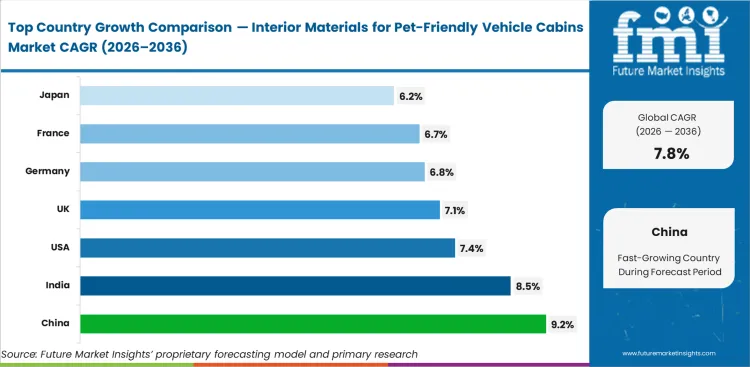
Interior Materials for Pet-Friendly Vehicle Cabins CAGR Analysis By Country
- China is likely to progress at a CAGR of 9.2% by 2036, supported by EV interiors and pet spending.
- India is projected to record a CAGR of 8.5% through 2036, due to urban pet care demand.
- The United States is set to garner a CAGR of 7.4% during the assessment period, supported by pet ownership.
- The United Kingdom is anticipated to expand at a CAGR of 7.1% over the forecast period.
- Germany is likely to post a CAGR of 6.8% by 2036, supported by premium vehicle interiors.
- France is expected to advance at 6.7% CAGR through 2036, as circular materials support adoption.
- Japan is expected to register 6.2% CAGR through 2036, due to compact pet travel needs.
Demand Outlook for Interior Materials for Pet-Friendly Vehicle Cabins in China
China’s demand is shaped by urban pet ownership and fast EV interior renewal. Xinhua reported China’s urban dog and cat population reached 126 million in 2025. That base supports accessories and cabin protection products sold through digital channels. China is projected at 9.2% CAGR by 2036 with EV interiors and pet spending supporting material use. Local suppliers obtain orders through fast development cycles and lower conversion cost. Foreign suppliers retain an advantage in premium coatings and validated interior surface systems. The opportunity links with automotive plastic demand in BRIC countries across cabin applications.
- Shanghai EV buyers support demand for fitted rear-seat covers and washable cargo mats.
- Guangdong pet product channels drive online sales of vehicle-specific cabin protection kits.
- Zhejiang and Jiangsu vehicle clusters create adoption for factory-integrated lifestyle trim packages.
Sales Analysis of Interior Materials for Pet-Friendly Vehicle Cabins in India
India is expected to expand at 8.5% CAGR through 2036 with metro pet ownership and compact SUV demand. The market is early but moving through premium aftermarket channels. Pet owners in large cities purchase seat covers and mats before factory packages become common. Heat resistance and simple cleaning are important due to local climate conditions. OEM packages may first appear in higher trims and lifestyle editions. Local converter capacity can support affordable polypropylene mats and coated textile covers.
- Delhi NCR and Mumbai pet owners drive aftermarket demand for fitted seat protection.
- Pune and Chennai vehicle clusters can aid local conversion of mats and textile covers.
- Compact SUV demand creates a practical base for cargo liners and rear-seat protection.
Demand Analysis of Interior Materials for Pet-Friendly Vehicle Cabins in the United States
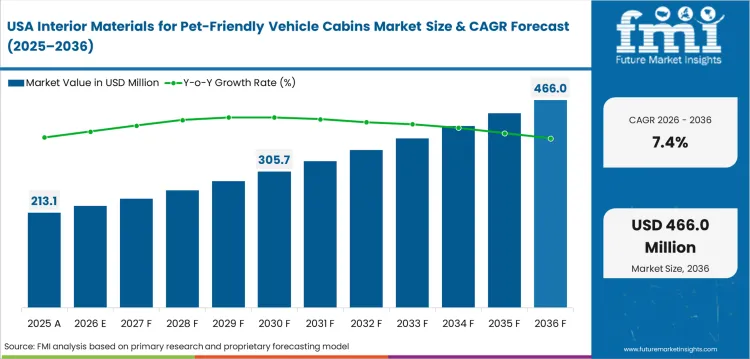
The United States has the highest demand base due to pet ownership and accessory spending. APPA’s 2024 to 2025 survey indicates around 94 million pet-owning households. Vehicle owners use rear seats and cargo areas for dog travel during daily routines. The United States is forecast to grow at 7.4% rate during the study period, supported by SUV ownership and fitted aftermarket demand. OEMs can add pet packages through lifestyle trims and dealer accessories. Suppliers with strong odor control and abrasion data can defend higher prices. Demand for automotive fabrics in USA aligns with automotive fabrics used in USA seating applications as pet-friendly covers require stronger abrasion resistance and easier cleaning.
- California and Texas support demand through large vehicle fleets and high pet ownership.
- Midwest SUV and pickup ownership creates adoption for cargo protection and rear-seat liners.
- Premium aftermarket brands can sell vehicle-specific kits through online and dealer channels.
Demand Outlook for Interior Materials for Pet-Friendly Vehicle Cabins in the United Kingdom
The United Kingdom combines large pet ownership with strong vehicle accessory retail. UK Pet Food reported about 15.5 million pet dogs and 13 million pet cats in 2024. The United Kingdom is expected to record 7.1% CAGR through 2036 as owners protect hatchbacks and crossovers. Fitted cargo liners and rear-seat covers are common early purchases. Dealer accessories offer a path before full OEM platform integration. Suppliers need clear cleaning claims and accurate vehicle fit. Smaller vehicle formats increase demand for compact protection products.
- High dog ownership supports demand for rear-seat covers and waterproof cargo liners.
- Hatchback and crossover users need compact protection systems with simple installation.
- Dealer accessory channels can package pet protection with delivery and service plans.
Future Outlook for Interior Materials for Pet-Friendly Vehicle Cabins in Germany
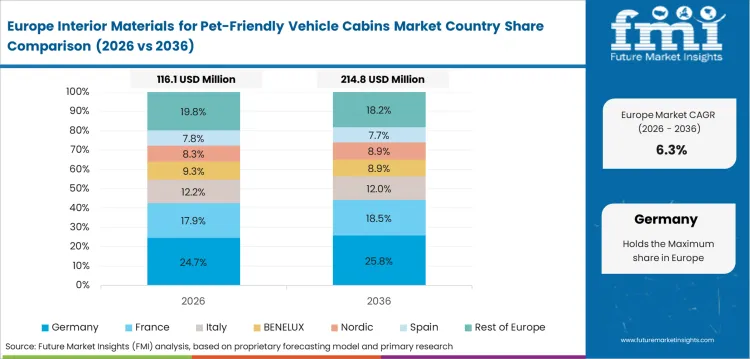
Germany is expected to advance at 6.8% CAGR over the forecast period because premium vehicle interiors support value sales. German automakers and suppliers apply strict validation standards for cabin materials. Pet-friendly surfaces must pass abrasion and flammability checks. European recycled-content rules add demand for traceable polymers and textiles. Dog travel culture supports cargo mats in estates and SUVs. Demand expands at a measured rate but keeps strong value per vehicle. The country connects with automotive bioplastic opportunities across sustainable interior materials.
- Baden-Württemberg premium vehicle production supports high-specification cabin material approval.
- Bavaria supplier networks reinforce development of durable textiles and molded interior parts.
- Recycled material rules strengthen traceable polymers and textile systems in cabin protection.
Demand Outlook for Interior Materials for Pet-Friendly Vehicle Cabins in France
France is positioned through European circularity rules and strong pet-owning household penetration. FEDIAF reported 139 million European households owning at least one pet in 2025. France is expected to advance at 6.7% CAGR through 2036 as recycled interior materials gain acceptance. Suppliers can align pet-friendly surfaces with circular polymer targets. Demand is strongest in family cars and crossovers used for leisure travel. OEMs may test pet packages through dealer accessories before wider trim adoption. France-based suppliers also benefit from sustainable cabin material programs across Europe.
- Family vehicle use supports rear-seat and cargo-area protection during leisure travel.
- Circularity rules aid recycled polymers and textile systems with traceable content.
- Local supplier capability helps validate low-emission materials for premium cabin programs.
In-depth Analysis of Interior Materials for Pet-Friendly Vehicle Cabins in Japan
Japan’s market reflects compact vehicles and a mature pet culture. Pet Food in Japan data estimated 6.8 million dogs and 9.1 million cats in 2024. Japan is projected to rise at 6.2% CAGR through 2036 as compact cars and small-pet travel support demand. Buyers need washable seat pads and scratch-resistant trim surfaces. Premium workmanship and material consistency influence supplier selection. Small cabins raise the need for compact protection products with secure installation. Demand connects with demand for automotive fabrics in Japan across seating and trim.
- Tokyo and Osaka pet owners drive compact seat protection for daily urban travel.
- Aichi vehicle clusters support technical validation of trim and seating materials.
- Older pet owners favor easy-clean surfaces with low odor and simple maintenance needs.
Competitive Landscape and Strategic Positioning
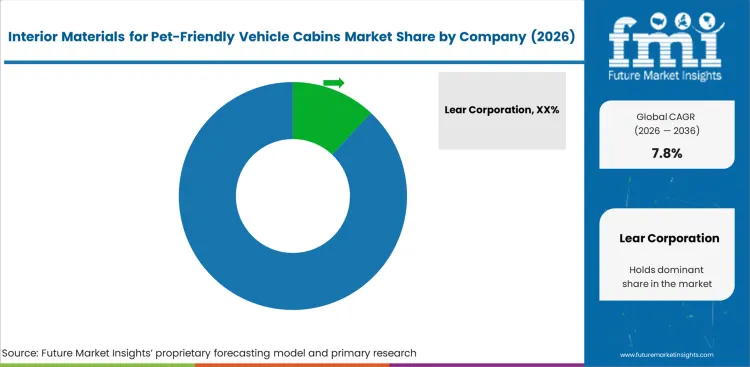
- The market is moderately fragmented with global interior suppliers controlling OEM-qualified programs.
- Smaller accessory brands compete through vehicle-specific products and faster online sales.
- Barriers to entry include odor testing and automotive flammability validation.
- Regional suppliers can win aftermarket orders if sizing and material performance meet buyer needs.
Competitive strength is due to proof of surface durability across pet contact zones. Companies test abrasion and cleaning resistance before approving materials. OEM qualification and replacement support decide final supplier selection. Lear’s ReNewKnit platform shows how recycled textiles can support premium cabin programs. In pet-friendly applications, material failure can create warranty complaints and visible cabin damage. Suppliers with proven testing and interior program experience hold stronger positions in OEM channels.
Established companies benefit from product breadth across seating and interior systems. Adient supports seat integration and recycled foam development. FORVIA brings sustainable compounds through MATERI’ACT. Toyota Boshoku offers interior system knowledge and recyclable design activity. These companies can support buyers from material design through trim integration. That capability reduces switching risk for automakers.
Smaller and specialist companies win orders through focused surfaces and aftermarket fit. Ultrafabrics competes through durable polyurethane surfaces for premium cabins. Sage Automotive Interiors brings automotive textile and suede capability. Covestro supports polymer systems and recycled raw material approaches. Specialist vendors gain in accounts needing coated surfaces or molded liner materials. Partnership activity may increase as larger suppliers seek pet-specific surface claims.
Key Companies in the Interior Materials for Pet-Friendly Vehicle Cabins Market
Interior materials for pet-friendly vehicle cabin competition includes seating system suppliers, soft trim specialists, polymer material companies, and aftermarket protection brands.
- Global Leaders: Lear, Adient, FORVIA and Toyota Boshoku compete through OEM seating access, trim integration, and vehicle program experience. Lear supports recycled textile use through ReNewKnit, while Adient strengthens its position through seating foam and full-seat system capability.
- Soft Trim and Surface Specialists: Sage Automotive Interiors and Ultrafabrics compete through coated textile knowledge, surface durability, and premium cabin material development. These companies can support pet-friendly seat covers and door inserts through stronger abrasion resistance, stain control, and low-odor surface finishes.
- Polymer and Compound Suppliers: Covestro and related material suppliers compete through polyurethane, polycarbonate, and recycled polymer systems for durable cabin components. These suppliers support cargo mats, molded liners, trim skins, and washable protection parts with stronger material validation.
- Aftermarket Cabin Protection Brands: WeatherTech, 3D MAXpider and Covercraft compete through vehicle-specific fit, online visibility, and direct-to-consumer accessory sales. These brands address owners seeking pet protection for existing vehicles through cargo liners, floor mats, seat covers, and washable protection kits.
Competitive Benchmarking: Interior Materials for Pet-Friendly Vehicle Cabins Market
| Company | Abrasion Performance | Recycled Material Depth | OEM Access | Geographic Footprint |
|---|---|---|---|---|
| Lear Corporation | High | High | High | Global |
| Adient | High | Medium | High | Global |
| FORVIA | High | High | High | Global |
| Toyota Boshoku | High | Medium | High | Global |
| Sage Automotive Interiors | High | Medium | Medium | Global |
| Ultrafabrics | High | Medium | Medium | Global |
| Covestro | Medium | High | High | Global |
| 3D MAXpider | Medium | Low | Medium | North America and Asia |
Source: Future Market Insights competitive analysis, 2026. Ratings reflect relative positioning based on abrasion performance, recycled material depth, and OEM access.
Key Developments in Interior Materials for Pet-Friendly Vehicle Cabins Market
- In November 2024, Adient, JLR, and Dow developed closed-loop polyurethane seat foam. This supports recycled seating material pathways for cabin programs.
- In April 2024, FORVIA’s MATERI’ACT introduced an ocean-bound plastics interior concept. This supports recycled compound use for interior panels and trim parts.
- In April 2025, Covestro introduced post-consumer recycled polycarbonates from end-of-life headlamps. This supports circular material use in automotive applications.
- In October 2024, Covestro presented automotive circularity materials at FAKUMA. This supports recycled raw material adoption in durable vehicle components.
Key Players in the Interior Materials for Pet-Friendly Vehicle Cabins Market
Seating and Interior System Suppliers
- Lear Corporation
- Adient
- FORVIA
- Toyota Boshoku
Polymer, Compound Supplier, Soft Trim and Surface Specialists
- Sage Automotive Interiors
- Ultrafabrics
- Covestro
Aftermarket Cabin Protection Brands
- 3D MAXpider
- WeatherTech
- Covercraft
Report Scope and Coverage
| Parameter | Details |
|---|---|
| Quantitative Units | USD 444.0 million in 2026 to USD 940.0 million by 2036, at 7.8% CAGR |
| Market Definition | Materials used to protect vehicle cabins from pet-related scratches, stains, hair, odor, and moisture exposure |
| Regions Covered | North America, Latin America, Europe, East Asia, South Asia and Pacific, Middle East and Africa |
| Countries Covered | China, India, United States, United Kingdom, Germany, France, Japan and 30+ countries |
| Key Companies Profiled | Lear, Adient, FORVIA, Toyota Boshoku, Sage Automotive Interiors, Ultrafabrics and Covestro |
| Forecast Period | 2026 to 2036 |
| Approach | Hybrid bottom-up and top-down method using vehicle production, pet ownership and material pricing checks |
Interior Materials for Pet-Friendly Vehicle Cabins by Segments
Interior Materials for Pet-Friendly Vehicle Cabins Market Segmented by Product Type:
- Seat Covers
- Cargo Mats
- Door Protectors
- Floor Liners
- Trim Skins
Interior Materials for Pet-Friendly Vehicle Cabins Market Segmented by Material:
- Coated Textiles
- Synthetic Leather
- TPE
- Polypropylene
- Recycled Polyester
Interior Materials for Pet-Friendly Vehicle Cabins Market Segmented by Application:
- Rear Seats
- Cargo Area
- Door Trim
- Floor Zone
- Headrests
Interior Materials for Pet-Friendly Vehicle Cabins Market Segmented by Vehicle Class:
- SUVs
- Passenger Cars
- EVs
- Light Commercial Vehicles
- Premium Vehicles
Interior Materials for Pet-Friendly Vehicle Cabins Market Segmented by Sales Channel:
- OEM Line-Fit
- Dealer Accessories
- Aftermarket Kits
- Fleet Retrofit
Interior Materials for Pet-Friendly Vehicle Cabins Market by Region:
- North America
- United States
- Canada
- Mexico
- Latin America
- Brazil
- Chile
- Rest of Latin America
- Western Europe
- Germany
- UK
- Italy
- Spain
- France
- Nordic
- BENELUX
- Rest of Western Europe
- Eastern Europe
- Russia
- Poland
- Hungary
- Balkan and Baltic
- Rest of Eastern Europe
- East Asia
- China
- Japan
- South Korea
- South Asia and Pacific
- India
- ASEAN
- Australia and New Zealand
- Rest of South Asia and Pacific
- Middle East and Africa
- Kingdom of Saudi Arabia
- Other GCC Countries
- Turkiye
- South Africa
- Other African Union
- Rest of Middle East and Africa
Research Sources and Bibliography
- National Highway Traffic Safety Administration. (2025, June). TP-213-12.
- American Pet Products Association. (2024, August). The American Pet Products Association releases 2024 dog and cat owner insight report. APPA.
- Insurance Information Institute. (2025). Facts and statistics: Pet ownership and insurance. Triple-I.
- OICA. (2026, April). Auto industry growth shifted east in 2025 amid global repositioning. OICA.
- European Parliament. (2025, December). Circular economy: deal on new EU rules for the automotive sector. European Parliament.
- FEDIAF EuropeanPetFood. (2025, June). Statistics. FEDIAF.
- UK Pet Food. (2024, March). UK pet population. UK Pet Food.
- Xinhua News Agency. (2026, April). China’s pet economy opens up new consumption scenarios. Xinhua.
- Adient. (2024, December). Adient, Jaguar Land Rover and Dow develop closed-loop polyurethane foam seats. Adient.
- FORVIA. (2024, April). MATERI’ACT introduces a sustainable car interior featuring ocean bound plastics. FORVIA.
- Covestro. (2025, April). Covestro contributes to automotive circularity with materials recycled from end-of-life headlamps. Covestro.
- Toyota Boshoku Corporation. (2024). Sustainable resource circulation. Toyota Boshoku Corporation.
The bibliography is provided for reader reference and uses FMI market anchors, trade body data and official company publications.
This Report Answers
- What is the projected size of the interior materials for pet-friendly vehicle cabins market in 2026 and 2036?
- What CAGR is forecast for pet-friendly vehicle cabin material demand between 2026 and 2036?
- Which product type is projected to lead interior material demand in 2026?
- Which material type is expected to account for the highest share in 2026?
- Which countries are forecast to record faster market expansion through 2036?
- Which companies hold deeper positions in seating textiles and durable cabin material systems?
- What materials are included and excluded from this pet-friendly cabin material scope?
- Which vehicle classes shape OEM and aftermarket material buying?
- What methodology supports FMI’s market size and country-level forecast view?
Frequently Asked Questions
What is the global demand for interior materials for pet-friendly vehicle cabins in 2026?
For 2026, the global interior materials for pet-friendly vehicle cabins market is expected to be worth USD 444.0 million through wider use in SUVs and premium passenger vehicles.
What is the projected value of the interior materials for pet-friendly vehicle cabins market by 2036?
By 2036, the valuation is projected to reach USD 940.0 million as washable seat covers and cargo liners gain wider OEM and aftermarket use.
What CAGR is expected for the market between 2026 and 2036?
The market is forecast to expand at 7.8% CAGR between 2026 and 2036 across global vehicle cabin applications.
Which product type is projected to lead in 2026?
Scratch-resistant seat covers are projected to account for 34.0% share in 2026 through direct use across rear-seat pet travel applications.
Which material type is expected to lead in 2026?
Coated textiles are expected to represent 31.0% share in 2026 as pet owners need washable and low-odor cabin surfaces.
Which country is forecast to expand fastest through 2036?
China is projected to record 9.2% CAGR through 2036 as urban pet ownership and premium EV interiors support material demand.
What is included in the interior materials for pet-friendly vehicle cabins market?
The scope includes washable seat covers and trim skins designed for pet-related cabin protection.
What method supports the forecast?
FMI used vehicle production and material pricing, and accessory penetration to validate the market forecast.
Preview the report firsthand - request a free sample
Get SampleGet the brochure for pricing and purchase details.
Get PDFTable of Content
- Key Takeaways
- Market Size and CAGR
- Top Growth Driver
- Fastest Growing Segment
- Leading Region
- Key Companies
- Emerging Opportunities
- Executive Summary
- Global Market Outlook
- Demand-side Trends
- Supply-side Trends
- Technology Roadmap Analysis
- Analysis and Recommendations
- Analyst Perspective (What is happening? Why now? What should investors know?)
- Key Questions Answered
- How large is the market?
- What is the CAGR?
- What are key trends?
- Which region dominates?
- Who are the leaders?
- Market Overview
- Market Coverage / Taxonomy
- Market Definition / Scope / Limitations
- Research Methodology
- Chapter Orientation
- Analytical Lens and Working Hypotheses
- Market Structure, Signals, and Trend Drivers
- Benchmarking and Cross-market Comparability
- Market Sizing, Forecasting, and Opportunity Mapping
- Research Design and Evidence Framework
- Desk Research Programme (Secondary Evidence)
- Expert Input and Fieldwork (Primary Evidence)
- Tooling, Models, and Reference Databases
- Data Engineering and Model Build
- Quality Assurance and Audit Trail
- Market Background
- Market Dynamics (Drivers, Restraints, Opportunity, Trends)
- Scenario Forecast (Optimistic, Likely, Conservative)
- Impact Analysis
- AI Impact
- Sustainability Impact
- Regulatory Impact
- Technology Impact
- Consumer / Buyer Analysis
- Purchase Drivers
- Adoption Barriers
- Buyer Journey
- Opportunity Map Analysis
- Product Life Cycle Analysis
- Supply Chain Analysis
- Investment Feasibility Matrix
- Value Chain Analysis
- PESTLE and Porter's Analysis
- Regulatory Landscape
- Regional Parent Market Outlook
- Production and Consumption Statistics
- Import and Export Statistics
- Global Market Analysis and Forecast, 2021 to 2036
- Historical Market Size Value (USD Million) Analysis, 2021 to 2025
- Current and Future Market Size Value (USD Million) Projections, 2026 to 2036
- Y-o-Y Growth Trend Analysis
- Absolute $ Opportunity Analysis
- Global Market Pricing Analysis, 2021 to 2036
- Global Market Analysis and Forecast, By Product Type, 2021 to 2036
- Introduction / Key Findings
- Historical Market Size Value (USD Million) Analysis By Product Type, 2021 to 2025
- Current and Future Market Size Value (USD Million) Analysis and Forecast By Product Type, 2026 to 2036
- Seat Covers
- Cargo Mats
- Door Protectors
- Floor Liners
- Trim Skins
- Seat Covers
- Y-o-Y Growth Trend Analysis By Product Type, 2021 to 2025
- Absolute $ Opportunity Analysis By Product Type, 2026 to 2036
- Global Market Analysis and Forecast, By Material, 2021 to 2036
- Introduction / Key Findings
- Historical Market Size Value (USD Million) Analysis By Material, 2021 to 2025
- Current and Future Market Size Value (USD Million) Analysis and Forecast By Material, 2026 to 2036
- Coated Textiles
- Synthetic Leather
- TPE
- Polypropylene
- Recycled Polyester
- Coated Textiles
- Y-o-Y Growth Trend Analysis By Material, 2021 to 2025
- Absolute $ Opportunity Analysis By Material, 2026 to 2036
- Global Market Analysis and Forecast, By Application, 2021 to 2036
- Introduction / Key Findings
- Historical Market Size Value (USD Million) Analysis By Application, 2021 to 2025
- Current and Future Market Size Value (USD Million) Analysis and Forecast By Application, 2026 to 2036
- Rear Seats
- Cargo Area
- Door Trim
- Floor Zone
- Headrests
- Rear Seats
- Y-o-Y Growth Trend Analysis By Application, 2021 to 2025
- Absolute $ Opportunity Analysis By Application, 2026 to 2036
- Global Market Analysis and Forecast, By Vehicle Class, 2021 to 2036
- Introduction / Key Findings
- Historical Market Size Value (USD Million) Analysis By Vehicle Class, 2021 to 2025
- Current and Future Market Size Value (USD Million) Analysis and Forecast By Vehicle Class, 2026 to 2036
- SUVs
- Passenger Cars
- EVs
- Light Commercial Vehicles
- Premium Vehicles
- SUVs
- Y-o-Y Growth Trend Analysis By Vehicle Class, 2021 to 2025
- Absolute $ Opportunity Analysis By Vehicle Class, 2026 to 2036
- Global Market Analysis and Forecast, By Sales Channel, 2021 to 2036
- Introduction / Key Findings
- Historical Market Size Value (USD Million) Analysis By Sales Channel, 2021 to 2025
- Current and Future Market Size Value (USD Million) Analysis and Forecast By Sales Channel, 2026 to 2036
- OEM Line-Fit
- Dealer Accessories
- Aftermarket Kits
- Fleet Retrofit
- OEM Line-Fit
- Y-o-Y Growth Trend Analysis By Sales Channel, 2021 to 2025
- Absolute $ Opportunity Analysis By Sales Channel, 2026 to 2036
- Global Market Analysis and Forecast, By Region, 2021 to 2036
- Introduction
- Historical Market Size Value (USD Million) Analysis By Region, 2021 to 2025
- Current Market Size Value (USD Million) Analysis and Forecast By Region, 2026 to 2036
- North America
- Latin America
- Western Europe
- Eastern Europe
- East Asia
- South Asia and Pacific
- Middle East & Africa
- Market Attractiveness Analysis By Region
- North America Market Analysis and Forecast, By Country, 2021 to 2036
- Historical Market Size Value (USD Million) Trend Analysis By Market Taxonomy, 2021 to 2025
- Market Size Value (USD Million) Forecast By Market Taxonomy, 2026 to 2036
- By Country
- USA
- Canada
- By Product Type
- By Material
- By Application
- By Vehicle Class
- By Sales Channel
- By Country
- Market Attractiveness Analysis
- By Country
- By Product Type
- By Material
- By Application
- By Vehicle Class
- By Sales Channel
- Key Takeaways
- Latin America Market Analysis and Forecast, By Country
- Historical Market Size Value (USD Million) Trend Analysis By Market Taxonomy, 2021 to 2025
- Market Size Value (USD Million) Forecast By Market Taxonomy, 2026 to 2036
- By Country
- Brazil
- Mexico
- Chile
- Rest of Latin America
- By Product Type
- By Material
- By Application
- By Vehicle Class
- By Sales Channel
- By Country
- Market Attractiveness Analysis
- By Country
- By Product Type
- By Material
- By Application
- By Vehicle Class
- By Sales Channel
- Key Takeaways
- Western Europe Market Analysis and Forecast, By Country
- Historical Market Size Value (USD Million) Trend Analysis By Market Taxonomy, 2021 to 2025
- Market Size Value (USD Million) Forecast By Market Taxonomy, 2026 to 2036
- By Country
- Germany
- UK
- Italy
- Spain
- France
- Nordic
- BENELUX
- Rest of Western Europe
- By Product Type
- By Material
- By Application
- By Vehicle Class
- By Sales Channel
- By Country
- Market Attractiveness Analysis
- By Country
- By Product Type
- By Material
- By Application
- By Vehicle Class
- By Sales Channel
- Key Takeaways
- Eastern Europe Market Analysis and Forecast, By Country
- Historical Market Size Value (USD Million) Trend Analysis By Market Taxonomy, 2021 to 2025
- Market Size Value (USD Million) Forecast By Market Taxonomy, 2026 to 2036
- By Country
- Russia
- Poland
- Hungary
- Balkan & Baltic
- Rest of Eastern Europe
- By Product Type
- By Material
- By Application
- By Vehicle Class
- By Sales Channel
- By Country
- Market Attractiveness Analysis
- By Country
- By Product Type
- By Material
- By Application
- By Vehicle Class
- By Sales Channel
- Key Takeaways
- East Asia Market Analysis and Forecast, By Country
- Historical Market Size Value (USD Million) Trend Analysis By Market Taxonomy, 2021 to 2025
- Market Size Value (USD Million) Forecast By Market Taxonomy, 2026 to 2036
- By Country
- China
- Japan
- South Korea
- By Product Type
- By Material
- By Application
- By Vehicle Class
- By Sales Channel
- By Country
- Market Attractiveness Analysis
- By Country
- By Product Type
- By Material
- By Application
- By Vehicle Class
- By Sales Channel
- Key Takeaways
- South Asia and Pacific Market Analysis and Forecast, By Country
- Historical Market Size Value (USD Million) Trend Analysis By Market Taxonomy, 2021 to 2025
- Market Size Value (USD Million) Forecast By Market Taxonomy, 2026 to 2036
- By Country
- India
- ASEAN
- Australia & New Zealand
- Rest of South Asia and Pacific
- By Product Type
- By Material
- By Application
- By Vehicle Class
- By Sales Channel
- By Country
- Market Attractiveness Analysis
- By Country
- By Product Type
- By Material
- By Application
- By Vehicle Class
- By Sales Channel
- Key Takeaways
- Middle East & Africa Market Analysis and Forecast, By Country
- Historical Market Size Value (USD Million) Trend Analysis By Market Taxonomy, 2021 to 2025
- Market Size Value (USD Million) Forecast By Market Taxonomy, 2026 to 2036
- By Country
- Kingdom of Saudi Arabia
- Other GCC Countries
- Türkiye
- South Africa
- Other African Union
- Rest of Middle East & Africa
- By Product Type
- By Material
- By Application
- By Vehicle Class
- By Sales Channel
- By Country
- Market Attractiveness Analysis
- By Country
- By Product Type
- By Material
- By Application
- By Vehicle Class
- By Sales Channel
- Key Takeaways
- Key Countries Market Analysis
- USA
- Pricing Analysis
- Market Share Analysis, 2025
- By Product Type
- By Material
- By Application
- By Vehicle Class
- By Sales Channel
- Canada
- Pricing Analysis
- Market Share Analysis, 2025
- By Product Type
- By Material
- By Application
- By Vehicle Class
- By Sales Channel
- Mexico
- Pricing Analysis
- Market Share Analysis, 2025
- By Product Type
- By Material
- By Application
- By Vehicle Class
- By Sales Channel
- Brazil
- Pricing Analysis
- Market Share Analysis, 2025
- By Product Type
- By Material
- By Application
- By Vehicle Class
- By Sales Channel
- Chile
- Pricing Analysis
- Market Share Analysis, 2025
- By Product Type
- By Material
- By Application
- By Vehicle Class
- By Sales Channel
- Germany
- Pricing Analysis
- Market Share Analysis, 2025
- By Product Type
- By Material
- By Application
- By Vehicle Class
- By Sales Channel
- UK
- Pricing Analysis
- Market Share Analysis, 2025
- By Product Type
- By Material
- By Application
- By Vehicle Class
- By Sales Channel
- Italy
- Pricing Analysis
- Market Share Analysis, 2025
- By Product Type
- By Material
- By Application
- By Vehicle Class
- By Sales Channel
- Spain
- Pricing Analysis
- Market Share Analysis, 2025
- By Product Type
- By Material
- By Application
- By Vehicle Class
- By Sales Channel
- France
- Pricing Analysis
- Market Share Analysis, 2025
- By Product Type
- By Material
- By Application
- By Vehicle Class
- By Sales Channel
- India
- Pricing Analysis
- Market Share Analysis, 2025
- By Product Type
- By Material
- By Application
- By Vehicle Class
- By Sales Channel
- ASEAN
- Pricing Analysis
- Market Share Analysis, 2025
- By Product Type
- By Material
- By Application
- By Vehicle Class
- By Sales Channel
- Australia & New Zealand
- Pricing Analysis
- Market Share Analysis, 2025
- By Product Type
- By Material
- By Application
- By Vehicle Class
- By Sales Channel
- China
- Pricing Analysis
- Market Share Analysis, 2025
- By Product Type
- By Material
- By Application
- By Vehicle Class
- By Sales Channel
- Japan
- Pricing Analysis
- Market Share Analysis, 2025
- By Product Type
- By Material
- By Application
- By Vehicle Class
- By Sales Channel
- South Korea
- Pricing Analysis
- Market Share Analysis, 2025
- By Product Type
- By Material
- By Application
- By Vehicle Class
- By Sales Channel
- Russia
- Pricing Analysis
- Market Share Analysis, 2025
- By Product Type
- By Material
- By Application
- By Vehicle Class
- By Sales Channel
- Poland
- Pricing Analysis
- Market Share Analysis, 2025
- By Product Type
- By Material
- By Application
- By Vehicle Class
- By Sales Channel
- Hungary
- Pricing Analysis
- Market Share Analysis, 2025
- By Product Type
- By Material
- By Application
- By Vehicle Class
- By Sales Channel
- Kingdom of Saudi Arabia
- Pricing Analysis
- Market Share Analysis, 2025
- By Product Type
- By Material
- By Application
- By Vehicle Class
- By Sales Channel
- Türkiye
- Pricing Analysis
- Market Share Analysis, 2025
- By Product Type
- By Material
- By Application
- By Vehicle Class
- By Sales Channel
- South Africa
- Pricing Analysis
- Market Share Analysis, 2025
- By Product Type
- By Material
- By Application
- By Vehicle Class
- By Sales Channel
- USA
- Market Structure Analysis
- Competition Dashboard
- Competition Benchmarking
- Market Share Analysis of Top Players
- By Regional
- By Product Type
- By Material
- By Application
- By Vehicle Class
- By Sales Channel
- Emerging Startups
- Innovation Benchmarking
- Competition Analysis
- Competition Deep Dive
- Lear Corporation
- Overview
- Product Portfolio
- Profitability by Market Segments
- Sales Footprint
- Strategy Overview
- Marketing Strategy
- Product Strategy
- Channel Strategy
- Adient
- FORVIA
- Toyota Boshoku
- Sage Automotive Interiors
- Ultrafabrics
- Covestro
- WeatherTech
- Covercraft
- 3D MAXpider
- Lear Corporation
- Case Studies
- Success Stories
- Recent Developments
- Competition Deep Dive
- Assumptions & Acronyms Used


