

- Industry Size (2025)
- USD 27.4 Mn
- Forecast (2035)
- USD 78.7 Mn
- CAGR (2025 to 2035)
- 11.1%
Multi-Strain Probiotic Ferments Market Forecast and Outlook 2025 to 2035
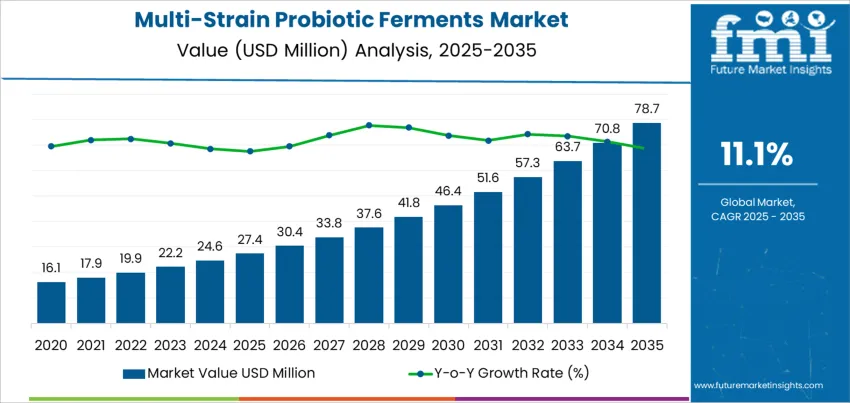
In 2025, the multi-strain probiotic ferments market is valued at USD 27.4 million and is projected to reach USD 78.7 million by 2035 at a CAGR of 11.1%. Early growth reflects rising formulation complexity in functional foods, dietary supplements, and medical nutrition products that require multi-strain efficacy rather than single-strain activity. Food and beverage manufacturers increase the use of blended ferments in yogurt, beverages, powders, and gummies to improve gut health positioning and strain diversity claims. Pharmaceutical and clinical nutrition segments also contribute as research supports broader microbiome modulation using multiple bacterial strains. Production investment during this phase focuses on controlled fermentation, higher yield cultures, and improved strain stability during processing and storage.
From 2030 onward, market expansion is shaped by deeper penetration into mainstream nutrition and personalized health programs. Demand rises from about USD 46.4 million in 2030 toward USD 78.7 million by 2035 as multi-strain products move beyond specialty shelves into mass retail and institutional nutrition. Application growth broadens into immune support, metabolic health, and age-related digestive care. Key producers include global ingredient suppliers, contract fermentation specialists, and branded nutrition companies building proprietary strain libraries. Competitive strategy centers on strain validation, survivability through shelf life, and consistent batch performance. Regulatory clarity around probiotic labeling in major markets supports wider adoption, while clinical backing strengthens positioning in therapeutic nutrition channels.
Quick Stats of the Multi-Strain Probiotic Ferments Market
- Multi-Strain Probiotic Ferments Market Value (2025): USD 27.4 million
- Multi-Strain Probiotic Ferments Market Forecast Value (2035): USD 78.7 million
- Multi-Strain Probiotic Ferments Market Forecast CAGR (2025–2035): 11.1%
- Leading End Use Application in Multi-Strain Probiotic Ferments: Skin Care (11.0%)
- Key Growth Regions for Multi-Strain Probiotic Ferments: India, China, Japan, UK, Germany, USA
- Top Players in Multi-Strain Probiotic Ferments Market: BASF SE, Croda International, Evonik Industries, Symrise (including IFF/Givaudan actives), Dow Inc., Ashland, Clariant, Seppic, Lubrizol, Lonza, Inolex
What is the Growth Forecast for the Multi-Strain Probiotic Ferments Market through 2035?
Between 2025 and 2030, the Multi-Strain Probiotic Ferments Market is projected to grow from USD 27.4 million to USD 46.4 million, creating an absolute expansion of USD 19.0 million and setting an 11.1 % compound annual trajectory. This phase sits on top of the 2020–2024 build-up, where demand already climbed from USD 16.1 million to 24.6 million, so manufacturers enter 2025 with scaled fermentation capacity and validated formulation portfolios. Growth is driven by wider clinical positioning of multi-strain concepts in immunity, digestive health, and women health platforms, plus stronger penetration in ready-to-drink and spoonable functional foods. Contract fermenters and brand owners use this period to secure long-term strain supply, regulatory dossiers, and clinical evidence pipelines, supporting consistent innovation and launches.
From 2030 to 2035, market value increases from USD 46.4 million to USD 78.7 million, adding USD 32.3 million, so the second half of the decade contributes a larger share of global expansion than the first. The growth curve steepens as multi-strain systems move from niche differentiators to baseline expectation in premium probiotics, medical nutrition, and practitioner channels. Higher counts per dose, targeted strain consortia, and delivery formats designed for gut, oral, and skin axes raise value density per unit sold. At the same time, consolidation among ingredient suppliers and CDMOs shifts bargaining power toward scaled players able to guarantee cold-chain integrity, strain identity, and multi-country compliance, reinforcing revenue concentration as absolute market size accelerates for global brands and retailers.
Multi Strain Probiotic Ferments Industry Key Takeaways
| Metric | Value |
|---|---|
| Industry Value (2025) | USD 27.4 million |
| Forecast Value (2035) | USD 78.7 million |
| Forecast CAGR (2025–2035) | 11.1% |
How Is the Global Multi Strain Probiotic Ferments Sector Taking Shape Across Food and Nutrition Systems?
The global multi strain probiotic ferments sector first expanded through the commercialization of traditional fermented foods and the early supplement industry that focused on digestion support. Initial formulations relied heavily on single strains, but limitations in consistency and scope of benefits led manufacturers to combine multiple strains within controlled fermentation systems. This shift aligned with advances in microbial screening, strain preservation, and industrial fermentation control. Food processors adopted these ferments to improve functional positioning of yogurts, cultured drinks, and fortified foods. Supplement brands followed with capsules and powders built on fermented blends rather than isolated cultures. Early growth was anchored in organized retail, cold storage infrastructure, and clinical nutrition channels that supported repeat consumer adoption.
The next phase of global development will be driven by repositioning probiotic ferments as multipurpose nutritional foundations rather than condition-specific additives. Multi strain systems are now being aligned with immune modulation, metabolic health, womens wellness, and aging nutrition. Non-dairy fermentation platforms using oats, soy, coconut, and legumes will widen inclusion across dietary preferences and intolerance profiles. Manufacturing emphasis will shift toward shelf stability, standardized strain survivability, and compatibility with ambient distribution. Regulatory scrutiny around strain identity and functional claims will shape formulation strategies. As personalization becomes more relevant in nutrition, region-specific strain selection will increase. Multi strain probiotic ferments are set to integrate more deeply into everyday foods rather than remain confined to supplements alone.
How Are End Use Segments and Product Forms Structuring the Global Multi Strain Probiotic Ferments Landscape?
Global demand for multi strain probiotic ferments is structured by end use application and product form, with strong concentration across East Asia, Western Europe, and North America. Skin care represents an 11.0% share, supported by formulation activity in South Korea, Japan, France, and the USA. Body care, hair care, sun care, color cosmetics, men grooming, baby and kids care, and dermocosmetic or professional care follow across both mass and professional channels. On the product form side, powders hold a 16.2% share alongside liquid solutions, concentrates, dispersions, emulsions, gels, oils, and solid formats. Selection trends reflect stability requirements, microbial activity preservation, and formulation flexibility across regional manufacturing hubs.
Why Does Skin Care Hold the Largest Share in Global Multi Strain Probiotic Ferments Usage?
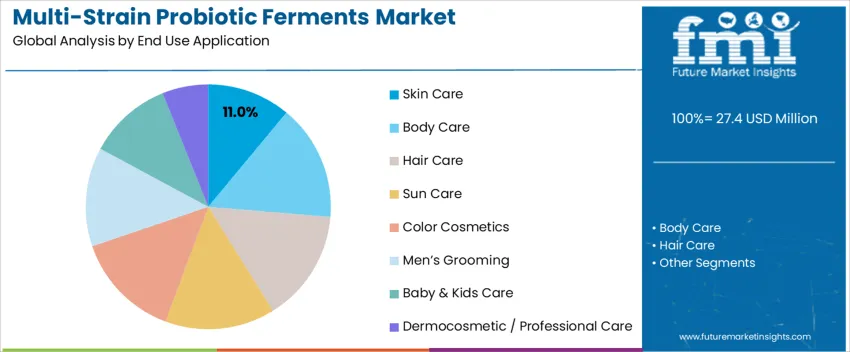
Skin care accounts for 11.0% of global multi strain probiotic ferment usage. This share is supported by rising adoption of microbiome focused cosmetic formulations positioned around barrier repair, hydration balance, and surface flora regulation. Probiotic ferments are increasingly incorporated into facial cleansers, serums, toners, and creams where extended skin contact enhances perceived functional value. Demand is strongest in South Korea, Japan, the USA, and Western Europe, where innovation cycles in dermocosmetics remain active across both clinical and mass retail categories.
Skin care also benefits from higher ingredient loading per unit compared with rinse off body and hair formats. Professional and dermocosmetic brands rely on fermented actives to support product positioning in acne care, post procedure recovery, and sensitivity relief. Product development pipelines in France, Germany, and the USA continue to emphasize probiotic based differentiation within regulated cosmetic frameworks. These formulation priorities reinforce skin care as the leading global application for multi strain probiotic ferments.
Why Does Powder Form Dominate Product Positioning in the Global Multi Strain Probiotic Ferments Market?
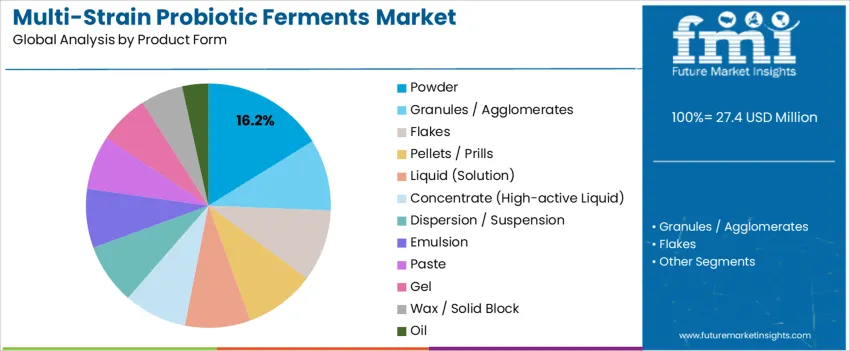
Powder form holds a 16.2% share of global multi strain probiotic ferment demand. This leadership reflects superior shelf stability, controlled moisture exposure, and consistent microbial concentration during formulation. Powders allow precise dosing across emulsions, gels, masks, and dry cosmetic systems, which supports standardized batch performance across high volume production lines in Asia, Europe, and North America.
Powder formats also improve transport efficiency in global supply chains by reducing leakage risk and lowering refrigeration dependence during cross border shipping. Contract manufacturers favor powders for compatibility with automated blending systems and predictable quality retention across varying climate zones. Regulatory documentation and microbial specification control remain more standardized for powdered inputs in export markets. These processing, logistics, and compliance advantages sustain powder as the dominant global product form for multi strain probiotic ferments.
What Is Shaping the Multi-Strain Probiotic Ferments Market Worldwide?
The multi-strain probiotic ferments market is shaped by rising interest in targeted gut health, immune support, and digestive comfort across age groups. Brands are moving from generic “probiotic” claims toward clearly defined strain combinations addressing specific outcomes such as bloating, mood, or antibiotic recovery. Fermented dairy, plant-based drinks, and ready-to-mix concentrates all act as carriers for these blends. Clinical evidence for individual strains is growing, yet formulating stable multi-strain systems under varied storage conditions remains demanding. Regional taste preferences, regulatory claim limits, and retail education levels together determine how quickly multi-strain ferments gain share in functional nutrition portfolios.
Which Factors Are Driving Global Demand for Multi-Strain Probiotic Ferments?
Global demand for multi-strain probiotic ferments grows as consumers seek more precise digestive and immune benefits than single-strain products often promise. Healthcare professionals increasingly discuss microbiome balance, prompting shoppers to look for diversity in strain composition. Food manufacturers value multi-strain systems because they can hedge performance across different processing and storage environments. Rising incidence of lifestyle-related digestive discomfort encourages regular consumption of fermented foods and beverages rather than occasional supplements. E-commerce and practitioner-led brands promote advanced blends with clear strain listings, reinforcing the perception that multiple well-chosen strains deliver broader, more reliable functional support.
What Constraints Are Limiting Growth in the Multi-Strain Probiotic Ferments Market?
Growth in multi-strain probiotic ferments faces technical, regulatory, and commercial constraints. Formulators must balance strain compatibility, oxygen sensitivity, and temperature tolerance while maintaining viable counts through manufacturing and distribution. Regulatory frameworks in many regions restrict strong health claims, which makes it difficult to communicate differentiated benefits for specific strain combinations. Refrigerated transport and cold-shelf placement increase cost and complexity, especially in emerging markets. Retailers already manage crowded functional categories, so shelf space for new multi-strain ferments can be limited. These factors slow the pace at which multi-strain formats replace simpler, established probiotic offerings.
Which Key Trends Are Redefining Multi-Strain Probiotic Ferments Globally?
Several trends are reshaping multi-strain probiotic ferments. Brands are designing blends aligned with life stages, such as early childhood, active adults, and older consumers, with strain mixes tailored to each group. Combination products pairing multi-strain ferments with prebiotic fibers or postbiotic metabolites are gaining visibility. Manufacturers explore non-dairy bases including oats, soy, and fruit matrices to reach lactose-averse and flexitarian consumers. There is growing emphasis on transparent strain naming and CFU disclosure, moving away from vague “proprietary blend” language. Digital tools, including microbiome tests and subscription services, increasingly guide consumers toward specific multi-strain ferment formats.
What is the Global Growth Outlook for the Multi Strain Probiotic Ferments Industry by Country?
| Country | CAGR (%) |
|---|---|
| India | 15.0% |
| China | 13.9% |
| Japan | 12.8% |
| UK | 11.7% |
| Germany | 10.6% |
| USA | 9.5% |
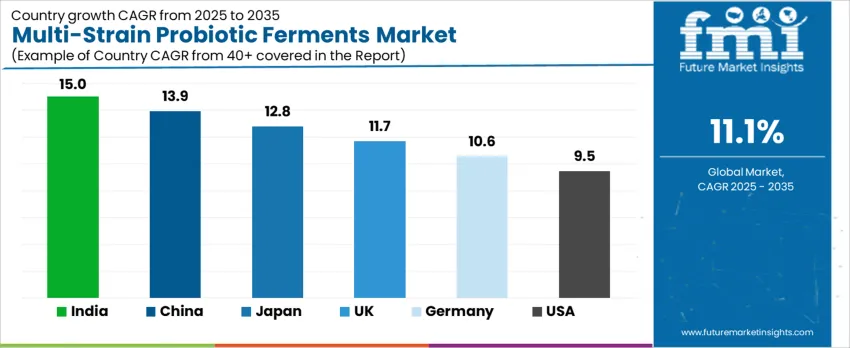
The multi strain probiotic ferments industry shows strong global growth momentum, led by India at a 15.0% CAGR, supported by rising awareness of digestive health, functional nutrition intake, and domestic nutraceutical production. China follows at 13.9%, driven by large scale fermentation capacity and expanding health supplement demand. Japan at 12.8% reflects stable integration of probiotics into everyday dietary products. The UK and Germany record 11.7% and 10.6% growth, supported by functional food innovation and clinical nutrition adoption. The USA shows comparatively lower growth at 9.5%, reflecting a mature but steadily expanding probiotics industry.
How is India Emerging as the Fastest Growing Market for Multi-Strain Probiotic Ferments?
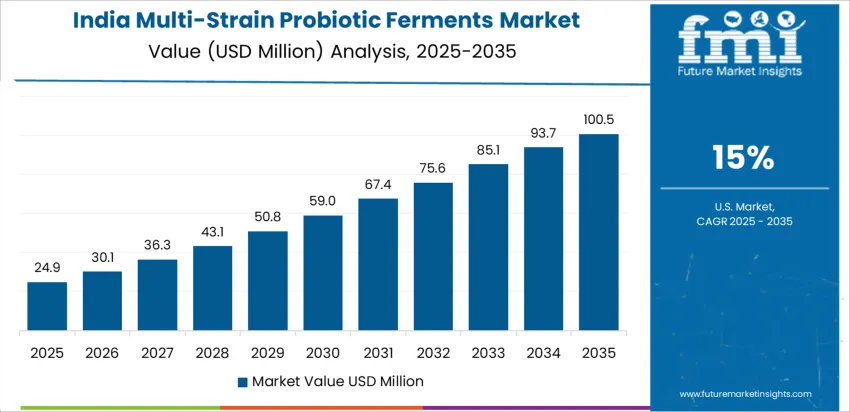
India records a CAGR of 15.0% through 2035 for multi-strain probiotic ferment growth, driven by rising digestive health awareness, expanding functional food consumption, and strong uptake of dietary supplements across urban and semi urban populations. Pharma nutrition brands and dairy processors actively integrate multi-strain formats into beverages, powders, and capsules. Medical recommendations for gut health and immunity support sustained consumer adoption. Local manufacturing capacity expansion improves product accessibility and pricing. Growth is reinforced by online wellness retail expansion and preventive healthcare spending trends across younger and aging population groups.
- Functional foods drive high volume probiotic intake
- Clinical nutrition supports medical use adoption
- Local manufacturing improves supply consistency
- Online platforms expand consumer access
What is Powering the Expansion of Multi-Strain Probiotic Ferments in China?
China posts a CAGR of 13.9% through 2035 for multi-strain probiotic ferment growth, supported by strong consumer demand for immunity support, digestive wellness, and preventive nutrition products. Infant nutrition, yogurt drinks, and powdered supplements remain the primary application areas. Domestic dairy leaders and biotech firms scale fermentation capacity to meet rising demand. Hospital nutrition programs and pharmacy retail drive structured product distribution. Growth aligns closely with rising urban health spending and premium nutrition brand penetration across tier one and tier two cities with expanding middle income populations.
- Infant nutrition drives early age probiotic use
- Dairy beverages contribute high consumption volumes
- Biotech fermentation capacity continues to expand
- Pharmacy retail channels anchor structured distribution
Why is Japan Maintaining Strong Growth in the Multi-Strain Probiotic Ferments Market?
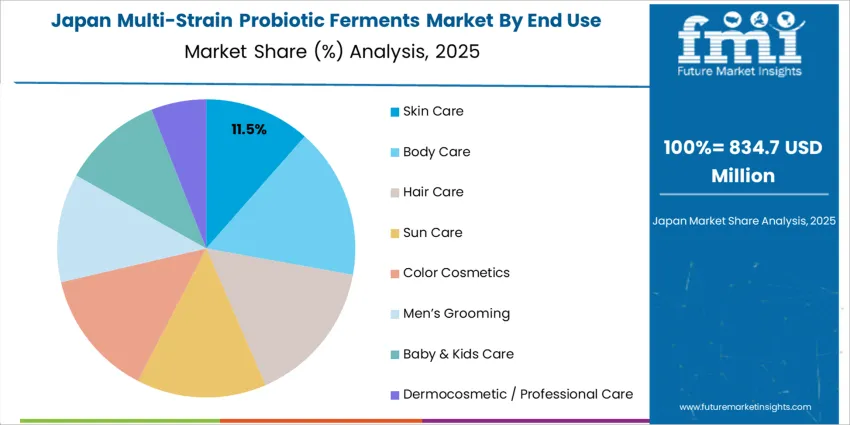
Japan reflects a CAGR of 12.8% through 2035 for multi-strain probiotic ferment growth, shaped by advanced functional food usage, clinical nutrition integration, and strong aging population demand. Probiotic beverages, sachets, and capsules remain embedded in daily dietary routines. Scientific validation and strain specific formulation drive product trust. Food manufacturers emphasize targeted digestive and metabolic health positioning. Aging related gut health management sustains long term consumption stability. Growth remains driven by product refinement rather than volume expansion across a health literate and supplement mature consumer base.
- Functional beverages sustain daily probiotic intake
- Clinical validation strengthens brand trust
- Aging population drives long term usage stability
- Targeted strain formulations support premium positioning
How is the UK Sustaining Momentum in Multi-Strain Probiotic Ferments Adoption?
The UK records a CAGR of 11.7% through 2035 for multi-strain probiotic ferment growth, supported by preventive wellness adoption, strong sports nutrition usage, and expanding digestive health supplement demand. Retail pharmacies, supermarkets, and online wellness platforms distribute a wide range of multi-strain formats. Medical guidance on gut microbiome health strengthens consumer confidence. Plant based food trends also support probiotic integration into non dairy products. Demand remains strongly linked to lifestyle wellness spending and weight management oriented product consumption across adult populations.
- Sports nutrition drives high capsule consumption
- Non dairy probiotic foods gain steady traction
- Pharmacy retail ensures structured product availability
- Preventive wellness culture sustains repeat purchases
What is Supporting Stable Growth for Multi-Strain Probiotic Ferments in Germany?
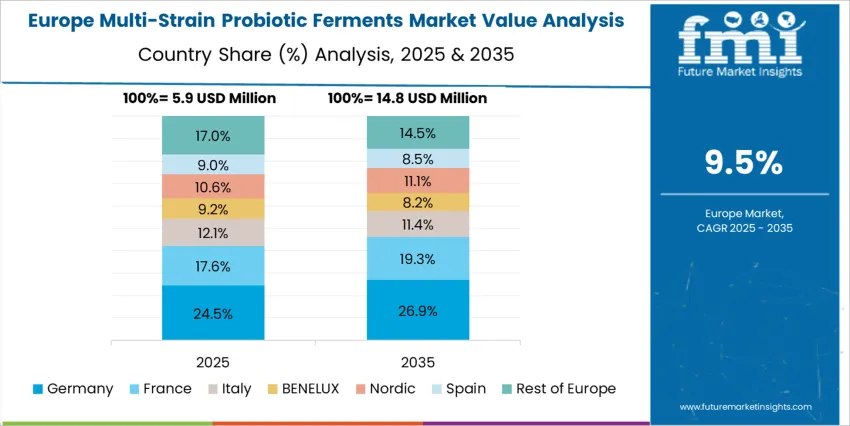
Germany shows a CAGR of 10.6% through 2035 for multi-strain probiotic ferment growth, supported by strong pharmaceutical nutrition use, hospital based dietary management, and preventive digestion care among aging consumers. Probiotic sachets and medical grade supplements dominate volume. Regulatory discipline reinforces high product quality standards. Health insurance linked nutrition guidance improves patient compliance. Demand remains centered on clinical and pharmacy driven distribution rather than lifestyle marketing. Growth reflects medical nutrition credibility and long term digestive disorder management rather than impulse wellness consumption.
- Clinical nutrition applications dominate product demand
- Pharmacy networks anchor reliable volume flow
- Insurance linked dietary guidance improves compliance
- Aging care sustains steady long term usage
Why is the USA Experiencing Moderate but Stable Growth in Multi-Strain Probiotic Ferments?
The USA records a CAGR of 9.5% through 2035 for multi-strain probiotic ferment growth, shaped by dietary supplement market maturity, sports nutrition usage, and preventive digestive health adoption. Capsules, gummies, and powdered blends remain the leading formats. Direct to consumer brands and subscription models strengthen regular intake patterns. Physician recommended gut health programs contribute to medical channel sales. Growth is steady rather than rapid due to high market penetration, with innovation focused on strain diversity and targeted health outcomes rather than first time consumer entry.
- Sports nutrition supports regular probiotic use
- Subscription models improve repeat purchase behavior
- Medical guidance supports clinical channel demand
- Mature market limits rapid volume acceleration
What Is Driving the Demand for Multi Strain Probiotic Ferments Globally and Who Are the Key Players Shaping the Industry?
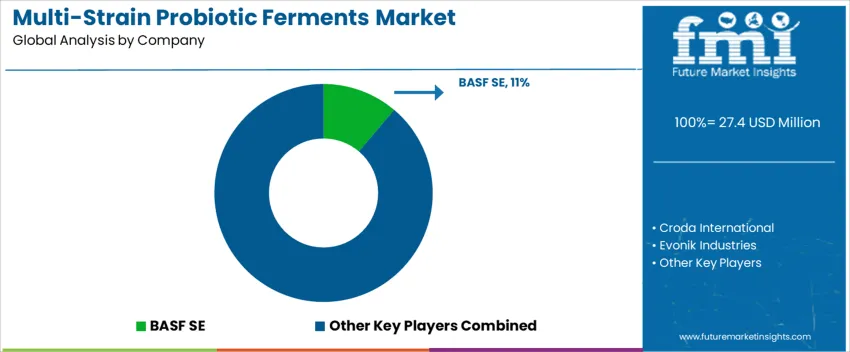
Global demand for multi strain probiotic ferments is rising as interest in gut health, immune support, and functional nutrition grows worldwide. Consumers increasingly favour products that claim broad spectrum benefits derived from multiple microbial strains. Food and beverage manufacturers, dietary supplement producers, and nutraceutical firms are incorporating multi strain ferments to create functional foods, drinks, and capsules that cater to digestive health, wellness, and preventive health trends. Advances in microbiome science and improved manufacturing and stabilization techniques support product development and supply scalability. Growth in awareness of microbiome balance across regions fuels adoption.
Leading ingredient suppliers shaping this market include BASF SE, Croda International, Evonik Industries, Symrise (including IFF/Givaudan active ingredient businesses), Dow Inc., Ashland, Clariant, and specialist providers such as Seppic, Lubrizol, Lonza, Inolex and others. Market data suggest that the broader probiotic ingredients market is expanding at a compound annual growth rate (CAGR) of approximately 8–9%. In this context, companies with strong fermentation, formulation, and supply chain capabilities capture significant market share. Large diversified chemical and specialty ingredient firms leverage scale and regulatory compliance expertise to supply multi strain probiotic blends at global scale. Smaller niche providers support custom formulations and specialized applications, maintaining a diversified competitive landscape.
Key Players in the Multi Strain Probiotic Ferments Market
- BASF SE
- Croda International
- Evonik Industries
- Symrise (incl. IFF/Givaudan actives)
- Dow / Dow Inc.
- Ashland
- Clariant
- Seppic / Others (Seppic, Lubrizol, Lonza, Inolex etc.)
- Others
Scope of the Report
| Items | Values |
|---|---|
| Quantitative Units (2025) | USD million |
| End Use Application | Skin Care, Body Care, Hair Care, Sun Care, Color Cosmetics, Men’s Grooming, Baby & Kids Care, Dermocosmetic / Professional Care, Functional Foods, Dietary Supplements, Medical Nutrition |
| Product Form | Powder, Granules / Agglomerates, Flakes, Pellets / Prills, Liquid (Solution), Concentrate (High-active Liquid), Dispersion / Suspension, Emulsion, Paste, Gel, Wax / Solid Block, Oil |
| Regions Covered | North America, Europe, East Asia, South Asia, Latin America, Middle East & Africa, Eastern Europe |
| Countries Covered | USA, China, Japan, South Korea, India, Germany, UK, France, Italy, Brazil, Argentina, Mexico, Saudi Arabia, South Africa, Russia, others |
| Key Companies Profiled | BASF SE, Croda International, Evonik Industries, Symrise (including IFF/Givaudan actives), Dow / Dow Inc., Ashland, Clariant, Seppic / Others (Lubrizol, Lonza, Inolex), Other regional and niche suppliers |
| Additional Attributes | Dollar by sales by end use application and product form; regional CAGR and growth outlook; multi-strain formulation adoption; clinical validation and regulatory compliance tracking; distribution channels including retail, DTC, e-commerce, and institutional buyers; product form prevalence in powders, liquids, and emulsions; regional preference for strain libraries; supply chain logistics for cold chain and ambient stability; strain survivability, CFU consistency, and shelf-life performance; innovation trends including prebiotic/postbiotic combinations, non-dairy matrices, and personalized nutrition; competitive positioning of global vs regional suppliers. |
Segmentation
End Use Application:
- Skin Care
- Body Care
- Hair Care
- Sun Care
- Color Cosmetics
- Men’s Grooming
- Baby & Kids Care
- Dermocosmetic / Professional Care
Product Form:
- Powder
- Granules / Agglomerates
- Flakes
- Pellets / Prills
- Liquid (Solution)
- Concentrate (High-active Liquid)
- Dispersion / Suspension
- Emulsion
- Paste
- Gel
- Wax / Solid Block
- Oil
Region:
-
East Asia
- China
- Japan
- South Korea
- Taiwan
- Rest of East Asia
-
Europe
- Germany
- UK
- France
- Italy
- Spain
- Switzerland
- Nordic
- BENELUX
- Rest of Europe
-
North America
- USA
- Canada
- Mexico
-
South Asia
- India
- Pakistan
- Bangladesh
- Rest of South Asia
-
Latin America
- Brazil
- Argentina
- Chile
- Rest of Latin America
-
Middle East & Africa
- Kingdom of Saudi Arabia
- Other GCC Countries
- Turkey
- South Africa
- Other African Union
- Rest of Middle East & Africa
-
Eastern Europe
- Russia
- Poland
- Czech Republic
- Rest of Eastern Europe
Frequently Asked Questions
How big is the multi-strain probiotic ferments market in 2025?
The global multi-strain probiotic ferments market is estimated to be valued at USD 27.4 million in 2025.
What will be the size of multi-strain probiotic ferments market in 2035?
The market size for the multi-strain probiotic ferments market is projected to reach USD 78.7 million by 2035.
How much will be the multi-strain probiotic ferments market growth between 2025 and 2035?
The multi-strain probiotic ferments market is expected to grow at a 11.1% CAGR between 2025 and 2035.
What are the key product types in the multi-strain probiotic ferments market?
The key product types in multi-strain probiotic ferments market are skin care, body care, hair care, sun care, color cosmetics, men’s grooming, baby & kids care and dermocosmetic / professional care.
Which product form segment to contribute significant share in the multi-strain probiotic ferments market in 2025?
In terms of product form , powder segment to command 16.2% share in the multi-strain probiotic ferments market in 2025.
Preview the report firsthand - request a free sample
Get SampleGet the brochure for pricing and purchase details.
Get PDFTable of Content
- Executive Summary
- Global Market Outlook
- Demand-side Trends
- Supply-side Trends
- Technology Roadmap Analysis
- Analysis and Recommendations
- Market Overview
- Market Coverage / Taxonomy
- Market Definition / Scope / Limitations
- Market Background
- Market Dynamics
- Drivers
- Restraints
- Opportunity
- Trends
- Scenario Forecast
- Demand in Optimistic Scenario
- Demand in Likely Scenario
- Demand in Conservative Scenario
- Opportunity Map Analysis
- Product Life Cycle Analysis
- Supply Chain Analysis
- Investment Feasibility Matrix
- Value Chain Analysis
- PESTLE and Porter’s Analysis
- Regulatory Landscape
- Regional Parent Market Outlook
- Production and Consumption Statistics
- Import and Export Statistics
- Market Dynamics
- Global Market Analysis 2020 to 2024 and Forecast, 2025 to 2035
- Historical Market Size Value (USD Million) Analysis, 2020 to 2024
- Current and Future Market Size Value (USD Million) Projections, 2025 to 2035
- Y-o-Y Growth Trend Analysis
- Absolute $ Opportunity Analysis
- Global Market Pricing Analysis 2020 to 2024 and Forecast 2025 to 2035
- Global Market Analysis 2020 to 2024 and Forecast 2025 to 2035, By End Use Application
- Introduction / Key Findings
- Historical Market Size Value (USD Million) Analysis By End Use Application , 2020 to 2024
- Current and Future Market Size Value (USD Million) Analysis and Forecast By End Use Application , 2025 to 2035
- Skin Care
- Body Care
- Hair Care
- Sun Care
- Color Cosmetics
- Men’s Grooming
- Baby & Kids Care
- Dermocosmetic / Professional Care
- Y-o-Y Growth Trend Analysis By End Use Application , 2020 to 2024
- Absolute $ Opportunity Analysis By End Use Application , 2025 to 2035
- Global Market Analysis 2020 to 2024 and Forecast 2025 to 2035, By Product Form
- Introduction / Key Findings
- Historical Market Size Value (USD Million) Analysis By Product Form, 2020 to 2024
- Current and Future Market Size Value (USD Million) Analysis and Forecast By Product Form, 2025 to 2035
- Powder
- Granules / Agglomerates
- Flakes
- Pellets / Prills
- Liquid (Solution)
- Concentrate (High-active Liquid)
- Dispersion / Suspension
- Emulsion
- Paste
- Gel
- Wax / Solid Block
- Y-o-Y Growth Trend Analysis By Product Form, 2020 to 2024
- Absolute $ Opportunity Analysis By Product Form, 2025 to 2035
- Global Market Analysis 2020 to 2024 and Forecast 2025 to 2035, By Region
- Introduction
- Historical Market Size Value (USD Million) Analysis By Region, 2020 to 2024
- Current Market Size Value (USD Million) Analysis and Forecast By Region, 2025 to 2035
- North America
- Latin America
- Western Europe
- Eastern Europe
- East Asia
- South Asia and Pacific
- Middle East & Africa
- Market Attractiveness Analysis By Region
- North America Market Analysis 2020 to 2024 and Forecast 2025 to 2035, By Country
- Historical Market Size Value (USD Million) Trend Analysis By Market Taxonomy, 2020 to 2024
- Market Size Value (USD Million) Forecast By Market Taxonomy, 2025 to 2035
- By Country
- USA
- Canada
- Mexico
- By End Use Application
- By Product Form
- By Country
- Market Attractiveness Analysis
- By Country
- By End Use Application
- By Product Form
- Key Takeaways
- Latin America Market Analysis 2020 to 2024 and Forecast 2025 to 2035, By Country
- Historical Market Size Value (USD Million) Trend Analysis By Market Taxonomy, 2020 to 2024
- Market Size Value (USD Million) Forecast By Market Taxonomy, 2025 to 2035
- By Country
- Brazil
- Chile
- Rest of Latin America
- By End Use Application
- By Product Form
- By Country
- Market Attractiveness Analysis
- By Country
- By End Use Application
- By Product Form
- Key Takeaways
- Western Europe Market Analysis 2020 to 2024 and Forecast 2025 to 2035, By Country
- Historical Market Size Value (USD Million) Trend Analysis By Market Taxonomy, 2020 to 2024
- Market Size Value (USD Million) Forecast By Market Taxonomy, 2025 to 2035
- By Country
- Germany
- UK
- Italy
- Spain
- France
- Nordic
- BENELUX
- Rest of Western Europe
- By End Use Application
- By Product Form
- By Country
- Market Attractiveness Analysis
- By Country
- By End Use Application
- By Product Form
- Key Takeaways
- Eastern Europe Market Analysis 2020 to 2024 and Forecast 2025 to 2035, By Country
- Historical Market Size Value (USD Million) Trend Analysis By Market Taxonomy, 2020 to 2024
- Market Size Value (USD Million) Forecast By Market Taxonomy, 2025 to 2035
- By Country
- Russia
- Poland
- Hungary
- Balkan & Baltic
- Rest of Eastern Europe
- By End Use Application
- By Product Form
- By Country
- Market Attractiveness Analysis
- By Country
- By End Use Application
- By Product Form
- Key Takeaways
- East Asia Market Analysis 2020 to 2024 and Forecast 2025 to 2035, By Country
- Historical Market Size Value (USD Million) Trend Analysis By Market Taxonomy, 2020 to 2024
- Market Size Value (USD Million) Forecast By Market Taxonomy, 2025 to 2035
- By Country
- China
- Japan
- South Korea
- By End Use Application
- By Product Form
- By Country
- Market Attractiveness Analysis
- By Country
- By End Use Application
- By Product Form
- Key Takeaways
- South Asia and Pacific Market Analysis 2020 to 2024 and Forecast 2025 to 2035, By Country
- Historical Market Size Value (USD Million) Trend Analysis By Market Taxonomy, 2020 to 2024
- Market Size Value (USD Million) Forecast By Market Taxonomy, 2025 to 2035
- By Country
- India
- ASEAN
- Australia & New Zealand
- Rest of South Asia and Pacific
- By End Use Application
- By Product Form
- By Country
- Market Attractiveness Analysis
- By Country
- By End Use Application
- By Product Form
- Key Takeaways
- Middle East & Africa Market Analysis 2020 to 2024 and Forecast 2025 to 2035, By Country
- Historical Market Size Value (USD Million) Trend Analysis By Market Taxonomy, 2020 to 2024
- Market Size Value (USD Million) Forecast By Market Taxonomy, 2025 to 2035
- By Country
- Kingdom of Saudi Arabia
- Other GCC Countries
- Turkiye
- South Africa
- Other African Union
- Rest of Middle East & Africa
- By End Use Application
- By Product Form
- By Country
- Market Attractiveness Analysis
- By Country
- By End Use Application
- By Product Form
- Key Takeaways
- Key Countries Market Analysis
- USA
- Pricing Analysis
- Market Share Analysis, 2024
- By End Use Application
- By Product Form
- Canada
- Pricing Analysis
- Market Share Analysis, 2024
- By End Use Application
- By Product Form
- Mexico
- Pricing Analysis
- Market Share Analysis, 2024
- By End Use Application
- By Product Form
- Brazil
- Pricing Analysis
- Market Share Analysis, 2024
- By End Use Application
- By Product Form
- Chile
- Pricing Analysis
- Market Share Analysis, 2024
- By End Use Application
- By Product Form
- Germany
- Pricing Analysis
- Market Share Analysis, 2024
- By End Use Application
- By Product Form
- UK
- Pricing Analysis
- Market Share Analysis, 2024
- By End Use Application
- By Product Form
- Italy
- Pricing Analysis
- Market Share Analysis, 2024
- By End Use Application
- By Product Form
- Spain
- Pricing Analysis
- Market Share Analysis, 2024
- By End Use Application
- By Product Form
- France
- Pricing Analysis
- Market Share Analysis, 2024
- By End Use Application
- By Product Form
- India
- Pricing Analysis
- Market Share Analysis, 2024
- By End Use Application
- By Product Form
- ASEAN
- Pricing Analysis
- Market Share Analysis, 2024
- By End Use Application
- By Product Form
- Australia & New Zealand
- Pricing Analysis
- Market Share Analysis, 2024
- By End Use Application
- By Product Form
- China
- Pricing Analysis
- Market Share Analysis, 2024
- By End Use Application
- By Product Form
- Japan
- Pricing Analysis
- Market Share Analysis, 2024
- By End Use Application
- By Product Form
- South Korea
- Pricing Analysis
- Market Share Analysis, 2024
- By End Use Application
- By Product Form
- Russia
- Pricing Analysis
- Market Share Analysis, 2024
- By End Use Application
- By Product Form
- Poland
- Pricing Analysis
- Market Share Analysis, 2024
- By End Use Application
- By Product Form
- Hungary
- Pricing Analysis
- Market Share Analysis, 2024
- By End Use Application
- By Product Form
- Kingdom of Saudi Arabia
- Pricing Analysis
- Market Share Analysis, 2024
- By End Use Application
- By Product Form
- Turkiye
- Pricing Analysis
- Market Share Analysis, 2024
- By End Use Application
- By Product Form
- South Africa
- Pricing Analysis
- Market Share Analysis, 2024
- By End Use Application
- By Product Form
- USA
- Market Structure Analysis
- Competition Dashboard
- Competition Benchmarking
- Market Share Analysis of Top Players
- By Regional
- By End Use Application
- By Product Form
- Competition Analysis
- Competition Deep Dive
- BASF SE
- Overview
- Product Portfolio
- Profitability by Market Segments (Product/Age /Sales Channel/Region)
- Sales Footprint
- Strategy Overview
- Marketing Strategy
- Product Strategy
- Channel Strategy
- Croda International
- Evonik Industries
- Symrise (incl. IFF/Givaudan actives)
- Dow / Dow Inc.
- Ashland
- Clariant
- Seppic / Others (Seppic, Lubrizol, Lonza, Inolex etc.)
- Others
- BASF SE
- Competition Deep Dive
- Assumptions & Acronyms Used
- Research Methodology


