

- Industry Size (2026)
- USD 96.0 Mn
- Forecast (2036)
- USD 96.0 Mn
- CAGR (2026 to 2036)
- 13.60%
Nanobot Targeted Drug Delivery Implants Market Size, Market Forecast and Outlook By FMI
The nanobot targeted drug delivery implants market was valued at USD 84.5 million in 2025. The sector is set to cross USD 96.0 million in 2026 at a CAGR of 13.60% during the forecast period. Long-term funding fuels a rise in market valuation to USD 343.8 million through 2036 as clinical pipelines for narrow-therapeutic-index biopharmaceuticals mandate localised, zero-order elution profiles to prevent systemic toxicity.
Oncologists and neurosurgeons are moving away from relying on patient adherence to oral regimens or tolerating the severe off-target effects of systemic infusions. The decision now centers on qualifying active implantable drug delivery systems that guarantee a multi-month therapeutic window precisely at the tumour resection margin or neural target. Delaying this transition leaves clinical trial sponsors vulnerable to higher relapse rates and elevated systemic toxicity profiles that compromise drug approval pathways. Practitioners operating with translational nanomedicine devices understand that the barrier is no longer payload compatibility, but the integration of these implantable nanobot drug delivery systems into established medical device technologies without extending surgical duration.
Summary of Nanobot Targeted Drug Delivery Implants Market
- Nanobot Targeted Drug Delivery Implants Market Definition:
- sector covers sub-millimetre implantable structures engineered to release concentrated therapeutics at specific anatomical sites via nanoscale control. It replaces systemic infusion with localised, zero-order release profiles, defining a boundary between combination medical devices and traditional biologic delivery mechanisms.
- Demand Drivers in the Market:
- Clinical trial failures tied to systemic toxicity force biopharma pipeline directors to reformulate narrow-therapeutic-index drugs into localized delivery models leveraging nano-enabled drug delivery implants.
- High rates of patient non-adherence in chronic psychiatric and metabolic care compel clinical protocol designers to mandate multi-month implanted continuous-release systems utilizing long-acting drug implants nanotechnology.
- The transition to outpatient ambulatory care pushes specialized neurosurgeons to adopt biodegradable nanobot implants that eliminate the clinical overhead of secondary explant procedures for neurotechnology drug delivery implants.
- Key Segments Analyzed in the FMI Report:
- Nanofluidic membrane implants: Nanofluidic membrane implants are expected to hold 31.0% share in 2026, as precision zero-order release without burst effects is mandatory for highly potent oncology payloads.
- Biodegradable polymer implants: Biodegradable polymer implants are estimated to grab 36.0% share in 2026, as clinical resistance to secondary retrieval surgeries pushes procurement exclusively toward resorbable substrates.
- Oncology: Oncology is projected to record 42.0% share in 2026, driven by the absolute requirement to maintain high intra-tumoral drug concentrations while sparing healthy systemic tissue.
- Sustained passive diffusion: Sustained passive diffusion is likely to account for 34.0% share in 2026, owing to its minimal mechanical failure risk and straightforward regulatory pathway compared to active electronic pumping mechanisms.
- Specialty hospitals and cancer centers: Specialty hospitals and cancer centers are poised to hold 39.0% share in 2026, as these facilities possess the specialized imaging and minimally invasive surgical suites required for precision placement.
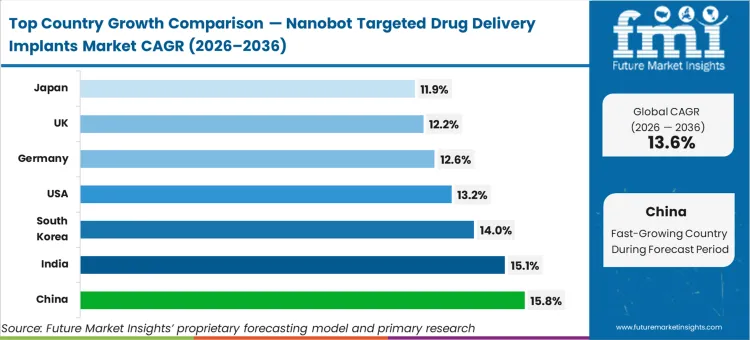
- China: 15.8% compound growth, as tier-1 research hospitals aggressively bypass legacy IV infrastructure to scale advanced nanomedicine implants delivery protocols directly into clinical practice.
- Analyst Opinion at FMI:
- Sabyasachi Ghosh, Principal Analyst, Healthcare, at FMI, says, "Practitioners looking at clinical trial roadmaps often expect commercialisation timelines to match the maturation of the biological payload. However, the clock runs on the device qualification cycle. The limiting factor is not how well the drug attacks the tumour, but how many iterations of biocompatibility testing the nanofluidic casing must clear before a regulatory body classifies the combination product as mechanically stable."
- Strategic Implications / Executive Takeaways:
- Biopharma portfolio managers must secure exclusive licensing rights to validated implantable nanomedicine platforms to rescue potent pipeline assets previously stalled by systemic toxicity.
- Material science device developers should engineer tunable degradation profiles in nano-composite drug eluting implants to avoid the commercial dead-end of implants that outlast their therapeutic payload.
- Specialty surgical center directors face the operational requirement of training staff on advanced imaging-guided placement protocols to handle sub-millimeter nanomaterials safely for smart implant therapeutics.
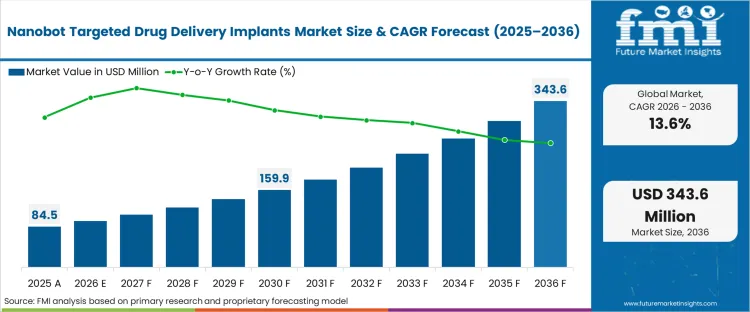
Before localised nanomedicine scales commercially, the change from explantable hardware to fully bioresorbable nanofluidic structures must be realized. Materials science developers trigger this gate when they achieve controlled, multi-phase degradation that matches the exact duration of the injectable nanomedicines payload life. Once secondary retrieval surgeries are eliminated from the clinical pathway, adoption among ambulatory surgical centers and specialty clinics accelerates, cementing the rise of implantable targeted nanomedicine.
China is poised to advance at 15.8%, followed by India recording a 15.1% expansion rate. South Korea tracks closely at 14.0%, while the United States is anticipated to post a 13.2% CAGR. Germany is expected to expand at 12.6%, the United Kingdom will follow at 12.2%, and Japan will garner an 11.9% rate. This divergence across geographic lines reflects a transition from regions heavily burdened by legacy infusion infrastructure constraints to Asian markets actively bypassing traditional clinical setups to scale precision oncology workflows.
Nanobot Targeted Drug Delivery Implants Market Key Takeaways
| Metric | Details |
|---|---|
| Industry Size (2026) | USD 96.0 million |
| Industry Value (2036) | USD 343.8 million |
| CAGR (2026-2036) | 13.60% |
Nanobot Targeted Drug Delivery Implants Market Definition
The targeted drug delivery implants market encompasses sub-millimeter and nanoscale device platforms surgically or minimally invasively placed within the body to release therapeutic payloads at localized sites. These systems utilize nanofluidic implant drug delivery channels, porous architectures, or stimuli-responsive degradation to control exact elution rates. The market boundary strictly includes implants engineered at the nanoscale for molecular delivery control and excludes macro-scale infusion pumps.
Nanobot Targeted Drug Delivery Implants Market Inclusions
Scope includes nanofluidic membranes, bioresorbable nanocomposites, long acting implant and ocular drug delivery polymer systems, and stimuli-triggered reservoirs. Included materials cover synthesized biodegradable polymers, silicon/silica constructs, and hydrogel scaffolds designed for localized payload housing. The category also captures advanced drug delivery technology mechanisms operating via passive diffusion, external triggers, or programmable implantable drug delivery phase release within a physiological environment.
Nanobot Targeted Drug Delivery Implants Market Exclusions
External wearable infusion pumps, traditional intra-venous catheters, and macroscopic orthopedic implants lacking active drug-eluting nanoscale architectures fall explicitly outside this scope. Standard oral nanomedicines, non-implantable circulating nanocarriers, and unguided drug delivery micro robots are excluded because they do not require surgical or site-specific physical implantation. These parameters distinguish fixed, localized therapeutic hardware from generalized systemic delivery mechanisms.
Nanobot Targeted Drug Delivery Implants Market Research Methodology
- Primary Research: Chief medical officers at specialized biopharma developers, translational oncology researchers, and procurement heads at tier-1 specialty hospitals.
- Desk Research: Aggregation of FDA/EMA pre-market approval databases for combination products, active clinical trial registries for targeted therapies, and IP filings for nanofluidic membrane architectures.
- Market-Sizing and Forecasting: Baseline volume anchors to the verified output of active clinical stage combination product trials and specialized implant material procurement metrics.
- Data Validation and Update Cycle: Forecasts are cross-validated against independent biomaterial supply volume data and registered specialized surgical procedure counts in top-tier global markets.
Segmental Analysis
Nanobot Targeted Drug Delivery Implants Market Analysis by Technology platform
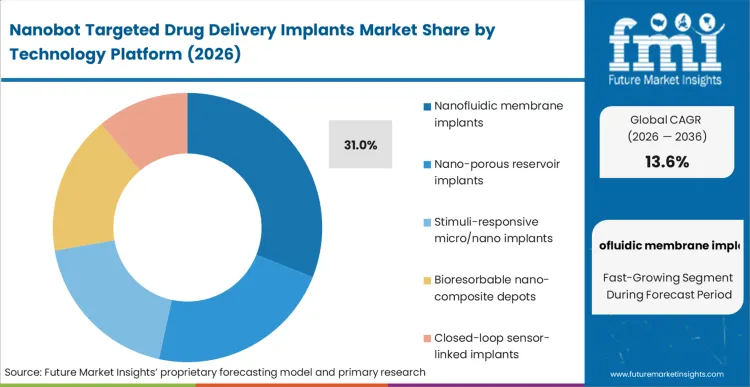
Legacy porous silicon matrices often fail to constrain the initial burst release of highly concentrated biologics, forcing researchers to evaluate the internal geometry of the implant. The reason nanofluidic implant drug delivery holds 31.0% of this sector is its ability to physically restrict molecular diffusion through precisely etched channels, guaranteeing true zero-order kinetics.
According to FMI's estimates, clinical pharmacologists utilise this architectural certainty to deliver otherwise toxic concentrations directly into glioblastoma resection cavities without breaching systemic safety thresholds. The qualification of this pharmaceutical drug delivery platform moves the development burden from chemical formulation back to mechanical engineering. Biopharma engineers who specify variable nano-porous implant drug delivery legacy systems face consistent regulatory pushback during Phase II trials due to unpredictable pharmacokinetic spikes.
- Etched constraint geometry: Physical channel dimensions determine molecular flow rate rather than chemical degradation. Development teams capture highly predictable elution timelines regardless of the surrounding physiological fluid dynamics.
- Concentration decoupling: The internal payload volume no longer dictates the release velocity. Formulators pack higher total drug masses into smaller implant footprints, extending the operational lifespan between interventions.
- Payload agnostic sealing: Precision membranes isolate the active pharmaceutical ingredient from premature enzymatic degradation. Clinical trial designers eliminate the need for complex localized stabilization chemistries prior to loading the implantable local drug delivery platform.
Nanobot Targeted Drug Delivery Implants Market Analysis by Implant material
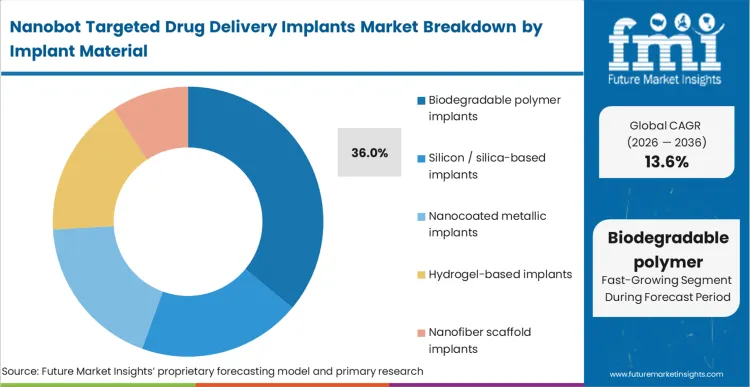
The core decision facing combination product architects today is whether to optimize for absolute rigidity or complete physiological clearance. Biodegradable polymer implants lead this dimension with 36.0% share because clinical procurement networks refuse to adopt any system that mandates a secondary explantation surgery for a depleted device.
FMI analysts estimate that polymer chemists actively tune the molecular weight of these matrices to ensure the collapse aligns perfectly with the depletion of the final peptide based nanomaterials payload. This exact synchronization prevents the formation of fibrous capsules around inert, empty casings that complicate subsequent imaging or re-dosing efforts. Formulators who cling to durable but permanent silica housings forfeit access to lucrative chronic care pathways where repeated interventions using precision medicine implant platforms are commercially unviable.
- Tunable lactic-glycolic ratios: Adjusting polymer chain composition dictates the exact hydrolysis timeline within subcutaneous environments. Engineers map device lifespans to specific multi-month psychiatric or metabolic treatment protocols.
- Macrophage clearance pathways: Natural enzymatic breakdown produces easily metabolizable byproducts. Immune system interactions transition from chronic foreign-body rejection to predictable, benign absorption.
- Mechanical modulus matching: Soft polymeric structures flex with surrounding soft tissues rather than creating sheer stress. Surgeons place these depots in dynamic environments like ocular cavities without risking mechanical trauma over the implant's lifespan.
Nanobot Targeted Drug Delivery Implants Market Analysis by Therapeutic Area
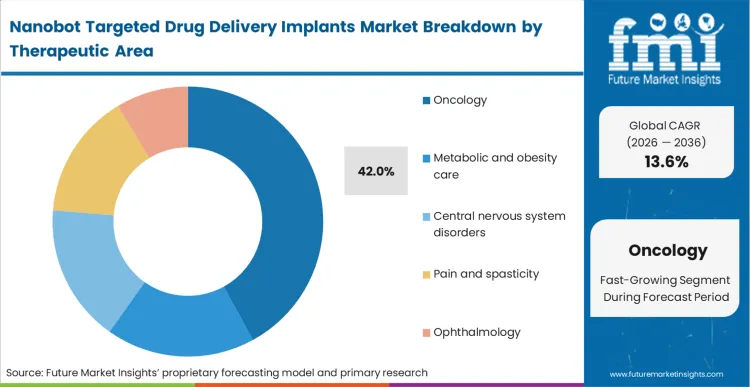
The requirement to maintain continuous, localised toxicity without triggering a systemic immune collapse explains why Oncology captures 42.0% of the total application space. Based on FMI's assessment, solid tumour microenvironments actively repel circulating nanocarriers through high interstitial fluid pressure, neutralising standard IV therapies before they penetrate the core. Surgically placing active drug delivery solutions directly into the resection margin bypasses this pressure gradient entirely, allowing continuous diffusion into adjacent malignant cells. Oncologists using oncology implantable targeted drug delivery transition from managing systemic side-effects to monitoring localised tumour regression via imaging. Facilities that delay integration of these site-specific localized products into their surgical workflows limit their capability to treat aggressive localized recurrences.
- Margin stabilization: Continuous elution neutralizes microscopic residual disease left behind after primary physical resection. Surgical oncologists using an intratumoral nanofluidic implant lower local recurrence rates without subjecting the patient to immediate adjuvant radiotherapy.
- Systemic bypass: Direct physical placement isolates the active chemistry from hepatic first-pass metabolism. Patients tolerate significantly higher absolute localized drug concentrations without corresponding systemic organ damage during CNS targeted implant drug delivery or pain and spasticity implant drug delivery.
- Combination staging: Implants maintain a localized chemical environment while concurrent systemic immunotherapies are administered. Protocol designers orchestrate complex dual-action treatments without risking compound toxicity profiles in ophthalmic implant drug delivery nanotechnology.
Nanobot Targeted Drug Delivery Implants Market Analysis by Release mechanism
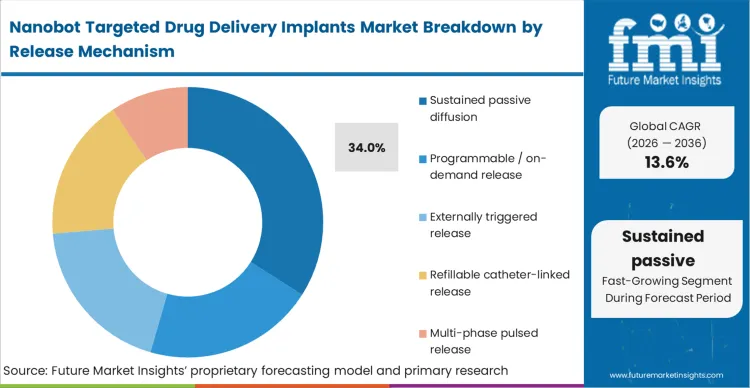
The commercial reality of medical device regulation severely penalizes systems requiring internal electronics or external battery penalisesactuation. Sustained passive diffusion retains a 34.0% share by deliberately removing mechanical and electronic failure points from the nanoparticle technology equation. Pharmaceutical manufacturers select passive diffusion to streamline the FDA combination product approval process, proving chemical kinetics rather than software reliability for smart implants drug delivery. This mechanism transforms a highly complex smart-device concept into a reliable, predictable material science execution that functions independently of patient interaction or external hardware. Developers opting for highly complex programmable electronic valves or closed-loop implant drug delivery devices face qualification timelines that routinely outlast the patent life of their primary biologic payload.
- Gradient-driven elution: Molecules move from the high-concentration internal reservoir to the low-concentration physiological environment strictly through osmotic or concentration pressures. Quality assurance teams validate mathematical fluid models rather than electronic pump reliability for targeted nanomedicine devices.
- Zero-power operation: The absence of internal batteries or induction coils drastically reduces the absolute volume of the implant. Formulators utilize the entirety of the internal geometry for active drug payload, maximizing therapeutic duration.
- Interventionless execution: Once placed, the device requires no further patient or physician actuation to begin and maintain therapy. Clinical designers guarantee absolute 100% adherence to the intended pharmacokinetic curve for the duration of the payload.
Nanobot Targeted Drug Delivery Implants Market Analysis by End user
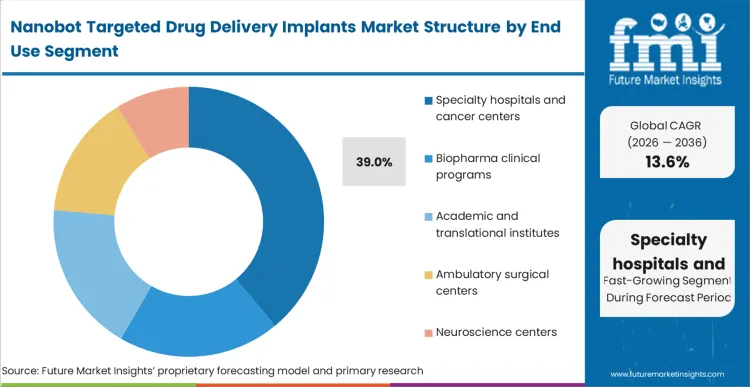
General hospital procurement networks lack the immediate clinical justification to inventory highly specialized, payload-specific combination devices. Specialty hospitals and cancer centers secure 39.0% share because they concentrate the specific patient populations, advanced imaging suites, and trained surgical oncologists required to execute these protocols. These centres internalise the cost of advanced connected drug delivery devices because the localized treatment pathway directly reduces the severe inpatient readmissions associated with traditional systemic chemotherapy toxicity. The workflow moves from outpatient infusion chairs to rapid, image-guided interventional suites executing oncology medtech implants. Institutions that fail to establish dedicated interventional oncology workflows cannot qualify for the limited distribution networks established by tier-1 combination product developers.
- Interventional imaging integration: Precise placement of sub-millimeter depots requires dedicated high-resolution ultrasound or fluoroscopic guidance. Surgical teams achieve exact anatomical localization that general clinical suites cannot reliably reproduce.
- Protocol consolidation: Centralizing high-risk localized treatments allows specialized nursing staff to monitor the unique localized site-reactions distinct from systemic infusion side-effects. Facilities compress the learning curve for managing novel device-drug combination therapies.
- Trial pipeline access: Biopharma sponsors actively restrict early commercial rollout to centers possessing deep translational research experience. Specialized institutions secure early access to next-generation payload platforms, capturing regional referrals.
Nanobot Targeted Drug Delivery Implants Market Drivers, Restraints, and Opportunities
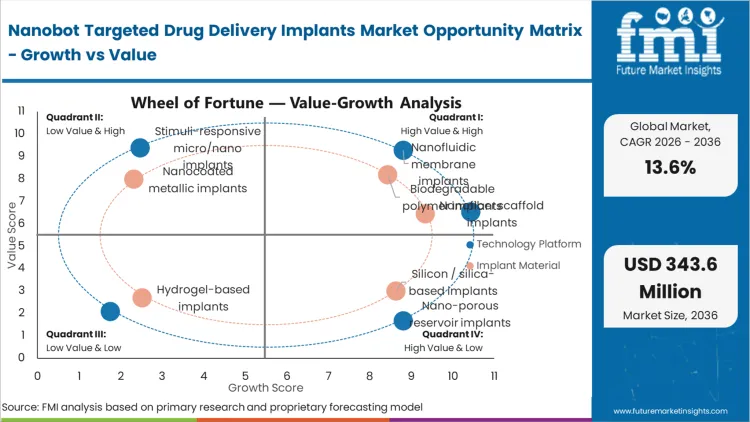
The high clinical failure rate of next-generation biologic and genetic therapies due to dose-limiting systemic toxicity forces clinical pipeline directors to adopt localized hardware. Rather than abandoning potent molecules that destroy hepatic or renal function during intravenous transit, biopharma engineers enclose these assets in nanofluidic titanium or polymer casings. This shift completely redefines the pharmacokinetic boundaries in medtech targeted drug delivery implants, allowing oncologists to maintain continuous, highly concentrated therapeutic pressure directly at a solid tumor site without compromising patient survival metrics. Delaying this architectural pivot leaves potent IP stranded in Phase II trials, unable to clear basic systemic safety thresholds.
Translational delays stem directly from the complex regulatory ambiguity surrounding combination products. Pipeline directors face a friction where the timeline to optimize a controlled release drug delivery technology under the stringent regulatory pathway for implantable drug delivery devices exceeds the development window of the active pharmaceutical ingredient itself. Furthermore, mitigating foreign body reaction in implantable drug delivery systems requires massive upfront toxicology investments. Because regulatory bodies require simultaneous validation of both the molecular stability and the mechanical reliability of the nanoscale casing, trials stretch across multiple disparate engineering disciplines.
Opportunities in the Nanobot Targeted Drug Delivery Implants Market
- Semaglutide metabolic regulation: The development of obesity drug implants leveraging semaglutide implant technology has immense potential. For example, clinical-stage biopharmaceutical developers are preparing for Phase 1 trials of subdermal semaglutide implants designed for once or twice-yearly dosing, aimed at resolving critical non-adherence issues in chronic weight management.
- Combination immunomodulation: The ability to co-locate an immune-stimulating biologic alongside a traditional cytotoxic payload within a single dual-chambered smart implants architecture for localized immunotherapy implant delivery. Interventional oncologists utilizing these multi-phase systems actively alter the local tumor microenvironment prior to massive cellular disruption.
- Direct neural infusion architectures: Direct intra-parenchymal placement of continuous-elution depots circumvents the limitations of the blood-brain barrier entirely, advancing intratumoral drug implant platforms. Neuro-oncology developers secure rapid fast-track designations by delivering previously unviable large-molecule therapies directly into glioblastoma margins.
Regional Analysis
The regional assessment divides the Nanobot Targeted Drug Delivery Implants Market into Asia Pacific, North America, Europe, and additional regions spanning more than 40 countries.
.webp "Top Country Growth Comparison Nanobot Targeted Drug Delivery Implants Market Cagr (2026 2036)")
| Country | CAGR (2026 to 2036) |
|---|---|
| China | 15.8% |
| India | 15.1% |
| South Korea | 14.0% |
| United States | 13.2% |
| Germany | 12.6% |
| United Kingdom | 12.2% |
| Japan | 11.9% |
Asia Pacific Nanobot Targeted Drug Delivery Implants Market Analysis
Rapidly scaling medtech miniaturization infrastructure across Asia Pacific accelerates the translation of precision device commercialization far beyond mature Western baselines. Rather than retrofitting legacy infusion networks, tier-1 research hospitals in this region are aggressively integrating localized ocular drug delivery system architectures and continuous oncology depots directly into standard practice. Based on FMI's assessment, local clinical sponsors move combination products through localized regulatory pathways optimized for advanced medical hardware, compressing the timeline between biomaterial validation and patient application.
- China: FMI estimates the China nano-enabled drug implant market to expand at an annual growth rate of 15.8%. China's aggressive funding of translational nanomedicine infrastructure allows tier-1 oncology centres to deploy advanced micro-implants without waiting for Western clinical trial completion. Surgical oncologists in major urban hubs establish immediate procurement frameworks for localized depots, bypassing traditional intravenous supply chains entirely. Chinese developers scale nanofabrication capabilities internally, capturing vast domestic volume contracts that lock out slower-moving foreign device importers.
- India: The rapid expansion of specialized corporate hospital networks in India creates a concentrated procurement base capable of absorbing high-value localized intervention protocols. Clinical directors utilize these advanced platforms to counter severe patient non-adherence in chronic disease management, physically embedding the treatment schedule. The India implantable nanomedicine market is forecast to register a CAGR of 15.1%. This operational change positions Indian specialty networks as highly attractive launch environments for global biopharma seeking rapid, large-scale Phase III data generation.
- South Korea: South Korea's deep integration of semiconductor-grade miniaturization expertise into life sciences enables rapid prototyping of highly complex, multi-chambered fluidic structures. Precision medtech engineers collaborate directly with local biopharma to co-develop payload-specific hardware from the ground up rather than adapting off-the-shelf casings. Over the forecast period, the South Korea nanomedicine implant market is set for a CAGR of 14.0%. The country solidifies its trajectory as the primary exporter of high-fidelity, active-release intellectual property to global pharmaceutical giants.
- Japan: The Japan smart drug implant market is poised to expand at 11.9%. Stringent quality control frameworks in Japan's advanced biomaterials sector dictate a slower, highly methodical qualification process for bioresorbable polymers. Japanese procurement committees demand exhaustive, multi-year mechanical stability data before approving novel combinations for their aging demographic. The nuance missing from this conservative CAGR is that once a platform clears these rigorous domestic hurdles, it secures near-permanent integration into Japan's lucrative, state-backed chronic care reimbursement system.
North America Nanobot Targeted Drug Delivery Implants Market Analysis
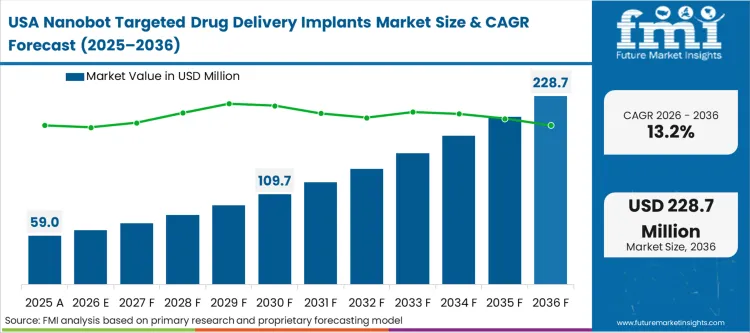
Deep clinical trial infrastructure and the heavy concentration of incumbent implantable-device intellectual property define the North American trajectory. The ecosystem revolves around massive biopharma players licensing advanced nanofluidic and drug integrated polymer fibers capabilities to rescue their own stalled biologic pipelines. As per FMI's projection, the presence of an established, rigid regulatory gating process for combination therapies moderates the pace of absolute commercial volume expansion compared to Asian markets.
- United States: The friction of dual FDA review-spanning both the Center for Drug Evaluation and the Center for Devices-forces US developers into exceptionally long, highly capitalized qualification cycles. Regulatory affairs directors must align mechanical degradation data perfectly with pharmacokinetic endpoints before initiating pivotal trials. Demand within the United States nanobot targeted drug delivery implants market is set to grow at 13.2%. Developers who successfully navigate this complex dual-pathway secure massive competitive moats, as challengers face prohibitive capital barriers to replicate the combination product approval process.
Europe Nanobot Targeted Drug Delivery Implants Market Analysis
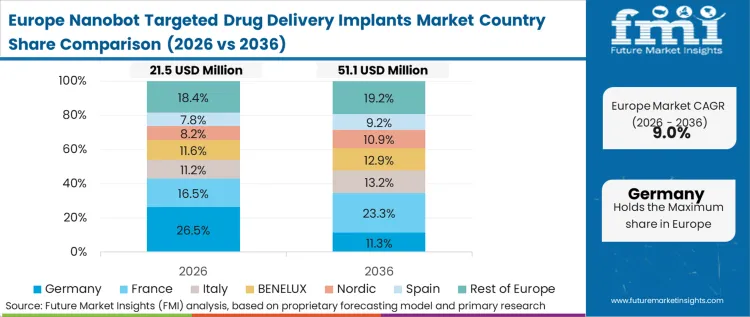
Europe's transition toward localized nanomedicine is governed heavily by established medical device frameworks and staggered, country-by-country reimbursement negotiations. Procurement networks evaluate new combinations based on strict health economic outcomes, requiring definitive proof that a highly priced localized depot offsets the downstream costs of systemic toxicity management. According to FMI's estimates, European developers focus intensely on engineering biodegradable polymers to satisfy regional demands for sustainable, intervention-free patient pathways.
- Germany: Strict surgical qualification standards and a highly concentrated network of advanced interventional oncology centers allow Germany to act as the primary validation ground for novel complex mechanisms. Lead investigators at university hospitals dictate which mechanical platforms demonstrate the necessary reliability to enter broader European trials. The Germany targeted drug implant market is expected to see growth at a compound annual rate of 12.6%. Achieving clinical consensus within this concentrated expert tier creates a cascading qualification effect across neighboring EU jurisdictions.
- United Kingdom: The UK's centralized health economic evaluation bodies require overwhelming evidence that an implantable depot reduces absolute inpatient bed days compared to standard infusion regimens. The United Kingdom implantable targeted nanomedicine market is likely to post a CAGR of 12.2%. Clinical trial designers operating within the NHS framework optimize their studies strictly for health-system utilization metrics rather than purely novel pharmacokinetics. Platforms that prove they can shift high-acuity treatments entirely to outpatient ambulatory settings capture long-term, unshakeable national procurement mandates.
FMI's report includes comprehensive analysis across other highly regulated medical device markets not explicitly detailed above. The unifying trend across these secondary regions is the rapid formulation of specialized regulatory task forces designed specifically to handle the influx of drug-device combination products, replacing outdated, fragmented review protocols. These local task forces utilize bio implants data from primary markets to accelerate their own domestic approvals.
Competitive Aligners for Market Players
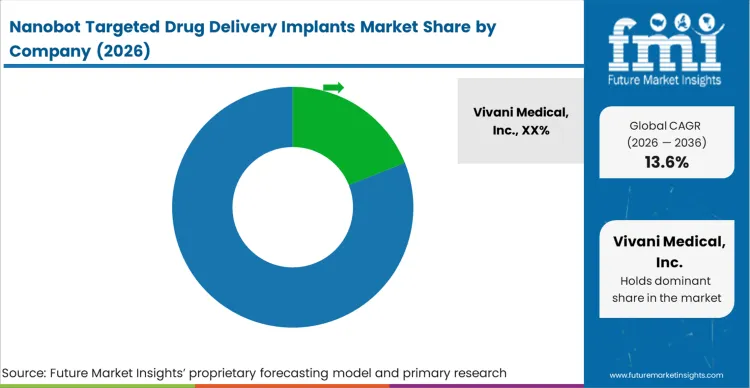
The nanobot targeted drug delivery sector operates under extreme concentration at the core technology platform level, despite a fragmented landscape of clinical applications. Massive biopharmaceutical players do not build proprietary micro robots or nanofluidic IP in-house; they hunt for validated, de-risked delivery mechanisms to rescue potent molecules that failed systemic safety checks. Procurement teams evaluate nanobot drug delivery implant suppliers and implantable drug delivery device manufacturers based almost entirely on the mechanical reliability of the zero-order elution profile. A developer secures leverage not by marketing directly to hospitals, but by embedding their proprietary delivery hardware deeply into the multi-year clinical trial pathways of blockbuster biologic assets, establishing themselves as long-acting implant drug delivery partners.
Device manufacturers dominating the legacy infusion space possess vast clinical networks, yet they often lack the specialized material science required for nanoscale fluidics. These large players must pursue implantable nanomedicine licensing deals or heavily license biocompatible polymers capability from implantable targeted drug delivery platform companies. The advantage held by early innovators is the vast repository of biocompatibility data accumulated during Phase I/II trials. For a challenger to secure nanofluidic implant technology licensing or contract development for implantable drug delivery systems, they must fund the exhaustive multi-year in-vivo toxicology studies required to prove their housing degrades without triggering localized inflammation.
Through 2036, the tension between biopharma sponsors desiring universal, modular implant casings and device developers pushing highly customised, payload-specific architectures will dictate market consolidation. As complex biologics require highly specific localized microenvironments, the generic "off-the-shelf" reservoir model becomes unviable, driving demand for the best long-acting implant platform for targeted delivery. The market accelerates toward deep, exclusive co-development partnerships, binding the fate of the medical device directly to the clinical success of the single therapeutic payload it was engineered to deliver.
Key Players in Nanobot Targeted Drug Delivery Implants Market
- Vivani Medical, Inc.
- Delpor, Inc.
- DelSiTech Ltd.
- Daré Bioscience, Inc.
- Medtronic plc
- Renishaw plc
- Flowonix Medical, Inc.
Scope of the Report
| Metric | Value |
|---|---|
| Quantitative Units | USD 96.0 million to USD 343.8 million, at a CAGR of 13.60% |
| Market Definition | Sub-millimeter and nanoscale device platforms surgically placed to release therapeutic payloads at localized sites utilizing nanofluidic channels or stimuli-responsive degradation for molecular delivery control. |
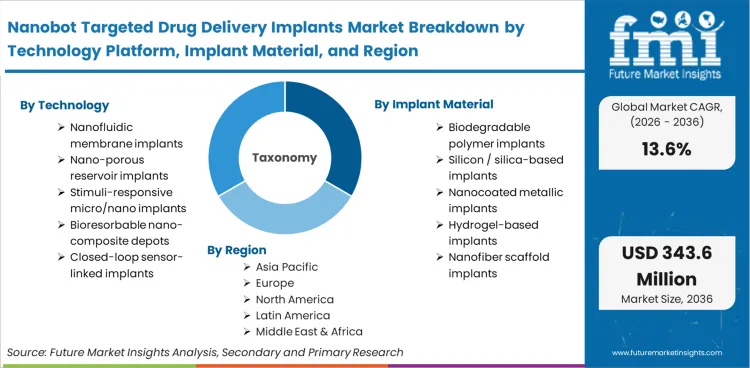
| Technology platform Segmentation | Nanofluidic membrane implants, Nano-porous reservoir implants, Stimuli-responsive micro/nano implants, Bioresorbable nano-composite depots, Closed-loop sensor-linked implants |
| Implant material Segmentation | Biodegradable polymer implants, Silicon / silica-based implants, Nanocoated metallic implants, Hydrogel-based implants, Nanofiber scaffold implants |
| Therapeutic area Segmentation | Oncology, Metabolic and obesity care, Central nervous system disorders, Pain and spasticity, Ophthalmology |
| Release mechanism Segmentation | Sustained passive diffusion, Programmable / on-demand release, Externally triggered release, Refillable catheter-linked release, Multi-phase pulsed release |
| Regions Covered | Asia Pacific, North America, Europe, Latin America, Middle East & Africa |
| Countries Covered | United States, China, India, Germany, United Kingdom, Japan, South Korea, and 40 plus countries |
| Key Companies Profiled | Vivani Medical, Inc., Delpor, Inc., DelSiTech Ltd., Daré Bioscience, Inc., Medtronic plc, Renishaw plc, Flowonix Medical, Inc. |
| Forecast Period | 2026 to 2036 |
| Approach | Primary research integrates insights from translational researchers and specialty hospital procurement heads. Baseline volume anchors to verified combination product trial outputs and specialized implant material metrics. Forecasts undergo cross-validation against independent biomaterial supply volume data and registered surgical procedure counts. |
Nanobot Targeted Drug Delivery Implants Market Analysis by Segments
Technology platform:
- Nanofluidic membrane implants
- Nano-porous reservoir implants
- Stimuli-responsive micro/nano implants
- Bioresorbable nano-composite depots
- Closed-loop sensor-linked implants
Implant material:
- Biodegradable polymer implants
- Silicon / silica-based implants
- Nanocoated metallic implants
- Hydrogel-based implants
- Nanofiber scaffold implants
Therapeutic area:
- Oncology
- Metabolic and obesity care
- Central nervous system disorders
- Pain and spasticity
- Ophthalmology
Release mechanism:
- Sustained passive diffusion
- Programmable / on-demand release
- Externally triggered release
- Refillable catheter-linked release
- Multi-phase pulsed release
End user:
- Specialty hospitals and cancer centers
- Biopharma clinical programs
- Academic and translational institutes
- Ambulatory surgical centers
- Neuroscience centers
Region:
- North America
- United States
- Canada
- Europe
- Germany
- United Kingdom
- France
- Italy
- Spain
- Asia Pacific
- China
- Japan
- South Korea
- Taiwan
- Singapore
- Latin America
- Brazil
- Mexico
- Argentina
- Middle East & Africa
- GCC Countries
- South Africa
- Israel
Bibliography
- He, G.-Q., Li, H., Liu, J., Hu, Y.-L., Liu, Y., Wang, Z. L., & Jiang, P. (2024). Recent progress in implantable drug delivery systems. Advanced Materials.
- Del Bono, F., Di Trani, N., Demarchi, D., Grattoni, A., & Motto Ros, P. (2025). Active implantable drug delivery systems: engineering factors, challenges, opportunities. Lab on a Chip.
- Ebrahimnia, M., et al. (2024). Exploring the vast potentials and probable limitations of novel and nanostructured implantable drug delivery systems for cancer treatment. EXCLI Journal.
- Liang, W., Zhou, C., Bai, J., Zhang, H., Long, H., Jiang, B., Dai, H., Wang, J., Zhang, H., & Zhao, J. (2024). Current developments and future perspectives of nanotechnology in orthopedic implants: An updated review. Frontiers in Bioengineering and Biotechnology.
- Li, L., Permana, A. D., Domínguez-Robles, J., Amir, M. N., Habibie, H., Anjani, Q. K., Zhao, L., Moreno-Castellanos, N., Donnelly, R. F., & Larrañeta, E. (2025). Reservoir-Type Subcutaneous Implantable Devices Containing Porous Rate Controlling Membranes for Sustained Delivery of Risperidone. Advanced Healthcare Materials.
- Vivani Medical, Inc. (2025, September). Vivani Medical Provides Update on Clinical Development Plans for NPM-139 Semaglutide Implant for Chronic Weight Management. Vivani Medical, Inc.
- DelSiTech Ltd. (2024, May). DELSITECH ANNOUNCES A MAJOR LICENSING AGREEMENT ON DRUG DELIVERY. DelSiTech Ltd.
- Daré Bioscience, Inc. (2024, November). Form S-1 for Dare Bioscience INC filed 11/15/2024. Daré Bioscience, Inc.
This bibliography is provided for reader reference. The full FMI report contains the complete reference list with primary source documentation.
This Report Addresses
- Market intelligence to support strategic decision making across localized drug delivery systems, tunable polymer implants, and smart nano implants for drug delivery.
- Market size estimation and 10-year revenue forecasts from 2026 to 2036, supported by aggregation of active clinical stage combination product trial outputs for pharmaceutical implantable delivery systems.
- Growth opportunity mapping across nanofluidic membranes and bioresorbable architectures with emphasis on the transition away from secondary explantation surgeries.
- Segment and regional revenue forecasts covering stimuli-responsive micro-implants and payload-agnostic sealing across advanced interventional oncology workflows.
- Competition strategy assessment including IP licensing pathways, mechanical degradation toxicology burdens, and modular versus customized platform partnerships for implantable drug eluting devices.
- Technology development tracking including variable-porosity legacy systems, tunable lactic-glycolic matrices, and gradient-driven passive diffusion capabilities.
- Market access analysis covering dual-pathway FDA combination product review and stringent European health economic outcome requirements for localized depots.
- Market report delivery in PDF, Excel, PPT, and interactive dashboard formats for executive strategy, biopharma pipeline planning, and operational benchmarking use.
Frequently Asked Questions
What are nanobot targeted drug delivery implants?
These are sub-millimeter, engineered medical devices implanted surgically or minimally invasively to deliver concentrated therapeutics precisely to a localised anatomical site. They eliminate systemic toxicity by bypassing intravenous circulation.
Explain the nanobot targeted drug delivery implants market in simple terms?
It is a fast-growing medical device sector where pharmaceutical companies partner with materials science engineers to place powerful drugs directly into tumours or neural targets using nanoscale structures. The market will cross USD 96.0 million in 2026 as biopharma developers rescue highly toxic biologic drugs by localizing their delivery.
Are nanobot drug delivery implants commercially available?
Yes, but primarily in specialized, high-acuity clinical trials rather than general commercial use. Early forms of nano-enabled resorbable polylocalisingts are currently being utilized in late-stage oncology and chronic metabolic disease trials.
How do nanofluidic drug implants work?
They utilize physically etched micro-channels at the nanoscale that act as mechanical gates. These constraints ensure molecules diffuse out of the internal reservoir at an exact, unvarying zero-order rate, preventing dangerous pharmacokinetic spikes.
Which diseases use implantable targeted drug delivery?
The technology is predominantly deployed in oncology to maintain high localized toxicity at tumour resection margins. It is also rapidly expanding into chronic weight management, psychiatric care, and central nervous system disorders.
What is the difference between nanobots and nano-enabled implants?
Medical "nanobots" often conceptually refer to autonomous, circulating microscopic robots, which remain largely experimental. Nano-enabled implants, however, are static, surgically placed depots that utilize nanoscale physics (like nanofluidic channels) to control drug release, and they represent the credible, investable segment of this market.
Are biodegradable drug implants safer than refillable implants?
From a chronic care perspective, yes. Biodegradable systems utilize natural enzymatic breakdown pathways to dissolve entirely, eliminating the surgical risk and fibrous capsule formation associated with leaving an empty, permanent titanium or silica pump in the body.
Which companies are developing implantable nanobot drug delivery platforms?
Key innovators include materials science and specialty medtech developers such as Vivani Medical, Inc., DelSiTech Ltd., Delpor, Inc., and Daré Bioscience, Inc., alongside massive legacy incumbents like Medtronic plc.
Is nanobot drug delivery closer to implants or injectable nanomedicine?
It is closer to an implant. While it manages nanoscale therapeutic payloads similar to injectable nanomedicines, the delivery mechanism requires surgical or localized physical placement of hardware, classifying it functionally and regulatorily as a combination medical device.
Give me forecast drivers for implantable targeted nanomedicine through 2036?
The market expands at a 13.60% CAGR driven by the absolute clinical necessity to localize highly toxic next-generation biologics, the shift toward outpatient ambulatory oncology care, and the urgent need to solve patient non-adherence in chronic psychiatric and metabolic treatments.
What are real examples of nano-enabled drug implants in development?
Vivani Medical’s NPM-139 is a prime example; it is a miniature, subdermal semaglutide implant entering clinical studies for once or twice-yealocalisenic weight management dosing.
Summarize risks for commercializing nanobot drug delivery implants?
The primary risk is the immense capital burden of dual-pathway regulatory approval. Developers must simultaneously prove the molecular stability of the drug and the mechanical safety of the casing, requiring exhausting toxicology studies to rule out localized foreign body reactions.
Nanobot drug delivery implants vs implantable infusion pumps?
Infusion pumps rely on macro-scale electronic motors and external batteries to push fluids, making them bulky and prone to mechanical failure. Nanobot implants rely on passive nanoscale fluidics or polymer degradation, achieving zero-power operation in a fraction of the physical footprint.
Nano-enabled implants vs injectable nanomedicines?
Injectable nanomedicines circulate systemically through the bloodstream and rely on chemical targeting to find tumours, often losing efficacy to hepatic clearance. Nano-enabled implants are physically placed directly at the disease site, completely bypassing systemic circulation.
Biodegradable drug implants vs refillable pumps?
Refillable pumps offer multi-year lifespans but require permanent indwelling hardware and regular clinical visits for transcutaneous refilling. Biodegradable implants offer shorter durations (3 to 12 months) but dissolve completely, freeing the patient from secondary explantation surgeries.
Nanofluidic implants vs polymer depots?
Polymer depots rely on the chemical degradation of the matrix to release the drug, which can sometimes be affected by local enzymatic variations. Nanofluidic implants rely on rigid, physically etched channels that guarantee an exact elution rate regardless of the surrounding physiological environment.
Smart implants vs passive diffusion implants?
Smart implants utilize integrated biosensors and external triggers to alter dosing on demand, which complicates FDA approval due to software verification requirements. Passive diffusion implants rely solely on osmotic gradients, ensuring reliable, intervention-free operation that regulators approve much faster.
Localized cancer therapy implants vs systemic therapy?
Systemic therapy floods the entire body with cytotoxic chemicals, causing severe collateral damage to healthy organs. Localized cancer therapy implants restrict the cytotoxic payload strictly to the tumour microenvironment, allowing oncologists to use vastly higher concentrations safely.
Can implantable biosensors control drug release automatically?
Yes, but they are subject to extreme regulatory scrutiny. While closed-loop systems exist in prototype phases that read local biomarkers and actuate drug release autonomously, the near-term commercial volume remains heavily anchored in reliable, passive zero-order diffusion architectures.
Preview the report firsthand - request a free sample
Get SampleGet the brochure for pricing and purchase details.
Get PDFTable of Content
- Executive Summary
- Global Market Outlook
- Demand-side Trends
- Supply-side Trends
- Technology Roadmap Analysis
- Analysis and Recommendations
- Market Overview
- Market Coverage / Taxonomy
- Market Definition / Scope / Limitations
- Research Methodology
- Chapter Orientation
- Analytical Lens and Working Hypotheses
- Market Structure, Signals, and Trend Drivers
- Benchmarking and Cross-market Comparability
- Market Sizing, Forecasting, and Opportunity Mapping
- Research Design and Evidence Framework
- Desk Research Programme (Secondary Evidence)
- Company Annual and Sustainability Reports
- Peer-reviewed Journals and Academic Literature
- Corporate Websites, Product Literature, and Technical Notes
- Earnings Decks and Investor Briefings
- Statutory Filings and Regulatory Disclosures
- Technical White Papers and Standards Notes
- Trade Journals, Industry Magazines, and Analyst Briefs
- Conference Proceedings, Webinars, and Seminar Materials
- Government Statistics Portals and Public Data Releases
- Press Releases and Reputable Media Coverage
- Specialist Newsletters and Curated Briefings
- Sector Databases and Reference Repositories
- FMI Internal Proprietary Databases and Historical Market Datasets
- Subscription Datasets and Paid Sources
- Social Channels, Communities, and Digital Listening Inputs
- Additional Desk Sources
- Expert Input and Fieldwork (Primary Evidence)
- Primary Modes
- Qualitative Interviews and Expert Elicitation
- Quantitative Surveys and Structured Data Capture
- Blended Approach
- Why Primary Evidence is Used
- Field Techniques
- Interviews
- Surveys
- Focus Groups
- Observational and In-context Research
- Social and Community Interactions
- Stakeholder Universe Engaged
- C-suite Leaders
- Board Members
- Presidents and Vice Presidents
- R&D and Innovation Heads
- Technical Specialists
- Domain Subject-matter Experts
- Scientists
- Physicians and Other Healthcare Professionals
- Governance, Ethics, and Data Stewardship
- Research Ethics
- Data Integrity and Handling
- Primary Modes
- Tooling, Models, and Reference Databases
- Desk Research Programme (Secondary Evidence)
- Data Engineering and Model Build
- Data Acquisition and Ingestion
- Cleaning, Normalisation, and Verification
- Synthesis, Triangulation, and Analysis
- Quality Assurance and Audit Trail
- Market Background
- Market Dynamics
- Drivers
- Restraints
- Opportunity
- Trends
- Scenario Forecast
- Demand in Optimistic Scenario
- Demand in Likely Scenario
- Demand in Conservative Scenario
- Opportunity Map Analysis
- Product Life Cycle Analysis
- Supply Chain Analysis
- Investment Feasibility Matrix
- Value Chain Analysis
- PESTLE and Porter’s Analysis
- Regulatory Landscape
- Regional Parent Market Outlook
- Production and Consumption Statistics
- Import and Export Statistics
- Market Dynamics
- Global Market Analysis 2021 to 2025 and Forecast, 2026 to 2036
- Historical Market Size Value (USD Million) Analysis, 2021 to 2025
- Current and Future Market Size Value (USD Million) Projections, 2026 to 2036
- Y-o-Y Growth Trend Analysis
- Absolute $ Opportunity Analysis
- Global Market Pricing Analysis 2021 to 2025 and Forecast 2026 to 2036
- Global Market Analysis 2021 to 2025 and Forecast 2026 to 2036, By Technology Platform
- Introduction / Key Findings
- Historical Market Size Value (USD Million) Analysis By Technology Platform , 2021 to 2025
- Current and Future Market Size Value (USD Million) Analysis and Forecast By Technology Platform , 2026 to 2036
- Nanofluidic membrane implants
- Nano-porous reservoir implants
- Stimuli-responsive micro/nano implants
- Bioresorbable nano-composite depots
- Closed-loop sensor-linked implants
- Nanofluidic membrane implants
- Y-o-Y Growth Trend Analysis By Technology Platform , 2021 to 2025
- Absolute $ Opportunity Analysis By Technology Platform , 2026 to 2036
- Global Market Analysis 2021 to 2025 and Forecast 2026 to 2036, By Implant Material
- Introduction / Key Findings
- Historical Market Size Value (USD Million) Analysis By Implant Material, 2021 to 2025
- Current and Future Market Size Value (USD Million) Analysis and Forecast By Implant Material, 2026 to 2036
- Biodegradable polymer implants
- Silicon / silica-based implants
- Nanocoated metallic implants
- Hydrogel-based implants
- Nanofiber scaffold implants
- Biodegradable polymer implants
- Y-o-Y Growth Trend Analysis By Implant Material, 2021 to 2025
- Absolute $ Opportunity Analysis By Implant Material, 2026 to 2036
- Global Market Analysis 2021 to 2025 and Forecast 2026 to 2036, By Therapeutic Area
- Introduction / Key Findings
- Historical Market Size Value (USD Million) Analysis By Therapeutic Area, 2021 to 2025
- Current and Future Market Size Value (USD Million) Analysis and Forecast By Therapeutic Area, 2026 to 2036
- Oncology
- Metabolic and obesity care
- Central nervous system disorders
- Pain and spasticity
- Ophthalmology
- Oncology
- Y-o-Y Growth Trend Analysis By Therapeutic Area, 2021 to 2025
- Absolute $ Opportunity Analysis By Therapeutic Area, 2026 to 2036
- Global Market Analysis 2021 to 2025 and Forecast 2026 to 2036, By Release Mechanism
- Introduction / Key Findings
- Historical Market Size Value (USD Million) Analysis By Release Mechanism, 2021 to 2025
- Current and Future Market Size Value (USD Million) Analysis and Forecast By Release Mechanism, 2026 to 2036
- Sustained passive diffusion
- Programmable / on-demand release
- Externally triggered release
- Refillable catheter-linked release
- Multi-phase pulsed release
- Sustained passive diffusion
- Y-o-Y Growth Trend Analysis By Release Mechanism, 2021 to 2025
- Absolute $ Opportunity Analysis By Release Mechanism, 2026 to 2036
- Global Market Analysis 2021 to 2025 and Forecast 2026 to 2036, By End Use
- Introduction / Key Findings
- Historical Market Size Value (USD Million) Analysis By End Use, 2021 to 2025
- Current and Future Market Size Value (USD Million) Analysis and Forecast By End Use, 2026 to 2036
- Specialty hospitals and cancer centers
- Biopharma clinical programs
- Academic and translational institutes
- Ambulatory surgical centers
- Neuroscience centers
- Specialty hospitals and cancer centers
- Y-o-Y Growth Trend Analysis By End Use, 2021 to 2025
- Absolute $ Opportunity Analysis By End Use, 2026 to 2036
- Global Market Analysis 2021 to 2025 and Forecast 2026 to 2036, By Region
- Introduction
- Historical Market Size Value (USD Million) Analysis By Region, 2021 to 2025
- Current Market Size Value (USD Million) Analysis and Forecast By Region, 2026 to 2036
- North America
- Latin America
- Western Europe
- Eastern Europe
- East Asia
- South Asia and Pacific
- Middle East & Africa
- Market Attractiveness Analysis By Region
- North America Market Analysis 2021 to 2025 and Forecast 2026 to 2036, By Country
- Historical Market Size Value (USD Million) Trend Analysis By Market Taxonomy, 2021 to 2025
- Market Size Value (USD Million) Forecast By Market Taxonomy, 2026 to 2036
- By Country
- USA
- Canada
- Mexico
- By Technology Platform
- By Implant Material
- By Therapeutic Area
- By Release Mechanism
- By End Use
- By Country
- Market Attractiveness Analysis
- By Country
- By Technology Platform
- By Implant Material
- By Therapeutic Area
- By Release Mechanism
- By End Use
- Key Takeaways
- Latin America Market Analysis 2021 to 2025 and Forecast 2026 to 2036, By Country
- Historical Market Size Value (USD Million) Trend Analysis By Market Taxonomy, 2021 to 2025
- Market Size Value (USD Million) Forecast By Market Taxonomy, 2026 to 2036
- By Country
- Brazil
- Chile
- Rest of Latin America
- By Technology Platform
- By Implant Material
- By Therapeutic Area
- By Release Mechanism
- By End Use
- By Country
- Market Attractiveness Analysis
- By Country
- By Technology Platform
- By Implant Material
- By Therapeutic Area
- By Release Mechanism
- By End Use
- Key Takeaways
- Western Europe Market Analysis 2021 to 2025 and Forecast 2026 to 2036, By Country
- Historical Market Size Value (USD Million) Trend Analysis By Market Taxonomy, 2021 to 2025
- Market Size Value (USD Million) Forecast By Market Taxonomy, 2026 to 2036
- By Country
- Germany
- UK
- Italy
- Spain
- France
- Nordic
- BENELUX
- Rest of Western Europe
- By Technology Platform
- By Implant Material
- By Therapeutic Area
- By Release Mechanism
- By End Use
- By Country
- Market Attractiveness Analysis
- By Country
- By Technology Platform
- By Implant Material
- By Therapeutic Area
- By Release Mechanism
- By End Use
- Key Takeaways
- Eastern Europe Market Analysis 2021 to 2025 and Forecast 2026 to 2036, By Country
- Historical Market Size Value (USD Million) Trend Analysis By Market Taxonomy, 2021 to 2025
- Market Size Value (USD Million) Forecast By Market Taxonomy, 2026 to 2036
- By Country
- Russia
- Poland
- Hungary
- Balkan & Baltic
- Rest of Eastern Europe
- By Technology Platform
- By Implant Material
- By Therapeutic Area
- By Release Mechanism
- By End Use
- By Country
- Market Attractiveness Analysis
- By Country
- By Technology Platform
- By Implant Material
- By Therapeutic Area
- By Release Mechanism
- By End Use
- Key Takeaways
- East Asia Market Analysis 2021 to 2025 and Forecast 2026 to 2036, By Country
- Historical Market Size Value (USD Million) Trend Analysis By Market Taxonomy, 2021 to 2025
- Market Size Value (USD Million) Forecast By Market Taxonomy, 2026 to 2036
- By Country
- China
- Japan
- South Korea
- By Technology Platform
- By Implant Material
- By Therapeutic Area
- By Release Mechanism
- By End Use
- By Country
- Market Attractiveness Analysis
- By Country
- By Technology Platform
- By Implant Material
- By Therapeutic Area
- By Release Mechanism
- By End Use
- Key Takeaways
- South Asia and Pacific Market Analysis 2021 to 2025 and Forecast 2026 to 2036, By Country
- Historical Market Size Value (USD Million) Trend Analysis By Market Taxonomy, 2021 to 2025
- Market Size Value (USD Million) Forecast By Market Taxonomy, 2026 to 2036
- By Country
- India
- ASEAN
- Australia & New Zealand
- Rest of South Asia and Pacific
- By Technology Platform
- By Implant Material
- By Therapeutic Area
- By Release Mechanism
- By End Use
- By Country
- Market Attractiveness Analysis
- By Country
- By Technology Platform
- By Implant Material
- By Therapeutic Area
- By Release Mechanism
- By End Use
- Key Takeaways
- Middle East & Africa Market Analysis 2021 to 2025 and Forecast 2026 to 2036, By Country
- Historical Market Size Value (USD Million) Trend Analysis By Market Taxonomy, 2021 to 2025
- Market Size Value (USD Million) Forecast By Market Taxonomy, 2026 to 2036
- By Country
- Kingdom of Saudi Arabia
- Other GCC Countries
- Turkiye
- South Africa
- Other African Union
- Rest of Middle East & Africa
- By Technology Platform
- By Implant Material
- By Therapeutic Area
- By Release Mechanism
- By End Use
- By Country
- Market Attractiveness Analysis
- By Country
- By Technology Platform
- By Implant Material
- By Therapeutic Area
- By Release Mechanism
- By End Use
- Key Takeaways
- Key Countries Market Analysis
- USA
- Pricing Analysis
- Market Share Analysis, 2025
- By Technology Platform
- By Implant Material
- By Therapeutic Area
- By Release Mechanism
- By End Use
- Canada
- Pricing Analysis
- Market Share Analysis, 2025
- By Technology Platform
- By Implant Material
- By Therapeutic Area
- By Release Mechanism
- By End Use
- Mexico
- Pricing Analysis
- Market Share Analysis, 2025
- By Technology Platform
- By Implant Material
- By Therapeutic Area
- By Release Mechanism
- By End Use
- Brazil
- Pricing Analysis
- Market Share Analysis, 2025
- By Technology Platform
- By Implant Material
- By Therapeutic Area
- By Release Mechanism
- By End Use
- Chile
- Pricing Analysis
- Market Share Analysis, 2025
- By Technology Platform
- By Implant Material
- By Therapeutic Area
- By Release Mechanism
- By End Use
- Germany
- Pricing Analysis
- Market Share Analysis, 2025
- By Technology Platform
- By Implant Material
- By Therapeutic Area
- By Release Mechanism
- By End Use
- UK
- Pricing Analysis
- Market Share Analysis, 2025
- By Technology Platform
- By Implant Material
- By Therapeutic Area
- By Release Mechanism
- By End Use
- Italy
- Pricing Analysis
- Market Share Analysis, 2025
- By Technology Platform
- By Implant Material
- By Therapeutic Area
- By Release Mechanism
- By End Use
- Spain
- Pricing Analysis
- Market Share Analysis, 2025
- By Technology Platform
- By Implant Material
- By Therapeutic Area
- By Release Mechanism
- By End Use
- France
- Pricing Analysis
- Market Share Analysis, 2025
- By Technology Platform
- By Implant Material
- By Therapeutic Area
- By Release Mechanism
- By End Use
- India
- Pricing Analysis
- Market Share Analysis, 2025
- By Technology Platform
- By Implant Material
- By Therapeutic Area
- By Release Mechanism
- By End Use
- ASEAN
- Pricing Analysis
- Market Share Analysis, 2025
- By Technology Platform
- By Implant Material
- By Therapeutic Area
- By Release Mechanism
- By End Use
- Australia & New Zealand
- Pricing Analysis
- Market Share Analysis, 2025
- By Technology Platform
- By Implant Material
- By Therapeutic Area
- By Release Mechanism
- By End Use
- China
- Pricing Analysis
- Market Share Analysis, 2025
- By Technology Platform
- By Implant Material
- By Therapeutic Area
- By Release Mechanism
- By End Use
- Japan
- Pricing Analysis
- Market Share Analysis, 2025
- By Technology Platform
- By Implant Material
- By Therapeutic Area
- By Release Mechanism
- By End Use
- South Korea
- Pricing Analysis
- Market Share Analysis, 2025
- By Technology Platform
- By Implant Material
- By Therapeutic Area
- By Release Mechanism
- By End Use
- Russia
- Pricing Analysis
- Market Share Analysis, 2025
- By Technology Platform
- By Implant Material
- By Therapeutic Area
- By Release Mechanism
- By End Use
- Poland
- Pricing Analysis
- Market Share Analysis, 2025
- By Technology Platform
- By Implant Material
- By Therapeutic Area
- By Release Mechanism
- By End Use
- Hungary
- Pricing Analysis
- Market Share Analysis, 2025
- By Technology Platform
- By Implant Material
- By Therapeutic Area
- By Release Mechanism
- By End Use
- Kingdom of Saudi Arabia
- Pricing Analysis
- Market Share Analysis, 2025
- By Technology Platform
- By Implant Material
- By Therapeutic Area
- By Release Mechanism
- By End Use
- Turkiye
- Pricing Analysis
- Market Share Analysis, 2025
- By Technology Platform
- By Implant Material
- By Therapeutic Area
- By Release Mechanism
- By End Use
- South Africa
- Pricing Analysis
- Market Share Analysis, 2025
- By Technology Platform
- By Implant Material
- By Therapeutic Area
- By Release Mechanism
- By End Use
- USA
- Market Structure Analysis
- Competition Dashboard
- Competition Benchmarking
- Market Share Analysis of Top Players
- By Regional
- By Technology Platform
- By Implant Material
- By Therapeutic Area
- By Release Mechanism
- By End Use
- Competition Analysis
- Competition Deep Dive
- Vivani Medical, Inc.
- Overview
- Product Portfolio
- Profitability by Market Segments (Product/Age /Sales Channel/Region)
- Sales Footprint
- Strategy Overview
- Marketing Strategy
- Product Strategy
- Channel Strategy
- Delpor, Inc.
- DelSiTech Ltd.
- Daré Bioscience, Inc.
- Medtronic plc
- Renishaw plc
- Flowonix Medical, Inc.
- Vivani Medical, Inc.
- Competition Deep Dive
- Assumptions & Acronyms Used


