

- Industry Size (2026)
- USD 423 Mn
- Forecast (2036)
- USD 959 Mn
- CAGR (2026 to 2036)
- 8.5%
Rain-Erosion Resistant Offshore Blade Edge Coatings Market Forecast and Outlook 2026 to 2036
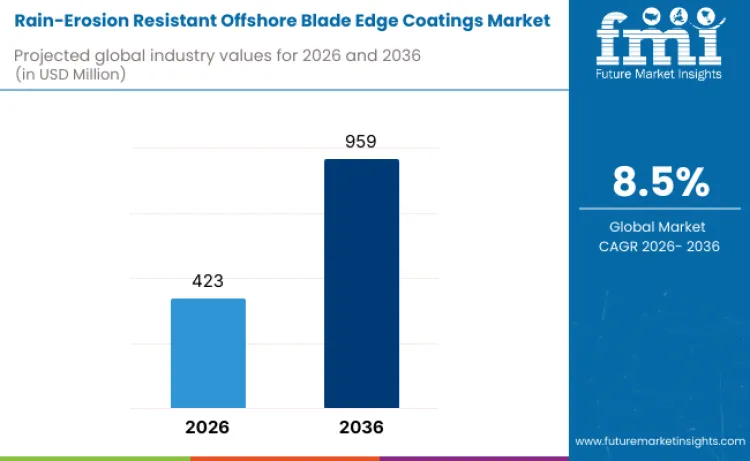
The global rain-erosion resistant offshore blade edge coatings market, valued at USD 423 million in 2026, is projected to grow to USD 959 million by 2036, with a CAGR of 8.50%. Growth is driven by the increasing installation of offshore wind turbines and the need for durable coatings that can protect blades from harsh environmental conditions.
Polyurethane rain-erosion-resistant coatings, which account for 30% of the coating market share, are preferred for their excellent erosion resistance, flexibility, and ability to withstand extreme weather conditions. Offshore wind turbine blade leading edges, representing 45% of the application segment, dominate as these areas are highly susceptible to damage from rain and other environmental factors. Growth is further supported by the expansion of renewable energy projects and the push for more reliable, long-lasting offshore wind turbine technologies.
Quick Stats for Rain-Erosion Resistant Offshore Blade Edge Coatings Market
- Rain-Erosion Resistant Offshore Blade Edge Coatings Market Value (2026): USD 423 million
- Rain-Erosion Resistant Offshore Blade Edge Coatings Market Forecast Value (2036): USD 959 million
- Rain-Erosion Resistant Offshore Blade Edge Coatings Market Global Forecast CAGR: 8.50%
- Leading Application in Rain-Erosion Resistant Offshore Blade Edge Coatings Market: Offshore wind turbine blade leading edges (45%)
- Key Growth Regions in Rain-Erosion Resistant Offshore Blade Edge Coatings Market: China, India, USA, UK, Japan
- Top Players in Rain-Erosion Resistant Offshore Blade Edge Coatings Market: AkzoNobel, PPG Industries, Hempel, Jotun Group, Sherwin-Williams, Axalta Coating Systems, RPM International, BASF, Mankiewicz Gebr. & Co, Nippon Paint, Valspar, DAW Group, Hollmann International, Trifilon Coatings, Tikkurila
Alpha-Arbutin Market Key Takeaways
| Metric | Value |
|---|---|
| Industry Sales Value (2026) | USD 423 million |
| Industry Forecast Value (2036) | USD 959 million |
| Industry Forecast CAGR (2026 to 2036) | 8.5 % |
What Is Driving the Demand for Rain Erosion Resistant Offshore Blade Edge Coatings Globally?
The demand for rain‑erosion resistant offshore blade edge coatings is driven by the expansion of offshore wind energy and the need to protect turbine blades from harsh marine conditions. Offshore wind turbines are exposed to high winds, moisture, and salt spray that cause erosion on blade edges, reducing efficiency and shortening blade lifespan. To address this, wind farm operators are adopting specialised coatings that resist rain‑induced wear, improving blade durability and reducing maintenance costs. Offshore wind farms, especially in regions like Europe, East Asia, and North America, require coatings that can withstand the demanding conditions of wind, water, and salt.
As offshore wind capacity grows, demand for these coatings is expected to rise, especially with larger turbines and more extreme weather conditions. Advances in coating technologies will improve performance and ease of application, encouraging wider adoption. With global renewable energy targets driving investment in offshore wind, the need for durable, cost‑effective protective coatings will continue to grow, supporting the expansion of the rain‑erosion resistant blade edge coatings market.
What Are the Key Segments in Rain-Erosion Resistant Offshore Blade Edge Coatings Market?
The global rain-erosion resistant offshore blade edge coatings market is segmented by coating type and application. Polyurethane rain-erosion resistant coatings represent 30% of the market, known for their durability and effectiveness in protecting turbine blades from rain-induced wear. Offshore wind turbine blade leading edges account for 45% of the application share, driven by the need to enhance the durability and performance of offshore wind turbines in harsh environmental conditions.
Which Coating Type Drives Rain-Erosion Resistant Offshore Blade Edge Coatings Demand Globally?

Polyurethane rain‑erosion resistant coatings dominate the market with 30% of the share. These coatings are widely used in the offshore wind industry due to their excellent resistance to rain erosion, which is a major factor affecting the performance and lifespan of wind turbine blades. Offshore wind turbines, particularly those in regions with frequent rain and high wind speeds, experience significant wear on the leading edges of the blades. Polyurethane coatings help mitigate this by forming a protective layer that absorbs and deflects rain impact, preventing surface degradation. These coatings also offer flexibility, UV resistance, and ease of application, making them ideal for the harsh conditions faced by offshore turbines. As the demand for renewable energy grows, the need for durable, long-lasting coatings to protect wind turbine blades from rain erosion has increased, contributing to the widespread adoption of polyurethane-based solutions.
Which Application Drives Rain-Erosion Resistant Offshore Blade Edge Coatings Demand Globally?
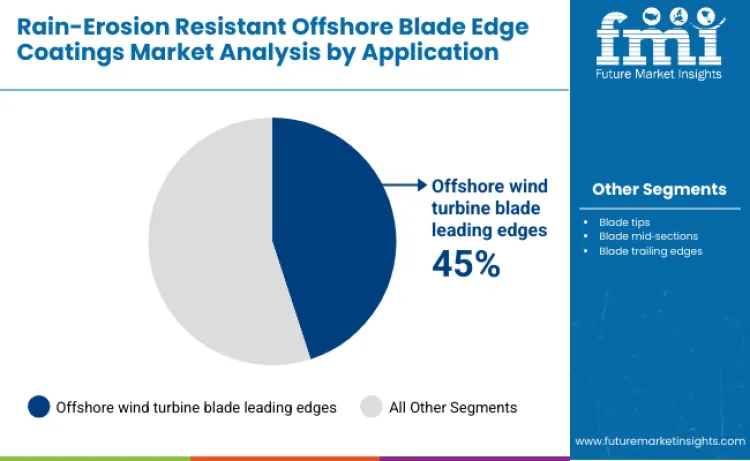
Offshore wind turbine blade leading edges are the largest application segment, accounting for 45% of the market. The leading edges of wind turbine blades are particularly vulnerable to rain erosion, as they are the first point of impact when rain hits the turbine. Protecting these edges is essential for maintaining the efficiency, longevity, and structural integrity of the turbine blades. Rain-erosion resistant coatings, such as polyurethane-based solutions, help reduce the rate of erosion, extend the blade's lifespan, and improve overall energy production efficiency. As offshore wind farms expand globally, particularly in regions with challenging weather conditions, the demand for advanced coatings for leading edges continues to grow. These coatings not only improve the durability of the blades but also reduce maintenance costs and downtime, making them a critical component of offshore wind energy infrastructure.
What are the Key Trends in the Global Rain‑Erosion Resistant Offshore Blade Edge Coatings Market?
The global rain-erosion-resistant offshore blade-edge coatings market is expanding as offshore wind turbines are deployed in harsher marine environments that expose blade leading edges to severe rain, salt spray, and particulate impacts. These coatings protect blade edges from erosion, extend service life, and reduce maintenance costs. Growing investments in offshore wind capacity in Europe, Asia Pacific, North America and other regions are driving demand. As turbine sizes increase and load cycles become more intense, protective surface systems that maintain aerodynamic performance under extreme weather conditions are becoming essential components of offshore wind asset strategies.
What are the Key Drivers for the Global Rain‑Erosion Resistant Offshore Blade Edge Coatings Market?
The primary drivers include rapid growth in global offshore wind installations and government commitments to renewable energy targets, which increase the number of turbines requiring durable protective coatings. Offshore conditions subject blades to high‑velocity rain, airborne particles and corrosive salt exposure that accelerate leading edge wear, making erosion resistant coatings necessary to safeguard performance and structural integrity. Larger rotors and higher tip speeds amplify blade stress, raising the need for advanced protective solutions. Extended warranty requirements and reduced downtime expectations also boost adoption as operators seek to minimise unscheduled maintenance.
What are the Restraints for the Global Rain‑Erosion Resistant Offshore Blade Edge Coatings Market?
A key restraint is the high cost of advanced coating formulations that must balance excellent wear protection with low weight and strong adhesion to composite substrates. Development and qualification of specialised coatings require extensive testing under simulated offshore weathering, which increases time to market and investment risk for suppliers. Compatibility issues between coating systems and different blade materials or surface preparation standards can complicate application. In some emerging wind markets where cost pressures are intense, operators may defer premium protective coatings in favour of lower cost alternatives or extended warranty negotiations, slowing adoption.
What is the Global Demand Outlook for Rain-Erosion Resistant Offshore Blade Edge Coatings?
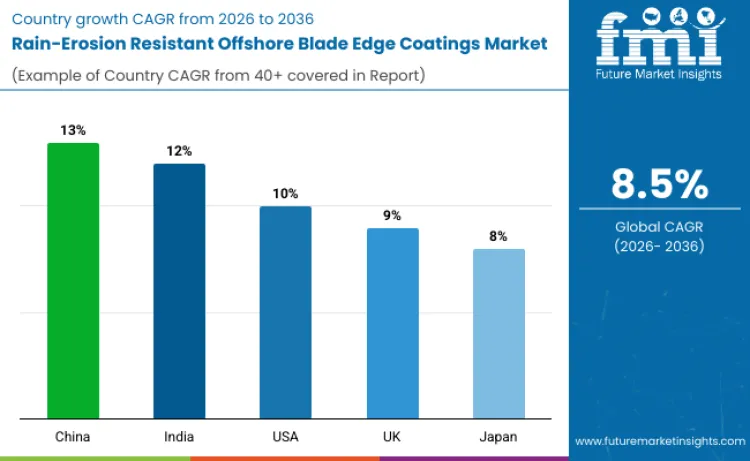
The demand for rain-erosion resistant offshore blade edge coatings is projected to grow steadily across various countries, with China leading the market at a projected CAGR of 13%. India follows closely with a growth rate of 12%, while the USA is expected to grow at 10%. The UK is projected to grow at 9%, and Japan at 8%. As the global offshore wind energy sector continues to expand, the need for advanced coatings that protect wind turbine blades from rain erosion is growing. These coatings are critical for ensuring the durability and performance of offshore wind turbines, improving their efficiency and lifespan in harsh environmental conditions.
| Country | CAGR (2026 to 2036) |
|---|---|
| China | 13% |
| India | 12% |
| USA | 10% |
| UK | 9% |
| Japan | 8% |
What is Driving the Growth of Rain-Erosion Resistant Offshore Blade Edge Coatings in China?
China is projected to experience the highest growth in the rain-erosion resistant offshore blade edge coatings market, with a projected CAGR of 13%. As one of the largest markets for wind energy, China has been heavily investing in offshore wind farms to meet its growing energy demands and sustainability goals. The expansion of offshore wind projects is driving the need for advanced coatings that protect turbine blades from the harsh environmental conditions found at sea, including rain erosion. With China’s commitment to green energy and its continued push for renewable energy infrastructure, the demand for rain-erosion resistant coatings is expected to increase significantly in the coming years. Furthermore, government support for wind energy projects and innovations in offshore wind technology are further accelerating market growth.
Why is the Rain-Erosion Resistant Offshore Blade Edge Coatings Market Expanding in India?
In India, the demand for rain-erosion resistant offshore blade edge coatings is projected to grow at a CAGR of 12%. India has been expanding its renewable energy capacity, with a strong focus on wind energy as a part of its commitment to reducing carbon emissions and promoting clean energy. As India continues to increase its offshore wind energy projects, the demand for coatings that protect wind turbine blades from rain erosion will grow. The offshore wind energy industry in India is still in its early stages compared to other countries, but with increasing government initiatives, international investments, and a growing focus on sustainability, the demand for advanced, durable coatings is expected to rise. India’s push to develop its offshore wind sector will significantly drive the adoption of rain-erosion resistant coatings.
How is the Rain-Erosion Resistant Offshore Blade Edge Coatings Market Growing in the USA?
In the USA, the rain-erosion resistant offshore blade edge coatings market is projected to grow at a CAGR of 10%. The USA is increasingly investing in offshore wind energy as part of its renewable energy strategy to reduce carbon emissions and increase energy independence. As the offshore wind industry grows, so does the demand for coatings that improve the durability and efficiency of wind turbines, particularly those that face the harsh conditions of rain and other environmental factors. Rain-erosion resistant coatings play a crucial role in extending the lifespan of wind turbine blades and ensuring optimal performance. With federal and state governments increasing their support for offshore wind projects, the market for these coatings is expected to grow steadily in the USA.
What is Contributing to the Growth of Rain-Erosion Resistant Offshore Blade Edge Coatings in the UK?
In the UK, the demand for rain-erosion resistant offshore blade edge coatings is projected to grow at a CAGR of 9%. The UK is a leading player in the global offshore wind energy market, with numerous offshore wind farms already operational and many more under development. The country’s commitment to reaching net-zero carbon emissions by 2050 is driving investments in renewable energy, particularly offshore wind. As offshore wind farms increase in size and number, the demand for coatings that protect turbine blades from rain erosion and extend their operational life is growing. The UK’s regulatory framework, which encourages the adoption of green technologies, as well as its continued investments in offshore wind energy, is fueling the demand for advanced coating solutions.
What is Influencing the Growth of Rain-Erosion Resistant Offshore Blade Edge Coatings in Japan?
In Japan, the rain-erosion resistant offshore blade edge coatings market is projected to grow at a CAGR of 8%. Japan’s commitment to expanding its offshore wind energy capacity is contributing to the rise in demand for coatings that improve the durability and efficiency of wind turbines. With Japan's geographical location providing significant offshore wind potential, the need for advanced technologies, such as rain-erosion resistant coatings, to protect turbine blades from harsh marine environments is increasing. The country’s focus on sustainability and renewable energy, combined with growing offshore wind projects, is driving the adoption of high-performance coatings. As Japan continues to invest in renewable energy infrastructure, the demand for these coatings is expected to grow steadily.
What is the Competitive Landscape for the Global Rain‑Erosion Resistant Offshore Blade Edge Coatings Market?
Global demand for rain‑erosion resistant offshore blade edge coatings is growing in line with the rapid expansion of offshore wind energy capacity. Offshore wind turbines operate in harsh marine environments where high‑speed winds and sea spray accelerate wear on blade leading edges, compromising performance and lifespan. Coatings that protect these critical surfaces from erosion help reduce maintenance costs, improve reliability, and extend service intervals for turbine operators. Growth in offshore wind installations in regions such as Europe, East Asia and North America supports rising uptake of advanced protective coatings. As turbine sizes increase and deployments move into deeper, more challenging sea conditions, the need for durable solutions that maintain aerodynamic efficiency while resisting rain, salt and particle impact becomes stronger. Blade owners and wind farm developers place high value on coatings that deliver long‑term erosion protection, reduce downtime and support sustainable energy production.
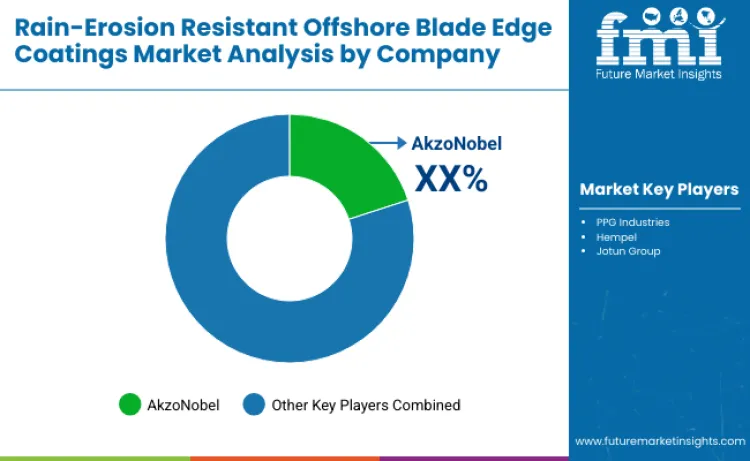
On the supply side, several major coatings and speciality material companies compete to lead this niche market. AkzoNobel is widely viewed as a leading supplier with strong experience in protective and marine coatings. Other key competitors include PPG Industries, Hempel, Jotun Group, Sherwin‑Williams, Axalta Coating Systems, RPM International, BASF, Mankiewicz Gebr. & Co, Nippon Paint, Valspar, DAW Group, Hollmann International, Trifilon Coatings and Tikkurila. These firms offer formulations designed to resist impact and abrasion while maintaining adhesion and environmental stability in offshore conditions. Competition revolves around coating durability, ease of application in factory and field settings, resistance to salt, moisture and UV exposure, and compliance with environmental and safety standards. Suppliers that combine strong research and development, robust field testing, and reliable global supply networks are best positioned to capture growth as offshore wind projects continue to mature and expand worldwide.
Key Players
- AkzoNobel
- PPG Industries
- Hempel
- Jotun Group
- Sherwin‑Williams
- Axalta Coating Systems
- RPM International
- BASF
- Mankiewicz Gebr. & Co
- Nippon Paint
- Valspar
- DAW Group
- Hollmann International
- Trifilon Coatings
- Tikkurila
Scope of the Report
| Items | Values |
|---|---|
| Quantitative Units (2025) | USD Million |
| Coating Type | Polyurethane rain-erosion resistant coatings, Epoxy modified erosion resistant coatings, Polyurea based erosion resistant coatings, Silicone based erosion resistant coatings, Ceramic reinforced erosion resistant coatings |
| Application | Offshore wind turbine blade leading edges, Blade tips, Blade mid-sections, Blade trailing edges |
| End-Use | Offshore wind farms, Onshore wind farms (high rain regions), Repair and maintenance services |
| Sales Channel | Direct OEM supply, Distributors, Service providers |
| Companies | AkzoNobel, PPG Industries, Hempel, Jotun Group, Sherwin-Williams, Axalta Coating Systems, RPM International, BASF, Mankiewicz Gebr. & Co, Nippon Paint, Valspar, DAW Group, Hollmann International, Trifilon Coatings, Tikkurila |
| Regions Covered | North America, Latin America, Western Europe, Eastern Europe, South Asia and Pacific, East Asia, Middle East & Africa |
| Countries Covered | United States, Canada, Mexico, Brazil, Argentina, Germany, France, United Kingdom, Italy, Spain, Netherlands, China, India, Japan, South Korea, ANZ, GCC Countries, South Africa |
| Additional Attributes | Dollar by sales by coating type, application, end-use, sales channel, and region. Includes market trends in rain-erosion resistance for offshore wind turbine blades, performance in various blade sections (leading edge, tips, mid-sections, trailing edges), cost-effectiveness, sustainability practices, regulatory compliance, market share and competitive positioning of key companies, and the role of coatings in enhancing the durability, performance, and lifespan of wind turbines in offshore and high-rain environments. |
Key Segments in the Rain-Erosion Resistant Offshore Blade Edge Coatings Market
Coating Type
- Polyurethane rain‑erosion resistant coatings
- Epoxy modified erosion resistant coatings
- Polyurea based erosion resistant coatings
- Silicone based erosion resistant coatings
- Ceramic reinforced erosion resistant coatings
Application
- Offshore wind turbine blade leading edges
- Blade tips
- Blade mid‑sections
- Blade trailing edges
End Use
- Offshore wind farms
- Onshore wind farms (high rain regions)
- Repair and maintenance services
Sales Channel
- Direct OEM supply
- Distributors
- Service providers
Region
- Asia Pacific
- China
- India
- Japan
- South Korea
- ASEAN
- Rest of Asia Pacific
- Europe
- Germany
- United Kingdom
- France
- Italy
- Spain
- Nordic
- BENELUX
- Rest of Europe
- North America
- United States
- Canada
- Mexico
- Latin America
- Brazil
- Chile
- Rest of Latin America
- Middle East & Africa
- Kingdom of Saudi Arabia
- Other GCC Countries
- Turkey
- South Africa
- Other African Union
- Rest of Middle East & Africa
Frequently Asked Questions
How big is the Rain-Erosion Resistant Offshore Blade Edge Coatings market?
The market is valued at USD 423 million in 2026 and is expected to grow at a CAGR of 8.50%, reaching USD 959 million by 2036.
What is the growth outlook for the Rain-Erosion Resistant Offshore Blade Edge Coatings market?
The market is projected to grow at a CAGR of 8.50% from 2026 to 2036.
Which region is expected to experience the fastest growth in the Rain-Erosion Resistant Offshore Blade Edge Coatings market?
China is expected to lead with a growth rate of 13%, driven by the expanding offshore wind energy sector and the demand for enhanced blade protection.
What are the key applications of Rain-Erosion Resistant Offshore Blade Edge Coatings?
These coatings are primarily used on the leading edges of offshore wind turbine blades to protect them from rain erosion and extend their lifespan.
Who is the major player in the Rain-Erosion Resistant Offshore Blade Edge Coatings market?
The leading player in the market is AkzoNobel.
Preview the report firsthand - request a free sample
Get SampleGet the brochure for pricing and purchase details.
Get PDFTable of Content
- Executive Summary
- Global Market Overview
- Quick Stats
- Regional Growth Snapshot
- Key Player Landscape
- Analysis and Recommendations
- Market Overview
- Market Coverage / Taxonomy
- Market Definition / Scope / Limitations
- Market Background
- Market Dynamics
- Drivers
- Restraints
- Opportunities
- Trends
- Scenario Forecast
- Demand in Optimistic Scenario
- Demand in Likely Scenario
- Demand in Conservative Scenario
- Opportunity Map Analysis
- Product Life Cycle Analysis
- Supply Chain Analysis
- Investment Feasibility Matrix
- Value Chain Analysis
- PESTLE and Porter’s Five Forces Analysis
- Regulatory Landscape
- Regional Parent Market Outlook
- Production and Consumption Statistics
- Import and Export Statistics
- Market Dynamics
- Global Market Analysis 2020-2025 and Forecast 2026-2036
- Historical Market Size (USD Million), 2020-2025
- Forecast Market Size (USD Million), 2026-2036
- Y-o-Y Growth Trend Analysis
- Absolute Dollar Opportunity Analysis
- Global Market Pricing Analysis 2020-2025 and Forecast 2026-2036
- Global Market Analysis by Coating Type
- Introduction / Key Findings
- Historical Market Size by Coating Type, 2020-2025
- Forecast Market Size by Coating Type, 2026-2036
- Polyurethane rain-erosion resistant coatings
- Epoxy modified erosion resistant coatings
- Polyurea based erosion resistant coatings
- Silicone based erosion resistant coatings
- Ceramic reinforced erosion resistant coatings
- Y-o-Y Growth Trend by Coating Type
- Absolute Dollar Opportunity by Coating Type
- Global Market Analysis by Application
- Introduction / Key Findings
- Historical Market Size by Application, 2020-2025
- Forecast Market Size by Application, 2026-2036
- Offshore wind turbine blade leading edges
- Blade tips
- Blade mid-sections
- Blade trailing edges
- Y-o-Y Growth Trend by Application
- Absolute Dollar Opportunity by Application
- Global Market Analysis by End-Use
- Introduction / Key Findings
- Historical Market Size by End-Use, 2020-2025
- Forecast Market Size by End-Use, 2026-2036
- Offshore wind farms
- Onshore wind farms (high rain regions)
- Repair and maintenance services
- Y-o-Y Growth Trend by End-Use
- Absolute Dollar Opportunity by End-Use
- Global Market Analysis by Sales Channel
- Introduction / Key Findings
- Historical Market Size by Sales Channel, 2020-2025
- Forecast Market Size by Sales Channel, 2026-2036
- Direct OEM supply
- Distributors
- Service providers
- Y-o-Y Growth Trend by Sales Channel
- Absolute Dollar Opportunity by Sales Channel
- Regional Analysis
- North America Market Analysis
- Latin America Market Analysis
- Western Europe Market Analysis
- E Eastern Europe Market Analysis
- South Asia & Pacific Market Analysis
- East Asia Market Analysis
- Middle East & Africa Market Analysis
- Market Structure Analysis
- Competition Dashboard
- Competition Benchmarking
- Market Share Analysis by Key Players
- Competition Analysis
- Competition Deep Dive
- AkzoNobel
- PPG Industries
- Hempel
- Jotun Group
- Sherwin-Williams
- Axalta Coating Systems
- RPM International
- BASF
- Mankiewicz Gebr. & Co
- Nippon Paint
- Valspar
- DAW Group
- Hollmann International
- Trifilon Coatings
- Tikkurila
- Competition Deep Dive
- Assumptions & Acronyms Used
- Research Methodology


