

- Industry Size (2025)
- USD 229 Mn
- Forecast (2035)
- USD 545 Mn
- CAGR (2025 to 2035)
- 9%
Ice-Phobic Coatings for Offshore Wind Turbines Market Forecast and Outlook 2026 to 2036
Global ice-phobic coatings for offshore wind turbines market, valued at USD 229 million in 2026, is projected to grow to USD 545 million by 2036, with a CAGR of 9%. The market is driven by the need to improve the performance and efficiency of offshore wind turbines in cold climates, where ice buildup on blades can severely affect energy generation.
Ice-phobic polymer coatings, which account for 30% of the coating type market share, are widely used due to their ability to prevent ice accumulation and improve the operational lifespan of wind turbine blades. Wind turbine blades, representing 45% of the application segment, dominate the market as they are the most exposed to ice formation. The market growth is further supported by the global expansion of offshore wind energy projects in regions with colder climates.
Quick Stats for Ice-Phobic Coatings for Offshore Wind Turbines Market
- Ice-Phobic Coatings for Offshore Wind Turbines Market Value (2025): USD 229 million
- Ice-Phobic Coatings for Offshore Wind Turbines Market Forecast Value (2035): USD 545 million
- Ice-Phobic Coatings for Offshore Wind Turbines Market Global Forecast CAGR: 9%
- Leading Application in Ice-Phobic Coatings for Offshore Wind Turbines Market: Wind turbine blades (45%)
- Key Growth Regions in Ice-Phobic Coatings for Offshore Wind Turbines Market: China, India, USA, UK, Japan
- Top Players in Ice-Phobic Coatings for Offshore Wind Turbines Market: AkzoNobel, PPG Industries, Hempel, Jotun Group, Sherwin-Williams, Axalta Coating Systems, RPM International, BASF, Nippon Paint, Mankiewicz Gebr. & Co, Trifilon Coatings, Tikkurila, Hollmann International, NEI Corporation
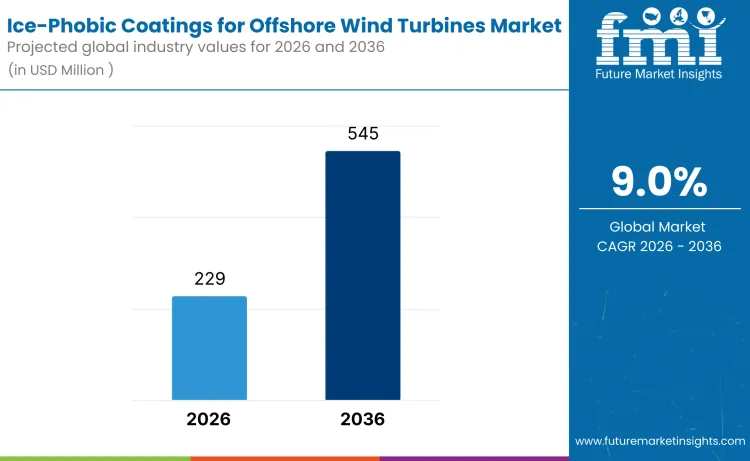
Ice-Phobic Coatings for Offshore Wind Turbines Market Key Takeaways
| Metric | Value |
|---|---|
| Industry Sales Value (2025) | USD 229 million |
| Industry Forecast Value (2035) | USD 545 million |
| Industry Forecast CAGR (2025-2035) | 9% |
What Is Driving the Demand for Ice Phobic Coatings for Offshore Wind Turbines Globally?
Demand for ice‑phobic coatings for offshore wind turbines is driven by the growth of wind energy in colder climates where ice formation on blades and structures is common. Ice buildup on turbines reduces aerodynamic performance, energy output, and increases maintenance costs and safety risks. Offshore wind farms in regions like northern Europe and East Asia face low temperatures and sea spray, which accelerates ice accretion. To address this, operators are increasingly using ice‑phobic coatings that prevent ice adhesion and reduce the need for mechanical de‑icing systems. These coatings help maintain turbine efficiency and reduce downtime, which is crucial for offshore installations where reliability is key.
Future demand for ice‑phobic coatings is expected to grow as offshore wind projects expand in colder regions. Advancements in coating technology are improving ice‑phobic performance, durability, and ease of application. As turbine sizes and rotor diameters increase, the risk of ice accumulation grows, further driving the need for effective coatings. Regulatory support for renewable energy and the focus on operational reliability will continue to boost demand for ice‑phobic coatings. The market will expand as these coatings prove effective in real‑world conditions and offer a cost‑effective alternative to traditional de‑icing methods.
What Are the Key Segments in Ice-Phobic Coatings for Offshore Wind Turbines Market?
The global ice-phobic coatings for offshore wind turbines market is segmented by coating type and application. Ice-phobic polymer coatings represent 30% of the market share, offering effective solutions to reduce ice buildup on turbine blades. Wind turbine blades account for 45% of the application share, driven by the need to enhance turbine efficiency and reduce ice-related performance issues in harsh offshore environments.
Which Coating Type Drives Ice-Phobic Coatings for Offshore Wind Turbines Demand Globally?
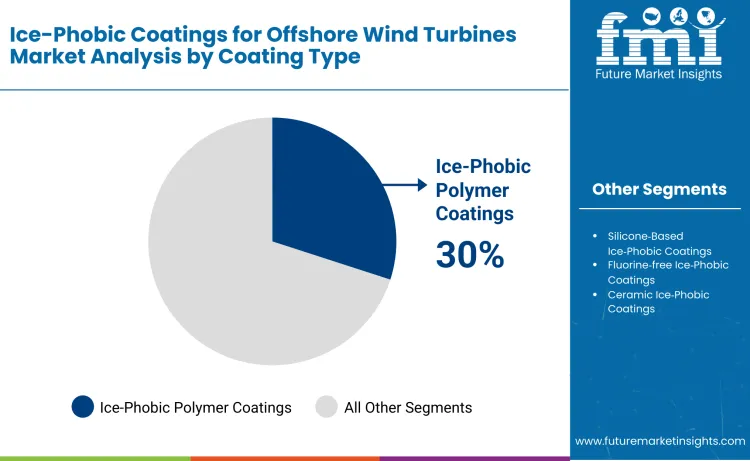
Ice-phobic polymer coatings hold 30% of the global market share. These coatings are specifically designed to prevent ice from accumulating on wind turbine blades, which can severely affect turbine performance and energy output. Ice buildup increases drag, reduces aerodynamic efficiency, and can cause mechanical damage. Polymer-based ice-phobic coatings create a surface that repels ice, preventing accumulation and allowing it to slide off more easily. These coatings are crucial for offshore wind turbines in regions with cold temperatures and frequent freezing conditions. They enhance the reliability and efficiency of turbines by reducing the need for ice-related maintenance and preventing downtime. As the demand for renewable energy grows and offshore wind farms expand into colder climates, the adoption of ice-phobic polymer coatings is expected to rise due to their effectiveness in ensuring optimal turbine performance under icy conditions.
Which Application Drives Ice-Phobic Coatings for Offshore Wind Turbines Demand Globally?
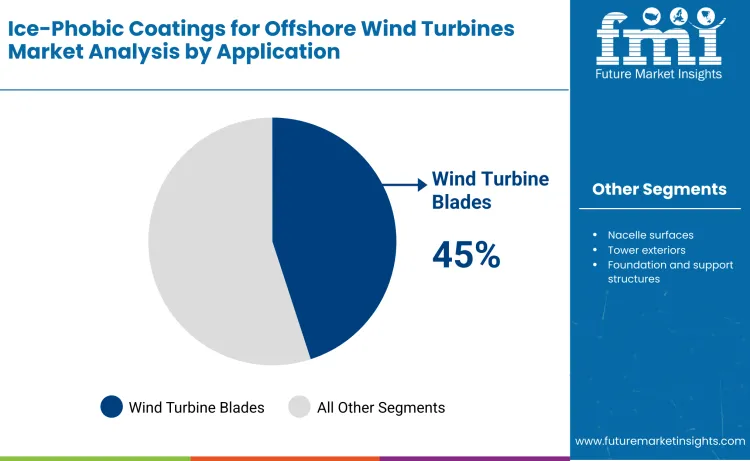
Wind turbine blades are the primary application, accounting for 45% of the market share. The leading edges of wind turbine blades are especially susceptible to ice accumulation, which can reduce the blade’s performance, efficiency, and lifespan. Ice-phobic coatings applied to these blades prevent ice formation and improve the turbine's overall reliability in cold and offshore conditions. As wind turbine blades are constantly exposed to changing weather patterns, the ability to maintain smooth airflow and avoid ice buildup is critical for maximizing energy generation. The growing need for efficient, durable offshore wind turbines, especially in colder climates, has driven the demand for ice-phobic coatings in the industry. These coatings not only help improve the performance of turbines but also reduce maintenance costs and the risk of mechanical failure caused by ice accumulation, making them essential for the long-term success of offshore wind projects.
What are the Key Trends in the Global Ice Phobic Coatings for Offshore Wind Turbines Market?
The global ice‑phobic coatings for offshore wind turbines market is growing as wind energy capacity expands into colder climates, where icing can reduce performance and increase maintenance. Ice‑phobic coatings are designed to minimise ice adhesion and formation on turbine blades, towers, and critical components, helping maintain energy output and reduce downtime. Rising investment in offshore wind farms in regions with seasonal icing, combined with a focus on reliable, year‑round operation, supports adoption. The market reflects the need for coatings that balance durability, environmental resistance, and long‑term protection.
What are the Key Drivers for the Global Ice‑Phobic Coatings for Offshore Wind Turbines Market?
One key driver is the expansion of offshore wind capacity into high‑latitude and cold‑climate regions where icing can significantly impact power generation and maintenance cycles. Icing events cause performance losses, safety risks, and increased operational costs, encouraging operators to adopt ice‑phobic surface solutions that reduce ice build‑up, improve reliability, and maintain efficiency. Stringent performance and uptime requirements from utilities and investors further support demand. Advances in coating technologies that offer improved adhesion resistance, durability and compatibility with composite materials also help accelerate adoption across new and existing wind assets.
What are the Restraints for the Global Ice‑Phobic Coatings for Offshore Wind Turbines Market?
Key restraint is the technical challenge of formulating coatings that consistently deliver long‑lasting ice repellency under a wide range of environmental conditions while also resisting abrasion, salt spray, UV exposure, and mechanical stress. The need for rigorous testing and validation in real‑world offshore conditions increases development costs and time to market. Premium pricing for advanced ice‑phobic materials compared with standard protective coatings can limit adoption in cost‑sensitive projects. Variability in regional standards, certification processes, and the absence of harmonised performance benchmarks can slow broader global uptake.
What is the Global Demand Outlook for Ice-Phobic Coatings for Offshore Wind Turbines?
Demand for ice-phobic coatings for offshore wind turbines is expected to grow rapidly across various countries, with China leading the market at a projected CAGR of 14%. India follows closely with a growth rate of 12%, while the USA is expected to grow at 11%. The UK is projected to grow at 9%, and Japan at 8%. As offshore wind energy expands globally, especially in colder climates where ice formation on turbine blades is a significant concern, the need for ice-phobic coatings to prevent ice build-up and enhance turbine efficiency is driving demand. These coatings help improve energy production and extend the lifespan of turbines by preventing ice-related damage.
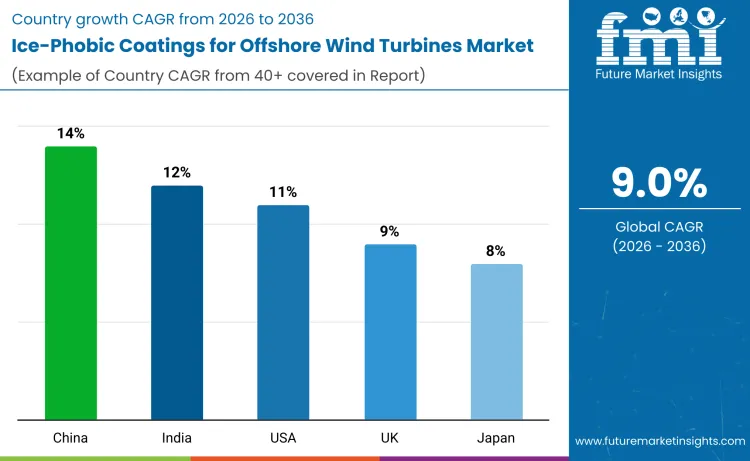
| Country | CAGR (2026-2036) |
|---|---|
| China | 14% |
| India | 12% |
| USA | 11% |
| UK | 9% |
| Japan | 8% |
What is Driving the Growth of Ice-Phobic Coatings for Offshore Wind Turbines in China?
China is projected to experience the highest growth in the ice-phobic coatings for offshore wind turbines market, with a projected CAGR of 14%. As China continues to expand its offshore wind energy infrastructure, the need for innovative solutions to address environmental challenges like ice build-up on wind turbine blades is growing. The country’s investment in renewable energy, including offshore wind farms in colder regions, has created a strong demand for coatings that prevent ice formation. These coatings are critical for maintaining the efficiency and longevity of turbines in icy conditions. China’s commitment to reducing carbon emissions and increasing the share of renewable energy in its power mix is further accelerating the adoption of ice-phobic coatings, which play a crucial role in improving turbine performance and reducing maintenance costs.
Why is the Ice-Phobic Coatings for Offshore Wind Turbines Market Expanding in India?
In India, the ice-phobic coatings for offshore wind turbines market is projected to grow at a CAGR of 12%. While India’s offshore wind industry is still emerging, the country’s commitment to expanding renewable energy sources is driving the adoption of offshore wind technology. As India explores its potential for offshore wind farms, especially in coastal regions prone to colder temperatures, the demand for solutions to prevent ice formation on wind turbines is expected to increase. Ice-phobic coatings are essential in regions where turbines are exposed to freezing conditions, and their ability to reduce maintenance costs and improve energy efficiency is driving market growth. As India ramps up its offshore wind capacity and embraces clean energy technologies, the demand for these coatings will continue to rise.
How is the Ice-Phobic Coatings for Offshore Wind Turbines Market Growing in the USA?
In the USA, the ice-phobic coatings for offshore wind turbines market is projected to grow at a CAGR of 11%. The USA has a strong commitment to increasing its renewable energy capacity, with offshore wind farms being a key component of its clean energy strategy. In regions where offshore wind turbines are exposed to freezing conditions, ice-phobic coatings are becoming essential to prevent ice build-up on turbine blades, which can reduce energy output and cause damage. As offshore wind energy projects continue to grow along the northeastern and western coastlines of the USA, the demand for these coatings will increase. Additionally, the USA’s regulatory focus on increasing energy efficiency and sustainability in the renewable energy sector is further fueling the adoption of ice-phobic coatings.
What is Contributing to the Growth of Ice-Phobic Coatings for Offshore Wind Turbines in the UK?
In the UK, the demand for ice-phobic coatings for offshore wind turbines is projected to grow at a CAGR of 9%. The UK has been a global leader in offshore wind energy development, with significant investments in wind farms along its coasts. As the UK expands its offshore wind capacity, particularly in colder waters, the need for ice-phobic coatings to prevent ice accumulation on turbine blades is growing. These coatings help ensure that turbines continue to operate efficiently during the winter months, preventing ice-related damage and reducing downtime. The UK’s commitment to reducing carbon emissions and achieving its renewable energy targets by 2030 is driving increased demand for offshore wind technology and the innovative solutions needed to ensure turbine performance in challenging weather conditions.
What is Influencing the Growth of Ice-Phobic Coatings for Offshore Wind Turbines in Japan?
In Japan, the ice-phobic coatings for offshore wind turbines market is projected to grow at a CAGR of 8%. Japan is actively increasing its offshore wind capacity as part of its efforts to reduce its dependence on fossil fuels and boost renewable energy production. As Japan’s offshore wind energy projects expand, particularly in regions where temperatures drop below freezing, there is an increasing demand for ice-phobic coatings to prevent ice from accumulating on turbine blades. These coatings are crucial for maintaining the efficiency of wind turbines, which could otherwise experience reduced performance or damage due to ice. Japan’s focus on sustainability, coupled with its commitment to advancing offshore wind technology, is driving the adoption of innovative coatings that ensure turbines operate safely and effectively in cold climates.
What is the Competitive Landscape for the Global Ice Phobic Coatings for Offshore Wind Turbines Market?
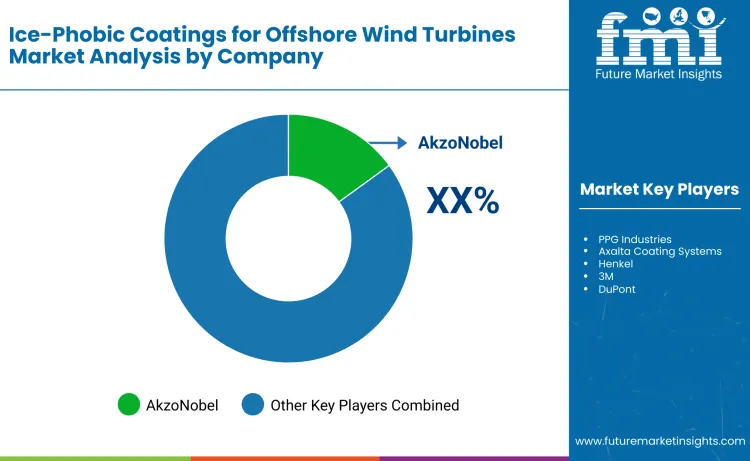
Global demand for ice‑phobic coatings for offshore wind turbines is rising as wind installations expand into colder climates and offshore regions where ice accumulation on blades and structures can reduce performance, increase maintenance, and cause safety issues. Ice on turbine blades disrupts aerodynamic efficiency, increases fatigue loads, and may cause operational shutdowns. As offshore wind projects grow in scale across northern Europe, North America and East Asia, developers and operators seek coatings that help prevent ice adhesion and promote self‑cleaning under varying environmental conditions. The drive toward higher capacity, larger turbines and longer operating lifespans elevates the importance of surface technologies that enhance reliability and reduce downtime. This trend is further supported by commitments to renewable energy targets and the economic imperative to maximise energy output in harsh weather conditions.
Several major coatings and materials companies compete to serve this specialised market. AkzoNobel is recognised as a leading supplier, offering advanced formulations tailored for ice mitigation. Other significant competitors include PPG Industries, Hempel, Jotun Group, Sherwin‑Williams, Axalta Coating Systems, RPM International, BASF, Nippon Paint, and Mankiewicz Gebr. & Co., Trifilon Coatings, Tikkurila, Hollmann International and NEI Corporation. These firms develop ice‑phobic coatings that balance low surface energy, durability under marine exposure and compatibility with turbine materials. Competition among them focuses on coating performance in extreme cold, adhesion strength, resistance to salt and moisture, ease of application in both factory and field settings, and global support infrastructure. Suppliers with strong research and development capabilities, rigorous field validation and dependable supply networks are best positioned to capture growth as off‑grid and offshore wind projects continue to deploy in increasingly challenging environments.
Key Players
- AkzoNobel
- PPG Industries
- Axalta Coating Systems
- Henkel
- 3M
- Elantas (Altana AG)
- DuPont
- Evonik Industries AG
- Aremco Products Inc.
- Von Roll Holding AG
- H.B. Fuller Company
- Momentive Performance Materials Inc.
- Sika AG
- SolEpoxy Inc.
- Electrolube (HK Wentworth Ltd.)
- Wacker Chemie AG
Scope of the Report
| Items | Values |
|---|---|
| Quantitative Units (2025) | USD Million |
| Coating Type | Ice-phobic polymer coatings, Silicone-based ice-phobic coatings, Fluorine-free ice-phobic coatings, Ceramic ice-phobic coatings, Hydrophobic/ice-slip coatings |
| Application | Wind turbine blades, Nacelle surfaces, Tower exteriors, Foundation and support structures, Cables and walkways |
| End-Use | Offshore wind farms, Onshore wind farms in cold climates, Maintenance and repair services |
| Sales Channel | Direct OEM supply, Distributors, Aftermarket services |
| Companies | AkzoNobel, PPG Industries, Hempel, Jotun Group, Sherwin-Williams, Axalta Coating Systems, RPM International, BASF, Nippon Paint, Mankiewicz Gebr. & Co, Trifilon Coatings, Tikkurila, Hollmann International, NEI Corporation |
| Regions Covered | North America, Latin America, Western Europe, Eastern Europe, South Asia and Pacific, East Asia, Middle East & Africa |
| Countries Covered | United States, Canada, Mexico, Brazil, Argentina, Germany, France, United Kingdom, Italy, Spain, Netherlands, China, India, Japan, South Korea, ANZ, GCC Countries, South Africa |
| Additional Attributes | Dollar by sales by coating type, application, end-use, sales channel, and region. Includes market trends in ice-phobic coatings for wind turbines, performance in various turbine components (blades, nacelle, tower, cables), cost-effectiveness, sustainability practices, impact of environmental concerns on demand, regulatory compliance, market share and competitive positioning of key companies, and the role of ice-phobic coatings in enhancing turbine efficiency, safety, and durability in cold and high-precipitation environments. |
Key Segments in the Ice-Phobic Coatings for Offshore Wind Turbines Market
Coating Type:
- Ice‑phobic polymer coatings
- Silicone‑based ice‑phobic coatings
- Fluorine‑free ice‑phobic coatings
- Ceramic ice‑phobic coatings
- Hydrophobic/ice‑slip coatings
Application:
- Wind turbine blades
- Nacelle surfaces
- Tower exteriors
- Foundation and support structures
- Cables and walkways
End Use:
- Offshore wind farms
- Onshore wind farms in cold climates
- Maintenance and repair services
Sales Channel:
- Direct OEM supply
- Distributors
- Aftermarket services
Region:
- Asia Pacific
- China
- India
- Japan
- South Korea
- ASEAN
- Rest of Asia Pacific
- Europe
- Germany
- United Kingdom
- France
- Italy
- Spain
- Nordic
- BENELUX
- Rest of Europe
- North America
- United States
- Canada
- Mexico
- Latin America
- Brazil
- Chile
- Rest of Latin America
- Middle East & Africa
- Kingdom of Saudi Arabia
- Other GCC Countries
- Turkey
- South Africa
- Other African Union
- Rest of Middle East & Africa
Frequently Asked Questions
How big is the Ice-Phobic Coatings for Offshore Wind Turbines market?
The market is valued at USD 229 million in 2025 and is expected to grow at a CAGR of 9%, reaching USD 545 million by 2035.
What is the growth outlook for the Ice-Phobic Coatings for Offshore Wind Turbines market?
What is the growth outlook for the Ice-Phobic Coatings for Offshore Wind Turbines market?
Which region is expected to experience the fastest growth in the Ice-Phobic Coatings for Offshore Wind Turbines market?
China is expected to lead with a growth rate of 14%, driven by increased offshore wind turbine installations and the need for anti-icing solutions.
What are the key applications of Ice-Phobic Coatings for Offshore Wind Turbines?
Ice-Phobic Coatings are primarily applied to wind turbine blades to prevent ice buildup, ensuring optimal performance in cold climates.
Who are the major players in the Ice-Phobic Coatings for Offshore Wind Turbines market?
Key players include AkzoNobel, PPG Industries, Hempel, Jotun Group, Sherwin-Williams, Axalta Coating Systems, RPM International, BASF, Nippon Paint, Mankiewicz Gebr. & Co, Trifilon Coatings, Tikkurila, Hollmann International, and NEI Corporation.
Preview the report firsthand - request a free sample
Get SampleGet the brochure for pricing and purchase details.
Get PDFTable of Content
- Executive Summary
- Market Overview
- Global Market Value, 2020-2026
- Global Market Forecast, 2026-2036
- Market Dynamics
- Drivers
- Restraints
- Opportunities
- Regulatory & Standards Landscape
- Technology & Materials Innovation Outlook
- Market Segmentation Analysis
- By Coating Type
- Ice-Phobic Polymer Coatings
- Silicone-Based Ice-Phobic Coatings
- Fluorine-Free Ice-Phobic Coatings
- Ceramic Ice-Phobic Coatings
- Hydrophobic / Ice-Slip Coatings
- By Application
- Wind Turbine Blades
- Nacelle Surfaces
- Tower Exteriors
- Foundation and Support Structures
- Cables and Walkways
- By End-Use
- Offshore Wind Farms
- Onshore Wind Farms in Cold Climates
- Maintenance and Repair Services
- By Sales Channel
- Direct OEM Supply
- Distributors
- Aftermarket Services
- By Coating Type
- Regional Outlook
- North America
- Latin America
- Western Europe
- Eastern Europe
- South Asia & Pacific
- East Asia
- Middle East & Africa
- Country-Level Outlook
- United States
- Canada
- Mexico
- Brazil
- Argentina
- Germany
- France
- United Kingdom
- Italy
- Spain
- Netherlands
- China
- India
- Japan
- South Korea
- ANZ
- GCC Countries
- South Africa
- Competitive Landscape
- Market Structure Overview
- Company Positioning
- Strategic Initiatives
- Key Player Profiles
- Scope of the Report
- Research Methodology
- Assumptions & Acronyms


