

- Industry Size (2026)
- USD 101.3 Mn
- Forecast (2036)
- USD 173.5 Mn
- CAGR (2026 to 2036)
- 5.5%
Recycled Material Cleanroom Aura Respirators Market Forecast and Outlook 2026 to 2036
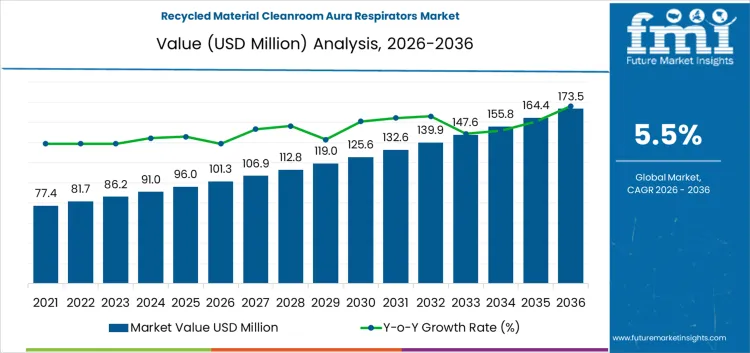
The Recycled Material Cleanroom Aura Respirators market is set to reach USD 101.3 million in 2026 and is projected to reach USD 173.5 million by 2036, reflecting a CAGR of 5.5%. Market performance is shaped by concentration among suppliers producing high-quality, recycled-material respirators meeting cleanroom certification standards. Regional control over material sourcing, fabrication facilities, and regulatory approvals affects supply reliability. Adoption varies according to semiconductor, pharmaceutical, and laboratory cleanroom deployment. Smaller operators face constraints in scaling production and ensuring consistent certification across multiple jurisdictions.
Margin concentration favors suppliers delivering certified respirators with validated filtration performance, multi-cleanroom compatibility, and technical support. Fragmentation persists among regional or niche manufacturers, while leading companies capture concentrated value through production control, certified material quality, and integration with large-scale cleanroom programs rather than unit output alone. Market outcomes are determined by operational reliability, regulatory compliance, and product validation rather than sheer production volume.
Quick Stats of the Recycled-Material Cleanroom Aura Respirators Market
- Recycled Material Cleanroom Aura Respirators Market Value (2026): USD 101.3 million
- Recycled-Material Cleanroom Aura Respirators Forecast Value (2036): USD 173.5 million
- Recycled Material Cleanroom Aura Respirators Forecast CAGR 2026 to 2036: 5.5%
- Leading Cleanroom Class in Recycled-Material Aura Respirators Market: ISO 5-6 (48 % share)
- Leading End-Use Industry in Recycled-Material Aura Respirators Market: Semiconductor fabs (44 % share)
- Key Growth Regions in Recycled-Material Aura Respirators Market: USA, Germany, China, Japan
- Top Players in Recycled-Material Aura Respirators Market: 3M, Honeywell Safety, Dräger, MSA Safety, Alpha Pro Tech, Ansell
What is the Growth Forecast for Recycled Material Cleanroom Aura Respirators Market through 2036?
Between 2026 and 2031, the Recycled Material Cleanroom Aura Respirators Market is projected to grow from USD 101.3 million to USD 125.5 million, generating an absolute increase of USD 24.2 million and reflecting a CAGR of 5.5%. Growth is driven by adoption across ISO 5-6 and ISO 7-8 cleanroom classes in semiconductor fabs, pharma and biotech, and medical device manufacturing. Recycled content levels of 20-40% and above 40% support sustainability objectives. Expansion is supported by increasing regulatory focus on cleanroom safety, rising adoption of eco-conscious PPE, and demand for high-performance filtration. Suppliers focus on material quality, respirator certification, and compatibility with cleanroom standards.
From 2031 to 2036, the market is expected to expand from USD 125.5 million to USD 173.5 million, adding USD 48.0 million. Growth is fueled by broader adoption in semiconductor, pharmaceutical, and medical device industries, higher recycled content penetration, and stricter cleanroom safety compliance. Technological improvements in filtration efficiency and sustainable materials support market growth. Competitive advantage favors suppliers providing validated performance, regulatory alignment, and consistent recycled-material quality. Leading companies include 3M, Honeywell Safety, Dräger, MSA Safety, Alpha Pro Tech, and Ansell.
Recycled Material Cleanroom Aura Respirators Market Key Takeaways
| Metric | Value |
|---|---|
| Market Value (2026) | USD 101.3 million |
| Forecast Value (2036) | USD 173.5 million |
| Forecast CAGR 2026 to 2036 | 5.50% |
What Is Driving Demand for Recycled-Material Cleanroom Aura Respirators?
Recycled-material cleanroom Aura respirators are increasingly adopted to provide high-efficiency particulate filtration while reducing environmental impact in controlled environments. Historically, respirators relied on virgin plastics and materials, generating waste and limiting sustainability efforts. Modern respirators incorporate recycled polymers and eco-friendly components without compromising filtration efficiency, comfort, or compliance with cleanroom standards. Semiconductor fabs, pharmaceutical manufacturers, and biotechnology facilities prioritize material safety, breathability, and regulatory compliance. Early adoption focused on high-tech cleanroom operations, while current demand spans medical, electronics, and laboratory settings driven by environmental considerations, corporate ESG goals, and regulatory requirements. Filter performance, material durability, and cleanroom compatibility influence supplier selection and procurement.
Increasing regulatory focus on worker safety, environmental responsibility, and operational efficiency are shaping market growth. Compared with traditional respirators, recycled-material Aura designs emphasize high-efficiency filtration, structural integrity, and comfort for extended use. Cost structures depend on recycled polymer sourcing, manufacturing precision, and certification processes, concentrating margins among suppliers delivering certified, high-performance respirators. Cleanroom operators adopt these respirators to maintain contamination control, reduce material waste, and comply with environmental and safety standards. By 2036, recycled-material Aura respirators are expected to become standard in cleanroom environments, supporting worker safety, operational reliability, and eco-conscious manufacturing practices.
What Factors Are Shaping the Demand for Recycled-Material Cleanroom Aura Respirators in Terms of Cleanroom Class and End-Use Industry?
The demand for recycled-material cleanroom Aura respirators is segmented by cleanroom class and end-use industry. Cleanroom classes include ISO 5-6 and ISO 7-8 environments. End-use industries include semiconductor fabs, pharmaceutical and biotech facilities, and medical device manufacturers. Adoption is influenced by strict contamination control requirements, sustainability initiatives, and operational safety. Uptake is driven by regulatory standards, the need for reusable personal protective equipment, and increasing awareness of indoor air quality. Cleanroom class and industry selection depend on process sensitivity, particulate control requirements, and workflow integration, ensuring reliable, compliant, and efficient respirators in high-precision cleanroom environments across semiconductor, medical, and biotech sectors.
Why Are ISO 5-6 Cleanroom Classes Leading the Segment in Recycled-Material Aura Respirators?
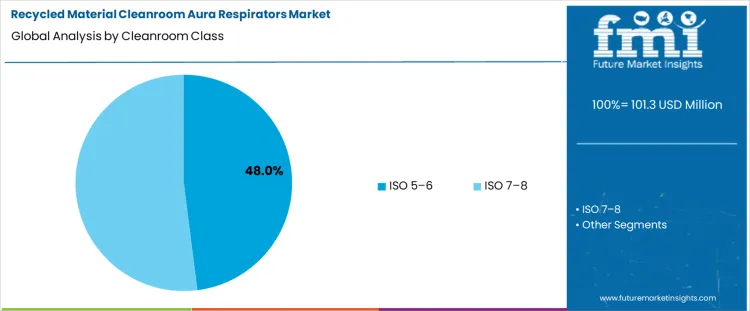
ISO 5-6 cleanroom classes account for approximately 48% of total cleanroom demand. These high-class environments require extremely low particulate levels for critical processes such as wafer fabrication, sterile drug production, and precision component assembly. Adoption is driven by rigorous contamination control and compliance with ISO standards. Recycled-material respirators provide effective particle capture while supporting eco-friendly initiatives. Operational procedures include pre-use inspection, fit testing, and sterilization cycles to maintain performance. ISO 5-6 respirators ensure personnel protection and preserve cleanroom integrity.
Operational factors further reinforce adoption. Respirators must maintain airflow, filtration efficiency, and comfort during extended shifts. Integration with hoods, gloves, and cleanroom suits is essential for effective protection. ISO 5-6 leads because it delivers predictable performance, minimizes contamination risks, and ensures safe, reliable, and sustainable operations in environments where particle control is critical.
Why Are Semiconductor Fabs Representing the Largest End-Use Industry Segment in Recycled-Material Aura Respirators?
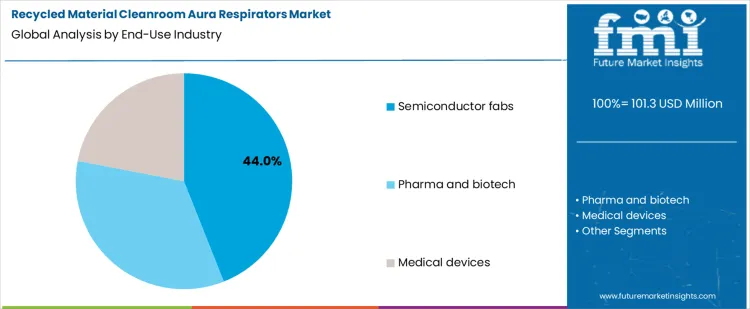
Semiconductor fabs account for approximately 44% of total end-use demand. Adoption is driven by high sensitivity of wafer fabrication to particulate contamination. Recycled-material respirators protect both personnel and critical components while complying with ISO cleanroom standards. Operational procedures include proper donning, continuous inspection, and routine sterilization to maintain high performance. These respirators reduce disposable waste, support sustainability, and maintain filtration efficiency.
Functional and operational factors further reinforce adoption. Respirators must tolerate long operational hours, maintain fit and filtration integrity, and integrate with cleanroom apparel and workflow systems. Semiconductor fabs lead because these respirators provide consistent contamination control, operational reliability, and regulatory compliance, ensuring high-yield production and quality assurance across advanced semiconductor facilities.
How Are Recycled-Material Cleanroom Respirators Supporting Sustainable Safety?
Recycled-material cleanroom Aura respirators are increasingly adopted in semiconductor, pharmaceutical, and biotechnology facilities to provide contamination control while reducing environmental impact. Adoption is strongest in regions with stringent cleanroom standards, high manufacturing precision requirements, and corporate sustainability initiatives. Respirators are selected for filtration efficiency, fit reliability, and material compatibility with cleanroom protocols. Growth is driven by regulatory compliance, operational hygiene requirements, and sustainability goals. Investment focuses on recycled polymer media, ergonomic design, and reusability. Operators prioritize respirators that maintain protective performance, reduce waste, and align with regional safety and environmental standards.
Why Are Regional Cleanroom Regulations and Sustainability Mandates Driving Adoption?
Demand is influenced by local occupational safety standards, ISO cleanroom classifications, and corporate environmental programs. Facilities adopt recycled-material respirators to comply with contamination control requirements while minimizing disposable waste. Products offering consistent filtration, chemical resistance, and comfort for extended wear gain preference. Adoption is concentrated in regions with high-value cleanroom operations and environmental compliance programs. Operational hygiene, regulatory adherence, and sustainability considerations drive procurement rather than cost. Suppliers providing validated, high-performance recycled-material respirators gain competitive advantage among cleanroom operators and safety equipment providers.
What Operational and Material Challenges Restrict Broader Deployment?
High material processing costs, strict contamination control requirements, and regulatory approval processes limit adoption. Performance can be affected by variability in recycled polymer quality, fit, and filtration efficiency. Compatibility with cleanroom garments and extended-use protocols adds complexity. Smaller facilities or regions with limited access to validated recycled materials adopt respirators more slowly. These factors concentrate early deployment among advanced semiconductor, pharmaceutical, and biotech manufacturers with robust cleanroom infrastructure.
How Are Innovation and Collaborative Design Shaping Market Growth?
Recent developments include high-efficiency recycled filter media, ergonomic fit improvements, and modular components for extended usability. Collaboration between respirator manufacturers, cleanroom operators, and environmental research labs ensures material validation, regulatory compliance, and operational performance. Pilot programs evaluate filtration efficiency, durability, and user comfort before full-scale deployment. Quality monitoring, traceability, and material standardization maintain reliability. Focus is on protective performance, sustainability, and cleanroom compatibility rather than cost or volume. Collaborative initiatives enable broader adoption of recycled-material cleanroom Aura respirators across regional high-tech and pharmaceutical facilities.
What is the Demand for Recycled-Material Cleanroom Aura Respirators by Country?
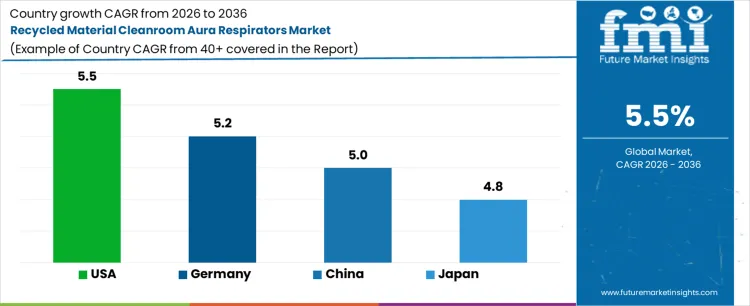
| Country | CAGR (%) |
|---|---|
| USA | 5.5% |
| Germany | 5.2% |
| China | 5.0% |
| Japan | 4.8% |
Demand for recycled-material cleanroom Aura respirators is rising as semiconductor, pharmaceutical, and electronics manufacturers adopt sustainable PPE solutions to reduce environmental impact while maintaining high contamination control standards. The USA leads with a 5.5% CAGR, driven by stringent cleanroom requirements, corporate sustainability initiatives, and adoption of recycled-material respirators in high-tech manufacturing. Germany follows at 5.2%, supported by adoption in pharmaceutical and semiconductor cleanrooms and regulatory compliance. China records 5.0% growth, shaped by growing electronics and pharmaceutical production facilities and environmental policies. Japan shows 4.8% CAGR, reflecting steady integration of sustainable respirators in cleanroom operations and moderate adoption across high-tech manufacturing sectors.
How Is the United States Experiencing Growth in the Recycled-Material Cleanroom Aura Respirators Market?
United States is experiencing growth at a CAGR of 5.5%, supported by adoption of Recycled Material Cleanroom Aura Respirators Market solutions in pharmaceutical, semiconductor, and electronics manufacturing environments to ensure worker safety and maintain contamination-free operations. Manufacturers and suppliers are producing respirators optimized for filtration efficiency, comfort, and compliance with cleanroom standards. Demand is concentrated in industrial cleanrooms, manufacturing hubs, and R&D facilities. Investments focus on material quality, recycled content utilization, and adherence to regulatory safety standards rather than large-scale production expansion. Growth reflects industrial emphasis on sustainability, workplace safety regulations, and rising adoption of recyclable protective equipment.
- Cleanroom safety drives adoption.
- Respirators optimize filtration efficiency and comfort.
- Industrial cleanrooms and R&D hubs concentrate demand.
- Material quality and recycled content utilization guide investment.
How Is Germany Witnessing Growth in the Recycled-Material Cleanroom Aura Respirators Market?
Germany is witnessing growth at a CAGR of 5.2%, fueled by adoption of Recycled Material Cleanroom Aura Respirators Market solutions in pharmaceutical, electronics, and precision manufacturing environments to ensure contamination-free operations and worker safety. Manufacturers and suppliers are deploying respirators optimized for high filtration efficiency, comfort, and regulatory compliance. Demand is concentrated in industrial cleanrooms, manufacturing hubs, and R&D centers. Investments focus on material quality, recycled content, and adherence to industrial safety standards rather than large-scale production. Growth reflects industrial adoption of sustainable protective equipment, regulatory emphasis on cleanroom safety, and environmental responsibility in manufacturing.
- Cleanroom operations drive adoption.
- Respirators ensure high filtration efficiency and comfort.
- Industrial cleanrooms and R&D centers concentrate demand.
- Material quality and recycled content guide investment.
How Is China Experiencing Growth in the Recycled-Material Cleanroom Aura Respirators Market?
China is experiencing growth at a CAGR of 5%, supported by adoption of Recycled Material Cleanroom Aura Respirators Market solutions in semiconductor, pharmaceutical, and electronics manufacturing facilities to maintain cleanroom standards and worker protection. Manufacturers and suppliers are deploying respirators optimized for comfort, filtration efficiency, and compliance with industrial safety regulations. Demand is concentrated in cleanroom manufacturing hubs, R&D centers, and industrial facilities. Investments focus on material performance, recycled content utilization, and regulatory adherence rather than mass production. Growth reflects increasing industrial focus on sustainable protective equipment, adoption of recyclable materials, and regulatory compliance for occupational safety.
- Industrial safety drives adoption.
- Respirators provide filtration efficiency and comfort.
- Cleanroom hubs and R&D centers concentrate demand.
- Material performance and recycled content guide investment.
How Is Japan Witnessing Growth in the Recycled-Material Cleanroom Aura Respirators Market?
Japan is witnessing growth at a CAGR of 4.8%, fueled by adoption of Recycled Material Cleanroom Aura Respirators Market solutions in pharmaceutical, semiconductor, and electronics manufacturing environments to ensure contamination control and worker safety. Manufacturers and suppliers are producing respirators optimized for high filtration efficiency, comfort, and integration with cleanroom protocols. Demand is concentrated in industrial cleanrooms, R&D facilities, and manufacturing hubs. Investments focus on recycled material usage, product performance, and compliance with regulatory standards rather than large-scale deployment. Growth reflects industrial adoption of eco-friendly protective equipment, regulatory focus on occupational safety, and emphasis on cleanroom operational efficiency.
- Contamination control drives adoption.
- Respirators ensure filtration efficiency and comfort.
- Cleanroom facilities and R&D hubs concentrate demand.
- Recycled material usage and compliance guide investment.
Who Competes in the Recycled Material Cleanroom Aura Respirators Market and What Defines Their Capabilities?
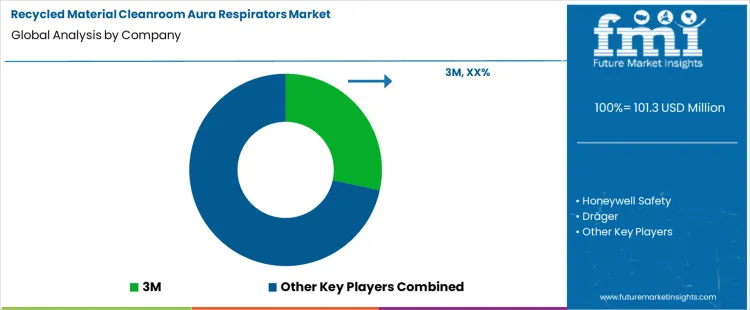
Competition in the Recycled Material Cleanroom Aura Respirators Market is defined by filtration efficiency, material sustainability, and compliance with cleanroom standards. 3M supplies recycled-material respirators engineered for high-efficiency particulate filtration and comfort in controlled environments. Honeywell Safety develops respirators with recycled components, designed for cleanroom compliance and ergonomic fit for extended use. Dräger offers respirators that integrate recycled materials with certified filtration efficiency for pharmaceutical and semiconductor environments. MSA Safety provides cleanroom-compatible respirators featuring sustainable materials and high protection standards. Alpha Pro Tech delivers lightweight respirators suitable for cleanroom applications with partial recycled content.
Ansell supplies respirators designed for controlled environments, incorporating sustainable materials while meeting filtration standards. Other market participants include regional and specialty manufacturers producing recycled-material respirators for pharmaceutical, electronics, and semiconductor cleanrooms. Differentiation arises from filtration efficiency, compliance with ISO cleanroom classifications, material sustainability, ergonomic design, and certification standards. Adoption is influenced by regulatory compliance, operator comfort, and environmental considerations, with suppliers that balance protective performance and sustainability gaining stronger relevance in controlled manufacturing and laboratory environments.
Key Players in the Recycled-Material Cleanroom Aura Respirators Market
- 3M
- Honeywell Safety
- Dräger
- MSA Safety
- Alpha Pro Tech
- Ansell
Scope of the Report
| Items | Values |
|---|---|
| Quantitative Units (2026) | USD million |
| Cleanroom Class | ISO 5-6, ISO 7-8 |
| End-Use Industry | Semiconductor fabs, Pharma and biotech, Medical devices |
| Recycled Content | 20-40% recycled, >40% recycled |
| Region | Asia Pacific, Europe, North America, Latin America, Middle East & Africa |
| Key Countries Covered | USA, Germany, China, Japan |
| Key Companies Profiled | 3M, Honeywell Safety, Dräger, MSA Safety, Alpha Pro Tech, Ansell |
| Additional Attributes | Dollar sales by cleanroom class, end-use industry, and recycled content; regional CAGR, volume and value growth projections; adoption across semiconductor, pharmaceutical, and medical device facilities; validated filtration efficiency and comfort; compliance with ISO cleanroom certifications; high recycled material content supporting sustainability goals; integration with controlled environment protocols; focus on worker safety, operational reliability, and eco-conscious manufacturing practices; contribution to contamination control, regulatory adherence, and reduced material waste. |
Recycled Material Cleanroom Aura Respirators Market Segmentation
Cleanroom Class:
- ISO 5-6
- ISO 7-8
End-Use Industry:
- Semiconductor fabs
- Pharma and biotech
- Medical devices
Recycled Content:
- 20-40 recycled
- 40 recycled
Region:
- Asia Pacific
- China
- Japan
- South Korea
- India
- Australia & New Zealand
- ASEAN
- Rest of Asia Pacific
- Europe
- Germany
- United Kingdom
- France
- Italy
- Spain
- Nordic
- BENELUX
- Rest of Europe
- North America
- United States
- Canada
- Mexico
- Latin America
- Brazil
- Chile
- Rest of Latin America
- Middle East & Africa
- Kingdom of Saudi Arabia
- Other GCC Countries
- Turkey
- South Africa
- Other African Union
- Rest of Middle East & Africa
Bibliography
- International Organization for Standardization. (2023). ISO 14644 cleanrooms and associated controlled environments.
- National Institute for Occupational Safety and Health. (2024). Respirator performance, filtration efficiency, and workplace protection.
- Occupational Safety and Health Administration. (2023). Respiratory protection standard (29 CFR 1910.134).
- European Chemicals Agency. (2024). Safe and sustainable materials in industrial protective equipment.
- World Health Organization. (2023). Occupational health and exposure to airborne particulates.
Frequently Asked Questions
How big is the recycled material cleanroom aura respirators market in 2026?
The global recycled material cleanroom aura respirators market is estimated to be valued at USD 101.3 million in 2026.
What will be the size of recycled material cleanroom aura respirators market in 2036?
The market size for the recycled material cleanroom aura respirators market is projected to reach USD 173.5 million by 2036.
How much will be the recycled material cleanroom aura respirators market growth between 2026 and 2036?
The recycled material cleanroom aura respirators market is expected to grow at a 5.5% CAGR between 2026 and 2036.
What are the key product types in the recycled material cleanroom aura respirators market?
The key product types in recycled material cleanroom aura respirators market are iso 5–6 and iso 7–8.
Which end-use industry segment to contribute significant share in the recycled material cleanroom aura respirators market in 2026?
In terms of end-use industry, semiconductor fabs segment to command 44.0% share in the recycled material cleanroom aura respirators market in 2026.
Preview the report firsthand - request a free sample
Get SampleGet the brochure for pricing and purchase details.
Get PDFTable of Content
- Executive Summary
- Global Market Outlook
- Demand-side Trends
- Supply-side Trends
- Technology Roadmap Analysis
- Analysis and Recommendations
- Market Overview
- Market Coverage / Taxonomy
- Market Definition / Scope / Limitations
- Market Background
- Market Dynamics
- Drivers
- Restraints
- Opportunity
- Trends
- Scenario Forecast
- Demand in Optimistic Scenario
- Demand in Likely Scenario
- Demand in Conservative Scenario
- Opportunity Map Analysis
- Product Life Cycle Analysis
- Supply Chain Analysis
- Investment Feasibility Matrix
- Value Chain Analysis
- PESTLE and Porter’s Analysis
- Regulatory Landscape
- Regional Parent Market Outlook
- Production and Consumption Statistics
- Import and Export Statistics
- Market Dynamics
- Global Market Analysis 2021 to 2025 and Forecast, 2026 to 2036
- Historical Market Size Value (USD Million) Analysis, 2021 to 2025
- Current and Future Market Size Value (USD Million) Projections, 2026 to 2036
- Y-o-Y Growth Trend Analysis
- Absolute $ Opportunity Analysis
- Global Market Pricing Analysis 2021 to 2025 and Forecast 2026 to 2036
- Global Market Analysis 2021 to 2025 and Forecast 2026 to 2036, By Cleanroom Class
- Introduction / Key Findings
- Historical Market Size Value (USD Million) Analysis By Cleanroom Class , 2021 to 2025
- Current and Future Market Size Value (USD Million) Analysis and Forecast By Cleanroom Class , 2026 to 2036
- ISO 5-6
- ISO 7-8
- ISO 5-6
- Y-o-Y Growth Trend Analysis By Cleanroom Class , 2021 to 2025
- Absolute $ Opportunity Analysis By Cleanroom Class , 2026 to 2036
- Global Market Analysis 2021 to 2025 and Forecast 2026 to 2036, By End-Use Industry
- Introduction / Key Findings
- Historical Market Size Value (USD Million) Analysis By End-Use Industry, 2021 to 2025
- Current and Future Market Size Value (USD Million) Analysis and Forecast By End-Use Industry, 2026 to 2036
- Semiconductor fabs
- Pharma and biotech
- Medical devices
- Semiconductor fabs
- Y-o-Y Growth Trend Analysis By End-Use Industry, 2021 to 2025
- Absolute $ Opportunity Analysis By End-Use Industry, 2026 to 2036
- Global Market Analysis 2021 to 2025 and Forecast 2026 to 2036, By Recycled Content
- Introduction / Key Findings
- Historical Market Size Value (USD Million) Analysis By Recycled Content, 2021 to 2025
- Current and Future Market Size Value (USD Million) Analysis and Forecast By Recycled Content, 2026 to 2036
- 20-40 recycled
- >40 recycled
- 20-40 recycled
- Y-o-Y Growth Trend Analysis By Recycled Content, 2021 to 2025
- Absolute $ Opportunity Analysis By Recycled Content, 2026 to 2036
- Global Market Analysis 2021 to 2025 and Forecast 2026 to 2036, By Region
- Introduction
- Historical Market Size Value (USD Million) Analysis By Region, 2021 to 2025
- Current Market Size Value (USD Million) Analysis and Forecast By Region, 2026 to 2036
- North America
- Latin America
- Western Europe
- Eastern Europe
- East Asia
- South Asia and Pacific
- Middle East & Africa
- Market Attractiveness Analysis By Region
- North America Market Analysis 2021 to 2025 and Forecast 2026 to 2036, By Country
- Historical Market Size Value (USD Million) Trend Analysis By Market Taxonomy, 2021 to 2025
- Market Size Value (USD Million) Forecast By Market Taxonomy, 2026 to 2036
- By Country
- USA
- Canada
- Mexico
- By Cleanroom Class
- By End-Use Industry
- By Recycled Content
- By Country
- Market Attractiveness Analysis
- By Country
- By Cleanroom Class
- By End-Use Industry
- By Recycled Content
- Key Takeaways
- Latin America Market Analysis 2021 to 2025 and Forecast 2026 to 2036, By Country
- Historical Market Size Value (USD Million) Trend Analysis By Market Taxonomy, 2021 to 2025
- Market Size Value (USD Million) Forecast By Market Taxonomy, 2026 to 2036
- By Country
- Brazil
- Chile
- Rest of Latin America
- By Cleanroom Class
- By End-Use Industry
- By Recycled Content
- By Country
- Market Attractiveness Analysis
- By Country
- By Cleanroom Class
- By End-Use Industry
- By Recycled Content
- Key Takeaways
- Western Europe Market Analysis 2021 to 2025 and Forecast 2026 to 2036, By Country
- Historical Market Size Value (USD Million) Trend Analysis By Market Taxonomy, 2021 to 2025
- Market Size Value (USD Million) Forecast By Market Taxonomy, 2026 to 2036
- By Country
- Germany
- UK
- Italy
- Spain
- France
- Nordic
- BENELUX
- Rest of Western Europe
- By Cleanroom Class
- By End-Use Industry
- By Recycled Content
- By Country
- Market Attractiveness Analysis
- By Country
- By Cleanroom Class
- By End-Use Industry
- By Recycled Content
- Key Takeaways
- Eastern Europe Market Analysis 2021 to 2025 and Forecast 2026 to 2036, By Country
- Historical Market Size Value (USD Million) Trend Analysis By Market Taxonomy, 2021 to 2025
- Market Size Value (USD Million) Forecast By Market Taxonomy, 2026 to 2036
- By Country
- Russia
- Poland
- Hungary
- Balkan & Baltic
- Rest of Eastern Europe
- By Cleanroom Class
- By End-Use Industry
- By Recycled Content
- By Country
- Market Attractiveness Analysis
- By Country
- By Cleanroom Class
- By End-Use Industry
- By Recycled Content
- Key Takeaways
- East Asia Market Analysis 2021 to 2025 and Forecast 2026 to 2036, By Country
- Historical Market Size Value (USD Million) Trend Analysis By Market Taxonomy, 2021 to 2025
- Market Size Value (USD Million) Forecast By Market Taxonomy, 2026 to 2036
- By Country
- China
- Japan
- South Korea
- By Cleanroom Class
- By End-Use Industry
- By Recycled Content
- By Country
- Market Attractiveness Analysis
- By Country
- By Cleanroom Class
- By End-Use Industry
- By Recycled Content
- Key Takeaways
- South Asia and Pacific Market Analysis 2021 to 2025 and Forecast 2026 to 2036, By Country
- Historical Market Size Value (USD Million) Trend Analysis By Market Taxonomy, 2021 to 2025
- Market Size Value (USD Million) Forecast By Market Taxonomy, 2026 to 2036
- By Country
- India
- ASEAN
- Australia & New Zealand
- Rest of South Asia and Pacific
- By Cleanroom Class
- By End-Use Industry
- By Recycled Content
- By Country
- Market Attractiveness Analysis
- By Country
- By Cleanroom Class
- By End-Use Industry
- By Recycled Content
- Key Takeaways
- Middle East & Africa Market Analysis 2021 to 2025 and Forecast 2026 to 2036, By Country
- Historical Market Size Value (USD Million) Trend Analysis By Market Taxonomy, 2021 to 2025
- Market Size Value (USD Million) Forecast By Market Taxonomy, 2026 to 2036
- By Country
- Kingdom of Saudi Arabia
- Other GCC Countries
- Turkiye
- South Africa
- Other African Union
- Rest of Middle East & Africa
- By Cleanroom Class
- By End-Use Industry
- By Recycled Content
- By Country
- Market Attractiveness Analysis
- By Country
- By Cleanroom Class
- By End-Use Industry
- By Recycled Content
- Key Takeaways
- Key Countries Market Analysis
- USA
- Pricing Analysis
- Market Share Analysis, 2025
- By Cleanroom Class
- By End-Use Industry
- By Recycled Content
- Canada
- Pricing Analysis
- Market Share Analysis, 2025
- By Cleanroom Class
- By End-Use Industry
- By Recycled Content
- Mexico
- Pricing Analysis
- Market Share Analysis, 2025
- By Cleanroom Class
- By End-Use Industry
- By Recycled Content
- Brazil
- Pricing Analysis
- Market Share Analysis, 2025
- By Cleanroom Class
- By End-Use Industry
- By Recycled Content
- Chile
- Pricing Analysis
- Market Share Analysis, 2025
- By Cleanroom Class
- By End-Use Industry
- By Recycled Content
- Germany
- Pricing Analysis
- Market Share Analysis, 2025
- By Cleanroom Class
- By End-Use Industry
- By Recycled Content
- UK
- Pricing Analysis
- Market Share Analysis, 2025
- By Cleanroom Class
- By End-Use Industry
- By Recycled Content
- Italy
- Pricing Analysis
- Market Share Analysis, 2025
- By Cleanroom Class
- By End-Use Industry
- By Recycled Content
- Spain
- Pricing Analysis
- Market Share Analysis, 2025
- By Cleanroom Class
- By End-Use Industry
- By Recycled Content
- France
- Pricing Analysis
- Market Share Analysis, 2025
- By Cleanroom Class
- By End-Use Industry
- By Recycled Content
- India
- Pricing Analysis
- Market Share Analysis, 2025
- By Cleanroom Class
- By End-Use Industry
- By Recycled Content
- ASEAN
- Pricing Analysis
- Market Share Analysis, 2025
- By Cleanroom Class
- By End-Use Industry
- By Recycled Content
- Australia & New Zealand
- Pricing Analysis
- Market Share Analysis, 2025
- By Cleanroom Class
- By End-Use Industry
- By Recycled Content
- China
- Pricing Analysis
- Market Share Analysis, 2025
- By Cleanroom Class
- By End-Use Industry
- By Recycled Content
- Japan
- Pricing Analysis
- Market Share Analysis, 2025
- By Cleanroom Class
- By End-Use Industry
- By Recycled Content
- South Korea
- Pricing Analysis
- Market Share Analysis, 2025
- By Cleanroom Class
- By End-Use Industry
- By Recycled Content
- Russia
- Pricing Analysis
- Market Share Analysis, 2025
- By Cleanroom Class
- By End-Use Industry
- By Recycled Content
- Poland
- Pricing Analysis
- Market Share Analysis, 2025
- By Cleanroom Class
- By End-Use Industry
- By Recycled Content
- Hungary
- Pricing Analysis
- Market Share Analysis, 2025
- By Cleanroom Class
- By End-Use Industry
- By Recycled Content
- Kingdom of Saudi Arabia
- Pricing Analysis
- Market Share Analysis, 2025
- By Cleanroom Class
- By End-Use Industry
- By Recycled Content
- Turkiye
- Pricing Analysis
- Market Share Analysis, 2025
- By Cleanroom Class
- By End-Use Industry
- By Recycled Content
- South Africa
- Pricing Analysis
- Market Share Analysis, 2025
- By Cleanroom Class
- By End-Use Industry
- By Recycled Content
- USA
- Market Structure Analysis
- Competition Dashboard
- Competition Benchmarking
- Market Share Analysis of Top Players
- By Regional
- By Cleanroom Class
- By End-Use Industry
- By Recycled Content
- Competition Analysis
- Competition Deep Dive
- 3M
- Overview
- Product Portfolio
- Profitability by Market Segments (Product/Age /Sales Channel/Region)
- Sales Footprint
- Strategy Overview
- Marketing Strategy
- Product Strategy
- Channel Strategy
- Honeywell Safety
- Dräger
- MSA Safety
- Alpha Pro Tech
- Ansell
- 3M
- Competition Deep Dive
- Assumptions & Acronyms Used
- Research Methodology


