

- Industry Size (2026)
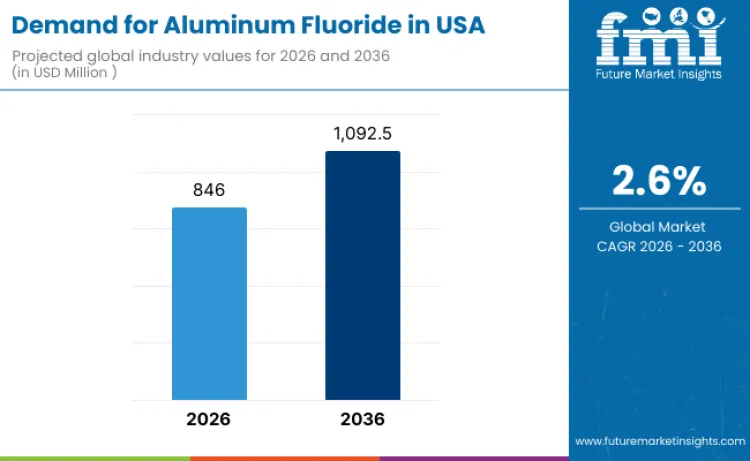
- USD 846.0 Mn
- Forecast (2036)
- USD 1092.5 Mn
- CAGR (2026 to 2036)
- 2.6%
Demand for Aluminum Fluoride in USA 2026 to 2036
Demand for Aluminum Fluoride in USA is valued at USD 846.0 million in 2026 and is projected to reach USD 1,092.5 million by 2036, reflecting a CAGR of 2.6%. Demand remains closely linked to primary aluminum production, where aluminum fluoride functions as a critical flux in electrolytic smelting. Stable output from domestic smelters, coupled with incremental efficiency upgrades, sustains long-term consumption across the aluminum value chain.
Metallurgical-grade aluminum fluoride leads grade usage because it improves bath conductivity, lowers melting point, and reduces energy consumption during Hall-Héroult operations. Smelters depend on consistent chemical composition and controlled impurity levels to maintain cell stability and metal yield. Operational reliability and cost efficiency reinforce preference for metallurgical-grade material in large-scale aluminum processing.
Quick Stats for Demand for Aluminum Fluoride in USA
- USA Aluminum Fluoride Sales Value (2026): USD 846.0 million
- USA Aluminum Fluoride Forecast Value (2036): USD 1,092.5 million
- USA Aluminum Fluoride Forecast CAGR (2026 to 2036): 2.6%
- Leading Grade in USA Demand: Metallurgical-grade aluminum fluoride
- Key Growth Regions in USA Demand: West USA, South USA, Northeast USA, Midwest USA
- Top Players in USA Demand: Rio Tinto, Solvay, Fluorsid, Do-Fluoride Chemicals, Hunan Nonferrous Metals Corporation
West USA, South USA, Northeast USA, and Midwest USA represent key growth regions supported by aluminum smelting operations, downstream fabrication facilities, and industrial supply infrastructure. Rio Tinto, Solvay, Fluorsid, Do-Fluoride Chemicals, and Hunan Nonferrous Metals Corporation anchor competitive activity through stable supply contracts, quality-controlled production, and logistics capabilities aligned with continuous aluminum smelting requirements across USA industrial operations.
USA Aluminum Fluoride Key Takeaways
| Metric | Value |
|---|---|
| USA Aluminum Fluoride Sales Value (2026) | USD 846.0 million |
| USA Aluminum Fluoride Forecast Value (2036) | USD 1,092.5 million |
| USA Aluminum Fluoride Forecast CAGR (2026-2036) | 2.6% |
How Are the Segments Classified in the Demand for Aluminum Fluoride in the USA?
Demand for aluminum fluoride in the USA is shaped by primary aluminum production intensity, smelting efficiency requirements, and controlled use in downstream industrial processes. Buyers evaluate chemical purity, thermal stability, and compatibility with electrolytic systems and specialty reactions. Adoption patterns reflect continued reliance on aluminum fluoride as a fluxing and electrolyte-modifying agent, alongside selective use in ceramics, fluorocarbon chemistry, and intermediate chemical manufacturing across USA facilities.
Which Grade Accounts for the Largest Share of Demand in the USA?
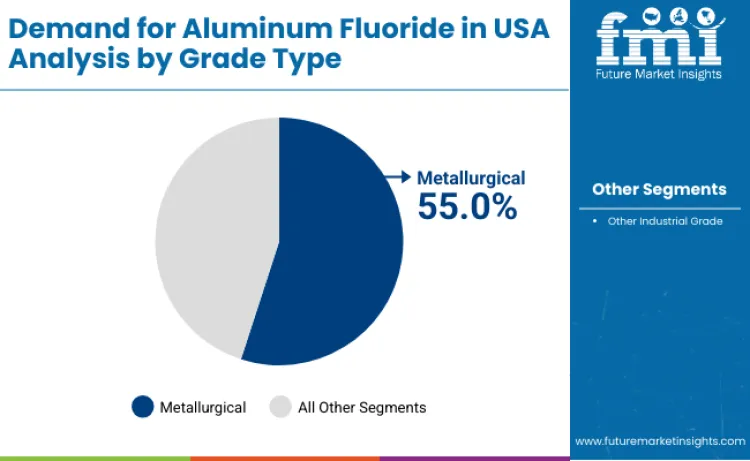
Metallurgical grade aluminum fluoride holds 55.0%, making it the leading grade segment in the USA. This grade is used extensively in aluminum smelting to reduce electrolyte melting temperature and improve current efficiency. Consistent particle size and controlled impurity levels support stable bath chemistry in Hall-Héroult processes. Other industrial grades serve applications requiring lower purity thresholds, including ceramics processing and chemical synthesis. Grade distribution reflects concentration of demand within primary aluminum operations, where performance consistency and cost efficiency remain critical for large-scale USA smelters.
Key Points:
- Metallurgical grade dominates due to aluminum smelting requirements.
- Electrolyte stability drives grade selection in primary production.
- Other grades support secondary industrial applications.
Which Application Accounts for the Largest Share of Demand in the USA?
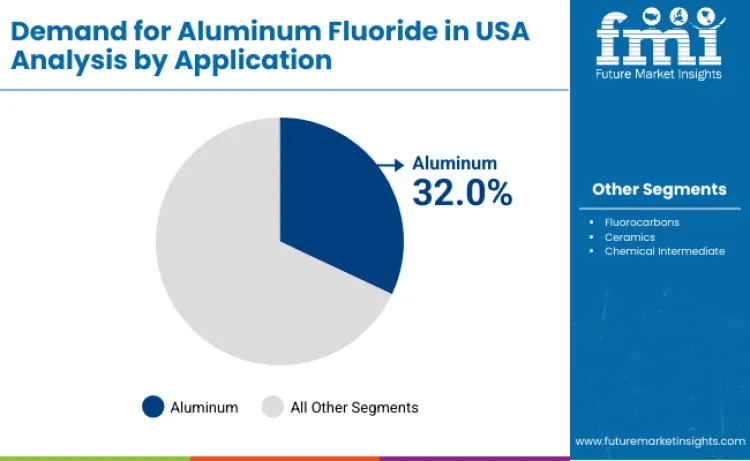
Aluminum production holds 32.0%, making it the leading application segment in the USA. Aluminum fluoride is used to control electrolyte properties, reduce energy consumption, and improve metal yield during smelting. Fluorocarbon applications use aluminum fluoride as a fluorination agent or catalyst component. Ceramics manufacturing applies aluminum fluoride to modify flux behavior and firing characteristics. Chemical intermediate applications use the compound in controlled synthesis pathways. Application distribution reflects dominant demand from aluminum producers, supported by steady secondary consumption across specialty chemical and materials processing industries.
Key Points:
- Aluminum smelting represents the primary consumption base.
- Energy-efficiency needs drive usage in electrolytic processes.
- Secondary demand arises from fluorocarbon and ceramics processing.
What are the Key Dynamics in the Aluminum Fluoride Industry in USA?
Demand increases as USA aluminium producers rely on aluminum fluoride as a critical flux in primary aluminium smelting operations. Consumption aligns closely with domestic aluminium output, smelter operating rates, and efficiency optimization in electrolytic processes. Usage remains concentrated within industrial metallurgy due to limited substitution potential. Supply stability, energy cost management, and domestic metals demand shape consistent consumption across established smelting regions.
How do primary aluminium production requirements drive demand for aluminum fluoride in USA?
USA aluminium smelters use aluminum fluoride to lower the melting point of alumina during electrolytic reduction, improving energy efficiency and bath stability. Flux usage supports reduced electricity consumption per tonne of aluminium produced. Smelters apply controlled dosing to maintain optimal cryolite ratios and minimize cell volatility. Domestic demand for aluminium in automotive, aerospace, construction, and packaging sustains smelter activity. Modernization initiatives focus on process efficiency, reinforcing reliance on aluminum fluoride. Integrated supply contracts support predictable procurement. Concentration of smelting operations in energy-intensive regions influences regional consumption patterns tied to grid availability and long-term industrial power agreements.
How do energy costs, environmental regulation, and supply factors influence demand stability?
Electricity pricing directly affects aluminium smelter operating rates, influencing aluminum fluoride consumption levels. Environmental regulations governing fluoride emissions require investment in capture and recycling systems, increasing operational oversight. Supply depends on fluorite availability and chemical processing capacity, creating sensitivity to raw material pricing. Limited domestic fluorite sources increase reliance on imports, affecting cost stability. Smelter closures or capacity curtailments reduce local demand. Recycling of spent pot lining and fluoride recovery moderate’s virgin material usage. Demand remains stable within active smelters, while long-term growth faces constraints from energy economics, environmental compliance, and structural shifts in USA aluminium production capacity.
How Is Demand for Aluminum Fluoride in USA Evolving by Region?
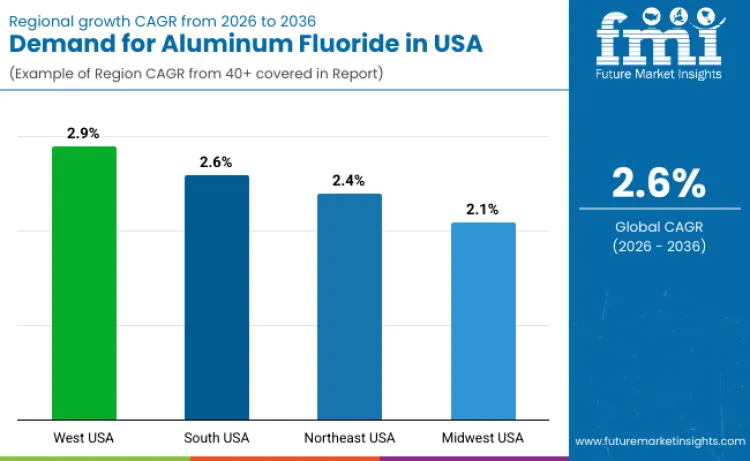
Demand for aluminum fluoride in the USA is growing at a measured pace due to its essential role in primary aluminum smelting, secondary aluminum refining, and specialty flux applications. West USA leads with a 2.9% CAGR, supported by non-ferrous metal processing, downstream aluminum fabrication, and specialty metallurgy. South USA follows at 2.6%, driven by concentration of aluminum smelters, rolling mills, and integrated metal-processing operations. Northeast USA records a 2.4% CAGR, shaped by secondary aluminum refining, specialty alloys, and controlled industrial usage. Midwest USA posts a 2.1% CAGR, reflecting stable demand from automotive aluminum casting, industrial fabrication, and replacement-driven consumption. Regional variation reflects smelting presence, energy economics, and downstream aluminum intensity across the USA.
| Region | CAGR (2026-2036) |
|---|---|
| West USA | 2.9% |
| South USA | 2.6% |
| Northeast USA | 2.4% |
| Midwest USA | 2.1% |
How is West USA driving demand for Aluminum Fluoride?
West USA demand is shaped by downstream aluminum processing, specialty metallurgy, and energy-sensitive production planning. The region’s CAGR of 2.9% reflects use of aluminum fluoride as a fluxing agent in primary aluminum smelting and in secondary refining operations requiring precise bath chemistry control. Aluminum fabricators apply aluminum fluoride to improve current efficiency and reduce energy losses in electrolytic processes. Specialty alloy producers rely on controlled-grade aluminum fluoride for consistent melt quality. Demand favors low-impurity, granular forms supplied in sealed bulk bags and intermediate containers to support handling safety. Growth remains incremental, aligned with stable aluminum output and efficiency optimization rather than capacity expansion.
- Primary and secondary aluminum refining applications
- Flux usage for electrolytic bath stability
- Preference for low-impurity, controlled-grade material
- Demand linked to energy-efficiency optimization
How is South USA driving demand for Aluminum Fluoride?
South USA demand is volume-oriented and closely tied to aluminum smelting and rolling operations. The region’s CAGR of 2.6% reflects sustained use of aluminum fluoride in electrolytic reduction cells and downstream aluminum sheet and extrusion production. Integrated metal-processing facilities benefit from proximity to ports, raw material supply, and favorable logistics. Procurement emphasizes consistent quality, bulk availability, and long-term supply agreements. Aluminum fluoride is supplied in large bags and bulk containers to support continuous operations. Demand stability is reinforced by steady demand from construction, packaging, and transportation end uses.
- Aluminum smelting and rolling mill consumption
- Continuous electrolytic reduction operations
- Bulk procurement and long-term supply contracts
- Stable demand from construction and packaging sectors
How is Northeast USA driving demand for Aluminum Fluoride?
Northeast USA demand reflects controlled industrial usage, secondary aluminum refining, and specialty alloy production. The region’s CAGR of 2.4% is supported by use of aluminum fluoride in recycling-focused operations where impurity control is critical. Specialty manufacturers require consistent chemical composition to support high-performance aluminum alloys used in industrial and defense-related applications. Regulatory oversight influences sourcing from certified suppliers with documented material traceability. Packaging formats favor mid-size bulk bags compatible with smaller batch operations. Growth remains cautious and efficiency-driven rather than volume-led.
- Secondary aluminum refining and recycling usage
- Specialty alloy and controlled metallurgy applications
- Emphasis on certified and traceable material supply
- Moderate volumes aligned with batch-based operations
How is Midwest USA driving demand for Aluminum Fluoride?
Midwest USA demand is stable and manufacturing-focused, reflecting long-standing aluminum casting and fabrication activity. The region’s CAGR of 2.1% reflects use of aluminum fluoride in automotive casting, industrial components, and equipment manufacturing. Aluminum processors prioritize cost efficiency, consistent performance, and compatibility with established smelting and melting systems. Demand is largely replacement-driven, with limited exposure to new smelting capacity additions. Packaging commonly includes standard bulk bags and reusable containers aligned with predictable production schedules. Growth remains modest, supported by sustained aluminum demand from transportation and industrial markets.
- Automotive and industrial aluminum casting usage
- Cost-focused procurement preferences
- Replacement-driven consumption patterns
- Stable demand from mature manufacturing facilities
What is the competitive landscape of demand for aluminum fluoride in the USA?
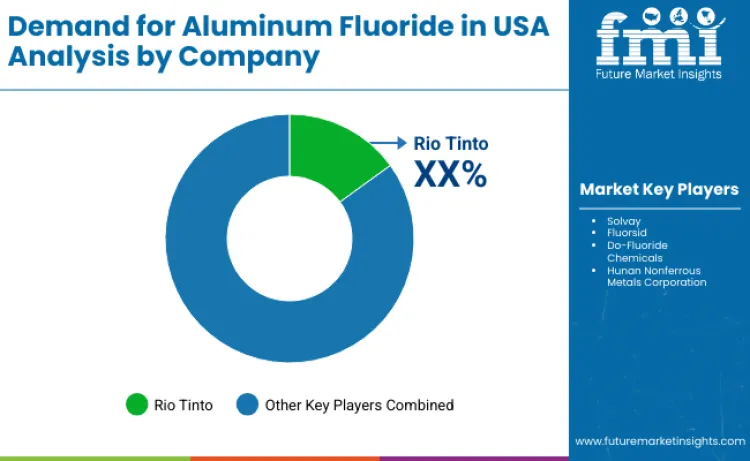
Demand for aluminum fluoride in the USA is driven by primary aluminum smelting, secondary aluminum processing, and specialty glass and ceramic applications. Usage depends on controlled fluoride content, particle size consistency, and reliable performance as a fluxing agent that lowers electrolyte melting temperature in aluminum electrolysis. Buyers evaluate chemical purity, moisture control, packaging safety, and compliance with USA environmental and occupational regulations. Procurement teams prioritize suppliers with stable supply chains, technical support for smelter operations, and experience handling fluorine-based inorganic compounds. Trend in the USA market reflects steady aluminum production, ongoing modernization of smelting efficiency, and continued reliance on aluminum fluoride as a critical consumable in electrolytic processes.
Rio Tinto operates aluminum fluoride supply linked to its North American aluminum value chain and long-standing smelter relationships. Solvay maintains a USA presence supplying aluminum fluoride and fluorine-based inorganic chemicals for metallurgical applications. Fluorsid supports USA demand through international production and established distribution channels serving aluminum producers. Do-Fluoride Chemicals supplies aluminum fluoride to USA customers via regulated import routes aligned with industrial-grade specifications. Hunan Nonferrous Metals Corporation participates through USA distributors serving aluminum smelters and specialty industrial users. Competitive positioning in the USA reflects supply reliability, chemical consistency, regulatory compliance, and technical understanding of aluminum electrolysis requirements.
Key Players in USA Aluminum Fluoride Demand
- Rio Tinto
- Solvay
- Fluorsid
- Do-Fluoride Chemicals
- Hunan Nonferrous Metals Corporation
Scope of the Report
| Items | Values |
|---|---|
| Quantitative Units | USD million |
| Grade | Metallurgical Grade; Other Industrial Grade |
| Application | Aluminum; Fluorocarbons; Ceramics; Chemical Intermediate |
| Regions Covered | West USA; South USA; Northeast USA; Midwest USA |
| Key Companies Profiled | Rio Tinto; Solvay; Fluorsid; Do-Fluoride Chemicals; Hunan Nonferrous Metals Corporation |
| Additional Attributes | Dollar sales by grade and application; consumption trends driven by primary aluminum smelting activity; linkage with fluorochemical and ceramic processing output; supply reliance on import channels and long-term contracts; regulatory controls on fluoride emissions influencing production technology and sourcing decisions. |
USA Aluminum Fluoride Demand by Segments
Grade:
- Metallurgical Grade
- Other Industrial Grade
Application:
- Aluminum
- Fluorocarbons
- Ceramics
- Chemical Intermediate
Region:
- West USA
- South USA
- Northeast USA
- Midwest USA
Frequently Asked Questions
How big is the demand for aluminum fluoride in USA in 2026?
The demand for aluminum fluoride in USA is estimated to be valued at USD 846.0 million in 2026.
What will be the size of aluminum fluoride demand in USA in 2036?
The demand size for aluminum fluoride in USA is projected to reach USD 1,092.5 million by 2036.
How much will the demand for aluminum fluoride in USA grow between 2026 and 2036?
The demand for aluminum fluoride in USA is expected to grow at a 2.6% CAGR between 2026 and 2036.
What are the key grades in the aluminum fluoride demand in USA?
The key grades in aluminum fluoride demand in USA include metallurgical grade and other industrial-grade variants.
Which application segment is expected to contribute a significant share in the aluminum fluoride demand in USA in 2026?
In terms of application, aluminum production is expected to command 32.0% share in the aluminum fluoride demand in USA in 2026.
Preview the report firsthand - request a free sample
Get SampleGet the brochure for pricing and purchase details.
Get PDFTable of Content
- Executive Summary
- USA Market Outlook
- Demand-side Trends
- Supply-side Trends
- Technology Roadmap Analysis
- Analysis and Recommendations
- Market Overview
- Market Coverage / Taxonomy
- Market Definition / Scope / Limitations
- Market Background
- Market Dynamics
- Drivers
- Restraints
- Opportunity
- Trends
- Scenario Forecast
- Demand in Optimistic Scenario
- Demand in Likely Scenario
- Demand in Conservative Scenario
- Opportunity Map Analysis
- Product Life Cycle Analysis
- Supply Chain Analysis
- Investment Feasibility Matrix
- Value Chain Analysis
- PESTLE and Porter’s Analysis
- Regulatory Landscape
- Regional Parent Market Outlook
- Production and Consumption Statistics
- Import and Export Statistics
- USA Aluminum Fluoride Demand Analysis 2020 to 2024 and Forecast, 2025 to 2035
- Historical Market Size Value (USD Million) Analysis, 2020 to 2024
- Current and Future Market Size Value (USD Million) Projections, 2025 to 2035
- Y-o-Y Growth Trend Analysis
- Absolute $ Opportunity Analysis
- USA Aluminum Fluoride Demand Pricing Analysis 2020 to 2024 and Forecast 2025 to 2035
- USA Aluminum Fluoride Demand Analysis 2020 to 2024 and Forecast 2025 to 2035, By Grade
- Introduction / Key Findings
- Historical Market Size Value (USD Million) Analysis By Grade, 2020 to 2024
- Current and Future Market Size Value (USD Million) Analysis and Forecast By Grade, 2025 to 2035
- Metallurgical Grade
- Other Industrial Grade
- Y-o-Y Growth Trend Analysis By Grade, 2020 to 2024
- Absolute $ Opportunity Analysis By Grade, 2025 to 2035
- USA Aluminum Fluoride Demand Analysis 2020 to 2024 and Forecast 2025 to 2035, By Application
- Introduction / Key Findings
- Historical Market Size Value (USD Million) Analysis By Application, 2020 to 2024
- Current and Future Market Size Value (USD Million) Analysis and Forecast By Application, 2025 to 2035
- Aluminum
- Fluorocarbons
- Ceramics
- Chemical Intermediate
- Y-o-Y Growth Trend Analysis By Application, 2020 to 2024
- Absolute $ Opportunity Analysis By Application, 2025 to 2035
- Market Structure Analysis
- Competition Dashboard
- Competition Benchmarking
- Market Share Analysis of Top Players
- By Regional
- By Grade
- By Application
- Competition Analysis
- Competition Deep Dive
- Rio Tinto
- Overview
- Product Portfolio
- Profitability by Market Segments (Product / Sales Channel / Region)
- Sales Footprint
- Strategy Overview
- Marketing Strategy
- Product Strategy
- Channel Strategy
- Solvay
- Fluorsid
- Do-Fluoride Chemicals
- Hunan Nonferrous Metals Corporation
- Rio Tinto
- Assumptions & Acronyms Used
- Research Methodology


