

- Industry Size (2025)
- USD 1.1 Bn
- Forecast (2035)
- USD 1.5 Bn
- CAGR (2025 to 2035)
- 2.8%
Demand for Aluminum ROPP Closure in USA 2025 to 2035
The demand for aluminum ROPP closure in the USA is valued at USD 1.1 billion in 2025 and is forecasted to reach USD 1.5 billion by 2035, with a CAGR of 2.8%. Demand is supported by steady consumption of packaged alcoholic beverages, bottled oils, and nutraceutical liquids that require tamper-evident and contamination-resistant sealing. Aluminum ROPP closures remain a standardized packaging component due to their sealing reliability, compatibility with automated capping lines, and recyclability. Producers focus on maintaining consistent thread precision and torque performance to support safety and product shelf life.
Pourer insert closures represent the leading product type. Their controlled dispensing and spill-reduction capabilities suit edible oils, spirits, and flavored concentrates. Continuous development in linear materials and precision molding supports long-term usage in oxygen and moisture-sensitive products. Lightweighting initiatives aim to reduce aluminum usage per unit without changing performance standards.
Quick Stats for USA Aluminum ROPP Closure Demand
- USA Aluminum ROPP Closure Sales Value (2025): USD 1.1 billion
- USA Aluminum ROPP Closure Forecast Value (2035): USD 1.5 billion
- USA Aluminum ROPP Closure Forecast CAGR (2025 to 2035): 2.8%
- Leading Product Type in USA Aluminum ROPP Closure Demand: Pourer Insert Closures
- Key Growth Regions in USA Aluminum ROPP Closure Demand: West USA, South USA, Northeast USA
- Top Players in USA Aluminum ROPP Closure Demand: Silgan Holdings Inc., Guala Closures S.p.A, Amcor Plc., Crown Holdings Inc., Herti JSC

What is the Growth Forecast for Aluminum ROPP Closure Industry in USA through 2035?
The West, South, and Northeast show the strongest deployment due to the presence of major beverage fillers, packaged food processors, and distribution hubs. Growth in premium liquor segments and format diversification among cooking oils reinforce adoption trends across these regions. Key suppliers include Silgan Holdings Inc., Guala Closures S.p.A, Amcor Plc., Crown Holdings Inc., and Herti JSC. Their priorities include improved closure-body integrity, automated inspection accuracy, and broader sizing ranges to align with changing bottling requirements.
Demand for aluminum ROPP closures in the United States follows a gradual two-phase growth trajectory. The early phase is supported by steady USAge in alcoholic beverages, nutritional supplements, and pharmaceuticals, where tamper-evident packaging remains a regulatory and product protection priority. Growth during this period shows a consistent baseline, influenced by established bottling operations and incremental production expansions rather than major capacity jumps.
The later phase highlights more selective acceleration as premium beverage brands invest in packaging upgrades to enhance shelf appeal and product safety. However, late-stage growth remains moderated by competition from plastic and cork alternatives in certain categories. Sustainability efforts support aluminum adoption because of high recyclability, but material cost dynamics prevent a sharp rise in conversion rates across all packaging lines.
Compared with the earlier stage, late-phase growth becomes more dependent on niche expansion and branding strategies rather than overall volume demand from mainstream sectors. The shift reveals a transition from broad, necessity-driven consumption to targeted upgrades in packaging performance. This keeps the long-term growth curve positive but slightly flatter as the forecast horizon progresses, signaling a mature packaging segment with consistent but controlled adoption patterns in the United States.
USA Aluminum ROPP Closure Key Takeaways
| Metric | Value |
|---|---|
| USA Aluminum ROPP Closure Sales Value (2025) | USD 1.1 billion |
| USA Aluminum ROPP Closure Forecast Value (2035) | USD 1.5 billion |
| USA Aluminum ROPP Closure Forecast CAGR (2025-2035) | 2.8% |
Why is the Demand for Aluminum ROPP Closures in the USA Growing?
Demand for aluminum ROPP closures in the USA is increasing because beverage, spirits and bottled goods producers require secure, tamper-evident closure systems that meet regulatory and consumer safety expectations. Aluminum ROPP caps provide effective sealing, protect product integrity and support long shelf life by limiting air and moisture ingress.
Growth in craft spirits, bottled sauces, oils, premium beverages and small-batch liquor brands supports demand for ROPP closures. Producers value the professional appearance, lightweight nature and recyclability of aluminum closures for brands positioned in upscale or eco-conscious industries. Recyclable metal packaging supports sustainability commitments and appeals to environmentally aware consumers.
Bottling plants benefit from automated capping equipment that quickly applies ROPP caps on high throughput production lines. Consistent torque and seal quality reduce spoilage, leakage and return rates while maintaining production efficiency at scale. Constraints include higher closure cost compared with standard plastic caps and the need for specialized capping machinery. Beverage manufacturers with small output volumes may delay adopting ROPP closures until batch size or production scale justifies equipment investment.
Which Product Types, Manufacturing Processes, and Neck Sizes Lead Demand for Aluminum ROPP Closures in the USA?
Demand for aluminum ROPP (Roll-On Pilfer-Proof) closures in the United States is driven by strict tamper-evidence requirements, premium packaging needs, and compatibility with food, beverage, and pharmaceutical filling lines. Brands prioritize safety assurance, leak resistance, recyclability, and consistency in high-speed capping operations. Growth is supported by rising consumption of spirits, wine, OTC drugs, and functional beverages. Closure selection depends on neck finish standardization, torque performance, and supply chain availability across domestic filling facilities.
By Product Type, Pourer Insert Closures Lead Demand
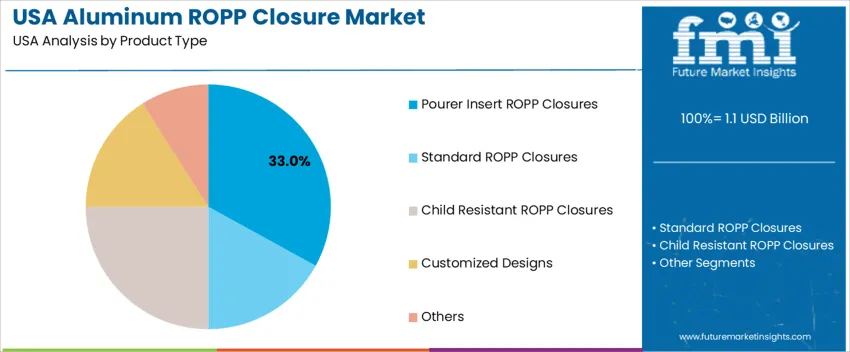
Pourer insert aluminum ROPP closures hold 33.0%, driven by beverage preference for controlled dispensing and spill prevention in spirits, edible oils, and liquid supplements. Child-resistant variants represent 25.0%, aligned with USA regulatory standards for pharmaceutical and cleaning products requiring secure access. Standard ROPP closures account for 17.0%, used in conventional bottled beverages and low-risk consumer items. Customized designs hold 16.0%, enabling branding differentiation for premium alcoholic beverages and specialty categories. The remaining 9.0% covers niche functional variations used in industrial or limited-run packaging. Product type selection depends on safety compliance, dispensing precision, and branding requirements.
Key Points:
- Pourer inserts support precise dosing and spill control
- Child-resistant closures protect regulated consumer segments
- Standard and custom designs serve broad consumer retail use
By Manufacturing Process, In-House Production Dominates
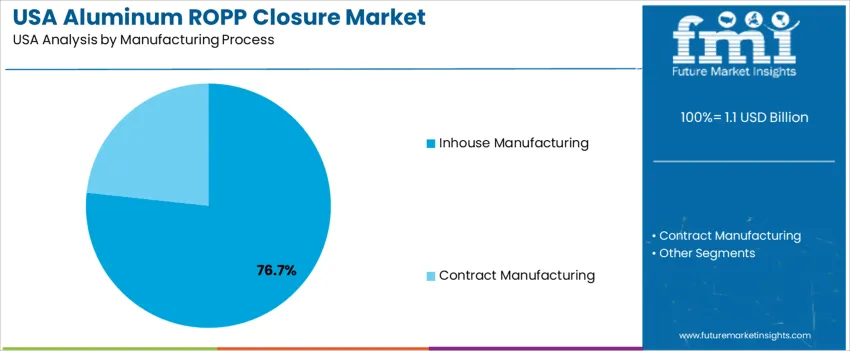
In-house manufacturing accounts for 76.7%, reflecting closure integration within large USA bottling and packaging facilities that prioritize quality control, cost efficiency, and assured supply for high-volume production. Contract manufacturing holds 23.3%, used by emerging beverage players and pharmaceutical firms seeking specialized printing, knurling, and liner customization without capital investment. Internal closure production supports faster lead times and standardized compatibility with proprietary bottle necks. The balance between internal and outsourced supply reflects scaling strategies, brand volume, and operational control across primary beverage and drug packaging lines.
Key Points:
- In-house production aligns with high-volume operational control
- Contract manufacturing supports specialized customization
- Supply security influences process strategy across USA fillers
By Neck Size, 24-38 mm Closures Hold the Largest Share
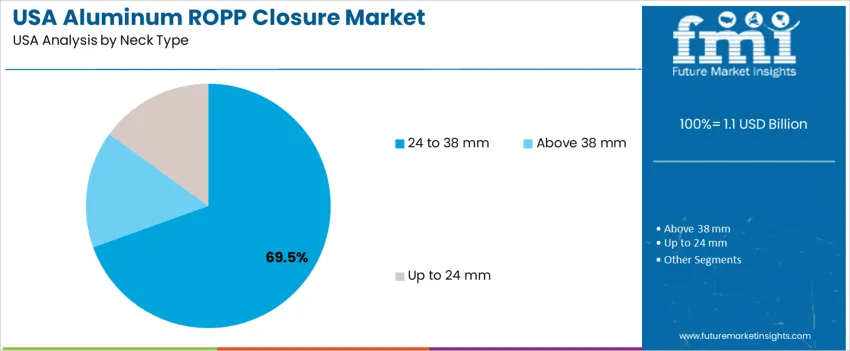
Closures compatible with 24-38 mm necks represent 69.5%, reflecting USA standardization for spirits, wine, water, and nutritional supplement bottles. Neck diameters above 38 mm account for 15.5%, used for edible oils and industrial liquids requiring wider openings. Closures for up to 24 mm necks hold 15.0%, utilized in OTC pharmaceuticals, flavors, and compact consumer packaging. Neck size selection is influenced by dispensing requirements, structural rigidity, labeling conventions, and machinery format compatibility across regional bottling operations.
Key Points:
- 24-38 mm remains the dominant USA bottling standard
- Wider necks support viscosity handling and controlled pouring
- Smaller necks remain critical in pharmaceuticals and compact units
What are the Drivers, Restraints, and Key Trends of the Demand for Aluminum ROPP Closures in the USA?
Growth of wine and spirits consumption, increased reliance on tamper-evident packaging and expanding production of premium beverages drive demand.
In the United States, aluminum roll-on pilfer-proof closures are widely used in wine, distilled spirits and specialty beverages that require secure sealing and long shelf stability. Expanding winery operations in California, Oregon and Washington support strong packaging procurement as wineries bottle more inventory for national distribution. Spirits brands adopt aluminum closures to provide consistent sealing and tamper evidence, which helps maintain product integrity through long logistics chains.
Convenience stores and retail outlets depend on packaging that withstands frequent handling, supporting preference for durable aluminum caps. Growth of ready-to-drink cocktails and flavored alcoholic beverages increases closure usage across multiple bottle shapes and sizes. These patterns sustain dependable demand from premium and mid-tier beverage producers.
Higher material cost, competition from plastic closures and slower adoption in carbonated drinks restrain demand.
Aluminum prices fluctuate with metal supply dynamics, and cost increases can discourage widespread use when lower-priced plastic options meet functional requirements. Some beverage categories, especially carbonated soft drinks and beer, maintain strong reliance on crown caps or plastic caps that withstand internal pressure, limiting conversion to aluminum ROPP closures. Smaller bottlers may prefer conventional closures due to familiarity with existing machinery, which reduces switching momentum. These cost and compatibility constraints moderate growth in wider beverage packaging applications.
Shift toward lightweight and recyclable closure solutions, increased adoption in tamper-evident retail formats and rising demand from premium wine and craft spirits define key trends.
Producers emphasize aluminum closures due to recyclable metal content and alignment with sustainability messaging. Tamper-evident bands and improved threading designs enhance security for retail channels focused on theft prevention and authenticity. Premium brands highlight closure customization with embossing, color options and branding elements that reinforce product identity on shelves. Growing investment in USA craft distilleries expands usage in small-batch bottling where quality presentation supports pricing strategy. These developments indicate steady, value-driven demand for aluminum ROPP closures across the United States beverage packaging landscape supported by product protection and sustainable material preferences.
Analysis of the Demand for Aluminum ROPP Closures in the USA by Region
Demand for aluminum roll-on pilfer-proof (ROPP) closures in the United States is rising due to tightening packaging-security requirements, premiumization in beverages, and growth in pharmaceutical and cosmetic filling lines. These closures support tamper evidence, lightweighting initiatives, and recyclability improvements aligned with sustainability programs. Their adoption is particularly strong in bottled spirits, wine, edible oils, and OTC liquid medications. Procurement relies on closure-lining compatibility with product chemistry and high-speed capping performance. West USA leads with 3.2% CAGR, followed by South USA at 2.8%, Northeast USA at 2.5%, and Midwest USA at 2.2%. Growth patterns reflect region-specific bottling activities, distribution-hub logistics, and investment in closure-application automation.
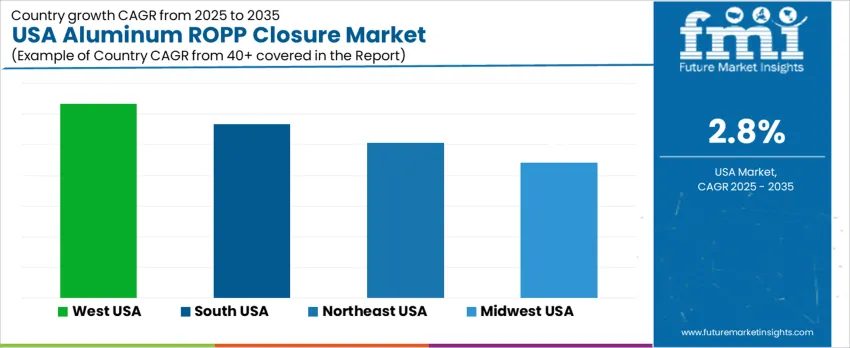
| Region | CAGR (2025-2035) |
|---|---|
| West USA | 3.2% |
| South USA | 2.8% |
| Northeast USA | 2.5% |
| Midwest USA | 2.2% |
How is the West USA driving demand for aluminum ROPP closures?
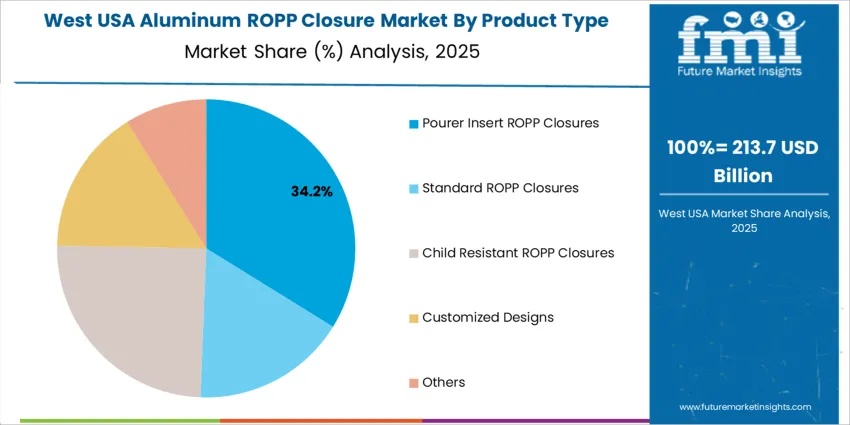
The West USA is expanding at a 3.2% CAGR, supported by large wine and spirits bottling activities in California, Washington, and Oregon. Aluminum ROPP closures are increasingly selected over cork and plastic formats to ensure tamper resistance, secure sealing, and oxidation control for premium beverages. Personal-care brands located along coastal manufacturing corridors use closures with improved thread precision and liner compatibility for oils, toners, and liquid skincare.
Specialty-food producers adopt aluminum caps for olive oils and flavor concentrates that require contamination protection. Sustainability commitments drive preference for mono-material aluminum closures that align with state recycling guidelines. Bottlers invest in automated capping systems to maintain torque accuracy and line efficiency across varying bottle-neck standards. Distributors prefer closures with stable supply and lacquer-coating compliance for different product pH conditions.
- Wine and spirits packaging supporting conversion from cork and plastics
- Personal-care manufacturers prioritizing secure, precision-thread closures
- Recyclability expectations aligning with aluminum-only design
- Automation in bottling lines improving closure consistency
How is the South USA shaping demand for aluminum ROPP closures?
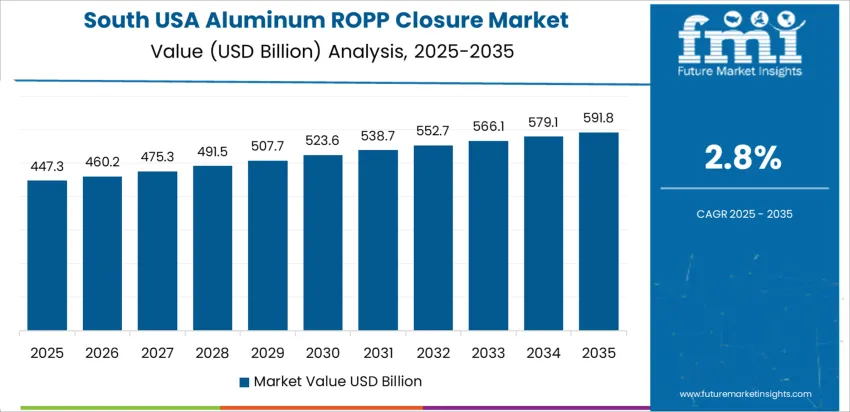
The South USA is projected to grow at a 2.8% CAGR, influenced by rising bottled spirit and edible-oil production capacity across Texas, Tennessee, and Kentucky. Distilleries focus on tamper-evident closures that meet authenticity-protection requirements for branded liquor. Food-processing facilities apply ROPP closures for high-volume edible oils distributed through national retail networks.
Procurement teams review closure-lining performance for flavor stability and leak-prevention during long-haul logistics in warmer climates. Pharmaceutical plants distributed across the region select aluminum closures for OTC liquid medication packaging that requires compatibility with child-resistant outer components. Warehouse and distribution infrastructure in Atlanta and Dallas assists bulk shipment of caps to multiple states with minimal lead time.
- Distillery expansions boosting premium closure demand
- Edible-oil packaging supporting high-volume deployment
- Climate-resilient sealing performance guiding buyer evaluations
- Distribution hubs reducing supply-chain friction
How is the Northeast USA influencing adoption of aluminum ROPP closures?
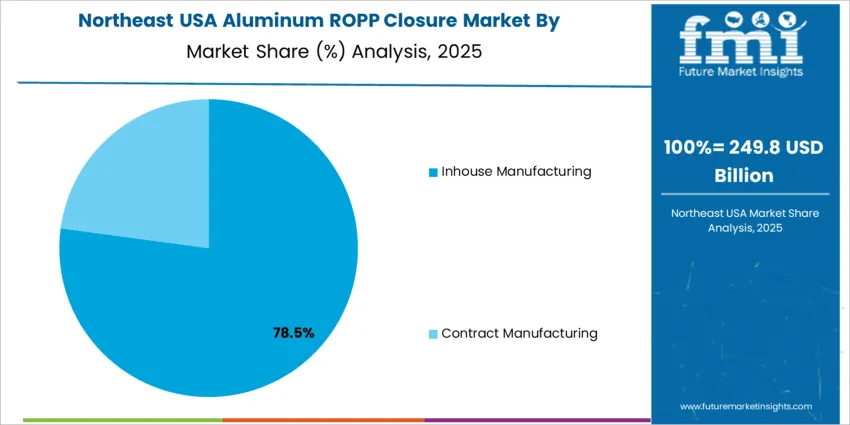
The Northeast USA reports 2.5% CAGR, supported by pharmaceutical bottling operations, specialty beverage producers, and dense retail channels across New York, New Jersey, and Pennsylvania. Drug-product filling lines require tight-sealing aluminum closures to maintain sterility and stability for liquid formulations. Craft beverage companies adopt small-batch compatible closures for ready-to-drink cocktails, enhancing tamper visibility. Limited storage environments drive increased use of compact capping equipment with rapid changeover functions. Procurement emphasizes regulatory compliance, including FDA-approved lacquers and liners for sensitive content. Short-distance distributor networks favor consistent diameter tolerance to reduce downtime during automated alley changes.
- Pharma bottling requiring safety-validated closure systems
- Craft beverage expansion using tamper-evident sealing
- Compact capping solutions supporting multi-SKU agility
- Material compliance and tolerances influencing qualification
How is the Midwest USA contributing to aluminum ROPP closure demand?
The Midwest USA grows at a 2.2% CAGR, centered around food-processing hubs, distilled-beverage producers, and household-chemical filling locations in Illinois, Ohio, and Michigan. Aluminum closures are selected for edible oils and vinegar packaging distributed nationwide from central logistics zones. Durable sealing reduces product loss risks across long trucking routes. Chemical-handling requirements drive demand for closure-lining materials that resist acidity or solvent exposure. Manufacturers prioritize cost-stable supply contracts supported by regional distributors to maintain production flow. Buyers assess torque accuracy, thread alignment, and automated inspection compatibility to ensure line efficiency.
- Food-processing hubs supporting recurring closure demand
- Central logistics shaping long-distance sealing performance needs
- Chemical and vinegar packaging driving compatibility evaluation
- Distributor proximity reinforcing supply stability
How is competitive positioning structured among suppliers of aluminum ROPP closures in the United States?
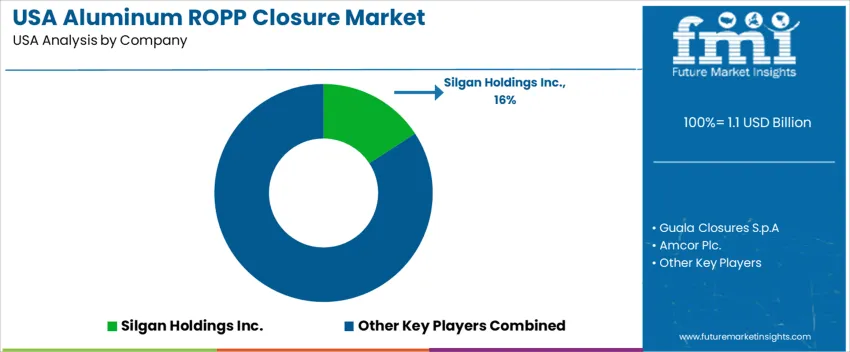
Competitive strength in the USA aluminum ROPP closure sector hinges on production capacity, supply-chain proximity to beverage and spirits bottlers, and conformity with FDA food-contact standards. Suppliers that offer certified tamper-evident liners, lightweight materials, and reliable torque specifications maintain advantage in the high-volume bottling industry especially among wineries, distillers, and craft beverage producers.
Silgan Holdings Inc. holds an estimated 15.8% share, supported by established manufacturing facilities in the United States and longstanding relationships with breweries, distilleries, and wineries needing consistent supply and quality assurance. Its supply continuity and compliance documentation strengthen its competitive position. Guala Closures S.p.A. competes by offering a wide variety of closure designs for beverages and spirits, exporting to USA bottling clients seeking premium finish and tamper-evidence compliance. Its global footprint and design expertise appeal to high-end wineries and spirits brands.
Amcor Plc. participates via aluminum closures aligned with global beverage packaging standards, offering flexible ordering volumes and liner-options that satisfy both wine and spirits requirements. Crown Holdings Inc. leverages broad metal-packaging experience to serve larger-scale beverage producers requiring rapid supply turnover and consistent torque performance.
Herti JSC supplies imported closure options targeting niche craft producers and smaller-scale bottlers, where competitive pricing and lower minimum order quantities become relevant. Competitive advantage depends on liner integrity, thread precision, inventory availability, and compliance with USA food-contact safety requirements. Suppliers combining domestic production capacity with consistent quality standards maintain the most stable positioning in aluminum-ROPP demand in the United States.
Key Players in USA Aluminum ROPP Closure Demand
- Silgan Holdings Inc.
- Guala Closures S.p.A
- Amcor Plc.
- Crown Holdings Inc.
- Herti JSC
Scope of the Report
| Items | Values |
|---|---|
| Quantitative Units | USD billion |
| Product Type | Pourer Insert ROPP Closures, Standard ROPP Closures, Child Resistant ROPP Closures, Customized Designs, Others |
| Manufacturing Process | Inhouse Manufacturing, Contract Manufacturing |
| Neck Type | 24 to 38 mm, Above 38 mm, Up to 24 mm |
| Printing Type | Non Printed, Printed |
| End Use | Pharmaceuticals, Alcoholic Beverage, Non Alcoholic Beverage, Food, Cosmetics and Personal Care |
| Regions Covered | West USA, South USA, Northeast USA, Midwest USA |
| Key Companies Profiled | Silgan Holdings Inc., Guala Closures S.p.A, Amcor Plc., Crown Holdings Inc., Herti JSC |
| Additional Attributes | Dollar sales by closure type, neck diameter, and end-use industries; regional adoption driven by alcoholic beverage demand, OTC pharmaceutical packaging, and premium packaging trends; competitive offerings in tamper-evident, child-resistant, and decorated closures; technology advancements in printing, embossing, and sustainability-focused lightweight aluminum; procurement trends in high-volume beverage bottling and pharmaceutical compliance packaging across the USA. |
USA Aluminum ROPP Closure Demand by Segments
Product Type:
- Pourer Insert ROPP Closures
- Standard ROPP Closures
- Child Resistant ROPP Closures
- Customized Designs
- Others
Manufacturing Process:
- Inhouse Manufacturing
- Contract Manufacturing
Neck Type:
- 24 to 38 mm
- Above 38 mm
- Up to 24 mm
Printing Type:
- Non Printed
- Printed
End Use:
- Pharmaceuticals
- Alcoholic Beverage
- Non Alcoholic Beverage
- Food
- Cosmetics and Personal Care
Region:
- West USA
- South USA
- Northeast USA
- Midwest USA
Frequently Asked Questions
How big is the demand for aluminum ROPP closure in USA in 2025?
The demand for aluminum ROPP closure in USA is estimated to be valued at USD 1.1 billion in 2025.
What will be the size of aluminum ROPP closure in USA in 2035?
The market size for the aluminum ROPP closure in USA is projected to reach USD 1.5 billion by 2035.
How much will be the demand for aluminum ROPP closure in USA growth between 2025 and 2035?
The demand for aluminum ROPP closure in USA is expected to grow at a 2.8% CAGR between 2025 and 2035.
What are the key product types in the aluminum ROPP closure in USA?
The key product types in aluminum ROPP closure in USA are pourer insert ROPP closures, standard ROPP closures, child resistant ROPP closures, customized designs and others.
Which manufacturing process segment is expected to contribute significant share in the aluminum ROPP closure in USA in 2025?
In terms of manufacturing process, inhouse manufacturing segment is expected to command 76.7% share in the aluminum ROPP closure in USA in 2025.
Preview the report firsthand - request a free sample
Get SampleGet the brochure for pricing and purchase details.
Get PDFTable of Content
- Executive Summary
- USA Market Outlook
- Demand-side Trends
- Supply-side Trends
- Technology Roadmap Analysis
- Analysis and Recommendations
- Market Overview
- Market Coverage / Taxonomy
- Market Definition / Scope / Limitations
- Market Background
- Market Dynamics
- Drivers
- Restraints
- Opportunity
- Trends
- Scenario Forecast
- Demand in Optimistic Scenario
- Demand in Likely Scenario
- Demand in Conservative Scenario
- Opportunity Map Analysis
- Product Life Cycle Analysis
- Supply Chain Analysis
- Investment Feasibility Matrix
- Value Chain Analysis
- PESTLE and Porter’s Analysis
- Regulatory Landscape
- Regional Parent Market Outlook
- Production and Consumption Statistics
- Import and Export Statistics
- Market Dynamics
- USA Market Analysis 2020 to 2024 and Forecast, 2025 to 2035
- Historical Market Size Value (USD Million) Analysis, 2020 to 2024
- Current and Future Market Size Value (USD Million) Projections, 2025 to 2035
- Y-o-Y Growth Trend Analysis
- Absolute $ Opportunity Analysis
- USA Market Pricing Analysis 2020 to 2024 and Forecast 2025 to 2035
- USA Market Analysis 2020 to 2024 and Forecast 2025 to 2035, By Product Type
- Introduction / Key Findings
- Historical Market Size Value (USD Million) Analysis By Product Type , 2020 to 2024
- Current and Future Market Size Value (USD Million) Analysis and Forecast By Product Type , 2025 to 2035
- Pourer Insert ROPP Closures
- Standard ROPP Closures
- Child Resistant ROPP Closures
- Customized Designs
- Others
- Y-o-Y Growth Trend Analysis By Product Type , 2020 to 2024
- Absolute $ Opportunity Analysis By Product Type , 2025 to 2035
- USA Market Analysis 2020 to 2024 and Forecast 2025 to 2035, By Manufacturing Process
- Introduction / Key Findings
- Historical Market Size Value (USD Million) Analysis By Manufacturing Process, 2020 to 2024
- Current and Future Market Size Value (USD Million) Analysis and Forecast By Manufacturing Process, 2025 to 2035
- Inhouse Manufacturing
- Contract Manufacturing
- Y-o-Y Growth Trend Analysis By Manufacturing Process, 2020 to 2024
- Absolute $ Opportunity Analysis By Manufacturing Process, 2025 to 2035
- USA Market Analysis 2020 to 2024 and Forecast 2025 to 2035, By Neck Type
- Introduction / Key Findings
- Historical Market Size Value (USD Million) Analysis By Neck Type, 2020 to 2024
- Current and Future Market Size Value (USD Million) Analysis and Forecast By Neck Type, 2025 to 2035
- 24 to 38 mm
- Above 38 mm
- Up to 24 mm
- Y-o-Y Growth Trend Analysis By Neck Type, 2020 to 2024
- Absolute $ Opportunity Analysis By Neck Type, 2025 to 2035
- USA Market Analysis 2020 to 2024 and Forecast 2025 to 2035, By Printing Type
- Introduction / Key Findings
- Historical Market Size Value (USD Million) Analysis By Printing Type, 2020 to 2024
- Current and Future Market Size Value (USD Million) Analysis and Forecast By Printing Type, 2025 to 2035
- Non Printed
- Printed
- Y-o-Y Growth Trend Analysis By Printing Type, 2020 to 2024
- Absolute $ Opportunity Analysis By Printing Type, 2025 to 2035
- USA Market Analysis 2020 to 2024 and Forecast 2025 to 2035, By End Use
- Introduction / Key Findings
- Historical Market Size Value (USD Million) Analysis By End Use, 2020 to 2024
- Current and Future Market Size Value (USD Million) Analysis and Forecast By End Use, 2025 to 2035
- Pharmaceuticals
- Alcoholic Beverage
- Non Alcoholic Beverage
- Food
- Cosmetics and Personal Care
- Y-o-Y Growth Trend Analysis By End Use, 2020 to 2024
- Absolute $ Opportunity Analysis By End Use, 2025 to 2035
- Market Structure Analysis
- Competition Dashboard
- Competition Benchmarking
- Market Share Analysis of Top Players
- By Regional
- By Product Type
- By Manufacturing Process
- By Neck Type
- By Printing Type
- By End Use
- Competition Analysis
- Competition Deep Dive
- Silgan Holdings Inc.
- Overview
- Product Portfolio
- Profitability by Market Segments (Product/Age /Sales Channel/Region)
- Sales Footprint
- Strategy Overview
- Marketing Strategy
- Product Strategy
- Channel Strategy
- Guala Closures S.p.A
- Amcor Plc.
- Crown Holdings Inc.
- Herti JSC
- Silgan Holdings Inc.
- Competition Deep Dive
- Assumptions & Acronyms Used
- Research Methodology


