

- Industry Size (2025)
- USD 183.3 Mn
- Forecast (2035)
- USD 305.0 Mn
- CAGR (2025 to 2035)
- 5.2%
Demand for Batters and Coatings in USA 2025 to 2035
The demand for batters and coatings in the USA is valued at USD 183.3 million in 2025 and is projected to reach USD 305.0 million by 2035, recording a CAGR of 5.2%. Growth is supported by expanding consumption of processed poultry, seafood, and frozen convenience foods, combined with manufacturers' focus on texture consistency and production efficiency. Food processors rely on industrial batter and coating solutions to enhance adhesion, crispness, and visual appeal while maintaining yield performance during frying or baking.
Customized batter formulations account for the largest share, driven by growing demand for allergen-free, gluten-free, and clean-label ingredient profiles. These systems are designed for specific moisture levels, coating thicknesses, and retention properties that match automated food-handling lines. Product development emphasizes shelf stability, uniform particle distribution, and control of oil absorption.
Quick Stats for USA Batters and Coatings Demand
- USA Batters and Coatings Sales Value (2025): USD 183.3 million
- USA Batters and Coatings Forecast Value (2035): USD 305.0 million
- USA Batters and Coatings Forecast CAGR (2025 to 2035): 5.2%
- Leading Batter Type in USA Batters and Coatings Demand: Customized Batter
- Key Growth Regions in USA Batters and Coatings Demand: West USA, South USA, Northeast USA
- Top Players in USA Batters and Coatings Demand: Grote Company, Berkel, Hobart, Vollrath, KWS
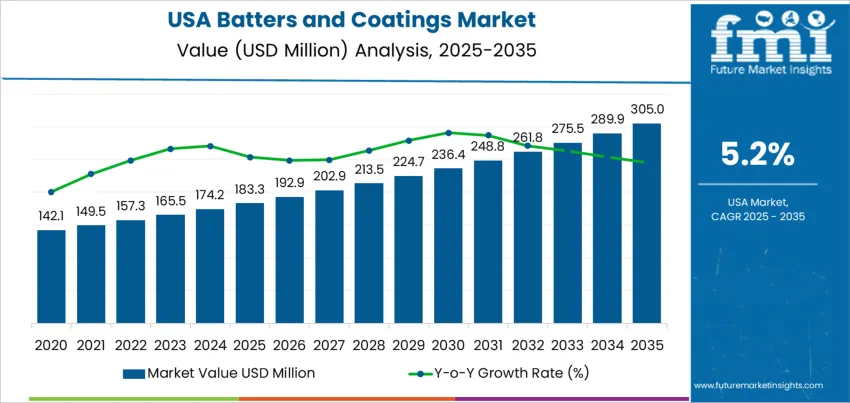
What is the Growth Forecast for Batters and Coatings Industry in USA through 2035?
Demand is strongest in the West, South, and Northeast, supported by large commercial food processing clusters and expanding quick-service restaurant chains. Investments in coating technology upgrades reflect throughput optimization and labor-saving automation incentives. Key suppliers include Grote Company, Berkel, Hobart, Vollrath, and KWS. Their strategies center on durable equipment engineering, precise portioning and application systems, and modular integration with conveyors, forming machines, and frying units.
Demand for batters and coatings in the United States is showing early acceleration, supported by strong reliance on convenience foods, the variety of quick-service restaurant menus, and expanded frozen food consumption. Growth is influenced by consistent consumer preference for crispy textures, flavor innovations, and gluten-free or allergen-friendly coating systems. Foodservice outlets adopt specialized batters to improve consistency and operational efficiency, strengthening purchasing volumes in the first half of the period. Product development incorporating healthier oils or reduced sodium also supports adoption.
The deceleration pattern emerges as the category reaches broader penetration, leading to slower incremental gains later in the timeline. Rising health concerns about fried foods and regulatory scrutiny of trans fats are reducing their consumption. Volumes stabilize as product demand increasingly depends on premium attributes, such as clean-label ingredients and sustainable sourcing. Competition from alternative preparation methods, including air-frying, is shifting a share of usage away from traditional coatings. The pattern reflects an initial expansion driven by convenience and reliance on foodservice, followed by moderate growth as health influences and category maturity reshape the long-term trajectory.
USA Batters and Coatings Key Takeaways
| Metric | Value |
|---|---|
| USA Batters and Coatings Sales Value (2025) | USD 183.3 million |
| USA Batters and Coatings Forecast Value (2035) | USD 305.0 million |
| USA Batters and Coatings Forecast CAGR (2025-2035) | 5.2% |
Why is the Demand for Batters and Coatings in the USA Growing?
Demand for batters and coatings in the USA is increasing because food processors, restaurants and retail producers seek convenient and consistent solutions for fried, breaded and baked products. Many frozen meal manufacturers, quick-service restaurants, and ready-to-cook food producers rely on batter mixes and coatings to ensure uniform texture, flavor and appearance across batches. Growing popularity of frozen ready meals and convenience foods drives demand for premixes that save labor and kitchen time while maintaining quality and food safety.
Retail demand for breaded and battered items such as chicken, seafood, vegetables and snacks remains strong. Use of pre-formulated batters allows manufacturers to offer consistent flavor and crunch, even in frozen or frozen-then-reheated products. As healthier eating trends rise, food producers develop coatings with lower oil absorption, gluten-free flours, or plant-based mixes to appeal to diet-conscious consumers. Coating premixes support high-volume production and efficient processing in large manufacturing plants and foodservice operations. They reduce variability and improve shelf-life and product stability, which is valuable for mass-produced fried or baked goods. Constraints include continued health concerns related to fried foods and demand for healthier or less processed alternatives. Price increases in raw ingredients such as flour, starches or coatings may also affect cost structures.
Which Batter Types and Applications Lead Demand for Batters and Coatings in the United States?
Demand for batters and coatings in the United States is supported by strong consumption of frozen and ready-to-cook foods, quick-service restaurant expansion, and increased preference for crunchy, flavorful textures in protein and vegetable-based meals. Growth aligns with rising home-cooking convenience trends and continued innovation in gluten-free, clean-label, and plant-based coating systems. Commercial foodservice purchasers contribute significantly through standardized coating formats for high-volume frying and baking operations.
By Batter Type, Customized Batters Hold the Largest Share
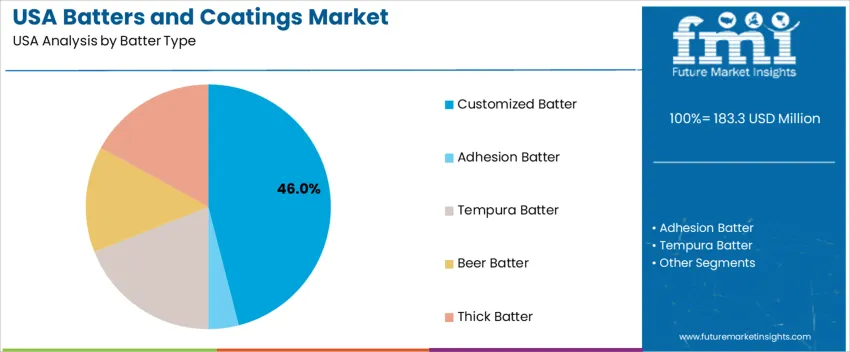
Customized batters represent 46.0%, reflecting tailored formulations designed to meet specific texture, flavor, and oil-absorption requirements across major USA food processors. They support consistent crumb adhesion and frying stability across chicken strips, fish fillets, cheese appetizers, and snack foods. Tempura batter accounts for 19.0%, widely used in quick-service Asian-inspired offerings and premium seafood. Thick batters hold 17.0%, valued for heavy, crunchy coverage that enhances portion perception. Beer batters represent 14.0%, driven by pub-style menu offerings and craft flavor influence. Adhesion batters account for 4.0%, primarily used as a preparatory layer to secure crumbs and seasoning on uneven protein surfaces.
Key Points:
- Customized batters enable product differentiation and performance consistency
- Tempura formats support premium and globally inspired QSR menus
- Thick and beer batters enhance crispy bite and indulgence appeal
By Application, Meat Leads Demand
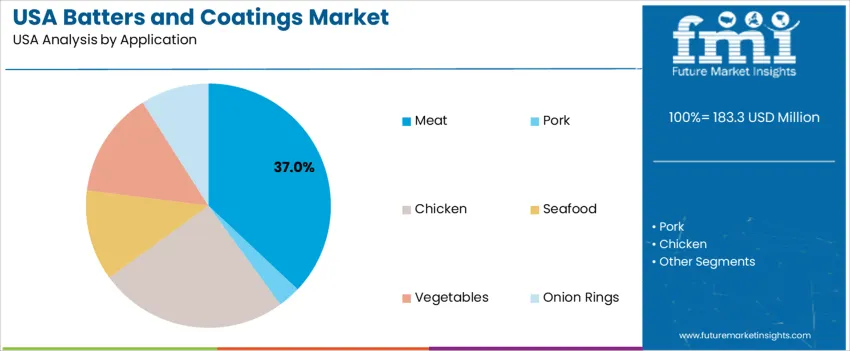
Meat applications hold 37.0%, driven by strong consumption of breaded beef and pork snacks in retail and foodservice. Chicken accounts for 25.0%, supported by continuous menu dominance of patties, tenders, and nuggets. Vegetables represent 14.0%, benefiting from rising adoption of plant-based snacking and convenience-prep sides. Seafood holds 12.0%, with continued popularity of coated shrimp and fish sticks. Onion rings account for 9.0%, tied to bar-style appetizers. Pork is 3.0%, reflecting limited breaded offerings in comparison to poultry. Application performance is linked to texture retention, fryer efficiency, and frozen-to-table stability across distribution systems.
Key Points:
- Meat and chicken drive core volume across USA households and QSR chains
- Vegetables gain from plant-forward eating patterns and frozen convenience
- Seafood remains steady due to coated shrimp and fish entrées
What are the Drivers, Restraints, and Key Trends of the Demand for Batters and Coatings in the USA?
Growth of quick-service restaurants, expansion of frozen prepared meals and rising home cooking trends drive demand.
In the United States, batters and coatings are widely used by restaurants, foodservice chains and frozen meal producers to deliver consistent texture, flavor and crunch in fried or oven-ready products. Chicken nuggets, breaded fish, onion rings and snack items packaged in retail freezers rely on pre-blended batters to meet consumer expectations for uniform quality. Home cooking gains momentum among busy families and health-conscious individuals who prefer convenience without sacrificing taste, which increases demand for ready-to-use batter mixes. Food manufacturers supplying supermarkets and club stores maintain steady procurement to satisfy stable retail consumption across prepared-food categories.
Health concerns over fried foods, competition from alternate cooking methods and cost pressure on input ingredients restrain demand.
Growing awareness of dietary issues associated with deep-frying and high fat intake encourages some consumers to avoid breaded or battered foods altogether. Air-fryer, oven-bake and grilled preparation methods offer alternatives that bypass traditional batter use. Rising prices for wheat, corn and seasoning ingredients increase formulation costs and potentially raise retail prices. Some health-conscious buyers may opt for minimally processed or fresh products rather than coated-food options, limiting demand in specific segments.
Shift toward gluten-free and allergen-friendly coatings, increased use in plant-based protein products and rising demand for clean-label and low-fat batter formulations define key trends.
Manufacturers are developing coatings made from rice, chickpea or other gluten-free flours to cater to consumers with dietary restrictions. Plant-based protein producers use batter and coating systems to improve taste and mouthfeel of vegetarian and vegan nuggets, patties or strips, expanding application beyond traditional meat products. Clean-label formulations that minimize additives, reduce sodium and avoid artificial colors or flavors gain traction among wellness-focused shoppers. Low-fat or air-fryer-optimized batters offer texture without excessive oil absorption. These developments support continued interest and diversified demand for batters and coatings in the United States food industry.
Analysis of the Demand for Batters and Coatings in the USA by Region
Demand for batters and coatings in the United States continues to grow as foodservice operators, ready-to-cook brands, and frozen snack manufacturers expand product innovation for poultry, seafood, plant-based proteins, and appetizer segments. Growth reflects consumer interest in crunchy textures, convenience, and consistent coating performance during home or commercial frying and air-frying. Food manufacturers prioritize formulations that improve adhesion, oil absorption control, and moisture retention. The West USA leads with 6.0% CAGR, followed by the South USA at 5.4%, the Northeast USA at 4.8%, and the Midwest USA at 4.2%. Supply-chain decisions focus on wheat-alternative flours, gluten-free options, and heat-stable seasoning systems aligned with diversified menu needs.
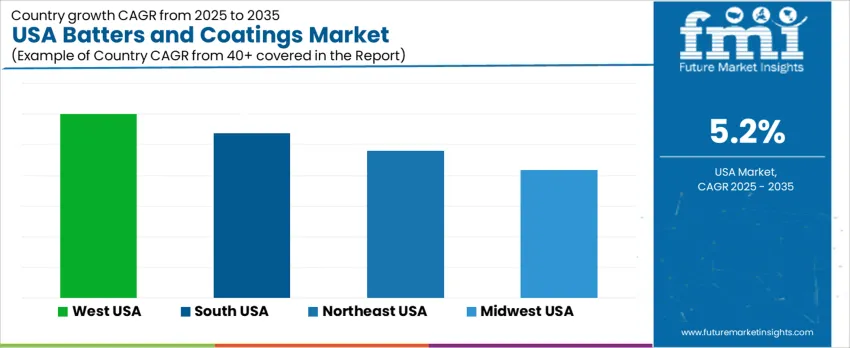
| Region | CAGR (2025-2035) |
|---|---|
| West USA | 6.0% |
| South USA | 5.4% |
| Northeast USA | 4.8% |
| Midwest USA | 4.2% |
How is the West USA driving demand for batters and coatings?
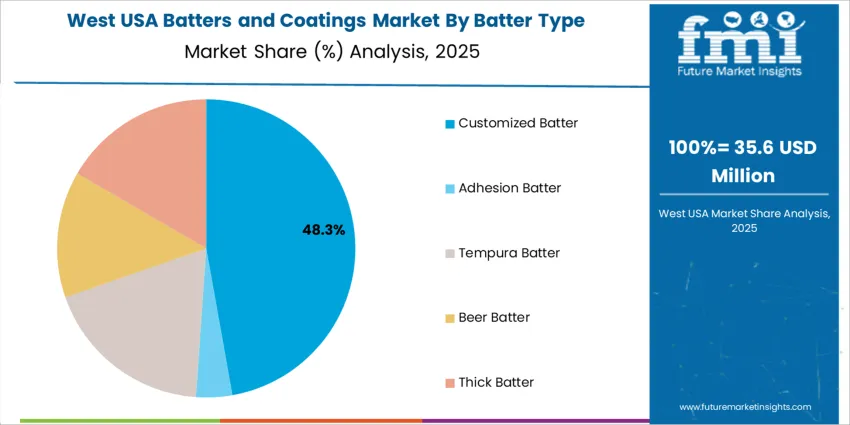
The West USA expands at 6.0% CAGR, supported by strong fast-casual restaurant penetration, seafood consumption along coastal industries, and significant frozen food distribution across California, Washington, and Oregon. Food processors develop premium tempura, beer-battered, and gluten-free coating blends tailored to diverse culinary expectations in metropolitan regions. Retail demand increases for breaded plant-protein products targeting health-conscious consumers seeking alternatives to fried chicken and seafood.
Air-fryer adoption reinforces coating formats engineered for reduced-oil cooking while maintaining crisp texture. Manufacturers evaluate ingredient functionality such as viscosity control and freeze-thaw stability for large-scale frozen entrée production. Logistics networks connected to West Coast ports enhance access to specialty flours and imported spices that support innovative flavor launches.
- Fast-casual expansion driving coated entrée volumes
- Air-fryer usage boosting low-oil crispy solutions
- Plant-based coatings supporting alternative-protein growth
- Coastal seafood demand improving premium batter uptake
How is the South USA shaping growth?
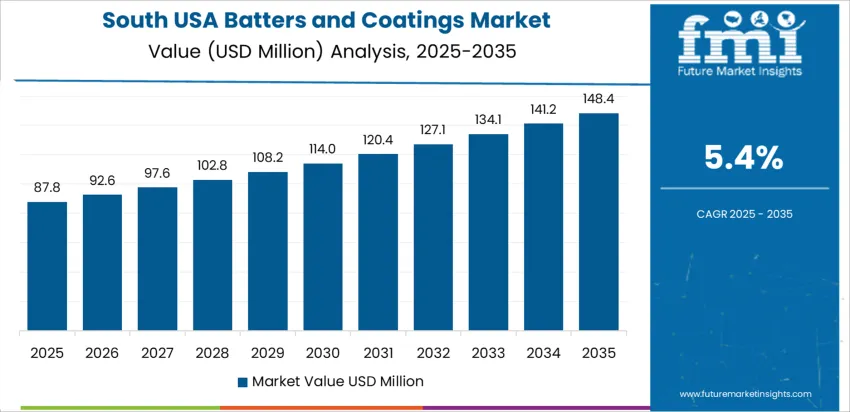
The South USA posts 5.4% CAGR, driven by the region’s strong fried-food culture, large quick-service restaurant footprint, and poultry industry concentration across Texas, Georgia, and North Carolina. Coating suppliers scale production to support high-volume breaded chicken consumption in both foodservice and retail. Flavor differentiation, spicy, smoky, and regional profile seasonings, drives innovation as brands respond to Southern taste preferences.
Seasonal tailgating and convenience-food buying habits expand frozen ready-to-fry product sales. Manufacturing facilities evaluate batter adhesion and oil-management characteristics optimized for commercial fryers. Trucking corridors and refrigeration-logistics infrastructure support efficient supply to large distribution hubs. Purchasing decisions emphasize reliable texture retention during holding times in drive-thru and delivery channels.
- Poultry-driven breaded product volume sustaining demand
- Regional flavor profiles boosting coating innovation
- Convenience foods linked to household and foodservice uptake
- Logistics alignment reinforcing steady supply availability
How is the Northeast USA influencing purchasing behavior?
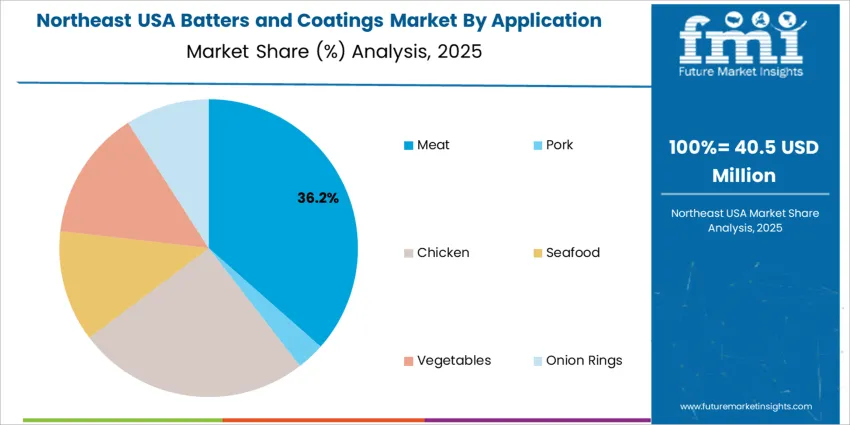
The Northeast USA grows at 4.8% CAGR, shaped by high frozen-food consumption in dense urban industries including New York and Boston. Consumers favor convenient meal options such as breaded seafood fillets, appetizers, and coated vegetables suitable for small kitchen appliances. Retailers allocate premium freezer space to branded snacks featuring crunchy textures with clean-label or non-GMO claims. Food processors supplying institutional dining-universities, hospitals, and corporate cafeterias-adopt coatings engineered for consistent bake-or-fry flexibility. Import-driven seafood supply supports value-added products requiring dependable coating adhesion through freezing and reheating cycles. Procurement teams assess ingredient transparency, allergen declarations, and vendor compliance with safety certifications.
- Frozen snack expansion driving retail volumes
- Seafood processing enabling coated product diversification
- Bake-or-fry versatility influencing coating selection
- Allergen and label evaluation guiding sourcing standards
How is the Midwest USA contributing to category stability?
The Midwest USA grows at 4.2% CAGR, driven by household comfort-food preferences and strong private-label production networks across Illinois, Ohio, and Wisconsin. Breaded meats and coated onion rings support year-round baseline consumption. Retail club formats distribute larger pack sizes aligned with family-oriented purchasing habits. Regional processors focus on batter consistency, crumb-coating performance, and value-engineering strategies to maintain cost efficiency. Air-fryer use increases interest in coatings with oil-reduction claims and better crisping outcomes. Food manufacturers prioritize ingredient sourcing stability for wheat flour, cornmeal, and breader suppliers located within established agricultural corridors. Distribution strategies emphasize predictable order fulfillment over aggressive category expansion.
- Private-label and club-store channels supporting volume stability
- Comfort-food trends reinforcing coated entrée demand
- Coating technologies aligned to air-fryer preparation
- Local ingredient sourcing improving procurement resilience
What does the competitive structure for batters and coatings demand in the United States show?
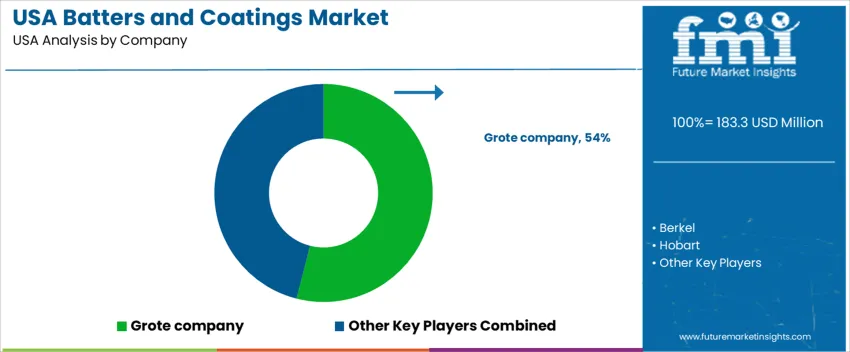
Batters and coatings demand in the United States is concentrated in industrial food processing, including poultry further-processing, seafood, snacks, and prepared meals. Purchasing priorities include adhesion reliability, fryer durability, and consistency under frozen-to-cook transitions. Food plants expect validated texture control, calibrated particle sizes, and batter-mixing systems that maintain flow stability during high-volume throughput. Compliance with USDA and FSMA hygiene standards determines supplier qualification, along with support for allergen-segregation layouts where wheat or dairy inclusion requires controlled handling.
Grote Company holds about 54.0% share in the United States. Its position reflects installed equipment fleets across major processors, enabling reliable deposition and coating uniformity for crumb-based and tempura-style products. Berkel competes in operations requiring compact equipment with predictable performance in mid-scale production. Hobart maintains strong distribution in institutional and commissary environments, supplying coating-ready preparation systems that fit standardized maintenance programs.
Vollrath serves flexible manufacturing setups where batch precision and sanitary metal fabrication influence purchasing. KWS participates in selected lines needing robust material-handling compatibility across dry-coating feed systems. Competitive advantage depends on documented fryer yield, coating pickup stability across varied moisture levels, and servicing networks that sustain continuous uptime in automated production. Growth continues with expanded demand for oven-ready, air-fried, and clean-label coated products in USA retail and foodservice distribution.
Key Players in USA Batters and Coatings Demand
- Grote Company
- Berkel
- Hobart
- Vollrath
- KWS
Scope of the Report
| Items | Values |
|---|---|
| Quantitative Units | USD million |
| Batter Type | Customized Batter, Adhesion Batter, Tempura Batter, Beer Batter, Thick Batter |
| Application | Meat, Pork, Chicken, Seafood, Vegetables, Onion Rings |
| Regions Covered | West USA, South USA, Northeast USA, Midwest USA |
| Key Companies Profiled | Grote Company, Berkel, Hobart, Vollrath, KWS |
| Additional Attributes | Dollar sales by batter type and application sectors; regional adoption variations driven by foodservice expansion across West, South, Northeast, and Midwest USA; demand growth in frozen breaded products and QSR supply chains; increasing formulation requirements for crispiness, heat stability, and allergen-free ingredients; integration of automated coating solutions in industrial processing lines supporting throughput and consistency. |
USA Batters and Coatings Demand by Segments
Batter Type:
- Customized Batter
- Adhesion Batter
- Tempura Batter
- Beer Batter
- Thick Batter
Application:
- Meat
- Pork
- Chicken
- Seafood
- Vegetables
- Onion Rings
Region:
- West USA
- South USA
- Northeast USA
- Midwest USA
Frequently Asked Questions
How big is the demand for batters and coatings in USA in 2025?
The demand for batters and coatings in USA is estimated to be valued at USD 183.3 million in 2025.
What will be the size of batters and coatings in USA in 2035?
The market size for the batters and coatings in USA is projected to reach USD 305.0 million by 2035.
How much will be the demand for batters and coatings in USA growth between 2025 and 2035?
The demand for batters and coatings in USA is expected to grow at a 5.2% CAGR between 2025 and 2035.
What are the key product types in the batters and coatings in USA?
The key product types in batters and coatings in USA are customized batter, adhesion batter, tempura batter, beer batter and thick batter.
Which application segment is expected to contribute significant share in the batters and coatings in USA in 2025?
In terms of application, meat segment is expected to command 37.0% share in the batters and coatings in USA in 2025.
Preview the report firsthand - request a free sample
Get SampleGet the brochure for pricing and purchase details.
Get PDFTable of Content
- Executive Summary
- USA Market Outlook
- Demand-side Trends
- Supply-side Trends
- Technology Roadmap Analysis
- Analysis and Recommendations
- Market Overview
- Market Coverage / Taxonomy
- Market Definition / Scope / Limitations
- Market Background
- Market Dynamics
- Drivers
- Restraints
- Opportunity
- Trends
- Scenario Forecast
- Demand in Optimistic Scenario
- Demand in Likely Scenario
- Demand in Conservative Scenario
- Opportunity Map Analysis
- Product Life Cycle Analysis
- Supply Chain Analysis
- Investment Feasibility Matrix
- Value Chain Analysis
- PESTLE and Porter’s Analysis
- Regulatory Landscape
- Regional Parent Market Outlook
- Production and Consumption Statistics
- Import and Export Statistics
- Market Dynamics
- USA Market Analysis 2020 to 2024 and Forecast, 2025 to 2035
- Historical Market Size Value (USD Million) Analysis, 2020 to 2024
- Current and Future Market Size Value (USD Million) Projections, 2025 to 2035
- Y-o-Y Growth Trend Analysis
- Absolute $ Opportunity Analysis
- USA Market Pricing Analysis 2020 to 2024 and Forecast 2025 to 2035
- USA Market Analysis 2020 to 2024 and Forecast 2025 to 2035, By Batter Type
- Introduction / Key Findings
- Historical Market Size Value (USD Million) Analysis By Batter Type , 2020 to 2024
- Current and Future Market Size Value (USD Million) Analysis and Forecast By Batter Type , 2025 to 2035
- Customized Batter
- Adhesion Batter
- Tempura Batter
- Beer Batter
- Thick Batter
- Y-o-Y Growth Trend Analysis By Batter Type , 2020 to 2024
- Absolute $ Opportunity Analysis By Batter Type , 2025 to 2035
- USA Market Analysis 2020 to 2024 and Forecast 2025 to 2035, By Application
- Introduction / Key Findings
- Historical Market Size Value (USD Million) Analysis By Application, 2020 to 2024
- Current and Future Market Size Value (USD Million) Analysis and Forecast By Application, 2025 to 2035
- Meat
- Pork
- Chicken
- Seafood
- Vegetables
- Onion Rings
- Y-o-Y Growth Trend Analysis By Application, 2020 to 2024
- Absolute $ Opportunity Analysis By Application, 2025 to 2035
- Market Structure Analysis
- Competition Dashboard
- Competition Benchmarking
- Market Share Analysis of Top Players
- By Regional
- By Batter Type
- By Application
- Competition Analysis
- Competition Deep Dive
- Grote company
- Overview
- Product Portfolio
- Profitability by Market Segments (Product/Age /Sales Channel/Region)
- Sales Footprint
- Strategy Overview
- Marketing Strategy
- Product Strategy
- Channel Strategy
- Berkel
- Hobart
- Vollrath
- KWS
- Grote company
- Competition Deep Dive
- Assumptions & Acronyms Used
- Research Methodology


