

- Industry Size (2025)
- USD 0.5 Bn
- Forecast (2035)
- USD 1.0 Bn
- CAGR (2025 to 2035)
- 5.9%
Demand for Bladder Liners in USA Forecast and Outlook 2025 to 2035
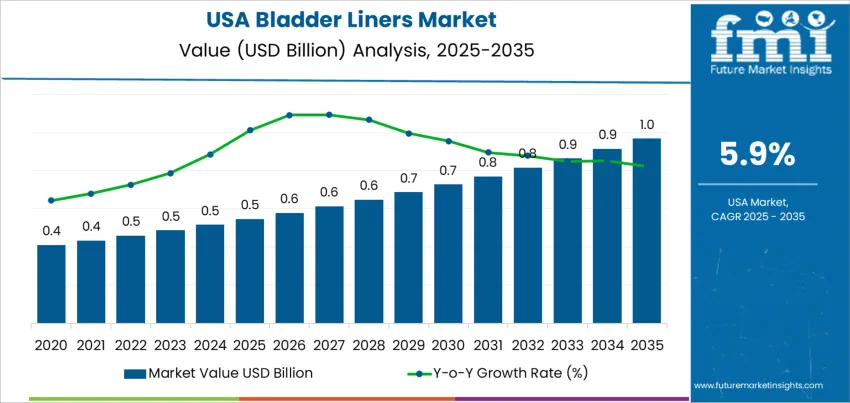
The demand for bladder liners in the USA is expected to grow from USD 0.5 billion in 2025 to USD 1.0 billion by 2035, reflecting a compound annual growth rate (CAGR) of 5.9%. Bladder liners, commonly used in healthcare for managing incontinence or urinary leakage, are essential products in both the adult and pediatric markets. The increasing awareness of incontinence management, the aging population, and growing healthcare focus on improving quality of life for individuals with mobility or incontinence issues will continue to drive the market for bladder liners in the coming years.
The market will experience steady growth, starting at USD 0.5 billion in 2025 and rising to USD 0.6 billion in 2026, USD 0.6 billion in 2027, and USD 0.6 billion in 2028. By 2029, demand for bladder liners will rise to USD 0.7 billion, continuing its upward trajectory throughout the 2030s. By 2035, the demand for bladder liners is expected to reach USD 1.0 billion, driven by increased healthcare awareness, the growing elderly population, and the continued innovation in bladder liner technologies and designs.
Quick Stats of the Demand for Bladder Liners in USA
- Demand for Bladder Liners in USA Value (2025): USD 0.5 billion
- Demand for Bladder Liners in USA Forecast Value (2035): USD 1.0 billion
- Demand for Bladder Liners in USA Forecast CAGR (2025-2035): 5.9%
- Demand for Bladder Liners in USA Leading Product Type: Disposable (73%)
- Demand for Bladder Liners in USA Key Growth Regions: West USA, South USA, Northeast USA, Midwest USA
- Demand for Bladder Liners in USA Key Players: Procter & Gamble (Always Discreet), Kimberly-Clark (Poise), Essity (TENA), Domtar Corporation (Attends), First Quality Enterprises (Prevail)
What is the Growth Forecast for the Bladder Liners Industry in USA through 2035?
The 10-year growth comparison for bladder liners in the USA highlights gradual but steady market expansion, with demand increasing consistently over the forecast period. From USD 0.5 billion in 2025 to USD 1.0 billion by 2035, the market will experience a continuous rise driven by an aging population, more widespread acceptance of incontinence products, and greater healthcare access for chronic conditions. The growth will not be uniform, as early years (2025–2029) show slower incremental increases, while the later years (2029–2035) will see a steadier pace of growth due to greater product awareness and innovation in the healthcare sector.
The market will likely see a more significant rise in the second half of the forecast period, particularly driven by advancements in product features and growing consumer acceptance. The overall 10-year growth comparison underscores the steady but reliable demand for bladder liners, fueled by demographic changes and increasing healthcare efforts to manage incontinence issues.
USA Bladder Liners Industry Key Takeaways
| Metric | Value |
|---|---|
| Industry Sales Value (2025) | USD 0.5 billion |
| Industry Forecast Value (2035) | USD 1 billion |
| Industry Forecast CAGR (2025-2035) | 5.9% |
Why is the Demand for Bladder Liners in USA Growing?
Demand for bladder liners in the USA is rising as the population ages and the prevalence of urinary incontinence increases. As more people-especially seniors-experience bladder control issues, there is growing need for discreet, absorbent protection. Bladder liners offer a convenient solution that helps manage light to moderate incontinence, supports hygiene, and improves quality of life. Increased awareness about incontinence care and a shift toward maintaining dignity and comfort rather than relying only on traditional incontinence garments support this demand.
Growth in home care, outpatient treatment, and rising acceptance of incontinence products also support market expansion. Many users prefer liners because they are less bulky and more discreet than full adult diapers, which makes them suitable for mild leakage, post surgery recovery, or daily use by active individuals. Advances in liner design, including improved absorbency, skin friendly materials, odor control features, and better ergonomics, have enhanced user comfort and acceptability. As demographic trends, healthcare practices, and consumer preferences converge toward incontinence management and preventive hygiene solutions, demand for bladder liners in USA is likely to grow steadily in coming years.
What Is the Current State of the Demand for Bladder Liners in the USA in Terms of Product Type and Absorbency Level?
The demand for bladder liners in the USA is primarily driven by product type and absorbency level. The leading product type is disposable bladder liners, which account for 73% of the market share, while heavy absorbency is the dominant absorbency level, capturing 41% of the demand. Bladder liners are essential for managing urinary incontinence and providing comfort and confidence to individuals. As the aging population grows and awareness of incontinence products increases, the demand for both disposable and heavy-absorbency bladder liners continues to rise.
How Are Disposable Bladder Liners Leading the Product Type Demand in the USA?
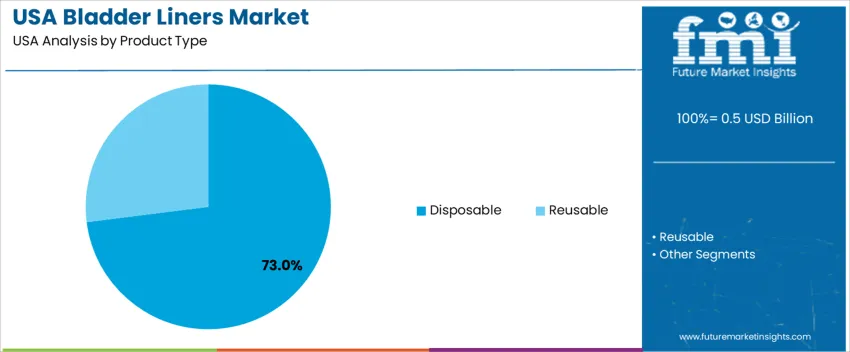
Disposable bladder liners lead the demand for bladder liners in the USA, holding 73% of the market share. Disposable liners are preferred for their convenience, hygiene, and ease of use. These products are designed for single use, making them a popular choice for individuals seeking a quick, easy solution to manage incontinence. They are highly absorbent, typically thin and discreet, and provide a comfortable, leak-proof barrier against moisture.
The demand for disposable bladder liners is driven by their convenience and practicality, particularly among individuals with moderate to severe incontinence. They are available in a wide range of absorbency levels and sizes to accommodate various user needs. The increasing focus on hygiene, comfort, and discretion further fuels the demand for disposable bladder liners, as they offer a hassle-free solution for managing incontinence without the need for laundering or extended cleaning. As awareness and acceptance of incontinence products grow, disposable bladder liners are expected to remain the dominant choice in the market.
How Is Heavy Absorbency Leading the Absorbency Level Demand for Bladder Liners in the USA?
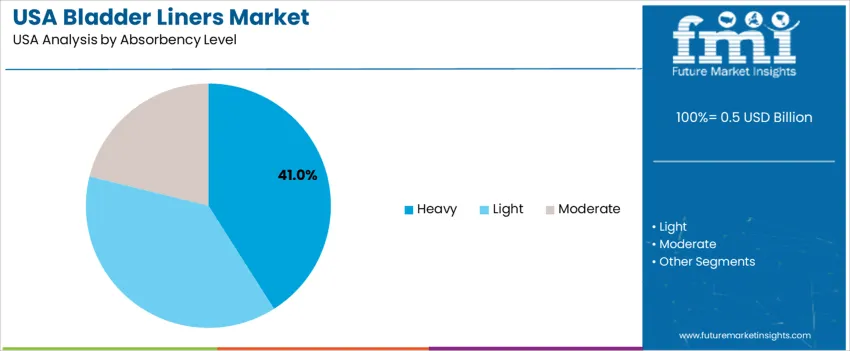
Heavy absorbency leads the absorbency level demand for bladder liners in the USA, capturing 41% of the market share. Heavy absorbency liners are essential for individuals with more significant urinary incontinence needs, providing maximum protection and comfort. These liners are designed to absorb larger volumes of fluid and offer a higher level of leakage protection, ensuring users can go about their daily activities with confidence.
The demand for heavy absorbency bladder liners is driven by the aging population and the increased prevalence of incontinence-related issues among older adults. These products are particularly important for overnight use or extended wear, offering peace of mind for individuals who experience significant fluid loss. As the demand for high-quality, reliable incontinence products continues to grow, heavy absorbency bladder liners will remain a key segment of the market, particularly among those seeking more comprehensive protection.
What is the Summary of Demand for Bladder Liners in the USA?
Demand for bladder liners in the USA is rising steadily as awareness about incontinence and light urinary leakage grows among older adults, postpartum women, and people with bladder control issues. These liners, designed to be worn inside underwear to manage light to moderate leakage, have become a preferred solution for many due to their discretion, comfort, and convenience. The market is supported by an aging population, rising focus on personal hygiene and dignity, and increasing availability of liner options through retail, pharmacies, and online stores. As USAge of incontinence products rises, bladder liners are becoming a mainstream incontinence care product in the USA
What are the Drivers of Demand for Bladder Liners in the USA?
Demand for bladder liners is driven primarily by demographic and health awareness factors. The growing proportion of elderly individuals, a group more prone to urinary incontinence, increases the potential user base for liners. Rising awareness around incontinence care and the desire for discreet, hygienic, and convenient solutions encourage use among both older adults and younger people experiencing light leakage or postpartum issues. Improvements in product design, such as thin, breathable, moisture-wicking materials, odor control, and comfortable fit, make liners more acceptable and reliable for daily use. Wider distribution via pharmacies, supermarkets, and e-commerce platforms also makes these products more accessible across diverse demographic and geographic segments.
What are the Restraints on Demand for Bladder Liners in the USA?
Several factors limit demand for bladder liners in the USA. Some potential users may prefer more absorbent or higher-capacity incontinence solutions, such as pads, briefs, or adult diapers, for moderate to severe leakage, making liners unsuitable for them. Comfort and skin sensitivity remain a concern, especially if liners cause irritation over repeated use, which may deter some users from adopting liners for long-term use. Perceptions of social stigma related to incontinence products can also restrict demand, as some individuals may hesitate to purchase or use such products even when needed. Economic constraints or cost concerns, especially for disposable liners used regularly, may reduce willingness to adopt bladder liners over time. Finally, lack of awareness about product options or incontinence solutions among certain populations may prevent them from seeking out appropriate liners.
What are the Key Trends Influencing Demand for Bladder Liners in the USA?
A major trend is the growing demand for discreet, skin-friendly, and comfortable incontinence solutions. Manufacturers are increasingly offering ultra-thin, breathable, moisture-wicking liners with odor control and improved fit for daily use. There is also increasing adoption of disposable bladder liners due to their convenience for individuals who prefer not to deal with washing or maintenance associated with reusable products. Another trend is the expanding use of e-commerce and direct-to-consumer retail channels, which makes these products more accessible and private to purchase. This helps destigmatize incontinence care and increases visibility of liner options. Finally, as the population ages and geriatric care becomes more common, demand for light-to-moderate incontinence solutions like bladder liners is expected to rise further, especially among older adults and postural or leakage-prone segments.
What is the Regional Demand Outlook for Bladder Liners in the USA?
The demand for bladder liners in the USA is projected to grow steadily across all regions. The West USA leads with a projected CAGR of 6.8%. The South follows at 6.1%, the Northeast at 5.4%, and the Midwest at 4.7%. These regional differences reflect the varying healthcare needs, elderly populations, and lifestyle factors that contribute to the demand for products designed to manage incontinence. As awareness and access to health solutions increase, the market for bladder liners continues to expand across the country.
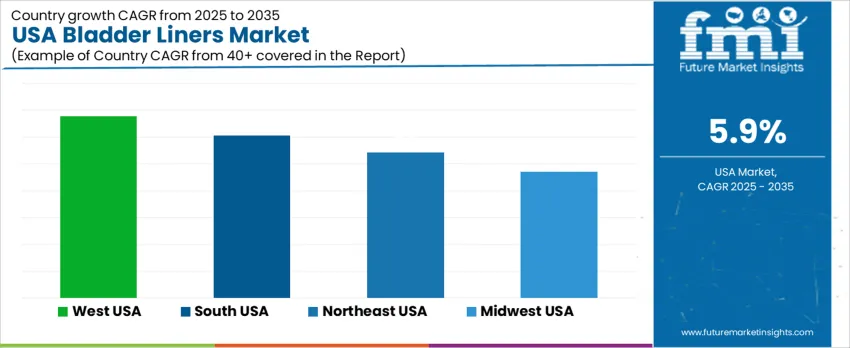
| Region | CAGR (%) |
|---|---|
| West USA | 6.8 |
| South USA | 6.1 |
| Northeast USA | 5.4 |
| Midwest USA | 4.7 |
What Drives Demand for Bladder Liners in the West USA?
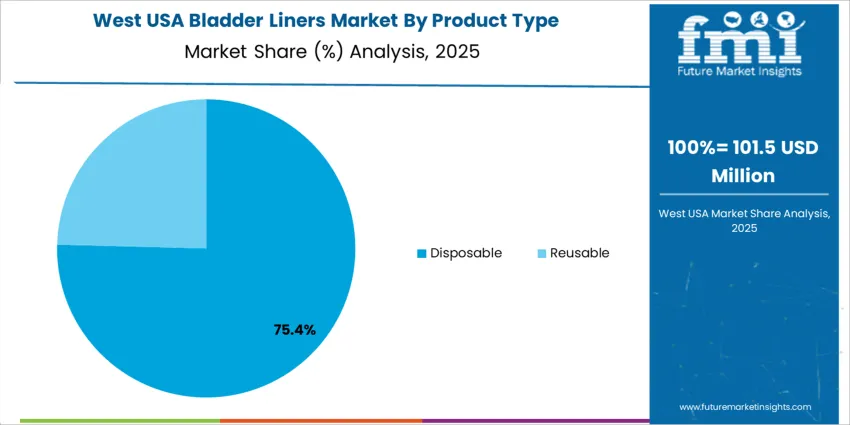
In the West USA, the demand for bladder liners is projected to grow at a CAGR of 6.8%. The region has a large elderly population, particularly in states like California, where an increasing number of seniors are seeking effective incontinence management solutions. Additionally, the West has a strong healthcare infrastructure, providing residents with easy access to a wide variety of health products. As awareness of incontinence and related health issues continues to rise, more people are turning to bladder liners as a discreet and convenient solution. Moreover, the region's emphasis on wellness and lifestyle management encourages individuals to seek products that improve quality of life. As the demand for more comfortable, breathable, and effective incontinence solutions grows, the market for bladder liners in the West is expected to expand significantly.
Why is Demand for Bladder Liners Growing in the South USA?
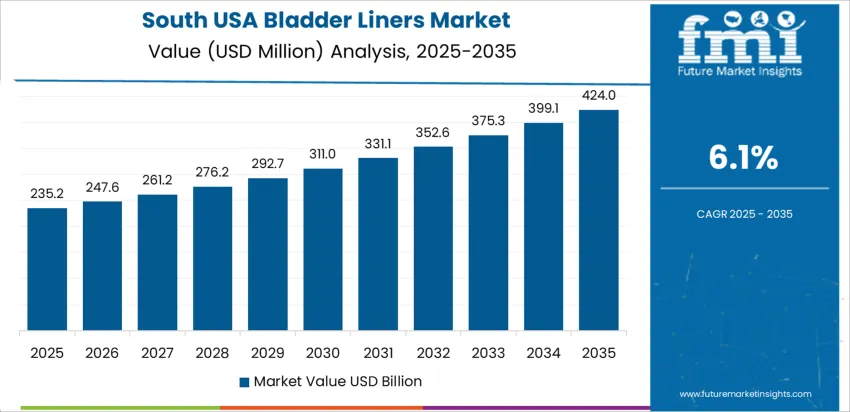
In the South USA, the projected CAGR for bladder liners is 6.1%. The region’s large population of elderly individuals, particularly in retirement communities, plays a key role in driving demand for incontinence products. With the increasing prevalence of incontinence among the aging population, more people in the South are seeking solutions like bladder liners to manage their symptoms. Additionally, the growing awareness of healthcare products designed to improve comfort and dignity for individuals with incontinence further contributes to this demand. As healthcare options become more accessible and affordable, residents in the South are more likely to turn to bladder liners as part of their daily routine. The demand for these products is expected to remain strong due to the ongoing focus on senior healthcare and wellness.
What Supports the Growth of Bladder Liners in the Northeast USA?
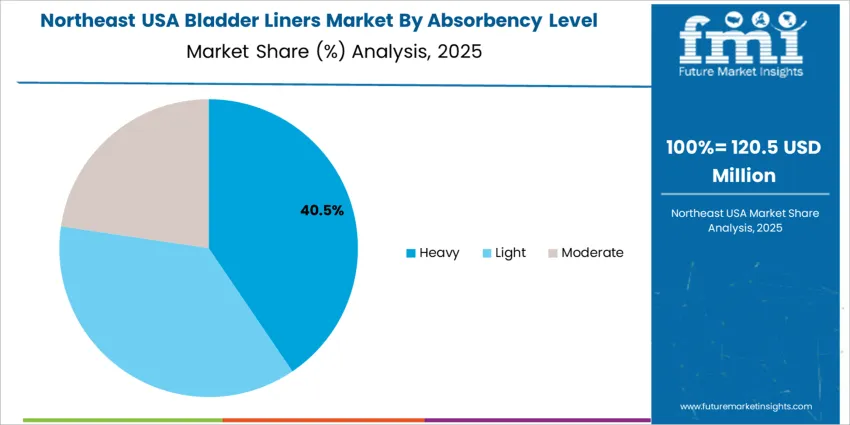
In the Northeast USA, the demand for bladder liners is expected to grow at a CAGR of 5.4%. The region's aging population, combined with high healthcare awareness, is driving the adoption of bladder liners. Northeastern states, which tend to have a high concentration of healthcare facilities and senior living communities, see consistent demand for incontinence products. As healthcare providers increasingly recommend bladder liners for individuals dealing with incontinence, the market is expected to continue growing. Additionally, the region’s focus on quality-of-life issues, especially for seniors, fuels the demand for solutions that are comfortable, effective, and discreet. The growth in demand is also supported by the increased availability of these products in pharmacies, healthcare centers, and online platforms.
How is Demand for Bladder Liners Evolving in the Midwest USA?
In the Midwest USA, the projected CAGR for bladder liners is 4.7%. While the growth rate is slower compared to other regions, the demand remains steady due to the region's aging population and increasing focus on healthcare accessibility. The Midwest is home to numerous senior living communities and healthcare facilities where incontinence products are widely used. As the awareness of incontinence management increases, more residents are turning to bladder liners for comfort and convenience. The region’s strong emphasis on healthcare and wellness, coupled with the growing availability of bladder liners through both traditional retail and e-commerce channels, ensures that the demand for these products will continue to grow, albeit at a more gradual pace compared to other regions.
What is the Competitive Landscape for the Bladder Liner Market in the USA?
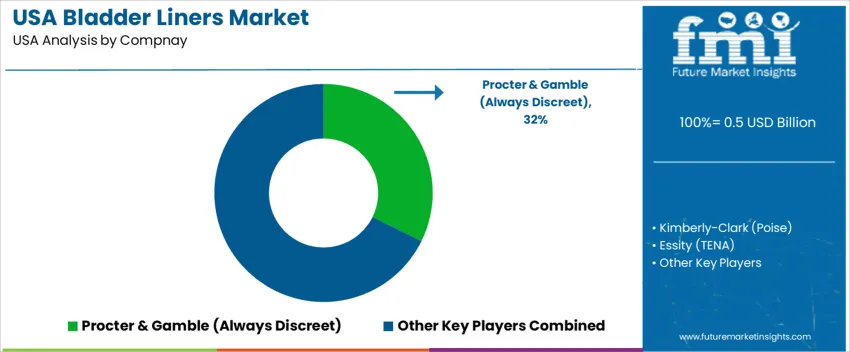
The demand for bladder liners and related adult incontinence products in the USA continues to grow as the population ages and the incidence of urinary incontinence rises. The broader adult incontinence products market in the United States was valued at about USD 3.64 billion in 2024 and is projected to reach roughly USD 6.66 billion by 2033 at a compound annual growth rate near 7 percent. Demographic shifts, greater awareness of incontinence issues, and preference for discreet, easy use protection drive demand across home care, long term care and outpatient settings.
Within this segment several firms hold leading positions. According to your data, Procter & Gamble (Always Discreet brand) leads with about 32.3 percent market share. Other major competitors include Kimberly Clark (Poise), Essity (TENA), Domtar Corporation (Attends), and First Quality Enterprises (Prevail). These companies supply bladder liners, pads, guards and related products for light to moderate incontinence. Competition centers on absorbency, discretion, comfort, skin friendly materials, ease of disposal, and a balance between protection and user comfort. Some brands emphasise slim, underwear style liners for active users; others offer high absorbency pads suitable for overnight use or higher leakage. Distribution channels span retail pharmacies, supermarkets, online stores and long term care providers. As incontinence products become more normalized and preferred by consumers for at home use, competition is evolving to meet needs for discretion, reliability, hygiene and comfort.
Key Players of the Bladder Liners Industry in USA
- Procter & Gamble (Always Discreet)
- Kimberly-Clark (Poise)
- Essity (TENA)
- Domtar Corporation (Attends)
- First Quality Enterprises (Prevail)
Scope of the Report
| Items | Details |
|---|---|
| Quantitative Units | USD Billion |
| Regions Covered | USA |
| Product Type | Disposable, Reusable |
| Absorbency Level | Heavy, Light, Moderate |
| Consumer Orientation | Women, Men |
| Sales Channel | Pharmacies & Drug Stores, Hypermarket/Supermarket, Direct Sales, Specialty Stores, Independent Small Stores, Online Stores, Other Sales Channel |
| Key Companies Profiled | Procter & Gamble (Always Discreet), Kimberly-Clark (Poise), Essity (TENA), Domtar Corporation (Attends), First Quality Enterprises (Prevail) |
| Additional Attributes | Dollar sales by product type, absorbency level, and sales channel indicate strong demand for disposable bladder liners, particularly for women. Heavy absorbency liners are more common, though light and moderate options are also in demand for varying needs. Pharmacies and drug stores are the leading sales channels; though online stores are growing rapidly. Major companies like Procter & Gamble, Kimberly-Clark, and Essity are market leaders, providing a range of bladder liners to cater to different consumer needs. The market is expected to grow with rising awareness of incontinence and the increasing adoption of absorbent products. |
Key Segments in the Demand for Bladder Liners in USA
Product Type
- Disposable
- Reusable
Absorbency Level
- Heavy
- Light
- Moderate
Consumer Orientation
- Women
- Men
Sales Channel
- Pharmacies & Drug Stores
- Hypermarket/Supermarket
- Direct Sales
- Specialty Stores
- Independent Small Stores
- Online Stores
- Other Sales Channel
Region
- Northeast USA
- West USA
- Midwest USA
- South USA
Frequently Asked Questions
How big is the demand for bladder liners in USA in 2025?
The demand for bladder liners in USA is estimated to be valued at USD 0.5 billion in 2025.
What will be the size of bladder liners in USA in 2035?
The market size for the bladder liners in USA is projected to reach USD 1.0 billion by 2035.
How much will be the demand for bladder liners in USA growth between 2025 and 2035?
The demand for bladder liners in USA is expected to grow at a 5.9% CAGR between 2025 and 2035.
What are the key product types in the bladder liners in USA?
The key product types in bladder liners in USA are disposable and reusable.
Which absorbency level segment is expected to contribute significant share in the bladder liners in USA in 2025?
In terms of absorbency level, heavy segment is expected to command 41.0% share in the bladder liners in USA in 2025.
Preview the report firsthand - request a free sample
Get SampleGet the brochure for pricing and purchase details.
Get PDFTable of Content
- Executive Summary
- USA Market Outlook
- Demand-side Trends
- Supply-side Trends
- Technology Roadmap Analysis
- Analysis and Recommendations
- Market Overview
- Market Coverage / Taxonomy
- Market Definition / Scope / Limitations
- Market Background
- Market Dynamics
- Drivers
- Restraints
- Opportunity
- Trends
- Scenario Forecast
- Demand in Optimistic Scenario
- Demand in Likely Scenario
- Demand in Conservative Scenario
- Opportunity Map Analysis
- Product Life Cycle Analysis
- Supply Chain Analysis
- Investment Feasibility Matrix
- Value Chain Analysis
- PESTLE and Porter’s Analysis
- Regulatory Landscape
- Regional Parent Market Outlook
- Production and Consumption Statistics
- Import and Export Statistics
- Market Dynamics
- USA Market Analysis 2020 to 2024 and Forecast, 2025 to 2035
- Historical Market Size Value (USD Million) Analysis, 2020 to 2024
- Current and Future Market Size Value (USD Million) Projections, 2025 to 2035
- Y-o-Y Growth Trend Analysis
- Absolute $ Opportunity Analysis
- USA Market Pricing Analysis 2020 to 2024 and Forecast 2025 to 2035
- USA Market Analysis 2020 to 2024 and Forecast 2025 to 2035, By Product Type
- Introduction / Key Findings
- Historical Market Size Value (USD Million) Analysis By Product Type , 2020 to 2024
- Current and Future Market Size Value (USD Million) Analysis and Forecast By Product Type , 2025 to 2035
- Disposable
- Reusable
- Y-o-Y Growth Trend Analysis By Product Type , 2020 to 2024
- Absolute $ Opportunity Analysis By Product Type , 2025 to 2035
- USA Market Analysis 2020 to 2024 and Forecast 2025 to 2035, By Absorbency Level
- Introduction / Key Findings
- Historical Market Size Value (USD Million) Analysis By Absorbency Level, 2020 to 2024
- Current and Future Market Size Value (USD Million) Analysis and Forecast By Absorbency Level, 2025 to 2035
- Heavy
- Light
- Moderate
- Y-o-Y Growth Trend Analysis By Absorbency Level, 2020 to 2024
- Absolute $ Opportunity Analysis By Absorbency Level, 2025 to 2035
- USA Market Analysis 2020 to 2024 and Forecast 2025 to 2035, By Consumer Orientation
- Introduction / Key Findings
- Historical Market Size Value (USD Million) Analysis By Consumer Orientation, 2020 to 2024
- Current and Future Market Size Value (USD Million) Analysis and Forecast By Consumer Orientation, 2025 to 2035
- Women
- Men
- Y-o-Y Growth Trend Analysis By Consumer Orientation, 2020 to 2024
- Absolute $ Opportunity Analysis By Consumer Orientation, 2025 to 2035
- USA Market Analysis 2020 to 2024 and Forecast 2025 to 2035, By Sales Channel
- Introduction / Key Findings
- Historical Market Size Value (USD Million) Analysis By Sales Channel, 2020 to 2024
- Current and Future Market Size Value (USD Million) Analysis and Forecast By Sales Channel, 2025 to 2035
- Pharmacies & Drug Stores
- Hypermarket/Supermarket
- Direct Sales
- Specialty Stores
- Independent Small Stores
- Online Stores
- Other Sales Channel
- Y-o-Y Growth Trend Analysis By Sales Channel, 2020 to 2024
- Absolute $ Opportunity Analysis By Sales Channel, 2025 to 2035
- Market Structure Analysis
- Competition Dashboard
- Competition Benchmarking
- Market Share Analysis of Top Players
- By Regional
- By Product Type
- By Absorbency Level
- By Consumer Orientation
- By Sales Channel
- Competition Analysis
- Competition Deep Dive
- Procter & Gamble (Always Discreet)
- Overview
- Product Portfolio
- Profitability by Market Segments (Product/Age /Sales Channel/Region)
- Sales Footprint
- Strategy Overview
- Marketing Strategy
- Product Strategy
- Channel Strategy
- Kimberly-Clark (Poise)
- Essity (TENA)
- Domtar Corporation (Attends)
- First Quality Enterprises (Prevail)
- Procter & Gamble (Always Discreet)
- Competition Deep Dive
- Assumptions & Acronyms Used
- Research Methodology


